Showing posts with label MEGA BANKS. Show all posts

Thursday, June 27, 2024

Congressman Andy Barr Stacks a Hearing on the Fed’s Stress Tests with Lobbyists for Megabanks

THANK YOU AYANNA PRESSLEY & BETTER MARKETS for anticipating the 

MAGA GOP WARP! 

DEREGULATION DOES NOT PROTECT CONSUMERS....EVER!


SUBSCRIBE TO THIS NEWSLETTER TO RECEIVE TIMELY REPORTS!


Congressman Andy Barr Stacks a Hearing on the Fed’s Stress Tests with Lobbyists for Megabanks

By Pam Martens and Russ Martens: June 27, 2024 ~

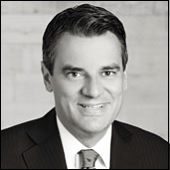
Congressman Andy Barr

Congressman Andy Barr Delivering Opening Remarks at a Stress Test Hearing on June 26, 2024

Yesterday the House Financial Institutions and Monetary Policy Subcommittee held a hearing titled “Stress Testing: What’s Inside the Black Box?” The hearing was convened to examine the manner in which the Federal Reserve conducts its stress tests of the megabanks. The witnesses called to testify included the following: an employee of the Financial Services Forum, a registered lobbyist for  banks; an employee of the Bank Policy Institute, a registered lobbyist for banks; Jonathan Gould, a lawyer from Jones Day, whose clients are banks; and one lonely soul, Greg Feldberg, Research Director of the Yale Program on Financial Stability, who was the only credible voice on the witness panel.   

The Chair of this Subcommittee is Andy Barr, a Republican from Kentucky whose largest four campaign donors are the following: employees of the Wall Street private equity firms Apollo Global Management and Blackstone Group; Wall Street-connected venture capital firm and a major political donor, Andreesen Horowitz; employees and the Political Action Committee of JPMorgan Chase, the five-count felony megabank on Wall Street that is leading the charge to gut federal regulatory proposals for higher capital at the high risk megabanks.

Barr began the hearing with an opening statement that closely tracked the arguments that were about to be made by his three witnesses tied to Wall Street banking. Those witnesses proceeded to attack the Fed for the secrecy of its models used to conduct the stress tests and to lobby for putting the models out for public comment. Feldberg, the Yale researcher, said this: “The banks spend a great deal of money trying to reverse engineer the stress tests. And don’t think they do that for any other reason than trying to game the process. They can do a pretty good job of reverse engineering because they already get more information about the stress test models than any other country gives their banks.”

Bolstering Feldberg’s argument, the Fed announced yesterday that all 31 banks it had stress tested had passed the tests.


Congresswoman Ayanna Pressley, Questioning Witness at House Hearing on Stress Tests, June 26, 2024

Congresswoman Ayanna Pressley, Questioning a Witness at House Hearing on Stress Tests, June 26, 2024

Congresswoman Ayanna Pressley, a Democrat from Massachusetts, was one of the last members of the Subcommittee to speak. She summed up the hearing like this:

“Again, deregulation is a failed approach. Yet, bank lobbyists are continuing to push for less stringent oversight. My colleagues across the aisle are working with big banks to publicly reveal the mechanics behind stress testing. This is not a pro-transparency, good governance argument. They simply want to help banks game the system and circumvent oversight.”

Anticipating this rigged hearing, the nonprofit watchdog group, Better Markets, released a 13-page detailed analysis of how the Fed’s stress tests have already been weakened and have reduced Americans’ confidence in the U.S. banking system.

One of the many important points made by Better Markets is that the Fed eliminated its qualitative assessment of banks which was originally in the stress tests. Better Markets writes:

“Weaknesses in bank practices that are reviewed during the qualitative assessment, particularly those supporting risk measurement and data integrity, can undermine the Fed’s supervisory stress test because the Fed uses information it receives from the banks as inputs. . . .

“The Fed could object to the bank’s planned capital payouts under the qualitative assessment. This was known as the ‘qualitative objection,’ which was publicly disclosed in an annual announcement that outlined the reasons for the objection and could lead to temporary restrictions on a bank’s ability to make capital distributions to investors, restrictions that could remain in place until the bank fixed its weak practices.”


With the qualitative assessment removed, it is no wonder that megabank JPMorgan Chase can face charges of laundering money for international child sex trafficker Jeffrey Epstein; keeping two sets of books; admitting to rigging the U.S. Treasury market and precious metals markets; and secretly owning a sprawling network of oil and gas assets and power plants – while still sailing through the Fed’s stress test.

WALL STREET ON PARADE


Friday, April 5, 2024

RIP OFF! Study Finds Wall Street Mega Banks Have Overstated Income for Years on Commercial Real Estate Loans They Sell to Investors


SUBSCRIBE TO THIS NEWSLETTER TO RECEIVE TIMELY REPORTS


Study Finds Wall Street Mega Banks Have Overstated Income for Years on Commercial Real Estate Loans They Sell to Investors

By Pam Martens and Russ Martens: April 2, 2024 ~

Finance Professors John Griffin (left) and Alex Priest

Last August, the Journal of Finance published a study by two finance professors that should have made bold headlines in every major business newspaper in America. It didn’t – suggesting that Americans will eventually learn about Wall Street’s chicanery in commercial real estate the same way they learned about Wall Street’s subprime residential mortgage scams after the 2008 financial collapse: from a movie like The Big Short or Inside Job.

Wall Street On Parade only learned about this paper recently from one of our engaged readers.

The paper was authored by John Griffin, Professor of Finance at McCombs School of Business at the University of Texas, Austin and Alex Priest, Assistant Professor of Finance at the Simon Business School at the University of Rochester.

The paper takes a forensic look – from an exhaustive number of perspectives – at why the income stream on Commercial Mortgage-Backed Securities (CMBS) is being consistently overstated by 5 percent or more when sold to investors by certain originators of these loans.

The largest participants in this overstatement of income are the same Wall Street mega banks that were bailed out by the U.S. taxpayer after they blew up Wall Street in 2008 with their subprime residential mortgage scams and then received trillions of dollars in secret revolving loans from the Fed for more than two years at below-market interest rates in order to resuscitate themselves.

The authors find that more than 40 percent of CMBS loans originated by UBS and Goldman Sachs have income overstatements of more than 5 percent, while between 30 and 40 percent of loans originated by Citigroup, Morgan Stanley, JPMorgan Chase and Bank of America feature such overstatement. (Smaller players are included as well in the study.)

The authors write:

“Underwritten net operating income (NOI) is the most important input for a commercial loan as it largely determines a loan’s debt service coverage ratio (DSCR) and loan-to-value (LTV) ratio. As such, there are rigorous and conservative guidelines for calculating underwritten income. Nevertheless, to sell a loan at a higher valuation and maximize profits, originators have a strong incentive to overstate underwritten income, at the expense of longer-term reputational and monitoring concerns.”

Among the key findings in the study are the following:

Income overstatement above 5% in loans that were not guaranteed by a government sponsored enterprise (GSE) grew from 36 percent in 2013 to 43 percent in 2019;

Loans with income overstatement in the first year continued to exhibit income short-falls in the next four years;

The study found no evidence that end investors are compensated for income overstatement. [Translation, they’re being ripped off in a fashion reminiscent of the 2008 financial crisis.]

Excluding loans that were already in distress at the onset of the COVID-19 pandemic in March 2020, the authors found that “in every vintage from 2014 to 2019, CMBS loans from the worst originators are more than twice as likely to experience distress,” with the correlation occurring across commercial property types.

The most shocking finding for most Americans is likely to be that the much touted “risk retention” rule enacted under the Dodd-Frank financial “reform” legislation of 2010, where the banks had to hold 5 percent of their securitized loans in order to have “skin in the game,” thus ostensibly deterring them from peddling toxic deals to customers with no harm to themselves, has been effectively obliterated. (For how the Dodd-Frank derivatives rule was similarly obliterated, see our report: Meet the Two Congressmen Who Facilitated Today’s Derivatives Nightmare at Wall Street’s Mega Banks.)

MUST READ! 

ILLINOIS REPUBLICAN RANDY HULTGREN


Former Congressman Randy Hultgren

Former Congressman Randy Hultgren Is Now President and CEO of Illinois Bankers Association


KANSAS REPUBLICAN KEVIN YODER

Former Congressman Kevin Yoder

Former Congressman Kevin Yoder Is Now a Registered Lobbyist


Griffin and Priest explain that the rule didn’t even become effective until 2016 and now “risk retention by the originator is rare.” That’s because deal sponsors can get around the rule by selling the risk retention piece to up to two unaffiliated buyers.

A major question left unanswered in the academic study is if Wall Street mega banks are shorting the CMBS market to profit further on their inside information of their income overstatement, as they did on their toxic subprime paper in the lead up to the 2008 financial collapse.

On April 13, 2011, following a two-year investigation, Senators Carl Levin and Tom Coburn, Chairman and Ranking Member of the Senate’s Permanent Subcommittee on Investigations, released a 635-page report on the 2008 financial crisis which included specifics on the fraudulent role that Wall Street mega banks had played in burning down Wall Street and the U.S. economy in the greatest collapse since the Great Depression. The report includes this paragraph on how Goldman Sachs attempted to profit from its own “shitty deals”:

“When Goldman Sachs realized the mortgage market was in decline, it took actions to profit from that decline at the expense of its clients. New documents detail how, in 2007, Goldman’s Structured Products Group twice amassed and profited from large net short positions in mortgage related securities. At the same time the firm was betting against the mortgage market as a whole, Goldman assembled and aggressively marketed to its clients poor quality CDOs that it actively bet against by taking large short positions in those transactions. New documents and information detail how Goldman recommended four CDOs, Hudson, Anderson, Timberwolf, and Abacus, to its clients without fully disclosing key information about those products, Goldman’s own market views, or its adverse economic interests.  For example, in Hudson, Goldman told investors that its interests were ‘aligned’ with theirs when, in fact, Goldman held 100% of the short side of the CDO and had adverse interests to the investors, and described Hudson’s assets were ‘sourced from the Street,’ when in fact, Goldman had selected and priced the assets without any third party involvement. New documents also reveal that, at one point in May 2007, Goldman Sachs unsuccessfully tried to execute a ‘short squeeze’ in the mortgage market so that Goldman could scoop up short positions at artificially depressed prices and profit as the mortgage market declined.”

See the video clip below from a related hearing, featuring the late Senator Carl Levin questioning a Goldman Sachs executive, Daniel Sparks.

Bookmark the permalink.

Saturday, March 30, 2024

Report: Five Banks Have a Combined Half Trillion Dollars in Commercial Real Estate Loans; Number 1 is JPMorgan Chase


SUBSCRIBE TO THIS NEWSLETTER TO RECEIVE TIMELY REPORTS!


Report: Five Banks Have a Combined Half Trillion Dollars in Commercial Real Estate Loans; Number 1 is JPMorgan Chase

By Pam Martens and Russ Martens: March 28, 2024 ~

JPMorgan Chase Bank BuildingYesterday, American Banker released a report showing that five banks in the U.S. hold a combined half trillion dollars in commercial real estate (CRE) loans. It came as a big surprise to a lot of folks that the bank holding the largest amount of CRE loans is JPMorgan Chase – whose bank holding company is also exposed to $49 trillion in derivatives as of December 31, 2023 according to the Office of the Comptroller of the Currency. (See Table 14 at this link.)

JPMorgan Chase is already considered the riskiest bank in the U.S. according to its regulators.

American Banker reported the following CRE totals for the five banks: JPMorgan Chase, $173 billion; Wells Fargo, $139.65 billion; Bank of America, $82.8 billion; U.S. Bank, $55.66 billion; and PNC Bank, $48.89 billion.

Some of the same hubris and willful blindness that prevailed in the runup to the subprime mortgage crisis that blew up large financial institutions in 2008 is showing itself today in regard to commercial real estate loans at federally-insured banks.

On March 7, Federal Reserve Chairman Jerome Powell testified before the Senate Banking Committee as part of his Semiannual Monetary Policy Report to Congress. During his testimony, Powell downplayed concerns about the impact of commercial real estate loans at the largest banks. Powell stated: “There will be bank failures, but this is not the big banks. If you look at the very big banks, this is not a first order issue for any of the very large banks. It’s more smaller and medium size banks that have these issues.”

If CRE is not a problem at the largest banks, that’s because both the banks and the Fed believe that the Fed will always spring to the rescue with an emergency bailout program. In fact, the Fed has already created just such a program that’s waiting in the wings. It’s called the Standing Repo Facility (SRF). It has a lending capacity of $500 billion and can lend to both the federally-insured bank and its trading unit (primary dealer) – thus giving the so-called “universal banks” on Wall Street two bites at the bailout apple.

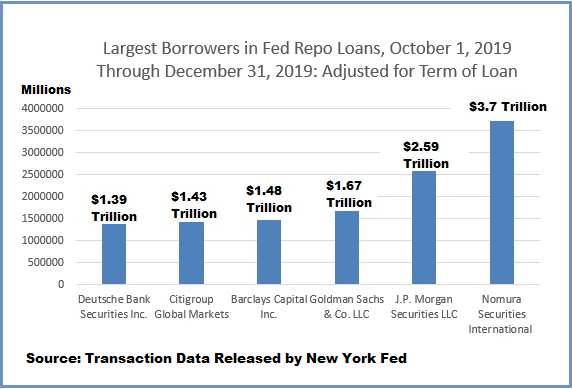
For a look at just how quickly the Fed can sluice money to Wall Street mega banks with few questions asked by Congress, check out the chart below. It shows the Fed’s emergency money spigot to the mega banks in the last quarter of 2019 – for a financial emergency at the banks which has yet to be explained to the American people.

Fed's Repo Loans to Largest Borrowers, Q4 2019, Adjusted for Term of Loan

To grasp how radically things have changed since 2008 when former Goldman Sachs veteran-turned Treasury Secretary Hank Paulson took a 3-page document to Congress and demanded a $700 billion taxpayer bailout for the banks (Troubled Asset Relief Program, TARP), let the full meaning of the chart above sink in. The Fed can now funnel trillions of dollars in cumulative loans to mega banks on Wall Street, report the names of the banks and amounts borrowed two years later, and get a complete news blackout from mainstream media. (Wall Street On Parade was the only media outlet to chart the details and report the names of the banks that got the trillions of dollars in loans in 2019.)

Powell might have his own agenda in playing down the risks to the mega banks on Wall Street. According to Senator Elizabeth Warren, who sits on the Senate Banking Committee, Powell is leading the charge behind the scenes to overturn federal regulators’ proposal to require the largest banks to hold larger amounts of capital to prevent a replay of the 2008 financial crisis.   

WALL STREET ON PARADE


Wednesday, March 13, 2024

Wall Street Mega Banks Have Drawn a Law-Free Zone Around Themselves – The Media Is Complicit


SUBSCRIBE TO THIS NEWSLETTER TO RECEIVE TIMELY REPORTS!


Wall Street Mega Banks Have Drawn a Law-Free Zone Around Themselves – The Media Is Complicit

By Pam Martens: March 13, 2024 ~

From revoking the American people’s right to a jury trial in matters involving Wall Street; to brazenly thumbing their nose at anti-trust law; to trading the stock of their own bank in the darkness of their own dark pools; to forming their own stock exchange; to committing serial felonies without being criminally prosecuted or having their bank charters revoked – Wall Street mega banks have drawn a law-free zone around themselves and are more dangerous today than they have ever been in U.S. history.

The most dangerous eras for the American people versus Wall Street mega banks have been the late 1920s and 1930s; 2007 to 2010; and today. We know that today is the most dangerous era because we read 12,000 pages produced by the Senate Banking Committee of the early 1930s on the Wall Street corruption in the late 20s and 30s; we read every government report produced on the causes of the crash of 2008 and its aftermath, as well as every important book on the subject; and we have personally chronicled at Wall Street On Parade the unprecedented corruption of the Wall Street mega banks since 2008.

One key factor stands out in our mind as to why today’s Wall Street mega bank era is so much more corrupt and dangerous than earlier times: the failure of mainstream media to do its job.

For the past decade, mainstream media has failed to adequately report to the American people the activities of the Wall Street mega banks and the insidious role of the Federal Reserve in being their secret bailout kingpin. Consider what happened with the Fed’s so-called repo loan bailouts in the last quarter of 2019.

On September 17, 2019 the overnight repo loan rate spiked from an average of about 2 percent to 10 percent – signaling that one or more important Wall Street firms were in trouble. The repo loan market is an overnight loan market where banks, brokerage firms, mutual funds and others make predominantly one-day loans to each other against safe collateral, typically Treasury securities. Repo stands for “repurchase agreement.” When firms back away from lending to each other, someone is in trouble and spreading fear of the kind of contagion that occurred in 2008.

Because the repo market dried up, the Fed effectively became the repo loan market on September 17, 2019. It exponentially grew the amount of emergency repo loans it was making over the following months. And, instead of just making the customary overnight loans, the Fed also added loans lasting for weeks, up to 42-day loans in some cases. The dollar amounts of the Fed’s repo loans grew to staggering levels. On October 24, 2019, we reported the following:

“The New York Fed will now be lavishing up to $120 billion a day in cheap overnight loans to Wall Street securities trading firms, a daily increase of $45 billion from its previously announced $75 billion a day. In addition, it is increasing its 14-day term loans to Wall Street, a program which also came out of the blue in September, to $45 billion. Those term loans since September have been occurring twice a week, meaning another $90 billion a week will be offered, bringing the total weekly offering to an astounding $690 billion. It should be noted that if the same Wall Street firms are getting these loans continuously rolled over, they are effectively permanent loans. (That’s exactly what happened during the 2007-2010 Wall Street collapse: some teetering Wall Street casinos received, individually, $2 trillion in cumulative loans that were rolled over for two and one-half years – without the authorization or even awareness of Congress or the American people. One bank, Citigroup, received over $2.5 trillion in Fed loans, much of them at an interest rate below 1 percent, at a time when it was insolvent and couldn’t have obtained loans in the open market at even high double-digit interest rates.)”

The names of the banks receiving the repo loans in 2019 remained secret from the American people for two years. When the stunning data was finally released by the Fed, it received a total news blackout by mainstream media. We have never seen anything that unprecedented in our 40 years of working on Wall Street or covering Wall Street on this website. The names of the banks in desperate need of cash in the fourth quarter of 2019 included some of the biggest and most iconic names on Wall Street.

The Fed’s cumulative repo loans for the fourth quarter of 2019 on a term-adjusted basis came to $19.87 trillion, based on the data the Fed released two years later. Just six trading units of the Wall Street mega banks received 62 percent of the $19.87 trillion: Nomura ($3.7 trillion), JPMorgan ($2.59 trillion), Goldman Sachs ($1.67 trillion), Barclays ($1.48 trillion), Citigroup ($1.43 trillion), and Deutsche Bank ($1.39 trillion).

Fed's Repo Loans to Largest Borrowers, Q4 2019, Adjusted for Term of Loan

Consider this news blackout involving the biggest names on Wall Street to what occurred after the Fed bailouts of 2007 to 2010.

In response to the financial crisis of 2008, the Fed stepped in with an alphabet soup of emergency lending programs, as well as cranking out discount window loans. While the Fed released general details of what the programs were created to do, it did not release the names of the Wall Street mega banks and their trading units that were doing the bulk of the borrowing, or the sums borrowed by each institution.

A tenacious investigative reporter at Bloomberg News, Mark Pittman, filed a Freedom of Information Act (FOIA) request with the Fed for the names of the banks, the amounts borrowed and the terms. Under the law, the Fed had to respond in 20 business days. The Fed stalled Pittman for six months, leading to the parent of Bloomberg News, Bloomberg LP, filing a lawsuit against the Fed in November 2008. Bloomberg won that suit. The Fed then appealed to the Second Circuit Appellate Court in 2009, attempting to continue to keep the details secret from the American people.

What is particularly noteworthy about that appellate case is that the very same media outlets that drew a dark curtain around the Fed’s revelations of the names of the banks taking its massive repo loans of 2019 filed an Amicus Curiae (Friend of the Court) brief in Bloomberg’s appellate case in 2009. Those news outlets included Dow Jones & Company, Inc. (owner of the Wall Street Journal and MarketWatch), Reuters, Associated Press, and the New York Times.

The Amicus writers told the appellate court this: “The public interest in disclosure in this case could hardly be greater. The [Federal Reserve] Board has lent out more than $2 trillion under the lending programs documented in the Remaining Term Reports. Despite this massive outlay, the public knows little about who has received these funds or the terms of their loans…While the Board releases aggregate data…it refuses to reveal any transaction-level data identifying where money has gone. Without this information, it is impossible to monitor the Board’s actions, and FOIA’s core purpose is defeated.”

Let this sink in for a few moments. In 2019, just 11 years after the worst financial crisis since the Great Depression, the same mega banks on Wall Street are running amok again and back at the trough demanding trillions of dollars in cheap loans from the Fed – despite no apparent financial crisis in the general economy – and mainstream media does not go to court to demand the information and then, uniformly, blacks out the details to the American people when the data is finally reported by the Fed.

The Fed lost on the Bloomberg case at the Second Circuit Appellate Court. The Fed was too embarrassed to take the case to the U.S. Supreme Court, because President Obama’s acting Solicitor General, Neal Katyal, planned to file a brief contrary to the Fed’s position, so a group called The Clearing House Association LLC, made up of some of the very same mega banks that were being bailed out by the Fed, filed their own appeal with the Supreme Court. The Supreme Court declined to hear the case in March of 2011, leaving the decision of the Second Circuit Appellate Court in place and making way for the release of the data.

The Dodd-Frank financial reform legislation of 2010 had forced the Fed to release the transaction details of its seven emergency lending facilities in December of 2010. When the Supreme Court declined to hear the court case, the discount window transactions were released in March 2011. When the various data was released, it was widely covered by mainstream media.

On March 21, 2011, Bloomberg News Editor in Chief Matthew Winkler released this statement:

“At some point long before the credit markets seized up in 2007, financial markets collapsed and the economy plunged into the worst recession since the 1930s, the Federal Reserve forgot that it is the central bank for the people of the United States and not a private academy where decisions of great importance may be withheld from public scrutiny. As only Congress has the constitutional power to coin money, Congress delegates that power to the Fed and the Fed must be accountable to Congress, especially in disclosing what it does with the people’s money.”


https://wallstreetonparade.com/2024/03/wall-street-mega-banks-have-drawn-a-law-free-zone-around-themselves-the-media-is-complicit/


Thursday, February 29, 2024

The Fed Pretends to Send a Warning to Wall Street’s Mega Banks on Derivatives and Counterparty Risk

 SUBSCRIBE TO THIS DAILY NEWSLETTER TO RECEIVE TIMELY REPORTS!

The Fed Pretends to Send a Warning to Wall Street’s Mega Banks on Derivatives and Counterparty Risk


By Pam Martens and Russ Martens: February 29, 2024 ~

Taming the Megabanks, Book JacketOn Tuesday, the Vice Chair for Supervision at the Federal Reserve, Michael Barr, delivered a speech at a risk management conference in Manhattan. Barr’s objective was to convince conference attendees that the Fed has its eye on the ball when it comes to Wall Street mega banks and their counterparties who are sitting on the opposite sides of derivative trades totaling tens of trillions of dollars. (Yes, trillions.)

The most illuminating and dangerous elements of Barr’s speech are what he didn’t say.

To remind attendees of what could happen if counterparty risks were not managed properly, Barr cited Long Term Capital Management (LTCM) and Archegos Capital Management.

LTCM was a hedge fund stocked with the so-called “smartest men in the room,” including two Nobel laureates, who fed mathematical formulas into computers that generated trades using astronomical levels of leverage. Of course, this resulted in the brainiacs blowing up the firm in the fall of 1998 during the Russian debt crisis, putting their counterparties – the big trading houses on Wall Street – at grave risk. The New York Fed had to corral the big boys on Wall Street into its conference room and hammer out a multi-bank bailout of the teetering hedge fund.

What happened at Archegos can best be summed up with our headline of 2021: Archegos: Wall Street Was Effectively Giving 85 Percent Margin Loans on Concentrated Stock Positions – Thwarting the Fed’s Reg T and Its Own Margin Rules.

LTCM occurred in 1998, before Sandy Weill, the Bill Clinton administration, Robert Rubin, the New York Times and the Federal Reserve had ushered in the most dangerous banking era in U.S. history by repealing the Glass-Steagall Act and allowing the trading casinos on Wall Street to merge with giant, federally-insured, deposit-taking banks. This explosive situation continues to this day, as do the never-ending Fed bailouts.

The biggest explosions in U.S. banking history from derivatives and insolvent counterparties were, of course, neither LTCM or Archegos. They were Lehman Brothers and AIG – both of which owned federally-insured banks at the time of their demise in 2008, thanks to the repeal of the Glass-Steagall Act in 1999. Lehman Brothers filed for bankruptcy on September 15, 2008. The U.S. government seized control of AIG the following day and “made over $182 billion available to assist AIG between September 2008 and April 2009” according to a report by the Government Accountability Office (GAO). $90 billion of the $182 billion went in the front door of AIG and out the back door to pay 100 cents on the dollar on credit derivative trades that had been made between a dodgy unit of AIG and the major trading houses on Wall Street.

According to documents released by the Financial Crisis Inquiry Commission (FCIC), at the time of Lehman Brothers’ bankruptcy it had more than 900,000 derivative contracts outstanding and had used the largest banks on Wall Street as its counterparties to many of these trades. The FCIC data shows that Lehman had more than 53,000 derivative contracts with JPMorgan Chase; more than 40,000 with Morgan Stanley; over 24,000 with Citigroup’s Citibank; over 23,000 with Bank of America; and almost 19,000 with Goldman Sachs.

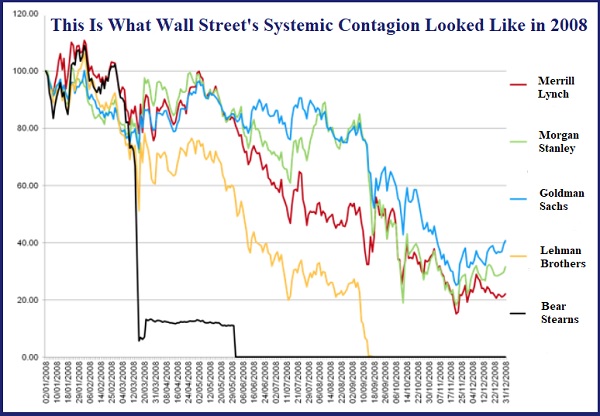
Below is a share price chart of what derivatives contagion looked like on Wall Street in 2008.

This Is What Wall Street's Systemic Contagion Looked Like in 2008

So why was Michael Barr not talking about 2008, Lehman Brothers, AIG or the insanely interconnected trading houses on Wall Street in his speech on Tuesday?

It’s because, as we reported on February 13, Barr has allowed five Wall Street mega banks to hold $223 trillion in derivatives today, 83 percent of all derivatives at 4,600 banks in the U.S.

For more than two decades, both Republican and Democratic administrations in Washington have shown a sycophantic subservience to tolerating the catastrophic level of derivatives at the Wall Street mega banks while simultaneously allowing them to own federally-insured, taxpayer-backstopped commercial banks.

This sycophantic tolerance has existed despite repeated warnings from academics and federal researchers. As far back as 2016, researchers have been sounding the alarms on counterparty risk and the failure of the Fed’s stress tests to properly measure that risk.

In a report issued in March 2016 by the Office of Financial Research (OFR), a federal agency created under the Dodd-Frank financial reform legislation of 2010, the OFR brought the illusory nature of the Fed’s oversight of counterparty risk into focus.

The OFR researchers who conducted the study, Jill Cetina, Mark Paddrik, and Sriram Rajan, found that the Fed’s stress tests are measuring counterparty risk for the trillions of dollars in derivatives held by the largest banks on a bank by bank basis. The real problem, according to the researchers, is the contagion that could spread rapidly if one big bank’s counterparty was also a key counterparty to other systemically important Wall Street banks. The researchers write:

“A BHC [bank holding company] may be able to manage the failure of its largest counterparty when other BHCs do not concurrently realize losses from the same counterparty’s failure. However, when a shared counterparty fails, banks may experience additional stress. The financial system is much more concentrated to (and firms’ risk management is less prepared for) the failure of the system’s largest counterparty. Thus, the impact of a material counterparty’s failure could affect the core banking system in a manner that CCAR [one of the Fed’s stress tests] may not fully capture.” [Italic emphasis added.]

In Barr’s speech on Tuesday, he stated that “…alongside this year’s stress test results, we will publish the aggregate results of several exploratory analyses, including analysis of the resilience of the globally systemically important banks to the simultaneous default of their five largest hedge fund counterparties.”

But according to an OFR study released in July 2021, it’s not hedge funds where banks have the largest counterparty risk. It’s corporations.

For just how long this insidious behavior between the Fed and the Wall Street mega banks has been going on, we suggest reading the seminal book on the subject, Arthur Wilmarth’s Taming the Megabanks: Why We Need a New Glass-Steagall Act.

https://wallstreetonparade.com/2024/02/the-fed-pretends-to-send-a-warning-to-wall-streets-mega-banks-on-derivatives-and-counterparty-risk/

Monday, January 29, 2024

The Fed Has a Dirty Little Secret: It’s Been Allowing the Wall Street Mega Banks to Calculate their Own Capital Requirements


SUBSCRIBE TO THIS NEWSLETTER TO RECEIVE TIMELY REPORTS


The Fed Has a Dirty Little Secret: It’s Been Allowing the Wall Street Mega Banks to Calculate their Own Capital Requirements

By Pam Martens and Russ Martens: January 29, 2024 ~
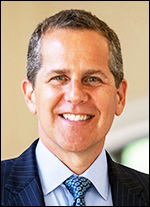
Michael Barr

Michael Barr, Vice Chair for Supervision, Federal Reserve 

On July 27 of last year, the Vice Chair for Supervision at the Federal Reserve Board of Governors, Michael Barr, made the following statement as part of the proposed new capital requirements for mega banks in the U.S. – revealing the stunning news that the serially-charged mega banks on Wall Street have been allowed to use their own internal risk models to tell the Fed how much risk-weighted assets they have and, thus, how much capital they need to hold. Barr stated:

“For a firm’s lending activities, the proposed rules would end the practice of relying on a bank’s own individual estimates of their own risk and instead use a standardized, but risk-based measure of credit risk. Standardized credit risk approaches do a reasonably good job of approximating risks, while internal models are prone to underestimate such risks.

“Second, for a firm’s trading activities, the proposed rules would adjust the way that the firm is required to measure market risk, which is the risk of loss from movements in market prices. These changes are intended to correct for gaps in the current rules.”

Relying on the mega banks that have been regularly charged with criminal acts and manipulating markets and who brought the U.S. economy to its knees with their financial crash of 2008, because their risk models were as helpful as a row boat in a tsunami, is yet one more clear indication that federal banking regulators have been completely captured by the Wall Street mega banks.

According to the Fed, the newly proposed capital rules will not stop federal regulators from relying on the mega banks to provide the information that sets their capital requirements, it will just change the models. The Fed and its fellow bank regulators wrote as follows about their so-called Basel III reforms:

“Under the proposed expanded risk-based approach, banking organizations would calculate total risk-weighted assets using (1) a new standardized approach for credit risk; (2) the revised approach for credit valuation adjustment (CVA) risk; (3) a new standardized approach for operational risk; and (4) the revised approach to market risk.”

Two economists are now calling out this insanity in a new academic paper. Anat Admati is the Professor of Finance and Economics at Stanford Graduate School of Business. Martin Hellwig is a German economist. The two are co-authors of the newly released and expanded book The Bankers’ New Clothes: What’s Wrong with Banking and What to Do about It. To call attention to the lies that bankers and their lobbyists perpetuate to get watered-down or gutted rules from their regulators, Admati and Hellwig have released a paper debunking the 44 flawed claims that bankers have been getting away with. One of those flawed claims goes to the heart of this debate on required capital. The pair write:

“Flawed Claim 29: Assigning risk weights to assets when determining required equity [equity capital] is a way of bringing serious quantitative analysis to bear on bank regulation…

“Proper measurement of the risks to which a bank is exposed would have to consider the counterparty credit risks and their correlations with the underlying risks of the banks. The scope for doing so is limited by a lack of data and by the never-ending changes in risks and correlations that occur when counterparties change their own positions. In practice, the use of risk weights in bank regulation allows banks to be extremely highly indebted, masks important risks, and adds to the interconnectedness of the system. Whereas proponents of the system argue that it is important to require banks to have more equity funding when their assets are riskier, in fact the system allows banks to get away with much less equity funding when they say that their assets are less risky. A uniform ratio of required equity [equity capital] to total assets would provide a lower bound on the banks’ leverage and would enable supervisors to intervene when the ratio is breached before it may be too late. By contrast, because some risk weights are (near) zero, the risk-weighting system allows very high leverage.

“The ability of banks to ‘economize on equity’ is enhanced by their ability to use their own models to assess risks. The scope for manipulation they have is largest for assets in the trading book, which is why they were keen to put mortgage-backed securities and the like into the trading book, subject to mark-to-market accounting rules. Most of the losses in 2007-2009 were incurred on assets in the trading book, where equity often was as low as 1 percent of investments…”

What the Fed and its fellow federal regulators have been effectively doing is turning capital requirements over to the casino. Consider what happened when the 158-year old Lehman Brothers failed in 2008 and filed for bankruptcy. Just five days before Lehman failed, it was sporting a capital ratio of 11 percent, suggesting that it was adequately capitalized. But four weeks after its bankruptcy on September 15, 2008, its debt was valued at only 9 cents on the dollar, suggesting its unsecured creditors were going to lose 91 percent of their money. While the recovery rate improved over time as market values stabilized, there is no question that Lehman’s regulators were in the dark – or chose to be in the dark – about just how highly leveraged this financial institution was in 2008.

Unknown to most Americans, the reckless Lehman Brothers was allowed by its regulators to own two federally-insured banks: Lehman Brothers Bank, FSB and Lehman Brothers Commercial Bank. Together, they held $17.2 billion in assets as of June 30, 2008, 75 days before Lehman went belly up.

Today, four of the largest trading houses on Wall Street own federally-insured banks that rank among the largest seven federally-insured banks in the U.S.: JPMorgan Chase, Bank of America, Citigroup, and Goldman Sachs.

Another key problem with allowing the criminally-inclined mega banks to calculate their own risk-weighted capital needs is that only a handful of people inside the bank understand the risks that are hiding in the shadows in the bank’s off-balance-sheet exposures.

On its way to becoming a 99-cent stock in March of 2009 and needing a secret $2.5 trillion bailout in cumulative loans from the Fed between December 2007 and June 2010, Citigroup was using off-balance-sheet SIVs (Structured Investment Vehicles) to boost its profits and hide its risks. When the bank was forced to move these vehicles back onto its balance sheet, its debt was downgraded and its stock tanked further.

Any suggestion that the mega banks on Wall Street have cleaned up their reckless risk-taking is undermined by the number of times they have needed to be bailed out since the crash of 2008 – the worst economic crisis since the Great Depression. (The New York Fed has become the official money funnel for Wall Street bailouts while being, literally, owned by some of the biggest banks on Wall Street.)

The first banking crisis since that of 2008 began on September 17, 2019 – for reasons the Fed has yet to explain with any credibility. In the last quarter of 2019, the New York Fed had to shovel emergency repo loans cumulatively totaling (on a term-adjusted basis) $19.87 trillion into Wall Street banks. As the chart below indicates, just six trading units of the mega banks on Wall Street received 62 percent of that amount. (Unadjusted for the term of the loan, the cumulative total was $4.5 trillion.)
Fed's Repo Loans to Largest Borrowers, Q4 2019, Adjusted for Term of Loan

Under the Dodd-Frank financial reform legislation of 2010, the Fed had to release the names of the banks that received these bailouts, and the dollar amounts of each loan, two years after the program began. While mainstream media went to court to get this information in 2008, there was a total mainstream media blackout when the Fed released the data for the 2019 bailouts. (See There’s a News Blackout on the Fed’s Naming of the Banks that Got Its Emergency Repo Loans; Some Journalists Appear to Be Under Gag Orders.)

The next banking crisis occurred in March 2020 and was blamed on the pandemic. The share prices of the four largest banks (by deposits) collapsed by as much as 40 to 60 percent between January 2, 2020 and March 18, 2020. The Fed rolled out the same alphabet soup of emergency lending programs that it had rolled out in 2008 – with the New York Fed once again in charge of the bulk of those programs.

Three years later, in the spring of 2023, the second, third and fourth largest bank failures in U.S. history occurred: Silicon Valley Bank and Signature Bank in March and First Republic Bank on May 1.

To deal with last year’s failures, the Fed did something that it has never done before in its 110-year history. It began accepting underwater bonds as collateral for emergency loans to teetering banks while paying 100-cents on the dollar on that collateral for loans of up to one year in duration. (Historically, the Fed has imposed a haircut on collateral and made overnight loans through its Discount Window.) The Fed called this bailout program the Bank Term Funding Program (BTFP).

In recent weeks, the amounts being borrowed under the Bank Term Funding Program have spiked. The bailout facility had a balance of $121.7 billion as of December 7, 2023. As of its last report date on January 24, 2024, it had soared to $167.8 billion.

Last Wednesday, after weeks of watching banks increasingly tap the Bank Term Funding Program almost a year after the banking crisis was supposed to have subsided, the Fed announced it would cut off any more loans from the BTFP on March 11.
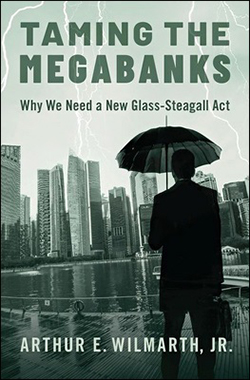
Taming the Megabanks, Book JacketAs we have repeatedly stated, and the brilliant Law Professor Art Wilmarth has documented, the only meaningful way to genuinely reform the mega banks is to restore the Glass-Steagall Act, which will separate casino banking from the federally-insured deposits of U.S. commercial banks.





Top News | 'He’s Not Going to Run Unopposed': Sanders Rejects Schumer for Majority Leader

                                                               LOTS OF POSTS IGNORED BY BLOGGER..... OR REMOVED ON THEIR WHIM! ALL POSTS ARE...