Showing posts with label BALD EAGLES. Show all posts

Tuesday, February 14, 2023

Anne Applebaum | Another Putin Foe Meets a Grim Soviet-Era Fate


BURIED IN SPAM FOLDER!


Reader Supported News

Live on the homepage now!
Reader Supported News

WAVING HANDS FOR DONATIONS: Super important to get these few donations in. The dollar figures are by no means daunting. Your donation has made the difference in building RSN from day one. Invest in freedom support RSN with a donation. Thank you sincerely.
Marc Ash • Founder, Reader Supported News

Sure, I'll make a donation!


Another Putin Foe Meets a Grim Soviet-Era Fate

Another Putin Foe Meets a Grim Soviet-Era Fate


Anne Applebaum | Another Putin Foe Meets a Grim Soviet-Era Fate
Anne Applebaum, The Atlantic
Applebaum writes: "As former President Mikheil Saakashvili’s health worsens in prison, so do prospects for democracy in Georgia." 


As former President Mikheil Saakashvili’s health worsens in prison, so do prospects for democracy in Georgia.


Sixteen months after his arrest, Mikheil Saakashvili has lost more than 90 pounds and needs a walker to move around his prison hospital. The former Georgian president was for a time, on a hunger strike, which helps explain his weight loss and his exhaustion. But it does not explain the traces of arsenic, mercury, and other toxins that a doctor found in his hair and nail clippings. It does not explain the beatings he has described to his lawyer. It does not explain the constant pain in his left shoulder, neck, and spine.

Nor can anything other than malice—organized, official, state-sponsored malice—explain why Saakashvili is on a strange medical regimen that includes 14 different drugs, some addictive, some not approved for sale in the United States. Or why he has mild brain damage. Or why he has seizures. Giorgi Badridze, a former Georgian ambassador who keeps in constant touch with Saakashvili’s family, told me that “nothing has been exaggerated. He is doing really badly.” At age 55, Saakashvili is declining rapidly. And as he declines, so do the prospects of a sovereign, democratic Georgia.

Georgia is a former Soviet republic, and to those who live in the former Soviet empire—the same empire that Vladimir Putin, the Russian president, now seeks to re-create—Saakashvili’s accumulated prison illnesses form a familiar pattern. The slow prison death was a Soviet speciality: not a murder, not an assassination, just a well-monitored, carefully controlled, long, drawn-out decline. Most of the people who died in Soviet prison camps were not executed; they were merely starved until their heart stopped beating. In Putin’s Russia, torture and the deprivation of medical aid famously killed Sergei Magnitsky, a lawyer who uncovered an infamous corruption scandal at the highest levels of the Russian regime. Isolation, withholding of food, and other punishments are right now being inflicted on Alexei Navalny and other political prisoners too.

The readoption of this old Soviet practice in Georgia, a country that has, or had, aspirations to be part of NATO and the European Union, represents a symbolic return to the old Soviet empire. The decision to inflict this form of torture on Saakashvili carries even more symbolic weight. As president from 2004 to 2013, he was notable mostly for pushing his country, which borders Russia, Turkey, Armenia, and Azerbaijan, in the direction of Western liberal democracy. In his years in office, he broke the power of the post-Soviet mafia, battled corruption, fought back against a Russian invasion, and opened the economy. Putin loathed him and his political program so much that he reportedly once said Saakashvili should be “hung by his balls.” He hated Saakashvili for the same reason he now hates the Ukrainian president, Volodymyr Zelensky: because he used the language of liberal democracy; because he talked about a European, Western future for his country; and because he rejected Putin’s kleptocratic, illiberal ideology.

Saakashvili angered plenty of Georgians too. He made enemies not just among the mafiosi whose careers he destroyed, but also among Georgian liberals and democrats. He cut corners and crossed the edges of legality several times himself. Extravagant stories about him (and there are many) involve Munich nightclubs, Ferris-wheel rides, and late-night, high-speed drives through Tbilisi. His life story is not a black-and-white morality tale of any kind.

But when Saakashvili lost an election, he did step down, which is not typical behavior in the former Soviet world. He left Georgia in 2013, and spent several years in Ukraine—he speaks Ukrainian, having studied there—and enjoyed what can best be described as an exceptionally controversial term as governor of the Odesa region. He received Ukrainian citizenship, was stripped of it, and then got it back again. Finally he went back to Georgia in October 2021, clearly hoping to reenter politics.

This, his supporters believe, is the real reason he was arrested on what his lawyer describes as trumped-up charges, based on cases from years ago investigated in absentia. They also say this is the reason for the slow torment, and perhaps for the slow poisoning of Saakashvili, and indeed leaders of the ruling Georgian Dream party have said, in so many words, that he is in prison because he would cause trouble for them if he were free. Irakli Kobakhidze, the party’s chairman, recently put it like this: “If Saakashvili gets out, he will immediately engage in political processes and will try to take in his hands the function of leadership of the radical opposition.” The government can’t let him out, in other words, because he might try to win. Or he might at least make what Kobakhidze calls the “radical opposition” into a unified and coherent force.

At the moment, that opposition, although it probably represents the majority of the voters, is deeply divided, as so often happens in democracies that have been slowly dismantled by an illiberal political party. Georgian Dream is certainly that: Backed and controlled by Bidzina Ivanishvili, Georgia’s wealthiest man, the party has not only locked up Saakashvili but also imprisoned Nika Gvaramia, the director of an independent television station; put pressure on judges; and repeated wearily familiar nationalist, homophobic, and anti-Western themes borrowed from Russian propaganda. The party’s leaders, many of whom are former Ivanishvili employees, have verbally attacked the U.S. ambassador, even falsely accusing her of trying to force Georgia to go to war with Russia. All of that helps explain why, in June, the European Union formally recognized Ukraine and Moldova as candidates for membership but spurned Georgia.

Officially, the Georgian government regretted that decision. Unofficially, maybe not so much. Ivanishvili’s fortune was earned in Russia, and under his leadership, Georgia’s relationship with Russia has evolved into something very hard to explain and understand. On the one hand, Georgians continue to fear a further Russian invasion, which is unsurprising: Russian troops, some stationed less than 40 miles from Tbilisi, occupy about 20 percent of the country. Georgians are vocally supportive of Ukraine, and large majorities say they want to join NATO.

On the other hand, the quantity of what appears to be sanctions-busting cargo flowing through Georgia to Russia surged in the first half of 2022. The Georgian government doesn’t support Russia, but it doesn’t like to say it doesn’t support Russia, or at least not too loudly. And by deliberately antagonizing Georgia’s Western friends, it is slowly making Georgian membership in Western clubs an impossibility. “The reality is that it looks like Putin is winning in Georgia,” Badridze told me.

The slow torment of Saakashvili is a part of that project. His lawyer and his family are asking the government to release him on humanitarian grounds and let him transfer to a hospital in Europe or the U.S. If not, he may well die in prison. But that may be what Putin and his proxies in Georgia are hoping for. If the man who still symbolizes Georgia’s old aspirations to join the liberal democratic world succumbs to a Soviet-style prison death, then those aspirations will die along with him.


READ MORE

 

Israelis Rally for Fifth Week Against Netanyahu's Judicial PlansIsraelis hold flags as they protest against Prime Minister Benjamin Netanyahu's new right-wing coalition and its proposed judicial reforms to reduce powers of the Supreme Court in Tel Aviv, Israel, February 4, 2023. (photo: Ronen Zvulun/Reuters)

Israelis Rally for Fifth Week Against Netanyahu's Judicial Plans
Al Jazeera
Excerpt: "Tens of thousands of Israelis have gathered for a fifth week of protests against controversial judicial changes proposed by Prime Minister Benjamin Netanyahu’s government." 


Tens of thousands brave heavy rain in Tel Aviv to protest against government plans to weaken Israel’s Supreme Court.


Tens of thousands of Israelis have gathered for a fifth week of protests against controversial judicial changes proposed by Prime Minister Benjamin Netanyahu’s government.

Protesters in the central city of Tel Aviv braved heavy rain for Saturday’s protest, carrying blue and white Israeli flags and chanting slogans against Netanyahu’s justice minister.

“I’m here tonight protesting against the transition of Israel from a democracy to an autocracy,” Dov Levenglick, a 48-year-old software engineer, told the Reuters news agency in Tel Aviv.

“It’s a disgrace, it shall not stand.”

The proposed changes, which the government says are needed to curb overreach by judges, have drawn fierce opposition from groups including lawyers and raised concerns among business leaders, widening already deep political divisions in Israeli society.

Critics say Israeli democracy would be undermined if the government succeeds in pushing through the plans, which would tighten political control over judicial appointments and limit the Supreme Court’s powers to overturn government decisions or Knesset laws.

“They want to tear up the judiciary system of Israel, they want to tear up Israeli democracy, and we are here every week in every weather … to fight against it and to fight for Israeli democracy,” Hadar Segal, 35, told Reuters in Tel Aviv.

Local media reported protests in some 20 cities across the country.

Among the crowd in Haifa was former Israeli Prime Minister Yair Lapid, who said in a video posted to social media: “We will save our country because we are unwilling to live in an undemocratic country.”

Netanyahu, on trial for corruption, has dismissed the protests as a refusal by leftist opponents to accept the results of last November’s election, which produced one of the most right-wing governments in Israel’s history.

Last month, he was forced to remove a top minister, Aryeh Deri, who leads the ultra-Orthodox Shas party, due to a recent tax evasion conviction.

In addition to the judicial changes, his government has announced its intention to expand illegal settlements in the occupied West Bank, as well as social reforms that have worried the LGBTQ community.

Dania Shwartz, 44, from the city of Ramat Gan, told AFP news agency that protesters were “reclaiming” the Israeli flag.

She expressed concern that, as a member of the LGBTQ community, “this new government will try to pass laws that will affect my children”.

“For example the Noam party wants to delegitimise families like ours and it’s very scary,” she said, referring to one of Netanyahu’s coalition partners known for its virulently anti-gay stance.

READ MORE 

Yes, Social Security and Medicare Still Need to Be Reformed — and SoonHouse Speaker Kevin McCarthy walks through Statuary Hall on his way to a vote at the Capitol on Jan 25. (photo: Ricky Carioti/WP)

Washington Post Editorial Board | Yes, Social Security and Medicare Still Need to Be Reformed — and Soon
The Washington Post
Excerpt: "House Speaker Kevin McCarthy announced last week that cuts to Social Security and Medicare are 'off the table' in negotiations over raising the debt ceiling." 

House Speaker Kevin McCarthy (R-Calif.) announced last week that cuts to Social Security and Medicare are “off the table” in negotiations over raising the debt ceiling. In so doing, he deprived Democrats of a political talking point and reduced the likelihood of national default. Raising the debt ceiling — and thereby preserving the full faith and credit of the federal government — should proceed without negotiations or strings, let alone a contentious debate about third-rail entitlement programs.

Yet the discussion needs to happen sometime, and sooner rather than later. These entitlements — which already account for about a third of federal spending — remain on unsustainable trajectories, and protecting them for future generations is too important to keep reform off the table indefinitely.

Medicare’s trust fund is projected to run short by 2028, and Social Security will exhaust its reserves by 2034. When that happens, seniors face an immediate 25 percent cut in benefits. Clamoring for bailouts will be intense, but the country will struggle to afford them — especially in the looming era of higher interest rates, which make it more expensive to service the national debt. The longer Congress puts off fixes, the more painful they will become for the 66 million seniors, and growing, who receive monthly Social Security payments and the approximately 59 million people enrolled in a Medicare plan.

We applaud anyone in either party who works in good faith to help shore up the solvency of these old-age programs, whether or not they identify as fiscal hawks. Sens. Bill Cassidy (R-La.) and Angus King (I-Maine) have reportedly been talking about creating some kind of sovereign wealth fund that would be separate from the Medicare trust fund but could create future cash flow. Sen. Joe Manchin III (D-W.Va.) has expressed openness to raising the taxable wage cap for the program and perhaps creating a “supercommittee” to hash out a potential deal that could get an up-or-down vote on the Senate floor.

These politicians take political risks to advance such ideas. Former president Donald Trump, who allowed the debt to grow by $7.8 trillion while he was in office, says that “under no circumstances should Republicans vote to cut a single penny from Medicare or Social Security.” Meanwhile, President Biden savaged Republicans during the 2022 midterms for trying to “deny seniors” the benefits he says they are owed. Conventional wisdom is that lawmakers will keep kicking the can down the road until a crisis arrives.

The potential trade-offs aren’t painless, but some mix of benefit reductions and tax increases is necessary. Think about raising the Medicare eligibility age to 67 to match the existing Social Security retirement age for those born in 1960 or later. Perhaps raise premiums for Medicare beneficiaries with higher incomes. And maybe reduce Social Security benefits for those with higher incomes. Many of the Trump tax cuts expire in 2025. This could be leverage to negotiate tweaks to the payroll tax.

Mr. Biden was among 88 senators who voted in 1983 for a bipartisan grand bargain, negotiated by a commission led by Alan Greenspan and signed into law by President Ronald Reagan, that rescued Social Security. Forty years later, if he and Republican leaders are willing to work in good faith, Mr. Biden could safeguard the greatest legacies of both the New Deal and the Great Society.


READ MORE
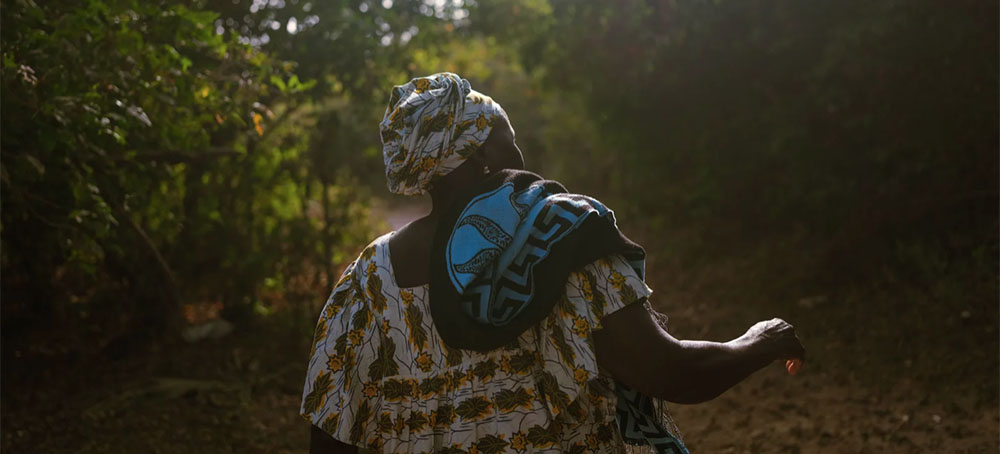
 

Meet the People Safeguarding the Sacred Forests and Lagoons of West AfricaDiakine Sambou, queen of the sacred forest of Kaoupoto, on Feb. 23, 2021, in Mlomp, Senegal. (photo: Ricci Shryock/NPR)

Meet the People Safeguarding the Sacred Forests and Lagoons of West Africa
Ricci Shryock, NPR
Shryock writes: "When a logging company tried to force its way into a traditional forest in Daniel Karworo's hometown in rural Liberia, the machine got stuck in the mud and did not manage to cut down a single tree." 

When a logging company tried to force its way into a traditional forest in Daniel Karworo's hometown in rural Liberia, the machine got stuck in the mud and did not manage to cut down a single tree.

Karworo says the spirit of the sacred forest stopped the truck.

But he also remembers his aunts and relatives physically protesting to protect what they say is their priceless community forest.

"[The logging company] said the government already gave them papers to enter the forest," he recalls nearly 20 years later. "The people said, 'No, this is our traditional forest. We are reserving it for our great-grandchildren. We are protecting it for them.'

Despite the residents' pleas, the loggers' large machine went in to cut down the timber. Karworo says it got stuck in the mud for months.

In areas throughout West African countries such as Liberia, Senegal and Guinea-Bissau, communities have designated biodiversity hotspots, including forests and lagoons, as sacred. They believe no price can be placed on the plants and animals that live there. Many are forbidden from entering the areas, where traditional rites of passage and justice ceremonies take place. This system has served as a conservation tool respected by these communities for generations.

The amount of land that is conserved might be small in sacred spaces — typically no larger than 10 acres — but the system is built on communities living within protected lands and developing and nurturing their symbiotic relationship with nature. The system starkly contrasts with some current, non-Indigenous North American methods of prohibiting humans from living in certain protected areas.

At a small lagoon between the ocean and mangroves in Barconie, Liberia, people can swim and wade, but they are prohibited from killing a single fish.

"All of the fish that you see in the water there, they are all the people in the community," says the town chairman, Alphonso Dennis. "They are the children of the community. That's how we were taught. If you kill one of those fish, someone in the community will be affected."

In nearby David's Town, Borbor Kealeh has protected a small area of traditional forest for more than 40 years — as he says his parents did before him. "The love of the human side, and of the forest on this side — we love both sides. We cannot pick one side," he says.

In southern Senegal, women are often the "queens" of sacred forests. Diakine Sambou, who has guarded a sacred forest in the country's Casamance region for decades, says her role is to act as an interlocutor between nature and the community.

"It's a strong relationship," she says. "We don't do anything without nature's permission, and if you don't take care of the trees, the environment will remind you of what you have done. No one enters the sacred forest to cut down the trees there, never, never. It's sacred."

Guardians like Sambou often speak in vague terms when describing their forests. One reason is because an essential element in keeping the forests sacred is ensuring their traditions stay secret.

But another reason the descriptions are hard to translate is that when people like Kealeh speak about their forests, they describe time in terms of generations instead of days or years. They measure value in an invisible feeling of peace of mind, rather than in dollars and cents.

While the terms and words may be different, the message is clear: The community's existence is intricately linked to the well-being and survival of the biodiversity and natural resources surrounding it.

Communities far beyond these countries' borders benefit from the conservation-minded relationship these communities in West and Central Africa have with nature, says Ranece Jovial Ndjeudja, Congo Basin forest campaign manager for Greenpeace Africa.

"Those forests have the capacity to capture carbon from the air, which is one of the key areas that is being used at the international level to ensure the fight against climate change," Ndjeudja says. He is critical of efforts to monetize the carbon captures from communities who have long-term, valued relationships with forests.

Placing a dollar value on conserving these areas risks destroying the very belief system and way of thinking that have ensured their survival in the first place, researchers say. Their value cannot be translated into monetary terms, says Aby Sene, professor and researcher at Clemson University in South Carolina.

"The example of the Casamance, these sacred forests are maintained by the Diola people, who maintained their way of life and resisted colonial and capitalist structures, and that is precisely why these lands are rich in biodiversity for so long," Sene says.

She says it is essential to reinforce communal stewardship of the land, rather than ownership.

"My dad is Serer," she says referring to a Senegalese group of people, "and in the Serer culture, there is this thing that says land is not owned by the people who are on it right now. We have borrowed it from the ancestors, and we must preserve it for the unborn."

Sene says, "People are taking care of the land because they understand that it is borrowed — borrowed from the ancestors and preserved for the unborn."


READ MORE 

SNL Roasts the Chinese Spy Balloon FlapSpy Balloon Cold Open - SNL with Bowen Yang. (photo: SNL/YouTube)

SNL Roasts the Chinese Spy Balloon Flap
Giulia Heyward, NPR
Heyward writes: "Saturday Night Live kicked off last night's show by spoofing the latest suspected threat to national security: a Chinese balloon." 

The balloon, which the Biden administration believes the Chinese government was using for surveillance, became an internet celebrity when people began tracking its travels across U.S. airspace. China's Foreign Affairs Ministry said the balloon was for meteorological research and accidentally went adrift. But its presence led Secretary of State Antony Blinken to postpone a trip to Beijing amid rising tensions between the two nations.

The U.S. military shot down the balloon off the coast of South Carolina on Saturday — a move that the Chinese government called an overreaction. Hours later, the downed balloon became the subject of the SNL cold open.

The sketch starts with Chloe Fineman playing the role of MSNBC host Katy Tur and detailing the criticism from Republicans who said President Biden should have authorized the balloon's demise sooner.

A Pentagon official, played by Kenan Thompson, struggled to keep a straight face as he retold the shooting while using a happy birthday balloon as a prop. The sketch ends with an exclusive interview with the downed balloon, portrayed by Bowen Yang.

Yang, who previously portrayed the iceberg that sunk the Titanic, quipped that Americans would miss his presence in the sky.

"You've made it very clear that I'm not welcome here, so good job," Yang said. "But let me tell you something: you're gonna miss this Chinese spy balloon — I mean, normal balloon, damn it."

READ MORE 

Huge Quake Toppled Buildings in Turkey and Syria as People SleptJanuaris, Syria. (photo: Rami Al Sayed/AFP/Getty Images)

Huge Quake Toppled Buildings in Turkey and Syria as People Slept
BBC News
Excerpt: "A powerful earthquake has struck south-eastern Turkey, near the Syrian border, killing more than 1,700 people as they slept and trapping many others." 

A powerful earthquake has struck south-eastern Turkey, near the Syrian border, killing more than 1,700 people as they slept and trapping many others.


The US Geological Survey said the 7.8 magnitude tremor struck at 04:17 local time (01:17 GMT) at a depth of 17.9km (11 miles) near the city of Gaziantep.

Hours later, a second quake, which had a magnitude of 7.5, hit the Elbistan district of Kahramanmaras province.

So far, more than 1,000 people have died in Turkey and 780 in Syria.

Seismologists said the first quake was one of the largest ever recorded in Turkey.

Many thousands of people were injured - with at least 5,385 people hurt in Turkey and 2,000 in Syria.

Many of the victims are in war-torn northern Syria, where millions of refugees live in camps on both sides of the Syria-Turkey border. There have been dozens of fatalities reported in rebel-held areas.

Many buildings have collapsed and rescue teams have been deployed to search for survivors under huge piles of rubble in freezing and snowy conditions.

Shocking images show buildings that were four or five storeys high flattened, roads destroyed and mountains of rubble.

Among the buildings destroyed was Gaziantep Castle, a historical landmark that had stood for more than 2,000 years.

And a shopping mall in the city of Diyarbakir collapsed, a BBC Turkish correspondent there reported.

The second quake, which struck at 13:24 local time (10:24 GMT), had its epicentre about 80 miles (128km) north of the original tremor in the Pazarcik district of Kahramanmaras province.

An official from Turkey's Disaster and Emergency Management Authority said it was "not an aftershock" and was "independent" from the earlier quake.

Hours after the first earthquake, a toddler was pulled from the rubble in Azaz, Syria, dirty and bloodied but alive. Video shows rescuers running to get her out of the cold.

The Turkish Red Crescent has called for citizens to make blood donations, and the organisation's president, Kerem Kınık, said on Twitter that additional blood and medical products were being sent to the affected region.

Following an international appeal for help, Turkey's President Recep Tayyip Erdogan said 45 countries had offered support.

The European Union is sending search and rescue teams to Turkey, while rescuers from the Netherlands and Romania are already on their way. The UK has said it will send 76 search and rescue specialists, equipment and rescue dogs to Turkey.

France, Germany, Israel, and the United States have also pledged to help. Russian President Vladimir Putin has offered help to both Turkey and Syria, as has Iran.

Turkish Interior Minister Suleymon Soylu said 10 cities were affected by the initial quake, including Hatay, Osmaniye, Adiyaman, Malatya, Sanliurfa, Adana, Diyarbakir and Kilis.

School has been suspended in those cities for at least a week.

'We need help'

In Turkey, President Erdogan said the death toll from the quake was 912 and was expected to rise further.

The Syrian health ministry said 371 people had died in the provinces of Aleppo, Latakia, Hama and Tartus.

A volunteer with the White Helmets rescue group, which operates in rebel-controlled areas of north-western Syria, fought back tears as he described the devastation in Sarmada, near the border with Turkey.

"Many buildings in different cities and villages in north-western Syria collapsed," he told the BBC.

"Still now, many families are under the rubble. We are trying to save them but it's a very hard task for us.

"We need help. We need the international community to do something, to help us, to support us. North-western Syria is now a disaster area. We need help from everyone to save our people," he added.

The earthquake was powerful enough to be felt as far away as Cyprus, Lebanon and Israel.

"I was writing something and just all of a sudden the entire building started shaking and yes I didn't really know what to feel," Mohamad El Chamaa, a student in the Lebanese capital, Beirut, told the BBC.

"I was right next to the window so I was just scared that they might shatter. It went on for four-five minutes and it was pretty horrific. It was mind-blowing," he said.

Rushdi Abualouf, a BBC producer in the Gaza Strip, said there was about 45 seconds of shaking in the house he was staying in.

Turkey lies in one of the world's most active earthquake zones.

In 1999, more than 17,000 people were killed after a powerful tremor rocked the north-west of the country.

READ MORE 

Two Bald Eagles Nested in a Pine for Years. A Utility Company Tried to Chop It DownBald eagles are protected under state and federal laws. (photo: Fred Thornhill/AP)

Two Bald Eagles Nested in a Pine for Years. A Utility Company Tried to Chop It Down
Maanvi Singh, Guardian UK
Singh writes: "Up a winding northern California highway, beneath a 120ft ponderosa pine tree, a group of environmentalists gathered for some high stakes bird-watching." 


The fight to save the birds’ habitat ignites old frustrations over California’s engagement with tribal communities

Up a winding northern California highway, beneath a 120ft ponderosa pine tree, a group of environmentalists gathered for some high stakes bird-watching.

Everyone was waiting for a pair of bald eagles to swoop into their nest, an orb of twigs and branches balanced amid the tree’s scraggly branches. The elusive raptors have nested here for years, renovating and upgrading it each year in preparation for hatchlings in the spring.

But this year, unless the eagles – who spend the fall and winter months away from their nests – were observed back at their tree by mid-January, they’d lose it.

That’s because Pacific Gas & Electric, the largest utility company in the US, had obtained a permit to chop down the ageing pine, arguing that it could fall on the company’s nearby power line and spark a catastrophic wildfire. Environmentalists and the Coyote Valley Band of Pomo Indians countered that PG&E – which is facing increasing pressure to stop its equipment from starting fires across the state – should move their power lines instead.

Lawyers for the tribe beseeched the utility company to reconsider. Locals printed up signs to save the nest. In recent weeks, activists and tribal elders protested, prayed and physically barricaded themselves in front of the tree as PG&E crews came – alongside sheriff’s deputies – to cut it down.

“They had their cherry picker and their wood chipper ready,” said Polly Girvin, an environmental and Indigenous rights activist. “But we weren’t going to back down.”

Now, armed with binoculars and cell phones on a misty January morning, they were on watch. Bald eagles are protected under state and federal laws, and PG&E could only take down the tree so long as the nest was unoccupied or abandoned. “We need to keep proving that this is an active nest,” explained Girvin.

The eagles did come that day, arriving just as a thick rain began to roll in. A few days later, PG&E said it would back down.

But the showdown over this lone tree, near an electrical line that serves just a single property, has raised difficult questions about PG&E’s approach to fire safety and its fraught relationship with the communities it serves, many of whom live in rural, wildland areas.

The company is under growing legal and financial pressure to act after its power lines have been blamed for sparking multiple fires, including a deadly 2020 fire in northern Shasta county. Last year, it reached a $55m settlement with six counties over several other fires, including the Kincade fire and Dixie fire.

As PG&E rushes to trim trees and remove brush near its power lines to avert future catastrophes – and avoid liability – environmentalists worry that local nuances are being overlooked.

“PG&E says that the tree is dangerous, it’s a hazard – but that’s not right. It’s their lines that are the hazard,” said Naomi Wagner, a local activist with the environmental group Earth First!. “So why is it the tree that needs to go?”

During their recent bald eagle watch party, Wagner, Girvin and half a dozen other activists settled around to a small campfire that fizzled in the rain. Old-time environmentalists who’d been agitating since the 1960s were joined by their kids, grandkids and dogs. Coffee, muffins and binoculars were passed all around, along with warnings not to squeal or shout to avoid startling the eagles.

Priscilla Hunter, the former Coyote Valley chair squinted up and shifted closer to the fire. “It’s a miracle that they are here,” she said. Michael Hunter, the tribe’s current chair, jumped up. “Hey, birds, where are you at?”

Activists and tribal leaders, to whom the eagle holds cultural significance, have alleged that the power company and US Fish and Wildlife Service failed to properly inform and consult with the tribe in deciding to remove the tree, which could remain standing and serve as a habitat for this eagle couple, or their offspring, for years to come.

And here was a bird that was not only sacred to Native American tribes, but also a symbol of the United States. And still, crews had come to take down the tree on 9 January – a day before National Save the Eagles Day. “I mean how clueless could PG&E be,” said Wagner.

Moreover, the owner of the property where the tree stands, as well as the residents who live there, all supported alternative solutions – including rerouting or burying the electric line, or setting up a solar microgrid.

In TV advertisements, PG&E has been promoting its plans to bury 10,000 miles of power lines underground to reduce the risk of them hitting trees, so why not do the same here? “I mean, come on,” Girvin said. “They just want to take the fast and easy route.”

Meanwhile, PG&E contended in public statements the tree “contains an inactive bald eagle’s nest, is a hazard and is at risk of failing and striking a PG&E line in a high fire-threat area”.

Ultimately, the company was proven wrong when eagles finally swooped in. They first arrived as activists and tribal elders sang and prayed beneath the tree, hours before PG&E crews arrived. And they returned each day afterwards. “It was magical,” said Girvin.

A few days later, PG&E issued a statement saying that it would bury the lines, after all. “This solution allows us to protect our hometowns while also taking into account the values of our local tribe, property owners and environmental advocates,” said Ron Richardson, vice-president of PG&E’s north coast region, in a statement to the Guardian.

It was a hard-won concession – one that the activists will remain wary of until they receive a legally binding commitment to leave the tree standing. Though the company can’t take down a tree with nesting eagles, they could return if the eagles leave again. “It seems like you just have to expose how inefficient this is,” said Hunter, the Coyote Valley band chair.

This was already the second year that PG&E had tried to take down this tree. In 2022, as well, the eagle couple returned to their nest just in the nick of time to call off the saws. “And they had a baby!” said Joseph Seidell, a cannabis farmer who lives on the property and led early protests against PG&E’s plans. “I mean just look at this,” he gestured. “This giant pile of beautiful woven twigs holds this beautiful, sacred bird.”

In August, the utility company de-energized the overhead electrical line, just in case the tree did end up falling and sparking a blaze, and asked for Seidell’s agreement that he wouldn’t impede crews when they came to take down the tree in the future. “It was devastating,” he said.

The ordeal has left tribal leaders and environmentalists concerned that the utility company – and the government agencies that oversee and permit its fire safety plans – have failed to properly communicate and consult with communities before undertaking work that impacts important wilderness areas.

Although the Fish and Wildlife Service had sent a letter informing Hunter of PG&E’s intention to cut down the tree in December, lawyers representing the tribe alleged that authorities didn’t wait for a response and didn’t give tribal authorities enough time to review the permit over the holiday season.

The agency was unable respond to the Guardian’s request for comment before publication.

The Fish and Wildlife Service, which has a codified “trust responsibility” – a binding moral obligation – to tribes, could do more to engage with and consult with tribal governments, said Don Hankins, a pyrogeographer and Plains Miwok fire expert at California State University, Chico.

“There clearly needs to be better coordination on these sorts of things,” he said. After a two-year fight over one tree, he noted, it’s unclear why government officials and PG&E didn’t coordinate with tribal leaders sooner.

PG&E and the Fish and Wildlife Service do have policies to ensure that they don’t impact vulnerable species, Hankins said – but those laws and policies don’t always account for the complexities of specific environments.

In Mendocino county, where there is a dark history of logging in the 1800s, which decimated old-growth redwoods and violently displaced some Native villages, a lack of proper communication and care by PG&E and the Fish and Wildlife Service brings an extra sting.

And even now, the Coyote Valley Band of Pomo Indians are involved in a protracted fight to curb commercial logging in the nearby Jackson Demonstration state forest, a nearly 50,000-acre area managed by the California department of forestry and fire prevention, or Cal Fire.

And although various government and private operators in this region have made some gestures toward working with local tribes with crucial, generational knowledge about the fragile landscapes here – they’ve often failed to meaningfully follow through, Girvin said.

Crews for various agencies have operated “willy nilly for years”, she said. “They haven’t cared at all about putting skid trails through sacred sites, or thought carefully about habitat protection and the species affected in the area.” These incursions can feel especially frustrating when the government for decades ignored, denied and criminalised traditional stewardship practices of tribes up and down California, she noted.

“To the settlers, whatever or whoever was in the way of doing business, they’d just cut down,” said Priscilla Hunter. “That’s what these eagles reminded me of.”


READ MORE


Contribute to RSN

Follow us on facebook and twitter!

Update My Monthly Donation

PO Box 2043 / Citrus Heights, CA 95611


Saturday, February 4, 2023

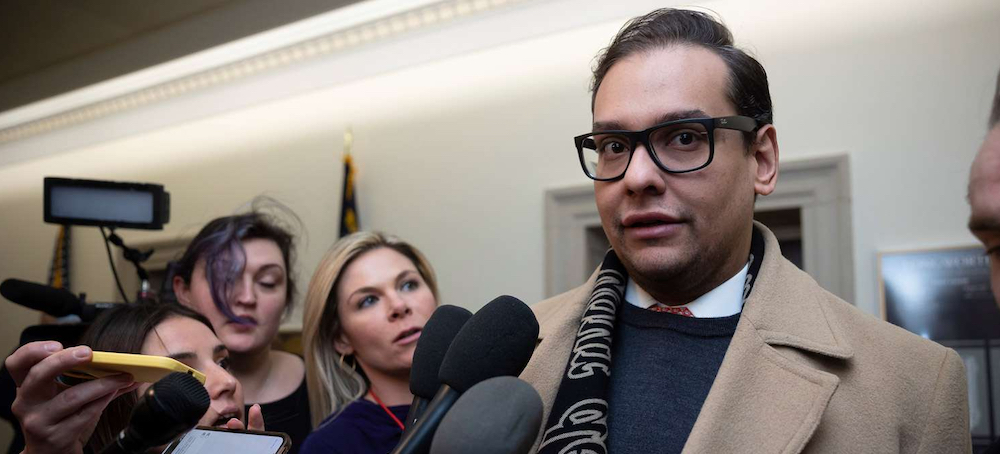
Bess Levin | Against All Odds, the George Santos Story Has Gotten Even More Bizarre


Reader Supported News
04 February 23

Live on the homepage now!
Reader Supported News

YES WE ARE SERIOUS, BELIEVE IT : We are serious about being powerful voice social justice, we are serious about fighting for economic justice and we are serious about real meaningful reform. We are also serious about maintaining a stable organization. To do that we need dependable funding. And, yes we are absolutely serious about funding as well.
Marc Ash • Founder, Reader Supported News

Sure, I'll make a donation!


Rep. George Santos outside his office on Capitol Hill. (photo: Francis Chung/POLITICO/AP)
Bess Levin | Against All Odds, the George Santos Story Has Gotten Even More Bizarre
Bess Levin, Vanity Fair
Levin writes: "Less than two months after first learning that newly elected congressman George Santos lied about, conservatively, 97% of his biography, it's basically become a full-time job to keep up with the twists, turns, investigations, and insane revelations concerning the GOP lawmaker." 


There’s also the matter of a large campaign donation from a relative who says they never gave Santos any money.


Less than two months after first learning that newly elected congressman George Santos lied about, conservatively, 97% of his biography, it’s basically become a full-time job to keep up with the twists, turns, investigations, and insane revelations concerning the GOP lawmaker. Last week alone, for instance, it emerged that he’d baselessly:

  • Claimed to have been the target of an assassination attempt

  • Claimed to have been mugged in broad daylight on the corner of Fifth Avenue and 55th Street

  • Told a roommate he was a male model who’d be appearing in Vogue

  • Told the same roommate that as a result of his work during Fashion Week, he’d palled around with Victoria’s Secret models

  • Told would-be investors in the firm he worked at—which was accused by the SEC of operating a Ponzi scheme—that he did deals with some of the richest and most powerful people in finance

Again, all of this came to light just last week! And that’s on top of the unearthed lies that came before, including the ones about having grandparents who fled the Holocaust and having been a star player on the Baruch College volleyball team!

So you’d think, given all we know, that there’d be very little left to come out about the guy, or few new avenues to probe. And yet, apparently, you’d think wrong.

Here’s what’s emerged in just the last few days.

The alleged scamming of a disabled veteran and his dying service dog is getting the FBI treatment

On Wednesday, Politico reported that the Federal Bureau of Investigation had launched a probe of an alleged GoFundMe scheme by Santos. That scheme, according to disabled veteran Richard Osthoff, involved Santos setting up a GoFundMe to solicit money to pay for surgery for Osthoff’s service dog, Sapphire, raising $3,000, and then absconding with the cash. Sapphire died in 2017, and Osthoff says he contemplated suicide over the experience with Santos. According to the veteran, he was contacted this week by two agents on behalf of the US Attorney’s Office for the Eastern District of New York. And it’s possible the case could result in criminal charges for Santos sooner rather than later.

Per Politico:

Joshua Schiller, a senior trial lawyer who has practiced in the Eastern District, said the veteran’s encounter with Santos could offer prosecutors a quick way to hit the Republican congressman with criminal charges even though they’re also investigating heftier possible financial crimes. “I think there is an urgency here because Santos is currently in a position to make laws,” Schiller said. “I can think of examples where the government used a lesser indictment to seize assets and try to cause the defendant to plea to a deal before bringing a second or third indictment on more serious charges, and I bet that is the case here.”

Is Sapphire looking down at all of this with glee, and maybe also haunting Santos as he walks the halls of Congress? Seems likely.

(Santos has denied Osthoff’s claims, calling them “fake.”)

Relative who Santos claimed made a top dollar donation to his campaign has no idea what he’s talking about

Bold lies about the Holocaust and male-modeling jobs aside, one major source of potential trouble for Santos involves campaign finance laws. In addition to questions about the source of large campaign loans, and dozens of expenditures that all came in just one cent below the amount for which Santos would have to provide receipts, new reporting suggests a donation made in a relative’s name was not on the up-and-up.

Per Mother Jones:

According to Santos’s campaign filings with the Federal Election Commission, his recent campaign pulled in more than $45,000 from relatives who lived in Queens. This included a mail handler who gave more than $4,000, a painter who donated the maximum of $5,800, and a student who also contributed $5,800. One of Santos’s relatives, who was recorded as giving $5,800, says that they did not make any donation to Santos.

On Tuesday, a Mother Jones reporter visited the Queens home of this relative. Informed that two donations of $2,900 each were listed under this person’s name and address in Santos’s campaign finance reports, the relative, who asked not to be identified, said, “I’m dumbfounded.” The relative had no idea where the money for these donations came from and remarked, “It’s all news to me.” This person added, “I don’t have that money to throw around!” The relative’s account raises the possibility that money was improperly donated to Santos’s most recent campaign.

As Mother Jones notes, it’s against the law to make a contribution under a false name or someone else’s name. “It’s called a contribution in the name of another,” Saurav Ghosh, a campaign finance expert, told the outlet. “It’s something that is explicitly prohibited under federal law.” Santos and his lawyer did not respond to Mother Jones’s requests for comment.

A top aide dealing with his money matters up and quit

On Tuesday, The New York Times reported that Nancy Marks, Santos’s longtime campaign treasurer and “trusted aide,” had resigned. Maybe the move had nothing to do with Santos being a serial liar who has potentially committed crimes! Maybe she’s just looking to try a new career path! Maybe…uh, yeah, we can‘t think of any other reason she’d quit besides the obvious.

He hired a guy who did time for a gang execution to be his lawyer

Why did Santos hire a man who served time in prison for his role in an execution to defend him in his fraud case in Brazil back in the day? No, really, we’re asking.

Per the Daily Beast:

The lawyer Rep. George Santos (R-NY) chose to defend him in his fraud case in Brazil was convicted and jailed in connection with a gang execution, according to a report. Jonymar Vasconcelos, 47, was sentenced to 18 years in prison in 2007 for his role in the fatal shooting of a mechanic three years earlier, São Paulo’s Folha newspaper reported Wednesday…. It’s unclear how Santos found Vasconcelos to defend him in his fraud case—in which it’s alleged the congressman paid for goods with a stolen checkbook in 2008—given that Vasconcelos is reportedly not affiliated with any law firm and does not list contact information online.

Approached by the outlet about the matter, Santos reportedly said that he couldn’t understand Portuguese—despite clearly speaking it fluently—and then failed to answer questions sent to him in English.

(Santos admitted to the alleged crime years ago, yet insisted in a recent interview: “I am not a criminal. Not here, not abroad, in any jurisdiction in the world have I ever committed any crimes.”)

Pleading the Fifth…to a reporter

Invoking one’s Fifth Amendment rights is generally reserved for legal matters, when one is under oath. And yet:

READ MORE 

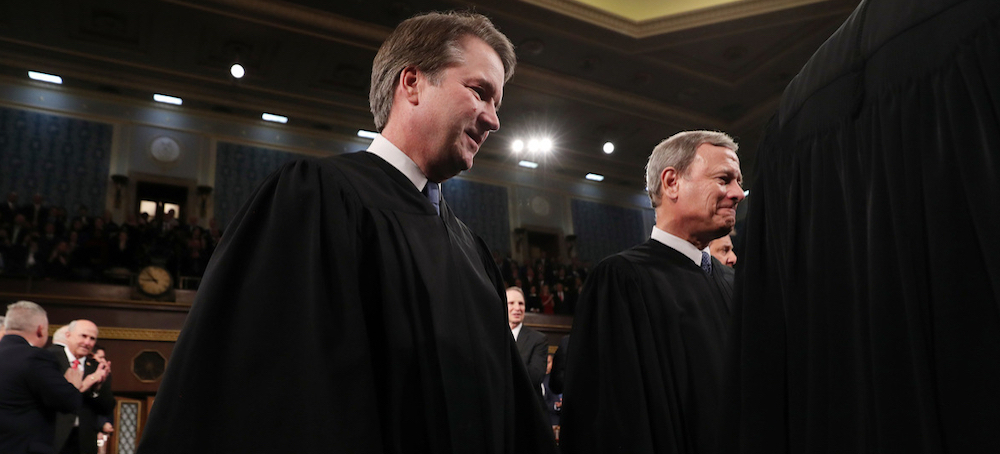
Brett Kavanaugh May Have Quietly Sabotaged Clarence Thomas' Extreme Gun RulingJustice Brett Kavanaugh and Chief Justice John Roberts. (photo: Getty Images)

Mark Joseph Stern | Brett Kavanaugh May Have Quietly Sabotaged Clarence Thomas' Extreme Gun Ruling
Mark Joseph Stern, Slate
Joseph Stern writes: "The 5th U.S. Circuit Court of Appeals' decision on Thursday allowing alleged domestic abusers to keep their guns is perhaps the most radical Second Amendment decision in the history of the federal judiciary."

The 5th U.S. Circuit Court of Appeals’ decision on Thursday allowing alleged domestic abusers to keep their guns is perhaps the most radical Second Amendment decision in the history of the federal judiciary. It is not, however, a surprise. Justice Clarence Thomas’ opinion in last year’s Bruen case invited lower courts to strike down any gun restrictions that “our ancestors would never have accepted.” This standard is infinitely malleable given the hopeless ambiguities in the historical record. But even where the record is clear, Thomas’ test leads to heinous results given that the “ancestors” in question were often violently racist and misogynistic white men. As the 5th Circuit tacitly acknowledged, “our ancestors” would “never have accepted” disarming domestic abusers because they did not believe domestic violence was a crime.

And yet, despite the reach of Bruen, I am fairly confident that five justices will reverse the 5th Circuit and uphold a variety of laws that our ancestors would have rejected, including the federal ban on owning a gun while subject to a restraining order for domestic violence. Why? Because I do not think five justices agree with Bruen. Yes, it was a 6–3 decision. Yes, every justice in the majority joined Thomas’ opinion in full. But one justice, Brett Kavanaugh, wrote a separate opinion laying out a different standard that cannot be squared with Thomas’. And another, Chief Justice John Roberts, joined him. Under the Kavanaugh-Roberts test, disarming alleged abusers—and other individual adjudged to be dangerous—is almost certainly constitutional.

It is almost never wise to be optimistic about this Supreme Court. And it is frightening to think that thousands of lives depend on Kavanaugh ruling the right way. But in this most unusual case, I think cautious confidence is in order.

To see why, just hold up Thomas’ and Kavanaugh’s opinions in Bruen side by side. Both justices agreed with the bottom line: New York’s concealed carry law, which required applicants to demonstrate a heightened need for self-defense, violates the Second Amendment. But take one step beyond that and the justices start to diverge. Thomas devotes his opinion to articulating a new legal test: Modern gun restrictions are “presumptively” unconstitutional unless they have enough “historical analogues” from the 18th and 19th centuries to prove that they are rooted in “this nation’s historical tradition of firearm regulation.” That’s the test that the 5th Circuit used to find that the government cannot bar people from owning guns while they are under a restraining order for domestic violence.

Although Kavanaugh formally signed onto Thomas’ opinion, he spent the bulk of his separate concurrence recasting it as something very different. Kavanaugh wrote that he wanted “to underscore two important points about the limits” of Thomas’ opinion. First, he clarified that the decision does not affect “the existing licensing regimes” in 43 states that let any law-abiding adult carry a concealed weapon. “As the court explains,” Kavanaugh declared, “New York’s outlier may-issue regime is constitutionally problematic because it grants open-ended discretion to licensing officials and authorizes licenses only for those applicants who can show some special need apart from self-defense.” In other words, New York’s “outlier” law violates the Second Amendment because it grants state officials so much latitude in determining who deserves to carry a gun.

But that’s not actually what the court—that is, Clarence Thomas’ majority opinion—said! Thomas did not focus primarily on the problem of state officials’ “open-ended discretion.” He instead zeroed in on the ostensible lack of a historical basis for such stringent limits on concealed carry. These are two very different things! In his concurrence, Kavanaugh then went on to preemptively greenlight a variety of restrictions on concealed carry permits, including “fingerprinting, a background check, a mental health records check, and training in firearms handling and in laws regarding the use of force.” All these requirements, he declared, are “constitutionally permissible.”

Wait—they are? Why? Under Thomas’ test, that’s an open question: The government would have to demonstrate that in the 18th and 19th centuries, a critical mass of states forced citizens to jump through these hoops before acquiring a concealed carry permit. It’s extremely unlikely that states demanded fingerprinting (which did not exist at that time) or a background check (frequently impossible in an era with scarce, scattershot paper records) or a mental health records check (since the very concept of mental health was in its infancy). These requirements are only constitutional—indeed, obviously constitutional, per Kavanaugh—under a more lenient test. A test that, for instance, measures the importance of the government’s objectives against the burden on the individual’s rights. Yet Thomas expressly disclaimed this kind of “means-end scrutiny,” insisting that it is irrelevant how many lives a particular gun restriction might save.

Turn now to Kavanaugh’s second “important point” about “the limits” of Bruen. The justice reiterated a famous passage in D.C. v. Heller, the 2008 decision that first established an individual right to bear arms. In Heller, Justice Antonin Scalia wrote that this right “is not unlimited,” adding: “Nothing in our opinion should be taken to cast doubt on longstanding prohibitions on the possession of firearms by felons and the mentally ill, or laws forbidding the carrying of firearms in sensitive places such as schools and government buildings, or laws imposing conditions and qualifications on the commercial sale of arms. … We identify these presumptively lawful regulatory measures only as examples; our list does not purport to be exhaustive.” Kavanaugh reprinted this entire passage just to endorse it.

Here’s the thing, though: Scalia did not want to add that passage to Heller. He only inserted it because Justice Anthony Kennedy, the swing vote, asked for language limiting the decision’s reach. Kennedy knew he could extract this concession from Scalia as the price of his vote. Lower courts routinely cite that passage when upholding all manner of gun restrictions. By reprinting and endorsing it, Kavanaugh signaled that he was on board with at least some limits on firearms that “our ancestors” wouldn’t have liked. It’s true that people accused of domestic violence do not automatically fit into the category of “felons and the mentally ill.” But it stands to reason that if the government can disarm someone adjudged to be mentally ill in a civil proceeding, it can disarm someone adjudged to be a domestic abuser in a civil proceeding, as well.

If I am right that Kavanaugh (along with Roberts) sought to limit Bruen’s scope in his concurrence, the question arises: Why not force Thomas to tone down his opinion for the court? Why not follow the approach of his predecessor and mentor, Anthony Kennedy, and extract a concession in the form of a limiting principle or a more lenient test?

My suspicion is that Kavanaugh did not want to be accused of betraying the gun rights movement by watering down a landmark victory for the cause. It’s also possible, however, that Kavanaugh simply did not want to bother negotiating with Thomas when he could write his own opinion laying out a different vision of the Second Amendment. After all, the justice has a well-known habit—infuriating to conservatives—of limiting majority opinions through separate concurrences. Maybe he already knew Roberts would sign on, thereby sending an important message: There are not, in fact, five votes for the no-holds-barred assault on modern gun regulations that Thomas craves.

If there is any group of people whom the government has a good reason to disarm, it’s people accused of domestic abuse. These individuals are vastly more likely to kill their partners or commit mass shootings. To Thomas, this fact does not matter one bit. To Kavanaugh, I think it does. The 5th Circuit may be convinced that Bruen gave it carte blanche to invalidate every gun safety law under the sun. But its certitude may well be misplaced

READ MORE 

Russians Sending 'Significant Amounts of Money' to Help Ukraine via CryptoA Ukrainian soldier guards his position. (photo: Mstyslav Chernov/AP)

Russians Sending 'Significant Amounts of Money' to Help Ukraine via Crypto
Brian McGleenon, Yahoo! Finance
McGleenon writes: "Russians who are incensed by president Vladimir Putin's invasion are sending 'significant amounts of money' through cryptocurrency back channels to help Ukraine, according to its deputy digital minister." 

Russians who are incensed by president Vladimir Putin's invasion are sending "significant amounts of money" through cryptocurrency back channels to help Ukraine, according to its deputy digital minister.

Two days after Putin's troops and tanks crossed the international border between Russia and Ukraine on 24 February 2022, the Ukrainian government's Twitter accounts posted requests for cryptocurrency donations.

Blockchains are transparent publicly distributed ledgers, and since then Ukraine has been analysing where in the world that crypto-donations are being sent from.

The war-torn country has been able to identify that more than 100,000 people have sent aid to Ukraine via cryptocurrency channels.

"Donations to Ukraine has varied from one dollar to millions of dollars," Ukraine's deputy digital minister Alex Bornyakov told Yahoo Finance's The Crypto Mile.

"Crypto, in certain cases, offers an anonymous way to transfer money. We saw that some Russians were donating to us a significant sum," Bornyakov added.

"The Russian people who have donated have sent significant amounts of money.

"I understand that from within Russia there is no other way for them to do this other than through crypto."

The majority of crypto-donations received by Ukraine to date have been in bitcoin (BTC-USD) and ether (ETH-USD), although US dollar stablecoins have contributed a significant proportion.

One-third of the donated amount came through the Crypto Fund Aid For Ukraine initiative, which is powered by the Ukraine-based crypto platform Kuna and blockchain company Everstake, and supported by the Ministry of Digital Transformation of Ukraine.

Among the most popular digital asset donations sent to Ukraine are, bitcoin, ethereum, cardano (ADA-USD), solana (SOL-USD), polkadot (DOT-USD) and stablecoins such as USDC (USDC-USD) and USDT (USDT-USD).

"So far Ukraine has received around 650 bitcoins, more than 10,000 ethereum, and there was also a significant amount of polkadot, almost 1.8 million in solana and $2.8m in the form of the USDC stablecoin," the deputy digital minister added.

Ukraine's crypto and blockchain industry

Since the beginning of the Russian invasion Ukraine cryptocurrency exchange Kuna has emerged as the largest crypto-fundraising platform in the country, an exchange founded by Ukrainian Mykhailo Chobanian in December 2015.

To cash out the crypto sent from around the world the Ukrainian government uses Kuna.

According to Crystal Blockchain Analytics, as of 30 November, over $184m in crypto assets have been raised in support of Ukraine.

These include a single transaction of $1.86m from the sale of NFTs created by Julian Assange and Pak.

And, a CryptoPunk NFT worth approximately $200,000 was also sent to the Ukraine government's Ethereum account.

The Ukrainian NGO 'Come Back Alive', which supports the nation's military, received several million dollars in crypto donations as reported in research by blockchain analytics firm Elliptic.

However, crowdfunding and content creating platform Patreon suspended Come Back Alive's page on 24 February for policy violations related to its military activities.

Donation in crypto can be made via the website for individuals who wanted to send cryptocurrency as aid to the country and its citizens. However, since the collapse of FTX in November 2022 the link to the website now redirects to the official Ukrainian government donation website.

Ukraine's war-battered economy

Since Russia's recent missile strikes against Ukraine's energy infrastructure, nation-wide electricity rationing is in place. The window in which Bornyakov could conduct the interview with Yahoo Finance UK was limited.

The Russian invasion has significantly impacted Ukraine's economy. The country has faced declining industrial production, rising inflation, and a depreciating currency.

The loss of Crimea and its industries when Russia annexed the region in February 2014 has also disrupted trade and investment, leading to a decrease in Ukraine's Gross Domestic Product and a rise in unemployment.

Additionally, the country has also had to cope with increased military spending and supporting internally displaced persons, further exacerbating the economic impact.

The International Monetary Fund (IMF) estimates that the conflict has cost Ukraine at least one-third of its GDP in 2022. With Ukraine's own economic data posting a 30.4% drop in GDP since the beginning of the war.

"In 2022, the Ukrainian economy suffered its largest losses and damages in the entire history of independence, inflicted on it by the Russian Federation," Ukrainian economy minister Yulia Svyrydenk, who is also first deputy prime minister, said in statement in January.

The decline in GDP as also been described as the biggest in any year since Ukraine won independence from the Soviet Union in 1991.

Ukraine DAO and Russian political activist Nadya Tolokonnikova

In July 2022, leading political activist and member of Pussy Riot Nadya Tolokonnikova told The Crypto Mile that NFTs can make powerful statements of civil disobedience and protest.

Tolokonnikova co-founded Ukraine DAO (decentralised autonomous organisation), which raised $6.75m (£5.66m) in ethereum in five days for organisations that help Ukrainians suffering from the war that has devastated their country. The funds were raised by selling an NFT depicting the Ukrainian flag.

Speaking on Episode 4 of The Crypto Mile, she said NFTs can be used to advance political causes: "Ukraine DAO has actually allowed a lot of people from Russia to donate to Ukraine, otherwise they would not have been able to send money because it is blocked by the Russian banking system."

Although the blockchain is a publicly visible distributed ledger recording all transactions in a transparent way, the system is out of reach of centralised authority and the crypto wallets that send and receive funds can remain anonymous.

Read more: UK unveils 'world-first' plans to regulate crypto and digital assets

"When you raise money for activism it is often for very sensitive topics that can potentially lead to trouble, so crypto can provide a layer of anonymity," Tolokonnikova said.

The co-founder of art-activist group Pussy Riot also launched Unicorn DAO in May 2022.

Unicorn DAO has pledged to use the NFT space to "redistribute wealth and visibility in order to create equality for women-identified and LGBTQ+ people".

The movement cites a report from 2021 by ArtTactic, that found only 5% of NFT sales were by female-identified artists.

The integration of NFTs, DAOs, and Decentralised Finance (DeFi) is transforming the way charities gather donations and distribute funds to those in need.

Crypto advocates have told news outlet Cointelegraph that the new technology has led to the creation of "new wealth distribution mechanisms".

According to crypto-author Anne Connelly, every organisation will eventually have a crypto donation platform, just like they accept credit cards.


READ MORE 

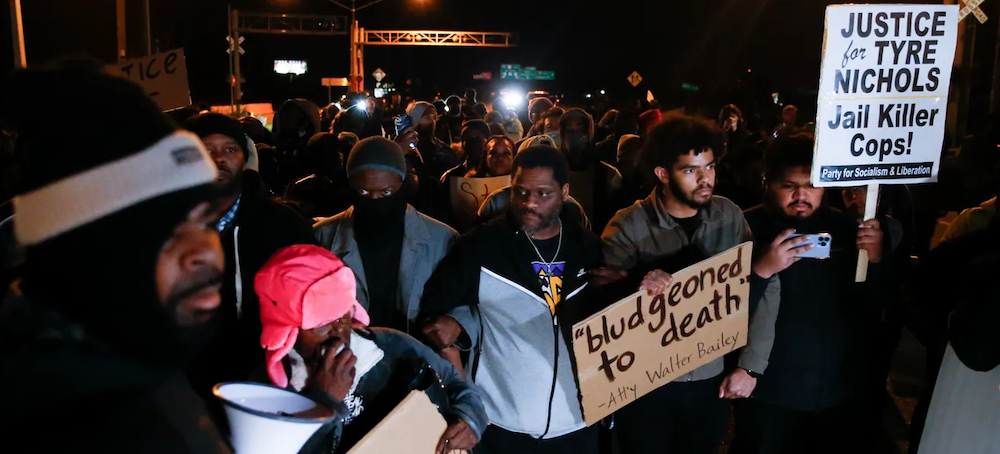
Sixth Memphis Police Officer Fired After Death of Tyre NicholsDemonstrators in Memphis respond after video was released showing how Tyre Nichols was beaten by five Memphis police officers. (photo: Chris Day/Jackson Sun)

Sixth Memphis Police Officer Fired After Death of Tyre Nichols
CBS News
Excerpt: "A sixth Memphis police officer has been fired in connection with the violent arrest and death of Tyre Nichols last month, the department announced Friday."

Asixth Memphis police officer has been fired in connection with the violent arrest and death of Tyre Nichols last month, the department announced Friday.

Memphis police said that former officer Preston Hemphill was fired after a "thorough review" found that he violated "multiple department policies," including "personal conduct" and "truthfulness." He also violated regulations regarding the use of a Taser, "issued equipment," and "inventory and processing recovered property."

Earlier this week, Hemphill was one of two more officers who were placed on administrative leave in connection with the Nichols' case. The other officer has not been identified. Hemphill had been with the department since March 2018, police said.

Bodycam and surveillance video showed the 29-year-old Nichols being violently assaulted during a traffic stop on Jan. 7. He died three days later from his injuries, on Jan. 10.

In a statement Monday, the department said Hemphill was under investigation for his participation in the "initial traffic stop" of Nichols "and the use of a Taser."

Lee Gerald, an attorney representing Hemphill, told CBS News on Monday that his client "was the third officer at the initial [traffic] stop of Mr. Nichols" and "was never present at the second scene," where video footage showed police beating Nichols at a nearby intersection. The first of four tapes documenting the arrest was taken from Hemphill's body camera footage, according to Gerald.

Hemphill is one of now six officers who have been fired in connection with the Nichols' arrest. The other five have been charged with second-degree murder. They have been identified as Tadarrius Bean, Demetrius Haley, Desmond Mills, Jr., Emmitt Martin III and Justin Smith.

Police initially said that Nichols was stopped for reckless driving, and alleged that, as officers approached him to make an arrest, a "confrontation" occurred and he ran away. A second "confrontation" also occurred at some point before Nichols was ultimately arrested, police said.

However, four videos released last week, which including footage from police body cameras and street surveillance cameras, showed officers first removing Nichols from his vehicle after pulling him over, an initial struggle when Nichols breaks loose and runs away from the officers, and then disturbing images of Nichols being restrained and beaten by five officers at an intersection.

The videos showed Nichols being kicked and punched in the head while being restrained, pepper sprayed, and struck multiple times with a baton.

Speaking at Nichols' funeral Wednesday, Vice President Kamala Harris said that "this violent act was not in pursuit of public safety. It was not in the interest of keeping the public safe, because one must ask, was it not in the interest of keeping the public safe that Tyre Nichols would be with us here today? Was he not also entitled to the right to be safe?"


READ MORE 

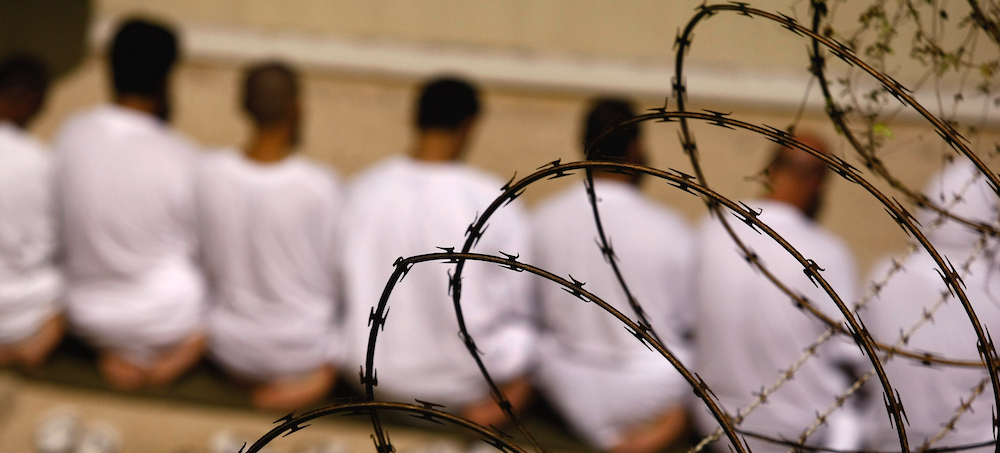
In a Rare Move, US Releases 'High-Value' Guantanamo PrisonerThe Guantanamo Bay Detention Camp. (photo: CNN)

In a Rare Move, US Releases 'High-Value' Guantanamo Prisoner
Missy Ryan, The Washington Post
Ryan writes: "A former al-Qaeda courier who endured dehumanizing treatment at CIA black sites before spending more than 15 years in Guantánamo Bay was released in Belize on Thursday, a milestone in President Biden's push to close the high-profile prison but one that underscores he difficulties he will face in doing so." 

Aformer al-Qaeda courier who endured dehumanizing treatment at CIA black sites before spending more than 15 years in Guantánamo Bay was released in Belize on Thursday, a milestone in President Biden’s push to close the high-profile prison but one that underscores he difficulties he will face in doing so.

The resettlement of Majid Khan, who struck a plea deal with U.S. prosecutors in 2012, represented the first time that one of the “high-value” prisoners sent from the secret CIA facilities to the military facility in Cuba in 2006 was freed, his attorneys said.

The nearly year-long delay in releasing Khan, whose 10-year sentence concluded in March, is evidence of the legal and political challenges that Biden must navigate in attempting to finally shut down the facility, which now holds 34 detainees but remains a potent symbol of American excesses in the wake of 9/11.

Free after two decades, Khan apologized for his past. The former Baltimore-area resident pleaded guilty a decade ago to taking part in al-Qaeda plots and later provided testimony in other terrorism cases.

“I have been given a second chance in life and I intend to make the most of it,” he said in a statement released by his attorneys at the Center for Constitutional Rights (CCR) and Jenner & Block.

The release caps a saga that began in 2003 when Khan, who was born in Saudi Arabia but later emigrated with his family to Maryland, was captured in Pakistan. He then endured beatings, sleep deprivation and other forms of torture at the hands of CIA interrogators at secret overseas prisons before being sent to Guantánamo.

White House press secretary Karine Jean-Pierre said Khan had honored his cooperation commitment. “We remain dedicated to a deliberate and thorough process, focused on responsibly reducing the detainee population,” she told reporters Thursday.

Hina Shamsi, director of the American Civil Liberties Union’s national security project, called on Biden to take steps to resolve the fates of other prisoners stuck in a years-long military commission process where cases have been bogged down by logistical, security and legal hurdles, many of them related to their harsh treatment by interrogators.

In the meantime, she said, the government’s delay in resettling Khan “was calling into question the Biden administration’s commitment to resolving the Guantánamo quagmire.”

A State Department spokesman, who like some others interviewed for this report spoke on the condition of anonymity under ground rules set by the administration, said officials were considering different options for Guantánamo’s remaining prisoners, many of whom now face health challenges that are expected to pose an increasing strain to the isolated facility’s capacity in the coming years.

“There are a lot of different moving pieces,” the official said.

In addition to the halting progress in the military trials, the White House faces legal constraints to moving prisoners at Guantánamo, including laws that prohibit the transfer of its inmates to the U.S. mainland and barring the repatriation of certain detainees to their home countries.

The challenges echo those confronted by Biden’s former boss, President Barack Obama, who laid out closing Guantánamo as an early goal but did not deliver on that pledge. In contrast, Obama’s successor, Donald Trump, vowed — but never delivered — to load up the site with new prisoners.

While prosecutors and defense attorneys have taken part in discussions about potential plea deals for other detainees stuck in the labyrinthine commission process, it’s unclear whether those will result in plea deals similar to Khan’s. The vast majority of the nearly 800 men held at Guantánamo over the years were never charged with a crime.

Khan’s case illustrates the glacial pace and opacity that has often characterized proceedings at Guantánamo.

His story is unusual in other ways. By his own account, Khan attempted to adopt an American identity after his family emigrated to the United States from Pakistan in the 1990s. He considered joining the Navy and working for a technology company in Virginia after high school.

But when he returned to Pakistan, he became involved with al-Qaeda, meeting with alleged 9/11 mastermind Khalid Sheikh Mohammed and taking part in militant plots, including couriering $50,000 to operatives who carried out a deadly hotel bombing in Indonesia.

As a captive, Khan was imprisoned at multiple CIA facilities abroad, where he endured brutal interrogation tactics including being submerged in ice water until he believed he was drowning, and being suspended naked from the ceiling by his wrists. He said he suffers lasting ailments from that treatment, which also included being hydrated anally after he went on hunger strike.

As part of his deal with prosecutors, Khan pleaded guilty to war crimes including murder and spying. He also vowed that he would never sue the U.S. government over his mistreatment.

“I deeply regret the things that I did many years ago, and I have taken responsibility and tried to make up for them,” he said in his statement.

A military jury urged clemency for Khan in part due to the “physical and psychological abuse well beyond approved enhanced interrogation techniques, instead being closer to torture performed by the most abusive regimes in modern history.”

Wells Dixon, a CCR attorney who represented Khan, described that letter as “a wake-up call” to the U.S. government that illustrated it would be “unlikely if not impossible” for government prosecutors to obtain a death sentence for Guantánamo prisoners charged in 9/11.

Twenty of the remaining prisoners are now eligible to be repatriated or sent to third countries, a task that presents its own challenges. While numerous detainees have been resettled, some have struggled after years of confinement and abusive treatment.

Khan’s lawyers filed a legal challenge in June protesting his continued imprisonment past his allotted sentence, which Dixon called a “clear violation of due process.”

A U.S. official said the delay was primarily because of the difficulty involved in finding a country that would take him. Dixon said the government had known since July 2021 that Khan’s sentence would conclude the following spring.

“Detainee transfers are often complicated and take time to complete, but there is no excuse for the fact that Majid Khan was held for a year beyond the conclusion of his military commission sentence,” he said.

Khan has a wife, and a daughter whom he has never met.

READ MORE 


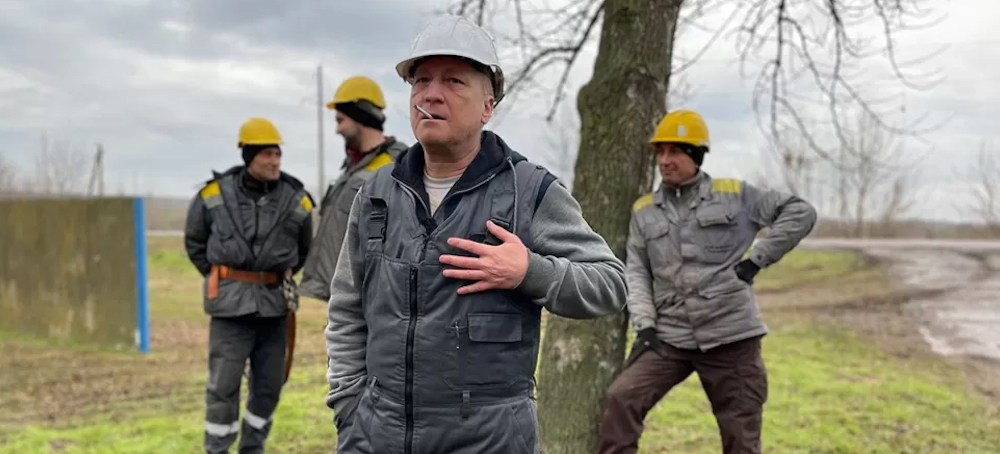
Ukraine War: On the Front Line With Engineers Working to Fix Stricken Power GridFyodor and his team. (photo: BBC)

Ukraine War: On the Front Line With Engineers Working to Fix Stricken Power Grid
Paul Adams, BBC
Adams writes: "With a dusting of fresh winter snow settling around us and the crackle of electricity loud in the wires over our heads, Michael runs his gloved fingers over golf ball-sized holes in the crippled hulk of a huge transformer."


With a dusting of fresh winter snow settling around us and the crackle of electricity loud in the wires over our heads, Michael runs his gloved fingers over golf ball-sized holes in the crippled hulk of a huge transformer.


"Here, and here, and here," he says, as he shows where shrapnel from a Russian missile punctured the transformer's thick sides.

Sharp metal fragments of the missile lie on the ground nearby.

Along the way, other transformers as big as bungalows are disappearing behind protective cocoons of concrete and sandbags.

Above us loom the high, forbidding, Soviet-era walls of the power plant's vast turbine hall. Panes of glass for half a mile shattered by explosions from the 12 missiles that have landed here since mid-October.

For all the well-publicised damage, the authorities don't want us to reveal too much.

Since October, when temperatures began to plummet, Russia has been using strikes on Ukraine's power grid to force the civilian population into submission. For two weeks, the BBC watched engineers and technicians who run the network racing to repair the damage and keep electricity flowing across the country.

We have been asked not to reveal the precise location of some of the facilities we visit. We've also altered the names of some of the officials we meet.

"Every time the equipment is damaged, it gets us all right here in our soul," Michael says, tapping his chest.

Some of these huge rust-stained machines are older than the men who run them. But for Michael, the plant's manager, they're his babies.

"It's our life. Our second family."

Michael sent his first family - his wife and teenage son - to Europe early in the war. Their dog, a playful golden retriever, now accompanies him to work every day.

The transformer - 130 tonnes of twisted metal, dangling wires and scorch marks where cooling oil leaked and caught fire - is not easy to replace.

"I know how much effort it takes to build this, to install and launch it," says Michael, a veteran of 30 years in this industry. "It's not something you can buy in a store."

The same goes for the turbines inside - monstrous, deafening mechanical dinosaurs, churning and hissing away at the heart of the plant. They're hugely impressive machines, but there's little time to admire them, as the air raid siren sounds for the third time this morning.

In a well-practised drill, most of the plant's staff head for the bunkers. The atmosphere is relaxed - such interruptions are commonplace - until word starts to spread of a fresh wave of Russian attacks on the power grid. A sister plant in the west has been hit. A picture circulates of fire raging in a turbine hall much like the one we were in just now.

Then, even through the thick concrete walls of our underground retreat, we hear a distant explosion. There's tension in the room as the men and women check their phones. A crowded apartment block, not far away, has been hit.

The scene, when we arrive soon after dark, is chaotic and desperate. A missile has torn a gaping hole in the middle of the nine-storey building. Thick smoke, pierced by flashlights, rises from a pile of rubble. Dozens of rescue workers and volunteers are working frantically to find survivors.

The death toll, which mounts inexorably over the coming days, is one of the highest of the war so far. Mothers, fathers, children. Whole families.

At the power station, the following morning, the mood is bleak. Everyone believes the missile was aimed at them.

"We need to stop the attacks," Michael says. "We need to close the sky over Ukraine."

Until that happens, Ukraine's entire grid will be in jeopardy. Especially substations, which have borne the brunt of Moscow's wrath. These vital hubs, where transformers turn high voltage electricity from power plants into lower mains voltage that businesses and homes can use, have been targeted over and over again.

Each hit deprives hundreds of thousands of households of electricity, forcing the state energy company, Ukrenergo, to find ways of diverting power along alternative routes. The firm agrees to give us rare access to a substation, on condition that we do not reveal its location.

On the day we visit, a frigid wind whistles across hundreds of miles of open farmland and a watery winter sun pokes through the clouds. The sprawling facility, with its maze of pylons, cables and imposing machinery, feels remote and impersonal, but around 15 million Ukrainians depend on it for power.

It's been hit six times with missiles and drones.

The manager, Serhiy, who's worked here for decades, surveys his shattered empire. Two of the devastated transformers are among the largest in the world, weighing more than 300 tonnes. The specialised steel innards of one of them have been torn out and lie folded on the ground, like the leaves of a clumsily discarded book.

Data collected by Kyiv's Energy Industry Research Centre (EIRC) suggests that about100 substation transformers, of various sizes, have been hit since October. Due to their cost and the many months it takes to manufacture them, not a single one has yet been replaced

Serhiy points out the gaping hole in the administration building, where a bookcase and dangling light bulb are pretty much all that's left of his office. He watched the destruction from 500m away, as a "kamikaze" drone tore into the building, wrecking the control room and taking the substation offline.

"We knew it would happen sooner or later," he says.

Repairing the damage will take years.

"They know perfectly well why this facility is important for Ukraine. That's why they decided to destroy it."

You must feel angry all the time, I suggest. Serhiy is a man of few words.

"Hate," he replies simply. "Hate towards those who came to kill my people."

With Western help and several months of experience, Ukraine is getting much better at defending itself. Most of the drones fired by Russia are now shot down before reaching their targets, and most of the missiles too. Data from EIRC shows fewer than 10% of the 1,400 missiles and drones fired at Ukraine's civilian infrastructure since early October have actually destroyed key components of the grid.

But it's still a scramble for the country's engineers to keep up.

Following reports of overnight shelling near the southern city of Nikopol, we join a repair team from DTEK, the country's largest private energy company, in the middle of a field, overlooking the Dnipro River. The sound of artillery booms across the wide, silver expanse of water. The battle lines aren't far from here.

The damage looks slight. A couple of shallow craters in the field and a few low voltage lines draped across Ukraine's famously dark soil.

But the nearby village of Vyschetarasivka is without power, yet again. The men, some wearing flak jackets, get to work, scaling the poles and twisting wires together. After the colossal scale of the power plant and substation, today's work feels almost delicate.

"This is pure terror," says chief engineer Volodymyr. "Just terrorising the population, causing maximum damage to the energy infrastructure."

Volodymyr would much prefer to keep busy modernising and improving Ukraine's electricity network. But he'll keep the repairs going just as long as the Russians keep firing.

"We feel a bit hopeless, not being able to influence the situation," he says. "But if necessary, we'll come back and repair the lines every day. The people need light."

In the village, half emptied by almost a year of war, the power cuts have become more frequent and less predictable.

"Electricity affects pumps and boilers," says Bohdan, as he arrives with empty bottles to collect water. "If there's no power, people freeze. And we have to buy water from the store. If you have a generator and petrol, you can survive. Otherwise, I don't know how older people do it."

The mayor, Oleksandr Sivak, wrapped up against the biting east wind, says those who can't stand it have already left.

"As long as we're alive and have even a bit of electricity and water, we'll keep on living," he says.

The sound of artillery is getting closer, forcing Oleksandr to drop to his knees. It's a sensible precaution, the result of long months of constant danger.

Downriver, beyond Nikopol, a town shelled day and night from Russian positions to the south, we meet another team repairing power lines, reconnecting communities under Russian occupation until the autumn. Here, amid the debris of recent conflict - a rocket lodged in the pavement, shattered headstones in a cemetery and a score of recently dug graves - the DTEK team must proceed with caution.

The use of anti-personnel mines along former front lines adds another element of hazard. Up ahead, State Emergency Service personnel are walking slowly along a line of pylons, inspecting the undulating ground for discarded ordnance.

"We feel like semi-soldiers," says team leader Fyodor, another grizzled veteran of the industry, as he pauses for a cigarette.

Above him, colleagues in a cherry picker are hard at work, hauling a new high voltage line up to a pylon.

"Sometimes we go on trips to restore power in an area. Then they shell us and we have to go back. It's a race."

For all the hardship we observe during two weeks on the road in Ukraine, it's a race the engineers seem to be winning. People grumble, for sure, when the lights go out, their apartments grow cold and the water stops flowing. Hospitals have reported higher numbers of road traffic accidents as motorists move around darkened city roads.

But away from the front lines, people have adjusted to the lack of electricity much as they have to the air raid sirens and occasional explosions: with pragmatism and ingenuity.

On city streets, in the middle of a blackout, portable generators churn away on pavements and down alleyways. In Kyiv, for all the midwinter gloom, shops are open, restaurants full. Walk into any motorway service station and the same scene greets you every time: brightly lit, well-stocked shelves, muzak playing and the hand-driers in immaculate toilets blasting out hot air.

You could be forgiven for thinking you were anywhere else in Europe. And that's the way those in charge of Ukraine's energy grid would like it.

"It was our aim for many years, to integrate into the European grid," says Oleksandr Kharchenko, EIRC's director. "And now it's happened."

Russia's energy war, just like its military campaign, is having the exact opposite of its desired effect. Far from separating Ukraine from Europe, it's binding it ever closer, in a process that mirrors the country's gradual integration into the Western military alliance, Nato.

Ukraine officially declared its desire to join the European grid in 2017. It's typically a lengthy process - it took Turkey 11 years - but when Vladimir Putin decided to invade last year, the process accelerated dramatically. In February last year Ukraine disconnected itself from the Russian grid for the first time, to test the country's ability to manage in "isolated mode" during the winter months, when demand for electricity peaks.

The disconnect, the first of two, was due to take place on the 18th and last just three days. The Russians requested a delay. It eventually happened at 01:00 on 24 February.

"We disconnected four hours before the invasion started, from this very building," Volodymyr Kudrytskyi, CEO of Ukrenergo, told me at his Kyiv headquarters.

"When the invasion started, it became obvious we would not reconnect."

Was the invasion timed to coincide with Ukraine's moment of maximum isolation?

"I absolutely believe the war started on the 24th just because of this," Kharchenko says.

Infrastructure was targeted in the early days, but not enough to plunge the country into chaos.

"They thought we would have a national blackout," Kharchenko says. "That this would cause panic, no connection, no government, no-one knows where the president is, how to connect with your siblings, your parents."

None of this happened.

Amid mounting speculation about Moscow's intentions in the weeks before 24 February, the company had quietly moved the grid's main control room to an undisclosed location further west. A second experimental disconnect was scheduled for June, when demand is typically low. If everything went according to plan, Ukraine would finally join the European grid in October 2023.

But with industry shutting down and millions of Ukrainians fleeing the country, electricity consumption plummeted by 40% within three days of the invasion. Ukrenergo asked its European partners if it could bring forward the second test.

"They looked at us like we were crazy," Kharchenko, who advises Ukrenergo, recalls.

But by 16 March, it was all done. With Russian troops still menacing the capital, Ukraine connected to the European grid, a year-and-a-half ahead of schedule. For a few months, Ukraine was even able to export its excess electricity.

That all stopped in October. Since then, the country has had to make do with half the electricity it had before 24 February.

But it hasn't collapsed.

"I think the reason is the same why they cannot win on the battlefield," Kudrytskyi says. "Because we were prepared and we were resolved to win this particular battle."

Ukraine has fought many battles over the past year.

In a sprawling, hilltop cemetery on the edge of the eastern city of Dnipro, hundreds of blue and yellow Ukrainian flags flap noisily in the stiff breeze. Rows of freshly dug graves await the latest casualties from the front, 100 miles to the east. Each cross, unmarked grave and rippling flag drives home the desperate cost of this war.

But overhead, rising against a fiery sunset, pylons march away across the landscape.

Ukraine is still connected.

READ MORE 

Two Bald Eagles Nested in a Pine for Years. A Utility Company Tried to Chop It DownBald eagles are protected under state and federal laws. (photo: Fred Thornhill/AP)

Two Bald Eagles Nested in a Pine for Years. A Utility Company Tried to Chop It Down
Maanvi Singh, Guardian UK
Singh writes: "The fight to save the birds' habitat ignites old frustrations over California's engagement with tribal communities." 


The fight to save the birds’ habitat ignites old frustrations over California’s engagement with tribal communities


Up a winding northern California highway, beneath a 120ft ponderosa pine tree, a group of environmentalists gathered for some high stakes bird-watching.

Everyone was waiting for a pair of bald eagles to swoop into their nest, an orb of twigs and branches balanced amid the tree’s scraggly branches. The elusive raptors have nested here for years, renovating and upgrading it each year in preparation for hatchlings in the spring.

But this year, unless the eagles – who spend the fall and winter months away from their nests – were observed back at their tree by mid-January, they’d lose it.

That’s because Pacific Gas & Electric, the largest utility company in the US, had obtained a permit to chop down the ageing pine, arguing that it could fall on the company’s nearby power line and spark a catastrophic wildfire. Environmentalists and the Coyote Valley Band of Pomo Indians countered that PG&E – which is facing increasing pressure to stop its equipment from starting fires across the state – should move their power lines instead.

Lawyers for the tribe beseeched the utility company to reconsider. Locals printed up signs to save the nest. In recent weeks, activists and tribal elders protested, prayed and physically barricaded themselves in front of the tree as PG&E crews came – alongside sheriff’s deputies – to cut it down.

“They had their cherry picker and their wood chipper ready,” said Polly Girvin, an environmental and Indigenous rights activist. “But we weren’t going to back down.”

Now, armed with binoculars and cell phones on a misty January morning, they were on watch. Bald eagles are protected under state and federal laws, and PG&E could only take down the tree so long as the nest was unoccupied or abandoned. “We need to keep proving that this is an active nest,” explained Girvin.

The eagles did come that day, arriving just as a thick rain began to roll in. A few days later, PG&E said it would back down.

But the showdown over this lone tree, near an electrical line that serves just a single property, has raised difficult questions about PG&E’s approach to fire safety and its fraught relationship with the communities it serves, many of whom live in rural, wildland areas.

The company is under growing legal and financial pressure to act after its power lines have been blamed for sparking multiple fires, including a deadly 2020 fire in northern Shasta county. Last year, it reached a $55m settlement with six counties over several other fires, including the Kincade fire and Dixie fire.

As PG&E rushes to trim trees and remove brush near its power lines to avert future catastrophes – and avoid liability – environmentalists worry that local nuances are being overlooked.

“PG&E says that the tree is dangerous, it’s a hazard – but that’s not right. It’s their lines that are the hazard,” said Naomi Wagner, a local activist with the environmental group Earth First!. “So why is it the tree that needs to go?”

During their recent bald eagle watch party, Wagner, Girvin and half a dozen other activists settled around to a small campfire that fizzled in the rain. Old-time environmentalists who’d been agitating since the 1960s were joined by their kids, grandkids and dogs. Coffee, muffins and binoculars were passed all around, along with warnings not to squeal or shout to avoid startling the eagles.

Priscilla Hunter, the former Coyote Valley chair squinted up and shifted closer to the fire. “It’s a miracle that they are here,” she said. Michael Hunter, the tribe’s current chair, jumped up. “Hey, birds, where are you at?”

Activists and tribal leaders, to whom the eagle holds cultural significance, have alleged that the power company and US Fish and Wildlife Service failed to properly inform and consult with the tribe in deciding to remove the tree, which could remain standing and serve as a habitat for this eagle couple, or their offspring, for years to come.

And here was a bird that was not only sacred to Native American tribes, but also a symbol of the United States. And still, crews had come to take down the tree on 9 January – a day before National Save the Eagles Day. “I mean how clueless could PG&E be,” said Wagner.

Moreover, the owner of the property where the tree stands, as well as the residents who live there, all supported alternative solutions – including rerouting or burying the electric line, or setting up a solar microgrid.

In TV advertisements, PG&E has been promoting its plans to bury 10,000 miles of power lines underground to reduce the risk of them hitting trees, so why not do the same here? “I mean, come on,” Girvin said. “They just want to take the fast and easy route.”

Meanwhile, PG&E contended in public statements the tree “contains an inactive bald eagle’s nest, is a hazard and is at risk of failing and striking a PG&E line in a high fire-threat area”.

Ultimately, the company was proven wrong when eagles finally swooped in. They first arrived as activists and tribal elders sang and prayed beneath the tree, hours before PG&E crews arrived. And they returned each day afterwards. “It was magical,” said Girvin.

A few days later, PG&E issued a statement saying that it would bury the lines, after all. “This solution allows us to protect our hometowns while also taking into account the values of our local tribe, property owners and environmental advocates,” said Ron Richardson, vice-president of PG&E’s north coast region, in a statement to the Guardian.

It was a hard won concession – one that the activists will remain wary of until they receive a legally binding commitment to leave the tree standing. Though the company can’t take down a tree with nesting eagles, they could return if the eagles leave again. “It seems like you just have to expose how inefficient this is,” said Hunter, the Coyote Valley band chair.

This was already the second year that PG&E had tried to take down this tree. In 2022, as well, the eagle couple returned to their nest just in the nick of time to call off the saws. “And they had a baby!” said Joseph Seidell, a cannabis farmer who lives on the property and led early protests against PG&E’s plans. “I mean just look at this,” he gestured. “This giant pile of beautiful woven twigs holds this beautiful, sacred bird.”

In August, the utility company de-energized the overhead electrical line, just in case the tree did end up falling and sparking a blaze, and asked for Seidell’s agreement that he wouldn’t impede crews when they came to take down the tree in the future. “It was devastating,” he said.

The ordeal has left tribal leaders and environmentalists concerned that the utility company – and the government agencies that oversee and permit its fire safety plans – have failed to properly communicate and consult with communities before undertaking work that impacts important wilderness areas.

Although the Fish and Wildlife Service had sent a letter informing Hunter of PG&E’s intention to cut down the tree in December, lawyers representing the tribe alleged that authorities didn’t wait for a response and didn’t give tribal authorities enough time to review the permit over the holiday season.

The agency was unable respond to the Guardian’s request for comment before publication.

The Fish and Wildlife Service, which has a codified “trust responsibility” – a binding moral obligation – to tribes, could do more to engage with and consult with tribal governments, said Don Hankins, a pyrogeographer and Plains Miwok fire expert at California State University, Chico.

“There clearly needs to be better coordination on these sorts of things,” he said. After a two-year fight over one tree, he noted, it’s unclear why government officials and PG&E didn’t coordinate with tribal leaders sooner.

PG&E and the Fish and Wildlife Service do have policies to ensure that they don’t impact vulnerable species, Hankins said – but those laws and policies don’t always account for the complexities of specific environments.

In Mendocino county, where there is a dark history of logging in the 1800s, which decimated old-growth redwoods and violently displaced some Native villages, a lack of proper communication and care by PG&E and the Fish and Wildlife Service brings an extra sting.

And even now, the Coyote Valley Band of Pomo Indians are involved in a protracted fight to curb commercial logging in the nearby Jackson Demonstration state forest, a nearly 50,000-acre area managed by the California department of forestry and fire prevention, or Cal Fire.

And although various government and private operators in this region have made some gestures toward working with local tribes with crucial, generational knowledge about the fragile landscapes here – they’ve often failed to meaningfully follow through, Girvin said.

Crews for various agencies have operated “willy nilly for years”, she said. “They haven’t cared at all about putting skid trails through sacred sites, or thought carefully about habitat protection and the species affected in the area.” These incursions can feel especially frustrating when the government for decades ignored, denied and criminalised traditional stewardship practices of tribes up and down California, she noted.

“To the settlers, whatever or whoever was in the way of doing business, they’d just cut down,” said Priscilla Hunter. “That’s what these eagles reminded me of.”

READ MORE


Contribute to RSN

Follow us on facebook and twitter!

Update My Monthly Donation

PO Box 2043 / Citrus Heights, CA 95611



Top News | 'Totally Crazy': Trump Holds Housing Bill Hostage to Eviscerate Voting Rights

                 LOTS OF POSTS IGNORED BY BLOGGER..... OR REMOVED ON THEIR WHIM! ALL POSTS ARE AVAILABLE ON MIDDLEBORO REVIEW AND SO ON BLOG...