Showing posts with label CHINOOK SALMON. Show all posts

Tuesday, October 8, 2024

Urgent: 3 more orcas lost to starvation


Center for     Biological    Diversity   


Orca


Mother orcas share salmon with their calves, even as the young whales enter adulthood.

When the mother of an orca known as K34 died in 2017, his chances of survival plummeted. He was last seen in July and is presumed dead.

Now only 73 southern resident killer whales remain.

The Center for Biological Diversity is doing all we can for these whales. Please help by giving to the Saving Life on Earth Fund.

Last year's count of this highly endangered population of whales stood at 75. Since then, two adult males have died.

The only calf born during the counting period perished as well — a baby whale first spotted the day after Christmas who soon disappeared.

The biggest threat to these orcas is starvation: Their favorite food, Chinook salmon, are in sharp decline. Both are caught in an extinction spiral.

Ocean noise makes it hard for the whales to communicate, and pollution exacerbates their dwindling food supply.

But there's hope. A new calf was born just weeks ago.

For this calf and others to survive, these whales urgently need more food — and stronger rules on vessel speeds and routes so their habitat is quieter.

Southern resident whales have been swimming the waters of Puget Sound, the Salish Sea and the Pacific Coast for generations — as far south as the Golden Gate Bridge.

We can't imagine a world without them.

The Center is campaigning to save Southern Resident whales and all animals and plants on the brink. We won't stop — our love of the wild inspires us.

Your support will strengthen our fight to save orcas and so many other species on the knife's edge of extinction.

Please give today to the Saving Life on Earth Fund.

For the wild,

Kierán Suckling

Kierán Suckling
Executive Director
Center for Biological Diversity


P.S. Monthly supporters who give steady gifts of $10 or $20 sustain the Center's swift and continued action to save wildlife. Do your part by starting a monthly donation.


Photo of orca from Shutterstock / Monika Weiland Sheilds

View our privacy policy.

285299-qgbmb-0-0
Center for Biological Diversity
P.O. Box 710
Tucson, AZ 85702
United States

Sunday, July 14, 2024

Your Signature Is Needed: This World Orca Day, endangered orcas are losing the fight for Chinook salmon


WORLD ORCA DAY ACTION NEEDED: Endangered orcas are counting on YOU to fight for them today by calling on the National Marine Fisheries Service (NMFS) to STOP corporate overfishing of Chinook salmon, or these vulnerable whales could soon be wiped out by starvation. Please add your name now to help save these majestic creatures from EXTINCTION before it’s too late! >>

Orcas are among the most iconic marine animals: I’m sure you can just close your eyes and imagine one right now, with its sleek black and white body gliding gracefully through gentle waves.

Although orcas are beloved and treasured simply for the natural wonder that they are, these whales also play an important role in our planet’s overall health — their unique role in the food chain contributes to the maintenance of biodiversity in our marine ecosystems, promoting overall ecological balance.

But sadly, these endangered sea creatures are hanging on by a thread and clinging to survival right now — so they’re in desperate need of help from environmental activists like you today.

Southern Resident orcas are currently being threatened by the corporate overfishing industry that’s HARMING essential Chinook salmon populations, which orcas cannot live without. In fact, Chinook salmon can make up to 90% of an orca's diet!

The truth is: unless we restore Chinook salmon populations soon, the last few remaining orcas stand little to no chance of survival and could go EXTINCT before the next generation ever gets to live on an Earth where these magical creatures still exist.

In honor of World Orca Day, we’re calling on you to take urgent action now to help stop an industry that is not only harming vulnerable orcas, a beloved keystone species — but also threatening people and the planet — with its reckless corporate greed. Can we count on you to speak up today on behalf of these defenseless whales when they need your activism the most? Add your name now to urge NMFS to rein in corporate overfishing of Chinook salmon immediately! >>

SIGN THE PETITION

Although the Pacific Northwest was once flowing abundantly with Chinook salmon, nearly HALF of these historic salmon runs have vanished: leaving weak orcas starving, emaciated, and struggling to survive.

While climate change, ocean acidification, toxic pollution and other causes also share the blame for orca habitat degradation and food scarcity, there’s simply no denying the direct link between rampant corporate overfishing and a drastic decline in critical Chinook salmon populations. With so much Chinook salmon lost, malnutrition and starvation have been identified as a major leading cause of orca deaths. You can do the math.

Most orca pregnancies currently end in miscarriage, often due to lack of nutrients as a result of lack of Chinook salmon. Newborn calves face a mortality rate of up to 50% within their very first year of life. And now, Southern Resident orca populations are at their lowest since the 1960’s with only 75 of these precious whales remaining in the wild.

If orcas were to go extinct forever, it would be devastating to all of us who treasure these beloved marine mammals as well as for our planet’s health and fragile ecosystems. But did you know that these majestic animals hold a particularly special cultural and spiritual significance for many indigenous peoples native to the Pacific Northwest region? These tribes often have a deep connection to the whales and view them as an integral part of their heritage.

Corporate overfishing not only threatens to tarnish these sacred cultures by pushing cherished orcas closer to extinction — but industrial overfishing also jeopardizes the well-being and socioeconomic stability of local individuals and families who rely on Chinook salmon for their livelihoods.

don’t you think that our planet has suffered enough ecological consequences from irresponsible and reckless environmental destruction driven by capitalism and corporate greed?

Fortunately, we still have the chance to STOP the corporate overfishing industry from further harming our planet and its living beings — but if we’re truly going to have a meaningful impact, then we urgently need all hands on deck to make a strong public impression building up to World Orca Day in just 2 days.

This moment is a key environmental advocacy opportunity for us to amplify awareness and garner enthusiasm around the conservation of this precious marine species: that’s why we’re relying on dedicated environmentalists like you to step up today and help Friends of the Earth hit our ambitious goal of acquiring 9,007 more activist signatures by 11:59 P.M. TONIGHT. So please, will you take urgent action now in service of our orcas, our oceans, and our planet? Sign the petition now >>

SIGN THE PETITION

Thanks for doing your part in protecting these magnificent creatures and securing a sustainable future for their population. 

Marcie Keever  
Oceans & Vessels Program Director 
Friends of the Earth

Contact Us:

Friends of the Earth U.S.

Washington, D.C. | Berkeley, CA

PO Box 7010 Merrifield, VA 22116-7010

1-877-843-8687

Contact us


Learn more:

www.foe.org/news

www.foe.org/about-us

www.foeaction.org

Connect:

Facebook Twitter Flickr


Sunday, June 23, 2024

Sign The Petition: Desperate orcas are still starving after newborn calf dies within a month of birth


It was a fleeting moment of hope... Over the 2023 holidays last year, the world welcomed a newborn baby orca into the Southern Resident J Pod. These endangered orcas are on the BRINK OF EXTINCTION with their population at its lowest in over 50 years, so the newborn calf seemed like a miracle. 

But things wouldn’t be easy for this newest baby orca that would be fighting for survival from the moment it was born. Chinook salmon populations have been DECIMATED by the corporate fishing industry, eliminating orcas’ primary food source and driving them to starvation and malnutrition.

The majority of baby orcas don’t make it through their very first year of life — and sadly, this youngest newborn calf barely even survived its first month before being presumed dead in February.

Industrial overfishing is jeopardizing the survival of vulnerable pregnant orcas and their fragile newborn calves. Unless we rein in corporate overfishing and take bold action to repopulate Chinook salmon immediately, Southern Resident killer whales simply won’t stand a chance. 

Orcas desperately need us to speak up for them to help STOP corporate overfishing of Chinook salmon — please don’t make these defenseless animals fight this battle alone. Take action now before it’s too late to SAVE orcas from extinction >>

SIGN THE PETITION

Ensuring healthy pregnancies and prioritizing the survival of newborn calves are CRUCIAL steps toward restoring the Southern Resident orca population. But without enough Chinook salmon to support these starving animals, most orca pregnancies end in miscarriage. And even for successful births, the mortality rate for newborn calves is as high as 50%. 

The devastating impacts of overfishing aren’t just bad for orcas. This irresponsible practice also harms nearby coastal communities and threatens traditional fishing practices and the livelihoods of families who have relied on the bounty of the sea for generations. The declining salmon stocks hurt economic stability of the whole region including local business and tourism. 

Powerful industrial fishing corporations will use their money and influence to avoid accountability for their environmentally destructive overfishing. But YOU have the power to make a real difference for our planet today by fighting back in defense of both endangered orcas AND coastal communities. Your activism today could literally be what pushes the National Marine Fisheries Service (NMFS) to finally address this critical environmental issue. 

Can we count on yours to be one of the 4,073 activist signatures we need on our petition by 11:59 P.M. TONIGHT? ADD YOUR NAME: Tell NMFS to END corporate overfishing of Chinook salmon immediately! >>

SIGN THE PETITION

Thanks for doing your part in protecting these magnificent creatures and securing a sustainable future for their population.

Marcie Keever 
Oceans & Vessels Program Director
Friends of the Earth

Contact Us:

Friends of the Earth U.S.

Washington, D.C. | Berkeley, CA

PO Box 7010 Merrifield, VA 22116-7010

1-877-843-8687

Contact us

Email Preferences:

Click here to unsubscribe

Learn more:

www.foe.org/news

www.foe.org/about-us

www.foeaction.org

Monday, June 7, 2021

Just one spill could kill the rest of these whales


 New Orca Calf Born to Ailing Southern Resident Orcas

Vessel exhaust’s effect on Southern resident killer whales | Update


The Southern Resident Killer Whales are among the most iconic and beloved animal families in North America. But they are in grave danger -- and just a single oil spill could wipe out the entire population. Protect critically endangered orcas: Rush a $15 donation to Friends of the Earth Action.

The majestic Southern Resident Killer Whales were once a common sight in the waters of Washington and British Columbia. Now, they are struggling to survive. A study released this year by the National Oceanic and Atmospheric Administration (NOAA) sheds new light on the plight of these iconic whales. It shows that shipping vessels coming within 1200 feet of whales leads to dramatically changed feeding habits. Some stop feeding entirely.

This confirms what we already knew: The whales are in critical danger -- especially from the Roberts Bank T2 shipping terminal and the Trans Mountain Pipeline. The only way to save these whales from extinction is to stop the disastrous megaprojects in their tracks.

Stop the shipping and fossil fuel industries from wiping out Southern Resident Killer Whales: Donate $15 to Friends of the Earth Action.

The proposed Roberts Bank T2 project is a massive container shipping facility that developers want to build at the mouth of British Columbia’s Fraser River. Scientists agree that Roberts Bank will disrupt the migration patterns of Chinook Salmon, the main food source for these endangered orcas. It will force young salmon into open ocean waters before they are strong enough -- creating a chronic lack of food for the 75 Southern Resident orcas that remain, including the three vulnerable new calves.

The Trans Mountain Pipeline would do more of the same, pumping 590,000 barrels per day of toxic tar sands oil -- the dirtiest kind -- and exponentially increasing shipping in Southern Resident critical habitat from 60 to 400 oil tankers per year. This would be a ticking time-bomb of toxic pollution, just waiting to spill.

Both of these projects would significantly increase oil tanker traffic, which disrupts both the orcas’ sonar that they rely on to forage for food, and their food source itself -- at a time when many orcas are already starving.

Take action to protect endangered Southern Resident Killer Whales, and the Chinook Salmon they rely on.

Southern Resident Killer Whales have long been struggling to survive. Made up of only three pods -- tightly-knit family groups -- their mortality rate is increasing and their birth rate is decreasing, as the whales become skinnier and more malnourished. Experts say that a lack of salmon -- and resulting hunger and stress -- has kept them from reproducing successfully. They are also threatened by pollution, which affects their health, and underwater noise from shipping, which disrupts the echolocation they use to hunt. 

Every species is important, but orcas play a special and irreplaceable role in our ecological systems: Whales and other large sea animals are key to combating climate change and protecting our own future.

Whales serve as ecosystem engineers and provide crucial nutrients to phytoplankton -- tiny ocean plants that produce over 50% of our oxygen, sequester hundreds of thousands of tons of carbon per year, and make up the foundation of the marine food system upon which all ocean life depends. We are interdependent: We rely on these whales for our own future -- just as they are counting on us now.

The odds were already against the endangered orcas, but these megaprojects would magnify every threat the orcas face. Just one oil spill could wipe out this entire population of whales. That’s why we need your help. 

Powered by members like you, Friends of the Earth Action has been fighting for the whales in the Pacific Northwest. We’ve stopped big threats to these whales before. And, we are already working with the Biden administration to expand protections at every level. But it’s an uphill battle -- and we need to stop these proposed projects for the whales to have a chance.

Stop Big Oil and the shipping industry from wiping out Chinook Salmon and Southern Resident Killer Whales. Support Friends of the Earth Action with a $15 donation.


Standing with you,
Marcie Keever,
Oceans and vessels program director,
Friends of the Earth Action


The man gives planet Earth to baby. Ecology concept, earth day. Elements o

Thursday, April 1, 2021

In Africa, Two Elephant Species Are in Big Trouble


  Facebook  Twitter  
Savanna elephant
Center for    Biological    Diversity   

Forest and Savanna Elephants Badly Need Help

Long-awaited new assessments by the International Union for Conservation of Nature show that elephants in Africa are even closer to extinction than previously thought. The studies recognize two distinct African elephant species: savanna and forest. Savanna elephants have declined by more than 50% in 75 years, forest elephants by a shocking 80% in less than a century. Both are threatened by ivory poaching and habitat loss.

"Forest elephants are finally getting the recognition they deserve," said Tanya Sanerib at the Center for Biological Diversity. "Now we have to crack down on the poaching of these desperately imperiled animals."


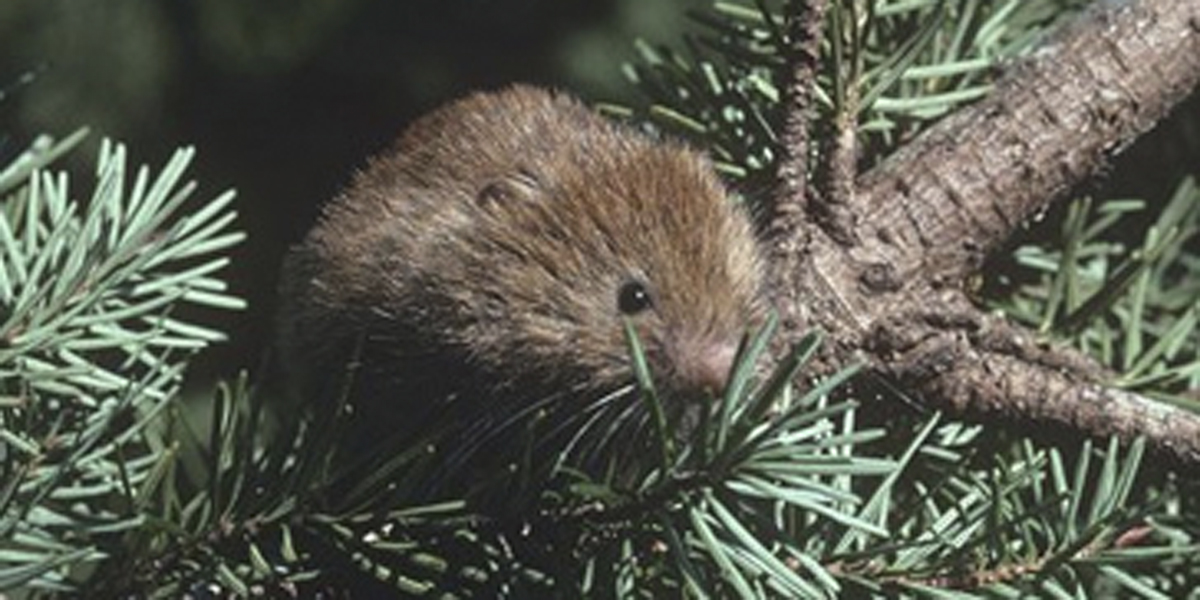
Red tree vole

Meet Our Tiniest New Client: Oregon's Red Tree Vole

The Center and allies just sued over a Trump-era decision to deny protection to red tree voles on the north Oregon coast. These tiny, charming mammals can subsist entirely on conifer needles, spending almost their whole lives in trees. Sadly that means they're incredibly vulnerable to logging of their forest homes.

After our 2007 petition to protect this vole population, they were repeatedly recognized as needing protection, but instead waitlisted — and in 2019 the Trump administration decided they didn't deserve safeguards at all.

"We hope the Biden administration takes a close look at this politically driven decision," said the Center's Noah Greenwald. "Protecting the red tree vole also benefits hundreds of other plants and animals, clean water and our climate."

Lawsuit Launched for Oregon Coast Spring Chinook Salmon

Oregon spring-run Chinook salmon

Spring Chinook salmon once thrived in all of Oregon's coastal watersheds. But they've disappeared from many rivers due to logging, roads, and other sources of habitat degradation like dams and poorly run hatcheries.

In 2019 the Center and allies petitioned to win these fish Endangered Species Act protection. By law a decision from the U.S. Fish and Wildlife Service was due September 2020 — but we've yet to see it. So we've launched a lawsuit against the agency to force it to follow its own timeline.


California condor

New Horizons for California Condors

California condors are a true Endangered Species Act success story. They narrowly escaped extinction in the 1980s, when the last 22 wild individuals starred in a captive-breeding program. Today there are more than 500 in the wild and in captivity.

And now North America's largest bird is taking off into the next stage of its recovery: Last week the U.S. Fish and Wildlife Service announced it will establish a new population of California condors in the Pacific Northwest.

Get more from this story featuring the Center's Quinn Read — and a cute condor chick.

New Recovery Plans for Southeast Salamanders

Reticulated flatwoods salamander

Two critically endangered amphibians in Florida and other southeastern states just got a roadmap out of extinction. The Fish and Wildlife Service has published draft recovery plans for reticulated and frosted flatwoods salamanders after a lawsuit by the Center and allies.

"Protecting and properly managing habitat is critical here," said the Center's Elise Bennett. "We expect federal officials to quickly finalize, fund and implement the plans for these tiny beauties before it's too late."

This Flower Lives Only in a Future Mine's Footprint

Tiehm's buckwheat

On Monday the Center and allies asked the Bureau of Land Management to protect 4,015 acres surrounding habitat for a beautiful yellow-white wildflower called Tiehm's buckwheat. The acreage includes a buffer zone to protect the extremely imperiled plant from a lithium mine whose footprint would engulf the buckwheat's entire remaining habitat of only 10 acres.

"This rare little flower is staring down the barrel of extinction," said the Center's Patrick Donnelly. "We're asking the Biden administration to ensure its habitat is preserved for future generations."

Orange trees

Suit Challenges EPA Thumbs-Up for Antibiotic on Citrus Crops

Spraying antibiotics on trees is ineffective in fighting crop diseases and can drive antibiotic resistance in bacteria that seriously threaten human health. Yet under Trump, the Environmental Protection Agency approved widespread use of streptomycin on citrus trees — so the Center and allies sued last Thursday.

"To jeopardize an essential tool in controlling the global tuberculosis pandemic by allowing it to be sprayed on citrus trees is the height of irresponsibility," said Center Senior Scientist Nathan Donley. "Leading global health officials are sounding the alarm about overuse of essential medicines like streptomycin, yet the EPA's pesticide office is recklessly blessing its use as a pesticide."

American mink

Report Shows Wildlife Exploitation Likely Caused Pandemic

On Tuesday the World Health Organization published a report finding that the SARS-CoV-2 virus behind the COVID-19 pandemic probably originated from human exploitation of wildlife.

The report comes as U.S. lawmakers consider the Preventing Future Pandemics Act, a bipartisan bill that would shut down the trade in live terrestrial wild animals for human consumption, close wildlife markets, and spur international action to curtail future pandemics.

The report also indicated that minks could be the source of the outbreak, providing a stark compilation of data from fur farms in 10 countries where these captive animals have gotten sick. Meanwhile, the Oregon legislature is considering a bill to phase out the state's mink farms.

Lightning

That's Wild: Was Lightning the Key to Life on Earth?

Some 4 billion years ago, meteorites brought minerals to Earth that helped foster life. But researchers from the University of Leeds recently found that lightning strikes may have been just as important in delivering certain minerals: They bring schreibersite, a water-soluble form of phosphorus, to the planet's surface. Phosphorus is a key mineral for all life processes, from movement to growth and reproduction.

According to head researcher Benjamin Hess, the discovery means life could still erupt on other Earth-like planets long after meteorite impacts become rare.


Idaho hunters killed 12 newborn wolf pups and got paid

                                                                                                                                            ...