Showing posts with label BERNIE MADOFF. Show all posts

Tuesday, August 27, 2024

Jamie Dimon’s Washington Post OpEd Gets Pummeled at Yahoo Finance


SUBSCRIBE TO THIS NEWSLETTER TO RECEIVE TIMELY REPORTS!


Jamie Dimon’s Washington Post OpEd Gets Pummeled at Yahoo Finance
By Pam Martens and Russ Martens: August 27, 2024 ~

The P.R. genius at JPMorgan Chase that thought it would be a good idea to have Jamie Dimon lecture the next president of the United States on how to run the country in an OpEd (paywall) at the Washington Post will likely be seeking a career change soon.

Dimon is the Chairman and CEO of the largest and riskiest bank in the United States. Under Dimon’s tenure, the bank has racked up five felony counts which showcase Dimon as the worst possible source of sound leadership advice. In 2014, the bank was charged with laundering money for decades for the biggest Ponzi artist in U.S. history – Bernie Madoff. In 2015, the bank was charged with being part of a bank cartel that rigged foreign currency markets. And in 2020, the bank was charged with two more felony counts for engaging in “tens of thousands of instances of unlawful trading in gold, silver, platinum, and palladium…as well as thousands of instances of unlawful trading in U.S. Treasury futures contracts and in U.S. Treasury notes and bonds…”

Not to put too fine a point on it, but U.S. Treasury notes and bonds are how our government pays its debts. Apparently, nothing is sacred at Dimon’s bank.

The bank admitted to all five felony counts and paid large fines in order to get off easy with deferred prosecution agreements from the U.S. Department of Justice.

Last year, Dimon’s bank spent the better part of the year fending off two lawsuits that charged it in federal court in Manhattan with facilitating Jeffrey Epstein’s sex trafficking of underage girls for more than a decade. One lawsuit was filed by the Attorney General of the U.S. Virgin Islands where Epstein maintained a private island compound; the other lawsuit was initiated by Epstein’s victims.

The U.S. Virgin Islands Attorney General wrote in one filing:

“Even if participation requires active engagement…there is no genuine dispute that JPMorgan actively participated in Epstein’s sex-trafficking venture from 2006 until 2019. The Court found allegations that the Bank allowed Epstein to use its accounts to send dozens of payments to then-known co-conspirators [redacted] provided excessive and unusual amounts of cash to Epstein; and structured cash withdrawals so that those withdrawals would not appear suspicious ‘went well beyond merely providing their usual [banking] services to Jeffrey Epstein and his affiliated entities’ and were sufficient to allege active engagement.”

As is typical, JPMorgan Chase paid $290 million to settle the case brought by victims and $75 million to settle the U.S. Virgins Islands case.

Why the bank has not been criminally charged by the U.S. Department of Justice with laundering money for a sex trafficker of children is something that the Washington Post’s Editorial Board might want to address in an editorial rather than providing an opinion platform for a serial crime boss. (See a broader look at JPMorgan Chase’s rap sheet here.)

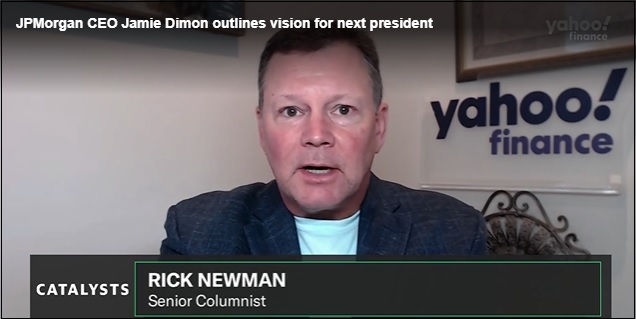
Rick Newman, a Senior Columnist at Yahoo Finance, had some choice words for Dimon’s views in the OpEd. (Click on the video at the top of the related article here.) Newman says this in the video:

“I think the Washington Post got the headline wrong on this story. I think the headline should be ‘Bromides from a Billionaire.’ I think this is Jamie Dimon’s weakest take in memory. It’s like the JPMorgan P.R. department got their weakest writer and said, hey, string together some platitudes — Jamie Dimon needs another byline.”

Below the video is an article describing how JPMorgan Chase, with Dimon at the helm, has decided it’s no longer going to sit back willingly and be regulated by federal banking regulators. If it doesn’t like the regulations, it’s going to sue its federal regulators in court. (Seriously – you can’t make this stuff up.) See our January report: Jamie Dimon Hires Dodd-Frank Hatchet Man to Weigh Suing the Fed Over Proposed Capital Rules.

Below the article, as of this morning, are 921 comments – a significant portion of which are skewering the Wall Street megabanks.

A commenter using the name “Dave” writes this:

“The banking and securities industries need more oversight not less. They don’t want to adhere to laws and regulations? Pull their FDIC backing and see how quickly the bank collapses.”

“PK” writes:

“When banks testify on their behalf, they have zero concern for the consumer. Their concern is how regulation will adversely impact the stock price, which is their sole measurement for performance and income. They sit there together – basically a collaborative monopoly – to protect their incomes.”

“Cat on the Wall” offers this:

“Because they know the Supreme Court is in their pocket. But make no mistake, Jamie Dimon will be the first in line with his hands out to the government if his TBTF bank crashes in the next recession.”

For how Jamie Dimon’s bailouts work in the real world, see: Nomura, JPMorgan and Goldman Sachs Received a Cumulative $8 Trillion from the Fed’s Emergency Repo Loans in Fourth Quarter of 2019; and this: Despite Its Five Felony Counts, the Federal Reserve Has Entrusted $2 Trillion in Bonds to JPMorgan Chase.

One of the craziest things that Dimon writes in that Washington Post OpEd is this:

“The private sector has huge wells of expertise and produces 85 percent of our nation’s jobs. It should have a seat at the table.”

Is it possible that Dimon has been so consumed with defending his bank against criminal charges that he doesn’t realize that every Executive Branch cabinet post that has anything to do with money has gone largely to a particular “private sector” representative – Wall Street.

For just how preposterous Dimon’s assertion is that the private sector is not getting a seat at the table in government, see our 2020 article: Goldman Sachs: The Vampire Squid’s Alum Control Two Fed Banks, the U.S. Treasury, the European Central Bank and the Bank of England.

The head of the Federal Reserve is Jerome Powell. He got rich at the Carlyle Group, a vulture fund with a shady history.

Donald Trump, as President, came directly from the real estate private sector and proceeded to pack his federal agencies with private sector guys from the very industry that the agency regulated. American Prospect has put up an interactive graph of the unprecedented corruption that followed.

For just how much control Wall Street has had of the U.S. Treasury, there is the famous video in Michael Moore’s movie, “Capitalism: A Love Story,” where Treasury Secretary Donald Regan whispers in President Ronald Reagan’s ear while he is delivering a speech and barks at him to “speed it up” — like President Reagan is merely an actor on the payroll of the real money men in charge. Notice that President Reagan doesn’t seem surprised or annoyed but acts as if he is accustomed to taking orders from this man.

Donald Regan had been the Chairman and CEO of Merrill Lynch, the largest Wall Street brokerage firm in terms of stockbroker headcount throughout much of the last century.

Industrialist and banking titan, Andrew Mellon, had such a grip on the cabinet post of U.S. Treasury Secretary that he sat in the chair from 1921 to 1932, under three Republican Presidents – Warren Harding, Calvin Coolidge and Herbert Hoover. Mellon was at the helm during the Wall Street boom years of the 1920s and the devastating bust that came in 1929 to 1932, ushering in the Great Depression.

Andrew Mellon’s grandson, Timothy Mellon, heir to the family’s banking fortune, has pumped $125 million in this election cycle into the Super PAC supporting Donald Trump, Make America Great Again, Inc.

Wednesday, January 10, 2024

New York State Has Turned Over a Vast Amount of Its Financial Affairs to 5-Count Felon JPMorgan Chase


SUBSCRIBE TO THIS NEWSLETTER AND RECEIVE TIMELY REPORTS

New York State Has Turned Over a Vast Amount of Its Financial Affairs to 5-Count Felon JPMorgan Chase

By Pam Martens and Russ Martens: January 10, 2024 ~

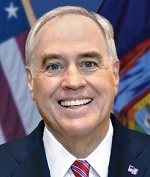
New York State Comptroller, Thomas DiNapoli

New York State Comptroller, Thomas DiNapoli

There’s only one thing more dangerous than the largest bank in the United States, JPMorgan Chase, being charged with (and admitting to) five criminal felony counts by the U.S. Department of Justice since 2014 and a host of other fraud charges by federal regulators. What is more dangerous is having government officials look the other way at this recidivist history of crime at the nation’s largest bank.

In May, federal banking regulators allowed JPMorgan Chase to get even bigger, despite its unprecedented crime wave, by handing it the failed First Republic Bank in a sweetheart deal.

Yesterday, we learned from online documents that the Comptroller of New York State has turned over a vast amount of the financial affairs of the fourth largest state in the country to this banking house of crime. (See related articles below.)

According to a New York State Comptroller website, JPMorgan Chase has 59 contracts with the state with a total current contract amount of $5.2 billion. The contracts include everything from banking services to the purchasing cards for state employees.

The New York State Comptroller is Thomas DiNapoli, who has held this no-term-limit position since February 7, 2007 – a span of 17 years. DiNapoli’s job description reads as follows: “The comptroller is the chief financial officer of the state government and the head of the Department of Audit and Control. The comptroller’s responsibilities include managing the state’s pension fund, auditing the spending practices of all state agencies and local governments, reporting on state finances, and serving as the custodian of unclaimed funds.”

As it turns out, JPMorgan Chase has a 7-year contract with the Comptroller’s office to serve as the custodian for the securities held in the New York State Common Retirement Fund for state workers. As of September 30, 2023, the Common Retirement Fund had a value of almost a quarter of a trillion dollars, or $246.3 billion to be exact.

But the Comptroller does not want the public to know all of the granular details in its contract between JPMorgan Chase and itself. Numerous paragraphs are blacked out in the document.

According to the Common Retirement Fund’s Annual Report, JPMorgan Chase – not the Comptroller or the Fund’s auditor – calculates the rate of return for the fund. That return was indicated as “negative 4.14 percent, gross of certain investment fees” for the fiscal year ending March 31, 2023.

How large is this custodial business at JPMorgan Chase, which holds so many securities for other parties?

On November 24, 2020, the Office of the Comptroller of the Currency (OCC), the federal regulator of national banks, fined JPMorgan Chase $250 million for “failure to maintain adequate internal controls and internal audit over its fiduciary business.” That business includes its custodial business. The OCC Consent Order related to that fine revealed the following:

“The Bank maintains one of the world’s largest and most complex fiduciary businesses with total fiduciary and related assets of $29.1 trillion, including $1.3 trillion in fiduciary assets and $27.8 trillion of non-fiduciary custody assets.”

To put that $29.1 trillion into the proper perspective, the Federal Deposit Insurance Corporation (FDIC) reports that as of September 30, 2023 there were 4,049 commercial banks in the U.S. The total assets of those 4,049 banks was $22.2 trillion. But, somehow, just one of those banks has attracted $27.8 trillion of assets for which it serves as custodian.

Is there some secret sauce that JPMorgan Chase has going for it to attract all of that money?

In September 2020, when the International Consortium of Investigative Journalists (ICIJ) released a bombshell investigative report about money laundering for criminals at some of the largest Wall Street banks, it had quite a bit to say about JPMorgan Chase. (The ICIJ investigation was based on secret documents leaked from FinCEN, the Financial Crimes Enforcement Network, a unit of the U.S. Treasury.)

According to the ICIJ report, JPMorgan Chase was involved in moving illicit funds for the fugitive, Jho Low, involving the notorious looting of public funds in Malaysia. Jho Low has been accused by multiple jurisdictions of playing a key role in the embezzlement of more than $4.5 billion from a Malaysian economic development fund, 1MDB. JPMorgan Chase moved $1.2 billion in money for Jho Low from 2013 to 2016, according to the report.

The ICIJ report also found that JPMorgan “processed more than $50 million in payments over a decade…for Paul Manafort, the former campaign manager for President Donald Trump. The bank shuttled at least $6.9 million in Manafort transactions in the 14 months after he resigned from the campaign amid a swirl of money laundering and corruption allegations spawning from his work with a pro-Russian political party in Ukraine.”

Equally troubling activity at JPMorgan Chase includes the following, according to ICIJ investigators:

“JPMorgan also moved money for companies and people tied to corruption scandals in Venezuela that have helped create one of the world’s worst humanitarian crises. One in three Venezuelans is not getting enough to eat, the UN reported this year, and millions have fled the country.

“One of the Venezuelans who got help from JPMorgan was Alejandro ‘Piojo’ Isturiz, a former government official who has been charged by U.S. authorities as a player in an international money laundering scheme. Prosecutors allege that between 2011 and 2013 Isturiz and others solicited bribes to rig government energy contracts. The bank moved more than $63 million for companies linked to Isturiz and the money laundering scheme between 2012 and 2016, the FinCEN Files show…”

Wall Street banks like JPMorgan Chase are legally required to follow the “KYC” rule (Know Your Customer) in order to avoid moving money around for criminals. But the ICIJ investigators reveal that JPMorgan Chase paid little attention to that rule.

Less than six months ago, JPMorgan Chase settled two separate federal lawsuits against it for actively participating in Jeffrey Epstein’s sex trafficking of minors enterprise by turning a blind eye to glaring red flags and failing to file the legally mandated Suspicious Activity Reports (SARs) as Epstein took upwards of $40,000 to $80,000 in hard cash monthly from his accounts at the bank over a decade. In return, Epstein referred ultra wealthy clients to the bank according to court documents.

JPMorgan Chase previously admitted in 2014 to two criminal charges brought by the U.S. Department of Justice for banking Bernie Madoff’s Ponzi scheme for decades (that devastated the finances of thousands of retirees) and ignoring its legal obligation to file SARs with the Financial Crimes Enforcement Network (FinCEN). The settlement with the Justice Department included a penalty of $1.7 billion in restitution to Madoff victims and a promise to reform its anti-money laundering compliance programs.

The text of JPMorgan’s contract with the New York State Comptroller to custody assets for the Common Retirement Fund indicates that the New York State Comptroller found the bank to be a “responsible” entity.

Yesterday, we emailed the press office for the Comptroller and listed the nature of the five felony counts the bank has admitted to since 2014. We inquired if the Comptroller was aware of these charges. The response was that there would be no comment from the Comptroller’s office to our questions.

Related Articles:

JPMorgan Chase Paid $1.085 Billion in Legal Expenses in Last Six Months; It’s Still Battling Hundreds of Charges and Legal Proceedings on Three Continents

JPMorgan/Jeffrey Epstein Cases Are a Cross Between the Bank’s Chinese Princeling Scandal and Madoff Fraud, Using Sex with Minors as a Bribe

JPMorgan Chase Quietly Settles Whistleblower Case Involving Charges of Keeping Two Sets of Books and Improper Payments to Tony Blair

Watchdog to Fed: JPMorgan Is Controlling Fossil Fuels Empire, Which Just Spilled a Million Gallons of Oil in Gulf of Mexico

Janet Yellen’s Treasury Department Hires 5-Count Felon JPMorgan Chase to Look for Fraud

Professors Point to JPMorgan Chase as Poster Boy of a Financial System Dependent on Corruption to Sustain Itself


https://wallstreetonparade.com/2024/01/new-york-state-has-turned-over-a-vast-amount-of-its-financial-affairs-to-5-count-felon-jpmorgan-chase/


Friday, April 14, 2023

New Bombshells Filed in Court in the Jeffrey Epstein/JPMorgan Child Sex Trafficking Case

SUBSCRIBE TO THIS NEWSLETTER TO RECEIVE TIMELY INFORMATION 


New Bombshells Filed in Court in the Jeffrey Epstein/JPMorgan Child Sex Trafficking Case

By Pam Martens and Russ Martens: April 13, 2023

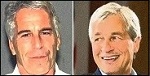
Jeffrey Epstein (lelft); Jamie Dimon (right).

Jeffrey Epstein (left); Jamie Dimon (right).

Jamie Dimon, the Chairman and CEO of JPMorgan Chase, is desperately attempting to redirect the media’s focus to anything other than two federal lawsuits that name his bank as a knowing facilitator and cash conduit for Jeffrey Epstein’s child sex trafficking ring. One lawsuit has been filed by the government of the U.S. Virgin Islands where Epstein owned an island-compound and air-lifted young girls in and out. The other lawsuit has been filed by an alleged underage victim of Epstein’s, Jane Doe 1.

Dimon’s high-powered p.r. machine has been churning out headlines on his role as “rescuer” of the teetering bank, First Republic, (never mind that there are few signs that the bank has actually been rescued). And one would think that Dimon has written a new Magna Carta for all the press attention going to his unremarkable annual letter to shareholders.

The latest shiny object misdirection rolled out by Dimon’s p.r. flacks was a wide- ranging interview last Thursday between Dimon and CNN’s Poppy Harlow, where the breadth of her questions hinted that Dimon was on a par with a head of state, rather than the head of a bank with an unprecedented five criminal felony counts.

After allowing Dimon to opine on everything from Russia’s war on Ukraine to the Fed’s interest rate policy to affordable housing and inner-city schools, Harlow finally got around to the topic of Epstein. The exchange went as follows:

HARLOW: OK. We have to go pretty soon but I — I do want to ask you a few more things. I want to ask you about something that is in the news — that JPMorgan is in the news about a former client of yours and that is Jeffery Epstein. JPMorgan is being sued now by the U.S. Virgin Islands. They’re alleging that your bank helped facilitate payments to Epstein’s victims and benefited from human trafficking while ignoring warnings. Do those allegations have merit?

DIMON: Well, I cannot talk about current litigation except to say that whenever these things come up, we have some of the best lawyers in the world — compliance, out of the DOJ, out of SEC, important divisions who review all of these things and make decisions at the time based on what they know, as best as they know.

HARLOW: You’re going to be deposed we’ve learned now in this case in the spring. In retrospect, Jamie, do you think JPMorgan should have acted more quickly after Epstein pleaded guilty to one of these charges in 2008 — because he was your client for five more years?

DIMON: Hindsight is a fabulous gift.

It now appears that this exclusive interview airing on an international news outlet might have been motivated by the fact that the U.S. Virgin Islands was planning to drop major new bombshells in court in the Epstein/JPMorgan case – which it did yesterday.

The overall thrust of the U.S. Virgin Islands case against the bank is presented in the second amended complaint as follows:

“…based on documents reviewed and interviews conducted by the Government, JP Morgan knowingly facilitated, sustained, and concealed the human trafficking network operated by Jeffrey Epstein from his home and base in the Virgin Islands, and financially benefitted from this participation, directly or indirectly, by failing to comply with federal banking regulations, [redacted]. JP Morgan facilitated and concealed wire and cash transactions that raised suspicion of—and were in fact part of—a criminal enterprise whose currency was the sexual servitude of dozens of women and girls in and beyond the Virgin Islands. Human trafficking was the principal business of the accounts Epstein maintained at JP Morgan.

“Upon information and belief, JP Morgan turned a blind eye to evidence of human trafficking over more than a decade because of Epstein’s own financial footprint, and because of the deals and clients that Epstein brought and promised to bring to the bank. These decisions were advocated and approved at the senior levels of JP Morgan, including by the former chief executive of its asset management division and investment bank, whose inappropriate relationship with Epstein should have been evident to the bank.”

The second amended complaint by the U.S. Virgin Islands also adds a Fifth Count, charging JPMorgan Chase with obstruction. It reads in part:

“By providing financing for Epstein’s sex trafficking organization from at least 2000 through about August 2013, and concealing its actions thereafter, JP Morgan obstructed, interfered with, and prevented the federal government’s enforcement of the TVPA [Trafficking Victims Protection Act] against Epstein. To the extent that the federal government was able to ultimately charge Epstein with TVPA violations, the filing of these charges was delayed by JP Morgan’s actions. Because of that delay, women and girls in the Virgin Islands were coercively caused to engage in commercial sex acts.”

The newly filed second amended complaint also incorporates information obtained from a deposition of Mary Erdoes, the Chief Executive Officer of JPMorgan Chase’s Asset & Wealth Management division and one of the bank’s highest ranking women. Much of the new information is stunning in terms of just how much it alleges that the bank knew about Epstein’s sex trafficking while it displayed a callous disregard for the underage girls being impacted by its failing to take action.  It reads in part:

“In 2006, a JP Morgan Rapid Response Team noted that Epstein ‘routinely’ made cash withdrawals in amounts from $40,000 to $80,000 several times per month, totaling over $750,000 per year. In addition, Mary Erdoes admitted in her deposition that JP Morgan was aware by 2006 that Epstein was accused of paying cash to have underage girls and young women brought to his home. In the years that followed, JP Morgan employees, including senior executives, emailed internally that Epstein was under investigation or had been sued for trafficking or sexual abuse. This includes an email in 2010 between Mary Erdoes and Jes Staley regarding a federal investigation of Epstein for child trafficking; a 2011 email summarizing a few 2010 news stories connecting Epstein to human trafficking and promising to ‘monitor the accounts and cash usage closely going forward;’ and a 2011 compliance memo noting that ‘[n]umerous articles detail various law enforcement agencies investigating Jeffrey Epstein for allegedly participating in child trafficking and molesting underage girls’ and that ‘Epstein had settled a dozen civil lawsuits out of court from his victims regarding solicitation for an undisclosed amount.’ Internal emails also questioned who Epstein’s clients were, circulating an article regarding whether Epstein was running a Ponzi scheme.

“Indeed, Epstein’s behavior was so widely known at JPMorgan that senior executives joked about Epstein’s interest in young girls. In 2008, for example, Mary Erdoes received an email asking her whether Epstein was at an event ‘with miley cyrus.’ In her deposition, Mary Erdoes testified that JP Morgan terminated Epstein as a customer in 2013 after she became aware that the withdrawals were ‘actual cash.’ However, Epstein had made substantial cash withdrawals every year he banked with JP Morgan, including more than $800,000 per year in 2004 and 2005.”

There is also this:

“One internal document [obtained from JPMorgan Chase] describes the account of Epstein’s ‘assistant or young lady he brought over from Prague (or some place like that),’ clearly referring to Jane Doe 1. The document describes charges in New York, Palm Beach, and St. Thomas for lingerie and other sexually explicit material. Elsewhere, JP Morgan describes media reports referring to the fact that Epstein purchased her at age 14. She remained a customer of JP Morgan, and Epstein paid her more than $600,000, from his accounts at JP Morgan, including more than $165,000 after Epstein’s plea.”

All of this raises the critical question as to why this case has been left to the Attorney General of the U.S. Virgin Islands to bring to the federal court in Manhattan. Where is the highest law enforcement agency in the U.S. – the criminal division of the U.S. Department of Justice. For the insidious failings of the Department of Justice in the Epstein matter, see our 2019 report here.

For another outrageous case where JPMorgan Chase was wearing blinders for years as one of its largest customers perpetrated one of the largest frauds in U.S. history, see our report: JPMorgan and Madoff Were Facilitating Nesting Dolls-Style Frauds Within Frauds. Two of the bank’s five felony counts under the tenure of Dimon stemmed from the Madoff matter.


LINK


Monday, July 11, 2022

Here Are the Orwellian Details of the U.S. Patent JPMorgan Got Approved for Its Sprawling System of Spying on Employees


Here Are the Orwellian Details of the U.S. Patent JPMorgan Got Approved for Its Sprawling System of Spying on Employees

By Pam Martens and Russ Martens: July 8, 2022 ~

Employee Surveillance at JPMorgan ChaseIn 2018, Bloomberg reporters Peter Waldman, Lizette Chapman, and Jordan Robertson published a stunning expose on how JPMorgan Chase was spying on its employees, including after hours, using as many as 120 engineers from the data mining company Palantir Technologies Inc. According to the Bloomberg report, “It all ended when the bank’s senior executives learned that they, too, were being watched, and what began as a promising marriage of masters of big data and global finance descended into a spying scandal.”

But the surveillance program did not end. The bank simply developed its own proprietary spying system instead. Business Insider reporter, Reed Alexander, has reignited the scandal with the news that the internal surveillance program at JPMorgan Chase is now called “Workforce Activity Data Utility” or WADU.

According to Business Insider, the surveillance is fostering paranoia inside the bank with employees using the term “Big Brother” and “1984,” a reference to the George Orwell book.

Wall Street On Parade can now break the news that the surveillance system is even worse than employees imagine. How do we know? We looked up the patent for the system at the U.S. Patent and Trademark Office.

Based on the patent information we located, it suggests that this employee surveillance system has been in place inside JPMorgan Chase for more than eight years. The patent was filed on March 13, 2014 and was granted patent number 10,719,799 on July 21, 2020.

The brainiac inventors who came up with this plan, according to the patent application, are William V. Harris, Jonathan B. Teplitz, and Ganesh Murugan. The profile for Teplitz at LinkedIn, who is now a Managing Director at JPMorgan Chase, says a past job at the bank was to “manage the Technology for Social Good initiatives.” JPMorgan Chase owns the patent.

There’s a copious amount of redundant verbiage in this patent application – likely to obfuscate the Orwellian nature of its intentions, so we have isolated below some of the more eye-popping passages:

“A computer-implemented method for analyzing employee productivity… wherein generating employee metrics includes generating a digital footprint for each employee…

“…wherein the structured data comprises: employee location data; employee activity data; employee output data; and employee cost data…

“Embodiments of the virtual management computing system of the invention track employee productivity and efficiency through large-scale collection and analysis of disparate forms of employee data from multiple different and distributed data sources. The collected data may include large unstructured datasets. The virtual management computing system normalizes the collected data into a standard format and creates a digital profile of daily activity for each employee. The usage of these digital profiles and the combination of the disparate data enables visualization of relationships that provide insight into productivity and resource management than the independent data sources…

“The devices and systems may include, for example, corporate data sources…, home computing systems…office computing systems…mobile devices…, biometric systems…, security systems…, and client systems… These source and destination systems that interact with the virtual management computing system are merely exemplary. Additional systems or devices may be included in the operating environment…

“The building information system may track building capacity and building utilization. Additionally, badge swipe and biometric systems may provide data as they track entry and exit of employees from buildings, floors, rooms, and complexes.”

The above text raises a multitude of troubling privacy questions. For example, is JPMorgan Chase using “biometric systems” to identify employees’ comings and goings? If so, did it get permission from the employee? In the above paragraph, where it mentions tracking employees to “rooms,” is it keeping tabs on how many times a worker uses the bathroom in a day?

Then there is the heightened concern that JPMorgan Chase might be tracking this employee using biometric data such as facial recognition throughout his or her comings and goings in Manhattan. Wall Street On Parade previously revealed that JPMorgan Chase occupies one of the seats alongside the New York City Police Department at the Lower Manhattan Security Coordination Center, a high-tech surveillance center which operates around the clock. That center utilizes thousands of private and government spy cameras located on the streets of Manhattan, which relay live video feeds to the center of people’s comings and goings.

According to photos we located that were taken by a foreign news agency during a press tour of the center, security representatives from JPMorgan, Goldman Sachs, Citigroup, the New York Fed and the New York Stock Exchange have cubicles in the center, designated with a brass name plate.

That the New York City Police Department is sharing a law enforcement operation with JPMorgan Chase is nothing short of Orwellian in and of itself. Since 2014, JPMorgan Chase has racked up an unprecedented five criminal felony counts brought by the U.S. Department of Justice, to which it admitted guilt. These were no small matters. Two felony counts came in 2014 for the bank’s role in the greatest Ponzi scheme in history – the Bernie Madoff swindle. Another felony count came in 2015 for the bank’s role in a cartel that was rigging foreign exchange trading. Two more felony counts came in September 2020 for the bank engaging in “tens of thousands of instances of unlawful trading in gold, silver, platinum, and palladium…as well as thousands of instances of unlawful trading in U.S. Treasury futures contracts and in U.S. Treasury notes and bonds….”

But those five felony counts barely scratch the surface of JPMorgan’s rap sheet, with all of these crimes occurring with Jamie Dimon at the helm of the bank, and no pushback from regulators, Congress or the bank’s Board of Directors that Dimon should be removed from his post.

The crime culture at JPMorgan Chase is so unprecedented that in March 2016, trial attorneys Helen Davis Chaitman and Lance Gotthoffer published a book titled: JPMadoff: The Unholy Alliance between America’s Biggest Bank and America’s Biggest Crook. The trial attorneys wrote this jaw-dropping paragraph:

“In Chapter 4, we compared JPMC [JPMorgan Chase] to the Gambino crime family to demonstrate the many areas in which these two organizations had the same goals and strategies. In fact, the most significant difference between JPMC and the Gambino Crime Family is the way the government treats them. While Congress made it a national priority to eradicate organized crime, there is an appalling lack of appetite in Washington to decriminalize Wall Street. Congress and the executive branch of the government seem determined to protect Wall Street criminals, which simply assures their proliferation.”

Chaitman and Gotthoffer added this for good measure:

“If Jamie Dimon is running a criminal institution, he should be prosecuted for it. And law enforcement has the perfect tool for such a prosecution: the Racketeer Influenced and Corrupt Organizations ACT (RICO).”

In fact, the Justice Department used the RICO statute, which is typically reserved for organized crime enterprises, to charge precious metals traders at JPMorgan Chase in 2019 with turning the precious metals trading desk at the bank into a racketeering enterprise.

According to news reports, some of those traders are cooperating with the Justice Department’s investigation.

In April of last year, Donald Turnbull, a former Global Head of Precious Metals Trading at JPMorgan Chase, filed a federal lawsuit against the bank. Turnbull worked on the same precious metals desk that was deemed to be a racketeering enterprise by the U.S. Department of Justice when it handed down indictments in 2019.

Turnbull’s lawsuit alleged that the bank trumped up false charges against Turnbull as a pretext to terminate him when it was actually terminating him for cooperating with the Department of Justice’s investigation.

Turnbull was not one of the traders that was indicted by the Department of Justice. Nonetheless, Turnbull alleges in the lawsuit that the indicted traders received better benefits when they were released from employment than he did. Despite a seriously-ill wife, Turnbull states in the lawsuit that JPMorgan Chase cancelled his health insurance, did not pay him severance, and took away his unvested stock awards.

And two previous female lawyers who worked at the bank have also charged that fraud is condoned inside the bank.

All of this raises the question as to what the real motive is for JPMorgan Chase to be operating sprawling surveillance of its employees.

~~~~~

You might be wondering what prompted Wall Street On Parade to look for patent filings on this surveillance system. It’s because we are aware that the bank is paying huge salaries for more software developers than Google, and would thus expect to get patent protection for its money.

Dimon wrote in his 2014 annual shareholders’ letter that JPMorgan employs “nearly 30,000 programmers, application developers and information technology employees…” According to JPMorgan’s Anish Bhimani in an interview in 2013, JPMorgan has “more software developers than Google, and more technologists than Microsoft…we get to build things at scale that have never been done before.”

Just because you can do things that have never been done before, doesn’t mean that you should – whether it’s tracking employees’ moves from room to room or racking up a rap sheet that’s the envy of the Gambino crime family.

The Senate Banking Committee will soon be holding its annual hearing with all of the CEOs from the megabanks on Wall Street, including Jamie Dimon. Committee members need to have questions ready on this unprecedented crime wave at the largest federally-insured bank in the United States, why Dimon is still allowed to sit at the helm, and what’s really going on with this sprawling employee surveillance system.


LINK


Wednesday, May 25, 2022

How Crypto Is Using the Behavioral Dynamics of Bernie Madoff’s Fraud

SUBSCRIBE TO THIS NEWSLETTER TO MONITOR FINANCIAL ACTIONS 


How Crypto Is Using the Behavioral Dynamics of Bernie Madoff’s Fraud

By Pam Martens: May 23, 2022 ~

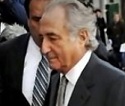
Bernie Madoff

Bernie Madoff

On June 18, 1991 I was having lunch with two of my new investment clients on the outdoor patio of their private country club on Long Island. As their friends stopped by the table, the married couple introduced me as their investment advisor and recommended me to their friends. One friend said to my astonishment: “Can you guarantee me the same 13 percent annual return as Bernie Madoff?”

If one is a reputable, licensed broker, guaranteeing a 13 percent return – or any guaranteed return on a stock portfolio – is a flagrant violation of the rules of the investment industry. It can also strip you of your license, your career, and get you perp walked.

Stock investing is a volatile endeavor. Stocks can go into a bear market and deliver a negative return for years. That is why it is illegal to guarantee to an investor any specific return on a stock portfolio.

I had been reading the Wall Street Journal for years at that point and the name Bernie Madoff did not ring a bell. I asked my clients if they knew this Bernie Madoff. My clients stunned me further by telling me that Madoff had been making good on his promise of a 13 percent return since 1978 – not to just my clients but to numerous other members of this country club.

My cognitive processes sized up the situation like this: if this man is willing to brazenly break the law by guaranteeing stock returns, if he has delivered 13 percent returns steadily for more than a decade – including during years in which the S&P 500 had a negative return — then it is highly likely he is running a Ponzi scheme.

I shared my concerns with my clients and asked to see their account statements. A few days later the husband brought multiple years of these statements to my office. The statements showed negative returns in some years and nothing resembling a consistent 13 percent annual return. I provided my analysis to my client and asked him if I might call Madoff, if I didn’t give Madoff the client’s name. He said I could.

Madoff immediately took my call and was highly indignant at my suggestion that he was running a scam. I was working at the time for a large, old investment firm and I thought it might frighten him to know that I had his statements and was about to turn them over to the sleuths in our compliance department. I don’t know what action the compliance department took.

In late 1995 I left the old investment firm and joined an even older investment firm, one whose founder had been Assistant Treasury Secretary under Abraham Lincoln. Years after joining the new firm I noticed that new order tickets had been printed and the name “Madoff Securities” had been added to the venues that a broker could route his stock orders, alongside the New York Stock Exchange.

I ran to my manager’s office and breathlessly spilled out the story of what had occurred at the country club luncheon. I then decided to call a member of the Executive Committee of the Board of Directors, who was well respected and had an attentive ear. This gentleman, who was located in St. Louis, informed me that he would look into the matter but that he had never heard about Bernie Madoff managing money for investors. He believed his only business was a trading firm called Madoff Securities.

It was not until December 2008 – at the height of the financial crash when everyone was pulling money out of stocks and putting it in safe havens – that Madoff’s Ponzi scheme collapsed. Madoff confessed his Ponzi scheme to his two adult sons who turned him into authorities. Madoff died in federal prison on April 14 of last year at age 82. He was serving a 150-year prison sentence.

I was not the only person to have had suspicions about Madoff and requested investigations. On November 7, 2005, Harry Markopolos sent a 21-page document to the Securities and Exchange Commission (SEC).  The letter followed a five-year effort by Markopolos to get the SEC to open an investigation of Madoff.

Here’s how the SEC characterized the letter from Markopolos in a January 4, 2006 memo: “The staff received a complaint alleging that Bernard L. Madoff Investment Securities LLC, a registered broker-dealer in New York (“BLM”), operates an undisclosed multi-billion dollar investment advisory business, and that BLM operates this business as a Ponzi scheme. The complaint did not contain specific facts about the alleged Ponzi scheme…”

In reality, the Markopolos letter was intensely fact-filled, stating in part:

“I am a derivatives expert and have traded or assisted in the trading of several billion $US in options strategies for hedge funds and institutional clients…(Highly Likely) Madoff Securities is the world’s largest Ponzi Scheme…The [Madoff] family runs what is effectively the world’s largest hedge fund with estimated assets under management of at least $20 billion to perhaps $50 billion…The third parties organize the hedge funds and obtain investors but 100% of the money raised is actually managed by Madoff Investment Securities, LLC in a purported hedge fund strategy. The investors that pony up the money don’t know that BM [Bernie Madoff] is managing their money…Some prominent US based hedge fund, fund of funds, that “invest” in BM in this manner include: A. Fairfield Sentry Limited (Arden Asset Management) which had $5.2 billion invested in BM as of May 2005…Access International Advisors…which had $450 million invested with BM as of mid-2002…Tremont Capital Management, Inc…Tremont oversees on an advisory and fully discretionary basis over $10.5 billion in assets.

“ Clients include institutional investors, public and private pension plans, ERISA plans, university endowments, foundations, and financial institutions, as well as high net worth individuals…Madoff does not allow outside performance audits. One London based hedge fund, fund of funds, representing Arab money, asked to send in a team of Big 4 accountants to conduct a performance audit during their planned due diligence. They were told ‘No, only Madoff’s brother-in-law who owns his own accounting firm is allowed to audit performance’…Only Madoff family members are privy to the investment strategy. Name one other prominent multi-billion dollar hedge fund that doesn’t have outside, non-family professionals involved in the investment process. You can’t because there aren’t any…There are too many red flags to ignore. REFCO, Wood River, the Manhattan Fund, Princeton Economics, and other hedge fund blow ups all had a lot fewer red flags than Madoff and look what happened at those places…”

An SEC memo of November 21, 2007 revealed the following about its investigation:

“The staff found no evidence of fraud…All files have been prepared for closing…Termination letters have been sent to Bernard L. Madoff Investment Securities LLC, Bernard L. Madoff, and Fairfield Greenwich Group. The staff has no objection to the eventual destruction of the files and has no knowledge of any impediment to such a disposition.”

This was not the first time that the SEC had let Madoff slip through its grasp. In 1992, the SEC settled an investigation against two Florida accountants, Frank Avellino and Michael Bienes. The pair had started raising money for Bernie Madoff to manage in 1962. Avellino and Bienes had sold over $440 million in unregistered notes to thousands of people. Madoff was not charged in the matter.

Representing Avellino and Bienes in that matter was attorney Ira Lee Sorkin, the former head of the SEC region in New York City. Sorkin also represented Bernie Madoff when he was finally charged in 2008. Put in charge as trustee of the Avellino and Bienes funds and records was Lee Richards. In 2009, the SEC again put Mr. Richards in place as a receiver and document custodian in the Madoff Ponzi scheme, overseeing the London black hole operation known as Madoff Securities International Ltd.

When the news broke all over TV in December 2008 about Madoff’s Ponzi scheme, the SEC was making it sound like the fraud had only been in operation for a brief number of years. I knew that to be a lie. Although I had retired from Wall Street at that point, I still had my old desk calendars. I dug them out, located the exact date of my luncheon in 1991 at the Long Island country club, and called Susan Antilla, a reporter at the time for Bloomberg News. Antilla made it clear in her syndicated reporting about my experience at the country club that the fraud was decades old. The SEC thereafter changed its story line.

Madoff and crypto share an extensive number of behavioral dynamics. Madoff had prominent clients of swank country clubs vouching for him. Madoff also had celebrity clients, including famous Hollywood Director, Steven Spielberg, actor Kevin Bacon, and former New York Mets owner Fred Wilpon.

Crypto’s celebrity endorsers have included Matt Damon, Spike Lee, Tom Brady, Alec Baldwin, and numerous others. (Check out the scrolling celebrity names at the FTX crypto exchange under the banner: “Join some of the world’s biggest names who trust FTX.”)

Madoff and crypto also exploited the behavior instinct known as FOMO – or “fear of missing out.” Otherwise rational individuals at the Long Island country club were being told by prominent friends they trusted that Madoff had been delivering 13 percent returns reliably year after year for more than a decade. They didn’t want to miss out. The seduction of a promise of outsized returns has a long history of trumping common sense. We have been comparing crypto to the Tulip Bubble since 2014.

Both Madoff and crypto also enjoyed the benefits of an inexplicable hands-off policy from the Securities and Exchange Commission. The SEC has been missing in action as millions of investors have been seduced to invest in crypto and thousands of others have been looted.

It is this final aspect, a watchdog that repeatedly fails its mandate to protect investors, that requires a long overdue criminal investigation.

Related Article:

JPMorgan and Madoff Were Facilitating Nesting Dolls-Style Frauds Within Frauds

LINK


Middleboro Town Meeting to discuss data center ban, school roof replacement, license plate reader ban

                                                                                                                 LOTS OF POSTS IGNORED BY BL...