Showing posts with label COVID VARIANTS. Show all posts

Tuesday, December 6, 2022

POLITICO NIGHTLY: Inside the frantic final days of the Georgia Senate race


View in browser
 
POLITICO Nightly logo

BY CALDER MCHUGH

Presented by TSMC

With help from Joanne Kenen

Students cheer and hold up signs for Sen. Raphael Warnock (D-Ga.) at a Students for Warnock rally at Georgia Tech today.

Students cheer and hold up signs for Sen. Raphael Warnock (D-Ga.) at a Students for Warnock rally at Georgia Tech today. | Win McNamee/Getty Images

FEELING PEACHY — Georgians will go to the polls for the fourth time in two years to decide a crucial Senate race on Tuesday, as Democratic Sen. Raphael Warnock and Republican Herschel Walker square off in the last race of the midterm election cycle.

Senate control isn’t up for grabs as it was two years ago, when Warnock won a special election to capture the seat. Democrats already hold 50 seats and the vice-presidency, which provides a tie-breaking vote. Still, the race — which has seen over $400 million in spending, making it the most expensive of 2022 and one of the most expensive Senate races of all time — will determine whether Democrats have an outright majority.

As Warnock and Walker barnstorm the state making their closing arguments, POLITICO’s Natalie Allison has been in tow, speaking with voters and reporting the details on the ground from each campaign . Nightly spoke with Allison about this high-profile race in one of the nation’s most important swing states. This conversation has been edited.

Much of the media coverage appears to suggest Warnock has the momentum in the final days. Why is that and how did that happen?

Warnock has had a slight lead in nearly all of the public polling during the runoff. He has certainly spent more money — and had more money to spend — on paid media. And most worrying to Republicans is the fact that the major turnout Georgia saw in early runoff voting gives Warnock a significant head start. There’s rain in the forecast across much of Georgia on Tuesday, the day the GOP needs voters to show up in force.

What does that huge spending advantage translate to or look like on the ground? 

The ground-game spending advantage is hard to tell. We’ve seen outside groups on both sides announce how much they’re investing in field operations for the runoff (for example, $7 million from the Democratic Senatorial Campaign Committee; $2 million from the Senate Leadership Fund), but there’s no way to track that in close to real-time like we can with ads. Some Republican operatives say they’re convinced Democrats have exaggerated what they’re actually spending on voter outreach. That said, yes, pro-Warnock TV ads are showing up nearly twice as much as the Walker ones. Democrats’ gross rating points have nearly doubled Republicans’ for the runoff, and through tomorrow, Dems will have spent $55 million on runoff ads, compared to the GOP’s $25 million.

Warnock has also put out multiple 60-second ads in the last couple weeks — the kinds of TV spots that voters can’t tune out as easily.

Where in Georgia have you been recently? What was something you saw that stood out to you?

I’ve been all over Georgia the past few weeks! Walker up in the northwestern corner of the state near the Tennessee border, Walker out east in Warnock’s hometown of Savannah, a Democratic area. Warnock in Macon. Warnock on stage with Obama in Atlanta. Events in the suburbs. Perhaps what was most striking to me was seeing only a small crowd for Walker at a rally last week in Dalton, located in a Republican-heavy area of the state that saw relatively low turnout in the January 2021 runoff elections. These are the types of places the GOP really needs voters to show up this time around. I talked to a woman at that event who is a loyal GOP voter and comes out for every election — she was at this Walker event on her lunch break — but she said she sees no sign that her neighbors and friends are any more enthusiastic for this runoff.

Has either campaign approached the runoff differently than the general? Is any messaging notably different?

This runoff has lacked both the urgency and enthusiasm of the January 2021 race. The campaign events themselves haven’t been that interesting, and you can tell, because significantly fewer reporters were showing up to them. Neither candidate has drastically changed his message from the general, and one reason for that could be that there simply wasn’t time. This truncated runoff period — barely a month, compared to two months last time around — has been bizarre for everyone involved, and hasn’t been particularly conducive to launching a whole new campaign for either side. It has mostly felt like a continuation of the messaging and efforts of the last six months.

I know Democratic Sen. Jon Ossoff stepped in, getting his own 2021 runoff GOTV campaign going for Warnock, and on both sides we’ve seen high-profile figures dropping in for events in Georgia. Walker, though, seems to have no interest in former President Donald Trump’s help. Are people in the state noticing that?

Trump really has kept his distance since the primary election. The last rally he did in the state was in March, when he stood on stage in Commerce and railed against Gov. Brian Kemp, who would go on to trounce Trump’s pick in the gubernatorial primary, and then outperform Walker in the general by more than 200,000 votes. There was no clamoring by Walker or Trump during the general election to have Trump come back to Georgia, and both sides, I’m told, were on the same page about that for the runoff. A poorly-attended rally right after Trump announced his presidential run wasn’t something his team was looking for, either.

Welcome to POLITICO Nightly. Reach out with news, tips and ideas at nightly@politico.com . Or contact tonight’s author at cmchugh@politico.com or on Twitter at @calder_mchugh .


A message from TSMC:

In April 2021, TSMC broke ground on construction of an advanced semiconductor manufacturing facility in Arizona. Now, 20 months later, the facility is getting ready to install the world’s most advanced semiconductor manufacturing equipment and we are also going to announce some other special announcements tomorrow that will cement TSMC Arizona as the most advanced semiconductor process technology base in the United States, enabling next generation high-performance and low-power computing products for years to come.

 
FROM THE HEALTH DESK

EXPIRATION DATE — With a swirl of Omicron variants and subvariants out there, a veritable Greek Alphabet soup, and the concern about how they can evade some of the treatments we’ve got, we began wondering — are the rapid tests stacked up somewhere in homes around the country still good?

White House Covid Coordinator Ashish Jha gave us quick and clear reassurance. “Rapid tests still work against variants,” he told Nightly contributor Joanne Kenen , the Commonwealth Fund Journalist in Residence at the Johns Hopkins Bloomberg School of Public Health.

That’s because the at-home rapid tests, also known as antigen tests, target proteins — and the relevant parts aren’t what’s mutating. In fact, they are quite stable. In that respect, “we’ve been pretty lucky,” explained Christina Silcox, research director for digital health at the Duke-Margolis Center for Health Policy.

That’s a relief. But it’s not the whole testing story, Silcox said. Rapid tests are good — but not perfect, particularly if, as some scientists think is the case, they aren’t quite as sensitive to current strains (possibly because there is less virus in our noses, not because it doesn’t recognize the virus.) So for the tests to be useful, people have to know how and when to use them.

And not everyone does.

These at home tests don’t pick up every infection immediately, particularly if you’ve just been exposed. That’s why the FDA is telling people that if they get a negative test, and they have symptoms or know they’ve been exposed, to test again. If you have symptoms but test negative, test again after 48 hours. If you’ve been exposed but test negative twice, take a third test after another 48 hours. (And/or get a PCR test). If you have an older test and the directions say one is enough, ignore that, Silcox said. (Positive tests are generally accurate — it’s the negatives that need to be re-tested).

That’s not the only confusing thing about tests. Expiration dates have also changed — though that has nothing to do with variants. The FDA first said these at home tests would be good for a couple of months, and the dates printed on the boxes reflect that. That’s logical — if a test was only invented two or three months ago, you can’t be sure that it’s going to last a year or more. As time passed, the FDA was able to make sure they were still accurate and extend their shelf life. But again, not everyone got that message. Before you toss yours, you can check the FDA website for revised dates. (Nightly only makes house calls if you are our mother.)


JOIN WEDNESDAY FOR A POLITICO DISCUSSION ON THE NEW TRAVEL EXPERIENCE : Americans are now traveling in record numbers — but the travel experience has changed drastically in recent years, not always for the better. What lessons can we learn from the pandemic and different responses around the globe? And in the face of a possible recession, what will help the travel industry remain vibrant and deliver jobs? Join POLITICO on Dec. 7 for “The Travel Experience Redefined” to discuss these questions and more. Breakfast and coffee will be provided. REGISTER HERE .


THE NEW CONGRESS

Senate Majority Leader Chuck Schumer and Rep. Hakeem Jeffries (D-N.Y.) smile together during a news conference in 2017.

Senate Majority Leader Chuck Schumer and Rep. Hakeem Jeffries (D-N.Y.) smile together during a news conference in 2017. | AP Photo/Andrew Harnik

BUDDY COMEDY  The most important thing Senate Majority Leader Chuck Schumer and soon to be House Democratic Leader Hakeem Jeffries have in common isn’t their New York City borough. It’s their shared leadership style: Neither top-down nor reflexively ideological, they move easily among progressives and centrists alike, write Marianne LeVine and Sarah Ferris .

The similarities pretty much end there.

Jeffries, raised in working-class Crown Heights, leaned into his low-key persona to build the alliances he needed to slide into Nancy Pelosi’s job when it opened last week. Schumer is the preternaturally gregarious son of an exterminator with a more freewheeling image — a former campaign arm chief who loves talking politics.

Schumer, in an interview, acknowledged their “similar traits, coming from Brooklyn,” but underscored the philosophical differences between the House and Senate in predicting that he and Jeffries are “not going to be carbon copies.”

Rep. Adriano Espaillat (D-N.Y.), who has known both lawmakers for years, summed up their differences the way only a House Democrat from a neighboring borough could: “Schumer’s a nagger... Hakeem is a consensus builder,” he quipped. “I think they’ll make a great team.”

It will be a far different dynamic from the three-decades-old friendship between Schumer and Pelosi, who came up in the House together before the former swapped chambers. But one thing won’t change: Schumer’s famous working of the phones. The Senate majority leader, who called Pelosi as many as three to four times a day, insisted that he and Jeffries will talk daily.

And they’ll have plenty to discuss, even beyond direct congressional business.

“He loves Biggie. I like Big Daddy Kane,” Schumer said. “His favorite diner is Tom’s, I like Purity Diner. But we both agree that Roma Pizza is the best pizza in New York.”

RANKING RASKIN — The Congressional Hispanic Caucus has endorsed Rep. Jamie Raskin (D-Md.) in House Democrats’ three-way race for their top spot on the Oversight Committee, writes Jordain Carney .

Raskin is running against Reps. Gerry Connolly (D-Va.) and Stephen Lynch (D-Mass.) to be the top Oversight Democrat next year.

Democrats will vote on who will snag their top committee positions later this month. Because Republicans won control of the chamber, whoever wins will be the committee’s ranking member. The panel is expected to be under an intense spotlight starting in January as the home of several top GOP investigations on issues such as Hunter Biden, the border and the origins of the coronavirus.


A message from TSMC:

Advertisement Image 

 
WHAT'D I MISS?

— Biden supports keeping vaccine mandate for troops, setting up fight with Congress: President Joe Biden and his Pentagon chief oppose any effort to repeal the vaccine mandate for troops, the White House said today, setting up a fight with lawmakers who want to roll back the policy as part of the upcoming defense policy bill. “The president agrees with Defense Secretary Lloyd Austin that the Pentagon should continue to require all service members be vaccinated and boosted against Covid-19,” National Security Council spokesperson John Kirby told reporters.

— Giuliani defends 2020 election challenge at D.C. Bar hearing: Former New York City Mayor Rudy Giuliani said today that it was his “obligation” as a lawyer to attempt to overturn the results of 2020 presidential election in Pennsylvania on behalf of his then-client, Donald Trump. Giuliani was the first witness called during a hearing today in front of the D.C. Bar Board of Professional Responsibility to determine whether he violated attorney ethics rules with the federal court challenge he launched in Pennsylvania to subvert Biden’s 2020 victory in that state.

— Trump denies he suggested ‘termination’ of Constitution, without deleting post: Trump today denied he wanted to “‘terminate’ the Constitution,” two days after suggesting “the termination of all rules ... even those found in the Constitution.” “The Fake News is actually trying to convince the American People that I said I wanted to ‘terminate’ the Constitution. This is simply more DISINFORMATION & LIES,” Trump said today on his own social media platform, Truth Social.


POLITICO APP USERS: UPGRADE YOUR APP BY DECEMBER 19! We recently upgraded the POLITICO app with a fresh look and improved features for easier access to POLITICO's scoops and groundbreaking reporting. Starting December 19, users will no longer have access to the previous version of the app. Update your app today to stay on top of essential political news, insights, and analysis from the best journalists in the business. UPDATE iOS APP – UPDATE ANDROID APP .


AROUND THE WORLD

A woman holds a sign urging an embargo on Russian oil and gas during a protest gathering to demand Europe keep its promises towards supporting Ukraine in June in Berlin, Germany.

A woman holds a sign urging an embargo on Russian oil and gas during a protest gathering to demand Europe keep its promises towards supporting Ukraine in June in Berlin, Germany. | Sean Gallup/Getty Images

THE ENERGY WAR —  Economic sanctions are finally hitting Moscow where it hurts, writes Charlie Cooper .

One of the European Union’s toughest sanctions yet on seaborn Russian oil went into force today as the U.S. and its European allies enter a new and uncertain phase of the West’s energy war with Russia.

Brussels said the import ban will apply to around 90 percent of Russian oil imports to the EU by the end of the year. The move also touches off a global reshuffling-of-sorts with implications on the global economy and international trade routes.

For instance, Moscow’s oil will almost certainly now flow more freely into China and India, two countries that helped fill the immediate glut when Washington first introduced sanctions on Russian crude. The countries are among those that remain undeterred by pressure from western nations to rebuke the Russian government over their invasion into Ukraine.

G-7 countries, for their part, agreed to sanctions banning imports of Putin’s oil by sea back in September and today's ban coincides with the introduction of a $60 price cap on Russian oil shipped to the rest of the world. In February 2023, another EU ban on imports of Russian oil products like gasoline, diesel and jet fuel will take effect.

Moscow has continued to generate billions of dollars in oil and gas revenue since Vladmir Putin’s invasion into Ukraine, underscoring the limitations of joint action to counter Moscow’s war effort. In October, Russia exported 7.7 million barrels a day — a modest decline of only 400,000 barrels relative to pre-war levels.

Claudio Galimberti, senior vice president of analysis at the energy research firm Rystad spoke to the limitations of Western nations’ ability to squash the Russian war effort and said “there is capacity to redirect almost all the crude that is going into Europe.”

NIGHTLY NUMBER

$1 million

The cost of the most expensive ticket to Florida Gov. Ron DeSantis’ inauguration celebration. Five donors who give $1 million to the Republican Party of Florida will be recognized as “inaugural chair” sponsors who will receive tickets to a candlelight dinner the night before the inauguration, VIP seating at the inauguration ceremony held on the steps of the Old Capitol as well tickets to the inaugural ball and a “Toast to One Million Mamas,” the campaign group put together by first lady Casey DeSantis, and a photo opportunity with the governor.

RADAR SWEEP

THIS LOOKS FAMILIAR — Ever wondered what you would look like as a Renaissance-style art piece or a character in a post-apocalyptic cyberpunk world? AI image generators such as Dall-E or Google’s DreamBooth have given new life to AI generated art. The sites allow users to create artificial depictions of anyone, as long as they have a few images handy to run through the generator. While this has inspired users to imagine themselves and others in outlandish art styles, the Toronto Star’s Kevin Jiang weighs the dangers of digital replicas and how they could impact the future of deepfakes. As the technology continues to improve on its realism, Jiang reports on ways AI generators could contribute to misinformation on a platform that is widely accessible and continues to rise in popularity.

PARTING IMAGE

A nine-year-old holds a sign that reads “4 My 2 Moms” outside the Supreme Court in Washington, Monday, Dec. 5, 2022. The Supreme Court is hearing the case of a Christian graphic artist who objects to designing wedding websites for gay couples.

A nine-year-old holds a sign that reads “4 My 2 Moms” outside the Supreme Court in Washington, Monday, Dec. 5, 2022. The Supreme Court is hearing the case of a Christian graphic artist who objects to designing wedding websites for gay couples. | AP Photo/Andrew Harnik

Did someone forward this email to you?  Sign up here .


A message from TSMC:

In April 2021, TSMC broke ground on construction of an advanced semiconductor manufacturing facility in Arizona. Now, 20 months later, the facility is getting ready to install the world’s most advanced semiconductor manufacturing equipment and we are also going to announce some other special announcements tomorrow that will cement TSMC Arizona as the most advanced semiconductor process technology base in the United States, enabling next generation high-performance and low-power computing products for years to come. The investment made by TSMC for this project represents our dedication to building a semiconductor ecosystem here in the USA in order to better serve our customers. TSMC Arizona is truly historic and its success is a testament to the Grand Alliance we have formed with our customers, suppliers and partners to further collaboration and unleash innovation in the United States. Learn more


Follow us on Twitter

Charlie Mahtesian @PoliticoCharlie

Calder McHugh @calder_mchugh

Katherine Long @katherinealong

Ari Hawkins @_AriHawkins


FOLLOW US

Follow us on FacebookFollow us on TwitterFollow us on InstagramListen on Apple Podcast


 POLITICO, LLC 1000 Wilson Blvd. Arlington, VA, 22209, USA


Friday, May 6, 2022

POLITICO NIGHTLY: Omicron’s befuddling evolution


View in browser
 
POLITICO Nightly logo

BY MYAH WARD

Presented by VISA Inc.

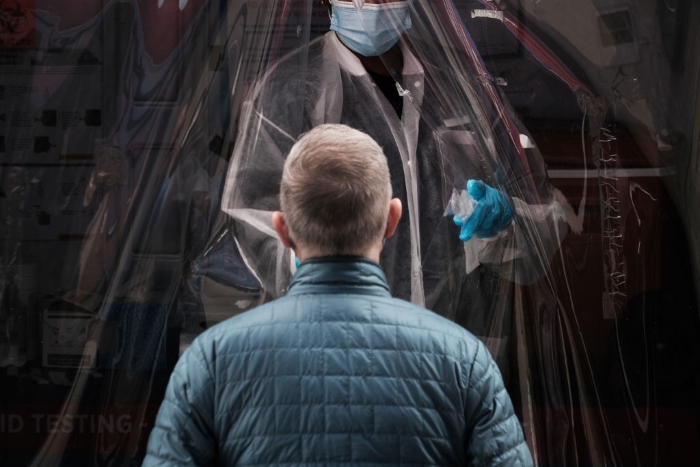
A medical worker administers tests at a Covid-19 testing site in Brooklyn in New York City.

A medical worker administers tests at a Covid-19 testing site in Brooklyn in New York City. | Spencer Platt/Getty Images

FAMILY EMERGENCY — The BA.2.12.1 Covid subvariant of BA.2, a subvariant of SARS-CoV-2 variant Omicron, is taking hold in the U.S.

If you’re confused by the above sentence, you’re not alone. 

It’s been hard enough to keep track of all the new variants of the coronavirus, from Alpha to Delta to Omicron. Now this year has seemed to bring on a new term for our brains to digest: subvariants.

Even experts are a touch confused. One scientist joked with Nightly that he was having “trouble” with the long list of subvariant numerals, which begin to sound like a “bloody phone number.” Another, who wasn’t near a computer when we talked, said to check his numbers as he tried to list the “2.12.1” off the top of his head.

When and why did we start talking about subvariants? What is a subvariant, what makes it different from a variant, and who the heck decides which is which?

“What we call a new variant, or subvariant, is to some degree, arbitrary,” Jesse Bloom, a virologist at the Fred Hutchinson Cancer Research Center who studies the evolution of viruses, told Nightly.

But it’s not totally made up, either. BA.2 and others have been named subvariants because they share important mutations that place them under the Omicron family tree, Bloom said.

Before we go further, let’s take a look at this family tree:

— BA.1 was what we called the original Omicron.

— Soon after the discovery of BA.1, scientists identified BA.2 and BA.3. Bloom calls these “sister” lineages. Scientists know they’re “sisters” because they share common mutations but each have their own distinct mutations as well, which tells researchers that one wasn’t descended directly from the other. They’re each descendants of the original virus, SARS-CoV-2.

— BA.3 failed to effectively transmit, but the fitter sister, BA.2, began to spur outbreaks in the U.S. this spring.

— Then BA.2 went off and had kids of its own: It’s now evolved its own subvariant, BA.2.12.1, which appears to be even more transmissible and is leading to a rise in cases across the U.S.

— In South Africa, scientists have identified BA.4 and BA.5, which by the names would lead you to think they’re also “sister” lineages descended from the original SARS-CoV-2. But with further study, Bloom said, scientists think it’s possible these, too, could be descendents of BA.2, just like BA.2.12.1. Weekly cases have tripled in the region over the last two weeks.

So it makes sense that you’re confused. Why are these considered subvariants instead of new variants that get a new Greek letter? There’s no hard-and-fast rule. It’s a judgment call.

“To a large degree, when WHO/CDC choose to name them as such,” William Hanage, an epidemiologist at Harvard T.H. Chan School of Public Health, told Nightly.

We’ll likely continue to call these Omicron offshoots “subvariants,” Hanage said, because the CDC and WHO decided to use the terminology for BA.2, even though it has “clinically significant mutations” that help it escape antibodies from vaccines and prior infection. BA.2 maybe should have been the Pi variant.

And maybe one day BA.2 will graduate to variant status, Bloom said, if Omicron continues to perform as well as it has, overtaking other variants of Covid. If all the SARS-CoV-2 viruses become relatives of Omicron, experts might shift to using “variants” for the Omicron subvariants.

No matter what we call it, the virus will continue its natural evolution, and we should expect the seasonality of Covid to play out in the U.S. as it did in 2020 and 2021, Hanage said. He’ll be closely watching states like Texas and Florida, to see if cases of BA.4 and BA.5 tick up throughout the summer months.

“The next real crunch point — and this is even incorporating BA.4 and BA.5 — is probably going to be when we turn into the fall and winter,” he said. “People who were infected with BA.1, and BA.2, will be susceptible to infection again,” both from the continual evolving of the virus and the waning of immunity from vaccines and prior infections.

Scientists are trying to figure out exactly where these variants came from in the first place, Hanage said. Preliminary evidence suggests at least some emerged from long-term Covid infections in immunocompromised patients.

There’s a growing school of thought that BA.1 and BA.2, Hanage said, might have formed in the same person. 

“In such cases, the virus can accumulate large amounts of variation and explore evolutionary space to get better at infecting cells and sidestepping the immune system,” Hanage said. “This is one of the reasons that it is really important to make sure such folks get the best possible treatment, including access to appropriate drugs like Paxlovid or Evusheld.”

Welcome to POLITICO Nightly. Reach out with news, tips and ideas at nightly@politico.com. Or contact tonight’s author at mward@politico.com, or on Twitter at @MyahWard.


A message from VISA Inc.:

Digital Payments are a lifeline to small businesses. Visa is taking action now to help small businesses by making it less costly to accept digital payments. Visa extends additional support to small businesses | Visa |

 
WHAT'D I MISS?

— Biden administration scrambles to deal with Russians trying to reach America: Moscow’s invasion of Ukraine has led a growing number of Russians to abandon their country and seek entry to America — leaving U.S. officials scrambling at embassies worldwide and even along the U.S.-Mexico border, according to a State Department cable obtained by POLITICO and interviews with U.S. officials, lawmakers and advocates. Some lawmakers and activists are urging Biden to seize the moment and roll out a welcome mat for fleeing Russians. They argue that would send a powerful signal of U.S. generosity to ordinary Russians — some of whom could be threatened with treason for opposing the war — and undermine Vladimir Putin’s oppressive regime by accelerating a brain drain from his country.

— The jobs boom that just won’t quit: The U.S. labor market has been hot, with rising wages, low unemployment and a record number of job openings. There are almost two jobs available for everyone seeking work, and the average monthly gains of more than 400,000 during the last year exceed anything seen since 1939. The Labor Department’s employment report for April showed a gain of 428,000 jobs and unemployment remaining at a low 3.6 percent, demonstrating that the market remains remarkably strong and tilted toward job seekers. The jobless rate is close to where it was before the pandemic.


INTRODUCING DIGITAL FUTURE DAILY - OUR TECHNOLOGY NEWSLETTER, RE-IMAGINED:  Technology is always evolving, and our new tech-obsessed newsletter is too! Digital Future Daily unlocks the most important stories determining the future of technology, from Washington to Silicon Valley and innovation power centers around the world. Readers get an in-depth look at how the next wave of tech will reshape civic and political life, including activism, fundraising, lobbying and legislating. Go inside the minds of the biggest tech players, policymakers and regulators to learn how their decisions affect our lives. Don't miss out, subscribe today.


— Pelosi bringing House unionization to floor vote next week: Speaker Nancy Pelosi is promising a vote next week on recognizing Hill staffers’ right to unioniz e, while also upping the minimum annual pay for employees to $45,000 and increasing the salary ceiling to $203,700 to match the Senate’s increase.

— Hochul vows New York will provide abortion services for out-of-state patients: New York would prepare for an influx of abortion cases if Roe v. Wade is struck down by the U.S. Supreme Court and would ask the federal government for financial help, Gov. Kathy Hochul said. The state already leads the nation in abortions per 1,000 women, federal records show, and Hochul vowed that New York, with its strong abortion-rights laws, would protect those who visit to get help.


A message from VISA Inc.:

Advertisement Image 

 
AROUND THE WORLD

AN OILY REWRITE — The European Commission has proposed a revised plan for sanctioning Vladimir Putin’s lucrative oil industry , to give some countries in the bloc more time to prepare for life without the Russian fuel imports, Jacopo Barigazzi writes.

Under plans seen by POLITICO and put forward to diplomats today, Hungary and Slovakia would get until the end of 2024 — an extra year on top of the original timetable — to comply with the ban.

The Czech Republic, which also expressed concerns about the timescale proposed by Ursula von der Leyen earlier this week, will have until the end of June 2024, under the Commission's latest draft.

Hungary and Slovakia had warned that the economic damage from ditching Russian oil supplies would be too severe unless they had more time to adapt. Slovakia said it needed until at least the end of 2025 while Hungary's Prime Minister Viktor Orbán called for a five-year delay.


STEP INSIDE THE WEST WING: What's really happening in West Wing offices? Find out who's up, who's down, and who really has the president’s ear in our West Wing Playbook newsletter, the insider's guide to the Biden White House and Cabinet. For buzzy nuggets and details that you won't find anywhere else, subscribe today.


PUNCHLINES

WHO LET THE DOGWHISTLES OUT No, this isn’t the Baha Men portion of the newsletter; it’s a bit more serious than that. In the latest Punchlines , where Matt Wuerker and Brooke Minters delve into the history of dogwhistles in politics, and how they are being used as we head toward the 2022 midterms.

Video player on the history of dogwhistles

NIGHTLY NUMBER

109

The number of children with hepatitis of unknown cause the Centers for Disease Control and Prevention said it is investigating in 25 states and territories over the last seven months, including five reported deaths. More than 90 percent of the children were hospitalized and 14 percent received liver transplants due to liver failure. The majority of the children have recovered.

PARTING WORDS

INSIDE THE FORECAST — The disclosure that the Supreme Court has voted to overturn its nearly-50-year Roe v. Wade precedent is thrusting a new, hot-button issue into the midterm elections: abortion. Watch this week’s episode of Inside the Forecast with Steve Shepard to hear more on how abortion rights could impact the midterms.

Video on 2022 election forecast and abortion


A message from VISA Inc.:

Looking to the future to help small businesses succeed.

The prosperity of small businesses is not only important for the health of the global economy during periods of uncertainty, but for the everyday strength and vibrancy of our local communities. As the future of money continues to evolve, it is critical that small businesses have the resources and support they need to succeed and keep up with big retail in the increasingly digital economy. Visa extends additional support to small businesses | Visa|


Did someone forward this email to you? Sign up here.


Follow us on Twitter

Chris Suellentrop @suellentrop

Tyler Weyant @tweyant

Myah Ward @myahward


FOLLOW US

Follow us on FacebookFollow us on TwitterFollow us on InstagramListen on Apple Podcast


 POLITICO, LLC 1000 Wilson Blvd. Arlington, VA, 22209, USA


Wednesday, April 20, 2022

POLITICO Massachusetts Playbook: The debate over debates continues


View in browser
 
Massachusetts Playbook logo

BY LISA KASHINSKY

Presented by National Grid

TAKING AIM — It wasn’t the pre-convention debate that Sonia Chang-Díaz wanted, but the state senator still got a few licks in against Democratic gubernatorial rival Maura Healey during a forum last night.

Chang-Díaz challenged the two-term state attorney general’s record on race and equity issues throughout the Boston Ward 4 and Ward 5 Democrats’ forum moderated by GBH’s Callie Crossley. It’s the first of two April forums to which Healey agreed in response to Chang-Díaz’s call for three pre-convention debates.

By the end of the hour, Chang-Díaz was appealing directly to Healey, not to the Democratic activists on the Zoom.

“Candidate to candidate, person to person, I think we both acknowledge that debates are the cornerstone of our democracy,” Chang-Díaz said. “We've already received offers from NBC Boston and [GBH] to host debates before the convention. So I want to ask you tonight, right now, will you agree to participate in these debates with me for the good of the people of Massachusetts?”

Healey, after a few moments of awkwardness, replied that “we actually have a debate next week” — in reference to a WBUR and Environmental League of Massachusetts forum next Wednesday — and said “I look forward to continuing to talk about policy over the next six weeks.”

Healey took some of the wind out of Chang-Díaz’s sails heading into last night’s forum by finally releasing a policy proposal, responding to a major critique of her campaign by prioritizing a key issue that’s driven Democratic primary voters to the polls before: climate change.

Her ambitious plan calls for reaching 100 percent clean electricity by 2030; establishing a Cabinet-level climate chief; and electrifying MBTA and school buses by 2030 and all public transportation by 2040.

There were openings for Chang-Díaz to hammer Healey over her climate plan during the forum: Healey wants “affordable” transportation but stops short of calling to make it fare-free in her plan. She also didn’t mention East-West rail, another thing Chang-Díaz has championed. But Healey talked at length about her climate plan last night with little pushback from Chang-Díaz beyond a dig about being late to the game. Maybe that will change next week. Some argue it needs to.

GOOD WEDNESDAY MORNING, MASSACHUSETTS. Sometimes Playbook takes a village. There are going to be a few people helping me out the rest of this week (shout out to Madison Fernandez for pitching in today, and a big thank you, as always, to my editors). Please bear with us and keep the emails coming at lkashinsky@politico.com!

TODAY — Gov. Charlie Baker and Lt. Gov. Karyn Polito participate in a roundtable on the administration’s dangerousness and “revenge porn” legislation at 10:30 a.m. in Salem. Sen. Elizabeth Warren and Rep. Jim McGovern discuss a federally funded rail trail project at 11:45 a.m. at Northampton City Hall. McGovern holds a listening session at VFW Post 8006 in Florence at 5:30 p.m. Rep. Jake Auchincloss speaks at the Atlantic Council’s New American Engagement Initiative at 2 p.m.


HOW DID NATURAL GAS BECOME 'RENEWABLE' ?

A message from National Grid:

There Is A Better Way. National Grid is announcing our path to a fossil-free energy future. By using renewable natural gas, and green hydrogen produced from water using wind energy, we can achieve a fossil-free energy future by 2050 or earlier.

 
THE LATEST NUMBERS

— “The count of 10,624 breakthrough infections last week was a 156% spike from the 4,154 fully vaccinated cases during the prior week,” by Rick Sobey, Boston Herald: “The state Department of Public Health reported a daily average of 1,629 COVID-19 cases over the holiday weekend, which was up 22% from the daily rate of 1,333 infections during the previous weekend. … In the state’s weekly breakthrough report, the count of 10,624 breakthrough infections last week was a 156% spike from the 4,154 fully vaccinated cases during the prior week.”

DATELINE BEACON HILL

— NOT SO FAST: Gov. Charlie Baker’s bill to reform the state’s criminal dangerousness law isn’t dead, but it’s not going anywhere fast. The judiciary committee now has until June 30 to act on the dangerousness bill, plus Baker’s attempt to update the state’s wiretapping law. Baker’s keeping up his pressure on lawmakers to act on his dangerousness bill and legislation that would outlaw “revenge porn” by participate in another roundtable with survivors at 10:30 a.m. at Salem State University.

— “ Baker, with business backing, renews push for tax relief,” by Shira Schoenberg, CommonWealth Magazine: “Baker’s fiscal 2023 budget proposal included tax breaks for seniors, renters, low-income taxpayers, and parents of dependent children. It would modify the estate tax and lower the tax rate on short-term capital gains. The proposal comes as Massachusetts is awash in money from state tax revenues and federal COVID recovery aid. But the House Ways and Means Committee, in a budget proposal that will be debated by the full House next week, declined to adopt any tax changes. House Ways and Means chair Aaron Michlewitz said House leaders prioritized reinvesting in programs and services, like early childhood education and job training.”

— “Commission to review Mass. state seal and motto struggling to get the job done,” by Adam Reilly, GBH News: “A special commission charged with reviewing and possibly revamping Massachusetts’ official state seal and motto decided Tuesday to request a third extension to finish that job. The commission is now asking the Legislature for a deadline of March 31, 2023 to complete its work. The legislation that created the commission originally established a deadline of October 1, 2021 for the body to issue its findings.”

— “Baker opposes fed charter school rule change,” by Christian M. Wade, Eagle-Tribune: “Gov. Charlie Baker has joined 17 other Republican governors calling on the Biden administration to put the brakes on a new Department of Education rule that they argue will make it more difficult for privately run charter schools to get federal funding. In a letter to U.S. Education Secretary Miguel Cardona, Baker and other governors outline their opposition to the proposed rules and call on the administration to suspend implementation of the regulations for a year to give the public more time to weigh in on the plans.”

— “After two Governor’s Council members side with Devaney, meeting livestreams restored,” by Amy Sokolow, Boston Herald: “After a month-and-a-half-long crusade by Governor’s Council member Marilyn Devaney to restore the Governor’s Council livestream, the video will return for the next meeting on April 20. Devaney issued a motion to restore the livestream during a previous meeting, which died without a second. Tuesday morning, two additional council members, Eileen Duff and Mary Hurley, issued a statement calling for the restoration of the stream using the same platform the state Legislature uses to stream every meeting.”

— “Report: Voters might not have final say in referendum,” by Christian M. Wade, Eagle-Tribune: “Massachusetts voters go to the polls in November to decide whether Uber and Lyft drivers should be classified as independent contractors, but a new report suggests that might not be the final word on the issue. The report, released Wednesday by Tufts University’s Center for State Policy Analysis, notes that a lawsuit filed by Attorney General Maura Healey, which calls for recognizing drivers as employees under the state’s wage and hour laws, is unlikely to be fully resolved by the Nov. 8 elections.”


DON'T MISS ANYTHING FROM THE 2022 MILKEN INSTITUTE GLOBAL CONFERENCE: POLITICO is excited to partner with the Milken Institute to produce a special edition "Global Insider" newsletter featuring exclusive coverage and insights from the 25th annual Global Conference. This year's event, May 1-4, brings together more than 3,000 of the world’s most influential leaders, including 700+ speakers representing more than 80 countries. "Celebrating the Power of Connection" is this year's theme, setting the stage to connect influencers with the resources to change the world with leading experts and thinkers whose insight and creativity can implement that change. Whether you're attending in person or following along from somewhere else in the world, keep up with this year's conference with POLITICO’s special edition “Global Insider” so you don't miss a beat. Subscribe today.


VAX-ACHUSETTS

— “CDC estimates new Omicron version accounts for 20 percent of New England COVID-19 cases,” by Martin Finucane, Boston Globe: “The new subvariant, BA.2.12.1, was in the news after it was spotted along with another new subvariant in New York and blamed last week by officials there for pushing up cases in the central part of the state. … BA.2 still accounted for 75.6 percent of cases in New England as of Saturday, according to CDC estimates. (The CDC included the other subvariant detected in New York, BA.2.12, in the BA.2 count.) But BA.2.12.1, which experts say appears to be even more contagious, has been coming on strong. It has been accounting for a rapidly growing share of cases, rising from 1.5 percent on March 19 to 20 percent on Saturday.”

FROM THE HUB

— IT’S BACK: Boston magazine dropped its annual ranking of the “100 Most Influential Bostonians” yesterday, and Mayor Michelle Wu topped the list, followed by Rep. Ayanna Pressley in the No. 2 spot. State Attorney General and Democratic frontrunner for governor Maura Healey is ranked seventh, ahead of Sen. Elizabeth Warren in eighth. Assistant House Speaker Katherine Clark, Sen. Ed Markey, and Gov. Charlie Baker and Lt. Gov. Karyn Polito (as a team) are also on the list, though it should be noted none of them actually live in Boston. Other notables include secretary of state hopeful Tanisha Sullivan, former state senator and Black Boston Covid-19 Coalition cofounder Dianne Wilkerson, the Bay State Banner’s Yawu Miller and … Patriots QB Mac Jones?

— “Homes in the Boston area are growing even more expensive this spring,” by Tim Logan, Boston Globe: “The median price for a single-family home in Greater Boston hit $789,500 in March, according to the Greater Boston Association of Realtors, up 9.4 percent from the same month last year. Condominium prices climbed at the same pace, to $675,000, the highest median price GBAR has ever recorded.”


A message from National Grid:

Advertisement Image 

 
PLANES, TRAINS AND AUTOMOBILES

— “Mass. officials: Masks will no longer be required on the MBTA or at airports,” by Martin Finucane, Boston Globe: “People will no longer be required to wear masks on the MBTA or at Logan International Airport, state officials announced Tuesday in the wake of a federal judge’s ruling that voided the national mask mandate for public transportation. … Most of the state’s 15 regional transit authorities were also dropping mask requirements, but people should check with their RTA to confirm, the officials said. Masks will still be required by users of MBTA’s paratransit service, The RIDE.”

— More: “ Justice Department punts mask ruling appeal to CDC,” by Sarah Owermohle, Adam Cancryn, Erin Banco and David Lim, POLITICO.

ON THE STUMP

— THE HORSE RACES: The new UMass Lowell Democratic primary poll shows a nearly dead heat in the state auditor race between Chris Dempsey and state Sen. Diana DiZoglio, with more than half of likely voters still undecided. In the lieutenant governor race, Salem Mayor Kim Driscoll leads the field with 22 percent support, followed by state Sen. Eric Lesser with 10 percent, state Rep. Tami Gouveia with 9 percent and state Sen. Adam Hinds with 7 percent. UMass Lowell didn't include Bret Bero. Nearly half of likely voters are still undecided for LG.

— “With new climate plan, AG Healey aims high,” by Sabrina Shankman, Boston Globe: “Attorney General Maura Healey, who has said she would be the ‘most aggressive governor in the country on climate,’ spelled out a plan for addressing the climate crisis if she’s elected that includes appointing a cabinet-level climate chief and pledging to achieve a 100 percent clean electricity supply by the end of the decade. Her plan, released Tuesday, calls for tackling each of the state’s three major sources of emissions — buildings, transportation, and power plants — with a broad program of benchmarks and reforms that includes hard deadlines for meeting emissions targets. It includes proposals to allow cities and towns to ban natural gas in new buildings, and pledges to convert 1 million homes to electric heat and replace 1 million gas burning cars with electric by the end of the decade.”

— More: “Healey climate plan calls for cabinet czar,” by Bruce Mohl, CommonWealth Magazine: “ Democratic gubernatorial candidate Maura Healey began to flesh out her policy positions on Tuesday by unveiling a climate change plan that calls for the appointment of cabinet-level official to oversee and coordinate the effort and sets ambitious goals for eliminating the use of fossil fuels in generating electricity and powering the MBTA.”

— “Attleboro mayor 'not surprised' Baker backing Sheriff Thomas Hodgson for re-election,” by Tom Reilly, The Sun Chronicle: “The fact that two Republicans widely seen as moderates are helping launch the re-election campaign of the famously Trump-friendly sheriff of Bristol County has raised some political eyebrows statewide. But not everywhere.”


INTRODUCING DIGITAL FUTURE DAILY - OUR TECHNOLOGY NEWSLETTER, RE-IMAGINED:  Technology is always evolving, and our new tech-obsessed newsletter is too! Digital Future Daily unlocks the most important stories determining the future of technology, from Washington to Silicon Valley and innovation power centers around the world. Readers get an in-depth look at how the next wave of tech will reshape civic and political life, including activism, fundraising, lobbying and legislating. Go inside the minds of the biggest tech players, policymakers and regulators to learn how their decisions affect our lives. Don't miss out, subscribe today.


DAY IN COURT

— “Ex-chair of tribe that welcomed Pilgrims goes on trial,” the Associated Press: “A former chairperson of the Massachusetts tribe whose ancestors aided the Pilgrims goes on trial Tuesday for bribery, extortion and other federal charges related to the tribe’s planned casino project. Cedric Cromwell’s criminal trial opens in U.S. District Court in Boston after being delayed for months by the coronavirus pandemic. He’ll be on trial with co-defendant David DeQuattro, the owner of an architecture firm in Providence, Rhode Island.”

— “Judge declines to dismiss Capitol riot case against former Natick resident,” by Abby Patkin, MetroWest Daily News: “A federal judge has denied former Town Meeting member Sue Ianni’s motion to dismiss charges stemming from her alleged involvement in the Jan. 6, 2021 U.S. Capitol riot.”

WARREN REPORT

— LISTEN: to Sen. Elizabeth Warren answer “questions on the midterms, messaging, favorite D.C. scandals, and more” on yesterday’s episode of “Pod Save America.”

— “Biden administration eases student loan forgiveness through income-based repayment plans,” by Michael Stratford, POLITICO: “The Biden administration on Tuesday announced changes to federal student loan repayment plans that will make it easier for millions of borrowers to have their debts forgiven after being required to pay for 20 or 25 years.”


HOW DID NATURAL GAS BECOME 'RENEWABLE' ?

A message from National Grid:

National Grid is announcing our path to a fossil-free energy future for our customers and communities. Our fossil-free plan will help achieve the Northeast’s aggressive climate goals and set a new standard for energy companies.

We will use renewable natural gas, green hydrogen generated from wind and solar power, battery storage, and greater energy efficiency to make our National Grid system fossil-free by 2050 or earlier. Climate scientists say renewable natural gas is a win-win for the environment.

There Is A Better Way to keep energy affordable, reliable, and clean. That’s why we are creating a hybrid pathway that preserves customer choice while delivering the clean, affordable energy future our customers want and deserve. See How.

 
IT'S NOT EASY BEING GREEN

— “A fossil-free National Grid? Critics call it a pipe dream,” by Bruce Gellerman, WBUR: “The company’s ‘clean energy vision’ is designed to transform the way the gas utility provides heat throughout its New England territory, while continuing to rely on its vast gas infrastructure. Currently, most homes and businesses in the region burn natural gas for heat, which National Grid distributes to customers through a network of pipelines. By mid-century, if the company fails to change its business model, the net-zero requirements of the state climate law will essentially put it out of business. … The key to National Grid’s plan is using their same pipeline distribution system, but providing a different mix of gas, said Stephen Woerner, regional president of the utility: ‘We eliminate fossil fuels and we replace them with renewable natural gas and green hydrogen.’”

— “Don't skip environmental justice in rush to build infrastructure, advocates warn,” by Emma Foehringer Merchant, GBH News: “Gov. Charlie Baker is asking the Massachusetts Legislature to approve a $9.7 billion transportation and environmental infrastructure bond bill to help build bridges, roads and railways across the commonwealth. But some advocates worry the state is not taking the steps necessary to ensure such projects don’t do undue harm to low-income or minority communities.”

FROM THE 413

— “Is West Stockbridge 'full of drama?' Police are investigating someone running over a campaign sign,” by Heather Bellow, The Berkshire Eagle: “Police are investigating after someone drove their vehicle onto the lawn of a Select Board member who is up for reelection, in an apparent attempt to flatten his campaign sign. Police also are trying to find out who stole three of the signs in two areas of town belonging to Eric Shimelonis, who is running for a second term.”

THE LOCAL ANGLE

— “Worcester names four finalists for school superintendent,” by Scott O’Connell: “The candidates are Charles Grandson, chief equity and strategy officer for the Boston Public Schools; Sonya Harrison, assistant superintendent for the School District of Philadelphia; Rachel Monarrez, deputy superintendent of the San Bernardino City Unified School District in San Bernardino, California; and Malika Savoy-Brooks, chief of academic support for the Philadelphia schools.”

MEDIA MATTERS

— “Joe Kahn named next executive editor of The New York Times,” by Michael M. Grynbaum and Jim Windolf, New York Times: “Kahn will succeed Dean Baquet, whose eight-year tenure is expected to conclude in June. He has local ties, growing up outside Boston and serving as president of Harvard’s undergraduate daily, The Crimson.”

MEANWHILE IN MAINE

— "Biden pushes infrastructure plans in visit to New Hampshire," by Chris Megerian, Associated Press: “President Joe Biden went to Portsmouth Harbor in New Hampshire on Tuesday to highlight how last year’s infrastructure bill can improve shipping and help resolve the country’s supply chain debacles that have contributed to inflation at a 40-year high. The president used the trip to say that America is healthier than ever as it emerges from the coronavirus pandemic and a severe but short recession. It’s a crucial message as polling suggests many voters are uncomfortable about the future and Biden’s own economic leadership as high inflation has overwhelmed the job gains during his watch.”

— EYES EMOJI: Biden’s visit to New Hampshire, his second in six months, comes as speculation swirls about whether he’ll run for president again in 2024 — The Hill reports that Biden told former President Barack Obama that he's in — and about whether Democrats facing tough reelection fights will stand with Biden or distance themselves from a president with poor approval ratings. Sen. Maggie Hassan (D-N.H.), for instance, has spoken out against Biden’s recent decision to lift Title 42. But yesterday she said that it was an “honor” to work with the president and her colleagues to pass the infrastructure law. Biden, in return, praised Hassan as a “key player” in the bill and called her “one of my friends for a long, long time.”

HAPPY BIRTHDAY — to state Rep. Dan Hunt, Jessie Zimmerer, David Beauregard and Colin Reed.

Want to make an impact? POLITICO Massachusetts has a variety of solutions available for partners looking to reach and activate the most influential people in the Bay State. Have a petition you want signed? A cause you’re promoting? Seeking to increase brand awareness among this key audience? Share your message with our influential readers to foster engagement and drive action. Contact Jesse Shapiro to find out how: jshapiro@politico.com.


Follow us on Twitter

Lisa Kashinsky @lisakashinsky


Subscribe to the POLITICO Playbook family

Playbook  |  Playbook PM  |  California Playbook  |  Florida Playbook  |  Illinois Playbook  |  Massachusetts Playbook  |  New Jersey Playbook  |  New York Playbook  |  Ottawa Playbook  |  Brussels Playbook  |  London Playbook

View all our politics and policy newsletters

FOLLOW US

Follow us on FacebookFollow us on TwitterFollow us on InstagramListen on Apple Podcast


 POLITICO, LLC 1000 Wilson Blvd. Arlington, VA, 22209, USA


Top News | 'Totally Crazy': Trump Holds Housing Bill Hostage to Eviscerate Voting Rights

                 LOTS OF POSTS IGNORED BY BLOGGER..... OR REMOVED ON THEIR WHIM! ALL POSTS ARE AVAILABLE ON MIDDLEBORO REVIEW AND SO ON BLOG...