Showing posts with label ALBUQUERQUE NEW MEXICO. Show all posts

Friday, August 19, 2022

RSN: Voters Sure Do Seem Upset Roe Was Overturned


Reader Supported News
18 August 22

Live on the homepage now!
Reader Supported News

SWITCHING TO EMERGENCY MODE ON DONATIONS — Due to a total lack of donations for February the organization’s funding situation has become critical. We are going to have to stop the train and focus solely on bringing in the relatively few donations we need to function. The show will not go on without funding.
Marc Ash • Founder, Reader Supported News

Sure, I'll make a donation!


Abortion supporters rally in front of the Supreme Court. (photo: Leigh Vogel/The New York Times)
Voters Sure Do Seem Upset Roe Was Overturned
Jeremy Stahl, Slate
Stahl writes: "Some recent polling suggests voters, and particularly women, are ready to do something about it."

Some recent polling suggests voters, and particularly women, are ready to do something about it.

On Wednesday, Marquette Law School released a new poll that shows Democrat Mandela Barnes leading incumbent Republican Sen. Ron Johnson by seven points in a critical Wisconsin race that could determine control of the U.S. Senate. The 51-44 lead is a 5-point improvement for Barnes, currently Wisconsin’s lieutenant governor, compared to polling from back in June.

The poll comes one day after a surprise University of North Florida poll showing Democratic Rep. Val Demings leading sitting Republican Sen. Marco Rubio 48-44 in a Senate race many have assumed will go to the incumbent. Another poll released on Tuesday had Lt. Gov. John Fetterman leading Mehmet Oz by 16 points in yet another Senate race for a seat currently controlled by Republicans. All this polling comes on the heels of a broader trend in favor of Democrats: They’ve recently gone from looking like underdogs in the race to retain control of the Senate to being the 63 percent favorites in FiveThirtyEight’s Senate model.

While there are reasons to be skeptical of such favorable polling—especially given the failures of polls that overestimated Democratic chances in 2016 and 2020—it is in line with other recent trends showing Democrats moving even with—or even slightly ahead of—Republicans in the generic ballot for who the public favors to control Congress. It is also in line with a pair of recent House special elections where Democrats lost but vastly outperformed expected outcomes based on the 2020 presidential result.

Plus, this has all happened despite President Joe Biden’s abysmal approval ratings, which have, ticked up just a few points to about 40 percent approval. So, what explains the apparent shift? One highly plausible explanation for Democrats’ polling improvement can be found in the responses to additional questions included in a number of these latest polls: Democratic and Independent voters appear steamed over the Supreme Court’s decision in June to overturn Roe v. Wade and end constitutional protections for reproductive health care.

In the Wisconsin poll from Marquette Law School, for instance, 55 percent of voters said they were “very concerned” about abortion and 25 percent said they were “somewhat concerned.” In that same poll, 60 percent of voters opposed the Supreme Court’s decision to end the constitutional right and overturn Roe, with a full 62 percent of Independents opposing it. The poll also showed that 65 percent of Wisconsin voters thought abortion should be legal in all or most cases, compared to just 58 percent in the same survey in June before Dobbs v. Jackson Women’s Health Organization was decided.

These trends are in line with other recent polls. In Tuesday’s favorable University of North Florida poll result for Demings, a full 51 percent of respondents said that Dobbs made them more likely to vote in November. This phenomenon was especially pronounced among Democrats, with 78 percent saying the decision made them more likely to vote in November. Further, 71 percent of Florida voters say they oppose a total abortion ban. “Without the protections of Roe, the likelihood of a strict or outright ban on abortion being introduced in Florida increases dramatically, and this looks to be mobilizing Democrats to the polls,” said Michael Binder, the faculty director of the research lab that conducted the poll.

This matches the nationwide trends. In a recent Fox News poll that had Democrats and Republicans tied 41-41 in the generic ballot, 55 percent disapproved of the Supreme Court’s job performance and 60 percent disapproved of the decision to overturn Roe v. Wade. In that same poll, there has also been a significant shift among women towards Democrats since May.

Finally, another poll released this week showed that Latino voters in Arizona, California, Colorado, Florida, Georgia, and Pennsylvania considered abortion to be a top-5 issue for the first time ever. In that poll, conducted by two Latino civil rights organizations, 70 percent of respondents said abortion should be legal and Democrats held a 2-to-1 advantage over Republicans in the generic ballot.

Will any of this polling actually matter when voters go to the polls in November, with inflation still topping polls as their number one concern and with Biden’s numbers seemingly remaining in the toilet? There’s one more reason for Democrats to be hopeful, connected to Kansas’ overwhelming vote to keep abortion legal in the state earlier this month. According to CEO of data firm TargetSmart, Tom Bonier, new women registering to vote outnumbered new men registering from the day the court released the decision in Dobbs up to the special election by a whopping 40 percent. According to Bonier, a similar though slightly less pronounced “registration gap” is being seen in critical swing states, such as Wisconsin (17 percent more women than men newly registered), Pennsylvania (12 percent gap), Ohio (11 percent gap), North Carolina (7 percent gap), Georgia (6 percent gap), and Florida (5 percent gap).

It seems that if Democrats have a stronger than expected result in November, they will have women voters angry at the Supreme Court’s decision in Dobbs to thank.


READ MORE


'Never in a Million Years': Arizona Republicans Grapple With the Rising FringeMark Finchem waves to the crowd as he arrives to speak at a rally put on by former President Donald Trump in Arizona on July 22. (photo: Ross D. Franklin/AP)

'Never in a Million Years': Arizona Republicans Grapple With the Rising Fringe
Hank Stephenson, POLITICO
Stephenson writes: "When Arizona state lawmaker Mark Finchem, a 2020 election denier who deals in fringe legal theories, won the Republican nomination for secretary of state earlier this month, many of his GOP colleagues in the state Legislature couldn't believe it."

Mainstream Republicans once laughed at Mark Finchem. Now the 2020 election denier and his Trumpist allies are close to taking power.

When Arizona state lawmaker Mark Finchem, a 2020 election denier who deals in fringe legal theories, won the Republican nomination for secretary of state earlier this month, many of his GOP colleagues in the state Legislature couldn’t believe it.

To be clear, they knew he would win — he had Donald Trump’s endorsement — but they were still stunned. Mark Finchem. Him.

A back-bench lawmaker best known locally for his over-the-top drugstore cowboy get-ups and extreme ideas, Finchem would be in charge of the state’s elections should he win in November. That would also put him first in the line of succession for the governorship since Arizona doesn’t have a lieutenant governor.

“It’s basically from political gadfly within the Republican caucus to potentially the number two person in the state of Arizona,” says Arizona Republican Sen. T.J. Shope. “It’s a meteoric rise.”

“Never in a million years” would Paul Boyer, a fellow GOP state legislator, have imagined that Finchem would crush a field of qualified candidates and win a nomination to statewide office.

“Mark is known as the guy that’s probably the dumbest — well, there’s a long list, but one of the dumbest — legislators in the state House,” he says. (Finchem’s retort: Boyer is an “utter disgrace.”)

But Finchem’s rise makes sense in light of the broader shift within the Arizona Republican Party. Trump’s slate of political insurgents swept the GOP nomination for every state office in which he offered his blessing, from the U.S. Senate down to state Senate races.

After decades of civil war, the Arizona primaries mark a decisive swing in the state GOP’s balance of power. The center-right, pro-business wing of the party led by the late Sen. John McCain and Gov. Doug Ducey has been defeated, at least for now. Finchem and other far-right outsiders — the original tea party activists and the new Trumpist hard-liners — have taken over.

“We drove a stake through the heart of the McCain machine,” Republican gubernatorial nominee Kari Lake bragged, while making a stabbing motion, at a CPAC event following the primary. “We threw together a rag-tag team of nonpolitical people to run the most exciting campaign in the country. And we won.”

Lake, a former TV news anchor, fended off more than $20 million in spending against her to narrowly capture the nomination, despite her opponent’s backing from Ducey, former GOP Gov. Jan Brewer and former Vice President Mike Pence.

Blake Masters, a 36-year-old acolyte of billionaire tech entrepreneur and Trump donor Peter Thiel, surged from behind in the U.S. Senate primary after earning Trump’s nod. Abraham Hamadeh, a 31-year-old lawyer who has spent fewer days in a courtroom than many petty criminals, was rocketed out of obscurity to win the primary for state attorney general after snagging Trump’s endorsement.

None have any political experience. But they have the main qualification that matters to the former president: They repeat the lie that the Arizona election was rigged against him. Every winning Republican candidate said they wouldn’t have certified the 2020 election. That means that as Trump gears up for a possible third run for the presidency, Arizona is facing the prospect of a slate of statewide officials who could steal the election for him. (Indeed, another victim of a Trump-backed primary was Rusty Bowers, the soft-spoken leader of the Arizona House who rebuffed Trump’s pressure campaign to overturn the state’s 2020 election results and testified to the January 6 committee.)

For his part, Finchem defeated three other candidates for the secretary of state nomination: Beau Lane, an advertising executive who had backing from the business community and Ducey’s full-throated endorsement; state Rep. Shawnna Bolick who had sponsored legislation to let lawmakers toss out the results of presidential elections they don’t like and had tried to capture the Trump vote; and state Sen. Michelle Ugenti-Rita, who has been the architect of every major “election integrity” bill that has been signed into law for the past decade, but who refused to regurgitate the lie that Arizona’s election was stolen from Trump. Finchem beat them all by wide margins.

It’s not an overstatement to say Finchem remains a bit of a joke to his soon-to-be old colleagues.

Boyer, who served eight years in the Arizona Legislature alongside Finchem, cackled while recalling Finchem’s doomed 2020 run for speaker against Bowers. Finchem wrote a seven-page memo outlining his vision for the job, including his top priority: using viral content to take the messaging power back from the media. And he did prove that he knew how to go viral.

“The use of mime’s [SIC] is an emerging means of harnessing rhetoric and sarcasm with a purpose,” Finchem declared with a repeated typo of the word “meme,” which became a local meme itself. “The regular use of mime’s to build brand identity and establish solid differentiation will serve us well.”

Less than a third of the Republican caucus ultimately backed Finchem to become the speaker, but it cemented his status as the leader of the far right at the state Capitol.

Finchem has always been something of an underdog and outcast at the state Capitol. In his eight years as a lawmaker, he has only once been granted a committee chairmanship; typically, even junior Republican lawmakers get prime posts. He had just one bill signed into law this year — fewer than many Democrats who sit in the minority — and he hasn’t fared much better in past years.

“How can he go from that, to the Republican nominee for secretary of state? I mean, it’s simple. He won the ‘Arizona Apprentice’ for secretary of state,” Boyer says. “Abe Hamadeh for AG? Kari Lake for governor? It’s very simple. If you can fog up a mirror and win the ‘Arizona Apprentice,’ you’re good.”

Boyer, meanwhile, chose not to run for reelection after receiving death threats for refusing to go along with his party’s election lies. So just two years after his failed run for leadership, Finchem is on top. And those who laughed at his vision have been purged from Arizona’s political landscape.

In many ways, Finchem is a man made for the times. He’s a longtime leader of the legislature’s far-right “Liberty Caucus,” and is revered in conservative grassroots circles as one of the few “good lawmakers.”

He refused to do a phone interview for this article, but he did send a few text messages, saying if he’s having a moment in the sun, it’s because like him, the people are no longer afraid to be bullied by the establishment.

“I am but a humble servant who took the time to listen to his constituents and has been vilified for it,” he wrote. “Perhaps that’s why they view me as their champion.”

Originally from the Detroit area, Finchem moved to Arizona in 1999 and began a career as a realtor. (He had previously been a cop in Kalamazoo, Mich., where his final evaluation reads “poor rating, would not rehire.”) He later became vice president of business development for Clean Power Technologies LLC, an Idaho-based company that claimed on its now-defunct website that it can generate and deliver clean energy “without wires, anywhere around the world.”

Finchem was an early adopter of fringe politics in Arizona. He was touting state sovereignty issues long before phrases like “plenary powers” and the “independent state legislature doctrine” entered the mainstream political lexicon. Armed not with a law degree, but a masters in legal studies from the University of Arizona’s “freedom school,” Finchem became the thought leader of the movement to decertify the 2020 election in Arizona.

After losing his head-to-head contest with Bowers for the speakership in late 2020, Finchem held an unauthorized, unofficial “hearing” with Rudy Giuliani and other members of Trump’s legal team to air falsehoods about how the election was rigged. That hearing cemented his status as one of the key ringleaders of Arizona’s “Stop the Steal” movement and helped earn him the Trump endorsement that rocketed him to national stardom on the right.

Just a few weeks later, Finchem was outside the U.S. Capitol at the Jan. 6 riot. Though he maintains he never entered the building, video footage shows he was much closer than he originally claimed. Ali Alexander, the organizer of the rally that helped fuel the deadly mayhem, declared there wouldn’t have been a Stop the Steal movement in Arizona without Finchem.

CNN reported this week that Finchem previously shared posts on social media about stockpiling ammunition and touted his membership in the Oath Keepers anti-government extremist group, which is under scrutiny for its role in the Jan. 6 insurrection.

Finchem is still pushing baseless theories about how the election was rigged, texting a link to a conservative activist project that he claims shows the “Chinese Communist Party now has operational control over many elections across the United States because they control the servers where all of the electronic data sits.”

“What boggles my mind is reporters and journalists are sitting on the story of the century but nobody has the balls to write about it,” he wrote in a text.

The 2022 primaries underscored just how tight Trump’s grip is over Arizona Republicans, and that his 2020 loss is still fresh on these voters’ minds as he considers another run for the presidency.

How could it not be? In Arizona, it feels like the 2020 election is still ongoing.

Republicans in this state, perhaps more than any other, have followed Trump’s election conspiracies down the rabbit hole.

First there was the Cyber Ninjas’ audit authorized by the state Senate, which ultimately confirmed through a hand count of ballots that President Joe Biden won, but which offered up a host of other debunkable conspiracies about how maybe he didn’t win. Then there’s the still-ongoing investigation by the Arizona attorney general about alleged improprieties in the election, which uncovered a handful of record-keeping issues, but no proof of any widespread fraud, including from dead people voting.

Meanwhile, Arizona Republican Party Chair Kelli Ward not only continues to spout Trump’s fantasies about the election; she broke with the chair’s long-standing tradition of neutrality to throw her full weight behind the MAGA candidates in the primary, calling the Trump-opposed candidates RINOs and worse. The sycophantic pro-Trump student group Turning Point USA also is based in Arizona and deeply intertwined with the party infrastructure.

Trump himself has seen Arizona as key to keeping his political future alive. He’s traveled to the state twice since losing the 2020 election. In January of this year, he came to promote his candidates and spin election yarns. And during the first weeks of early voting, he returned with pillow salesman and conspiracy-slinger Mike Lindell, who warmed up the crowd by claiming, once again, that the election was rigged and that the state is poised to do away with “defective” vote tabulating machines.

But just as important, Arizona’s mainstream conservatives have cowered to the lie that the election was stolen from Trump. While some, including Ducey, have attempted to tamp down on the rhetoric, none have forcefully confronted Trump’s disinformation.

On the same day as Trump’s latest rally for his candidates, Pence and Ducey stumped for their pick in the gubernatorial primary: Karrin Taylor Robson. Robson criticized Lake for saying the primary election was rigged against her before votes had even been cast, but Robson refused to say that the 2020 election was free and fair, saying she wasn’t sure if she would have certified Arizona’s 2020 election if she were governor.

“We have the wrong guy in the White House,” she said, while repeatedly refusing to clarify whether Biden was wrongfully elected or simply the wrong guy for the job.

Lane, Finchem’s business-backed opponent, would say the election wasn’t stolen when asked. But he never made it a central point of his campaign in an overt way. Instead, he took to the airwaves with criticism of Finchem for having supported a National Popular Vote bill, saying if Finchem had his way, Hillary Clinton would have been president.

In a state where even the mainstream conservative candidate for the top election official doesn’t forcefully articulate a message that the 2020 election was safe, secure and legitimate, it shouldn’t be a shock that Republican voters backed a slate of candidates that’s likely to be willing to throw out the results of the 2024 election.

Whether Finchem and his fellow Trumpists will find success in November is less clear.

In Arizona’s purple political landscape, Democrats and even many Republicans here say GOP primary voters went too far — that they’ve undermined the party’s chances of holding the state’s top offices in an otherwise great year for Republicans. Perhaps that could break the fever, as Barack Obama once predicted, before the party went even further to the right under Trump.

“It may take a drubbing at the polls this year to get Republican voters off the Trump train,” says Arizona Republican consultant Barrett Marson. “Or maybe they’ll just double down.”


READ MORE


Four Strange Murders in New MexicoConcern has grown at the Islamic Center of New Mexico since the killings started. (photo: Adria Malcolm/The New York Times)

Four Strange Murders in New Mexico
Aymann Ismail, Slate
Ismail writes: "A recent string of murders in Albuquerque, New Mexico, was unusual. None of the four victims were robbed, and all had been caught off guard, seemingly ambushed and executed. Authorities said the victims had only one thing in common: They were all members of the small Muslim community there."

Arecent string of murders in Albuquerque, New Mexico, was unusual. None of the four victims were robbed, and all had been caught off guard, seemingly ambushed and executed. Authorities said the victims had only one thing in common: They were all members of the small Muslim community there.

The murders were merciless. According to the account of a victim’s brother, his plan to return the body to Pakistan was abandoned because his brother had been shot so many times with an AR-15-style rifle that he was “unrecognizable.” At least one of the victims was killed just hours after attending the funeral for two of the other victims. For a community this small—numbering only around 1,500—one murder was tragic. Four was unthinkable.

Major outlets picked up the story. They interviewed the families of the victims, and their Muslim neighbors who were afraid to go outside. One told a reporter they didn’t want to become “bait.” Ahmad Assed, president of the Islamic Center of New Mexico, told CNN he too had become paranoid. “When I get in the car, I’m watching every which way possible. I’m watching my side mirror. I’m looking in the back. I’m looking for any sign out of the ordinary,” he said. Leaders in the community asked Muslims to use a buddy system to stay safe.

There wasn’t much information about the murders at first. The killer was still at large. With no indication of a motive, police refrained from labeling the deaths as hate crimes. Instead, they told the press they believed the four murders were linked, and that the victims could have been targeted for their faith. But many did make assumptions. An ABC affiliate in Texas ran the headline, “Islamophobic Killer Targets 4 Men Killed in Albuquerque.” Reporters interviewed Muslim leaders across the country; one blamed “radicals with hatred.” A number of pundits with large followings also pinned the deaths on Islamophobia. One said the killer was “most likely a white supremacist.” A widely shared New York Times report noted that authorities were reluctant to label the crimes prematurely but raised the specter of recent hate crimes against Muslims.

The Council on American-Islamic Relations, or CAIR, a Muslim civil rights group, issued a press release condemning the killings, and offered a $10,000 cash reward for any information that may lead to an arrest and conviction. But Edward Ahmed Mitchell, a deputy director at CAIR, was careful when a CNN reporter asked him if he believed the attacks were motivated by Islamophobia. “We could be surprised by what is going on here,” he said. “When we catch this person, we can find out why they did it.”

Last week, law enforcement announced they had arrested a suspect, 51-year-old Muhammad Syed, who is Muslim. Syed was pulled over in a traffic stop 100 miles away from his home. He told investigators he was fleeing to Texas, citing fears of himself becoming the next victim in New Mexico. They found a gun, along with bullet casings that appeared to match the weapon used in the murders. He’s suspected in two of the four killings but may be connected to all four. His son was also held on gun charges. (Syed denies all of the allegations.)

Authorities believe Syed, a Sunni Muslim, may have been motivated by sectarian hate after his daughter agreed to marry a Shia man. Others pushed back on that characterization this week, pointing to personal feuds between Syed and the victims. Whatever the motive, a community that had girded itself with the possibility an outsider was killing them now has to confront an even harder-to-contemplate outcome. So do national leaders who watched speculation get ahead of the investigation.

I asked Mitchell, of CAIR, if many had been too quick to blame the attacks on Islamophobia. “We always said that we don’t know who’s doing it or why they’re doing it,” he told me, explaining his group’s caution. “Looking back in hindsight, I really wouldn’t change anything about what anyone did. I think everyone reacted appropriately based on what we knew.”

He said while some may have made assumptions, the coverage of these events was indicative of a culture shift in how Muslims are reported on and how they’re policed. “There was a time when Muslims victims of crime were completely ignored, and Muslim perpetrators of crime were the top of the evening news. Now we’re moving to a situation where there’s a little more balance. Muslim victims of crimes get the attention they deserve, and when there are Muslim perpetrators of crime, their behavior is not imputed to the entire community. And it’s not some automatic assumption that Islam must to be to blame for the behavior of one unhinged individual,” he said.

Mitchell doesn’t blame Muslims around the country who instinctually felt these were Islamophobic attacks. “I think it made sense for everyone to recognize there’s a pattern here,” he said. CAIR tracks complaints to its office, and its latest report found more than 6,500 between 2019 and 2020, the highest it’s ever seen. “Of course everyone had to take this very seriously. And regardless of the suspect’s identity, it was right to take this very seriously.”

The uneasiness around the apparent outcome in the case also stems from some American Muslims’ fears of looking inside their own communities. Zainab Chaudry, a spokesperson for CAIR and director of its Maryland office, said that though CAIR’s mission is largely to combat Islamophobia, combatting internal Muslim hate is a priority as well. “Islamophobia and anti-Muslim bigotry is a very real issue. But it’s not just interfaith. It’s intrafaith, too,” she said. “Anti-Shia hate is also a form of hatred and bigotry. It’s something that deserves to be condemned. It doesn’t overshadow our struggle with Islamophobia,” she said.

She says CAIR’s position in this case was informed by past experiences where it might have assumed too much. “We’ve had cases happen in the past, where you think it’s one thing and it turns out to be something completely different and then it backfires and then the issue loses credibility and then people feel like, ‘You’re exaggerating the problem of Islamophobia in our country,’ ” she said. (Even so, that response proliferated online in response to news of the Albuquerque suspect.)

Chaudry added that the case was far from over: “From CAIR’s standpoint, we wouldn’t have done anything different had it been a white supremacist versus a Muslim, but we do want to caution that it’s still very early in the investigation. There is a suspect in custody. There’s still two other murders that haven’t been accounted for. And we just don’t have all the details,” she told me. “There’s still a lot of questions, but we hope that at least this arrest brings some peace of mind to the community.”

Mitchell noted that CAIR tracked the anti-Muslim chatter online relating to the murders, and found that some celebrated that Muslims were being murdered—then celebrated that the perp might be Muslim too. “It’s predictable that there are people who are gonna jump on this and say, ‘Well, what about Muslim-on-Muslim hate? Or Muslim-on-Muslim violence?’ ” he said. “Our priorities are making sure the victims get justice, the families and the community is protected and safe, and they have the resources and support that they need to navigate that. And whoever’s behind this, they’re brought to justice.”

READ MORE


Black Man Left Paralyzed After Texas Police Allegedly Slam Him on to ConcreteChristopher Shaw was arrested in June 2021 and severely injured while in police custody, his lawyers claim. (photo: Shutterstock)

Black Man Left Paralyzed After Texas Police Allegedly Slam Him on to Concrete
Maya Yang, Guardian UK
Yang writes: "Lawyers of a Black Texas man and civil rights activists are calling for justice after he was allegedly grabbed and slammed on to concrete ground by police officers at a jail in Beaumont, Texas, leaving him paralyzed from the chest down."

Civil rights activists and Christopher Shaw’s lawyers are demanding justice after he was severely injured while in police custody in 2021


Lawyers of a Black Texas man and civil rights activists are calling for justice after he was allegedly grabbed and slammed on to concrete ground by police officers at a jail in Beaumont, Texas, leaving him paralyzed from the chest down.

On Wednesday, lawyers of 41-year-old Christopher Shaw hosted a press conference that called for justice for Shaw, who was severely injured while in custody in June 2021.

According to a lawsuit filed last month, Shaw was arrested on 12 June 2021 over misdemeanor public intoxication charges after Beaumont police officer James Gillen found him standing in the middle of a roadway, “in need of medical assistance”. Shaw was then taken to a hospital to be evaluated before being transported to Jefferson county correctional facility in Beaumont where he was restrained for “noncompliance”.

“Before entering the facility, Mr Shaw slightly turned his body. Defendant Gillen responded by attempting to slam Mr Shaw to the concrete platform at the rear entrance of the facility,” the lawsuit said.

He landed on his head and fractured his spine in multiple places, the lawsuit alleges. Shaw asked for help from jail staff and employees of the jail’s medical contractor CorrHealth but they refused to help him, according to the lawsuit. When Shaw asked one nurse for assistance, she allegedly told him, “I won’t help you until you help yourself.”

The lawsuit added that Shaw was left alone in his jail cell for approximately 20 hours before someone attended to him medically. While he was left alone in his cell, he “defecated and urinated on himself multiple times due to his inability to control his bowels and kidney function”, the lawsuit said. Only later was an ambulance called for him and he was taken to the hospital again where he underwent various emergency surgeries.

Upon coming back to jail from the hospital, “Mr Shaw clearly showed signs of paralysis. Specifically, Mr Shaw was not ambulant. Mr Shaw was placed in a wheelchair and, with the assistance of another officer, Mr Shaw was wheeled back into JCCF. Mr Shaw was unable to control his lower extremities,” the lawsuit said.

Shaw has since filed the lawsuit against police officer James Gillen, the city of Beaumont and CorrHealth.

During Wednesday’s press conference, Candice Matthews, the statewide steering committee chair for the Rev Jesse Jackson’s Rainbow Push Coalition, said, “We’re dealing with America’s chaos. And from police brutality, that is exactly what we’re dealing with. We’re dealing with road cops that operate on ignorance and authority. And that is a dangerous combination because the end result is what has happened to dear brother Christopher Shaw.

“We’re dealing with lack of accountability because accountability breeds responsibility. And therefore we need our law enforcement to be responsible enough to hold their officers accountable when wrongdoing has been done,” she added.

Speaking to KBMT last September, the Beaumont police chief, James Singletary, said that although he felt “very badly about the gentleman that got injured”, Gillen was “just doing his job”.

The incident was captured on video which Shaw’s attorneys have seen, but according to Beaumont officials, public release of the video is currently prohibited as it may jeopardize jail security. Shaw’s attorney and civil rights advocate said they are working to release the video.


READ MORE


Nine Days After Mar-a-lago Search, FBI Agents Are Still Sifting Through Trump DocumentsAn aerial view of Mar-a-Lago in Palm Beach, Florida, March 1, 2021. (photo: AP)

Nine Days After Mar-a-lago Search, FBI Agents Are Still Sifting Through Trump Documents
Ken Dilanian, Michael Kosnar and Zoë Richards, NBC News
Excerpt: "More than a week after they searched former President Donald Trump’s Florida residence, FBI agents are still sifting through the seized documents, two law enforcement officials briefed on the matter told NBC News."

The lengthy review period underscores the large volume of seized documents and efforts to return files that are covered by attorney-client privilege or not relevant to the probe.


More than a week after they searched former President Donald Trump’s Florida residence, FBI agents are still sifting through the seized documents, two law enforcement officials briefed on the matter told NBC News.

The FBI's filter team — a group of agents independent of the overall investigation — is tasked with separating out documents that are covered by attorney-client privilege and material deemed not relevant to the probe.

Records deemed relevant are turned over to the investigating agents, while those that are not relevant are returned to Trump. The officials who spoke to NBC News said it was the filter team that determined that Trump’s passports, which he claimed agents “stole” during the search, were considered not relevant and returned to him, as previously reported by NBC News.

The officials also said the filter team is checking to see whether any of the documents or other materials not marked classified include classified information.

The lengthy period of review underscores the large volume of documents that were seized from Mar-a-Lago on Aug. 8, when FBI agents removed 11 sets of classified documents, some of which were labeled secret and top secret.

The case is being run out of the FBI’s Washington field office, and former agency officials say counterintelligence agents are likely to be involved.

In a post on his social media platform, Truth Social, Trump said Sunday that the FBI last week “took boxes of privileged ‘attorney-client’ material, and also ‘executive’ privileged material, which they knowingly should not have taken.”

Magistrate Judge Bruce Reinhart in Florida has scheduled a hearing Thursday on whether to unseal the affidavit federal investigators used to justify their search warrant after a group of news organizations, including NBC News, filed court papers asking him to publicly release the document. The Justice Department has filed a motion against unsealing the affidavit, arguing it would compromise an ongoing investigation, while Trump's attorneys have yet to file a motion taking a position.

READ MORE


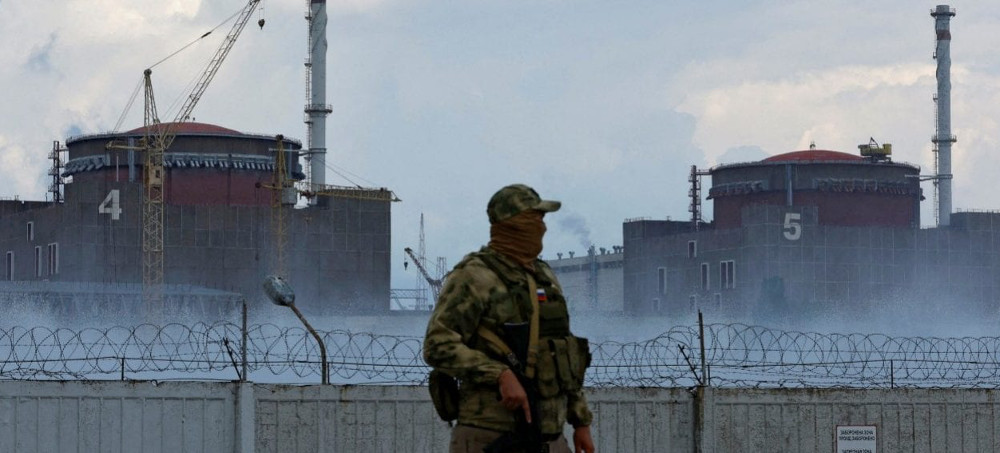
Russia Threatens to Shut Down Zaporizhzhia Nuclear Plant Amid Shelling AllegationsA Russian serviceman stands guard near the Zaporizhzhia Nuclear Power Plant outside the Russian-controlled city of Enerhodar, Ukraine, August 4, 2022. (photo: Alexander Ermochenko)

Russia Threatens to Shut Down Zaporizhzhia Nuclear Plant Amid Shelling Allegations
Josh Lederman and Mary-Ann Russon, Reuters and NBC News
Excerpt: "Russia has allegedly told workers at the Zaporizhzhia nuclear power plant not to show up to work Friday, Ukrainian military intelligence has exclusively confirmed to NBC News."

On Thursday, Russia threatened to shut down the Zaporizhzhia nuclear plant. warning that there was a risk of a human-made disaster due to alleged continued shelling by Ukraine.


Russia has allegedly told workers at the Zaporizhzhia nuclear power plant not to show up to work Friday, Ukrainian military intelligence has exclusively confirmed to NBC News.

This comes amid allegations and speculation from both Russia and Ukraine that an incident is being planned Friday at the plant.

On Thursday, Russia threatened to shut down the plant, warning that there was a risk of a human-made disaster due to alleged continued shelling by Ukraine.

But Ukraine has a completely different story, according to Andriy Yusov, a spokesman for the Ukrainian Defense Ministry’s Main Intelligence Directorate.

“There is new information, it arrived about half an hour ago, that for tomorrow, August 19, there is an order for the majority of the staff not to go to work,” Yusov told NBC News.

“This is what the Russians told their people, primarily the employees of Rosatom,” he said, referring to the Russian nuclear agency.

He said that this might be evidence that Russia is preparing “large-scale provocations” at the power plant Friday.

“We do not rule out the possibility of massive Russian provocations on the territory of the ZNPP tomorrow. This is confirmed by their propaganda, information from our sources, and the behavior of the Russians at the station,” he added, referring to the Zaporizhzhia nuclear power plant.

NBC News has reached out to Russia for comment.

Earlier Thursday, the Russian Defense Ministry accused Ukraine and what it called its “U.S. handlers” of trying to stage a “minor accident” at the plant in southern Ukraine on Friday in order to blame Russia.

It said the “provocation” was timed to coincide with a visit to Ukraine by United Nations Secretary General Antonio Guterres and that it may involve a radiation leak.

Trading blame

The Zaporizhzhia nuclear reactor complex, the largest in Europe, was captured by Russia soon after it invaded Ukraine almost six months ago and has come under repeated shelling, with both Moscow and Kyiv trading blame.

Russia has repeatedly accused Ukrainian forces of recklessly firing at the plant, while Ukraine says Russia is deliberately using the complex as a base to launch attacks against its population.

NBC News has not verified the claims of either side.

A senior Ukrainian official told Reuters that the simplest solution to the situation would be for Russian forces to withdraw from the plant, remove any munitions stored there and de-mine it.

Russian Defense Ministry spokesman Igor Konashenkov told reporters Thursday that Moscow was taking measures to ensure safety at the complex and denied it had deployed heavy weapons in and around the plant.

However the ministry said a shutdown of the plant may be attempted if Ukrainian forces continued shelling it.

In a briefing, Igor Kirillov, head of Russia’s radioactive, chemical and biological defense forces, said the plant’s backup support systems had been damaged as a result of shelling.

Kirillov presented a slide, showing that in the event of an accident at the plant, radioactive material would cover Germany, Poland and Slovakia.

Yevgeny Balitsky, head of the Russian-installed administration in the Zaporizhzhia region, said earlier there was a risk that shelling could damage the cooling system of the reactor complex and was quoted as saying the plant was operating with only one unit.

It is not clear how the plant will be shut down, but the ministry said two of the plant’s six units may be put into “cold reserve.” The plant accounts for one-fifth of Ukraine’s annual electricity production.

Guterres, who is set to meet Ukrainian President Volodymyr Zelenskyy later Thursday, has called for a halt to all fighting near the plant.

“Russia is worried about the possibility of a disaster at the ZNPP. Russia’s Ministry of Defense laughs cynically,” Mykhailo Podolyak, an adviser to Zelenskyy, wrote on Twitter.

“There is a solution. You just need to take the [munitions] out of the halls, demine the buildings, release the plant’s personnel from cells, stop shelling [the southern city of] Nikopol from [the plant’s] territory and leave the station. It’s simple, isn’t it?”

READ MORE


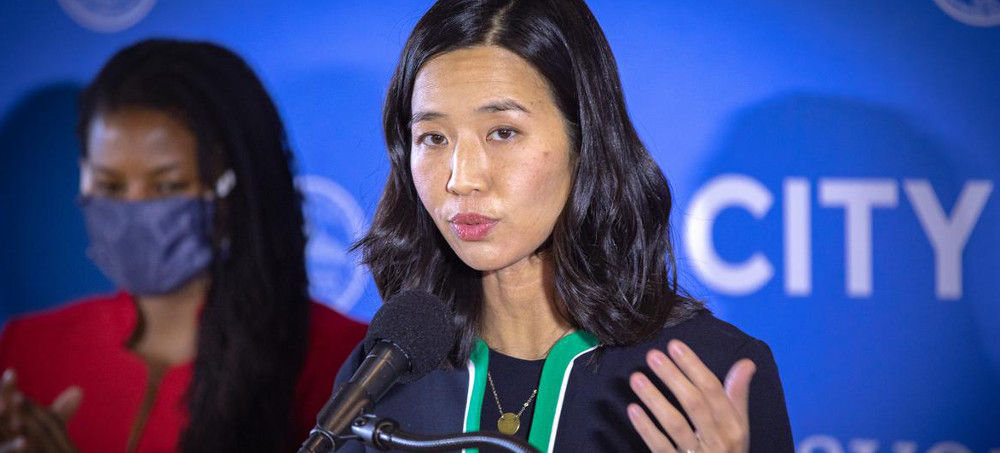
Boston Seeks to Ban Fossil Fuels in New BuildingsBoston mayor Michelle Wu leads a City Hall press conference. (photo: Gary Higgins/Boston Business Journal)

Boston Seeks to Ban Fossil Fuels in New Buildings
Associated Press
Excerpt: "Boston is seeking to ban fossil fuels from new building projects and major renovations, Mayor Michelle Wu announced Tuesday."

Boston is seeking to ban fossil fuels from new building projects and major renovations, Mayor Michelle Wu announced Tuesday.

The Democrat said the state’s largest city will take advantage of a key provision in the climate change bill signed into law by Republican Gov. Charlie Baker last week.

That legislation, which is meant to bring the state closer to net-zero greenhouse gas emissions by 2050, calls for a pilot project allowing 10 Massachusetts cities and towns to require new building projects be all-electric, with the exception of life sciences labs and health care facilities.

Wu said the city will file a home rule petition with the state Legislature to join the pilot.

“Boston must lead by taking every possible step for climate action,” she said in a statement. “Boston’s participation will help deliver healthy, energy efficient spaces that save our residents and businesses on utilities costs and create local green jobs that will fuel our economy for decades.”

Wu's office said natural gas, oil and other fossil fuels used in buildings represent more than one-third of the city’s greenhouse gas emissions.

Other major U.S. cities have already moved to ban fossil fuel hookups in new buildings, including New York City and Washington, D.C.

Opponents of the idea say it can make housing more expensive.


Rocky Mountain Institute has been a leader and offers solutions:
https://rmi.org/about/

Typical disappointing response that has stymied reasonable solutions from an industry focused on McMansions and luxury apartments:
"Opponents of the idea say it can make housing more expensive."

Mayor Wu is leading the way for Boston and continues to do so!
Boston was excluded from the initial list of 10 communities.

READ MORE

Special Coverage: Ukraine, A Historic Resistance
READ MORE


Contribute to RSN

Follow us on facebook and twitter!

Update My Monthly Donation

PO Box 2043 / Citrus Heights, CA 95611


Monday, August 15, 2022

RSN: Walter Shapiro | Democrats Might Have Something New for the Midterms: Optimism


Reader Supported News
14 August 22

Live on the homepage now!
Reader Supported News

FOLKS. WE — REALLY — NEED SOME PROGRESS ON DONATIONS — We are looking at really poor fundraising returns. Some of you are going to be offended, but we have to improve on this situation. We need you to help. The time is now to get it done. With urgency.
Marc Ash • Founder, Reader Supported News

Sure, I'll make a donation!


President Joe Biden. (photo: Jim Watson/AFP/Getty Images)
Walter Shapiro | Democrats Might Have Something New for the Midterms: Optimism
Walter Shapiro, The New Republic
Shapiro writes: "For Democrats, 2022 is the ultimate manic-depressive election, except that the extreme moods have come in reverse order."

Between Republican overreach on abortion and Congress finally passing bills, there's newfound confidence. But it's still the fundamentals that will matter most.

For Democrats, 2022 is the ultimate manic-depressive election, except that the extreme moods have come in reverse order.

Two months ago, most Democrats were locked in a fortress of gloom. The widespread expectation was that the 2022 elections would be such a wipeout for the Democrats that American democracy might be wiped out as well. Joe Biden’s approval ratings were beginning to resemble Richard Nixon’s during the depths of Watergate. Gasoline prices were rising so fast that it made older Americans long for the days of the OPEC oil boycotts in the 1970s. The Democrats’ legislative dreams were in tatters, some left-wingers wanted to run Joe Manchin out of the party, and Biden was ridiculed for clinging to an outmoded, nostalgic view of the Senate, which he left in 2009 after 36 years.

These days, in contrast, Democrats are giddy. Kansas voters last week strongly rejected an anti-abortion constitutional amendment. Suddenly, the mood was “Nothing’s the Matter With Kansas” as the vote showed the power of the issue to galvanize Democratic turnout and attract moderates even in the heart of Donald Trump country. Average gasoline prices have now dropped under $4.00 per gallon amid signs that inflation may be easing. Democrats and liberal commentators are doing handstands over the surprise passage of a landmark climate and health care bill (deceptively named the “Inflation Reduction Act”) with Manchin’s strong support.

With the election still nearly three months away, trying to keep your head when everyone else is losing theirs can be a challenge. We live in strange times—and surprise events can still upend expectations either way. But I am thrilled that the Democrats have finally moved off the window ledge and have abandoned their built-in despair about November. A year ago in these pages, I argued, “It is time to treat the supposedly dread Off-Year Curse like it is nothing more than the title of a cheesy horror movie.” Since then, I have consistently cautioned liberals against giving way to an apocalyptic mindset and the defeatist notion that the rest of the decade belongs to Trump and his authoritarian army. But there is also a risk of irrational exuberance. There is little certainty that Biden’s run of legislative achievements will pay political dividends in November. Politics is always a struggle for the future rather than a toast of gratitude for the past.

Humility is the only way to approach an election that is seemingly as idiosyncratic as 2022. Horse race numbers matter but still have their limitations at a time when public polls do not yet have reliable turnout models for November. Instead of overconfident predictions, a more realistic goal at this point is trying to assess the factors that will shape the midterm vote.

The Fundamentals

A prominent Democratic pollster told me, “I worry that we’re on something of a sugar high. We shouldn’t forget that the midterms are about fundamentals. And they are daunting for the Democrats.” He was referring to political basics such as Biden’s still dismal approval rating; the dire reality that only about 20 percent of voters think America is on the right track; and the historical pattern that the president’s party almost always loses House seats and usually Senate seats in off-year elections.

But there is also a counterargument that I find intriguing. Covid-19, in particular, has created a sour mood in this country that shapes attitudes towards everything. Which is why Biden’s approval rating may not be a leading indicator. While the president’s party has lost House seats in all but three off-year elections since the nineteenth century, one of those exceptions was 1998 when the Republicans in their right-wing zeal overreached with their attempt to impeach Bill Clinton. Sound familiar?

For years, the assumption has been that the Democrats have to win the national vote for the House by a healthy majority to overcome built-in GOP advantages due to gerrymandering and the natural clustering of Democrats in urban districts. But Robert Erikson, a political science professor at Columbia, argues that, based on his analysis, this pro-Republican tilt is “almost at the vanishing point.” He cites two major reasons: the overwhelmingly Republican tilt of rural areas creating more wasted GOP votes and the shift of the fast-growing suburbs in the Democratic direction.

The Clarence Thomas Factor

The June 24 Dobbs decision voiding Roe v. Wade would have been a seismic event in any case, but Thomas’s concurring opinion could almost have been written to the specifications of Democratic campaign consultants. Thomas argued that the Court should also overrule precedents that upheld gay marriage and overturned state efforts to ban contraceptives. That meant that the romantic and sexual rights of almost every voter could be threatened if the court maintained its fast march towards the religious right.

Abortion will continue to be in the news through November because Republicans seem unable to take “yes” for an answer. Last week, Indiana enshrined into law a new statewide anti-abortion ban. GOP candidates appear to be deliberately working to turn off swing voters with their anti-abortion zeal. Tudor Dixon, who romped home in the Michigan GOP gubernatorial primary, recently told an interviewer that a proposed abortion ban should also cover the victims of rape and incest.

All this suggests that the Kansas referendum is not an isolated example. A recent Gallup poll found that 8 percent of Americans believe that abortion is the single “most important problem” facing the nation—the highest number in nearly 40 years. And in two recent special elections for the House in Nebraska and Minnesota, Democratic candidates ran better than expected in safe Republican districts.

Trumping Republican Plans

If Mitch McConnell had his way, Trump would devote every waking hour to cheating at golf and grifting. Instead, the Former Guy has made a fetish out of anointing election-denial fanatics in Republican primaries, regardless of their chances in November. In Arizona, the ultimate swing state, Trump-backed candidates such as Senate contender Blake Masters and gubernatorial hopeful Kari Lake swept last week’s primaries. As the results came in, a Republican strategist familiar with the state, said bitterly, “Donald Trump putting himself on the ballot in Arizona is the biggest gift the Democrats could have gotten.”

If politically adept Republicans had their way, the 2022 elections would be a referendum on Biden. Instead, they are fast becoming a measure of Trump’s legacy and the power of the politics of resentment. Come November, Trump’s choice of flawed candidates like New Jersey-resident Mehmet Oz running for the Senate from Pennsylvania and accused-wife-abuser Herschel Walker in Georgia may dash McConnell’s dreams of again becoming majority leader. In political terms for November, Trump’s interventions in GOP primaries may matter more than his legal misadventures.

Green Manchins

It seems like an obvious syllogism: Younger voters care passionately about climate change. Biden, against all odds, has delivered major legislation. Ipso facto, these voters will turnout in record numbers to reward the Democrats in November.

But there are three problems with this logic. These are, for the most part, the same voters who have already been mobilized by the Dobbs decision and the fight to preserve abortion rights. Also, the benefits of the legislation will not be readily apparent since there are still regulations to be written and grants to be administered. Finally, Bernie Sanders grousing about the limitations of the Inflation Reduction Act may temper the enthusiasm of some left-wing Democrats.

Send Them a Message

In an ideal world, strong messaging from the White House would help power the resurgent Democrats to enough victories to hold the Congress. Then you remember that Biden is president and Kamala Harris is vice president. In a speech last week to the Democratic National Committee, Biden used “MAGA” as epithet 11 times, as in “MAGA Republicans” and “MAGA extremism.” Aside from this labored effort to use Trump’s “Make America Great Again” as a political boomerang, Biden offered little more than a laundry list of accomplishments and familiar lines about “the battle for the soul of this nation.” But Biden was eloquent and inspirational compared to his VP, judging from the transcript of Harris’s boilerplate remarks at a recent fundraiser on Martha’s Vineyard.

Messaging by both parties is probably overrated in our saturated media environment. Political ad spending during the 2022 midterms is expected to approach $10 billion. Amid this cacophony of voice-of-doom attack ads, it will be hard for even the cleverest messaging to break through to swing voters and the politically under-motivated. For example, what matters far more than what the Democrats and Republicans say about inflation are the prices that voters themselves will experience in mid-October. If gas is at, say, $3.50 a gallon, GOP scare talk about inflation may not prove to be the motivating factor that it was during the early summer.

Nate Silver’s website, FiveThirtyEight, puts the chances of the Democrats holding the Senate at 60 percent and maintaining their House majority at a surprisingly high 20 percent. But the safest bet of all is that those odds will continue to gyrate in both directions between now and November 8.


READ MORE


A Progressive Prosecutor Clashed With DeSantis. Now He's Out of a Job.Suspended Hillsborough County State Attorney Andrew Warren outside his home in Tampa, Fla. on August 7. (photo: Thomas Simonetti/AP)

A Progressive Prosecutor Clashed With DeSantis. Now He's Out of a Job.
Lori Rozsa, The Washington Post
Rozsa writes: "The ouster has alarmed many in Florida, who say DeSantis usurped the will of the voters by removing a local elected official who disagreed with him politically."

The ouster has alarmed many in Florida, who say DeSantis usurped the will of the voters by removing a local elected official who disagreed with him politically

State Attorney Andrew Warren was waiting for a grand jury to issue indictments in two rape and murder cases he had been working on for three years when he glanced down at his phone and saw an email from an attorney for Gov. Ron DeSantis.

It said he was suspended from his job.

Stunned, Warren quickly went to his office to consult with his staff. Not long after, there was a knock at the door. An armed major from the county sheriff’s office and a man in a suit from the governor’s office carrying a copy of DeSantis’ executive order suspending him were looking for him.

“He said, essentially, ‘The governor has suspended you and you need to leave the office now,’” Warren, a Democrat, recalled of DeSantis’ aide. “So within maybe seven minutes from getting the email, I was outside, on the street. The major offered me a ride home because they took my car.”

The dramatic ouster has alarmed many in Florida, who say DeSantis — widely considered a potential 2024 presidential candidate — usurped the will of the voters by removing a twice-elected local official who disagreed with him politically. Warren had initiated police reforms unpopular with some local law enforcement officers, and in the past year signed two statements pledging not to use his office to “criminalize” health care, including prosecuting women who get abortions and people seeking gender-affirming medical treatments.

In announcing the suspension, DeSantis excoriated Warren for being a “woke” prosecutor more interested in social justice than in enforcing the law. He warned of a “pathogen” spreading in U.S. cities — progressive prosecutors trying to reduce incarceration rates they see as overly punitive and that disproportionately impact people of color. He said prosecutors like Warren have caused “catastrophic results” in other states.

“We are not going to let that get a foothold here in the state of Florida,” DeSantis said a news conference in Tampa, while across town Warren was being physically ejected from his office. The governor was flanked by more than a dozen officers who hailed the move to oust Warren.

The clash comes as political parties pay more attention to state attorney elections than they have in the past and as prosecutors around the country are now faced with a slate of new laws restricting or outright banning abortion care after the fall of Roe v. Wade. For Warren, who left a job as a federal prosecutor in Washington, D.C., to run for office in his home state, the suspension was the latest in a series of dust-ups with the governor. He said he was not planning to ignore the law, only that he planned to exercise prosecutorial discretion.

“My job is about anything I can do to make our city safer and our system more fair,” he said. “That is much broader in the terms of the spectrum of criminal justice.”

The day he lost his job was supposed to be a day of triumph for Warren, one of the highlights of his six years in office.

Four years earlier, he had launched a Conviction Review Unit to examine innocence claims. One of those claims came from Robert DuBoise. He’d served 37 years behind bars after being convicted in the rape and murder of 19-year-old Barbara Grams in 1983. But prosecutors had built their case on problematic bite-mark evidence and a jailhouse informant. A fresh look at the crime found DNA evidence that instead linked two other men to the crime.

Not only did the new probe conclude that Abron Scott and Amos Earl Robinson were responsible for Grams’ death; further investigation also tied them to the rape and murder of Linda Lansen, 41, who was killed around the same time. Lansen’s case had gone cold for nearly four decades. Warren was going to announce that a grand jury had indicted the men in both murders.

He invited family members of the victims, as well as several local law enforcement officers who had helped solve the cases. He sent out a press release for media to join him at the state attorney’s building in Tampa. Instead, after his suspension, he held a briefing at a downtown office building.

“The governor’s political circus potentially jeopardized two three-year old cold case investigations into serial rapists and murderers from 39 years ago,” he said. “That was my focus. ... I was worried that they were going to disband the grand jury. In the back of my mind was the promise I made to those families, and that was my focus.”

Warren grew up in Gainesville, Fla., the son of a university professor turned real estate developer. After graduating from Columbia University law school, he served as a federal district court clerk in San Francisco. Later he went on to work as a federal prosecutor with the U.S. Department of Justice focusing on financial fraud.

He stunned Tampa in 2016 when he returned to Florida from D.C. to take on a longtime Republican prosecutor for the state attorney’s office in one of the state’s most populous counties. During the campaign, he promised to focus on violent crimes and send low-level offenders into diversion programs instead of jail.

“When I ran in 2016 I wanted to change the criminal justice system, to improve it, not to revolutionize it,” he said, sitting in the living room of his Tampa home on a recent morning.

He put that philosophy into action during the summer of 2020, when protests over the murder of George Floyd by police officers erupted across the country, including in Tampa. Warren declined to press charges against 67 people who had been arrested for unlawful assembly — angering local law enforcement officials.

“There were a lot of peaceful protests, and there was a night of violent rioting,” Warren said. “We prosecuted 150 people for felonies. We prosecuted the people who we had evidence were actually committing crimes. We didn’t prosecute the people where there was no evidence besides the fact that they were peacefully protesting. It was pretty simple.”

Warren has publicly clashed with DeSantis before. He criticized an “anti-riot” law that DeSantis signed in 2021 stiffening penalties for demonstrators in the aftermath of the 2020 protests, saying it “tears a couple of corners off the Constitution.” After the U.S. Supreme Court overturned Roe vs. Wade in June, Warren joined dozens of prosecutors from around the country in signing a pledge to “decline to use our offices’ resources to criminalize reproductive health decisions.”

A year earlier, he signed a similar statement regarding gender-affirming care.

Warren called the pledges “value statements” that addressed prosecutorial discretion, and not promises to ignore the law. Florida recently instituted a 15-week abortion ban, and while the state will soon deny Medicaid coverage for transgender-related surgeries and medication, there is no law forbidding such treatments.

“So if a doctor at Tampa General Hospital performs an abortion at 24 weeks and there’s a question of, ‘Is it 23 weeks and six days, or 24 weeks and one day,’ that’s a different case than a back-alley abortion performed at 35 weeks,” Warren said, explaining that he’d pursue charges in the latter. “That’s reckless and negligent.”

He said “there have been occasions where I’m getting yelled at from far left, and I’m getting yelled at by the far right. To me that demonstrates that I’m doing the right thing.”

Warren handily won his reelection 2020 — but not everyone was happy with his approach to the law.

In his executive order suspending Warren, DeSantis listed examples of what he called Warren’s “fundamentally flawed and lawless understanding of his duties.” One of those was Warren’s decision not prosecute people on bicycles who are stopped by police for resisting arrest without violence. A report by the U.S. Department of Justice after an investigation by the Tampa Bay Times found that 80 percent of the thousands of biking tickets issued by Tampa police were given to Black people, a practice local residents criticized as “biking while Black.”

“We need our prosecutor to prosecute crime — the same as we enforce crime,” Hillsborough County Sheriff Chad Chronister told a local television station after Warren’s suspension.

DeSantis said he decided to suspend Warren after he ordered his staff to find any examples in Florida of prosecutors who “take it upon themselves” to decide which laws to enforce. Law enforcement officers and district attorneys routinely utilize prosecutorial discretion to decide which crimes to focus their attention on.

But DeSantis was touching on a growing angst over prosecutors seen as light on crime at a time when homicides have risen in many cities, including Tampa.

“We are going to make sure that our laws are enforced and that no individual prosecutor puts himself above the law,” DeSantis said. “And I can tell you, the states and the localities that have allowed this to happen, they are ruing the day.”

Alissa Marque Heydari, deputy director of the Institute for Innovation in Prosecution at John Jay College New York City, said there has been an uptick in state legislators and governors attacking prosecutors who are reform-minded. In San Francisco, former District Attorney Chesa Boudin lost a recall election after venture capitalists, doctors, lawyers, and estate developers raised millions to boot him from office.

“But law enforcement is local — it’s up to the community to prioritize how they want the laws enforced,” she said. “If Andrew Warren said he didn’t want to prosecute certain types of crimes and the community was upset about that, it was up to them to vote him out.”

For DeSantis critics, Warren’s suspension is a troubling sign of abuse of power from a governor whose administration routinely employs hostile tactics to silence opponents. The suspension isn’t final until the state Senate approves it, but the Republican-majority chamber is all but certain to usher it through.

“This is something that Putin or Castro or Maduro would do,” said U.S. Rep. Kathy Castor, a Democrat who has represented parts of the Tampa Bay area in Congress for 15 years. “People in Hillsborough are outraged.”

Peter Bergerson, a political science professor at Florida Gulf Coast University, concurred, describing it as a decision with “heavy overtones of political, election-year issues.”

“It sounds like more of an ideological decision, rather than one that’s based on actual poor performance or fraud,” he said.

Joseph Cillo, a former defense attorney and an assistant professor of criminal justice at Saint Leo University in Tampa, said he likes Warren and respects his right to free speech. But he said DeSantis was doing his job and also sending a message by removing Warren from office.

“You can have discretion on individual cases. There’s always prosecutorial discretion,” Cillo said. “But when you come out and say, these are one or two statutes that I believe are unconstitutional, that’s an individual opinion. And to say, ‘I’m just not going to prosecute these crimes,’ that’s an omission under Florida law.”

The suspension — and what followed — offer a window into DeSantis’ approach to the law, were he to pursue federal office. He appointed Susan Lopez to fill Warren’s position, a longtime assistant state attorney the governor had recently named a county judge. Warren may have had no warning that he was about to be fired by the governor, but Lopez said the governor called her days earlier to offer her the job.

Lopez is a member of the Federalist Society, a conservative group that advocates for an “originalist interpretation” of the Constitution. U.S. Supreme Court Justices Clarence Thomas, Samuel Alito, Brett M. Kavanaugh and Amy Coney Barrett are also members.

The new top prosecutor reversed many of Warren’s policies in her first days in office, including his policy to cut down on bike-rider prosecutions.

Warren, for his part, has assembled a team of lawyers to figure out his next step. He published a video message three days after his suspension, saying “I refuse to let this man trample on your freedoms to speak your mind, to make your own health care decisions, and to have your vote count.”

As he strategizes on a way to get his job back, Warren said he’s been buoyed by support from voters and friends.

“I’ve heard from people who told me they didn’t vote for me, and they don’t know if they’ll ever vote for me, but they support me on this,” he said. “They recognize how wrong this is.” ‘ha’


READ MORE


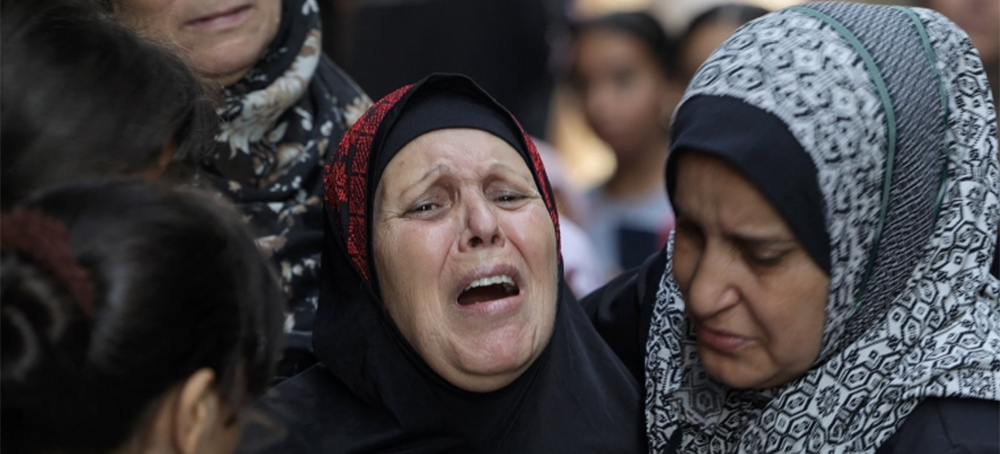
Israel: Normalizing Terror, One Dawn at a TimeRelatives mourn during the funeral of four teenage Palestinians from the Najm family in Jabalia in the northern Gaza Strip, who were killed during the latest Israeli bombardment. (photo: Mohammed Abed/AFP)

Israel: Normalizing Terror, One Dawn at a Time
Belén Fernández, Al Jazeera
Fernández writes: "Israel is engaging in straight-up terrorism – at least according to, you know, the Cambridge Dictionary definition."

Israel is engaging in straight-up terrorism – at least according to, you know, the Cambridge Dictionary definition.

Israel’s latest military assault on the Gaza Strip – codenamed Operation Breaking Dawn – spanned three days in early August and killed at least 44 Palestinians, including 16 children. According to the Israeli government, the attack was a “preemptive” operation against the Palestinian Islamic Jihad group – which is as creative an excuse as any for spontaneously bombing people for no apparent reason.

A total of zero Israelis were killed over the course of Israel’s sanguinary dawn-breaking in Gaza, an acute discrepancy in casualties that is par for the course in the Zionist state’s dealings with the besieged Palestinian coastal enclave. While lethal and nonlethal forms of Israeli military torment have continued to be fixtures of daily existence in Gaza even after Israel’s so-called “withdrawal” from the territory in 2005, Breaking Dawn was the bloodiest episode since the 11-day Israeli attack in May 2021 – nobly dubbed Operation Guardian of the Walls – which killed more than 260 Palestinians, including 67 children.

A bit farther back on the timeline, you’ll find Operation Protective Edge – when the Israeli military slaughtered no fewer than 2,251 people in Gaza, among them 551 children. For its part, Operation Cast Lead, a 22-day affair that began in December of 2008, eliminated some 1,400 Palestinians, 300 of them children and the vast majority of them civilians. Three Israeli civilians were killed during Cast Lead.

Rewind a bit further to the romantic charm of Operation Summer Rains, which commenced in June 2006 and gave way to the similarly poetic Operation Autumn Clouds. In their book Gaza in Crisis, US scholar Noam Chomsky and Israeli scholar Ilan Pappé posit that Summer Rains constituted the “most brutal attack on Gaza since 1967” – with the “systematic slaughter” gradually assuming the air of “inertia killing, when the continued employment of massive power is done as daily routine and not as the implementation of a policy”.

Of course, if your state’s policy happens to be terror, then seemingly senseless systematic slaughter is one way to implement it.

The online version of the Cambridge Dictionary defines terrorism as “(threats of) violent action for political purposes”. And indeed, this has pretty much been the name of Israel’s game since it violently founded itself on Palestinian land in 1948 – an action that entailed massacring more than 10,000 Palestinians, expelling three-quarters of a million more, and destroying some 500 Palestinian villages.

Since then, politically-motivated violent action and the threat thereof have remained the order of the day – or of the breaking dawn, if you will. Thanks to a US-backed Israeli monopoly on the regional discourse and an all-out assault on logic, however, Israel’s Palestinian victims are instead the ones vilified as “terrorists”.

In response to this month’s bloodbath in Gaza, US President Joe Biden reaffirmed his “support for Israel’s security… including its right to defend itself against attack” – which is neither a surprising pronouncement from the man who recently enthusiastically self-defined as a “Zionist” nor a departure from the tired rhetoric of the US establishment, which holds that Israel is permanently and indubitably acting in self-defence.

Never mind that the whole “self-defence” line doesn’t really fly when you’re “defending” yourself against the people whose land you brutally appropriated and whom you continue to periodically slay in large numbers. It’s like saying Mount Vesuvius was defending itself against the people of Pompeii – or that the fish in the proverbial barrel were threatening the security of the person shooting them.

The Western corporate media have also done their fair share to ensure the propagation of a pro-Israel narrative in lieu of fact – and rarely is there an Israeli military massacre of Palestinian civilians that is not cast as fundamentally the Palestinians’ fault or the result of “clashes” between the two sides. Sure enough, both CNN and Reuters went with “clashes” in their write ups of the truce that went into effect on the night of August 7 – as though this were a remotely suitable descriptor for a situation in which 44 people had died on one side and none had died on the other.

Was five-year-old Alaa Qaddoum “clashing” when she was obliterated by Israeli airstrike? Were the other 15 dead children also “clashing”?

The Washington Post saw Operation Breaking Dawn as an example of “intense cross-border violence” – a similar line was taken by the Associated Press – while the New York Times’ coverage included nefariously ambiguous reports like: “Israel and militants trade fire as death toll reaches 24”.

And yet the most obvious takeaway from Israel’s manoeuvres in the Gaza Strip is the one that cannot be said: that Israel is engaging in straight-up terrorism – at least according to, you know, the Cambridge Dictionary definition.

In the end, terrorism is terrorism, whether it occurs under the name Operation Summer Rains or Whipping Wind or Scampering Goat. And as Israel continues to routinise “systematic slaughter” and normalise terror, it should also be normal to call the country out.


READ MORE


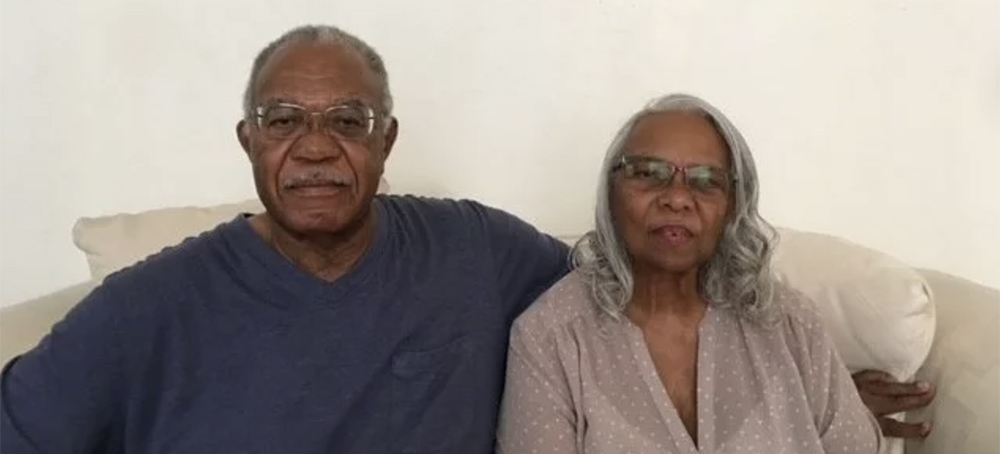
Here's One Reason Why America's Racial Wealth Gap Persists Across GenerationsTheodore Bailey and his wife, Audrey, live in Marana, Ariz. He's among many college-educated Black Americans who provide extensive financial support to family, something research finds contributes to the persistent racial wealth gap because it diminishes funding for inheritances. (photo: Theodore Bailey/NPR)

Here's One Reason Why America's Racial Wealth Gap Persists Across Generations
Jennifer Ludden, NPR
Ludden writes: "For African Americans, especially, tax expert Brown says the generational wealth transfer is actually more likely to go the other way — children helping parents who suffered under Jim Crow."

Angela Chevaux and her husband have made a good living in York, Pa. She's an insurance claims supervisor and he's in construction. But still, a recent inheritance from her father-in-law has been life-changing. He left them a retirement account, a life insurance policy, an annuity — and her husband and his brother inherited an old farmhouse in a secluded spot with a pond.

"We were able to buy the property — the other half — out from his brother at a decent price," Chevaux says.

She figures they paid about half what the appraised value would have been.

They're renovating the farmhouse to live in and are selling their own home, saying goodbye to 11 more years of payments.

"We'll be mortgage-free at [ages] 50 and 59!" she says with a laugh.

Her father-in-law also left Chevaux's 24-year-old son a money market account.

"He had given our son some money towards college before he passed," she says. "So then this allowed him to pay off the rest of his college debt."

Her son is a financial adviser and has invested the rest of his inheritance, with plans to use it to help buy a house.

The family's financial fortunes show one way that America's stark racial wealth gap has persisted — and even widened — over generations. White adults are more than twice as likely as Black and Latino households to get sizable financial help from parents or other elders. That's according to a new poll by NPR, the Robert Wood Johnson Foundation, and the Harvard T.H. Chan School of Public Health.

Dorothy Brown, a tax law professor at Georgetown University, wishes more white families would talk about these intergenerational benefits.

"Because you have Black Americans who are doing everything they were told is right and not getting ahead," she says. "And they're scratching their heads wondering, 'How come I'm not doing better than I am? How come I'm not doing better than the guy in the cubicle next to me?' "

The new poll finds 38% of white adults say they've gotten at least $10,000 in gifts or loans from a parent or older relative. Only 14% of Black adults receive similar gifts or loans. The share is 16% for Latinos and 19% for Native Americans.

Brown says this divide reflects generations of segregation and racism, especially in housing policies. Racially restrictive covenants barred white people from selling or renting their homes to African Americans or other minority groups. And Federal Housing Administration policies supported such restrictions.

"So if your grandparent got a home that was FHA insured, it was a result of their being white," she says. "You don't think about that, but it was."

The racial wealth gap is also evident in lots of other questions in the poll.

"When people talk about the American dream, it's here," says Robert Blendon, a Harvard professor emeritus of health policy who worked on the poll.

A large number of Black, Latino and Native American adults say they want to move to better housing and expect their children to go to college, but they don't have the money to pay for those things.

"These minority communities are ... going to have to borrow everything in a very risky environment for that," Blendon says, "and they don't have anything to at least help defray some of the costs."

What's at stake, he says, is the ability to make the choices that can help families, and future generations, move ahead.

For Black Americans, wealth is more likely to flow up

For African Americans, especially, tax expert Brown says the generational wealth transfer is actually more likely to go the other way — children helping parents who suffered under Jim Crow.

That's the story of Theodore Bailey, who's 76 and remembers a tough childhood in segregated Nashville.

"My father died when I was 3 years old," he says. "My mother was a single mother with four sons."

His dad died while he was a military cook in World War II, which led to a major break for Bailey. As a war orphan he was able to go to college on the GI Bill, and that launched a successful career as an engineer and missile designer. From early on, Bailey sent money to help his mother get by.

"I knew she was struggling, you know. And at the time, I didn't have a whole lot to spare, but I'd send her whatever I could," he says.

Now retired in Arizona, Bailey says he's always helped family. That includes supporting a brother who lost a job, sending grandchildren to college, and being there for others along the way.

"Oh," he says with a chuckle, "there's always cousins and nephews and things that want to borrow money, and a lot of times they don't pay back."

Research shows family help like this seriously depletes the wealth of college-educated Black Americans. Bailey says he's now having to cash out more of his IRA than he'd like to in this bad market, to meet his own expenses.

He's not sure how much there will be left to pass on to his children and grandchildren.

"I invested in them, putting them through college and so forth," he says. "I'm hoping they can take care of themselves."


READ MORE


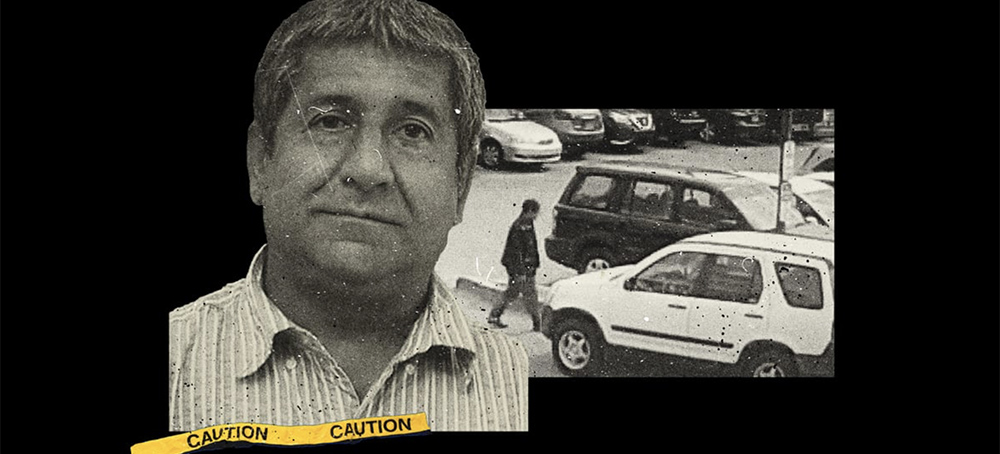
How Domestic Violence Spilled Over Into Albuquerque TerrorMuhammad Syed. (photo: Elizabeth Brockway/The Daily Beast/Getty/Handout/City of Albuquerque)

How Domestic Violence Spilled Over Into Albuquerque Terror
Decca Muldowney, Reyes Mata III, and Kate Briquelet, The Daily Beast
Excerpt: "Muhammad Syed had a long arrest record before he was charged in relation to the Muslim murders that have terrified Albuquerque as one victim’s family slams police inaction."


Muhammad Syed had a long arrest record before he was charged in relation to the Muslim murders that have terrified Albuquerque as one victim’s family slams police inaction.

As more details emerge about the criminal history of Muhammad Syed, 51, charged in the murders of two Muslim men in Albuquerque, and a prime suspect in the killing of two more, the family of one of the victims has blamed police for not intervening sooner.

Sharief Ahmadi Hadi, the brother of murder victim Mohammad “Zahir” Ahmadi, says that prime suspect Syed regularly harassed his family and slashed the tires of his wife’s car in the years before his brother’s murder. Hadi says he believes Syed targeted his family because they are Shiite Muslims.

Hadi’s brother, Muhammad Zahir Ahmadi, 62, was the first victim in a string of recent murders that have rocked the Muslim community of Albuquerque. Ahmadi was gunned down in the rear parking lot of the market he ran with his brother on Nov. 7, 2021. Syed has not been charged with his murder but police say he is their main suspect.

Hadi, who owns a Halal grocery store and cafe on San Mateo Boulevard in Albuquerque, told The Daily Beast he had been complaining to police for more than a year about Syed’s increasingly abusive behavior toward the Hadi family.

“I am tired of the police. I hate the police. Because the police, they didn’t do nothing—nothing! Look at everybody dying here. All these people murdered,” he said. Syed, he said, “would fight with me, he would fight with my brother.”

The Albuquerque Police Department told The Daily Beast it had not received any calls for service related to Syed from the store’s address.

Syed was, however, questioned and arrested multiple times by police for domestic violence and battery in the four years leading up to the murders of four Muslim men in Albuquerque, court and police records obtained by The Daily Beast show, but each time charges against him were dropped.

Hadi said the dispute between his brother and the Syed family may have started when Zahir refused to give Muhammad a refund for a bag of rice. “My brother rejected that,” Hadi said, adding that the relationship had deteriorated from there.

In February 2020, Syed approached the Hadi family’s empty car in the parking lot of the Islamic Center of New Mexico in southeast Albuquerque. Surveillance video captured by the center’s camera shows Syed walking up to a car and duck down out of sight. When he stands up he appears to be putting something into the pocket of his jacket. He then walks away calmly.

Hadi’s wife Nasima reported the tire-slashing to the Islamic Center and Syed was subsequently told to leave the center. He did not return for several months, according to reporting from the Albuquerque Journal.

A year and half later, on the evening of Nov. 21, 2021, Zahir was shot in the head as he sat in the back parking lot outside his store smoking a cigarette. The next morning, Hadi says he cleaned his brother’s blood off the asphalt.

Syed has now been charged with the murders of Aftab Hussein, 41, on July 26, and Muhammad Afzaal Hussain, 27, on Aug. 1. He is the “primary suspect” in the murders of Naeem Hussain, 25, who was killed on Aug. 5 after attending a funeral for two of the other victims, as well Ahmadi’s death, according to police. While three of the victims killed were Shiites, Muhammad Afzaal Hussain was a Sunni, the same as Syed, leaving many confused as to the true motives for the murders.

Hadi said his community has been on a knife edge as it searches for answers. He now carries a small Ruger pistol to defend himself.

“It’s always in my pocket,” he said, standing in his family grocery store. “If I see anybody come in and threaten me, I am going to shoot their face.”

Samia Assed, a longtime Muslim rights activist and community organizer in Albuquerque, says it’s wrong to understand the murders through the lens of Shiite-Sunni sectarianism.

“The true narrative is that we are a united front,” she said. “The majority of Shia in New Mexico actually do not want division with the Sunnis.”

Assed does not think Syed was motivated by rage over his daughter’s relationship with a Shiite man, as some reports have suggested. She said both Sunnis and Shiites in the community had attended Syed’s daughter’s wedding and “both families were happy.”

Instead, she suggested Syed might be unstable or traumatized.

“He has only been here five or six years, so he most likely witnessed atrocities in Afghanistan. All of that has an impact on his psyche,” she said, “It could be a control thing, packaged with patriarchy.” Hatred towards Shiites, she said, could just be a facet of larger mental illness.

“There is a lot we don’t know,” Assed said.

The Syed family first arrived in Albuquerque about six years ago, joining a small, tight-knit Afghan refugee community in New Mexico’s largest city. They settled in an apartment complex in the south-east of the city. It appears the family were native Pashto speakers, and part of Afghanistan’s Sunni Muslim majority.

In an interview with police after his arrest, Syed said he had served in the Special Forces in Afghanistan, and had fought against the Taliban. US Army Special Forces were among the first troops to land in the country in 2001, training and supplying Afghans and coordinating between the US and various groups on the ground. They were also among the last to leave, remaining on the ground even after conventional troops withdrew in 2015.

Syed told Muhammad Imtiaz Hussain, the older brother of 27-year-old victim Afzaal Hussain, in a conversation at the local mosque, that he had spent time in a refugee camp in Pakistan—a common journey for those fleeing Afghanistan.

Once settled in Albuquerque, Syed’s sons, Adil and Shaheen, started Facebook accounts that documented their early years there—sharing pictures of motorcycles and cars, and selfies taken in the wild New Mexican desert.

But inside the Syed house, trouble was brewing.

As early as 2017, police were regularly called to respond to reports of Syed’s alleged violence and coercive control over his wife and children. However, again and again, charges filed against him were dropped by his family members.

In July 2017, Syed’s daughter Lubna told police she had “ongoing verbal and physical disputes with her very conservative Muslim parents,” according to police records obtained by The Daily Beast. Police noted Lubna’s eye was swollen, but she told police she didn’t want to press charges against her father as “it would only make their family dynamic worse.” The cops left without making an arrest, instead warning Syed “he cannot physically abuse Lubna or anyone else in the household.”

Many of the police reports center around Lubna, who battled with her parents for independence. Of particular concern to Syed was her relationship with Iftikhar Amir, who is a Shiite Muslim, and who later became Lubna’s husband.

In December 2017, Syed reported that he had been stabbed following a physical altercation with Amir where Lubna’s parents confronted him on the street and Syed told police his daughter’s boyfriend stabbed him with a large knife. Amir was never charged.

This was the start of a series of allegations of assault, battery and harassment between Syed and Amir.

Records show Syed was issued a summons for battery after Amir told authorities that Syed and his wife and son allegedly pulled Amir out of Lubna’s car, punching and kicking him. Amir told police that Lubna’s family attacked him because they “did not want her having a relationship with [him].” It doesn’t appear Syed, however, was ever prosecuted.

In early 2018, Amir told police Syed had threatened to kill him, according to police reports. Syed responded by alleging Amir was harassing him with threatening phone calls. The police ordered the two men to stay away from each other, but once again no charges were filed.

Syed’s alleged violence was beginning to spill out of his home, becoming increasingly public.

In 2018, he was arrested for beating his wife in the lobby of the New Mexico Department of Human Services, where the couple had an appointment. His wife was found by employees on the floor of the building’s lobby, yelling “My husband! My husband!” with a large chunk of hair missing from her scalp. Again, the battery charges against Syed were dropped. Court records show prosecutors declined to prosecute the case.

Police were again called to the Syed house in December 2018, where Shaheen (who was then going by the name “Maiwand”) told police his father had attacked him and his mother with a large metal spoon, causing a bleeding laceration on Shaheen’s head. He said that his father regularly beat him and his mother but once again the family appears to have closed ranks to protect Syed. He was arrested and had the case dismissed by taking part in a court-ordered diversionary program.

In 2020, Syed was involved in an incident of alleged violence against someone outside his immediate family. In January, police were called after Syed allegedly kicked and threw an object at a Walmart employee apparently without provocation. Then in February that year, Syed got into a shouting match with a police officer who stopped him for running a red light. He refused to comply with the officer and was taken to jail. That same month, Syed was caught on camera allegedly slashing the tires of the Hadi family’s car.

It was after this escalating behavior, at the start of 2021, that Syed and his sons began purchasing firearms. In January 2021, Syed bought a 9mm pistol at an Albuquerque gun store, according to a police arrest document.

Five months later, Syed’s son Shaheen purchased two rifles and allegedly falsely stated on the paperwork that he lived at an address in Florida.

On Nov. 21, 2021, the first victim in the spate of killings, Hadi’s brother Zahir, was shot behind the family’s grocery store. No one was immediately arrested.

On May 28, Syed purchased a new hammer and scope for his AK-47 from a local gun store. In a police interview prior to his arrest, Syed said he liked the AK-47 platform because “he had one in Afghanistan,” and added that he kept the gun in “a cardboard box, under his bed, in his bedroom.”

On July 15, Syed and his son, Shaheen went to BMC Tactical, a local gun store, where Syed purchased an AK-47-style rifle and Shaheen purchased an AK-47-style pistol.

Eleven days later, a second Muslim man was killed. Aftab Hussein was found by police on Rhode Island Street having sustained multiple gunshot wounds. Police believe Syed was allegedly hiding behind a bush where Hussein usually parked his car, and shot him multiple times.

Andrew Skinner, Hussein’s manager at the Flying Star Cafe, said Aftab was “one of the hardest working people I knew” and engaged to be married in the next year. He was shocked that his coworker and friend was fatally ambushed. “I had never heard him mention a thing about feeling threatened or that he was in danger of any kind,” Skinner said.

On Aug. 1, Syed bought a new scope for his AK-47, according to his arrest warrant.

That same day, Muhammad Afzaal Hussain, 27, was killed in a drive-by shooting near the intersection of Cornell Drive and Garfield Avenue. He was pronounced dead at the scene, according to police documents. Casings found at the scene matched casings collected at Aftab Hussein’s killing, according to the arrest warrant for Syed.

Muhammad Imtiaz Hussain, Afzaal’s older brother, says the medical examiner informed him two different weapons were used when his brother was ambushed.

The Albuquerque Police said they were still waiting for the final ballistics report to come back and could not comment on how many weapons were used.

Imtiaz, 41, told The Daily Beast that Afzaal was like a son to him. He recalls helping to raise him in Pakistan, where they lived in a one-room house with four other siblings. Afzaal came to America in 2017 to attend graduate school at the University of New Mexico, living in an apartment just blocks from campus with Imtiaz and his children.

The murder “seemed like it was very planned,” Imtiaz said. “The way he was butchered. He was ambushed.” Imtiaz said that the killer’s bullets removed half of his brother’s head. “Who are the people who wanted to take such a beautiful man from us?”

At the time of Afzaal’s death, he was working for the city of Española, where officials appreciated him so much they helped him secure a place to live: a ranch house on 100 acres. According to Imtiaz, his American Dream was fulfilled. He wanted to help people in poverty in Pakistan. He also wanted to run for political office after getting his green card and meet his future wife and raise his kids in New Mexico.

Imtiaz told his father in Pakistan that he will work hard to make sure Afzaal’s killer is brought to justice. He said his dad responded, “Whatever you do, our loss will not be compensated.”

Four days after Afzaal was killed, Naeem Hussain was found shot by police officers in the area of Truman Street and Grand Avenue. It was a little before midnight last Friday. The 25-year-old had recently attended a funeral for two of the other shooting victims.

Early Tuesday morning, police arrested Syed in Santa Rosa, New Mexico, as he was driving east on Interstate 40. He told police he was going to Houston, Texas, to find a new place for his family to live “because the situation in Albuquerque was bad,” referencing “the shooting of Muslims on the news.”

The following day, Syed’s son Shaheen was arrested and held on federal charges for giving the false Florida address when he purchased two rifles in June, 2021.

In a police interview prior to his arrest, Shaheen denied taking part in the shootings of the four victims and said he was not allowed to touch his father’s guns, according to police documents.

He told investigators his father, Syed, would sometimes take him on “hunting” trips to the desert, where they would shoot an AK-47.

Syed was charged with the murders of Aftab Hussein and Muhammad Afzaal Hussain, while charges have not yet been bought for the murders of Naeem Hussain and Mohammad “Zahir” Ahmadi.

Syed’s son-in-law, Iftikhar Amir, declined to comment when approached by The Daily Beast at his home this week on the possible involvement of his father-in-law in the violent crimes. His wife, Lubna, told KRQE she believes her father is innocent: “He didn’t do anything”.

“My father is not a person who can kill somebody. My father has always talked about peace. That’s why we are here in the United States,” she told CNN. “We came from Afghanistan, from fighting, from shooting.”

But the community, and particularly the families of the victims have felt anything but peace.

“If you want to know how much we have lost, I have no words,” Imtiaz, the brother of murder victim Afzaal Hussein, told The Daily Beast. “Just everything.”


READ MORE


A Second Trader Joe's Just Unionized. It Could Be the Next Starbucks.A Trader Joe's in Buffalo, New York, in 2015. (photo: Melissa Renwick/Toronto Star/Getty Images)

A Second Trader Joe's Just Unionized. It Could Be the Next Starbucks.
Rani Molla, Vox
Molla writes: "A Trader Joe’s in downtown Minneapolis became the second unionized location in the US on Friday, less than a month after a Massachusetts location became the first."

The grocery chain is now famous for Hawaiian shirts, frozen foods, and union jobs.

ATrader Joe’s in downtown Minneapolis became the second unionized location in the US on Friday, less than a month after a Massachusetts location became the first. One in Boulder, Colorado, could be next, bringing the effort to unionize the grocery chain across the country. There will likely be many more in between.

This could be the start of a mass union effort at Trader Joe’s in which victory leads to victory, and unions become a reality for America’s retail and hospitality workers, who are among the lowest paid.

In other words, Trader Joe’s could be the next Starbucks.

After a Starbucks in Buffalo, New York, became the first company-owned location to unionize last December, more than 215 other stores around the country have done the same. That initial win set off a chain reaction of Starbucks workers working together to share notes on how more locations could organize. Workers explained the unionization process, shared tips with their colleagues, and told would-be union members what anti-union tactics to expect from the company. The strategy seems to be paying off, as more Starbucks employees join union ranks every week.

“That’s our vision. That’s what we want,” Sarah Beth Ryther, a worker at the Minneapolis Trader Joe’s, told Recode last week ahead of the union vote. “We really and truly are interested in creating a larger movement because we are all going through the same things.”

Trader Joe’s, a California-headquartered grocery chain known for outfitting employees in Hawaiian shirts and offering higher-end goods at lower-end prices, has more than 500 locations in more than 40 US states. Workers at the two newly unionized locations say they’ve heard from peers interested in unionizing in every state where there’s a Trader Joe’s.

There’s a reason, workers say, that more than 50 years after Trader Joe’s was founded, three separate stores all got the idea to unionize pretty much at once. The company’s retail employees nationwide are facing the same issues regarding worker safety, pay that’s no longer competitive, and benefits that aren’t as good as they used to be.

“Trader Joe’s earned the reputation they have for being a good place to work by taking care of us and listening to us,” said Woody Hoagland, who’s been at Trader Joe’s for 14 years and whose store in Massachusetts was the first to unionize. “Then it started to slowly get chipped away and it really took a pretty precipitous fall during the pandemic.”

Hoagland explained that making $24 an hour, which is near the maximum he can get at a Trader Joe’s store in his area, still makes it very difficult to pay rent on an apartment for himself and his two kids. As the cost of goods has risen much faster than wages, he says, Trader Joe’s is no longer offering a living wage. Meanwhile, in recent years the company has minimized its retirement benefits and raised requirements to receive health care, while their jobs have become more dangerous thanks to the pandemic.

The other big reason Trader Joe’s is unionizing now, of course, is the organizing activity at Starbucks. The recent spate of successful unionizations at the coffee giant showed workers at Trader Joe’s that it was possible for them too. And there are a lot of similarities between the two companies.

As people have historically done at Starbucks, many came to work for Trader Joe’s because of the reputation it had for being a good place to work. Like Starbucks workers, Trader Joe’s employees became inadvertent front-line workers, who forged tight bonds with coworkers over their shared experiences working in person during the pandemic. Trader Joe’s and Starbucks organizers both say they’re trying to hold their companies to the higher standard the companies themselves have set, lest they become just as bad as other retailers. Even their demands are similar: better pay, better benefits, more safety precautions, and a bigger say in how the store is run.

Trader Joe’s did not respond to a request for comment.

Workers at Trader Joe’s and Starbucks also say they need unions to claw back worker protections that eroded as the highly unionized manufacturing economy gave way to the low-paying service industry. The pandemic brought an already bad situation to a boiling point and spurred workers to fight back. A tight job market means workers have more leverage now than they have had in recent history. And pro-union sentiment makes now as good a time as any to change things.

Some 70 percent of non-union workers said they’d join a union at their primary workplace in a new survey by career services site Jobcase. Of these skilled and hourly workers, 41 percent said they’re more likely to do so now than they would have been three years ago. A Gallup poll last year found the highest approval rate for unions in nearly 60 years. And union filing petitions were up 57 percent in the first half of fiscal year 2022 compared with 2021, according to the National Labor Relations Board.

It’s a long journey, though, from filing for a union to actually getting one. First, a majority of workers at a particular store need to vote in favor of a union, which itself isn’t an easy task since the company can use workers’ time on the job to convince them otherwise. And if the workers organizing do win the vote, the union and company then have to negotiate a contract, which both have to agree to — a process that can be lengthy if it happens at all.

And while Trader Joe’s bears many similarities to Starbucks — both progressive companies that have resorted to union-busting tactics, their employees say — there are differences, too. Trader Joe’s stores are typically much larger than Starbucks. The unionized Trader Joe’s locations, for instance, have about 80 employees, while a typical Starbucks has around 25. Union organizers say it’s much easier to organize small groups because it’s more intimate and easy to connect one-on-one.

The first two Trader Joe’s unions have organized under an independent union, Trader Joe’s United, similar to how Amazon workers in Staten Island founded their own union. That independent status helps avoid criticism that these union movements are being forced from the outside. (The Trader Joe’s location in Boulder has joined forces with a much larger existing union, the United Food and Commercial Workers). Meanwhile, Starbucks stores are unionizing under the umbrella of Workers United, an affiliate of the Service Employees International Union. Still, these Starbucks employees say their union is very much worker-led, even if it leans on another union for help.

The differences, however, aren’t stopping Trader Joe’s and Starbucks workers from trying to support each other’s efforts. Unionized workers at a nearby Starbucks showed up to support Minneapolis Trader Joe’s workers at their rally last week, and Trader Joe’s United has been broadly supportive of Starbucks’ organizing efforts.

“They showed up for us, and we’ll show up for them,” Ryther said.

More importantly, Trader Joe’s workers around the country are reaching out to one another, offering advice, exchanging tips, and hoping their union effort catches on as fast as Starbucks’.

These Trader Joe’s victories are one of several high-profile union wins this year at places people don’t normally expect unions. Stores as far afield as Apple stores or outdoor apparel retailer REI are taking advantage of a unique point in time to eke out better conditions for American workers.

Of course, their leverage might only last as long as hiring remains difficult and the economy is good. But for now, it’s looking strong.


READ MORE


Hotter Summers to Fuel Increase in Skin Cancers, Doctors WarnPhotomicrograph of human metastatic melanoma cells. (photo: Phanie/Alamy)

Hotter Summers to Fuel Increase in Skin Cancers, Doctors Warn
Nicola Davis, Guardian UK
Davis writes: "Experts have said higher summer temperatures caused by the climate crisis will fuel an increase in cases of potentially deadly skin cancers such as melanoma."

Higher summer temperatures caused by climate crisis will lead to more cases of melanoma, say medics


Experts have said higher summer temperatures caused by the climate crisis will fuel an increase in cases of potentially deadly skin cancers such as melanoma.

The UK recorded its highest ever temperature of 40.2C last month, as climate scientists stressed the heatwave was not a one-off and high temperatures were likely to become more frequent.

Now medics are warning that the changing climate will cast a long shadow should people spend more time in the sun and have greater exposure to UV radiation.

“As a clinician treating patients with melanoma, I am definitely concerned that a sustained trend in hotter summers will lead to more cases of melanoma and more deaths from melanoma,” said Sarah Danson, a professor of medical oncology at the University of Sheffield.

Julia Newton-Bishop, a clinician scientist leading the melanoma research group at the University of Leeds, said: “Melanoma is caused essentially by sunburn, and this weather is so extreme that I am concerned that sunburns will increase and later so will the incidence of melanoma.”

According to data from Cancer Research UK, skin cancer death rates among men in the UK have more than tripled since the 1970s, with increases also recorded among women. It is thought the rise may be down to a number of factors including greater sun exposure due to package holidays, with Michelle Mitchell, the chief executive of Cancer Research UK, warning that getting sunburn just once every two years can triple the risk of skin cancer.

Prof Dann Mitchell, an expert in climate science at the University of Bristol, noted that the relationship between warmer weather and health could be indirect.

“One of the clearest signals of climate change is hotter temperatures, not just in summer, but all year around,” he said. “This shift in temperatures also shifts behavioural patterns, and people in the UK tend to go outside more when the temperatures are warm. This leads to more exposure to sunlight throughout the year, and crucially more exposure to the UV part of that sunlight, which is a known risk factor for skin cancer.”

Mitchell added that long-term health consequences of the climate crisis were not discussed enough.

“This is because we cannot say a specific heatwave caused a specific cancer. Rather, we link the increased risk of cancer to the integration of many warmer days, with these warmer days made more likely due to human-induced climate change,” he said, adding that more research in the area was needed.

Karis Betts, a senior health information manager at Cancer Research UK, said it was too early to know the impact of the recent heatwaves on skin cancer cases as cancer usually takes many years to develop.

But she added: “It’s important to remember that it’s the ultraviolet rays from the sun rather than its heat that cause sunburn and skin cancer. The sun can be strong enough to burn from mid-March to mid-October here in the UK, whether it’s a heatwave or not.”

Danson said there were a number of steps that could be take to reduce sun exposure and avoid getting sunburn, including staying out of the sun completely from 11am to 3pm, sitting in the shade, covering up with shirts and hats, and wearing and reapplying sunscreen.

“Anyone with concerns about a new or changing mole should seek advice from their GP immediately as early diagnosis is really important and we have treatments available,” she said.


READ MORE


Contribute to RSN

Follow us on facebook and twitter!

Update My Monthly Donation

PO Box 2043 / Citrus Heights, CA 95611


Top News | 'Totally Crazy': Trump Holds Housing Bill Hostage to Eviscerate Voting Rights

                 LOTS OF POSTS IGNORED BY BLOGGER..... OR REMOVED ON THEIR WHIM! ALL POSTS ARE AVAILABLE ON MIDDLEBORO REVIEW AND SO ON BLOG...