Showing posts with label ARCHEGOS. Show all posts

Thursday, February 23, 2023

Credit Suisse Tanks to New Intraday Lows as Wall Street Mega Banks Mysteriously Shake Off the Contagion Effect

 SUBSCRIBE TO THIS NEWSLETTER TO RECEIVE IT IN A TIMELY BASIS 


Credit Suisse Tanks to New Intraday Lows as Wall Street Mega Banks Mysteriously Shake Off the Contagion Effect

By Pam Martens and Russ Martens: February 21, 2023 ~

Credit SuisseThe shares of Credit Suisse can’t find a bottom. They plunged to a new intraday low this morning in Europe to trade at the equivalent of $2.79 – down over 6 percent from their previous close.

Sparking the continued exodus out of Credit Suisse shares is the growing concern that the exodus of client assets from Credit Suisse has not found a floor. Reuters is reporting this morning that the Swiss financial regulator, FINMA, is investigating remarks made by Credit Suisse Group Chairman Axel Lehmann to the media in early December, which suggested that client asset outflows had stabilized. Simple math indicated they had not.

When Credit Suisse reported its earnings results in early February, CEO Ulrich Koerner had told Wall Street analysts that 85 percent of the client asset outflows in the last quarter of 2022 had occurred in October and November. That meant that approximately 15 percent of the outflows came in December.

And yet, Reuters reported that Lehmann had told the Financial Times in an interview that appeared online on December 1 that following the asset outflows in October, they had “completely flattened out” and “partially reversed.”

As far as investigations go at Credit Suisse, this is more of a kerfuffle than a full-blown scandal. Credit Suisse has reliably served up really big scandals on a regular basis.

In late March and April of 2021, Credit Suisse lost $5.5 billion from the highly-leveraged, highly concentrated stock positions it was financing via tricked-up derivatives for Archegos Capital Management, the family office hedge fund of Sung Kook “Bill” Hwang. Archegos blew up on March 25, 2021 after it defaulted on margin calls to the banks financing its trades. An internal report for the Board of Directors of Credit Suisse by the outside law firm Paul, Weiss, Rifkind, Wharton & Garrison found that the bank “was focused on maximizing short-term profits and failed to rein in and, indeed, enabled Archegos’s voracious risk-taking.”

In October of 2021 Credit Suisse paid $547 million to settle with criminal and civil authorities in the U.S. and U.K. for making an $850 million fraudulent loan in Mozambique where a significant part of the funds went for kickbacks to Credit Suisse employees and Mozambique government officials.

Credit Suisse is also embroiled in legal battles over selling billions of dollars of Greensill Capital debt to investors as low risk. Greensill filed for insolvency in March of 2021.

Then there was the spygate scandal. FINMA reported in October of 2021 that Credit Suisse had engaged in seven separate spying operations on its Board members, former employees and third parties. (You can’t make this stuff up.)

Credit Suisse, unfortunately, is a G-SIB (Global Systemically Important Bank) which is interconnected via derivatives to the mega banks on Wall Street. Given that reality, one would expect the share prices of other mega banks to be tanking along with Credit Suisse. The fact that this is not happening is mysterious – to say the least. In early October of last year, contagion appeared to be in full swing. See our report: Shhh! Don’t Tell the Fed or Mainstream Media that Systemic Contagion at Wall Street Banks Is Already Here.

We’ll be taking a more in-depth look at this interesting situation in the days ahead.


LINK

Sunday, February 12, 2023

Credit Suisse Tanks Yesterday to $3.02; It’s Lost Over 90 Percent of Its Market Value Since 2007; It’s Not Alone

SUBSCRIBE TO THIS NEWSLETTER TO RECEIVE TIMELY REPORTS 


Credit Suisse Tanks Yesterday to $3.02; It’s Lost Over 90 Percent of Its Market Value Since 2007; It’s Not Alone

By Pam Martens and Russ Martens: February 10, 2023 ~

Credit SuisseCredit Suisse continued its long death spiral yesterday, losing 15.64 percent of its market value in one trading session to close at $3.02 on the New York Stock Exchange. The trading action came on the heels of an earnings report that was excruciatingly bad – even for Credit Suisse.

The Global Systemically Important Bank (G-SIB), which means it’s interconnected to other G-SIBs that could bring down the global financial system, reported yesterday that its clients had yanked over $100 billion in just the fourth quarter — which was more than eight times the outflow in the third quarter. Its pre-tax loss for the quarter was $1.51 billion, marking its fifth consecutive earnings loss.

Credit Suisse is Switzerland’s second largest bank, after UBS, but its troubled history looks more like that of a bank in a banana republic. On March 26, 2021, the family office hedge fund, Archegos Capital Management, defaulted on margin calls to its prime brokers and went belly up, leaving major investment banks with more than $10 billion in losses. Credit Suisse took the lion’s share of those losses, acknowledging a loss of more than $5.5 billion. (To fully appreciate the wild risks that mega banks were taking with Archegos, see our report: Archegos: Wall Street Was Effectively Giving 85 Percent Margin Loans on Concentrated Stock Positions – Thwarting the Fed’s Reg T and Its Own Margin Rules.)

The Board of Credit Suisse decided to hire the Big Law firm, Paul, Weiss, Rifkind, Wharton & Garrison, to conduct an internal investigation of the Archegos fiasco. Paul Weiss issued a 165-page report in July of 2021, detailing its version of what had happened. Paul Weiss, reliably, found that no fraud had occurred — just zombie risk management at a Global Systemically Important Bank. (Some shareholders might have been more comforted with a finding of fraud.)

Paul Weiss investigators portrayed the zombie risk managers at Credit Suisse as follows:

“The Archegos-related losses sustained by CS [Credit Suisse] are the result of a fundamental failure of management and controls in CS’s Investment Bank and, specifically, in its Prime Services business. The business was focused on maximizing short-term profits and failed to rein in and, indeed, enabled Archegos’s voracious risk-taking. There were numerous warning signals — including large, persistent limit breaches — indicating that Archegos’s concentrated, volatile, and severely under-margined swap positions posed potentially catastrophic risk to CS. Yet the business, from the in-business risk managers to the Global Head of Equities, as well as the risk function, failed to heed these signs, despite evidence that some individuals did raise concerns appropriately.”

Credit Suisse’s reputation has taken more hits from its involvement in the Greensill Capital scandal and the infamous spy-gate scandal in 2019 where the bank spied on and followed various employees. (You can’t make this stuff up.)

Nervousness about Credit Suisse reached a pivotal moment in the fall of last year. On November 30, its 5-year Credit Default Swaps (CDS) blew out to 446 basis points. That was up from 55 basis points in January of 2022 and more than five times where CDS on its peer Swiss bank, UBS, were trading. The price of a Credit Default Swap reflects the cost to traders, or investors with exposure, to insuring themselves against a debt default by the bank.

The big move in CDS on Credit Suisse had started in early October of 2022. On October 3, 2022, Dennis Kelleher, President of the nonprofit watchdog, Better Markets, summed up the situation and its potential impact on American taxpayers as follows:

“As the financial condition of Credit Suisse continues to deteriorate, raising questions of whether it will collapse, the world and U.S. taxpayers should be deeply worried as multiple, simultaneous shocks shake the foundations of economies worldwide. Credit Suisse is a global, systemically significant, too-big-to-fail bank that operates in the U.S. and is deeply interconnected throughout the global financial system. Its failure would have widespread and largely unknown repercussions from the inconvenient to the possibly catastrophic.

“That is due, in part, to the failure of the Federal Reserve to properly regulate the activities of foreign banks that have U.S.-based operations. The U.S. has a largely ineffective regulatory framework with gaping loopholes that fail to include some of even the most basic safety and soundness requirements, which incentivizes regulatory arbitrage. As a result, the U.S. financial system and economy are needlessly threatened.

“An effective and appropriate regulatory framework for large foreign banks that covers all of their U.S.-based affiliates should have been established when the Fed set up so-called U.S.-based intermediate holding companies (‘IHCs’) that they regulate. Instead, U.S.-based branches of foreign banks (which are not consolidated within the IHC) face significantly weaker standards than the IHC, remarkably including no specific capital requirements in the U.S. Furthermore, the branches have significantly weaker liquidity requirements. This has resulted in many foreign banks – including in particular Credit Suisse – engaging in regulatory arbitrage by shifting large amounts of assets from their IHCs to their branches, entities that are entirely reliant on the resources of their foreign-based parent companies. The 2008 financial collapse proved that these resources are not available in periods of stress, which is why the U.S. bailed out so many foreign banks operating in the U.S. The Fed should have stopped that long ago.

“As is well-known, risks in the global financial system that materialize elsewhere easily end up becoming risks here in the U.S. and threaten our financial system and economy. Those risks are amplified by the unprecedented fiscal and monetary policies attempting to address the many unexpected shocks from the pandemic and war. The Fed must see Credit Suisse as a warning sign and improve the regulatory framework for large foreign banks and all banks to ensure that the American financial system and economy are properly protected.”

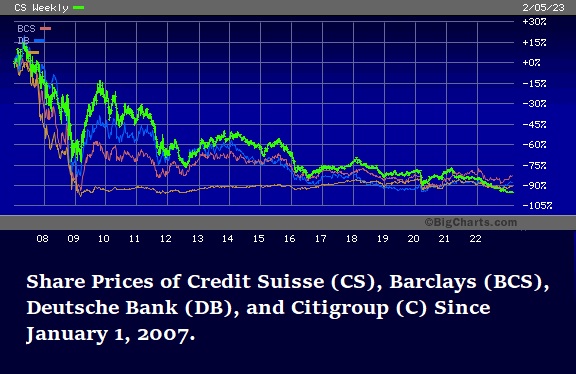
Unfortunately, Credit Suisse is far from alone. As the chart above indicates, Credit Suisse, Barclays (U.K.), Deutsche Bank (Germany) and Citigroup (U.S.) have lost the bulk of their market value since January 1, 2007 – or prior to the financial crisis of 2008. And all of these banks are also G-SIBs and interconnected to one another through derivatives, loan relationships and the like.

The bottom line is that Congress, the Fed and other federal regulators have seriously failed in their obligation to ensure that there is not another replay of the Wall Street mega bank meltdown of 2008 – which brought on the worst economic collapse since the Great Depression.   

LINK


Tuesday, October 18, 2022

Three Business Days after Credit Suisse Was Named “Credit Derivatives House of the Year,” Its Own Credit Derivatives Blew Out


SUBSCRIBE TO THIS NEWSLETTER

Three Business Days after Credit Suisse Was Named “Credit Derivatives House of the Year,” Its Own Credit Derivatives Blew Out

By Pam Martens and Russ Martens: October 18, 2022 ~

Credit SuisseCredit Suisse presents a cautionary tale about creating so much innovation in the realm of credit derivatives that one gets named “Credit Derivatives House of the Year.” That award might sound like a good thing to traders who make their living cooking up and trading exotic derivatives but it might sound like a very bad thing to pension funds and mutual funds who own big chunks of the stock and bonds of that bank and remember how credit derivatives blew up much of Wall Street in 2008.

On September 28, Risk.net named Credit Suisse the “Credit Derivatives House of the Year.” Three businesses days later, Credit Suisse saw its own Credit Default Swaps blow out to more than 300 basis points and some of its own bonds trade at 63 cents on the dollar. Simultaneously, its shares traded at an intraday low of $3.70 in New York on October 3, closing at $4.01, and putting it in crisis management mode.

On the same day that its stock, bonds and Credit Default Swaps were exhibiting severe stress, Reuters decided to run an article in the early afternoon reminiscing on the serial scandals that have plagued the global bank: words like “cocaine,” “kickbacks,” “fraud,” and “spying,” reminded investment managers of just how voluminous and varied Credit Suisse’s scandals had been of late.

Losing billions of dollars on derivatives and being scandalized in news headlines is apparently no barrier to getting an award from Risk.net.

In late March and early April of last year, Credit Suisse lost $5.5 billion from the highly-leveraged, highly concentrated stock positions it was financing via tricked-up derivatives for Archegos Capital Management, the family office hedge fund of Sung Kook “Bill” Hwang. Archegos blew up on March 25, 2021 after it defaulted on margin calls to the banks financing its trades. (See our report: Archegos: Wall Street Was Effectively Giving 85 Percent Margin Loans on Concentrated Stock Positions – Thwarting the Fed’s Reg T and Its Own Margin Rules.)

To cover their backsides, the Board of Credit Suisse decided to hire the BigLaw firm, Paul, Weiss, Rifkind, Wharton & Garrison, to conduct an internal investigation of the matter. On July 29, 2021 Paul Weiss issued a 165-page report on its version of what happened. Paul Weiss found no fraud had occurred — just zombie risk management at a Global Systemically Important Bank (G-SIB). (We’re not sure if fraud might have been a less troubling determination.)

This is how the Paul Weiss report portrayed the zombie risk managers at Credit Suisse:

“The Archegos-related losses sustained by CS [Credit Suisse] are the result of a fundamental failure of management and controls in CS’s Investment Bank and, specifically, in its Prime Services business. The business was focused on maximizing short-term profits and failed to rein in and, indeed, enabled Archegos’s voracious risk-taking. There were numerous warning signals—including large, persistent limit breaches — indicating that Archegos’s concentrated, volatile, and severely under-margined swap positions posed potentially catastrophic risk to CS. Yet the business, from the in-business risk managers to the Global Head of Equities, as well as the risk function, failed to heed these signs, despite evidence that some individuals did raise concerns appropriately.”

And this:

“…a Prime Services business with a lackadaisical attitude towards risk and risk discipline; a lack of accountability for risk failures; risk systems that identified acute risks, which were systematically ignored by business and risk personnel; and a cultural unwillingness to engage in challenging discussions or to escalate matters posing grave economic and reputational risk. The Archegos matter directly calls into question the competence of the business and risk personnel who had all the information necessary to appreciate the magnitude and urgency of the Archegos risks, but failed at multiple junctures to take decisive and urgent action to address them.”

The report from Paul Weiss sounds very similar to the findings of the U.S. Senate’s Permanent Subcommittee on Investigations’ on how JPMorgan Chase dodged risk limits and lost more than $6 billion using bank depositors’ money to make high risk derivative trades in the London Whale scandal of 2012-2013. That 300-page report found the following:

“In the first three months of 2012, when the CIO [Chief Investment Office] breached all five of the major risk limits on the Synthetic Credit Portfolio [SCP], rather than divest itself of risky positions, JPMorgan Chase disregarded the warning signals and downplayed the SCP’s risk by allowing the CIO to raise the limits, change its risk evaluation models, and continue trading despite the red flags.”

And, of course, there were also the zombie risk managers at Morgan Stanley who allowed Howie Hubler to lose at least $9 billion on derivative trades following the 2007-2008 financial crisis. Bestselling author, Michael Lewis, wrote about Hubler’s losses in his book, The Big Short, describing Hubler as a star bond trader at Morgan Stanley, making as much as $25 million in one year. Hubler was one of the Wall Street traders who made early bets that lower-rated subprime bonds would fail. He used credit default swaps to make his bets. But because he had to pay out premiums on these bets until the collapse came, he placed $16 billion in other bets on higher-rated portions of the subprime market, according to Lewis. When those bets failed, Morgan Stanley lost at least $9 billion.

The really big problem in all this hubris is that Credit Suisse, JPMorgan Chase and Morgan Stanley are not just trading houses; each of these financial institutions accept deposits from the public. In the case of JPMorgan Chase and Morgan Stanley, their deposit-taking units are federally-insured and backstopped by the U.S. taxpayer. In the case of Credit Suisse, its New York branch accepts deposits, but they are not insured.

In the resolution plan for Credit Suisse that it filed with the Federal Reserve, it writes:

“Our New York Branch is not a member of, and its deposits are not insured by, the FDIC. CS’ biggest U.S. presence is through its broker-dealer related businesses. Typically broker-dealer activities are resolved with a rapid runoff of the businesses as long as the resolution strategy is supported by adequate operational capabilities, such as the ability to transfer client accounts to peer institutions while causing minimal disruptions to the broader financial markets.”

According to an historical timeline on the Credit Suisse website, it was previously known as Schweizerische Kreditanstalt, which was eventually shorted to SKA. The timeline notes that SKA’s New York Branch was granted a license to accept deposits in 1964.

Wall Street trading houses accepting uninsured deposits resulted in the banking crisis of the early 1930s when thousands of banks failed and people rushed to pull their money from uninsured banks. Congress passed the 1933 Glass-Steagall Act banning the combination of investment banks/brokerage firms with federally-insured banks. (Federal deposit insurance was also created under the Glass-Steagall Act to restore confidence in the U.S. banking system.) The Glass-Steagall Act served the nation well for 66 years until its repeal under the Bill Clinton administration in 1999, allowing trading firms to merge with federally-insured, deposit-taking banks. It took just nine years without Glass-Steagall for Wall Street to collapse in a replay of the crash of 1929.

It’s long past the time to restore Glass-Steagall and permanently separate the nation’s taxpayer-backstopped banks from the Wall Street casino.

LINK


Monday, May 23, 2022

Fed Chair Powell Says “Markets Are Orderly” and “Functioning.” They’re Not.


SUBSCRIBE TO THIS NEWSLETTER TO MONITOR FINANCIAL MARKETS


Fed Chair Powell Says “Markets Are Orderly” and “Functioning.” They’re Not.

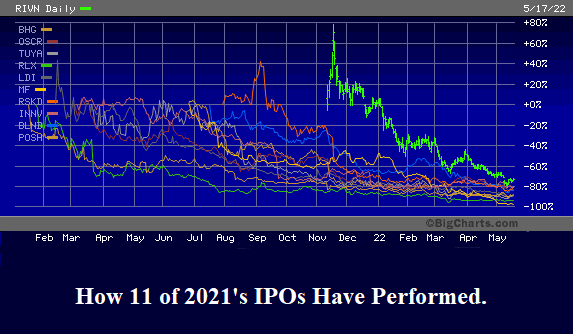
How 11 of 2021's IPOs Have Performed.

By Pam Martens and Russ Martens: May 19, 2022 ~

This past Tuesday, Federal Reserve Chair Jerome Powell sat for an interview with Wall Street Journal reporter Nick Timiraos as part of the newspaper’s “Future of Everything Festival.” During that interview, Powell told Timiraos that U.S. markets “are orderly, they’re functioning.” The precise exchange went as follows: (Watch it at 24:38 on YouTube video here.)

Timiraos: “A Number of people have suggested to me the one thing that might slow you down or at least make this much more difficult would be some kind of market cataclysm. I wonder, in part, if that is why you are trying to be more transparent, not erratic, making sudden moves on your policy moves. My question there is, where’s your level of concern that financial stability and controlling inflation by raising interest rates, maybe a lot, might be fundamentally incompatible in that raising rates causes financial disruption, but doesn’t actually bring inflation under control? Where is your level of concern around that situation?”

Powell: “I don’t see that happening. We monitor a very broad range of financial conditions, and we’re doing that now, we’ll keep doing that. Different cycles look different. Sometimes the tightening takes place in one market, sometimes in another, sometimes in credit spreads, sometimes in all of them. So we’re watching them all as a group. Volatility has been up a little bit, that has some effect on liquidity in some markets. Nonetheless, the markets are orderly, they’re functioning. I think they’re processing the way we’re thinking – the way the FOMC is thinking about policy – pretty well. And I think the idea, again, is to have financial conditions tighten to the point where growth will moderate but still be positive, but moderate to the point where supply and demand can get back in alignment, and where we can get inflation back down to two percent. I see that broadly working pretty well right now. Obviously, there are some volatile days in volatile markets. But, so far, I see us getting through this fairly well.”

Powell has a law degree, not an economics degree. Thus, his misdiagnosis that inflation would be transitory already makes his judgement suspect. To now suggest that the stock market is “orderly” and “functioning” in the face of a mountain of evidence to the contrary makes Powell look completely out-of-touch with reality.

Yesterday, the giant retailer, Target, lost 25 percent of its market value. In one trading session. That amounts to a $24.9 billion loss to shareholders. That’s not an orderly market. It’s also not normal.

On May 9, Jefferies tech analyst Brent Thill appeared on CNBC and said this about his tech trading desk:

“This has taken on more negativity than we could have imagined. We have no buyers on our desk. There’s max pain and it’s darker than I’ve seen in the last decade in covering many of these names.”

A little later in the interview, Thill added this: “I can tell you with high conviction that the biggest names on Wall Street right now are sitting out this and waiting…there’s a massive buyers’ strike right now.”

Memo to Fed Chair Powell: If you have only sellers and no buyers, you do not have an orderly market.

Crypto assets, which have been widely called a pyramid scheme based on the Greater Fool theory but were nonetheless allowed to spread throughout U.S. markets, had climbed to a market value of $2.9 trillion last November. That’s now a $1.4 trillion market cap with $1.5 trillion of investors’ money going poof in six months. That’s certainly not an orderly market.

Last week we reported that Senator Catherine Cortez Masto told Treasury Secretary Janet Yellen at a hearing that the crypto market “is now larger than the subprime mortgage market which triggered the global financial crisis.”

Then there is the fact that, similar to the dot.com bust, Wall Street has been allowed by its regulators to bring dodgy companies to the public markets via a broken IPO due diligence system. Above is a chart of what 11 IPOs have done since being brought to the public markets last year. Ticker RLX stands for RLX Technology, a Chinese vaping firm that went public on the New York Stock Exchange on January 22, 2021 at $12 per share. It closed its first day of trading at $29.51, more than double its offering price – making a lot of people very rich. Yesterday, it closed at $1.94, a decline of 84 percent from its IPO price. These kinds of losses in newly minted IPOs are not normal – unless one views the rigged research and fraudulent hyping of the dot.com era normal.

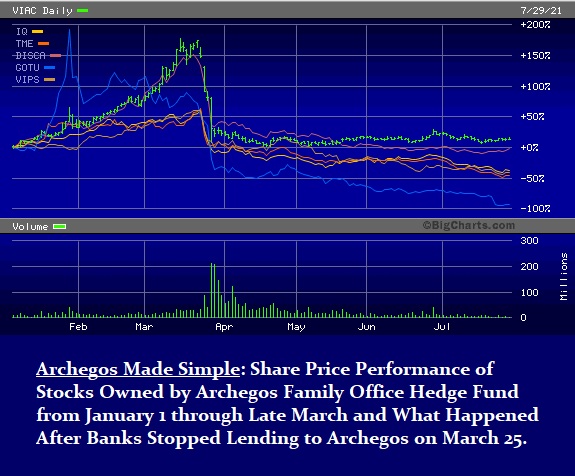
Then there were the unprecedented surges followed by plunges in the stocks secretly held by the Archegos Capital Management family office hedge fund last year. (See graph below.) Some of the largest megabanks on Wall Street, which have federal bank examiners on their premises to prevent this sort of thing, were secretly making margin loans with as little as 15 percent equity to 85 percent leverage on massively concentrated positions in single stock names via tricked-up derivatives called Total Return Swaps. Archegos imploded in March of last year, leaving losses of more than $10 billion (that the public knows about) at a handful of megabanks.

Archegos Made Simple

Under the Fed’s Regulation T, stock investing on margin requires putting down at least 50 percent of the value of a stock initially and borrowing no more than 50 percent. What happened with Archegos is not an orderly market; it’s not normal; and the fact that none of the banks were charged with violating Reg T or aiding and abetting the manipulation of the market is further proof that something is seriously wrong with the U.S. Department of Justice and seriously wrong with bank examinations by the Fed.

And, finally, the charts we published earlier this month showing weeks of plunges and then spikes in the Dow Jones Industrial Average during morning trading are further evidence that markets are not orderly and are being manipulated.

The American people can choose to believe their own eyes or they can choose to believe a man who built his wealth working for a vulture capital firm. (If you think we’re being too harsh on Powell, you may want to consider that former Harvard Law professor and one of the most knowledgeable members of the Senate Banking Committee, Senator Elizabeth Warren, has called Powell “a dangerous man” and voted against his confirmation for a second term as Fed Chair.)


Monday, May 16, 2022

Crypto’s Crash: 100-to-1 Leverage Goes Poof!


SUBSCRIBE TO THIS NEWSLETTER TO WATCH THE FINANCIAL MARKETS!


Crypto’s Crash: 100-to-1 Leverage Goes Poof!

By Pam Martens and Russ Martens: May 16, 2022 ~

BitcoinCrypto was in full-blown crash mode last week, wiping out more than $300 billion in market value. TerraUSD, a so-called stablecoin that is supposed to trade at a “stable” $1 value, crashed to a few cents on the dollar. Its sister cryptocurrency, Luna, likewise imploded.

Then there was Bitcoin, which Warren Buffett has called “rat poison squared.” Bitcoin plunged further last week and is now down more than 30 percent year-to-date. So much for the hype that it would be an inflation hedge like gold.

Coinbase, the big crypto exchange, knocked more wind out of the sails of the crypto market on Tuesday of last week when it filed its 10-Q (quarterly report) with the Securities and Exchange Commission and essentially said it had no idea what might happen to $256 billion it held for customers. The filing illuminated its shareholders and customers as follows:

“As of March 31, 2022, we held $256 billion in custodial fiat currencies and cryptocurrencies on behalf of customers. Supported crypto assets are not insured or guaranteed by any government or government agency. We have also entered into partnerships with third parties, such as with the Centre Consortium, as a reseller of USDC, where we or our partners receive and hold funds for the benefit of our customers. Our and our partners’ abilities to manage and accurately safeguard these customer assets requires a high level of internal controls. As our business continues to grow and we expand our product and service offerings, we must continue to strengthen our associated internal controls and ensure that our partners do the same. Our success and the success of our offerings requires significant public confidence in our and our partners’ ability to properly manage customers’ balances and handle large and growing transaction volumes and amounts of customer funds. In addition, we are dependent on our partners’ operations, liquidity, and financial condition for the proper maintenance, use, and safekeeping of these customer assets…Moreover, because custodially held crypto assets may be considered to be the property of a bankruptcy estate, in the event of a bankruptcy, the crypto assets we hold in custody on behalf of our customers could be subject to bankruptcy proceedings and such customers could be treated as our general unsecured creditors. This may result in customers finding our custodial services more risky and less attractive and any failure to increase our customer base, discontinuation or reduction in use of our platform and products by existing customers as a result could adversely impact our business, operating results, and financial condition.”

Imagine walking into your federally-insured bank to make a deposit into your savings account and being handed a notice that said it had no idea what might happen to your deposits.

Coinbase went public in April of last year and traded as high as $368.90 intraday last year. It closed the trading week last Friday at a share price of $67.87, a decline of 82 percent from its 52-week intraday high.

If the words “pump and dump” are floating around in your head, you can be forgiven. In 2018, Bill Harris, the former CEO of Intuit and PayPal, wrote a detailed critique of Bitcoin for Vox under the headline: “Bitcoin is the greatest scam in history.” Harris wrote:

“In my opinion, it’s a colossal pump-and-dump scheme, the likes of which the world has never seen. In a pump-and-dump game, promoters ‘pump’ up the price of a security creating a speculative frenzy, then ‘dump’ some of their holdings at artificially high prices. And some cryptocurrencies are pure frauds. Ernst & Young estimates that 10 percent of the money raised for initial coin offerings has been stolen.”

Two Nasdaq stocks which hold large positions in Bitcoin on their balance sheets, MicroStrategy and Tesla, also saw their share prices plunge last week.

Tone deaf Goldman Sachs, however, somehow interpreted last week’s market action as a signal to double down. According to the Financial Times over the weekend, “Goldman Sachs and Barclays have invested in Elwood Technologies, the cryptocurrency trading platform founded by British hedge fund billionaire Alan Howard, in a fresh bet on the mainstream adoption of digital assets.”

The dystopian feel to markets and this socio-political era did not go unnoticed at Saturday Night Live. Weekend Update co-anchor Colin Jost offered this take:

“Is it me or does every story sound like the opening voiceover in a Mad Max movie? The year is 2022. A virus rages across the planet. Digital money has collapsed. Infants have nothing to eat. Women are forced to breed. Men are ready to die for gasoline….”

The situation with crypto was easy to foresee and has been for a long time. (See our 2014 report: Bitcoins, Tulips, and the Madness of Crowds.) On June 30 of last year, the House Financial Services’ Subcommittee on Oversight and Investigations held a hearing on the crypto craze. The hearing was titled: “America on ‘FIRE’: Will the Crypto Frenzy Lead to Financial Independence and Early Retirement or Financial Ruin?”

Wall Street veteran, Alexis Goldstein, then the Director of Financial Policy for the nonprofit group, the Open Markets Institute, was a witness at the hearing. Goldstein was asked by Congresswoman Maxine Waters about a survey released earlier in the year by the accounting firm, PwC, which indicated that 1 in 7 hedge funds have 10 to 20 percent of their total assets under management invested in crypto. The survey also found that 86 percent of the hedge funds investing in crypto intended to deploy more capital by the end of 2021.

Goldstein responded that the public had already witnessed the collapse of the family office hedge fund, Archegos, which demonstrated that when banks have prime broker relationships with hedge funds it can create losses at the banks, which hold federally-insured (taxpayer-backstopped) deposits. Large global banks lost more than $10.4 billion when Archegos defaulted on its margin loans to the banks in March of 2021. Goldstein explained:

“If hedge funds get farther into crypto, they don’t care about direction. They’ll go long, they’ll go short. They can use leverage. There are lots of cryptocurrency exchanges like FTX and Binance and many others that allow people to use insane amounts of leverage – 100 times to 1…So what happens if a huge number of hedge funds have prime broker relationships with too-big-to-fail banks [and] all happen to be in similar crypto positions, whether it’s long or short and there’s massive volatility in the market. They may have to sell some of their other assets. It may lead to margin calls in their non-crypto assets which could lead to forced liquidations and sort of redound to the banks themselves in the form of counterparty risk.”

Counterparty risk is what led to the financial contagion that crashed Wall Street in 2008, leading to the worst economic crisis in the U.S. since the Great Depression of the 1930s. (For a look at Goldman Sachs’ role in that leverage and counterparty contagion in the 2008 crash, here’s a chart of Goldman Sachs’ derivative exposure to other banks as of June 2008.)

Waters then asked Goldstein if there was any transparency on which specific hedge funds held the largest positions in crypto and who their counterparties are. Goldstein responded that crypto is not currently reported on the 13F forms that hedge funds are required to file with the SEC so regulators are currently “totally in the dark.” Regulators were also in the dark about Archegos. It also did not make 13F filings with the SEC.

Goldstein also explained how the mega banks on Wall Street, which provide margin lending and securities lending to hedge funds under a program they call “prime broker” services, are themselves taking a “growing presence in the cryptocurrency market.” Goldstein provided the following remarks in her written testimony to the Subcommittee:

“…Too Big To Fail banks are also a growing presence in the cryptocurrency market. Goldman Sachs plans to open a cryptocurrency trading desk, BNY Mellon allows its clients to hold Bitcoin as of February 19, Wells Fargo will offer professionally managed cryptocurrency funds for qualified investors. Morgan Stanley’s Europe Opportunity Fund reported owning 28,298 shares of the Grayscale Bitcoin Trust, according to a June 28 filing. Venture Capital firms have already invested $17 billion into cryptocurrency firms so far in 2021, more than three times what they invested in all of 2020. In addition, the concentration of particular cryptocurrency assets into a small handful of addresses raise concerns about power concentrations. To take one example, there are several very large ‘whales’ in the Dogecoin cryptocurrency, including a single address that holds over 36.7 billion DOGE (or some 28% of total Dogecoin) worth more than $8 billion. As of February [2021], the top 20 largest Dogecoin addresses held half of the cryptocurrency’s entire supply.”

Another loud warning came last December 14 when the Senate Banking Committee held a hearing titled “Stablecoins: How Do They Work, How Are They Used, and What Are Their Risks?” Senator Sherrod Brown (D-OH), the Chair of the Committee, said the following as part of his remarks:

“So let’s be clear about one thing: if you put your money in stablecoins, there’s no guarantee you’re going to get it back. They call it a currency, implying it’s the same as having dollars in the bank, and you can withdraw the money at any time. But many of these companies hide their terms and conditions in the fine print, allowing them to trap customers’ money. And if there’s no guarantee you’ll get your money back, that’s not a currency with a fixed value – it’s gambling.

“And with this much money tied up, it sure looks to me like a potential asset bubble.”

Related Articles:

The Smartest Guys in the Room Call Bitcoin “Rat Poison Squared,” “a Colossal Pump-and-Dump Scheme” and “a Big Criminal Scam” but Federal Regulators Look the Other Way

As Bitcoin Crashes 34 Percent in a Week, U.S. Congressman Ted Budd Pushes Bank Regulator to Approve More Crypto National Bank Charters  

CONGRESSMAN TEDD BUDD NORTH CAROLINA

Crypto: Congress Dawdles as $1.7 Trillion Con-Game Goes Unregulated, Threatening Reputation of U.S. Markets

LINK


Sunday, May 8, 2022

Goldman Sachs Says Its Dark Pools Are Under Investigation – Along with About Everything Else the Firm Does


SUBSCRIBE TO THIS NEWSLETTER TO UNDERSTAND WALL STREET & ITS ABUSE


Goldman Sachs Says Its Dark Pools Are Under Investigation – Along with About Everything Else the Firm Does

By Pam Martens and Russ Martens: May 6, 2022 ~
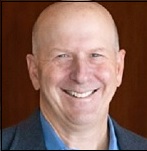
David Solomon, Chairman and CEO, Goldman Sachs

David Solomon, Chairman and CEO, Goldman Sachs

We’ve been reading SEC filings for more than 35 years. We have to sadly say that the 10-Q that Goldman Sachs filed with the SEC on May 2, for the quarter ending March 31, 2022, shocks even our well-documented assessment of Wall Street as a crime syndicate. Goldman Sachs has listed pretty much everything the firm does as a target of an ongoing investigation, notwithstanding that the company and a subsidiary were criminally charged by the U.S. Department of Justice in the looting and bribery scandal known as 1MDB in October 2020, admitted to the charges, and had to pay over $2.9 billion. The good news is that Goldman Sachs’ Dark Pools are one of the areas it lists as being under a probe.

Dark Pools (also benignly called Alternative Trading Systems or ATS) are effectively unregulated stock exchanges being run by the same megabanks on Wall Street that blew up the U.S. financial system in 2008 and received the largest taxpayer bailout in U.S. history. The radical right in the U.S. Congress apparently believes that unbridled greed and outrageously reckless conduct that craters America’s economy deserves to be rewarded with less regulatory oversight, thus Dark Pools have not been shut down.

Not only are Goldman Sachs, JPMorgan, UBS, Morgan Stanley, Merrill Lynch, and numerous others, allowed to trade hundreds of New York Stock Exchange and Nasdaq listed stocks in their own Dark Pools, but they are also allowed to trade their own bank’s stock in their own Dark Pools. We have asked the SEC for years now how it is legal for a bank to trade its own stock – possibly making a two-sided market in that stock because some of these firms own more than one Dark Pool. We’ve yet to receive an answer. (Dare we hope that this is finally being seriously investigated by Gary Gensler’s SEC?)

The name of Goldman Sachs’ Dark Pool that trades in the U.S. is called Sigma X2. It used to be called simply Sigma X. According to a publicly-available document, Sigma X is now used by Goldman Sachs to designate the Dark Pools it operates in foreign jurisdictions, which include Europe, Japan, Hong Kong and Australia.

According to a “Frequently Asked Questions” document from Goldman Sachs, under the question “Is SIGMA X a dark pool that only matches trades anonymously, without information leakage? Or will information regarding my orders be conveyed to potential liquidity providers,” Goldman says this: “The matching process for SIGMA X is completely internal, and SIGMA X will not disseminate any pre-trade information to internal trading desks or external counterparties. Executed trades are publicly reported where required by applicable rules.”

In other words, this is an unlit market where pre-trade prices are not available to the public and trades are only reported after they have occurred in darkness, if they are reported at all.

How Goldman’s Dark Pool functions was written about in the Michael Lewis bestseller, Flash Boys, and the seminal work on Dark Pools by Wall Street Journal reporter Scott Patterson, Dark Pools: The Rise of the Machine Traders and the Rigging of the U.S. Stock Market.

Michael Lewis related the story in Flash Boys of how Rich Gates, the operator of a mutual fund, together with his colleagues devised a test to see if they entered an order into a Dark Pool they would get ripped off. Lewis writes as follows:

“Gates and his colleagues wound up making hundreds of such tests, with their own money, in several Wall Street dark pools. In the first half of 2010 there was only one Wall Street firm in whose dark pool the test came back positive: Goldman Sachs. In the Goldman dark pool, Sigma X, he got ripped off a bit more than half the time he ran the tests.”

Patterson writes in his book on Dark Pools that the U.S. stock market has degenerated into:

“pools within pools, all connected electronically, forming a single sloshing pool of dark electronic liquidity. By 2012, the amount of stock trading that took place in dark pools and internalizers was a whopping 40 percent of all trading volume – and it was growing every month…

“No one – no one – truly knew what was taking place inside the guts of this Frankenstein’s monster of a market.”

Clearly Patterson is an expert on Dark Pools; but for some reason the Wall Street Journal allows him to report on everything but Dark Pools.

In the early 1930s, following the stock market crash of 1929, the U.S. Senate Banking Committee issued subpoenas and conducted extensive investigations over multiple years into the trading structure and trading practices on Wall Street. The Senate investigations focused on the collusive dealings of “pools,” which have today been reincarnated as Dark Pools. The 1930s Senate investigation found the following:

“A pool, according to stock exchange officials, is an agreement between several people, usually more than three, to actively trade in a single security. The investigation has shown that the purpose of a pool generally is to raise the price of a security by concerted activity on the part of the pool members, and thereby to enable them to unload their holdings at a profit upon the public attracted by the activity or by information disseminated about the stock. Pool operations for such a purpose are incompatible with the maintenance of a free and uncontrolled market.”

The Senate Banking Committee of 1934 concluded as follows:

“The conclusion is inescapable that members of the organized exchanges who had a participation in or managed pools, while simultaneously acting as brokers for the general public, were representing irreconcilable interests and attempting to discharge conflicting functions. Yet the stock exchange authorities could perceive nothing unethical in this situation.”

As for the other areas in which Goldman Sachs is under a government investigation or named as a defendant in a lawsuit, the 10-Q filing offers this:

“[Goldman Sachs] Group Inc. and certain of its affiliates are subject to a number of other investigations and reviews by, and in some cases have received subpoenas and requests for documents and information from, various governmental and regulatory bodies and self-regulatory organizations and litigation and shareholder requests relating to various matters relating to the firm’s businesses and operations, including: “securities offering process and underwriting practices”; “firm’s investment management and financial advisory services”; “Research practices, including research independence and interactions between research analysts and other firm personnel, including investment banking personnel, as well as third parties”; “Transactions involving government-related financings and other matters, municipal securities, including wall-cross procedures and conflict of interest disclosure with respect to state and municipal clients, the trading and structuring of municipal derivative instruments in connection with municipal offerings, political contribution rules, municipal advisory services and the possible impact of credit default swap transactions on municipal issuers”; “The offering, auction, sales, trading and clearance of corporate and government securities, currencies, commodities and other financial products and related sales and other communications and activities, as well as the firm’s supervision and controls relating to such activities, including compliance with applicable short sale rules, algorithmic, high-frequency and quantitative trading, the firm’s U.S. alternative trading system (dark pool), futures trading, options trading, when-issued trading, transaction reporting, technology systems and controls, communications recordkeeping and recording, securities lending practices, prime brokerage activities, trading and clearance of credit derivative instruments and interest rate swaps, commodities activities and metals storage, private placement practices, allocations of and trading in securities, and trading activities and communications in connection with the establishment of benchmark rates, such as currency rates”; “Insider trading, the potential misuse and dissemination of material nonpublic information regarding corporate and governmental developments and the effectiveness of the firm’s insider trading controls and information barriers.”

The above is not a complete listing, just the highlights.

The involvement of Goldman Sachs in the implosion of the family office hedge fund, Archegos Capital Management, in March of last year has not gone away either. Goldman Sachs reports the following in its 10-Q:

“GS&Co. is among the underwriters named as defendants in a putative securities class action filed on August 13, 2021 in New York Supreme Court, County of New York, relating to ViacomCBS Inc.’s (ViacomCBS) March 2021 public offerings of $1.7 billion of common stock and $1.0 billion of preferred stock. In addition to the underwriters, the defendants include ViacomCBS and certain of its officers and directors. GS&Co. underwrote 646,154 shares of common stock representing an aggregate offering price of approximately $55 million and 323,077 shares of preferred stock representing an aggregate offering price of approximately $32 million. The complaint asserts claims under the federal securities laws and alleges that the offering documents contained material misstatements and omissions, including, among other things, that the offering documents failed to disclose that Archegos Capital Management (Archegos) had substantial exposure to ViacomCBS, including through total return swaps to which certain of the underwriters, including GS&Co., were allegedly counterparties, and that such underwriters failed to disclose their exposure to Archegos. The complaint seeks rescission and compensatory damages in unspecified amounts. On November 5, 2021, the plaintiffs filed an amended complaint, and, on December 22, 2021, the defendants filed motions to dismiss the amended complaint. On January 4, 2022, the plaintiffs moved for class certification.

“[Goldman Sachs] Group Inc. is also a defendant in putative securities class actions filed beginning in October 2021 and consolidated in the U.S. District Court for the Southern District of New York. The complaints allege that Group Inc., along with another financial institution, sold shares in Baidu Inc. (Baidu), Discovery Inc. (Discovery), GSX Techedu Inc. (Gaotu), iQIYI Inc. (iQIYI), Tencent Music Entertainment Group (Tencent), ViacomCBS, and Vipshop Holdings Ltd. (Vipshop) based on material nonpublic information regarding the liquidation of Archegos’ position in Baidu, Discovery, Gaotu, iQIYI, Tencent, ViacomCBS and Vipshop, respectively. The complaints generally assert violations of Sections 10(b), 20A and 20(a) of the Exchange Act and seek unspecified damages.

“On January 24, 2022, the firm received a demand from an alleged shareholder under Section 220 of the Delaware General Corporation Law for books and records relating to, among other things, the firm’s involvement with Archegos and the firm’s controls with respect to insider trading.”

For more on the Archegos matter, see our recent report: Justice Department and SEC Portray Serially-Charged Banks on Wall Street as Hapless Victims of Archegos Fraud. Nobody’s Buying It. 
  • © 2022 Wall Street On Parade. Wall Street On Parade ® is registered in the U.S. Patent and Trademark Office. WallStreetOnParade.com is a financial news website operated by Russ and Pam Martens to help the investing public better understand systemic corruption on Wall Street. Ms. Martens is a former Wall Street veteran with a background in journalism. Mr. Martens' career spanned four decades in printing and publishing management.


MAGA Just Lost To A Newspaperman, A Pearl Harbor Hero, and The State Of Iowa

                                                   LOTS OF POSTS IGNORED BY BLOGGER..... OR REMOVED ON THEIR WHIM! ALL POSTS ARE AVAILABLE O...