Showing posts with label ARMENIAN GENOCIDE. Show all posts

Saturday, August 12, 2023

Dahlia Lithwick | Do Trump’s Social Media Threats Count as Witness Tampering?


Reader Supported News
10 August 23

Live on the homepage now!
Reader Supported News

WE ARE IN TROUBLE. IT DOESN’T HAVE TO BE THIS WAY. — People want to come to RSN, but they don’t want to know anything about how the organization survives financially. This never used to be the case. The people who have come to Reader Supported News in the past have willingly contributed to sustain the organization. These dollar figures are totally manageable. We are getting into deep trouble over a completely blind eye to funding. In distress.
Marc Ash • Founder, Reader Supported News

Sure, I'll make a donation!


'It is a crime to try to influence a juror or to threaten or attempt to bribe a witness.' (photo: AFP)
Dahlia Lithwick | Do Trump’s Social Media Threats Count as Witness Tampering?
Dahlia Lithwick, Slate
Lithwick writes: "On Thursday, in a federal courtroom in Washington, D.C., former President Donald Trump signed a document containing the conditions for his pretrial release."    


On Thursday, in a federal courtroom in Washington, D.C., former President Donald Trump signed a document containing the conditions for his pretrial release. The agreement came with the warning that he could face up to 10 years in prison and/or a $100,000 fine for attempting to intimidate jurors, judges, prosecutors, or witnesses. He also received a verbal admonition at the time from Magistrate Judge Moxila Upadhyaya, clarifying the terms of his release:

I want to remind you that it is a crime to try to influence a juror or to threaten or attempt to bribe a witness or any other person who may have information about your case, or to retaliate against anyone for providing information about your case to the prosecution, or to otherwise obstruct the administration of justice.

The next day, Trump posted on Truth Social a warning in all-caps: “IF YOU GO AFTER ME, I’M COMING AFTER YOU!” Immediately, special counsel Jack Smith’s office asked Judge Tanya Chutkan for a protective order to limit what Trump’s team can do with any evidence that will be shared with them during discovery. The government’s lawyers noted that the former president has been known to share evidence and attempt to influence witnesses in prior lawsuits and that he “has previously issued public statements on social media regarding witnesses, judges, attorneys and others associated with legal matters pending against him.”

When Trump’s lawyers asked for extra time to respond to that motion, Chutkan declined. The Trump team had to respond to the request for a protective order by 5 p.m. Monday, which they did.

On Saturday, Trump posted again, with respect to a key witness: “WOW, it’s finally happened! Liddle’ Mike Pence, a man who was about to be ousted as Governor Indiana until I came along and made him V.P., has gone to the Dark Side.” In separate posts over the weekend and Monday, he then went after Smith and Chutkan by name. To the extent any of this constitutes witness tampering or threats is a tricky legal question to which Trump and his lawyers have already responded by citing his First Amendment rights to say what he wishes about the trial. I asked David Alan Sklansky—who teaches and writes about criminal law, criminal procedure, and evidence at Stanford—to help unpack the contours of a defendant’s right to speak in advance of his trial. Our conversation has been condensed and edited for clarity.

Dahlia Lithwick: It feels like folks are conflating a huge number of ideas when they discuss Trump’s Truth Social posts—witness tampering, threats to the judge and prosecutor, disclosure of evidence, among other things. Will they all fall under the same single protective order the special counsel requested?

David Alan Sklansky: Yes, there are a bunch of different issues here, and no, they don’t all get handled in a single protective order. The protective order the prosecutors have proposed places restrictions on the ways in which Trump and his lawyers can use the information that the prosecutors provide to them. It’s not a gag order. It doesn’t stop Trump from talking about the case—publicly or privately.

From a criminal justice perspective, what is the real concern here? That he is chilling witness testimony? Poisoning the jury pool? Painting a target on the judge?

I think those are all concerns—especially the chilling of witnesses’ testimony, or placing witnesses in danger. One part of the proposed protective order does say that Trump’s lawyers can’t give Trump documents with sensitive information about witnesses, like their home addresses. It says they can show those documents to Trump, but they can’t let him copy down the sensitive information about the witnesses. But there is a broader concern about the safety of witnesses, and efforts to intimidate witnesses or to influence their testimony, and depending on how things go, the judge may wind up issuing other orders responding to those concerns.

We know from Cassidy Hutchinson’s Jan. 6 testimony that Trump made attempts to influence witnesses, through their lawyers or through proxies. Does that enter into Judge Chutkan’s thinking?

Sure. She has to take seriously any possible efforts to intimate witnesses, or anything that might place witnesses in danger.

Robert Reich suggested earlier today that these comments alone mean that Trump should be in jail. That in fact “At this moment, about 400,000 criminal defendants are in jail in the United States awaiting trial because they didn’t meet a condition of their release.” Is there really a scenario under which Trump goes to jail for these kinds of pretrial comments?

It’s hard to imagine him going to jail for the comments that he has made so far on social media. They don’t go far enough. And the prosecutors haven’t done anything to suggest that they might seek to revoke his pretrial release because of any of those comments.

Given that But Free Speech! forms the bulk of Trump’s substantive defense in the D.C. trial, how much will “free speech” protect what he says about the trial as it proceeds? It feels like the more the court tries to keep him from discussing the case in public, the more it feeds his argument that this is all just about his political speech.

There may be some difficult balances to be struck in that regard as this case moves forward. Judge Chutkan will have to strike a balance between, on the one hand, respecting Trump’s First Amendment rights, and allowing him to continue his campaign, and on the other hand protecting the integrity of the trial process—and the safety of potential witnesses.


READ MORE
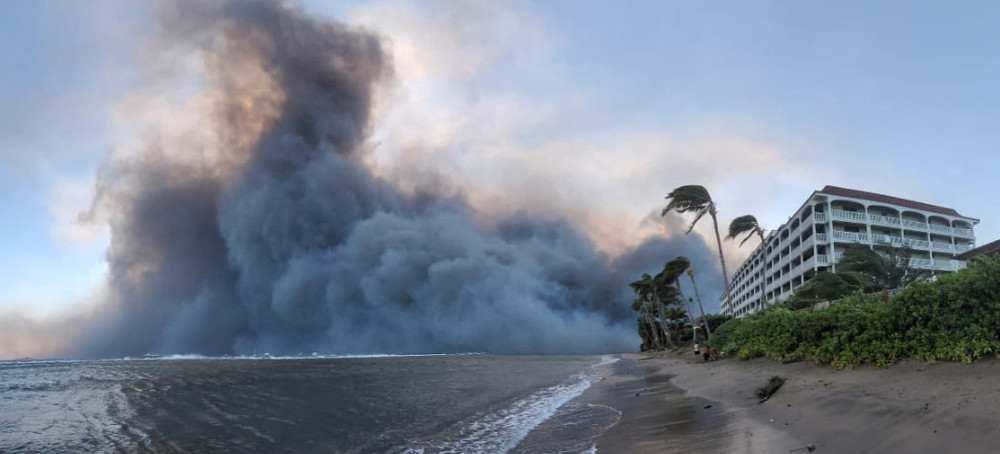


‘Like an Apocalypse’: Hawaii Wildfire Death Toll Soars to 36Hundreds of buildings in historic town of Lahaina destroyed in Hawaii wildfires. (photo: AP)

‘Like an Apocalypse’: Hawaii Wildfire Death Toll Soars to 36
Al Jazeera
Excerpt: "At least 36 people have been killed and several thousand were forced to flee as wind-fueled wildfires devastated much of the resort town of Lahaina on Hawaii’s Maui island, in what residents described as an 'apocalypse.'" 


Several thousand residents escape homes as wind-fuelled flames swept across the Maui island resort town of Lahaina.

At least 36 people have been killed and several thousand were forced to flee as wind-fuelled wildfires devastated much of the resort town of Lahaina on Hawaii’s Maui island, in what residents described as an “apocalypse”.

“As the firefighting efforts continue, 36 total fatalities have been discovered today amid the active Lahaina fire,” the Maui county government said in a statement on Thursday.

The fires began burning in the United States island state early on Tuesday, putting more than 35,000 people on Maui – as well as homes, businesses and utilities – at risk, the Hawaii Emergency Management Agency said in a statement on Wednesday.

The fast-moving flames, fanned by strong winds from Hurricane Dora, sent desperate residents jumping into the ocean to escape.

A video posted on social media showed blazes tearing through the heart of Lahaina, a beachfront town of about 12,000 residents that is popular with tourists, and sending up huge plumes of black smoke.

“We just had the worst disaster I’ve ever seen. All of Lahaina is burnt to a crisp. It’s like an apocalypse,” said resident Mason Jarvi, who escaped the fires.

More than 270 buildings have been damaged or destroyed in Lahaina.

“Much of Lahaina on Maui has been destroyed and hundreds of local families have been displaced,” said Josh Green, the town governor.

Adam Weintraub, a spokesperson with the Hawaii Emergency Management Agency, told Al Jazeera the devastated areas resembled a “war zone”.

“Some of the aerial footage that we’ve seen from the area reminds me of the pictures from Dresden from World War II,” Weintraub said, referring to the German city almost destroyed by Allied bombardment.

He said additional aid had reached the affected areas on Thursday, but that the fires had hampered access and communications in several areas, complicating rescue services and the delivery of assistance.

At least 2,100 people were sheltered by the American Red Cross on Maui on Wednesday and more evacuation efforts were under way.

“We are working with the county, with the American Red Cross and with our colleagues in Honolulu county to help remove visitors and displaced residents in Maui island and find other accommodation or travel arrangements,” Weintraub added.

Al Jazeera’s Daryl Huff, reporting from Wailuku, Maui, said the winds had died down slightly after blowing at 96 to 112 kilometres per hour (60 to 70 miles per hour), giving firefighters a chance to start putting out the flames.

“But there’s still enough wind to whip these fires up. That’s why they are concerned in Lahaina,” Huff said.


READ MORE



Special Counsel Jack Smith Got a Secret Search Warrant for Trump's Twitter AccountTwitter's blue bird is seen on its headquarters building in San Francisco on July 24. (photo: Godofredo A. Vasquez/AP)

Special Counsel Jack Smith Got a Secret Search Warrant for Trump's Twitter Account
Jaclyn Diaz, NPR
Diaz writes: "Special counsel Jack Smith obtained a search warrant for former President Donald Trump's Twitter account back in January and requested Twitter not disclose this information to Trump, newly unsealed court documents show."

Special counsel Jack Smith obtained a search warrant for former President Donald Trump's Twitter account back in January and requested Twitter not disclose this information to Trump, newly unsealed court documents show.

On Jan. 17, 2023, prosecutors applied for, and received, a search warrant directing Twitter, a company now known as X, to produce data and records related to the @realDonaldTrump account, documents from the U.S. Court of Appeals for District of Columbia Circuit show.

This warrant was tied to the special counsel's investigation into Trump and his involvement in attempts to overturn the 2020 election. Trump is now facing four criminal charges related to this investigation. He's pleaded not guilty.

Trump was permanently suspended from Twitter just days after the Jan. 6, 2021 riot at the U.S. Capitol. His account was reinstated on X, but he has not tweeted since Jan. 8, 2021, and instead uses his Truth Social platform.

The warrant was served along with an order that prohibited Twitter from notifying anyone about the existence or contents of the warrant.

Prosecutors shared fears with the court that if Trump knew about the warrant that he would jeopardize the investigation by giving him "an opportunity to destroy evidence, change patterns of behavior [or] notify confederates."

The social media company subsequently fought the Justice Department on this warrant request as well as its demand not to disclose this information to Trump or others, the court filings show.

In a since-rejected appeal, Twitter had argued that the nondisclosure order violated the First Amendment and the Stored Communications Act.

Twitter did eventually comply with the warrant, but failed to produce all of the requested information until three days after a court-ordered deadline, placing the company in contempt and was ordered to pay a $350,000 fine for the delay.

Trump called the revelation of this search warrant a "major 'hit' on my civil rights" on his Truth Social account.

A representative for the Justice Department declined to comment.

How common are social media search warrants?

Very, according to Mary Graw Leary, a former federal prosecutor.

Social media is now a fabric of nearly everyone's lives, so in many criminal investigations its highly likely that there will be subpoenas into a subject's accounts and overall digital presence, she said. Leary is also currently the senior associate dean for academic affairs at The Catholic University of America.

If a potential target of an investigation is keeping a social media account, essentially a "public diary," during the time frame in question "of course" investigators would want all the records tied to these accounts, she said.

It's less common for a nondisclosure order to be requested as it was in this investigation into Trump, but it's not unexpected, she noted.

"That is usually related to the status of the investigation," she said. Meaning, as it seems to have in this case, prosecutors will tread lightly to avoid harming the investigation by informing potential targets or witnesses of this request.

It appears in this case that federal prosecutors and Twitter attorneys litigated the issue heavily and that steps taken by investigators seem consistent with statutory law, according to Leary.

So, as for Trump's assertions his "rights" were violated? "It's hard to see what rights he is referring to that have been violated," she said.


READ MORE
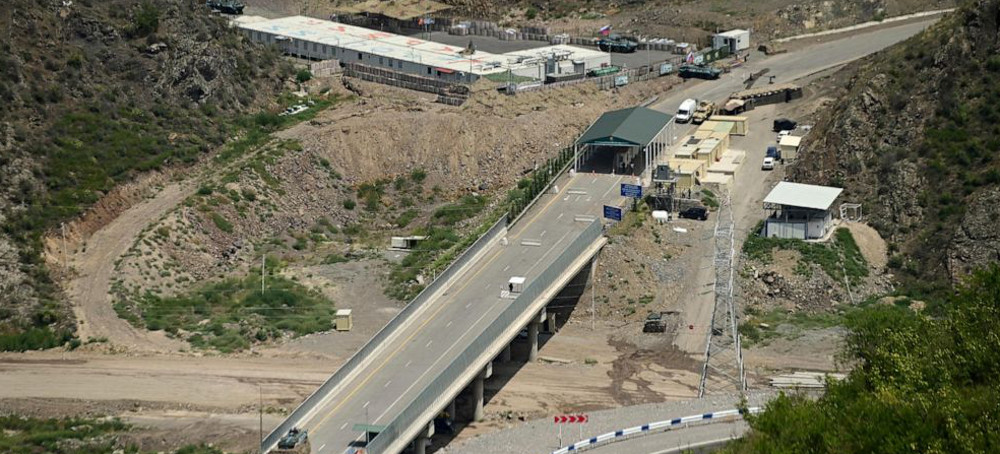


Armenians Face Genocide in Azerbaijan, Former International Criminal Court Prosecutor WarnsA bridge and a checkpoint are seen on a road towards the separatist region of Nagorno-Karabakh, in Armenia, Friday, July 28, 2023. (photo: AP)

Armenians Face Genocide in Azerbaijan, Former International Criminal Court Prosecutor Warns
Abby Sewell, Associated Press
Sewell writes: "The former chief prosecutor of the International Criminal Court is warning that Azerbaijan is preparing genocide against ethnic Armenians in its Nagorno-Karabakh region."   


The former chief prosecutor of the International Criminal Court is warning that Azerbaijan is preparing genocide against ethnic Armenians in its Nagorno-Karabakh region


The former chief prosecutor of the International Criminal Court warned that Azerbaijan is preparing genocide against ethnic Armenians in its Nagorno-Karabakh region and called for the U.N. Security Council to bring the matter before the international tribunal.

A report by Luis Moreno Ocampo issued Tuesday said Azerbaijan's blockade of the only road leading from Armenia to Nagorno-Karabakh seriously impedes food, medical supplies and other essentials to the region of about 120,000 people.

“There is a reasonable basis to believe that a genocide is being committed,” Ocampo's report said, noting that a U.N. convention defines genocide as including "deliberately inflicting on the group conditions of life calculated to bring about its physical destruction.”

“There are no crematories and there are no machete attacks. Starvation is the invisible genocide weapon. Without immediate dramatic change, this group of Armenians will be destroyed in a few weeks,” the report said.

Nagorno-Karabakh is a region within Azerbaijan that came under the control of ethnic Armenian forces backed by the Armenian military in separatist fighting that ended in 1994. Armenian forces also took control of substantial territory around the region.

Azerbaijan regained control of the surrounding territory in a six-week war with Armenia in 2020. A Russia-brokered armistice that ended the war left the region's capital, Stepanakert, connected to Armenia only by a road known as the Lachin Corridor, along which Russian peacekeeping forces were supposed to ensure free movement.

A government representative in Azerbaijan dismissed the report from Ocampo, who was the ICC’s first prosecutor, saying it “contains unsubstantiated allegations and accusations.”

“It is biased and distorts the real situation on the ground and represents serious factual, legal and substantive errors,” Hikmet Hajiyev, an assistant to Azerbaijan President Ilham Aliyev, told The Associated Press, on Wednesday.

In December, crowds of demonstrators who claimed to be environmental activists blocked the Lachin Corrirdor. Azerbaijan later established a military checkpoint on the road, blocking traffic that it alleged was carrying weapons and other contraband.

In Kornidzor, near the Azerbaijan border, a line of 19 trucks loaded with some 360 tons of medicine and food supplies have been parked for two weeks waiting for permission to cross.

Vardan Sargsyan, a representative of a crisis management working group for Nagorno Karabakh set up by the Armenian government, told The Associated Press the Armenian government had asked for permission for the trucks to cross via Russian peacekeepers and provided details on their contents but so far received no response from Azerbaijan.

“Unfortunately, there have been many attempts from the Azerbaijani side to manipulate this situation,” he said. “We just hope that this humanitarian initiative will be accepted as humanitarian and that it will be possible to transfer the goods."

The International Committee of the Red Cross has also complained of being unable to bring aid shipments into the isolated enclave during the blockade, although the organization was permitted to evacuate a limited number of patients to Armenia for medical care.

Ocampo said the U.N. Security Council should refer the situation to the International Criminal Court, a step that would be necessary for the ICC to take it up because Azerbaijan is not a signatory to the statute that created the court.

It is not clear if Russia would use its veto power on the Security Council against such a move. Russia has faced persistent criticism for its peacekeepers' inaction in the blockade.

"Russia, responsible for peacekeeping in Nagorno-Karabakh, and the US, promoting current negotiations between Armenia and Azerbaijan, are state parties of the Genocide Convention. ... They have a privileged position to prevent this genocide. Their intense confrontation due to the Ukrainian conflict should not transform the Armenians into collateral victims," Ocampo wrote.


READ MORE
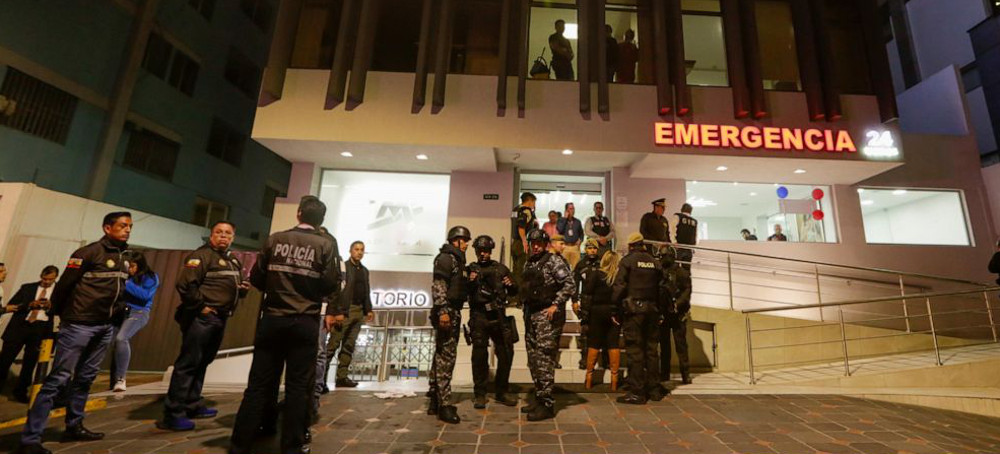


Anti-Corruption Presidential Candidate Assassinated at Campaign Event in Ecuador's CapitalPresidential candidate Fernando Villavicencio speaks during a campaign event at a school minutes before he was shot to death outside the same school in Quito, Ecuador, Wednesday, Aug. 9, 2023. (photo: AP)

Anti-Corruption Presidential Candidate Assassinated at Campaign Event in Ecuador's Capital
Gonzalo Solano and Megan Janetsky, Associated Press
Excerpt: "An Ecuadorian presidential candidate known for speaking up against cartels and corruption was shot and killed Wednesday at a political rally in the capital, amid a startling wave of gang-driven violence in the South American country."   


An Ecuadorian presidential candidate known for speaking up against cartels and corruption was shot and killed Wednesday at a political rally in the capital, amid a startling wave of gang-driven violence in the South American country


The gang-driven violence afflicting Ecuador over the last two years reached an unprecedented level when a presidential candidate known for speaking up against drug cartels and corruption was shot and killed at a political rally in the South American country’s capital.

The assassination of Fernando Villavicencio in Quito happened Wednesday, less than two weeks before a special presidential election. He was not a frontrunner, but his killing, which President Guillermo Lasso suggested could be linked to organized crime, furthered a crisis that has already claimed thousands of lives and underscored the deep challenge that the country’s next leader will face.

Lasso declared three days of national mourning and a state of emergency that involves additional military personnel deployed throughout the country.

“Given the loss of a democrat and a fighter, the elections are not suspended; on the contrary, they have to be held, and democracy has to be strengthened,” Lasso said Thursday.

In his final speech before he was killed, Villavicencio, 59, promised a roaring crowd that he would root out corruption and lock up the country’s “thieves.”

The attorney general’s office of Ecuador said one suspect died in custody from wounds sustained in a firefight after the politician's assassination. Various operations carried out in different sectors of Quito resulted in six arrests.

Villavicencio had reported receiving multiple death threats, including from affiliates of Mexico's Sinaloa cartel, one of a slew of international organized crime groups that now operate in Ecuador. He said his campaign represented a threat to such groups.

“Here I am showing my face. I'm not scared of them,” Villavicencio said in a statement before his death, naming detained crime boss José Adolfo Macías by his alias “Fito.”

Villavicencio, one of eight candidates running for president, was the candidate of the Build Ecuador Movement.

As drug traffickers have begun to use the country’s coastal ports, Ecuadorians have reeled from violence not seen for decades. The sounds of gunfire ring in many major cities as rival gangs battle for control, and gangs have recruited children.

Just last month, the mayor of the port city of Manta was shot and killed. On July 26, Lasso declared a state of emergency covering two provinces and the country's prison system in an effort to stem the violence.

People waiting for buses Thursday morning in Guayaquil, a port city south of Quito that has been the epicenter of gang violence, expressed shock over the killing of Villavicencio.

“It shows that the violence in the country is increasing,” pharmacist Leidy Aguirre, 28, said. “Politicians supposedly have more security than citizens and this shows that not even they are safe.”

Former vice president Otto Sonnenholzner, who also is seeking the presidency, said at a news conference following Wednesday's killing, “We are dying, drowning in a sea of tears and we do not deserve to live like this. We demand that you do something.”

Videos of the rally on social media appear to show Villavicencio walking out of the event surrounded by guards. The video then shows the candidate getting into a white pickup truck before gunshots are heard, followed by screams and commotion around the truck. The sequence of events was confirmed to The Associated Press by Patricio Zuquilanda, Villavicencio’s campaign adviser.

Lasso said “the murderers” threw a grenade into the street to cover their flight, but it didn't explode. Police later destroyed the grenade with a controlled explosion, he added.

Zuquilanda said the candidate had received at least three death threats before the shooting and reported them to authorities, resulting in one detention. The campaign adviser called on international authorities to take action against the violence, attributing it to rising violence and drug trafficking.

“The Ecuadorian people are crying and Ecuador is mortally wounded,” he said. “Politics cannot lead to the death of any member of society.”

Villavicencio was one of the country's most critical voices against corruption, especially during the 2007-2017 government of President Rafael Correa.

He was an independent journalist who investigated corruption in previous governments before entering politics as an anti-graft campaigner.

Villavicencio filed many judicial complaints against high-ranking members of the Correa government, including against the ex-president himself. He was sentenced to 18 months in prison for defamation over his criticisms of Correa, and fled to Indigenous territory in Ecuador, later receiving asylum in neighboring Peru.

Edison Romo, a former military intelligence colonel, said the anti-corruption complaints made Villavicencio “a threat to international criminal organizations.”

Lasso, a conservative former banker, was elected in 2021 on a business-friendly platform and clashed from the start with the left-leaning majority coalition in the National Assembly.

A snap election was called after Lasso dissolved the National Assembly by decree in May, in a move to avoid being impeached over allegations that he failed to intervene to end a faulty contract between the state-owned oil transport company and a private tanker company.

Ecuador’s constitution includes a provision that allows the president to disband the assembly during a political crisis, but then requires new elections for both the assembly and the presidency.

Diana Atamaint, the president of the National Electoral Council, said the election date, Aug. 20, was “unalterable" due to constitutional and legal mandates, as well as electoral activities that have already been approved by the council.

The country has faced a series of political upheavals in recent years.

Authorities said that at least nine others were injured in the Wednesday shooting, including officers and a congressional candidate, in what they described as a “terrorist act.”

The killing was met with an outcry by other candidates who demanded action, with presidential front-runner Luisa González of the Citizen Revolution party saying “when they touch one of us, they touch all of us.”

Villavicencio was married and is survived by five children.


READ MORE
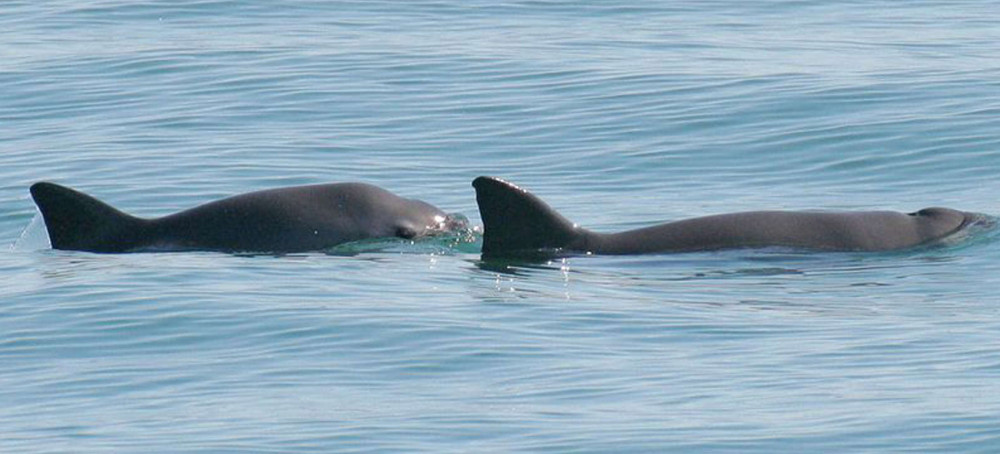


Extinction Alert Issued for Mexico's Threatened Vaquita PorpoiseA mother and calf vaquita, a critically endangered small tropical porpoise native to MexicoÕs Gulf of California. (photo: Thomson Reuters)

Extinction Alert Issued for Mexico's Threatened Vaquita Porpoise
Reuters
Excerpt: "The International Whaling Commission said on Monday it has issued an extinction alert for the endangered vaquita porpoise, whose population is estimated to have shrunk to less than a dozen, marking the institution's first-ever extinction warning." 

The International Whaling Commission (IWC) said on Monday it has issued an extinction alert for the endangered vaquita porpoise, whose population is estimated to have shrunk to less than a dozen, marking the institution's first-ever extinction warning.

The critically endangered vaquita, the world's smallest porpoise and native to Mexico's Gulf of California, has been imperiled by illegal gill net fishing for an endangered fish called the totoaba, whose bladder is highly valued in Asia.

Mexico's government has been under pressure to crack down on the practice.

The IWC's scientific committee highlighted in a report an 83% drop in the vaquita's population between 2015 and 2018 to only nine or 10 of the marine animals in total.

The alert, the IWC said, stems from its belief that a new mechanism is needed "to voice extinction concerns for an increasing range of cetacean species and populations."

The institution, however, said it believes that a full enforcement of the ban on gill netting in the animal's core habitat could give the vaquita "a chance of recovery."

"The extinction of the vaquita is inevitable unless 100% of gillnets are substituted immediately with alternative fishing gears that protect the vaquita and the livelihoods of fishers," it said.

In May, the U.S. interior secretary declared that Mexico has failed to halt the illegal wildlife trade threatening the vaquita, but a trade embargo was ruled out by the U.S. government in July.


READ MORE


Contribute to RSN

Follow us on facebook and twitter!

Update My Monthly Donation

PO Box 2043 / Citrus Heights, CA 95611


Wednesday, April 20, 2022

RSN: Ken Klippenstein | Jared Kushner Flaunted His Influence With Saudi Arabia, Russia in Pitch to Investors


Reader Supported News
20 April 22

We Can’t Afford the Luxury of Failure

When we said no to the corporations and the moneyed interests we canceled our “option to fail.” The Same could be said of the times in which we live. We finish our funding-drives and we prevail because we must.

In peace and solidarity.

Marc Ash
Founder, Reader Supported News

Sure, I'll make a donation!


If you would prefer to send a check:
Reader Supported News
PO Box 2043 / Citrus Heights, CA 95611

Follow us on facebook and twitter!

Update My Monthly Donation


Reader Supported News
19 April 22

Live on the homepage now!
Reader Supported News

CONTINUE CHIDING US TO CONTRIBUTE — I truly don't believe enough have quite figured-out HOW much they need RSN … if they hope to see past the brain-washing of an a-moral, corporate-owned media oligopoly. Maybe I should just speak for myself, and say I need RSN in a major way. Seems like even our formerly-quite progressive NPR-affiliate has now "gone lame" on us. By the way, the post-article "comments" becoming ever-more important to me, in recent months. They're often-times superb! Continue chiding us to contribute. I'm sure it's vitally necessary -- if not much fun. Thanks so much.
Robert • RSN Reader-Supporter

Sure, I'll make a donation!


Then-White House senior adviser Jared Kushner stands among Saudi officials as then-President Donald Trump talks with Saudi Arabia crown prince Mohammed bin Salman at the White House on March 20, 2018, (photo: Jabin Botsford/Getty)
Ken Klippenstein | Jared Kushner Flaunted His Influence With Saudi Arabia, Russia in Pitch to Investors
Ken Klippenstein, The Intercept
Klippenstein writes: "Jared Kushner's new investment fund, Affinity Partners, nakedly touts the former Trump adviser's work with Saudi Arabia and his links to several Trump-era deals in the hope of raising money from Wall Street, according to a slide deck for the fund dated from December."

Affinity Partners boasts of “accelerating transformation through connectivity” in a slide deck obtained by The Intercept.

Jared Kushner’s new investment fund, Affinity Partners, nakedly touts the former Trump adviser’s work with Saudi Arabia and his links to several Trump-era deals in the hope of raising money from Wall Street, according to a slide deck for the fund dated from December. Last week, the New York Times reported that Kushner, Donald Trump’s son-in-law, won a $2 billion investment from Saudi Crown Prince Mohammed bin Salman’s investment fund for his own venture, just six months after he departed the White House.

The slide deck confirms the fund’s reliance on Kushner’s government experience and connections, particularly with regard to Saudi Arabia, to gin up business. The pitch to U.S. investors prominently advertises the team’s experience in the Trump White House, including on the Abraham Accords — a series of agreements that normalized formal diplomatic relations between Israel and some Arab countries — and a key oil production agreement reached with OPEC+, the oil cartel led by Russia and Saudi Arabia. “Aligned economic interests can solve intractable problems and create previously unrealized value,” reads one slide in the deck, which is marked “confidential.”

“Affinity’s unique network and experience makes us a differentiated partner for companies navigating the rapidly evolving global political and economic environment,” reads another. Affinity’s “value add” is depicted as a two-way arrow between “strategic partners/investors” and “target companies/operating businesses.”

The slides describe Kushner as “leading the negotiations on the historic OPEC+ oil agreement in April 2020 among the United States, Saudi Arabia, and Russia, which led to the largest oil production reductions in history as the Covid-19 economic crisis shocked global demand for the commodity.” Beyond smacking of revolving door politics, the reference to the agreement seems to hint at Kushner’s influence with the oil-rich Saudi kingdom. He traveled to the region earlier this year, meeting with Crown Prince Mohammed as well as the CEO of Aramco, Saudi’s national oil company.

It also contrasts sharply with U.S.-Saudi relations under President Joe Biden, who amid skyrocketing gas prices has repeatedly asked Riyadh to increase oil production to no avail. Saudi-Russia collusion to keep the global oil supply low has sent U.S. gas prices soaring to their highest levels in years, as the Intercept has previously reported. This has generated a bonanza of profits for Russia during its costly invasion of Ukraine, as well as punishing inflationary pressures in the U.S. Despite repeated entreaties from Biden for the Saudis to increase oil production, they’ve refused to budge. That’s unlikely to change. “Saudi has been very clear that it’s not increasing production,” Ellen Wald, a nonresident senior fellow at the Atlantic Council, told The Intercept. Riyadh wasn’t always so intransigent. In two election years — 2018 and 2020 — Saudi Arabia complied with then-President Donald Trump’s requests to increase and decrease production, respectively.

A spokesperson for Kushner denied there was anything untoward about Affinity’s pitch. “Jared was very successful in the private sector before he entered government, achieved great success in government, and many are confident he will enjoy continued success in his new venture,” the spokesperson told The Intercept in a statement. “Jared’s track record in government was unprecedented. His leadership and efforts led to the historic Abraham Accords, the [U.S.–Mexico–Canada Agreement] which was the largest trade deal in history, life changing criminal justice reform, Operation Warp Speed among many other achievements.”

The slides make repeated reference to Affinity’s “network,” which includes a bevy of Trump administration appointees depicted in a “Team Members” section. The pitch is light on details of the actual product, with business pablum peppered throughout: “Accelerating transformation through connectivity,” the slide deck begins.

A source in contact with multiple U.S. investors approached by Affinity said the investors were not attracted by the presentation and described their shock at how cavalierly it seemed to suggest influence peddling, a “value add” often handled with more subtlety in the investment world. “They said they’d never seen such a joke of a deck, openly talking about ‘networking’ and ‘networks’ — i.e., our corrupt insider contacts,” the source said on condition of anonymity to describe private discussions. “They’re bragging about ‘networks,’ they’re using cliches, with no serious investment discussion.”

Prior to the Saudi investment in Affinity, the Times reported, officials in the kingdom raised concerns about Affinity’s lack of experience in private equity, and the unsatisfactory results of due diligence reviews. They were also curious as to why the company didn’t yet have U.S. investors, which Saudi staff wrote was because “The Affinity principal would like to avoid media attention at this time.” According to the Times, documents “indicate that at this point Mr. Kushner’s venture depends primarily on the Saudi money.”

“Team Members” listed in the deck who served in the Trump administration include Avi Berkowitz, who served as an adviser to Kushner and helped with negotiations on the Abraham Accords, as well as retired two-star Gen. Miguel Correa, who served on Trump’s National Security Council. Correa, whose close ties to the leadership of the United Arab Emirates have been credited with helping to negotiate the accords, is also a team member in the Global Research and Geoeconomics division. (Correa even coined the phrase “Abraham Accords.”)


READ MORE


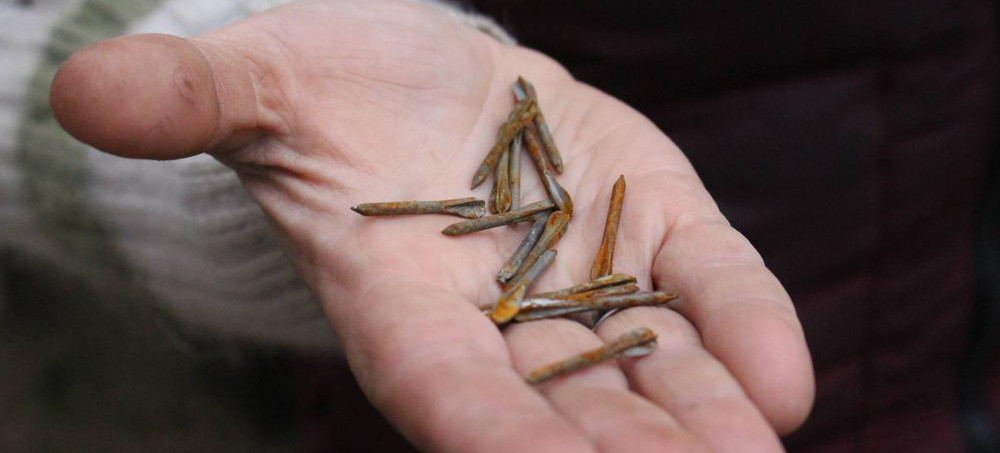
Lethal Darts Were Fired Into a Ukrainian Neighborhood by the ThousandsSvitlana Chmut holds fléchettes, small arrow-like projectiles dispersed by a Russian artillery shell, in Bucha, Ukraine, on April 16, 2022. (photo: Alex Horton/The Washington Post)

Lethal Darts Were Fired Into a Ukrainian Neighborhood by the Thousands
Alex Horton, The Washington Post
Horton writes: "At Svitlana Chmut's house outside Kyiv, there are carrots in her garden and deadly Russian mini-arrows in her yard."
READ MORE


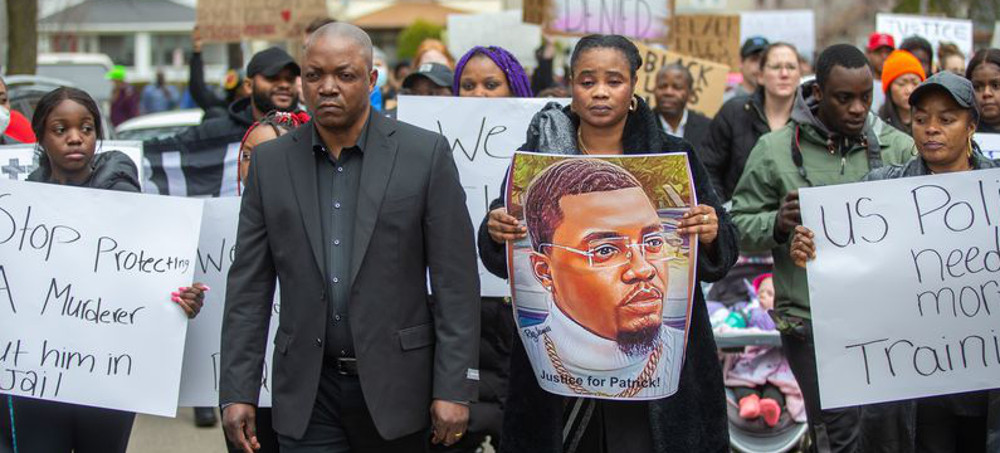
Patrick Lyoya Shot in Back of Head by Officer While on Ground, Autopsy ShowsPeter Lyoya, center left, and members of his family lead hundreds of protesters through the Boston Square neighborhood during the Justice for Patrick Lyoya march in Grand Rapids on Saturday, April 9, 2022. (photo: Daniel Shular/MLive.com)

Patrick Lyoya Shot in Back of Head by Officer While on Ground, Autopsy Shows
Maya Yang, Guardian UK
Yang writes: "Lawyers for the family of Patrick Lyoya, a Black man killed by police in western Michigan, have released results from an independent autopsy."
READ MORE


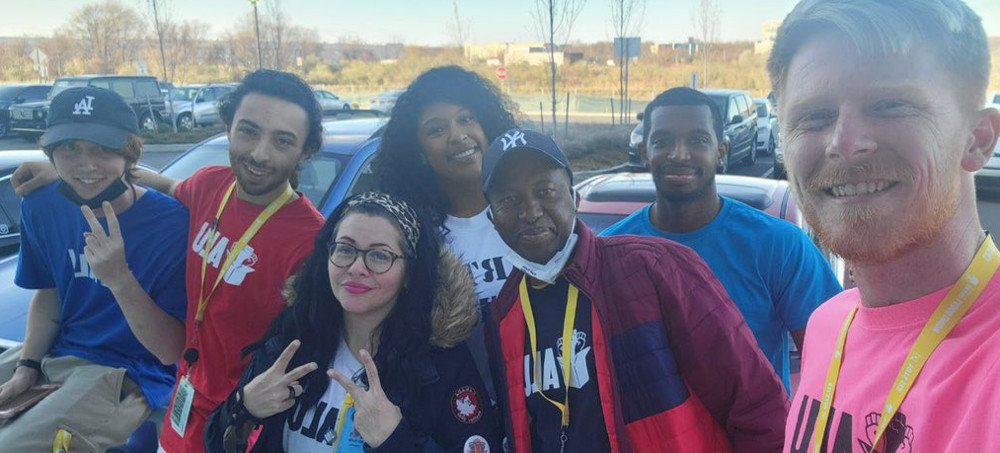
Amazon Is Playing Dirty to Stop a Second Warehouse From UnionizingAmazon Labor Union organizers at the LDJ5 Amazon sorting facility on Staten Island, New York, which has a unionization election beginning April 25, 2022. (photo: Amazon Labor Union/Twitter)

Amazon Is Playing Dirty to Stop a Second Warehouse From Unionizing
Luis Feliz Leon, Jacobin
Leon writes: "In a massive victory, Amazon workers recently won a union at a warehouse in New York. So now the company is trying every trick in the union-busting playbook to throttle worker organizing at a second facility."
READ MORE


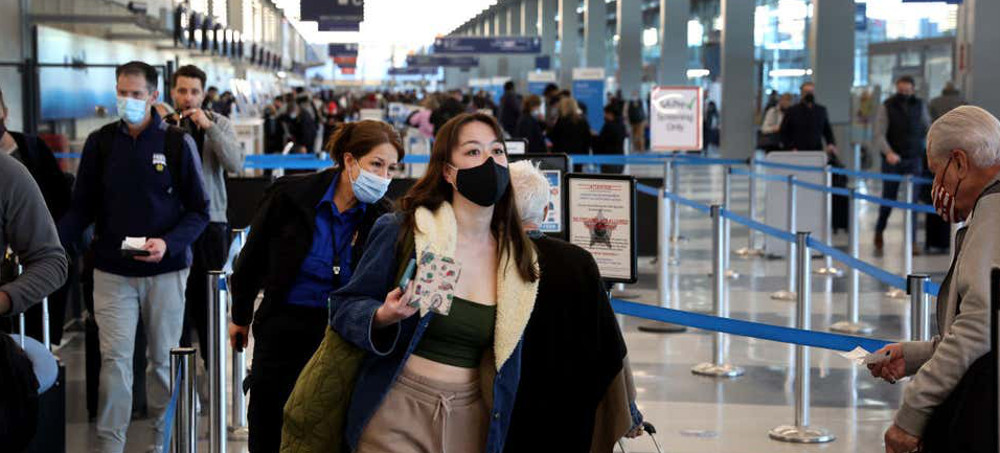
The Pandemic Isn't Over Yet, No Matter How Much We Want to Believe ItPeople go through TSA screening as they catch flights at O'Hare International Airport on March 11, 2022, in Chicago, Illinois. (photo: Scott Olson/Getty)

The Pandemic Isn't Over Yet, No Matter How Much We Want to Believe It
Murjani Rawls, The Root
Rawls writes: "Scrolling through my Twitter timeline yesterday, after a Florida judge struck down the mask mandate for public transportation, reminded me of the time former President George Bush spoke in front of the 'mission accomplished' sign in 2003."
READ MORE


The Armenian Genocide Holds a Bitter Lesson for Those Who Weep for UkraineAn investigator pulls human remains from a mass grave in Bucha, Ukraine on April 13, 2022. (photo: Anatolii Siryk/Getty)

The Armenian Genocide Holds a Bitter Lesson for Those Who Weep for Ukraine
Jon Schwarz, The Intercept
Schwarz writes: "If there's one thing we can say for sure about the governments of the U.S. and Europe, it's that they sound upset about Russia's brutalization of Ukraine."
READ MORE


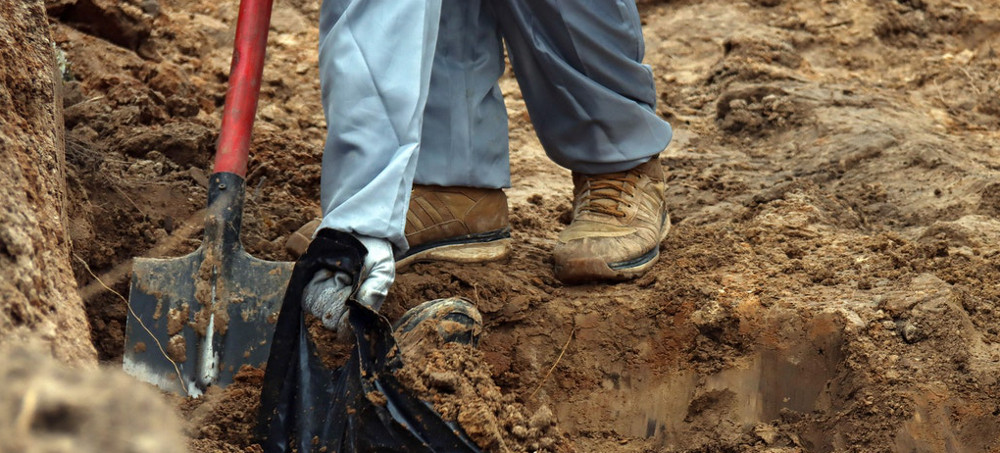
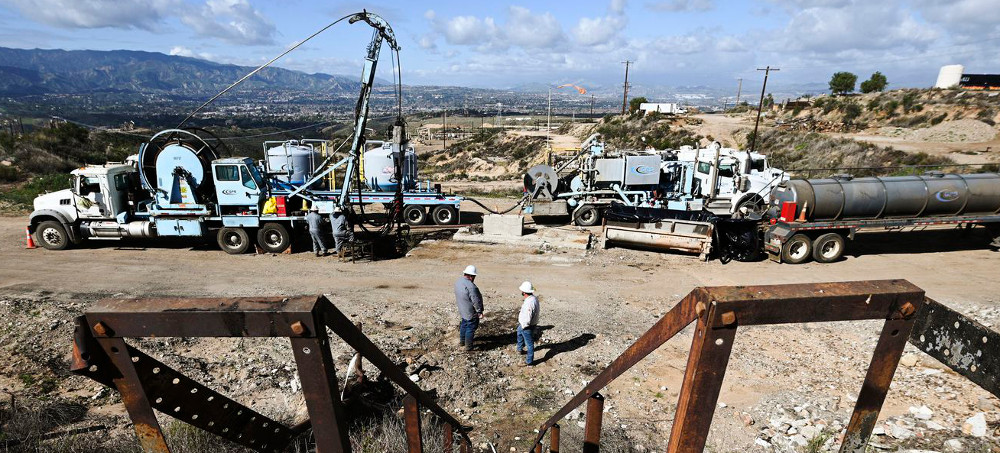
Geothermal: Clean Energy Is Buried at the Bottom of Abandoned Oil WellsA crew plugs abandoned oil wells at the Placerita Oil Field in Southern California. Abandoned oil and gas wells could be used to generate geothermal energy. (photo: Robyn Beck/Getty)

Geothermal: Clean Energy Is Buried at the Bottom of Abandoned Oil Wells
Neel Dhanesha, Vox
Dhanesha writes: "In case you missed it, our planet is in trouble."

The US is spending millions to explore a surprising source of untapped power.

In case you missed it, our planet is in trouble. The UN climate report from early April makes clear we’re on a path that will careen past the climate goals set in the Paris Agreement, and we need to cut carbon emissions — fast. But while solar and wind power are important (they are, after all, key parts of the Biden administration’s climate plan) they’re the kind of thing we’ve seen plenty of before, which means they’ll only get us so far. What we need, the UN report says, is new solutions. Which is why a pilot program recently detailed by the US Department of Energy (DOE) is particularly intriguing. If it works, it could help solve multiple problems at once, using an often-overlooked solution: geothermal energy.

Geothermal energy works on a simple premise: The Earth’s core is hot, and by drilling even just a few miles underground, we can tap into that practically unlimited heat source to generate energy for our homes and businesses without creating nearly as many of the greenhouse gas emissions that come from burning fossil fuels. However, drilling doesn’t come cheap — it accounts for half the cost of most geothermal energy projects — and requires specialized labor to map the subsurface, drill into the ground, and install the infrastructure needed to bring energy to the surface.

But the US, in the wake of an oil and gas boom, just so happens to have millions of oil and gas wells sitting abandoned across the country. And oil and gas wells, it turns out, happen to share many of the same characteristics as geothermal wells — namely that they are deep holes in the ground, with pipes that can bring fluids up to the surface. So, the DOE asks, why not repurpose them?

What’s old is new again

That’s exactly what the agency’s pilot program, called Wells of Opportunity: ReAmplify, aims to do, awarding a total of $8.4 million to four projects across the country that will each try to tap into some of those old wells to extract geothermal energy rather than gas or oil. If they work, they could be the key to not only reducing the country’s use of planet-damaging fossil fuels, but also helping answer the question of how to transition many of the more than 125,000 people who work in oil and gas extraction across the country into clean-energy jobs.

“The idea here is basically that you produce oil and gas resources for a couple of decades, and at the end of the production of oil and gas, you don’t completely retire the assets — you turn them toward heat production,” said Saeed Salehi, associate professor of petroleum engineering at the University of Oklahoma and the leader of one of the four groups receiving funding from the DOE. Oil and gas wells have a limited lifespan of a few decades, Salehi explained, after which they become depleted. Geothermal energy, if managed correctly, doesn’t have that problem. “The beauty is that this is a constant source of energy which is not going to change. It’s probably going to be [there] forever, as long as your well is functioning,” Salehi told Recode.

Salehi and his team at the University of Oklahoma want to use four wells owned by Blue Cedar Energy, a local company, for a concept called “direct use” — using hot water to heat nearby buildings. The water can either be extracted from existing underground reservoirs or, as the University of Oklahoma team is doing, pumped into the ground and brought back to the surface. Salehi and his team expect the water they pump into the wells to heat up to temperatures around 150 degrees Fahrenheit, after which it can be used to provide heating and cooling for an elementary and middle school located about a mile away from the wells, in the town of Tuttle.

“There’s a huge opportunity to use these wells for heating and cooling our communities,” said Lauren Boyd, program manager of the Enhanced Geothermal Systems program in the DOE’s Geothermal Technologies Office, which oversees the Wells of Opportunity grants. More than half of the energy used by American households — only 7 percent of which came from renewable sources as of 2020 — goes toward heating and cooling. Using the millions of abandoned wells scattered around the country to switch the source of that heating and cooling to geothermal energy, then, could lead to a decrease in greenhouse gas emissions.

Salehi and his team are focused on heating and cooling because converting energy from one form to another often leads to some energy getting lost in the process. Depending on the temperature of the water underground, “only probably about 10 percent of the energy you take out of the ground is going to come back as electricity,” said Jefferson Tester, a professor of sustainable energy systems at Cornell University. “But if you do it with heat, you can get 90 plus percent, easily.”

That heat wouldn’t only be useful in the winter, either: in the summer, water from a geothermal well could be used to drive a machine called an absorption heat pump to cool buildings, essentially extracting the heat from the building and putting it into the water. That water can then be pumped into underground reservoirs, which will store the extracted heat for the coming winter.

To be considered successful, the University of Oklahoma project has to produce at least one megawatt of energy in one year — which is roughly enough to power a few hundred homes. Salehi is confident they will easily surpass that goal. “Our intention is for these four wells to be used for at least the elementary and middle school,” Salehi said, “but based on the simulations and computational work we have done, it’ll be good enough for three schools.”

Can geothermal go the distance?

Some European countries already rely on direct use of geothermal energy on a large scale; Iceland, which is famously volcanically active (remember Eyjafjallajökull, which shut down European air travel for a few days in 2010?), uses its vast reserves of geothermal energy to heat 90 percent of its homes. But there are some drawbacks to direct use. Heat is quickly lost in transit unless pipes are well-insulated, explained Patrick Fulton, assistant professor of earth and atmospheric sciences at Cornell, so geothermal wells being tapped for direct use have to be near the buildings they’re going to service — usually within a few miles.

That distance limitation is why the three other projects receiving funding from this year’s DOE award are focusing on turning geothermal energy into electricity, which can travel much farther than heat. While wells located close to towns and cities may be better used for supplying heat through direct use, wells in remote areas might be better suited for generating electricity.

Take Transitional Energy, a Colorado-based company that received funding from the DOE to set up an electricity generation facility at the Blackburn oil field in Nevada. Unlike the other projects, Transitional will set up its operations on an oil field that’s still in operation — albeit at wells that have been in use for decades and produce very little oil. Most of what they produce, explained Johanna Ostrum, chief operating officer of transitional energy, is extremely hot wastewater, which is a natural byproduct of all oil and gas operations. “They’re just cycling a bunch of water through the system, trying to strip out negligible amounts of oil,” Ostrum told Recode.


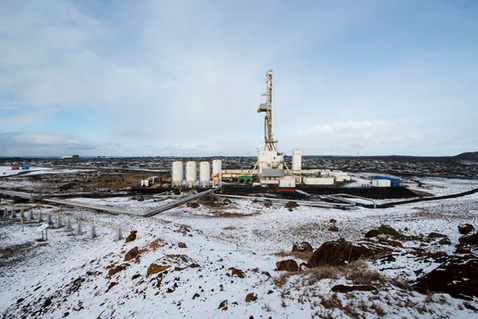
The Reykjanes geothermal power station in Iceland penetrates into one of deepest and hottest pits in the world, allowing the country to be nearly independent from fossil fuels.
(Halldor Kolbeins/AFP via Getty Images)


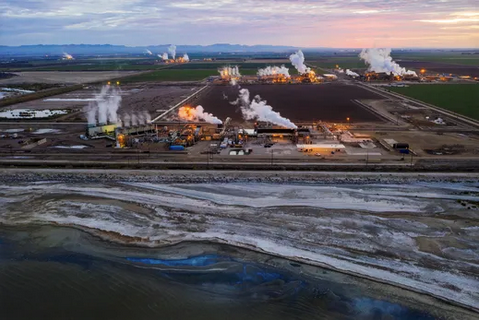
The Imperial Valley Geothermal Project is a complex of 11 geothermal power stations located near the Salton Sea in Calipatria, California.
(David McNew/Getty Images)

Once they’ve separated out the oil and gas, well operators spend considerable sums cooling and disposing of all that wastewater — and there’s often 10 times more of that water than extracted oil, Ostrum explained. Instead of letting that water — and its heat — go to waste, Transitional Energy plans to install machines called Organic Rankine Cycle Engines at the oil field that will turn that heat into electricity.

Organic Rankine Cycle Engines, which are about the size of walk-in refrigerators, work by passing hot water through a heat exchanger to heat a refrigerant, which then spins a turbine that creates electricity. The water cools down as it transfers its heat to the refrigerant, continuing onward down the path it would usually take out of the generator and into a disposal well; the refrigerant cools as it passes out of the turbine and past an air chiller, so it can be reused as the water keeps passing through the engine. At the Blackburn oilfield, where Transitional Energy is carrying out its test, that water will enter the same reservoir it came from — essentially creating a continuous loop of geothermal energy. “You take the same molecule of water and it just keeps going around and around, using the Earth as a radiator,” Ostrum said.

Like the University of Oklahoma project, Transitional Energy has a goal of generating at least one megawatt in a year — a goal Ostrum expects to hit by using the water from three to five wells. To begin with, the electricity generated will be used to provide power to an electric vehicle charger and operations at the oil field, which usually relies on local utilities or diesel generators to power machinery. It’s an alluring prospect for the operators of the oil and gas fields, Ostrum said; they see it as a way to take advantage of a heat resource that otherwise goes to waste.

In the short term, operating costs for the oil producers could go down, since they won’t have to depend on a utility to power their operations, and switching to geothermal energy would reduce the emissions involved in simply pumping oil and gas out of the ground. In time, Ostrum said, the goal would be for Transitional Energy to simply take over wells that no longer produce enough oil and gas to be economically viable and convert them entirely to geothermal operations.

A geothermal future

Ostrum is especially excited by the broader implications of her project. For one, Transitional Energy plans to connect electric vehicle (EV) chargers to their Rankine Cycle Engines. If scaled up, that could help expand rural EV charging, which is currently very limited — according to the Environmental and Energy Study Institute, the majority of rural areas and small towns have no EV chargers at all. More importantly, however, Ostrum thinks geothermal energy could create a new career path for oil and gas workers as the world transitions away from fossil fuels to clean energy.

“A lot of folks that I know work in oil and gas, and when we look at a decarbonized future, there’s not going to be jobs for those folks,” said Ostrum, who spent 15 years working in the oil and gas industry herself before losing her job during the pandemic. “I think geothermal is a really great place for them to land. Oil and gas workers know how to safely, efficiently, and economically produce fluid. They happen to be focused on the oil and gas part; I’m focused on the water part.”

Brett Dawkins, co-founder of Blue Cedar Energy, which owns the leases for the wells that will be used in the University of Oklahoma’s project in Tuttle, agrees. “All of the expertise that you would have as a petroleum engineer or a geologist will transfer over into the geothermal world,” Dawkins said.

Dawkins isn’t sure quite how much manpower would be needed to transition Blue Cedar Energy’s abandoned oil wells to geothermal energy. Ostrum, on the other hand, is confident workers at oil and gas wells would find new jobs extracting geothermal energy. “To keep the wells pumping or operating, we will need the same manpower that is used every day to run oil wells,” Ostrum wrote in an email. “The same amount of labor is needed to run an oil and gas well as to run a geothermal well.”

The possibility of generating a significant amount of energy from these abandoned wells is exciting. It’s still very much a nascent idea, though, so exploring its potential will take time. First, the projects need to prove their viability; the next year or so will be spent on planning and assessing the feasibility of turning oil wells into geothermal resources, after which energy generation will slowly ramp up. The biggest question is just how scalable these ideas are: One megawatt is, after all, a pittance compared to the country’s energy needs.

There are legislative hurdles to get around, as well. “One of the barriers I’ve been working on is the permitting,” said the DOE’s Boyd, who’s working with the National Renewable Energy Lab on a framework for transitioning an oil and gas lease to a geothermal lease. “Right now, it’s not straightforward,” Boyd told Recode. “There are some states that don’t even have geothermal regulations.”

It’s also unclear how widely those concepts can be applied across the country. Not every abandoned oil and gas well is going to be viable for repurposing to geothermal energy, Boyd said. The infrastructure at some abandoned wells might be too degraded to use for geothermal energy without a significant investment in retrofits, for example, or the underground temperatures at some wells may not be high enough to use for geothermal energy. Then there’s the question of distance: Connecting remote wells to the grid could prove too cumbersome, or there might not be enough wells located close enough to communities to set up for direct use.

Even if everything else falls into place, the final stumbling block, at least for Salehi’s team, could come in the form of homes and businesses that simply aren’t set up to use geothermal energy for direct use. While the end-user experience for someone with a direct use connection is the same as that for someone with a traditional HVAC system — essentially, hot or cold air blowing through vents in rooms — turning geothermal heat into that hot or cold air requires installing heat pumps or heat exchangers, the cost of which could prove prohibitive.

Still, even with all the caveats, the ReAmplify projects hold a lot of promise for cleaner energy and a more equitable clean-energy transition; the point of the pilot, after all, is to be a proving ground. But if they work, said Cornell’s Tester, it’s important not to think of geothermal energy as a magic bullet. “It’s not just a one-size, geothermal can do it all [solution],” Tester told Recode. “I don’t think we should be saying that as a profession, and neither should solar or wind.”

Instead, Tester said, Americans need to start thinking about our energy needs as interconnected systems with multiple parts to the solution. Instead of relying on one power source for everything, we should use solar and wind energy to power our appliances and electric vehicles, for example, while relying on geothermal energy to heat and cool many of our homes.

That’s going to require a shift in how we think about our energy sources, Tester said. In most of the country, the oil and gas extracted from a well can go toward heating and cooling homes, running appliances, and powering our cars; for a decarbonized future, that will have to change. “I don’t think we’ve gotten into a state yet of thinking of these things as systems,” Tester said. “I think that’s what we have to weave into the American mindset. It’s going to be a game, I think, for everybody to get all the renewables working together.”


READ MORE

Special Coverage: Ukraine, A Historic Resistance
READ MORE


Contribute to RSN

Follow us on facebook and twitter!

Update My Monthly Donation

PO Box 2043 / Citrus Heights, CA 95611


‘Disgusting’: Dem Senator Says ICE Threatened to Beat Seattle Business Owner Unless He Signed Deportation Form SPINELSS REPUBLICANS ARE SILENT!

                                                              LOTS OF POSTS IGNORED BY BLOGGER..... OR REMOVED ON THEIR WHIM! ALL POSTS ARE ...