Showing posts with label AMAZON SURVEILLANCE. Show all posts

Monday, June 6, 2022

RSN: Wajahat Ali | Is It Time for Me to Leave America?


Reader Supported News

A Few Sustaining-Level Donations are Essential

Last month we had 3 donations in the one thousand dollar range. Just those three were hugely important. Along with the hundreds of smaller donations it gave us a chance.

Sustaining supporters are hugely important.

Marc Ash
Founder, Reader Supported News

Sure, I'll make a donation!


If you would prefer to send a check:
Reader Supported News
PO Box 2043 / Citrus Heights, CA 95611

Follow us on facebook and twitter!

Update My Monthly Donation


Reader Supported News
06 June 22

Live on the homepage now!
Reader Supported News

WILL RSN HAVE A BUDGET TO WORK WITH? That's always what's on the line during a funding drive. This organization — the organization you built — has out preformed all expectations. We are the best information investment you can make. Water this garden, it grows and sustains. In solidarity.
Marc Ash • Founder, Reader Supported News

Sure, I'll make a donation!


Armed protesters from the so-called Bureau of American-Islamic Relations (BAIR), take part in a demonstration in front of a mosque on December 12, 2015 in Richardson, Texas. (photo: John Moore/Getty Images)
Wajahat Ali | Is It Time for Me to Leave America?
Wajahat Ali, The Daily Beast
Ali writes: "I was born and raised in the U.S., but my country doesn’t seem to want me or my family to feel safe."
READ MORE


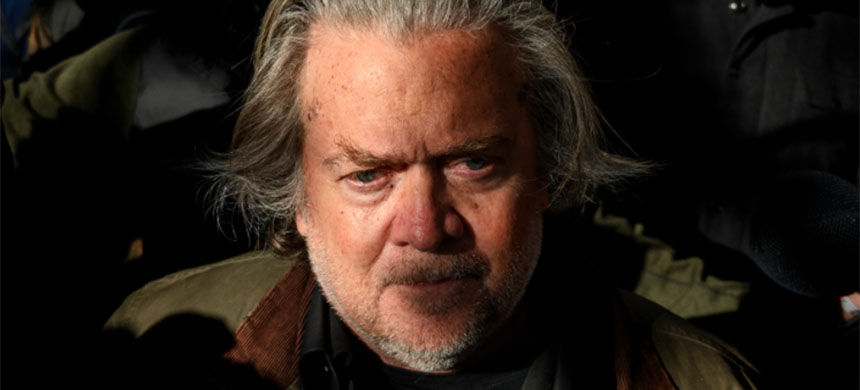
Prosecutors Are Zeroing in on Steve Bannon for Alleged Border Wall ScamFormer Trump Administration White House adviser Steve Bannon leaves after an appearance in the Federal District Court in Washington, D.C., on Nov. 15, 2021. (photo: Andrew Caballero-Reynolds/AFP/Getty Images)

Prosecutors Are Zeroing in on Steve Bannon for Alleged Border Wall Scam
William Vaillancourt, Rolling Stone
Vaillancourt writes: "The former Trump adviser was charged with conspiracy to commit wire fraud and money laundering in 2020, only to be pardoned by the former president."

The former Trump adviser was charged with conspiracy to commit wire fraud and money laundering in 2020, only to be pardoned by the former president

People in Steve Bannon’s “immediate circle” have received subpoenas in recent weeks requesting that they testify before a New York state grand jury about the former Trump adviser’s fundraising for a private border wall, CNN reported Friday.

Bannon was charged for the alleged fraud in 2020, only to be pardoned by Trump before the former president left office. Bannon and three others were accused of defrauding donors to the “We Build the Wall” crowdfunding effort, which raked in more than $25 million.

Prosecutors in the U.S. Attorney’s Office for the Southern District of New York have said Bannon used $1 million in funds to pay co-conspirator Brian Kolfage for his personal expenses, despite donors having been told that all the money would go directly to the construction of the wall. According to the 2020 indictment, Kolfage used this donation money for home renovations, a boat, jewelry, plastic surgery, and paying off credit card debt, among other things.

In a 2019 video clip from one of the group’s “Wall-A-Thon” fundraisers, Bannon actually jokes about taking money from the “We Build the Wall” effort.

“We’re off the coast of Saint-Tropez in southern France, in the Mediterranean,” Bannon crowed. “We’re on the million-dollar yacht of Brian Kolfage. Brian Kolfage, who took all that money from ‘We Build The Wall.’ No, we’re actually in Sunland Park, New Mexico.”

Kolfage, along with co-defendant Andrew Badolato, pleaded guilty in April to one count of conspiracy to commit wire fraud. Kolfage also admitted to filing a false tax return. “I knew what I was doing was wrong and a crime,” Kolfage told a judge. The pair are set to be sentenced in September. A fourth person charged by federal prosecutors, Timothy Shea, is on trial after pleading not guilty.

According to CNN, Manhattan prosecutors are waiting to make a decision on charging Bannon until the cases against his three co-defendants have concluded.

“We Build the Wall” didn’t result in much wall being built. About one mile of fence was put up on private land the group bought in Sunland Park in 2019. Bannon said then that that project cost $6 million.


This should just be the beginning of the SCAMS.

MERCER, who parks his gazilions offshore to avoid supporting government, has guided tRump appointments, including BANNON, the blond air head and others.

MERCER supported Breitbart misinformation & PARLER.

https://www.independent.co.uk/news/world/americas/us-election/donald-trump-2020-election-campaign-robert-mercer-republican-donor-a9637021.html

https://theintercept.com/2021/01/27/rebekah-mercer-book-capitol-riot/
COMMENTS:


Do you know that Robert and Rebekah Mercer also financed Steve Bannon as well as neo nazis Richard Spencer and Andrew Anglin (founder of The Daily Stormer) right up until the Mueller investigation was starting to cast light on them as well. Then they pulled back from underwriting the most blatantly fascistic individuals ...for a time anyways. Clearly they're still at it.


The US has come to this: a vicious inherited aristocracy out to destroy any hope of social justice in the USA.
https://www.theguardian.com/politics/2017/feb/26/robert-mercer-breitbart-war-on-media-steve-bannon-donald-trump-nigel-farage

READ MORE


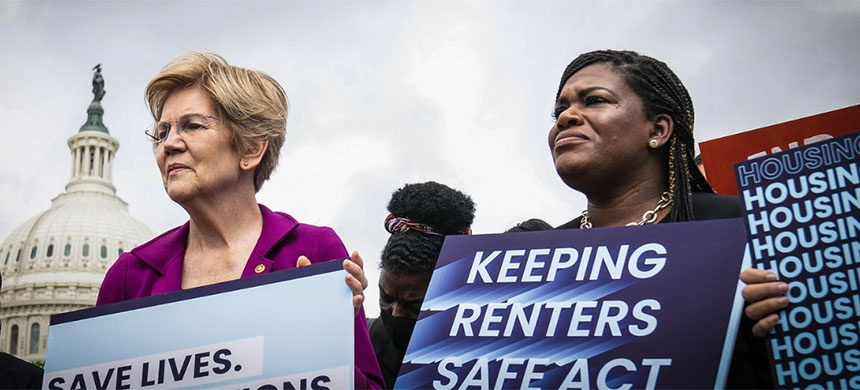
Democrats Press Amazon on Legality of Worker Chat App That Would Block Words Like 'Union'Sen. Elizabeth Warren and Representative Cori Bush stand together during a news conference in Washington, D.C., on Sept. 21, 2021. (photo: Sarah Silbiger/Bloomberg/Getty Images)

Ken Klippenstein | Democrats Press Amazon on Legality of Worker Chat App That Would Block Words Like “Union”
Ken Klippenstein, The Intercept
Klippenstein writes: "On Thursday, Democratic members of Congress led by Sen. Elizabeth Warren of Massachusetts and Rep. Cori Bush of Missouri sent a letter to Amazon demanding answers about the chat app, what it suggests about working conditions generally, and whether it is in compliance with federal labor law."

“If you are concerned about your workers discussing topics like ‘restrooms’ or ‘slave labor,’” write Sen. Elizabeth Warren, Rep. Cori Bush, and others, “the answer is … to improve your treatment of workers.”

In April, The Intercept reported on a plan by Amazon to ban words related to labor unions in its new internal messaging app, amid an explosion of organizing in its warehouses and a successful union drive in Staten Island, New York. On Thursday, Democratic members of Congress led by Sen. Elizabeth Warren of Massachusetts and Rep. Cori Bush of Missouri sent a letter to Amazon demanding answers about the chat app, what it suggests about working conditions generally, and whether it is in compliance with federal labor law.

The Intercept reviewed internal company documents revealing a plan by Amazon to block and flag employee posts on a planned internal messaging app that contain certain keywords criticizing Amazon’s working conditions, such as “slave labor,” “prison,” and plantation,” as well as “restrooms” — presumably related to reports of Amazon employees relieving themselves in bottles to meet punishing quotas.

“I urge you to modify your approach,” the letter, signed by Warren, Bush, Sens. Bernie Sanders and Cory Booker, and Rep. Alexandria Ocasio-Cortez, says. “If you are concerned about your workers discussing topics like ‘restrooms’ or ‘slave labor,’ or exploitative working conditions generally, the answer is not to interfere with your workers’ ability to communicate with each other, but to improve your treatment of workers.”

“If it does launch at some point down the road,” Amazon spokesperson Barbara M. Agrait told The Intercept in April, “there are no plans for many of the words you’re calling out to be screened. The only kinds of words that may be screened are ones that are offensive or harassing, which is intended to protect our team.”

Addressed to Andy Jassy, the president and CEO of Amazon, the letter raises concerns that the company may have violated federal labor law, which protects worker communications regarding labor organizing.

“Amazon’s compliance with federal labor laws is an important matter of public concern especially given the company’s status as one of the largest retailers in the country,” the letter states.

Federal labor law requires that employers report expenditures on activities that interfere with employee rights under the National Labor Relations Act, and, the letter notes, Amazon has not reported any such expenditures in relation to the app. The letter also asks Amazon to disclose any spending in relation to the planning, conception, design, uses, rollout, and implementation of the app.

The National Labor Relations Board last month found merit in charges that Amazon had violated federal labor rules when it required workers to attend anti-union meetings. Despite the anti-union efforts, the Amazon Labor Union stunned the nation by winning a union election at a sprawling warehouse in Staten Island — the first such union of any Amazon facility.

In a landmark ruling earlier this week, the NLRB found that Amazon illegally threatened employees with adverse consequences like loss of benefits and reduced wages if they voted to unionize at the JFK8 warehouse in Staten Island. (Unlike the other Staten Island facility, the union vote at this warehouse narrowly failed.)

President Joe Biden has voiced support for the Amazon union effort, meeting with Amazon Labor Union President Christian Smalls at the White House last month.

“This disturbing report is part of a pattern of worker exploitation, retaliation, and union busting on the part of Amazon. Notably, Amazon faces complaints brought by the NLRB for firing workers in retaliation for organizing and for threatening, surveilling, and interrogating workers at the JFK8 warehouse in Staten Island, New York,” the letter states. “Unfortunately, the Proposed App and its anti-worker censorship fit all too well with Amazon’s track record of worker surveillance, inhumane treatment, and union busting.”


READ MORE


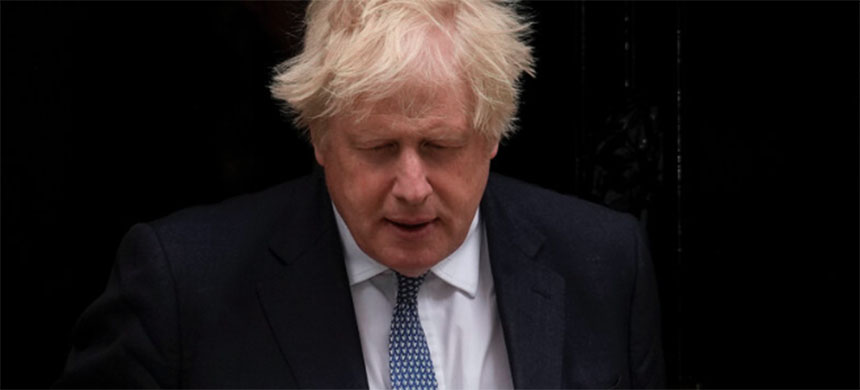
British Prime Minister Boris Johnson to Face No-Confidence VoteBritish Prime Minister Boris Johnson leaves 10 Downing Street to attend the weekly Prime Minister's Questions at the Houses of Parliament, in London, Wednesday, May 25, 2022. (photo: Matt Dunham/AP)

British Prime Minister Boris Johnson to Face No-Confidence Vote
Associated Press
Excerpt: "Britain's governing Conservatives will hold a no-confidence vote Monday that could oust Prime Minister Boris Johnson from power, after months of growing discontent with a divisive politician whose career has survived multiple ups and downs."


Britain's governing Conservatives will hold a no-confidence vote Monday that could oust Prime Minister Boris Johnson from power, after months of growing discontent with a divisive politician whose career has survived multiple ups and downs.

If Johnson loses the vote among the 359 Conservative lawmakers, the party will choose a new leader, who will also become prime minister. If he wins, he can't face another challenge for a year under current party rules.

While Johnson has weathered many political storms, he has recently struggled to turn the page on months of ethics scandals, most notably over rule-breaking parties in government buildings during COVID-19 lockdowns.

Revelations that the prime minister and his staff repeatedly flouted restrictions they imposed on Britain in 2020 and 2021 have fueled outrage in the country at the scandal known as "partygate."

Conservative Party official Graham Brady announced Monday that he had received enough letters from lawmakers demanding a vote on Johnson's leadership to trigger one. That happens if 54 Tory legislators — 15% of the party's group in the House of Commons — write to Brady.

"The threshold of 15% has been passed," Brady said. He said the vote would take place in person in the House of Commons on Monday evening, with the result announced soon after.

Johnson's Downing Street office said the prime minister welcomed the vote.

"Tonight is a chance to end months of speculation and allow the government to draw a line and move on, delivering on the people's priorities," it said.

Late last month an investigator's report on "partygate" slammed a culture of rule-breaking inside the prime minister's Downing Street office.

Civil service investigator Sue Gray described alcohol-fueled bashes held by Downing Street staff members at a time when pandemic restrictions prevented U.K. residents from socializing or even visiting dying relatives.

Gray said the "senior leadership team" must bear responsibility for "failures of leadership and judgment."

The prime minister said he was "humbled" and took "full responsibility" — but insisted he would not resign. He urged Britons to "move on" and focus on Britain's battered economy and the war in Ukraine.

But a growing number of Conservatives feel that Johnson, the charismatic leader who won them a huge parliamentary majority in 2019, is now a liability.

If Johnson is ousted it would spark a Conservative leadership contest, in which several prominent government ministers are likely to run.

Conservative lawmaker Roger Gale, a Johnson critic, said "we have some very good alternatives to the prime minister so we're not short of choice."

"Any single one of those people in my view would make a better prime minister than the one that we've got at the moment," he told the BBC.

Discontent seems to have come to a head over a parliamentary break that coincided with celebrations of Queen Elizabeth II's Platinum Jubilee. For many, the four-day long weekend was a chance to relax — but there was no respite for Johnson, who was booed by some onlookers as he arrived for a service in the queen's honor at St. Paul's Cathedral on Friday.

Cabinet minister Steve Barclay, a Johnson ally, said toppling the leader now would be "indefensible."

"The problems we face aren't easy to solve," he wrote on the Conservative Home website. "Democracies around the world are all currently facing similar challenges. But under Boris Johnson's leadership, our plan for jobs shows how we are navigating through these global challenges.

"To disrupt that progress now would be inexcusable to many who lent their vote to us for the first time at the last general election, and who want to see our Prime Minister deliver the changes promised for their communities."

READ MORE


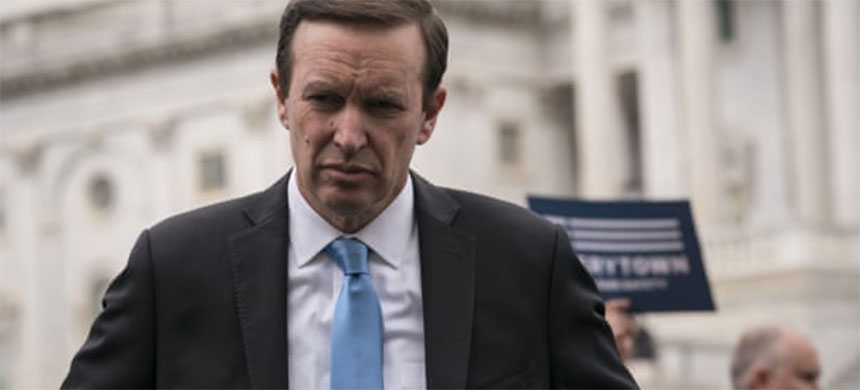
‘Significant’ Consequences if Lawmakers Fail to Act on Gun ControlSenator Chris Murphy, Democrat of Connecticut, waits to speak to activists demanding action on gun control legislation at the Capitol on 26 May. (photo: J Scott Applewhite/AP)

‘Significant’ Consequences if Lawmakers Fail to Act on Gun Control
Richard Luscombe, Guardian UK
Luscombe writes: "Senator Chris Murphy says measures passed in Florida after Parkland shooting could attract Republican support."

Senator Chris Murphy says measures passed in Florida after Parkland shooting could attract Republican support

The Democratic senator leading his party’s push for stronger gun laws said on Sunday he believed measures passed in Florida following the 2018 high school shooting in Parkland could attract Republican support and provide a workable template for action in Congress.

Chris Murphy of Connecticut, speaking on CNN’s State of the Union, said he was optimistic that recent mass shootings in Buffalo, New York, and Uvalde, Texas, could finally prompt enough bipartisan support for legislation that has previously proven elusive.

But he also warned of “significant” consequences if lawmakers failed to act.

“I’m more confident than ever that we’re gonna get there,” Murphy said. “But I’m also more anxious about failure this time around.

“In Connecticut last week I’ve never seen the look in parents’ faces that I did. It was just a deep, deep fear for our children. And also a fear that things in our country are so fundamentally broken that you can’t put politics aside to guarantee the one thing that matters most to adults: the safety of their children.”

Murphy added: “The possibility of success is better than ever before. But I think the consequences of failure for our entire democracy are more significant than ever.”

Florida, a Republican-controlled state, acted swiftly after the murders of 17 students and staff at Marjory Stoneman Douglas high school in February 2018, passing red flag laws and raising the age requirement for buying, but not owning, firearms from 18 to 21, among other steps. The Parkland gunman was 19.

In his address to the nation last week, Joe Biden called for a federal ban on semi-automatic weapons, and raising the age requirement if that couldn’t be done.

Murphy acknowledged the Florida actions and said “there is interest in taking a look at that age range, 18 to 21” during bipartisan discussions about possible legislation, led on the Republican side by Texas senator John Cornyn.

“Right now we’re trying to discover what can get to 60 votes [in the Senate],” Murphy said.

“But I think the template for Florida is the right one, which is some significant amount of investment in school safety and some modest but impactful changes in gun laws. That’s the kind of package we’re putting together right now.

“As Senator Cornyn said, there is interest in looking at that age range … and doing what is necessary to make sure that we aren’t giving weapons to anybody that has, during their younger years, a mental health history, a juvenile record.

“Often those juvenile records aren’t accessible when they walk into the store buying as an adult. So we’re having a conversation about that specific population, 18 to 21 and how to make sure that only the right people, law abiding citizens, are getting their hands on weapons.”

With a handful of exceptions, Republican politicians have remained resolutely opposed to any kind of gun reforms, despite polls showing overwhelming public support for “common sense” measures including red flag laws and expanded background checks.

In an appearance on Fox News Sunday, Republican House minority whip Steve Scalise, who was shot by a gunman in a 2017 attack during practice for the congressional baseball game, attempted to paint soaring gun crime in the US as solely a mental health issue.

“We are not focusing on the root cause of the problem,” Scalise said.

“The immediate visceral reaction of Democrats in Washington is to go after the rights of gun owners in America. We need to be focused more on stopping things before they happen.”

Murphy said he hoped the negotiations, which have been ongoing during the Senate’s Memorial Day recess, will lead to a vote that could finally pass the chamber.

“This time we have far more Republicans,” he said. “We don’t need to have competing proposals on the Senate floor. We need one proposal that can get 60 to 70 votes from both parties.”

Democratic senator Pat Toomey of Pennsylvania said on CBS’ Face the Nation he hoped any proposal would include an expansion of background checks, at least for commercial sales of guns.

“We all agree violent criminals and deranged, dangerously mentally ill people shouldn’t have firearms,” he said, noting that lawmakers “not engaged on this in the past” have been involved now in negotiations.


It's time to vote out those who fail to protect Americans.

The NRA has bought & paid for too many who regurgitate the propaganda.

The best they could think of was DOORS!

https://www.facebook.com/briantylercohen/videos/586839206161133/


Greg Abott was BOOED, went to a campaign fundraiser before going to UVALDE.

BAN ASSAULT WEAPONS!

READ MORE


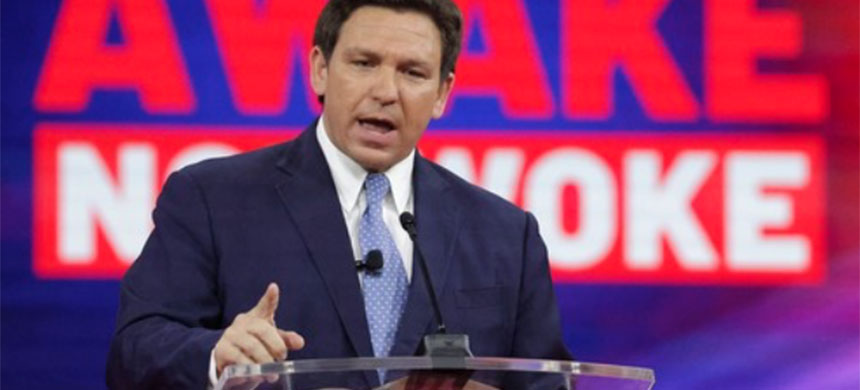
‘Pure Cruelty’: Florida Is Stepping Up Its War on Trans PeopleFlorida Gov. Ron DeSantis. (photo: Vice)

‘Pure Cruelty’: Florida Is Stepping Up Its War on Trans People
Paul Blest, VICE
Blest writes: "Gov. Ron DeSantis is severely limiting access to transgender healthcare for kids and adults in his state."

Gov. Ron DeSantis is severely limiting access to transgender healthcare for kids and adults in his state.

Florida Gov. Ron DeSantis launched a full-scale attack on access to transgender healthcare in his state.

The DeSantis administration made twin proposals Thursday to not only to stop minors from accessing gender-affirming care, but also prevent trans adults on Medicaid from doing the same.

The moves would severely limit access to care for transgender youth and adults, which are recommended by major medical groups such as the American Medical Association and American Academy of Pediatrics as key to improving quality of life and mental health for a group already more susceptible to depression and self-harm as a result of discrimination and alienation in society.

The DeSantis administration released a 46-page report Thursday arguing that transgender healthcare should be banned for Medicaid recipients, saying that existing medical literature “provides insufficient evidence that sex reassignment through medical intervention is a safe and effective treatment for gender dysphoria,” and claiming that such studies which show the opposite are “either low or very low quality and rely on unreliable methods such as surveys and retrospective analyses.”

The DeSantis administration will “now initiate the rulemaking process regarding the Medicaid program’s coverage treatments for gender dysphoria,” according to a press release announcing the report.

Despite claims dismissing the quality of the studies, the report references “rapid-onset gender dysphoria,” which was coined in a 2018 study by a Brown University researcher which has been the subject of intense criticism of both its methods and findings ever since.

Though Medicaid is jointly funded by the federal government and the states, it is administered by the states. Ten states explicitly ban coverage of gender-affirming care for transgender people, though a federal judge struck down a law in Iowa doing so last year. (The Affordable Care Act “prohibits discrimination” on the basis of gender identity.)

“This is just pure cruelty to low income trans people,” tweeted lawyer and journalist Alejandra Caraballo, a Harvard Law School clinical instructor.

The American Medical Association and American Academy of Pediatrics have repeatedly defended the use of gender-affirming care to treat transgender patients.

“In my care of more than 200 transgender youth, I’ve seen the incredible relief and affirmation that these tools can provide,” Dr. Brittany Allen, associate professor of pediatrics at University of Wisconsin School of Medicine and Public Health and co-director of a transgender clinic at American Family Children’s Hospital, said in a statement provided by the AAP earlier this year.

“Every major medical association in the United States recognizes the medical necessity of transition-related care for improving the physical and mental health of transgender people,” the AMA said in a statement last year opposing a law banning gender-affirming care for minors in Arkansas.

But just hours after release of the report arguing gender-affirming are shouldn’t be covered for transgender adults on Medicaid, Florida Surgeons General Dr. Joseph Ladapo—who has also emerged as a vocal critic of COVID-19 mitigation efforts such as masks and vaccines—wrote in a letter to the Florida Board of Medicine that the science referenced by the AMA “extraordinarily weak” and politically motivated, and asked the board to effectively ban care for transgender youth.

“Florida must do more to protect children from politics-based medicine,” Ladapo wrote, according to a letter obtained by NBC News.

When Ladapo was appointed by DeSantis last year, an unnamed former supervisor at the University of California, Los Angeles declined to endorse him for the job, saying “the people of Florida would be better served by a surgeon general who grounds his policy decisions and recommendations in the best scientific evidence rather than opinions,” the AP reported in February. (A Florida Department of Health spokesperson dismissed this at the time as a “smear” from a “disgruntled supervisor.”)

The twin proposals announced Thursday—which are described as aligning the state with “generally accepted professional medical standards,” despite being opposed by major medical groups—come at a time of increasing attacks from Republicans on transgender existence.

The DeSantis administration’s moves, which come at the start of LGBTQ Pride Month and follow the “Don’t Say Gay” law signed by DeSantis prohibiting classroom discussions of LGBTQ identity in schools, were slammed by transgender advocates and medical professionals Thursday.

“It’s unconstitutional for the government to step in and deprive youth—and especially trans youth—of getting the necessary medical care they need,” Tampa psychologist Gary Howell told NBC News. “This interferes with the rights of parents.”

“He’s trying to take the freedom of trans ADULTS to access healthcare and of parents to care for their kids,” Florida state Rep. Carlos G. Smith, a Democrat who is openly gay, said in a Thursday tweet. “There’s no consistent or conservative ideology here. Just cruelty and a willingness to use vulnerable people to advance his presidential dreams.”


Attackilng 'those others'?


excerpt:
Earlier in the semester, I was sitting in the dining hall with some friends eating dinner. We were talking about the infamous Trump Travel Ban when I decided to share a story I had heard on campus.

There was a girl from one of the countries on the ban list who came back for sorority recruitment, which was a few days before classes started. Had she come back just for classes, the ban would’ve been in effect, and she wouldn’t have been able to return to school. Hearing of something so local and so close in my community left a huge impact on me.

I shared this story with the group, and what happened next left me speechless.

“But what does that have to do with you?” asked one of the girls.

Everything.

That was my answer that day, and it is my answer now. Humanity is not a partisan issue. Humanity does not know red, blue, green or yellow. Humanity does not know liberalism, centrism or conservatism. If we have truly lost the ability to relate to our fellow human beings, what does that say about us?

Growing up, someone used to tell me that whatever cause I was working toward at the moment was not about me. I wish I had told them right then and there that these causes are for all people. Everyone is affected, be it directly or through other means. Everyone should fight for human rights, and I will never understand the attitude of disaffectedness I saw at the dining table that day.

When your family, friends, or professors tell you that [insert your fight here] is not your battle, keep fighting. Don’t hesitate to be an ally to a movement. Know what it means to be a good ally. Remember who and what you’re fighting for. Immigrant rights are human rights. LGBT+ rights are human rights. Women’s rights are human rights. Everyone has the responsibility to fight for human rights.


First, they came for the Socialists, and I did not speak out —
Because I was not a Socialist.

Then they came for the Trade Unionists, and I did not speak out —
Because I was not a Trade Unionist.

Then they came for the Jews, and I did not speak out —
Because I was not a Jew.

Then they came for me — and there was no one left to speak for me.
-Niemöller

https://www.theodysseyonline.com/first-socialists


READ MORE

Car Tires Produce Vastly More Particle Pollution Than Exhausts, Tests Show
Damian Carrington, Guardian UK
Carrington writes: "Almost 2,000 times more particle pollution is produced by tire wear than is pumped out of the exhausts of modern cars, tests have shown."
READ MORE


Contribute to RSN

Follow us on facebook and twitter!

Update My Monthly Donation

PO Box 2043 / Citrus Heights, CA 95611


Thursday, September 10, 2020

RSN: Stop Training Police Like They're Joining the Military


Reader Supported News
10 September 20


It’s Not Going to Work Without Donations

There’s nothing we can do to make RSN work without basic funding. It cannot work without reader support, it will not without reader support, it never has worked without reader support.

Whatever we have to do to raise enough money to meet the essential operating costs is what we have to do. We do not seek to offend anyone, but if we do we have to accept that.

Fasten your seat belts.

Marc Ash
Founder, Reader Supported News

Sure, I'll make a donation!


Update My Monthly Donation


If you would prefer to send a check:
Reader Supported News
PO Box 2043
Citrus Hts
CA 95611


Reader Supported News
10 September 20

It's Live on the HomePage Now:
Reader Supported News


WE HAVE TO MOVE THE SEPTEMBER FUNDRAISER TO CENTER-STAGE: We have no chance of finishing the September fundraiser at this pace. Yes failure to meet the budget will derail the organization. This is the most important hurdle for our organization right now. Who out there can step up? In Peace and Solidarity. Marc Ash, Founder Reader Supported News

Sure, I'll make a donation!


Stop Training Police Like They're Joining the Military
Police in riot gear prepare to advance on protesters rallying after the death of George Floyd in Minneapolis, US on May 30, 2020. (photo: John Minchillo/AP)
Rosa Brooks, The Atlantic
Brooks writes: "When I entered the Washington, D.C., police academy in 2016 as a recruit officer in the district's volunteer police reserve corps, I quickly discovered that I was joining a paramilitary organization." 


If policing is to change, the spotlight must turn toward police academies, where new recruits are first inculcated into the folkways of their profession.

My classmates and I practiced drill and formation, stood at attention when senior officials entered the room, and were grilled on proper boot-polishing methods. “Brilliantly shined boots are a hallmark of police uniforms,” an instructional handout informed us. “They indicate devotion to duty and attention to the smallest detail … You are required to maintain boots that are polished to a luster … In the most exceptional cases boots can be shined so that a person’s reflection may be seen in the finish.” We had instructors who rolled their eyes at this sort of thing, but we also had instructors who seemed to be channeling the Marine drill sergeant in Full Metal Jacket, bawling insults and punishing minor infractions with sets of push-ups.

As a law professor and writer with a long-standing interest in the blurry boundaries between war and “not war,” my experiences with the paramilitary aspects of the D.C. police academy—and, later, my experiences as a reserve police officer on patrol in some of the city’s poorest neighborhoods—were part of my research. (My next book, Tangled Up in Blue: Policing the American City, is based on my experiences as a D.C. reserve officer.) But even as a recruit with a quasi-anthropological perspective, I found the academy more than a little intimidating. I don’t think I’ve been yelled at as much since high-school gym class more than three decades ago.

The nation is now debating how to “fix” American policing, and much of the criticism of current police practices relates to the paramilitary aspects of policing. It’s an important critique, but one that often focuses narrowly on police uniforms, weapons, and equipment, rather than on underlying issues of organizational culture and structure. If we want to change policing, we need to also turn the spotlight onto police academies, where new recruits are first inculcated into the folkways of their profession.

It’s not hard to see the link between paramilitary police training and the abuses motivating the past several weeks’ protests. When police recruits are belittled by their instructors and ordered to refrain from responses other than “Yes, Sir!,” they may learn stoicism—but they may also learn that mocking and bellowing orders at those with less power are acceptable actions. When recruits are ordered to do push-ups to the point of exhaustion because their boots weren’t properly polished, they may learn the value of attention to detail—but they may also conclude that the infliction of pain is an appropriate response to even the most trivial infractions.

Many police recruits enter the academy as idealists, but this kind of training turns them into cynics, even before their first day on patrol. And although most police officers will go through their entire careers without ever firing their weapons, others will inevitably get the wrong lessons from their paramilitary training, and end up like the fired Minneapolis officer Derek Chauvin.

D.C.’s police academy has changed a lot in the short time since I graduated, and even in 2016, it was relatively relaxed compared with the rigid spit-and-polish atmosphere that prevails in many other training programs. The majority of law-enforcement academies in the United States are loosely modeled on military boot camps. Proponents of this approach argue that cops are a lot like soldiers: They have to follow orders regardless of their personal feelings; they have to run toward gunfire, not away from it; and they have to remain cool and professional in the face of chaos, threats, and harassment. In this view, paramilitary training takes undisciplined young recruits and turns them into lean, mean fighting machines, ready to handle the rigors of street patrol.

In most police departments, paramilitary traditions extend well beyond the academy. Senior police officials commonly refer to patrol officers as “troops,” chain of command is rigidly enforced, and it’s undeniably true that many departments have made enthusiastic use of federal authorities such as the Defense Department’s 1033 Program, which provides surplus military equipment—including armored vehicles and grenade launchers—to domestic law-enforcement agencies. (Since its inception, the program has transferred more than $7 billion worth of military equipment to more than 8,000 U.S. law-enforcement agencies; ironically, small-town and rural agencies, rather than large city departments, have been most likely to request heavy equipment such as mine-resistant vehicles.)

The paramilitary aspects of police culture are so deeply entrenched that most officers and police chiefs take them for granted, rarely questioning the need for boot polishing, drill and formations, and rigorous mandatory workouts as a central part of police training. But the paramilitary model is as pernicious as it is ubiquitous, and any meaningful approach to police transformation needs to confront it head-on.

Nothing about paramilitary policing is inevitable, and historically speaking, the vision of policing as a paramilitary enterprise is of relatively recent vintage. In early colonial America, police departments as we think of them today did not exist. Public safety was a communal responsibility, and in many New England towns, appointed sheriffs were supplemented by a town watch comprising ordinary citizens. In the frontier towns of the American West, sheriffs made do by deputizing citizens into temporary posses when needed. In the southern United States, policing was also seen as a shared public responsibility, albeit one distorted by the brutal institution of slavery: Many southern towns and counties established volunteer “slave patrols” charged with capturing runaways and returning them to their owners, dead or alive. As one slave patroller put it, his job was to “apprehend any negro whom we found from his home, and if he made any resistance, or ran from us, fire upon him immediately.” The toxic legacy of these patrols remains alive today.

In the mid-19th century, industrialization, rising income inequality, and the growth of cities led to increases in both violent crime and property crime. As communities became more populous and urbanized, the relatively informal mechanisms of social control that had prevailed in colonial America and the early years of the republic began to be perceived by elites as inadequate, and police organizations were formalized and professionalized in most major American cities. New York established its first police department in 1845, and in 1861 Washington, D.C., followed suit with the creation of the Metropolitan Police Department. Policing quickly ceased to be viewed as a collective obligation and became, instead, the work of a permanent body of paid specialists.

From their inception, and in contrast to earlier models of law enforcement, these newly created police departments in the 19th century were paramilitary in nature. In Washington, D.C., for instance, President Abraham Lincoln insisted that General George B. McClellan be consulted on the appointment of the first police superintendent. Ultimately, William Webb, a major in the D.C. militia, was chosen, and Webb quickly recruited several other Union soldiers into the department’s ranks.

America’s new police departments adopted military-style titles, rank structures, and uniforms. In Los Angeles, for instance, the first citywide law-enforcement officers, the Los Angeles Rangers, were citizen volunteers authorized by the city council in 1853; they wore no uniforms, but sported white ribbons identifying them as “city police.” By 1869, however, the city had hired its first paid professional police, kitting them out in surplus Union Army uniforms, and as in D.C., many early recruits came from a military background. (The path from military service to law enforcement remains well trod; currently, almost 20 percent of police officers are military veterans, although veterans make up just 6 percent of the general population).

Today, a century and a half after the emergence of professional police organizations, American policing is in crisis. As the protesters pouring into the streets are reminding the nation, police in the United States fatally shoot roughly 1,000 people a year, a per capita rate of violence unparalleled in other democratic countries.* Relative to their representation in the overall population, a disproportionate number of those killed by U.S. police have been black- or brown-skinned.

Police killings are of course not the only fuel for the mass protests. Beyond the deaths of Americans such as George Floyd and Breonna Taylor lie countless other large and small indignities—the massive stop-and-frisk program practiced by the NYPD until a court order declared it unconstitutional, the needlessly aggressive execution of warrants—that also fall most heavily on people of color and the poor.

But many of the most egregious police abuses are avoidable, and the anger over them has created an opportunity for real police reform. The nation must jettison paramilitary approaches to policing. That means moving beyond shallow critiques of “police militarization,” most of which focus narrowly on federal programs allowing the transfer of military equipment to police, and looking at subtler and more entrenched aspects of police culture as well.

To be sure, federal military-surplus transfers like those through the Defense Department’s 1033 Program do little good, and much harm: Police departments obtaining used Army filing cabinets at cost isn’t cause for concern, but there’s no earthly reason for small-town cops to wear military fatigues, ride around in mine-resistant Humvees, or carry bayonets. Studies suggest that police departments that receive such equipment see no measurable improvement in officer safety or crime rates, but greater quantities do seem to correlate with higher rates of officer-involved shootings and reduced public trust.

Federal programs that allow the provision of military equipment to domestic police departments are only part of the problem, however. Although tightening the restrictions on such programs would be a good first step, the training that police recruits go through must also be reformed.

We’re living in a dark moment: President Donald Trump’s threat to send in active-duty federal troops to quell protests further blurred the line between policing and the military. But some hopeful signs have emerged.

For one, some progressive police leaders are questioning the value of paramilitary academies. In Washington State, for instance, former King County Sheriff Sue Rahr, now the head of the state’s Criminal Justice Training Commission, has pioneered an academy-training approach centered on a vision of police as guardians, not warriors. Rahr calls her training method “LEED,” for “Listen and Explain with Equity and Dignity.” Instead of an emphasis on yelling and standing at attention, her recruits are trained to engage others in courteous conversation, and are evaluated during role-play exercises on their ability to listen, show empathy, explain their actions, de-escalate tense situations, and leave everyone they encounter “with their dignity intact.”

In another hopeful sign, Washington, D.C., police training is also moving in the right direction. The Metropolitan Police Department has brought civilian teachers and adult-learning specialists into many senior police-academy positions, instead of staffing the academy solely with sworn officers. More and more, D.C. police recruits are being encouraged to question and debate policies instead of just memorizing them, and the academy’s commander has welcomed a crucial range of diverse voices into the recruit curriculum.

The department has also partnered with several local universities, including Georgetown, where I teach and co-direct the Innovative Policing Program, to develop programs designed to push both recruits and more experienced officers to critically engage with the history and practices of their profession. All officers now visit the Holocaust Memorial Museum and the National Museum of African American History and Culture, and spend a day discussing the role of police officers in perpetuating—or ending—atrocities and injustice. Meanwhile, a select group of young D.C. officers take part in the Georgetown program’s Police for Tomorrow Fellowship. The fellows participate in intensive workshops on many of the toughest and most controversial issues in policing, including race and the legacy of racial discrimination, over-criminalization, alternatives to arrest, poverty, addiction, and homelessness. Officers visit prisons and homeless shelters and meet with local teens, and each fellow undertakes a capstone community project. In New Orleans, a similar fellowship program for young police officers, the Crescent City Corps, launched in 2019.

Such programs can be transformative. In D.C., many of the young officers who go through these programs credit them with changing how the officers think about their role—and their thoughtful feedback has helped fuel internal changes within the department, including some recent changes at the police academy itself. Last October, the Metropolitan Police Department, the New Orleans Police Department, and Georgetown’s Innovative Policing Program teamed up to host a national gathering of police-academy directors from more than 20 major police departments. First up on the group’s agenda: considering alternatives to paramilitary approaches to police training. The topic was controversial, and the discussion is continuing, but it was a start.

A diverse, democratic society needs police officers who engage thoughtfully with their profession’s troubled history and value meaningful, equitable interactions with members of the communities they serve. If the past few weeks have taught us anything, it’s this: America needs brave, empathetic guardians—not martinets in shiny boots.

READ MORE


Trump knew how deadly the Coronavirus was as early as February. (photo: Hector Retamal/Getty)


'Play It Down': Trump Admits to Concealing the True Threat of Coronavirus in New Bob Woodward Book
Josh Dawsey, Felicia Sonmez and Paul Kane, The Washington Post
Excerpt: "President Trump acknowledged Wednesday that he intentionally played down the deadly nature of the rapidly spreading coronavirus last winter as an attempt to avoid a 'frenzy," part of an escalating damage-control effort by his top advisers to contain the fallout from a forthcoming book by The Washington Post's Bob Woodward."
READ MORE


Chad Wolf, the acting secretary of the Department of Homeland Security. (photo: Susan Walsh/AP)


Whistleblower Alleges DHS Told Him to Stop Reporting on Russia Threat
Greg Myre, NPR
Myre writes: "A Department of Homeland Security official said in a whistleblower complaint that the head of DHS told him to stop reporting on the Russian threat to the U.S. election because it 'made President Trump look bad.'"

The White House and DHS denied the allegations. However, the president's Democratic critics say the accusations are the latest sign that the Trump administration is attempting to politicize the intelligence community and downplay Russian attempts to interfere in this year's election, as Moscow did in 2016. 

The DHS official, Brian Murphy, made the accusation in a formal whistleblower complaint filed Tuesday with the department's inspector general.

Murphy ran the Office of Intelligence and Analysis at DHS until the end of July, when he was demoted to a lesser management job.

Murphy says the acting secretary of DHS, Chad Wolf, told him twice — once in May and again in July — to withhold reporting on potential Russian threats to the election because it cast the president in a bad light. Murphy says he was also told emphasize potential threats from China and Iran.

Murphy says Wolf told him these instructions came from White House National Security Advisor Robert O'Brien.

White House, DHS denials

"We flatly deny that there is any truth to the merits of Mr. Murphy's claim," said DHS spokesperson Alexei Woltornist. The Homeland Security chief "is focused on thwarting election interference from any foreign powers and attacks from any extremist group."

The White House said that O'Brien "has never sought to dictate the intelligence community's focus on threats to the integrity of our elections or on any other topic."

In the 22-page complaint, Murphy says there were multiple meetings this summer about downplaying the domestic threat posed by white supremacists, and focusing more on militant leftist movements like Antifa.

According to the document, Wolf and his deputy, Ken Cuccinelli, told Murphy to "modify intelligence assessments to ensure they matched up with the public comments by President Trump."

Murphy says he declined to do so. In a statement, Murphy's lawyer Mark Zaid said his client "followed proper lawful whistleblower rules in reporting serious allegations of misconduct against DHS leadership."

Trump has repeatedly challenged U.S. intelligence conclusions that Russia interfered on his behalf in the 2016 election.

The intelligence community said in a formal statement last month, and in multiple briefings with journalists, that Russia is again trying to influence the election, and favors Trump's re-election.

The intelligence community also cites China and Iran, but considers them much lesser threats.

Called to testify

Adam Schiff, the California Democrat who heads the House Intelligence Committee, says the complaint "outlines grave and disturbing allegations that senior White House and Department of Homeland Security officials improperly sought to politicize, manipulate, and censor intelligence in order to benefit President Trump politically."

He said Murphy has been called to testify before the committee on Sept. 21.

Under different circumstances, Murphy came under public criticism back in July.

The Washington Post reported that Murphy's office at DHS was compiling "intelligence reports" on journalists covering the protests in Portland, Ore., and what they were saying on social media.

At the end of July, Murphy was removed from his intelligence post and demoted. At that time, there was no indication that any of those developments were related to the accusations Murphy is making now.

READ MORE


Keith Alexander has joined Amazon's board. (photo: Andrew Burton/Getty)


Former NSA Chief Keith Alexander, Described as the Public Face of Surveillance, Has Joined Amazon's Board of Directors
Russell Brandom, The Verge
Brandom writes: "Gen. Keith Alexander is joining Amazon's board of directors, the company revealed in a Securities and Exchange Commission filing today. (Alexander has also been added to the company board's official site.) A former director of the National Security Agency and the first commander of the US Cyber Command, Alexander served as the public face of US data collection during the Edward Snowden leaks, but he retired from public service in 2013."
READ MORE


Election workers stuff ballot applications at the Mecklenburg County Board of Elections office in Charlotte, North Carolina. The state has already begun to mail absentee ballots to voters. (photo: Logan Cyrus/Getty)


North Carolina Court Wipes Out Voting Restrictions Designed to "Secure White Supremacy"
Mark Joseph Stern, Slate
Stern writes: "Many felon disenfranchisement rules, including North Carolina's, are rooted in overt white supremacy."

Tens of thousands of people are suddenly eligible to vote in November.


n Friday, a North Carolina court dramatically expanded the number of voters eligible to participate in the 2020 election. The state may not disenfranchise citizens who owe fines, fees, and other debts from a felony conviction, the Wake County Superior Court ruled on Friday. And while the court limited its order to those affected by wealth-based voter suppression, its reasoning portends a broader ruling in the near future that could restore voting rights to 70,000 more North Carolinians on probation or parole.

Many felon disenfranchisement rules, including North Carolina’s, are rooted in overt white supremacy. After Reconstruction, racist Democrats in the state sought to revoke Black citizens’ suffrage. They accomplished this task, in part, through vague criminal laws that stripped convicted felons of their civil rights—then enforced these laws disproportionately against Black people. North Carolina’s current statute is rooted in an 1877 law spearheaded by a representative who later presided over the lynching of three Black men. At the time, Democrats argued that felon disenfranchisement was necessary to stop “the honest vote of a white man” from being “off-set by the vote of some negro.” Its purpose, alongside other Jim Crow measures like the literacy test, was to “secure white supremacy.”

The law continues to work as intended, as documented in an expert report by University of North Carolina professor Frank R. Baumgartner. Today, Black North Carolinians represent 22 percent of adults and 42 percent of the disenfranchised. Black residents are denied the right to vote at three times the rate of white residents in 44 counties. The state’s disenfranchisement regime targets two groups of people: those on probation or parole, and those who’ve completed their full sentence but still owe court debt. Notably, judges may extend an individual’s probation or send them back to prison because they haven’t paid off these fines and fees.

Few do manage to pay off these debts. Like Florida, North Carolina practices cash register justice, funding its criminal system by extracting money from those who encounter it. Any person charged in district court is billed a minimum of $173. They must pay $25 for a criminal record check, $60 for a public defender, and $600 for lab analysis of evidence. Those sentenced to community service must pay $250; those placed under house arrest with electronic monitoring must pay $90 upfront, then $4.48 a day; those sentenced to a local jail must pay $40 a day—on top of the $10 a day they paid if detained before conviction. People on probation must pay $40 a month to fund their own supervision. Judges have authority to waive court debt. But they are also elected, and fearful of retribution at the polls if they’re deemed soft on criminals. In 2015, North Carolina Republicans passed legislation publicizing each judge’s annual waiver rate in an effort to shame them out of waiving fines and fees.

Experts estimate that about 70,000 North Carolinians are disenfranchised because they’re on probation or parole, while a larger number—probably more than 100,000—owe outstanding court debt. The average probationer owes at least $2,400 in financial obligations.

In 2019, a coalition of voting rights advocates sued to restore voting rights to all these individuals under the North Carolina Constitution, which provides sweeping protections for the right to vote. Friday’s 2–1 decision handed them a limited victory. The court found that North Carolina had imposed an unconstitutional “property qualification” on the right to vote while unlawfully discriminating against the indigent. Its order restored suffrage to any resident denied the ballot solely because they cannot afford to pay court-imposed fines and fees. It also clarified that anyone who has finished probation but still owes money can vote. And it announced that the deeper issue—whether the entire regime is tainted by illicit racial bias—is open to dispute. In the next few months, then, the court will also decide whether it must strike down felon disenfranchisement for all North Carolinians on probation or parole.

Actually, it seems the court nearly extended suffrage to probationers and parolees on Friday. At an earlier hearing, the two judges in the majority, Lisa Bell and Keith Gregory, acknowledged that the whole scheme is rooted in unconstitutional racism. These judges’ Friday opinion recounted this history of racism, as if it were poised to strike down the disenfranchisement law, before retreating to its narrower holding. Moreover, the dissenting judge, John Dunlow, faulted the majority finding “discriminatory intent” as a “motivating factor” behind the law. But the majority did not, in fact, make this conclusion—at least, not yet. Unless Dunlow drastically misread the decision, it seems he has accidentally published a retort to an earlier draft of the majority opinion. Put simply, the writing is on the wall: Bell and Gregory think North Carolina’s felon disenfranchisement scheme is unconstitutional, but they’ll reach that conclusion after a full trial, not at this preliminary stage, two months out from an election.

For now, the court’s decision will ensure that as many as 100,000 indigent ex-felons can participate in this year’s election. Republican lawmakers have not yet said if they will appeal Monday’s decision. But if they do, they will almost certainly lose at the North Carolina Supreme Court, which has a 6–1 liberal majority that’s especially attuned to racial justice. (Because the case involves the state constitution, the U.S. Supreme Court has no authority to intervene.) It took nearly 150 years, but the state judiciary is finally on track to abolish a system designed to preserve white supremacy.

READ MORE


Four farm leaders have been killed so far in 2020. (photo: Indian Law Resource Center)


Guatemala: Rights Organization Denounces Land Rights Activist Murders
teleSUR
Excerpt: "The International Land Coalition (ILC) on Wednesday denounced the assassination of land rights activists in Guatemala."

So far in 2020, four farmer leaders have been murdered, and another one is missing. The organization also denounced the extrajudicial eviction of indigenous communities.


ILC expressed its "concern for the serious situation of criminalization and violation of human rights of peasant and indigenous organizations in Guatemala in the exercise of their role in the peaceful defense of their lands and territories."

So far, in 2020, four farmer leaders have been murdered, and another one is missing. The organization also denounced the extrajudicial eviction of indigenous communities.

Several international organizations like Front Line Defenders and ILC have been warning about the aggression against land rights defenders since 2018.

According to the statement, Guatemala's government withdrew several institutions that enforced and veiled over land rights, such as the Secretariat for Agrarian Affairs (SAA), the Presidential Commission for the Coordination of Executive Policy on Human Rights (Copredeh), and the Secretariat for Peace (Sepaz).

ILC called on the authorities of the Central American nation to find a coherent solution to the agricultural conflicts and to acknowledge the legit land right of farmers, Indigenous people, and other marginalized communities.

The Unit for the Protection of Human Rights Defenders in Guatemala (Udefegua) reported over 677 attacks against human rights advocators, placing Guatemala among the most dangerous countries in the region.

READ MORE


A polar bear stands on melting sea ice at sunset near Harbour Islands in Canada. (photo: Paul Souders/Getty)


World's Wildlife Populations Have Declined by Nearly 70% in Just 50 Years, New Report Says
Sophie Lewis, CBS News
Lewis writes: "It's impossible to deny - humans are changing and destroying the natural environment at an unprecedented and alarming rate. According to a new report, animal populations have declined by such a staggering amount, that only an overhaul of the world's economic systems could possibly reverse the damage."

Nearly 21,000 monitored populations of mammals, fish, birds, reptiles and amphibians, encompassing almost 4,400 species around the world, have declined an average of 68% between 1970 and 2016, according to the World Wildlife Fund's Living Planet Report 2020. Species in Latin America and the Caribbean, as well as global freshwater habitats, were disproportionately impacted, declining, on average, 94% and 84%, respectively.

Every two years, the World Wildlife Fund (WWF) releases its landmark report, revealing how far species populations have declined since 1970 — an important marker for the overall health of ecosystems. The latest report indicates that the rate populations are declining "signal a fundamentally broken relationship between humans and the natural world, the consequences of which — as demonstrated by the ongoing COVID-19 pandemic — can be catastrophic."

"This report reminds us that we destroy the planet at our peril — because it is our home," WWF U.S. president and CEO Carter Roberts said in a statement. "As humanity's footprint expands into once-wild places, we're devastating species populations. But we're also exacerbating climate change and increasing the risk of zoonotic diseases like COVID-19. We cannot shield humanity from the impacts of environmental destruction. It's time to restore our broken relationship with nature for the benefit of species and people alike."

Humans are to blame

The report blames humans alone for the "dire" state of the planet. It points to the exponential growth of human consumption, population, global trade and urbanization over the last 50 years as key reasons for the unprecedented decline of Earth's resources — which it says the planet is incapable of replenishing.

The overuse of these finite resources by at least 56% has had a devastating effect on biodiversity, which is crucial to sustaining human life on Earth. "It is like living off 1.56 Earths," Mathis Wackernagel, David Lin, Alessandro Galli and Laurel Hanscom from the Global Footprint Network said in the report.

The report points to land-use change — in particular, the destruction of habitats like rainforests for farming — as the key driver for loss of biodiversity, accounting for more than half of the loss in Europe, Central Asia, North America, Latin America and the Caribbean.

Much of that land is being used for agriculture, which is responsible for 80% of global deforestation and makes up 70% of freshwater use. Using this much land requires a vast food system that releases 29% of global greenhouse gases, and the excessive amount of land and water that people are using has killed 70% of terrestrial biodiversity and 50% of freshwater biodiversity. Many species simply cannot survive under the new conditions forced upon them when their habitats are altered by humans.

Destruction of ecosystems has threatened 1 million species — 500,000 animals and plants and 500,000 insects — with extinction, much of which can be prevented with conservation and restoration efforts.

The food industry needs an overhaul

Where and how humans produce food is one of the biggest threats to nature, the report says. Much of the habitat loss and deforestation that occurs is driven by food production and consumption.

One-third of all terrestrial land is used for cropping and animal breeding. And of all the water withdrawn from available freshwater resources, 75% is used for crops or livestock. If current habitats remain the same, researchers predict that cropland areas may have to be 10-25% larger in 2050 than in 2005, just to accommodate increased food demand. That increase is expected, despite more than 820 million people facing food insecurity, indicating that much of the agricultural strain is being wasted. 

Meanwhile, food loss and waste cost the U.S. $1 trillion in economic costs, $700 billion in environmental costs and approximately $900 billion in social costs, according to the report.

Around the world, an estimated one-third of all food produced for humans is lost or wasted — about 1.4 billion tons every year. Food waste is responsible for at least 6% of global greenhouse gas emissions — three times more than that from aviation — and nearly one-quarter of those emissions come from wasted food.

The role of climate change 

Species overexploitation, invasive species and diseases and pollution are all considered threats to biodiversity, the report said. However, human-caused climate change is projected to become as, or more important than, other drivers of biodiversity loss in the coming decades.

Climate change creates an ongoing destructive feedback loop in which the worsening climate leads to the decline in genetic variability, species richness and populations, and that loss of biodiversity adversely affects the climate. For example, deforestation leads to an excess of carbon dioxide in the atmosphere, warming the planet and exacerbating forest fires.

Just a handful of countries — Russia, Canada, Brazil and Australia — contain regions without a human footprint. But these wilderness areas are facing irreversible erosion, affecting other species and humans' ability to adapt to climate change.

According to the report, no part of the ocean is entirely unaffected by overfishing, pollution, coastal development and other human-caused stressors. Humans depend on marine ecosystems to provide food, climate regulation, carbon storage and coastal protection — all of which are affected by these activities and are exacerbated by climate change.

"These places are disappearing in front of our eyes," said James Watson, from the University of Queensland and WCS, Brooke Williams from the University of Queensland and Oscar Venter from the University of Northern British Columbia.

The link between the health of the people and the planet

Between devastating wildfires and the COVID-19 pandemic, 2020 has made it clear that humans and nature have never been more intertwined. The report shows that the natural support for human life is rapidly declining — and that it's up to citizens, governments and business leaders to come together at a scale never-before-seen to do something about it.

Experts expressed concern that many of the major gains in human health in the past 50 years — such as a decreased rate of child mortality and poverty and an increase in life expectancy — could be undone or even reversed due to loss of nature.

The rate of infectious disease emergence has increased dramatically over the past 80 years — and nearly half of these diseases are connected to land-use change, agriculture and the food industry. One study cited by the report suggests that diseases originating in animals are responsible for 2.5 billion cases of illness and nearly 3 million deaths every year.

"How humanity chooses to recover from the COVID-19 pandemic, and how it addresses the looming threats from global environmental change, will influence the health of generations to come," wrote Thomas Pienkowski and Sarah Whitmee of the University of Oxford.

What can be done? 

Similarly to the economic crash in 2008, lockdowns due to the coronavirus pandemic have reduced humanity's demand by nearly 10% — a change that experts say is unlikely to last without major structural change.

While the report paints a tragic picture for the future of the natural world, it urges that current trends can be flattened, and even reversed, with urgent action. It emphasizes the need for world leaders to overhaul the food production and consumption industries — taking deforestation completely out of supply chains and making trade more sustainable, among other things.

In just the last year alone, natural disasters, from California's wildfires to severe droughts in Australia, have cost billions of dollars globally. Experts warn that economic decision-makers need to take into account not only produced and human capital, but also natural capital when crafting public and private policy.

To feed 10 billion people by 2050, humans will need to adopt a healthier way of eating — both for themselves and for the planet. Diet-related disease risk is the leading cause of premature mortality globally and food production is the main driver of biodiversity loss and water pollution, also accounting for 20-30% of greenhouse gas emissions.

Experts recommend humans adopt a diet that consists of a balanced proportion of whole grains, fruits, nuts, vegetables, beans and pulses, with animal-derived products like fish, eggs, dairy and meat consumed in moderation.

The report calls the above changes "non-negotiable" to preserve human health, wealth and security and urges world leaders gathering virtually for the U.N. General Assembly beginning September 15 to address them — only then can humans "bend the curve" of biodiversity loss.

"While the trends are alarming, there is reason to remain optimistic," said WWF global chief scientist Rebecca Shaw. "Young generations are becoming acutely aware of the link between planetary health and their own futures, and they are demanding action from our leaders. We must support them in their fight for a just and sustainable planet."

READ MORE


Contribute to RSN

Update My Monthly Donation


Tuesday Afternoon Updates – Error 404: President Not Found

                                                                                                                                            ...