|


|
|
|
|
|

30 December 22
Live on the homepage now!
Reader Supported News
It began with the election. Though it was much too close, Americans managed to reject most of the truly depraved candidates—the Oz/Lake/Walker/Masters people who had sold their souls in particularly public fashion. We’ve had to take such people seriously since the night that Trump claimed the presidency in 2016; clearly the old norms were gone, and the price of citizenship was going to be constant vigilance. But those forces have lost the next three elections, this one despite high inflation and low approval ratings for the president. It felt like democracy had lived to fight another day, and we’d get a bit of a breather before the 2024 follies began again.
That good feeling was quickly doused in the following days as Elon Musk stepped up his assault on his own employees, Twitter users, and any kind of decency. He was not just re-admitting insurrectionists, anti-vaxxers and antisemites to his kingdom, he was celebrating them. It’s been ugly as can be, and it is steadily getting worse.
Yesterday Musk explained that Twitter would “follow the science,” which “necessarily includes reasoned questioning of the science.” One of the things this means in practice is that every climate denialist is emboldened, and all over Twitter. E…E News reported
Earlier this week, a search for “climate” on Twitter resulted in “#ClimateScam” as the top term on the platform. Tweets using that hashtag were a miasma of climate disinformation, cherry-picked statistics and conspiracy theories. On another day, the top result was “climate lockdown,” a reference to the Great Reset conspiracy theory that claims a group of global elites is planning to shut down economic activity around the world to cut carbon emissions
The planet’s most gracious climate scientist, Katherine Hayhoe, being an empiricist, demonstrated with an elegant little experiment that the number of trolls has increased by between 15 and 30 times. That meant that when she tweeted out that “Climate change is real, it’s human-caused, its impacts are serious and there are solutions if we act now” it got 3,000 respondents mostly saying things like “other than the grant you received how much are they paying you to spread disinformation?” or “All climate changes are caused by Soros. Paid by Soros.” Some of the responses, of course, are not quite as polite, or as grammatical: when I tweeted recently about the need to stop burning trees for electricity, one typical response went like this: “Can you kiss my anal, in public?” Also, “u r probably a faggot.”
So, not fun. But—and this is a very tentative ‘but’—it doesn’t feel like it’s really catching on. From what I can tell, not that many people are really watching with admiration as Musk and his handpicked team of “reporters” uncover the past “crimes” of his company, which mostly seem to involve hardworking people trying to keep the ugliest sentiments in our society off their servers. (Donald Trump was watching—he called for the termination of the Constitution based on the fact that Twitter had not allowed the trading of pictures of the penis of his opponent’s son—but even that call was met with…not much.) Just as with the constant screams about stolen elections during the fall campaign, it’s all been met with a bit of a collective shrug. But new polling finds that by huge huge margins Americans think the government should be acting more aggressively to take on climate change. The message that seems to be settling in is, let’s get to work.
I don’t mean that this endless churn of disinformation isn’t dangerous—it clearly is. And especially at the local level. If, on the national scale, or even the scale of a statewide Senate vote, the dedicated disinformationists no longer seem quite so powerful, they can do enormous damage in those venues where a few people rule. So, school boards, where a handful of obsessives can make sure kids don’t get to read real books. Or rural counties where measles are now spreading thanks to the lie that vaccinations are dangerous. Or all the places where the fossil fuel industry’s handmaidens can gin up opposition to solar panels. But even on Musk’s degraded Twitter, common sense has bigger triumphs than the endless whiners: Greta Thunberg managed, in nine devastating words, to not just deflate one climate-denying moron but to land him in jail. The thing most people remember about the right wing this week is George Santos, demonstrating once and for all the link between Trumpism and utter shamelessness.
So Musk feels a bit like the ‘second-time-farce’ version of Trump; the rapid fall in the stock price at Tesla shows that perhaps there’s a limit to how much stupidity you can get away with. He’s no longer the richest man in the world; since his following worships success perhaps he looks like…a bit of a flailing failure? And Trump, with his woebegone collection of NFTs, crude drawings of him in spacesuits or cowboy gear apparently just lifted from catalogues and stock image websites. He’s starting to seem like a loser too?
If one wanted to paint a hopeful picture of the next couple of years, it might look something like this: Inflation would continue to abate, and if we had a recession it would be short. People’s nerves would continue to settle. Republicans would go back to simply being tools of corporate wealth, and probably win some elections as a result. We’d reach a general—i.e. 70%—social consensus that vaccines were probably a good invention, that people should probably be treated fairly whatever their pronouns, that candidates who lose elections should concede graciously, that Putin is the bad guy in the Ukraine war. That we should do what we can to slow the rise of the temperature on the only planet that we’ve got to live on—like, use the money in the Inflation Reduction Act to put in some heat pumps and buy some EVs, to the point where they’re not mysterious or “alternative.”
Again, I’m not sure any of this will happen; the furies that have been loosed won’t be easily caged again. But perhaps we’re a tad closer? And of course this kind of normalcy would not represent salvation. What we actually need to happen is an ongoing and rapid evolution in the direction of clean energy, racial justice, and economic equality. But it’s hard to even have those conversations while craziness rules. If indeed I’m right and the fever is breaking a bit, we will have to work hard to solidify that shift in the zeitgeist; normalcy provides the solid base from which we can do the bigger work we must.
And so on to 2023, with enormous thanks to all who have made this newsletter possible! (And would I be grateful if a few more of you who could afford to without financial hardship paid the modest subscription fee? I would. We are in this together.)
In other news from the world of climate and energy:
+As the indefatigable Leah Stokes points out, heat pumps outsold fossil fuel furnaces in the U.S. for the first time this year! All of you who joined in our Heat Pumps for Peace campaign get a share of the credit
You can read Professor Stokes’ take on 2022 in general here, and my New Yorker piece analyzing the chances that the Inflation Reduction Act could lead to far more action.
+Mary Annaïse Heglar has a wonderful essay on burnout among climate fighters, especially those who have to deal with other burdens of living in this society. It’s worth a read from everyone as we plan on how we’re going to make change happen in 2023.
Last summer, after a year of running on empty, my body had one word for me: enough. Almost by compulsion, I cleared every calendar I could, arranged extended time off from my job, declined invitations and pitches, unceremoniously resigned from my seat on a nonprofit board, and gave up on any and all work travel plans. I started building a health team, including a Black woman therapist. I had decided to heal. And it wasn’t a road I could walk alone.
+And don’t forget—we’re less than three months out from the national day of action on banks and climate change. Start planning something cool!
READ MORE  Former President Donald J. Trump's full tax returns covering 2015 through 2020 are expected to provide a rare window into the complexity of his finances. (photo: Jim Watson/AFP)
The publication of former President Donald J. Trump’s private tax documents comes amid questions about why the I.R.S. failed to fully audit him during his presidency.
The release came 10 days after Democrats on the House Ways and Means Committee published two reports about Mr. Trump’s taxes as part of an inquiry into the Internal Revenue Service’s practice of conducting mandatory audits on presidents while they are in office. The reports found that the I.R.S. failed to audit Mr. Trump during the first two years of his presidency and did not begin the examination process until 2019, after House Democrats initiated oversight proceedings in an attempt to gain access to his tax records.
“Our findings turned out to be simple — I.R.S. did not begin their mandatory audit of the former president until I made my initial request,” Representative Richard E. Neal of Massachusetts, the chairman of the Ways and Means Committee, said in a statement on Friday.
READ MORE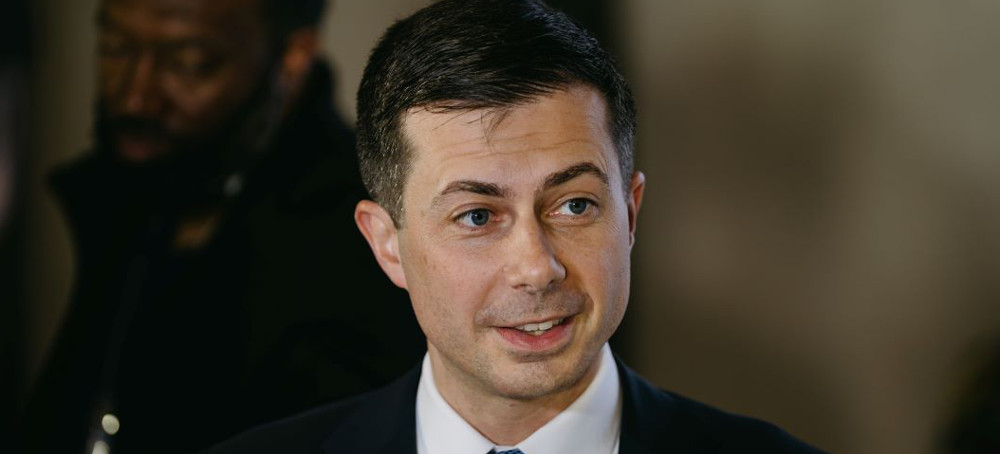 Pete Buttigieg, U.S. transportation secretary, speaks during a news conference at the Memphis International Airport in Memphis, Tennessee, November 29, 2022. (photo: Lucy Garrett/Bloomberg)
Southwest Airlines’ flight cancellations are stranding thousands. Attorneys general have been sounding the alarm about lax airlines oversight, begging transportation secretary Pete Buttigieg and Congress to crack down — to no avail.
The warnings came just before transportation secretary Pete Buttigieg appeared on national television insisting travel would improve by the holidays, and before Southwest executives — flush with cash from a government bailout — announced new dividend payouts to shareholders, while paying themselves millions of dollars.
Four months before Southwest’s mass cancellation of flights, thirty-eight state attorneys general wrote to congressional leaders declaring that Buttigieg’s agency “failed to respond and to provide appropriate recourse” to thousands of consumer complaints about airlines customer service.
“Americans are justifiably frustrated that federal government agencies charged with overseeing airline consumer protection are unable or unwilling to hold the airline industry accountable,” they wrote in August, arguing that Congress must pass legislation empowering state officials to enforce consumer protection laws against the airlines.
“Better by the Holidays”
Currently, Buttigieg and the Department of Transportation are the primary regulator over airlines thanks to a forty-four-year-old law preempting state consumer protection authority. Model legislation proposed by the American Economic Liberties Project (AELP), an anti-monopoly think tank, and backed by consumer groups would empower citizens and state law enforcement officials to sue airlines that violate consumer protection laws.
One week after the letter from state attorneys general, Buttigieg said on The Late Late Show With James Corden that airline travel “is going to get better by the holidays.” He added that “we’re really pressing the airlines to deliver better service.”
Earlier this month, Southwest — which received $3.2 billion of government support during the pandemic — announced it was reinstating its quarterly dividend for shareholders, at an annual cost of $428 million.
The company made that announcement just days after its CEO — who is paid $9 million a year — admitted the airline has been slow to modernize its computer and scheduling systems, whose breakdown helped fuel the holiday travel disaster.
“If you took our crews, we have a lot moving all over the country,” said Southwest CEO Bob Jordan. “If they get reassigned, someone needs to call them or chase them down in the airport and tell them.”
Michael Santoro, vice president of the Southwest Airlines Pilots Association, told the Los Angeles Times that the company’s “internal software can’t handle massive cancellations. The company hasn’t invested the money into scheduling infrastructure to support the network they have developed.”
While forsaking those technology investments, Southwest paid a handful of executives more than $112 million over the last five years, according to executive compensation data compiled by Salary.com.
One week before the Southwest scheduling disaster, thirty-four attorneys general led by Colorado Democrat Phil Weiser sent another letter begging Buttigieg to “impose significant fines for cancellations and extended delays that are not weather-related or otherwise unavoidable.”
“Yet to Fine Any Airline a Single Dollar”
Buttigieg now seems to be threatening some sort of enforcement action, tweeting on Tuesday: “Southwest passengers have experienced unacceptable disruptions and customer service conditions. I have made clear to their executives that our department will hold Southwest accountable for making things right with their customers and employees.”
But critics charge that his agency has continued to do almost nothing in the face of egregious abuses of consumers.
“The Department of Transportation has announced a rule on refunds that won’t take effect for at least 2-3 years, sent the airline CEOs a letter, and promised to unveil an information dashboard,” wrote AELP:
It has yet to fine any U.S. airline a single dollar for unpaid refunds, flight cancellations, or systematic violations of consumer protection law, and has issued fewer enforcement orders in 2021 than in any single year of the Trump and Obama administrations.
Buttigieg was appointed to lead the Transportation Department despite having no relevant experience in transportation management. His former consulting firm, McKinsey, has published reports suggesting ways for airlines to extract more fees from consumers.
In recent months, Southwest has been lobbying Buttigieg’s department on “airline customer service and consumer protection issues” and “fare fees,” according to federal disclosures. Southwest has spent more than $2 million on lobbying since Joe Biden took office and Buttigieg became secretary of transportation. Last year, the company paid at least $796,000 to the airline lobbying group Airlines for America.
READ MORE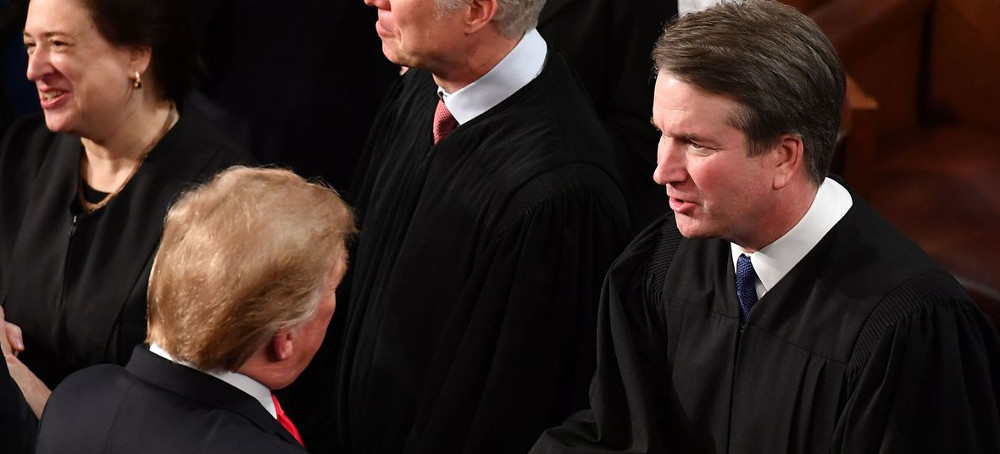 Former president Donald Trump and Justice Brett Kavanaugh before delivering the State of the Union address on February 5, 2019. (photo: Mandel Ngan/AFP)
Arizona v. Mayorkas, the Court’s new Title 42 decision, appears to be the latest act of gamesmanship by a Republican Supreme Court.
That decision came in Arizona v. Mayorkas, and is typical behavior from the Supreme Court — or, at least, is reflective of this Court’s behavior since a Democrat moved into the White House at the beginning of 2021. It’s the latest example of the Court dragging its feet after a GOP-appointed lower court judge overrides the Biden administration’s policy judgments, often letting that one judge decide the nation’s policy for nearly an entire year.
The Title 42 program, which the Biden administration determined must be terminated last May, will now likely remain in effect for several more months due to the Court’s decision. Indeed, even if the Court ultimately decides that the administration should prevail in this case, the Court is unlikely to lift its order extending this Trump-era program until June. And that delay may be the best-case scenario for the Biden administration — and for the general principle that unelected judges aren’t supposed to decide the nation’s border policy.
Moreover, the current situation differs sharply when Republican President Donald Trump was in office, and the Court frequently raced to reinstate Trump’s policies within mere days.
A brief history of the Supreme Court’s politicized scheduling
In August 2021, a Trump-appointed judge named Matthew Kacsmaryk handed down a poorly reasoned opinion ordering the Biden administration to reinstate a program, known as “Remain in Mexico,” that required many asylum seekers to stay on the Mexican side of the US southern border while they awaited a hearing. Although the Supreme Court eventually reversed Kacsmaryk, it sat on the case for more than 10 months — effectively letting Kacsmaryk exercise the homeland security secretary’s authority over the border during that entire period.
Worse, when the Court did eventually decide this case, known as Biden v. Texas, it left one looming issue in the lawsuit unresolved and sent the case back to Kacsmaryk. The Supreme Court determined that Kacsmaryk misread federal immigration law to only give the federal government two alternatives when an asylum seeker arrives at the Mexican border, when in fact the government has many options. It left open the question of whether the Biden administration properly completed the appropriate paperwork when it terminated Remain in Mexico.
When the case returned to Kacsmaryk, a former Christian right activist with a record of granting legally dubious victories to conservative litigants, he handed down a second order indicating that the administration must reinstate the Remain in Mexico program. It could be a year or more before the Supreme Court gets around to reviewing Kacsmaryk’s new attempt to impose Trump’s immigration policies on the country.
Similarly, last July, a Trump judge named Drew Tipton effectively seized control of much of Homeland Security Secretary Alejandro Mayorkas’s authority over Immigration and Customs Enforcement (ICE), the agency that enforces immigration law within US borders. Tipton’s opinion is exceedingly weak and cannot be squared with more than a century of Supreme Court precedents, and a majority of the justices appeared likely to reverse Tipton during oral arguments on the case in November.
But the Court has also sat on this case for months, rejecting the Justice Department’s request to immediately restore Secretary Mayorkas’s lawful authority over ICE in July. The Supreme Court may not rule on the case, known as United States v. Texas, until next June — at which point Tipton will have unlawfully usurped Mayorkas’s authority for 11 months.
The Court’s tendency to manipulate its own calendar isn’t restricted to immigration cases. One of the most high-profile examples of the Court delaying resolution of a case brought by left-leaning litigants occurred in September 2021, before the Court’s 2022 decision overruling Roe v. Wade. A 5-4 Court refused to decide a case challenging Texas’s strict anti-abortion law known as SB 8, effectively allowing Texas to ban many abortions while Roe remained good law. (In fairness, the Court did eventually rule on SB 8 the next December, but that decision established that SB 8 is immune from any meaningful constitutional challenge.)
The Court, which currently has a Republican supermajority, did not behave this way when a Republican occupied the White House. In Barr v. East Bay Sanctuary (2019), for example, a lower court blocked a Trump administration policy that effectively locked virtually all Central American migrants out of the asylum process. The Trump administration asked the justices to reinstate this policy in late August 2019, and the Court agreed to do so about two weeks later.
Similarly, in Wolf v. Cook County (2020), the Court reinstated a Trump administration policy targeting low-income immigrants — and it did so just eight days after Trump’s lawyers asked the Court to do so.
Indeed, under Trump, the Court was so quick to intervene when a lower court blocked one of the Republican administration’s policies that Justice Sonia Sotomayor complained in dissent that her GOP-appointed colleagues were “putting a thumb on the scale in favor of” the Trump administration.
As these cases show, the Supreme Court can wield tremendous power not just by handing down substantive rulings that determine what federal law requires. It can often reshape federal policy for months or even longer by manipulating how quickly it attends to the cases on its docket.
Although the Court has historically discouraged litigants of all kinds from seeking relief on its so-called “shadow docket,” cases that are decided using an expedited process and without full briefing or oral argument, these longstanding norms faded away when Trump was president. When lower courts blocked Trump policies, the Court frequently raced to reinstate those polices.
Yet when lower courts blocked Biden’s policies, the Supreme Court sat on its hands — sometimes in cases where a majority of the justices believed that the lower court had mangled the law.
Judicial partisanship, in other words, is often much more subtle than a Supreme Court opinion definitively ruling that the law must be read to implement Republican policies. Sometimes, locking GOP policies in place, at least temporarily, can be accomplished with little more than creative scheduling.
The winding road that brought Title 42 to the Supreme Court
Setting aside the question of when the Court will determine if the Title 42 program should continue to exist, it should be noted that the Court’s decision in Arizona is difficult to defend on the merits. As Justice Neil Gorsuch, a Trump appointee who normally behaves like a doctrinaire conservative, writes in his Arizona dissent, the Title 42 program was justified by a public health emergency — the acute phase of the Covid-19 pandemic — which has “long since lapsed.”
Federal law permits the Centers for Disease Control and Prevention to “prohibit, in whole or in part, the introduction of persons and property from such countries or places as [it] shall designate in order to avert” the spread of a “communicable disease” that is present in a foreign country. Beginning in late 2020, when the Covid pandemic was raging, the Trump administration used this authority to order large numbers of noncitizens arriving at the Canadian and Mexican borders to be immediately expelled from the United States.
The program is called “Title 42” because the statute permitting it to exist is part of Title 42 of the United States Code.
The Biden administration, for its part, decided to leave this policy in place for more than a year after President Biden took office — Title 42 is both a useful tool for officials seeking to limit immigration at the southern border and an increasingly difficult-to-justify tool because its only legal basis is a statute permitting temporary immigration restrictions to prevent the spread of disease.
Eventually, the Biden administration determined that the program could no longer be called necessary. On April 1, the CDC concluded that “the cross-border spread of COVID-19 due to covered noncitizens does not present the serious danger to public health that it once did, given the range of mitigation measures now available.” Accordingly, the CDC announced that it would terminate the Title 42 policy as of May 23, 2022.
But that order never took effect. Shortly after CDC announced that the Title 42 program would end, a group of Republican state officials filed a lawsuit claiming that the program must continue in order to maintain what they described as “the abrupt elimination of the only safety valve preventing this Administration’s disastrous border policies from devolving into an unmitigated chaos and catastrophe.” The case was assigned to Judge Robert Summerhays, a Trump appointee to a federal court in Louisiana, and Summerhays issued an order requiring the administration to continue the policy three days before Title 42 was supposed to end.
This case is known as Louisiana v. CDC.
Summerhays’s decision is wrong. In it, he claims that the Biden administration was required to undergo a lengthy process known as “notice and comment,” which can take months or years to complete, before it could terminate the Title 42 program. But the whole point of the public health statute at issue in this case is that sometimes the government has to issue emergency immigration orders to mitigate a public health crisis.
If the government had to complete a months-long process every time it issues an order under this statute, then the statute serves no purpose. If a new disease were to emerge in, say, Switzerland tomorrow, it would be pointless for the government to close the border to Swiss people months from now. Such an emergency order must be issued as fast as possible.
Nor should a different process apply when the CDC decides to lift an emergency order. As the Supreme Court said in Perez v. Mortgage Bankers Association (2015), “agencies use the same procedures when they amend or repeal a rule as they used to issue the rule in the first instance.”
In any event, Summerhays’s decision is not currently before the Supreme Court — it’s currently on appeal to the United States Court of Appeals for the Fifth Circuit. But the decision matters because his order is the specific thing that prevents the Biden administration from terminating the Title 42 program immediately.
The Arizona case — the one that is actually before the Supreme Court — involves a parallel lawsuit heard by Clinton-appointed Judge Emmet Sullivan, in a case called Huisha-Huisha v. Mayorkas. That decision determined that the Title 42 program is itself unlawful and must be terminated.
Frankly, there is nearly as much to criticize in Sullivan’s opinion as there is to criticize in Summerhays’s. Both decisions depart from the ordinary rule that public health policy should be set by officials who are accountable to an elected president, and not by unelected judges. They also depart from the text of the relevant public health statute, which provides that public health officials — and not judges like Robert Summerhays or Emmet Sullivan — should determine when emergency immigration restrictions should be implemented to control the spread of a communicable disease.
But Sullivan’s order would also have the practical effect of implementing the same policy that the Biden administration sought to put in place last May. While Summerhays attacked the CDC’s order terminating the Title 42 program, Sullivan concluded that the Title 42 program is itself illegal and must be terminated on his authority.
Except that the Supreme Court decided to halt Sullivan’s order, at least for now.
The Supreme Court’s Title 42 decision makes no sense
If you are confused by this convoluted tale of two competing lawsuits, I should warn you that things are about to get even more complicated.
The Biden administration did not seek a prolonged stay of Sullivan’s order, which means that this order should be in effect right now and the Title 42 program should be terminated. But the states behind the Louisiana lawsuit (the one heard by Summerhays), did ask a federal appeals court to stay Sullivan’s order — even though those states are not a party to the Huisha-Huisha lawsuit.
While it is sometimes possible for a non-party to a lawsuit to “intervene” in a case, and gain the power to act as if they were a party to the suit in the process, a bipartisan appeals court panel determined that the red states waited too long to intervene in the Huisha-Huisha case. That order — not the merits of Sullivan’s decision, but the appeals court order determining that the states waited too long — is what’s before the Supreme Court in the Arizona case.
The Court’s 5-4 decision in Arizona, meanwhile, effectively ruled that the Title 42 program must remain in effect while the justices consider whether the red states failed to intervene in the Huisha-Huisha case in a timely manner.
So, to summarize, one judge, a Republican, has determined that the Republican Party’s preferred immigration policy must remain in effect. His opinion is poorly reasoned and at odds both with a federal statute and with binding Supreme Court precedents. Meanwhile, a second judge, a Democratic appointee, has determined that the Republican Party’s preferred immigration policy is illegal.
The CDC — the only institution that actually has the statutory authority to determine when the Title 42 program should be terminated — decided that this program must end in May. But CDC’s April order has been trapped in limbo for months due to the Republican judge’s erroneous decision. And it is now likely to be trapped in limbo for much longer while the Supreme Court ponders a minor procedural question about when parties seeking to intervene in a lawsuit must do so.
All of this is happening, moreover, against the backdrop of a Supreme Court that took only days to determine that a Republican administration's policies must be put into effect right away, but that often sits on cases blocking Democratic policies for months — even when the justices ultimately determine that the lower court’s order blocking the Democratic policy was wrong.
In 2021, Trump-appointed Justice Amy Coney Barrett delivered a speech at the University of Louisville’s McConnell Center (named for Senate Republican leader Mitch McConnell), in which she announced that her goal was “to convince you that this court is not comprised of a bunch of partisan hacks.” But if that is truly her goal, she and her colleagues might want to consider applying the same scheduling rules to cases brought by Republicans that her Court applies to cases brought by Democrats.
READ MORE  Mamiko moda (left) and her partner Satoko Nagamura with their son holds a same-sex partnership certificate as they pose for a photograph after a press conference at the Tokyo metropolitan government building in Tokyo. (photo: Uichi Yamazaki/Getty)
Being gay remains a crime for a quarter of the world's population and LGBTQ people face violence and repression across the globe. But in 2022 there were still dozens of important rights breakthroughs.
Greece lifted the ban on blood donations by gay and bisexual men.
Israel ended surrogacy restrictions for same-sex couples.
New Zealand banned conversion therapy on anyone under 18 or with impaired decision-making capacity, and banned conversion practices that cause “serious harm”, regardless of an individual’s age.
Kuwait overturned a law used to criminalise transgender people.
Israel’s Health Ministry banned conversion therapy.
The first same-sex marriages took place in Chile following a law change.
France opened blood donations by gay and bisexual men with no preconditions.
Colombia legally recognised non-binary people.
The US included an "X" gender option in passport applications, in addition to "F" and "M".
Austria lifted restrictions on blood donations by LGBTQ people.
US President Joe Biden signed an executive order to advance LGBTQ equality.
A court in Antigua and Barbuda ruled that a ban on gay sex is unconstitutional.
Colonial-era anti-LGBTQ laws in Saint Kitts and Nevis were declared unconstitutional.
Vietnam declared being LGBTQ is “not an illness”.
India classified conversion therapy as “professional misconduct”.
People in Cuba voted to legalise same-sex marriage and same-sex adoption.
Slovenia legalised same-sex marriage.
Tokyo’s metropolitan government issued its first partnership certificates to same-sex couples, although same-sex marriage is not legal in Japan and the partnership certificates do not have the same full rights as marriage.
Same-sex marriage became legal in every state in Mexico.
The US passed the Respect For Marriage Act, to protect same-sex and interracial marriage.
Singapore legalised gay sex, (but still opposes same-sex marriages)
The High Court in Barbados decriminalised gay sex.
READ MORE 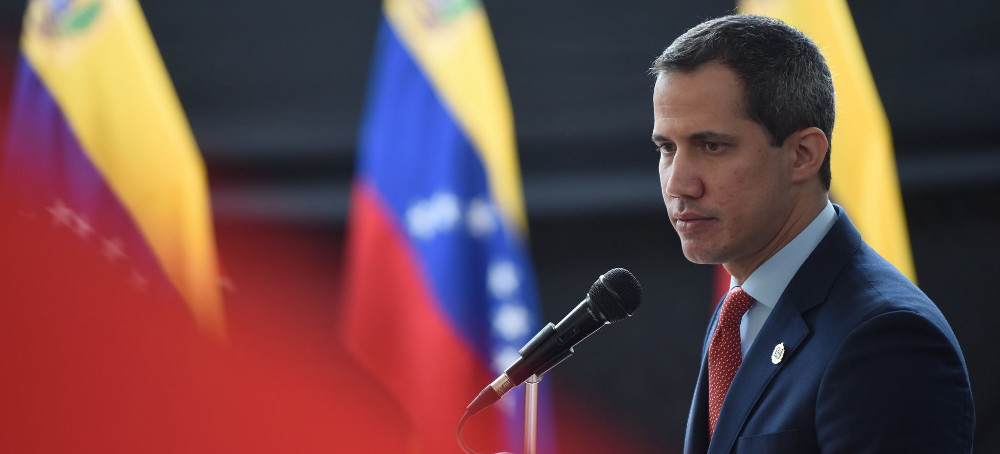 Opposition lawmakers are set to vote this week on ending the mandate of Juan Guaidó and ending his interim government. (photo: Carolina Cabral/Bloomberg)
“We will stay on the street,” Juan Guaidó vowed, “until Venezuela is liberated!”
The then-35-year-old head of the opposition-controlled National Assembly was swiftly backed by the Trump administration and governments around the world on the reasoning that he was now the highest-ranking democratically elected official in the country.
A rare unifying figure among the historically fractious opposition, Guaidó said he would serve as the country’s “interim president” until Maduro stepped down — or, at least, agreed to hold free and fair elections.
But nearly four years later and with little to show for the effort, the experiment appears to be coming to an end. On Friday, the opposition lawmakers who once rallied behind Guaidó are expected to end his mandate. They approved the move in a 72-23 preliminary vote last week.
“After four years, we should not continue to maintain a system that has not given results and is a bureaucratic burden,” Nora Bracho, a member of one of the three main opposition parties voting to end the interim government, told The Washington Post. “We have to reinvent ourselves and advance in our fight.”
At stake is not only the prospect of competitive elections under Maduro’s authoritarian socialist state and U.S. engagement with the country but also the control of key government assets abroad. Under U.S. and other sanctions, the interim government has administered Houston-based Citgo Petroleum Corp. and gold stored at the Bank of England.
Lawmakers who support removing Guaidó say they would establish a committee to protect those assets and manage expenses. The National Assembly, elected in 2015, would continue through 2023, but only to legislate on issues related to the assets.
The assembly was scheduled to meet on Thursday for a second and final vote. But Wednesday evening, its Twitter account, which is controlled by Guaidó's office, announced that the session had been postponed until Jan. 3.
The opposition parties Justice First and Democratic Action, who favor ousting Guaidó, responded that they hadn’t been consulted, and the session would proceed as scheduled. Then the assembly account tweeted that the assembly can’t meet without the president. There was no meeting on Thursday.
Finally, on Thursday evening, Guaidó said the assembly would meet at 1 p.m. on Friday. In a video tweet posted to Twitter, he said he was willing to allow the assembly to choose another leader in his place.
“Insisting on continuing with the interim presidency doesn’t have to do with Juan Guaidó,” he said. “ It’s a constitutional duty.”
Guaidó, now 39, told The Post last year he would remain interim president “until there is a free and fair presidential election. … That is my constitutional mandate.”
Sergio Vergara, an opposition congressman for Popular Will, the only major party that still supported Guaidó, warned that removing him would amount to recognizing Maduro.
“My question to all those promoting this is if the international community would agree with a violation of the constitution,” he told The Post. He said some assembly members might still be persuadable.
The Biden administration plans to recognize whatever body the opposition comes up with, according to a senior administration official who spoke on the condition of anonymity to share internal policy discussions.
“If they change their name or whatever, we’ll still call them the interim government, for the purpose of promoting talks” with Maduro’s government, and keeping sanctions in place as a means of leveraging negotiations over new elections, the official said.
“Our point is that we kind of hold all the cards here at this point in terms of sanctions policy,” the official said. “If [Maduro] wants us to change that approach and lift sanctions, what we need to see are democratic outcomes.”
As Maduro’s grip on power has proved durable, the Biden administration has shown a willingness to deal with him. U.S. officials made a rare trip to the presidential palace in March to discuss energy sanctions and secure the release of two detained Americans.
After an initial round of negotiations between the opposition and Maduro’s government last month, the administration allowed Chevron to reopen its oil production facilities in Venezuela, on the conditions that all oil produced is sold to the United States and all royalties and taxes due to Venezuela are used to pay down its U.S. debt.
Officials have said they would ease sanctions further if the talks moderated by Norway in Mexico City continue and bear results, but they have little confidence that Maduro is serious about the possibility of relinquishing power through free and fair elections.
But diplomatic engagement could accelerate, analysts say, after decisive Republican wins in Florida in the midterm elections have diminished the state’s value as a battleground. Biden administration officials, less concerned about trying to win the support of Maduro’s opponents in the Sunshine State, might see less cost to dealing with him, Tulane University sociologist David Smilde said.
The European Union has stopped recognizing Guaidó as interim president, as have many countries in Latin America. Many have declined to recognize anyone as president of Venezuela.
The United States, with the help of conservative allies in Latin America, has managed to bar Maduro’s representatives from Venezuela’s seats in international and regional organizations, including the Organization of American States and the Inter-American Development Bank, and fill them instead with Guaidó’s officials. But a wave of elections in some of the region’s most powerful countries, including Brazil, Argentina, Colombia and Chile, has brought leftists to power with different priorities.
“What we want them to do is to not normalize or basically ignore what’s going on inside Venezuela,” where human rights abuses and corruption still abound, the senior administration official said. “These are questions that are going to be fought” in regional organizations. “Do we have the votes to convince other governments not to seat anybody?”
The official said the Trump policy of recognizing Guaidó was centered on ousting Maduro; the Biden administration is focused on negotiations toward elections.
“It’s an approach that keeps us focusing on supporting the democratic process, and makes it less about Guaidó,” the official said.
It’s not clear just how much money the opposition manages — or how it is using it. In a September news conference, Guaidó said that between 2020 and 2021, it spent $130 million from funds “protected by the United States.” In 2021, he said, his government used the money on humanitarian aid, “defense of democracy,” the National Assembly and the management of foreign assets.
Over the past four years, the interim government has faced accusations of corruption and improper use of funds — including from some of its own members.
Guaidó, a relatively unknown opposition lawmaker before he was named interim president, at one point claimed support from nearly 60 percent of Venezuelans in polls. But a recent poll from Andrés Bello Catholic University and pollster Delphos indicated that more respondents would vote for Maduro than Guaidó now. More than 56 percent said the interim government should disappear completely.
“The majority of the population wants change, not only from Guaidó,” said Luis Vicente León, director of the Caracas-based Datanalisis polling agency. “They also feel disconnected from the opposition in general, and the government in general. They feel disconnected from politics.”
 White rhinos at Akagera national park, Rwanda. Thirty of the animals were translocated from South Africa in 2021 and now they're breeding. (photo: Drew Bantlin/African Parks)
They can be challenging, expensive and dangerous, but 2022 was a busy year for translocations and more are planned in the months ahead
Classified as “near threatened” by the IUCN, numbers of white rhino are declining across Africa, mainly because of poaching. The recent arrival of numerous babies in Akagera suggests the mission to create a new rhino haven is on track. “Translocation can be stressful for animals,” says Fearnhead. “Once babies start being born, it’s a sign the animals have settled well and are starting the process of building up numbers.”
Wildlife translocations are used to reintroduce a species to a location where they have gone locally extinct, to strengthen an existing population, or, as with Akagera’s white rhinos, to create a new population in a place they never existed before, often as part of wider rewilding efforts to restore an ecosystem. “Something right happening today to fix a wrong of yesterday,” as Fearnhead puts it.
The process is challenging, expensive and often dangerous. In July 2022, African Parks completed the ambitious move of 263 elephants, 80 buffalo, 128 impala, 33 sable, 81 warthog and 109 waterbuck from Malawi’s Liwonde national park to the country’s Kasungu national park. But it was later reported that two local people were killed by elephants during the translocation, and a third was killed by an elephant in September. “Any fatality that results from a translocation or ongoing management of a protected area is always one person too many,” says Fearnhead.
Translocations have helped revive Malawi’s national parks. In 2021, 14 African wild dogs completed a 27-hour journey from South Africa and Mozambique to Liwonde national park and Majete wildlife reserve. Majete received six wild dogs, which gave birth to eight pups this year. But in Liwonde, 18 wild dogs, including all the new arrivals, were killed in November after hunters poisoned a small watering hole to collect dead birds or small mammals, which the wild dogs then drank from. “When you have had such a big effort to undertake a complex reintroduction of a key species, one that’s highly endangered, it’s a huge blow to the whole team,” says Fearnhead.
Such “extremely unlucky” events are difficult to plan for. But animal fatalities are a possibility in many translocations. In 2018, six black rhino were moved from South Africa to Zakouma national park in Chad. Four of the animals died after being released. “The plants in Zakouma had a lower nutrient load, so the animals lost condition and became susceptible to diseases,” Fearnhead says.
In 2023, African Parks expects to transport four more black rhino to Zakouma in phase two of creating a breeding population. “We’ve got to be prepared to face further losses, as that’s an inherent risk with any translocation,” says Fearnhead. “There are things we’ve learned from the previous translocation where we can do things differently, including the time of year of the reintroduction. We hope, as a result of that, the prospects of the animals’ survival is greater.”
Daniel Blumstein, professor of biology at the Department of Ecology and Evolutionary Biology at the University of California Los Angeles, who co-authored a paper on translocations, says: “Unfortunately, many translocations fail, often because animals find themselves in unfamiliar habitat and have to figure out where shelter, food and safe locations are, or because of predation.
“Good planning can help improve outcomes. People can provide food and shelter for newly released animals, give them opportunities to learn the immediate area by releasing them into a safe enclosure first, or provide various forms of prerelease training. All these interventions are costly, and sometimes it’s not known whether a translocation will work until you try it. It’s often an essential management tool. But preventing the need for them in the first place is certainly preferable.”
In July, four spotted hyena were delivered from Karingani game reserve to Gorongosa national park in Mozambique, the latest in two decades’ of wildlife translocations that have included buffalo, wildebeest, elephants, hippos, cheetahs, elands, leopards and wild dogs, designed to bring Gorongosa back to life after the civil war.
“More than 102,000 animals were counted during the Gorongosa national park 2022 aerial wildlife count, compared with an estimated 19,500 animals in 2007,” says Dr Marc Stalmans, director of scientific services at Gorongosa. “All species, excluding the recent leopards and hyena, have recorded births. With ungulates, we’re already seeing births from the fourth or fifth generation since introduction, hence the strong growth in numbers. Relatively small introductions can make a big difference.”
November also saw four west African giraffe transported 500 miles from Niger’s “giraffe zone” to Gadabedji biosphere reserve in a joint project between the Giraffe Conservation Foundation (GCF) and Niger’s environment ministry. “West African giraffe have recovered from only 49 individuals in the mid-1990s to about 600 today,” says Stephanie Fennessy, executive director of GCF. “Until 2018, all these giraffe lived in the giraffe zone, a communal area that starts 60km east of the capital Niamey. This was a precarious all-eggs-in-one-basket scenario.”
Security was a major issue during the translocation. “Due to recent incursions by Boko Haram, working in Niger has become very difficult,” says Fennessy. “As a result, it was a government mandate to have a security detail allocated to the operation, including rangers, police and military. This put restrictions on activities and transport.”
The four recently moved females joined eight west African giraffe previously reintroduced to the reserve in 2018. “We’re happy to report three giraffe calves were born in Gadabedji in the last few months following the initial move,” says Fennessy.
This year also saw an ambitious intercontinental translocation of eight cheetahs from Namibia to India, where they had been absent for 75 years, having been hunted to extinction.
Elsewhere, European bison were released into ancient woodland in Kent this summer, leading to the first known bison to be born in the wild in the UK for thousands of years. Rewilding Europe has seen cinereous vultures, bison, and fallow deer released into southern Bulgaria’s Rhodope Mountains, Sorraia horses returned to Portugal’s Greater Côa Valley and lynx released into Croatia’s Velebit Mountains.
Next year is expected to be another busy one for translocations. African Parks plans to reintroduce white rhino into Garamba national park in the Democratic Republic of the Congo, and is looking at restoring addax and scimitar-horned oryx in Chad. There is also a plan with the Giraffe Conservation Foundation to bring at least 10 Angolan giraffe from Namibia to Iona national park in southern Angola.
Panthera is hoping to return lions to Batéké national park in Gabon, where the big cats were considered locally extinct until a lone male was spotted in 2014. And the Aspinall Foundation’s widely criticised plan to move 13 elephants from Howletts wild animal park in Kent to a life in the wild in Kenya may yet come to fruition. “Preparations continue,” according to the charity.
Birdlife will also get a boost from a planned 93-mile, cross-border translocation of 15 to 20 rheas (an ostrich-like bird) from Argentina to Patagonia national park in Chile, a collaboration between Rewilding Chile and Rewilding Argentina.
“Translocations are a fundamental tool in the current situation of such great degradation that nature has lost the ability to recover on its own,” says Sebastian Di Martino, conservation director at Rewilding Argentina. “We must help it to do so.”
Follow us on facebook and twitter!
PO Box 2043 / Citrus Heights, CA 95611
LOTS OF POSTS IGNORED BY BLOGGER..... OR REMOVED ON THEIR WHIM! ALL POSTS ARE AVAILABLE ON MIDDLEBORO REVIEW AND SO ON BLOGGER DOESN...