Showing posts with label ALASKA WILDFIRES. Show all posts

Tuesday, July 26, 2022

RSN: Mikhail Shishkin | Don't Blame Dostoyevsky


Reader Supported News
25 July 22

Live on the homepage now!
Reader Supported News

A PLEA TO OTHER RSN READERS — Please make a contribution and support those of us who have. We want Reader Supported News to continue but we can’t carry the whole load. Marc and the RSN Team do a good job of bringing us news worthy of the term. And this site is one of the few where one can have an adult conversation with other people about what is happening in our world. PLEASE, let’s keep RSN on a sound financial footing!
Mainiac, RSN Reader-Supporter

Sure, I'll make a donation!


Dostoyevsky. (photo: Atlantic/Getty Images)
Mikhail Shishkin | Don't Blame Dostoyevsky
Mikhail Shishkin, The Atlantic
did not put Putin in power or cause this war."

I understand why people hate all things Russian right now. But our literature did not put Putin in power or cause this war.


Culture, too, is a casualty of war. After Russia’s invasion of Ukraine, some Ukrainian writers called for a boycott of Russian music, films, and books. Others have all but accused Russian literature of complicity in the atrocities committed by Russian soldiers. The entire culture, they say, is imperialist, and this military aggression reveals the moral bankruptcy of Russia’s so-called civilization. The road to Bucha, they argue, runs through Russian literature.

Terrible crimes, I agree, are being committed in the name of my people, in the name of my country, in my name. I can see how this war has turned the language of Pushkin and Tolstoy into the language of war criminals and murderers. What does the world see of “Russian culture” today but bombs falling on maternity hospitals and mutilated corpses on the streets of Kyiv’s suburbs?

It hurts to be Russian right now. What can I say when I hear that a Pushkin monument is being dismantled in Ukraine? I just keep quiet and feel penitent. And hope that perhaps a Ukrainian poet will speak up for Pushkin.

The Putin regime has dealt Russian culture a crushing blow, just as the Russian state has done to its artists, musicians, and writers so many times before. People in the arts are forced to sing patriotic songs or emigrate. The regime has in effect “canceled” culture in my country. Recently a young protester faced arrest for holding a placard that bore a quote from Tolstoy.

Russian culture has always had reason to fear the Russian state. In the saying commonly attributed to the great 19th-century thinker and writer Alexander Herzen, who was sent into internal exile for his anti-czarist sentiments—and reading “forbidden books,” as he put it—“The state in Russia has set itself up like an occupying army.” The Russian system of political power has remained unchanged and unchanging down the centuries—a pyramid of slaves worshipping the supreme khan. That’s how it was during the Golden Horde, that’s how it was in Stalin’s time, that’s how it is today under Vladimir Putin.

The world is surprised at the quiescence of the Russian people, the lack of opposition to the war. But this has been their survival strategy for generations—as the last line of Pushkin’s Boris Godunov puts it, “The people are silent.” Silence is safer. Whoever is in power is always right, and you have to obey whatever order comes. And whoever disagrees ends up in jail or worse. And as Russians know only too well from bitter historical experience, never say, This is the worst. As the popular adage has it: “One should not wish death on a bad czar.” For who knows what the next one will be like?

Only words can undo this silence. This is why poetry was always more than poetry in Russia. Former Soviet prisoners are said to have attested that Russian classics saved their lives in the labor camps when they retold the novels of Turgenev, Tolstoy, and Dostoyevsky to other inmates. Russian literature could not prevent the Gulags, but it did help prisoners survive them.

The Russian state has no use for Russian culture unless it can be made to serve the state. Soviet power wanted to give itself an air of humanity and righteousness, so it built monuments to Russian writers. “Pushkin, our be-all and end-all!” rang out from stages in 1937, during the Great Purge, when even the executioners trembled with fear. The regime needs culture as a human mask—or as combat camouflage. That’s why Stalin needed Dmitri Shostakovich and Putin needs Valery Gergiev.

When the critics say Russian culture is imperialist, they are thinking of Russia’s colonial wars, and they mean that its artists justified the state’s expansionist aims. But what they do not account for is Russia’s internal imperialism: Before anything else, it was a slave empire where the Russian people were forced to endure and suffer the most. The Russian empire exists not for Russia’s people but for itself. The Russian state’s only purpose is to stay in power, and the state has been hammering the Russkiy mir (“Russian world”) view into people’s brains for centuries: the holy fatherland as an island surrounded by an ocean of enemies, which only the czar in the Kremlin can save by ruling its people and preserving order with an iron hand.

For Russia’s small educated class, the eternal questions—the “cursed questions,” as the 19th-century intelligentsiya knew them—were those framed by two great novels of the period: Herzen’s Who Is to Blame? and Nikolai Chernyshevsky’s What Is to Be Done? But for millions of illiterate peasants, the only question that mattered was, “Is the czar a real one or an impostor?” If the czar was true, then all was well with the world. But if the czar proved false, then Russia must have another, true one. In the minds of the people, only victories over Russia’s enemies could resolve whether the czar was real and true.

Nicholas II was defeated by Japan in 1905 and in the First World War. A false czar, he lost all popularity. Stalin led his people to victory in the Great Patriotic War (World War II), so he was a real czar—and is revered by many Russians to this day. Mikhail Gorbachev, the last Soviet leader, lost the war in Afghanistan and the Cold War against the West, and he is still despised.

Through his triumph in 2014, easily annexing Crimea, Putin achieved the popular legitimacy of a true czar. But he may lose all that if he cannot win this war against Ukraine. Then another will come forward—first to exorcise the false Putin and then to prove his legitimacy through victory over Russia’s enemies.

Slaves give birth to a dictatorship and a dictatorship gives birth to slaves. There is only one way out of this vicious circle, and that is through culture. Literature is an antidote to the poison of the Russian imperialist way of thinking. The civilizational gap that still exists in Russia between the humanist tradition of the intelligentsiya and a Russian population stuck in a mentality from the Middle Ages can be bridged only by culture—and the regime today will do everything it can to prevent that.

The road to the Bucha massacre leads not through Russian literature, but through its suppression—the denunciations or book bans against Fyodor Dostoyevsky and Mikhail Bulgakov, Vladimir Nabokov and Joseph Brodsky, Anna Akhmatova and Andrei Platonov; the executions of Nikolai Gumilev, Isaac Babel, and Perez Markish; the driving of Marina Tsvetaeva to suicide; the persecution of Osip Mandelstam and Daniil Kharms; the hounding of Boris Pasternak and Aleksandr Solzhenitsyn. The history of Russian culture is one of desperate resistance, despite crushing defeats, against a criminal state power.

Russian literature owes the world another great novel. I sometimes imagine a young man who is now in a trench and has no idea that he is a writer, but who asks himself: “What am I doing here? Why has my government lied to me and betrayed me? Why should we kill and die here? Why are we, Russians, fascists and murderers?”

That is the task of Russian literature, to keep asking those eternal, cursed questions: “Who is to blame?” and “What is to be done?”

READ MORE


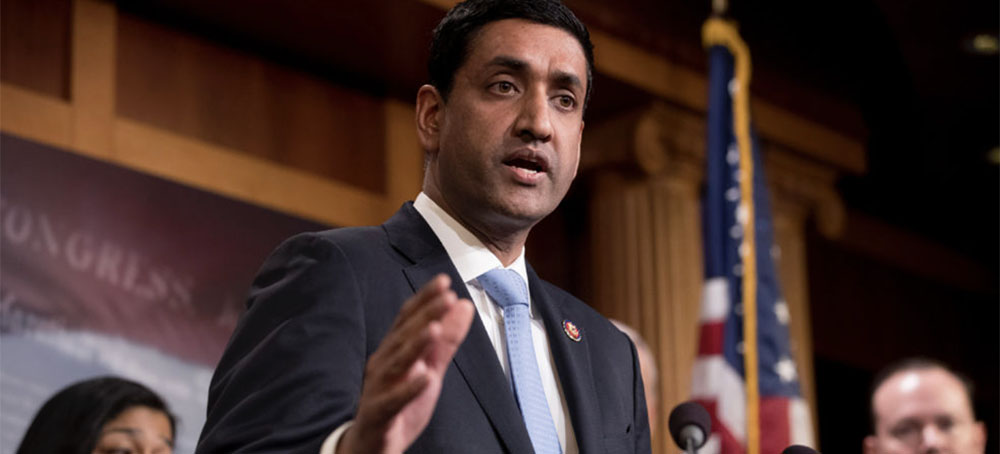
Rep. Ro Khanna: It’s Not Enough to Charge January 6 Rioters. Accountability Must “Go Up the Food Chain”Rep. Ro Khanna. (photo: Andrew Harnik/AP)

Rep. Ro Khanna: It’s Not Enough to Charge January 6 Rioters. Accountability Must “Go Up the Food Chain”
Democracy Now!
Excerpt: "The January 6 hearings have provided jaw-dropping revelations about former President Trump’s attempts to overturn the 2020 election results and his role in unleashing a deadly mob on the Capitol, but the House committee has not yet recommended criminal charges against Trump."

The January 6 hearings have provided jaw-dropping revelations about former President Trump’s attempts to overturn the 2020 election results and his role in unleashing a deadly mob on the Capitol, but the House committee has not yet recommended criminal charges against Trump. Congressmember Ro Khanna says whether to charge the former president is ultimately the Justice Department’s call, but he stresses the need for accountability. “It’s not enough for the Justice Department to just prosecute the individuals who showed up on January 6,” Khanna says. “I’m hoping that the accountability will go up the food chain.”

Transcript

This is a rush transcript. Copy may not be in its final form.

AMY GOODMAN: Finally, I want to switch gears and just ask, because of the January 6th insurrection hearings: Do you think President Trump should be criminally charged?

REP. RO KHANNA: I believe that the January 6th committee should send a referral to the Justice Department. That’s not for me to say, but I will say this. It’s not enough for the Justice Department to just prosecute the individuals who showed up on January 6th. They need to hold accountable the people who tried to overturn our democratic results by having fraudulent schemes, questioning results that were totally valid. And I’m hoping that the accountability will go up the food chain.

AMY GOODMAN: Merrick Garland? Do you think the attorney general is moving too slowly?

REP. RO KHANNA: I would like to see there be more accountability for people at the top. I understand his job is difficult, not from a political perspective. I think he wants to make sure that when he indicts, he can convict. No prosecutor wants to indict and then have an acquittal, which would be even worse than not indicting. So, I’ve given him the benefit of the doubt. But I think there will be a lot of dissatisfaction in this country if the only people charged are those who were caught up in a mob for a day, went there and engaged in the insurrection, and the people who were actually plotting the overturning of the results are left without accountability.

AMY GOODMAN: Ro Khanna, we want to thank you for being with us, Democratic congressman from California, speaking to us from Fremont.

Well, we move from Ro to Roe. Well, that is, with the overturning of Roe v. Wade, the battleground for abortion access now shifts to the states. Even as the U.S. faces the worst rates of maternal mortality among all rich nations, with Black mothers facing three to four times the mortality rate of the national average, we’ll speak with the directors of a new documentary called Aftershock. Stay with us.


READ MORE


Monkeypox Is Truly an Emergency. The WHO Was Right to Raise the Highest Alarm.A man receives a monkeypox vaccine in Montreal, Canada, on Saturday. (photo: Graham Hughes/AP)

Monkeypox Is Truly an Emergency. The WHO Was Right to Raise the Highest Alarm.
Devi Sridhar, Guardian UK
Sridhar writes: "Supporting the people most at-risk of this awful disease is the only way to reduce its impact and stop its spread."

Supporting the people most at-risk of this awful disease is the only way to reduce its impact and stop its spread


Probably the last thing you want to hear is that the World Health Organization has declared another disease – this time monkeypox – to be a public health emergency of international concern. Monkeypox is a virus similar to smallpox that causes fever, swollen lymph nodes and distinctive rashes on the face, palms, the soles of the feet and genitalia. Gay and bisexual men are most at risk, as are other men who have sex with men. It can be a serious disease with the case fatality rate around 3-6%, although the vast majority of people manage to recover at home without hospitalisation or medication.

This WHO declaration is unusual in that the organisation’s director general, Dr Tedros Adhanom Ghebreyesus, overruled a split emergency committee (an expert advisory committee from around the world in virology, epidemiology and public health) to insist that the loudest alarm bell should be rung. His justification was: “We have an outbreak that has spread around the world rapidly, through new modes of transmission, about which we understand too little and which meets the criteria in the international health regulations.”

For a disease to be called a public health emergency of international concern, it has to meet a high threshold. It must be an “extraordinary event” that constitutes a public health risk to other countries through the international spread of disease, requiring a coordinated global response.

Given how many disease outbreaks occur, often hundreds a month, this alarm bell has been rung sparingly for diseases such as polio, Covid-19, Ebola, Zika virus and H1N1 swine flu. Since the first human case was discovered in 1970 in the Democratic Republic of Congo, monkeypox outbreaks have largely been contained and limited to roughly a dozen African countries. In recent weeks, the number of cases has risen to more than 15,000 across the world.

Dr Tedros’ concern now is with the increase in cases, and how the virus is spreading rapidly across the world through sexual contact networks. A new research paper on 528 monkeypox cases in 16 countries lays out that 98% of the people infected were gay or bisexual men, 75% of them were white, and 41% had HIV. No women were among the cases, and 95% of cases were thought to be linked to sexual transmission. These findings are crucial in developing an effective and tailored public health response to contain spread which needs to largely focus on the current highest-risk group: men having sex with men (MSM).

While some have suggested it is homophobic to note that MSM are the group at highest risk, others have noted that homophobia is recognising this pattern of spread and not doing anything about it. It is standard in public health when tackling infectious diseases to identify which groups are most at risk and offer support to reduce the negative impact the disease can have. Think of flu vaccination campaigns tailored to protect pregnant or older people – some of the highest-risk groups for illness and death from influenza. This is also a disease that could easily spread beyond the MSM community, given its usual transmission pattern is through household members, close contacts and healthcare workers.

This is an emergency quite distinct from Covid-19 and polio, which are also current public health emergencies being tracked by the WHO. Fortunately, we have an effective vaccine – developed for smallpox – that has been approved for the prevention of monkeypox as well. However, availability is limited even in Britain. The necessary response to monkeypox is intense vaccination efforts within the MSM community and ensuring adequate supply and access to all who need it. There needs to be clear messaging and education to raise awareness about symptoms and testing, and support for those who want to isolate and need to take time off work.

Just telling people not to have sex hasn’t worked well: this has been clearly shown by the HIV response and the failure of abstinence-only approaches. It’s more effective to show how to reduce risk and protect oneself.

With fatigue setting in after years of the Covid-19 pandemic, public health leaders don’t want to cry wolf. However, this is a dire situation and a true global emergency, as stated clearly by the WHO. Rather than fatigue, cynicism and fatalism, it’s time for governments to step up a tailored response. It won’t involve lockdowns or restrictions, but surveillance, testing, provision of self-isolation support, clear messaging and outreach to the most at-risk groups, and most importantly targeted vaccination.

West African countries have been struggling with monkeypox for years. This has drawn little attention from richer countries and the disease was allowed to simmer there without much investment or provision of vaccination. Monkeypox is a reminder that a disease circulating anywhere, however far from us we may think it is, is only ever a plane ride away, and that bugs don’t respect national boundaries. The entire history of humankind surviving these sorts of disease outbreaks shows that the best approach is collective; that if a fire is raging in your neighbour’s garden, the imperative is to help them put it out. Not just because it’s the right thing to do, but also because it could be your house on fire next.
READ MORE


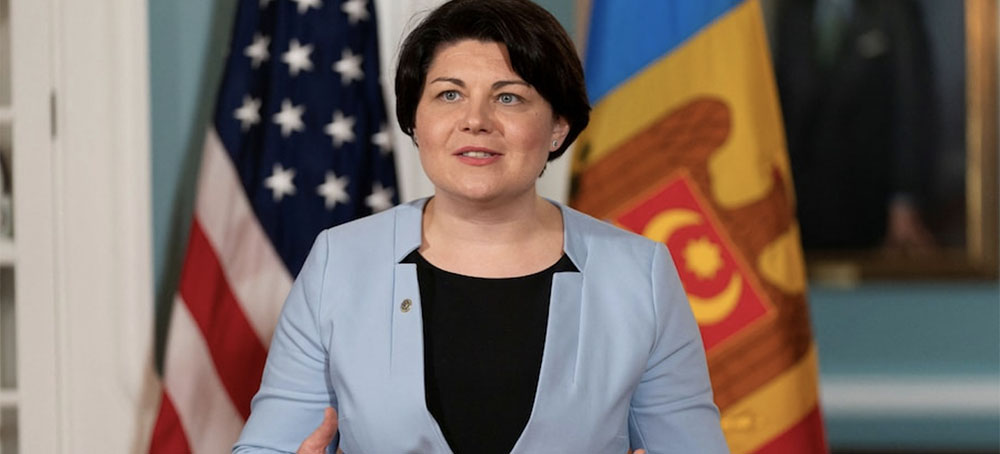
Moldova ‘Very Worried’ Russia May Invade, Prime Minister SaysMoldovan Prime Minister Natalia Gavrilita speaks at the U.S. State Department in Washington on July 19. (photo: Manuel Balce Ceneta/Reuters)

Moldova ‘Very Worried’ Russia May Invade, Prime Minister Says
Jennifer Hassan, The Washington Post
Hassan writes: "Moldova is 'very worried' about a potential Russian invasion as Russian forces prepare to step up attacks in Ukraine’s east and south, close to the border with the small nation of 2.5 million."

Moldova is “very worried” about a potential Russian invasion as Russian forces prepare to step up attacks in Ukraine’s east and south, close to the border with the small nation of 2.5 million.

Moldova’s prime minister, Natalia Gavrilita, said the possibility that her country could be the next to be invaded on orders of Russian President Vladimir Putin “is a hypothetical scenario for now.”

“But if the military actions move further into the southwestern part of Ukraine and toward Odessa, then of course we are very worried,” she said in an interview Sunday with CNN.

Moldova, which remains militarily neutral, split from the Soviet Union and gained independence in 1991. It has publicly condemned Putin’s invasion of Ukraine and hundreds of thousands of refugees have fled there from across the border.

“We had to deal very quickly with a massive refugee flow,” Gavrilita said, adding that recent polling revealed a significant majority of Moldovans were willing to take in even more displaced people.

The energy supply of Moldova, considered one of the world’s poorest countries, is controlled by Russia, and the nation has long expressed concern over Russia’s next step in the conflict. Putin’s war next door poses Moldova’s most direct challenge to date, as The Washington Post reported earlier this year.

After Ukraine, Moldova has been hit hardest economically since Russia’s invasion, Gavrilita said, citing high inflation.

Moldova was granted candidate status to join the European Union alongside Ukraine last month.

The two nations will have to go through a lengthy process to become members and are expected to meet certain criteria.

European Commission President Ursula von der Leyen said the move to grant candidate status strengthened Ukraine and Moldova “in the face of Russian aggression” along with the European Union and sent a strong signal to Putin.

In April, a Russian military commander suggested that Moscow would seek to create a corridor through Ukraine’s south to Transnistria, a breakaway republic in eastern Moldova. Following the remarks, Moldova summoned Russia’s ambassador to express “deep concern.”

Gavrilita expressed alarm Sunday that Russian troops “are on the territory of the secessionist Transnistria region,” and warned that other countries should also be concerned about Putin’s ambitions.

“If a country can start an annexation war without any regard for international law, then in this sense, nobody is safe,” said the prime minister, who took office in August last year. “I think a lot of countries are worried.”

Gavrilita added that Moldova is doing “everything possible to maintain peace and stability and to ensure that the fighting does not escalate.”
 

READ MORE


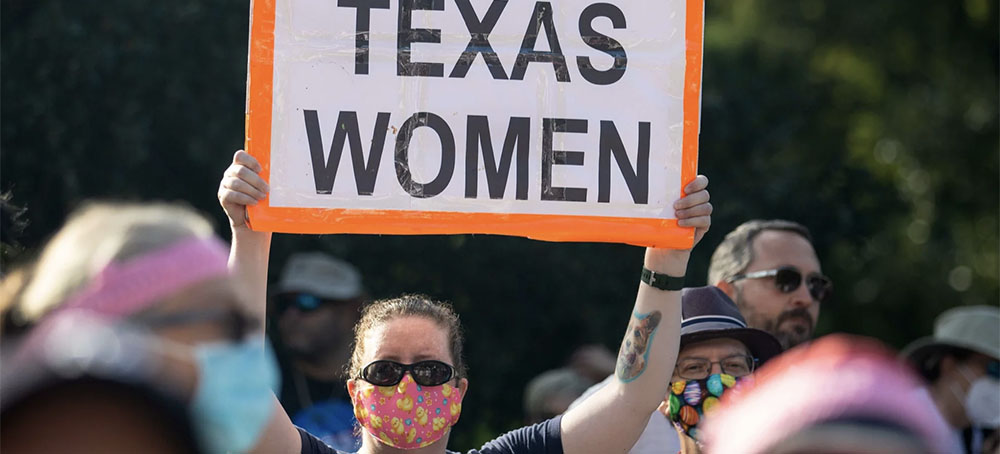
Corporate America Reckons With Its Role in Reproductive RightsA number of companies with staff in Texas has offered to pay for abortion-related travel. (photo: Montinique Monroe/Getty Images)

Corporate America Reckons With Its Role in Reproductive Rights
Lauren Hodges, NPR
Hodges writes: "When Senate Bill 8 took effect in September of last year, banning abortions after about 6 weeks in Texas, Match Group's then-CEO Shar Dubley sent a letter to her employees."

When Senate Bill 8 took effect in September of last year, banning abortions after about 6 weeks in Texas, Match Group's then-CEO Shar Dubley sent a letter to her employees.

"I wanted to let you know that I am setting up a fund to ensure that if any of our Texas-based employees or a dependent find themselves impacted by this legislation and need to seek care outside of Texas, the fund will help cover the additional costs incurred," the letter said.

Match Group, based in Dallas, owns the biggest global portfolio of dating apps and websites, which includes Tinder, Match.com, OkCupid and Hinge.

"We received hundreds of emails and Slack messages of support, of gratitude," Match Group's chief communications officer Justine Sacco said. "People were very proud that she came out and spoke up and put something into place to protect them."

This was just a preview of a trend to come. In the months since, the Supreme Court has overturned Roe v. Wade, allowing trigger bans on abortions to take effect in several states. A growing list of companies is now offering similar services to their employees. Big name corporations like Disney, Microsoft, Nike and Tesla have announced that they plan to assist employees who need to travel out-of-state for services and care.

Many of the trigger laws not only criminalize abortion but also "aiding an abetting" the process. So confidentiality is key. Match Group partnered with Planned Parenthood Los Angeles so employees who need help can have all of their travel and appointments booked outside of the company.

"We have no way to know who has used the fund [or] how many people have called the hotline," Sacco said. "We do not get that information."

Yet despite the gratitude and support from their employees (as well as a public that largely supports access to abortion services), the business world still has to reckon with some longstanding corporate traditions.

"Some of these very same companies are the ones who have donated over the years to the very elected officials who sponsored and voted for these abortion bans in the first place," said Andrea Miller, president of the National Institute for Reproductive Health.

AT…T, Citigroup and Uber are just some of those companies promising to pay for employees' abortion-related coverage — while also donating to lawmakers who support (or even authored) these restrictive laws.

Until this month, Match Group was also donating to both political parties. But the company's new CEO, Bernard Kim, recently suspended donations to both the Republican Attorneys General Association and the Democratic Attorneys General Association.

"It's my responsibility to understand how these donations fit into our larger lobbying activity, and determine what we will do moving forward," Kim said in a recent memo to staff.

Match Group was also on a list of companies expected to attend a luxury retreat hosted by the Republican Attorneys General Association for its corporate donors in Florida earlier this month. Sacco said no one from the company attended and that someone had RSVPd to the event before the new company policy on political donations took effect.

Miller said corporate America should be looking at how it can realign its political influence if it really wanted to make a statement and support its workforce.

"At the end of the day, look, nobody should have to travel to obtain an abortion," she said. "To be dependent on the benevolence of your employer, much less, you know, the whims of the state legislature."

Miller said she did appreciate the legal risk that companies take on when making these public statements and arrangements. Earlier this month, the Texas Freedom Caucus accused law firm Sidley Austin LLP of being "complicit in illegal abortions." Sidley is one of the companies that has promised to assist employees who need to access out-of-state abortion care. It has offices in Dallas and Houston.

The caucus sent a letter to Sidley on July 7, warning the firm to preserve its records in anticipation of a lawsuit.

Even so, Miller said that companies had likely weighed those costs with what could be a bigger loss.

"The reality is that companies, communities, families — frankly, our entire economy — are going to be facing challenges around employee retention, especially the potential of more women being pushed out of the workforce," she said. "We already saw that with COVID; we already have a crisis in terms of what happens to women and others who become pregnant and continue their pregnancies and have children."

Brad Harrington agrees. He's the executive director of the Boston College Center for Work and Family.

"Companies also are very concerned about their brand," he said. "With all the talk about the great resignation — organizations want to be one of those places where people say, 'That's a great place to work,' and, 'Hey, their values are really aligned with ours.'"

And what about employees who do want to have children? Harrington said that good wages, benefits and family leave policies are an important part of reproductive rights.

"I'm pretty sure that's the number one concern [families] have when it comes to abortion," he said. "How they're going to pay for everything that goes with birth and recovery and children's health needs — when it comes to the ability to finance an expanding family, corporations play a pretty major role."

Justine Sacco at Match Group said the company's abortion access plan "goes hand in hand" with its benefits and family leave policies.

"Our business is predicated on helping people find love and relationships and eventually get married and lead to building families," she said. "I think that reproductive rights are in place so that when you choose to have a family, you can also do it in the way that is best for your children, for your partner, and for yourself. And so all of those benefits really should be thought of comprehensively."

When asked if Match Group would consider moving its operations to a state with less restrictive abortion laws, Sacco said they were "looking at all options" to make sure their workforce felt safe and supported. The company has nearly 400 employees in Texas alone.

"Match has been in Texas since the '90s," she said. "But I don't think anything's off the table."

READ MORE


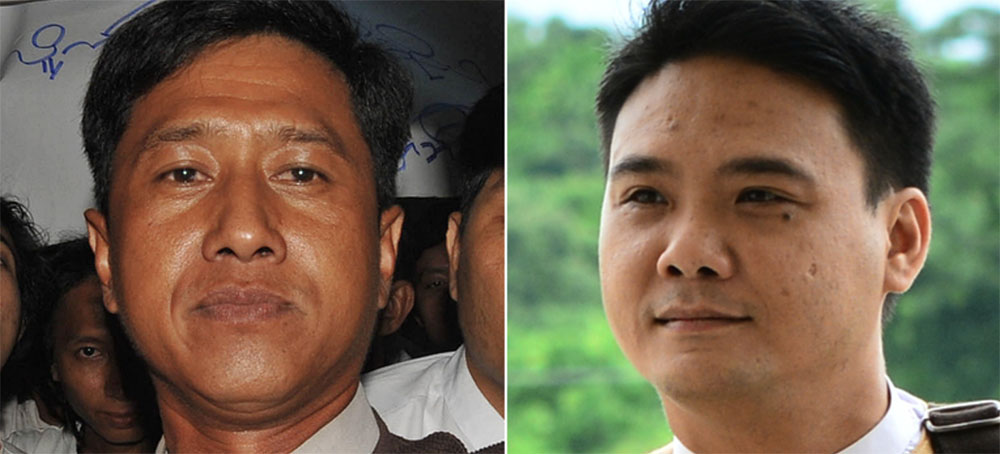
Myanmar Junta Executes Leading Democracy ActivistsProminent activist Kyaw Min Yu (Ko Jimmy), left, and former NLD lawmaker Phyo Zayar Thaw. (photo: CNN/AP/Getty Images)

Myanmar Junta Executes Leading Democracy Activists
Helen Regan and Rhea Mogul, CNN
Excerpt: "Myanmar's military junta executed two prominent pro-democracy activists and two other men accused of terrorism, state media reported Monday, following a trial condemned by the UN and rights groups."

Myanmar’s military junta executed two prominent pro-democracy activists and two other men accused of terrorism, state media reported Monday, following a trial condemned by the UN and rights groups.

Veteran democracy activist Kyaw Min Yu, better known as Ko Jimmy, and former National League for Democracy lawmaker Phyo Zayar Thaw were executed, along with Hla Myo Aung and Aung Thura Zaw, the Global New Light of Myanmar reported, without giving a date.

Their deaths mark the first judicial executions in the country in decades, and human rights groups fear more will follow. According to Human Rights Watch, 114 people have been sentenced to death in Myanmar since the military seized power in a coup in February 2021.

Ko Jimmy and Phyo Zayar Thaw were accused by the military of being “involved in terrorist acts such as explosion attacks, killing of civilians as informants,” junta spokesperson Zaw Min Tun previously told CNN. They were sentenced to death in January 2022, and last month Zaw Min Tun confirmed their appeals had been denied.

Civilian cases have been tried in military courts with proceedings closed to the public since the military seized power last year, ousting the elected government and reversing almost a decade of tentative democratic reforms.

Rights groups say these secretive military tribunals deny the chance to a fair trial and are designed for speedy – and almost certain – convictions, regardless of evidence.

United Nations Special Rapporteur on the situation of human rights in Myanmar, Tom Andrews, said in a statement Monday he was “outraged and devastated” by the executions.

“My heart goes out to their families, friends and loved ones and indeed all the people of Myanmar who are victims of the junta’s escalating atrocities,” he said. “These individuals were tried, convicted, and sentenced by a military tribunal without the right of appeal and reportedly without legal counsel, in violation of international human rights law.”

Acting Asia director for Human Rights Watch, Elaine Pearson, called the executions “an act of utter cruelty,” that “followed grossly unjust and politically motivated military trials.”

“This horrific news was compounded by the junta’s failure to notify the men’s families, who learned about the executions through the junta’s media reports,” Pearson said in a statement Monday.

A spokesperson for United Nations Secretary-General António Guterres said earlier the UN was “deeply troubled” by the decision to execute the men, calling it a “blatant violation of the right to life, liberty and security of person,” referring to an article in the Universal Declaration of Human Rights.

Amnesty International said it has recorded an “alarming” increase in the number of death sentences in the country since the takeover that it said were designed to “sow fear.”

“The death sentence has become one of many appalling ways the Myanmar military is attempting to sow fear among anyone who opposes its rule, and would add to the grave human rights violations, including lethal violence targeted at peaceful protesters and other civilians,” the organization said on Twitter in June.

An Amnesty report from 2021 said the last judicial execution in Myanmar known to have taken place was in 1988. There have been numerous death sentences in the country since, but they’ve usually been “commuted through mass pardons,” Amnesty said.

CNN has been unable to independently verify when the last execution by the state was carried out in Myanmar.

Prominent activists

Phyo Zayar Thaw, 41, was formerly a lawmaker in Myanmar’s lower house of parliament for the then-ruling National League for Democracy – the party of ousted state counselor Aung San Suu Kyi.

Before becoming a politician, Phyo Zayar Thaw was a popular hip hop artist and a founding member of pro-democracy youth organization Generation Wave. He was imprisoned in 2008 by the previous military regime for his activism.

In November 2021, Phyo Zayar Thaw was arrested during a raid on an apartment complex in Myanmar’s biggest city, Yangon. He was accused of planning attacks on junta targets and charged under the Counterterrorism Law and the Public Property Protection Act, according to local media.

Ko Jimmy became a prominent student activist in Myanmar during the mass popular uprising against the then-military regime in 1988. He spent about 15 years behind bars for his activism and involvement in the 8888 demonstrations and 2007 Saffron Revolution.

According to local media, Ko Jimmy was detained in October 2021, accused of organizing guerrilla attacks on junta targets and charged with treason and terrorism offenses. He was also wanted by the regime for allegedly inciting unrest because of social media posts criticizing the coup.

Since seizing power, the military junta led by Min Aung Hlaing has embarked on a bloody crackdown against any opposition to its rule. Nearly 15,000 people have been arrested and more than 2,000 killed by military forces in that time, according to the Assistance Association for Political Prisoners.

The military has been accused of crimes against humanity and war crimes by the US, UN and other international bodies as it attempts to assert control over the people, who continue to wage a mass resistance campaign.

“The junta’s barbarity and callous disregard for human life aims to chill the anti-coup protest movement,” Human Rights Watch’s Pearson said Monday.

“European Union member states, the United States, and other governments should show the junta that there will be a reckoning for its crimes.”

READ MORE


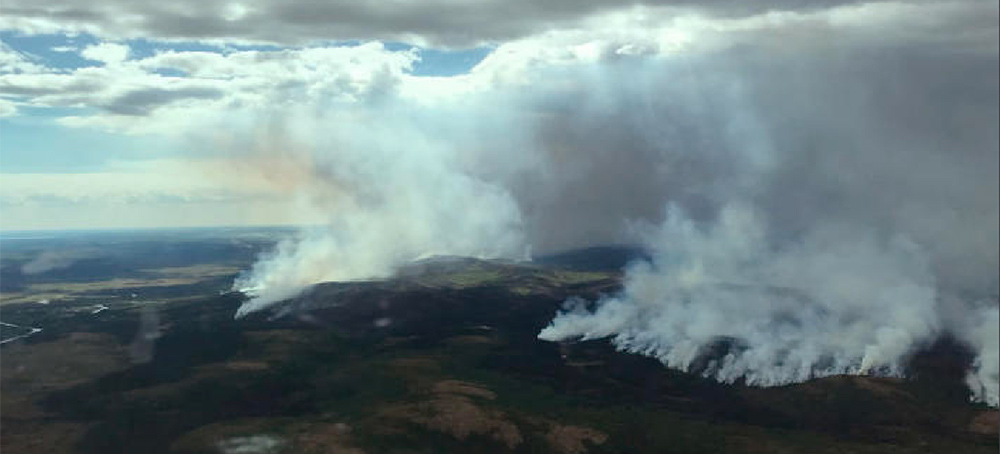
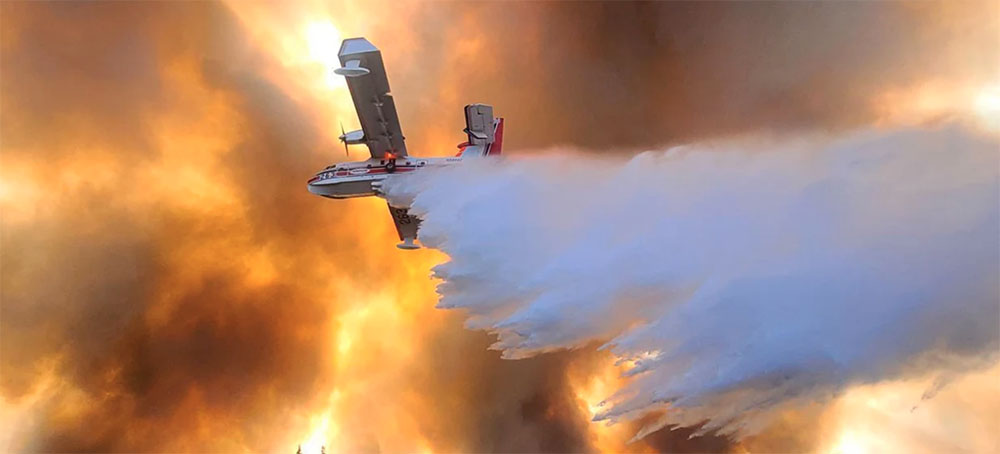
Alaska Experiencing Wildfires It’s Never Seen BeforeA fixed-wing aircraft drops water on the Clear Fire near Anderson, Alaska, on July 6. (photo: AP)

Alaska Experiencing Wildfires It’s Never Seen Before
Associated Press
Excerpt: "Alaska is burning this year in ways rarely or ever seen."

Already more than 530 wildfires have burned an area the size of Connecticut and the usual worst of the fire season lays ahead.

Alaska is burning this year in ways rarely or ever seen, from the largest wildfire in a typically mainly fireproof southwest region to a pair of blazes that ripped through forests and produced smoke that blew hundreds of miles to the the Bering Sea community of Nome, where the normally crystal clear air was pushed into the extremely unhealthy category.

Already more than 530 wildfires have burned an area the size of Connecticut and the usual worst of the fire season lays ahead. While little property has burned, some residents have been forced to evacuate and one person was killed — a helicopter pilot died last month when he crashed while attempting to carry a load of equipment for firefighters.

Recent rains have helped but longer-term forecasts are showing a pattern similar to 2004, when July rains gave way to high-pressure systems, hot days, low humidity and lightning strikes that fueled Alaska’s worst fire year.

In 2004, the acreage burned by mid-July was about the same as now, But by the time that fire season ended, 10,156 square miles (26,304 square kilometers) were charred.

“The frequency of these big seasons has doubled from what it was in the second half of the 20th century,” said Rick Thoman, a climate specialist with the Alaska Center for Climate Assessment and Policy at the University of Alaska’s International Arctic Research Center. “And there’s no reason to think that’s not going to continue.”

Heat waves and droughts, which are exacerbated by a warming climate, are making wildfires more frequent, destructive, and harder to fight in many places. This month, wildfires have torn through Portugal, Spain, France, England and Germany, which have seen record-high temperatures.

California has recorded its largest, most destructive and deadliest wildfires in the last five years and with the state deep in drought authorities are girding for what may be a late summer and fall filled with smoke and flames.

Alaska, the nation’s largest state, also has been dry. Parts saw an early snow melt and then a largely rain-free June that dried out the duff layer — the band of decaying moss and grasses that blankets the floors of boreal forests and the tundra. This organic matter can be up to 2 feet (0.61 meters) thick but in various stages of decay.

On May 31, a lightning strike on the duff layer in the Yukon–Kuskokwim Delta started the East Fork fire, an area in southwest Alaska that rarely burns. Two communities with a combined population of about 700 were threatened but no mandatory evacuations were ordered in what became the largest wildfire ever in the delta at 259 square miles (671 square kilometers). Firefighters were able to protect the communities.

A fire like that one was directly attributable to climate change, Thoman said. There’s more vegetation growing on the tundra, willow and alder trees are thicker in the transition area between the tundra and forests, and spruce along river valleys are growing thicker and moving farther uphill from those valleys.

“There’s been a significant increase in the amount of fuel available, and that’s from decades of warmer springs and summers in the region, direct result of a warming climate,” he said. “And, of course, fires with more fuels available burn hotter. They burn longer. They’re more resistant to changes in weather.”

In Alaska, a little more than half of all wildfires are started by lightning and the rest are caused by humans accidentally, intentionally or through negligence. Of the 4,687 square miles (12,140 square kilometers) burned so far this year, only 2 square miles (5 square kilometers) have been from human-caused fires.

It isn’t feasible or necessary to try to fight all Alaskan wildfires. Fire play a key role in the state’s ecology by cleaning out low-lying debris, thinning trees and renewing habitats for plants and animals, so Alaska typically lets most burn themselves out or wait until rain and snow does the job. Firefighting resources are used to battle fires in populated areas.

So far this year, there’s been about 145,000 lightning strikes in Alaska and adjacent areas of Canada, as counted by the Bureau of Land Management’s lightning detection network. A staggering 42% occurred between July 5-11 when weather systems produced rain but about 50 fires also were started.

“Having concentrated lightning, where we get a significant fraction of the entire season’s lightning in a row in a few days, that’s actually fairly typical for Alaska lightning,” Thoman said. “Lots of lightning in that concentrated area that did spark quite a few fires in areas that had not had fires up to that point.”

While there’s been little loss of property, smoke from the fires has caused dangerous breathing conditions. In one case, two fires burning near Lake Iliamna joined and in one day burned about 75 square miles (194 square kilometers) of boreal forest, creating smoke and ash that strong winds transported hundreds of miles northwest to Nome, pushing the air quality index into the extremely unhealthy category.

“I would never have thought that you could get that poor of air quality back 400 miles from the active fires, and that is a testament to how hot those fires were,” Thoman said.


READ MORE


Contribute to RSN

Follow us on facebook and twitter!

Update My Monthly Donation

PO Box 2043 / Citrus Heights, CA 95611


Sunday, June 12, 2022

RSN: Pro-Choice Militants Are Targeting 'Pregnancy Crisis Centers' Across US


Reader Supported News

82 Donors Supporting the Entire Organization

82 people donating what they can are sustaining Reader Supported News for June. That’s out of 240,619 people who have come.

Stop for a moment and chip in.

Please.

Marc Ash
Founder, Reader Supported News

Sure, I'll make a donation!


If you would prefer to send a check:
Reader Supported News
PO Box 2043 / Citrus Heights, CA 95611

Follow us on facebook and twitter!

Update My Monthly Donation


Reader Supported News
12 June 22

Live on the homepage now!
Reader Supported News

SMALL DONORS RALLYING FOR RSN, NEED SOME MATCHING FUNDS! — We need a rally, right now the smaller donors are responding and getting it started. Slightly larger matching donations really help. So far for June those sustaining contributions are missing. Super important.
Marc Ash • Founder, Reader Supported News

Sure, I'll make a donation!


Broken glass outside CompassCare, an anti-abortion 'crisis center' in Amherst, New York. (photo: Mark Mulville/AP)
Pro-Choice Militants Are Targeting 'Pregnancy Crisis Centers' Across US
Poppy Noor, Guardian UK
Noor writes: "'Jane was here': those were the words graffitied on the walls of a 'pregnancy crisis center' in Amherst, New York, this week, as part of a targeted arson attack."

Experts say that no matter how righteous, extremist protests are risky: they may turn people against the cause

"Jane was here”: those were the words graffitied on the walls of a “pregnancy crisis center” in Amherst, New York, this week, as part of a targeted arson attack.

In Charlotte, North Carolina, the message was more explicit: “If abortions aren’t safe then you aren’t either,” read the words scrawled in red paint across another center, which also had its windows broken.

The same message was found on the walls of “pregnancy crisis centers” in Texas and Wisconsin in May, and another attack took place on a similar institution in Washington, also in May. The attacks on these centers – which try to dissuade women from seeking abortions – are believed to be linked to Jane’s Revenge, an extremist, militant pro-choice group.

No one has been injured during these attacks, but the methods have been extreme: vandals have thrown molotov cocktails, committed arson, damaged property and made threats. At a time of rapidly increasing abortion restrictions in the US – and an upcoming supreme court decision this summer that is expected to result in total abortion bans in as many as 26 states – can more violence be expected?

After the attack in Wisconsin, a letter signed by “Jane’s Revenge” was sent to a Bellingcat journalist laying out a kind of mission statement, and threatening further action. “This is not a mere ‘difference of opinion’ as some have framed it,” the letter said. “We are literally fighting for our lives. We will not sit still while we are killed and forced into servitude.”

The letter also demanded that “anti-choice establishments” – institutions that have a reputation for trying to lure women into unwanted pregnancies and spreading misinformation about the impacts of abortion – to disband within 30 days, or else face more violence.

“Wisconsin is the first flashpoint,” the letter said. “But we are all over the US, and we will issue no further warnings … We will not stop until … the inalienable right to manage our own health is returned to us.”

Mary Ziegler, a law professor at UC Davis with an expertise in the abortion movement, believes the attacks can be read as an expression of distrust in the government, and a loss of faith in democratic institutions.

“A lot of people – conservatives and progressives – have lost faith in a lot of democratic institutions. A lot of people believe the supreme court is partisan and illegitimate,” she said.

She notes some of the public discourse around the supreme court in recent years: Donald Trump referred to supreme court justices as “my judges” and was specific about the ways they would serve his aims. “He would just come out [and say] ‘my’ judges will give you specific outcomes on abortion, guns and a variety of other things,” said Ziegler.

The supreme court’s impending rulings in a number of high-profile cases, from abortion to gun rights – in quick succession since Trump’s appointments of justices Amy Coney Barrett, Brett Kavanaugh and Neil Gorsuch – have only deepened the public’s impression of partisanship, Ziegler said.

“This is not something that’s unfolding over a very long period of time. And [the supreme court] is rendering decisions that are all helping conservatives,” she said. “If the court just does things that help conservatives, people will ask ‘why is there a partisan body that isn’t elected? Why is there a partisan body with lifetime appointments?’”

What is surprising about these recent attacks, however, is that the vast majority of violent protest tactics – including around abortion – have come, historically, from the right of American politics. Rightwing protests over lockdown, racial justice and abortion have seen armed militias taking justice into their own hands, even storming the US Capitol. The tactics of the right on abortion have been similarly extreme: 11 people were murdered by anti-choice protesters between 1993 and 2016, and another 26 murders were attempted. The tactics of anti-abortion advocates have included bombings, arson, death threats and hate mail.

Are violent protests successful?

Ziegler believes that some people on both the left and the right might feel they are enacting some sort of vigilante justice when they resort to violent protest tactics around abortion. At present, pro-choice advocates may be seeing an apparent mismatch between public opinion and legislation: 61% of Americans believe abortion should be legal in all or most cases, yet states are enforcing increasingly extreme restrictions.

These tactics, however, are not commonly successful, academics say – even if protesters feel their grievances are valid. Take the example of American civil rights protests in the 1950s and 1960s.

Omar Wasow studied the political consequences of different kinds of protests during that period: violent and non-violent. He found violent protest seemed to have the unintended effect of chilling support for the movement, leading to more votes for conservatives, while peaceful protest apparently had the effect of liberalising white voters.

“Even if we think violence might be justified in response to state repression under segregation, or Jim Crow, it may produce outcomes entirely contrary to what activists were fighting for,” said Wasow. “Norm-violating tactics can be repulsive to put to potential moderate allies.”

Ziegler said the same has been true for the anti-abortion movement, whose own violence has rarely been effective.

“I don’t think that violence was particularly effective for conservatives,” she said. “It’s not wrong to say that progressives need to be willing to use the strategies that conservatives have used. But committing illegal acts of violence has not historically been why the anti-abortion movement has succeeded.”

Instead, she said, the movement has succeeded as well as it has due to big, long-term, structural changes: essentially changing the rules of the game. “They have gotten involved in changing the rules of campaign finance, they have changed access to the vote, and changed how the supreme court confirmation process works.”

“People often focus on a narrow period of time and say, ‘Oh, look at how all of this success was made [in a small period],’ but there’s really decades of activism that’s slowly building the kind of social and political capital to make change happen,” Wasow said.

With popular opinion seemingly on the side of keeping abortion legal at least in some instances, such tactics could simply sully the aims of the cause, Ziegler warned.

“If you have majority support for what you stand for, and the message you send is, ‘Who cares, we’re gonna go out and commit acts of violence,’ that will probably also be counterproductive.”


READ MORE


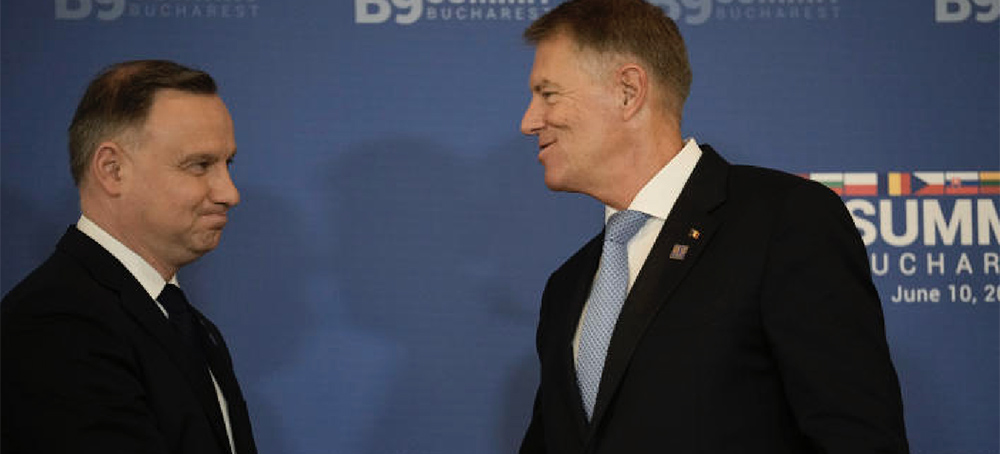
NATO's Eastern Nations Want Better Protection From AlliancePolish President Andrzej Duda, left, shakes hands with Romania's President Klaus Iohannis at the end of the Bucharest Nine (B9) Summit at the Cotroceni Presidential Palace in Bucharest, Romania, Friday, June 10, 2022. (photo: Vadim Ghirda/AP)

NATO's Eastern Nations Want Better Protection From Alliance
Stephen McGragth and Nicolae Dumitrache, Associated Press
Excerpt: "Nine NATO nations on the alliance's eastern flank held talks Friday in Romania ahead of a key NATO summit later this month, with some leaders urging NATO to step up protections for them in light of Russia's protracted war against Ukraine."

Nine NATO nations on the alliance's eastern flank held talks Friday in Romania ahead of a key NATO summit later this month, with some leaders urging NATO to step up protections for them in light of Russia's protracted war against Ukraine.

Friday's summit in Bucharest provided a platform for NATO’s Eastern members to discuss regional security issues and forge a united voice within the 30-member security alliance. Those attending included Romania, Poland, Hungary, Bulgaria, the Czech Republic, Slovakia, Estonia, Latvia, and Lithuania.

“We need to make sure that NATO is able and prepared to respond effectively and calibrated to the threats it faces,” Romanian President Klaus Iohannis told reporters after Friday’s meeting. “The alliance needs to be able to defend every inch of its territory.”

“The result we are pursuing is a consolidated NATO presence on the Eastern Flank, united and coherent, robust, credible and sustainable, especially on the Black Sea — the most exposed to Russia’s threats,” Iohannis added.

Three NATO members — Bulgaria, Romania and Turkey — border the Black Sea, which has turned into a key battleground in the war in Ukraine.

NATO is set to hold a “Strategic Concept” summit at the end of June in Madrid to reaffirm its values and purpose and to map out future goals.

Poland’s President Andrzej Duda said Friday that “we are also counting on an increase of U.S. presence in our part of Europe” and that he wants the number of NATO troops in each Eastern Flank country to be increased.

“We want the enhanced forward presence that we have today on NATO’s eastern flank to be extended," he said. “We want the existing battalion groups to be transformed into brigade groups.”

Duda said a brigade group has 3,000 troops, which would mean a “significant and visible strengthening.”

After Russia’s invasion of Ukraine, NATO bolstered its presence on the Eastern Flank by adding four multinational battle groups to Bulgaria, Hungary, Romania and Slovakia. It brings the total number of battle groups to eight, which stretch from the Black Sea in the south to the Baltic Sea in the north.

NATO Secretary-General Jens Stoltenberg, who was set to join the leaders in Bucharest, joined the forum via video after contracting shingles. Stoltenberg stressed the importance of continued defense spending to the Eastern Flank leaders and commended “the fact that many of them meet or exceed the 2% target of GDP on defense spending.”

Iohannis said he supports “strengthening NATO relations with partners in the region, who are deeply exposed to Russian pressure and aggression” and expressed “firm support for NATO’s ‘Open Doors’ policy and for Sweden and Finland’s” bids to join NATO.

“The accession of these states will contribute to strengthening the security of the Alliance as a whole,” he said.

During the Cold War, the Eastern Flank nations that constitute the Bucharest Nine group — which was launched by Romania and Poland in 2015 — were all controlled by Moscow, with the three Baltic states incorporated into the Soviet Union. Today they are all members of NATO and the European Union.


READ MORE


Large Tundra Wildfire in Southwest Alaska Threatens VillagesIn this aerial photo provided by the BLM Alaska Fire Service, the East Fork Fire burns about 25 miles north of St. Mary's, Alaska on June 2, 2022. (photo: Pat Johnson/BLM Alaska Fire Service/AP)

Large Tundra Wildfire in Southwest Alaska Threatens Villages
Mark Thiessen, Associated Press
Thiessen writes: "The largest documented wildfire burning through tundra in southwest Alaska was within miles of two Alaska Native villages, prompting officials Friday to urge residents to prepare for possible evacuation."

The largest documented wildfire burning through tundra in southwest Alaska was within miles of two Alaska Native villages, prompting officials Friday to urge residents to prepare for possible evacuation.

This came a day after dozens of elders and residents with health concerns voluntarily evacuated because of smoke from the nearby fire.

Officials on Friday put the communities of St. Mary’s and Pitkas Point into “ready” status, meaning residents should gather important items they would want to have with them if they have to evacuate, said U.S. Bureau of Land Management Alaska Fire Service spokesperson Beth Ipsen by text. That would be followed by “set,” or getting a go-bag ready and leaving if the “go” order is given.

The fire is consuming dry grass, alder and willow bushes on the largely treeless tundra as gusts of up to 30 mph (48.28 kph) are pushing the fire in the general direction of St. Mary’s and Pitkas Point, Yup’ik subsistence communities with a combined population of about 700 people and about 10 miles (16 kilometers) apart.

There are about 65 firefighters battling the blaze, with about 40 more expected later Friday, Ipsen earlier said by phone.

The fire had not grown much since Thursday and was still estimated at 78 squares miles (202 square kilometers). The northerly winds pushed the fire to within 5 miles (8 kilometers) of St. Mary's, officials said in a late Friday update.

Ipsen said she was not aware of any structures that have been lost.

Crews cleared brush and other fuel from a swath of land in the path of the flames, and air tankers dropped retardant between the line and St. Mary’s as another buffer. Other aircraft had been dropping water on the fire until another fire broke out north of a nearby community, Mountain Village.

Climate change has played a role in this historic fire, said Rick Thoman, a climate specialist with the University of Alaska Fairbanks’ International Arctic Research Center.

He said based on records from the Alaska Fire Service dating back to the 1940s, this is the largest documented wildfire in the lower Yukon River valley. There are much bigger fires recorded just 50 or 60 miles (97 kilometers) north of St. Mary’s, but those burned in boreal forests.

The area where the tundra fire is burning, the Yukon-Kuskokwim Delta, lost its snowpack early this year, leaving grass and other vegetation longer to dry out. Coupled with the warmest period on record in the region recently, it provided for the perfect storm for this fire that was started by lightning on May 31.

“Climate change didn’t cause the thunderstorm that sparked that fire, but it increased the likelihood that the ambient conditions would be receptive,” he said.

The southwest Alaska hub community of Bethel, about 100 miles (160.93 kilometers) southeast of St. Mary’s, is the closest long-term weather station.

For the period covering the last week of May and the first week of June, Bethel had its warmest temperatures on record this year, 9 degrees F (12.78 degrees C) above its normal 48 degrees F (8.89 degrees C), Thoman said.

About 80 village elders and others with health concerns were relocated to the Alaska National Guard Armory in Bethel on Thursday, said Jeremy Zidek, spokesperson for the Alaska Division of Homeland Security and Emergency Management.

Two companies that provide commuter air service in roadless western Alaska flew the passengers to Bethel.

One of those was Yute Commuter Services, which provided 12 flights out of St. Mary’s on its planes that seat six, said Andrew Flagg, the company’s station manager in Bethel.

On Friday, he said they were asked to deliver drinking water to the community so it could be given to the firefighters.

St. Mary’s and Pitkas Point, which is at the confluence of the Andreafsky and Yukon rivers, are located about 450 miles (724 kilometers) west of Anchorage.


READ MORE


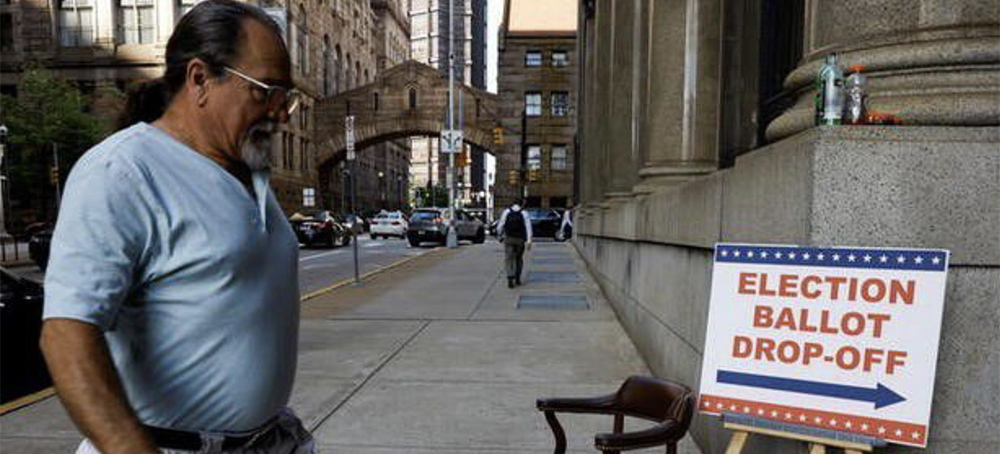
US Supreme Court Allows Counting of Undated Mail-In Ballots in PennsylvaniaVoters arrive to drop off mail-in ballots at an election site in Pittsburgh, Pennsylvania, U.S. May 17, 2022. (photo: Quinn Glabicki/Reuters)


US Supreme Court Allows Counting of Undated Mail-In Ballots in Pennsylvania
Lawrence Hurley, Reuters
Hurley writes: "A divided U.S. Supreme Court on Thursday allowed the counting of undated mail-in ballots in an undecided 2021 election for a Pennsylvania judgeship in a case that again revealed the tensions among the justices over voting rights."

U.S. Supreme Court allows counting of undated mail-in ballots in Pennsylvania

By 

2 minute read

WASHINGTON, June 9 (Reuters) - A divided U.S. Supreme Court on Thursday allowed the counting of undated mail-in ballots in an undecided 2021 election for a Pennsylvania judgeship in a case that again revealed the tensions among the justices over voting rights.

The decision by the justices against David Ritter, a Republican candidate for a judgeship on the Lehigh County Court of Common Pleas, means that Pennsylvania officials can count 250 mail-in ballots in that election that lacked a handwritten date. Ritter had sued the county board of elections over concerns he would lose the race if those votes were counted.

Three conservative justice - Samuel Alito, Clarence Thomas and Neil Gorsuch - dissented, saying the court should have blocked the votes from being counted. The court has a 6-3 conservative majority. The nine justices have often split on voting issues, usually on ideological lines dividing the court's conservatives from their liberal colleagues.

Alito wrote of his concern that the lower court ruling involved in the case "could well affect the outcome" of elections being held in November. In Pennsylvania, there is a closely watched U.S. Senate race between Republican Mehmet Oz and Democrat John Fetterman that could help determine which party controls the chamber.

The action by the justices left in place a May ruling by the Philadelphia-based 3rd U.S. Circuit Court of Appeals that the undated ballots could be counted.

Litigation over Pennsylvania's mail-in ballot rules was a feature of the 2020 presidential election in which the state was a key battleground. Republican then-President Donald Trump lost the state to Democratic challenger Joe Biden, with the fight over mail-in ballots that favored Biden helping to fuel Trump's false claims of widespread voter fraud.

The 3rd Circuit ruled in Ritter's case that under a provision of the federal Civil Rights Act, the failure to include the date on a mail-in ballot is "immaterial" to whether the ballot was valid and therefore should be counted. The provision in question is aimed at protecting the right to vote.

LINK


READ MORE


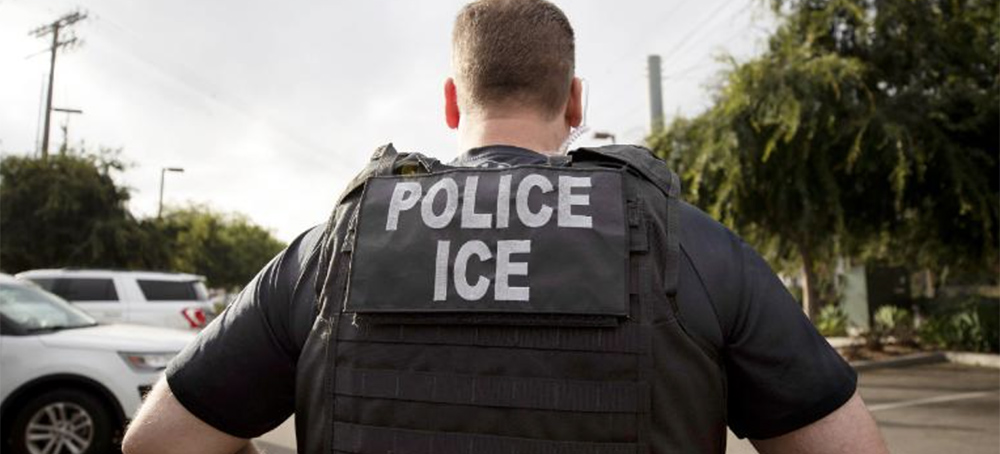
Federal Judge in Texas Throws Out Biden Administration Immigration Enforcement GuidelinesA US Immigration and Customs Enforcement officer looks on during an operation in Escondido, California, July 8, 2019. (photo: CNN)

Federal Judge in Texas Throws Out Biden Administration Immigration Enforcement Guidelines
Priscilla Alvarez, CNN
Alvarez writes: "A federal judge in Texas vacated guidelines set by the Biden administration over who is to be prioritized for immigration enforcement, according to a Friday ruling."

A federal judge in Texas vacated guidelines set by the Biden administration over who is to be prioritized for immigration enforcement, according to a Friday ruling.

Last year, the Department of Homeland Security released guidelines that directed Immigration and Customs Enforcement agents to arrest immigrants deemed public safety or national security risks and recent border crossers. Friday’s ruling throws out those guidelines, marking the latest legal setback for the Biden administration on immigration.

The ruling takes effect in seven days.

Judge Drew Tipton of the Texas Southern District Court found that while the federal government has discretion, the guidelines bind officials in a “generalized, prospective manner.”

“True, the Executive Branch has case-by-case discretion to abandon immigration enforcement as to a particular individual. This case, however, does not involve individualized decisionmaking. Instead, this case is about a rule that binds Department of Homeland Security officials in a generalized, prospective manner—all in contravention of Congress’s detention mandate,” wrote Tipton, a Donald Trump appointee.

The ruling stems from a lawsuit brought by the states of Texas and Louisiana. The case concerns a provision in immigration law that says undocumented immigrants who committed crimes will be taken into ICE custody after they are released. The Biden administration’s memo sought to prioritize ICE’s resources on detaining undocumented immigrants based on the nature of the crimes they had committed.

Tipton previously ruled against a January interim memo that curtailed enforcement measures. The latest ruling concerns similar guidelines issued last September.

READ MORE


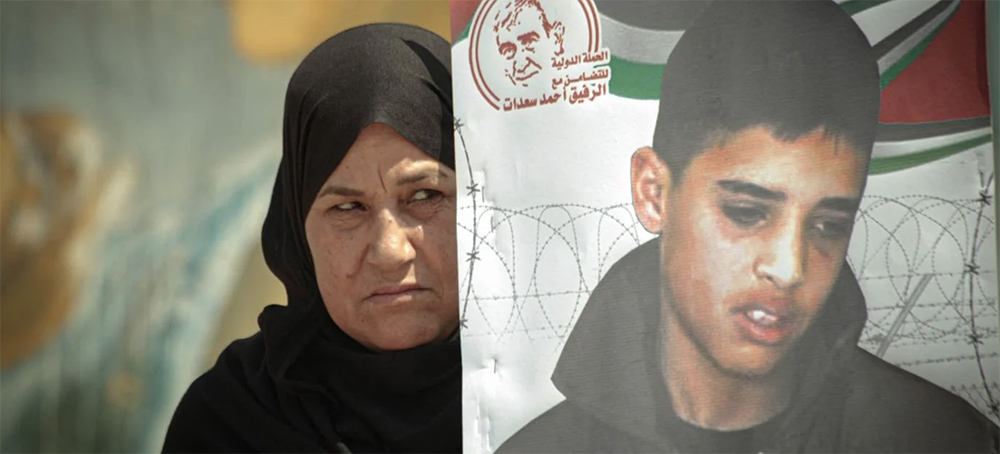
Israeli Anti-Torture Body Refers Israel to International Criminal CourtPalestinians take part in a protest in solidarity with prisoners in Israeli jails, in front of the Erez Crossing in Beit Hanoun in the northern Gaza Strip. (photo: Reuters)

Israeli Anti-Torture Body Refers Israel to International Criminal Court
Lubna Masarwa, The Middle East Eye
Masarwa writes: "An Israeli anti-torture body has referred its own country to the International Criminal Court (ICC) after concluding that Israel is 'not interested and unable to stop the use of torture against Palestinians.'"

Public Committee Against Torture in Israel says after 30 years it has concluded Israeli authorities not interested and unable to stop abuse of Palestinians


An Israeli anti-torture body has referred its own country to the International Criminal Court (ICC) after concluding that Israel is “not interested and unable to stop the use of torture against Palestinians”.

The Public Committee Against Torture in Israel (PCATI) said on Friday it had demanded that Israelis involved in torture be tried as part of an investigation by the Hague-based ICC over suspected war crimes committed by Israel in the occupied Palestinian territories.

It said that after 30 years of fighting torture it had “reached the unfortunate conclusion” that Israel has no wish to end torture, honestly investigate victims' complaints and prosecute those responsible.

"For us, this is a necessary and obligatory step today in our struggle for the moral image of Israeli society, and for the sake of justice for the victims we represent," it said in a statement.

Established in 1990, the PCATI has represented and worked to protect Israelis, Palestinians, refugees and migrants who have suffered torture and inhuman or degrading treatment in detention.

The PCATI noted that over 1,300 complaints of torture victims had been filed with Israeli law enforcement authorities between 2001 and 2021 in the belief that the system will fulfil its duty, conduct fair and exhaustive investigations and do justice to the victims.

However, the group said, that led to zero indictments and just two criminal investigations - including in cases where “unequivocal evidence of serious violations of the law” has been collected.

“The law in Israel backs up the culture of falsehood and cover-up that still exists in the security system,” the PCATI said.

Tal Steiner, PCATI’s executive director, told Middle East Eye that appealing to the international court is a very radical step.

“We understood after 30 years that the system of Israeli courts is unwilling and unable to create change. They have a culture of immunity,” she said.

“We are the first Israeli organisation to take such a step and we expect very hard and difficult reactions.”

The PCATI appeal represents 17 clients who Steiner says “went through very severe physical torture”.

“All of their complaints were rejected in Israel. Maybe finally justice can be achieved for them in the international court,” she said.

Unlike the Palestinian Authority, Israel is not a signatory of the ICC’s Rome Statute, which the country says means the court has no jurisdiction there.

However, the ICC prosecutor in March 2021 formally began probing war crimes allegedly committed in the occupied Palestinian territories – by both Israel and Palestinian groups such as Hamas.

Then in April 2022, the International Federation of Journalists, the Palestinian Journalists Syndicate and the International Centre of Justice for Palestinians filed a complaint with the ICC alleging that Israel's "systematic targeting" of Palestinian journalists and its failure to investigate their killings amounts to war crimes.

When Israeli forces killed Al Jazeera journalist Shireen Abu Akleh in the occupied West Bank's Jenin last month, the Palestinian Authority asked the ICC to add her case to other alleged crimes being investigated.

Investigations are opened by the ICC in places where the domestic authorities are unable or unwilling to probe allegations of abuse. Israel has previously said it will not cooperate with any ICC investigation.

The PCATI application is submitted in cooperation with the International Federation for Human Rights (FIDH), an organisation that unites 192 human rights organisations from around the world.

"Israeli security agents and other state officials have systematically tortured, degraded, and inhumanely treated Palestinian individuals suspected of involvement in national security crimes," said Alice Mogwe, FIDH president.

"They have unlawfully deported them from the Palestinian territories into Israel for the purpose of such treatment. They have denied them the fundamental right to a fair trial."

The PCATI is not the first Israeli human rights organisation to conclude that the country's authorities are unwilling and unable to investigate abuses. In 2016, leading human rights group B'Tselem ceased submitting complaints to the Israeli army regarding the alleged mistreatment of Palestinians, complaining the system's real function was to cover up abuses.

READ MORE


'Forever Chemicals' Are Killing Whales – and Harming UsIn the aftermath of 9/11, scientists noticed a curious impact on the stress hormones of North Atlantic right whales. (photo: Channel Four)

'Forever Chemicals' Are Killing Whales – and Harming Us
Ella Al-Shamahi, Guardian UK
Al-Shamahi writes: "In the aftermath of 9/11, scientists noticed a curious impact on the stress hormones of North Atlantic right whales."

Their use is linked to the rise in whale strandings on British beaches, but partial bans keeps letting industry off the hook

In the aftermath of 9/11, scientists noticed a curious impact on the stress hormones of North Atlantic right whales. Ships are ubiquitous in our oceans but, for a brief window, immediately after the planes flew into the twin towers, there was a dramatic drop in traffic along the North Atlantic eastern seaboard, reducing underwater noise. While the world above ground was reeling, our underwater neighbours were thriving.

So often we think of the golden age of whaling as being over. Japanese and Icelandic whaling ships are now pariahs in the international community. But too often, out of sight is out of mind, and it remains easy to ignore the impact of our actions above ground on marine life. However, whales are increasingly forcing us to take note, as more of them than ever are beaching on our shores.

Whales have always beached across UK coastlines, but there is nothing natural about this latest surge in whale deaths, which is why we decided to shadow marine stranding investigators (Scottish Marine Animal Stranding Scheme in Scotland and the Cetacean Strandings Investigation Programme in England and Wales) exploring the rise in whale strandings on our island for Channel 4 – think CSI but for cetaceans.

When whales beach, especially large ones, it’s very likely that they will beach again. Their bodies are designed to work in water, but on land their sheer size crushes their insides and they start to boil alive. That’s part of the reason why there is a mad dash by British Divers Marine Life Rescue to get beached whales back into the water before their injuries become too great and they inevitably beach again.

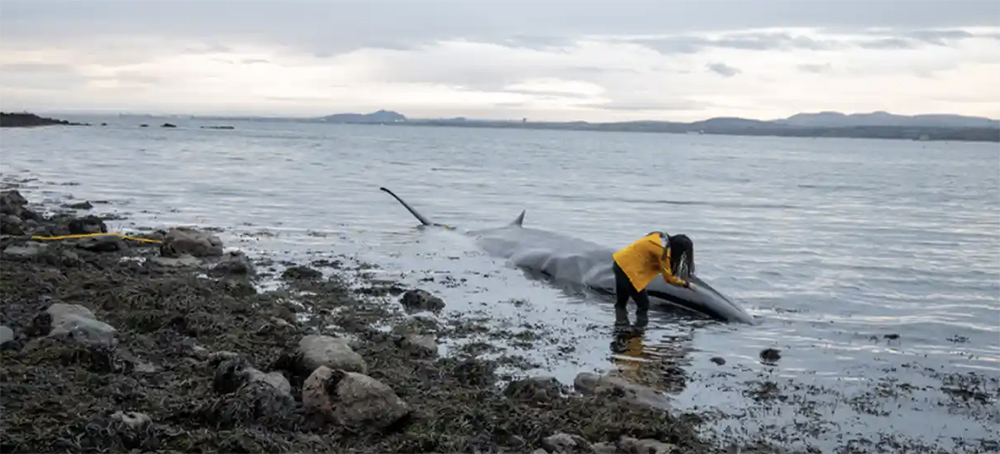
That’s how I found myself face to face with a dead sei whale at the foot of Scotland’s most famous human-made landmark: the Forth Bridge. The whale had beached just a day earlier and we had tried to get to it then, but just as we arrived the team refloated it. We had hoped that it might survive its first beaching, but this time, the endangered animal – the world’s third largest species of whale – was washed up dead.

One of the reasons I went into television was a visceral understanding of the power of an image. And this image spoke for itself. A majestic mammoth of a creature taking its final resting place in the shadows of industrialisation.

As a palaeoanthropologist, I’m used to seeing dead things, but the dead that I deal with are long dead – bones, not flesh. When you see flesh, it adds a sense of immediacy. I was supposed to be presenting to camera that day; instead I struggled to muster the energy. I felt utterly defeated by the sight.

For many of us, the call to “save the whale” is a cause we are sympathetic to. But too often, the practical steps we need to take to get there – whether it’s reducing climate change, ship strikes, noise or sonar – stump us. Those last few might appear complicated at first glance and would affect our way of life too much (not true), and tackling the first one has us dilly-dallying on the world stage. But what about chemical pollution, an issue very much in our self-interest?

It is imperative that we understand that whales are the canary in the coalmine for our relationship with chemical pollutants. Too many “forever chemicals”, or PFAS, still persist in nature, nicknamed as such because they barely degrade. PCBs are one such chemical, and despite them being banned 40 years ago, killer whales are still dying in our waters from PCB poisoning. So deadly is the long-term impact that researchers suspect it is responsible for the crash in the birthrate we have seen in our only resident UK killer whale pod – the “West Coast Community” – which hasn’t had a calf born in 25 years.

Legacy chemicals are the gift that keeps on giving, and by the time we understand what they do to the environment, wildlife and our health they are already in the system – so we can’t afford to dawdle. That’s why our heel-dragging on plastic pollution is so frustrating – it’s everywhere and found in everything from salt to human lungs. Terrifying preliminary research is now linking plastics to cancer, Alzheimer’s disease and infertility in men.

It’s in our interest to demand of our leaders better oversight and research. To this end, 30 NGOs have written to the government asking for a ban on the non-essential use of PFAS. The problem is that when only some of these chemicals are banned, manufacturers just switch to others that are only slightly chemically different.

The EU appears to be going in the right direction, and it’s vital that as one of the most prominent island nations we not only follow suit, but lead this fight. So if you care about saving the whales (and your health), write to your MP and ask them to support this cause.

It’s time to stop asking, “What killed the whale?” and start looking in the mirror for answers.


READ MORE

Special Coverage: Ukraine, A Historic Resistance
READ MORE


Contribute to RSN

Follow us on facebook and twitter!

Update My Monthly Donation

PO Box 2043 / Citrus Heights, CA 95611


WBUR TODAY: 5 local takeaways from Tuesday

                                                                                                                                            ...