“Fossil fuels must go the way of the dinosaurs, but that won’t happen on its own. The dinosaurs did not have a lobby, but fossil fuels do,” said UN Secretary-General António Guterres.
Know someone who would enjoy the Common Dreams newsletter?
Israel is blocking around 150,000 tents and other recovery supplies from entering flood-ravaged Gaza.
A leading United Nationshuman rights expert said nations must prepare to send ships to break Israel’s “siege” of Gaza as it continues to block humanitarian aid—including tents, shelter materials, and repair supplies—from entering the territory as its population is inundated by deadly floods.
“Israel must immediately open all Gaza crossings and let humanitarian aid in, starting with new tents and modular housing, clean water, nutrient-rich food, medicines,” Francesca Albanese, the UN Special Rapporteur on the Occupied Palestinian Territories, wrote on social media Tuesday. “If... Israel still refuses, any principled leader would send humanitarian vessels to break the siege.”
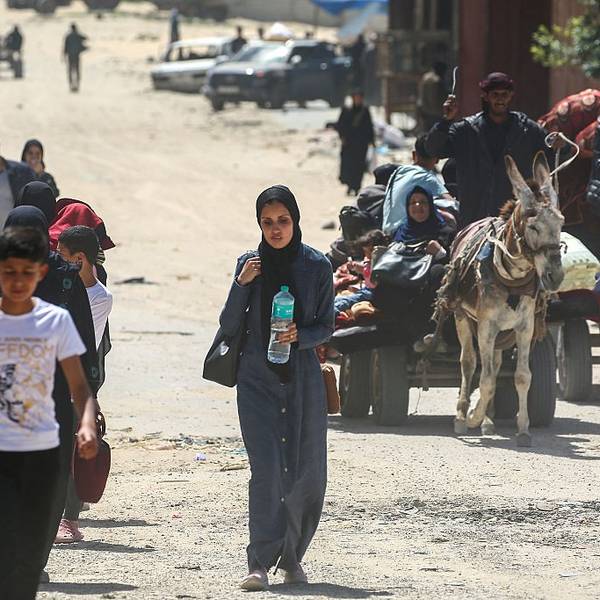
Most buildings in Gaza have been damaged or destroyed by Israel’s genocidal three-year military assault. About 1.4 million people now live in makeshift shelters, including flimsy tents.
According to Gaza’s Government Media Office, about 70,000 tents were flooded when heavy rains struck the territory over the weekend, leaving tens of thousands of displaced people without shelter, defenseless against the elements. At least four children and two women have died as a result of the flooding.
As The Guardian reported Wednesday, the storms have also damaged sanitation infrastructure, causing sewage to flow into families’ tents. About 940,000 people in Gaza live in makeshift tent areas at risk of flooding.
“All our clothes were soaked. My kids are all sick, and I can’t afford to buy them more clothes,” said Raed Jamal, a displaced Palestinian. “Watching them suffering in the cold is heartbreaking.”
According to the UN Office for the Coordination of Humanitarian Affairs (OCHA), more than 150,000 tents are awaiting Israeli authorization to enter Gaza, even as humanitarian organizations warn that Israel’s restrictions on shelter supplies are exacerbating the deadly flooding emergency.
On Monday, the International Rescue Committee said aid groups had only about 2,800 tents available, compared with roughly 121,000 that are needed. Meanwhile, no emergency shelter kits were available.
“People are exhausted and have spent days trying to secure tarpaulins and scoop water from the floor of tents,” said Beckie Ryan, the humanitarian group CARE Palestine’s interim country director. “For these families, most of whom have been displaced repeatedly, a flooded tent means losing their last protection against the elements as winter approaches. It also means the loss of essential belongings, including clothing, bedding, medication, documentation, and personal items.”
“Israeli authorities must facilitate full, rapid, safe, and unhindered humanitarian access,” she said. “This includes opening all crossings for humanitarian aid and facilitating the entry of shelter and construction materials and machinery.”
Israel’s restrictions on shelter materials are part of broader limits on humanitarian aid entering Gaza, with only one crossing for humanitarian cargo currently operational. Relief organizations say the closures have created bottlenecks that have delayed deliveries of food, medicine, and desperately needed shelter materials.
Israeli Prime Minister Benjamin Netanyahu has denied responsibility for the conditions, blaming the militant group Hamas for allegedly diverting humanitarian aid for military use, a claim for which he provided no supporting evidence, according to The Associated Press.
His response came after some unusually pointed criticism from the US-led Gaza Board of Peace, which said Israel’s restrictions had “exacerbated the consequences of a foreseeable humanitarian challenge.”
The crisis has also drawn pledges of action from foreign officials. Ed Miliband, the UK foreign secretary, said on Monday that the “humanitarian situation in Gaza is getting worse,” adding that the British government would “not stand by” and “not rest until we bring an end to the intolerable suffering.”
Albanese made her call for humanitarian vessels in direct response to Miliband’s remarks, challenging world leaders to do more than condemn the worsening crisis.
Several governments have previously supported civilian efforts to break Israel’s blockade—including Spain and Italy, which sent naval vessels to assist the activist-led Global Sumud Flotilla, which was intercepted by Israel last year. But no government has publicly committed to sending its own ships to force humanitarian aid through Israel’s blockade.
Albanese and five other UN human rights experts made a similar appeal in May, saying that “states should take necessary action to prevent genocide and to support all efforts to deliver aid to the Palestinian population.”
Richard Burgon, a Labour member of the British Parliament, introduced a motion on Tuesday calling for his government to take more concrete action to compel Israel to allow in aid, which he said has received over 50 signatures.
He said, “Governments around the world should respond to the horrific scenes from flood-hit Gaza with a clear and coordinated message to Israel: We will impose sanctions on everyone responsible for blocking humanitarian aid from getting in.”
"We believe that as speaker of the House, Ayanna Pressley would bring her innovative spirit and unwavering resolve to tackle the pressing challenges facing our nation."
"Let us be clear: The genocide of the Palestinian people would not have been possible without the unwavering support of the United States."
A coalition of American taxpayers, including human rights lawyers and activists, formally submitted video footage, firsthand eyewitness accounts, and other evidence to the International Criminal Court on Wednesday, making the case that the tribunal should issue arrest warrants for US President Donald Trump and Secretary of State Marco Rubio for aiding Israel’s genocidal assault on Gaza.
The 28-page document includes detailed accounts of Trump and Rubio’s actions in support of the Israeli government’s devastating and ongoing attacks on Gaza and the illegally occupied West Bank.
Trump, the submission states, “personally authorized and facilitated the release of approximately 1,800 previously withheld 2,000-pound MK-84 bombs” to the Israeli military and “rescinded West Bank sanctions on individuals and entities the United States had formally determined were involved in violence and dispossession.”
“These acts of material assistance had a substantial effect on Israel’s ability to carry out military operations in Gaza and on the ability of sanctioned actors to continue violence in the West Bank,” the document argues.
As for Rubio, “the evidence records State Department and [Defense Security Cooperation Agency] approvals of major arms sales to Israel after February 2025, including Hellfire missiles, munitions, guidance kits, fuses, munitions support, and large quantities of 2,000-pound bomb bodies and penetrator warheads.”
“The [ICC] prosecutor should investigate whether Secretary Rubio approved or expedited the same categories of munitions whose prior use had generated known civilian harm and concerns about violations of international humanitarian law,” the document states.
Seth Donnelly, a cofounder of TAAG, said at a press conference in The Hague on Wednesday, “We urge the office of the prosecutor to act quickly on this evidence.”
“The evidence includes sworn affidavits from doctors who worked in Gaza, firsthand eyewitness accounts, whistleblower testimony, videos, and extensive documentation concerning US political, military, diplomatic, and financial support for Israel,” said Donnelly.
Joining the delegation behind the ICC submission were human rights attorney Huwaida Arraf, Palestinian American author Susan Abulhawa, and Dr. Feroze Sidhwa, a trauma surgeon who has served in Gaza.
“American airplanes burning American jet fuel are dropping American bombs, which are guided by American guidance systems on targets that were picked largely by software developed in the United States,” said Sidhwa. “I hope these attempts at reestablishing—or maybe establishing—the rule of law in the international system, these attempts to hold the powerful accountable, something that we unfortunately have failed to do in our own society, can be an effective resistance to the fascist forces that are spreading throughout the world now.”
Francesca Albanese, the United Nations special rapporteur on the occupied Palestinian territories, applauded the delegation’s submission, saying at Wednesday’s press conference that “international law remains the last peaceful instrument we possess to confront injustice and pave the way forward.”
“The legal tools are there. They are not the only ones, but they are peaceful tools,” said Albanese. “What is missing is the political courage to use them. That political courage is [what] the Taxpayer Alliance Against Genocide is showing. And this is why today’s gathering matters.”
“The United States continues to arm Israel, protect those responsible for its crimes, and enable individuals and companies to profit from their commission,” she added. “So let us be clear: The genocide of the Palestinian people would not have been possible without the unwavering support of the United States.”
"The 11N is not only a labor strike or a strike of tenants," its organizers said, "it is a general strike for housing and against the cost of living."
STAND WITH US
We’re a people-powered nonprofit newsroom dedicated to covering the news corporate media too often ignores or endlessly gets wrong. Join us in advancing economic fairness, social justice, human rights, and a sustainable future.
Be part of a growing community that values independent journalism. Your donation helps keep Common Dreams strong—supporting a fearless, reader-funded model that delivers free, fact-based reporting every day.
Some of the 11 Democrats who missed Tuesday’s vote to advance the impeachment of Defense Secretary Pete Hegseth were reportedly attending an event hosted by a “front group” for the American Israel Public Affairs Committee, commonly known as AIPAC.
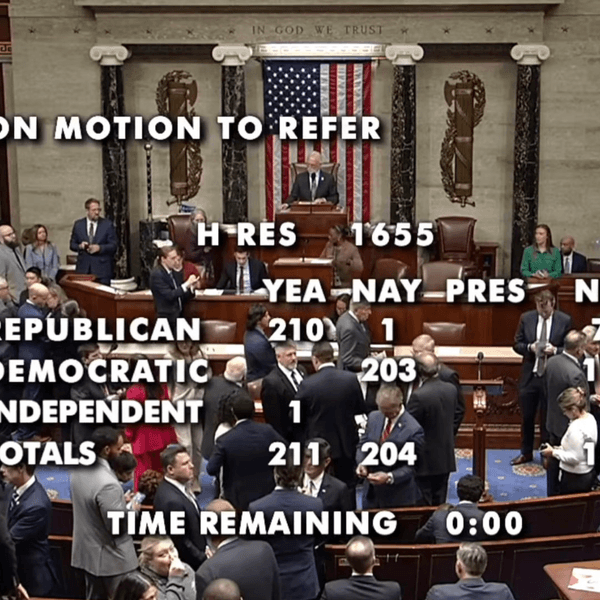
The vote, which would have prevented Republicans from killing efforts to impeach Hegseth over his launching of an unauthorized war against Iran, extrajudicial killings of sailors in the Caribbean and Pacific, kidnapping of Venezuelan President Nicolás Maduro, and other actions, fell short by just seven votes.
The absent Democrats—Reps. Julia Brownley (D-Calif.), Lou Correa (D-Calif.), Laura Gillen (D-NY), Steven Horsford (D-Nev.), Jonathan Jackson (D-Ill.), Nancy Pelosi (D-Calif.), Brittany Pettersen (D-Colo.), Melanie Stansbury (D-NM), Haley Stevens (D-Mich.), Marilyn Strickland (D-Wash.), and Frederica Wilson (D-Fla.)—could have changed the outcome.
Andrew Solender, a congressional reporter for Axios, shed new light on why some of them may have missed the crucial vote.
Citing several lawmakers, he posted on social media:
Some of the House Democrats who missed the Hegseth impeachment vote were on their way back from an Elect Democratic Women event at a venue about 1.5 miles down Pennsylvania Avenue but got caught in a bumper-to-bumper traffic jam on Independence Avenue (the road on the House side of the Capitol complex).
Drop Site News co-founder Ryan Grim noted that EDW was one of many groups that served as a “pass-through” for AIPAC funds in Democratic primaries during the 2026 election cycle.
As The Lever reported last month, AIPAC’s super political action committee (PAC), the United Democracy Project, donated nearly $2.4 million to the group’s political arm, EDW Action, while Democratic Majority for Israel donated another $140,000. Those funds made up nearly half the money the group subsequently spent in elections during the 2026 cycle, including against Democratic primary candidates critical of Israel, such as Reps.-elect Melat Kiros (D-Colo.) and Amish Shah (D-Ariz.).
EDW, which was founded in 2018 but did not start receiving AIPAC dollars through its action fund until 2024, was one of several innocuous-sounding groups—with names like “Affordable Chicago Now” and “BOLD America”—that acted as conduits for AIPAC dollars as the group’s support came to be viewed as toxic among Democratic voters who were outraged by Israel’s genocide in Gaza, ethnic cleansing in the West Bank, and push for Trump to launch a war with Iran.
Drop Site’s congressional reporter Julian Andreone found that all eight of the women who missed the vote have some connection to EDW: Brownley is listed as a founding member and current executive board member, while Stansbury has been an at-large board member since 2025. Gillen is listed as a “frontline member” supported by the group.
The group provided support to Wilson, Stevens, Strickland, and Pettersen during the past election cycle. Pelosi, who has helped EDW raise money for years, missed Tuesday’s impeachment vote because she was attending a veterans event in San Francisco.
According to an online post, EDW was holding a “new member reception” from 4:30 to 6:30 ET Tuesday at The Roost food hall at 1401 Pennsylvania Ave. SE, during the impeachment vote, which was scheduled for 5:30 ET.
Solender did not clarify which Democrats missed the vote because of their attendance at the EDW event. But at least five members have blamed traffic for their absence: Gillen, Jackson, Stansbury, Strickland, and Pettersen.
Jackson said, “A traffic incident and a police-escorted bus caused a delay.” He and Stansbury entered statements in the Congressional Record opposing the referral motion after arriving too late to vote. Strickland also blamed a motorcade for her absence, with her chief of staff saying she missed the vote by just one minute; she said she also would have voted to advance the impeachment effort.
A spokesperson for Pettersen accused Republicans of having “cynically closed the vote early” when several Democratic members were stuck in traffic. In a statement posted to social media, Brownley said she and her colleagues were “rushing to the floor” when House Speaker Mike Johnson (R-La.) closed the vote.
Correa has said he missed the vote due to a medical procedure in California. Horsford’s office said he missed the vote due to an unspecified “personal emergency.”
As of Wednesday morning, Stevens and Wilson had not provided an explanation for why they missed the vote.
Reports that members of Congress were attending an event hosted by a group linked to AIPAC—which has cheered President Donald Trump’s attack on Iran—immediately fueled speculation that their absences from the vote may not have been entirely accidental.
Journalist and AIPAC critic Adam Johnson mocked their explanations in a post on social media: “'I was stuck in traffic after attending an event for an AIPAC front group so I couldn’t (accidentally, and in good faith) vote to impeach the person prosecuting the war AIPAC enthusiastically supports,’” he wrote. “OK. If you say so.”
The lawmakers who said they missed the vote due to traffic have not responded to questions from Common Dreams regarding whether they were returning from EDW’s event when the vote took place.
Common Dreams has also asked other members who have not explained their absences why they missed the vote. Those lawmakers have also not responded to the requests for comment.
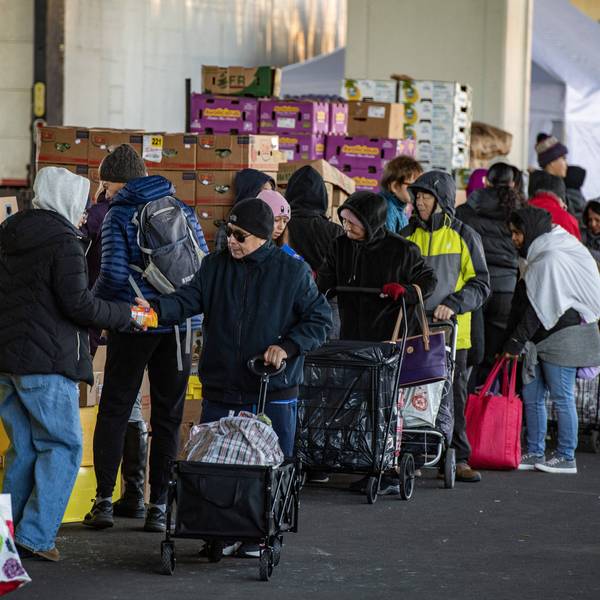
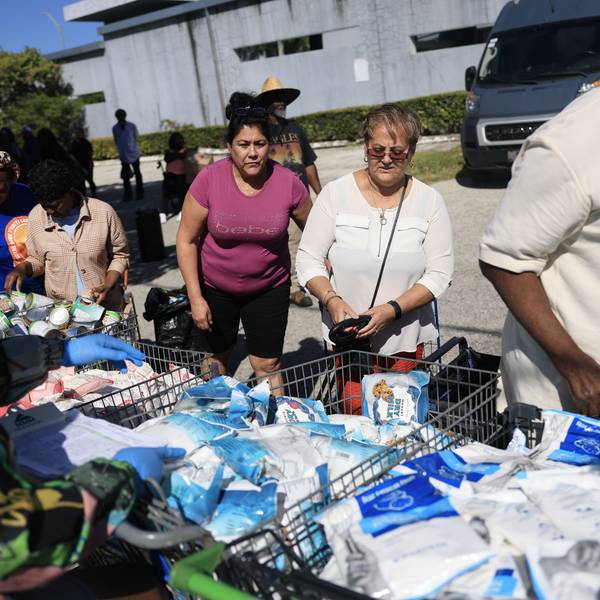
The Trump administration on Tuesday rolled out a proposed rule that would further restrict access to the United States’ largest and most effective anti-hunger program, taking benefits from more than 6 million people—including many children—as grocery prices continue to rise and food bank demand surges nationwide.
The US Department of Agriculture’s proposal, published in the Federal Register on Tuesday, targets a policy known as broad-based categorical eligibility (BBCE), which allows states to deem recipients of other federal benefits eligible for the Supplemental Nutrition Assistance Program (SNAP). Experts say the policy reduces administrative burdens for states and individuals by streamlining the SNAP application process.
Under the new rule, households with annual gross incomes above 130 percent of the poverty line—roughly $35,500 per year for a family of three—would lose SNAP benefits, according to an analysis released Tuesday by the Center on Budget and Policy Priorities (CBPP), a liberal think tank.
“In the midterm elections, the public indicated they want their elected officials to focus on making life affordable. Yet the Trump administration is doubling down on making it harder for people to feed their families, after already enacting the deepest cuts to SNAP in history,” said Ty Jones Cox, vice president for food assistance at CBPP. “These attacks are part of the administration’s broader policy agenda that has raised costs and made it harder for working families to afford their basic needs, all to partially pay for trillions of dollars in tax cuts heavily weighted to the wealthy and fund its extreme and aggressive immigration detention apparatus.”
According to the Trump administration’s own analysis, the proposed rule would strip SNAP benefits from 3.2 million households—or around 6.3 million individuals—in fiscal year 2029, the first year the rule would take full effect. The USDA’s proposal is open to public comment for just 30 days.
The Food Research & Action Center (FRAC) warned in a statement Tuesday that the impact of the rule “could be far worse” than the administration’s projection, pointing to the disastrous and ongoing effects of SNAP cuts enacted under the 2025 Trump-GOP budget law. An estimated 5.5 million people—including roughly 1.5 million children—have lost SNAP benefits since the budget law’s enactment, an outcome that Trump administration officials have celebrated.
Condemning the new proposal as “unconscionable,” FRAC warned the rule’s impacts would extend beyond the SNAP program, including by reducing access to free school meals, “making children hungry at home and at school.”
“Children who lose SNAP are no longer automatically eligible for free school meals. Some would no longer be eligible for free school meals; others would be at risk of falling through the cracks when they go through the school meal application process,” the group said. “The proposed rule would also negatively affect babies and toddlers, and pregnant, postpartum, and breastfeeding parents who are automatically income eligible for the Special Supplemental Nutrition Program for Women, Infants, and Children (WIC), because they participate in SNAP. This rule would make it more difficult for households that lose SNAP to apply for WIC. Losing both SNAP and WIC would harm hundreds of thousands of infants and young children during their initial stages of development.”
Rep. Angie Craig (D-Minn.), the top Democrat on the House Agriculture Committee, condemned the USDA’s proposal as “heartless and cruel,” warning it would make it harder for families “to meet basic needs” and undercut states’ efforts to “streamline federal programs.”
“SNAP is a highly effective and efficient program when it is allowed to work as designed,” said Craig. “Unfortunately, the Trump administration and the outgoing Republican majority in Congress have undermined the program’s integrity at every turn, harming millions of vulnerable Americans in the process.”
An impeachment built on war powers and the laws of war would be a historic breakthrough for accountability—a step toward removing officials for abuses too often treated as part of the job.
Collins has proved to be President Donald Trump’s worst VA Secretary ever; his main goal is faster privatization of the nation’s largest public healthcare system.