Showing posts with label ANDREW YANG. Show all posts

Wednesday, May 26, 2021

POLITICO NIGHTLY: The shocking Yang cartoon, in context


POLITICO Nightly logo

BY RENUKA RAYASAM

Presented by

Emergent BioSolutions

With help from Joanne Kenen and Myah Ward

Nightly video player of Matt Wuerker and Renuka Rayasam

QUICK DRAW — Andrew Yang portrayed attacks on him by rival candidates as playing into anti-Asian racism — tying broadsides against him in the New York City mayoral race to a spike in hate crimes in the city, as POLITICO’s Erin Durkin reported today. Yang stood with his wife, Evelyn, outside a Queens subway station where an Asian man was shoved onto the train tracks, and criticized a New York Daily News cartoon depicting him as a tourist as well as broader attacks questioning whether he is a true New Yorker.

Earlier in the day, Evelyn Yang called the Daily News cartoon a “racist disfigurement” of her husband.

POLITICO’s editorial cartoonist, Matt Wuerker, judges it differently.

“The cartoon is totally within bounds,” Wuerker told Nightly today. After all, he said, anyone running for office in New York City has to have thick skin. Yang was mocked on Twitter after telling an interviewer his favorite subway station is Times Square, near his home in Hell’s Kitchen. And Daily News editorial page editor Josh Greenman said of Yang in a statement, “He’s recently revealed there are major gaps in his knowledge of New York City politics and policy.”

Still it’s easy to see why many people were offended by the Yang cartoon. Wuerker concedes that his professional forebears were often guilty of shockingly racist work, ridiculous caricatures of Asian Americans, Black people, Latinos and others. “For people who want to question whether America has a racist history, just go back and look at the political cartoons,” Wuerker said. “The history is horrible.”

But, Wuerker said, cartoonists, along with the rest of the nation, are evolving. He and his peers may not have always gotten it right in recent years — take a look at some Barack and Michelle Obama cartoons in Nightly’s video conversation — but on the whole, editorial cartoonists have become more sensitive to race. The New York Daily News redrew Yang’s eyes to address some of the original criticism.

That is going to be important as more and more people from a wide variety of backgrounds get elected to public office and become the butt of cartoonist jokes. “It’s gonna be a great day when cartoonists can do harsh caricatures of every facial type and no one is going to take umbrage about it,” Wuerker said. “But we’re not there yet.”

Watch Matt and Renu talk about the Andrew Yang cartoon and the history of political cartooning.

Welcome to POLITICO Nightly. Reach out with news, tips and ideas for us at rrayasam@politico.com, or on Twitter at @renurayasam.


A message from Emergent BioSolutions:

At Emergent, we make things you never thought you’d need — until you do. Until you need to counteract an opioid overdose. Or need protection against smallpox, anthrax, cholera, or botulism. And now, we’re in the fight against COVID-19. At Emergent, we take on public health challenges and work to help protect public health. And that’s why We Go.

 
NIGHTLY INTERVIEW

BUSINESS AS USUAL  A Gallup poll from last month showed that 51 percent of U.S. workers are still working from home. But as we approach summer, with half of U.S. adults fully vaccinated, the company-wide emails are rolling in: Planning our return to the office.

How and when employers bring people back to the workplace will look different everywhere. Some companies have decided their culture can’t survive without the five-days-a-week, in-person grind. Others have said they never need to be face-to-face again. The overwhelming majority fall somewhere in between and are exploring a hybrid workforce. Employees will come into the office for a few days and work from home the rest of the week.

PwC, the Big Four accounting firm that employs more than 280,000 people, has had a few offices open since last fall, and is gradually reopening more office space to give employees the option for in-person work. Nightly’s Myah Ward talked to PwC Chief People Officer Mike Fenlon about how he envisions PwC’s post-pandemic workplace.

You’ve had a few offices open since September 2020, and you’re opening others this month on an optional basis. How’s that going?

We’ve had limited attendance in the office, I would say. But we’ve also seen it start to pick up a bit. And I think the CDC’s recent announcement is probably making people, if they’ve been vaccinated, feel more comfortable in these settings. We intend to open more at scale by September and into October.

Come fall, how many days a week do you think people will be in the office?

We’ll have a small number of people who are primarily in person in our offices, four or five days a week. These would be roles that really require access to on site technology, or maybe they provide critical in-person support in the office itself. It’s a small portion of our workforce.

The other tail would be people whose role can be done very effectively on a primarily remote basis, but might come into the office periodically, to connect with colleagues to collaborate on certain projects. Many of these people were working remotely before the pandemic.

But the majority of our people are in this category that we’re calling flex. These are people who will balance remote work and working in the office or at a client site. We’ve estimated, and this is just an estimate, roughly one to three days a week in the office or at a client site.

Some people may want to work more in the office as well, and that’s OK. The point is that we’ve seen real benefits in working at scale on a virtual basis, but we also know there are real benefits and that many of our people have missed the opportunity, the energy, the productivity, times of collaborating together in person.

How do you envision the office space? Are you rethinking your footprint?

Our real estate group has been actively redesigning our space. So we see a space that is even more collaborative. When people come into the office, the design of the space is such that it will maximize my ability to network, to connect, to build relationships, to have those serendipitous encounters.

How are you approaching vaccines with your employees?

We are not requiring our people to get vaccinated at this time. If our clients require vaccinations, then we’ll give our people the choice to either comply with that or to opt out. And that’s not different from how we manage certain client-specific requirements that occurred pre-pandemic. We’re also at this time not requiring people to disclose a reason for opting out.

We have encouraged our people to get vaccinated, consistent with CDC guidance.

Are you requiring employees to wear masks?

We’re going to take a little more time to assess how states are implementing the CDC guidance, so we can make the best decisions possible. In the meantime, if any of our people want to work in a PwC office, we’ve asked people to continue wearing the mask, unless they're working, for example, alone in an enclosed space.


SUBSCRIBE TO "THE RECAST" TODAY: Power is shifting in Washington and in communities across the country. More people are demanding a seat at the table, insisting that politics is personal and not all policy is equitable. The Recast is a twice-weekly newsletter that explores the changing power dynamics in Washington and breaks down how race and identity are recasting politics and policy in America. Get fresh insights, scoops and dispatches on this crucial intersection from across the country and hear critical new voices that challenge business as usual. Don't miss out, SUBSCRIBE . Thank you to our sponsor, Intel.


WHAT'D I MISS?

Nightly video player of Rep. Adam Kinzinger

— Kinzinger calls for MTG to be kicked out of GOP conference over Holocaust remark: Rep. Adam Kinzinger today called for Rep. Marjorie Taylor Greene to be booted from the House Republican conference over her comparing mask requirements to the Holocaust. “You can’t stop somebody from calling themselves a Republican,” the Illinois lawmaker said today in a POLITICO Live event, referring to his colleague from Georgia. “What we can do as a party is take a stand and say you don’t belong in our conference. That’s what I think we should do. I think we should kick her out of the conference, prevent her from coming to conference meetings, benefiting from conference materials.”

— Senate Republicans plan infrastructure counteroffer as talks stall: Senate Republicans plan to present the White House with another infrastructure counteroffer Thursday, even as the prospects for a bipartisan deal grow increasingly dim. “I think we were pretty clear on where we define physical infrastructure, and I think the American people are behind us on this,” GOP lead negotiator Sen. Shelley Moore Capito (R-W.Va.) told reporters today. “I think we’ve got good momentum, but we’ll see what their reaction is.” Meanwhile, Joe Manchin (D-W.Va.) reiterated that he won’t lower the 60-vote threshold even if Senate Republicans block an independent commission on Jan. 6 in the coming days.

— U.S. to reopen Jerusalem consulate, upgrading Palestinian ties: Secretary of State Antony Blinken announced today that the U.S. would reopen its consulate in Jerusalem — a move that restores ties with Palestinians that had been downgraded by the Trump administration. The consulate long served as an autonomous office in charge of diplomatic relations with the Palestinians. But former President Donald Trump downgraded its operations and placed them under the authority of his ambassador to Israel when he moved the embassy to Jerusalem.

— Antiracism teaching ban divides Oklahoma ahead of Tulsa massacre centennial: A century after white rioters razed the heart of Tulsa’s Black community, Oklahoma is now swept up in a national culture war over how schools teach kids about racism and sexism.


A message from Emergent BioSolutions:

Advertisement Image 

 
FIRST IN NIGHTLY

“We can get to nationwide police reform. We just have to do it state by state.”

New Mexico House Speaker Brian Egolf to Liz Crampton in a story, coming Wednesday morning to POLITICO’s The Fifty , that explores the statehouse movement to change policing in America.


SUBSCRIBE TO WEST WING PLAYBOOK: Add West Wing Playbook to keep up with the power players, latest policy developments and intriguing whispers percolating inside the West Wing and across the highest levels of the Cabinet. For buzzy nuggets and details you won't find anywhere else, subscribe today.


AROUND THE WORLD

TAKING ON THE ALGORITHMS  The European Commission is expected to demand that Facebook, Google and Twitter alter their algorithms — and prove that they have done so — to stop the spread of online falsehoods, according to three people briefed on the proposals that will be published Wednesday.

Under the new rules, which must be negotiated with the world’s largest social media companies after they are published, Brussels will also require the firms to disclose how they are responding to the spread of disinformation on their platforms; what measures they are taking to either remove or demote specific content or accounts that promote falsehoods; and provide online users with greater transparency on how they are targeted with digital ads.

The measures would mark the farthest any country or region has gone in forcing tech companies to disclose the inner workings of the algorithms used to populate social media feeds. These machine-learning tools have been criticized for promoting viral hateful or false content, including material associated with the Covid-19 pandemic, over more mainstream sources. The companies deny wrongdoing.

NIGHTLY NUMBER

10,262 of 101 million

The number of Americans fully vaccinated against Covid-19 who by the end of April reported a “breakthrough” infection to the CDC, representing just 0.01 percent of the fully vaccinated population, according to a new report by the agency.

PARTING WORDS

ELEGY WRITTEN IN A CYBER CHURCHYARD — Health care editor at large Joanne Kenen emails Nightly:

Unless somebody jinxes this in the next 12 hours, Wednesday marks two weeks since anybody has posted in our newsroom’s #coronavirus Slack channel.

Don’t get me wrong. If there’s one remote-work obsession that proliferated this year, it’s our Slack channels. We still have plenty of places to chat about the coronavirus and how the newsroom can keep throwing everything we’ve got at it.

Nor are we under the illusion that the pandemic is vanquished, over, kaput. We’re still reporting on it intensely, across multiple newsroom teams. A few intermittent messages still show up in the coronavirus email group. But over the past year-plus, we’ve all learned way more than we ever wanted to know about coronavirus pandemics, so we don’t need to share, compare and ask one another questions so much via that Slack channel, created on March 14, 2020, by my health team colleague David Lim. That was the week we were shutting down and heading home, not imagining that well over a year would pass until we’d venture back.

The channel currently has 133 members and two emoji: a spiky coronavirus and an ambulance. There are a few other grim icons we could have added. But now, as the number of vaccinations rises and the numbers of deaths and hospitalizations fall, the intensity we were living with up until a few months ago has begun to ebb. I’m looking forward to a summer of hugging children, seeing friends and killing off that Slack channel — or at least putting it into hibernation.


A message from Emergent BioSolutions:

At Emergent, we make things you never thought you’d need — until you do. Until you need to counteract an opioid overdose. Or need protection against smallpox, anthrax, cholera, or botulism. And now we’re in the fight against COVID-19. At Emergent, we take on public health challenges. For over 20 years, we have produced therapies and vaccines to help protect public health. And that’s why We Go.


Did someone forward this email to you? Sign up here.


Follow us on Twitter

Renuka Rayasam @renurayasam

Chris Suellentrop @suellentrop

Tyler Weyant @tweyant

Myah Ward @myahward


FOLLOW US


 POLITICO, LLC 1000 Wilson Blvd. Arlington, VA, 22209, USA


Saturday, April 24, 2021

POLITICO NIGHTLY: Who can beat Andrew Yang?


POLITICO Nightly logo

BY DAVID GIAMBUSSO

Presented by Gilead Sciences, Inc.

With help from Renuka Rayasam

BREAKING TONIGHT — A federal vaccine advisory panel today recommended the use of Johnson & Johnson’s Covid-19 vaccine for people 18 and over, more than a week after the Biden administration called its use to be paused over a potential link to rare and severe blood clots.

New York City mayoral candidate Andrew Yang speaks to members of the media along Canal Street in Chinatown.

New York City mayoral candidate Andrew Yang speaks to members of the media along Canal Street in Chinatown. | Getty Images

THE NON-YANG GANG — People outside of New York City could be forgiven for thinking Andrew Yang is the only person running for mayor. The former presidential candidate and tech entrepreneur is ahead in all the early polls and has sucked up a ton of the oxygen in the race thus far.

But there are seven other viable candidates competing for the Democratic nod in the June 22 primary and much of the campaign money has yet to be spent on TV and mailers.

So while Yang is the clear frontrunner at 22 percent per a recent NY1/Ipsos poll, roughly 26 percent of voters are still undecided. If the last competitive primary in 2013 is any indication, it’s still too early to tell who will come out on top.

Love or hate NYC, this is the most interesting election this year in America and the winner tends to have a national profile that all but a handful of politicians would envy (even if the office has been more curse than blessing for people with national aspirations; see Giuliani, Bloomberg, de Blasio).

Here’s who is best positioned to overtake Yang — and how they’re maneuvering politically in the crowded primary.

Leading the pack is Brooklyn Borough President Eric Adams, who came in at 13 percent according to the latest polling. A Black former NYPD captain and New York state senator, Adams has raised close to $9 million — one of the biggest hauls in the race — and has yet to spend much of it. Adams is running a more conservative campaign focused on public safety.

City Comptroller Scott Stringer is closing in on Adams for second place at 11 percent. The career politician has a comparable war-chest to Adams and has won the backing of younger progressive leaders in New York.

The remaining five are battling it out in the single digits. Former City Hall attorney and MSNBC legal analyst Maya Wiley is looking to become the first Black woman mayor of New York. She’s gained some key labor support and political endorsements.

Former Citigroup exec Ray McGuire is campaigning on his rags-to-riches story, coming from poverty to become a powerful Black leader on Wall Street. McGuire has been pounding the airwaves but still polled fourth in the recent survey at six percent.

Shaun Donovan, the former HUD secretary and OMB director under President Barack Obama, is running on his extensive government experience. Donovan also came in at six percent in the NY1/Ipsos poll.

Not far behind them are Dianne Morales and Kathryn Garcia . Morales, a former nonprofit CEO, is running as an unapologetic leftist who would cut the NYPD budget in half. She would be the first Afro-Latina mayor of New York. And Garcia, another possibility to be the first woman mayor, has the most city management experience of anyone. She’s running on her track record as the sanitation commissioner, interim head of the city housing authority, Covid-19 food czar and former executive at the city’s Department of Environmental Protection.

Adding to the uncertainty of the race is the citywide debut of ranked-choice voting, where voters rank five primary candidates in order of preference. The primary is also being held in June rather than September after a change in state law in 2019, cutting off the crucial summer campaign season as the city is just now emerging from lockdown.

So while Yang’s the person to beat, the math doesn’t add up just yet to him landing in Gracie Mansion.

Welcome to POLITICO Nightly. We’re eager to head into the weekend, though maybe not as eager as health care reporter Sarah Owermohle’s cat was to join her on TV. Reach out with news, tips and ideas for us at dgiambusso@politico.com and rrayasam@politico.com , or on Twitter at @Giambusso and @renurayasam.

A message from Gilead Sciences, Inc.:

Known to keep pushing. Decades of discovery lie behind every breakthrough. From HIV to viral hepatitis to today’s battle with COVID-19, Gilead scientists have been pushing boundaries for over 30 years. So that we can bring tomorrow’s life-changing therapies forward today. To know more, visit Gilead.com.

 
FIRST IN NIGHTLY

SURPRISE! IT’S A LOBBYING CAMPAIGN! A lobbying onslaught from the health care industry nearly stopped Congress from passing a nationwide ban on “surprise” medical bills last year. Now, the same powerful groups are racing to sway federal agencies tasked with making the new law work — with billions of dollars and promised patient protections on the line, health care reporter Susannah Luthi writes.

Health groups and consumer advocates are mounting a lobbying campaign to shape forthcoming federal rules around the ban, which bars hospitals and doctors from sending unexpected, usually large bills to insured patients who unwittingly received out-of-network care. While the practice was widely condemned by Democrats and Republicans, health groups fought bitterly during the law’s drafting over who would pick up the costs they could no longer bill to patients.

The legislation, passed as part of the year-end spending deal and hailed as a critical consumer protection, charged the Biden administration with hammering out many of the complicated and politically fraught details of how to shield patients from the surprise bills. The outcome will provide an early sign of how aggressively the Biden administration will regulate an industry that’s readying battle against Democrats’ more ambitious health care reforms, including on drug pricing and lowering the Medicare age.

The groups that have begun lobbying the administration include large hospital systems and health insurers, major trade associations, air ambulance companies and private equity-backed physician staffing firms, including at least one that was connected to a successful dark-money effort that poured tens of millions of dollars into killing an earlier surprise billing fix opposed by health care providers.

Groups have already spent heavily on lobbying and are expected to soon intensify their efforts, putting patient advocates on high alert over whether the new protections could be watered down during the rulemaking process and leave consumers still vulnerable to unexpectedly large bills.


JOIN MONDAY FOR A PLAYBOOK INTERVIEW WITH ENERGY SECRETARY GRANHOLM : President Biden's $2 trillion infrastructure and climate plan includes boosting investment in clean energy and significantly cutting fossil fuel emissions. Can the administration meet its climate targets? Join Playbook co-author Tara Palmeri for a virtual interview with Energy Secretary Jennifer Granholm on the administration's plans to embrace renewable energy, electric vehicles and new solar technologies as part of Biden's call for an energy transition. REGISTER HERE.


AROUND THE WORLD

THE BIDEN APPROACH — In June, Biden will make his first overseas trip to Cornwall, England, and then onto Brussels, where he will meet with EU leaders and attend a NATO meeting.

But first Biden looks poised to upset a NATO ally, Turkey, by declaring the early 20th century massacre of Armenians a genocide, keeping a campaign promise he made a year ago. Nightly’s Renuka Rayasam chatted with foreign affairs correspondent Nahal Toosi about what we know so far about Biden’s approach to allies and adversaries. This conversation has been edited.

Is it a big deal if Biden calls the Armenian massacre a genocide on Saturday?

Yes. It’s a big deal. It will likely deepen the growing rift between the United States and Turkey, which denies a genocide occurred. Turkey is a NATO ally in a very sensitive part of the world, and damaging our relationship with them isn’t going to be ideal.

In the past, presidents have decided it’s not worth angering Turkey by using the term ‘genocide’ when it comes to what happened to the Armenians. Turkey could in theory kick the U.S. out of an airbase called Incirlik. It could use its military and other assets to cause problems in places like Syria. It could stop cooperation on other fronts, like fighting terrorism.

At the same time, under Turkish leader Recep Tayyip Erdoğan, the relationship has been getting worse for a lot of reasons, not the least of which is his dictatorial tendencies, so what’s using the word ‘genocide’ now really going to do? I’m guessing Biden’s calculation is now different than his predecessors, though President Ronald Reagan did use the word in reference to Armenians at least once.

So why do it?

Well, he can say he kept a promise. He can escape charges of hypocrisy, especially given his insistence that he cares about human rights. He also can show he’s not going to be bullied around by Turkey and its president.

One caveat, though: I won’t believe that Biden does this until he really does it. Other presidents have promised to use the “g” word and haven’t. And even if he does use it, the context in which he uses it will matter. For instance, will it be coming from him? Or will he quote someone else as saying it? Watch for those nuances.

Has Biden lived up to his promises generally when it comes to dealing with foreign countries?

It’s a mixed bag. Certainly, Biden and his team have made efforts to reach out to and coordinate with traditional allies, like those in Europe or in Japan and South Korea. He’s heading to Europe. Well, Britain and Europe. Is Britain still part of Europe? LOL.

But he’s also said he’s willing to cooperate with adversaries on issues of common interest, like climate change.

What really strikes me as interesting is how — despite all of Biden’s claims that he cares about human rights and democracy — they haven’t stopped trying to stay friendly with a number of countries, like Egypt, that are run by dictators with horrific human rights records. In some cases, the administration seems to have calculated it’s not worth losing those partners.


Advertisement Image 

 
WHAT'D I MISS?

— Caitlyn Jenner running for California governor: The former Olympic gold medalist in the decathlon turned TV star and activist is officially running for governor in California. Her entry puts a Hollywood-sized spotlight on the GOP-led effort to eject Democratic Gov. Gavin Newsom from office — complicating his path, firing up social media and raising questions about just how much of a circus-like atmosphere will dominate the election to determine who will lead the world’s fifth-largest economy.

— U.S. military sends reinforcements ahead of Afghanistan drawdown: The U.S. military is boosting its presence in Afghanistan and the Middle East region for security purposes ahead of beginning a full withdrawal, the Pentagon announced today.

— Demings ‘seriously considering’ challenging DeSantis or Rubio: Florida Rep. Val Demings said she’s “seriously considering” a statewide bid against Sen. Marco Rubio or Gov. Ron DeSantis, boosting Democratic hopes in a battleground state that’s growing increasingly red. Demings, a former Orlando police chief, rose to national prominence as a House impeachment manager and as a possible running mate for Joe Biden last year.


SUBSCRIBE TO “THE RECAST” TO JOIN AN IMPORTANT CONVERSATION : Power dynamics are changing in Washington and across the country. More people are demanding a seat at the table, insisting that all politics is personal and not all policy is equitable. Our twice-weekly newsletter “The Recast” breaks down how race and identity shape politics and policy in America, and we are recasting how we report on it. Get fresh insights, scoops and dispatches on this crucial intersection from across the country and hear critical new voices that challenge business as usual. Don’t miss out, SUBSCRIBE . Thank you to our sponsor, Intel.


ASK THE AUDIENCE

Nightly asked you: New York Times headline-turned-viral meme posits that “you can be a different person after the pandemic.” How has the pandemic changed you? Your select, lightly edited responses are below:

“I feel more authentic. A year with little outside influence on how I spend my time and present myself has led me down some weird paths with hair, hobbies, clothes and personality. I feel more comfortable in who I am, which has the added benefit of aiding in my journey to sobriety. Last drink was our last day in the office, and I’m hoping I won’t need that social crutch anymore when life picks back up, and I’ll feel more confident existing as I am.” — Megan Cowher, project operations analyst, New York City

“I know I will never take certain things for granted again. From the big things, such as seeing loved ones at gatherings, to the small things that include just sitting at a coffee shop and watching people go by. I know now that I will forever be thankful for those moments when I experience them going forward.” — Tristan Fitzpatrick, communications, Arlington, Va.

“I don’t know how many people will say this, but I have not changed at all. I am exactly the same person I was before all of this started, except for the fact that I have washed my hands more often during that period than probably during my entire life before them. (I’m 60.) Other than that, same old me.” — Karlis Streips, journalist, Chicago

“Much more conscious of social interactions, even remote ones (either over Zoom or socially distant), that I mostly took for granted before Covid. Will work hard to maintain them when the pandemic is over.” — David Liebschutz, professor and executive coach, Delmar, N.Y.

“I’ve decided I’ll wear a mask when I’m out in crowds during flu seasons in the future.” — Janis Taylor, retired, Iowa City, Iowa

PUNCHLINES

A WEEK THAT COULD USE SOME LEVITY — Brooke Minters takes us through the latest in political satire and cartoons in the Weekend Wrap , focusing mostly on the verdict in the Derek Chauvin trial and the global climate summit.

Nightly video player of Weekend Wrap

NIGHTLY NUMBER

24 days

The number of days of imprisoned Russian opposition leader Alexei Navalny’s hunger strike. Navalny said he is ending his hunger strike after getting medical attention and being warned by his doctors that continuing it would put his life at risk.

PARTING WORDS

IT’S BEEN, ONE YEAR — One year ago today, President Donald Trump took to the White House briefing room and encouraged his top health officials to study the injection of bleach into the human body as a means of fighting Covid. It was a watershed moment, soon to become iconic in the annals of presidential briefings. It arguably changed the course of political historyMeridith McGraw and Sam Stein write.

Some ex-Trump aides say they don’t even think about that day as the wildest they experienced — with the conceit that there were simply too many others. But for those there, it was instantly shocking, even by Trump standards. It quickly came to symbolize the chaotic essence of his presidency and his handling of the pandemic. Twelve months later, with the pandemic still lingering and a U.S. death toll nearing 570,000, it still does.

“For me, it was the craziest and most surreal moment I had ever witnessed in a presidential press conference,” said ABC’s chief Washington correspondent Jon Karl, who was the first reporter at the briefing to question Trump’s musings about bleach.

A message from Gilead Sciences, Inc.:

Decades of discovery lie behind every breakthrough. For more than 30 years, Gilead scientists have been pushing the boundaries of what’s possible. We’ve worked to advance the science that has unlocked therapeutics for HIV, viral hepatitis, and even COVID-19.

Today, Gilead therapeutics are at work, effectively providing treatment for millions. But we’re not stopping any time soon. We’re committed to the relentless pursuit of scientific discovery. To keep pushing to the next goal. To bring tomorrow’s life-changing therapies forward today. And then reach farther.

To learn more, visit Gilead.com.


Did someone forward this email to you? Sign up here.


Follow us on Twitter

Renuka Rayasam @renurayasam

Chris Suellentrop @suellentrop

Tyler Weyant @tweyant

Myah Ward @myahward


FOLLOW US


 POLITICO, LLC 1000 Wilson Blvd. Arlington, VA, 22209, USA


Wednesday, March 17, 2021

POLITICO NIGHTLY: Bernie Sanders > Joe Manchin


POLITICO Nightly logo

BY SAM STEIN

With help from Renuka Rayasam

THE OTHER MOST POWERFUL MAN IN THE SENATE — Sen. Joe Manchin (D-W.Va.) played the most dramatic role during the passage of the Covid relief bill into law. But the senator with the greatest imprint on the script itself was his colleague on the opposite end of the Democratic ideological spectrum: Bernie Sanders (I-Vt.).

Sanders’ influence on the most ambitious piece of domestic legislation in a generation is evident in several places, particularly the guaranteed income program for children, the massive subsidies for people to buy health care, the sheer size of the $1.9 trillion measure and the centerpiece of it — direct checks to working Americans.

But the specifics of the law tell only part of the story. The calculus by which the legislation was crafted and passed — a belief that popular bills endure more than bipartisan ones — is quintessentially Sanders. And it raises a thought-provoking question: Has any elected official in American history had such a profound influence on a major political party without ever formally joining it?

Six years ago, Democrats were in a different place. Austerity politics were still gripping parts of the party. The ambitious agenda items were more social than economic: immigration reform, gun control, police reform after Ferguson. And in a few months time, the Republican Party’s presidential nominee would make serious inroads among the white working class voters who had served as the bedrock for Democrats for decades.

Within that landscape, Sanders was a throwback: a labor-oriented big-government liberal who seemed like more of a gadfly than a serious player. He was known for passing little-noticed amendments but also found a knack for making well-noticed public spectacles, often as acts of disagreement with the Obama White House on items like domestic surveillance laws and the extension of the Bush tax cuts. As his following picked up, a depiction of him emerged as an ideologue who valued ideological purity over progress and was content to undermine a historic president in the service of it.

That never jibed with reality. Though admittedly stubborn, Sanders voted often for major bills that fell short of his ambitions (Obamacare), cut deals that went against his ideology (VA reform), and made sure his public shows of opposition didn’t actually turn into catastrophes for the Democratic Party. When his legislative white whale (a $15-an-hour minimum wage hike) was nixed by the parliamentarian a few weeks back, he could have insisted that his fallback option be given a vote. He didn’t, calculating that it wasn’t worth jeopardizing or delaying the entire enterprise over the minimum wage. As one Sanders aide described it: “He knows when to throw down and when it’s time to get s--- done.”

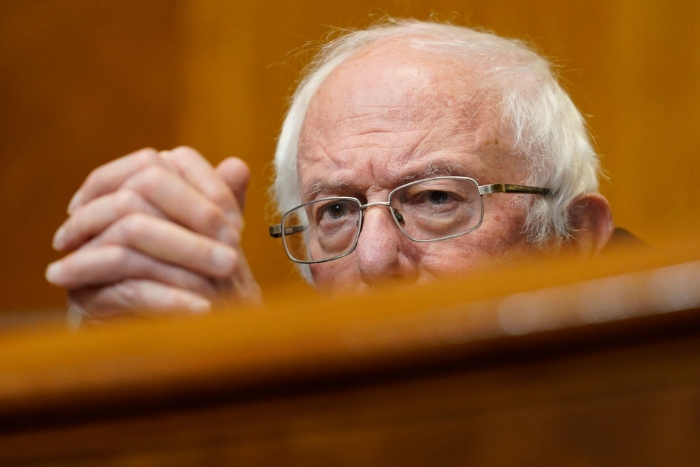
Sen. Bernie Sanders listens during a hearing on Capitol Hill.

Sen. Bernie Sanders listens during a hearing on Capitol Hill. | Getty Images

The criticism of Sanders has been that his style doesn’t result in legislative wins. But that no longer seems persuasive even as it misses the larger point of his political agenda. His objective has been to move the Overton window of what Democrats believe is politically permissible. Sometimes, like when he floated that he’d primary Obama in 2012, his attempts have backfired spectacularly. But, on the whole, it’s hard to argue that he’s been unsuccessful.

The Democratic Party today holds razor-thin majorities in both chambers and is helmed by a president who might have been the most moderate of the 20 or so candidates who ran in the primary. And yet every single member — save one in the House — voted for a nearly $2 trillion deficit-financed bill that sends money without strings attached to the poorest Americans, all while embracing a unionization effort targeting the biggest e-commerce giant in the world and entertaining a $4 trillion follow-up bill to revamp American infrastructure that will likely include tax hikes on the rich. If Sanders was just a touch more extroverted, we’d likely see signs of euphoria in Burlington.

Of course, credit (or, if you’re so inclined, blame) isn’t his alone. The enlarged child tax credit has been the project of countless Democrats, including Rep. Rosa DeLauro (D-Conn.). The bill’s $86 billion bailout for multi-employer pensions was spearheaded by Sen. Sherrod Brown (D-Ohio). And none of it would have been possible without twin Senate wins in Georgia or Biden’s insistence that he needed to go big out the gate.

But, it’s worth recalling, that Biden easily could have charted a bipartisan approach instead. In early December, Manchin and Sen. Mitt Romney (R-Utah) announced the outlines of a $900 billion relief bill of their own, with a splashy Washington Post op-ed framing it as the logical step toward ideological comity. Five other senators in the Democratic caucus were on board with the idea.

Sanders rejected the proposal out of hand. His move sent an early signal to the White House that it would have to scramble for votes even on a center-of-the-road approach. Weeks later, the Georgia election happened, Biden stuck to the script that bigger was better, and the pieces of a $1.9 trillion package — upon which the success of the Democratic Party now hangs — fell into place.

“It used to be that conservative Democrats write the bill and progressives make the changes,” said Faiz Shakir, Sanders’ 2020 campaign manager. “What you had here is the progressives wrote the bill and the conservatives got to make the changes.”

Welcome to POLITICO Nightly. Reach out with news and tips at sstein@politico.com and rrayasam@politico.com, or on Twitter at @samstein and @renurayasam.


JOIN THE CONVERSATION, SUBSCRIBE TO “THE RECAST”: Power dynamics are shifting in Washington, and more people are demanding a seat at the table, insisting that all politics is personal and not all policy is equitable. “The Recast” is a new twice-weekly newsletter that breaks down how race and identity are recasting politics, policy and power in America. Get fresh insights, scoops and dispatches on this crucial intersection from across the country, and hear from new voices that challenge business as usual. Don’t miss out on this new newsletter, SUBSCRIBE NOW. Thank you to our sponsor, Intel.


FIRST IN NIGHTLY

BIDENCARE — Fresh off the first big upgrade to Obamacare since its 2010 passage, Democrats are eyeing a much heavier and politically riskier lift: creating a government-run public health insurance option, write Alice Miranda Ollstein and Joanne Kenen.

Democratic politics have moved left since centrist lawmakers jettisoned a public option from the Affordable Care Act legislation back in 2009. At the time, a government-run health plan was seen as too radical. But as progressive calls for a fully government-run “Medicare For All”-type system have gotten louder in the intervening years, the public option has become classic Biden middle ground — popular with independents and even some Republican voters.

Still, the public option has gotten little scrutiny, and Republican lawmakers and the health care industry are ready to unleash an all-out assault on the idea. Democratic leaders are treading lightly for now, well aware that three of the last four presidents saw divisive health care proposals during their first year in power contribute to electoral shellackings in their second.

AROUND THE NATION

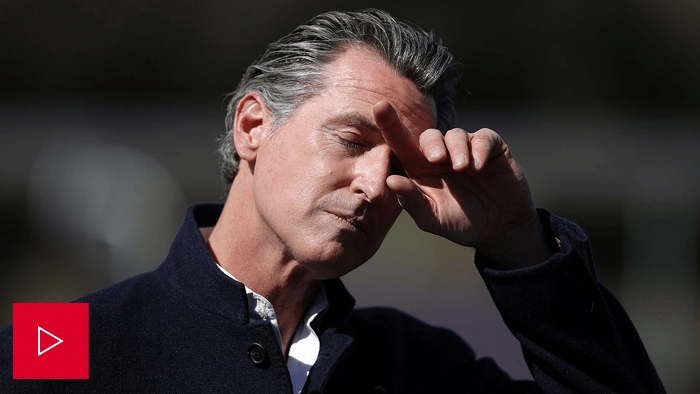
Nightly video player of California Gov. Gavin Newsom

GRAY DAYS ARE HERE AGAIN — California Democratic Gov. Gavin Newsom said today that an effort to recall him probably has enough valid signatures to qualify for the ballot before a Wednesday deadline of 5 p.m. PT. It will likely take another month for the secretary of state to qualify and certify the election, which would probably then take place this October at the earliest, California Playbook writer Carla Marinucci told Nightly’s Renuka Rayasam over Slack today. The two chatted about how Newsom got here and what’s next. This conversation has been edited.

What happened to Newsom? He went from being a Democratic superstar to facing a recall without even a specific scandal like Andrew Cuomo’s.

The recall backers say that 1/3 of the people who signed are Dems and independents, and the anger at Newsom is deep. They compare him to Cuomo — they say he’s a guy who’s gotten out of touch with average people and has lost his mojo here in CA.

Some of this was not his fault, to be fair. California got slammed with Covid much harder than many states. Controlling it in the rural areas and some of the nation’s biggest urban areas was a hard challenge. The resentment about businesses and school closures grew.

And Newsom didn’t help with some of his own self-inflicted wounds — going to a fancy dinner at the French Laundry in Napa, a birthday party for a big lobbyist, at a time when he was telling people to stay at home.

Also it’s relatively easy to recall a governor in California, right? I am thinking of Gray Davis, whose signature is on my college diploma.

The bar is low, just 12 percent of voter turnout in the last election, and you don’t need to have the governor convicted of a crime like fraud, as in some states. Only 19 states even allow a recall of a governor.

But the recall people got a big break. Their movement was out of gas and they were about to be shut down — they didn’t have the signatures last November when they were facing a deadline. But then a judge (appointed by Gov. Schwarzenegger, and nominated for a Trump post) gave them 120 extra days to collect the signatures, presumably because of Covid. That was the turning point. Had that not happened, we wouldn’t be here.

What is Newsom doing to keep from becoming like Davis, who lost his recall and was replaced by Schwarzenegger?

There are a lot of legislative hurdles, and Dems will want to run out the clock as long as possible. The longer the recall takes, the more CA recovers from Covid and its businesses and schools open. They’re hoping the rationale and passion for the recall will dissipate.

Right now, this is Newsom’s strength: “You can’t beat somebody with nobody.” The Republicans don’t yet have anyone who looks to be strong enough to take him out in a state where the Dems have a 20+ voter registration advantage. Also, it looks like a crowd of Republicans may run and split up their vote.

Any frontrunners? Kim Kardashian West as the next governor of California?

That would be killer!! Already, Caitlin Jenner has declared she’s not running — seriously!! So what do you want to bet that Kylie, Kim, Kendall or who knows who else in that clan might want to take a stand. We used to think Kayne was the guy who’d do it, but sounds like he’s off to Montana.

WHAT'D I MISS?

— Russia stoked Ukraine allegations to undermine Biden: Russia tried again last year to help then-President Donald Trump win the White House , the U.S. intelligence community said today in a long-awaited postmortem — adding that a “primary” tactic was the spreading of corruption allegations involving Biden and Ukraine. The effort fell short of the Kremlin-backed efforts to assist Trump in his 2016 contest against Hillary Clinton, the spy community wrote in its unclassified assessment of foreign threats to the 2020 U.S. federal elections. And the agencies found no attempts by foreign countries to change vote tallies or final results.

— Feinstein dismisses Newsom’s talk of her replacement: Sen. Dianne Feinstein accused reporters of misinterpreting remarks from the California governor about her hypothetical replacement and insisted she would serve out the remainder of her term. “Please, we’re very good friends. I don’t think he meant that the way some people thought,” Feinstein (D-Calif.) told reporters in reference to Newsom.

— Senate centrists weigh brokering deals on immigration, minimum wage: A bipartisan group of senators who successfully pushed for a second coronavirus aid bill last year will meet Wednesday as they weigh whether to wade into another thorny topic , such as immigration or the minimum wage. The group of 20, evenly split between Republicans and Democrats, was formed to push Congress to pass a $900 billion pandemic stimulus bill late last year. Its meeting this week comes as the House prepares to pass immigration bills that will further reinforce the Senate’s gridlock on that issue without some bipartisan framework to break the impasse.

— FDA opens door to widespread at-home Covid-19 tests: The Food and Drug Administration will allow some developers of Covid-19 tests to market their products for regular at-home use without first studying how well the tests perform in people without symptoms. The agency’s announcement is aimed at making it easier to screen Americans returning to school and work, senior FDA regulators said.

FROM THE TECHNOLOGY DESK

‘A SWING AND A MISS’ — New documents obtained by POLITICO shed light on the FTC’s decision not to file an antitrust suit against Google in 2013, allowing the company to grow into the giant that it is today. In the latest POLITICO DispatchLeah Nylen reports on how regulators appear to have misread the evidence in front of their eyes. And don’t miss the full report on how the Obama administration missed their chance to reign in the tech giant.

Play audio

Listen to the latest POLITICO Dispatch podcast

AROUND THE WORLD

THE SUN NEVER SETS ON ‘GLOBAL BRITAIN’ — A “Global Britain” blueprint is necessary for the country’s “safety and prosperity” in the coming decades, Boris Johnson said today. Unveiling a 100-page report setting out the U.K.’s foreign policy priorities after Brexit, Johnson said it was the most comprehensive such review since the Cold War and was not a “vainglorious gesture.”

The report, which highlights the security threats posed by Russia and China, sets out to end three decades of gradual nuclear disarmament by lifting a cap on the U.K.’s stockpile of nuclear weapons from 180 to 260. It is a move Foreign Secretary Dominic Raab earlier said was the “ultimate insurance policy” against threats from hostile states.

Johnson, a leading voice in the campaign for Britain to leave the European Union, said, “The truth is that even if we wished it — and of course we do not — the U.K. could never turn inwards or be content with the cramped horizons of a regional foreign policy.”

The United States would be the U.K.’s “greatest ally” in all its endeavors because of the two countries’ unique intelligence and security partnership, Johnson said.

NIGHTLY NUMBER

9

The number of days until Biden’s first press conference as president. He will hold his first formal news conference on March 25 , White House press secretary Jen Psaki said today. While Biden has periodically taken questions from reporters, he has been under fire from conservative news outlets — as well as some political allies — for waiting longer than some predecessors to hold a formal press conference.

PARTING WORDS

YANG’S RIGHTWARD ROAD TO POLITICAL STARDOM — Andrew Yang’s road to fame was paved with right-wing podcasts.

Before he joined the New York City mayor’s race in January or even appeared on a presidential debate stage during the Democratic primary, Yang reached an audience of millions through an unconventional venue: shows that promoted a strongly anti-progressive point of view.

His appearances were the most high-profile examples of his history on the campaign trail espousing views that were antithetical to today’s current Democratic party — part of a strategy to win back white, working-class workers who swung for Trump in 2016, Tina Nguyen and Sally Goldenberg report. At the time his views weren’t too distant from other centrist candidates, who shied away from embracing progressive issues, particularly those related to “culture war” topics.

But New York City Democratic politics demand a different script.

Primary voters across the five boroughs generally support labor unions, take into account a candidate’s race and ethnicity and veer further left in their politics. In recent years traditional Democrats who suited voters for decades were toppled by even further-leaning upstart progressives like Rep. Alexandria Ocasio-Cortez. Even Brooklyn Borough President Eric Adams, a moderate in the mayoral field this year, celebrated winning support from a trio of influential unions last week.

Yang’s political leanings in this field are as unorthodox as his candidacy itself — a novice to local politics who vaulted to frontrunner status even as news coverage focused on his escape from the city during the height of the pandemic, his spotty voting record and staff complaints about a hostile work culture in his presidential campaign.


JOIN WEDNESDAY - THE FUTURE OF SATELLITE IMAGERY: From capturing the devastation left by natural disasters to observing crops, pictures taken from space are critical, and the power of satellite data to produce remarkably sharp images continues to grow. But these images play another crucial role — national security — which raises ethical questions. Join POLITICO for a virtual conversation with politicians and scientists on the growing commercial and military use of satellite imagery and the future possibilities of this technology. REGISTER HERE.


Did someone forward this email to you? Sign up here.


Follow us on Twitter

Renuka Rayasam @renurayasam

Chris Suellentrop @suellentrop

Tyler Weyant @tweyant

Myah Ward @myahward


FOLLOW US


POLITICO, LLC 1000 Wilson Blvd. Arlington, VA, 22209, USA


Trump’s Terrified White House

                           LOTS OF POSTS IGNORED BY BLOGGER..... OR REMOVED ON THEIR WHIM! ALL POSTS ARE AVAILABLE ON MIDDLEBORO REVIEW AND ...