LOTS OF POSTS IGNORED BY BLOGGER.....
ALL POSTS ARE AVAILABLE ON
MIDDLEBORO REVIEW AND SO ON
Today in Politics, Bulletin 289. 1/19/26
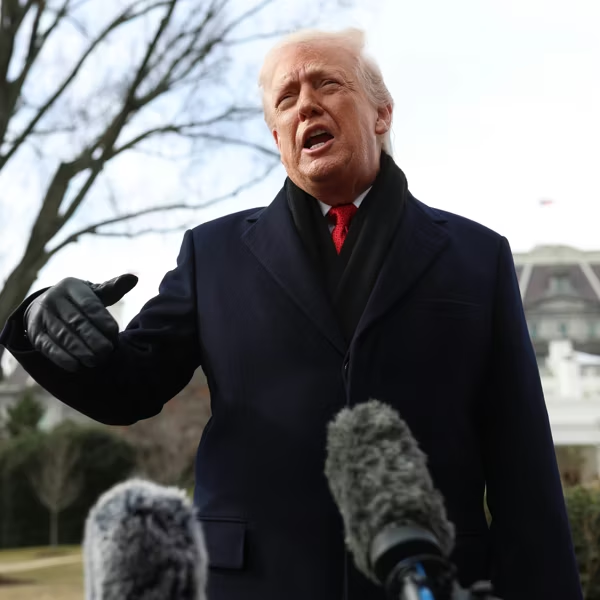
… Trump sent this deranged letter to Norway PM Jonas Gahr:
Dear Jonas: Considering your Country decided not to give me the Nobel Peace Prize for having stopped 8 Wars PLUS, I no longer feel an obligation to think purely of Peace, although it will always be predominant, but can now think about what is good and proper for the United States of America. Denmark cannot protect that land from Russia or China, and why do they have a “right of ownership” anyway? There are no written documents, it’s only that a boat landed there hundreds of years ago, but we had boats landing there, also. I have done more for NATO than any other person since its founding, and now, NATO should do something for the United States. The World is not secure unless we have Complete and Total Control of Greenland.
… Gahr responded:
I can confirm that this is a message I received yesterday afternoon from President Trump. It came as a reply to a short message I sent to President Trump earlier the same day, on behalf of myself and Finland’s President Alexander Stubb. In our message to Trump, we conveyed our opposition to his increased tariffs against Norway, Finland, and other selected countries. We emphasized the need to de-escalate the rhetoric and requested a phone call between Trump, Stubb, and myself later that day. Trump’s reply came only a short time after we sent the message. It was Trump’s choice to share the message with other leaders in NATO countries.
Norway’s position on Greenland remains unchanged. Greenland is part of the Kingdom of Denmark, and Norway fully supports the Kingdom of Denmark in this matter. We also support NATO strengthening its work, in a responsible manner, to promote security and stability in the Arctic. As for the Nobel Peace Prize, I have on several occasions clearly explained to Trump what is well known: it is an independent Nobel Committee-not the Norwegian government—-that awards the prize.”
… Trump was asked by NBC about Gahr’s statement: “Norway totally controls it despite what they say. They like to say they have nothing to do with it, but they have everything thing to do with it.”
… Phillips O’Brien, professor of strategic studies at St. Andrews University: “One thing that now even the most hopeful have to admit, is that the unctuous European tactic of flattering, praising, massaging Trump has been a catastrophic failure and made things worse.”
… Former Greenland MP TIllie Martinussen: “We do not want to be rich like Americans. Look how greedy they are, even trying to invade their friends. Even if there are minerals and oil under our land—and they are worth far more—we still would not sell ourselves. We know what happened to Indigenous people in Alaska and Native Americans. Their land was taken, and they were not treated well. We see who Trump surrounds himself with—white power people—and we are not white. We are people of color. We know our rights would likely be taken away.”
… Sen. Mark Kelly (D-AZ): “Taking over Greenland is not a joke. Trump is sending messages to foreign leaders and making threats that will destroy the most important alliance we have. Are Republicans in Congress and Marco Rubio really ready to throw NATO away because they’re too afraid to stand up to Trump?”
… CNBC: “Russian President Vladimir Putin has received an invitation to join the U.S.′ ‘Board of Peace’ for Gaza, the Kremlin said Monday. Kremlin Spokesman Dmitry Peskov said Moscow would study the details of the proposal to join the peace council created by Trump late last year. The ‘Board of Peace’ is seen as a vehicle for maintaining a fragile ceasefire between Israel and Hamas, and to oversee the reconstruction of Gaza after their protracted conflict.
… Peskov: “President Putin has indeed received an offer through diplomatic channels to join this Board of Peace. We are currently studying all the details of this proposal. We hope to contact the US side to clarify all the details.”
… Senior French official to Axios: “France was invited to join the Board of Peace and is examining the proposed legal framework with its partners. At this stage, it does not intend to give a favorable response. The Charter goes beyond the sole framework of Gaza. It raises major questions, in particular regarding respect for the principles and structure of the UN, which cannot under any circumstances be called into question.”
… Journalist Olga Nesterova: “Trump wants a signing ceremony for his proposed ‘Board of Peace’ in Davos on Thur—but it’s unclear who would sign, as many invitees want the terms rewritten. The plan has drawn criticism from Israel, skepticism in Europe, and enthusiasm from Russia-aligned states.”
… “World leaders were also blindsided by Trump’s demand for $1 billion permanent memberships. European allies are now coordinating pushback and urging Arab leaders to lobby for changes, privately warning the board is an attempt to build a rival to the UN - far beyond Gaza.”
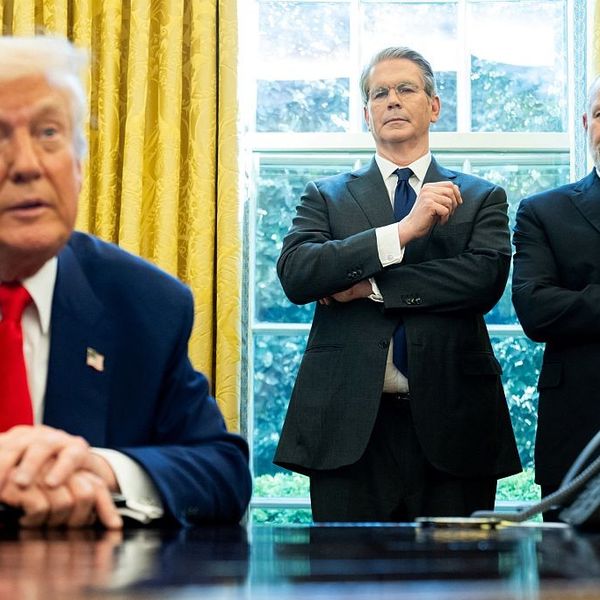
… CNBC: “World leaders, corporate executives and figures from civil society are convening in Davos, Switzerland, this week for the World Economic Forum. All eyes are almost certain to be on one high-ranking guest: President Trump, who plans to attend with a large delegation including Treasury Secretary Scott Bessent and Steve Witkoff.”
… “Topics of discussion at Davos - according to US and European analysts and former policymakers interviewed ahead of the event - are likely to include Russia’s war with Ukraine; prospects for global trade and markets; the probability of China invading Taiwan; and the risks of a Middle East flare-up caused by the recent uprising in Iran.”
… Politico Europe: “Trump’s special envoy to Greenland was disinvited from a traditional dog sled race on the Arctic island as a crisis escalated over the fate of the autonomous Danish territory. The Greenland Dog Sledding Assn objected to the invitation for Louisiana Gov. Jeff Landry and last week launched an investigation into who sent it. Trump last month tapped Landry to lead his efforts to take control of Greenland.”
… “In a statement, the assn said the tourism company that issued the invite to Landry ‘has unilaterally withdrawn its invitation.’ The KNQK assn last week criticized Landry’s invitation, saying it was ‘unacceptable that political pressure is being exerted from outside.’ It described ‘the participation of foreign political actors’ at the dog sled race as ‘wholly inappropriate.’”
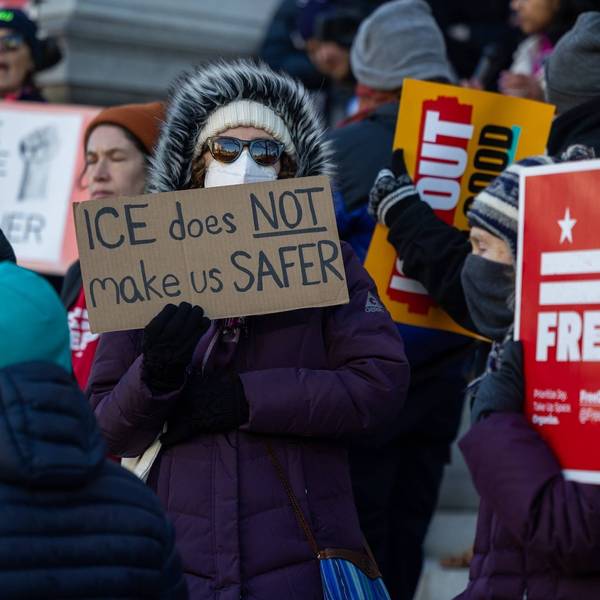
… It appears that Don Lemon and participants in a protest at a St. Paul, MN church may be about to get hit with federal criminal charges by DOJ. Daily Beast: “Don Lemon has called out MAGA figures for ‘losing their mind’ over his coverage of anti-ICE protesters who stormed a church during a Sunday service. The former CNN anchor livestreamed himself joining a group of demonstrators who disrupted a service at Cities Church in Minneapolis to protest a pastor there who they said works for ICE.”
… Lemon: “The MAGA admin and the fake news MAGAs are losing their mind over something that’s not even true. I had no affiliations with that organization. I didn’t even know they were going to this church until we followed them. We were there chronicling protests. Once the protest started in the church, we did an act of journalism, which was report on it and talk to the people who were involved, which included the pastor, members of the church, and members of the org. That’s it.”
… “It’s called journalism, First Amendment, all that stuff. All of you people who believe in the First Amendment absolutist, there you go. So why don’t you talk to the actual person who is in charge of the org and whose idea was to have the protest at the church before you start blaming me for stuff for which you have no idea.”
… DOJ Civil Rights Div Chief Harmeet Dhillon responded: “The Civil Rights Div is investigating the potential violations of the federal FACE Act by these people desecrating a house of worship and interfering with Christian worshippers. House of worship is not a public forum for your protest! It is a space protected from exactly such acts by federal criminal and civil laws! Nor does the First Amendment protect your pseudo journalism of disrupting a prayer service. You are on notice!”
… Dhillon then went on Benny Johnson’s podcast: “The people on the left we’re talking about, they’re not familiar with what goes on in a house of worship. A lot of them are godless people. It’s off limits to go into a house of worship to do your little protest. Protests can occur on public property, protests can occur outside. The only question is, who was involved, how many were involved, and how many charges are going to be brought here? Those are the questions.”
… She then said she is looking at prosecuting Lemon and the protesters under the Ku Klux Klan Act: “The Klan Act is one of the most important federal civil rights statutes. Its a law that makes it illegal to terrorize and violate the civil rights of citizens. Whenever people conspire this, the Klan Act can be used. Everyone in the protest community needs to know that the fullest force of the federal govt is going to come down and prevent this from happening and put people away for a long time.”
… AG Pam Bondi: “I have been in constant communication with Asst. AG Dhillon today over these events which DOJ is investigating at my direction. Any violation of federal law will be prosecuted.”
… Alina Habba on Fox: “This DOJ under Pam Bondi’s leadership will not tolerate intimidating people in their place of worship. We will not tolerate intimidation of federal law endorcement, and we most certainly will investigate and prosecute anyone who encourages, funds or incites the same. You are on notice.”
… Karoline Leavitt: “President Trump will not tolerate the intimidation and harassment of Christians in their sacred places of worship. DOJ has launched a full investigation into the despicable incident that took place earlier today at a church in Minnesota.”
… Joe Rigney, founding pastor of the church in St. Paul: “All I want for MLK Day this year is for Don Lemon to be arrested for coordinating with Democratic operatives to disrupt a Christian worship service.”
… Right-wing activists are all over social media demanding arrests. Auron MacIntyre with The Blaze: “Every protester in this video has committed a federal crime. They can all be easily identified. Don Lemon needs to be in custody by the end of the day if the admin is to ever be taken seriously again.”
… Rep. Greg Steube (R-FL) on Newsmax: Q - “Do you think the church incident in St Paul is enough for Trump to trigger the Insurrection Act? Has it gone too far? Steube: I think it’s gone too far before that.”
… Rep. Andy Ogles (R-TN) on Fox Business: “They’re libtards in a blue city. If the libtards are gonna side with lawlessness, that’s on them.”
… Sean Davis, founder of The Federalist: “I’m sick and tired of the tough talk and the podcast threats and the tweets. I want to see these people in prison and I want to see them in prison yesterday.”
… Rep. Chuck Fleischmann (R-TN) on NewsNation: “What we’re seeing in Minneapolis is a situation devolve into chaos when a city, state begins to embrace issues and ethics and an ethos that is totally antithetical to America. We are Republicans believe in the rule of law, God, country, law enforcement.”
… I can’t agree with that, especially since I frequently write about Trump’s pardons, ICE’s conduct, and daily lawbreaking.
… Rep. Byron Donalds (R-FL) on Fox: “These agitators - who by the way are paid, folks. America, they are paid to do this kind of mess.”
… MN AG Keith Ellison to Meidas: “This is the essence of dictatorship. It’s the essence of it. And we’ve got to get over the idea that this couldn’t happen here. Not only could it happen here—it’s happening here.”
… The Wrap: Bruce Springsteen dedicated his song ‘The Promised Land’ to Renee Nicole Good, the Minnesota woman killed by ICE, at his show in NJ. The Boss also echoed Minneapolis Mayor Jacob Frey and said, ‘ICE should get the fuck out!’”
… CNN pollster Harry Enten on Trump’s deportation program: “These numbers have completely flipped. This was such a strength for the president. It was +18 at the beginning of his presidency - one of the most popular things in his agenda. But there’s been over a 25 point switcheroo in the negative direction. Now the program is underwater at -8.”
… Fox reporter in Minnesota, Bill Melgulin: “I’m told multiple ICE agents with rooms booked at the St. Paul Downtown Doubletree by Hilton received a notice today that their rooms are being cancelled and the hotel will temporarily close ‘due to heightened public safety concerns in St. Paul.’ I called the hotel and checked online and they are indeed not taking any bookings right now. They referred me to other hotels.”
… “I'm told this also happened today at the Intercontinental St. Paul, with ICE agents with bookings there notified the hotel will be temporarily closing today due to the ongoing unrest in Minnesota”
… NY Post: “A sprawling internal investigation into Labor Secretary Lori Chavez-DeRemer has uncovered an alcohol ‘stash’ in her DC office - and evidence she took subordinates to a strip club while on an official departmental trip. The investigation has also confirmed that rumors the secretary pursued an ‘inappropriate’ relationship with an underling were discussed internally months ago and dismissed by her chief of staff Jihun Han - who was put on leave along with his deputy Rebecca Wright.”
… “A bombshell complaint that alleged Chavez-DeRemer had also committed ‘travel fraud’ by having Han and Wright ‘make up’ official trips, was drinking in her office during the workday and enabled a hostile work environment - with her top aides belittling and bullying staffers. The complaint has sparked at least a dozen interviews so far with govt officials and staff - an indication of the expansiveness of the probe.”
… “The interviews have also uncovered an incident involving Chavez-DeRemer allegedly taking subordinates to an Oregon strip club in April 2025. The visit to the club, Angels PDX, outside of Portland came at the tail end of a 5-day trip to meet with the state’s Democratic governor Tina Kotek, a CEO of a truck manufacturing company, and to tour an Intel chip center and view an ‘ironworker project’.”
… “The Labor Dept inspector general’s office, helmed by former NY GOP Rep. Anthony D’Esposito, is seeking all potential evidence - including video footage - about at least 5 purported meet-ups between the married mother-of-two and her alleged paramour at the secretary’s DC apartment and a Las Vegas hotel. The subordinate in the alleged ‘inappropriate’ relationship with the secretary has since been placed on administrative leave.”
… “Despite a Florida trip lasting 5 days, schedules show, the labor secretary had just one speaking engagement at a luncheon. A ‘stash’ of champagne and other liquor cited in the complaint was also uncovered by investigators in the two women’s offices this week.”
I’m afraid this trip to the WEF in Davos by Trump going to be a disaster. The vibes are not good. We are pretty close to the collective security arrangements built by many presidents of both parties over many decades coming completely unraveled by one unhinged madman. It is looking like this conference may result in another tether coming unmoored. Hopefully I’m wrong. Maybe 4 days of golf in Palm Beach before a trip to Switzerland will chill him out, but I doubt it.
If you missed yesterday’s Bulletin covering the entire weekend, you can find it here.
Meidas+ is a reader-supported publication. To receive new posts and support my work, consider becoming a free or paid subscriber.
… USA Today: “In a break from past presidential traditions, including his own first term, President Trump has not recognized Jan. 19 2026 as Martin Luther King Jr. Day through any official statement, proclamation or activity. Trump spent the day at his Mar-a-Lago estate. The WH did not immediately respond when asked on Jan. 19 whether Trump planned to acknowledge the day, or King's legacy.”
… “Congress created the Martin Luther King Jr. Day, and only it can stop its official observance. President Ronald Reagan signed the King Holiday Bill into law on Nov. 2, 1983, thus designating the third Monday in January a federal holiday in observance of the civil rights leader. Trump is the first president not to issue an official proclamation
recognizing Martin Luther King Jr. Day since Reagan made it a holiday.”
… Meidas: “There is no Martin Luther King Jr. Day proclamation from Trump posted on the White House’s official website, its social media accounts, or in the Federal Register. These proclamations are usually signed days in advance of a holiday and even if Trump signed one late, his admin isn’t making the proclamation public in a timely manner. Therefore, for all intents and purposes, Trump is skipping the presidential emphasis on the MLK holiday.”
… Daily Beast: “Trump’s 2024 campaign manager ditched his lawsuit against the Daily Beast. Chris LaCivita settled his suit despite having demanded ‘triple damages’ and claiming he had lost millions of dollars in business opportunities. LaCivita had sued the Daily Beast over our Oct. 15 report by Michael Isikoff, the veteran investigative journalist who was a Pulitzer Prize finalist, which disclosed how millions had flowed through LaCivita’s Advancing Strategies, LLC while he was running Trump’s campaign.”
… “LaCivita had heavily hyped his lawsuit, comparing it to a Marine dropping a grenade into a building; posting on X, ‘Fucked around Find Out’; saying before the sole court hearing that he had ‘a date with the liars of the Daily Beast’. After the hearing, he boasted, ‘I’m really looking forward to making my case in front of a jury.’ But he voluntarily settled the case with none of his demands met. The Beast did not retract the story, made no apology, and gave no payment.”
… “The Beast can also disclose that the RNC has already paid LaCivita’s attorney Mark Geragos’ law firm a total of more than $650,000 for legal services.”
… Daily Beast statement: “We stood by the reporting, paid nothing, and the truth hasn’t been challenged. The meritless case is over. LaCivita and the RNC got nothing for the money they wasted on a high-priced Hollywood lawyer and a groundless lawsuit.”
… PBS: “In a reversal of recently announced policy, the Dept of Education said it was postponing the pursuit of garnishing wages, seizing tax refunds and collecting other benefits from federal student loan borrowers in default. The dept said that the delay in collections will allow defaulted borrowers more time to rehabilitate their loans and ‘enable the Dept to implement major student loan repayment reforms’. The Dept said in Dec that it was planning on garnishing wages beginning the week of Jan. 7.”
… Energy Secretary Chris Wright on Fox Business: Q - “Are we now actively selling the oil we're taking from Venezuelan tankers? Wright: Oh, absolutely. Host: How much of that oil are we going to take? Wright: We'll take the majority of Venezuelan exports.”
… AP: “Federal Reserve Chair Jerome Powell will attend the Supreme Court’s oral arguments Wed in a case involving the attempted firing of Fed governor Lisa Cook, an unusual show of support by the central bank chair. The high court is considering whether Trump can fire Cook, an unprecedented attempt by the WH to remove an official appointed by former President Joe Biden.”
… “It’s a much more public show of support than the Fed chair has previously shown Cook, who Trump first sought to fire in late August. But it follows Powell’s announcement last week that the Trump admin has sent subpoenas to the Fed, threatening an unprecedented criminal indictment of the Fed Chair.”
… Axios: “Elon Musk has cut a massive $10 million check to bolster Nate Morris, an outsider, pro-Trump candidate running to succeed retiring Sen. Mitch McConnell. The stunning gift is the biggest sign yet that Musk plans to spend big in the 2026 midterms. Musk’s $10 million donation to the pro-Morris Fight for Kentucky super PAC is the biggest single contribution he’s ever given a Senate candidate.”
… “Musk was the biggest donor during the 2024 campaign, contributing nearly $300 million to pro-Republican causes. The vast majority of the funds went toward supporting Trump. Musk liked that Morris is presenting himself as anti-McConnell. Musk is close to Vance, who counts Morris as a personal friend. Morris launched his campaign during an appearance last year on Donald Trump Jr.’s podcast, and is running as an anti-immigration hardliner.”
… “Morris was endorsed by Charlie Kirk before his death last year. Morris also has the support of Sens. Bernie Moreno (R-OH) and Jim Banks (R-IN) and Steve Bannon. Trump hasn’t yet endorsed in the primary, which also includes Rep. Andy Barr and former state AG Daniel Cameron.”
… Ron Desantis’s social media director Christina Pushaw is going through some major drama, which apparently had led to the loss of her cushy taxpayer-funded $180,000 a year job trolling the libs on social media. Pushaw: “In Oct 2025, I met James Fishback after he sent me a direct message on X. I appreciated his commentary on conservative politics and FL. For two months, we spoke frequently, and I offered him advice on his gubernatorial campaign. I was never working for him, I never received any form of compensation, and I never informed the governor of my communications with him.”
… “Although I disagreed with his campaign rhetoric increasingly over time as it became more extreme, I still considered Fishback a friend. We never had any romantic or sexual relationship, whatsoever. Last week, I had to cut ties with Fishback because I learned that he had deceived me, violated my trust, and lied about me to numerous people in media and politics. One matter that he deceived me about pertained to allegations that he had behaved inappropriately with minors in his Incubate Debate league. I was recently informed of allegations involving additional minors.”
… “I am ashamed that I ever spoke to Fishback or offered any help to his campaign at all, even in an informal capacity. I formally apologize to Lt. Gov. Jay Collins, his wife Layla Collins, and Congressman Byron Donalds for anything I said to Fishback about them that coarsened the primary campaign and made it more toxic than it needed to be. And from the bottom of my heart, I am sorry to Gov. DeSantis and Casey DeSantis for any embarrassment that my communication with Fishback might ever bring on this office. They had absolutely no idea and would never have condoned my communications with him.”
… “I am afraid of James Fishback. I believe he is a vindictive, dishonest, and fundamentally selfish actor who is using this gubernatorial campaign to distract from his significant financial and legal problems. I am terrified that he will weaponize his platform against me to destroy me for my ‘crime’ of getting angry at him and cutting off contact.”
… “I am fine with whatever fate awaits me. If this catastrophic error of judgement makes me unemployable, so be it. I made a mistake. I admitted to it. I want to make it right, and if that means never working in politics again, it’s a consequence I am ready to accept.”
… Fishback responded: “My statement on Christina Pushaw’s Crashout. For the last two months, Christina served as an informal advisor to my campaign. We spoke several times a week, compared strategy, and she even traveled to my campaign events. That changed on Monday, when Lt. Gov. Jay Collins announced his run for Governor. Suddenly, Christina became frustrated with my campaign. On Wed night, she called me 28 times in a row until 1:26 in the morning (see screenshots).”
… “I told Christina that under no circumstance will I drop out and endorse Jay Collins or another candidate. I am in this race to win and fight for every single person who calls Florida home.”
… Fishback then posted a text message he received from Pushaw where she told him that she intended to resign her position today. She has gone silent since then.
… NBC’s Matt Dixon: “We have reported Christina’s extensive ties to Fishback. She lied to me repeatedly and directly about her involvement with him. It was at a time he was facing criticism related to racism, anti-semitism and allegations of having relationships with minors. Fishback also lied about this relationship. DeSantis staffer Taryn Fenske was also in contact with Fishback.”
… “Pushaw never ‘worked’ for him as in she got paid, but was the chief adviser behind his rise. DeSantis political team was the influence that helped him rise. His team has denied on social media any involvement, which is clearly not the case. Of note here is Pushaw during his entire time was a state worker. She makes $180k a year from the DeSantis admin for an ill defined jog. She is based in Miami and rarely in Tallahassee. She continues to be paid by the state as she was working to help Fishback.”
… “DeSantis’ office has denied any interaction with Fishback on social media, but never answered questions directly. Either DeSantis was aware his top staffers were advising, or he was unaware a top state worker in his administration was involved.
Seems like only two options at this point.”
… It is no secret that Desantis is desperate to prevent Trump’s endorsed candidate Byron Donalds from winning this race, because he is certain to wipe out Desantis’s entire political crony operation from the state govt from top to bottom, which would leave Desantis isolated in the political wilderness with no strong allies remaining in positions of power. FL Republicans around the state already secretly hate him. Once he’s out of power with no support system in the state govt, the knives will be out for lame duck Ron.
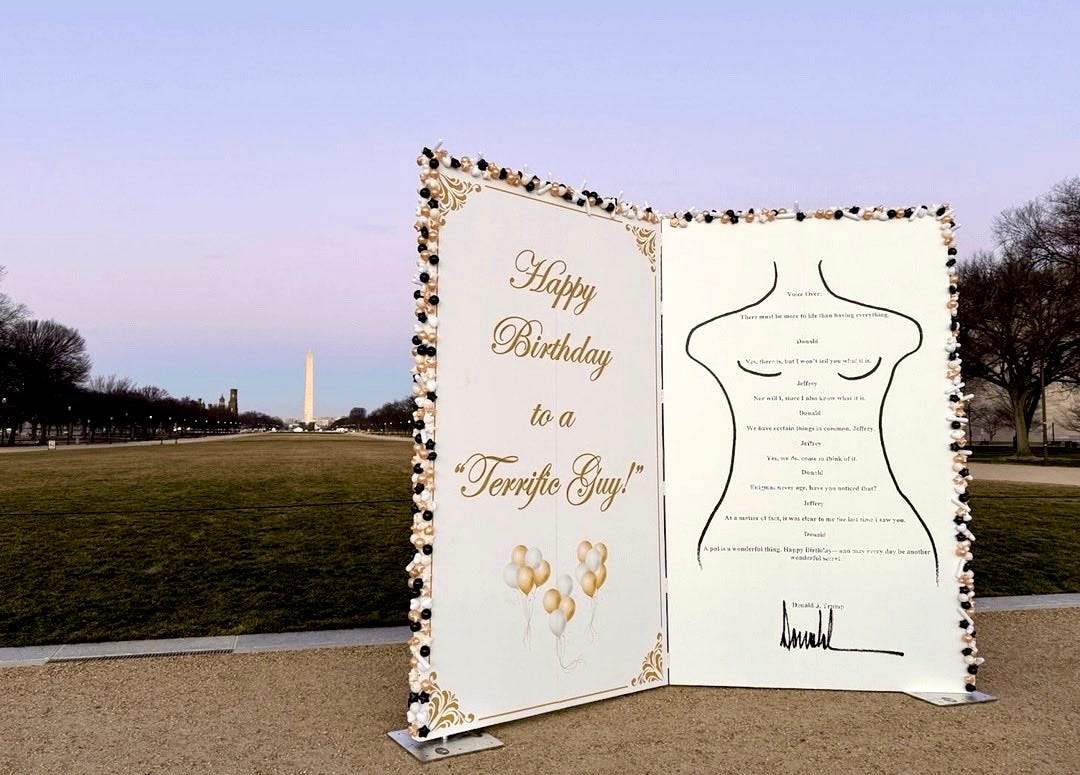
… WUSA9: “The makers of the Trump-Epstein Friendship Statue are back at it again, this time with a massive, 10-foot-tall birthday card with the message and sketch Trump allegedly sent to disgraced financier and sex offender Jeffrey Epstein. Located across from the Capitol on 3rd Street NW between Madison Drive and Jefferson Drive, the card says ‘Happy birthday to a terrific guy!’ on one side. It comes from the organization The Secret Handshake.”
… “On the other side is a recreation of the birthday message Trump allegedly sent Epstein, released by House Democrats in Sept 2025. It’s a crude drawing of a torso with a message in which Trump says, ‘We have certain things in common, Jeffrey,’ and later, ‘A pal is a wonderful thing. Happy Birthday—and may every day be another wonderful secret.’ The letter is signed at the bottom by Trump.”
… “It’s just in time for Epstein’s birthday on Jan. 20th. Alongside the card is a statue of stacked boxes with redacted files and a bunch of markers. A plaque reads: ‘The Secret Handshake invites you to celebrate the birthday of President Donald Trump’s ‘closest friend,’ Jeffrey Epstein, with a larger than life tribute to their intimate correspondence.’”
… The markers are there so that visitors can sign the card with a personal message to Trump. The card went up overnight and will stay up on the Mall until Friday, Jan. 23, according to organizers.
 |