Showing posts with label BERKSHIRE HATHAWAY. Show all posts

Sunday, May 26, 2024

Saudi Arabia’s Wealth Fund Dumps Its JPMorgan Chase Stock; Warren Buffett’s Berkshire Hathaway Did the Same in 2020


SUBSCRIBE TO THIS NEWSLETTER TO RECEIVE TIMELY REPORTS! 


Saudi Arabia’s Wealth Fund Dumps Its JPMorgan Chase Stock; Warren Buffett’s Berkshire Hathaway Did the Same in 2020

By Pam Martens and Russ Martens: May 16, 2024 ~

Foreign central banks and sovereign wealth funds are required under U.S. law to report their publicly-traded U.S. stock positions no later than 45 days after the end of each calendar quarter, if those stock holdings reach $100 million or more. This is done on Form 13F, which is filed with the Securities and Exchange Commission (SEC).

Sophisticated traders, algorithms at the big trading houses on Wall Street, and giant hedge funds mine that data to spot bullish or bearish signals they might be able to trade on.

Unfortunately, for reasons we haven’t been able to unleash from the tight grip of the SEC over many years, some of the central banks and sovereign wealth funds with massive holdings in U.S. stocks do not report their holdings, or, the SEC is granting them confidentiality.

One sovereign wealth fund that has been reliably reporting its U.S. stock positions since 2019 is Saudi Arabia’s Public Investment Fund (PIF). It filed its 13F yesterday for the quarter ending March 31, 2024. It showed it held 38 U.S. stock positions with a total dollar value of $20.55 billion.

One stock position that PIF had held to the tune of $655 million as of December 31, 2023 was no longer in its portfolio. That stock was the largest bank in the United States, JPMorgan Chase.

Saudia Arabia might have taken a cue from the Chairman and CEO of JPMorgan Chase, Jamie Dimon, who has personally sold $183 million of the bank’s stock this year – his largest stock sales in the bank since he took the reins as CEO in 2005.

Saudi Arabia’s sovereign wealth fund is not the only sophisticated investor to dump the stock of JPMorgan Chase in recent years. According to the 13F filing that Warren Buffett’s Berkshire Hathaway made with the SEC for the quarter ending December 31, 2019, it held 59.5 million shares of JPMorgan Chase with a total value at that time of $8.29 billion. By June 30, 2020, that position had been trimmed by more than half, to 22.2 million shares. By September 30, 2020, one day after JPMorgan Chase had admitted to its fourth and fifth criminal felony counts in the prior six years, Berkshire Hathaway’s position in JPMorgan Chase tallied up to just under 1 million shares, a 98 percent reduction from the beginning of 2020. By December 31, 2020, the last share of JPMorgan Chase had disappeared from Berkshire Hathaway’s portfolio, according to its 13F filing with the SEC.

Berkshire Hathaway’s stock portfolio is massive. Including all its subsidiary companies, it held $331.68 billion in stocks as of March 31, 2024. More than 10 percent of that portfolio was in the stock of JPMorgan Chase’s largest competitor, Bank of America, the second largest bank by assets in the U.S.

According to Berkshire Hathaway’s 13F filing yesterday, as of March 31, 2024 it held a stunning $39 billion in Bank of America’s common stock, or 11.76 percent of its total stock portfolio.

Among the largest and most opaque sovereign wealth funds is the Abu Dhabi Investment Authority (ADIA) – which has good reason not to trust financial institutions in the U.S. (See our 2012 investigative report, U.S. Ally Abu Dhabi Levels $4 Billion Fraud Charge Against Citigroup.)

According to the Sovereign Wealth Fund Institute, ADIA has approximately $1 trillion in assets in its portfolio. And yet, the SEC shows no 13F filings for ADIA.

Equally interesting, ADIA’s most recent annual review for 2022 fails to provide a dollar value for its total portfolio or its stock portfolio. It does provide a graph showing that its stock (equity) portfolio will comprise the following percent of its total portfolio: equities in developed countries, 32 to 42 percent; emerging market equities, 7 to 15 percent; small cap equities, 1 to 5 percent. Taking the mid-range of each class puts its equity position at approximately 51 percent of its total portfolio.

ADIA further advises in its annual review that its overall portfolio has the following breakdown by region: North America, 45 to 60 percent; Europe 15 to 30 percent; developed Asia 5 to 10 percent; and emerging markets 10 to 20 percent.

WALL STREET ON PARADE

Wednesday, May 18, 2022

Warren Buffett Is Taking a Flyer on $3 Billion of Citigroup’s Stock — After It Loses 40 Percent in a Year


SUBSCRIBE TO THIS NEWSLETTER TO MONITOR THE MARKETS 


Warren Buffett Is Taking a Flyer on $3 Billion of Citigroup’s Stock — After It Loses 40 Percent in a Year

By Pam Martens and Russ Martens: May 17, 2022 ~

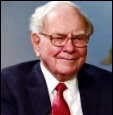
Warren Buffett

Warren Buffett

Tongues are wagging this morning about the 13F filing by Warren Buffett’s Berkshire Hathaway. The filing shows that in the first quarter of this year, Berkshire Hathaway bought 55,155,797 shares of Citigroup stock for its portfolio, which came to the tidy sum of $2.9 billion as of March 31, 2022. The tongue-wagging stems from the fact that over the past 52 weeks, Citigroup’s stock has lost 40 percent of its value, with no sign that the bleeding will stop anytime soon.

Citigroup closed at $53.40 a share on March 31. It closed yesterday at $47.46. That means that Buffett’s wager on Citigroup is down 11 percent or a loss of $327.6 million so far. Knowing Citigroup’s history, things are highly likely to go from bad to worse from here. As Wall Street On Parade reported just last Friday, Citigroup’s Stock Price Is Still Down 84 Percent from the Year of the Crash in 2008.

Buffett taking a big stake in Citigroup is even more peculiar given that Berkshire Hathaway had dumped an $8 billion stake in JPMorgan Chase in 2020, according to its 13F filings with the Securities and Exchange Commission. (JPMorgan Chase, under the leadership of Jamie Dimon as Chairman and CEO, has racked up five criminal felony counts since 2014. It has admitted to all of them.)

Buffett, for reasons that are not fully understood by even Wall Street veterans, has previously come to the rescue of battered Wall Street firms. In 1987 Buffett’s Berkshire Hathaway took a $700 million stake in Salomon Brothers’ convertible preferred stock, giving him an approximate 12 percent ownership in the company. Four years later, top executives at Salomon were under investigation for concealing efforts by traders to rig the U.S. Treasury auction. Buffett stepped in as Interim Chairman of Salomon in an effort to restore the firm’s reputation.

This is how Linda Grant, writing for the Los Angeles Times, described the situation on August 16, 1991:

“ ‘Salomon was like an airplane that had suddenly lost all its forward motion. Everything stopped,’ recalls then co-head of investment banking Deryck C. Maughan. Chairman John H. Gutfreund and President Thomas W. Strauss had resigned earlier that day. Vice Chairman John W. Meriwether was under a cloud of suspicion that would lead to his resignation two days later. The stock had been suspended from trading, after losing a market value of $1.3 billion in one week. Jittery bankers were threatening to cut back loans. Investors were boycotting Salomon’s commercial paper. Prestigious customers, primarily public institutions such as the World Bank and the California Public Employees Retirement System, had suspended certain business dealings. The Justice Department’s antitrust division and the Securities and Exchange Commission had launched investigations.”

Buffett’s rescue worked. Six years later, Salomon Brothers was sold to Sanford Weill’s Travelers Group in a $9 billion stock swap.

Buffett pulled another rescue at the height of the financial crisis in September 2008. Buffett’s Berkshire Hathaway took a $5 billion preferred share stake in Goldman Sachs with an eye-popping dividend of 10 percent at a time when Goldman Sachs’ share price was in a precipitous decline. Berkshire also received five-year warrants to purchase $5 billion of Goldman’s common stock with a strike price of $115 per share. (Goldman bought back the preferred shares from Buffett in 2011. In a revised deal, Berkshire executed its warrants with Goldman in 2013.)

To put the best face on his Goldman rescue, Buffett released the following statement at the time:

“Goldman Sachs is an exceptional institution. It has an unrivaled global franchise, a proven and deep management team and the intellectual and financial capital to continue its track record of outperformance.”

What was really going on at this “exceptional institution” was that it was allowing hedge funds, like Paulson & Company, to hand pick subprime debt likely to fail so that it could short the instruments, while Goldman Sachs knowingly sold the debt to its other customers as a good investment.

Buffett is likely aware of the lengths to which the U.S. Treasury and Federal Reserve went to in order to hide Citigroup’s insolvency in 2008; the reasons they did so; and the likelihood that there would be another bailout of Citigroup and other megabanks on Wall Street in another financial crisis.

In 2008, Citigroup held enormous amounts of foreign deposits which were not covered by federal deposit insurance in the U.S. If the U.S. had allowed those deposits to go up in smoke, it would have significantly damaged confidence abroad in holding funds in U.S. banks.

Beginning in December 2007 and lasting through at least June of 2010, Citigroup received the following in bailouts: $2.5 trillion in secret cumulative loans from the Federal Reserve; $45 billion in capital injections from the U.S. Treasury; the Federal government guaranteed over $300 billion of Citigroup’s assets; the Federal Deposit Insurance Corporation (FDIC) guaranteed $5.75 billion of its senior unsecured debt and $26 billion of its commercial paper and interbank deposits.

But instead of Congress learning lessons from Citigroup’s implosion in 2008 and obscene bailouts, Citigroup has been allowed to continue on its merry way with trillions of dollars in opaque derivatives and off-balance-sheet exposure. (See related articles below.)

Instead of shoring up confidence, Buffett is actually making a bet on the ability of rogue financial institutions to continue to game the system.

Related Articles:

Three of the Biggest Banks on Wall Street Have $7.4 Trillion In Off-Balance Sheet Exposures

Citigroup Has More Derivatives than 4,701 U.S. Banks Combined; After Blowing Itself Up With Derivatives in 2008

Is Citigroup Under Orders from Its Regulators to Break Itself Up?

Citigroup Has Been Paying Out More than It Earned for Years; Now It Has $102.5 Billion in Debt Maturing within Three Years

Bailed Out Citigroup Is Going Full Throttle into Derivatives that Blew Up AIG


LINK


Week in Review | The Liars of the Ruling Class and Those Who Pay the Price

                  LOTS OF POSTS IGNORED BY BLOGGER..... OR REMOVED ON THEIR WHIM! ALL POSTS ARE AVAILABLE ON MIDDLEBORO REVIEW AND SO ON BLO...