Showing posts with label ANTI-ZIONISM. Show all posts

Sunday, June 30, 2024

Liberal Zionism and the woke facade of Israeli genocide


ANTI-ZIONISM

Liberal Zionism and the woke facade of Israeli genocide

Instead of upholding a left-wing agenda and a critical lens, liberal Zionists are a mouthpiece for Israel’s occupation and genocide, writes Yoav Litvin.

( The New Arab ) – Israel’s ongoing genocide is part of a downward spiral for the Zionist project. In the words of acclaimed historian Professor Ilan Pappe: “We are witnessing a historical process – or, more accurately, the beginnings of one – that is likely to culminate in the downfall of Zionism.”

Yet Zionism’s long-standing settler goals have not only thrived through genocidal aggression masked as “self-defence” with subsequent land grabs as obscene rewards for its adherents but also via its “liberal” flank serving a crucial propaganda role, posturing as benevolent and humanitarian whilst aligned with aims of American imperialism.

Now, confronted with Israel’s failure to achieve its stated goals and international outrage over its barbaric aggression, liberal Zionist propagandists are intensifying efforts to whitewash Zionism’s genocidal criminality. Their aim is to prevent the project’s collapse by shifting from circling the wagons to rehabilitating the liberal Zionist facade, enabling a return to management of the Occupation with periodic “mowing the lawn.”

What is Liberal Zionism?

The liberal wing of Zionism sanitises and revises the movement’s reactionary, settler-colonialist, and white supremacist nature, masking its true strategy and motive of expansionism through apartheid and genocide.

It deceitfully presents Zionism as compatible with human rights, containing a right-to-left political spectrum with democratic and progressive values and a desire for peace and justice. This facade sanctifies a “peace process” of futile negotiations, while Israeli bulldozers and contractors continue to colonise Palestinian land, marketed in the US at Zionist land sales in synagogues.

Zionism’s liberal propaganda apparatus presents Israeli and Palestinian narratives as parallel truths, duplicitously portraying both peoples as victims with legitimate claims that require lengthy negotiations and concessions. This revisionist narrative equates Israeli settler colonialist aggressors, backed by the global US hegemon, with their Indigenous Palestinian targets. 

Media and Academia

Liberal Zionist media, NGOs, academia and other organizations have been busy obscuring the events of October 7, as well as Israel’s subsequent deceit, including atrocity propaganda and the Hannibal Directive.

They portray Zionist genocide as a trait of an “extreme” form of Zionism, scapegoating Prime Minister Netanyahu and his coalition as an anomaly rather than acknowledging it as an inherent aspect of the eliminationist project. Additionally, they suggest that by ousting Netanyahu, Zionism could revert to an acceptable trajectory.

Subject to military oversight and censorship under Israel’s “democratic” laws, Haaretz, Israel’s longest-running newspaper and a bastion of liberal Zionism, has engaged in atrocity propaganda, served as a stenography service for political and military agendas, including targeting hospitals in the Gaza Strip, alongside Islamophobic rants which conflate Zionism and Judaism, and attempts to whitewash war crimes such as looting.

“In contrast to their portrayal as aligned with humanitarian and leftist values, liberal Zionists sanitise, justify, sustain, and gatekeep the Zionist project”

Haaretz and its editorial board claim to advocate for “left-wing” and “liberal” agendas, though in fact they promote civil liberties for the privileged class (Zionists) and refuse to address the core white supremacist nature of Zionism, which has terrorised Indigenous Palestinians for over seven decades.

Indeed, anti-Zionist writers, other than a token couple of regular columnists, stand no chance of being published there. Similarly, Israel bars participation of parties in its elections if they negate “the existence of the State of Israel as a Jewish and democratic state,” clearly outlining the boundaries of acceptable debate.

Israeli academia has also served Israel’s reactionary Zionist agenda. In her recently published book, Towers of Ivory and Steel (Verso, 2024), Maya Wind lays out the case against Israeli academia and universities as embodying the apartheid typical of Israeli society and tools of Zionist settler colonialism and ongoing oppression of Palestinian people.

To this end, Israeli universities and legal scholars frequently collaborate with the Israeli military, legitimising Zionist atrocities and collective punishment of Palestinians, while developing and marketing police and military methodologies and weaponry intended for export.

Well-known liberal Zionists, including politicians, such as Israeli President Isaac HerzogYair Golan and former Chief of Shin Bet Ami Ayalon, and academics such as Yuval Noah Harari have all stepped up to the Zionist plate, regurgitating claims of guilt on “both sides” of “the conflict,” amongst other liberal Zionist canards.


The new political movement, Standing Together, exemplifies efforts to normalise the liberal Zionist framework. Consistently strengthening the conflation of Zionism with Judaism, Standing Together blames “extremists on both sides,” recently with homophobic graphics.

As stated by the Palestinian-led Boycott, Divestment and Sanctions: “By trying to paint Israel as a tolerant, diverse, and normal state, and focusing on “hatred” rather than oppression as the problem, this organisation is intellectually dishonest and outright complicit. It is serving a key role in Israel’s international propaganda strategy at this time.”

Within our lifetime

Popular protest in a democracy is aimed at producing political pressure on elected representatives to create substantial change in policy. Protest is typically effective if those protesting have sufficient power to vote the target of the protest out.

Recently, Within Our Lifetime (WOL), a Palestinian-led community organisation in New York City since 2015, faced strong opposition from liberal Zionists, progressives, and Democratic Party loyalists.

They protested at a rally featuring progressive Congressmembers Bowman, Ocasio-Cortez, and Sanders for their continued support of the Biden administration, demanding “pro-Palestinian” politicians: (i) rescind endorsement of Biden; (ii) declare anti-Zionism is not antisemitism, and; (iii) defend Palestinian right to resist. Following WOL’s protest Nerdeen Kiswani, an organiser at WOL said: “Our action accomplished the goal of confronting the hypocrisy within the Democratic Party and not allowing the demonization of those fighting against genocide to be normalised.”

Haaretz critiqued WOL’s protest with typical liberal Zionist talking points, smearing them as a “hard-line group,” simply for reiterating the Palestinian right of self-defence in all forms against occupation as established by international law, echoing critique against the group for rightfully demanding accountability from their elected representatives.

Haaretz’s gatekeeping aligns with recent findings showing wide-ranging Israeli government efforts to shape US discourse around the genocide in Gaza.

In contrast to their portrayal as aligned with humanitarian and leftist values, liberal Zionists sanitise, justify, sustain, and gatekeep the Zionist project. Media, academia, and political figures within the liberal Zionist sphere are complicit in advancing Zionist agendas and silencing dissent. 

To effectively halt ongoing aggression and the genocide of the Palestinian people, and in line with the Palestinian Campaign for the Academic and Cultural Boycott of Israel (PACBI) it is crucial to recognise liberal Zionists who act as agents for the Israeli regime and are reactionary proponents of Zionism and to advocate for their boycott, divestment, and sanction.

Reprinted from The New Arab with the author’s permission.

About the Author

Yoav Litvin is an Israeli-American doctor of psychology/neuroscience, a writer and photographer.


INFORMED COMMENT


Monday, June 24, 2024

Silencing US Jewish Critics of Zionism


Silencing US Jewish Critics of Zionism

June 24, 2024


For over a century, some American Jews have modeled the idea that unqualified support for Israel and Zionism was “not in our name,” writes Marjorie N. Feld.

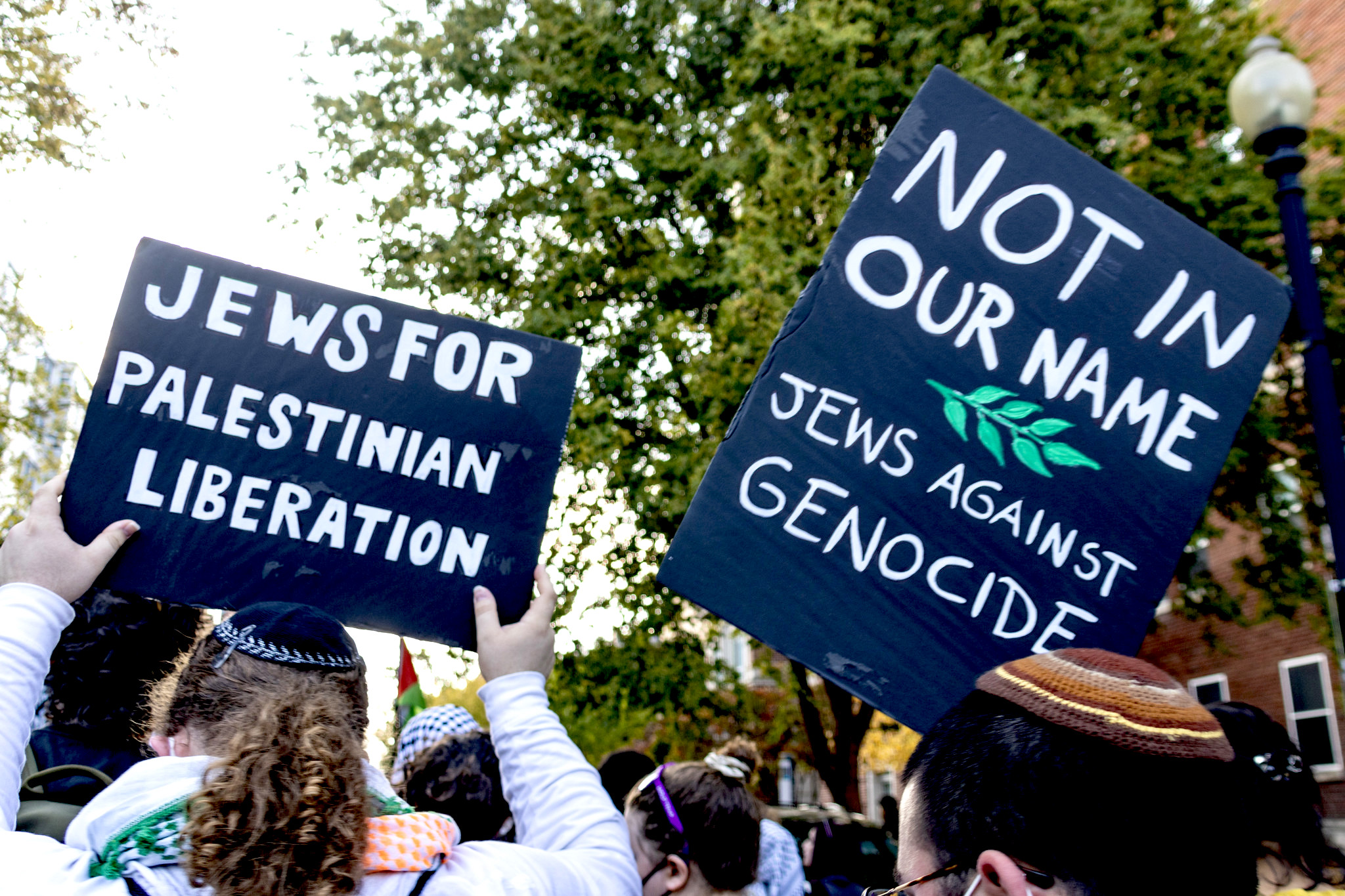
Signs at a Gaza ceasefire march in Washington, D.C., on Oct 28, 2023. (Diane Krauthamer, Flickr, CC BY-NC-SA 2.0)

By Marjorie N. Feld
Babson College

Since October 2023, American Jews have been engaged in an intense, fractious debate over Israel’s war in the Gaza Strip.

Media reports say that American Jews are experiencing “the great rupture,” widening “rifts,” and stand at a “moral, political crossroads.”

While most American Jews remain broadly supportive of Israel, others have protested vigorously against U.S. support for Israel and are demanding a cease-fire in the Gaza war. They carry signs saying “Not in Our Name.”

Their slogan highlights the fact that American foreign aid to Israel has long relied on the support of American Jews. Unqualified U.S. support for Israel was built, in part, on the promise that Israel kept American Jews — and all Jews — safe, especially after the Holocaust.

But American Jews have never been entirely unified in their support for Israel or in their visions of what role Israel and Palestine should play in American Jewish life.

No Consensus

My new book, The Threshold of Dissent: A History of American Jewish Critics of Zionism, analyzes a century of debates among American Jews over Zionism and Israel.

My account begins in 1885, when elite Reform Jews, with a goal of full integration in Jim Crow America, composed the Pittsburgh Platform, which rejected Jewish nationalism out of fear that it would make them targets of antisemitic accusations of dual loyalty.

Two years later, Austrian journalist Theodor Herzl founded the modern Zionist movement, relying on European powers for support for a modern Jewish state.

The genocide of Europe’s Jewish population in the Holocaust fundamentally altered American Jews’ perspectives on Zionism.

Many believed that only a Jewish national homeland in what was then Palestine could prevent another genocide.

Others insisted that the lessons of the Holocaust meant that Jews must not contribute to making refugees of another group of people: the Palestinians who were then living on the land.

There were other issues that contributed to a new understanding of Zionism in the 1950s and 1960s within American Jewish communities. Among them: the Nakba, which was the expulsion of 700,000 Palestinians during the 1948 founding of Israel; Israel’s treatment of immigrant Jews from the Arab and Muslim world known as Mizrahi Jews; and the rise in Israel’s militarism.

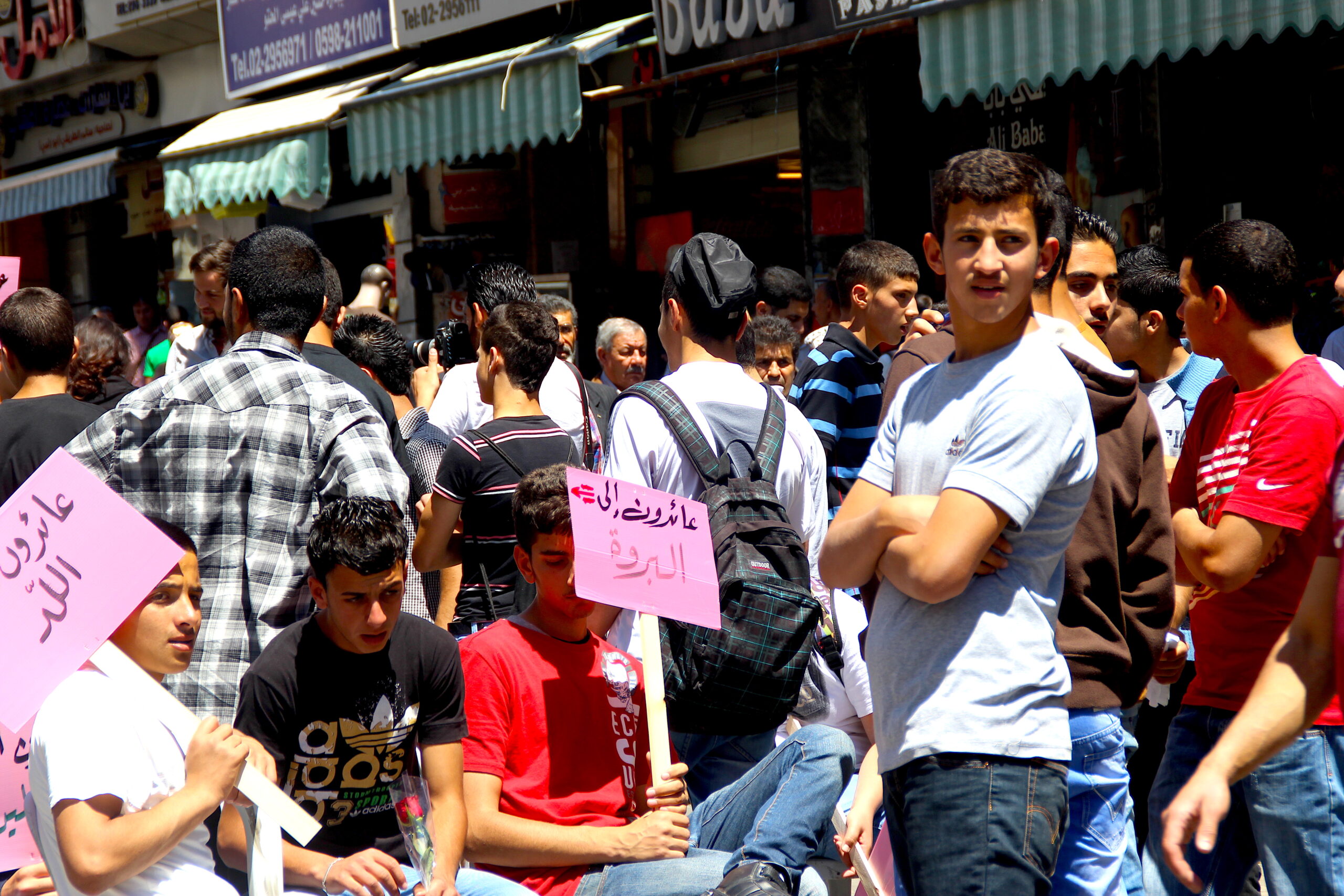
Nakba Day in 2011 in Ramallah, West Bank. (Heinrich Böll Foundation, Wikimedia Commons, CC BY 2.0)

Across the 20th century, mainstream Jewish leaders manufactured an American Jewish so-called consensus on Zionism and Israel, in part by silencing American Jewish critics of Zionism.

From the late 1940s through 1961, journalist William Zukerman edited The Jewish Newsletter, a publication that captured some of the voices of Jewish dissent from Zionism, including his own.

He reported on Israel’s human rights abuses against Palestinians and documented how American Jewish funds fueled Israel’s military campaigns instead of supporting vibrant American Jewish communities.

Because Zukerman dared to publish this criticism, he faced campaigns of steep resistance, eventually losing funding and support from Jewish communal organizations.

Anxious that Zukerman’s dissent would cause “increasing trouble” for American support for Israel, Israeli diplomats wrote to American Jewish leaders, and together they convinced some Jewish journalists to exclude Zukerman’s writings from their publications.

Liberation Movements, American Jews & Zionism

Into the 1960s, as mainstream Jewish leaders emphasized the urgency of Jewish unity on Israel and Zionism and showed growing intolerance for dissent, anti-colonialist activists gained momentum across the world.

From 1948 through 1966, Israel held all Palestinians citizens under martial law, limiting their movement and access to opportunities and resources. Across the 1950s, Israel excluded Palestinian workers from the Histadrut, the state’s largest labor union federation.

Activists allied with the cause of Palestinian rights noted Israel’s alliance with colonial power France during the Algerian war of independence from 1954 to 1962 and criticized Israel as an occupier after the 1967 war. They spoke, too, of Israel’s growing alliance with apartheid South Africa in the 1970s.

Section of Algerian Casbah after French dynamiting, Oct. 8, 1957.
(Saber68, Wikimedia Commons, CC BY-SA 3.0)

Black and Arab leaders in the U.S. taught within, and learned from, these anti-colonial movements. Civil rights and anti-war activists offered new perspectives to debates over Israel and Zionism.

Raised in a liberal Zionist family, student Marty Blatt was learning to fight for justice. Blatt was born in 1951 in Brooklyn, New York. His grandfather had died in a Nazi prison camp. In 1970, he joined the anti-war movement at Tufts University in Massachusetts.

“The Vietnam war was a horrible injustice,” Blatt said. From the movement and from members of the Israeli left, he learned that “Israel/Palestine was another great injustice.”

With no access to the history of Palestinians in school, at home or at the synagogue, young American Jews like Blatt who joined the civil rights and anti-war movements learned these lessons for the first time. When they then criticized Israel and American Zionism, they, too, met with hostility from the mainstream Jewish world.

Blatt sought to teach his fellow students at Tufts with a course in 1973 titled Zionism Reconsidered. In it, he taught the history of Zionism, Palestinian resistance and Israel’s Cold War alliance with the United States. He taught students that anti-Zionism was not antisemitism.

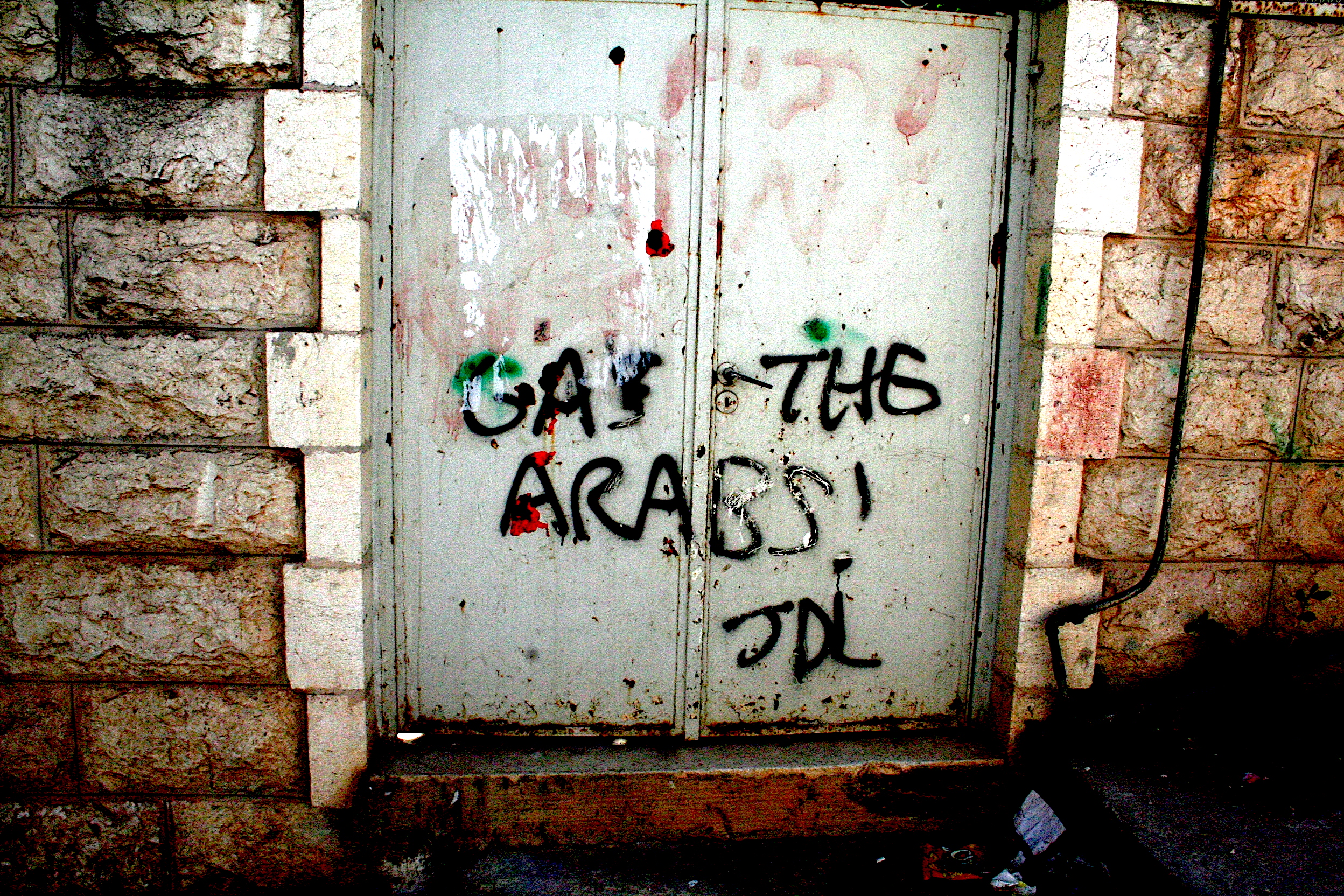
On March 13, 1973, in the midst of the semester, members of the Jewish Defense League, a far-right, anti-Arab, Jewish nationalist group founded by Rabbi Meir Kahane, disrupted Blatt’s classThey called it an “anti-Jewish outrage” and passed out a flyer that read, “Not since Germany in the days of Hitler has any university dared to offer a course presenting a one-sided view of any national movement.”

“Gas the Arabs” painted on the gate outside a Palestinian home in Hebron, West Bank, by Israeli settlers. It is signed “JDL” for Jewish Defence League, 2008. (Magne Hagesæter, Wikimedia Commons, CC BY 3.0)

Boston-area Jewish leaders urged community members to write to Tufts leadership to shut down Blatt’s class. These letters used apocalyptic language to describe the damage wrought by his course, likening it to the destruction of the Jewish people. During this controversy, Blatt picked up the phone one day to hear someone who clearly knew his family history in the Holocaust tell him: “Your parents should not have been saved.”

An article about Blatt and his course in Boston’s Jewish Advocate was headlined “Tufts Anti-Zionist Course Seen as Abuse of Academic Freedom.” Though Tufts stood behind Blatt’s right to teach the class for another term, which it still touts on the university website, angry responses to the class appeared in community forums for years.

Divided on Campus & Beyond

In the current moment, college campuses have been riven with debates over the boundaries between student safety and free speech and whether criticism of Israel constitutes antisemitism.

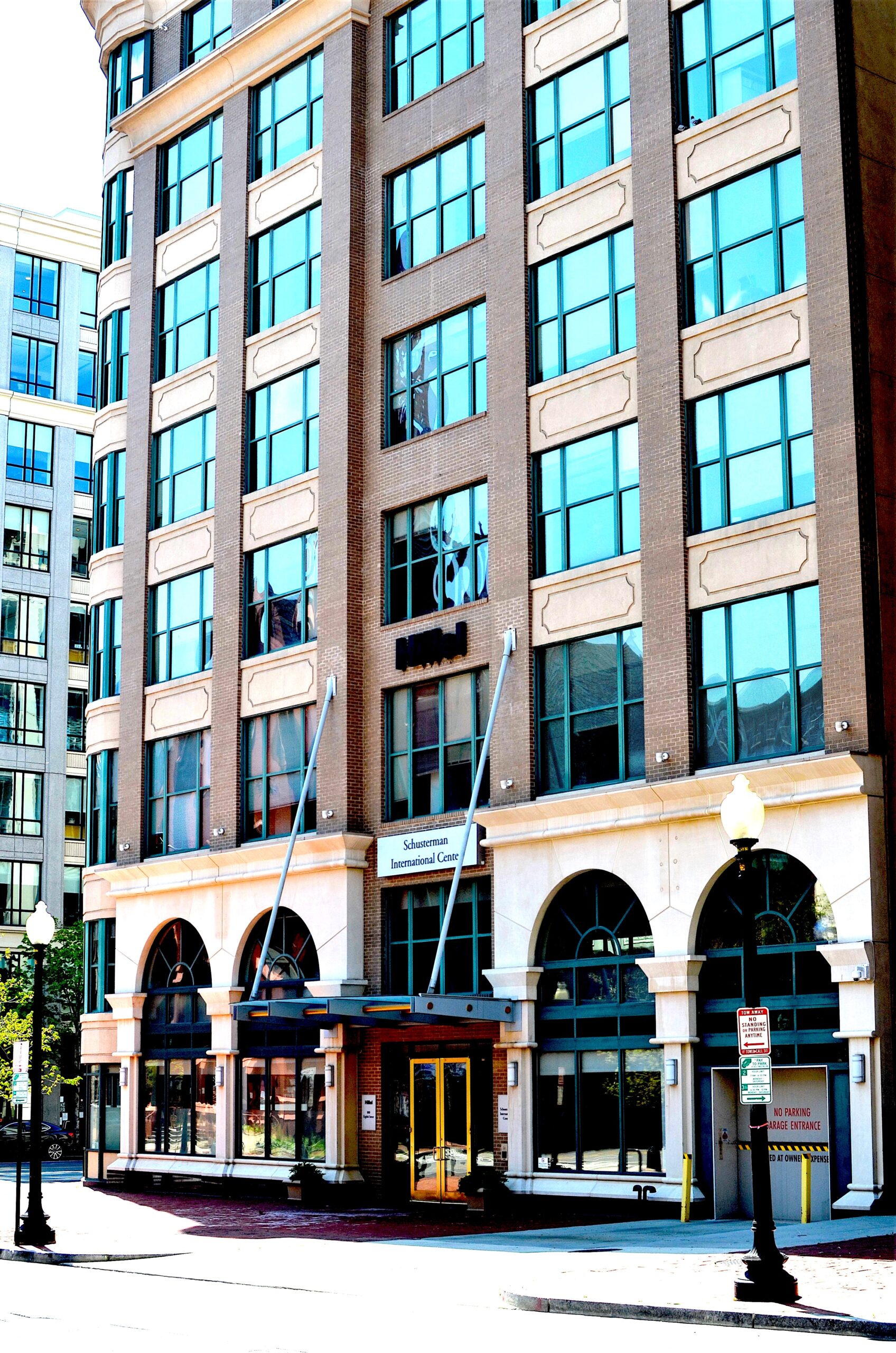
Young Jews dismayed by the unconditional Zionist agenda of Jewish campus organization Hillel and who founded Open Hillel in 2013 are now active in Gaza protests as “Judaism on Our Own Terms.” They might be surprised to learn that in late 1972, even before his course began, Blatt and others founded the Tufts Hillel Non-Zionist Caucus. Hillel subsequently expelled them from the organization.

Hillel International headquarters in Washington, D.C.. (Hillel International, Wikimedia Commons, Flickr, CC BY-SA 2.0)

For over a century, some American Jews have modeled the idea that unqualified support for Israel and Zionism was “not in our name.” They prioritized justice as a Jewish value and were motivated not by self-hatred or anti-Semitism but by abiding commitments to human rights and to Jewish safety and community.

Today’s activists protesting over the devastation in Gaza are testing the threshold of dissent and the limits of free speech and academic freedom. They embrace what they view as more just visions of Israel and Palestine and more inclusive visions of an American Jewish community, one with space for dissent and earnest conversations about Israel and Zionism, and one in which Jews stand in solidarity with groups working for justice in Palestine, Israel and around the world.

Marjorie N. Feld is professor of history and society at Babson College

This article is republished from The Conversation under a Creative Commons license. Read the original article.

Views expressed in this article may or may not reflect those of Consortium News.

Please Donate to the
Spring Fund Drive!


 CONSORTIUM NEWS


Saturday, June 22, 2024

Jewish critics of Zionism have Clashed with American Jewish Leaders for Decades


AMERICAN JEWS

Jewish critics of Zionism have Clashed with American Jewish Leaders for Decades

By Marjorie N. Feld, Babson College | –

Since October 2023, American Jews have been engaged in an intense, fractious debate over Israel’s war in the Gaza Strip.

Media reports say that American Jews are experiencing “the great rupture,” widening “rifts,” and stand at a “moral, political crossroads.”

While most American Jews remain broadly supportive of Israel, others have protested vigorously against U.S. support for Israel and are demanding a cease-fire in the Gaza war. They carry signs saying “Not in Our Name.”

Their slogan highlights the fact that American foreign aid to Israel has long relied on the support of American Jews. Unqualified U.S. support for Israel was built, in part, on the promise that Israel kept American Jews – and all Jews – safe, especially after the Holocaust.

But American Jews have never been entirely unified in their support for Israel or in their visions of what role Israel and Palestine should play in American Jewish life.

A 1961 death notice for a man named William Zukerman, described as the editor of an 'anti-Zionist publication.'
The Jewish Telegraphic Agency’s 1961 death notice for William Zukerman, editor since 1948 of The Jewish Newsletter, a publication that captured some of the voices of Jewish dissent from Zionism – including his own.
JTA Archive

No consensus

My new book, “The Threshold of Dissent: A History of American Jewish Critics of Zionism,” analyzes a century of debates among American Jews over Zionism and Israel.

My account begins in 1885, when elite Reform Jews, with a goal of full integration in Jim Crow America, composed the Pittsburgh Platform, which rejected Jewish nationalism out of fear that it would make them targets of antisemitic accusations of dual loyalty.

Two years later, Austrian journalist Theodor Herzl founded the modern Zionist movement, relying on European powers for support for a modern Jewish state.

The genocide of Europe’s Jewish population in the Holocaust fundamentally altered American Jews’ perspectives on Zionism.

Many believed that only a Jewish national homeland in what was then Palestine could prevent another genocide. Others insisted that the lessons of the Holocaust meant that Jews must not contribute to making refugees of another group of people: the Palestinians who were then living on the land.

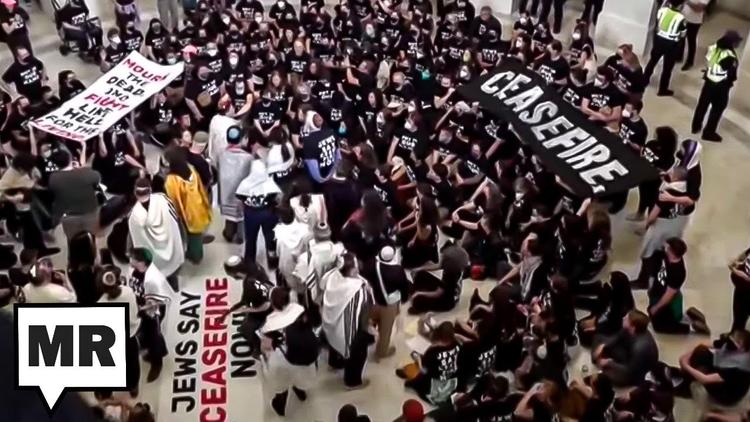
The Majority Report with Sam Seder Video: “Jewish Voice For Peace Grows In North Carolina 

There were other issues that contributed to a new understanding of Zionism in the 1950s and 1960s within American Jewish communities. Among them: the Nakba, which was the expulsion of 700,000 Palestinians during the 1948 founding of Israel; Israel’s treatment of immigrant Jews from the Arab and Muslim world known as Mizrahi Jews; and the rise in Israel’s militarism.

Across the 20th century, mainstream Jewish leaders manufactured an American Jewish so-called consensus on Zionism and Israel, in part by silencing American Jewish critics of Zionism.

From the late 1940s through 1961, journalist William Zukerman edited The Jewish Newsletter, a publication that captured some of the voices of Jewish dissent from Zionism, including his own. He reported on Israel’s human rights abuses against Palestinians and documented how American Jewish funds fueled Israel’s military campaigns instead of supporting vibrant American Jewish communities.

Because Zukerman dared to publish this criticism, he faced campaigns of steep resistance, eventually losing funding and support from Jewish communal organizations.

Anxious that Zukerman’s dissent would cause “increasing trouble” for American support for Israel, Israeli diplomats wrote to American Jewish leaders, and together they convinced some Jewish journalists to exclude Zukerman’s writings from their publications.

Liberation movements, American Jews and Zionism

Into the 1960s, as mainstream Jewish leaders emphasized the urgency of Jewish unity on Israel and Zionism and showed growing intolerance for dissent, anti-colonialist activists gained momentum across the world. From 1948 through 1966, Israel held all Palestinians citizens under martial law, limiting their movement and access to opportunities and resources. Across the 1950s, Israel excluded Palestinian workers from the Histadrut, the state’s largest labor union federation.

Activists allied with the cause of Palestinian rights noted Israel’s alliance with colonial power France during the Algerian war of independence from 1954 to 1962 and criticized Israel as an occupier after the 1967 war. They spoke, too, of Israel’s growing alliance with apartheid South Africa in the 1970s.

Black and Arab leaders in the U.S. taught within, and learned from, these anti-colonial movements. Civil rights and anti-war activists offered new perspectives to debates over Israel and Zionism.

Raised in a liberal Zionist family, student Marty Blatt was learning to fight for justice. Blatt was born in 1951 in Brooklyn, New York. His grandfather had died in a Nazi prison camp. In 1970, he joined the anti-war movement at Tufts University in Massachusetts.

“The Vietnam war was a horrible injustice,” Blatt said. From the movement and from members of the Israeli left, he learned that “Israel/Palestine was another great injustice.”

With no access to the history of Palestinians in school, at home or at the synogogue, young American Jews like Blatt who joined the civil rights and anti-war movements learned these lessons for the first time. When they then criticized Israel and American Zionism, they, too, met with hostility from the mainstream Jewish world.

Blatt sought to teach his fellow students at Tufts with a course in 1973 titled Zionism Reconsidered. In it, he taught the history of Zionism, Palestinian resistance and Israel’s Cold War alliance with the United States. He taught students that anti-Zionism was not antisemitism.

On March 13, 1973, in the midst of the semester, members of the Jewish Defense League, a far-right, anti-Arab, Jewish nationalist group founded by Rabbi Meir Kahanedisrupted Blatt’s class. They called it an “anti-Jewish outrage” and passed out a flyer that read, “Not since Germany in the days of Hitler has any university dared to offer a course presenting a one-sided view of any national movement.”

Boston-area Jewish leaders urged community members to write to Tufts leadership to shut down Blatt’s class. These letters used apocalyptic language to describe the damage wrought by his course, likening it to the destruction of the Jewish people. During this controversy, Blatt picked up the phone one day to hear someone who clearly knew his family history in the Holocaust tell him: “Your parents should not have been saved.”

An article about Blatt and his course in Boston’s Jewish Advocate was headlined “Tufts Anti-Zionist Course Seen as Abuse of Academic Freedom.” Though Tufts stood behind Blatt’s right to teach the class for another term, which it still touts on the university website, angry responses to the class appeared in community forums for years.

Divided on campus and beyond

In the current moment, college campuses have been riven with debates over the boundaries between student safety and free speech and whether criticism of Israel constitutes antisemitism.

Young Jews dismayed by the unconditional Zionist agenda of Jewish campus organization Hillel and who founded Open Hillel in 2013 are now active in Gaza protests as “Judaism on Our Own Terms.” They might be surprised to learn that in late 1972, even before his course began, Blatt and others founded the Tufts Hillel Non-Zionist Caucus. Hillel subsequently expelled them from the organization.

For over a century, some American Jews have modeled the idea that unqualified support for Israel and Zionism was “not in our name.” They prioritized justice as a Jewish value and were motivated not by self-hatred or antisemitism but by abiding commitments to human rights and to Jewish safety and community.

Today’s activists protesting over the devastation in Gaza are testing the threshold of dissent and the limits of free speech and academic freedom. They embrace what they view as more just visions of Israel and Palestine and more inclusive visions of an American Jewish community, one with space for dissent and earnest conversations about Israel and Zionism, and one in which Jews stand in solidarity with groups working for justice in Palestine, Israel and around the world.

Marjorie N. Feld, Professor of History and Society, Babson College

This article is republished from The Conversation under a Creative Commons license. Read the original article.


INFORMED COMMENT

The Hound | Aug. 25

         LOTS OF POSTS IGNORED BY BLOGGER..... OR REMOVED ON THEIR WHIM! ALL POSTS ARE AVAILABLE ON MIDDLEBORO REVIEW AND SO ON BLOGGER DOES...