|


|
|
|
PRESIDENT HARRIS & VP WALZ NEED A DEMOCRATIC CONGRESS TO GET
THIS DONE!
PRESIDENT BIDEN NOMINATED ANTI-TRUST PEOPLE & INDUSTRY & LOBBYISTS
THREW TEMPER TANTRUMS! LINA KHAN, CHAIR OF THE FTC, FACES OUTRAGEOUS
CRITICISM FOR ENFORCING ANTITRUST REGULATIONS....
IF YOU WANT THIS ADDRESSED, YOU NEED TO REMAIN INFORMED & SUPPORT THE ISSUES! YOU NEED TO SPEAK OUT TO YOUR ELECTED OFFICIALS TO GET THIS DONE!
PRICE GOUGING CORPORATIONS USE THE EXCESS PROFIT FOR STOCK BUYBACKS TO AVOID TAXES - THIS IS ANOTHER PENALTY CONSUMERS SUFFER!
STOCK BUYBACKS NEED TO BE SURCHARGED!
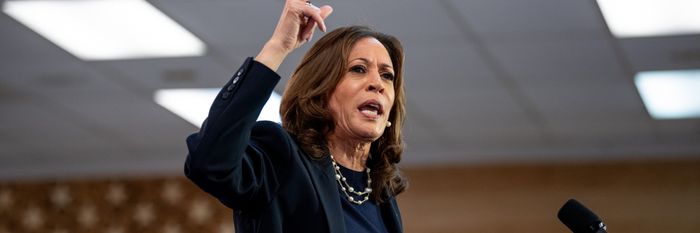
Friends, Kamala Harris is doing wonderfully well, but voters’ biggest concern continues to be the cost of living. In coming days, she’ll respond with her own economic plan. I expect her to trumpet many of the important accomplishments of the Biden-Harris administration: cracking down on corporate rip-offs — including junk fees, price gouging, and shrinking packages to hide price increases; taking on Big Pharma to lower prescription drug costs and cap insulin at $35 a month; requiring banks to bring down overdraft fees from $35 to $4 and major airlines to eliminate family seating fees. But I hope she goes further by saying how she’ll bring down the costs of food, fuel, and housing — the three biggest items in most consumers’ budgets, whose prices remain sky-high. And more generally, how she’ll attack the scourge of corporate concentration. Let me suggest what she might do. 1. Food prices remain high because there’s little to no competition across the entire food supply chain. This has allowed big corporations to engage in a price gouging free-for-all. Four companies control most food industries, allowing them to coordinate prices instead of compete on the basis of lower prices. Take a look:
Harris should announce that as president she’ll bust up food monopolies. She’ll give more resources to Lina Khan at the Federal Trade Commission and Jonathan Kanter, chief of the Antitrust Division of the Justice Department, to restore competitiveness in the food sector of our economy and thereby bring food prices down. 2. Fuel costs remain high because the energy sector is dominated by a handful of giant corporations that are keeping prices high. In 2019 (the most recent year for which we have good data), more than two-thirds of all energy was produced by six giant global corporations, which have been coordinating their pricing to maximize their profits. In the two years following Russia’s invasion of Ukraine, oil giants Shell, BP, Exxon, Chevron, and Total made $281 billion and paid out over $200 billion to enrich their executives and shareholders rather than invest in renewables. Market concentration has also given these few corporations (and their billionaire owners) unprecedented power and influence over our political institutions. Trump recently asked Big Oil for $1 billion in campaign donations, in return for which he’d get rid of environmental protections and incentives for renewables. Harris should announce she’ll do the opposite. She’ll strengthen protections for the environment and expand incentives for renewables. She’ll also direct the FTC and the Antitrust Division of the Justice Department to take on energy monopolies to bring down fuel prices. 3. Rent is skyrocketing and homebuying is out of reach for millions partly because of Wall Street. Hedge funds and private equity firms have been buying up hundreds of thousands of homes that would otherwise be purchased by people. Wall Street’s appetite for housing ramped up after the 2008 financial crisis. When the Street’s excessive greed created a housing bubble that burst, millions of people lost their homes to foreclosure. The Street got bailed out and then began picking off the scraps of the housing market it had just destroyed, gobbling up foreclosed homes at fire-sale prices — which it then sold or rented for big profits. Investor purchases hit their peak in 2022, accounting for around 28 percent of all home sales in America. If the present trend continues, by 2030, Wall Street investors may control 40 percent of U.S. single-family rental homes. The lack of supply is the biggest reason home prices and rents have soared. Wall Street is worsening the supply problem. Harris should announce her support of a bill now in both houses of Congress to ban hedge funds and private equity firms from buying or owning single-family homes. If it comes to her desk, she’ll sign it. More generally, Harris should take on corporate concentration. Corporate profits are a bigger share of the economy than they’ve been in 75 years, while wages comprise the lowest share, due to the increase in corporate concentration. Workers and consumers have fewer options and have to accept the wages and prices these giant corporations offer. Giant firms also provide significant campaign contributions and employ platoons of lobbyists and lawyers. The financial returns on their political investments are huge: They get tax loopholes, subsidies, bailouts, regulatory exemptions, and loan guarantees. The sky-high profits at America’s biggest banks are due to their being too big to fail, along with their political power to keep regulators at bay. High profits at the four remaining airlines come from inflated prices, overcrowded planes, overbooked flights, and weak unions. High profits of Big Tech come from wanton invasions of personal privacy, the weaponizing of false information, and market power that’s discouraging innovation. And so on. The shift in bargaining power from workers to corporations and their shareholders has siphoned off a larger portion of national income into profits and left a lower portion in wages than at any time since World War II. Most of these profits are going into higher share prices — fueled by share buybacks — and higher executive pay rather than new investment. Most of the increasing value of the stock market has come out of the pockets of American workers.* America’s shift from farm to factory was accompanied by decades of bloody labor conflict. The shift from factory to office and other sedentary jobs created other social upheaval. The more recent power shift from workers to large corporations and their shareholders — and consequentially, the dramatic widening of inequalities of income, wealth, and political power — has happened more quietly but has had an even more devastating consequence for the system: an angry working class vulnerable to demagogues peddling authoritarianism, racism, and xenophobia. Kamala Harris and Tim Walz have an opportunity to restructure the American economy to benefit workers rather than big corporations, their executives, and major shareholders. I hope they take it. *See Greenwald, Lettau, and Ludvigson, “How the Wealth Was Won: Factors Shares as Market Fundamentals,” National Bureau of Economic Research, Working Paper 25769, revised October 2023 at https://www.nber.org/papers/w25769. |
Record corporate profits from your thinning walletsWhy doesn't the mainstream media want to talk about this?Friends, The latest economic data shows two big things: (1) Corporate profits reached a record high in the fourth quarter of last year. (2) Inflation is still with us. The government reported Friday that the Fed’s preferred inflation gauge rose 0.3 percent month-to-month in February, following a January uptick that was the largest in a year. Prices have risen 2.5 percent over the past 12 months — certainly better than inflation readings compared with a year ago but still stubbornly above the Fed’s 2 percent target. So-called core inflation, which strips out more volatile food and energy prices and is therefore a more reliable indicator of where prices might be headed, is still coming in more strongly than central bank officials would like to see. The easiest explanation for both phenomena — record corporate profits and prices remaining elevated — is that corporations have enough monopoly power to keep prices high. (Corporations are also shrinking the size of the products you’re buying without lowering their prices — a variant of the same thing.) This is one of the biggest reasons the American public is not crediting Biden with a great economy. Most people still aren’t feeling it. But the mainstream media doesn’t want to talk about this. Last November, the New York Times contacted me about contributing a NYTimes Opinion video. I suggested one on corporate monopolies keeping prices high. After lots of to-ing and fro-ing, the editor wrote: “One of our economists felt that it might be a little late, in that the rate of price increases is slowing...and so this particular take might not be as timely as I'd hoped.” Not timely? In 2023 PepsiCo’s chief financial officer said that even though inflation was dropping, its prices would not. Pepsi hiked its prices by double digits and announced plans to keep them high in 2024. If Pepsi were challenged by tougher competition, consumers would just buy something cheaper. But PepsiCo’s only major soda competitor is Coca-Cola, which — surprise, surprise — announced similar price hikes at about the same time as Pepsi, and has also kept its prices high. The CEO of Coca-Cola claimed that the company had “earned the right” to push price hikes because its sodas are popular. Popular? The only thing that’s popular these days seems to be corporate price gouging.
We’re seeing this pattern across much of the economy — especially with groceries At the end of 2023, Americans were paying at least 30 percent more for beef, pork, and poultry products than they were in 2020. Why? Near-monopoly power. Just four companies now control processing of 80 percent of beef, nearly 70 percent of pork, and almost 60 percent of poultry. So of course it’s easy for them to coordinate price increases. The problem goes well beyond the grocery store. In 75 percent of U.S. industries, fewer companies now control more of their markets than they did 20 years ago. So what should be done? First, antitrust laws must be enforced. Kudos to the Biden administration for enforcing antitrust more aggressively than any administration in the last 40 years. It’s taken action against alleged price fixing in the meat industry — which has been a problem for decades. It has sued to block the merger of Kroger and Albertson’s — two giant grocery chains. Kroger operates 2,750 stores in 35 states and the District of Columbia. The company’s 19 brands include Ralphs, Smith’s, King Soopers, Fred Meyer, Food 4 Less, Mariano’s, Pick ’n Save and Harris Teeter. Albertsons operates 2,273 stores in 34 states. Its 15 brands include Safeway, Jewel Osco, Vons, Acme and Shaw’s. Together, Kroger and Albertsons employ around 700,000 people. It’s suing Amazon for using its dominance to artificially jack up prices — one of the biggest anti-monopoly lawsuits in a generation. It’s suing Apple for using its market power to control its apps and prevent other businesses from offering them. It successfully sued to block the merger of JetBlue and Spirit Airlines, which would have made consolidation in the airline industry even worse. But given how concentrated American industry has become, there’s still a long way to go. Biden should make his antitrust enforcement against corporate power a centerpiece of his campaign. Secondly, big corporations must not be allowed to use their power to gouge consumers. Senator Elizabeth Warren and others recently unveiled the latest version of their Price Gouging Prevention Act. “Giant corporations are using supply chain shocks as a cover to excessively raise prices and sometimes charging the same price but shrinking how much consumers actually get,” Warren charges. The bill would empower the FTC (which would also get $1 billion in additional funding) and state attorneys general to stop companies from charging “grossly excessive” prices, regardless of where alleged price gouging took place in a supply chain. (The legislation would also protect small businesses — those earning less than $100 million — from litigation if they had to raise prices in good faith during crises.) The bill would also require public companies to disclose more about their costs and pricing strategies.
I don’t have any illusions that this bill will find its way into law soon. Democrats hold a slim majority in the Senate, and not all Democrats support it. Meanwhile, Republicans and their business backers are dead set against it — and are eager to blame continued high prices on Biden, not on corporations. But this bill is just as necessary as aggressive antitrust enforcement — and an example of what could and will be done if Democrats sweep the 2024 elections. The record profits of large corporations are coming out of the paychecks of average Americans, who are still struggling to get by. Biden and the Democrats must say this loudly and clearly, and tell the public what they are doing — and will do — to stop corporate monopolies and price gouging. |
LOTS OF POSTS IGNORED BY BLOGGER..... OR REMOVED ON THEIR WHIM! ALL ...


