| |||||||||||||||||||||||||||||||||||||||||||||||||||||||
| |||||||||||||||||||||||||||||||||||||||||||||||||||||||

27 April 22
Live on the homepage now!
Reader Supported News
A Russian victory would herald a new age of instability, economic fragmentation, hunger for millions and social unrest
At roughly the same time as this hopeful development unfolded, the UK’s Boris Johnson, riding a “Partygate” getaway plane to India, was colourfully rubbishing peace efforts. Putin, he claimed, was an untrustworthy reptile. “I really don’t see how the Ukrainians can easily sit down and come to some kind of accommodation. How can you negotiate with a crocodile when it’s got your leg in its jaws?” Johnson asked.
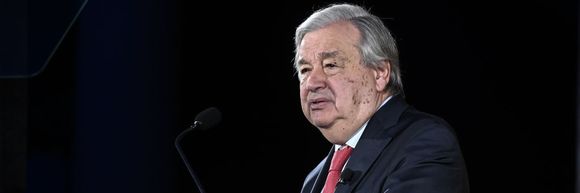
This gaping disconnect is doubly disturbing. It suggests lack of coordination between the UN chief and a permanent member of the UN security council on how best to proceed. It also highlights a wider problem: diverging, sometimes opposing, occasionally self-serving, approaches to the crisis by western leaders who have hitherto trumpeted their unity of purpose.
The outrage in western countries sparked by Putin’s 24 February invasion is starting to fade. Likewise the burst of optimism that followed Ukraine’s success in repelling the Russian advance around Kyiv. Now, as Moscow begins a huge, slow-motion offensive in the east, concern grows that this conflict has no end-point and that the enormous economic and human damage that results may be permanent – and global.
Johnson, typically, is not looking much beyond the present moment. The UK and Nato, he said, would just “keep going with the strategy” of imposing sanctions on Russia and supplying weapons to Kyiv. Johnson supports a free, independent Ukraine but, like other alliance leaders, appears to lack a thought-through, long-term plan to achieve it. What if Ukrainian forces start losing? What if the country is partitioned, or nears collapse?
The price of failure – the true cost of a Putin victory – could be staggering. It is potentially unsupportable for fractious western democracies and poorer countries alike, beset by simultaneous post-pandemic security, energy, food, inflation and climate crises. Yet out of myopic self-interest over issues such as Russian oil and gas imports, and from fear of wider escalation, western leaders duck the tough choices that could ensure Ukraine’s survival and help mitigate such ills.
The past week furnished a grim glimpse of the future that awaits if Putin is able to continue to wage war with impunity, commit more heinous crimes, threaten nuclear and chemical blackmail and trash the UN charter. Drastically downgrading its growth forecasts due to the conflict, the International Monetary Fund predicted global economic fragmentation, rising debt and social unrest.
David Malpass, head of the World Bank, said a “human catastrophe” loomed as an unprecedented, estimated 37% rise in food prices, caused by war-related disruption to supplies, pushed millions into poverty, increased malnutrition, and reduced funding for education and healthcare for the least well-off.
More than 5 million people have fled Ukraine in two months, and more will follow, exacerbating an international migration emergency that extends from Afghanistan to the Sahel. In drought-hit east Africa, the World Food Programme says 20 million people may face starvation this year. Putin’s war did not create the drought, but the UN warns it could hurt efforts to reduce global heating, thereby triggering further displacement and forced migration.
The broader, negative political impact of the war, should it rage on indefinitely, is almost incalculable. The UN’s future as an authoritative global forum, lawmaker and peacekeeper is in jeopardy, as more than 200 former officials warned Guterres last week. At risk, too, is the credibility of the international court of justice, whose injunction to withdraw was scorned by Putin, and the entire system of war crimes prosecutions.
In terms of democratic norms and human rights, the full or partial subjugation of Ukraine would spell disaster for the international rules-based order – and a triumph for autocrats everywhere. What message would it send, for example, to China over Taiwan, or indeed to Putin as he covets the vulnerable Baltic republics? Islamist terrorists who now furtively plot to exploit the west’s Ukraine distraction would relish such a victory for violence.
Failure to stop the war, rescue Ukraine and punish Russia’s rogue regime to the fullest extent possible would come at an especially high price for Europe and the EU. In prospect is a second cold war with permanent Nato bases on Russia’s borders, massively increased defence spending, an accelerating nuclear arms race, unceasing cyber and information warfare, endemic energy shortages, rocketing living costs, and more French-style, Russian-backed rightwing populist extremism.
In short, the dawn of a new age of instability. Why on earth would politicians such as America’s Joe Biden, Germany’s Olaf Scholz, and France’s Emmanuel Macron tolerate so fraught and dangerous a future when, by taking a more robust stand now, they might prevent much of it from materialising? By supposedly avoiding risks today, they ensure a much riskier tomorrow.
Sending weapons and best wishes is not enough. Conferring last week, western leaders debated providing security guarantees for Ukraine after the war. All well and good. But this war is happening now. Who will guarantee Ukraine’s survival in the possibly decisive next few weeks? Who, if push comes to shove, will move beyond training missions and provide direct, in-country military support?
Let’s get real. For all its heroism and sacrifice, Ukraine may lose this fight. Dreadful though it sounds, Putin could win. If the west so abandons its principles and values to let that happen, the long-term price, for everyone, will be a whole new world of pain.
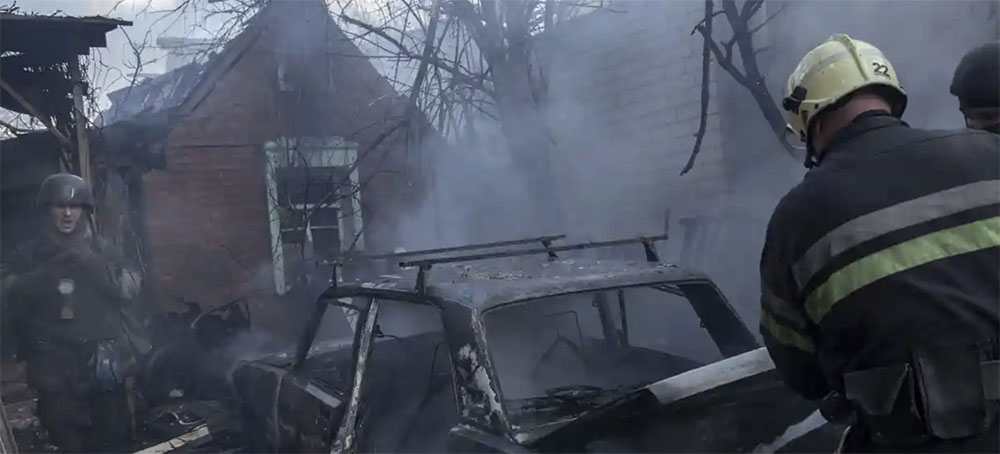 Firefighters extinguish a fire after a rocket strike on a civilian area in Kharkiv on Tuesday. (photo: Anadolu Agency/Getty Images)
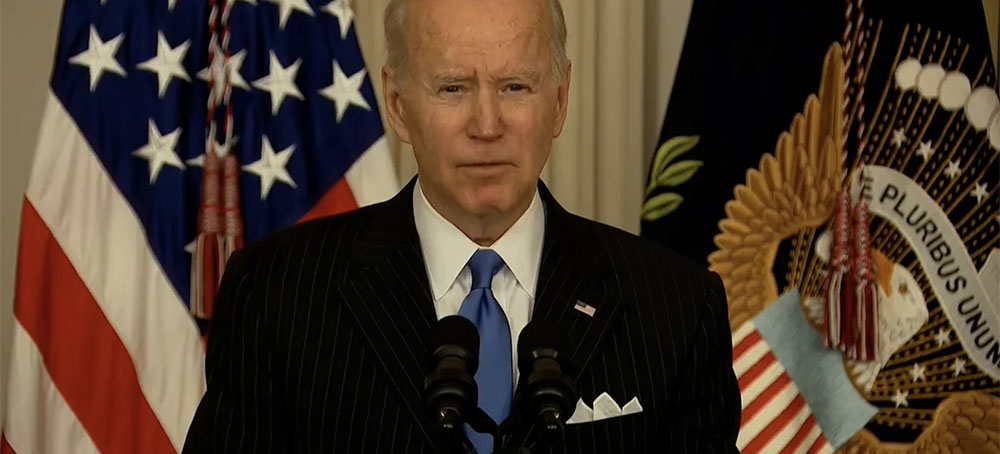 Joe Biden. (photo: USA Today)
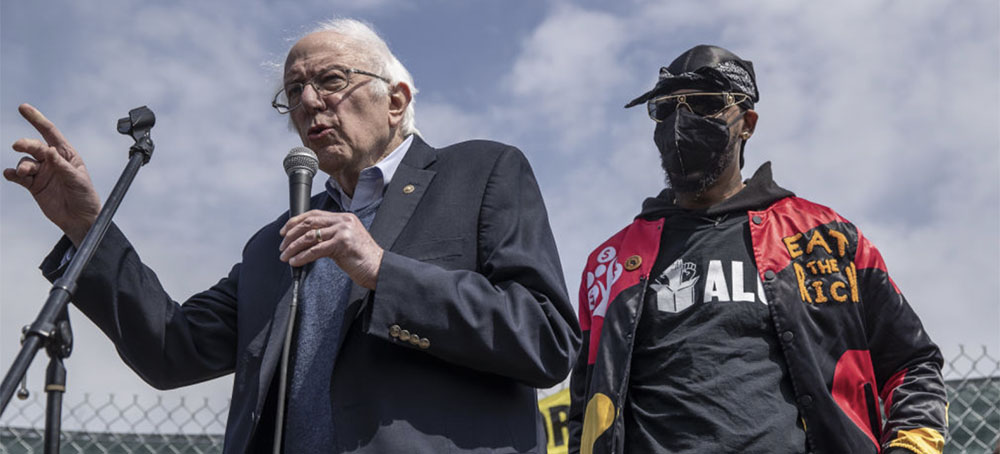 Senator Bernie Sanders, an independent from Vermont, left, speaks next to Christian Smalls, founder of the Amazon Labor Union (ALU), during an ALU rally on Staten Island, New York, Sunday, April 24, 2022. (photo: Victor J. Blue/Bloomberg/Getty Images)
END FOSSIL FUEL ADDICTION NOW! NO MORE WARS FOR OIL! WE CAN DO IT!
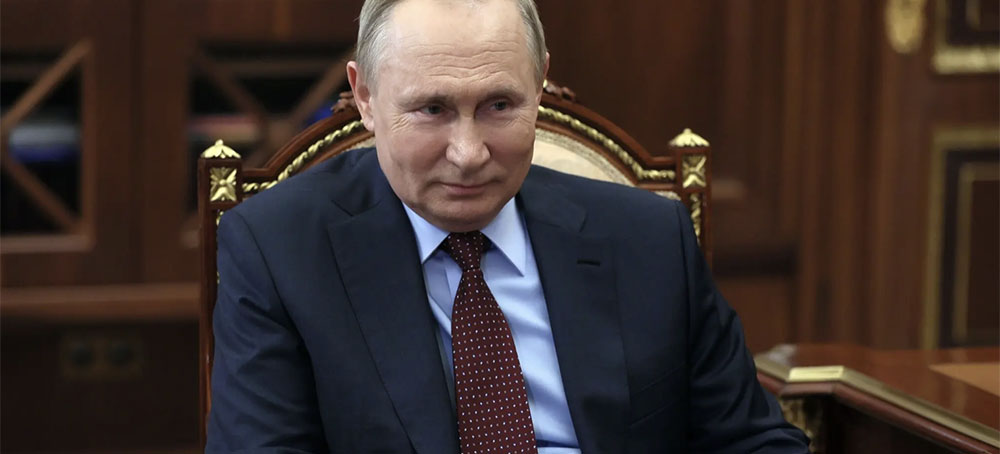 Vladimir Putin. (photo: Mikhail Klimentyev/NYT)
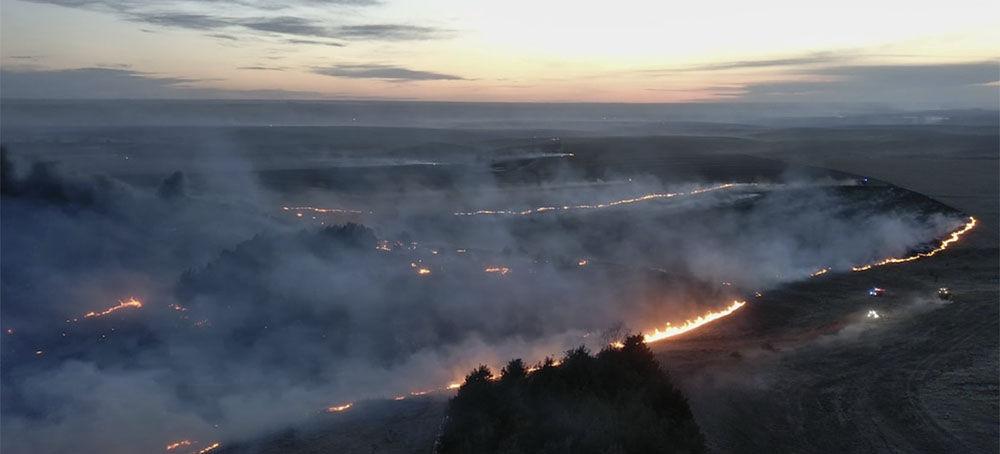 A drone photo of wildfires in Nebraska. (photo: Nebraska State Patrol)
Special Coverage: Ukraine, A Historic Resistance
READ MORE
Follow us on facebook and twitter!
PO Box 2043 / Citrus Heights, CA 95611
LOTS OF POSTS IGNORED BY BLOGGER..... OR REMOVED ON THEIR WHIM! ALL POSTS ARE AVAILABLE ON MIDDLEBORO REVIEW AND SO ON BLOG...