UNDER CONSTRUCTION - MOVED TO MIDDLEBORO REVIEW AND SO ON
https://middlebororeviewandsoon.blogspot.com/
Wednesday, June 24, 2026
Top News | 'Totally Crazy': Trump Holds Housing Bill Hostage to Eviscerate Voting Rights
LOTS OF POSTS IGNORED BY BLOGGER.....
OR REMOVED ON THEIR WHIM!
ALL POSTS ARE AVAILABLE ON
MIDDLEBORO REVIEW AND SO ON
BLOGGER DOESN'T LIKE TRUTH OR FACTS!
BLOGGER DOESN'T LIKE FUND RAISERS AND DELETES
POSTS THAT INCLUDE FUNDRAISING THAT 'VIOLATES THEIR
UNDEFINED COMMUNITY STANDARDS SO ALL 'FUND RAISING'
IS DELETED - CONTRIBUTE AS YOU ARE INCLINED TO SUPPORT
IMPORTANT ISSUES! THESE ARE NOT SOLICITATIONS
OUR MONTHLY CHARGE TO YOU: $0
No paywall. No subscription fee. No ads. All we ask is that readers chip in what they can, when they can — and that’s kept us going for nearly 30 years. Can you pitch in today? We still need over 300 new monthly supporters by July 1.
"Trump just threw a tantrum," said Sen. Elizabeth Warren. "He's refusing to sign bipartisan legislation to make housing more affordable in a bizarre effort to try to rig the elections."
Congress this week passed a bipartisan bill “to build more housing, lower costs, and stop private equity’s housing grab,” as US Sen. Elizabeth Warrenhighlighted after the final vote, but President Donald Trump on Wednesday scrapped his plans to sign the 21st Century ROAD to Housing Act over a stalled GOP attack on voting rights.
Trump initially took a swipe at Warren (D-Mass.) on his Truth Social platform Wednesday morning, writing that “the Elizabeth ‘Pocahontas’ Warren centric housing bill, which is of minor importance compared to lower interest rates, and even FISA, pales in comparison to passing THE SAVE AMERICA ACT. That is what Americans, both Dumocrats, Republicans, and everyone else, care about.”
“Get the bad Republicans to approve it or, better yet, Terminate the Filibuster and approve it, AND EVERYTHING ELSE REPUBLICANS HAVE EVER DREAMED OF,” Trump continued. “The Dumocrats will do it in hour one, 100%. Republicans will feel very stupid if they don’t do it first. I’ll be watching with tears in my eyes!!!”
Less than an hour later, he added, “Today’s Housing News Conference and Signing is hereby cancelled until such time as we pass the desperately needed SAVE AMERICA ACT, which I consider to be a National Emergency.”
Trump and other backers of the anti-voter bill argue it is needed to prevent undocumented immigrants from voting in US elections—which is already illegal, and research shows is remarkably rare. Critics warn that the legislation would disenfranchise eligible voters who lack access to proof-of-citizenship documents.
No paywall. No ads. No billionaire owner. Just you.
Common Dreams is funded exclusively by readers tired of news beholden to corporate interests. Our monthly supporters are the backbone of what makes that possible. Help us reach our Mid-Year Campaign goal of 450 new monthly supporters by July 1.
While Speaker Mike Johnson (R-La.) responded by stressing that he and other Republicans in the House of Representatives support the SAVE America Act, and Senate Majority Leader John Thune (R-SD) said the canceled ceremony was Trump’s “call to make” but expressed hope that he’ll “find his way to sign” the housing bill, other lawmakers—including Warren—and supporters of the legislation took aim at the president over his move.
“Congress overwhelmingly passed a housing bill to bring down costs. But Trump just threw a tantrum,” Warren wrote on social media. “He’s refusing to sign bipartisan legislation to make housing more affordable in a bizarre effort to try to rig the elections. Nope—I’ll keep fighting to lower housing costs.”
Senate Minority Leader Chuck Schumer (D-NY) told journalists that “Trump is running away from one of the very few accomplishments that could actually help the American people,” and urged the president not to veto the 21st Century ROAD to Housing Act.
Approved by the Senate in an 85-5 vote on Monday and the House in a 358-32 vote on Tuesday, the bill contains dozens of provisions to promote the rebuilding of older homes and development of vacant buildings, encourage local governments to build more housing, streamline regulations for construction, ban corporate investors from buying single-family homes to rent out, and more.
Stressing that the bill passed “overwhelmingly in a bipartisan way,” and would “save American families a lot of money when it comes to housing,” Sen. Andy Kim (D-Calif.) said that “I honestly can’t believe that the president is holding this hostage.”
“I hope the American people see this for what it is, which is that he doesn’t care at all about the high cost of living that a lot of Americans are struggling with,” Kim declared. “He doesn’t care about the housing crisis. He is just continuing to push forward on his extreme agenda.”
In the House, Minority Leader Hakeem Jeffries (D-NY) replied to the president: “The housing crisis is a national emergency. Do something to make life more affordable for hardworking American taxpayers. Sign the bill.”
Rep. Don Beyer (D-Va.) pointed to Trump’s campaign pledges, writing: “The president who promised lower costs on Day 1 is refusing to sign the largest housing affordability bill in a generation. It’s a slap in the face to millions of Americans struggling to afford a place to live. My Republican colleagues need to find some courage and stand up to this mad king.”
In a video, Rep. Pramila Jayapal (D-Wash.) warned the public that Trump “is taking away your housing for his personal projects that can never pass and are unconstitutional.”
Longtime human rights advocate Kenneth Roth, who’s now a visiting professor at Princeton University, similarly summarized: “Trump to America: I [couldn’t] care less about affordable housing. So I won’t sign a bill to advance it unless Congress endorses my autocratic efforts to restrict the right to vote.”
Although Trump has not decisively said whether he will formally block the bill, Roth wondered, “Will the Republicans have the backbone to override his veto?”
Either way, The New York Timesnoted that “Trump’s decision threatened to deprive Republicans, in particular, of an opportunity to showcase a legislative success in a year with very few of them—one that spoke directly to voters’ economic concerns.”
In a Wednesday statement, Brett Edkins, managing director of policy and political affairs at the progressive advocacy group Stand Up America, looked to the midterm elections, in which Democrats aim to retake majorities in both chambers of Congress.
“Donald Trump has been clear: The SAVE Act is his #1 legislative priority—not lowering costs for working people, creating good-paying jobs, or helping families afford a roof over their heads,” said Edkins. “Today, he decided it was more important to help Republicans avoid accountability for the cost-of-living crisis than actually do something about it.”
“Trump was born on third base, and it shows. He has no clue what it’s like to struggle to make rent, save for a down payment, pay a mortgage, or worry that your kids will be able to afford a home of their own,” he added. “Trump could’ve signed bipartisan legislation today to help lower housing costs and give Republicans something—anything—to show voters that they deserve reelection this November. Instead, he told working families to screw themselves. It’s selfish, petty, and self-defeating.”
Know someone who would enjoy the Common Dreams newsletter?
"Words are not enough to restrain the Israelis," one journalist said. "There have to be real consequences."
Israeli Prime MinisterBenjamin Netanyahustatedon Wednesday that he will not end the military occupation ofLebanoneven if it tanks US President Donald Trump’s peace deal with Iran.
“As long as I am prime minister, we will maintain the security zone in southern Lebanon,” he said, referring to Israel’s occupation, which has cleared about one-fifth of the country of its inhabitants.
About 1.2 million residents have been displaced by Israeli attacks and forced evacuation orders since March as part of a military campaign that’s killed about 4,200 people, according to the Lebanese Ministry of Public Health.
As Trump seeks an end to his war with Iran, the Iranian delegation has stressed that it must be peace “on all fronts,” including Lebanon, which was outlined in the memorandum of understanding that has served as the basis for ongoing negotiations.
Behind the scenes, Trump has reportedly fumed that by ramping up attacks on Lebanon, Israel is trying to sabotage the deal and drag the US back into war.
But while he and Vice President JD Vance have offered some uncommonly blunt criticism of Israel over the past week, they’ve not yet gone beyond words. And Israel’s leaders seem to believe they won’t.
Echoing the prime minister, Defense Minister Israel Katz said on Wednesday that the Israel Defense Forces were “not withdrawing” from Lebanon “even if there is an American demand to do so.”
But he also stated that despite a US-mediated ceasefire between Israel and Hezbollah, “as of this moment... there is no American demand for Israel to withdraw from Lebanon,” which he described as “a political achievement.”
That’s not likely to sit well with the Iranians, who, in response to a wave of Israeli attacks this weekend, announced that they were once again closing off the Strait of Hormuz, threatening more of the economic pandemonium that Trump wants to quell by ending the war.
“For us, a ceasefire in Lebanon is as important as a ceasefire in Iran and, further, an end to the war in Lebanon is as important as an end to the war in Iran,” said Mohammad Bagher Ghalibaf, Iran’s parliamentary speaker and lead negotiator, on Wednesday.
US Secretary of State Marco Rubio has attempted to thread the needle by claiming on Wednesday that “the Israelis have been clear they don’t have any quarrels with the Lebanese people, nor do they have any claims on the territory of Lebanon.”
But this was undercut somewhat by Katz’s statement on Wednesday that the 200,000 civilians whom Israel ordered to leave southern Lebanon “will not return” to their homes because of the risk they allegedly pose to Israeli soldiers.
“Soldiers in, residents out,” Katz said. “The infrastructure is destroyed, the houses are dangerous and ruined. We are not withdrawing.”
Critics have pointed out that Trump does have ample amounts of leverage to coerce the Israelis to get with the program, including threatening to cut off US weapons shipments, and that his failure to do this may destroy any chance at peace with Iran.
“The Israelis are going to continue testing what they can get away with,” said Rania Khalek, a journalist for BreakThrough News, on social media. “Iran was very clear that a deal with the US is dependent on a ceasefire in Lebanon.”
“How embarrassing for Trump that the Israelis don’t care about his orders. They are trying to preserve their ability to kill all their neighbors,” she added. “Words are not enough to restrain the Israelis. There have to be real consequences.”
"Donald Trump has often spoken about... making the government more efficient. Yet his massive federal layoffs and resignation programs have been the epitome of inefficiency."
Areportreleased by government watchdogPublic Citizenon Wednesday estimates that the federal government has blown billions of dollars paying formerfederal workersto not do their jobs.
According to Public Citizen, nearly 140,000 members of the federal workforce have taken part in the Trump administration’s Deferred Resignation Program (DRP), which in turn has paid them at least $11 billion in exchange for not working.
Citing data from the Office of Personnel Management (OPM), the report calculates that “paying federal employees in the DRP not to work cost between $11.1 billion and $15.1 billion through March 2026,” which would be enough money to pay for 3.6 billion school lunches, a full year of daycare for more than 837,000 children, or the combined annual salaries of 149,000 public school teachers.
The report finds that “the costs of paying federal workers not to work” will only rise over the next year.
“Since the beginning of 2026, several agencies have offered new rounds of the Deferred Resignation Program permitting federal employees to stop working, but to stay on the federal payroll through September 2026,” the report states, “adding even more to the burgeoning financial cost of this billion-dollar resignation program.”
The report emphasizes that there will be additional “massive costs on society” that will come from having a gutted federal workforce that aren’t captured by its $11 billion estimate.
One obvious area where staff losses will cost the government money will be in lower tax collection, given that staffing at the Internal Revenue Services (IRS) fell by 25% over a four-month period last year.
“The Budget Lab at Yale University estimated that a 22% reduction in IRS staffing levels would result in a $197.7 billion loss over a 10-year period,” the report notes, “the overwhelming majority of which will come from top earners who will escape paying what they owe.”
Other critical government departments to see significant staff losses thanks to the DRP include the Department of Defense, which has lost 48,000 workers; the Department of Treasury, which has 23,000 fewer workers; and the Department of Agriculture, with a loss of more than 14,000 employees.
“Donald Trump has often spoken about cutting waste and making the government more efficient,” the report concludes. “Yet his massive federal layoffs and resignation programs have been the epitome of inefficiency and have resulted in billions of dollars in wasted federal funds.”
Douglas Pasternak, Public Citizen researcher and author of the report, said that “the Trump administration’s efforts to shrink the federal government have been stupid, costly, and deadly,” and pointed to other negative impacts of the layoffs in addition to the costs of paying people to not work.
“Multiple agencies had to rehire those who took part in this program because Trump officials realized how vital they were to managing critical national programs,” Pasternak said. “Even worse is the work left undone by the coerced departure of these workers, costing billions of dollars and putting untold numbers of lives at risk as the federal government fails to perform crucial functions.”
With the Supreme Court's overturning of abortion rights just as unpopular as it was four years ago, Democrats are hoping to highlight the "toxic, anti-choice records" of their GOP opponents.
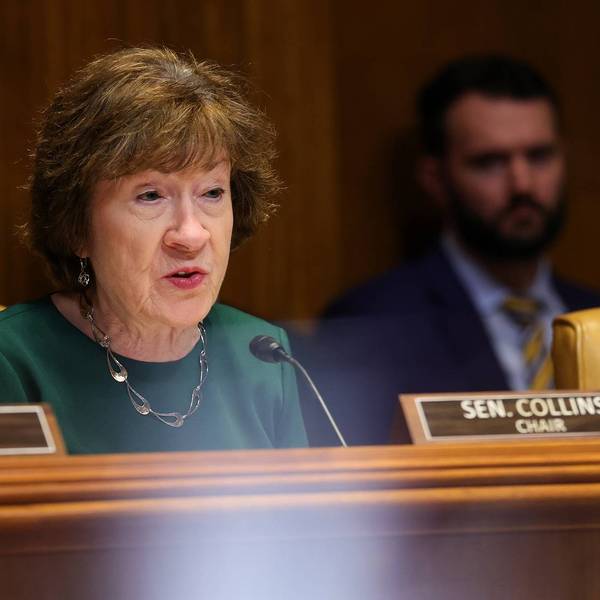
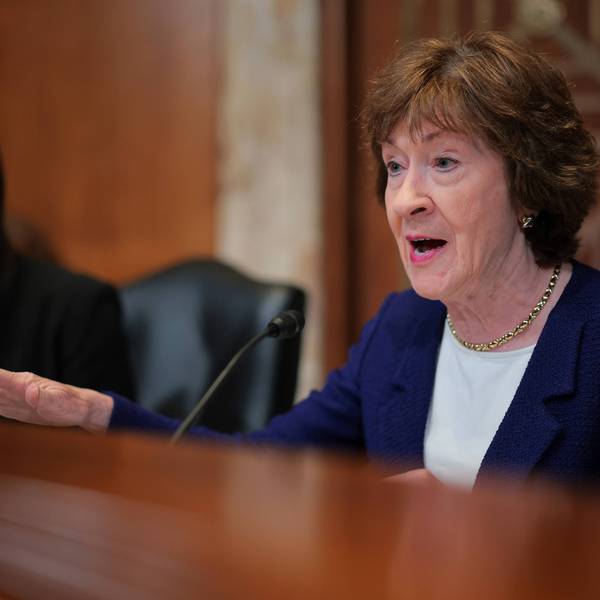
Fresh off an endorsement from the Planned Parenthood Action Fund, Democratic Senate candidate Graham Platner is continuing to hammer his Republican opponent, Sen. Susan Collins, over her vote to confirm US Supreme Court Justice Brett Kavanaugh, which helped set the stage for the right-wing court to overturn the constitutional right to an abortion in 2022.
Platner marked the four-year anniversary of the court’s ruling in Dobbs v. Jackson Women’s Health Organization on Wednesday by posting a video of Collins (Maine) from 2018, standing before the Senate and giving what he called a “stirring defense” of Kavanaugh, whose nomination by President Donald Trump was at risk of being derailed by accusations of sexual assault from three women that had been aired during his confirmation hearing.
Collins, who’d go on to serve as a deciding vote to confirm Kavanaugh to the high court, described the then-federal judge as “an exemplary public servant” whom she’d hoped would “work to lessen the divisions in the Supreme Court, so that we have far fewer 5-4 decisions.”
Around that time, she said she’d been assured that Kavanaugh viewed Roe v. Wade, which guaranteed the right to abortion before fetal viability, as established precedent that he would keep in place if confirmed.
Of course, Dobbsitself ended up being a 5-4 decision, with Kavanaugh being one of the five conservatives who voted to hand decision-making on reproductive autonomy back to the states. (The court also voted 6-3 to uphold the 15-week Mississippi abortion ban at the center of the case.)
Since the ruling, 13 states have almost or totally outlawed abortion, while seven more have restricted it to between 6 and 12 weeks of gestation, according to KFF. States with bans have seen increases in both infant and maternal deaths, and delays to emergency and miscarriage care from providers unsure if they are putting themselves at legal risk.
As Collins has run for her sixth term in the Senate, her pivotal vote for Kavanaugh has come back to haunt her. While Collins said in 2022 that she had been “misled” by Kavanaugh about his stance on Roe, she has insisted this month that she did not “regret” voting to confirm him.
She has, however, appeared eager to downplay the impact of her decision. On Monday, she falsely stated that, “Whether Justice Kavanaugh were confirmed or not, Roe v. Wade would have been overturned, given the 6-3 vote.”
In fact, the vote to fully overturn Roe was 5-4, as Chief Justice John Roberts did not join his fellow conservatives in ending the precedent, leading Platner to accuse her of “lying through her teeth.”
While abortion does not rank high on the list of issues Americans say will determine their vote, the Dobbs decision is just as despised—if not slightly more so—compared with four years ago, when it helped to fuel an unexpectedly strong Democratic showing in the 2022 midterms.
According to a nationwide poll from Marquette University this May, 61% of Americans still said they disapproved of the decision to overturn Roe, compared with 58% who said the same thing in June 2022 shortly after the draft of the Dobbs decision was leaked.
As the second Trump administration turbocharges attacks on reproductive rights, pro-choice groups are hoping to make Collins pay for her role in midwifing this new reality and have thrown their full weight behind Platner, who has said he’d fight “tooth-and-nail to restore and protect reproductive freedom.”
“Mainers deserve a senator they can trust to have their backs at every turn. It is clear that it is not Susan Collins,” said Planned Parenthood Action Fund president and CEO Alexis McGill Johnson in a statement endorsing Platner on Monday. “We know we can count on Graham Platner to fight for everyone to get the essential, lifesaving care they need as part of a pro-reproductive rights Senate majority.”
Maeve Coyle, a spokesperson for the Democratic Senatorial Campaign Committee (DSCC), said the party is seeking to highlight its Republican opponents’ “toxic, anti-choice records” at the national level in the hope that “the American people will vote against Republicans who paved the way for Roe‘s demise and cheered on the rollback of our rights.”
A press release sent by the DSCC on Wednesday highlights the voting records of other top GOP midterm targets, including Sen. Dan Sullivan (R-Alaska), who signed an amicus brief in support of overturning Roe and has said he opposes abortion even in cases of rape or incest or to protect a mother’s life. It also called out Reps. Mike Collins (R-Ga.) and Ashley Hinson (R-Iowa), who co-sponsored total national abortionbans that would have also outlawed in vitro fertilization (IVF).
The Maine Democratic Party, meanwhile, has zeroed in on Susan Collins’ vote for Kavanaugh with a new digital ad and a series of prominent newspaper ads that draw a direct line between her decision and the slew of abortion bans that followed.
“Susan Collins wants Mainers to forget what happened after she cast the decisive vote for Brett Kavanaugh. But Mainers haven’t forgotten,” said Kristi Johnston, a spokesperson for the Maine Democratic Party.
“Four years after Dobbs, Collins continues to defend that vote while rubber-stamping more anti-abortion judges onto the federal bench,” she added. “Mainers deserve to know exactly what role Susan Collins continues to play in stripping away reproductive freedom.”
"The harm unfolding across the country is already far greater than many anticipated," warned one expert.
Senate Republicans unveiled annual farm legislation this week that would do nothing to address the worsening nationwide hunger crisis spurred by President Donald Trump and the GOP’s unprecedented assault on federal food aid.
The draft bill introduced Tuesday by Sen. John Boozman (R-Ark.), the chairman of the Senate Agriculture Committee, omits a Democratic proposal to delay a provision of the 2025 Republican budget law that will require states to pay a share of Supplemental Nutrition Assistance Program (SNAP) benefits for the first time in the program’s history, while also increasing states’ share of administrative costs. State leaders have warned of massive budgetary impacts that could result in even deeper cuts to food aid—and potentially force states to withdraw from the SNAP program entirely.
Ty Jones Cox, vice president for food assistance at the Center on Budget and Policy Priorities (CBPP), said it was “unconscionable” for Republicans to do nothing in the face of large-scale loss of food aid—including among children—and a looming budgetary disaster for states across the country.
“The harm unfolding across the country is already far greater than many anticipated, with more than 4 million people losing SNAP through March,” Cox said in a statement Tuesday. “Even more people will lose the vital food assistance they need to afford groceries unless Congress immediately delays HR 1’s unprecedented shift of significant new SNAP costs to states.”
Without congressional action, the SNAP cost-shifting provision of the Republican budget law will take effect on October 1, 2027. Survey data released this month shows that nearly 30% of US state governments believe they could be forced to narrow SNAP eligibility to cope with the new costs, which are expected to average $218 million per state. Eleven percent of states “identified withdrawing from SNAP as a potential risk,” according to the poll conducted by the American Public Human Services Association.
Crystal FitzSimons, president of the Food Research & Action Center, said Tuesday that the Republican farm bill “ignores the needs of tens of millions of people, including families with children, older adults, people with disabilities, and veterans, who are finding it increasingly difficult to put food on the table.”
“By shifting program costs to states, expanding time limits, and putting a cap on future benefit adjustments, HR 1 has undermined SNAP, the stability of families, communities, and local economies, and weakened state budgets,” FitzSimons warned. “The SNAP benefit cost shift to states and increase in states’ administrative costs will force states to make impossible choices: reduce education funding, delay infrastructure investments, cut public health programs, constrain Medicaid spending, raise taxes, or reduce access to SNAP itself.”
Senate Republicans unveiled their farm legislation amid a growing hunger and affordability crisis that experts say is directly attributable to Trump-GOP policies, from blanket tariffs to the war on Iran to SNAP cuts that the new bill—like the House version—does nothing to reverse.
Survey data released Tuesday by the No Kid Hungry campaign found that 55% of low-income families with children have had to cut back on groceries recently to make ends meet. The poll also found that 90% of families surveyed reported that they “would have to cut back significantly on food” if they lost SNAP benefits.
“Rising prices are making it harder for families to afford basic necessities,” George Kelemen, senior vice president of the No Kid Hungry campaign, said in a statement. “That’s why SNAP’s grocery benefit, which helps feed about 40 million Americans including nearly 16 million children, is a vital support for helping them put food on the table.”
“This SNAP crisis is too dangerous to ignore,” Kelemen added. “Reasonable steps must be included in this farm bill to delay the cost-sharing until states have the time they need to implement all the complex changes handed to them.”
"Mr. President: I have a windfall excess profits bill you could support," said one Democratic senator.
STAND WITH US
We’re a people-powered nonprofit newsroom dedicated to covering the news corporate media too often ignores or endlessly gets wrong. Join us in advancing economic fairness, social justice, human rights, and a sustainable future.
Be part of a growing community that values independent journalism. Your donation helps keep Common Dreams strong—supporting a fearless, reader-funded model that delivers free, fact-based reporting every day.
US Department of Homeland Security agents face off against protesters outside the Immigration and Customs Enforcement processing facility in Broadview, Illinois, on September 27, 2025.
(Photo by Jacek Boczarski/Anadolu via Getty Images)
“The government is not allowed to selectively hide information about its actions that impact protected First Amendment activity,” said a member of the legal team representing The Intercept in its legal challenge.
The administration has created an unprecedented crisis for nonprofits by cutting funds that have been duly congressionally allocated and by targeting organizations with which it disagrees.














No comments:
Post a Comment
Note: Only a member of this blog may post a comment.