Showing posts with label CORRUPTION TRIAL. Show all posts

Sunday, June 23, 2024

Hostage Families demand Deal, Netanyahu Resignation, in Largest Demonstrations since Oct. 7


OCT 7 interrupted NETANYAHU's CRIMINAL CORRUPTION TRIAL

NETANYAHU ignored warnings of the HAMAS attack, failed to protect ISRAELIS to protect 
himself from being convicted for his CORRUPTION....


Hostage Families demand Deal, Netanyahu Resignation, in Largest Demonstrations since Oct. 7

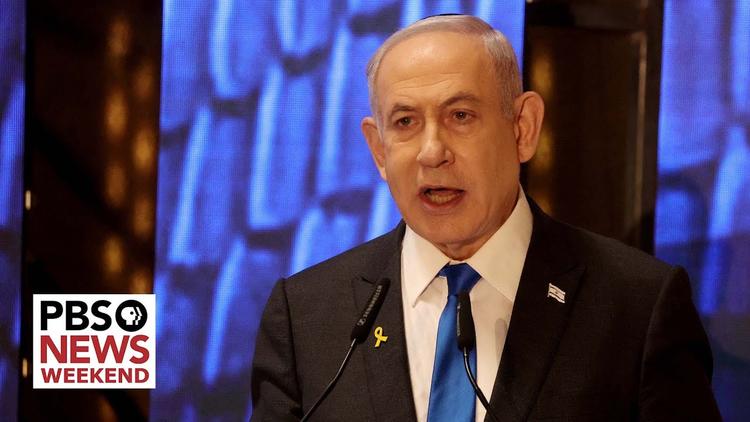
Ann Arbor (Informed Comment) – Saturday evening witnessed the biggest Israeli demonstrations against the government led by Prime Minister Benjamin Netanyahu since the outbreak of war on October 7, 2023, according to the Israeli press as summarized by Al Jazeera. Some 150,000 are said to have rallied in Tel Aviv alone. They demanded that the prime minister resign.

Some demonstrators actually set a fire in front of the headquarters of the ruling Likud Party, which Netanyahu heads.

The first nine months of 2023 saw regular massive rallies against Netanyahu and his cabinet, which includes elements that are the Israeli equivalent of neo-Nazis. The horrid Oct. 7 attacks by Hamas caused Israelis to pull together and the demonstrations ceased for a long time, with a war cabinet having been formed that included opposition members. Earlier in June, however, Benny Gantz resigned from the war cabinet, essentially a government of national unity, and Netanyahu has now dissolved it. Gantz, a retired general, leads the centrist opposition National Unity Party.

On Saturday Gantz joined in a demonstration in the town of Kiryat Gat in the Southern District, demanding a hostage deal.

Some of the renewed opposition derives from Netanyahu’s refusal to cease bombing Gaza long enough to conclude a hostage exchange agreement with Hamas. The terrorist organization continues to hold an estimated 120 Israelis who were taken hostage on October 7, a mixture of civilians and military, of men and women, and of Israelis and guest workers (some from Thailand).

The families with members who remain prisoners in Gaza’s tunnels have concluded that there is not hope of a hostage deal as long as the current extremist government remains in power. At a news conference near the Ministry of Defense in Tel Aviv, hostage families announced that Netanyahu’s government has to fall before the hostages can be brought out.

Channel 13 carried an interview with hostage families who asserted that Netanyahu does not want a hostage deal because he knows that their return would signal the fall of his government.

Al Jazeera English Video: “‘All of the rats in the Knesset’: Mass antiwar protest in Israel”

Netanyahu is on trial for corruption and were he to lose the position of prime minister and become a civilian again, the trials would go forward and he could be jailed. One of his predecessors as prime minister, Ehud Olmert, went to prison for corruption. The Israeli prosecutors and police don’t play.

President Joe Biden told an interviewer that it would be legitimate to suspect that Netanyahu carries on the nine-month Gaza campaign because he wants to remain in power.

Warrants have been sought against Netanyahu for war crimes by the International Criminal Court.

Netanyahu’s maximalist goal of “destroying Hamas” was brought into question this week by military spokesman Rear Admiral Daniel Hagari, who said, “Hamas is an idea, Hamas is a party, it is embedded in the hearts of people. Whoever thinks that we can make Hamas disappear is mistaken. It is the Muslim Brotherhood, which has been in this area for a great many years.” He said the most you could do is set up an effective rival to it that would provide aid to people and then publicize that this alternative, not Hamas, was doing effective charity work.

Hagari said that anyone who spoke about destroying Hamas was deceiving the public.

That assertion seemed to many observers a not very veiled reference to Netanyahu.

Yediot Aharanot columnist Nadav Eyal wrote in mid-June, “The IDF believes that the tactical achievement allows Israel to ‘pass a phase,’ and in fact to end the war in Gaza through an agreement to return the kidnapped. ‘The end of the war is not the end of the fighting,’ say security officials, ‘the intelligence will continue to flow and so will the possibility of attacking from the air or from the ground.” [Google translate.; h/t for cite BBC Monitoring.]

This increasing split between the extremist government, with its fascist elements that insist on a forever war in Gaza, and the Israeli officer corps, is momentous and perhaps gives the protesters hope.

However, in a parliamentary system Netanyahu can stay in power until 2026 as long as his coalition retains a majority and he can avoid a vote of no confidence. Israeli civil society is too weakened by decades of Likud Party Neoliberalism to intervene effectively.


About the Author

Juan Cole is the founder and chief editor of Informed Comment. He is Richard P. Mitchell Professor of History at the University of Michigan He is author of, among many other books, Muhammad: Prophet of Peace amid the Clash of Empires and The Rubaiyat of Omar Khayyam. Follow him on Twitter at @jricole or the Informed Comment Facebook Page


INFORMED COMMENT


Sunday, June 2, 2024

ISRAEL EXTREMISTS OPPOSE PEACE


Far Right Totalitarians in Israeli Cabinet threaten to Crash the Government if it Agrees to Biden’s Gaza Plan

Ann Arbor (Informed Comment) – The Israeli newspaper Arab 48 reports that extremist government ministers Itamar Ben-Gvir and Bezalel Smotrich continue to put pressure on Prime Minister Benjamin Netanyahu, and are threatening to bring down the government if he agrees to the suggestion for a truce put forward by US President Joe Biden on Friday afternoon, calling it an Israeli proposal. Washington officials are calling it the “last chance” for an agreement.

Ben-Gvir and Smotrich, the minister of national security and the minister of finance respectively, threatened Saturday evening to dissolve the ruling political coalition and cause the government to fall if Israel were to agree to Biden’s proposal for a temporary truce in the Gaza Strip. These two ministers are from the Religious Zionism bloc, and Ben-Gvir is from one of its most dangerous components, Jewish Power. They are the Israeli equivalent of neo-Nazis and were brought into the Netanyahu government in late 2022 to provide it a majority in the 120-member Knesset or Parliament. Religious Zionism-Jewish Power won 14 seats, giving Netanyahu and his other allies a 64-seat majority.

In parliamentary systems, coalitions are often put together after the election, and they require a majority of seats, otherwise the prime minister could lose an important vote or be subject to a vote of no confidence. When that happens he or she has to call new elections and the government is said to “fall.” For instance, just last fall on December 11, the Polish Prime Minister Mateusz Morawiecki lost a vote of no confidence. He was succeeded by Donald Tusk.

The closest equivalent in the American system regards the Speaker of the House of Representatives, who likewise has to keep the confidence of a majority. Kevin McCarthy failed to do so and was replaced by Mike Johnson.

So the long and the short of it is that if Smotrich and Ben-Gvir pull out of Netanyahu’s cabinet, his government would fall and snap elections would be called. Polling suggests that the right-wing Netanyahu’s centrist rivals would be elected by a landslide and so he would lose the prime ministership. Netanyahu is on trial for corruption, and those trials could then proceed apace, once he was out of office, and he might well go to jail. Some Israeli political observers believe he is prolonging the Gaza campaign for his own personal reasons, to remain a free man.

PBS NewsHour: “Netanyahu clashes with Biden over conditions for permanent cease-fire in Gaza”

Smotrich said on his social media sites, “I have spoken just now with the head of government and I made clear to him that I would not be any part of a government that agreed to the suggested outline, and which would end the war without annihilating Hamas and returning all the hostages.” In the past, Smotrich has said that returning the hostages was not a priority for him, so I think his position is actually driven by the prospect of annihilating “Hamas,” by which he means the Palestinian people, as he has often made clear.

Smotrich added, “We will never agree to end the war before Hamas is annihilated, nor will we agree to undo the achievements of the war so far by withdrawing the Israeli army and allowing the return of Gazans to the northern Gaza Strip, nor will we accept the wholesale release of terrorists who, God forbid, would return to kill Jews.”

He continued, “We demand the continuation of the fighting until the elimination of Hamas and the return of all the abductees, the creation of a completely different security reality in Gaza and Lebanon, the return of all residents to their homes in the north and south, and a huge investment in the accelerated development of these areas [for Jews].”

Ben-Gvir of the Black Shirt-like “Jewish Power” bloc also said he would withdraw from the government: “The deal,the details of which were published today, means the end of the war and giving up on the destruction of Hamas. This is a humiliating deal, a victory for terrorism and a security threat to Israel. Approving it does not represent absolute victory, but absolute defeat.” He warned that if Netanyahu approved the Biden deal, “the Jewish Power [Otzma Yehudit] party will dissolve the government.”

Opposition politician Gideon Sa’ar, head of the small New Hope party and an ally of opposition leader Benny Gantz, also said that any agreement that ends with Hamas being the ruling and military power in Gaza means that the average Israeli citizen would continue to live under threat. He said it would be a victory for Hamas and a defeat for Israel with far-reaching consequences.

Religious Zionism’s Orit Strock, Minister of Settlements and National Missions, piled on, rejecting the Biden Plan. She said, “I did not find a fundamental difference between Biden’s ‘new’ and ‘promising’ plan and the previous plan. Another surrender deal that saves Hamas, begins the countdown to the next massacre, and leaves the hostages with no means of being released other than ending the war.”

A leader of the opposition, Yair Lapid, struck out at Smotrich and Ben-Gvir, saying “Ben Gvir and Smotrich’s threats (to topple the government) are negligent and represent a complete abandonment of national security, the hostages, and the residents of the north and south. This is the worst and most corrupt government in the country’s history. As far as they are concerned, the war here can continue forever. Zero responsibility, zero management: a complete failure.”

Lapid’s ally Benny Gantz, who is serving in the war cabinet (essentially a government of national unity during the crisis), tried to counteract the bitter and defiant words addressed to Joe Biden by the members of the far right wing current government: “The United States in general, and since the beginning of the war in particular, has demonstrated its commitment to Israel’s security and the return of the hostages. We feel full appreciation for President Biden and all our American friends for their support.”

He seemed to commit to the Biden plan, and called for an emergency meeting of the war cabinet with the Israeli negotiators who are talking indirectly to the Palestinian leadership through the mediation of Qatar, Egypt, and the United States. Gantz also played to the section of the Israeli public that prioritizes the return of hostages: “Tonight, I would like to fortify the families of the hostages and tell them that I and my friends are committed to the return of their loved ones, and that this goal is the highest moral obligation, and a goal with clear priority on [policy] the timetable.”

Many Israelis are demonstrating against the extremist Netanyahu government, demanding that he prioritize securing the release of the hostages, and Gantz appears to believe that there is a constituency for this position in the Israeli public.

I take away from this reporting, and from the remarks of the politicians, that as long as the far right remains in power, Biden’s plan is dead in the water. The centrists, such as Gantz and Lapid, would probably go for it if they were in power, but they aren’t. The main hope for an end to hostilities appears to be the fall of the Netanyahu government over some issue that inflames passions among his coalition partners, such that parties with 5 or more members withdraw from it.

Another possibility is that Biden could actually stop supplying the Israelis with arms and ammunition on a daily basis. They have run out of ammunition of their own and need American supplies. But that step would require that Biden show an independence and courage on the Israel issue that he has never displayed before.

INFORMED COMMENT

Tuesday, January 9, 2024

POLITICO Nightly: The White House’s Netanyahu problem


POLITICO Nightly logo

BY CALDER MCHUGH

Presented by

The American Cancer Society Cancer Action Network

Joe Biden shakes hands with Benjamin Netanyahu

President Joe Biden shakes hands with Israeli Prime Minister Benjamin Netanyahu at the 78th United Nations General Assembly in New York City in September. | Jim Watson/AFP/Getty Images

SHAKY GROUND — As Secretary of State Antony Blinken travels to Israel today after meetings with Arab leaders, his task will be to manage a strained relationship between the two historic allies.

With the bloody war in the region — which has included Israel killing tens of thousands of civilians in Gaza — leading the Pope to rebuke the Israeli government , some U.S. officials are getting increasingly frustrated with Prime Minister Benjamin Netanyahu. And according to POLITICO’s Nahal Toosi, some of those officials are “starting to wonder if he’s really in charge.”

Netanyahu has been a political survivor in Israel for decades and is in his third stint serving as the country’s prime minister, despite being indicted on charges of fraud, breach of trust and bribery in 2019. But now, only 15 percent of Israelis say they want him to remain in office after the war — protesters today sat outside the Knesset (Israel’s parliament) calling for new elections. He’s also getting pressure from his right flank, as far-right ministers Bezalel Smotrich and Itamar Ben-Gvir are resistant to U.S. pressure to moderate on the war. Complicating matters, in December Netanyahu’s corruption trial resumed after a post-Oct. 7 pause.


Dozens of Israeli demonstrators demanding new elections have held a sit-in protest outside parliament. The group, calling on Prime Minister Benjamin Netanyahu to step down, was forcibly removed by police. There are reports of at least one arrest. Netanyahu's government has grown increasingly unpopular, over its handling of the war on Gaza.

It all adds up to an unstable leader that some in the White House are increasingly beginning to question, as Toosi writes today in her newly launched column “Compass.” To get a better sense of where the U.S.-Israel relationship stands and understand Netanyahu’s political prospects, Nightly spoke with Toosi. This conversation has been edited.

Just how strained is the White House’s relationship with Netanyahu at the moment?

It’s not great. It’s certainly worse than both sides are letting on publicly. The U.S. remains sympathetic to Israel’s deep pain over the Oct. 7 Hamas atrocities, and overall it’s supportive of the goal of destroying the group. But it’s been three months now, and Netanyahu appears unable or unwilling to make decisions that the U.S. — including President Joe Biden — believes are important to the long-term prospects for peace, such as helping in ways to repair the Palestinian Authority. And it seems like he’s holding back because he’s worried his coalition partners further to his right will abandon him, ending his prime ministership and possibly making it more likely he’ll go to prison on corruption charges. So U.S. officials are basically grinding their teeth as they deal with him.

How much does that have to do with Netanyahu’s own political problems at home, and what are the contours of those problems?

A great deal of the fix Netanyahu finds himself in is arguably of his own making.

He faces three court cases that include multiple charges, including fraud and bribery. In one, he’s accused of inappropriately accepting lavish gifts from wealthy businessmen but there’s more serious allegations, too. He denies any wrongdoing and who knows where the cases will end up. But it’s been pretty clear from his actions, such as the contentious legislation he’s willing to support, that he wants to stay in power, and that he believes that staying in power might help shield him from his legal problems.

But the Israeli public also is infuriated with Netanyahu because of the security failure that led to the Hamas attack on Oct. 7. This is a guy who has built his image around the idea that he can protect Israel. But he’s been unwilling to admit to failure and even hinting he won’t quit once the war ends. So one key question is how long will the Israeli public — which does want some political stability amid the war — allow him to stick around? Not to mention his own party.

How much are ministers Bezalel Smotrich and Itamar Ben-Gvir setting policy in Israel right now? What are their goals and how much influence over Netanyahu’s political fate do they wield?

They are not part of Israel’s emergency war cabinet, so their role in direct military decisions related to Gaza is technically very limited. But they’re part of Netanyahu’s elected governing coalition, so they can weigh in on decisions that are otherwise related to the conflict, such as opposing sending financial aid to Palestinian leaders in the West Bank. Netanyahu can’t ignore them because he doesn’t want his governing coalition to collapse, which could lead him to lose his job. But Smotrich and Ben-Gvir are causing him a lot of headaches by proposing policies that he knows are anathema to much of the world, such as encouraging or forcing Palestinians in Gaza to migrate to other countries. Both Smotrich and Ben-Gvir hold tremendous antipathy toward Palestinians.

Are U.S. officials behind the scenes discussing what a leadership change would mean for Israel? How are they preparing for that possibility?

Yes, but in careful, coded ways. It’s not like they’re holding high-level meetings about it — at least none that I’ve heard about. Their sense is that a great deal will depend on who would succeed Netanyahu. I know that seems like an obvious statement, but sometimes in foreign policy you have to state the obvious. One thing U.S. officials are doing is keeping in touch with other leaders in Israel who could be the next prime minister, such as Benny Gantz.

One thing that’s clear is that whoever replaces Netanyahu will continue to wage war against Hamas militants and other groups who threaten Israel. That’s just something nearly all Israelis agree has to continue. But the way in which the war is waged could change, and depending on who is in charge, they might increasingly turn to tactics that are less military in nature and more about diplomacy with Arab countries or taking down financial networks or other means. There’s a basket of tools that can be used in different ways, and a new leader might change tactics to a degree. A new leader might also be more willing to think long-term about Israeli-Palestinian peace, which could require some hard decisions Netanyahu doesn’t appear willing to make.

How does the U.S. want Israel’s wartime policy to evolve?

At the moment, it wants Israel to shift into a more targeted campaign that kills fewer civilians and allows in more humanitarian aid. There are some changes along these lines, but the Biden team doesn’t think it’s happening fast enough. And they’re really worried about the fallout for Israel’s standing globally, not to mention America’s.

More long run — the U.S. wants Israel to think about what Gaza will look like once the heavy fighting ends. Well, it’s going to be a big pile of rubble, but what I mean is how to rebuild and make the place safe for civilians and free of armed militants. The Israelis have done more thinking about “day after” scenarios than they’ve shared publicly, but the administration wants to hear more. So would I, for that matter.

Welcome to POLITICO Nightly. Reach out with news, tips and ideas at nightly@politico.com . Or contact tonight’s author at cmchugh@politico.com or on X (formerly known as Twitter) at @calder_mchugh .

WHAT'D I MISS?

— Christian Ziegler ousted as chair of the Florida GOP amid rape accusation: The Republican Party of Florida pushed Christian Ziegler out of his chair position amid an investigation that he raped a woman. This follows weeks of pressure from fellow party members for Ziegler to step down from his high profile position. His ouster, during a closed-door gathering of party members in Tallahassee, was confirmed today to POLITICO by two people who attended the meeting.

— Trump seeks dismissal of Georgia indictment, again claiming broad immunity: Donald Trump is urging a county judge in Georgia to throw out the criminal case brought against him by Fulton County District Attorney Fani Willis, claiming he’s immune from prosecution for the alleged conspiracy to corrupt the 2020 election results . Trump’s lawyers contended in court papers today that Trump’s January 2021 call to Georgia Secretary of State Brad Raffensperger — encouraging him to “find” enough votes to overturn Joe Biden’s victory in the state — was part of his official duties as president. Similarly, Trump’s attorneys contend that he was also acting as president when he allegedly directed efforts in Georgia and other states to organize so-called alternate slates of presidential electors who purported to cast electoral votes for him even though state officials determined he had lost those states.

— Biden won’t accept an Austin resignation if offered: President Joe Biden is not considering firing Defense Secretary Lloyd Austin after he did not tell the White House about his emergency hospitalization, four senior administration officials told POLITICO. Beyond that, one official noted, the president would not accept a resignation if Austin were to offer one. “Austin’s going nowhere,” one of the senior administration officials said.


GLOBAL PLAYBOOK IS TAKING YOU TO DAVOS! Unlock the insider's guide to one of the world's most influential gatherings as POLITICO's Global Playbook takes you behind the scenes of the 2024 World Economic Forum. Author Suzanne Lynch will be on the ground in the Swiss Alps, bringing you the exclusive conversations, shifting power dynamics and groundbreaking ideas shaping the agenda in Davos. Stay in the know with POLITICO's Global Playbook, your VIP pass to the world’s most influential gatherings. SUBSCRIBE NOW .


NIGHTLY ROAD TO 2024

OLD GHOST — President Biden sought to rally disaffected Black supporters today with a fiery condemnation of former President Donald J. Trump, linking his predecessor’s efforts to overturn the 2020 election to the nation’s history of white supremacy in what he called “the old ghost in new garments,” reports the New York Times. Speaking from the pulpit of the South’s oldest African Methodist Episcopal Church, Mr. Biden drew a direct line from slavery, the Civil War and Jim Crow to the divisions of toda y. Just as it was a “self-serving lie” to call the Confederate rebellion a “noble cause,” the president called Mr. Trump’s insistence that he won the election an effort to rewrite history.

THE MEANINGLESS PRIMARY — The New Hampshire attorney general’s office is accusing the Democratic National Committee of engaging in unlawful voter suppression after the national party dismissed the state’s upcoming primary as “meaningless.” Assistant Attorney General Brendan O’Donnell today fired off a cease-and-desist order to the DNC, saying that instructing state Democrats to “educate the public” that the primary is “meaningless” violates the state’s voter suppression laws.

The state’s warning comes after the DNC’s Rules and Bylaws committee scolded New Hampshire Democrats for selecting delegates for the national convention this past weekend. The national party is not counting the Democratic primary on Jan. 23 as part of the official nominating process, after clashing with state Democrats about the order of this year’s primary calendar. The original letter from the DNC committee to New Hampshire Democratic Party Chair Ray Buckley, obtained first by POLITICO, accused state Democrats of disenfranchising voters by selecting delegates who won’t be seated at the convention and called the Jan. 23 primary “detrimental” and “meaningless.”

AROUND THE WORLD

Farmers use their tractors to block access on roads on the first day of a week of protests today in Bonn, Germany.

Farmers use their tractors to block access on roads on the first day of a week of protests today in Bonn, Germany. | Andreas Rentz/Getty Images

FARMED OUT — German farmers commenced a week of planned protests today while officials warned that far-right groups are attempting to co-opt the movement for their own political ends, reports POLITICO EU.

The farmers began the day by blocking roads across much of the country in response to a government proposal to revoke key tax privileges; German authorities warned that extremists were attempting to link arms with the protesters to create a groundswell.

“Right-wing extremists and other enemies of democracy are trying to infiltrate and instrumentalize the protests,” a spokesperson for Germany’s interior minister, Nancy Faeser, said in Berlin. The country’s federal police, Faeser added, believe these groups want to foment a “general strike” or even rioting to trigger an “overthrow” of the government.

It would not be the first time far-right groups have tried to gain political sway by latching onto protest movements in Germany — something similar was evident in pandemic-era anti-vaccine protests and in demonstrations against military aid to Ukraine.

The infiltration concerns come after some 100 farmers tried on Thursday to accost Greens Economy Minister Robert Habeck, preventing him from disembarking from a ferry in northern Germany following a private visit to an island in the North Sea. Police described the encounter as “very, very tense.”

The incident caused widespread consternation in Germany, even as public support for the farmers has remained high.

“It is becoming clear that something has started to slip in recent years, which is limiting legitimate democratic protest and freedom of expression,” Habeck said in a video posted on social media. There is a risk, he added, that debate in the country could “become more and more brutal, ultimately jeopardizing the law and the rule of law.”


POLITICO AT CES® 2024 : We are going ALL On at CES 2024 with a special edition of the POLITICO Digital Future Daily newsletter. The CES-focused newsletter will take you inside the most powerful tech event in the world, featuring revolutionary products that cut across verticals, and insights from industry leaders that are shaping the future of innovation. The newsletter runs from Jan. 9-12 and will focus on the public policy-related aspects of the gathering. Sign up today to receive exclusive coverage of the show .


NIGHTLY NUMBER

92

The number of counties in Iowa — out of 99 — that are currently under a Winter Storm Warning as broad swaths of the state expect six to 12 inches of snow over the next two days. Then, beginning on Saturday and running through next Monday, temperatures will plunge, with lows below zero — which could result in the coldest Caucus Night weather since the modern nominating system began in 1972.

RADAR SWEEP

SOUND ON — In South America’s Atlantic Forest, where the jaguar population is in danger, digital monitoring systems are essential to helping rangers protect wildlife. But a newer version of this technology that focuses on audio data could be the key to helping rangers track and pin down poacher activity . The technology, which combines acoustic and visual sensors, have helped create ‘sound maps’ of the Atlantic Forest that illustrate where poachers are going after jaguars. Now, these maps are 82 percent reliable and helping researchers and rangers predict poaching activity. In this piece for BBC, Julián Reingold looks at how this new technology is helping rangers crack down on poachers and ultimately restoring the endangered jaguar population.

PARTING IMAGE

On this date in 2011: Emergency workers gather at the scene of a shooting involving Rep. Gabrielle Giffords (D-Ariz.). Giffords and 18 others were shot during a meeting with constituents outside a Safeway grocery store in Tucson, Ariz. Six people were killed, including federal District Court Chief Judge John Roll, one of Giffords' staffers and a nine-year-old girl.

On this date in 2011: Emergency workers gather at the scene of a shooting involving Rep. Gabrielle Giffords (D-Ariz.). Giffords and 18 others were shot during a meeting with constituents outside a Safeway grocery store in Tucson, Ariz. Six people were killed, including federal District Court Chief Judge John Roll, one of Giffords' staffers and a nine-year-old girl. | Chris Morrison/AP

Did someone forward this email to you?  Sign up here .


Follow us on Twitter

Charlie Mahtesian @PoliticoCharlie

Calder McHugh @calder_mchugh

Mia McCarthy @Reporter_Mia


FOLLOW US

Follow us on FacebookFollow us on TwitterFollow us on InstagramListen on Apple Podcast


 POLITICO, LLC 1000 Wilson Blvd. Arlington, VA, 22209, USA


Monday, May 25, 2020

RSN: Trump Sows Doubt on Voting. It Keeps Some People Up at Night.


Reader Supported News
25 May 20


To end this fundraiser, quickly we need about “350” donations. We have gotten that in “1” day before. “350” of you will visit RSN in the next “20” minutes.

With urgency.

Marc Ash
Founder, Reader Supported News


If you would prefer to send a check:
Reader Supported News
PO Box 2043
Citrus Hts
CA 95611


Reader Supported News
25 May 20

It's Live on the HomePage Now:
Reader Supported News


Trump Sows Doubt on Voting. It Keeps Some People Up at Night.
President Trump. (photo: Jim Watson/Getty)
Reid J. Epstein, The New York Times
Excerpt: "A group of worst-case scenario planners - mostly Democrats, but also some anti-Trump Republicans - have been gaming out how to respond to various doomsday options for the 2020 presidential election."


EXCERPT:


n October, President Trump declares a state of emergency in major cities in battleground states, like Milwaukee and Detroit, banning polling places from opening.
A week before the election, Attorney General William P. Barr announces a criminal investigation into the Democratic presidential nominee, Joseph R. Biden Jr.
After Mr. Biden wins a narrow Electoral College victory, Mr. Trump refuses to accept the results, won’t leave the White House and declines to allow the Biden transition team customary access to agencies before the Jan. 20 inauguration.


People walk at the boardwalk in Venice Beach during the first day of the Memorial Day holiday weekend amid the novel Coronavirus, COVID-19, pandemic in California on May 23, 2020. (photo: APU GOMES/Getty Images)


Americans Pack Beaches, Boardwalks, Parties on Memorial Day Weekend
Daniel Politi, Slate
Politi writes: "Americans were eager to get their Summer started this weekend and they flocked to outdoor spaces over Memorial Day Weekend."
READ MORE


Judge Emmet G. Sullivan. (photo: Dominic Bracco II/WP)


Judge in Flynn Case Hires High-Powered DC Attorney to Defend His Actions
Carol D. Leonnig and Spencer S. Hsu, The Washington Post
Excerpt: "The federal judge who refused a Justice Department request to immediately drop the prosecution of former Trump adviser Michael Flynn has hired a high-profile trial lawyer to argue his reasons for investigating whether dismissing the case is legally or ethically appropriate."
READ MORE


Rep. Steve King (R-Iowa). (photo: Tom Williams/Roll Call/AP)


Steve King's Racist Rhetoric May Finally Cost Him His Seat in Congress
Cameron Joseph, VICE
Joseph writes: "For nearly two decades, Rep. Steve King has faced few repercussions for his ever-increasing string of racist remarks about immigrants and his coziness with fringe right-wing activists. But now it's King's turn in the barrel."
READ MORE


Shoppers wear masks at the Galleria Dallas mall in Texas on 4 May. (photo: LM Otero/AP)


No Masks Allowed: Stores Turn Customers Away in US Culture War
Poppy Noor, Guardian UK
Noor: "In the last few weeks a spate of American stores have made headlines after putting up signs telling customers who wear masks they will be denied entry."

EXCERPT:
“A warped freedom obsession is killing us,” said the writer Anand Giridharadas, in reference to those coughing in the faces of others in the name of freedom. It is, of course, a minority of people willfully misinterpreting what freedom means – freedom to choose, until the choice is one that they do not like; meanwhile, most Americans don’t want to return to business as usual during this pandemic.
In Franklin D Roosevelt’s famous 1941 Four Freedoms speech, he detailed that, yes, Americans are owed a right to freedom of speech and expression and to worship whom they please – but he also mentioned the freedom from fear. This was in the context of the US joining forces with Britain in the second world war; Roosevelt was telling Americans that this was a fight for freedom. As America finds itself at war with a deadly pandemic, that’s a message worth considering.


Israeli prime minister Benjamin Netanyahu, wearing a face mask, stands inside the court room as his corruption trial opens at the Jerusalem District Court. (photo: Reuters)


Israel's First: Netanyahu Appears in Court as Corruption Trial Begins
Middle East Eye
Excerpt: "Israeli Prime Minister Benjamin Netanyahu appeared in court on Sunday to face trial over a string of corruption charges, the first sitting premier to do so in the country's history."
READ MORE


New study finds people infected with the novel coronavirus mount an immune response that includes killer T cells (shown here). (photo: Getty Images)


Early Coronavirus Immunity Data Fuel Promise for a Vaccine
Tanya Lewis, Scientific American
Lewis writes: "As the world grapples with how to safely reopen society in the midst of the coronavirus pandemic, scientists have been racing to understand whether COVID-19 infection confers immunity - and how long such immunity might last."


Researchers found COVID-19 infection produces a strong T cell response. Here’s why they say that is good news

s the world grapples with how to safely reopen society in the midst of the coronavirus pandemic, scientists have been racing to understand whether COVID-19 infection confers immunity—and how long such immunity might last. A lot hangs in the balance: A strong immune response could mean people who have already been infected would be able to safely return to work. And it would also bode well for vaccine development efforts.
A small but suggestive new study finds that individuals who have had COVID-19 produce a robust response in immune cells called T cells. The adaptive immune system contains several main components: antibody-creating B cells, helper T cells and killer T cells. The latter two are important for recognizing and destroying a particular virus, respectively. Alessandro Sette and Shane Crotty, both professors at the La Jolla Institute for Immunology, and their colleagues found that of a group of 20 people who had recovered from COVID-19, 70 percent had killer T cells and 100 percent had helper T cells that were specific to the SARS-CoV-2 virus, which causes COVID-19. Importantly, the researchers observed a strong T cell response to the “spike” protein the virus uses to bind to and infect cells (and which most vaccine candidates target). They additionally detected a helper T cell response to SARS-CoV-2 in about half of blood samples they examined that had been drawn before the virus began circulating. This observation, they say, hints that exposure to seasonal common cold coronaviruses may confer some protection against the new pathogen.
The findings build on earlier studies showing that infection with the novel coronavirus produces protective, or “neutralizing,” antibodies. Taken together, these results suggest that people who have had COVID-19 possess at least some immunity—an encouraging sign for the dozens of vaccines under development. Separately, this week the company Moderna announced early results from a trial of its coronavirus vaccine candidate: eight individuals who have received the vaccine produced antibodies to the virus at levels similar to those of people who had the disease.
Scientific American spoke with Sette and Crotty about what their study means for immunity to COVID-19, possible protection from seasonal cold infections and the prospects for a SARS-CoV-2 vaccine.
[An edited transcript of the interview follows.]
What do we know so far about immunity to COVID-19? And why is it so important?
CROTTY: There’s just been a huge amount of uncertainty about immunity to COVID-19. And that question about immunity has two major implications: one, for just understanding the disease itself, and two, for vaccine development. It’s clearly been a world-on-fire type of situation. And so it has made sense for these 100-odd different vaccine programs to get going and just try moving things forward. The normal way you would try and make a successful vaccine would be to look at what gets you good protective immunity to that disease and copy that. A disease such as COVID-19 is normally an acute infection, and most people control and clear it without a lot of problems. That’s a good sign that indicates that the human immune system normally makes a good response to that virus and controls it.
But the immune system is a big, complicated place, with lots of different cell types with lots of different functions. And some are useful or important in one context versus another. For a vaccine, you’d want to know which components of the immune response are the important ones for protection against this disease. And without that information, you can very much go totally in the wrong direction with a vaccine program, either in terms of the type of immune response you’re trying to get or the [vaccine’s molecular] target. And both of those have been things that worried [Sette] and me and other people about these ongoing vaccine efforts. We really wanted to generate information that would help [us] understand the disease itself—and also generate information about which vaccine strategies are likely to be better or worse ones and whether people are getting the right [molecular target] or not. Our goal was to look at essentially average cases of COVID-19—ones where people definitely are making successful immune responses—and ask, “Okay, what does that immune response look like?”
Can you describe the different parts of the immune response and how they work?
CROTTY:Quite a few labs around the world have looked at antibody responses. Those are generally easier to measure and look at. But really, there are three parts of the adaptive immune system: you’ve basically got antibodies, you’ve got helper T cells, and you’ve got killer T cells. The T cells are tougher to measure, but they do really important things. You’ve got to have the helper T cells to get an antibody response. For example, in animal models, [helper T cells] are important for protecting against [severe acute respiratory syndrome (SARS)]. And the killer T cells are important for most viral infections. You don’t want to go forward without understanding anything about the T cell response. And [Sette] is the world’s expert in predicting and identifying T cell [targets], particularly in humans. So we collaborated to get COVID-19 patient blood samples as quickly as possible and to try and get information about those questions. We mostly have concluded it’s good news: things have largely looked the ways we would expect.
Do we know how long the immune response to the new virus lasts?
SETTE:What we certainly can say is that the infection induces a robust immune response, and this is in people that successfully deal with the virus and don’t get very sick. The question [of] how long this response lasts obviously takes time, because we have been dealing with this virus for only a few months, and we cannot possibly know what is going to happen a year down the line. But what we’ve seen thus far is encouraging, because these T cells look healthy, look happy. They are not exhausted, and they don’t express some of the molecular features that are associated with cells that are about to die.
In general, immunologic memory is like any other memory in the sense that the intensity of the event dictates how strong the memory is. Pretty much like any event in your life: if it was a life-threatening situation—for example, you almost got run over by a truck—you remember. If it was instead what kind of socks you wore, you might not remember. It’s the same for the immune system, in the sense that a very strong infection with a microbe that reproduces to high levels generates a strong level of immune response, which then creates a long-lasting impression. I would speculate that the memory generated by SARS or [Middle East respiratory syndrome (MERS)] could be somewhat different from one generated from a common cold, which is fairly adapted to not cause much trouble in the human host.
You also saw some T cell responses, or “cross-reactivity,” to the new coronavirus in blood from people who were never exposed to it, correct?
SETTE: We looked at the COVID-19 patients, and then we looked at a control group. We purposely went after blood donations that were obtained in 2015 to 2018—before any SARS-CoV-2 was around. Surprisingly, in about half of these people, we could see some T cell reactivity. And we looked at the data hard from the left and from the right and convinced ourselves that this was real. We do not know, at this point, exactly what this cross-reactivity means, but it’s reasonable to assume that it is the result of people having been exposed to common cold coronaviruses that are different from SARS-CoV-2 but have some similarity [to it]. This potentially has very strong implications, because one of the things that is unknown and everybody wants to gain more information about is why there is such a spectrum of different COVID-19 outcomes: some people are totally asymptomatic, whereas other people die. Of course, age and other health issues are factors, but one element could be immunological: If someone has some T cells that can cross-react to SARS-CoV-2, their immune system has an advantage. They can get going to generate antibody responses faster, maybe, and that could give a better outcome. In the context of vaccination, this is also very important, because imagine that you have a group of people, and half of them have this coronavirus cross–reactivity, and half of them don’t. Now you give these people a vaccine. It could be that the people that have the common cold cross-reactivity will respond a lot faster and a lot better to the vaccine, compared with the other ones.
One piece of data that is encouraging, in speculating that some preexisting immunity may be beneficial, is data from the 2009 H1N1 “swine flu” pandemic. You might recall that in that case, older people did better than younger people. And in fact, it turned out that the age of the people that did better correlated with when another H1N1 strain, a cousin of the swine flu pandemic strain, had circulated—so that the people that had been exposed in the 1950s to this other strain, their immune system still remembered a bit. Not that the people didn’t get sick, of course, but they got less sick. And they fared better than people who were totally naive and had never seen this particular subtype of influenza.
Do we know whether people that had asymptomatic COVID-19 infections might be less protected against reinfection than people who had a very severe case?
CROTTY: We did this study with people who didn’t have bad diseases—sort of average cases who definitely got well. Asymptomatic cases are definitely a big unknown. We have no idea [if they will be protected against reinfection].
Can you comment on the Moderna results from the phase I trial of its coronavirus vaccine candidate and the prospects for a vaccine in general?
CROTTY: There are actually three human vaccine candidates that have been tested in monkeys that gave what seems to be pretty good protection: one’s an inactivated-virus vaccine; another is a chimpanzee adenovirus vector [a type of double-stranded DNA virus used to harmlessly deliver genetic material to a host]; and a third one is a DNA vaccine [a DNA sequence that stimulates the host to produce part of the virus and mount an immune response against it]. And then there's the Moderna vaccine, which hasn't been tested in monkeys but has been tested in a mouse model and in humans to measure their immune response. So those are the three examples of interesting vaccine candidate data that are available as of today. And I think if we combine those with the data from our paper showing that the T cell responses generally look good and data from a number of papers about people making neutralizing antibody responses overall, I would say those vaccine studies—particularly the two that were done in monkeys—suggest, so far, that it’s not that hard to protect against this virus. I'm certainly encouraged, based on the magnitude of the immune responses to the vaccines—and the magnitude of immune responses we’re measuring in people who actually have disease and what happens in protection models. So far the available data are positive here.
SETTE: One encouraging thing is that there are so many different vaccines that are being developed. So our hope is that there is not going to be a winner, but there are going to be many different winners. The one thing that is important from our study is that the vast majority of these different vaccine concepts rely on one particular protein, which is the spike protein. And we saw very good responses, both in terms of killer and helper cells against the spike, which is really good news, because this was not a given. In this particular case, it so happens that it’s a good target for all three different types of immune response—which bodes well for people that are developing the spike-based vaccines. At the same time, our data found that there were responses also against other pieces of the virus, which opens the way to thinking that maybe these other pieces could also be included to further fortify a vaccine concept.


Trump's Friday Meltdown: Begging Iran, Ditching Ukraine, and Blaming Everybody But Himself – 7/31/26

                                               LOTS OF POSTS IGNORED BY BLOGGER..... OR REMOVED ON THEIR WHIM! ALL POSTS ARE AVAILABLE ON MI...