




Showing posts with label BIDEN FOREIGN POLICY. Show all posts

Saturday, September 16, 2023

POLITICO Nightly: Biden claims ‘America’s back.’ The world isn’t convinced.


POLITICO Nightly logo

BY GAVIN BADE

Presented by

Citi

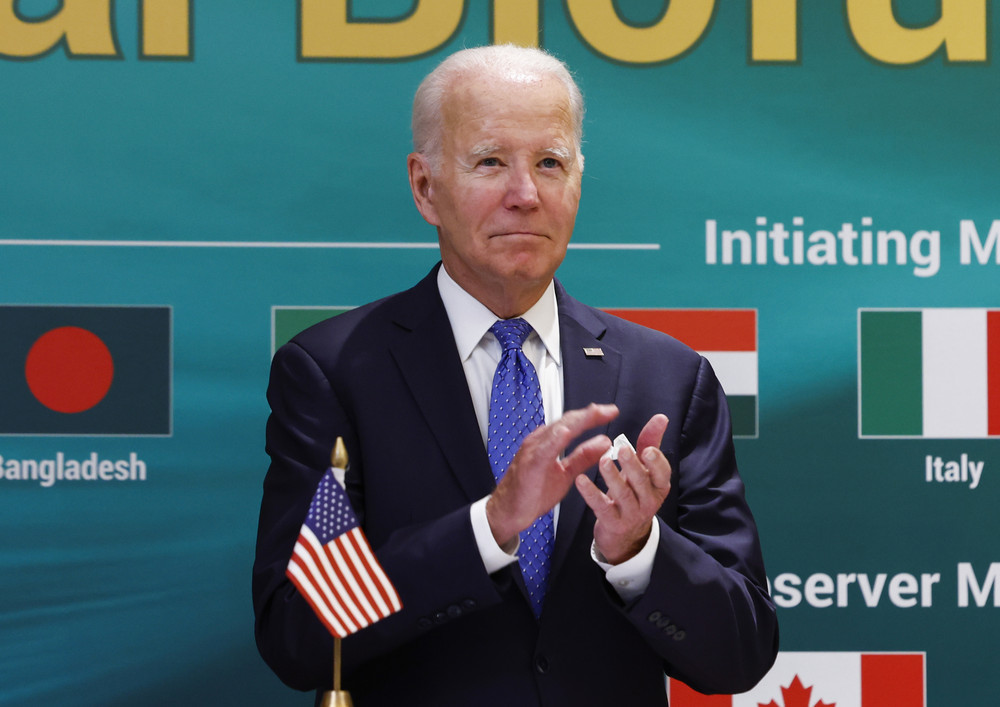
President Joe Biden attends the launch of the Global Biofuels Alliance at the G20 summit in New Delhi, India, Sept. 9, 2023.

President Joe Biden attends the launch of the Global Biofuels Alliance at the G20 summit in New Delhi, India, Sept. 9, 2023. | Pool photo by Evelyn Hockstein

BETTER LATE THAN NEVER — The Biden administration loves to claim that “America is back” on the world stage after four years of President Trump’s go-it-alone foreign policy.

But for most of the globe, the U.S. has been conspicuously absent — until now.

At the G20 meetings last week, the president debuted his administration’s new charm offensive for the developing world — a promise to invest in the economic development of 70 nations, concentrated in the Southern Hemisphere, with high poverty and debt burdens.

It’s a campaign that makes few headlines stateside, but has huge implications for U.S. trade relations and Washington’s economic competition with Beijing. Biden will need to increase trade with many developing nations to secure the materials and components for his clean energy manufacturing agenda. And his team is desperate to stop those countries from falling further into China’s orbit after decades of neglect from the U.S.

“The U.S. government for many years has not really had a sustained focus [on developing nations],” said Peter Harrell, who served on Biden’s national security council until last fall. “Over the last six months in particular, you’ve seen a really concerted push by the administration to expand its outreach.”

Biden’s plan is to buy those nations off. At the G20, the administration announced plans to reform the World Bank, International Monetary Fund and other Western development institutions so they can unlock hundreds of billions of dollars in funding for infrastructure projects around the world. That, they hope, will lead more nations to side with the U.S. in everyday trade and in times of crisis — like a potential conflict in the Taiwan Strait.

The investment-first strategy marks a dramatic shift from decades of U.S. economic policy that focused on removing tariffs and other trade barriers in hopes that private U.S. companies would rush in and industrialize poorer nations. Biden’s team says that agenda has run its course.

“We don’t see tariffs as being at the core of trade policy. We don’t see trade policy as being at the core of international economic policy,” deputy national security advisor for International Economic Affairs Mike Pyle said at a late June appearance at the Carnegie Endowment. “Just as the agenda with other industrial economies begins with investment, so too the agenda for the developing world begins with investment.”

But Beijing already has a trillion-dollar head start. For over a decade, the Chinese government has funded infrastructure projects in over 130 nations through its Belt and Road Initiative — building not just ports and bridges, but goodwill among many nations.

“We start at a significant deficit” compared to China, Harrell said.

And many countries remain skeptical of Western development institutions that for decades imposed budget cuts as a condition for aid. Even as they publicly welcome the U.S. campaign, some leaders remain skeptical behind the scenes.

“IMF and World Bank packages are not seen very positively” in many developing nations, said a Southeast Asian economic official, granted anonymity to speak frankly about Biden’s plans. “It all comes with very heavy commitments that would tie our hands as to how we manage our [foreign direct investment], monetary policy, and taxes.”

Others worry that the reformed IMF and World Bank will simply impose a new type of green-tinged austerity on developing nations under the auspices of climate action. Those critiques – and the administration’s responses – are all in the latest edition of our series on the changing face of global trade.

Welcome to POLITICO Nightly. Reach out with news, tips and ideas at nightly@politico.com . Or contact tonight’s author at gbade@politico.com or on X (formerly known as Twitter) at @GavinBade .


A message from Citi:

Generative AI is at an inflection point. With the recent announcements of AI-driven natural language processing (NLP) tools being integrated into search engines and the broader web, generative AI could be transformational in changing the business model of search and how we access content on the web. Access in-depth analysis on the potential implications in the Citi GPS Report, Generative AI.

 
WHAT'D I MISS?

— Prosecutors argue Trump knowledge of Twitter search warrant could ‘precipitate violence’: Federal prosecutors secretly argued in April that if Donald Trump learned of their efforts to access his Twitter account, his public disclosure of the development could “precipitate violence.” Newly unsealed court filings show that attorneys working for special counsel Jack Smith worried that Trump would publicly announce the search warrant of his Twitter feed just like he announced on Truth Social when his Mar-a-Lago estate was searched by the FBI last year. That announcement was followed by a surge in threats against federal law enforcement, culminating in the fatal shooting of a man who had attempted to breach an FBI building in Cincinnati.

— Lee’s jabs at Newsom cause exodus from her Super PAC: Two top California strategists have cut ties with the super PAC supporting Barbara Lee’s U.S. Senate bid after she went scorched earth on Gavin Newsom. Brian Brokaw and Dan Newman — political advisers to the governor — broke from Lee’s PAC, She Speaks for Me, and are siding with Newsom after he was castigated by Lee, according to two people familiar with the decision. Her broadsides came in response to Newsom pledging last weekend to appoint an interim senator — not Lee — should Sen. Dianne Feinstein leave her seat early.

— U.S. military orders new interviews on the deadly 2021 Afghan airport attack as criticism persists: The Pentagon’s Central Command has decided to interview roughly two dozen service members who were at the Kabul airport when suicide bombers attacked during U.S. forces’ chaotic Afghanistan withdrawal but weren’t included in the military’s initial investigation. The decision, according to officials, does not reopen the administration’s investigation into the deadly bombing and the withdrawal two years ago. But the interviews are meant to see if any of the service members have new or different information. The new interviews were ordered by Gen. Erik Kurilla, head of U.S. Central Command, and triggered in part by assertions by at least one service member injured in the blast who said he was never interviewed about it and that he may have been able to stop the attackers.


GO INSIDE THE WORLD’S BIGGEST DIPLOMATIC PLATFORM WITH UNGA PLAYBOOK: The 78th Session of the United Nations General Assembly will jam some of the world's most influential leaders into four city blocks in Manhattan. POLITICO's special edition UNGA Playbook will take you inside this important gathering starting Sept. 17 — revealing newsy nuggets throughout the week and insights into the most pressing issues facing global decision-makers today. Sign up for UNGA Playbook .


NIGHTLY ROAD TO 2024

THE ELUSIVE YOUTH VOTE — Students were dancing in the aisles and their seats in the Hampton University auditorium long before Vice President Kamala Harris took the stage for the first stop of her fall college tour. Jaden Clemons and Layth Carpenter, both 18-year-old freshmen, said they viewed Harris as “authentic” and “relatable” as the alum of Howard University, another historically Black school, writes the Associated Press.

But neither was ready to commit to supporting Harris and Joe Biden next year, the first time they will be eligible to vote in a presidential election. Getting students like these two off the sidelines is one of the top challenges for the White House as Biden seeks a second term as the oldest president in American history, and it’s one that Harris will confront as she crisscrosses between campuses in the coming weeks. Although young people lean left, they’re less likely to vote, and preventing them from tuning out is crucial in close campaigns that hinge on narrow margins.

CHRISTIE IN NH — Gov. Chris Christie’s trademark in the 2024 presidential race is that he’s the Republican most willing to rip into Donald Trump’s deficiencies. But in a state like New Hampshire that focuses on retail politics, campaigning also means facing tough questions about himself and his beliefs , writes NBC News.

Christie spent the bulk of a Tuesday town hall in Bedford answering policy questions on topics ranging from unions to Taiwan, engaging audience members in back-and-forth conversations. He also defended his own record and policy ideas, getting fiery while answering a question from an audience member about several major events from his time as governor of New Jersey: Bridgegate, “Beachgate” and his decision to not attend the funeral of State Trooper Sean Cullen.

UAW UNHAPPY WITH BIDEN — The self proclaimed most “pro-union president in American history” is under fire from the leader of the most high-profile union in America, reports POLITICO.

Shawn Fain, head of the United Auto Workers, has privately expressed his frustration with Joe Biden, wanting the president and other Democratic lawmakers to come out more aggressively in support of his union, which launched a strike today against the so-called Big Three automakers.

Fain’s frustration was conveyed by five people familiar with his thinking, who were granted anonymity to describe his position. One of those five described him as “not happy” with the situation. And Fain’s not the only person in Michigan who isn’t thrilled with the way Biden and his team have handled the labor dispute.

Fain was also set to put out remarks, which were exclusively obtained by POLITICO, calling on Biden to get involved. “We agree with Joe Biden when he says ‘record profits mean record contracts.’ We don’t agree when he says negotiations have broken down. Our national elected negotiators and UAW leadership are hard at work at the bargaining table. Our members and allies are standing strong at the picket lines. Anyone who wants to stand with us can grab a sign and hold the line,” he said, as part of a larger statement.


A message from Citi:

Advertisement Image 

 
AROUND THE WORLD

Supporters of opposition parties hold European Union and Polish flags and banners during the Freedom march organized by the main opposition party in Warsaw, Poland, June 4.

Supporters of opposition parties hold European Union and Polish flags and banners during the Freedom march organized by the main opposition party in Warsaw, Poland, June 4. | Omar Marques/Getty Images

FAIR AND FREE — The Polish government’s control of the public broadcaster, as well as the media regulator and its use of public funds to influence media organizations, is d istorting the political landscape ahead of the October 15 general election , NGOs and media watchdogs warned today, writes Nicholas Camut .

Poland’s media freedom has declined precipitously since the ruling nationalist Law and Justice (PiS) party took power in 2015.

The main channel of government influence is its control of the Polish public broadcaster, Telewizja Polska (TVP), which has turned into the propaganda arm of the ruling party with no effort to provide balanced coverage. TVP controls about a third of the Polish broadcast market, and is especially dominant in the smaller towns and countryside that are crucial to the electoral fortunes of PiS.

“TVP is failing in the fundamental duty of any public broadcaster to provide fair and balanced political coverage between and during elections,” Media Freedom Rapid Response, an umbrella group of European press freedom organizations, said in a statement.

It’s not the only such concern about media freedom in Poland. Poland came in 57th out of 180 countries in the annual press freedom index compiled by Reporters Without Borders, an NGO; that’s one of the lowest rankings in the EU. It was 18th in 2015. “After turning the public media into instruments of propaganda, the government has multiplied its attempts to change the editorial line of private media and control information on sensitive subjects,” the NGO noted.


JOIN 9/19 FOR A TALK ON BUILDING THE NEW AMERICAN ECONOMY : The United States is undergoing a generational economic transformation, with a renewed bipartisan emphasis on manufacturing. Join POLITICO on Sept. 19th for high-level conversations that examine the progress and chart the next steps in preserving America’s economic preeminence, driving innovation and protecting jobs. REGISTER HERE .


NIGHTLY NUMBER

79 percent

The percentage of Democratic voters who probably or definitely plan on getting the new Covid booster by the end of the year, according to a new poll from POLITICO/Morning Consult . That’s compared to 48 percent of independents and 39 percent of Republicans; in total, 57 percent of those surveyed said they had plans to get a new booster.

RADAR SWEEP

IT’S SUMO TIME — Sumo wrestling has been around for hundreds of years — but it’s just now starting to really catch hold in the United States. Much of that is thanks to the New York Sumo Beya , a training quarters that is run by a man named James Grammer from his apartment in Queens. Members led by Grammer now spar in parks around the city and work with the United States Sumo Federation. For GQ, Jackson Wald takes a fascinating look into a New York and U.S. subculture that’s taking cues from Japan.

PARTING IMAGE

On this date in 1963: A civil defense worker and firefighters walk through debris from an explosion which struck the 16th Street Baptist Church, killing and injuring several people, in Birmingham, Ala. The attack was carried out by white supremacists.

On this date in 1963: A civil defense worker and firefighters walk through debris from an explosion which struck the 16th Street Baptist Church, killing and injuring several people, in Birmingham, Ala. The attack was carried out by white supremacists. | Bill Hudson/AP Photo

Did someone forward this email to you?  Sign up here .


A message from Citi:

Generative AI is at an inflection point.

With the recent announcements of AI-driven natural language processing (NLP) tools being integrated into search engines and the broader web, generative AI could transform the way we search for things on the internet, use information, and communicate with each other.

By providing a conversational style response to an inquiry instead of links to suggested sites, generative AI could make the overall search and browsing experience more natural and intuitive, potentially reshaping the way we search for travel, buy goods, and research products.

Access in-depth analysis in the Citi GPS Report, Generative AI.


Follow us on Twitter

Charlie Mahtesian @PoliticoCharlie

Calder McHugh @calder_mchugh


FOLLOW US

Follow us on FacebookFollow us on TwitterFollow us on InstagramListen on Apple Podcast


 POLITICO, LLC 1000 Wilson Blvd. Arlington, VA, 22209, USA


Saturday, March 13, 2021

CC News Letter 13 March - Bill Gates’ Climate Plan: leadership and continuing denial


Dear Friend,

While we need Mr Gates innovation plan, it is by itself both not enough and dangerously misleading. We definitely need his leadership but we also have to know that several of his assumptions about what effective mitigation now entails could be wrong. There are real carbon budget problems with Mr. Gates 2050 timeline. More importantly, his plan is not responsibly precautionary in recognizing climate’s predicted existential dangers and, given his influence, his plan and educational initiative might convince Americans that climate change isn’t an emergency but solvable in our present governance and economics.

Kindly support honest journalism to survive. https://countercurrents.org/subscription/

If you think the contents of this news letter are critical for the dignified living and survival of humanity and other species on earth, please forward it to your friends and spread the word. It's time for humanity to come together as one family! You can subscribe to our news
letter here http://www.countercurrents.org/news-letter/.

In Solidarity

Binu Mathew
Editor
Countercurrents.org


Bill Gates’ Climate Plan: leadership and continuing denial
by Bill Henderson


While we need Mr Gates innovation plan, it is by itself both not enough and dangerously misleading. We definitely need his leadership but we also have to know that several of his assumptions about what effective mitigation now entails could be wrong. There are real carbon budget problems with Mr. Gates 2050 timeline. More importantly, his plan is not responsibly precautionary in recognizing climate’s predicted existential dangers and, given his influence, his plan and educational initiative might convince Americans that climate change isn’t an emergency but solvable in our present governance and economics.

“(T)he most obvious, ubiquitous, important realities are often the ones that are hardest to see and talk about.”   David Foster Wallace

Bill Gates has both a new book and education campaign on mitigating climate change. Mr. Gates personifies successful, transforming innovation. His book is just coming out now but he has been following the evolution of our climate problem for some time and his insights about innovating to decarbonize our society are germane, well thought out, imminently Bill Gates.

We should be welcoming his leadership in focusing the attention of business and innovation leaders in the US and globally on the demanding climate mitigation problem. We need action led by a business class that has mostly been on the other side during three failed decades of obfuscation, denial and cynical delay. We need innovation – innovation is essential if there is any hope of effectively reducing greenhouse gas (GHG) emissions so as to protect a safe climate future. Gates is excellent in explaining how governments and business must work together developing policies for innovation into the future.

But while we need Mr Gates innovation plan, it is by itself both not enough and dangerously misleading. We definitely need his leadership but we also have to know that several of his assumptions about what effective mitigation now entails could be wrong. There are real carbon budget problems with Mr. Gates 2050 timeline. More importantly, his plan is not responsibly precautionary in recognizing climate’s predicted existential dangers and, given his influence, his plan and educational initiative might convince Americans that climate change isn’t an emergency but solvable in our present governance and economics.

We might have to figure out how to incorporate Bill’s innovation ideas into a broader mitigation plan that can work

A little background:  the dominant conception of climate mitigation is decarbonization. This conception, formulated during the 90s, is of renewable energy – solar, wind, nuclear and hydro too – out competing fossil fuels in existing markets, aided by carbon pricing and/or governmental support of energy innovation.

If this decarbonizing approach to reducing emissions had been implemented and supported in a large part of the global economy during the 90s we would have radically reduced our use of fossil fuels by now, GHG emissions would be winding down to zero, and we wouldn’t have catastrophic warming threatening all we know and love, and maybe even humanity itself.

But we didn’t get on the decarbonizing bandwagon when it was still possible and three failed decades and many gigatons of GHGs later we need a new, broader conception of climate mitigation. Unfortunately Bill’s big plan is just another 100% renewables plan and therefor just another form of new climate denial.

Why? We no longer have three decades to decarbonize. Gates’ energy mentor Vaclav Smil has correctly pointed out that energy transformations take a long time to play out – half centuries. If we initiated strong societal mobilization and support we could probably speed up this process to maybe three decades. Net zero by 2050 has become the embodiment of starting now to finally peak global emissions – which are still increasing, and reduce emissions to zero before their accumulation in the atmosphere leads to an increase in global temperatures that climate scientists have predicted to be a dangerous threat to our global civilization.

Problem is that the emerging science strongly suggests we have already spewed too many GHGs into the atmosphere:  we are already far past temperature target guardrails that could guarantee continuing climate safety. Holding human induced warming to just a 1C rise from pre-industrial revolution levels (keeping carbon dioxide and other GHGs to less than 350ppm) should have been our climate bottom line. Instead human induced warming is close to exceeding the Paris Accord safe global temperature guardrail of below 2C – as close to 1.5C as possible. And human induced warming threatens to unleash latent positive feedbacks like permafrost and burning forests adding more GHGs in the atmosphere, with ever increasing warming.

Mr. Gates knows the dimensions of our climate problem and that we need effective action but like most successful actors in our society he plays by the present economic and political rules – he’s an exceptionally good player within these rules – but they blind him to what mitigation actions are really needed. This leads to several fundamental flaws with both his conception of mitigation and his plan.

The main problem is his mitigation timeline. Think of it this way:  Gates notes that we are producing 51 billion tons of GHGs annually and need to reduce this total to zero. Reducing emissions from 51 billion tons to zero from 2020 to 2050, thirty years, so you could plan to reduce emissions by 1.7 billion tons a year, 17 billion tons a decade. But following such a ‘straight line’ plan we would exceed our total emissions limit, our carbon budget to stay even semi-safe under 2C, before 2040.

Because our 51 billion tons per annum present GHG production uses up so much of our remaining carbon budget, a plan to stay under 2C would have to frontload much more of the emission reduction to the 2020s. Net zero by 2050 is dangerously misleading – we (developed nations) first require something like a 60% reduction of emissions by 2030.
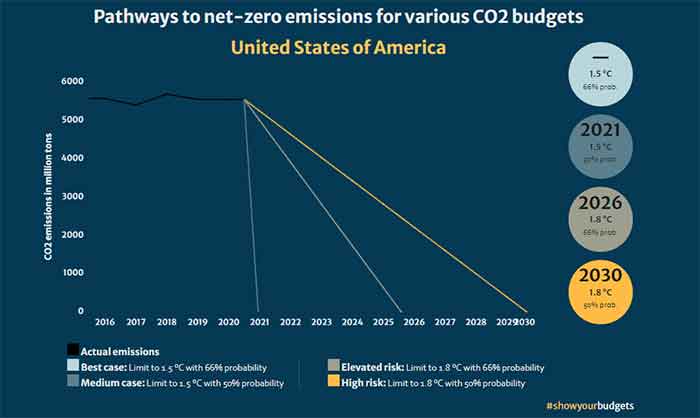
(You can find a more detailed explanation of how straight line, 2050 timeline emission reduction won’t achieve the Paris Accord targets for Australia and for Europe. Countries with big individual carbon footprints using up their carbon budgets rapidly and then using up developing countries room for emissions has been termed ‘climate colonialism’ by informed commentators like Kevin Anderson and David Spratt.)

But in Bill’s plan we will gear up for innovation during the 2020s and do the heaviest lifting in the later decades of the 2050 timeline. After the cows have wandered far from the barn. This is a plan to fail. Yes, you can hypothesize negative emissions in the second half of the century to maybe roll back this overshoot of the guardrail target, but this has a number of problems including moping up the increasing GHGs from the now not so latent feedbacks like melting permafrost. Better to actually achieve the 2030 climate safety target.

Mr Gates has stated that he thinks the postulated Green New Deal target of 100% by 2030 is impossible, and in his conception of mitigation it is. But the science is still clear:  we need at least a 60% reduction by 2030 or it will be already game over.

Furthermore Mr. Gates downplays the existential danger from predicted ‘dangerous climate change’ – abrupt and/or runaway climate change – in favour of a monotonic, linear warming that suits his three decade incremental climate plan. As an afterthought, late in the book (page 176), he does mention ‘tipping points that could dramatically increase the rate at which climate change happens’ – methane hydrates is his example. If this happens, say in the 2040s, he suggests that we will need to consider geo-engineering. Because it will then be far too late for just emission reduction mitigation.

The main danger with the Gates initiative is that it promises a workable transition over the next 30 years when we don’t have thirty years and if we follow his plan we will be backloading the transition, held up by the inertia of a fossil fuel based economy and path dependence. We will have wasted some if not most of the crucial 2020s decade, and will have missed the super important opportunity to rebuild back better – with substantially less GHGs – in the Covid recovery.

Well than it’s impossible; do we just give up?

The problem is in how Mr. Gates – like almost everybody – has conceptualized climate mitigation as orthodox decarbonization, as substituting renewables for fossil fuels in our present unchanged political and economic business as usual (BAU).

Let’s think outside this box. What is needed is a rapid wind-down of our production and use of fossil fuels. We could theoretically stop producing and using fossil fuels immediately and then emissions would fall immediately to zero. But we can’t do this of course because with this sudden and complete loss of energy our society would collapse.

But isn’t it possible to conceive of a regulated managed decline of fossil fuel production and use on a schedule that – with increasing energy from renewables keeping us from collapse – we could reduce emissions rapidly enough this decade to stay under 2C?

We would need governance innovation and multilateral co-operation, New Deal-style societal stabilization and support programs, AND the full implementation of the innovation program that Mr. Gates envisions. We would need to power down (at least in the short term) to a new stable post-carbon economy (which won’t be the present fossil fuel generated economy just powered by 100 renewables).

But this draconian regulation of fossil fuels is heresy to successful business leaders like Mr. Gates. Such a conception of mitigation threatens the safety of investments into the future. Against The Rules; not allowed, not even allowed as a theoretical mitigation conception.

Instead Mr. Gates orthodox decarbonization conception and plan promises effective mitigation with all of us staying in our very fortunate lifestyles. With political and economic business as usual; with energy growth predicted to double by mid-century; with fossil fuel production and use to continue little changed for the next decade and only reduced by less than half by 2040. Mr. Gates climate plan does not include policies to even shrink present fossil fuel subsidies to lower the ‘Green Premium’ on energy, or to limit new fossil fuel infrastructure.

Climate now requires emergency action. Bill Gates’ climate plan doesn’t recognize our responsibility as both dealers and addicts for a product that has been our economic lifeblood but which now has a profound accidental side effect that promises to be fatal.

It is irresponsible and unacceptable to continue to produce fossil fuels which will have negative effects on people (and those species which we presently share creation) for hundreds of years into the future.

It is irresponsible and unacceptable to stay within a failed conception of climate mitigation – even if you are trying to do the right thing – that is now more about protecting political and economic BAU from needed climate mitigation. As more and more governments and businesses jump on the net zero by 2050 bandwagon it gets easier to see that this conception of climate mitigation has become a vehicle to kick the can down the road; to not confront and substantially reduce fossil fuel production and use today, as quickly as possible.

The thing I’ve always appreciated about Bill Gates is that he is a learner, an avid reader with a thirst for finding appropriate knowledge. There is not a lot of time left for learning. We certainly need his leadership and his innovation smarts. But we can’t stay in continuing climate denial and miss what is likely our last chance to achieve effective mitigation. We need to be responsible and do what we should have started years ago – regulating a managed decline of fossil fuels.

How To Avoid A Climate Disaster, The Solutions We Have and the Breakthroughs We Need, Bill Gates, Alfred A. Knopf pub., 2021.

Bill Henderson is a long time climate activist and Countercurrents contributor – bhenderson(at)dccnet(dot)com


GET COUNTERCURRENTS DAILY NEWSLETTER STRAIGHT TO YOUR INBOX


Direct Air Capture and Big Oil
by Robert Hunziker


CNBC recently produced a 17-min video about direct air capture (DAC) and corporations, specifically big oil, funding R&D operations. The video discusses the basic technology, as well as some pitfalls. Direct air capture is in early stages of developing technology to remove atmospheric CO2.


Ten Problems With Biden’s Foreign Policy – and One Solution
by Medea Benjamin


The Biden presidency is still in its early days, but it’s not too early to point to areas in the foreign policy realm where we, as progressives, have been disappointed–or even infuriated.


Drugs, Substance Abuse and Mental Issues in the USA
by Sally Dugman


In general and on average, people in the USA are supposedly the biggest drug users in the world. They
are taught from practically birth that if something is wrong, there is no need to have any discomfort physically or psychologically. Just take some medicine or a bunch of medicines and your life will be alright again. Besides, you deserve happiness — so the message goes.


Himachal Efforts For  Self-Reliance in Seeds to Support Natural Farming Need Support and Wider Reach
by Bharat Dogra


In recent  times the Himachal Pradesh government has also expressed its commitment to  move in the direction of natural farming and claims to have made very significant progress in spreading the Subhash Palekar Natural Farming method  in an area of around 5000 hectares or so, which is quite a significant area for hill agriculture.


Taking away Govt business from Govt Banks: A deep conspiracy to kill them
by Thomas Franco


The Finance Minister has announced that Govt business handled by the Govt Banks i.e. Public Sector Banks will also be provided to Private Sector. Already certain Govt businesses have been slowly handed over to the new generation Private Banks. State Bank of India was handling 99% of the Govt business at one point in time. Now it has come down to 58%


Keep Petroleum Out of GST
by Bharat Jhunjhunwala


Governor of Reserve Bank of India Shashikant Das has said that bringing petroleum products under GST will lead to initial sacrifices but will beget benefits in the long run. A report of State Bank of India has calculated that the initial loss of revenue will be to the tune of Rs one lakh crore. The question, however, remains wherefrom will the loss of one lakh crore revenue will be made up?


Real Friendship With
Neighbors is Not Just At Government Level, Friendship of People  is Even More Important
by Bharat Dogra


Friendships at the level of governments become stronger, more vibrant and more stable, and have many more dimensions, only when these friendships extend even more to the people of any two or more countries, and people have more chances of inter-actions and of deeper friendships.


The Ends of Dissent? A Dissenting Understanding of Dissent
by Prem Kumar Vijayan


What happens when those who are of little or no value to the mainstream of social relations, want to dissent? Worse, what if those who are already perceived as threatening that mainstream, want to dissent from it?


The Social Media Dilemma
by Mirza Yawar Baig


Social media creators are experts in psychology and masters at manipulation so that the individual becomes mentally dependent and a blind and willing follower. His every click, his attention, his involvement generates revenue for them. They become billionaires thanks to us. What do we get in the process?


Trump admits humiliating defeat in pool debacle

                                                     LOTS OF POSTS IGNORED BY BLOGGER..... OR REMOVED ON THEIR WHIM! ALL POSTS ARE AVAILABLE...