Showing posts with label AMAZON FIRINGS. Show all posts

Tuesday, June 14, 2022

RSN: Bernie Sanders Skewers Lindsey Graham in 'Full-On Socialism' Debate


Reader Supported News
14 June 22

Live on the homepage now!
Reader Supported News

NEED IMMEDIATE ASSISTANCE ON DONATIONS! — Well behind for June at this point. The vast majority of people coming to Reader Supported News are lending no support and we cannot function in this way. Please stop for a moment and chip in. Quite a serious need now.
Marc Ash • Founder, Reader Supported News

Sure, I'll make a donation!


Bernie Sanders with Lindsey Graham and Fox host Bret Baier after the debate. Sanders wasted no time before diving into a signature issue - universal healthcare. (photo: Josh Reynolds/AP)
Bernie Sanders Skewers Lindsey Graham in 'Full-On Socialism' Debate
Adam Gabbatt, Guardian UK
Gabbatt writes: "Fox News is, to put it mildly, not known for indulging progressive politics - but the rightwing news channel gave it a go on Monday, when Bernie Sanders appeared in a debate on the network's sister channel, Fox Nation."

‘Is guaranteeing healthcare to all people socialistic?’ senator asks Lindsey Graham in stellar defense of political philosophy

Fox News is, to put it mildly, not known for indulging progressive politics – but the rightwing news channel gave it a go on Monday, when Bernie Sanders appeared in a debate on the network’s sister channel, Fox Nation.

Sanders, the Vermont senator, democratic socialist and two-time presidential candidate, took on Lindsey Graham, his Republican Senate colleague from South Carolina.

Sanders gave an unfettered breakdown of Medicare for all, or a national public healthcare system, a living wage, and increasing taxes on the wealthiest Americans.

For Fox viewers it was a rare opportunity to hear a different perspective on policies which are regularly demonized by rightwingers Tucker Carlson and Sean Hannity, Fox News’ two most watched hosts.

For Sanders, it was a chance to reach a new audience, and he wasted no time before diving into a signature issue – universal healthcare.

“In the United States, Lindsey, we spend twice as much per capita on healthcare compared to the people of any other country, while major countries like Canada, the UK, Germany manage to supply healthcare to all their people,” Sanders said.

“Why is that?” he continued. “Because they’re not having insurance companies ripping off the system.”

Several polls have shown that a majority of Americans support Medicare for all, despite the Republican refrain that much of the US public is thrilled with their private health insurance.

“The real question is what the American people want. And you know what the American people do want? They do want Medicare for all,” Sanders said.

Medicare is the US government’s national healthcare system for seniors, and progressives want to expand its coverage to all and abolish private health insurance.

“You talk about the joys and beauties of private insurance. Talk to the millions of workers who lost their private insurance during Covid,” Sanders said to Graham.

Graham ran for the Republican nomination for president against Donald Trump in 2016 and was a sharp critic of Trump’s – then became one of his most ardent defenders, although the relationship between the pair has since soured.

He accused Sanders of being out of touch.

“America deserves better than this. We can do better than this but the path charted by Senator Sanders is full-on socialism,” Graham said, after a conversation about gas prices and rising inflation.

“And it’s not going to fix America. We are not a socialist nation. There is a better way, I promise you this.”

Graham did not give specifics on his better way.

“If I’m chairman of any committee, hopefully the budget committee, I’ll sit down with Democrats and Republicans and find a way to fix our national debt,” he said.

After being criticized by Graham for being a “socialist”, Sanders leaned into the political philosophy and offered an ardent defense.

“Do you think raising the minimum wage to $15 an hour is socialistic? Do you think doing what every major country does – guaranteeing healthcare to all people – is socialistic? Do you think expanding Medicare to cover dental care is socialistic?” Sanders said.

Sanders had previously appeared on Fox News for a “town hall” style event during his 2020 presidential campaign. That time, to the surprise of many, he was applauded by the Fox News live audience several times as he explained some of his progressive policy ideas.

Monday’s debate came after a bipartisan group of senators announced they had come to a tentative agreement over minor potential gun control measures.

A plan announced by Chris Murphy, a Democrat, and John Cornyn, a Republican, and supported by at least 10 Republican senators, would increase funding for school safety and mental health programs, and expand background checks for gun buyers under 21.

The bill would not, however, ban assault-style weapons or even raise the age limit to buy them – something advocates for greater gun control insist is necessary.

During the debate Sanders gave his tentative support to the legislation, but said it did not go far enough. It was time, Sanders said, for Congress to “stand up to the power of the NRA and pass real gun reform legislation”.

“I come from a rural state. And you know, most people do not use AR-15s to hunt deer. These are weapons, military-type weapons, designed to kill people as quickly as possible,” Sanders said.

“And as a nation we have to decide whether it is appropriate to do what virtually no other major country does: allow somebody to walk into a gun store and buy one of these weapons.”

Graham said he had taken a different lesson.

“You know, after New York, after Buffalo and after the shooting in Texas there’s a common thing: very disturbed people getting guns and doing terrible things with them,” Graham said.

Graham said he owns an AR-15, adding: “If you ever have to defend yourself, maybe a double barrel shotgun at your house if everything breaks down and the mob’s coming, [is] not enough. We’re not going to ban assault weapons.”

Sanders and Graham unsurprisingly found little common ground, although they agreed change was required.

“You’ve got to get new people in Washington,” said Graham, who has been in Congress for more than 26 years.

Sanders offered a bigger vision.

“I think most people, frankly, will tell you what they tell me: that the Congress is way, way out of touch with the needs of the American people,” Sanders said, adding: “We have a corrupt political system dominated by wealthy campaign contributors.”


READ MORE

Ukraine Fears Western Support Will Fade as Media Loses Interest in the War
Dan Sabbagh, Guardian UK
Sabbagh writes: "Ukraine's war with Russia is heading towards its fifth month amid increasing local concern that dwindling media attention could lead to a gradual loss of western support just as Moscow is making slow but steady gains on the frontline."
READ MORE


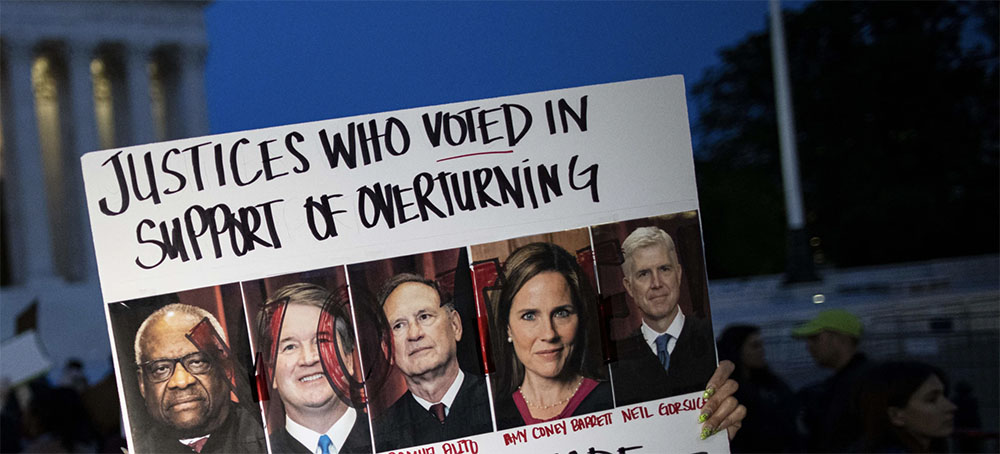
Ginni Thomas Pressed 29 Arizona Lawmakers to Help Overturn Trump's Defeat, Emails ShowGinni Thomas, wife of Supreme Court Justice Clarence Thomas, speaks at a conference in 2017. (photo: Susan Walsh/AP)

Ginni Thomas Pressed 29 Arizona Lawmakers to Help Overturn Trump's Defeat, Emails Show
Emma Brown, The Washington Post
Brown writes: "Virginia 'Ginni' Thomas, the wife of Supreme Court Justice Clarence Thomas, pressed 29 Republican state lawmakers in Arizona to set aside Joe Biden's popular vote victory and 'choose' presidential electors, according to emails obtained by The Washington Post."

Virginia “Ginni” Thomas, the wife of Supreme Court Justice Clarence Thomas, pressed 29 Republican state lawmakers in Arizona — 27 more than previously known — to set aside Joe Biden’s popular vote victory and “choose” presidential electors, according to emails obtained by The Washington Post.

The Post reported last month that Thomas sent emails to two Arizona House members, in November and December 2020, urging them to help overturn Biden’s win by selecting presidential electors — a responsibility that belongs to Arizona voters under state law. Thomas sent the messages using FreeRoots, an online platform intended to make it easy to send pre-written emails to multiple elected officials.

New documents show that Thomas indeed used the platform to reach many lawmakers simultaneously. On Nov. 9, she sent identical emails to 20 members of the Arizona House and seven Arizona state senators. That represents more than half of the Republican members of the state legislature at the time.

The message, just days after media organizations called the race for Biden in Arizona and nationwide, urged lawmakers to “stand strong in the face of political and media pressure” and claimed that the responsibility to choose electors was “yours and yours alone.” They had “power to fight back against fraud” and “ensure that a clean slate of Electors is chosen,” the email said.

Among the lawmakers who received the email was then-Rep. Anthony Kern, a Stop the Steal supporter who lost his reelection bid in November 2020 and then joined U.S. Rep. Louie Gohmert (R-Tex.) and others as a plaintiff in a lawsuit against Vice President Mike Pence, a last-ditch effort to overturn Biden’s victory. Kern was photographed outside the Capitol during the riot on Jan. 6 but has said he did not enter the building, according to local media reports.

Kern did not immediately respond to a request for comment Friday. He is seeking his party’s nomination for a seat in the Arizona state Senate and has been endorsed by former president Donald Trump.

On Dec. 13, the day before members of the electoral college were slated to cast their votes and seal Biden’s victory, Thomas emailed 22 House members and one senator. “Before you choose your state’s Electors … consider what will happen to the nation we all love if you don’t stand up and lead,” the email said. It linked to a video of a man urging swing-state lawmakers to “put things right” and “not give in to cowardice.”

Speaker of the House Russell “Rusty” Bowers and Rep. Shawnna Bolick, the two recipients previously identified, told The Post in May that the outreach from Thomas had no bearing on their decisions about how to handle claims of election fraud.

But the revelation that Ginni Thomas was directly involved in pressing them to override the popular vote — an act that would have been without precedent in the modern era — intensified questions about whether her husband should recuse himself from cases related to the 2020 presidential election and attempts to subvert it. Ginni Thomas’s status as a leading conservative political activist has set her apart from other spouses of Supreme Court justices.

Ginni Thomas did not respond to requests seeking comment for this report. She has long insisted that she and her husband operate in separate professional lanes.

A spokeswoman for the Supreme Court did not respond to questions for Clarence Thomas.

The Post obtained the emails under Arizona’s public records law, which — unlike the laws in some other key 2020 swing states — allows the public to access emails, text messages and other written communications to and from state lawmakers.

In March, The Post and CBS News obtained text messages that Ginni Thomas sent in the weeks after the 2020 election to Mark Meadows, then Trump’s chief of staff. The messages showed Thomas spreading false claims and urging Meadows to keep fighting for Trump to remain in the White House.

“That conflict of interest just screams at you,” said Adam B. Schiff (D-Calif.), who serves on the House committee investigating the Jan. 6 attack on the Capitol, on MSNBC in response to The Post’s May report revealing the emails to Bolick and Bowers.

Schiff pointed to Clarence Thomas’s decision not to recuse when Trump went to the Supreme Court to try to block the House committee from getting access to his White House records. The high court declined to block the release of those documents. Thomas, siding with Trump, was the only justice to dissent.

“Here you have the wife of a Supreme Court justice,” Schiff said, trying to “get Arizona to improperly cast aside the votes of millions. And also, to add to it, her husband on the Supreme Court, writing a dissent in a case arguing against providing records to Congress that might have revealed some of these same e-mails.”

After the May article, Mark Paoletta — a longtime ally of the Thomases who, as a member of the George H.W. Bush administration, played a role in the confirmation of Clarence Thomas to the Supreme Court — confirmed that Ginni Thomas signed the emails, but he sought to minimize her role.

“Ginni signed her name to a pre-written form letter that was signed by thousands of citizens and sent to state legislators across the country,” Paoletta wrote on Twitter on May 20. He described Thomas’s activities as “a private citizen joining a letter writing campaign” and added, sarcastically, “How disturbing, what a threat!”

The letter-writing campaigns were organized on FreeRoots.com, which advertised itself as a platform to amplify grass-roots advocacy across the political spectrum. A Post review of its archived webpages shows that it was heavily used in late 2020 by groups seeking to overturn the presidential election results.

One of those groups was Every Legal Vote, which organized the campaign to send the message that Ginni Thomas sent on Nov. 9. In those first days after the Nov. 3 election, Every Legal Vote described itself online as a “labor of love by American citizens, in partnership” with the nonprofit United in Purpose, according to webpages preserved by the Internet Archive’s Wayback Machine. United in Purpose, which harnesses data to galvanize conservative Christian voters, in recent years hosted luncheons where Thomas presented her Impact Awards to right-wing leaders.

On Dec. 14, 2020, Biden electors in Arizona cast their votes, after the election results were certified by Secretary of State Katie Hobbs (D) and Gov. Doug Ducey (R).

Trump electors met in Arizona that day and signed a document declaring themselves the state’s “duly elected and qualified Electors.” One of them was Kern, the outgoing state representative.

Kern was among more than a dozen lawmakers who signed on to a letter to Congress that same day calling for the state’s electoral votes to go to Trump or “be nullified completely until a full forensic audit can be conducted.”

The lawmakers’ letter was an exhibit in Kern and Gohmert’s lawsuit asking a federal court to rule that Pence had the “exclusive authority and sole discretion” in deciding which electoral votes to count for a given state. The plaintiffs asked the Supreme Court to intervene after the case was dismissed in lower courts. The day after the Jan. 6 insurrection, the court declined in an unsigned order.

READ MORE


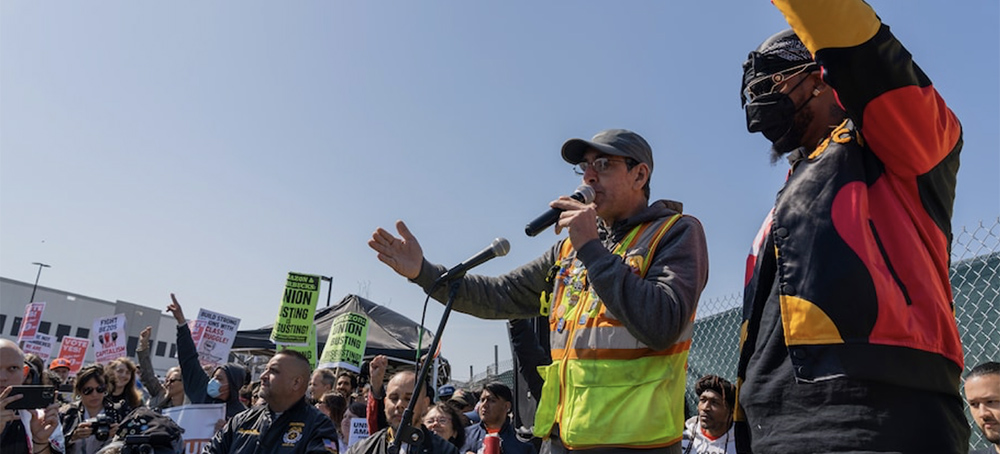
Amazon Calls Cops, Fires Workers in Attempts to Stop Unionization NationwideAn Amazon Labor Union rally in Staten Island in April. (photo: Calla Kessler/WP)
Amazon Calls Cops, Fires Workers in Attempts to Stop Unionization Nationwide
Caroline O'Donovan, The Washington Post
O'Donovan writes: "As Amazon prepares to argue that the union victory in Staten Island should be overturned, employees around the country are accusing the company of using illegal anti-union tactics."
READ MORE


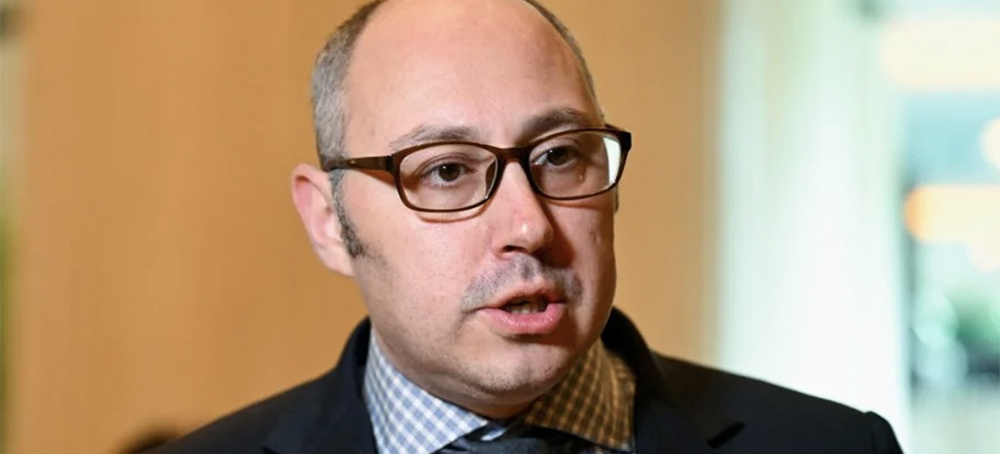
Ukraine Has Developed Routes for Grain Export, Says Foreign MinistryUkrainian Deputy Foreign Minister Dmytro Senik. (photo: Caroline Chia/Reuters)

Ukraine Has Developed Routes for Grain Export, Says Foreign Ministry
The New Voice of Ukraine
Excerpt: "Kyiv is negotiating with the Baltic countries on the creation of a third route for exports, added Senik. However, the Deputy Foreign Minister did not specify how much grain had been transported so far or how much will be transported in the future."

excerpt: 

Ukraine is the fourth largest exporter of grain in the world. At the moment there is about 30 million tons of grain stored in Ukraine, which the government is attempting to export via road, river, and rail transport.

Russia is deliberately preventing sea-based exports by blocking Ukrainian ports and sea routes in the Black Sea, as well as launching missile attacks on grain elevators and rail infrastructure.

The Kremlin seeks to provoke famine in African countries, which will lead to a wave of migration to Europe, forcing EU countries to contend with more waves of migrants. Kremlin officials gave demanded that the sanctions imposed on the Russian Federation for the war in Ukraine be lifted in exchange for the unblocking of Ukrainian ports. Some countries, such as the United States, have categorically refused this demand.


READ MORE


One Month On, Still No Justice in Sight for Shireen Abu AklehFamily and friends carry the coffin of Al Jazeera reporter Shireen Abu Akleh, who was killed during an Israeli raid in Jenin in the occupied West Bank. (photo: Ammar Awad/Reuters)

One Month On, Still No Justice in Sight for Shireen Abu Akleh
Jalal Abukhater, Al Jazeera
Abukhater writes: "One month has passed since the assassination of beloved Palestinian journalist Shireen Abu Akleh by the Israeli military in Jenin."

But this does not mean there is no hope. There is.

One month has passed since the assassination of beloved Palestinian journalist Shireen Abu Akleh by the Israeli military in Jenin.

An entire month has passed, but many of us in Palestine are still struggling to accept that Shireen is no longer with us, that she is no longer here to give a voice to our struggle, that we will never hear her iconic sign-off – “Shireen Abu Akleh, Aljazeeeera, Filasteen” – ever again.

As I try to process this immense loss, as I count the days since I received that initial notification about her death, I repeatedly ask myself: Are we getting any closer to achieving justice for Shireen?

Sadly, one month on, the answer to this question is a resounding “no”.

Indeed, justice for Shireen is still as distant as it has always been – as distant as it always is for every single one of the Palestinian victims of Israel’s decades-long systematic and murderous violence.

But this does not mean there is no hope.

There is.

Shireen’s killing mobilised the Palestinian streets in ways I have never seen before.

Her funeral was one of the longest, and best-attended, in the recent history of Palestine – it spanned three days and approximately 100km (62 miles). People from all corners of our occupied and violated homeland rose up to pay their respects and demand justice for Shireen.

Shireen’s coffin was first carried across the Jenin refugee camp, where she was murdered, before making its way to al-Najah National University in Nablus for a ceremonial military funeral.

In Ramallah, mourners took to the streets to bid her farewell long before the beginning of the official ceremony at Al-Muqata’a, the presidential headquarters. In Jerusalem, the streets were filled with thousands carrying Palestinian flags in her honour. Despite the brutal violence inflicted on mourners by Israeli occupation forces, Jerusalemites persevered and remained locked together for hours to make sure the city Shireen loved the most showed her the respect she deserved.

Shireen was the daughter of Jerusalem, the daughter of Palestine. She spent a lifetime telling the true story of this land to the world. And even in her death, she managed to bring us all closer together, and increase our commitment to our struggle for freedom, dignity and justice.

None of us expects the Israeli forces who murdered Shireen to admit to their crime or seek atonement. None of us is naive enough to believe her killers – not only those who pulled the trigger, but also those who created the conditions for her assassination – will be held to account for what they did to her, and the Palestinian people.

But the outpouring of love and solidarity Shireen’s murder triggered in Palestine still gives me hope that despite all the brutality inflicted on us by the Israeli occupation, Palestinians are moving together towards building a better future and finding freedom.

As expected, Israel first lied about what happened in Jenin on the morning of May 11, 2022, and then refused even to investigate what we all know was a cold-blooded assassination of a journalist on duty, citing “political complexities”.

We had testimonies by several Palestinian journalists and witnesses, plenty of video evidence, and lots of experts weighing in. They all agreed that it was Israeli fire that killed Shireen. CNN went even further and after analysing all the available evidence, all the possible scenarios, all the bullet markings left at the scene, concluded that Shireen was killed in “a targeted attack” by Israeli forces.

But no evidence in the world was enough to stop the Israeli propaganda machine. Israel continued with its campaign to muddy the waters and gaslight Palestinians. It kept claiming that it is not possible to know what happened, that even if it was an Israeli bullet that killed Shireen, it was somehow the fault of Palestinians.

And people believed these lies. Or at least chose to parrot them back because it was politically convenient to do so. Even America’s so-called “paper of record” recently claimed that “the world still knows very little about who is responsible for [Shireen’s] death”.

This is, of course, a lie. The world knows who is responsible for her death. Israel knows who is responsible for her death. And, most importantly, we Palestinians know who is responsible for her death.

Shireen was killed by Israel. She was killed for doing her job. She was killed because she was a journalist telling the story of Palestine. She was killed because she wanted to give a voice to the residents of Jenin and all the other Palestinians brutalised by Israel’s occupation forces.

There may be no justice in sight. But even in death, Shireen is giving us hope. Her legacy is strengthening our resolve to carry on with the fight. Her memory is encouraging budding journalists across Palestine to continue her mission and expose the ugliness of Israel’s occupation.

Since the killing of Shireen on May 11, Israeli forces have killed 12 other Palestinians in the occupied West Bank alone. This number includes 18-year-old Thaer al-Yazouri, killed in al-Bireh, near Ramallah; 17-year-old Amjad al-Fayed, killed in Jenin refugee camp; 16-year-old Ghaith Yamin, killed in the city of Nablus; 15-year-old Zaid Ghneim, killed in Bethlehem; 17-year-old Odeh Odeh, killed in the village of al-Midya near Ramallah.

I am listing their names because, just like Shireen, these young Palestinian lives lost to senseless Israeli fire also deserve justice.

Israel will continue to do everything it possibly can to muddy the waters, to try and gaslight Palestinians into thinking that it is not Israel that is responsible for the deaths of Shireen, Thaer, Amjad, Ghaith, Zaid, Odeh and countless other Palestinian innocents.

Justice for them may not be in sight, but after witnessing the outpouring of love and solidarity that followed Shireen’s murder, and experiencing how each Israeli bullet that takes a Palestinian life strengthens the Palestinian resolve to resist, to remember and to fight on, I am more hopeful for the future today than ever before.

Some media outlets claim one month after Shireen’s assassination there is “relative calm” today in Palestine. But there is no “relative calm” for Palestinians living under Israel’s brutal occupation. We are all bound by our duty to Shireen and others we lost to Israel’s senseless violence to resist, to speak our truth, to keep fighting.


READ MORE


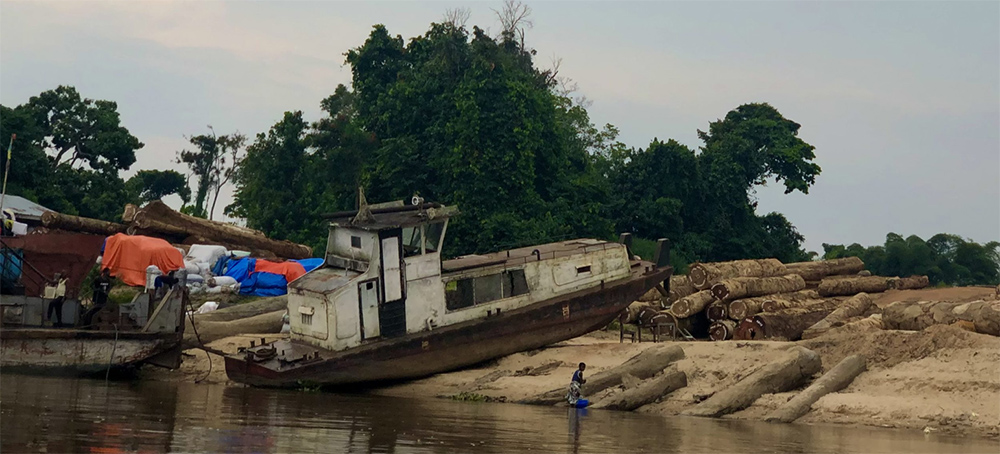
Loggers Close In on One of the World's Oldest Biosphere ReservesTimber awaits transportation to market in Norsudtimber's concession. (photo: Gloria Pallares/Mongabay)

Loggers Close In on One of the World's Oldest Biosphere Reserves
Gloria Pallares, Mongabay
Pallares writes: "In a secluded corner of the Congo, machetes in hand, scientists make their way through the Yangambi Man and Biosphere Reserve, using shallow streams as natural paths to move faster through the wilderness."

As timber is exported to the EU and the US, UNESCO prepares an audit to try to salvage Yangambi and DRC’s other MAB reserves

In a secluded corner of the Congo, machetes in hand, scientists make their way through the Yangambi Man and Biosphere Reserve, using shallow streams as natural paths to move faster through the wilderness.

Some of them are plotting routes for a large-scale biodiversity survey. Others are climbing a metallic structure the size of a 20-story building, the first of its kind in the Congo Basin. The flux tower measures the exchange of greenhouse gasses between the atmosphere and the ecosystem, providing precious insights into the climate role of the Congo forest, whose trees store a third more carbon per hectare than the Amazon.

In the neighboring Ngazi forest, scientists such as Jonas Kambale are also busy monitoring species that once used to abound in Yangambi. “This forest is a wildlife reservoir,” he said. “If we want the Yangambi Biosphere Reserve to be viable, we can’t forget Ngazi.”

The isolation of this tract of forest has sheltered large mammals such as okapi (Okapia johnstoni) and chimpanzees (Pan troglodytes) from human pressures in a country with one of the highest population growth rates on the planet. But timber transport roads planned for 2024 may change that, as they open up a largely inaccessible area to commercial hunting, charcoal making and slash and burn agriculture, a leading cause of deforestation in the world’s second-largest rainforest.

This ecological haven is connected to the Yangambi UNESCO Man and Biosphere Reserve in northeastern DRC — one of the first of its kind and a prime site for climate and biodiversity research. However, the Ngazi forest now finds itself home to an industrial logging concession.

The concession belongs to a subsidiary of the Lichtenstein-registered Norsudtimber group, which recently converted most of its logging titles into conservation concessions for the sale of carbon credits. Official data shows they have sold timber in the US and are one of the three top exporters of Afrormosia (Pericopsis elata) into Belgium, the main gateway for this endangered tree species into the EU.

Northern DRC is rich in Afrormosia, a prized hardwood whose EU trade is being scrutinized in view of irregularities in export quotas recently flagged by EL PAÍS/Planeta Futuro. Europe is the world’s leading donor for Congo forest conservation and member of a 12-donor group that has pledged to disburse $500 million for that purpose in the next five years.

As the DRC prepares to receive millions in donor money for forest conservation, official documents and data show the DRC environment ministry authorized the logging concession to alter its limits, in spite of a 20-year moratorium on new industrial felling contracts. Officials then approved the upcoming opening of timber transport roads in Ngazi forest, a wildlife corridor the ministry itself had described as an integral part of the Yangambi UNESCO Man and Biosphere Reserve. Preparations to log in the area are due to start next year.

Shifts in concession limits

The first warning about the change of the concession limits appears in the management plan that WWF drafted in 2011, the same year the contract for the concession, known as 042/11, was signed. The author of the plan was a forestry expert who shortly thereafter became the secretary general of the environment ministry and who holds a high position to this day.

According to the document, the ministry had awarded loggers the northern part of the Yangambi reserve and most of what the document describes as the Ngazi forest reserve, an adjoining area suited to scientific research. At the time, the overlapping area covered 53,628 hectares (132,000 acres). “Such an act reinforces the position of local actors who consider themselves entitled to shamelessly plunder the reserves’ natural resources,” the WWF planning document reads.

Only three years later, in 2014, concession 042/11 had to reduce its size to abide by the maximum allowed area of 300,000 hectares — and the company took that opportunity to further shift the concession boundaries towards the biosphere reserve, totally engulfing Ngazi forest. The move was authorized by the environment ministry.

“To push a concession beyond its original boundaries, you’d have to write a new contract, but that would breach the moratorium on new industrial logging titles,” a Congolese lawyer who works on forest governance issues said, speaking on condition of anonymity. “On top of that, communities have ancestral rights over their forests, so the government can’t allocate land to private entities without a public inquiry.”

Falling off the map

In 2015, one year after the limits of concession 042/11 had been altered, the ministry and the IUCN published the General Management Plan for the Yangambi Biosphere Reserve, building on WWF’s work.”The Ngazi forest reserve…is an integral part of the Yangambi Biosphere Reserve,” the document notes.

This inquiry reviewed the 25-year management plan for concession 042/11, approved in 2018. It acknowledges work done by IUCN and WWF, but avoids mentioning Ngazi despite the situation having been featured in reports for years.

The $374,000 plan was produced by French firm FRM under the auspices of AGEDUFOR, a major project funded by the French Development Agency that ran through 2019. Its objective was to advance sustainable forest management in the DRC.

“How consultants could draft such a plan and how the Environment Ministry could approve it after consultation, is a mystery to me,” says an expert in forest policy from the DRC, speaking on condition of anonymity to protect his engagement with the authorities.

Another cause for concern are the limits of the Yangambi Biosphere Reserve as depicted on the current DRC Forest Atlas. They do not match any historical maps. The tool was produced by a non-profit with data provided by the environment ministry and the financial support of USAID, UKAid and Norway.

Those limits make the overlap with the other land uses appear irrelevant — especially since the Atlas features the old perimeter of concession 042/11, before it moved towards the reserve.

The map has since made its way into the observatory of the Central African Forests Commission (COMIFAC) and the management plans of logging concessions such as 042/11 — plans that open the door to exporting trees regulated by CITES, such as Afrormosia.

Review in the works

Noeline Raondry Rakotoarisoa, UNESCO’s director responsible for its African network of reserves, is one of the world’s leading experts on Man and Biosphere Reserves. “Ngazi forest is an important biodiversity reservoir that could eventually help repopulate surrounding areas, and we must ensure it maintains this function,” she said, adding that Ngazi provides large mammals with a wildlife corridor that allows them to move about the landscape and maintain healthy, viable populations. It also acts as a buffer, sheltering the core of the Yangambi Reserve from human encroachment.

Raondry said UNESCO will oversee a review of the reserve zoning conducted by WWF in 2011. “There is no point in protecting places that have been completely destroyed.”

The UNESCO representative also told us an audit will be conducted to determine which DRC institutions are best suited to manage the country’s three Man and Biosphere Reserves. Consultants are expected to start work on the audit in September.

“We want to position Biosphere Reserves as an example of land-use planning and sustainable development,” she said. As things stand, industrial logging concessions have been overlapping with hunting domains and there have even been plans to auction oil blocks in national parks.

In the case of Yangambi, the 2015 management plan has never been implemented, mostly due to poor institutional coordination and governance. In the meantime, a booming population with few livelihood alternatives has been increasingly turning to the reserve for survival.

Some people travel as far as 25 miles (40 kilometers) to exploit natural resources in the reserve. They mine gold, log trees to make canoes, and burn patches of forest to establish temporary, low-yield cassava fields. They also shoot small mammals for urban wildlife markets. The biggest mammals only survive in Ngazi forest.

“No raincoats, no means of transportation, no budget, no clear reserve boundaries; what can we do?,” Tabine Assimbu, an agronomic engineer, asked. “Also, locals need livelihood alternatives; otherwise, what can they do?”

Sodefor, Norsudtimber’s parent company, said it was not aware of the documentation showing Ngazi was an “integral” part of the biosphere reserve. They also said the company was not routinely consulted for such reports.

“But we are in contact with stakeholders… to contribute to the Yangambi Biosphere Reserve and its biodiversity objectives,” a Sodefor spokesperson said.

The environment ministry did not respond to requests for comment sent by email. The French consulting firm FRM also did not respond.

This article was originally published on Mongabay.


READ MORE

Special Coverage: Ukraine, A Historic Resistance
READ MORE


Contribute to RSN

Follow us on facebook and twitter!

Update My Monthly Donation

PO Box 2043 / Citrus Heights, CA 95611


Saturday, May 7, 2022

RSN: Jane Mayer | Scooping the Supreme Court


Reader Supported News
07 May 22

Live on the homepage now!
Reader Supported News

THE EXAMPLE SET BY THE SUPPORTERS: We are not over the top yet for May and we still sincerely need your support. However we really need to take a moment to salute those who contribute and sustain Reader Supported News. Some give hundreds, some their lunch money, to us they are all leaders. Join them, throw something in the hat.
Marc Ash • Founder, Reader Supported News

Sure, I'll make a donation!


Justice Samuel Alito, author of the draft Supreme Court opinion overruling Roe v. Wade, in 2019. (photo: Chip Somodevilla/Getty Images)
Jane Mayer | Scooping the Supreme Court
Jane Mayer, The New Yorker
Mayer writes: "Supreme Court watchers have been calling the leak of a draft opinion in advance of the Court's abortion decision 'unthinkable' and 'unprecedented.'"

The first Roe v. Wade leaks happened fifty years ago.

Supreme Court watchers have been calling the leak of a draft opinion in advance of the Court’s abortion decision “unthinkable” and “unprecedented.” Chief Justice John Roberts has ordered an internal investigation by the marshal of the Court, and former Attorney General Bill Barr has suggested that a criminal probe may be warranted. Fifty years ago, however, the Court sprang another leak—two, in fact—in connection with the original Roe v. Wade decision. A rookie writer named David Beckwith published a story in Time asserting that the Court was about to legalize abortion, a few hours ahead of the official decision. Speaking by phone the other day from his home in Austin, Texas, Beckwith said, “In my little incident, no one had any mal intent.” He joked, “They just had the bad judgment to trust me.”

Beckwith, a law-school graduate, joined Time’s Washington bureau in 1971, just as the Supreme Court was about to hear arguments in Roe v. Wade. On July 4, 1972, he noticed what he called “one of the strangest stories I’d ever seen” on the front page of the Washington Post. It had no byline and quoted no sources by name. But it contained an extraordinary number of confidential details about a struggle inside the Supreme Court’s chambers over the right to abortion. The story revealed that, while a majority of the Justices clearly supported a constitutional right to abortion, Chief Justice Warren Burger, who opposed abortion rights, wanted to hold off announcing a decision until President Richard Nixon could fill two vacancies on the Court—which Burger hoped would change the outcome.

Although no one seemed to pick up on the Post’s account, published on a national holiday, Beckwith took notice. He decided to dive in and report out the story, interviewing more than a dozen Court insiders, including Justices and clerks.

A close reading of the Post story shows that it was leaked by someone with inside knowledge of the Court’s private deliberations. It revealed the date on which the Justices had met to discuss the case, and also disclosed that the Court’s reigning liberal, Justice William O. Douglas, was enraged by what he viewed as Burger’s delay tactics, which he saw as an attempt to subvert the outcome. Douglas circulated a memo describing the Chief Justice’s improper power plays to his fellow-Justices and their clerks. Within days, its contents were on the front page of the Post.

Douglas Brinkley, a historian who is writing a book in which Douglas is a central figure, thinks it’s plausible that Douglas himself gave the memo to the Post. “Douglas leaked constantly to the press,” Brinkley said. “That was his modus operandi.” He was a passionate defender of individual liberty and the right to a zone of privacy. He’d written the 1965 decision supporting the right to contraception, on which Roe was modelled. “He was very worked up about it,” Brinkley said. “There would be no Roe without Douglas.” The Justice also moved in the same social circles as the Post’s editor, Ben Bradlee, and its owner, Katharine Graham, although Bradlee’s widow, Sally Quinn, is dubious that Douglas was close enough to Bradlee to leak the memo to him. The journalist Bob Woodward said that the recent leak was a “big, big deal,” but that a leak from the Supreme Court, generally, “is not that unusual.” His book “The Brethren,” co-authored with Scott Armstrong, used as sources five Justices and approximately a hundred and forty Court clerks.

The Court heard Roe v. Wade a second time, in October of 1972. Beckwith continued digging, and on January 22, 1973, Time published his article, predicting that the Court was about to legalize abortion.

In scheduling his story, Beckwith had been guided by an anonymous source, who asked him to hold off until after January 17th, when the decision was slated to be announced. But then Burger unexpectedly delayed again: he was about to preside over Nixon’s second Inauguration, and, Beckwith surmised, he was so afraid to stand face to face with Nixon, who opposed abortion rights, that he postponed the Roe announcement until the week after. Time, though, printed Beckwith’s article as planned, scooping the Court on its own decision.

Today, such news would have broken the Internet, as the Alito leak did. But Beckwith said that not even the New York Times picked up his story. One Time subscriber who did notice the piece was Justice Harry Blackmun. He was the author of the Roe decision, and he was furious that he had been preëmpted before he could announce the decision that he had anticipated would be the apex of his legal career. (He was further upstaged by Lyndon Johnson, who died the same day that the Roe decision was announced.)

“Blackmun lit a fire under Burger,” Beckwith said. The Chief Justice summoned the top editors of Time to Washington to discuss the leak, and Burger, out for blood, presented them with a three-inch-thick binder detailing all of Beckwith’s contacts with Supreme Court personnel.

Although Beckwith said that his investigation had taken “a lot of shoe leather,” one Court clerk, Larry Hammond, a law-school classmate of Beckwith’s, confessed to the Justices, thinking that he had been the only source. “He took the hit, poor guy,” Beckwith said. Hammond was forgiven by the Justices, including Burger, and went on to a distinguished legal career.

Burger, in his meeting with Time’s editors, had demanded that Beckwith be fired for “espionage.” Instead, the editors realized just what an industrious journalist they had. Beckwith stayed at Time until 1989.

After decades of reporting, Beckwith became an aide to conservative politicians, including former Vice-President Dan Quayle. He is not a fan of the Roe decision, and he worries that the recent leak of Alito’s draft opinion was aimed at influencing the outcome of the case in a way that his own story was not. “But I’m still enough of a reporter to say the more information out there, the better,” he said. “Good for the guys who got the story.”


READ MORE


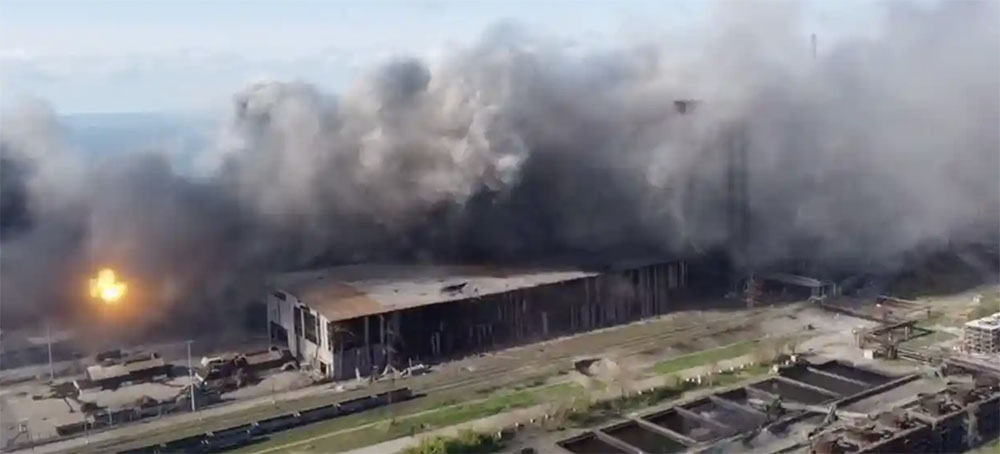
UN Plans Third Evacuation From Azovstal Steelworks as Battle Continues to RageA picture from drone footage on Thursday shows flame and smoke over the Azovstal steelworks in Mariupol as the Russian attack continues. (photo: EyePress News/REX/Shutterstock)

UN Plans Third Evacuation From Azovstal Steelworks as Battle Continues to Rage
Peter Beaumont and Andrew Roth, Guardian UK
Excerpt: "A third United Nations operation was under way on Friday morning to evacuate Ukrainian civilians from the Russian-besieged Azovstal steel plant in Mariupol, which the UN secretary general has described as a series of 'hellscapes.'"

Ukraine says Russian bombing has destroyed or damaged 400 hospitals and medical centres; Moscow rushes to declare victory in Mariupol

A third United Nations operation was under way on Friday morning to evacuate Ukrainian civilians from the Russian-besieged Azovstal steel plant in Mariupol, which the UN secretary general has described as a series of “hellscapes”.

An estimated 200 civilians, along with Ukrainian resistance fighters, remained trapped in underground refuges at the huge industrial complex. The UN humanitarian chief, Martin Griffiths, said a convoy was headed to Azovstal “to receive those civilians remaining in that bleak hell ... and take them back to safety”.

The Ukrainian deputy prime minister Iryna Vereshchuk said people would be evacuated from Mariupol at midday local time on Friday. The UN and the Red Cross said they had so far helped nearly 500 civilians flee the steel plant area in the southern port city during two operations in the past week.

It came as Ukraine’s president Volodymyr Zelenskiy said Russia’s invasion had devastated hundreds of hospitals and other medical institutions and left doctors without drugs to tackle cancer or the ability to perform surgery.

Zelenskiy said that in eastern and southern Ukraine, the main battlefields, many places lacked even basic antibiotics. “If you consider just medical infrastructure, as of today Russian troops have destroyed or damaged nearly 400 healthcare institutions: hospitals, maternity wards, outpatient clinics,” Zelenskiy said in a video address to a medical charity group.

In areas occupied by Russian forces the situation was catastrophic, he said. “This amounts to a complete lack of medication for cancer patients. It means extreme difficulties or a complete lack of insulin for diabetes. It is impossible to carry out surgery. It even means, quite simply, a lack of antibiotics.”

Russia has unleashed heavy artillery barrages against multiple Ukrainian positions in the south and east of the country. As Victory Day, 9 May, approaches in Russia, it is thought that Vladimir Putin wants to present the occupation of Mariupol for propaganda at home. Ukrainian soldiers said fighting continued to rage, with Russian forces making a final push to enter the steelworks and subdue the city’s final defenders.

Kremlin officials and propagandists have flocked to Mariupol before Victory Day with cleaning crews clearing rubble and patriotic statues to Russia being erected. Ukrainian intelligence said Russia was planning to hold part of its key parade in the city.

“Mariupol, according to [Russia’s] plans, should become the centre of ’celebrations’,” Ukraine’s defence intelligence agency said. “For this purpose, the city is urgently cleaning the central streets from rubble, bodies of dead and unexploded Russian ammunition.”

The Russian president proclaimed victory in broader Mariupol on 21 April and ordered the steel plant sealed off. The Kremlin said Putin had demanded that Ukrainian fighters in Azovstal to surrender in return for safe passage of civilians.

A Ukrainian fighter who said he was holed up in Azovstal accused Russian forces of breaching the plant’s defences for a third day despite the pledge by Moscow to pause military activity to permit civilian evacuations.

“Heavy, bloody fighting is going on,” said Captain Sviatoslav Palamar of Ukraine’s Azov regiment. “Yet again, the Russians have not kept the promise of a ceasefire.” Reuters could not independently verify his account or location. The official Kremlin spokesperson, Dmitry Peskov, reiterated a claim that Putin had ordered his military not to storm the plant.

Ukraine’s stubborn defence of Azovstal has underlined Russia’s failure to take major cities in a 10-week-old war that has united western powers in arming Kyiv and punishing Moscow with sanctions.

In other key developments:

  • Ukraine is “unlikely” to be able to launch a counter-offensive before mid-June, when it hopes to have received more weapons from its allies, an adviser to Zelenskiy has said. Oleksiy Arestovych added that he did not expect Russia’s offensive in Ukraine to produce any “significant results” by 9 May.

  • The US has said it it shared intelligence with Ukraine about the location of the Russian missile cruiser Moskva prior to the strike that sank the warship, but said the decision to attack was taken by the Ukrainians.

  • The US defence department also denied providing intelligence on the locations of Russian generals on the battlefield so that Ukrainian forces could kill them.

  • European Union countries are “almost there” in agreeing the bloc’s proposed new package of sanctions against Russia, including an oil embargo, the bloc’s foreign policy chief Josep Borrell said on Thursday.

  • UN secretary-general António Guterres urged the world to unite and end the war in Ukraine, calling it senseless, ruthless and “limitless in its potential for global harm”. The top UN human rights official said even a one-day cease-fire would prevent dozens of civilian deaths.


READ MORE


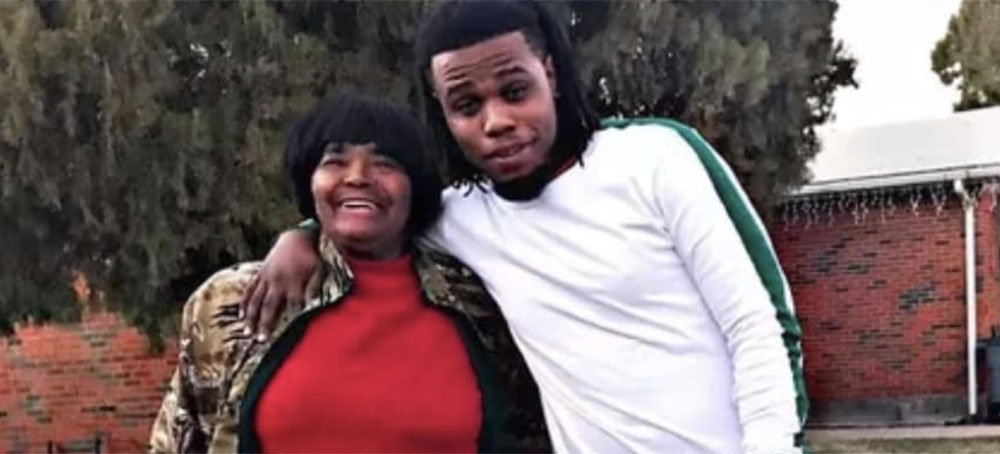
Black Man, Hands-Up Shot 12 Times, Police Charged With ManslaughterQuadry Sanders. (photo: Instagram/S. Lee Merritt)

Black Man, Hands-Up Shot 12 Times, Police Charged With Manslaughter
Corbin Bolies and Rachel Olding, The Daily Beast
Excerpt: "Two Lawton, Oklahoma cops were charged with first-degree manslaughter on Friday after they fatally shot an unarmed Black man who was complying with their orders to get on the ground and had his hands raised."

Quadry Sanders was shot 12 times all while putting his hands in the air.

Two Lawton, Oklahoma cops were charged with first-degree manslaughter on Friday after they fatally shot an unarmed Black man who was complying with their orders to get on the ground and had his hands raised.

Comanche County District Attorney Kyle Cabelka said his office had determined that the shooting of Quadry Sanders by Officers Robert Hinkle and Nathan Ronan was unjustified “after review of the entire case file.”

Hinkle and Ronan responded to Sanders’ home just after 8:30 p.m. on Dec. 5 after a call about a man, who was subjected to a protective order, entering the home of a woman named in the order. The woman’s husband was also home at the time, officers could be heard saying on body-cam footage released Friday.

The footage shows the officers parked outside the woman’s house, trying to call her husband’s cell phone. One officer can be heard saying police have been called out to the address before, and the person inside has a handgun. A dispatcher then tells the officers that the husband said the person was getting ready to leave.

Cops used a loudspeaker to try to engage with Sanders, which appeared to work. Moments later, he emerged from a back door, prompting Hinkle to move towards him while repeatedly yelling “hands!” and “down!”

Sanders can then be seen on the body-cam taking a step backwards, partially concealing himself behind a refrigerator, while raising his hands. But the officer fires four shots—just seconds after Sanders had exited the house. Sanders was holding what appeared to be a white baseball cap.

Even as Sanders lay screaming on the ground, he tried to sit up and raise his hands again. The officer fired another seven times. It matched a medical examiner’s report, which said Sanders was shot 12 times.

Sanders was unarmed and didn’t have a weapon anywhere near him, but the officers nevertheless handcuffed him as he lay dying on the pavement.

The Sanders family’s lawyer, S. Lee Merritt, said in a statement that Quadry had a dispute with his girlfriend and the police were called.

“When they encountered Sanders they instructed him to put his hands up to which he complied,” Merritt wrote on Instagram. “While his hands were in the air Hinkle shot Sanders 4 times. When he dropped to the ground he was instructed to put his hands back [in] the air. When he did he was fired on 13 more times. This was murder. We must have justice.”

In a GoFundMe, Sanders’ family appealed for donations to help lay him to rest and “get his children out of state custody.”

“My thoughts and prayers go out to the parents and those in our community who lost a loved one in Quadry Sanders,” Lawton Mayor Stan Booker said in a statement.

“Although this decision and the releasing of information that followed may provide clarity to this tragic incident, it does not come without impacting one’s stages of grief and mourning of a lost loved one.”


READ MORE


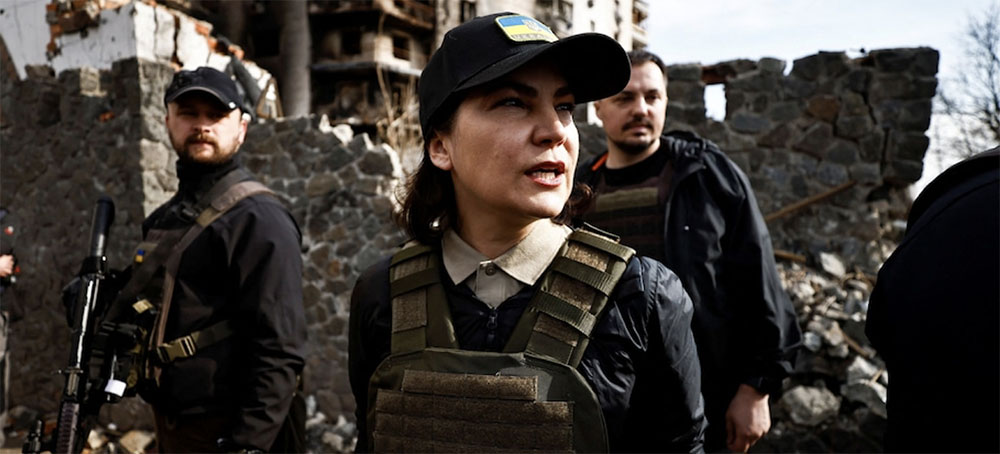
Ukraine Has Accused Russian Troops of Rape, a Tough Crime to ProsecuteUkrainian Prosecutor General Iryna Venediktova talks to journalists beside buildings that were destroyed by Russian shelling during a visit to Borodyanka on April 7. Venediktova has called rape a deliberate “strategy” by Russian forces in Ukraine. (photo: Zohra Bensemra/Reuters)


Ukraine Has Accused Russian Troops of Rape, a Tough Crime to Prosecute
Miriam Berger, The Washington Post
Berger writes: "When Russian forces withdrew from the suburbs around Kyiv last month, the horrors they left behind — bodies lying in the streets, signs of summary killings and reports of torture and mass graves — shocked the Western world and elicited calls for war crimes investigations."

When Russian forces withdrew from the suburbs around Kyiv last month, the horrors they left behind — bodies lying in the streets, signs of summary killings and reports of torture and mass graves — shocked the Western world and elicited calls for war crimes investigations.

Then there were the accounts of rape and other sexual violence — at a factory in Bucha, in a basement in Irpin, at gunpoint in a village east of Kyiv.

Rape has long been used by the world’s armies as an instrument of war — to humiliate and terrorize populations or as part of a wider campaign of ethnic cleansing. It is also a crime under international law and, after decades of advocacy, has formed the basis of war crimes, genocide and crimes against humanity cases against perpetrators in Rwanda and the former Yugoslavia.

But, experts say, rape is an extremely difficult crime to document and even more challenging to prosecute — especially in times of war.

“Today’s documentation is tomorrow’s prosecution,” said Pramila Patten, the United Nations special representative on sexual violence in conflict. “We need trained people to do this work to have a better chance of pursuing cases to the highest level.”

According to Ukrainian officials, human rights groups, and victims and witnesses who spoke to journalists, Russian troops have engaged in rape and other forms of sexualized violence in multiple locations across Ukraine since the invasion on Feb. 24. Most of the victims have been Ukrainian women and girls, who statistically are most at risk. But preliminary reports also suggest that men and boys have been targeted.

In some cases, survivors said Russian forces told them they would be ostracized and unable to have more Ukrainian children because of the assaults, according to Ukraine’s ombudsman for human rights, Lyudmyla Denisova.

The Ukrainian prosecutor general, Iryna Venediktova, said Tuesday that she believed Russia used rape as a deliberate “strategy” in the war, without elaborating. Russia has denied the allegations. “It’s a lie,” Kremlin spokesman Dmitry Peskov told reporters in March, the Interfax news agency reported.

The United Nations has yet to verify a case of wartime rape or sexual violence in Ukraine, but “all the signs are flashing red,” said Patten, whose office is among several local and international agencies — including the International Criminal Court — either assisting Ukraine in war crimes investigations or conducting their own.

“Even if all of this information that’s coming to me has not yet been verified by the United Nations … this should not paralyze or delay urgent and immediate action to put in place prevention and response measures,” she said.

But the challenges for even veteran war crimes investigators are many. In Ukraine, the war is still raging, making it difficult to even reach hard-hit areas, let alone gather evidence from sites where crimes allegedly took place.

One concern is that survivors don’t have immediate access to medical facilities where staff could conduct physical examinations, document signs of assault and possibly collect evidence such as DNA samples. Even when a conflict subsides, survivors of rape or sexual assault are often too ashamed or traumatized to speak out, experts say.

In some instances, the trauma causes victims to forget details or give inconsistent accounts. They may also struggle to recall the characteristics of a perpetrator or the exact timing of the assault, leaving investigators without a path to track patterns of abuse.

Rape, if carried out to destroy a nation or ethnic group, can amount to genocide under international law. But in Ukraine, it is not yet clear how systematic the sexual violence has been, nor whether the attacks by troops involved orders from more senior commanders.

Still, “commanders should recognize that a failure to take action against murder and rape may make them personally responsible for war crimes as a matter of command responsibility,” Hugh Williamson, the Europe and Central Asia director at Human Rights Watch, said in a statement last month.

In recent years in Iraq and Myanmar, efforts by lawyers and rights groups to build cases against those who targeted religious minorities with sexualized violence eventually fell apart. The investigations, Patten said, were not conducted in a coordinated or ethical way that centered on the survivors and their trauma. As a result, there were discrepancies in victims’ testimonies and some of them were forced to relive their suffering.

“I hope that this time we learn from our lessons,” Patten said.

The formal recognition of targeted sexual violence “historically is a very recent development in international war crimes,” said Phillipe Sands, professor of law at University College London.

It wasn’t until 1998 that Jean-Paul Akayesu, the mayor of a Rwandan town, became the first person ever to be found guilty of committing crimes against humanity for the rape, torture and murder of women from the Tutsi minority during the genocide there four years earlier. He was tried by the International Criminal Tribunal for Rwanda, which set a legal precedent for prosecuting the systematic rape and murder of women and girls as a war crime.

Then, in 2001, the International Criminal Tribunal for the former Yugoslavia ruled for the first time that mass rape and sexual enslavement in wartime were crimes against humanity because they caused mass suffering, even if it did not directly result in widespread death. The tribunal convicted three Bosnian Serbs of the systematic rape and enslavement of Muslim women in southeastern Bosnia in 1992. Later, the same court found both Bosnian Serb leader Radovan Karadzic and former general Ratko Mladic guilty of war crimes and crimes against humanity, including the mass rape of women and girls.

“We are now more attuned to it and the lasting damage of it to individuals and communities,” Sands said of rape and other sexual violence in wartime.

He credits what he says is a growing number of women who have joined the international legal community in pushing for the tactic to be recognized as one that is used to target and destroy civilian communities.

In 2008, the U.N. Security Council passed a resolution reaffirming “that rape and other forms of sexual violence can constitute a war crime, a crime against humanity, or a constitutive act with respect to genocide.”

“Women and girls are particularly targeted by the use of sexual violence, a tactic of war to humiliate, dominate, instill fear in, disperse and/or forcibly relocate civilian members of a community or ethnic group,” the resolution says.

Still, part of the reason rape as a “weapon” is so powerful is that it makes it hard for survivors to be reintegrated in their communities, said Jan Ilhan Kizilhan, a psychologist who treats survivors of gender-based violence in conflict zones.

Kizilhan has worked closely with some of the Yazidi women who were kidnapped, raped and enslaved by members of the Islamic State in Syria and Iraq. Now, from his base in Germany, he is advising psychologists in Ukraine on how to treat survivors of sexual violence.

Wartime rape is used “very systematically to destroy society,” he said. “We have to work now to support them and to empower them to be able to have a future.”


READ MORE


The Fact-Free Logic of Supreme Court Justice Samuel AlitoProtesters demonstrate in support of abortion rights outside the U.S. Supreme Court in Washington, D.C., on May 3, 2022. (photo: Al Drago/Bloomberg/Getty Images)

The Fact-Free Logic of Supreme Court Justice Samuel Alito
Jordan Smith, The Intercept
Smith writes: "As a matter of fact, Supreme Court Justice Samuel Alito is wrong."


In his zeal to overturn Roe and do away with abortion rights, the Supreme Court justice relies on deceptive arguments and a regressive read of the law.


As a matter of fact, Supreme Court Justice Samuel Alito is wrong.

In a leaked draft of the court’s majority opinion in the Mississippi case Dobbs v. Jackson Women’s Health Organization, Alito writes that Roe v. Wade and its successor Planned Parenthood v. Casey must be overturned — an extraordinary move that would topple precedent in order to constrict, rather than expand, constitutional rights.

The missive is aggressive and self-righteous and reads like the greatest hits of those who disfavor the right to bodily autonomy. There’s the linking of abortion to eugenics, for example. “Some such supporters have been motivated by a desire to suppress the size of the African American population,” Alito writes. “It is beyond dispute that Roe has had that demographic effect.” The ahistorical comparison misses the fact that an individual choosing to abort their own pregnancy is not analogous to forced sterilization by the state to alter the American gene pool.

And there’s the claim that because the word “abortion” isn’t found in the Constitution, the right to it doesn’t exist. “The Constitution makes no reference to abortion, and no such right is implicitly protected by any constitutional provision,” Alito writes. This completely ignores the historical significance of the 14th Amendment, a Reconstruction-era addition meant to ensure individual liberty, including the right to decide whether and with whom to form a family. “Most Americans understand the plain truth reflected in these protections,” Elizabeth Wydra, president of the Constitutional Accountability Center, said in a statement. “A person cannot truly be free, and is not truly an equal member of society, if they do not get to decide for themselves this most basic question of bodily autonomy.” Alito’s opinion, she said, “frighteningly bulldozes past the Constitution.”

Alito also dismisses the notion that there are any clearly identifiable reliance issues at stake in discarding abortion rights. In this context, the concept of reliance posits that when expectations have been built around the stability of a particular law or judicial pronouncement, those interests should be protected and the precedent underpinning them upheld. In addressing the issue, Alito comes off as if perplexed: The court knows how to evaluate “concrete” reliance issues like those implicated in “property and contract rights,” Alito writes, but assessing an “intangible” reliance is a whole other story. “That form of reliance depends on an empirical question that is hard for anyone — and in particular, for a court — to assess, namely, the effect of the abortion right on society and in particular on the lives of women.”

Yet again, Alito is wrong — and there’s plenty of research to prove it.

A Mountain of Evidence

In an amicus brief filed in the Dobbs case, 154 economists and researchers took direct aim at the how-could-we-possibly-know-what-abortion-has-done-for-society nonsense. The brief details a substantial body of research demonstrating that access to legal abortion has had significant social and economic impacts, increasing education and job opportunities for women and reducing childhood poverty.

The expansion of abortion access after Roe reduced the overall birthrate by up to 11 percent. For teens, the drop was 34 percent; teen marriage was reduced 20 percent. Research has revealed that young women who used abortion to delay parenthood by just a year saw an 11 percent increase in hourly wages later in their careers. Access to abortion for young women increased the likelihood of finishing college by nearly 20 percentage points; the probability that they would go on to a professional career jumped by nearly 40 percentage points. All these effects, the economists noted, were even greater among Black women.

“Abortion legalization has shaped families and the circumstances into which children are born,” the economists wrote. Abortion legalization reduced the number of children living in poverty as well as the number of cases of child neglect and abuse. “Yet other studies have explored long-run downstream effects as the children of the Roe era grew into adulthood,” reads the brief. “One such study showed that as these children became adults, they had higher rates of college graduation, lower rates of single parenthood, and lower rates of welfare receipt.”

In other words, the effect of the abortion right on society is not remotely “intangible.” There is decades’ worth of evidence showing that abortion access has positively impacted women and their families. “But those changes are neither sufficient nor permanent: abortion access is still relevant and necessary to women’s equal and full participation in society,” the economists wrote, challenging Mississippi’s argument in the Dobbs case that contraception and employment policies like parental leave have essentially made abortion unnecessary. Indeed, nearly half of all pregnancies in the United States are unintended and nearly half of those pregnancies end in abortion. “These statistics alone lead to the inevitable (and obvious) conclusion that contraception and existing policies are not perfect substitutes for abortion access.”

Deceptive and Dangerous

I was a 19-year-old sophomore at the University of Maryland when I found out I was pregnant. I freaked out; I did not want to be pregnant. I knew I needed an abortion, but I didn’t have the money. I gathered up a bunch of change and called my mom from a pay phone. She didn’t miss a beat when I told her I was pregnant. “No, you’re not,” she said. She sent the money that day.

It was 1991, a year before Planned Parenthood v. Casey set the stage for the overwhelming number of restrictions on abortion access to come. Many were sold as a way to protect people’s health or a state’s interest in potential fetal life, but they were largely based on junk science. For me, once I had the money, the access was easy. I went on with my life, and I have never regretted my decision. Abortion was the reason I was able to stay in school, go on to graduate school, and develop my career.

But while I had a relatively easy time exercising the right conferred by Roe, that is far from a universal experience. For many, Roe was always just a promise on paper. And for decades, those who disfavor reproductive freedom have worked diligently with their conservative elected allies to make abortion all but inaccessible for millions of people living in large swaths of the country. I’ve watched this happen over the nearly two decades that I’ve covered assaults on reproductive health access. The burden has fallen disproportionately on people of color, those with low incomes, those living in more rural areas of the country, young people, immigrants, and LGBTQ+ people. Doing away with Roe is only going to exacerbate those inequities. Thirty-six million people of reproductive age live in the 26 states that will outlaw abortion, or are likely to, once Roe falls. It is “unconscionable; it is unjust,” Alexis McGill Johnson, president and CEO of Planned Parenthood Federation of America, said on a Tuesday press call.

No court decision can stop abortion, “period, point blank,” she said. “People with resources will travel to get the care they need, they always have. Others will self-manage their abortions. And there will be people forced to carry pregnancy against their will.”

Fatima Goss Graves, president and CEO of the National Women’s Law Center, was blunt. “To say that we are in unprecedented and truly terrifying times would be a gross understatement,” she said on the call. Losing the right to abortion would mean we no longer have a Constitution that “recognizes our fundamental autonomy and equality.”

Indeed, Alito’s arguments in the draft opinion are deceptive and dangerous. And his regressive read of the law places other rights firmly in the crosshairs — including the right to contraception and to marriage equality. In his zeal to overturn Roe, Alito not only dismisses the decades of work toward realizing the ideal of equality, but also the very notion of equality itself.


READ MORE


Amazon Reportedly Fires at Least Six New York Managers Involved in Labor UnionAmazon has reportedly fired more than half a dozen senior managers involved in the Amazon Labor Union victory. (photo: Kathy Willens/AP)

Amazon Reportedly Fires at Least Six New York Managers Involved in Labor Union
Maya Yang, Guardian UK
Yang writes: "Amazon has reportedly fired over half a dozen senior managers who were involved in a New York warehouse union."

According to the New York Times, the dismissals are regarded as the company’s response to the recent unionization victory


Amazon has reportedly fired over half a dozen senior managers who were involved in a New York warehouse union.

The firings, which took place outside the company’s employee review cycle, was regarded as the company’s response to the Amazon Labor Union which formed in Staten Island last month in a “historic victory” against the country’s second largest employer, the New York Times reported, citing former and current employees who spoke on the condition anonymity.

Most of the managers who were fired were responsible for carrying out Amazon’s response to the unionization efforts, the New York Times reported. According to their LinkedIn profiles that were reviewed by the Times, some of the managers were with the company for more than six years.

Amazon said the changes were made after evaluating the warehouse’s “operations and leadership” for several weeks.

“Part of our culture at Amazon is to continually improve, and we believe it’s important to take time to review whether or not we’re doing the best we could be for our team,” the spokesperson said.

The managers were being fired due to an “organizational change”, two employees told the Times. One said that some of the managers had recently received positive performance reviews.

In April, Amazon workers at the Staten Island warehouse voted in majority to form a union. The victory marked the first successful American organizing effort in the company’s history. Organizers have faced an uphill battle against Amazon, which now employs more than one million people in the US and is making every effort to keep unions out.

Christian Smalls, who heads the Amazon Labor Union, said on Twitter he had met with Joe Biden shortly after he harshly criticized Amazon during his testimony at a Senate hearing on Thursday.

Pro-union workers were seeking longer breaks, paid time off for injured employees and an hourly wage of $30, up from a minimum of just over $18 an hour offered by the company. The estimated average wage for the borough is $41 an hour, according to a similar US Census Bureau analysis of Staten Island’s $85,381 median household income.

Amazon has said they invest in wages and benefits, such as health care, 401(k) plans and a prepaid college tuition program to help grow workers’ careers.

“As a company, we don’t think unions are the best answer for our employees,” a spokesperson said following the union win. “Our focus remains on working directly with our team to continue making Amazon a great place to work.”

Earlier this week, Amazon warehouse workers at a second Staten Island warehouse overwhelmingly rejected a union bid, dealing a blow to organizers who pulled off the Staten Island union last month.

Organizers said they had lost some support at the warehouse after filing for an election in February because they directed more energy to the nearby facility that voted to unionize last month. There were also fewer organizers who worked in this facility – roughly 10, compared with the nearly 30 employed at the Staten Island warehouse.

The same obstacles that plagued the effort the first time, including Amazon’s aggressive anti-union tactics, were at play again. In the lead-up to the election, Amazon continued to hold mandatory meetings to persuade its workers to reject the union effort, posted anti-union flyers and launched a website urging workers to “vote NO”.

“Right now, the ALU is trying to come between our relationship with you,” a post on the website reads. “They think they can do a better job advocating for you than you are doing for yourself.”

READ MORE


Where People Coexist With LeopardsVisitors go on leopard safaris in the Indian village of Bera. (photo: Sugato Mukherjee)

Where People Coexist With Leopards
Sugato Mukherjee, BBC News
Mukherjee writes: "While leopards have been targeted for poaching or revenge killings in much of India, the people of Bera continue to live in peaceful cohabitation with the graceful felines."

While leopards have been targeted for poaching or revenge killings in much of India, the people of Bera continue to live in peaceful cohabitation with the graceful felines.


Our 4x4 negotiated through sparse woodlands and eventually heaved its way up a steep incline before jolting to a stop. A vast, boulder-strewn landscape rolled out below us. This undulating terrain is the region of Gorwar, which stretches along the edge of the Aravalli Range in south-west Rajasthan.

We were on an early morning safari in the village of Bera, a three-hour drive from the tourist mecca of Udaipur, to witness an anomaly: human-leopard cohabitation, with zero conflict.

Leopard numbers have been on the rise in India in recent years, with a 2018 report estimating the population at 12,852. Human-animal conflicts and mutual encroachments in a densely populated country have been inevitable. The graceful felines have been poached for their luscious coats and other body parts that fetch huge prices in illegal markets. They have been killed by groups of villagers, a retaliatory measure for attacks on precious livestock or simply out of fear when the large cats have strayed into human spaces.

In the first six months of 2021, 102 leopards were poached and another 22 were killed by villagers. Between 2012 to 2018, 238 leopards were killed in the state of Rajasthan alone. And media reports of leopard attacks on humans have been alarmingly frequent.

In this remote, pastoral corner of Rajasthan, however, it has been a continuous saga of peaceful cohabitation between the leopards and the Rabaris, a semi-nomadic shepherding community that migrated to India from Iran more than a millennium ago. It is estimated that about 60 leopards, along with hyenas, desert foxes, wild boars, antelopes and other smaller animals, currently prowl this land.

The free-roaming big cats are known as Jawai leopards, named after the dam built on the Jawai River in 1957. The pristine body of water is the principal water source for the surrounding towns and villages, and an important wildlife habitat.

That morning, Pushpendra Singh Ranawat, a keen conservationist with a wealth of on-the-ground knowledge, steered me into the inner recesses of this "Leopard Country" that has one of world's highest leopard densities within its 25km radius around Bera. "There has not been a single incident of poaching in at least five decades," he said. "And importantly, leopards here do not consider human presence as a potential threat."

"That's pretty remarkable," I said with surprise.

"We will soon see," said Ranawat, as he scanned the rock-ridden landscape with his field glasses. We spent the next few minutes in silence, punctuated only by the rustle of wind passing through the desert bushes. The pleasant winter sun turned a little warmer, glancing off the chiselled boulders scattered around us.

A shrill peacock call cut through the quietude. Ranawat stiffened, re-focusing his binoculars and silently pointing towards a rock about 100m away, pockmarked with caverns and crevices. A full-grown leopardess emerged from a dark hollow, stealthily slinking along the edge of a stony precipice. She settled on a flat spot where the early-morning sun had spread its warmth. "This is Laxmi," Ranawat said. All the leopards of Jawai are known by individual names to the local community.

As two other safari vehicles huffed up the slope and halted beside ours, Laxmi fixed us with a supercilious stare, yawned and stretched with a feline majesty.

She then let out a call – something between a grunt and a meow – and on cue, two spotted furballs sneaked out of a rock hole and tottered to their mother to cuddle beside her. Soft purrs and playful headbutts followed from the family, seemingly oblivious to the presence of three vehicles and about a dozen onlookers.

After my morning safari, Ranawat and I met Sakla Ram near Jeewada village, about 17km from Bera. He had just finished cutting leaves and branches from the trees that border a thinly forested slope. "He has collected fodder for the young ones in his herd," said Ranawat, as we followed the Rabari herdsman. Ram's lanky, sinewy frame with a neat pack of foliage balanced on his lean shoulders made him look like a walking tree. We soon reached his house in Jeewada, a modest one-storey structure, where he lives with his family and goats.

"I have got 52," said Ram, as I watched him milk one of the goats. His youngest daughter, aged about four, sat by him with wide-eyed curiosity as I talked with her father, and a black goatling lazily munched on the leaves he had left on the floor of the goat shed.

"Have you lost any of them to leopard attacks?" I asked.

He nodded in affirmation, then added, "quite a few".

"How do you feel about it? Don't you feel angry about the loss?" I probed.

Ram's weather-beaten face broke into a melancholy smile. "It saddens me a lot," he said. "I tend to each member of my herd right from their birth here in this shed. But the leopards also have a right to food."

I was taken aback by the simple finality of his tone.

A state-governed compensation package is available for loss of livestock due to leopard attacks, but the elaborate paperwork needed to submit a claim often deters villagers. And the Rabaris, worshippers of Hindu god Shiva, also consider the livestock killings as food offerings to the god. However, this does not explain brutal killings of leopards elsewhere in India, where Lord Shiva is a primary god.

Ram's compassionate response to the loss of his goats likely stems from his community's acceptance of the animals as integral part of the ecosystem. This differs radically from the conventional narrative that advocates separately assigned territories for humans and wildlife. British Ecological Society's journal published a study on human-leopard dynamics conducted by researchers from WCS India, Himachal Pradesh Forest Department and NINA, Norway. The researchers state that some rural communities in North India like Bera perceive the leopards as thinking beings, rather than instinct-driven predators, who have the ability to negotiate shared spaces with humans.

"Mutual respect is the operative word," said Ranawat later that day, as we strolled through the village of Peherwa, 20km from Bera. A long flight of white-painted stairs took us along a ridge flanked by overhangs, hollows and rock chambers to a small, rock-cut shrine.

"These are favourite dens for the leopards, as most of these caves are cross-ventilated," Ranawat said, explaining that local devotees have often spotted the big cats lounging here; and neither have ever felt threatened by the other's presence.

In the village of Peherwa, leopards can be seen near rock chambers and a small, rock-cut shrine (Credit: Sugato Mukherjee)

The hilltop temple looked out to swathes of farmlands interwoven with the barren landscape. "The villagers grow wheat, millet and mustard in these croplands," said Ranawat. "This is a land inhospitable for farming, and the leopards keep the antelopes and wild boars off the painstakingly cultivated fields."

"So essentially, this is a symbiotic human-leopard relationship?" I asked.

Ranawat laughed out loud. "In a way, yes, however strange it might sound."

As the afternoon wore off, the desert sun mellowed and a wispy layer of fog hovered low on the horizon. This was the time for Bera's feline residents to come out of their cavern homes in search of food.

As an old Rabari saying goes, "The days belong to humans, and the nights to the leopards." However, violation of this basic rule worries Ranawat and others in his community. The easy ability to see what are one of the world's most elusive predators is becoming a major draw for both domestic and foreign tourists. Unregulated safaris, night safaris that are disruptive to the nocturnal cats, and rampant construction of hotels and guesthouses dangerously close to where the big cats dwell can jeopardise the delicate ecological balance that has previously been sustained in the region.

"This is why Jawai needs the status of a community reserve," said Ranawat. Introduced in the 2003 Amendment to the Indian Wildlife Protection Act, this designation recognises community-based initiatives to protect biodiversity, which would allow villagers to determine the extent of local development, restricting the number and scale of hotels in the zone. It would also allow them to prohibit night safaris and ensure that local communities continue to be employed in sustainable tourism initiatives in the region.

Furthermore, Ranawat said, "This human-leopard coexistence can only continue if the next generation of Rabaris carry on their herding tradition."

The next morning, as we drove through the rugged Jawai terrain back to Udaipur, I spotted a couple of Rabari girls with a small herd of cows and buffaloes. Casually clad in urban attire, the teenage duo looked markedly different from the older female members of their community, who almost always appeared in traditional ghagra-cholis (humble daily wear) and loosely worn veils. The girls wielded wooden sticks – simple instruments traditionally used to control their livestock – and occasionally whistled sharply to keep the squad on track.

Intrigued, I asked the driver to stop the car, got out and approached them. They were high schoolers named Shila and Aarti, who tend to the cattle when their father is away on business. They told me that they plan to complete their education but would be happy to live the ancestral way of life around their livestock. "We love to take our animals to the grazing pastures," Shila said. Aarti smiled and nodded in agreement.

Based on their response, it seems like the human and feline residents of this barren land won't need to move out for greener pastures – at least, not anytime soon.

READ MORE

Special Coverage: Ukraine, A Historic Resistance
READ MORE


Contribute to RSN

Follow us on facebook and twitter!

Update My Monthly Donation

PO Box 2043 / Citrus Heights, CA 95611


Trump’s Terrified White House

                           LOTS OF POSTS IGNORED BY BLOGGER..... OR REMOVED ON THEIR WHIM! ALL POSTS ARE AVAILABLE ON MIDDLEBORO REVIEW AND ...