Sunday, November 30, 2025

📢🎙️ Power to the People: We support Ukraine, not Donald Trump


This Weekend in Politics, Bulletin 260. 11/30/25


This Weekend in Politics, Bulletin 260. 11/30/25


… Ukraine’s peace negotiators met with the US delegation today, which was led by Sec of State Marco Rubio, special envoy Steve Witkoff, and Trump son-in-law Jared Kushner. After multiple recent revelations about Witkoff being owned by Putin, he looked pretty uncomfortable facing the Ukrainians he has worked so hard to sell out.

… This followed an explosive story by the WSJ exposing Witkoff and Kushner’s duplicity: “Three powerful businessmen—two Americans and a Russian—hunched over a laptop in Miami Beach last month, ostensibly to draw up a plan to end Russia’s long and deadly war with Ukraine. But the full scope of their project went much further. They were privately charting a path to bring Russia’s $2 trillion economy in from the cold—with American businesses first in line to beat European competitors to the dividends.”

… “At his waterfront estate, billionaire developer-turned-special envoy Steve Witkoff was hosting Kirill Dmitriev, head of Russia’s sovereign-wealth fund and Vladimir Putin’s handpicked negotiator, who had largely shaped the document they were revising on the screen. Jared Kushner, the president’s son-in-law, had arrived from his nearby home on an island known as the ‘Billionaire Bunker.’”

… “Dmitriev was pushing a plan for US companies to tap the roughly $300 billion of Russian central bank assets, frozen in Europe, for US-Russian investment projects and a US-led reconstruction of Ukraine. US and Russian companies could join to exploit the vast mineral wealth in the Arctic. There were no limits to what two longtime adversaries could achieve, Dmitriev had argued for months: Their rival space industries, which raced one another during the Cold War, could even pursue a joint mission to Mars with Elon Musk’s SpaceX.”

… “For the Kremlin, the Miami talks were the culmination of a strategy, hatched before Trump’s inauguration, to bypass the traditional US national security apparatus and convince the admin to view Russia not as a military threat but as a land of bountiful opportunity. By dangling multibillion-dollar rare-earth and energy deals, Moscow could reshape the economic map of Europe—while driving a wedge between America and its traditional allies.”

… “Dmitriev, a Goldman Sachs alumnus, had found receptive partners in Witkoff—Trump’s longtime golfing partner—and Kushner, whose investment fund, Affinity Partners, drew billion-dollar investments from the Arab monarchies whose conflict with Israel he had helped mediate.”

… “Gentry Beach, a college friend of Donald Trump Jr. and campaign donor to his father, has been in talks to acquire a stake in a Russian Arctic gas project if it is released from sanctions. Another Trump donor, Stephen Lynch, paid $600,000 this year to a lobbyist close to Trump Jr. who is helping him seek a Treasury Dept license to buy the Nord Stream 2 pipeline from a Russian state-owned company.”

… Rep. Don Bacon (R-NE): “Putin’s net worth is approximately $200B and he has been an intelligence officer, politician and dictator. Russia is one of the most corrupt countries in the world and Putin wants to share in the plunder with those who will help him enslave Ukraine.”

… Guardian: “A crusading prosecutor in the Balkans comes under pressure to drop a big case. Vietnamese villagers learn they are to be evicted. A convicted crypto kingpin in the Gulf receives a pardon. All have one thing in common: they appear to be connected to the Trump family’s campaign to amass riches around the world.”

… “Since Trump’s re-election a year ago, warnings that his use of presidential power to advance personal interests is corroding American democracy have grown ever louder. What is less understood – and perhaps even more dangerous – is the damage this is doing everywhere else.”

… “Trump’s eldest sons, Don Jr and Ericformally the custodians of the family business, are conducting a global dealmaking blitz. They have broken ground on new golf courses, received permission for new skyscrapers, rented out the Trump brand, and in cryptocurrency they have embraced a venture with the capacity to bring in more than everything that has gone before.”

… NYT: “In July, David Sacks, one of the Trump admin’s top technology officials, beamed as he strode onstage at an auditorium just blocks from the WH. He had convened top govt officials and Silicon Valley executives for a forum on the booming business of AI. The guest of honor was Trump, who unveiled an ‘AI Action Plan’ that was drafted in part by Sacks, a longtime venture capitalist. Trump declared that AI was ‘one of the most important technological revolutions in the history of the world.’ Then he picked up his pen and signed executive orders to fast-track the industry.”

… “Almost everyone in the high-powered audience - which included the CEOs of the chipmakers Nvidia and AMD, as well as Sacks’s tech friends, colleagues and business partners - were poised to profit from Trump’s directives. Among the winners was Sacks himself. Since Jan, Sacks has occupied one of the most advantageous moonlighting roles in the govt, influencing policy for Silicon Valley in DC while simultaneously working in Silicon Valley as an investor.”

… “Sacks has positioned himself to personally benefit. He has 708 tech investments, including at least 449 stakes in companies with ties to AI that could be aided directly or indirectly by his policies. Sacks stands out as a special govt employee because of his hundreds of investments in tech companies, which can benefit from policies that he influences.”

… WSJ: “Stocks and cryptocurrencies linked to Trump are in a deep slump, leaving some of the president’s biggest fans with steep losses. Shares of Trump Media, which operates Truth Social, have tumbled 75% since Trump’s inauguration. Digital ‘meme coins’ named for Trump and first lady Melania are down 86% and 99% since inauguration day, respectively. And one of the Trump family’s crypto ventures, a token called World Liberty Financial, has dropped roughly 40% since its Sept launch.”

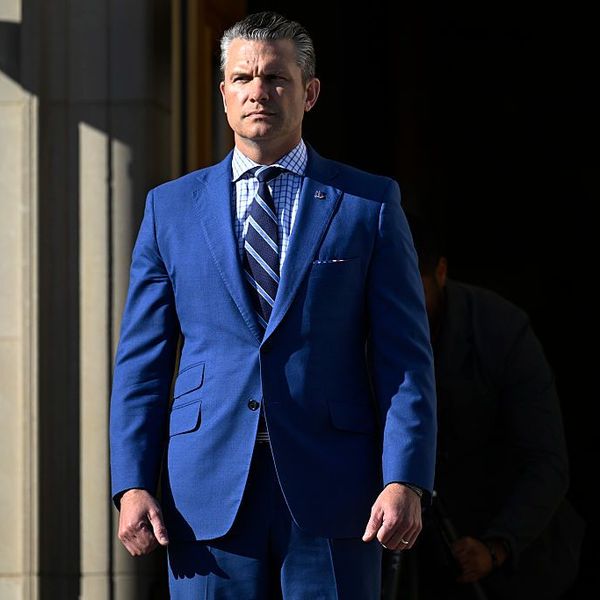
… WaPo: “Republican-led committees in the Senate and the House say they will amplify their scrutiny of the Pentagon after a WaPo report revealing that Pete Hegseth gave a spoken order to kill all crew members aboard a vessel suspected of smuggling drugs in the Caribbean Sea several weeks ago.”

… “Sen. Roger Wicker (R-MS), the chairman of the Senate Armed Services Committee, and Sen. Jack Reed (D-RI), the committee’s top Democrat, issued a statement saying that the committee ‘is aware of recent news reports - and DOD’s initial response - regarding alleged follow-on strikes on suspected narcotics vessels.’ The committee, they said, ‘has directed inquiries to the Dept, and we will be conducting vigorous oversight to determine the facts related to these circumstances.’”

… “The leaders of the House Armed Services Committee, Rep. Mike Rogers (R-AL) and Rep. Adam Smith (D-WA), followed suit. In a brief joint statement, the pair said they are ‘taking bipartisan action to gather a full accounting of the operation in question.’ The committee, they noted, is ‘committed to providing rigorous oversight of DOD’s military operations in the Caribbean.’”

… “In some closed-door briefings to lawmakers, the Pentagon has declined to bring lawyers who could help explain the legal rationale behind the strikes. There has been extensive frustration among some members of Congress - including some Republicans - at the lack of detail provided to Capitol Hill, ranging from the intelligence to support the strikes to the identities of the people killed.”

… Hegseth posted his response to the report on X: “As usual, the fake news is delivering more fabricated, inflammatory, and derogatory reporting to discredit our incredible warriors fighting to protect the homeland. As we’ve said from the beginning, and in every statement, these highly effective strikes are specifically intended to be ‘lethal, kinetic strikes.’ The declared intent is to stop lethal drugs, destroy narco-boats, and kill the narco-terrorists who are poisoning the American people.”

… Sen. Chuck Schumer: “Then release the full, unedited tapes of the strikes so the American people can see for themselves. Your recklessness demands full transparency and strict congressional oversight. We will hold you accountable.”

… Sen. Markwayne Mullin (R-OK) on CNN said he doesn’t believe the report that Hegseth ordered people in the water to be blown up: “We’re talking about alleged sources, nothing has been verified. I doubt very seriously that took place.”

… Kristi Noem said the whole thing is fake news: “That entire story is based on anonymous sources. We see the press and that rag use anonymous sources all the time to print things that aren’t true, that are lies, that are completely not based in reality.”

… Hegseth has not denied it, he just keeps saying it is legal and justified. Hegseth also posted this: “We have only just begun to kill narco-terrorists.”

… Mullin: “The president and the secretary of war have been very clear. They’re gonna use lethality against our enemies - at home and abroad.”

… At home?

… Trump was asked about it today while flying back from another 5-day golf outing in Palm Beach: Q - If there were a second strike that killed wounded people, would that be legal? Trump: I don’t know that happened and Pete said he did not even know what people were talking about. I wouldn’t have wanted a second strike. The first strike was very lethal. It was fine.”

… Andy McCarthy, Editor of the conservative National Review: “Even if you buy the untenable claim that they are combatants, it is a war crime to intentionally kill combatants who have been rendered unable to fight. It is not permitted, under the laws and customs of honorable warfare, to order that no quarter be given - to apply lethal force to those who surrender or who are injured, shipwrecked, or otherwise unable to fight.”

… Sen. Chris Van Hollen (D-MD) on CBS: “It’s murder from the first strike if their whole theory is wrong, and I think the weight of the legal opinion here is that they’ve concocted this ridiculous legal theory. But even if you accept their legal theory, then it is a war crime. I do believe the secretary of defense should be held accountable for giving those types of orders.”

…. Sen. Mark Kelly (D-AZ) told CNN that Hegseth’s reported double tap strike on a boat is a war crime: “If what has been reported is accurate, I’ve got serious concerns about anybody in that chain of command stepping over a line that they should never step over. We are not Russia. We are not Iraq.”

… Kelly: “My concern is with the service members - we’re gonna put these individuals in a really tough place. They may find our down the road that they did something that’s illegal. It’s not fair to them. That’s why need presidents and secretaries of defense who understand the Constitution and rule of law. If orders are illegal, not only do they not have to follow them, they are legally required not to follow them.”

… Kelly: “We have a president who doesn’t understand the Constitution, who installed an unqualified secretary of defense. I cannot think of a secretary of defense in the history of our country that is less qualified than Pete Hegseth. He should’ve been fired after Signal-gate.”

… John McCormack, Editor of The Dispatch: “Was it a coincidence that the admiral in charge of the campaign against alleged drug boats announced his resignation on the same day the US Navy had, for the first time, rescued survivors from one of the strikes? Had the Pentagon given SOUTHCOM any orders about how to treat survivors? A Pentagon spokesman would’t say.”

We make the entire Weekend Bulletins available to free subscribers and open up the comments for everyone who wishes to make one. About the first third of the daily Bulletins during the week are available. Thank you to everyone who reads, shares and subscribes to our work at Meidas.

If you missed the last Bulletin, you can find it here.

Meidas+ is a reader-supported publication. To receive new posts and support my work, consider becoming a free or paid subscriber.


… WaPo: “DOD is set to play host to right-wing media at the Pentagon early next week for its first in-person press event and briefing since the mainstream press corps walked out in Oct. Far-right activist Laura Loomer confirmed that she would attend. Turning Point USA, the Daily Signal, and Tim Pool’s Timcast are also among those invited to attend.”

… “The right-winger influencers and media will get a rare briefing from Press Secretary Kingsley Wilson and a meet-and-greet with Secretary Hegseth. This comes after the mainstream press walked out en masse in Oct rather than sign a policy restricting their ability to solicit information about the govt. This will be Wilson’s first on-camera briefing since she joined DOD at the start of the admin. She never briefed the resident press - prior to the walkout - and only gave two off-camera gaggles.”

… Laura Loomer: “Very excited for New Media week at the Pentagon this week. I am really looking forward to being a member of the Pentagon Press Corp. I have so many questions and reports I’ve been waiting to break and follow up on! Thank you, Pete Hegseth for this opportunity!”

… Media reporter Paul Farhi: “Likelihood that Hegseth will face tough questions: Near zero. Which is exactly the plan.”

… Political commentator Kevin Baron: “Next week, a truly Soviet moment coming at the Pentagon. A completely orchestrated and staged fake press event by a fake press corps hand picked by the party leadership to make themselves look good and avoid criticism or accountability.”

… Trump announced he is granting a pardon for one of the largest drug traffickers in history. Rep. Joaquin Castro (D-TX): “Juan Orlando Hernandez was convicted by a jury of conspiring to traffic 400 tons of cocaine into the US. DOJ estimated that this represents 4.5 billion doses of cocaine and that he was ‘at the center of one of the largest and most violent drug-trafficking conspiracies in the world.’ He is responsible for the deaths of countless American citizens, and will now be pardoned by Trump. Don’t tell me Trump is killing people in boats in the Caribbean to stop drug trafficking.”

… Markwayne Mullin said he has no problem with the pardon for the former Honduran president convicted in a US court of drug trafficking: “What the president is doing is always calculated. I haven’t had a direct conversation with the president about it, but I do trust his natural reaction and his approach to foreign affairs.”

… Trump was asked about it: Q - “You have made so clear how you want to keep drugs out of the US? Trump: Right. Q - Can you explain why you would pardon a notorious drug trafficker? Trump: I don’t know who you are talking about. Q - Juan Orlando Hernandez. Trump: Many of the people of Honduras said it was a Biden setup. I looked at the facts and agreed with them. Q - What evidence can you share that it was a setup? Trump: You can take any country you want, if somebody sells drugs in that country, that doesn’t mean you arrest the president and put him in jail for the rest of his life.”

… Francisco Rodriguez with Center for Economic Policy Research: “Those puzzling over Trump’s announced pardon of Juan Orlando Hernández may wish to recall that:
As president of Honduras, Hernández hired lobby firm BGR group for $660,000. Secretary Rubio has been one of the top recipients in campaign contributions from BGR group.”

… NYT: “Trump has set free a private equity executive who had served less than 2 weeks of a 7-year sentence for his role in what prosecutors described as a $1.6 billion scheme that defrauded thousands of victims. David Gentile, a onetime resident of Nassau County, NY, had reported to prison on Nov. 14, and was released on Wed. Gentile was convicted in Aug 2024 of securities and wire fraud charges, and sentenced in May.”

… “In court filings, prosecutors said that Gentile over several years used private equity funds controlled by his company, GPB Capital, to defraud 10,000 investors by misrepresenting the performance of the funds and the source of money used to make monthly distribution payments. More than 1,000 people submitted statements attesting to their losses, according to prosecutors, who characterized the victims as ‘hardworking, everyday people,’ including small business owners, farmers, veterans, teachers and nurses.”

… One of the victims: “I lost my whole life savings. I am living from check to check.”

… “Joseph Nocella Jr., the US attorney in the E. District of NY, said that Gentile had ‘raised approximately $1.6 billion from individual investors based on false promises of generating investment returns from the profits of portfolio companies, all while using investor capital to pay distributions and create a false appearance of success.’”

… Gallup: “Trump’s job approval rating has fallen 5 points to 36%, the lowest of his second term, while disapproval has risen to 60%. Both Republicans’ and independents’ ratings of Trump have worsened significantly since last month. Republicans’ approval has fallen 7 points to 84%, while independents’ has slipped 8 points to 25%. Republicans’ rating is the lowest of Trump’s second term, while independents’ is the worst in either term.

… Meanwhile, Trump’s approval rating with Democrats remains at 3%. Not sure who they are.

… Acting US Attorney Alina Habba was on Fox complaining about Afghans who worked with the US govt being allowed to emigrate to the US: “There were individuals that were saying this should be a safe harbor. A safe haven. Why? America is America because we protect our own. We don’t allow this to happen.”

… Habba’s parents emigrated here from Iraq. Their asylum claim stated that they were persecuted in their country for being Christians. They were allowed to enter the US, which is why Habba was able to be on Fox decades later complaining about people being granted asylum.

… NYT: “What started as a 500-seat ballroom connected to the East Wing grew to 650 seats. Next, Trump wanted a 999-seat ballroom, then room for 1,350. The latest plan calls for a ballroom much larger than the West Wing and the Executive Mansion. Trump has said publicly that he would like a ballroom big enough to hold a crowd for a presidential inauguration.”

… “The size of the project was not the only issue raising alarms. Trump also told people working on the ballroom that they did not need to follow permitting, zoning or code requirements because the structure is on WH grounds. Trump has pushed to remove any obstacle that could slow down his vision. He has installed his former personal lawyer as the chairman of the National Capital Planning Commission, which is supposed to review plans for the project. That lawyer, Will Scharf, has said there was no need to review Trump’s plans before he ordered the demolition of the East Wing.”

… “Trump has also fired the entire board of the Commission of Fine Arts, an independent fed agency that was established by Congress to advise the president on urban planning and historical preservation. The contractors working on Trump’s ballroom did not go through the traditional govt bidding process. Instead, Trump has been personally selecting each contractor and handling the details of the contracts, including how much the firm will be paid.”

… CEO Jamie Dimon told CNN why JPMorgan Chase is not funding WH Ballroom: “We have an issue, which is anything we do, since we do a lot of contracts with govts here and around the world, we have to be very careful how anything is perceived, and also how the next DOJ is going to deal with it.”

… Economist Justin Wolfers: “Demolishing the East Wing of the WH before finalizing plans for what will be built above its ruins is a near-perfect metaphor for Trump’s approach to economic policy. The only difference is the wrecking crew doesn’t claim the rubble is evidence of unprecedented growth.”

… The Telegraph did an article about how morale is at an all-time low at the FBI: “In his latest gaffe, Kash Patel announced on Wed that he had ‘assembled the full force’ of the bureau to find the suspect in the alleged shooting of two National Guards in DC, despite the fact that Rahmanullah Lakanwal was already in custody.”

… One former special agent: “The mood is miserable. Morale has never been lower among the workforce. There is a feeling that every line agent has a target on his or her back.”

… “Rather than the customary suit and tie, the director frequently shows up to press conferences in hoodies and hunting vests, colloquially refers to agents as ‘cops’ and told podcaster Joe Rogan he found the job ‘fucking wild’. He is said to enjoy the trappings of the job, keeping a selection of luxury whiskey and cigars in his office and handing out personalized ‘challenge’ coins to members of staff.”

… “The medallions, traditionally used by US soldiers to symbolize units or commands, feature an image of the Marvel character the ‘Punisher’, which has become a symbol of distrust in the justice system, and the number nine. Patel is the 9th agency director.”

… Trump continues to pressure the Supreme Court on the tariff case: “Tariffs have made our Country Rich, Strong, Powerful, and Safe. All of this was brought about by Strong Leadership and TARIFFS, without which we would be a poor and pathetic laughingstock again. Evil, American hating Forces are fighting us at the US Supreme Court. Pray to God that our Nine Justices will show great wisdom, and do the right thing for America!”

… The Nation reported on the big special election this Tues in TN where Democrat Aftyn Behn is looking to pull off a massive upset: “With economic frustration mounting, Aftyn Behn says, ‘we have built a coalition of the disenchanted, a coalition of the pissed off. I’ve always said on the campaign trail, ‘If you’re upset about the cost of living and the chaos of Washington, then I’m your candidate.’”

… “The question, of course, is whether that coalition can move the needle sufficiently to give Democrats a win in a district where they have failed to win even 40% of the vote in recent election cycles. Trump won the district by 17 points in 2016, by 15 points in 2020, and by a staggering 22 points in 2024.”

… “So what’s happening now? Behn argues that something of ‘a perfect storm’ has developed in her race against Matt Van Epps, a Republican insider who has spent much of his campaign time appearing on Fox News. While Republicans are dispirited—and, at least in some cases, giving up on their party—Democrats are fired up. That’s especially true in the multiracial section of Nashville that’s included in the 7th district, much of which Behn, one of the TN House’s most progressive members, represents in the state legislature.”

… Behn: “I have a very progressive and engaged district, and I had the highest total voter turnout of any Democratic state rep in the 2024 cycle. I know how to mobilize Democrats, and if I can mobilize the rest of Davidson County, we can win this. This race is winnable—not someday, not theoretically, but right now. Voters are showing up because they’re hungry for leadership that will fight for affordable healthcare and hold corporate power accountable.”

… Trump posted about the race today: “Please GET OUT AND VOTE on Election Day, Tuesday, Dec 2nd, for a phenomenal Candidate, Matt Van Epps. Matt is fighting against a woman who hates Christianity, will take away your guns, wants Open Borders, Transgender for everybody, men in women’s sports, and openly disdains Country music. Do not take this Race for granted. The Radical Left Democrats are spending a fortune to beat one of the best Candidates we’ve ever had, Matt Van Epps!”

… Republican IN State Sen Greg Walker on why he refused an invitation from Trump to visit the WH to discuss redistricting: “’How does Trump have the time to mess with a nobody like me with all of the important matters that are to take his attention as the leader of the executive branch in this nation? There is no way that he should have time to have a conversation with me about IN mapmaking when that’s not his business, for starters. But secondly, doesn’t he have anything better to do? I can make a big list of things that are more important for him to focus on.’”

… Rep. Troy Nehls (R-TX) announced he will not seek re-election. His twin brother Trevor Nehls then announced he is running for the seat. Trevor Nehls has previously run for sheriff in 2020 and county judge in 2022, losing both races. He says he will “follow in Troy’s footsteps” if elected.

… Reporter Roger Sollenberger: “The House Ethics Committee has been investigating Nehls for allegedly using campaign donations for personal benefit.”

… As we learning with Matt Gaetz’s case, resigning from Congress ends investigations by the Ethics Committee.

… Stephen Miller’s wife Katie on CNN: “Just because Marjorie Taylor Greene left the party isn’t indicative of some larger MAGA revolt and Trump’s grasp on the MAGA movement. She’s someone who blew up his phone multiple times a day acting like she was the center of the universe and main character syndrome, when in reality, Trump’s job is not member maintenance and dealing with a specific member of Congress. He is the leader of the free world who has a lot more on his plate than returning Greene’s calls back every 5 minutes.”

… Greene responded: “This is factually untrue. I did not ‘blow up’ President Trump’s phone routinely multiple times a day. Never happened! Phone records will actually prove this. There are others who could not prove the same.”

… MN Gov Tim Walz to NBC on Trump calling him a ‘retard’: “We all know both as an educator and parent that using that term is just so damaging. It’s hurtful. We have fought 3 decades to get this out of our schools. Kids know better than to use it. But this is what Trump has done. He’s normalized this type of hateful behavior.”

… Fox brought on MAGA influencer Debra Lea to provide political commentary this morning, which was pretty much incoherent drivel. But despite a brief appearance on a show, she got Trump’s attention. He posted this: “Debra Lea was GREAT on Fox & Friends this morning. There was fantastic Energy and Wisdom. A fantastic show!!!

… Lea responded with this post: “OH MY GOD TRUMP POSTED ABOUT ME!!!!!”

…. This was an Instagram post from Debra Lea.

… I could see Lea as a future Trump Secretary of State. Or DHS Secretary. Maybe FBI Director.

Weekend Edition | Hegseth Accused of 'War Crimes' in Caribbean


Stand With Independent Media This Giving Tuesday


As corporate influence grows, independent journalism is more important than ever. If you value reporting that puts people and the planet first, please support Common Dreams this Giving Tuesday. We couldn't do it without you—thank you for keeping independent journalism alive.

Sunday, November 30, 2025

■ Today's Top News 


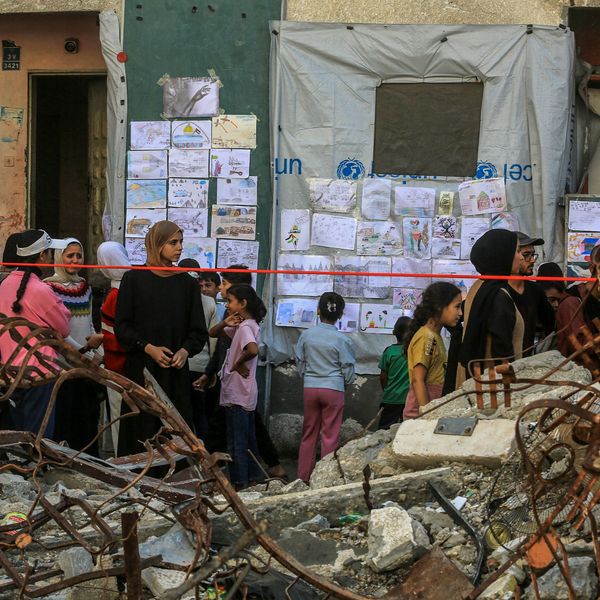
Nearly 2 Months Into 'Ceasefire,' IDF Kills 2 More Palestinian Children as Gaza Death Toll Passes 70,000

The Israeli military claimed it had targeted two people who were conducting "suspicious activities," but the children's uncle said the 11- and eight-year-old had been gathering firewood for their father.

By Julia Conley

The Palestinian Health Ministry reported Saturday that nearly two months after Israel and Hamas reached a ceasefire agreement, the death toll in Israel’s war on Gaza has passed 70,000 as the Israel Defense Forces have continued to claim they are targeting only Hamas fighters—while killing civilians including two children who were gathering firewood for their father on Saturday.

Fadi Abu Assi, 11, and Goma Abu Assi, eight, were close to a school sheltering displaced Palestinians near Beni Suhaila in southern Gaza when the IDF fired a drone in the area, killing both boys.

“They are children...what did they do? They do not have missiles or bombs, they went to gather wood for their father so he can start a fire,” the boys’ uncle, Mohamed Abu Assi, told Sky News.

Breaking the Silence, an IDF veterans’ group whose members speak out against Israel’s occupation of the Palestinian territories, condemned the military for a statement it released on the killing, which the group said amounted to “a pile of words meant only to keep justifying endless killing under insane and ruthless rules of engagement.”

The IDF told Sky News that troops had “identified two suspects who crossed the yellow line,” the point to which the IDF withdrew as part of the ceasefire deal in October.

The military said the two boys had “conducted suspicious activities on the ground, and approached IDF troops operating in the southern Gaza Strip, posing an immediate threat to them.”

The IDF claimed it identified the eight- and 11-year-old boys and “eliminated the suspects in order to remove the threat.”

Despite the ceasefire, said Kenneth Roth, former executive director of Human Rights Watch, “the Israeli military is still killing children.”

Drop Site News condemned the New York Times’ coverage of the boys’ killing, with the newspaper writing in a headline that “Gazans say” Fadi and Goma Abu Assi were killed by Israeli forces.

“The boys’ bodies, their ages, and their identities are fully documented—including videos of their lifeless shrouds and their wheelchair-bound father weeping over them—backed by eyewitness accounts and hospital confirmation,” said Drop Site.

The Times also reduced “the 350+ Palestinians killed since the October 10 ceasefire to ‘persistent violence,’” said the outlet.

The health ministry, whose statistics the World Health Organization and other international agencies have long viewed as credible, said 356 Palestinians have been killed by Israeli forces since the first phase of the truce began.

The Times’ framing, said Drop Site, “hides the truth that the violence is one-directional, systematic, and directed at civilians who pose no threat to Israelis.”

On Sunday, the outlet reported that the IDF was “boasting about breaking the ceasefire” as it announced troops had killed four Palestinian fighters as they emerged from underground tunnels in eastern Rafah.

“It remains unclear whether today’s casualties were fighters or civilians or children,” said Drop Site.

Hossam Badran, a member of Hamas’ political bureau, told Al Jazeera Sunday that the group is searching for the two remaining bodies of deceased Israeli captives, to be returned to Israel in accordance with the ceasefire deal, and accused Israeli officials of “using these bodies as a pretext to delay movement to the second phase of the ceasefire.”


With Trump Support, Netanyahu Requests Pardon for Corruption Charges

"There is no such thing as a pardon request without an admission of guilt and without resignation," said one journalist. "This is a demand for the surrender of the rule of law in Israel."

By Julia Conley


Weeks after President Donald Trump called for a pardon for his ally, Prime Minister Benjamin Netanyahu, the Israeli leader himself issued a formal plea to President Isaac Herzog and addressed the nation—claiming a pardon for allegations of bribery, fraud, and breach of trust, which he’s been on trial for since 2020, would be in the country’s best interest.

Netanyahu was indicted in 2019 in three separate corruption cases regarding allegations that he took more than $200,000 from wealthy businessmen in exchange for positive media coverage for himself and his family. He has denied wrongdoing in the cases.

The prime minister has also been accused by the International Criminal Court of war crimes and crimes against humanity in Gaza, where Israel has killed more than 70,000 Palestinians since October 2023, with the slaughter of civilians continuing despite a ceasefire deal that was reached in October. A New York Times report in July described how Netanyahu prolonged the war to maintain his political power. Netanyahu’s government also sought to fire the Israeli attorney general, who is prosecuting the prime minister’s case.

In his letter to Herzog, whose role is largely ceremonial but who has the authority to pardon convicted criminals, Netanyahu requested the pardon so that he can “devote his full time, abilities, and strengths to advance Israel in these critical times.”

“The continuation of the trial tears us apart from within, stirs up this division, and deepens rifts,” he added in his video address. “I am sure, like many others in the nation, that an immediate conclusion of the trial would greatly help to lower the flames and promote the broad reconciliation that our country so desperately needs.”

The request made clear that he has no intention of admitting wrongdoing or resigning from office—which critics including Israeli opposition leader Yair Lapid said must be a condition for any pardon.

“You cannot grant him a pardon without an admission of guilt, an expression of remorse, and an immediate retirement from political life,” said Lapid.

Israeli journalist Anshel Pfeffer, who authored a biography of Netanyahu, said the prime minister was “demanding immunity from prosecution” rather than asking for a pardon for a crime he’s convicted of.

“There is no such thing as a pardon request without an admission of guilt and without resignation,” said Pfeffer. “This is not a pardon request. This is a demand for the surrender of the rule of law in Israel.”

In the video address Netanyahu released, he suggested a pardon would be for the good of the nation and claimed that his “personal interest remains to continue the trial until the end.”

He also referenced Trump’s letter to Herzog, in which the president claimed he respected “the independence of the Israeli Justice System” but called the corruption cases a “political, unjustified prosecution.”

Herzog said Sunday that he would seek expert opinions on the request and would “responsibly and sincerely consider” a pardon, noting that it would have “significant implications.”

Emi Palmor, former director general of Israel’s Justice Ministry, told Al Jazeera that it is “impossible” for Netanyahu to halt his trial with a pardon request.

“You cannot claim that you’re innocent while the trial is going on and come to the president and ask him to intervene,” said Palmor.

In the US, Rep. Mark Pocan (D-Wisc.) said that should Herzog grant Netanyahu’s request, “it will be hard to consider [Israel] a law-abiding nation.”

“It would be a huge mistake,” said Pocan. “Real nations follow laws.”


Legal Experts Accuse Hegseth of 'War Crimes, Murder, or Both' After New Reporting on Boat Strike Order

Two Republican-controlled committees also said they were opening investigations into the defense secretary's alleged order to "kill everybody" aboard a boat in the Caribbean in September—the first of nearly two dozen strikes.

By Julia Conley


Former top military lawyers on Saturday said that new reporting on orders personally given by US Defense Secretary Pete Hegseth in early September, when the military struck the first of nearly two dozen boats in the Caribbean, suggests Hegseth has committed “war crimes, murder, or both.”

The Former Judge Advocates General (JAGs) Working Group, which includes former officials who served as legal advisers for the military, issued a statement in response to the Washington Post‘s reporting on the September 2 attack on a boat in the Caribbean—the first strike on a vessel in an ongoing operation that the Trump administration has claimed is aimed at stopping drug trafficking.

The Post reported for the first time on the directive Hegseth gave to Special Operations commanders as intelligence analysts reported that their surveillance had confirmed the 11 people aboard the boat were carrying drugs to the US—an alleged crime that, in the past and in accordance with international law, would have prompted US agencies to intercept the vessel, confiscate any illegal substances that were found, and arrest those on board.

But as the Trump administration began its boat bombing campaign, the order Hegseth gave “was to kill everybody,” one of the intelligence analysts told the Post.

After the first missile strike, the officials realized that two of the passengers had survived the blast—prompting a Special Operations commander to initiate a second strike to comply with Hegseth’s order.

The Former JAGs Working Group, which was established in February in response to Hegseth’s firing of Army and Air Force JAGs, said that the dismissal of the military’s top legal advisers set the stage for the defense secretary’s order and the continued bombing of boats in the Caribbean and the eastern Pacific, which have now killed more than 80 people.

Hegseth’s “systematic dismantling of the military’s legal guardrails” led to the formation of the working group, pointed out the former JAGs. “Had those guardrails been in place, we are confident they would have prevented these crimes.”

The working group said Hegseth’s order to “kill everybody” could be understood in one of two ways—a demand for the US military to carry out a clear war crime, or for those involved in the operation to commit murder:

If the US military operation to interdict and destroy suspected narcotrafficking vessels is a “non-international armed conflict,” as the Trump administration suggests, orders to “kill everybody,” which can reasonably be regarded as an order to give “no quarter,” and to “double-tap” a target in order to kill survivors, are clearly illegal under international law. In short, they are war crimes.

If the US military operation is not an armed conflict of any kind, these orders to kill helpless civilians clinging to the wreckage of a vessel our military destroyed would subject everyone from [the defense secretary] down to the individual who pulled the trigger to prosecution under US law for murder.

The Post‘s reporting comes less than two weeks after NBC News revealed that Senior Judge Advocate General (JAG) Paul Meagher, a Marine colonel at US Southern Command (SOUTHCOM) in Miami, had spoken out against the plans to begin bombing boats in the Caribbean, specifically warning in August that the operations would make service members liable for extrajudicial killing.

Following the Post‘s report, Republican-controlled House and Senate committees said they were investigating the allegations regarding Hegseth’s order, which the defense secretary dismissed on Friday as “fabricated, inflammatory, and derogatory reporting.”

Senate Armed Services Committee Chair Roger Wicker (R-Miss.), joined by Ranking Member Jack Reed (D-RI), said they had “directed inquiries to the Department [of Defense],” and would “be conducting vigorous oversight to determine the facts related to these circumstances.”

Reps. Mike Rogers (R-Ala.) and Adam Smith (D-Wash.), chair and ranking member of the House Armed Services Committee, released a similar statement.

The administration has never publicly released evidence that the dozens of people it’s killed in the Caribbean and eastern Pacific were drug traffickers. The Associated Press reported on the identities of some of the victims, finding among them an out-of-work bus driver and a fisherman who had agreed to help ferry narcotics—which led one policy expert to liken the boat-bombing operations to “straight-up massacring 16-year-old drug dealers on US street corners.”

President Donald Trump has told Congress—where lawmakers from both sides of the aisle have unsuccessfully sought to block further military action in the Caribbean and Venezuela—that the US is engaged in an “armed conflict” with drug cartels in the South American country. The Former JAGs Working Group suggested that Trump’s claims about the operation are immaterial considering Hegeth’s reported order for US officers to “kill everybody” on September 2.

“Regardless of whether the US is involved in an armed conflict, law enforcement operations, or any other application of military force, international and domestic US law prohibit the intentional targeting of defenseless persons,” said the former military lawyers. “If the Washington Post and CNN reports are true, the two survivors of the September, 2 2025 US attack against a vessel carrying 11 persons were rendered unable to continue their mission when US military forces significantly damaged the vessel carrying them. Under such circumstances, not only does international law prohibit targeting these survivors, but it also requires the attacking force to protect, rescue, and, if applicable, treat them as prisoners of war. Violations of these obligations are war crimes, murder, or both. There are no other options.”

The Joint Special Operations Command previously told the White House that the “double-tap” strike was necessary to sink the boat to avoid a “navigation hazard” to other vessels—a claim that Rep. Seth Moulton (D-Mass.), a Marine Corps veteran, called “patently absurd.”

“Mark my words: It may take some time, but Americans will be prosecuted for this, either as a war crime or outright murder,” Moulton told the Post.

Writer Ramez Naam said Saturday that Hegseth “telegraphed his intent to issue illegal orders the day he fired the JAGs,” when he told the press that the legal advisers had been dismissed to avoid “roadblocks to orders that are given by a commander in chief.”

The former JAGs called on Congress to investigate the new reporting on Hegseth’s order “and the American people to oppose any use of the US military that involves the intentional targeting of anyone—enemy combatants, non-combatants, or civilians—rendered hors de combat (”out of the fight“) as a result of their wounds or the destruction of the ship or aircraft carrying them.”

“We also advise our fellow citizens that orders like those described above are the kinds of ‘patently illegal orders’ all military members have a duty to disobey,” they said.

The reporting on Hegseth’s order came ahead of Trump’s latest escalation with Venezuela, with the president claiming he had ordered the airspace above and around the South American country closed—an action Venezuela’s government denounced as an “extravagant, illegal, and unjustified aggression” and a “colonialist threat.”

While the administration has repeatedly claimed its actions in Venezuela—including the boat strikes, an authorized CIA operation, and discussions about potential strikes inside the country—are aimed at dismantling drug trafficking operations there, US and international intelligence assessments have not pointed to Venezuela as a major source of drugs that enter the United States.

Meanwhile, Trump on Friday announced his plan to pardon former Honduran President Juan Orlando Hernández, who was convicted by a US jury of conspiring to traffic more than 400 tons of cocaine and who once said he wanted to “stuff the drugs right up the noses of the gringos.”

The president publicly stated in 2023 that had he won the 2020 election, he would have taken control of Venezuela’s oil reserves.

Sen. Chris Van Hollen (D-Md.) said the new reporting on Hegseth’s order made even clearer that the boat bombings have been “extrajudicial killings.”

“Hegseth needs to be held accountable,” said the senator. “What’s more, Trump promised the American people no new wars but is now manufacturing this conflict and lying about his motives. This warmongering has got to stop.”


UN Report Details Israel's 'De Facto State Policy' of Torturing Palestinian Prisoners

A United Nations committee found Palestinian prisoners are regularly deprived of food and water and subjected to attacks by dogs, electrocution, and sexual abuse.

By Julia Conley

Reports of Israeli authorities torturing Palestinian prisoners have been publicized for years, with freed detainees describing frequent beatings, attacks by dogs, and rape and sexual abuse, and the United Nations Committee Against Torture now says Palestinians have been victimized by a “de facto state policy of organized and widespread torture.”

Both Palestinian and Israeli rights groups gave reports to the committee on conditions in Israeli detention centers, detailing Israel’s regular deprivation of food and water for detainees as well as the “severe beatings,” electrocution, waterboarding. and sexual violence Israeli guards and other authorities perpetrate.

A state policy of torturing prisoners constitutes the crime of genocide under international law, the committee said.

Peter Vedel Kessing, a member of the committee and a senior researcher at the Danish Institute for Human Rightstold the BBC the panel was “deeply appalled” by the accounts they heard, and expressed concern about the lack of investigations and prosecutions following allegations of torture.

The de facto policy of torture in Israel’s has “gravely intensified” since Israel began bombarding Gaza after a Hamas-led attack on October 7, 2023, the report found. Despite a ceasefire that was agreed to in October, those retaliatory attacks against the exclave are continuing and still constitute a genocide, Amnesty International said this week.

Friday’s UN report, said progressive Greek economist Yanis Varoufakisprovided the latest proof that “Israel’s insidious war crimes have not subsided just because Trump succeeded in convincing Western public opinion that the genocide in Gaza has paused.”

The UN committee found that at least 75 Palestinians have died in Israeli custody since the Gaza war began—an “abnormally high” death toll which “appears to have exclusively affected the Palestinian detainee population.”

“To date, no state officials have been held responsible or accountable for such deaths,” said the panel.

“Israel’s insidious war crimes have not subsided just because Trump succeeded in convincing Western public opinion that the genocide in Gaza has paused.”

The report comes nearly two weeks after the Israel-based rights group Physicians for Human Rights released an analysis showing that at least 98 Palestinian prisoners have died in Israeli custody since October 2023.

The UN committee noted that Israel’s use of “administrative detention,” in which roughly 3,474 Palestinians are currently being held without trial, has reached an “unprecedented” level in the last two years, with children among those who have been imprisoned without charges.

Child prisoners, some of whom are under the age of 12—despite 12 being the age of criminal responsibility in Israel—“have severe restrictions on family contact, may be held in solitary confinement, and do not have access to education, in violation of international standards,” the report says.

The report was released the same day the UN Human Rights Office accused Israeli soldiers of carrying out a “summary execution” of two Palestinian men who were seen with their hands up—indicating surrender—in the West Bank.

The committee emphasized its “serious concern” that Israel has no “distinct offense criminalizing torture, and that its legislation allows public officials to be exempted from criminal culpability under the so-called ‘necessity’ defense when unlawful physical pressure is applied during interrogations.”

The report was released days after Israel was one of just three countries—along with the US and Argentina—that voted against a UN General Assembly resolution against torture.


Trump Claims Venezuelan Airspace Is Closed in Latest Illegal, 'Dangerous Escalation'

"Even if unenforced, Trump’s declaration functions as an improvised, extralegal no-fly zone created through fear, FAA warnings, and military pressure," said the anti-war group CodePink.

By Julia Conley


Policy experts and advocates on Saturday denounced President Donald Trump’s claim that he had ordered the airspace above and around Venezuela “to be closed in its entirety”—an authority the US president does not have but that one analyst said signaled a “scorched earth” policy in the South American country and that others warned could portend imminent airstrikes.

Francisco Rodriguez, a senior research fellow at the Center for Economic and Policy Research, said that after months of escalating tensions driven by Trump’s strikes on boats in the Caribbean and other aggressive actions, the US government was treating the Venezuelan people as “chess pieces.”

“A country subject to air isolation is a country where medicine and essential supplies cannot enter, and whose citizens cannot travel even for emergency reasons,” Rodriguez told Al Jazeera.

US strikes on vessels in the Caribbean and the eastern Pacific have killed at least 83 people since early September, with Defense Secretary Pete Hegseth reportedly ordering US military officers to “kill everybody” on board when he directed the first strike. The administration claims it is conducting the strikes to stop drug trafficking from Venezuela, though US and international intelligence has shown the South American country is not involved in trafficking fentanyl to the US and serves as only a transit hub—but not a major production center—of cocaine.

The Trump administration has claimed it is engaged in an “armed conflict” with Venezuela, though Congress has not authorized any such conflict. Lawmakers from both sides of the aisle have introduced war powers resolutions to stop Trump from conducting more attacks on boats and inside Venezuela, where the president has also authorized covert CIA operations and has threatened to launch strikes.

On Thursday, Trump said in a statement to US service members that the military could begin targeting suspected drug traffickers on land “very soon,” before claiming the country’s airspace was closed Saturday morning.

The US has also sent an aircraft carrier and 10,000 troops to the region in the largest US deployment to Latin America in decades.

The Federal Aviation Administration (FAA) last week urged civilian aircraft to “exercise caution” when flying over Venezuela due to the “worsening security situation and heightened military activity in or around” the country.

That warning led six airlines to suspend flights to Venezuela, which in turn prompted President Nicolás Maduro’s government to ban the companies, including Turkish Airlines, Spain’s Iberia, Portugal’s TAP, Colombia’s Avianca, Chile and Brazil’s LATAM, and Brazil’s GOL. Maduro accused the airlines of “joining the actions of state terrorism promoted by the United States government.”

The anti-war group CodePink said Trump’s claim about Venezuelan airspace represented “a dangerous escalation with no legal basis and enormous regional consequences.”

“The United States has no authority to close another country’s airspace,” said the group. “Under international law, only Venezuela can determine the status of its skies and enforcing a foreign no-fly zone without UN authorization or host-state consent would constitute an act of war. Even if unenforced, Trump’s declaration functions as an improvised, extralegal no-fly zone created through fear, FAA warnings, and military pressure.”

Trump’s actions in Venezuela in recent weeks—which come two years after the president explicitly said he wanted to take control of the country’s vast oil reserves—“form a familiar pattern,” said CodePink.

“Manufacture a crisis, then paint a sovereign government as a danger to US interests, and finally use the manufactured urgency to justify military measures that would otherwise be politically impossible,” said the group. “Trying to ‘close’ the airspace of another country is an act of aggression. It risks flight disruptions, economic panic, and aviation accidents. It is also an attempt to isolate Venezuela without admitting that the US is imposing a de facto blockade. The people of Venezuela have lived with the consequences of Washington’s reckless interventions. They deserve peace, not another manufactured war.”

“Diplomacy, not domination, remains the only path that respects international law and regional sovereignty,” added CodePink. “Hands off Venezuela. Hands off Latin America.”

Charles Samuel Shapiro, a former US ambassador to Venezuela, emphasized that Trump’s latest move in what he claims is a battle against drug trafficking came a day after he announced a pardon for right-wing former Honduran President Juan Orlando Hernández, who was convicted of working with drug traffickers.

“The whole drug trafficking thing is simply a pretext,” Shapiro told Al Jazeera. “If you look at the US government’s own reports, drugs coming into the United States from Venezuela are minimal, so declaring these people to be ‘narcoterrorists’—it makes no sense.”


US Progressives Warn Trump Against Interference in Honduras Election

The president backed a right-wing candidate as he announced a pardon for former President Juan Orlando Hernández—despite his involvement with drug trafficking, which Trump claims he's fighting in Latin America.

By Julia Conley


The US Congressional Progressive Caucus on Friday accused President Donald Trump of “flagrantly interfering” in Honduras’ upcoming presidential election after Trump announced his endorsement of right-wing candidate Nasry “Tito” Asfura and repeated threats he’s made previously ahead of other electoral contests in which he sought to secure a conservative win.

On the social media platform X, Trump warned that only a victory for former Tegucigalpa Mayor Asfura and the National Party in Sunday’s election will allow Honduras and the US to “fight the Narcocommunists, and bring needed aid to the people” of the Central American country.

He accused Asfura’s opponents—former finance and defense minister Rixi Moncada of the left-wing Liberty and Refoundation (Libre) Party, which is now in power, and sportscaster Salvador Nasralla of the centrist Liberal Party—of being communists and said Nasralla is running as a spoiler in order to split the vote and weaken Asfura. He added that a loss for the right-wing candidate would allow Venezuelan President Nicolás Maduro “and his Narcoterrorists [to] take over another country like they have taken over Cuba, Nicaragua, and Venezuela.”

The president also wrote on his social media platform, Truth Social, that “if [Asfura] doesn’t win, the US will not be throwing good money after bad,” repeating a comment he made during New York City’s mayoral election in which he urged voters to reject progressive candidate Zohran Mamdani or risk losing federal aid for the city. Trump also offered Argentina a $40 billion bailout if voters elected his ally, Javier Milei, earlier this year.

Under President Xiomara Castro, the Libre Party’s government has invested in hospitals and education, and has made strides in halting the privatization of the country’s electricity system, Drop Site News reported. The poverty rate has also been reduced by about 13% since Castro took office in 2021, although, as the outlet reported, some rights advocates have criticized Castro’s government for keeping “many of her predecessor’s militarized policies in place, despite her commitment to implement a more community-minded strategy.”

Trump added in his social media post that he was issuing a pardon to former Honduran President Juan Orlando Hernández, who represented the National Party and is currently serving a 45-year prison sentence in the US after being convicted of working with drug traffickers who paid bribes to ensure more than 400 tons of cocaine were sent to the US. The pardon was announced as Trump continues his threats against Venezuela, which he has accused of trafficking drugs to the US.

CPC Deputy Chair Ilhan Omar (D-Minn.) and Whip Jesús “Chuy” García (D-Ill.) called Trump’s “smearing” of Asfura’s opponents “completely unacceptable,” and noted that the president has been joined by other congressional Republicans in making “wild, unsubstantiated allegations” regarding Honduras’ election—including Rep. María Elvira Salazar (R-Fla.), who voiced “support for a military coup.”

Salazar said recently that “16 years ago, the military saved its country from communism and today, they need to do the same thing,” referring to the US-backed overthrow of democratically-elected President Manuel Zelaya.

“These Cold War-era threats and blatant interventions create hostile conditions for free and fair elections and must stop immediately,” said Omar and García. “We also cannot tolerate premature declarations by prominent US politicians regarding the election results before ballots are fully counted. Attempts to delegitimize the vote based on who wins could be disastrous in light of the harmful history of US interference in modern Honduran politics.”

The two progressive leaders were echoing concerns brought up by Honduran Vice Foreign Minister Gerardo Torres, who spoke at a gathering of left-wing leaders on Thursday in Tegucigalpa.

Torres warned that the Electoral Council could claim Nasry is winning “with an irreversible trend” before the actual winner of the wide-open race is clear on Sunday.

“Even Trump could congratulate him—and that’s when real trouble will erupt in this country,” said Torres.

The chaos that could result could lead election officials to “nullify the elections and hold new ones in six months, leaving Libre weakened and allowing the right to win,” reported El País. Torres posited that this is the National Party’s “strategy.”

“The right wing cannot win on Sunday; that needs to be clear and repeated ad nauseam,” Torres said, urging advocates to promote Moncada’s candidacy on social media and help mobilize voters to get to the polls early.

Omar and García noted that after Honduras’ 2017 election, the Trump administration endorsed Hernández’s reelection “despite evidence of fraud and the killing by his security forces of Hondurans who protested the results.”

More than 20 people were killed in the aftermath of the disputed 2017 election

The two progressive leaders said that “Sunday’s elections are taking place at a critical moment, as the country aims to elect and transfer political power to a new leader for the first time outside of the context of the repressive post-coup regimes that persisted from 2009 to 2021.”

“At a time of global democratic fragility, we must move beyond US bullying and political interference in Honduras’s sovereign affairs. We need a relationship based on mutual respect, including respect for the will of Honduran voters,” said Omar and García.

Torres expressed hope that Trump’s backing of Asfura will have the opposite effect that the US president intended, saying Trump’s comments on social media were “a blow to the right; it hurts one of their candidates.”

“If there was anyone who didn’t know there were elections in Honduras this Sunday, now everyone knows,” said Torres. “There are even people who went to look at a map to see where Honduras is and find out who Rixi Moncada is... It puts us in an important position, which creates a wonderful scenario, because Rixi’s victory will be more famous and important. We have no doubt about her victory.”

Torres added that many conservative voters in Honduras are likely to reject the party formerly led by Hernández.

“These are right-wing people who opposed the narcostate, who stood with us in 2015 against [Hernández’s] embezzlement of social security, and who know what those criminals are,” he said, referring to previous governments. “Trump can tweet all day and those people aren’t going to vote for the return of the conservatives.”

José Mario López of the Jesuit Reflection, Research, and Communication Team in Honduras also told Drop Site News that the “red scare” tactics that the National and Liberal parties have joined Trump in using in the final weeks of the election are likely to have some sway with older people, but are “not expected to impact younger voters.”

“It’s a discourse that doesn’t really land, in my view,” López told the outlet. “I think what can move votes is the economic issue, because historically one of the main problems identified in public opinion polls is unemployment and lack of economic opportunities.”


JOIN THE MOVEMENT


As a people-powered nonprofit news outlet, we cover the issues the corporate media never will.

Your contribution supports this bold media model—free, independent, and dedicated to reporting the facts every day. Stand with us in the fight for economic equality, social justice, human rights, and a more sustainable future.

■ More News


Afghan Community in US 'Terrified' as Xenophobic Trump Exploits DC Shooting

US-CRIME-NATIONAL GUARD

National Guard soldiers stand behind the crime scene tape at a corner in downtown Washington, DC, on November 26, 2025. Two National Guard soldiers were shot a few blocks from the White House.

 (Photo by Drew Angerer/ AFP via Getty Images)


Advocates for refugees in the United States continued to raise alarm Friday after President Donald Trump moved quickly to exploit the murder of one National Guard soldier and the wounding of another—allegedly shot by a national from Afghanistan who worked for the US military and CIA during the war there before seeking asylum in the US—by issuing a sweeping ban against asylum-seekers and halting all immigration from what he termed “all Third World countries” in response to Wednesday’s shooting in Washington, DC.

“Regardless of the alleged perpetrator’s nationality, religion or specific legal status,” said Matthew Soerens, a vice president with the faith-based World Relief, speaking with the Associated Press, “we urge our country to recognize these evil actions as those of one person, not to unfairly judge others who happen to share those same characteristics.”

Shawn VanDiver, president of the San Diego-based group AfghanEvac, a group that helps resettle Afghans who assisted the US during the war in Afghanistan, explained to the AP that many people in the Afghan refugee community that he knows are terrified by the tone which has been set by Trump after the shooting, afraid to leave their homes for fear of being snatched up by federal agents or otherwise targeted.

“They’re terrified. It’s insane,” VanDiver told AP. “People are acting xenophobic because of one deranged man. He doesn’t represent all Afghans. He represents himself.”

“The perpetrator should face accountability, but the entire Afghan community must not be punished due to the actions of one individual.” —Richard Bennett, the UN special rapporteur on the situation of human rights in Afghanistan

On Thursday, it was announced that Specialist Sarah Beckstrom, deployed with the National Guard under orders from Trump, had died from her injuries while Staff Sgt. Andrew Wolfe, 24, remained in critical condition in a local hospital.

While heartbreak and mourning were widely shared for the victims of the shooting, Trump’s xenophobic response to the violent assault, including his racist social media posts on Truth Social that critics said echoed white nationalist rhetoric, proved, for many observers, once again his shortcomings as a national leader during times of crisis, but also as a human being.

“The perpetrator should face accountability, but the entire Afghan community must not be punished due to the actions of one individual,” said Richard Bennett, the UN special rapporteur on the situation of human rights in Afghanistan, on Thursday. “That would be terribly unjust and complete nonsense. Cool heads must prevail.”

Arash Azizzada, co-director of Afghans For A Better Tomorrow, which long-opposed the US war in Afghanistan in the wake of 9/11 and continues to advocate on behalf of the Afghan-American community, condemned Trump for “using this tragedy as a pretext to demonize, criminalize, and target an entire community. Exploiting a single incident to cast suspicion on Afghans—people who have already endured decades of displacement and America’s forever wars—is both irresponsible and cruel.”

Azizzada also pointed out how the alleged gunman now in police custody, identified as 29-year-old Rahmanullah Lakanwal, “worked alongside US Special Operations forces and served in a CIA-backed covert paramilitary group known as ‘Zero Units’ that functioned outside the purview of any accountability and has a documented history of widespread human rights abuses against Afghan civilians over two decades.”

“We both condemn the violence by one individual on the streets of Washington, DC, as well as the violence perpetrated by the US in Afghanistan and elsewhere,” said Azizzada. “America must confront the decades of violence it inflicted on Afghanistan and acknowledge that its forever wars are a major reason why Afghans seek safety here. Blaming refugees for the consequences of those actions is unjust, and we call for the promises to Afghans to be honored, not abandoned.”

Journalist Ryan Grim, co-founder of Drop Site News, put it this way: “The idea that we should freeze all migration because one of the CIA’s death squad recruits went on a rampage is absurd. Smarter would be to stop training death squads.”

Evacuate Our Allies, a group that advocates on behalf of Afghans who helped the US during the war and now seeking to resettle, expressed deep sympathies for the victims of the shooting and their families and condemned the “reprehensible attack.” The group also denounced the “alarming vilification of an entire community based on the actions of a lone individual.”

“No community, Afghan or otherwise, should be judged, demonized, or collectively punished for the behavior of one person,” the group said. “Such narratives cause real harm, inflame tensions, and overlook the truth: one individual does not represent millions. Collective blame is not only unjust but dangerous. It undermines the immense sacrifices our nation’s Afghan allies made, sacrifices that cost many their safety, their homes, their loved ones, and, in too many cases, their lives.”

Global Black Friday Strikes Against Amazon Target 'Techno-Authoritarian' Assault on Workers

Bangladeshi garment workers

Workers with the Sommilito Garments Sramik Federation march against Amazon on November 28, 2025.

 (Photo: Progressive International)

Amazon workers and their allies worldwide took to the streets on Black Friday, the busiest shopping day of the year, to protest the e-commerce behemoth’s exploitation of workers, relentless union-busting, contributions to the worsening climate emergency, and plans to replace employees en masse with robots.

“Amazon, Jeff Bezos, and their political allies are betting on a techno-authoritarian future, but this Make Amazon Pay Day, workers everywhere are saying: enough,” said Christy Hoffman, general secretary of UNI Global Union. “For years, Amazon has squashed workers’ right to democracy on the job through a union and the backing of authoritarian political figures. Its model is deepening inequality and undermining the fundamental rights of workers to organize, bargain collectively, and demand safe, fair workplaces.”

From Germany to Bangladesh, thousands of workers walked off the job on Friday and marched against Amazon’s labor practices to push for better wages, working conditions, and union protections. Last month, Amazon reported over $21 billion in profits for the third quarter of 2025—a 38% increase compared to the same time last year.

“During the heatwaves, the warehouse feels like a furnace—people faint, but the targets never stop,” said Neha Singh, an Amazon worker in Manesar, India, referring to the company’s productivity quotas. “Even if we fainted, we couldn’t take a day off and go home. If we took that day off, our pay would be cut, and if we took three days off, they would fire us. Amazon treats us as expendable.”

“We are joining Make Amazon Pay,” said Singh, “to demand the most basic rights: safety, dignity, and the chance to go home alive.”


Make Amazon Pay is an alliance of labor unions and advocacy groups organizing to stop Amazon from “squeezing workers, communities and the planet.”

The 2025 strikes and protests, which organizers described as the largest mobilization against Amazon to date, mark the sixth consecutive year of global actions organized by the coalition.

The strike in Germany was characterized as the largest in Amazon’s history, with around 3,000 workers expected to join picket lines across the country. The union representing Amazon workers in the United States voiced solidarity with striking German workers in a social media post on Friday, crediting them with “inspiring the global Amazon worker movement for over a decade.”

“Across the world, Amazon workers are walking off the job, marching through their cities, and standing shoulder-to-shoulder with communities to demand what every worker deserves: fair wages, safe conditions, the right to organize—and a future not dictated by algorithms and billionaires,” Progressive International, a member of the alliance, said Friday.

“But the target is not only a company. It is the emerging system that Amazon now anchors: a techno-authoritarian order that fuses the power of Big Tech with the prerogatives of the far right—from Trump’s ICE raids to Israel’s genocide in Gaza,” the group added. “This week’s actions point toward another horizon. One in which supply chains become sites of struggle, not submission; where warehouse workers link arms with tech workers, garment workers, Indigenous communities, and migrants; where a global labor movement is capable of confronting a global system of power.”


'Sellout of the Century': Canada PM Carney Ripped Over Tar Sands Pipeline Deal


CANADA-POLITICS-CARNEY

Canadian Prime Minister Mark Carney speaks during a press event on Parliament Hill, Ottawa, Ontario, Canada, on November 26, 2025.

 (Photo by Dave Chan / AFP via Getty Images)

First Nations groups backed by environmental and conservationist allies in Canada are denouncing a pipeline and tanker infrastructure agreement announced Thursday between Liberal Prime Minister Mark Carney and Conservative Alberta Premier Danielle Smith, calling it a betrayal and promising to fight its implementation tooth and nail.

“We will use every tool in our toolbox to ensure that this pipeline does not go ahead,” said Heiltsuk Nation Chief Marilyn Slett in response to the Carney-Smith deal that would bring tens of millions of barrels of tar sands oil from Alberta to the coast of British Columbia for export by building new pipeline and lifting a moratorium against oil tankers operating in fragile British Columbia coastal water.

While Carney, who argues that the pipeline is in Canada’s economic interest, had vowed to secure the support of First Nations before finalizing any agreement with Alberta, furious reactions to the deal made it clear that promise was not met.

Xhaaidlagha Gwaayaai, the president of the Haida nation, was emphatic: “This project is not going to happen.”

The agreement, according to the New York Times, is part of Carney’s “plan to curb Canada’s trade dependence on the United States, swings Canadian policy away from measures meant to fight climate change to focus instead on growing the oil and gas industry.”

In a statement, the Union of British Columbia Indian Chiefs (UBCIC) “loudly” voiced its opposition to the memorandum of understanding signed by Carney and Smith.

“This MOU is nothing less than a high-risk and deeply irresponsible agreement that sacrifices Indigenous peoples, coastal communities, and the environment for political convenience,” said Grand Chief Stewart Phillip, president of the UBCIC. “By explicitly endorsing a new bitumen pipeline to BC’s coast and promising to rewrite the Oil Tanker Moratorium Act, the federal government is resurrecting one of the most deeply flawed and divisive ideas in Canadian energy politics.”

Slett, who serves as secretary-treasurer of the UBCIC, said the agreement “was negotiated without the involvement of the very Nations who would shoulder those risks, and to suggest ‘Indigenous co-ownership’ of a pipeline while ignoring the clear opposition of Coastal First Nations is unacceptable.”

Avi Lewis, running for the leadership of the progressive New Democratic Party (NDP) in the upcoming elections, decried the agreement as a failure of historic proportions.

“Carney’s deal with Danielle Smith is the sellout of the century: scrapping climate legislation for a pipeline that will never be built,” said Lewis, a veteran journalist and climate activist. “We need power lines, not pipelines. Our path is through climate leadership and building good jobs in the clean economy.”

In response to the deal, the minister of Canadian culture, Steven Guilbeault, who formerly served as environment minister under the previous Liberal administration, resigned in protest.

“Despite this difficult economic context, I remain one of those for whom environmental issues must remain front and center,” Guilbeault said in a statement.

“Over the past few months, several elements of the climate action plan I worked on as Minister of the Environment have been, or are about to be, dismantled,” he said. “In my view, these measures remain essential to our climate action plan.”

David Eby, the premier of British Columbia who opposes the new pipeline into his province and was not included in the discussions between Carney and Smith, echoed those who said the project is more dead than alive, despite the MOU, calling it a potential “energy vampire” that would distracts from better energy solutions that don’t carry all the baggage of this proposed project.

“With all of the variables that have yet to be fulfilled—no proponent, no route, no money, no First Nations support—that it cannot draw limited federal resources, limited Indigenous governance resources, limited provincial resources away from the real projects that will employ people,” Eby added.

Keith Brooks, the program director at Environmental Defence, decried the deal as “worse than we had anticipated” and “a gift to the oil industry and Alberta Premier Smith, at the expense of practically everyone else.”

“Filling this pipeline and expansion would require more oil sands mining, leading to more carbon pollution, more tailings, and worse impacts for communities near the tar sands,” warned Brooks. “The pipeline to BC would have to cross some of the most challenging terrain in Canada. The impacts of construction would be severe, and the impacts of a spill, devastating.”

Jessica Green, a professor at the University of Toronto focused on environmental politics, equated the “reckless” deal to a “climate dumpster fire” and called the push for more tar sands pipelines in Canada “the energy equivalent [of] investing in VHS tapes in 2025.”

At least the United States under President Donald Trump, she added, “has the cojones to say it doesn’t give a shit about climate” while Carney, despite the contents of the deal with Alberta, “is still pretending that Canada does.”


'Middle Finger to the LGBTQ Community': Trump Halts US Commemoration of World AIDS Day


World AIDS DAY event at White House in Washington, DC

The Biden administration commemorated World AIDS Day at the White House on December 1, 2024.

 (Photo by Shedrick Pelt for The Washington Post via Getty Images)

The Trump administration drew outrage this week for ending formal US commemoration of World AIDS Day, directing US State Department officials to “refrain from publicly promoting” it through social media or other communication channels.

The decision was reported after the Joint United Nations Program on HIV and AIDS (UNAIDS) released an analysis detailing the harms done by the Trump administration’s sweeping foreign assistance cuts.

Earlier this year, the Trump administration temporarily halted HIV-related funding, sending global response efforts into “crisis mode,” USAID said. Though President Donald Trump ultimately dropped a proposal to slash hundreds of millions of dollars from the President’s Emergency Plan for AIDS Relief (PEPFAR), the administration’s throttling of funds forced clinics to shut down and disrupted key community programs, the report states.

“The funding crisis has exposed the fragility of the progress we fought so hard to achieve,” said Winnie Byanyima, executive director of UNAIDS. “Behind every data point in this report are people—babies and children missed for HIV screening or early HIV diagnosis, young women cut off from prevention support, and communities suddenly left without services and care. We cannot abandon them. We must overcome this disruption and transform the AIDS response.”

In its reporting on the Trump administration’s decision to halt official commemoration of World AIDS Day, which is on December 1, the New York Times pointed to studies suggesting that “cuts by the United States and other countries could result in 10 million additional HIV infections, including one million among children, and three million additional deaths over the next five years.”


Rep. Mark Pocan (D-Wis.), head of the Congressional HIV/AIDS Caucus, said in a statement that “silence is not neutrality; it is harm.”

“I’m calling on the administration to immediately reverse this decision and recommit our fight against HIV/AIDS,” he added.

■ Opinion


COP30 Was Another Failed Climate Summit, But the Path Away From Fossil Fuels Is Here

The path from COP30 requires fewer pledges and more enforceable governance. Countries already know what must be done. They must do it.

By Daphne Wysham,Trina Chiemi


Amnesty Confirms What It's Plain to See: Israel's Genocide in Gaza Continues


Palestinians fighting hunger in Gaza receive food aid

Palestinians in the al-Mawasi area of Khan Yunis in southern Gaza receive hot meals from a charity for those displaced by Israeli attacks, while a large crowd, including women and children, gathers during the distribution, on November 27, 2025.

 (Photo by Abed Rahim Khatib/Anadolu via Getty Images)

The international human rights group said it clearly, which is how it should be said: "Israel’s genocide is not over.”

By Juan Cole

Amnesty International concludes that, over a month after a ceasefire was agreed upon in Gaza and all living Israeli hostages were returned, the Israeli authorities continue to pursue the textbook definition of genocide “by continuing to deliberately inflict conditions of life calculated to bring about their physical destruction.” Moreover, Israeli leaders continue openly to affirm that this course of action is intentional on their parts.

Dan Steinbock here at Informed Comment recently made a similar argument, calling what the Israelis are doing “ecocide.”

The Secretary General of Amnesty International, Agnes Callamard, observed that “Palestinians remain held within less than half of the territory of Gaza, in the areas least capable of supporting life, with humanitarian aid still severely restricted.” Amnesty says that the Israeli military continues to occupy on the order of 55% of the Gaza Strip. There has been no move to rehabilitate the farmland that has been deliberately destroyed by the Israelis over two years or rebuild livestock. The Israelis routinely shoot at Palestinian fishing boats, preventing them from harvesting protein from the sea. The report concludes, “Palestinians are left virtually totally deprived of independent access to forms of sustenance.”

Ms. Callamard warned that: “The ceasefire risks creating a dangerous illusion that life in Gaza is returning to normal. But while Israeli authorities and forces have reduced the scale of their attacks and allowed limited amounts of humanitarian aid into Gaza, the world must not be fooled. Israel’s genocide is not over.”

Amnesty observes that Israeli fighter pilots and troops have killed about 350 people in Gaza since the so-called ceasefire was trumpeted on October 9. Moreover, Israelis are deliberately obstructing the process of rebuilding “life-sustaining infrastructure.” This cruel behavior is also illegal, directly violating “multiple orders from the International Court of Justice (ICJ) for Israel to ensure that Palestinians have access to humanitarian supplies.”

Let me just say that Israeli authorities agreed as part of the ceasefire to allow 600 trucks of food and other aid into Gaza daily. It is only allowing in about 200 trucks per day, only a third of what was pledged. As a result, the World Food Program says it is only able to reach about 100,000 households with food parcels and wheat, and even then it can only get them 75% of full rations. Its target is 320,000 households or 1.6 million needy people.

Again, this is me speaking: These limitations are not natural. They are the result of deliberate Israeli policies. Israeli troops at checkpoints are deliberately slow-rolling the entry of aid into Gaza on orders from Prime Minister Benjamin Netanyahu and his extreme-right cabinet. They are restricting overall humanitarian throughput, creating “major bottlenecks, including de-prioritization of humanitarian cargo, low offloading rates, scanning capacity, and suspended corridors.” Half of the people in the Gaza Strip are children, and thousands of them are undernourished or experiencing food insecurity.

Amnesty’s Agnes Callamard affirmed, “Israel must lift its inhumane blockade and ensure unfettered access to food, medicine, fuel, reconstruction and repair materials. Israel must also make concerted efforts to repair critical infrastructure, restore essential services, provide adequate shelter for the displaced and ensure they can return to their homes.”
The Israelis are even limiting the importation of tents, with many Palestinians sleeping rough or living amid rubble, as winter temperatures plummet and cold rains slice down on children and families. The Israeli destruction of the sewage system leaves people in Gaza at risk of cholera and other water-borne diseases, given open manure pits.

Amnesty is worried that other countries are slacking off in their pressure on Israel to cease genociding the Palestinians. Ms. Callamard said, “Now is not the time to ease pressure on the Israeli authorities. World leaders must demonstrate that they truly are committed to upholding their duty to prevent genocide and to ending the impunity that has fueled decades of Israeli crimes across the Occupied Palestinian Territory.” She called for a halt to all arms to Israel until its officials cease committing war crimes, and they allow journalists and human rights monitors into the Strip.

She added, “Israeli officials responsible for orchestrating, overseeing and materially committing genocide remain in power. Failing to demonstrate that they or their government will be held accountable effectively gives them free rein to continue the genocide and commit further human rights violations in Gaza and in the West Bank including East Jerusalem.”

What's Driving the Electricity Price Hike and What Can We Do About It?


Data Centers Proliferate And Cause Controversy

An aerial view of a 33 megawatt data center with closed-loop cooling system is seen on October 20, 2025 in Vernon, California.

 
(Photo by Mario Tama/Getty Images)

Electricity prices can’t keep going up and up something’s got to give: A hybrid supply-demand response would minimize the economic pain of high electricity prices while putting the country on a more sustainable path.

By Richard Heinberg

Using current economic trends to predict the future can be misleading, since all trends are subject to limits and countertrends. In this article, I’ll apply that truism to a trend that a lot of people are talking about—soaring electricity prices in the United States.

Across the US, electricity prices are rising more than twice as fast as the overall cost of living. The main driver of costs is the enormous electricity demand of over 1,000 new data centers, built mostly for artificial intelligence (AI) applications. Each data center, depending on its size, requires anywhere from a few kilowatts up to 100 megawatts of power (enough to power a medium-sized city). Installations of new data centers are growing at more than 10% annually; at that rate, the total number of data centers will double in less than seven years. Indeed, the International Energy Agency expects global electricity demand from data centers to double by the end of this decade, when it will total more than the entire electricity demand of JapanGoldman Sachs Research predicts that 60% of this increased demand will be met by fossil fuel sources.

Understanding why rising electricity demand from data centers is a serious problem requires more than a glance at your latest utility bill. Energy isn’t just one of many inputs into the economy; in effect, it is the economy, since doing anything requires it. Of all the energy used in the US and globally, only a little over 20% is in the form of electricity; the rest entails the direct burning of fossil fuels (most electricity is generated also by burning fossil fuels; in the US, 60% of electricity comes from fossil fuel sources—mostly natural gas). Electricity is not a direct source of energy; it’s an energy carrier. But, for households and industries alike, it is an extremely useful way of conveying energy to end users. Just flip a switch or push a button, and electricity makes something happen. It does many things for us, but its role in enabling communications and data processing gives electricity a pivotal importance in the overall energy mix of modern society.

Energy usage for data processing and communications doesn’t tend to rise and fall in response to short-term changes in power prices; economists call it “inelastic.” So, when electricity prices soar, households and businesses must adjust. For households, that typically means buying fewer discretionary consumer products; for businesses, it means raising prices for services or goods. The whole economy grinds slower. We have a storied history of recessions in 19731979, and 2008 that were related to rising fossil fuel prices impacting the entire economy (see photos of gasoline lines and shortages from 1973). What happened with fossil fuels could happen with electricity: As electricity assumes a central role in our energy system, future price spikes could conceivably be as crippling as the OPEC oil embargoes of the 1970s.

A bursting AI bubble could at least temporarily halt electricity price increases tied to new data centers. But it might be a dreadful “solution,” especially for people who are neither wealthy nor politically connected.

Growing electricity demand for data centers is also a problem because of climate change. Almost all of society’s “progress” in reducing emissions has been in the electricity generation sector (e.g., using solar panels instead of coal to generate electricity). But if electricity demand grows fast, that makes it harder to continue increasing renewables’ share of electricity generation: Demand spikes put utility companies in panic mode, so they deploy any new generating capacity they can quickly obtain—and, so far, they’re resorting to new natural gas turbines more often than new wind projects or solar arrays.

Data centers may be a largely unforeseen disruption to an enormous project that energy planners call the energy transition. As society moves away from fossil fuels, more of its energy usage will occur via electricity—which is the energy output of solar panels, wind turbines, and hydroelectric dams. The transition depends on an ongoing electrification of the economy, starting with electric vehicles. With data centers sucking up so much electricity, it becomes all the harder to deploy electricity to other uses and sectors, which is what planners had been counting on.

Electricity prices can’t keep going up and up. Something’s got to give. Let’s first explore the more obvious solutions to the electricity price dilemma, and then the systemic limits and countervailing trends that will determine which of those solutions is more feasible and likely. I’ll finish by proposing a hybrid supply-demand response that would minimize the economic pain of high electricity prices while putting the country on a more sustainable path.

More Electricity Demand? Just Increase Supply!

The obvious solution to rising electricity prices is to meet new demand with new supply. Just generate more power. What energy sources are available for that purpose?

(US electricity generation by energy source, US Department of Energy. The Trump DoE may have stopped updating its data, as its website features no graph carrying these trendlines forward to 2024.)

  • Natural gas is currently the main energy source for electricity generation in the US, and its share of total generation has grown sharply in recent years. Also, the US is the world’s biggest gas producer. Further, natural gas is the cleanest-burning fossil fuel, though it still produces carbon emissions. These factors together make natural gas the obvious solution for most utility companies. But there are some caveats regarding the future of natural gas, which we’ll unpack in the next section when we explore limits and countertrends.
  • Nuclear power has been stagnant in the US for the past three decades: 12 commercial reactors were retired between 2013 and 2021, and two new ones (in Georgia) were recently put into service. The average age of US nuclear plants is 42 years. The nuclear industry, eager for a comeback, has proposed construction of small modular reactors (SMRs) that would allegedly be cheaper and safer than existing nuclear plants, which typically have been slow and costly to build and have been targeted by citizen opposition due to safety concerns. However, the industry’s rosy claims for SMRs are disputed. In the meantime, Microsoft has partnered with the owners of the Three Mile Island nuclear facility, site of the worst nuclear disaster in US history.
  • Renewables consist mostly of solar, wind, hydro, and geothermal. Power generation in this sector is expanding quickly, but likely not enough to avert supply shortages or price spikes if AI keeps growing at its current pace. The Trump administration is doing all it can to stall the further expansion of renewables, which continues despite these headwinds. President Donald Trump’s opposition to renewables appears to be political rather than economic, perhaps aimed to repay campaign donations from fossil fuel companies. The oil industry’s drilling technology could be used for deep geothermal electricity generation, the potential scale of which is enormous. The first commercial plants are now under construction; upfront costs are projected to be high, with low and stable operational costs. However, scaling up deep geothermal production to a significant fraction of the nation’s electricity supply might take decades.
  • Coal has seen a dramatic and relentless fall in its share of overall power generation in the US (though not in China or India). This is due not just to the pollution and climate policies of previous federal administrations. Fuel supply issues (most of America’s higher-quality coal is already largely depleted), together with cheaper natural gas, have persuaded most electric utility companies that coal is a fuel of the past. The Trump administration is calling for a return to coal, but few utility companies appear to be listening. That’s likely because the federal push for new coal power plants seems driven more by an appeal to voters in mining states like West VirginiaKentucky, Ohio, and Wyoming than by economics.

None of those supply solutions seems ideal. Moreover, before we try to choose a candidate and say, “Problem solved,” it’s essential that we examine limits and countertrends that could cause the current electricity price trajectory to shift.

Why the Electricity Price Trend Could Change

US electricity prices could rise even faster, or the current trend could go into reverse and electricity could get cheaper. What are the foreseeable limits or countertrends that could lead to either of those outcomes?

One factor is natural gas prices, which have been relatively low and stable for the past couple of decades; indeed, adjusted for inflation, they have declined significantly. This has been due to rising North American shale gas supplies released by fracking. Cheap natural gas, in turn, has kept US electricity prices relatively stable until recently. Now, however, two factors are contributing to a likely increase in natural gas prices.

The first is the growth of the US liquefied natural gas (LNG) industry. Currently Europe is, for political and security reasons, phasing out Russian natural gas delivered by pipeline. Instead, Europeans are buying more LNG imported by tanker, a costly substitute. Gas producers in the US, flush with shale gas, are eager to serve these new customers, who are willing to pay much more for natural gas than Americans do currently. So, new LNG export terminals are springing up on the US Gulf Coast, with some already shipping their first cargoes. With a growing share of US natural gas being exported (projected to be over 10% of total production by 2030), domestic prices for the fuel will likely rise, forcing gas-burning utility companies to hike up electricity prices further and faster.

When the people own the means of generation, they can collectively decide to promote renewables over fossil fuels as a source of power.

Meanwhile, America’s shale gas miracle may soon start to peter out. As I noted in a recent article, shale gas fields suffer from rapid depletion of individual wells and thus require high rates of drilling. Most US shale gas regions have already passed their peak of production and are in their plateau or decline phase of extraction. One prominent resource analytics firm forecasts that total US shale gas production will peak between 2027 and 2030. If natural gas production falls, it may be difficult for other electricity sources to grow fast enough to avert power supply problems or rate hikes.

A factor that could conceivably slow electricity price increases, or perhaps even cause prices to fall, is investors’ potential unwillingness to further finance the build-out of AI. In recent months, many Wall Street analysts have expressed dismay at the expanding gap between AI spending—projected to hit $1.5 trillion this year—and actual revenues for companies developing and using AI. Many investors now believe AI stocks are a financial bubble whose bursting could cause a recession or depression for the entire US economy, even the global economy.

A bursting AI bubble could at least temporarily halt electricity price increases tied to new data centers. But it might be a dreadful “solution,” especially for people who are neither wealthy nor politically connected. Past financial crises have been stanched with bailouts for banks and investors, thereby transferring wealth from the public to risk-taking entrepreneurs, while ordinary folks deal with job losses and vanishing retirement nest eggs.

A Better Solution to Unaffordable Electricity

Any realistic solution to soaring electricity prices must address both supply and demand.

Supply: Of the sources of energy for electricity generation, renewables make the most sense, even though they are subject to their own limits and drawbacks, including unsustainable requirements for scarce raw materials and major concerns about environmental, social, health, and security impacts.

Demand: Since materials limits mean that electricity generation from renewables cannot be scaled up indefinitely, it is essential that planners identify ways to reduce electricity demand over the long-term.

Investor-owned utilities have an incentive to sell more product so as to generate more profits and returns for investors. Investor ownership is therefore an impediment to stabilizing electricity supply at a sustainable scale over the long run. Fortunately, there are two other ownership models: electric cooperatives and publicly owned utilities. These kinds of power producers currently supply almost 30% of all US electricity, and typically charge their customers less for power.

When the people own the means of generation, they can collectively decide to promote renewables over fossil fuels as a source of power, as my own local provider, Sonoma Clean Power (SCP), already does.

Community-owned power companies can also promote the reduction of electricity demand. For example, SCP incentivizes the purchase of energy-efficient electric appliances, rooftop solar, and EVs. States can also help with demand reduction; for example, the State of California provides rebates for home efficiency measures.

Here’s another demand reduction strategy, one that’s tailored to the specifics of our current dilemma: States and counties could refuse to grant building permits for new data centers. Failing that, they could wall off AI’s rising electricity demand from electricity markets by requiring data center builders to provide dedicated power plants not connected to the grid. Some data center operators are already doing this, though only a tiny minority so far; most of the off-grid generators rely on natural gas.

This strategy will likely face pushback. The Trump administration is working on ways to keep individual states from regulating AI. Further, even if these efforts fail, AI companies can be expected to hire expensive lawyers and lobbying firms to oppose regulations such as a requirement for off-grid power.

But suppose all new data centers do supply their own off-grid generators. If those generators use natural gas, then competition for fuel with grid-tied power plants could raise natural gas prices, again likely causing electricity prices to soar. The best work-around would be to require data centers to build only renewable-energy generators (including deep geothermal). Again, expect pushback.

Altogether, it’s hard to see any of this happening without a broad base of public support, which would in turn require the public to be better informed on energy issues. It would also require leadership from grassroots activists and politicians. It’s a big ask, when there are already plenty of other priorities for problem solvers. However, unless more electric utilities come to be publicly owned, and a large majority of data centers start generating their own off-grid power from renewable sources, electricity price hikes for households and businesses are likely to continue until the AI financial bubble bursts or electricity prices rise enough to cripple the economy.

Electricity is our energy future, but the details of that future are still sketchy. Right now, the picture is being drawn by billionaire investors, but it looks dark and dystopian. Surely more imaginative artists could do better.


BRIDGEWATER TRAFIC STOP: ‘Just skin and bones’: Routine traffic stop in Mass. town leads to heartbreaking discovery

  ‘Just skin and bones’: Routine traffic stop in Mass. town leads to heartbreaking discovery NOW PLAYING ABOVE Dog found 'barely alive...