Monday, September 22, 2025

Trump has DISASTER PRESSER on Vaccines FROM OVAL OFFICE


MeidasTouch

5.4M subscribers


MeidasTouch host Ben Meiselas reports on Donald Trump’s deranged press conference where he spread horrible lies about vaccines and told pregnant women not to take acetaminophen among other lies and dangerous statements. Visit https://meidasplus.com for more! MeidasTouch relies on SnapStream to record, watch, monitor, and clip the news. Get a FREE TRIAL of SnapStream by clicking here: https://go.snapstream.com/affiliate/m... Support the MeidasTouch Network:   / meidastouch   Add the MeidasTouch Podcast: https://podcasts.apple.com/us/podcast... Buy MeidasTouch Merch: https://store.meidastouch.com Follow MeidasTouch on Twitter:   / meidastouch   Follow MeidasTouch on Facebook:   / meidastouch   Follow MeidasTouch on Instagram:   / meidastouch   Follow MeidasTouch on TikTok:   / meidastouch  

🚨CBS LEAKS CONFIDENTIAL DETAILS Of Epstein’s LAST NIGHT


Occupy Democrats

1.5M subscribers


CBS News just blew Donald Trump’s Epstein scandal wide open by leaking stunning details of his last night in his prison cell that stink to the high heavens…

LIVE: MeidasTouch RESPONDS to MAJOR BREAKING NEWS - 9/22/25


MeidasTouch

5.4M subscribers


On this episode of the MeidasTouch Podcast, we break down Trump’s latest meltdown of a press conference alongside RFK Jr. and Dr. Oz, where he spewed lies about autism and promoted fringe conspiracy theories. We dig into the bribery scandal engulfing Trump’s hand-picked “border czar” Tom Homan, Trump press secretary Karoline Leavitt’s desperate spin, and Trump’s disgraceful rant at the Charlie Kirk memorial. Plus, Jimmy Kimmel Live! returns to ABC after a Trump FCC–fueled suspension, the looming threat of a government shutdown, and much more as we expose the chaos, corruption, and authoritarianism of the Trump regime. Ben, Brett and Jordy break it all down. Deals from our sponsors! IQ Bar: Text TRUTH to 64000 to get twenty percent off all IQBAR products, plus FREE shipping. Message and data rates may apply. Sundays for Dogs: Get 40% off your first order of Sundays. Go to https://sundaysfordogs.com/MEIDAS or use code MEIDAS at checkout. Timeline: Go to https://timeline.com/meidastouch for 20% OFF to get started today! Home Title Lock: Go to https://hometitlelock.com/meidas and use promo code MEIDAS to get a FREE title history report so you can find out if you’re already a victim AND 14 days of protection for FREE! And make sure to check out the Million Dollar TripleLock protection details when you get there! Exclusions apply. For details, visit: https://hometitlelock.com/warranty Remember to subscribe to ALL the MeidasTouch Network Podcasts: MeidasTouch: https://www.meidastouch.com/tag/meida... Legal AF: https://www.meidastouch.com/tag/legal-af MissTrial: https://meidasnews.com/tag/miss-trial The PoliticsGirl Podcast: https://www.meidastouch.com/tag/the-p... Cult Conversations: The Influence Continuum with Dr. Steve Hassan: https://www.meidastouch.com/tag/the-i... Mea Culpa with Michael Cohen: https://www.meidastouch.com/tag/mea-c... The Weekend Show: https://www.meidastouch.com/tag/the-w... Burn the Boats: https://www.meidastouch.com/tag/burn-... Majority 54: https://www.meidastouch.com/tag/major... Political Beatdown: https://www.meidastouch.com/tag/polit... On Democracy with FP Wellman: https://www.meidastouch.com/tag/on-de... Uncovered: https://www.meidastouch.com/tag/maga-...


Top News | ‘Reckless’ Fossil Fuel Plans Inconsistent With 1.5°C


Monday, September 22, 2025

■ Today's Top News 


Jimmy Kimmel Returning to ABC After Grassroots Campaign Decrying His Suspension

"We have spent the last days having thoughtful conversations with Jimmy, and after those conversations, we reached the decision to return the show on Tuesday," said Disney.

By Brad Reed


Texas Families Sue to Stop Display of Ten Commandments in Public Schools

"As multiple courts have reaffirmed, the First Amendment safeguards the rights of individuals to choose whether and how they engage with religion, and that protection extends to every classroom," said one lawyer.

By Jessica Corbett


Working-Class Americans Are Hurting—And Traditional Statistics Aren't Showing How Much

Recent data show the costs of groceries, healthcare, and electricity have all been rising faster than overall inflation.

By Brad Reed


After Cutting Food Aid for Millions, Trump Admin Kills Key Hunger Report

"First they slashed food aid, and now they are canceling the USDA’s decades-old food insecurity survey so no one can measure the harm," said one critic.

By Brett Wilkins

Two months after President Donald Trump enacted the biggest-ever cut to federal food assistance, his administration ended a key yearly report on food insecurity, drawing widespread condemnation Monday from critics who accused the president of once again trying to hide the harms of his policies.

The US Department of Agriculture (USDA) announced Saturday that it will stop publishing its annual Household Food Security reports, claiming that the surveys—which are the federal government’s primary means of gauging hunger—“failed to present anything more than subjective, liberal fodder.”

“These redundant, costly, politicized, and extraneous studies do nothing more than fear-monger,” USDA added.

Experts warned that the USDA’s move will make it more difficult to track the harmful effects. Critics say that’s exactly the point.

“Step 1: Increase hunger with massive SNAP cuts, increase food prices with tariffs,” Congresswoman Shontel Brown (D-Ohio) said Monday on social media, referring to the Supplemental Nutrition Assistance Program, commonly known as food stamps. “Step 2: Abruptly end USDA hunger report.”

“The Trump administration doesn’t solve problems, it hides them,” Brown added.

Congresswoman Ayanna Pressley (D-Mass.) also posted about the matter Monday, calling the USDA move “shameful and cowardly.”

“Trump wants the USDA to stop collecting data on food insecurity because he knows hunger will spike after his Big, Ugly Bill kicks millions of families off food assistance,” she wrote, referring to the One Big Beautiful Bill Act the president signed on July 4.

The legislation approved the deepest cuts to Medicaid and SNAP in history while slashing billions from other essential social programs to fund massive tax breaks for billionaires and corporations. The law ends health coverage and food assistance for millions of Americans at a time when more than 47 million Americans—including 1 in 5 US children—are living in food insecure households.

“As grocery prices rise and Republicans’ cuts to food assistance drive more families into food insecurity, President Trump wants to disguise these devastating effects from the public,” Sen. Michael Bennet (D-Colo.) said Monday on social media. “This report is critical to our fight against hunger in America, and Trump has abandoned it just as he’s abandoned working families.”

As Common Dreams has reported, food banks and other lifelines—many of them severely underresourced—are bracing for a surge in hunger resulting from the Republican cuts.

The USDA’s move follows Trump’s August 1 firing of former Bureau of Labor Statistics (BLS) Commissioner Erika McEntarfer, baselessly accusing her of manipulating economic data to harm him politically after the agency published a report showing only 73,000 jobs added to the economy the previous month.

On Friday, the BLS announced that it is postponing publication of an annual report on consumer spending by more than one month.

“Trump promised transparency and life-changing prosperity for families, but instead of keeping his promise, his administration is burying economic data,” the liberal super political action committee American Bridge 21st Century said on social media on Monday. “When housing, food, and utility costs are rising faster than paychecks, hiding economic reports is an act of deception.”


‘Reckless’ Countries to Extract More Than Double the Fossil Fuels Consistent With 1.5°C

“It’s astonishing that in the two years since countries agreed in Dubai to transition off fossil fuels, the US is leading the abandonment of affordable renewables for deadly oil and gas," said one advocate.

By Julia Conley

Climate advocates on Monday said a new report from three climate think tanks reveals how “just how reckless” some of the world’s biggest polluters are when it comes to oil, gas, and coal extraction—which they are planning to ramp up in the coming years despite pledging to take steps to avoid catastrophic fossil-fueled planetary heating a decade ago.

Ten years after the Paris agreement on keeping global warming well below 2°C and just two years after the 28th United Nations Climate Change Conference (COP28), where countries agreed for the first time to transition “away from fossil fuels,” the Stockholm Environment Institute (SEI) joined Climate Analytics and the International Institute for Sustainable Development in releasing its latest Production Gap Report—and revealed that powerful governments are in fact moving in the opposite direction.

“Governments plan to produce 120% the volume of fossil fuels in 2030 than would be consistent with limiting global warming to 1.5°C, and 77% more than would be consistent with 2°C,” the report found.

In their last analysis in 2023, the groups found a 110% and 69% gap over the 1.5°C and 2°C limits, respectively.

The groups analyzed the 20 largest producers of fossil fuels around the world—including the United States, United Kingdom, Australia, Russia, and Canada—that are responsible for 80% of fossil fuel extraction.

Only three of the countries—Norway, the UK, and Australia—currently have plans to reduce oil and gas production by 2030 compared with 2023 levels. Eleven of them—including the US, Germany, and Saudi Arabia—are planning for higher production of at least one type of fossil fuel.

“Trump is fulfilling his dream of petrostate authoritarianism, backed by oil and gas billionaires. Unless we fight to stop it, the whole world is going to pay the price.”

Derik Broekhoff, the lead author of the report and a senior scientist at SEI, said in a statement that “while many countries have committed to a clean energy transition, many others appear to be stuck using a fossil-fuel-dependent playbook, planning even more production than they were two years ago.”

The authors stressed that fossil fuel-producing countries are persisting in oil, gas, and coal extraction even as industries know “fossil fuels are on their last legs.”

“Clean energy attracted $2 trillion in investment last year—$800 billion more than fossil fuels, and a 70% increase since the Paris agreement,” reads the report. “In 2024, 92% of new global power capacity came from renewables, which undercut fossil fuels on price, efficiency, and emissions—even with subsidies artificially keeping fossil fuel prices down.”

Neil Grant, a senior expert at Climate Analytics, noted that less demand for fossil fuels could make them cheaper, which could prolong the transition to renewable energy that the vast majority of the world population supports, according to one poll last year.

“We are in the foothills of an energy transition that is going to reshape fossil fuel demand,” Grant told The Guardian. “But many governments are thinking in terms of a world where the energy transition happens very incrementally. There’s a lot of danger, [including that] the voice of the fossil fuel lobby only gets louder and holds us back from this change to a cleaner, better, greener economy. That would lead to climate chaos or significant negative economic impacts.”

“Governments are blundering backwards towards our fossil past,” said Grant in a statement, but “rapid reductions are possible, feasible, and they would make our lives better.”

Emily Ghosh, a program director at SEI, warned that to limit planetary heating to 1.5°C, “fossil fuel production should have peaked and started to fall.”

“Every year of delay significantly increases the pressure,” she told The Guardian, adding that a “course correction” is urgently needed.

Jean Su, director of the Energy Justice program at the Center for Biological Diversity, pointed to US President Donald Trump’s climate policy, including his move to end tax credits for solar panels and electric vehicles and to cancel the construction of an offshore wind farm.

“Trump is fulfilling his dream of petrostate authoritarianism, backed by oil and gas billionaires. Unless we fight to stop it, the whole world is going to pay the price,” said Su.

“This report shows just how reckless the U.S. and other countries are in doubling down on fossil fuels,” she added. “It’s astonishing that in the two years since countries agreed in Dubai to transition off fossil fuels, the U.S. is leading the abandonment of affordable renewables for deadly oil and gas.”

Kelly Trout, research director at Oil Change Internationalemphasized that “it is not yet too late to act.”

“With the US driving the majority of global projected oil and gas expansion over the next decade, governments must resist bowing to the Trump administration’s pro-fossil fuel agenda, and instead seize the chance to rapidly shift course,” said Trout. “Countries can still deliver the just energy transition away from fossil fuels they promised us two years ago, with other rich Global North producers taking the lead.”

The report was released as Colombia announced at the UN General Assembly its intention to host the First International Conference for the Phaseout of Fossil Fuels, aligning with the International Court of Justice’s historic advisory opinion this year recognizing countries’ legal obligation to protect the climate.

As advocates called for the Production Gap Report to be “both a warning and a guide,” Tzeporah Berman of the Fossil Fuel Non-Proliferation Treaty Initiative said Colombia had signaled “a bold and necessary step towards climate leadership.”

“This conference offers a vital opportunity to translate growing support into concrete action,” said Berman, “accelerating our shift towards a more sustainable and just energy future for all.”


Medical Groups Tell EPA: Don't Kill 'Main Tool' to Combat Climate Crisis

"It is unconscionable that the agency charged with protecting Americans from environmental threats would consider rescinding policies based on years of evidence-based practice," said the head of one nursing group.

By Jessica Corbett

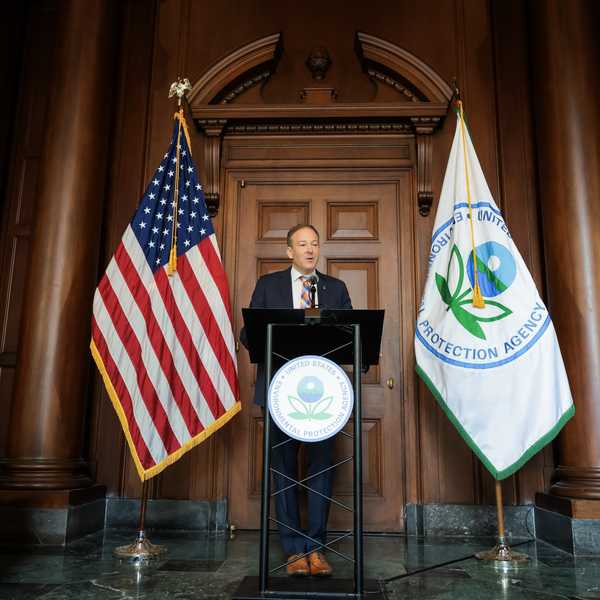
Over 120 top health and medical organizations on Monday joined the growing chorus of opposition to the Environmental Protection Agency’s attempt to roll back the landmark legal opinion that greenhouse gases endanger public health and the welfare of the American people.

“The Trump administration’s effort to rescind the EPA’s endangerment finding is not only dangerous—it’s an attack on science and on the health of the American people. Undoing the endangerment finding would remove the federal government’s main tool to combat climate change,” explained Katie Huffling, executive director of the Alliance of Nurses for Healthy Environments.

The alliance joined the American Thoracic Society (ATS) and Medical Society Consortium on Climate and Health (MSCCH) in writing a letter to EPA Administrator Lee Zeldin. Other signatories include national organizations such as the American College of Physicians, American Medical Association, and Physicians for Social Responsibility, along with scores of state groups.

“The science is clear: Climate change is real, driven primarily by human-caused emissions, and harming both our health and the
economy today,” the letter states. “The health harms of climate change caused by greenhouse gas (GHG) emissions are well understood and acknowledged by the American medical and scientific communities.”

The letter highlights various health impacts tied to the fossil fuel-driven climate emergency, which include an increased range for mosquitoes that spread diseases, worsening mental health, rising cardiovascular deaths, higher risks for respiratory conditions, and conditions that exacerbate chronic diseases. It emphasizes risks for pregnant people, children, and the elderly.

“No matter where they live, children are uniquely vulnerable to hazardous air pollution. Children are not little adults, and their lungs are still developing, putting them at greater risk for harmful impacts to their lifelong health and development,” noted American Academy of Pediatrics president Dr. Susan J. Kressly.

“The Environmental Protection Agency’s proposal to repeal the endangerment finding would jeopardize the progress we’ve made to protect child health and leave children susceptible to chronic illnesses, like asthma,” she warned.

Challenging the Trump administration’s argument for rolling back the 2009 finding, MSCCH executive director Dr. Lisa Patel stressed that “the administration’s claim that climate change is not a significant threat is contrary to what nurses, doctors, and pharmacists witness every day in our clinical practice.”

“Beyond the devastating toll of wildfires, unprecedented extreme heat, and superstorms and floods that decimate entire communities, we are seeing clinics and hospitals themselves damaged or destroyed, and critical supply chains disrupted,” Patel pointed out. “That means in times of crisis we cannot provide even the most basic care patients desperately need.”

National Association of Pediatric Nurse Practitioners president Felesia Bowen declared that “it is unconscionable that the agency charged with protecting Americans from environmental threats would consider rescinding policies based on years of evidence-based practice.”

The signatories are calling on the administration to not only withdraw its proposed rescission of the endangerment finding but also reaffirm the EPA’s obligation to regulate GHG pollution under the Clean Air Act and strengthen protections against climate-related health threats through ambitious emissions standards.

“The science is compelling—climate change is a clear and present danger for the health of our patients and communities,” said Dr. Alison Lee, Chair of the ATS Environmental Health Policy Committee. “Last week’s National Academy of Sciences, Engineering, and Medicine report confirms what the medical community already knows: Climate change is harming our patients and, absent urgent action, the harms will escalate.”

“Let us be clear—the medical community is standing together in its opposition to rolling back the EPA GHG endangerment finding,” she added.

Also citing the report released last week, David Arkush, who directs the climate program at the watchdog group Public Citizensaid in a Monday statement that “the EPA is proposing to move exactly opposite to the way that the law and its mission require—flouting overwhelming scientific evidence and ignoring required procedures to reach a predetermined political outcome on behalf of mass polluters.”

“The agency should reverse course and drop this misguided and unlawful action,” he argued. “Failing that, the courts should roundly reject it.”

His statement and the medical coalition’s letter come on the last day of the public comment period for the proposal, and after more than 1,000 scientists, public health experts, and economists sent another letter to Zeldin last week detailing why they “strenuously object” to his effort to repeal the legal opinion that underpins federal climate regulations.

The effort to repeal the endangerment finding is just one prong of Big Oil-backed President Donald Trump’s war on climate policies, which also includes ending the collection of pollution data, clawing back $7 billion in federal grants for low- and middle-income households to install rooftop solar panels, declaring a national energy emergency, and ditching the Paris Agreement.


JOIN THE MOVEMENT


As a people-powered nonprofit news outlet, we cover the issues the corporate media never will.

Your contribution supports this bold media model—free, independent, and dedicated to reporting the facts every day. Stand with us in the fight for economic equality, social justice, human rights, and a more sustainable future.

■ More News


Warren Calls for Probe as Whistleblowers Accuse Trump Appointees of 'Systematically Destroying' Fair Housing Act 


U.S. Trade Representative Jamieson Greer Testifies In Senate Hearing

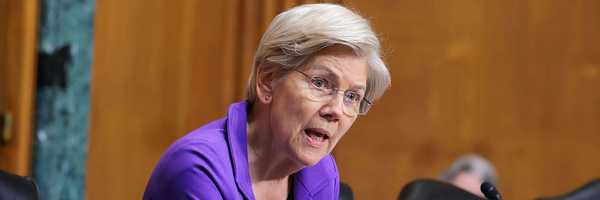
US Sen. Elizabeth Warren (D-Mass.) speaks during a Senate Finance Committee hearing in the Dirksen Senate Office Building on April 8, 2025, in Washington, DC.

 Photo by Kayla Bartkowski/Getty Images

US Sen. Elizabeth Warren is calling for an investigation into the Department of Housing and Urban Development after several whistleblowers reported that Trump appointees have gutted enforcement of the decades-old law banning housing discrimination.

New York Times report published Monday, quotes “half a dozen current and former employees of HUD’s fair housing office” who “said that the Trump political appointees had made it nearly impossible for them to do their jobs” enforcing the 1968 Fair Housing Act “which involve investigating and prosecuting landlords, real estate agents, lenders and others who discriminate based on race, religion, gender, family status or disability.”

In a video posted to social media, Warren (D-Mass.) explained that “if you’re a mom protecting her kids from living with an abusive father or if you’re getting denied a mortgage because of the color of your skin, you have civil rights protection under US law. But the Trump administration has been systematically destroying these federal protections for renters and homeowners.”

According to the Times, when President Donald Trump’s Department of Government Efficiency, formerly led by billionaire Elon Musk, launched its crusade to dismantle large parts of the federal government at the start of Trump’s second term earlier this year, the Office of Fair Housing (OFH) had its staff cut by 65% through layoffs and reassignments, with the number of employees dropping from 31 to 11. Just six of the remaining staff now work on fair housing cases.

The number of discrimination charges pursued by the office has plummeted since Trump took office. In most years, it has 35. During Trump’s second term, the office has pursued just four. Meanwhile, it’s obtained just $200,000 total in legal settlements after previously obtaining anywhere from $4 million to $8 million per year.

Emails and memos obtained by the Times show a pattern of Trump appointees obstructing investigations:

In one email, a Trump appointee... described decades of housing discrimination cases as “artificial, arbitrary, and unnecessary.”

In another, a career supervisor in the department’s [OFH] objected to lawyers being reassigned to other offices; the supervisor was fired six days later for insubordination.

In a third, the office’s director of enforcement warned that Trump appointees were using gag orders and intimidation to block discrimination cases from moving forward. The urgent message was sent to a US senator, who is referring it to the department’s acting inspector general for investigation.

Several lawyers said they have been restricted from using past cases in enforcement and communicating with certain clients without approval from Trump’s appointees.

A memo also reportedly went out to employees informing them that documents “contrary to administration policy” would be thrown out, and that “tenuous theories of discrimination” would no longer be pursued.

Among those supposedly “tenuous” cases have been ones involving appraisal bias—the practice of undervaluing homes owned by Black families—zoning restrictions blocking housing for Black and Latino families, and cases related to discrimination against people over gender or gender expression.

The administration has also abandoned cases related to the racist practice of “redlining”—the decades-old practice of denying mortgages to minorities and others in minority neighborhoods—with memos from Trump appointees calling the concept “legally unsound.”

The changes follow a sweeping set of executive orders from Trump during his first week in office, targeting “diversity equity, and inclusion” (DEI) programs. Employees at the Office of Fair Housing told the Times that Trump appointees had begun to describe much of the department’s work as “an offshoot of DEI.”

A HUD spokesperson, Kasey Lovett, told the Times that it was “patently false” to suggest that the administration was trying to weaken the Fair Housing Act. She pointed out that HUD was still handling approximately 4,100 cases this year, on par with the previous year. As the Times notes, “Lovett did not address, however, how many of the cases had been investigated or had resulted in legal action.”

According to the Times:

Hundreds of pending fair housing cases were frozen, and some settlements revoked, even when accusations of discrimination had been substantiated, according to the interviews and the internal communications.

In one instance, a large homeowner’s association in Texas was found to have banned the use of housing vouchers by Black residents. That case had been referred to the Justice Department, but the referral was abruptly withdrawn by the new Trump appointees.

Four current staff members have provided the trove of documents to Warren, who announced Monday that she’d sent a request to Brian Harrison, HUD’s acting inspector general, to open an investigation into its handling of discrimination cases.

Warren said that the documents “show the extent of the Trump administration’s attack on civil rights and show how the administration appears to be ignoring the law.”

In a press release from the Democrats on the Senate Committee on Banking, Housing, and Urban Affairs, Warren, the ranking member, highlighted the particularly devastating impact staffing cuts have had on the enforcement of complaints under the Violence Against Women Act, which the Times says only two of the six lawyers remaining at HUD have experience with.

According to Warren, whistleblowers said the cuts were “placing survivors in greater danger of suffering additional trauma, physical violence, and even death.”

Warren said that as a result of the hundreds of dropped cases, “Now people are asking, ‘well, why would I file a case at all if nothing’s going to happen?‘”

Calling for an independent investigation, Warren said, “We wrote these laws to make this a fairer America, and now it’s time to enforce those laws.”


After Kimmel Suspension, 400+ Entertainers Rip Government Campaign to ‘Pressure’ Them Into Silence


Progressives Fear Schumer Will 'Cave' Again in Budget Fight


Western Governments Recognize Palestinian State, But Continue to Fund Israeli Government Making It Inviable


■ Opinion


In Defense of True Dialogue: Why Charlie Kirk's Methods Should Not Be Our Model

In our collective shock at yet another shooting, we must not make a critical error: conflating condemnation of political violence with endorsement of Kirk's approach to political engagement.

By Emese Ilyés

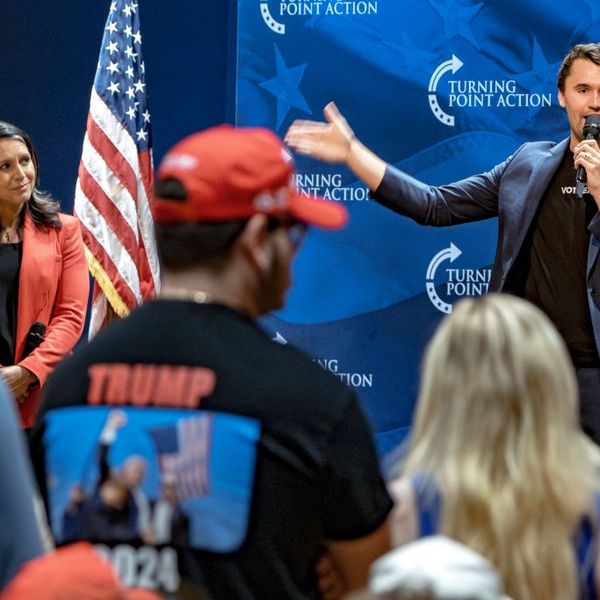
On the same day Charlie Kirk was killed, there was yet another school shooting in Colorado in which two young people were critically injured. Two weeks before, there was a mass shooting at a Catholic church in Minnesota where two children were killed and 21 other people were injured. Yet Kirk’s murder is the only instance of gun violence over this period that has been treated as a national tragedy deserving of prolonged mourning and wall-to-wall media coverage. US President Donald Trump refused to allow flags to fly at half-mast on his inauguration to honor Jimmy Carter but demanded that on September 11, the anniversary of the attack on New York City, flags be lowered for Charlie Kirk.

Political violence is never acceptable, and as researcher Erika Chenoweth has demonstrated, it is not an effective way to enact social change. While Kirk’s death represents a dangerous escalation in our national discourse that further threatens our fragile democratic foundations, how we talk about it will determine whether we move toward our shared humanity or whether we reinforce the dehumanizing context that Kirk himself, along with Trump, contributed to creating.

In our collective shock at yet another shooting, we must not make a critical error: conflating condemnation of political violence with endorsement of Kirk’s approach to political engagement. As voices across the political spectrum, including that of Ezra Klein, have rushed to characterize Kirk as someone who was “practicing politics in exactly the right way,” we risk elevating a model of engagement that was antithetical to the kind of meaningful dialogue our democracy desperately needs right now.

As an educator who has spent years understanding and facilitating genuine political dialogue, I feel compelled to speak up. We stand at a crossroads where our response to this moment will shape how we understand political engagement going forward. We can choose to learn from this moment—to honestly name political polarization as an urgent crisis requiring our collective attention, and to truthfully acknowledge how Trump, his MAGA movement, and weaponized social media have directly fueled this polarization. Or we can miss this crucial opportunity for thoughtful national reflection and make the devastating mistake of holding up Kirk’s methods as an example to follow.

What Real Dialogue Looks Like

Extensive research in psychology has given us clear insights into what constitutes meaningful political dialogue. Patricia Gurin, Biren Nagda, and Ximena Zúñiga’s groundbreaking work on intergroup dialogue shows that structured conversations across differences can foster insight into others’ worldviews, increase empathy, and motivate collaborative action toward equity and justice.

In my classroom, if someone acted the way Kirk did with students, I would feel obligated to redirect the conversation back to our class agreements about respectful dialogue,

Dr. Tania Israel, whose research forms the foundation for meaningful cross-political conversation, emphasizes that true dialogue requires active listening, “listening to understand instead of listening to respond.” It involves creating space for elaboration through open-ended questions, demonstrating genuine curiosity about different perspectives, and building the kind of connection that allows people to share their stories and values authentically.

This is not what Kirk practiced. What Kirk did on college campuses was not dialogue, it was performance art designed for viral content and ideological point scoring. His social media accounts documented a consistent pattern of cruel, confrontational bullying that prioritized entertainment value over genuine understanding.

The Kirk Model: Bullying as Entertainment, Not Engagement

An examination of Kirk’s campus appearances reveals a pattern that consistently violated the basic principles of respectful dialogue. Faculty members who witnessed his events noted that Kirk routinely interrupted students, mocked young people for entertainment value, and engaged in what can only be described as organized bullying. His ”prove me wrong” format was designed not to genuinely engage with differing viewpoints, but to create gotcha moments that would play well on social media. Like Trump, he was first and foremost a social media influencer.

In my classroom, if someone acted the way Kirk did with students, I would feel obligated to redirect the conversation back to our class agreements about respectful dialogue, agreements that establish ground rules ensuring no one’s humanity is denied and no one’s reality is erased. Kirk’s approach consistently violated these basic principles of respectful discourse.

Students at California State University, Northridge recognized this when they organized against his appearance on their campus, noting that Kirk had routinely engaged in antisemitic conspiracy theories, racist rhetoric against civil rights, and discriminatory language targeting LGBTQ+ students. These weren’t political differences; they were fundamental violations of the respect required for genuine dialogue.

The Dangerous False Equivalence

As journalist Maria Ressa reminds us, good journalism requires a courageous commitment to facts and ethical standards in the face of disinformation. Its central mission is to hold power accountable and serve as a bulwark against democracy’s erosion. Yet in the aftermath of Kirk’s death, much of our media has failed this test by creating a false equivalence between condemning political violence and celebrating Kirk’s methods.

How can we discuss the conditions that led to political violence while celebrating someone whose entire approach was designed to demean and dehumanize his political opponents?

Columnist Jamelle Bouie captured the essence of this problem: “That the Trump administration and the MAGA movement are less interested in deliberation and governance than they are in domination and obedience should shape and structure our sense of this political moment.” When one faction’s explicit goal is to curb the rights of opponents and force them into political inequality, calls for dialogue that deny that reality are harmful.

Kirk was not engaged in the kind of good-faith dialogue that democracy requires. He was, as Bouie notes, part of a movement more interested in domination than deliberation. His campus appearances were not exercises in democratic engagement, and no, he was not practicing politics the right way. Kirk’s campus appearances were trolling operations designed to humiliate and dehumanize students who disagreed with him.

The Stakes of Getting This Wrong

As we grapple with the epidemic of gun violence, school shootings, and the dismantling of democratic norms, we cannot afford to elevate models of engagement that contributed to these problems. How can we address the tragedy of bullying in schools—which then contributes to school shootings—while simultaneously holding up someone who made his career bullying college students? How can we discuss the conditions that led to political violence while celebrating someone whose entire approach was designed to demean and dehumanize his political opponents?

My friend recently told me that “a neighborhood is resistance.” This resonated deeply because it speaks to the patient, relationship-building work that real democratic engagement requires. Kirk’s approach was the opposite—designed to break down communities and relationships for entertainment value. He dehumanized students to generate viral content, endearing himself to Trump and the MAGA movement that thrives on such cruelty.

A Path Forward

We all want to talk to each other. We see this in our neighborhoods—we nod to one another, notice when someone hasn’t been around, look out for each other. This fundamental human desire for connection is precisely why we must distinguish between genuine dialogue and its performative imitations. True dialogue, as Dr. Israel’s research demonstrates, requires communication strategies that emphasize active listening, acknowledge differences while finding common ground, and approach disagreement with intellectual humility rather than ideological dominance—the opposite of what Kirk’s social media documented from his campus visits.

Political violence is never acceptable and will not move us toward justice. And importantly, a majority of political violence is perpetrated by the right-wing extremists and Trump’s MAGA movement has contributed to the conditions of this violence. Such violence reflects the brokenness of our system and the urgent need for repair. But we must not respond to this tragedy by celebrating Kirk’s mockery of political engagement. There should be no statues erected in his honor on college campuses, no elevation of his name alongside figures like Martin Luther King Jr. who actually advanced democratic discourse. Kirk’s methods were not a model for democratic engagement, they were part of the problem that contributed to our current crisis.

The memory we should be blessing is not that of viral confrontations and campus trolling, but of the patient, respectful work of building bridges across difference.

If we truly want to honor democratic dialogue in the wake of this tragedy, we must commit to the harder work of genuine conversation—the kind that builds understanding rather than scoring points, that creates community rather than destroying it, and that treats our political opponents as fellow human beings rather than targets for entertainment. This stands in stark contrast to Kirk’s approach, which was designed precisely to bolster his influence within the Trump ecosystem through cruelty and division.

A free society depends on our ability to engage across difference without fear of violence. But it also depends on our commitment to engagement that is grounded in respect, curiosity, and genuine democratic values. In this moment of national reckoning, we must choose models that build democracy rather than undermine it.

The memory we should be blessing is not that of viral confrontations and campus trolling, but of the patient, respectful work of building bridges across difference. That is the dialogue our democracy needs, and it’s the opposite of what Charlie Kirk practiced.


Sun Day Visions of a Brighter Future

From one corner of the continent to the other, Americans figured out dozens of ways to make their hopes for the future felt, even in this darkest of political periods.

By Bill Mckibben


A Year After the Summit of the Future, Future Generations Thinking Is Still the Answer

For our democracies to function we need to repair the social contract between generations and work toward such a shared vision of the future.

By Christiny Miller


Using Boycotts to Defend Free Speech: This Is Larger Than Jimmy Kimmel

Kimmel isn’t the only voice that’s been targeted for failing to toe the line in the wake of Kirk’s murder, but Kimmel’s firing is the one that’s outraged millions of Americans who aren’t political junkies, so it's the one that offers the best chance to act.

By Paul Rogat Loeb


BRIDGEWATER TRAFIC STOP: ‘Just skin and bones’: Routine traffic stop in Mass. town leads to heartbreaking discovery

  ‘Just skin and bones’: Routine traffic stop in Mass. town leads to heartbreaking discovery NOW PLAYING ABOVE Dog found 'barely alive...