Showing posts with label Chávez. Show all posts
Showing posts with label Chávez. Show all posts
Saturday, May 9, 2020


Thursday, May 7, 2020
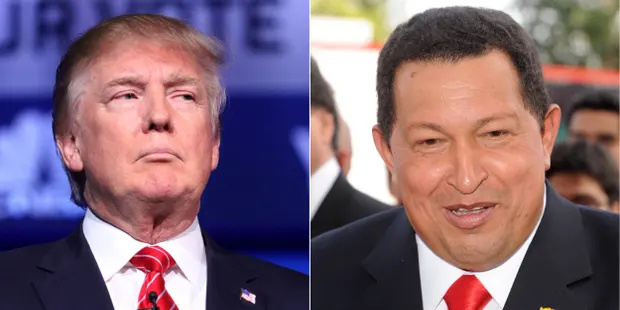
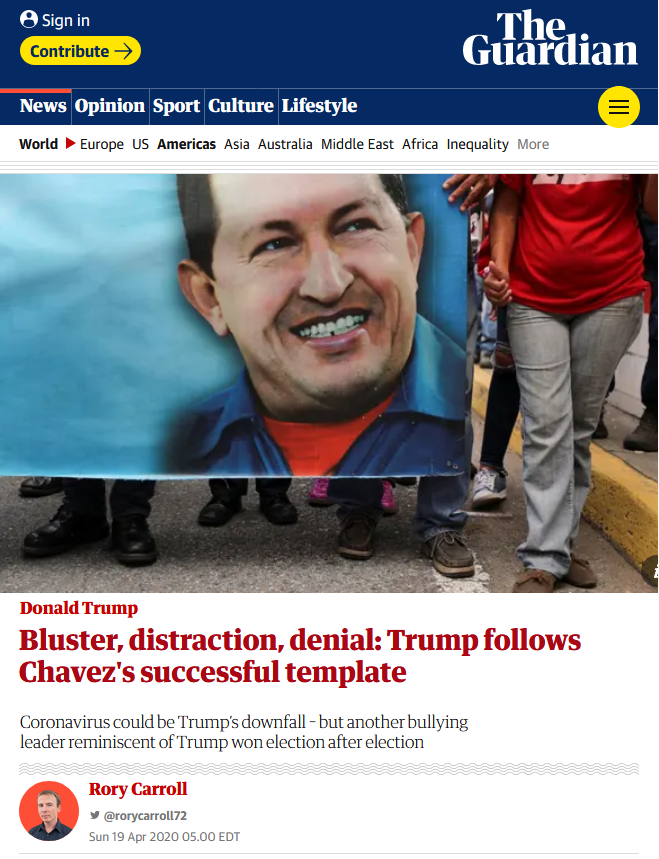
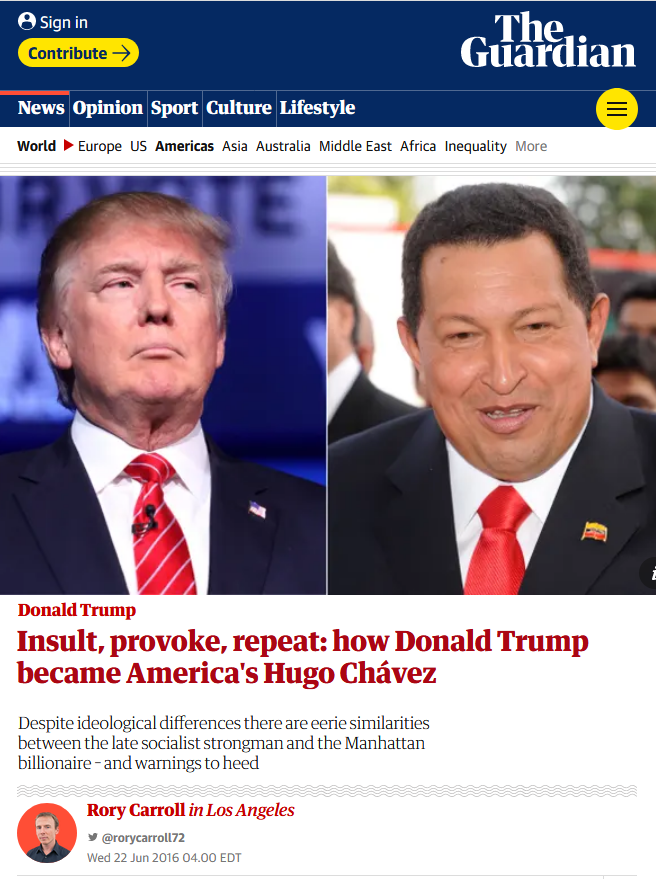
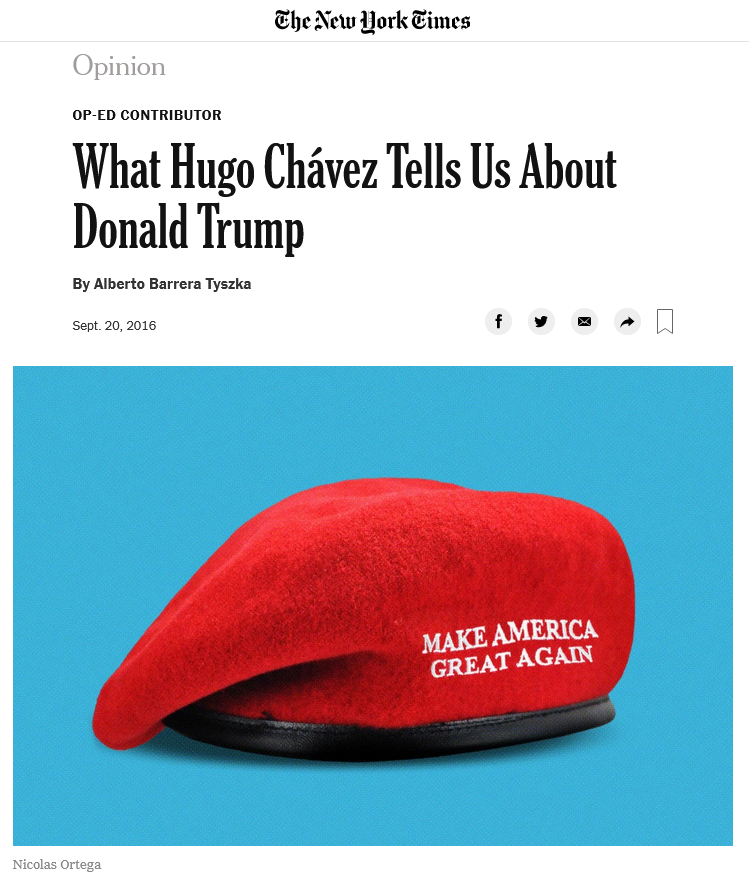
FAIR: Guardian Blames Trump’s Murderous US Exceptionalism on Hugo Chávez
 |
|||||
|
Tuesday, February 25, 2020
Dissent Magazine: State, Bureaucracy, and Rentier Capital
William Pettus
Jeffery R. Webber ▪ February 7, 2020
The present conflict between the right-wing opposition and the Maduro government is fundamentally a political confrontation between different fractions of Venezuelan capital—one backed by the imperial power of the United States and international financial markets, the other by the Venezuelan state (and, to some extent, Chinese and Russian imperialism), which has retained its rentier-capitalist character throughout the Chávez and Maduro eras. An emancipatory project of socialism from below cannot hope to wed itself to either fraction and survive. The difficult but necessary task facing independent socialists is to navigate an independent struggle against imperial intervention, total separation from the Venezuelan right, and simultaneous independence from the Maduro government.
State, Bureaucracy, and Rentier Capital
Venezuela is undergoing a rentier-capitalist implosion, made worse by imperial intervention, violent domestic right-wing opposition, and the fusion of the interests of the state and capitalists within the Maduro regime.
This article is part of a forum on the ongoing crisis in Venezuela.
At the end of May 2019, the Central Bank of Venezuela released the first official figures on inflation and gross domestic product in the country since 2015, which roughly correspond with recent estimates from the International Monetary Fund as well as independent economists. According to the bank, inflation reached 130,000 percent in Venezuela in 2018 (well surpassing the 50 percent technical threshold of hyperinflation), after averaging 863 percent over 2017, while GDP contracted by 22.5 percent year-on-year in the third quarter of the same year, the last quarter for which figures are available. Venezuelan GDP has been in free fall since the outset of 2014, shrinking by at least 10 percent in every quarter since the end of 2015.
Economic growth in Venezuela closely tracks the international price of oil; its national cycles of capital accumulation are rooted overwhelmingly in the appropriation of oil rents. Oil dependency, while hardly introduced by Hugo Chávez or Nicolás Maduro, has accelerated alongside deindustrialization since the outset of the Bolivarian process in the late 1990s. An overvalued currency, among other factors, made imports cheap and exports expensive.
When prices were high, as in 2012, oil constituted close to 95 percent of the total value of the country’s exports. Even when the price was relatively low, as in 1998, oil still accounted for approximately 65 percent of export value. Accordingly, Venezuela grew at an explosive rate of 18 percent in 2004 and maintained an average of 8 percent growth from 2005 to 2008, in a context of favorable world market conditions. This optimal scenario enabled the high period of nationalizations in sectors such as cement, steel, telecommunications, banking, and mining. It also undergirded popular features of the Bolivarian process, such as the health and education missions, dramatically declining levels of poverty, and ambitious anti-imperial regional initiatives like the Bolivarian Alternative for the Peoples of Our America (ALBA).
Venezuela and the Global Crisis
In the immediate fallout from the most recent global crisis of capitalism, however, the price of oil fell, reaching a low of $35 per barrel. It recovered to $120 over the 2011–2013 period, but in 2014 and 2015 plummeted again, at least relative to the peaks of the mid-2000s. By this point, public expenditure had become much greater than in the early years under Chávez, as had the structural reliance on imports. This formed the basic material backdrop to Venezuela’s intensifying economic crisis.
A forty-five-page internal report from the United Nations published in March 2019 indicates that 60 percent of the Venezuelan population now lives in extreme poverty, with consumption of meat and vegetables dropping precipitously from 2014 to 2017. Approximately 3.7 million people suffer from undernourishment, with 22 percent of children experiencing chronic malnutrition. Preventable diseases like tuberculosis, diptheria, measles, and malaria have made a comeback. Roughly 300,000 people are at acute risk due to lack of access to medicines, dialysis, and treatment for HIV and Parkinson’s. The Financial Times reports that migrant outflows from Venezuela will reach 6.5 million by the end of this year, mainly to neighboring Colombia, but also in significant numbers to Peru, Chile, Ecuador, Brazil, and Argentina. Twenty-two thousand doctors, a third of the country’s total, have left the country as part of a vast migrant exodus of technical professionals.
In no sense is this a crisis of socialism. What we are witnessing is the particular form capitalist crisis has assumed in Venezuela’s oil economy in the long aftermath of the global Great Recession. This is a rentier-capitalist implosion, made worse by a perfect storm of imperial intervention, violent domestic right-wing opposition to the government of Nicolás Maduro, and the conservative fusion of the interests of the state and a particular fraction of capital within the regime itself.
The Imperial Dimension
International socialists living outside of Venezuela, and particularly those of us in the Global North, have been correct to focus first—analytically and politically—on the role of imperialism in exacerbating the country’s crisis and attempting to undermine the basic principle that the shape of Venezuela’s future should be determined by Venezuelans themselves.
The South American nation has receded from Donald Trump’s foreign policy attentions in recent months. Early in 2019, however, Venezuela seemed to be of pivotal importance to the American imperium’s calculus, as evidenced by the U.S.-led recognition of Juan Guaidó’s self-declaration as Venezuela’s “interim president” and direct U.S. support for his spectacularly ill-conceived coup attempt at the end of April that year.
While grand geopolitical concerns have seemingly shifted elsewhere, the U.S. sanctions imposed on Venezuela by presidential decree in August 2017 and January 2019 remain in place, as do de facto economic constraints confronting the Maduro administration in the wake of U.S. recognition of a parallel government led by Guaidó. According to a detailed report for the Center for Economic and Policy Research in Washington by economists Mark Weisbrot and Jeffrey Sachs, the sanctions have gravely impacted the Venezuelan population’s caloric intake, the country’s disease and mortality rates, the migrant exodus, oil production, power outages, and the government’s ability to deal with the economic crisis more generally. According to the report, U.S. sanctions made a “substantial contribution” to a 31 percent increase in general mortality in the country from 2017 to 2018, or more than 40,000 deaths.
Whether or not Maduro’s administration would have taken the measures necessary for an “economic recovery” in the absence of sanctions, Weisbrot and Sachs convincingly demonstrate that they have worsened the already massive dimensions of the crisis in Venezuela. They have cut off the country from international financial markets and prevented a restructuring of its debt, while also restricting Venezuela’s access to foreign exchange—used to import food, medicine, medical equipment, and other basic necessities—by further undercutting its oil production and capacity to sell it abroad.
The United States has also seized billions of dollars’ worth of Venezuela’s foreign assets, such as the majority state-owned oil refinery and transport company CITGO, which is based in the United States. With the help of allied institutions like the Bank of England, the United States has also frozen much of Venezuela’s $6.6 billion in foreign reserves, a significant portion of which are held in gold. Real GDP fell roughly 37.4 percent in 2019. Even if the threats of U.S. military intervention or a right-wing coup d’état have diminished for the foreseeable future, opposition to imperial sanctions must remain a priority.
Characterizing the Regime
Alongside axiomatic anti-imperialism, however, there must also be a full analysis of the class character and nature of the Maduro regime and an assessment of its role in the crisis. Even a cursory examination demonstrates that the Maduro administration in no way represents the interests of Venezuela’s lower orders. Meaningful international solidarity requires continuing to reach out to those social forces—as beleaguered and minoritarian as they are at present—committed to building an anti-capitalist left that is simultaneously independent of Maduro, free of any association with the domestic right, and anti-imperialist to its core.
Those left-wing analyses that suggest that an “economic war” being carried out by the Venezuelan bourgeoisie accounts for the bulk of the crisis are deeply unconvincing. Other analyses confuse the systematic orientation of economic management under Maduro for a series of irrational technical errors that simply require policy correction from new advisers with better advice to offer. Still others draw up balance sheets of the “good” and the “bad” aspects of the Maduro’s rule, without offering sufficient analytical explanation for the logic of these divergent phenomena, or the overarching class character of the government. None of these analyses can offer much insight into the continuing class logic behind Maduro’s ostensibly irrational economic policy, nor any solid basis for the Venezuelan socialist left to determine its relationship to the government.
As Patrick Guillaudat has pointed out in Viento Sur, one key facet in understanding the character of the Maduro regime is to grasp the hegemony within it of the so-called “bolibourgeoisie,” and the evolution of this fraction of the Venezuelan capitalist class.
The bolibourgeoisie began its formation in the early- to mid-periods of Chávez’s rule as a group of domestic capitalists who enriched themselves spectacularly through speculation on currency and opportunities opened up through close political relations with the Chávez government. The bolibourgeoisie has since expanded in social weight and political power. A second pillar of the bolibourgeoisie formed as a bureaucratic layer within the state apparatus, creating vast opportunities for corruption on the part of high-ranking bureaucrats in the mid- to late-Chávez era. These bureaucrats enriched themselves and then gradually invested their private fortunes in legal capitalist enterprises and joint activities with international capital. In other words, former bureaucrats have become proper capitalists without abandoning their positions within the state.
The scale of such private accumulation through mechanisms of corruption facilitated by state policy is difficult to exaggerate, and it began well before Maduro came to office. One such mechanism was SITME, the notorious preferential exchange rate for import firms aiming to obtain U.S. dollars to purchase merchandise on the world market and then sell it at the “normal” exchange rate in bolívares in the domestic market. In 2012, then Minister of Finance and Planning Jorge Giordani publicly denounced this arrangement, arguing that it had facilitated corruption at all levels of state power, amounting to the disappearance of $25 billion of state revenue (Giordani was expelled from the Maduro government in June 2014).
As the Venezuelan economist Manuel Sutherland has suggested, it wasn’t simply that the government’s monetary policy amounted to a transfer of oil rent from the state to private importers with ties to the administration—which would have been bad enough—but also that many of these supposed imports did not actually materialize. With disturbing frequency, no merchandise ever arrived in the country. Between 2003 and 2012, the value of these often-fraudulent imports rose from $14 billion to $80 billion. Departing significantly from Giordani’s conservative estimate, the consultancy firm Ecoanalítica estimates that these years witnessed the loss of $69.5 billion through fraudulent imports.
Finally, and most critically, the third pillar of the bolibourgeoisie involves powerful military figures. Drawing on their enhanced infrastructural power within the state, military officials have entered the ranks of the bolibourgeoisie with a vengeance since Maduro took office. Maduro’s cabinet has had an average of more than 30 percent of positions occupied by active or retired military officials since 2014, including General Vladimir Padrino López as minister of defense and General Néstor Reverol as interior minister and overseer of the civilian security forces. In 2017, General of the National Guard Manuel Quevedo was named both minister of energy and president of the state oil company, PDVSA. General Iván Hernández Dala is head of the Presidential Guard and the military counter-intelligence agency, DGCIM, and General Manuel Cristopher Figuera is head of the secret police, SEBIN. Of Venezuela’s twenty-three states, the United Socialist Party of Venezuela (PSUV) controls twenty governorships, seven of which are occupied by military officers. Military officials are also prominent in positions of power within the National Constituent Assembly, the presidency of which is occupied by active captain Diosdado Cabello.
The fusion of state power exercised by high-ranking military personnel and the increasing economic power of the military elite—in both public and private capitalist enterprises—is evident on a number of fronts. Military figures now control key national corporations in addition to PDVSA, such as Caracas Metro, steel and aluminum enterprises, and the National Electric Corporation. They also enjoy tremendous power over the importation and distribution of subsidized foodstuffs and medicine and control the country’s main ports.
Francine Jácome, writing in Nueva Sociedad, points out that since 2013 several explicitly military enterprises have been established: the Bank of the Bolivarian National Armed Forces (BANFANB), a television channel (TVFANB), a transport company (EMILTRA), an agricultural enterprise (AGROFANB), and a mining, oil, and natural gas company (CAMIMPEG). Guillaudat counts ten further military corporations in transport, agriculture, construction, water, and telecommunications. At least 785 active and retired military officials also manage private companies that have won lucrative contracts with the government in construction, imports, medicine, food, and health.
The rise of these military capitalists requires us to understand the imbrication of state and fractions of capital in contemporary Venezuela, rather than assuming—as in the common colloquial and academic language of “business-state relations”—an unambiguous separation of state actors from private entrepreneurship, and state enterprises from processes of capital accumulation.
Taken together, the constituent parts of the bolibourgeois class fraction are the most influential actors within the Maduro administration, and their interests are behind the class logic of seemingly “irrational” exchange rate policies and other apparent instances of economic “mismanagement.” Their ability to reproduce themselves as a capitalist class fraction is contingent on the reproduction of the Maduro administration as a whole, which helps to explain the paltry support of the military elite for the most recent U.S.-backed coup attempt headed by Guaidó.
The power of the bolibourgeoisie at present is perhaps nowhere more viscerally on display than in the recent establishment of special economic zones—most emblematically, the Orinoco Mining Arc, located in the state of Bolívar, with a surface area bigger than Portugal. The legislation surrounding these zones, together with supplemental laws guaranteeing greater protections for foreign investors, is designed to attract international capital to enter into joint contracts with military state enterprises such as CAMIMPEG, and to override the considerable social, indigenous, and environmental concerns with the intensification of extractive capitalism that these endeavors imply.
CAMIMPEG has already entered into agreements with the Anglo-Swiss corporation Glencore—a firm with a notable record of corruption and environmental abuse—and the British oil company Southern Procurement Services. According to Guillaudat, in the state elections of October 2017, the National Electoral Council (CNE) initially proclaimed the victor in the state of Bolívar to be the candidate of the oppositional party A New Time, Andrés Velásquez. Two days later, however, the CNE annulled its initial announcement and declared Justo Noguera Pietri, the PSUV’s candidate, governor. Pietri, an ex-General Commander of the National Guard, will manage the rollout of the Orinoco Mining Arc initiative.
Exits
The present conflict between the right-wing opposition and the Maduro government is fundamentally a political confrontation between different fractions of Venezuelan capital—one backed by the imperial power of the United States and international financial markets, the other by the Venezuelan state (and, to some extent, Chinese and Russian imperialism), which has retained its rentier-capitalist character throughout the Chávez and Maduro eras. An emancipatory project of socialism from below cannot hope to wed itself to either fraction and survive. The difficult but necessary task facing independent socialists is to navigate an independent struggle against imperial intervention, total separation from the Venezuelan right, and simultaneous independence from the Maduro government.
Jeffery R. Webber is an associate professor in the department of politics at York University, Toronto. He is author, most recently, of The Last Day of Oppression, and the First Day of the Same: The Politics and Economics of the New Latin American Left. He is working on a new book for Verso, The Latin American Crucible: Politics and Power in the New Era
Subscribe to:
Posts (Atom)
Trump's Friday Meltdown: Begging Iran, Ditching Ukraine, and Blaming Everybody But Himself – 7/31/26
LOTS OF POSTS IGNORED BY BLOGGER..... OR REMOVED ON THEIR WHIM! ALL POSTS ARE AVAILABLE ON MI...

-
04 April 23 Live on the homepage now! Reader Supported News Dahlia Lithwick | Let Donald Trump Cry It Out Dahlia Lithwick, Slate Lithwic...
-
LOTS OF POSTS IGNORED BY BLOGGER..... ALL POSTS ARE AVAILABLE ON MIDDLEBORO REVIEW AND SO ON Right now, we are standing on the edge of a he...
-
LOTS OF POSTS IGNORED BY BLOGGER..... ALL POSTS ARE AVAILABLE ON MIDDLEBORO REVIEW AND SO ON We love making ice cream, but our mission has ...


