Showing posts with label APPLE CREDIT CARD. Show all posts

Thursday, June 6, 2024

The Consumer Financial Protection Bureau Is Making Enemies in All the Right Places

 AS AN ASIDE..          

SENATOR ELIZABETH WARREN CREATED CFPB, THE ONLY FEDERAL AGENCY SOLELY DEDICATED TO PROTECTING CONSUMERS. 

THE SENATOR IS UP FOR RE-ELECTION FACING 3 REPUBLICAN LOSERS: 

JOHN DEATON: A CRYPTO FUNDED CARPETBAGGER WHO MOVED TO MASSACHUSETTS TO RUN FOR OFFICE. HE VOTED 3 TIMES IN 20 YEARS, MOSTLY UNINFORMED, BLABBERS MISINFORMATION ABOUT ISSUES & SENATOR WARREN'S RECORD. 

IAN CAIN, QUINCY CHAIR WHO COULDN'T BOTHER TO ATTEND A MEETING TO ADDRESS THE MAYOR'S OUTRAGOUS SALARY PROPOSAL, FLIP FLOPPER WHO CAN'T DECIDE WHAT PARTY HE BELONGS TO.... 

THE 3RD MASS GOP LOSER HAS NO NAME RECOGNITION


SUBSCRIBE TO THIS NEWSLETTER TO RECEIVE TIMELY REPORTS!


The Consumer Financial Protection Bureau Is Making Enemies in All the Right Places

By Pam Martens and Russ Martens: June 6, 2024 ~

Fresh off a big win at the U.S. Supreme Court on May 16, the Consumer Financial Protection Bureau (CFPB) is wasting no time in its heady pursuit of financial bad actors preying on the little guy.

On Monday, the federal agency announced it was creating a public registry to help law enforcement, investors and the public check the history of repeat offenders in finance. The CFPB already offers consumers who have been victimized by a financial firm the ability to file a public complaint with the CFPB. The agency then quickly demands a written response from the alleged wrongdoer. Repeat offenders dislike the fact that these complaints go into a permanent database at the CFPB, which can be mined by the public, reporters, attorneys and prosecutors looking for patterns of fraud. (For how Wall Street On Parade put that complaint database to good use, read our report: The Apple Credit Card Provided through Goldman Sachs Has Created a Living Hell According to Consumer Complaints.)

On Tuesday, the CFPB released a circular letting financial firms know that if they sneak deceptive and/or illegal terms into the fine print of their consumer contracts they risk getting an enforcement action from the CFPB. One example cited was the Truth in Lending Act, which prohibits fine print in mortgage contracts that purport to force homeowners into mandatory arbitration (claiming to remove the option of a court proceeding) to deal with a mortgage dispute.

The Supreme Court case in May, where the independent funding of the CFPB was under attack by multiple forces hostile to a gutsy federal consumer protection agency, was just the latest in a long series of attempts to kill the CFPB since its creation under the Dodd-Frank financial reform legislation of 2010.

Back in 2015, a political front group called the American Action Network launched a $500,000 ad campaign against the CFPB during the Republican presidential debate. The campaign outrageously attempted to cast the CFPB as a communist organization. One ad featured giant banners hanging from a front wall with the faces of then CFPB Director, Richard Cordray, and Senator Elizabeth Warren, who had been instrumental in creating the agency — in a nod to Soviet dictator images.

The advertisement was a masterpiece of misinformation, overtly suggesting that the job of the CFPB is to deny car loans and mortgages to regular folks seeking credit. The agency, in fact, has zero involvement with approving credit applications. Its job is to root out and punish financial institutions that are ripping off customers. Just four months before the ad campaign was unveiled, the recidivist bank, Citigroup, was ordered by the CFPB to reimburse an estimated $700 million to 7 million of its credit card customers for deceptive marketing and billing for services that were never provided.

The mysterious American Action Network (AAN) behind the deceptive ad campaign is a dark money group that has battled at the Federal Election Commission and in federal courts to keep its dark money donors a secret from the American people. Citizens for Responsibility and Ethics in Washington (CREW) has been fighting to open AAN’s dark secrets to some public sunshine for more than a decade.

In a brief filed with the Court of Appeals for the District of Columbia on July 28, 2023, CREW wrote as follows:

“Over the past thirteen years, AAN has spent more than $150 million to influence federal elections while depriving Americans of knowledge about ‘[t]he sources of [their] candidate’s financial support’… AAN’s patronage, which only grows, has placed benefitted officials ‘in the pocket’ of the ‘moneyed interests’ that they know fund AAN while evading public accountability.”


WALL STREET ON PARADE

Tuesday, February 7, 2023

There Are Very Strange Things Going On at Goldman Sachs


SUBSCRIBE TO THIS NEWSLETTER!


There Are Very Strange Things Going On at Goldman Sachs

Savings Accounts Interest Rates

BPam Martens and Russ Martens: February 7, 2023 ~

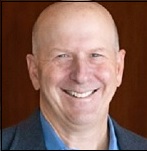
David Solomon, Chairman and CEO, Goldman Sachs

David Solomon, Chairman and CEO, Goldman Sachs

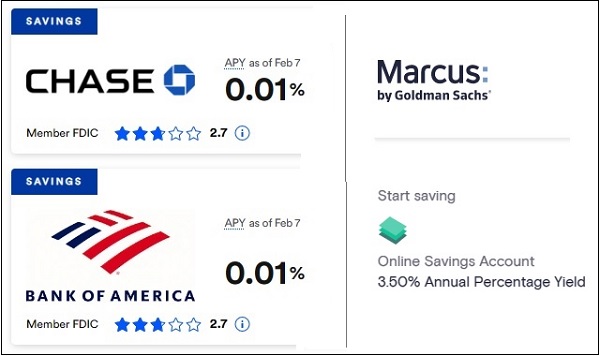
Goldman Sachs’ online bank, Marcus, is offering an interest rate on its savings accounts that is 350 times the interest rate being offered by its competitors, JPMorgan Chase and Bank of America. That’s not normal. Not normal at all. (Above screen shots were taken this morning. Chase and Bank of America screen shots come from BankRate; Marcus screen shot comes from Marcus.)

Marcus is the online banking platform offered by Goldman Sachs Bank USA – a federally-insured bank backstopped by the U.S. taxpayer. But what 99 percent of Americans don’t know about Goldman Sachs Bank USA is that it is the unit of Goldman Sachs that holds trillions of dollars in derivatives, including the kind of credit derivatives that blew up the U.S. economy in 2008 and would have taken down Goldman Sachs were it not for sneaky bailouts.

According to the most recent report from the Office of the Comptroller of the Currency (OCC), Goldman Sachs Bank USA has $513.9 billion in assets and $50.97 trillion in derivatives as of September 30, 2022. Yes, you read that correctly. (See Table 24 of the OCC report.) The most dangerous of the derivatives, credit derivatives, tally up to $623.6 billion, which is $110 billion more than the bank has in assets.

This might help to explain why Goldman Sachs is offering 350 times the going interest rate of its competitors to attract deposits and shore up its capital base.

Other noteworthy things are happening at Goldman Sachs. On January 9, Reuters ran this headline: “Goldman Sachs readies biggest layoffs since the financial crisis,” noting that “over 3,000 employees will be let go….”

Eight days after the ax fell on more than 3,000 workers’ jobs, Goldman announced that its quarterly profit had plunged by 66 percent versus the prior year and that it was taking a $972 million provision for credit losses in the quarter. That credit loss provision compared to $344 million taken a year earlier.

Ten days later, the firm announced in a regulatory filing that its Chairman and CEO, David Solomon, would be getting a compensation package that was 29 percent less than the prior year – still an obscene $25 million for one year’s toils.

Goldman is also being negatively portrayed in the business press. On Saturday, Bill Cohan reported at the Financial Times that “Goldman Sachs has lost its swagger. The market value of the venerable 154-year-old investment bank, at $121bn, is now $42bn less than its longtime arch-rival Morgan Stanley. It used to be that Goldman was the more valuable bank for many years.” (“Venerable” is an interesting choice of words for Cohan to use to describe Goldman Sachs. See our report: Goldman Sachs Says Its Dark Pools Are Under Investigation – Along with About Everything Else the Firm Does.)

One day after Cohan’s article ran, Emily Flitter and Katherine Rosman reported at the New York Times that Goldman’s Solomon, who is pulling down a cool $25 mill at his day job, has a side hustle of DJ-ing at tiki bars and owns his own record label. (You can’t make this stuff up.)

Goldman is also dealing with a big problem with its Apple credit card. On August 4 of last year, Goldman Sachs provided the following disclosure when it filed its quarterly report (10-Q) with the Securities and Exchange Commission:

“The firm is cooperating with the Consumer Financial Protection Bureau in connection with an investigation of GS Bank USA’s credit card account management practices, including with respect to the application of refunds, crediting of nonconforming payments, billing error resolution, advertisements, and reporting to credit bureaus.”

As it turns out, there are hundreds of complaints filed with the Consumer Financial Protection Bureau by consumers using the Apple credit card that is provided by Goldman Sachs. The Apple credit card holders allege being put through a living hell by Goldman Sachs when fraudulent charges are made on their Apple credit card, along with a host of other problems. In typical Goldman Sachs style, it has managed to earn the hostility of everyday consumers, airline pilots, and even a police officer with its handling of credit card complaints.

The Apple credit card via Goldman Sachs was launched three years ago in August of 2019. Goldman wrote at the time: “Goldman Sachs is the issuer of the card and is responsible for underwriting, customer service, the underlying platform and all matters related to regulatory compliance through Goldman Sachs Bank USA.”

On January 13, Sridhar Natarajan at Bloomberg News reported how the Apple credit card was racking up losses at Goldman Sachs’ Platform Solutions division:

“The division’s $1 billion pretax loss reported for 2021 was mostly tied to the Apple Card, people with knowledge of the numbers said. And about $2 billion [in losses] in 2022 mainly stems from the Apple card and installment-lending platform GreenSky, the people said.”

Is it possible that Goldman Sachs needs a CEO with no side hustles? 

LINK


Thursday, August 11, 2022

The Apple Credit Card Provided through Goldman Sachs Has Created a Living Hell According to Consumer Complaints

SUBSCRIBE TO THIS NEWSLETTER 


The Apple Credit Card Provided through Goldman Sachs Has Created a Living Hell According to Consumer Complaints

By Pam Martens and Russ Martens: August 10, 2022 ~
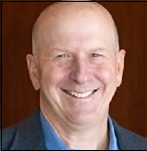
David Solomon, Chairman and CEO, Goldman Sachs

David Solomon, Chairman and CEO, Goldman Sachs

On August 4, Goldman Sachs provided the following disclosure when it filed its quarterly report (10-Q) with the Securities and Exchange Commission:

“The firm is cooperating with the Consumer Financial Protection Bureau in connection with an investigation of GS Bank USA’s credit card account management practices, including with respect to the application of refunds, crediting of nonconforming payments, billing error resolution, advertisements, and reporting to credit bureaus.”

That bland statement doesn’t really do justice to the hundreds of complaints filed with the Consumer Financial Protection Bureau (CFPB) by consumers using the Apple credit card that is provided by Goldman Sachs. The Apple credit card holders are alleging being put through a living hell by Goldman Sachs when fraudulent charges are made on their Apple credit card and a host of other problems.

In typical Goldman Sachs style, it has managed to earn the hostility of everyday consumers, airline pilots, and even a police officer with its handling of credit card complaints. Unfortunately for Apple, its name and reputation are being taking along for the ride – which raises the question, what marketing zombie at Apple didn’t see this coming when he decided to entangle Apple’s brand with “a great vampire squid wrapped around the face of humanity, relentlessly jamming its blood funnel into anything that smells like money,” as Matt Taibbi famously described Goldman Sachs at Rolling Stone.

The complaints at the CFPB aren’t helping the J.D. Power brand either. J.D. Power had announced in August of 2021 that the Apple credit card provided through Goldman Sachs had ranked number one in customer satisfaction in the midsize credit card segment. Goldman Sachs’ Chairman of Consumer Business, Harit Talwar, had gushed as follows about the award:

“Nothing energizes us more than the affirmation that we are providing a simple, transparent product that delivers value and that customers love. Creating this experience with Apple has been incredibly rewarding, and we are committed to continuing to deliver best-in-class service to our customers. It takes a village, and I am grateful to my colleagues at Goldman Sachs, the teams at Apple, and all of our partners who have helped us be No. 1 in customer satisfaction in the U.S. credit card industry.”

But in the very same month of August 2021, as Goldman was celebrating its J.D. Power award, egregious complaints were being filed with the CFPB. Here’s a sampling: (the redacted information has been done by the CFPB; typos are in the original):

A customer in California wrote this:

“This problem has been ongoing since XXXX, I have had to open multiple disputes through Apple credit card (goldman Sachs) and every time I open disputes, they ALWAYS favor the merchant ( XXXX ) There were multiple unauthorized purchases on my card through XXXX, XXXX helped with most of them besides one order that was {$1400.00}. My credit card issuer Goldman Sachs is saying that the dispute keeps favoring them no matter what evidence I give them. I really want to sue or something, I have no idea what to do now…” (Read the full complaint here.)

A customer in Massachusetts told the CFPB this:

“My 11 year old computer died and I went online to apple.com to buy a replacement one. Their site advertises that you can get an Apple credit card with 0 % APR for the first 12 months and pay off the computer. When I tried to redeem that offer, their Goldman Sachs website came back and extended a {$2500.00} credit limit, which does not cover the cost of a computer on their site. I called in to get the limit increased to {$3200.00} because I make {$320000.00} a year and have a XXXX credit rating. When I called in, their representative told me the only way to request a credit limit increase to cover the cost of the computer was to accept the credit card offer and open an account. So I did. He told me the next day I had to call back to request a credit increase. There was no other way to get an increase on the application. I have just done that, and despite making a high salary, having zero credit debt and having an excellent credit score, Goldman Sachs / Apple has denied the application and not giving me a reason…” (Read the full complaint here.)

A resident of Virginia wrote this:

“On XX/XX/21, an unknown charge for {$840.00} was Pending on my Apple Card (Goldman Sachs), I submitted a dispute the same day and was told that, because the charge was still ‘pending’, they would monitor the charge and if the charge posted, the dispute process would start with no further action from me. If the charge did not post, it would just drop off of my account. Since then, I have made dozens of calls and chat sessions with Apple Card Support about this charge that posted to my account on XX/XX/21. On this date, I received a ‘provisional credit’ and exactly one minute later, the provisional credit was reversed. After many phone calls, I finally learned that the dispute that I repeatedly called about had been ruled in the merchant ‘s favor because, they stated, I ‘withdrew my dispute’ — this is a complete falsehood…” (Read the full complaint here.)

The Apple credit card via Goldman Sachs was only launched three years ago in August of 2019. Goldman wrote the following at the time:

“Goldman Sachs is the issuer of the card and is responsible for underwriting, customer service, the underlying platform and all matters related to regulatory compliance through Goldman Sachs Bank USA.”

For the credit card to have generated hundreds of complaints in such a short span of time is remarkable and is apparently why Goldman Sachs is now being investigated by the CFPB. Consider that only a small percentage of Americans are aware that they can file a complaint with the CFPB to seek resolution, and fewer still know where to go on the internet to do that. If hundreds of Americans have filed a complaint, it is highly likely that there are actually thousands of complaints that have not been filed. The CFPB knows that from experience.

It’s possible that the folks at Apple are unfamiliar with the century of abuses to customers by Goldman Sachs. Key milestones include the Goldman Sachs Trading Company’s conduct in the asset bubble of 1928. The Trading Company was a closed end fund (called a trust in those days) that Goldman Sachs created and offered to the public at $104 a share, stuffed with conflicted investments while paying Goldman a hefty management fee, only to end up a few years after the 1929 stock market crash trading at a little more than a dollar.

Then there were the 2010 Senate hearings where Goldman Sachs was shown to have been allowing hedge fund titan, John Paulson, to pick subprime debt likely to fail for one of Goldman’s securitized deals. Goldman sold the product to its customers as a good investment. Paulson made approximately $1 billion shorting the deal while those on the other side of the trade lost about $1 billion, while never being advised of the hedge fund manager’s role. According to the late U.S. Senator Carl Levin, Goldman was itself shorting (betting on subprime derivative products to fail) while actively promoting these products to clients. Comedian Jon Stewart started calling Goldman Sachs “those f*!*!ing guys” during this period.

Equally notable was the 2012 incident when Greg Smith, a VP at Goldman, tendered his resignation after 12 years with the firm on the OpEd pages of the New York Times. Smith lamented on “how callously people talk about ripping their clients off. Over the last 12 months I have seen five different managing directors refer to their own clients as ‘muppets,’ ” Smith wrote. The “muppets” characterization instantly went viral with comedic internet memes, like this catchy musical video written by former Wall Street veteran and law professor Frank Partnoy.

More recently, Goldman Sachs has upped its game to criminal felony charges leveled by the U.S. Department of Justice in the 1MDB bribery case. The Justice Department released this statement on October 22, 2020 in conjunction with bringing the charges against Goldman Sachs:

“Over a period of five years, Goldman Sachs participated in a sweeping international corruption scheme, conspiring to avail itself of more than $1.6 billion in bribes to multiple high-level government officials across several countries so that the company could reap hundreds of millions of dollars in fees, all to the detriment of the people of Malaysia and the reputation of American financial institutions operating abroad. Today’s resolution, which includes a criminal guilty plea by Goldman Sachs’ subsidiary in Malaysia, demonstrates that the department will hold accountable any institution that violates U.S. law anywhere in the world by unfairly tilting the scales through corrupt practices.”

The message here is simple, if you’re a company with a good reputation, you need to do a proper and thorough amount of due diligence before you align your name and reputation with another company.
LINK


‘Disgusting’: Dem Senator Says ICE Threatened to Beat Seattle Business Owner Unless He Signed Deportation Form SPINELSS REPUBLICANS ARE SILENT!

                                                              LOTS OF POSTS IGNORED BY BLOGGER..... OR REMOVED ON THEIR WHIM! ALL POSTS ARE ...