 | ||||||||||||||||||
| ||||||||||||||||||
| ||||||||||||||||||
| ||||||||||||||||||
| ||||||||||||||||||
| ||||||||||||||||||
| ||||||||||||||||||
| ||||||||||||||||||
| ||||||||||||||||||
| ||||||||||||||||||
| ||||||||||||||||||
| ||||||||||||||||||
| ||||||||||||||||||
| ||||||||||||||||||
| ||||||||||||||||||
| ||||||||||||||||||
| ||||||||||||||||||
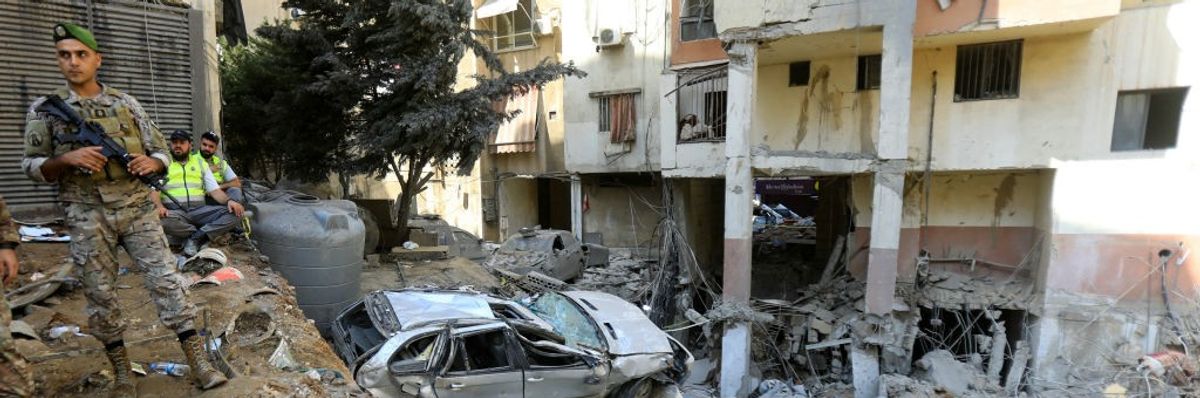
As Israel followed up its remote bombings of communications devices in Lebanon with airstrikes on Beirut, the United Nations Security Council held an emergency session Friday during which officials urgently called for an immediate cease-fire and warned that the Middle East is on “the brink of catastrophe.”
“We risk seeing a conflagration that could dwarf even the devastation and suffering witnessed so far,” U.N. Under-Secretary-General for Political and Peacebuilding Affairs Rosemary DiCarlo told representatives of the 15-member Security Council (UNSC) during the session.
“It is not too late to avoid such folly. There is still room for diplomacy,” DiCarlo stressed. “I also strongly urge member states with influence over the parties to leverage it now.”
Officials voiced alarm over this week’s remote bombings of pagers, walkie-talkies, and other devices Israel said belonged to members of Hezbollah, the Lebanese political and paramilitary group, which killed at least 37 people including two children and wounded thousands more. While Israel has not claimed responsibility for the attacks, U.S. officials have attributed the attacks to their key ally.
“These attacks represent a new development in warfare, where communication tools become weapons,” U.N. High Commissioner for Human Rights Volker Türk told the council.
“This has unleashed widespread fear, panic, and horror among people in Lebanon, already suffering in an increasingly volatile situation since October 2023 and crumbling under a severe and longstanding economic crisis,” Türk added. “This cannot be the new normal.”
Speaking during the meeting, Lebanese Foreign Minister Abdallah Bou Habib said the “unfathomable” Israeli electronic attacks “represent a serious unprecedented event in the history of wars” and warned that “no one in this world is safe anymore.”
Habib demanded the council condemn Israel’s “terrorist attack” and asserted that “accepting what happened amounts to opening a Pandora’s box,” with countries and militant groups carrying out similar bombings around the world.
“This is the moment of truth,” he added.
French U.N. Ambassador Nicolas de Rivière told the Security Council that “the risk of an open war with potentially tragic consequences is growing every day.”
“Such a prospect must be avoided at all costs,” he added. “It is urgent that all parties work towards de-escalation.”
Deputy U.S. U.N. Ambassador Robert Wood defended Israel, asserting that “no member of this council facing a terrorist organization on its border would tolerate daily rocket attacks on its territory.”
However, some experts said that the Israeli device bombings were acts of terrorism under international law.
There was no hint of de-escalation as Israeli warplanes bombed a residential area of Beirut on Friday, killing at least 31 people, including multiple Hezbollah commanders, and wounding at least dozens of others. Lebanon’s Ministry of Health said that the dead include three women and seven children.
During a Saturday television interview, Israeli Minister of Education Yoav Kisch falsely proclaimed that “there is no difference between Hezbollah and Lebanon.”
“The way things are progressing at the moment, Lebanon will be annihilated,” he vowed. Pressed on the genocidal implications of the word “annihilated,” Kisch said, “Lebanon as we know it will not exist.”
Hezbollah and Israeli forces have traded limited—yet deadly and destructive—cross-border fire since October 7, when Israel retaliated for Hamas-led attacks by launching a war for which it is currently on trial for genocide at the U.N. International Court of Justice in The Hague.
According to the Gaza Ministry of Health, Israel’s bombs, bullets, and blockade have killed and maimed more than 147,000 Palestinians in Gaza over the past 351 days. Nearly all of Gaza’s 2.3 million people have been forcibly displaced by Israel’s bombardment and invasion, which, along with the ” complete siege” on the coastal enclave, has fueled widespread and sometimes deadly starvation and disease.
Brett Wilkins is a staff writer for Common Dreams.
Originally published in CommonDreams.org
IT'S TIME FOR PEACE!
IT'S TIME TO STOP KILLING!
IT'S TIME TO STOP PROVOKING AN EXPANSION OF WAR!
IT'S TIME TO NEGOTIATE A CEASEFIRE, RECOGNITION OF A PALESTINIAN
STATE, END ISRAELI OCCUPATION, END ILLEGAL SETTLEMENTS IN THE
WEST BANK! THAT'S WHAT OTHER NATIONS ARE CALLING FOR!

A coalition of labor unions representing millions of U.S. workers on Tuesday urged the Biden administration to halt military aid to Israel—which is waging war on the Gaza Strip—as Israeli Prime Minister Benjamin Netanyahu visited Washington, D.C.
Since Israel launched its assault on Gaza in retaliation for the October 7 Hamas-led attack, U.S. labor leaders and unions have been among the individuals and groups pushing for an end to U.S. complicity—in the form of both weapons and diplomatic support on the world stage—in what is being investigated by the International Court of Justice as genocide.
The groups behind the letter are the American Postal Workers Union (APWU), Association of Flight Attendants (AFA), International Union of Painters and Allied Trades (IUPAT), National Education Association (NEA), Service Employees International Union (SEIU), United Auto Workers (UAW), and United Electrical, Radio, and Machine Workers of America (UE).
"The Israeli government will continue to pursue its vicious response to the horrific attacks of October 7th until it is forced to stop."
Writing to Democratic President Joe Biden—who on Sunday dropped out of the presidential race and endorsed Vice President Kamala Harris—the seven unions called for a pause on U.S. military aid to Israel "as part of the work to secure an immediate and permanent cease-fire in the war in Gaza."
After expressing disappointment that neither Israel nor Hamas, which governs Gaza, accepted a cease-fire proposal Biden outlined this spring, the coalition warned that "the Israeli government will continue to pursue its vicious response to the horrific attacks of October 7th until it is forced to stop."
As the letter details:
Recent reports only underscore the urgency of our demands. Large numbers of Palestinian civilians, many of them children, continue to be killed, reportedly often with U.S.-manufactured bombs. Rising tensions in the region threaten to ensnare even more innocent civilians in a wider war. And the humanitarian crisis deepens by the day, with famine, mass displacement, and destruction of basic infrastructure including schools and hospitals. We have spoken directly to leaders of Palestinian trade unions who told us heartwrenching stories of the conditions faced by working people in Gaza.
The Israeli assault and blockade have killed at least 39,090 Palestinians and injured another 90,147, according to the Gaza Health Ministry. Most of the territory's 2.3 million have been displaced—many multiple times—and thousands are missing and presumed dead beneath damaged and destroyed buildings.
The letter argues that "Israel's refusal to minimize civilian harm and its demonstrated restriction of U.S. humanitarian aid call for a halt to U.S. military aid" under the Foreign Assistance Act and the Arms Export Control Act, challenging a U.S. State Department report from May which enabled the Biden administration and Congress to keep arming Israeli forces.
The coalition's call comes as Netanyahu prepares to address a joint meeting of Congress, a Wednesday event expected to be met with protests, including from lawmakers. Harris—who faces pressure to oppose more U.S. arms for Israel—has opted to attend a previously scheduled event instead of presiding over his speech. The Israeli leader is set to meet with Biden, who is recovering from Covid-19, at the White House on Thursday.
"Our unions are hearing the cries of humanity as this vicious war continues," APWU president Mark Dimondstein said in a statement Tuesday. "Working people and our unions are horrified that our tax dollars are financing this ongoing tragedy. We need a cease-fire now, and the best way to secure that is to shut off U.S. military aid to Israel."
Union members and other observers were quick to note the coalition letter's significance. Yasmine Taeb, a human rights lawyer and advocate, said: "Wow. This is huge."
Trita Parsi, executive vice president of the Quincy Institute for Responsible Statecraft, encouraged "those who thought that fury over Biden's facilitation of the Palestinian genocide was limited to Arabs and Gen Z" to read the letter.
Workers who belong to groups in the coalition expressed pride in the letter to Biden while others urged their unions to follow suit.
The Democratic Socialists of America National Labor Commission declared: "Major unions are taking a stand against genocide! Stop military aid to Israel. Free Palestine!"

LOTS OF POSTS IGNORED BY BLOGGER..... OR REMOVED ON THEIR WHIM! ALL POSTS ARE AVAILABLE ON MIDDLEBORO REVIEW AND SO ON BLOGGER DOESN...


