| ||||||||||||||||||||||||||||||||||||||||||||||||||||||
Showing posts with label BIG LIE. Show all posts
Showing posts with label BIG LIE. Show all posts
Monday, November 4, 2024
Top News: Fascist Trump Says He Wouldn't Mind Journalists Getting Shot




Friday, August 16, 2024
What if Trump Tries to Steal the Election Again?
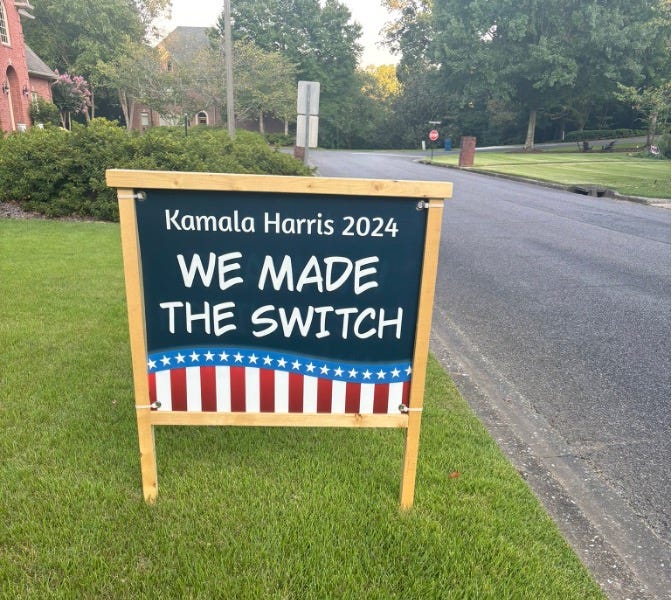
The excitement around the Harris-Walz ticket has given Democrats renewed hope that they can win in November. With that growing hope has come concern, though. What if Trump and his party try to steal the election again? What if they’ve learned enough from their failed effort in 2020 to run a more sophisticated operation in 2024? This is Donald Trump, who consistently maintains in advance of any election that if he loses, it’s been stolen from him. History is full of failed coups that were preludes to successful ones. Past experience teaches anyone who isn’t deliberately trying to ignore it that Trump will not go quietly into the night if he loses in 2024. He has too much at stake—like staying out of prison. In a sense, overturning this election is a more difficult task for Trump. He no longer has the power of the presidency to abuse, no corrupt attorney general to advance his narrative. But if he loses the election he's going to face accountability at the hands of judges and juries in at least four different courtrooms. That just about guarantees that he will do anything to try and avoid a loss. It means Americans who care about the future of our country need to do everything they can to ensure people turn out to vote against him in such overwhelming numbers that there won’t be any room for Trump to try and claim fraud. But there are clear signs Trump is preparing to do just that. For instance, in Georgia, where the stories emerging about the State Elections Board are outrageous. It started when the group, which is appointed, not elected, began putting antidemocratic measures in place for the upcoming election. It’s widely believed Georgia will be a key battleground state. As Lauren Groh-Wargo, the CEO of Fair Fight, a Georgia-based pro-voting organization explained, “earlier this year, the GOP-controlled state Legislature appointed two new members to the five-person panel, transforming it into a Trump-aligned government body. Three of the board’s five members have expressed doubts that President Joe Biden won the state in the 2020 election. The board’s meetings have become a haven for false election conspiracy theories, many based on Trump’s 2020 election lies.” The board has adopted rules in the last few weeks that would let local officials stop vote counts and delay or refuse to certify results if they believe there are any “irregularities.” The changes would increase the workload of already overburdened (and underprotected—think Ruby Freeman and Shaye Moss) election workers, which could also lead to delays in vote counting and certification. Changes like this, in jurisdictions with a history of discrimination, used to require either preclearance from the Justice Department or prior approval from a court. But ever since the Supreme Court gutted Section 5 of the Voting Rights Act in Shelby County v. Holder, states like Georgia have been free to impose measures like this. All that stands in their way are the smart and committed lawyers who continue to find ways to prevent Americans from being denied the right to vote. This type of effort to delay or prevent certification of the results in the presidential election isn’t limited to Georgia though. As Groh-Wargo explains, “Trump’s 2020 election interference playbook hasn’t changed, but the MAGA operation has become more sophisticated. Now, there are election deniers holding local elections positions in Arizona, Michigan, Nevada, North Carolina and Pennsylvania (in addition to Georgia). GOP officials have resisted certifying results in Arizona, Michigan and Nevada.” Joanna Lydgate (our guest for “Five Questions with” back in June) is the CEO at States United, one of the groups committed to a fair election. Along with other organizations that work to support democracy, her work is focused on building lessons learned and successes following the midterm elections, for instance, taking county officials to court if they refuse to certify election results. It's important to understand that certifying election results isn’t discretionary. These officials are directed to certify votes once they are counted, just like Mike Pence was obligated to certify the vote on January 6. The law is clear. That means the people pushing these schemes are rogue actors—as much a part of the Big Lie as Trump was following the 2020 election. Secretaries of State and Attorneys General across the states will be prepared to ensure the certifying officials do their jobs, even if that means going to court. Despite the fact that the courts held firm in 2020, refusing to let Trump steal the election, there are concerns this go round, especially after the Supreme Court’s decision in the immunity case. But here, where the law is unambiguous about the duty to certify election results after a vote count, cases that will mostly go to state courts, there is little room to wobble. Like they were in 2017 where Trump declared a Muslim ban, and again in 2020 after the election, lawyers are prepared to be the heroes. Wendy Weiser who directs the Democracy Program at the Brennan Center explains it clearly. She told me that these plans to hold up election certification are clearly unlawful. So it’s a narrative fight, a fight for the truth. People need to understand that there aren’t legitimate loopholes that would allow Donald Trump to steal the election. “If someone tells you, ‘here’s a trick you can use to steal an election’, be skeptical. We have laws that protect voting rights. We have laws that protect due process…we have state laws that make certification a mandatory nondiscretionary duty.” That’s a solid legal explanation for why we really can have confidence in the courts. We aren’t plowing new ground here like the Supreme Court did in the immunity case. These are long-established state rules for how election votes are finalized. Georgia’s courts, by the way, have consistently ruled that certification of votes is “ministerial”—something officials must do once the counts are complete. The Georgia Supreme Court has said that election officials responsibility in this regard is to disclose the official election returns prepared by the election managers to the public. Will we face challenges this election cycle? Yes, of course we will. But it’s critical to know this new threat to elections that is surfacing, the idea that pro-Trump officials can just refuse to certify them, is clearly illegitimate. There is no hint of lawfulness here. Trump will try to muddy the waters and people who are loyal to him, not the Constitution, may try to claim election results aren’t clear. In some places, lawyers may have to go to court to force them to certify elections. They will win. Knowing this is likely coming underscores how important turnout is in this election. Trump needs to be defeated by such overwhelming numbers of votes that it’s virtually impossible to claim fraud. We need to make sure it’s not close; that there is no vestige of legitimacy to his efforts to interfere with the election. As Americans, we are entitled to vote and to pick our own leaders. Increasingly, even those who have previously supported Trump are turning away. Like these folks in Vestavia, Alabama, part of the metro Birmingham, and a solidly Republican area.
The point is this: this talk of failure to certify elections is frightening. We saw what Trump tried to do in 2020. We know he will try to do it again. But don’t let the fear take hold. Legally, he doesn’t have a legitimate move to make. What he’s trying to do is similar to the kind of voter suppression where voters are told their votes won’t matter so they shouldn’t bother to make the effort. He’s trying to win a narrative war. Here, Trump wants to make his successful cheating seem so inevitable that people will accept it as a fait accompli. He’s gotten away with that type of strategy so often in the past. But he’s not going to here. We are not going to let him do that when democracy is at stake. We’re in this together, Joyce |


Friday, August 9, 2024
VOTER ID & MASS GOP LIES ....TRY FACTS!
THE MAJORITY OF VOTER FRAUD ACROSS THE NATION WAS COMMITTED BY REPUBLICANS....VOTING FOR DEAD PEOPLE?
THE VILLAGES IN FLORIDA OUTDID THEMSELVES.....LOTS OF DEAD RELATIVES & NO PROSECUTIONS....DESANTIS DOESN'T PROSECUTE THE WEALTHY VOTER FRAUDS!
MARK MEADOWS WAS REGISTERED TO VOTE IN 3 STATES AT THE SAME TIME HE WAS BABBLING HIS MANURE ABOUT VOTER FRAUD....HE WASN'T PROSECUTED!
THE WARPED & PARTISAN HERITAGE FOUNDATION HAS A SITE THAT LISTS VOTER FRAUD & CAREFULLY EXCLUDES REPUBLICAN VOTER FRAUD....BUT INCLUDED FLORIDA FELONS WHO WERE WRONGLY LED TO BELIEVE THEY COULD VOTE:
HERITAGE FOUNDATION
‘Totes Legit’ tipster found 282 possible voter fraud cases in Florida; few prosecuted outside The Villages
FLORIDA VOTER FRAUD
New Hampshire voter fraud: 15 convictions since 2016
The Committee for Massachusetts Voter Identification Ballot Question v. GalvinJUSTIA
From 2020:
Voting rights groups sue Galvin over mail-in voting
Say secretary of state must send out ballot applications this week despite funding delay
Massachusetts Republicans are trying to put a voter ID law on the 2022 ballot. Here’s what we know so far.
"We're taking this question straight to the people."
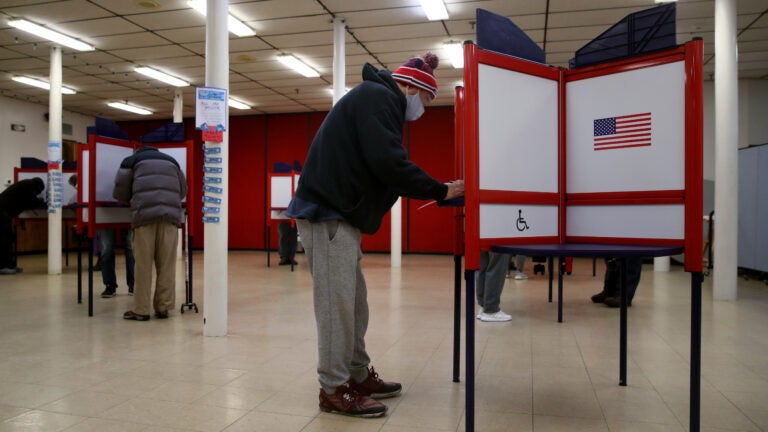
Seeing no path forward on Beacon Hill, leaders of the Massachusetts Republican Party are moving to put a voter ID law on the 2022 ballot.
MassGOP Chairman Jim Lyons sent an email to supporters Sunday announcing a campaign to put a proposed law requiring voters in Massachusetts to present identification at polling places on next year’s ballot.
“What’s clear to me, after serving eight years as a state lawmaker, is that Beacon Hill will never so much as debate the merits of voter ID laws, and that’s why we’re taking this question straight to the people,” Lyons wrote.
In the email, Lyons said the party’s goal is to register at least 2,000 volunteers to collect signatures for the effort.
Supporters must first file their proposed ballot question with Attorney General Maura Healey’s office by Aug. 4. If it meets the state’s constitutional requirements, the next hurdle is collecting at least 80,239 signatures by Nov 17.
THE VOTING DEBATE
With some exceptions (such as for first-time voters), Massachusetts does not ask voters to present any form of physical identification in order to cast a ballot. The new MassGOP ballot campaign also comes as the state’s Democrat-controlled legislature considers reforms to make last year’s pandemic-induced changes to expand voting options — such as mail-in voting and additional early voting — permanent.
Those changes contributed to record-breaking turnout in last year’s election and received support from Republican Gov. Charlie Baker.
However, MassGOP leaders, who backed former President Donald Trump’s unfounded claims of voter fraud, contend that voter ID laws are also popular. Lyons linked to a recent Monmouth University poll that found 80 percent of voters nationally support laws requiring voters to show a photo ID in order to cast a ballot.
Voting rights advocates generally argue that such laws risk discouraging eligible voters from casting a ballot and disproportionately affect people of color and low-income citizens.
According to the ACLU, more than 21 million Americans do not have any government-issued photo identification, and obtaining such identification can be burdensome and costly for lower-income residents.
According to the National Conference of State Legislatures, 36 states — including Connecticut, New Hampshire, and Rhode Island — ask voters to provide some form of identification, ranging from a driver’s license to a bank statement. Half of those states accept forms of identification that do not include a photo. Twenty five of the 36 states have “non-strict” voter ID laws that allow individuals without accepted identification to still vote if they sign a form under oath.
MassGOP vice chair Tom Mountain told Boston.com that their ballot question would require voters to have a government-issued photo identification, though he said exceptions would be made for certain non-photo IDs, “such as college or employment IDs with the date of birth indicated.”
With less than a month to go to file their initiative, the party is still working out some of the other details.
According to Mountain, they’re learning toward proposing a “non-strict” version of a voter ID law, in which those without accepted identification would still be able to vote if they sign an affidavit attesting to their identity (similar to Connecticut’s voter ID rules).
Mountain said the state or municipal governments should also be able to issue free photo IDs to those without one (currently, in Massachusetts, the typical driver’s license costs $50 to get or renew, while non-driver’s ID cards cost $25).
“We must emphasize that voter integrity should be a non-political issue, yet the Massachusetts Republican Party has been forced to resort to a ballot initiative to ensure voter integrity in the Commonwealth because our Democrat run State Legislature has failed to do so, and Secretary of State Galvin has refused to heed our very public requests for voter-ID requirements,” Moutain said in an email.
Secretary of State Bill Galvin’s office noted that he generally opposes photo voter ID requirements “because many voters, such as senior citizens who give up their drivers licenses, do not typically carry photo identification.”
“Secretary Galvin does not want those eligible voters to be unable to exercise their right to vote,” Deb O’Malley, a spokeswoman for Galvin, said Wednesday.
At the federal level, some Democratic leaders have signaled a willingness to accept some voter ID requirements in exchange for other election reforms, such as expanded early voting, automatic voter registration, and a prohibition on gerrymandering. And according to the Monmouth poll, 62 percent of Democrats, as well as 91 percent of Republican, said they support requiring photo IDs to vote.
However, it’s unclear if such rules do what supporters — or detractors — say they will.
Multiple studies have found that even strict voter ID laws do not have much effect on voter fraud — which is already exceedingly rare — or voter turnout. One review of new voter ID laws from 2008 to 2018 released this past May said that whatever “modest effects” the laws had on the participation of minorities may have been offset by efforts of voting rights groups that mobilized in response.
“Our findings suggest that efforts to improve elections may be better directed at other reforms,” the authors of wrote.
Subscribe to:
Posts (Atom)
Ask the Editor: Fox’s Trump Pullback, the Final Midterm Push, and Democrats’ Epstein Plans
LOTS OF POSTS IGNORED BY BLOGGER..... OR REMOVED ON THEIR WHIM! ALL POSTS ARE AVAILABLE ON MIDDLEBORO REVIEW AND SO ON BLOGGER...

-
LOTS OF POSTS IGNORED BY BLOGGER..... ALL POSTS ARE AVAILABLE ON MIDDLEBORO REVIEW AND SO ON Right now, we are standing on the edge of a he...
-
LOTS OF POSTS IGNORED BY BLOGGER..... ALL POSTS ARE AVAILABLE ON MIDDLEBORO REVIEW AND SO ON We love making ice cream, but our mission has ...
-
LOTS OF POSTS IGNORED BY BLOGGER..... ALL POSTS ARE AVAILABLE ON MIDDLEBORO REVIEW AND SO ON We Got In Inside the Broadview ICE Facility De...


