/ msnbc
» Subscribe to MSNBC on TikTok
/ msnbc
» Subscribe to MSNBC on TikTok  / msnbc
» Subscribe to MSNBC on Instagram
/ msnbc
» Subscribe to MSNBC on Instagram  / msnbc
Download our new MSNBC app for the latest breaking news and daily headlines at a glance: https://www.msnbc.com/information/dow...
Follow MSNBC Show Blogs
MaddowBlog: https://www.msnbc.com/maddowblog
ReidOut Blog: https://www.msnbc.com/reidoutblog
MSNBC delivers breaking news, in-depth analysis of politics headlines, as well as commentary and informed perspectives. Find video clips and segments from The Rachel Maddow Show, Morning Joe, The Beat with Ari Melber, Deadline: White House, The ReidOut, All In, Last Word, 11th Hour, and Alex Wagner who brings her breadth of reporting experience to MSNBC primetime. Watch “Alex Wagner Tonight” Tuesday through Friday at 9pm Eastern.
Connect with MSNBC Online
Visit msnbc.com: https://www.msnbc.com/
Subscribe to the MSNBC Daily Newsletter: https://link.msnbc.com/join/5ck/msnbc...
#trump #raskin #2024election
/ msnbc
Download our new MSNBC app for the latest breaking news and daily headlines at a glance: https://www.msnbc.com/information/dow...
Follow MSNBC Show Blogs
MaddowBlog: https://www.msnbc.com/maddowblog
ReidOut Blog: https://www.msnbc.com/reidoutblog
MSNBC delivers breaking news, in-depth analysis of politics headlines, as well as commentary and informed perspectives. Find video clips and segments from The Rachel Maddow Show, Morning Joe, The Beat with Ari Melber, Deadline: White House, The ReidOut, All In, Last Word, 11th Hour, and Alex Wagner who brings her breadth of reporting experience to MSNBC primetime. Watch “Alex Wagner Tonight” Tuesday through Friday at 9pm Eastern.
Connect with MSNBC Online
Visit msnbc.com: https://www.msnbc.com/
Subscribe to the MSNBC Daily Newsletter: https://link.msnbc.com/join/5ck/msnbc...
#trump #raskin #2024election
 |
This case will come down, as we always knew it would, to whether the jury believes convicted liar Michael Cohen. But that’s not as far-fetched of a proposition as it might sound. As far as prosecutors are concerned, we do that all the time. Criminals don’t surround themselves with altar boys. Donald Trump is no exception.
 |
Before Michael Cohen took the stand on Monday, prosecutors had already set a firm foundation for the jury to believe that Donald Trump wasn’t a bystander when the scheme to pay Stormy Daniels was concocted; that Trump was fully aware of its illegality and intended to aid or conceal other crimes.
Cohen’s testimony is that Trump’s strategy in this, as in other distasteful situations, was just as Hope Hicks messaged to everyone in the inner circle of the campaign when news of the Access Hollywood tape broke: “Deny, deny, deny.” It was always about plausible deniability for Donald Trump. That’s how this entire deal was structured. Trump suggested an off-the-books cash payment, but Cohen’s testimony is that ultimately, Trump saw the value in letting Cohen create a shell company to handle the payment. This wasn’t a busy president signing checks without paying attention to the contents. The prosecution has meticulously presented evidence that Trump was always on top of even small expenses, hiring Cohen in part because of his ability to negotiate his bills down. The prosecution will tell the jury it defies belief that Trump would repeatedly sign checks totaling over $400,000 to Cohen, who was given a counselor title but no position of significance in the Trump White House, without questioning them. If Cohen was just being reimbursed for an expense, it would have been a one-time payment. The scheme, grossing the payment up to account for taxes since it was being hidden as income, and spreading it across multiple months while designating it as a retainer for legal services shows guilty knowledge on Trump’s part. In other words, Trump knew. He always knew.
But as obvious as that seems, now that we’ve heard most of the evidence, the question is, will a jury believe the government has proved it beyond a reasonable doubt? That is the only question that will matter when they begin their deliberations. To put it another way, is there any reasonable doubt remaining that Donald Trump knew and approved? And is there any doubt it was about the election? Can they prove Trump intended to aid or conceal another crime as part of the creation of false business records? Today, Michael Cohen testified Donald Trump warned him that as soon as he announced his candidacy, women would begin to come forward. That doesn’t sound like a man who was worried about protecting his wife and family. Had he been, he would not have run for office. Plenty of potential candidates engage in that calculus. Trump didn’t. Instead, he warned his fixer to be ready. Preventing Stormy Daniels from telling her story publicly was all about the election.
This is, in many ways, a documents case, as we discussed last night. The false records are all in evidence. Weisselberg’s handwritten notes documenting the details are too. And then there is Trump’s tweet. After the Stormy Daniels story broke in 2018, he tweeted this:
 |
The Judge ruled that tweet could be shown to the jury.
There really is a tweet for everything, apparently. The monthly invoices Cohen submitted and the checks he received as payment, which went across Trump’s desk in the White House and were signed by him, were fraudulently designated as “retainer” payments for legal works, and the entries were coded as legal expenses. Of course, that is patently untrue. The government has established through multiple witnesses before they got to Cohen that these were reimbursements for the payment to Stormy Daniels, grossed up to compensate Cohen for taxes he would have to pay and other expenses.
Trump claimed the payments were used to prevent “false and extortionist accusations” made by Stormy Daniels from becoming public and that it was a “private” agreement in the sense that no money from the campaign was involved. Of course, had the campaign paid for it and booked it properly, it would be an entirely different situation. By claiming it was a payment for a retainer, when all of the evidence is that it was not, Trump has armed the prosecution with a powerful argument that he cannot be believed, whether he takes the witness stand or not.
Donald Trump supported Michael Cohen as long as Cohen remained loyal to him.
 |
The threat was implicit, and after Cohen began to cooperate—he has said it was because if he didn’t, the investigation could have affected his family—Trump’s tune changed.
 |
For Trump, it’s always about loyalty, not truth. The truth for him is transient, and he is used to convincing people around him to accept his changing truths, his alternative facts if you will, at his whim. But juries don’t like stories that don’t add up, and Trump’s doesn’t.
Michael Cohen’s testimony lined up with other witnesses. His references to his longtime boss as “Mr. Trump” set the tone for their entire relationship, with Cohen always careful to clear everything through Trump in order to show his value and stay in Trump’s good favor. Cohen was in a constant race to collect pats on the head from his boss for a job well done. There were multiple efforts to protect Trump—the Karen McDougal affair and the doorman who pushed a fake story about a love child—where Cohen acted as the fixer for Trump. There are phone records documenting calls Cohen says took place. Cohen’s story, on direct examination, has been consistent, and his demeanor has been serious and believable. “I was following directions,” is Cohen’s mantra.
Tomorrow, after his direct testimony finishes, we will see how Cohen holds up on cross-examination and whether the polite witness who has repeatedly responded “yes ma'am” in response to questions from prosecutor Susan Hoffinger shows up on the cross as well. The defense strategy will be to prod him into outbursts and catch him in contradictions designed to show he cannot be believed. The prosecution will try to get as much of that out of the way during direct examination as it can, in order to minimize any sting and to show the jury the People have nothing to hide. But ultimately, much of this case rests on Michael Cohen’s shoulders and on how well he behaves on cross-examination, leaving any points scored by the defense for prosecutors to take care of in redirect. He must be humble and honest, a painful self-reflection for a man who has been to prison, when the man he says he did it all for denies it and has never been held accountable.
When prosecutors argue they’ve proven their case beyond reasonable doubt when circumstantial evidence is involved, they explain to the jury that if they look at one piece of evidence alone, say the Weisselberg notes, without more, it might not be enough to meet that burden. But when you layer all of the evidence together, you get a bundle that is so solid, there can be no other reasonable explanation for what happened than the People’s explanation case that it was a crime. The prosecution doesn’t have to prove its case beyond any speculative doubts; Trump’s lawyers can’t just say, “well maybe, it could be the case that…” To acquit, it must be a doubt that is reasonable. The Judge will instruct the jury on the law on that point, and the prosecutors will hammer it home in closing argument, even as the defense argues the facts and maintains that the intent that makes these crimes a felony isn’t there. They will reach for that one juror who might hold out, preventing a conviction on even misdemeanor charges. In that sense, Donald Trump is now like any other defendant in a criminal case. His fate is in the jury’s hands. We will know more after we see the rest of his direct testimony and at least the start of his cross-examination tomorrow.
If you appreciate Civil Discourse, I hope you’ll consider sharing it with others and upgrading to a paid subscription if you don’t already have one. Paid subscribers help me devote the necessary time and resources to this work. Paid subscribers also get access to the “Five Questions With” feature on Friday nights. You won’t want to miss it this week, when I discuss what comes after a verdict with a former Manhattan prosecutor.
We’re in this together,
Joyce

10 May 23
Live on the homepage now!
Reader Supported News
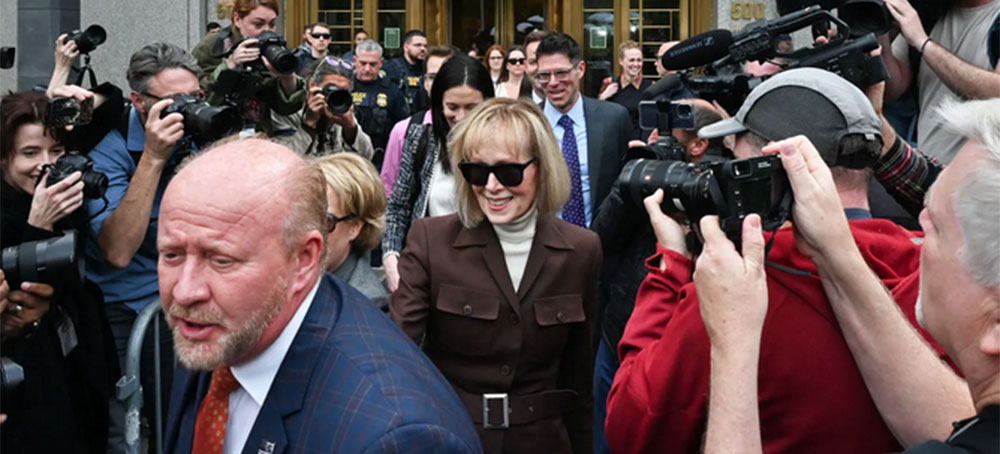
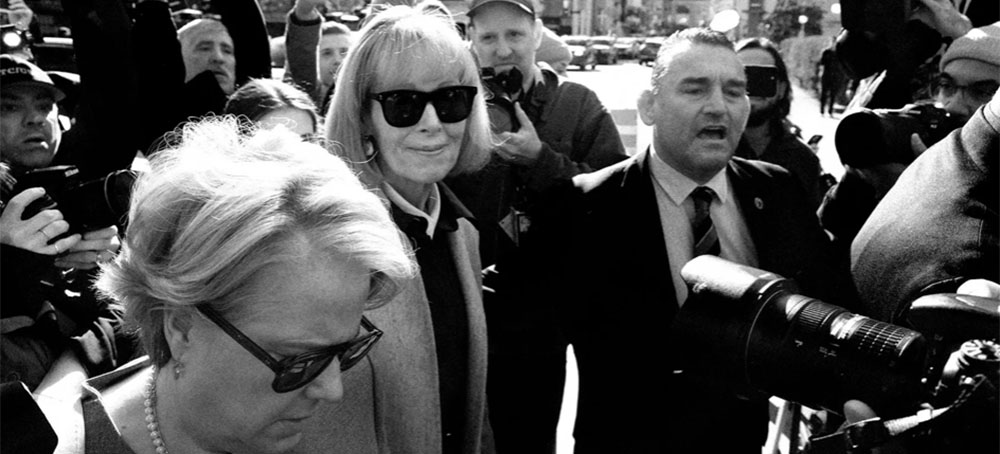
In response to a writer’s accusation of sexual assault, nine jurors in Manhattan finally held Donald Trump accountable.
Carroll, a former advice columnist for Elle and media personality, went public with her allegations in 2019, in a New York magazine article, in which she wrote that Trump forced himself on her in a Bergdorf Goodman dressing room. When she first filed a lawsuit against Trump, a few months after the article ran, he was still the President, and many considered the suit hopeless. How could a private citizen get justice through the courts in a case like this, against Trump of all people? And yet on Tuesday, Carroll was vindicated, in a trial that marks the first time jurors have been tasked with determining whether a former President was a rapist or merely a sexual abuser.
Carroll’s lawyers called Carroll herself to the stand (she was also cross-examined by Trump’s lawyers for two days), and then called two friends whom Carroll told about the encounter with Trump shortly after it happened. They also called two other women who have publicly accused Trump of sexual assault—Jessica Leeds and Natasha Stoynoff—as well as an expert in psychological trauma, and two former employees of Bergdorf Goodman, who both supported elements of Carroll’s account, with one testifying that he had seen Trump in the store. Trump skipped the trial, and his lawyers called no witnesses of their own. Joseph Tacopina, Trump’s lead lawyer, said that his client didn’t need to mount a defense, because his case had “emerged” through cross-examination of Carroll’s witnesses. He also pointed to dredged-up text messages and e-mails in which Carroll’s friends seemed to express concerns and frustrations with her. And he offered a number of implausible counter-theories, such as one in which Carroll and her friends had concocted a scheme to frame Trump based on the plot of a 2012 episode of “Law … Order: SVU.” Carroll’s lawyers made much of Trump’s absence. They also didn’t shy away from politics. Several times during the trial, they played the contents of the “Access Hollywood” tape for the jury, including Trump’s boasts of grabbing women “by the pussy.” During closing arguments, one of Carroll’s lawyers suggested to the jury that they consider the “Access Hollywood” video a “confession.”
“You saw for yourself, E. Jean Carroll wasn’t hiding anything,” Roberta Kaplan, Carroll’s lead lawyer, told the jury on Monday, as the trial reached its conclusion. As her lawyers readily acknowledged, Carroll could not remember exactly what night her encounter with Trump took place. She could find no witnesses who saw the two of them together. And though she told two friends about the assault soon after it occurred, she otherwise kept the story to herself for more than two decades. Trump’s lawyers argued that these gaps undercut Carroll’s credibility. “What they want is for you to hate him enough that you’ll ignore the facts,” Tacopina told the jury during his own summation. Carroll, Tacopina said, was abusing the system, bringing a false claim. “We cannot let her profit to the tune of millions of dollars.” Those lines might have played well with Tacopina’s client, but they didn’t sway the jury, which unanimously found in Carroll’s favor after less than three hours of deliberation. (Trump told Fox News Digital that he plans to appeal, and has “no idea” who Carroll is.)
Trump, despite his denials, appeared to understand the seriousness of Carroll’s claims, as both a legal matter and a political one. “She’s accusing me of rape, of raping her, the worst thing you can do, the worst charge,” he said, in a deposition taken last year. Trump is once again running for President, and recent polling suggests that his opponents in the Republican primaries are wilting in the face of his popularity and the pressure he puts on others to fight on his terms. And yet every month this year has brought escalating legal peril to Trump. Seven years ago, he imagined what his supporters would do if he committed a heinous act on Fifth Avenue. Now it’s no longer hypothetical. It’s a matter of record.
Follow us on facebook and twitter!
PO Box 2043 / Citrus Heights, CA 95611
The adage “boys will be boys” does not work here. Donald Trump is a 76 year old man, he is not an impressionable child. This is who he is.

07 May 23
Live on the homepage now!
Reader Supported News
The 79-year-old writer’s rape case shows what happens to a country that elects a president who so openly embraces degrading women.
The trial, which continues this week, is of course about Carroll, but it also speaks to the state of the feminist movement in America. Trump is no longer in the White House—for now—and for the first time we can look at the carnage of having a president who so openly embraced misogyny. Misogyny, like racism, thrives when it has a cheerleader, when it has someone who gives his supporters permission to engage in it. With racism, we can measure an increase in race-related harassment and violence. For example, hate crimes rose the day after Trump was elected. Counties that held Trump rallies in 2016 saw a 226% increase in hate crimes, according to The Washington Post. But it’s profoundly hard to measure what an increase in misogyny looks like. We certainly saw profound backlash toward Christine Blasey Ford, who accused Supreme Court justice Brett Kavanaugh of sexually assaulting her when they were teenagers. (Kavanaugh has denied the allegations.) Blasey Ford had to effectively go into hiding after coming forward. But it’s important to recognize that unfettered sexism often results in silence—in women opting out of speaking up.
Carroll’s narration of her own experience after coming forward is a pretty good example of the kind of misogyny that Trumpism embraces, and the impact it can have on those brave enough to step up. “It hit me and it laid me low because I lost my reputation. Nobody looked at me the same. It was gone. Even people who knew me looked at me with pity in their eyes, and the people who had no opinion now thought I was a liar and hated me,” later she said, “The force of hatred coming at me was staggering.”
There have been many moments in Carroll’s trial that tangibly laid bare why women don’t report sexual assault. Trump’s attorney, Joe Tacopina, was profoundly aggressive with Carroll, a near octogenarian. “I’m telling you, he raped me whether I screamed or not. I don’t need an excuse for not screaming,” Carroll responded to Tacopina’s repetitive drumbeat of questioning, which the judge Lewis A. Kaplan called “argumentative” and “repetitive” last Thursday.
As if right on cue, Trump offered up the most misogynistic possible response to being accused of sexual misconduct. “And, while I am not supposed to say it, I will. This woman is not my type!” he wrote on Truth Social. It’s not the first time Trump has used this defense against allegations of sexual assault: the idea that a woman might not be attractive enough to rape. After all, Carroll is hardly Trump’s only accuser; at last count 26 women have made allegations of everything from groping to rape against the ex-president (Trump has repeatedly denied the allegations). Caroll’s aren’t an enormous shock to the system, either. Trump’s supporters, including evangelicals, have long reconciled with the idea that more than two dozen women have said their guy sexually assaulted them.
Some Trump supporters will say Carroll’s allegations are part of a larger anti-Trump conspiracy, as Tacopina hinted last week in trial when he pressed the writer on how she came to sue Trump. I’ve somehow been spun into this tale, which starts at a cocktail party I hosted at my apartment where I introduced Carroll to lawyer and Never Trump Republican activist George Conway, who, in turn, introduced her to Robbie Kaplan, the lawyer now representing her. Then there are the people who accuse Carroll of doing this as a cash grab. Former US attorney Joyce Vance made a good point regarding that theory: “Interesting consideration: Trump almost always settles cases when he can. If Carroll wasn’t being truthful & suing because she wanted her day in court, if she was really just after money, she would have settled, taken the cash & spared herself the court proceedings.”
It’s hard to listen to Carroll’s testimony and not be moved by just how lonely and painful it is to be a plaintiff in something like this. She is brave and almost quixotic in her quest for justice. But it’s even harder to watch Tacopina’s questioning and not wonder about all the women who will watch this testimony or read about this trial and decide not to come forward with their own stories. That Carroll is in a courtroom able to make these accusations in front of a jury shows we as a society have made progress around feminism. Yet knowing that Republicans, who are still showing their fealty to Trump, will almost certainly fail this “moral test” yet again, as The New Republic’s Michael Tomasky wrote, is a measure of the damage Trump has done to our culture.
I grew up with a feminist mother, Erica Jong. I always thought we’d eventually get the Equal Rights Amendment ratified. I always believed that progress was a straight line. Then the 2016 presidential election happened, becoming a demarcation line in my outlook about the country. The American people had a choice between the first woman president and a man who, one month before the election, they’d heard bragging on the Access Hollywood tape that he could “grab ’em by the pussy.” Yet, 62,979,879 people did not find boasting about sexual misconduct to be disqualifying. They elected him; there was even a woman who wore a “Trump Can Grab My” T-shirt.
Even if Trump is forced to pay Carroll great sums of money, she will spend the rest of her life afraid, looking over her shoulder, worried. The vitriol and misogyny and hatred that Trump gave permission to won’t ever be put back in Pandora’s box.
Follow us on facebook and twitter!
PO Box 2043 / Citrus Heights, CA 95611
Donald Trump's deposition was played in court in the civil rape trial. On the same day in court, jurors heard the "Access Hollywood" tape. In a surprise twist, Trump's lawyers announced they will not present a defense and they won't have any witnesses. Trump has denied all accusations against him. MSNBC Chief Legal Correspondent Ari Melber reports on the developments and the case.
|
|
LOTS OF POSTS IGNORED BY BLOGGER..... OR REMOVED ON THEIR WHIM! ALL POSTS ARE AVAILABLE ON MIDDLEBORO REVIEW AND SO ON BLOGGER DOESN...