Hello and As-Salaam-Alaikum to each of you. We are now the #2 trending news platform on all of Substack, but we are ranked 13th in paid members. To continue our work, please consider chipping in and becoming a monthly or annual member, OK? Dear Afghanistan. Do not give Trump your air base. You will regret it forever. The United States government only means you harm.For 20 years the U.S. used Bagram to occupy, torture, and destroy Afghanistan. Now Trump says America wants it back. This is empire talking — and it must be refused.
Family, I need to tell you about something that reveals the heart of empire. Donald Trump has been quietly pushing his national security team for months to find a way to retake Bagram Air Base in Afghanistan. He stood in the UK this week and said it plainly: “We want that base back.” Think about the arrogance of that. An American president, speaking of Afghan land as if it were U.S. property to be repossessed. This is colonialism in the year 2025. And it’s why I need you with me to keep telling this truth without fear. Please become a monthly, annual, or founding member. What Bagram IsBagram sits about an hour north of Kabul. It was once a Soviet base, then the Americans took it over after 2001. For nearly two decades, it became the beating heart of the U.S. occupation of Afghanistan. From Bagram, the U.S. launched airstrikes, drone operations, and night raids. Its two-mile runway carried bombers, fighter jets, and cargo planes. Every Afghan knew that Bagram was not just a military hub — it was also infamous as a site of torture, interrogation, and indefinite detention. For Afghans, Bagram meant fear. It meant humiliation. It meant the power of empire overhead and at the gate. When the U.S. finally left Afghanistan in July 2021, they abandoned Bagram. They stripped equipment, destroyed what they could not take, and left. And in that moment, Bagram returned to Afghan hands — as it should. Empire Wants It BackNow, Donald Trump says the U.S. wants Bagram again. He claims it is needed to surveil China, to access rare earth elements, to target ISIS, to plant an outpost of American power. He even claimed — falsely — that Bagram is near where China makes nuclear missiles. Family, this is how empire speaks. Not of Afghans. Not of sovereignty. Not of homes and families. But of land as asset, as leverage, as real estate to be repossessed. Not ONCE did Trump mention how this base would help Afghanistan - because it won’t. This is the same mindset Israeli minister Bezalel Smotrich revealed when he called Gaza a “real estate bonanza.” Empire sees no people, only property. Colonial ContinuityFew books have shaped me like Dr. Walter Rodney’s How Europe Underdeveloped Africa. Rodney explained that underdevelopment was never an accident. It was engineered. Colonial powers extracted wealth while leaving nations broken. At the Berlin Conference of 1884–1885, European powers sat around a table — with not a single African present — and carved Africa into territories. They called it the “Scramble for Africa.” Land was divided like spoils. People were reduced to obstacles. Trump saying “we want Bagram back” is the same colonial logic. A table full of outsiders deciding Afghan land belongs to them. It is the Berlin Conference in modern form. And remember: Rodney himself was assassinated at just 38, killed for telling these truths about colonialism. His warning still echoes: colonial profiteering always ends in blood. A Message to AfghanistanLet me say this directly to Afghanistan’s leaders, to the Taliban who now govern, and to every Afghan who hears my voice: do not allow the United States to retake Bagram. Do not trust their words. Do not believe their promises. For twenty years, Bagram was the launchpad of drones and death. It was the warehouse of prisoners and torture. It was the foundation of permanent occupation. If America returns, it will not be for peace. It will not be to help Afghanistan. It will be for rare earth minerals, for surveillance of China, for strategic power in the region. It will be for control. The U.S. has nothing but ill intentions for Afghanistan, for the region, for the Ummah. The Pattern of LiesNotice the consistency. Lies always accompany empire. Lies about Gaza to excuse genocide. Lies about Bagram’s proximity to Chinese missiles to excuse occupation. Lies about why empire needs to be everywhere, always. Empire invents stories, repeats them, and plants them in the mouths of presidents and generals. They justify theft with words. They cloak land grabs as security. They call occupation a gift. But Afghans know what Bagram was. They lived it. They do not need to be told what another American return would mean. Family, Pause With Me HereIf you see the pattern — from Berlin to Kabul, from Gaza to Bagram — share this truth. Do not let silence harden into complicity. Why It MattersAfghanistan and Palestine are not separate struggles. They are both chapters in the story of empire treating Muslim land as disposable. Both peoples have been told their homes are assets, their nations are projects, their futures are bargaining chips. This is not geopolitics. It is colonialism. The same system that carved up Africa, the same system that starved India, the same system that enslaved and dispossessed — alive and unashamed in 2025. When Trump says “we want Bagram back,” he is not speaking for Americans. He is speaking for empire. And it must be refused. Stand With Me Against SilenceMainstream outlets will frame this as strategy. They will call it leverage. But family, we must call it plainly: this is empire trying to recolonize Afghanistan. And I need you with me to keep naming it. Please become a monthly, annual, or founding member. The only reason I can say this without censorship is because this space is powered by you. Empire will never stop hungering. It is never satisfied. It will always want more. Unless we stop it. Silence is complicity. Silence is complicity. Silence is complicity. Love and appreciate each of you.
Keep Reading, Keep FightingFamily, keep learning, keep sharing, and keep fighting with me. Here are three free posts I wrote recently that connect directly to this struggle:
|


Climate Change has deep historical Roots – Amitav Ghosh explores how Capitalism and Colonialism fit in
By Julia Taylor, University of the Witwatersrand and Imraan Valodia, University of the Witwatersrand | –
(The Conversation) – Amitav Ghosh is an internationally celebrated author of 20 historical fiction and non-fiction books. The Indian thinker and writer has written extensively on the legacies of colonialism, violence and extractivism. His most famous works explore migration, globalisation and commercial violence and conquest during the colonial period, against the backdrop of the opium trade in the 1800s.
Caroline Southey, from The Conversation Africa, asked economics professor Imraan Valodia and climate and inequality researcher Julia Taylor about the significance of his work.
What has Ghosh contributed to our understanding about the root causes of climate change?
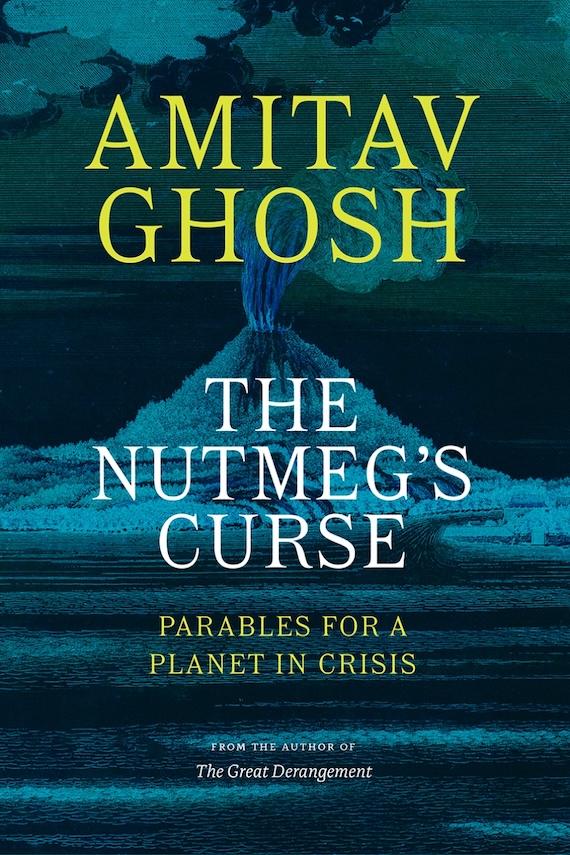
Julia Taylor: In Ghosh’s recent non-fiction book, The Nutmeg’s Curse: Parables for a Planet in Crisis, he used his storytelling prowess to outline the roots of climate change within two systems of power and oppression: imperialism and capitalism.
Imperialism is the expansion of influence over other countries through military force and colonisation. It usually entails the destruction of the environment to support imperial interests.
Capitalism is the dominant economic system where ownership of the means of production (industry) is private. Private actors are driven by profit and growth, which has relied on combustion of fossil fuels.
What Ghosh makes clear is that violence and destruction of the environment are key to capitalism, as they were to colonialism.
Imraan Valodia: Ghosh challenges us to think more deeply about the role of conquest and violence in shaping the planetary crisis we’re facing. And the need to reshape our economic and social relations to address climate change. He does this with remarkable acumen and clarity in another of his works of non-fiction, The Great Derangement. In the book he seeks to explain our failure to address the urgency of climate change. He asks very powerfully whether the current generation is deranged by our inability to grasp the scale, violence and urgency of climate change.
He uses the history of nutmeg to illustrate some of his main points. What does he draw from this history?
Julia Taylor: The story of the nutmeg is one among many of conquest of both people and land during colonisation which led to the industrial revolution and the explosion of greenhouse gas emissions.
In the present day these conquests take different forms. But they continue, particularly in the context of mining and extractivism.
Imraan Valodia: Ghosh traces the history of the household spice – nutmeg – all the way to its origins in the Banda Islands of Indonesia. He uses the analogy of the nutmeg to explain how colonisation of land and people has led to the climate disaster.
The nutmeg was harvested from trees in the Banda Islands and traded by the Bandanese for centuries. With the growth in value of spices, various European countries sought to claim exclusive rights to the nutmeg trade in the Banda Islands. The local population resisted. However, in 1621, representatives of the Dutch East India Company chose to destroy the settlements of the Bandanese population and massacre or enslave anyone who could not escape, to gain control over the nutmeg trade.
Ghosh explains these horrifying events in the context of Anglo-Dutch tensions and the trend of empire in Europe, sanctioned by religious beliefs of racial superiority.
A major theme of his work is the link between imperialism and the planetary crisis. What’s his main line of argument?
Julia Taylor: Ghosh argues in The Nutmeg’s Curse: Parables for a Planet in Crisis that
the discussion of climate change, as of every aspect of the planetary crisis, tends to be dominated by the question of capitalism and other economic issues; geopolitics, empire, and questions of power figure in it far less. (p116)
However, he highlights that
the era of Western military conquests predates the emergence of capitalism by centuries. Indeed, it was these conquests, and the imperial systems that arose in their wake, that fostered and made possible the rise to dominance of what we now call capitalism … colonialism, genocide and structures of organised violence were the foundations on which industrial modernity was built. (p116)
Imraan Valodia: This argument forces us to grapple with both capitalism and the dominance of the west in our understanding of climate change. It highlights the power dynamics and violence which enabled the destruction of many lands in the form of deforestation, industrial agriculture, mining and more.
To respond to climate change, we need to rethink these dominant systems and relationships with land and the environment. This can be linked to the need to address inequality and power dynamics if we are to have any hope of addressing climate change.
Professor Valodia will be hosting Amitav Ghosh for a series of events at the University of the Witwatersrand in South Africa from 10 to 12 September 2024. The university has partnered with the Presidential Climate Commission, the Wits Institute for Social and Economic Research (WiSER) and the University of Pretoria to host the sessions.
Julia Taylor, Researcher: Climate and Inequality, University of the Witwatersrand and Imraan Valodia, Pro Vice-Chancellor: Climate, Sustainability and Inequality and Director: Southern Centre for Inequality Studies., University of the Witwatersrand
This article is republished from The Conversation under a Creative Commons license. Read the original article.


