Showing posts with label 2020 PRESIDENTIAL ELECTION. Show all posts

Thursday, August 27, 2020

RSN: Norman Solomon | Time to Defeat Trump - Without Make-Believe About Biden


Reader Supported News
27 August 20


Will RSN Survive the Political Season?

Right now we are competing with a wide array of high-powered political campaigns with sophisticated fundraising methods. We are hurting.

Please try to remember, when the smoke clears, RSN will be there. But we’ll need a budget to get there.

Put something aside for RSN, we need it.

Marc Ash
Founder, Reader Supported News

Sure, I'll make a donation!


Update My Monthly Donation


If you would prefer to send a check:
Reader Supported News
PO Box 2043
Citrus Hts, CA 95611


Reader Supported News
27 August 20

It's Live on the HomePage Now:
Reader Supported News


The Ratio of Readers to Donors is Staggering - The problem is simple, for every “1000” readers who come to Reader Supported News “1” donates. Give us a hand here folks. / Marc Ash, Founder Reader Supported News

Sure, I'll make a donation!


RSN: Norman Solomon | Time to Defeat Trump - Without Make-Believe About Biden
Joe Biden. (photo: Getty)
Norman Solomon, Reader Supported News
Solomon writes: "One result of the Republican convention will be a drop in the number of progressives who are in denial about the Trump regime's momentum toward fascism. This week's relentlessly unhinged GOP gathering has probably done more to win votes for Joe Biden from the left than last week's Democratic convention did. And that points up a problem."

The people running the Biden show have been trying hard to woo Republicans, while the affection remains largely unrequited. Mainstream media keep featuring VIP anti-Trump Republicans, but few registered voters have defected from Trump. Recent polling data continue to show the electoral folly of messaging to cultivate “Biden Republicans” while damaging the turnout prospects from the Democratic Party’s progressive base.

Neither the Democratic nominee nor his media echo chambers have much use for Bernie Sanders supporters or genuine progressives overall, who now rarely get words in edgewise — even though they represent a major chunk of the electorate (many times that of the phantom “moderate Republican voter”).

During the spring, the Biden campaign extended a few olive branches in a progressive direction, but some of them morphed into sticks in the eyes of Bernie convention delegates and their constituencies — whether in the form of the eleventh-hour deletion of a platform provision to end fossil-fuel subsidies and tax breaks, or the suppression of the delegates’ vote tally that had more than 1,000 voting against the platform mostly because it lacks Medicare for All. In a non-virtual convention or a country with less corporately biased media, such dissent from a party platform would have been big news.

The imperative of preventing a second Trump term is roaring at us every moment. Some progressives mistakenly believe that means we should melt into the ranks of Biden boosters and otherwise keep quiet until after the election. On the contrary. For instance, continuing to insist that the Democratic Party must take a clear stand for Medicare for All is not only the morally right thing to do; it’s also good politics in 2020, as polling clearly shows.

Nor should we pretend that Biden doesn’t have a five-decade record that is very far from progressive. Reasons to distrust him are profuse. But this presidential election isn’t really about Biden, who’s a garden-variety corporate Democrat. It’s about a clear and present threat to democratic capacities in the United States.

The irreversible fork in the historic road of this election was aptly summed up by an activist and scholar with a long history on the left, H. Bruce Franklin, who concluded a new article this way: “Even in these dark days, light is visible. In my 86 years as an American, I have never witnessed a progressive movement as broad and deep as the one sweeping across the nation today. If Biden and the Democrats win in November, this movement will have room to thrive. If not, it will be crushed.”

Progressives should be a leading force in a united front against Trump for the next 10 weeks. We must go all out, so that we — and progressive movements — are not crushed.

There’s no point in arguing about whether progressives should vote for Biden in “safe states” like New York or California; such discussions are at best a waste of time. Whether Trump can remain president for another four years will hinge on the votes in a dozen swing states.

Professor Franklin takes aim at the disconnected-from-facts argument sometimes heard (disproportionately in reader comments on some progressive websites) that the two parties are, in essence, indistinguishable: “Really? If you can’t see glaring differences between the Supreme Court justices chosen by the two parties and their votes crucial to our lives, your name might be Magoo.”

And Franklin added: “Compare the Democrats: Ruth Bader Ginsburg and Stephen Breyer (Clinton appointees); Sonia Sotomayor and Elena Kagan (Obama appointees) to the Republicans: Clarence Thomas (appointed by George H. W. Bush to take the place of the great Thurgood Marshall, appointed by LBJ); Samuel Alito and John Roberts (appointed by George W. Bush); and Neil Gorsuch and Brett Kavanaugh (appointed by Trump). I agree with Mitch McConnell that there is no more important outcome of presidential elections than the composition of the Supreme Court, an outcome that will probably be crucial for decades after the four- or eight-year term of Donald Trump. For starters, who will get to appoint the successor to the heroic Justice Ruth Bader Ginsburg? The same president who will get to appoint the successor to the 82-year-old Justice Stephen Breyer. If it’s Trump, those two will be replaced by two more Kavanaughs, or worse if possible. Whatever Trump wants to be the law of the land will be validated by that truly supreme court.”

Franklin makes a broader point: “On health care, public education, voting rights, civil rights, the environment, abortion rights, immigration, minimum wages, union rights, and taxation of the wealthy, every vote in the House and Senate splits right along party lines. And these party lines are drawn along the lines of the voting bases of the two parties. The Republican Party today is the party of white supremacy.”

Denial of such realities is dangerous. As my colleagues at the #VoteTrumpOut campaign point out, “For every undocumented family seeking asylum, for every woman seeking access to reproductive healthcare, for every young person fighting to avert climate catastrophe, for every parent afraid of gun violence at their children’s school, for every working class family hoping for some relief from the medical and economic fallout of the coronavirus, life will be very different under a Biden presidency than under four more years of Trump.

“And crucially, Biden is moveable. We’ve already shown that with mass pressure, we can push him to support more progressive policies. Trump, on the other hand, is immune to public persuasion or protest. With a Biden presidency, a disciplined and mobilized left could extract significant victories. With another Trump presidency, the left would have few options and could face new levels of government repression. Our democracy, our planet, and our human rights would continue to sustain enormous — and potentially irreparable — damage.”

This is our political crossroads.


Norman Solomon is co-founder and national coordinator of RootsAction.org. He was a Bernie Sanders delegate from California to the 2016 Democratic National Convention. Solomon is the author of a dozen books including War Made Easy: How Presidents and Pundits Keep Spinning Us to Death.

Reader Supported News is the Publication of Origin for this work. Permission to republish is freely granted with credit and a link back to Reader Supported News.

READ MORE


Contribute to RSN

Update My Monthly Donation


Thursday, August 20, 2020

POLITICO NIGHTLY: Why Biden’s sleepy convention worked


POLITICO Nightly: Coronavirus Special Edition

BY CHARLIE MAHTESIAN AND RENUKA RAYASAM

Presented by Facebook

With help from Myah Ward

NIGHT 4 — Watch Joe Biden’s acceptance speech in Wilmington, Del., to close out the DNC. Live video and the latest news and analysis can be found at POLITICO’s DNC hub: politico.com/dnc. Pregame starts with a live episode of “Four Square” at 8:30 pm ET.

SNOOZE, YOU WIN With Joe Biden’s acceptance speech looming as the only bit of suspense left, it’s not too early to turn to what the first virtual convention actually accomplished.

The answer: a lot.

The real value of this year’s convention is what didn’t happen. The first three days of online-only programming largely went off without a hitch. With no delegates in attendance, there were no disruptive protests from Bernie Sanders dead-enders. No one was booed on national television. No one gave an off-message interview. There was tough criticism of President Donald Trump, but no paroxysms of rage directed toward the president.

Trump and the GOP have spent months painting a picture of a radical, socialist mob led by Alexandria Ocasio-Cortez, who played only a minor role in the public-facing part of the convention. The party platform, in reality more progressive than any in recent decades, got very little scrutiny.

There may not be any shots of delegates swooning or lustily cheering for Biden, but the man often derided by Republicans as a stooge in AOC’s army comes out of the virtual convention looking like an eminently decent man.

A newsless, drama-free convention was essential to Biden’s bid to deny Trump a second term. For all the bad polls and flashing alarms about the state of his re-election effort, despite the pandemic and the seemingly endless supply of accounts of wild White House dysfunction, the president is still within striking distance of victory. He remains a viable option for many voters across the swing state map. A convention marked by anti-Trump screeds and chaotic scenes of protest would have badly damaged Biden’s prospects as a safe harbor for some of those voters.

A new poll released on the eve of Biden’s acceptance speech in one of the most important battleground states — Pennsylvania — spells out the challenge ahead for the former vice president. Biden leads Trump there, but within the margin of error. Trump’s favorability rating is underwater, but so is Biden’s. Perceptions about Trump’s stewardship of the economy — notwithstanding of the economic dislocation caused by the coronavirus — keep him in the hunt.

Against that backdrop, Democrats couldn’t afford a spectacle this week, one that might have bolstered the Republican charge that the party is in the throes of Trump derangement syndrome. For now, thanks to the wonders of a virtual convention, they don’t need to worry.

Welcome to POLITICO Nightly: Coronavirus Special Edition. This profile of two British orthodontists is utterly fascinating. Reach out rrayasam@politico.com or on Twitter at @renurayasam.


A message from Facebook:

Facebook launches new Voting Information Center. Facebook is building the largest voter information effort in US history, starting with the new Voting Information Center, where you can find the latest resources about voting in the 2020 election. Our goal is to help register 4 million voters. Explore our new Voting Information Center now.


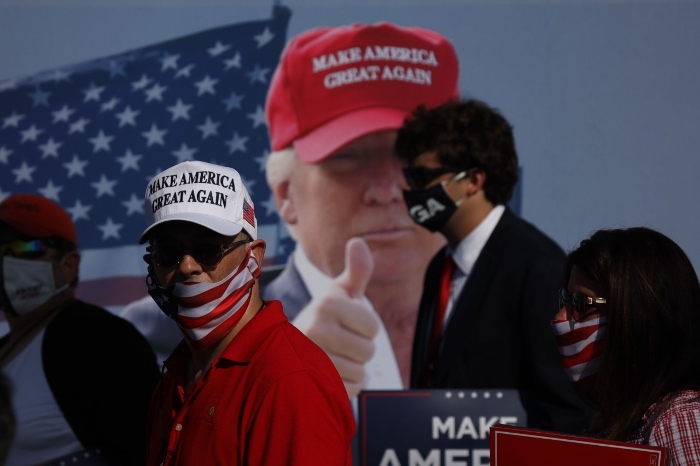
Supporters of President Donald Trump leave a Trump rally while wearing masks at Mariotti Building Products in Old Forge, Pa. Only a limited number of supporters were allowed into the outdoor venue and kept social distant using appropriately placed chairs.

Supporters of President Donald Trump leave a rally while wearing masks at Mariotti Building Products in Old Forge, Pa. Only a limited number of supporters were allowed into the outdoor venue. | M. Scott Mahaskey | POLITICO

FIRST IN NIGHTLY

ONE PLAN, TWO AMERICAS  Biden is preparing to take office in January with a unified national plan to defeat Covid-19, but should he win the presidency, he would not have a unified nation ready to follow him, health care reporter Alice Miranda Ollstein writes.

Large swaths of Americans, suspicious that the coronavirus threat is being exaggerated to harm Trump’s re-election prospects, are likely to resist a new Democratic president’s more aggressive public health measures. And many Americans are skeptical of a vaccine that may or may not be available next year.

Depending on what happens in November, Biden could face a Republican Senate, with its own agenda and approach, or a closely divided Democratic one, with little room to maneuver. There are also big unknowns about the transition, whether a defeated Trump would have his administration collaborate from November to January to ensure a smooth handoff, or whether he would withhold access and information until Biden is sworn in Jan. 20. Biden’s allies wonder, too, whether Trump or his supporters would inflame conservative backlash against masks and other measures that Biden would promote.

Biden’s team says his approach to the virus would rely on science, outreach and consistency. The policies have been under development since the early days of the pandemic, when Biden started pulling together a team of veteran public health officials and disease experts — many of whom he had worked with in the Obama administration on Ebola, Zika and the H1N1 flu. As the coronavirus surged over the summer, Biden kept retooling and expanding his pandemic plans, adding guidance on what the federal government should do to address racial disparities, reopen schools and distribute a vaccine. But even in the best-case scenario, with an effective vaccine and enough of the population willing to take it, the virus is still likely to dominate at least the early stages of a Biden presidency.


PLUG IN WITH PLAYBOOK AT THE DNC : Join POLITICO Playbook Co-authors Anna Palmer and Jake Sherman from Aug. 18 to 20 for "Plug in with Playbook," our new political show making its virtual debut at this year's conventions. Get the latest developments on presumptive nominee Joe Biden's campaign, analysis of down-ballot races, a look at this cycle’s swing states, along with other election-related updates. Featured guests include DNC chair Tom Perez, convention CEO Joe Solmonese, Biden campaign senior adviser Symone Sanders, Sen. Tim Kaine (D-Va.) and others. WATCH LIVE.


COVID-2020

POLL POSITION — In most polls, Biden has a significant lead over Trump. But four years ago, Hillary Clinton also had an August lead. Her Election Day loss in the Electoral College stunned most observers. Your host talked to POLITICO polling guru Steve Shepard over Slack about what the polls might be missing this time around, whether candidates can expect a convention bounce and to try to get him to admit that polls aren’t perfect. This conversation has been edited.

Are there aspects of the race that the polls are missing?

Traditionally, after Labor Day, public pollsters make an important change in their methodologies: They try to figure who is going to vote, and who isn't. Flipping that switch to figuring out who is a certain or likely voter is always difficult.

There's one reason why it might not be as big of an issue this year: Poll after poll shows unprecedented interest and enthusiasm in this election. But at the same time, between coronavirus — and who knows what that's going to look like come the fall? — and some of the issues we’ve seen lately with mail ballots, there are new and different questions about getting the right mix of voters in your poll to reflect the eventual electorate that participates.

Still, a lot of people I speak with who voted for Trump in 2016 might have soured on him, but they will still vote for him over Biden. They just might not tell a pollster.

There’s been a lot of research into whether there is a significant share of Trump voters who are lying to pollsters about their support for the president because they see it as a socially undesirable answer. Most of those studies show it’s not a factor. To the extent Trump outperformed his 2016 polling on Election Day, it was because late-deciders moved toward him, people who said they hadn't made up their mind in pre-election polls. Some Republican pollsters will dispute that, and one election is a small sample size to prove any effect does or does not exist. But I would note that polls this year show there are fewer undecided voters or people who indicate in polls they will vote for a third-party candidate.

Expecting any kind of convention bounce for Biden?

The huge convention bounces of decades ago appear to be a thing of the past. And I think that with President Trump’s extraordinarily stable (and low) approval ratings over the past three and a half years, there just isn’t much room for the electorate to move between the two candidates.

Can’t you admit that polls aren’t perfect!!

Of course! But without polling, everyday Americans would only get to tell their leaders and the rest of the country what they think about them and the issues facing the nation every two or four years. One thing I’ve come to believe more and more in recent years in journalism is that we need to listen to people more. Polls are a great way — the best way — to do that.

Badgering the voters  The New Swing State Map heads to Wisconsin, a state Democrats feel the Clinton campaign muffed in 2016. Charlie, Eugene Daniels and Natasha Korecki discuss the keys to winning the crucial Midwestern state, including Milwaukee’s suburban counties and its Obama-Trump voters.

Nightly video player of New Swing State Map on Wisconsin

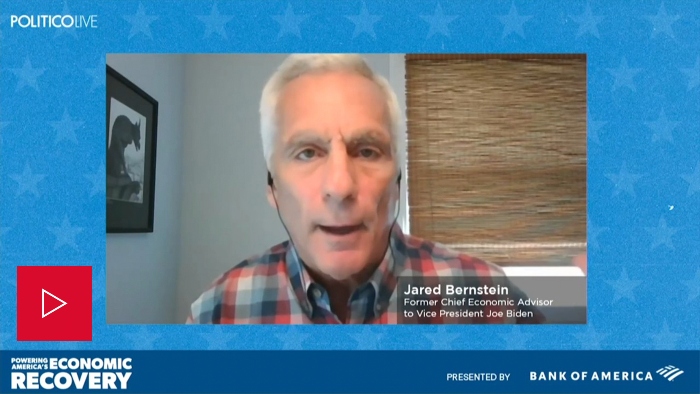
‘Competing impulses’ — Former Biden chief economic adviser Jared Bernstein said economic conditions would determine whether a Biden administration raised taxes in its first year in office. “Biden is extremely committed to pay-fors for his permanent initiatives,” Bernstein told chief economic correspondent Ben White today.

Nightly video player of interview with Jared Bernstein

ASK THE AUDIENCE

Nightly asked you: How have your convention viewing plans shifted with the changes in format and location? Do you plan on watching more or less? Do you have any traditions that you've had to alter or cancel? Send us your thoughts, and we'll include select responses in Friday's edition.

AROUND THE NATION

5 POSTAL CRISIS MYTHS Everyone seems to be worried about the U.S. Postal Service. Mail delays during Covid-19 are stoking fears that the agency is collapsing right when we need it most. Then Trump stoked even bigger fears by telling Fox Business News that he might deliberately starve the post office of money to block mail-in voting. The Postal Service is the nation’s favorite federal agency, and even Trump seemed to realize he’d overstepped; he soon tweeted “SAVE THE POST OFFICE!”

People aren’t wrong to worry, Kevin Kosar writes for POLITICO Magazine: The Postal Service really does have big problems, and it really will be central to the election this year. The problems just aren’t the ones everyone is panicking about. Here’s what’s really going on with the 240-year-old agency.


Advertisement Image 

 
FROM THE DEFENSE DESK

PENTAGON HEALTH HICCUPS  Earlier this week, POLITICO reported that the Pentagon was considering cutting military health care by more than $2 billion in the middle of the pandemic. Then, Trump jumped in and tweeted that the proposal “has been firmly and totally rejected by me.” In the latest POLITICO Dispatch, Lara Seligman and Dan Diamond discuss how they broke the story — and what it’s like to have the president confirm your reporting.

Play audio

Listen to the latest POLITICO Dispatch podcast

NIGHTLY NUMBER

7,424

The number of days of Navy maintenance delays at four shipyards for vessels with completion dates between fiscal 2015 and 2019, according to the Government Accountability Office. Military readiness and the time sailors have to train on aircraft carriers and submarines are taking a hit, the government watchdog found today. (h/t Sarah Cammarata)

THE GLOBAL FIGHT

OPENING SHOT The Kremlin shocked and excited the world when it announced that it had already created and approved a coronavirus vaccine, with Russian President Vladimir Putin’s daughter among those inoculated. The U.S. stock markets spiked briefly on the news.

Western media, however, quickly rained on Russia’s parade by pointing out that the vaccine’s creator, Moscow’s Gamaleya Research Institute, hadn’t been transparent about its testing process. The vaccine hadn’t completed Phase III trials, and Gamaleya has never made public its Phase I and II testing.

At home in Russia, the reaction has been equally mixed, Vijai Maheshwari writes. The development of the vaccine — named Sputnik V, an allusion to the Soviet Union’s glory days during the space race — is a major PR victory for Moscow. Local media sites were quick to celebrate with headlines like “Russian vaccine and Putin’s daughter win over Global Media.”

Yet, even as many common Russians professed pride in the achievements of their scientists, the medical community is a lot more skeptical. A recent poll shows that 1 in 2 doctors have reservations about the inoculation, with two-thirds concerned about insufficient data proving its effectiveness, and others worried that it was developed “too fast.”


INTRODUCING POLITICO MINUTES: An unprecedented campaign season demands an unconventional approach to news coverage. POLITICO Minutes is a new, interactive content experience that reveals the top takeaways you need to know in an easy-to-digest, swipeable format delivered straight to your inbox. Get a breakdown of what's been learned so far, why it matters, and what to watch for going forward. Sign up for POLITICO Minutes, launching at the 2020 Conventions.


PARTING WORDS

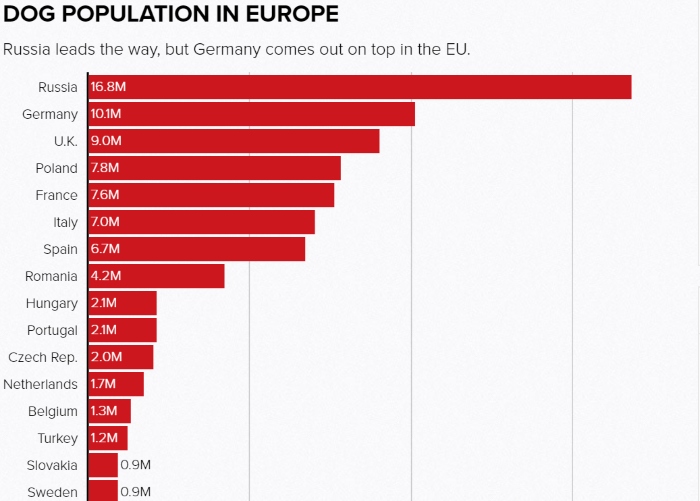
Chart of dog population in Europe

Fediaf | POLITICO

BERLIN’S DOG DAYS OF SUMMER  Germany is set to outlaw the quick after-dinner walk around the block with the dog. In draft legislation unveiled this week, dog owners in Germany will need to make sure they walk their canine pet twice a day for at least an hour in total as part of reforms to animal welfare rules.

The aim is to make life better for the country's millions of house-trained dogs, but not everyone is happy, Joshua Posaner and Nette Nöstlinger write. A commentary in tabloid Bild described the plan as "the most insane idea that a ministry has ever come up with in living memory," questioning whether such a system is even enforceable.

“The idea is good, it's dog-friendly," said Karin Revolter, out walking her Maltese dog in Berlin’s central Tiergarten park today. “But yes, how should you control it, that's difficult. I go for a walk with my dog five times a day, it needs it. “I also know some, here in Berlin, who don't go out with the dog often enough,” she added.


A message from Facebook:

How Facebook is preparing for the US 2020 election

— Launched new Voting Information Center
— More than tripled our safety and security teams to 35,000 people
— Implemented 5-step political ad verification
— Providing greater political ad transparency

Learn about these efforts and more.


Did someone forward this email to you? Sign up here.


Follow us on Twitter

Renuka Rayasam @renurayasam


FOLLOW US


POLITICO, LLC 1000 Wilson Blvd. Arlington, VA, 22209, USA


Sunday, August 16, 2020

RSN: Bernie Sanders | For Once in His Life Donald Trump Was Actually Honest


Reader Supported News
16 August 20


Whatever It Takes, We Need Funding

This may not be easy and it may not be fun, but this organization needs some cash to continue operation. This is where we need to meet the challenge. Right here right now.

Time to get onboard.

Marc Ash
Founder, Reader Supported News

Sure, I'll make a donation!


Update My Monthly Donation


If you would prefer to send a check:
Reader Supported News
PO Box 2043
Citrus Hts, CA 95611


Reader Supported News
15 August 20

It's Live on the HomePage Now:
Reader Supported News


A PERSON WHO JUST LOST THEIR JOB GAVE US $10 - We offered to give the money back but they said no, “Use the money to some good out there.” That person understands what we are trying to do, what RSN is here for. Is there someone out there that has a job that can match that donation with what they can afford? With the greatest respect. / Marc Ash, Founder Reader Supported News

Sure, I'll make a donation!


RSN: Bernie Sanders | For Once in His Life Donald Trump Was Actually Honest
Bernie Sanders. (photo: Antonella Crescimbeni)
Bernie Sanders, Reader Supported News
Sanders writes: "Yesterday he made it very clear that he wanted to do everything possible to suppress the vote and make it difficult for people to participate in November's elections."

He told the American people that he was going to defund and destroy the United States Postal Service so that, during this pandemic, they cannot have the opportunity to vote for president and in other important races. In other words, he is forcing people to make a choice between getting sick and even dying, or casting a ballot. Outrageous.

Trump's theory, which is likely correct, is that a low voter turnout is what he needs in order to hand him a victory. Let's be clear. Trump is willing to destroy democracy in order to win this election.

Elections should be about candidates making the best case they can to their constituents and letting the voters decide. What elections should not be about in a democratic society is winning because your opponents are prevented from voting. And that is exactly what Trump is doing right now.

At this unprecedented moment in the modern history of our country — at a time when we will depend on voting by mail like never before — we must not allow Trump to sabotage this election. We must make it easier, not harder, for people to vote.

This is the most consequential election of our lifetimes, and the outcome will determine the very future of our democracy. It is crucial that voting by mail is widely available, and we need a fully funded Postal Service in order for that to happen.

That is why I am asking:

Sign my petition — tell Congress to act immediately to provide financial assistance to the United States Postal Service in order to fund vote-by-mail efforts for the November election.

Donald Trump is moving our country in an authoritarian direction and is attempting to dismantle the foundations of our democracy. Democracy must be saved. Trump must be defeated.

Thank you for adding your name to demand that Congress fund the Postal Service so voters can receive their mail-in ballots and safely participate in November's elections.

In solidarity,

Bernie Sanders

READ MORE


Contribute to RSN

Update My Monthly Donation


Friday, August 14, 2020

POLITICO NIGHTLY: Covering Biden-Trump in your pajamas


POLITICO Nightly: Coronavirus Special Edition

BY RENUKA RAYASAM AND ELI OKUN

Presented by

With help from Myah Ward

OFF THE TRAIL — Put covering a presidential campaign on the long list of things the pandemic has upended. The campaign reporters who normally spent the years and months leading up to a presidential election on the road — living out of hotels, attending rallies and events and nominating conventions, meeting potential voters and grabbing drinks with campaign staffers — are now trapped in their homes.

And for the reporters who nabbed a career-making chance to cover their first presidential, it’s been an especially devastating blow.

“I feel so bad for reporters who are doing this for the first time,” said Peter Baker, chief White House correspondent for The New York Times. “It’s not nearly as fun or exciting as being on the trail. Zoom does not substitute for that.”

Kat Stafford’s first, and only, out-of-state campaign reporting trip was to Houston for Super Tuesday on March 3. On the flight back to her home in Detroit, she saw a couple wearing masks and wiping down the seats. A week later, Stafford, who joined the Associated Press as a national race and ethnicity writer in late February, began covering the campaign mostly remotely.

“The trick has been developing sources via Zoom, via phone,” Stafford said.

Others have gotten stuck even further afield. Anna-Sofia Berner, the U.S. correspondent for Helsingin Sanomat, Finland’s newspaper of record, covered the Democratic presidential primary across America before ending up in Finland for months during the pandemic.

Lately, “I started feeling like I’m out of touch,” she said. “I don’t know what’s happening in the country.” Berner finally made it back to Washington this past weekend, and hopes to ramp up her coverage — mostly by road trip, for safety reasons.

Baker’s first experience on a presidential campaign trail was covering Bill Clinton’s four-day train trip to Chicago for the Democratic National Convention in the summer of 1996 for The Washington Post. He remembers Clinton yelling out the window of the train in his Arkansas drawl: “Love your dog!” and “That’s a great satellite dish!” When the train pulled into Lansing, Mich., at 11 p.m. one night, a crowd of 20,000 people were waiting for him.

The observations reporters can normally make on the campaign trail — how people respond to a candidate’s message, how the candidate deals with heckling, where they stumble when they deliver the same speech over and over again, whether there’s enthusiasm around a certain campaign, how the candidate interacts with voters — have been lost this year, Baker said. “Now we’re all watching from the outside.”

Bo Erickson, who was assigned in 2019 to cover the Biden campaign for CBS News, followed the former vice president after the South Carolina primary, when for 12 days he traveled through 11 states, drawing huge, energetic crowds. Then the shutdowns hit and Erickson went back to his apartment in Washington, D.C., where he reports live from his living room.

It’s become more of a challenge breaking news or catching candidates off guard, he said. “It’s much easier to ignore a reporter’s calls than it is to ignore them in a gym somewhere in America.”

Yet the campaign trail — at least for those who experienced it from inside candidate caravans — should not be sentimentalized. It always had an element of manipulation and make-believe.

The New York Times’ Astead Herndon has racked up some datelines during the pandemic. And some of the failures of campaign journalism — under-covering marginalized communities, regurgitating candidate statements, mistaking Twitter for the world — aren’t limited to remote reporting, he said.

Just look at the coverage of the pre-pandemic Democratic primary for evidence of that.

Read more about how campaign reporters are trying to cover the 2020 election remotely — and whether it makes their jobs harder or easier — from Eli and John F. Harris.

Welcome to POLITICO Nightly: Coronavirus Special Edition. Operation Warp Speed has a logo now. Reach out rrayasam@politico.com or on Twitter at @renurayasam.


A message from PhRMA:

America’s biopharmaceutical companies are sharing manufacturing capabilities with each other so that once a treatment or vaccine is ready, they can get it to millions of people fast. And there’s no slowing down. America’s biopharmaceutical companies will continue working day and night until they beat coronavirus. More.


Presumptive Democratic presidential nominee former Vice President Joe Biden and his running mate Sen. Kamala Harris attend a coronavirus briefing at a makeshift studio at the Hotel DuPont on Aug. 13, 2020 in Wilmington, Delaware. Harris is the first Black woman and first person of Indian descent to be a presumptive nominee on a presidential ticket by a major party in U.S. history.

Biden and Harris attended a coronavirus briefing today at a makeshift studio at the Hotel DuPont in Wilmington, Del. | Drew Angerer/Getty Images

FIRST IN NIGHTLY

THE STAY-AT-HOME CONVENTION — The Republican National Convention is coming to D.C. — and to government property, White House correspondent Anita Kumar writes.

The Andrew W. Mellon Auditorium, a grand historic federal building located close to the Trump International Hotel, will serve as a “central hub” for speeches, according to two people familiar with the plans. The convention could also spread out across federal properties both in and around Washington. President Donald Trump and Vice President Mike Pence are expected to deliver their acceptance speeches on federal property — perhaps even the White House — as the Republicans scramble to rework the event following a resurgence of the coronavirus.

The unusual arrangement is already drawing ethical concerns that federal resources will be used for campaign events and that administration officials will violate the law by campaigning for the president on government property. And it’s not lost on Trump critics that the president’s flagship hotel, already a gathering spot for Republicans, will be conveniently located a short walk from the Mellon Auditorium.

More than 300 delegates will still gather in Charlotte, N.C., the official host city of the Republican National Convention, on the first day to officially nominate Trump for president. But most other in-person activities will be held in Washington, including some of the four nights of prime-time speeches, according to the two people. Trump abruptly canceled last month the events that had been moved to Jacksonville, Fla., as the state grapples with a surge in infections.

Social distancing guidelines in the nation’s capital currently limit gatherings to 50 people. Federal buildings are exempt from the restrictions but a person familiar with the plans said no large gatherings are expected. “There will be no large crowds or audiences at Mellon Auditorium,” the person said.

Trump said today that he plans to deliver his acceptance speech on the fourth and final night of the convention from the White House, though some aides had pushed him to choose another location. “It’s a place that makes me feel good. It makes the country feel good,” Trump told the New York Post in an interview.

For his acceptance speech, Pence is considering Fort McHenry in Baltimore, Md., best known as the site of a major battle in the War of 1812, The Washington Post reported . His office didn’t respond to questions.

FROM THE HEALTH DESK

THE MESS IN TEXAS — More than one in five Texans who are tested for coronavirus are positive, the worst statewide rate in the country. But the number of people getting tests has plummeted in the last two weeks, which could understate how widespread the virus really is as schools reopen and hospitalizations and deaths remain near record highs, health care reporter Dan Goldberg writes.

That's left Republican Gov. Greg Abbott in a tough spot, forced to make decisions about reopening his state based on incomplete and possibly faulty data. Abbott said today he's instructed his administration to figure out which numbers can be trusted, why positive tests have doubled this month and what the trends could signal as Labor Day approaches and students start filling classrooms.


PLUG IN WITH PLAYBOOK AT THE DNC : Join POLITICO Playbook Co-authors Anna Palmer and Jake Sherman from Aug. 18 to 20 for "Plug in with Playbook," our new political show making its virtual debut at this year's conventions. Get the latest developments on presumptive nominee Joe Biden's campaign, analysis of down-ballot races, a look at this cycle’s swing states, along with other election-related updates. Featured guests include DNC chair Tom Perez, convention CEO Joe Solmonese, Biden campaign senior adviser Symone Sanders, Sen. Tim Kaine (D-Va.) and others. REGISTER HERE.


AROUND THE NATION

6.4% — The states reporting the highest per capita rates of Covid-19 cases among Black Americans have smaller Black populations, graphics reporter Annette Choi writes. South Dakota — which has a Black population of about 16,000 — has the highest per capita rate of Covid-19 cases for Black residents in the country at 6.4 percent. A close second to South Dakota is Maine with a rate of 5.7 percent.

Annette Choi | POLITICO

Annette Choi | POLITICO

PALACE INTRIGUE

MAIL STOP — Trump suggested today that he opposes Democratic efforts to fund the U.S Postal Service because he wants to curtail mail-in voting before the November election. Democrats have proposed spending $25 billion on the Postal Service as part of a Covid relief package. “Now they need that money in order to have the Post Office work so it can take all of these millions and millions of ballots,” Trump said.

Your host spoke with politics editor Scott Bland today about Trump’s comments. This conversation has been edited.

Are you surprised by what Trump said? Some have described it as saying “the quiet part out loud.”

Yes, because I'm still adjusting to the idea that there was a quiet part before this, if that makes sense. We’ve been talking for months about how big a role mail balloting was going to have to play in the 2020 general election. The idea that the Postal Service potentially wouldn't be able to handle it is a fairly recent development — and that being a result of policy changes by Trump appointees and, as Trump said, a lack of new funding, is pretty remarkable.

What can states do if the USPS funding is blocked?

There are things that election officials and Democrats can try to do to ameliorate postal problems. We just don't know how effective they will be. And it's not just the money, it's also potential internal USPS policy changes that could cause election-shifting results if they delay the delivery of ballots.

Some states are adding more things like secure drop-boxes where people can drop off mail ballots without actually sending them through the mail. There’s already a big push starting to get people to cast their votes early. And, there’s the hope, I suppose, that fears about huge delays in the mail won’t come to pass — but that's a tough one to pin hopes on, because in many states if your ballot doesn't arrive by Election Day, it won't count. In some states, what’s called “ballot harvesting” is also allowed. Organizations can collect people’s sealed ballots and turn those in for them.

Why is Trump opposed to mail-in voting?

Trump doesn’t seem to actually have anything against mail balloting, except that it seems in this election to be something that’s important to Democrats. He recently tweeted urging people to vote by mail in Florida, where the state Republican Party happens to have a very robust and long-term vote by mail program — which, I'm sure, was in danger because Trump has now convinced a number of rank-and-file Republicans that voting by mail is bad.


Advertisement Image 


COVID-2020

MASK NOT WHAT YOUR COUNTRY CAN DO FOR YOU — Joe Biden and his running mate Kamala Harris today called for every governor to mandate mask-wearing in public for at least the next three months, citing studies that say it would save more than 40,000 lives and speed the nation’s economic recovery, health care reporter Alice Miranda Ollstein writes.

Biden did not say whether he would implement a national mask mandate if elected and, if so, how it would be enforced. For the moment, he called on all governors to impose such policies. Currently, only 35 states require masks in public, though many individual cities and counties have their own mandates in the remaining states.

KAMALACARE — In the latest episode of POLITICO Dispatch, health care reporter Dan Diamond breaks down how Kamala Harris’ past positions on health care could provide some fresh fodder for Trump attacks, while also sparking new passion among progressives.

Play audio

Listen to today's POLITICO Dispatch

FOUR SQUARE

THE ZOOM PANEL — Eugene DanielsTim AlbertaRyan Lizza and Elena Schneider talk about the most important thing Democrats need to do next week at their convention, on the latest episode of Four Square.

Courtesy of POLITICO


BECOME A CHINA WATCHER: Mounting concerns over foreign interference are casting a shadow on the U.S. election this fall. Are concerns that Beijing might seek to influence the results valid? Join the conversation and gain expert insight from informed and influential voices in government, business, law, tech and academia. China Watcher is as much a platform as it is a newsletter. Subscribe today.


ASK THE AUDIENCE

Nightly asks you: How has the pandemic changed your relationship to sports? Do you think it will permanently change how much you watch sports and attend live games when the pandemic ends? Let us know your thoughts, and we’ll include select answers in our Friday edition.

NIGHTLY NUMBER

25.5 percent

The proportion of young adults between 18 and 24 who say they’ve considered suicide in the past month because of the pandemic, according to new CDC data.

(For help, the National Suicide Prevention Lifeline can be reached at 1-800-273-8255.)

PARTING WORDS

RAISING KAINE — Americans are “uniquely bad” at electing women to office, Tim Kaine, Hillary Clinton’s running mate, tells Jennifer Palmieri in a preview of the next episode of Showtime’s “The Circus” shared exclusively with Nightly. The series is returning from pandemic hiatus this Sunday with a show devoted to Biden’s pick of Harris for veep.

“The worst part of 2016 for me was a front row center seat in the just the misogyny event of the century,” Kaine tells Palmieri, Hillary Clinton’s communications director, in an outdoor interview. “The absence of a woman president, the absence of a woman vice president, is not just an accident.”

Courtesy of POLITICO


A message from PhRMA:

America’s biopharmaceutical companies are sharing their knowledge and resources more than ever before to speed up the development of new medicines to fight COVID-19. They’re working with doctors and hospitals on over 1,100 clinical trials.

And there’s no slowing down. America’s biopharmaceutical companies will continue working day and night until they beat coronavirus. Because science is how we get back to normal.

See how biopharmaceutical companies are working together to get people what they need during this pandemic.


Did someone forward this email to you? Sign up here.


Follow us on Twitter

Renuka Rayasam @renurayasam


FOLLOW US


POLITICO, LLC 1000 Wilson Blvd. Arlington, VA, 22209, USA


Message from MeidasTouch Co-Founder

                                      LOTS OF POSTS IGNORED BY BLOGGER..... OR REMOVED ON THEIR WHIM! ALL POSTS ARE AVAILABLE ON MIDDLEBORO ...