Showing posts with label DERIVATIVES. Show all posts

Monday, September 16, 2024

CRYPTO SCAMMER JOHN DEATON....


CARPETBAGGER JOHN DEATON HAS NO TIES TO MASSACHUSETTS & WAS 

TOO LAZY To RESEARCH FACTS BEFORE BLAMING SENATOR ELIZABETH

WARREN FOR THE FAILURES OF FUNDING THE CAPE COD BRIDGES & DEPENDS ON THE IGNORANCE OF "R" VOTERS....WHEN 

IT WAS TRUMP WHO WAS RESPONSIBLE FOR THE LACK OF FUNDING!

John Deaton, a candidate in the Republican primary for U.S. Senate, speaks near the Sagamore Bridge. With him are state legislative candidates Kari MacRae, Susanne Conley, and Christopher Lauzon.

Jennette Barnes
/
CAI
John Deaton, a candidate in the Republican primary for U.S. Senate, speaks near the Sagamore Bridge. With him are state legislative candidates Kari MacRae, Susanne Conley, and Christopher Lauzon.


THAT MAKES JOHN DEATON A LIAR! 

JOHN DEATON WAS SURROUNDED BY OTHER BRAIN DEAD REPUBLICANS 

AT THE TIME.... 

JOHN DEATON HAD SO LITTLE INTEREST IN POLITICS THAT HE VOTED 

3 TIMES IN 20 YEARS!


I am a firm believer in NOT SUPPORTING ANY CANDIDATE who has never held 

ELECTED OFFICE! 

In addition, that CRYPTO SCAMMER JOHN DEATON LIED about the CAPE COD 

BRIDGE FUNDING defines a candidate willing to MISINFORM VOTERS....

MASSACHUSETTS does not need of deserve a LIAR!

In addition, JOHN DEATON has LIED about SENATOR ELIZABETH WARREN's 

RECORD! 

JOHN DEATON insists he would only vote for legislation the benefits 

MASSACHUETTS....that's a narrow & deceiving focus that does not 

protect ALL AMERICANS! 

SENATOR ELIZABETH WARREN
authored CFPB - CONSUMER FINANCIAL 

PROTECTION BUREAU that REPUBLICANS have fought to destroy. It's 

the only government agency that fights abuse to protect CONSUMERS - 

THAT'S YOU! 

There's a great deal of information available about Senator Warren's actions--

some of which seem pretty dull & boring, but they matter! 

MEGABANKS have record breaking DERIVATIVES & HEDGE FUND INVESTMENTS

that duplicate the previous economic crash - the FEDERAL RESERVE is not 

reigning them in, but rather lowering the CASH RESERVE LIMITS....that's a sleeper 

if there ever was one...BUT IT'S IMPORTANT!


CRYPTO SCAMMER JOHN DEATON is promoting CRYPTO (& his supporters are CRYPTO SCAMMERS) that is UNREGULATED and has been BANNED IN CHINA & OTHER NATIONS....WARREN BUFFETT called 

CRYPTO 'RAT POISON SQUARED'

Crypto Took Down Another Federally-Insured Bank and Just Handed Its CEO a 24-Year Prison Sentence

WALL STREET ON PARADE


Much of what SENATOR ELIZABETH WARREN has accomplished is complex 

regulation that protects the ECONOMY, the BANKING SYSTEM & ALL AMERICANS....that's what we need!  It's called LEADERSHIP! 

CRYPTO SCAMMER JOHN DEATON is a superficial clown, fully uninformed 

about issues, spouting MAGA GOP MANURE! 

SCRUTINIZE A CANDIDATE & MAKE INFORMED VOTES! 


Everything this Book Predicted on Wall Street Megabanks Ruling their Regulators Is Now Unfolding


SUBSCRIBE TO THIS NEWSLETTER TO RECEIVE TIMELY REPORTS!


Everything this Book Predicted on Wall Street Megabanks Ruling their Regulators Is Now Unfolding

By Pam Martens and Russ Martens: September 16, 2024 ~

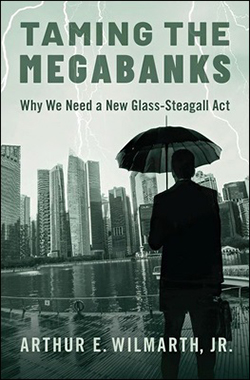
Taming the Megabanks, Book JacketIt is rare for a book to be so comprehensive and insightful that it provides a roadmap for the future – especially when its cast of characters are the lawyered-up megabanks on Wall Street and their legions of lobbyists and public relations flacks. We’re referring to Taming the Megabanks: Why We Need a New Glass-Steagall Act by Arthur E. Wilmarth, Professor Emeritus of Law at George Washington University.

Last Tuesday, the Federal Reserve completely capitulated to the demands of the Wall Street megabanks on its plan to dramatically raise capital levels at the megabanks — the so-called Basel III Endgame. The Fed, via its Vice Chair for Supervision, Michael Barr, announced it was cutting the required capital it had formally proposed in July of 2023 by more than half and will continue to allow the megabanks to use their own dodgy internal models to assess market risk.

How did the megabanks achieve such a quick victory on such a critical matter? They threatened to tie the Fed up in court for years and hired a Big Law operative to drive home the point.

Wilmarth’s book presciently saw that occurring – because the megabanks have been gaming and bucking and beating meaningful financial reform since President Obama signed into law the easily manipulated Dodd-Frank financial reform legislation in 2010.

Chapter 12 in Taming the Megabanks is titled “Unfinished Business.” It walks readers through each of the much-touted financial reforms that Obama’s minions told the American people they could count on following the worst megabank-induced financial crisis since the Great Depression. But many of Dodd-Frank’s promised key reforms never happened, as Wilmarth details by naming names and pulling back layers of dark curtains.

Instead of Dodd-Frank’s Volcker Rule ending the megabanks’ ability to bet the house via hedge funds, the rule was stonewalled for years, then ignored, then it essentially disappeared. As we reported earlier this month, the U.S. Treasury’s Office of Financial Research (OFR) revealed that as of March 31, 2024, Global Systemically Important Banks in the U.S. (G-SIBs/megabanks) had loaned out $2.348 trillion to hedge funds. Foreign Global Systemically Important Banks had loaned out another $1.628 trillion to hedge funds; and “Other Lenders” had loaned out an additional $566 billion to hedge funds. That brought the total of margin loans to just hedge funds on March 31, 2024 to a total of $4.542 trillion. (Put your cursor on the graph lines here.)

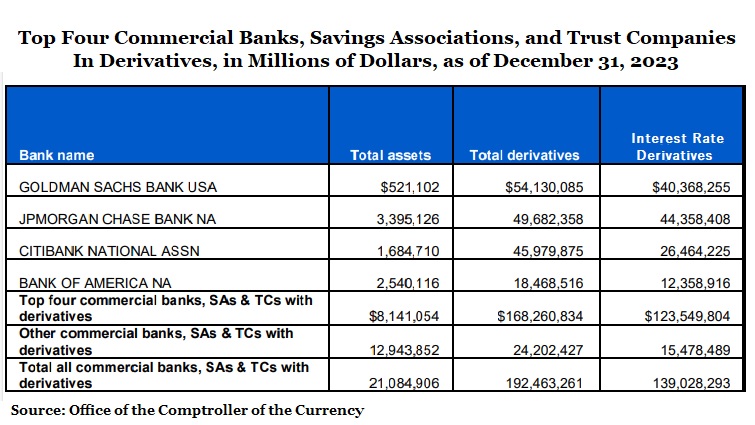
And remember all that talk about the push-out rule for derivatives? That illusion bit the dust in 2014, thanks to Citigroup and two former cronies in Congress. As of December 31, 2023, Goldman Sachs Bank USA, JPMorgan Chase Bank N.A., Citigroup’s Citibank and Bank of America held a staggering total of $168.26 trillion in derivatives out of a total of $192.46 trillion at all federally-insured U.S. banks, savings associations and trust companies. That’s just four banks holding 87 percent of all derivatives at all 4,587 federally-insured financial institutions in the U.S. that existed as of December 31, 2023. This data comes from the quarterly report at the Office of the Comptroller of the Currency (OCC), another of the federal regulators that says it’s going along with the Fed’s plan to scale back capital requirements at the megabanks.

In response to our query last week as to whether the OCC was on board with the Fed’s scaled back capital requirements, the OCC gave us this statement from Acting Comptroller Michael Hsu:

“The changes outlined by Vice Chair Barr reflect the work the three agencies undertook together. To ensure that the capital requirements for the nation’s largest banks are modernized and strengthened, I am committed to working with my peers on next steps to drive the Basel 3 endgame to closure.”

The FDIC is the third federal agency involved in setting the capital levels for the megabanks. It gave us this statement last week from FDIC Chair Martin Gruenberg:

“The Federal Reserve, OCC, and the FDIC have worked cooperatively on the Basel III proposal, including the changes outlined in Vice Chairman Barr’s remarks. I look forward to the agencies working together to bring Basel III to a conclusion that will strengthen bank capital and bolster financial system resilience and stability.”

In July, Wilmarth revealed the illusory nature of yet another promised reform from Dodd-Frank in an opinion piece at the American Banker (paywall) titled: “The FDIC’s resolution plan for failed megabanks is an empty promise.”

Wilmarth explains in the American Banker piece that one of Dodd-Frank’s primary goals was to prevent taxpayers from having to rescue megabanks, as occurred in 2008. A key component of that goal is Title II of Dodd-Frank, which provides an Orderly Resolution Plan to unwind failing megabanks without the need for taxpayer or Federal Reserve bailouts. That Plan, in turn, requires a giant pool of instantly available cash, which Dodd-Frank calls the Orderly Liquidation Fund or OLF. Shockingly, Wilmarth reveals that there hasn’t been a dime in the OLF since its creation in 2010. Wilmarth explains:

“…the FDIC’s sole source of funding for a Title II receivership is the Orderly Liquidation Fund, or OLF, which the Treasury administers. When Congress passed the Dodd-Frank Act, the big-bank lobby defeated proposals that would have required megabanks to pay risk-based premiums to prefund the OLF. As a result, the OLF has a zero balance. The FDIC must therefore borrow from the Treasury to pay the costs of a Title II receivership that cannot be covered by wiping out the holding company’s shareholders and debt-holders.”

Wilmarth correctly concludes in Taming the Megabanks that there is only one way to protect the U.S. economy and the financial stability of the nation’s banking system and that is to break up the megabanks by restoring the Glass-Steagall Act, which would separate Wall Street’s global trading houses from federally-insured banks. Otherwise, the megabanks will continue to dictate government policy, regulate their own regulators, and set the stage for the next destabilizing Wall Street and banking collapse.

WALL STREET ON PARADE


Wednesday, August 21, 2024

All the Devils from 2008 Are Back at the Megabanks: Leverage, Off-Balance-Sheet Debt, Over $192 Trillion in Derivatives, Shaky Capital Levels


SUBSCRIBE TO THIS NEWSLETTER TO RECEIVE TIMELY REPORTS!


All the Devils from 2008 Are Back at the Megabanks: Leverage, Off-Balance-Sheet Debt, Over $192 Trillion in Derivatives, Shaky Capital Levels

Four Megabanks' Exposure to Interest Rate Derivatives

By Pam Martens and Russ Martens: August 20, 2024 ~

Taming the Megabanks, Book JacketAs indicated on the above graph, as of December 31, 2023, Goldman Sachs Bank USA, JPMorgan Chase Bank N.A., Citigroup’s Citibank and Bank of America held a staggering total of $168.26 trillion in derivatives out of a total of $192.46 trillion at all federally-insured U.S. banks, savings associations and trust companies. That’s just four banks holding 87 percent of all derivatives at all 4,587 federally-insured financial institutions in the U.S. that existed as of December 31, 2023.

You might be asking yourself the very valid question as to why the Dodd-Frank financial reform legislation of 2010, that followed the Wall Street financial quake of 2008, didn’t correct the derivatives gambling that played a central role in crashing the U.S. financial system. For why the threat of derivatives never actually went away, see our report: Meet the Two Congressmen Who Facilitated Today’s Derivatives Nightmare at Wall Street’s Mega Banks.

As one example of the insane level of leverage concentrated in a handful of megabanks, look at the entry in the above chart for Goldman Sachs Bank USA. That federally-insured bank, part of the international trading conglomerate known as Goldman Sachs Group, is allowed by its federal regulators to have $521 billion in assets but $54 trillion in derivatives.

But don’t worry. Under U.S. accounting rules, these derivatives can be whittled down under the magic known as “netting,” and conveniently moved out-of-sight/out-of-mind off the balance sheet.

When the Financial Crisis Inquiry Commission released their final forensic report on the causes of the 2007 to 2010 financial collapse – the worst crisis since the 1929-1932 collapse and Great Depression that followed – it pointed to hidden leverage in off-balance sheet entities at the megabanks on Wall Street as a key driver of the crisis. It wrote:

“From 2000 to 2007, large banks and thrifts generally had $16 to $22 in assets for each dollar of capital, for leverage ratios between 16:1 and 22:1. For some banks, leverage remained roughly constant. JP Morgan’s reported leverage was between 20:1 and 22:1. Wells Fargo’s generally ranged between 16:1 and 17:1. Other banks upped their leverage. Bank of America’s rose from 18:1 in 2000 to 27:1 in 2007. Citigroup’s increased from 18:1 to 22:1, then shot up to 32:1 by the end of 2007, when Citi brought off-balance sheet assets onto the balance sheet. More than other banks, Citigroup held assets off of its balance sheet, in part to hold down capital requirements. In 2007, even after bringing $80 billion worth of assets on balance sheet, substantial assets remained off. If those had been included, leverage in 2007 would have been 48:1, or about 53% higher. In comparison, at Wells Fargo and Bank of America, including off-balance-sheet assets would have raised the 2007 leverage ratios 17% and 28%, respectively.”

Citigroup, of course, blew itself up in 2008 and received the largest bailouts in global banking history. By March of 2009, its stock was trading at 99 cents. By July 2010, it had received $2.5 trillion in secret revolving loans from the Fed over the span of 2-1/2 years, according to the 2011 audit of the Fed’s emergency bailout programs that was released by the Government Accountability Office.

Today, JPMorgan Chase is creating unfathomable risk transfer vehicles and placing them off its balance sheet. What could possibly go wrong?

In January, Anat Admati, Professor of Finance and Economics at Stanford Graduate School of Business, and German economist Martin Hellwig, released an updated and expanded version of their 2013 book The Bankers’ New Clothes: What’s Wrong with Banking and What to Do about It. In it, the authors write:

“Some of the risks that make JPMorgan Chase dangerous cannot actually be seen by looking at its balance sheet because the positions that give rise to them are not included there. These are risks from business units that JPMorgan Chase might own in part or that it sponsors, and to which it has provided guarantees to serve as a backstop if they should have funding problems. These units might be full-flown subsidiaries, or they might be mere ‘letterhead firms,’ vehicles without any drivers, that are established for legal or tax reasons only. The bank’s commitments to these units amount to almost a trillion dollars, but these potential liabilities of the bank are left off the bank’s balance sheet. Yet they are quite relevant to the financial health of JPMorgan Chase.”

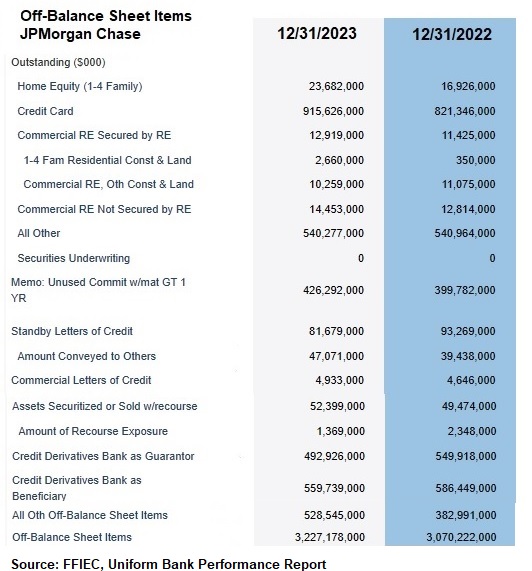
According to financial data at the Federal Financial Institutions Examination Council (FFIEC), as of December 31, 2023, JPMorgan Chase held $3.227 trillion off-balance sheet.

In JPMorgan Chase’s 10-K public filing with the Securities and Exchange Commission for the period ending December 31, 2023, it reported total assets on its balance sheet of $3.875 trillion. (See page 46 at this link.) That’s versus the FFIEC data showing it has another $3.227 trillion off-balance sheet.

The chart below shows the stunning breakdown of the $3.2 trillion JPMorgan Chase is holding off-balance sheet according to data at the FFIEC. (See this link; check the box “Off-Balance Sheet Items,” then click the hyperlink for “Off-Balance Sheet Items.”)

JPMorgan Chase’s off-balance sheet hubris goes a long way in explaining why the bank’s federal regulators are demanding that it increase its capital by 25 percent. The bank’s response to that was to go on the offensive through its lobbying groups and threaten to sue its federal bank regulators. On Saturday, Bloomberg News reported that Dimon and other megabank CEOs had huddled in private with Jerome Powell, Chair of the Federal Reserve, on July 19 in an effort to weaken the proposed increases in the capital rule.

Because Wall Street megabanks have honed to perfection a century-old bag of tricks that enable them to get their way by intimidating their regulators, game accounting rules with impunity, and put personal greed above the good of the country – the only means of restoring sanity and stability to the U.S. financial system is for Congress to restore the Glass-Steagall Act, which would permanently separate federally-insured banks from the trading casinos on Wall Street.

The seminal book on the critical and urgent need to restore the Glass-Steagall Act is Taming the Megabanks: Why We Need a New Glass-Steagall Act, by Arthur E. Wilmarth. Engaged and concerned Americans owe it to themselves and their families to read this book, understand how the U.S. financial system has morphed into an institutionalized wealth-transfer system, moving wealth from the middle class to the pockets of the denizens of Wall Street. (See, for example, PBS Drops Another Bombshell: Wall Street Is Gobbling Up Two-Thirds of Your 401(k).)

Off-Balance Sheet Items, JPMorgan Chase


 WALL STREET ON PARADE


Monday, June 24, 2024

The Fed and FDIC Wake Up Suddenly to the Threat of Derivatives, Flunking the Four Largest Derivative Banks on their Wind-Down Plans


SUBSCRIBE TO THIS NEWSLETTER TO RECEIVE TIMELY REPORTS!


The Fed and FDIC Wake Up Suddenly to the Threat of Derivatives, Flunking the Four Largest Derivative Banks on their Wind-Down Plans

Four Megabanks' Exposure to Interest Rate Derivatives

By Pam Martens and Russ Martens: June 24, 2024 ~

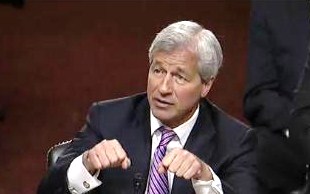
Jamie Dimon, Chairman and CEO of JPMorgan Chase, Testifying at Senate Banking Hearing on the Bank’s London Whale Scandal on June 13, 2012

Since the financial crash of 2008 and the Fed’s multi-trillion dollar bank bailouts that followed, the Office of the Comptroller of the Currency (OCC) has been waving a giant red flag every quarter in its “Bank Trading and Derivatives Activities” reports. For sixteen years the OCC has been reporting that just four megabanks are responsible for more than 80 percent of the trillions of dollars in bank derivatives.

As the chart above shows, as of December 31, 2023, Goldman Sachs Bank USA, JPMorgan Chase Bank N.A., Citigroup’s Citibank and Bank of America held a staggering total of $168.26 trillion in derivatives out of a total of $192.46 trillion at all U.S. banks, savings associations and trust companies. That’s four banks holding 87 percent of all derivatives at all 4,587 federally-insured institutions in the U.S. that existed as of December 31, 2023.

Now, it would appear, some market-savvy bank examiner embedded in one of those megabanks has had an epiphany and decided to ask the question: “How is it possible that all four of these megabanks with trillions of dollars in derivatives happened to be on the correct sides of these trades during the fastest and steepest interest rate increases in 40 years?” Multiple bank counterparties to these trades should be reporting massive losses and yet all we hear are crickets.

This puzzle becomes all the more urgent if you take a closer look at the above chart and notice that $40.368 trillion of Goldman Sachs Bank USA’s $54.13 trillion in derivatives are interest rate derivatives, or 75 percent. JPMorgan Chase’s interest rate derivatives represent 89 percent of its total of $49.68 trillion in derivatives.

The OCC report for the quarter ending December 31, 2023 also shows that $20.8 trillion of these interest rate derivative contracts at these four megabanks have maturities in excess of five years – a very long time to climb out on a limb on interest rate decisions by the Fed.

On Friday, the Federal Deposit Insurance Corporation (FDIC) and the Federal Reserve Board jointly released their findings on the resolution or wind-down plans in a potential bankruptcy of the eight megabanks in the U.S. The plans are also known as “living wills.”

It came as no surprise to us that the four largest U.S. derivative banks — JPMorgan Chase, Citigroup’s Citibank, Bank of America and Goldman Sachs — were faulted on shortcomings in how they planned to wind down their derivatives. The surprise was that the Fed – which has a gold-plated revolving door to these banks – would acknowledge the derivatives problem after years of ignoring it.

The Fed and FDIC wrote the following in their letter to Jamie Dimon, the Chairman and CEO of JPMorgan Chase, which regulators already acknowledge is the riskiest bank in the U.S. (but nonetheless allowed it to get even bigger and riskier in May of last year by rubber-stamping its purchase of the collapsed First Republic Bank):

“The Agencies found the Covered Company’s 2023 Plan to have a shortcoming related to the implementation of its derivatives unwind strategy. An assessment of the Covered Company’s capability to unwind its derivatives portfolio under conditions that differed from those specified in the 2023 Plan revealed some weaknesses in the refresh of and approach to compiling financial results. This, in turn, raises questions about the firm’s ability to implement this aspect of its preferred strategy in an actual resolution event. Specifically, in response to a capabilities test initiated by the Agencies, the response from the firm showed that the firm is unable to update certain economic conditions in its entity-level-resource-needs calculation of resolution capital execution need (RCEN) and resolution liquidity execution need (RLEN) associated with unwinding its derivatives portfolio in a timely manner. Furthermore, the firm did not accurately incorporate funding assumptions as specified by the Amended and Restated Support Agreement dated June 5, 2019, as amended, in the current resolution metrics production process. To remediate this shortcoming, the Covered Company’s 2025 Plan should demonstrate, including through reporting in the 2025 Plan on internal validation and testing conducted by the Covered Company, that the Covered Company has developed the ability to quantify each material legal entity’s RLEN and RCEN for changes in macro/financial market conditions, calculate recapitalization needs for a macro scenario change in a timely way, and provide for downstream liquidity and capital funding needs according to the terms of the Amended and Restated Support Agreement. The Covered Company should develop and submit to the Agencies by September 1, 2024, a description of the key actions needed to remediate this shortcoming and a timeline illustrating the date of their expected completion.”

Adding to the hubris, this is now the second time in eight years that federal regulators have told Dimon to get his act together in dealing with derivatives if the bank has to wind-down operations. In a letter dated April 12, 2016, the Fed and the FDIC faulted the bank on its trading and derivative plans. The letter was apparently so frightening that numerous segments were redacted by the two federal regulators by blacking out the text.

The Fed and FDIC appear like indulgent parents of an out-of-control teen when it comes, particularly, to JPMorgan Chase, Jamie Dimon and derivatives. This is, after all, the bank that triggered an in-depth investigation by the U.S. Senate’s Permanent Subcommittee on Investigations in 2012-2013 for gambling in derivatives in London using deposits from its federally-insured bank and losing $6.2 billion of its depositors’ money. This became infamously known as the bank’s “London Whale” scandal.

Dimon was hauled before the Senate Banking Committee on June 13, 2012 to answer questions about the London Whale scandal. Instead of falling on his sword or taking a humble approach to the bank’s abysmal conduct, he spoke as if he were testifying as an expert witness for the banking industry instead of the man sitting at the center of the scandal. Dimon said this in answer to a question from Senator Jerry Moran:

“We have to get rid of anything that looks like too-big-to-fail. We have to allow our biggest institutions to fail. It is part of the health of the system, and we should not prop them up. We have to allow them to fail.

“And I would go one step further. You want to be sure that they can fail and not damage the American economy and the American public. So a big bank, you want to be in a position where a big bank can be allowed to fail.

“I wouldn’t call it ‘resolution.’ I think that’s the wrong name. I think we should call it ‘bankruptcy.’ Personally, I call it ‘bankruptcy for big dumb banks.’ I think when you have bankruptcy, I’d have clawbacks. I’d fire the management. I’d fire the Board. I’d wipe out the equity and the unsecured [debt holders] should only recover whatever they recover like in a normal bankruptcy.”

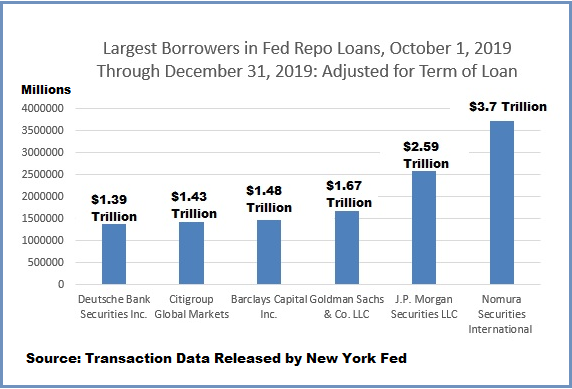
Just six years after Dimon’s “bankruptcy for big dumb banks” speech to the Senate Banking Committee, his bank began secretly taking trillions of dollars in emergency bailout loans from the Fed for a financial crisis that has yet to be explained. (See chart below.)

Fed's Repo Loans to Largest Borrowers, Q4 2019, Adjusted for Term of Loan

The four megabanks that were not faulted last Friday by the Fed or FDIC for their wind-down plans were Wells Fargo, Bank of New York Mellon, State Street and Morgan Stanley. (Morgan Stanley’s bank holding company has a monster amount of derivatives according to the OCC, however, its federally-insured banking footprint pales in comparison to JPMorgan Chase, Bank of America and Citigroup’s Citibank.)


WALL STREET ON PARADE


Friday, April 5, 2024

RIP OFF! Study Finds Wall Street Mega Banks Have Overstated Income for Years on Commercial Real Estate Loans They Sell to Investors


SUBSCRIBE TO THIS NEWSLETTER TO RECEIVE TIMELY REPORTS


Study Finds Wall Street Mega Banks Have Overstated Income for Years on Commercial Real Estate Loans They Sell to Investors

By Pam Martens and Russ Martens: April 2, 2024 ~

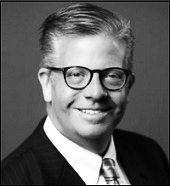
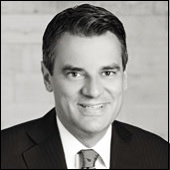
Finance Professors John Griffin (left) and Alex Priest

Last August, the Journal of Finance published a study by two finance professors that should have made bold headlines in every major business newspaper in America. It didn’t – suggesting that Americans will eventually learn about Wall Street’s chicanery in commercial real estate the same way they learned about Wall Street’s subprime residential mortgage scams after the 2008 financial collapse: from a movie like The Big Short or Inside Job.

Wall Street On Parade only learned about this paper recently from one of our engaged readers.

The paper was authored by John Griffin, Professor of Finance at McCombs School of Business at the University of Texas, Austin and Alex Priest, Assistant Professor of Finance at the Simon Business School at the University of Rochester.

The paper takes a forensic look – from an exhaustive number of perspectives – at why the income stream on Commercial Mortgage-Backed Securities (CMBS) is being consistently overstated by 5 percent or more when sold to investors by certain originators of these loans.

The largest participants in this overstatement of income are the same Wall Street mega banks that were bailed out by the U.S. taxpayer after they blew up Wall Street in 2008 with their subprime residential mortgage scams and then received trillions of dollars in secret revolving loans from the Fed for more than two years at below-market interest rates in order to resuscitate themselves.

The authors find that more than 40 percent of CMBS loans originated by UBS and Goldman Sachs have income overstatements of more than 5 percent, while between 30 and 40 percent of loans originated by Citigroup, Morgan Stanley, JPMorgan Chase and Bank of America feature such overstatement. (Smaller players are included as well in the study.)

The authors write:

“Underwritten net operating income (NOI) is the most important input for a commercial loan as it largely determines a loan’s debt service coverage ratio (DSCR) and loan-to-value (LTV) ratio. As such, there are rigorous and conservative guidelines for calculating underwritten income. Nevertheless, to sell a loan at a higher valuation and maximize profits, originators have a strong incentive to overstate underwritten income, at the expense of longer-term reputational and monitoring concerns.”

Among the key findings in the study are the following:

Income overstatement above 5% in loans that were not guaranteed by a government sponsored enterprise (GSE) grew from 36 percent in 2013 to 43 percent in 2019;

Loans with income overstatement in the first year continued to exhibit income short-falls in the next four years;

The study found no evidence that end investors are compensated for income overstatement. [Translation, they’re being ripped off in a fashion reminiscent of the 2008 financial crisis.]

Excluding loans that were already in distress at the onset of the COVID-19 pandemic in March 2020, the authors found that “in every vintage from 2014 to 2019, CMBS loans from the worst originators are more than twice as likely to experience distress,” with the correlation occurring across commercial property types.

The most shocking finding for most Americans is likely to be that the much touted “risk retention” rule enacted under the Dodd-Frank financial “reform” legislation of 2010, where the banks had to hold 5 percent of their securitized loans in order to have “skin in the game,” thus ostensibly deterring them from peddling toxic deals to customers with no harm to themselves, has been effectively obliterated. (For how the Dodd-Frank derivatives rule was similarly obliterated, see our report: Meet the Two Congressmen Who Facilitated Today’s Derivatives Nightmare at Wall Street’s Mega Banks.)

MUST READ! 

ILLINOIS REPUBLICAN RANDY HULTGREN


Former Congressman Randy Hultgren

Former Congressman Randy Hultgren Is Now President and CEO of Illinois Bankers Association


KANSAS REPUBLICAN KEVIN YODER

Former Congressman Kevin Yoder

Former Congressman Kevin Yoder Is Now a Registered Lobbyist


Griffin and Priest explain that the rule didn’t even become effective until 2016 and now “risk retention by the originator is rare.” That’s because deal sponsors can get around the rule by selling the risk retention piece to up to two unaffiliated buyers.

A major question left unanswered in the academic study is if Wall Street mega banks are shorting the CMBS market to profit further on their inside information of their income overstatement, as they did on their toxic subprime paper in the lead up to the 2008 financial collapse.

On April 13, 2011, following a two-year investigation, Senators Carl Levin and Tom Coburn, Chairman and Ranking Member of the Senate’s Permanent Subcommittee on Investigations, released a 635-page report on the 2008 financial crisis which included specifics on the fraudulent role that Wall Street mega banks had played in burning down Wall Street and the U.S. economy in the greatest collapse since the Great Depression. The report includes this paragraph on how Goldman Sachs attempted to profit from its own “shitty deals”:

“When Goldman Sachs realized the mortgage market was in decline, it took actions to profit from that decline at the expense of its clients. New documents detail how, in 2007, Goldman’s Structured Products Group twice amassed and profited from large net short positions in mortgage related securities. At the same time the firm was betting against the mortgage market as a whole, Goldman assembled and aggressively marketed to its clients poor quality CDOs that it actively bet against by taking large short positions in those transactions. New documents and information detail how Goldman recommended four CDOs, Hudson, Anderson, Timberwolf, and Abacus, to its clients without fully disclosing key information about those products, Goldman’s own market views, or its adverse economic interests.  For example, in Hudson, Goldman told investors that its interests were ‘aligned’ with theirs when, in fact, Goldman held 100% of the short side of the CDO and had adverse interests to the investors, and described Hudson’s assets were ‘sourced from the Street,’ when in fact, Goldman had selected and priced the assets without any third party involvement. New documents also reveal that, at one point in May 2007, Goldman Sachs unsuccessfully tried to execute a ‘short squeeze’ in the mortgage market so that Goldman could scoop up short positions at artificially depressed prices and profit as the mortgage market declined.”

See the video clip below from a related hearing, featuring the late Senator Carl Levin questioning a Goldman Sachs executive, Daniel Sparks.

Bookmark the permalink.

Saturday, March 30, 2024

Report: Five Banks Have a Combined Half Trillion Dollars in Commercial Real Estate Loans; Number 1 is JPMorgan Chase


SUBSCRIBE TO THIS NEWSLETTER TO RECEIVE TIMELY REPORTS!


Report: Five Banks Have a Combined Half Trillion Dollars in Commercial Real Estate Loans; Number 1 is JPMorgan Chase

By Pam Martens and Russ Martens: March 28, 2024 ~

JPMorgan Chase Bank BuildingYesterday, American Banker released a report showing that five banks in the U.S. hold a combined half trillion dollars in commercial real estate (CRE) loans. It came as a big surprise to a lot of folks that the bank holding the largest amount of CRE loans is JPMorgan Chase – whose bank holding company is also exposed to $49 trillion in derivatives as of December 31, 2023 according to the Office of the Comptroller of the Currency. (See Table 14 at this link.)

JPMorgan Chase is already considered the riskiest bank in the U.S. according to its regulators.

American Banker reported the following CRE totals for the five banks: JPMorgan Chase, $173 billion; Wells Fargo, $139.65 billion; Bank of America, $82.8 billion; U.S. Bank, $55.66 billion; and PNC Bank, $48.89 billion.

Some of the same hubris and willful blindness that prevailed in the runup to the subprime mortgage crisis that blew up large financial institutions in 2008 is showing itself today in regard to commercial real estate loans at federally-insured banks.

On March 7, Federal Reserve Chairman Jerome Powell testified before the Senate Banking Committee as part of his Semiannual Monetary Policy Report to Congress. During his testimony, Powell downplayed concerns about the impact of commercial real estate loans at the largest banks. Powell stated: “There will be bank failures, but this is not the big banks. If you look at the very big banks, this is not a first order issue for any of the very large banks. It’s more smaller and medium size banks that have these issues.”

If CRE is not a problem at the largest banks, that’s because both the banks and the Fed believe that the Fed will always spring to the rescue with an emergency bailout program. In fact, the Fed has already created just such a program that’s waiting in the wings. It’s called the Standing Repo Facility (SRF). It has a lending capacity of $500 billion and can lend to both the federally-insured bank and its trading unit (primary dealer) – thus giving the so-called “universal banks” on Wall Street two bites at the bailout apple.

For a look at just how quickly the Fed can sluice money to Wall Street mega banks with few questions asked by Congress, check out the chart below. It shows the Fed’s emergency money spigot to the mega banks in the last quarter of 2019 – for a financial emergency at the banks which has yet to be explained to the American people.

Fed's Repo Loans to Largest Borrowers, Q4 2019, Adjusted for Term of Loan

To grasp how radically things have changed since 2008 when former Goldman Sachs veteran-turned Treasury Secretary Hank Paulson took a 3-page document to Congress and demanded a $700 billion taxpayer bailout for the banks (Troubled Asset Relief Program, TARP), let the full meaning of the chart above sink in. The Fed can now funnel trillions of dollars in cumulative loans to mega banks on Wall Street, report the names of the banks and amounts borrowed two years later, and get a complete news blackout from mainstream media. (Wall Street On Parade was the only media outlet to chart the details and report the names of the banks that got the trillions of dollars in loans in 2019.)

Powell might have his own agenda in playing down the risks to the mega banks on Wall Street. According to Senator Elizabeth Warren, who sits on the Senate Banking Committee, Powell is leading the charge behind the scenes to overturn federal regulators’ proposal to require the largest banks to hold larger amounts of capital to prevent a replay of the 2008 financial crisis.   

WALL STREET ON PARADE


Thursday, March 7, 2024

Wall Street Mega Banks Have Created a Circular Firing Squad with Credit Derivatives and Capital Relief Trades – with the Fed’s Blessing


SUBSCRIBE TO THIS NEWSLETTER TO RECEIVE TIMELY REPORTS


Wall Street Mega Banks Have Created a Circular Firing Squad with Credit Derivatives and Capital Relief Trades – with the Fed’s Blessing

Jamie Dimon Is In a Whale of a MessBy Pam Martens and Russ Martens: March 6, 2024 ~

On June 11, 2015, the Office of Financial Research (OFR) released a sobering report on how banks were reducing their requirements to hold adequate capital against potential losses by engaging in non-transparent “capital relief trades” with potentially questionable counterparties. The OFR researchers summarized the problem as follows:

“Capital relief transactions may have benefits to banks. But, even if real risk transfer is involved, these transactions can pose financial stability concerns by increasing interconnectedness, transforming credit risk into counterparty risk, and obscuring capital adequacy to investors and counterparties. And while bank supervisors have extensive data about banks, they may have less information about the nonbanks who are selling credit risk to those banks and ultimately bearing the risk of loss.”

The Office of Financial Research was created under the Dodd-Frank financial reform legislation of 2010 to make sure that Wall Street mega banks could never again ravage the economy and financial system of the United States — as they did in 2008 – by engaging in reckless derivative trades and toxic bets. OFR describes its mission as follows:

“Our job is to shine a light in the dark corners of the financial system to see where risks are going, assess how much of a threat they might pose, and provide policymakers with financial analysis, information, and evaluation of policy tools to mitigate them.”

Buried in the June 2015 OFR report was a bombshell. When JPMorgan Chase was initiating hundreds of billions of dollars in risky derivative trades in London in 2012, using deposits from its federally-insured bank in the U.S., it was attempting to engage in tricked-up capital relief trades. The insanity of this gamesmanship resulted in $6.2 billion in losses at the bank; an investigation by the FBI; embarrassing Senate hearings; a scathing 300-page report by the U.S. Senate’s Permanent Subcommittee on Investigations; charges of engaging in “unsafe and unsound” banking practices by the Office of the Comptroller of the Currency; and the payment of $920 million in fines to its regulators.

Credit derivatives are frequently used in capital relief trades. In an effort to curb the trillions of dollars in credit derivatives that the Wall Street mega banks are using for non-transparent purposes with non-transparent counterparties, on July 27 of last year the FDIC, the Office of the Comptroller of the Currency (OCC), and the Federal Reserve released a proposal to require higher capital levels at banks with $100 billion or more in assets; (only 37 banks would be impacted). Community banks will not be impacted at all by the new proposals according to the federal regulators.

On September 12, 2023, the banking cartel made its anger and intention to push back known in a 7-page letter. The cartel demanded that the three federal agencies turn over all “evidence and analyses the agencies relied on” in making the proposal.

One of the signatories to the letter was the Bank Policy Institute (BPI), whose Board of Directors consists of the CEOs of the biggest banks. BPI is Chaired by none other than Jamie Dimon, Chairman and CEO of the notorious London Whale bank, JPMorgan Chase.

BPI next launched an ad campaign that grossly distorted what the increase in capital would do, claiming that it would harm working families. (The mega banks that will be most impacted are the same mega banks that blew up the U.S. economy in 2008; put millions of Americans out of work; left millions of working families in foreclosure; got a secret $29 trillion bailout from the Federal Reserve; and then used big chunks of that bailout money to lavish million-dollar bonuses on bank executives.)

Sixteen days after the big bank cartel had posted its September 12, 2023 letter attacking the newly proposed increase in capital rules, the Federal Reserve issued a suspiciously timed announcement of how banks could game the newly-proposed capital rules, with the Fed’s blessing, through the use of a specific style of capital relief trade. The Fed wrote as follows:

“In some synthetic securitizations, a Board-regulated institution transfers the risk of a reference portfolio of on-balance sheet exposures to a special purpose vehicle using a guarantee or credit derivative. The special purpose vehicle issues credit-linked notes to investors, and the Board-regulated institution takes the cash proceeds of the notes as collateral supporting the special purpose vehicle’s performance on the guarantee or credit derivative.

“Under the Board’s capital rule, a Board-regulated institution can recognize the credit risk mitigation of the collateral on the reference portfolio under the rules for synthetic securitizations provided that the requirements in section 41 or 141, as applicable (12 CFR 217.41, .141), are met and that the transactions satisfy the definition of ‘synthetic securitization’ (12 CFR 217.2, ‘synthetic securitization’).”

All you need to know about the above two paragraphs is that the words “synthetic” and “special purpose vehicle” and “credit derivatives” played a central role in crashing Wall Street and the U.S. economy in 2008. The Federal Reserve has apparently learned nothing from the worst financial crash since the Great Depression.

For the most hair-raising part of this story, let us back up to September 29, 2022 – almost exactly one year before the Fed gave its blessing to capital relief trades using credit derivatives. On that date the OFR issued a report that concluded: “When Choosing Counterparties, Banks Tend to Pick Riskier Ones.”

The report was authored by Dasol Kim, a Research Principal at OFR, and Andrew Ellul, a Visiting Fellow at OFR and Professor of Finance at Indiana University’s Kelley School of Business. In a blog post, they summarized their findings as follows:

“In a recent working paper analyzing who banks chose as counterparties in the over-the-counter (OTC) derivatives market, the authors found that banks are more likely to choose riskier nonbank counterparties that are already heavily connected and exposed to other banks, which leads to an even more densely connected network. Furthermore, banks do not hedge these exposures, but rather increase them by selling rather than purchasing credit derivative swaps against these counterparties. Finally, the authors found that common counterparty exposures are correlated with systemic risk measures despite greater regulatory oversight following the 2008 financial crisis.” (Italic emphasis added.)

The only common-sense way to think of this is that Wall Street has once again created a circular firing squad with the U.S. banking system and U.S. economy as collateral damage.

For an idea of what can happen when a mega bank sells credit default swaps, consider how Howie Hubler, a star bond trader at Morgan Stanley, lost $9 billion. Hubler was one of those who made early derivative bets that the lowest-rated subprime bonds would fail during the 2007-2008 financial crisis using credit default swaps. He bought protection by purchasing credit default swaps on subprime debt. But because Hubler had to pay out premiums on these credit default swaps until the price collapse arrived, he sold $16 billion in credit default swaps on higher-rated debt, obviously to collect the premiums to offset what he was paying out while he waited. When the $16 billion turned out to be toxic as well, Morgan Stanley lost at least $9 billion.

According to a government audit of the Fed’s secret loans to the Wall Street mega banks and their trading subsidiaries from December 2007 through early July 2010, Morgan Stanley was the second largest recipient (after Citigroup) of the Fed’s secret bailout loans. Morgan Stanley received a total of $2.04 trillion in cumulative loans from the Fed; Citigroup received $2.5 trillion in cumulative loans from the Fed.

Federal regulators were caught napping in the lead up to the 2008 financial collapse. They are clearly still napping. According to the most recent trading and derivatives report from the Office of the Comptroller of the Currency for the third quarter of 2023, just four commercial banks (JPMorgan Chase, Citigroup’s Citibank, Goldman Sachs Bank USA and Bank of America) hold 94 percent of all credit derivatives held at 4,600 commercial banks. If you want the quintessential definition of concentrated risk, this is it.

https://wallstreetonparade.com/2024/03/wall-street-mega-banks-have-created-a-circular-firing-squad-with-credit-derivatives-and-capital-relief-trades-with-the-feds-blessing/


Newsom Takes On Social Media Companies, Kentucky Says No To Data Centers, A Judge Blocks Mail-Ballot Rule, and Law…

                            LOTS OF POSTS IGNORED BY BLOGGER..... OR REMOVED ON THEIR WHIM! ALL POSTS ARE AVAILABLE ON MIDDLEBORO REVIEW AND...