Showing posts with label MICHAEL BARR. Show all posts

Friday, January 10, 2025

Wall Street Watchdog Warns “Clock Is Ticking on a Coming Catastrophic Financial Crash”


SUBSCRIBE TO THE NEWSLETTER TO RECEIVE TIMELY REPORTS! 


Wall Street Watchdog Warns “Clock Is Ticking on a Coming Catastrophic Financial Crash”

By Pam Martens and Russ Martens: January 10, 2025 ~
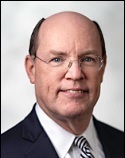
Dennis Kelleher, Co-Founder, President and Chief Executive Officer of Better Markets

Dennis Kelleher, Co-Founder and CEO, Better Markets

The indefatigable Dennis Kelleher, Co-Founder and CEO of the Wall Street watchdog, Better Markets, has just released his organization’s monthly newsletter for January 2025 and it’s a humdinger.

Kelleher warns that the financial deregulators that incoming President Donald Trump has packed into his administration means “that the clock is ticking on a coming catastrophic financial crash that will likely be much worse than 2008.”

Kelleher adds that this “is not hyperbole.” He cites evidence from past financial crashes, writing:

“…there is always a lag after deregulation and the creation of artificial liquidity. That was true for ‘roaring ‘20s’ followed by the crash and Great Depression; the ‘great moderation’ of the early 2000s followed by the crash and Great Recession; the deregulation of the first Trump administration in 2017-2020 that led to the 2023 banking crisis when 3 of the 4 largest bank failures in US history happened.  Much worse is likely to happen next time.”

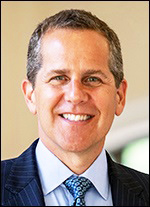
The potential for another great crash might explain why the Vice President for Supervision at the Federal Reserve, Michael Barr, is abandoning the ship and lowering the life raft.

Kelleher has a way with coining a phrase, writing that “Banks don’t neglect their duties, act recklessly, engage in high-risk behavior, or break the law – bankers do” – and he warns that this is going to persist “until individual bankers are meaningfully and personally punished.”

Unfortunately, as Wall Street On Parade has documented time and again, regardless of which political party holds the reins in Washington, Wall Street has been able to draw a no-law zone around its activities with a wink and a nod from the U.S. Department of Justice.

In 2016 we reported on what the PBS Program, Frontline, had revealed about the Obama administration’s Department of Justice and its handling of the investigations after Wall Street had crashed the U.S. economy and left millions of Americans out of work with foreclosure notices nailed to their front doors:

NARRATOR: Frontline spoke to two former high-level Justice Department prosecutors who served in the Criminal Division under Lanny Breuer. In their opinion, Breuer was overly fearful of losing.

FRONTLINE’S MARTIN SMITH: We spoke to a couple of sources from within the Criminal Division, and they reported that when it came to Wall Street, there were no investigations going on. There were no subpoenas, no document reviews, no wiretaps.

LANNY BREUER: Well, I don’t know who you spoke with because we have looked hard at the very types of matters that you’re talking about.

MARTIN SMITH: These sources said that at the weekly indictment approval meetings that there was no case ever mentioned that was even close to indicting Wall Street for financial crimes.

Following the 2008 crash, Congress passed legislation that created the Financial Crisis Inquiry Commission (FCIC) to investigate and report on the causes of the crash. In 2016, previously withheld documents from the FCIC’s investigation were publicly released. Senator Elizabeth Warren was aghast at what they showed.

In a 20-page letter to the Inspector General of the U.S. Department of Justice, Senator Warren asked for an investigation into why the DOJ had failed to indict any of the Wall Street executives that had been referred to it by the FCIC for potential criminal prosecution. In a separate letter, Warren asked then FBI Director James Comey for his related files.

The FCIC documents showed that it had made multiple criminal referrals of Wall Street executives to the DOJ in 2010. Warren explained the referrals as follows in her letter:

“A review of these documents conducted by my staff has identified 11 separate FCIC referrals of individuals or corporations to DOJ in cases where the FCIC found ‘serious indications of violations[s]’ of federal securities or other laws. Nine individuals were implicated in these referrals (two were implicated twice). The DOJ has not filed any criminal prosecutions against any of the nine individuals. Not one of the nine has gone to prison or been convicted of a criminal offense. Not a single one has even been indicted or brought to trial. Only one individual was fined, in the amount of $100,000, and that was to settle a civil case brought by the SEC.”

The two individuals Warren refers to who were “implicated twice” in the FCIC’s criminal referrals are Robert Rubin, the former Treasury Secretary in the administration of Bill Clinton, who in the lead up to the crash of Citigroup in 2008 served as Executive Committee Chair of Citigroup’s Board of Directors. (After advocating for the repeal of the Glass-Steagall Act, which allowed Citigroup to own both an insured depository bank, an investment bank and brokerage firm, Rubin went straight from his post as Treasury Secretary to the Board of Citigroup, where he collected $126 million in compensation over the next decade.)

The other individual whose name appears twice is Chuck Prince, the Citigroup CEO during its implosion. A third Citigroup executive’s name appears as well on the list: Gary Crittenden, the Chief Financial Officer of Citigroup at the time of its crash. Crittenden was the individual that was fined $100,000 by the SEC.

Not only were Citigroup’s top executives not prosecuted, but the bank was secretly receiving cumulative revolving loans totaling $2.5 trillion from the Federal Reserve from December 2007 to at least July of 2010. That information was revealed in 2011 when the Government Accountability Office (GAO) released its audit of the Fed’s bailout programs.

The Fed is not legally allowed to make loans to insolvent institutions. But in the case of Citigroup, it appears that the Fed ignored its statutory mandate. Sheila Bair, who was the Chair of the Federal Deposit Insurance Corporation (FDIC) during the 2008 crisis, confirms this point in her book, Bull by the Horns. Bair writes:

“By November [2008], the supposedly solvent Citi was back on the ropes, in need of another government handout. The market didn’t buy the OCC’s [Office of the Comptroller of the Currency that supervises national banks] and NY Fed’s strategy of making it look as though Citi was as healthy as the other commercial banks…Instead, the OCC and the NY Fed stood by as that sick bank continued to pay major dividends and pretended that it was healthy.”

Actually, they weren’t standing by at all. The Fed was secretly propping up Citigroup with $2.5 trillion in loans – many of which were made at a fraction of one percent interest while Citigroup was charging double-digit interest rates to its struggling credit card customers.

Better Market’s Kelleher, in the organization’s current newsletter, asks and answers this question:

“How did we get here? The financial industry uses its economic power to buy political power which it then uses to increase its economic power. That just happened again in the November 2024 elections, and the financial industry is about to reap the rewards. The Trump administration is going to unleash a very dangerous juggernaut of deregulation of the financial industry.”

WALL STREET ON PARADE


Monday, September 16, 2024

Everything this Book Predicted on Wall Street Megabanks Ruling their Regulators Is Now Unfolding


SUBSCRIBE TO THIS NEWSLETTER TO RECEIVE TIMELY REPORTS!


Everything this Book Predicted on Wall Street Megabanks Ruling their Regulators Is Now Unfolding

By Pam Martens and Russ Martens: September 16, 2024 ~

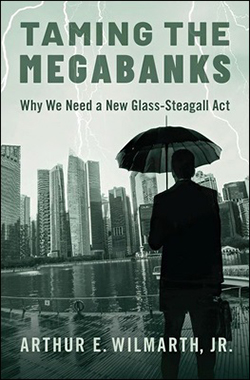
Taming the Megabanks, Book JacketIt is rare for a book to be so comprehensive and insightful that it provides a roadmap for the future – especially when its cast of characters are the lawyered-up megabanks on Wall Street and their legions of lobbyists and public relations flacks. We’re referring to Taming the Megabanks: Why We Need a New Glass-Steagall Act by Arthur E. Wilmarth, Professor Emeritus of Law at George Washington University.

Last Tuesday, the Federal Reserve completely capitulated to the demands of the Wall Street megabanks on its plan to dramatically raise capital levels at the megabanks — the so-called Basel III Endgame. The Fed, via its Vice Chair for Supervision, Michael Barr, announced it was cutting the required capital it had formally proposed in July of 2023 by more than half and will continue to allow the megabanks to use their own dodgy internal models to assess market risk.

How did the megabanks achieve such a quick victory on such a critical matter? They threatened to tie the Fed up in court for years and hired a Big Law operative to drive home the point.

Wilmarth’s book presciently saw that occurring – because the megabanks have been gaming and bucking and beating meaningful financial reform since President Obama signed into law the easily manipulated Dodd-Frank financial reform legislation in 2010.

Chapter 12 in Taming the Megabanks is titled “Unfinished Business.” It walks readers through each of the much-touted financial reforms that Obama’s minions told the American people they could count on following the worst megabank-induced financial crisis since the Great Depression. But many of Dodd-Frank’s promised key reforms never happened, as Wilmarth details by naming names and pulling back layers of dark curtains.

Instead of Dodd-Frank’s Volcker Rule ending the megabanks’ ability to bet the house via hedge funds, the rule was stonewalled for years, then ignored, then it essentially disappeared. As we reported earlier this month, the U.S. Treasury’s Office of Financial Research (OFR) revealed that as of March 31, 2024, Global Systemically Important Banks in the U.S. (G-SIBs/megabanks) had loaned out $2.348 trillion to hedge funds. Foreign Global Systemically Important Banks had loaned out another $1.628 trillion to hedge funds; and “Other Lenders” had loaned out an additional $566 billion to hedge funds. That brought the total of margin loans to just hedge funds on March 31, 2024 to a total of $4.542 trillion. (Put your cursor on the graph lines here.)

And remember all that talk about the push-out rule for derivatives? That illusion bit the dust in 2014, thanks to Citigroup and two former cronies in Congress. As of December 31, 2023, Goldman Sachs Bank USA, JPMorgan Chase Bank N.A., Citigroup’s Citibank and Bank of America held a staggering total of $168.26 trillion in derivatives out of a total of $192.46 trillion at all federally-insured U.S. banks, savings associations and trust companies. That’s just four banks holding 87 percent of all derivatives at all 4,587 federally-insured financial institutions in the U.S. that existed as of December 31, 2023. This data comes from the quarterly report at the Office of the Comptroller of the Currency (OCC), another of the federal regulators that says it’s going along with the Fed’s plan to scale back capital requirements at the megabanks.

In response to our query last week as to whether the OCC was on board with the Fed’s scaled back capital requirements, the OCC gave us this statement from Acting Comptroller Michael Hsu:

“The changes outlined by Vice Chair Barr reflect the work the three agencies undertook together. To ensure that the capital requirements for the nation’s largest banks are modernized and strengthened, I am committed to working with my peers on next steps to drive the Basel 3 endgame to closure.”

The FDIC is the third federal agency involved in setting the capital levels for the megabanks. It gave us this statement last week from FDIC Chair Martin Gruenberg:

“The Federal Reserve, OCC, and the FDIC have worked cooperatively on the Basel III proposal, including the changes outlined in Vice Chairman Barr’s remarks. I look forward to the agencies working together to bring Basel III to a conclusion that will strengthen bank capital and bolster financial system resilience and stability.”

In July, Wilmarth revealed the illusory nature of yet another promised reform from Dodd-Frank in an opinion piece at the American Banker (paywall) titled: “The FDIC’s resolution plan for failed megabanks is an empty promise.”

Wilmarth explains in the American Banker piece that one of Dodd-Frank’s primary goals was to prevent taxpayers from having to rescue megabanks, as occurred in 2008. A key component of that goal is Title II of Dodd-Frank, which provides an Orderly Resolution Plan to unwind failing megabanks without the need for taxpayer or Federal Reserve bailouts. That Plan, in turn, requires a giant pool of instantly available cash, which Dodd-Frank calls the Orderly Liquidation Fund or OLF. Shockingly, Wilmarth reveals that there hasn’t been a dime in the OLF since its creation in 2010. Wilmarth explains:

“…the FDIC’s sole source of funding for a Title II receivership is the Orderly Liquidation Fund, or OLF, which the Treasury administers. When Congress passed the Dodd-Frank Act, the big-bank lobby defeated proposals that would have required megabanks to pay risk-based premiums to prefund the OLF. As a result, the OLF has a zero balance. The FDIC must therefore borrow from the Treasury to pay the costs of a Title II receivership that cannot be covered by wiping out the holding company’s shareholders and debt-holders.”

Wilmarth correctly concludes in Taming the Megabanks that there is only one way to protect the U.S. economy and the financial stability of the nation’s banking system and that is to break up the megabanks by restoring the Glass-Steagall Act, which would separate Wall Street’s global trading houses from federally-insured banks. Otherwise, the megabanks will continue to dictate government policy, regulate their own regulators, and set the stage for the next destabilizing Wall Street and banking collapse.

WALL STREET ON PARADE


Tuesday, October 17, 2023

Another Financial Crisis Could Cost U.S. $5 Trillion to $25 Trillion – Potentially as Much as 100 Percent of GDP

 SUBSCRIBE TO THIS NEWSLETTER TO RECEIVE TIMELY REPORTS!

Fed’s Vice Chair for Supervision Says Another Financial Crisis Could Cost U.S. $5 Trillion to $25 Trillion – Potentially as Much as 100 Percent of GDP

By Pam Martens and Russ Martens: October 12, 2023 ~

Michael Barr

Michael Barr, Fed Vice Chair for Supervision 

On Monday, Michael Barr, the Vice Chair for Supervision at the Federal Reserve, addressed a contentious issue in a speech before the American Bankers Association’s annual convention in Nashville. The topic was why federal banking regulators have proposed higher capital levels for the largest U.S. banks, those with assets over $100 billion.

As we reported on September 20, there has been aggressive pushback on the proposal from large banks, their lobbyists and their trade associations. (Community banks are not impacted by the proposal.)

During his speech, Barr put a staggering dollar figure on the destruction to the U.S. economy that could materialize from another major financial crisis. Barr said this:

“Research suggests the costs of a financial crisis are sizable. While estimates vary widely, the cumulative loss in economic activity is consistently estimated to lie above 20 percent of annual GDP—and in some estimates up to 100 percent of GDP. For the United States, these estimates imply losses from financial crises of $5 trillion to $25 trillion based on current GDP. The macroeconomic benefit of increased capital comes from reducing the likelihood of such a costly event. Better capitalized banks are better able to absorb losses and continue to lend to households and businesses through times of stress, which in turn, helps to ensure that we have a healthy and strong economy.”

Banks could have been building up their capital over the years by simply retaining earnings. Instead, the largest banks have been using tens of billions of dollars in earnings each year to buy back the bank’s own stock. That puts an artificial prop under the bank’s share price and allows the top executives to get fat bonuses for good share price performance.

In June 2020, reporters at Bloomberg News dropped a bombshell, revealing that the four largest U.S. Banks — JPMorgan Chase, Bank of America, Citigroup and Wells Fargo — had spent more on dividends and share buybacks than the banks had actually earned from January 2017 through March of 2020. The reporters wrote this:

“From the start of 2017 through March, the four banks cumulatively returned about $1.26 to shareholders for every $1 they reported in net income, according to data compiled by Bloomberg. Citigroup returned almost twice as much money to its stockholders as it earned, according to the data, which includes dividends on preferred shares. The banks declined to comment.”

In July of 2017, Thomas Hoenig, then Vice Chair of the Federal Deposit Insurance Corporation (FDIC), sent a letter to the U.S. Senate Banking Committee. He made these points in his letter:

“[If] the 10 largest U.S. Bank Holding Companies [BHCs] were to retain a greater share of their earnings earmarked for dividends and share buybacks in 2017 they would be able to increase loans by more than $1 trillion, which is greater than 5 percent of annual U.S. GDP.

“Four of the 10 BHCs will distribute more than 100 percent of their current year’s earnings, which alone could support approximately $537 billion in new loans to Main Street.

“If share buybacks of $83 billion, representing 72 percent of total payouts for these 10 BHCs in 2017, were instead retained, they could, under current capital rules, increase small business loans by three quarters of a trillion dollars or mortgage loans by almost one and a half trillion dollars.”

In his speech on Monday, Barr did not address the issue of stock buybacks, but he did take on the whines of bank executives like JPMorgan Chase’s CEO, Jamie Dimon, who is challenging the proposal to hold larger amounts of capital by using the canard that it will force the banks to reduce making loans. Barr said this:

“The effective rise in capital requirements related to lending activities in the current proposal is a small portion of the estimated overall capital increase. The bulk of the rise in required capital anticipated in the proposed rule is attributed to trading and other activities besides lending—activities that have generated outsized losses at large banks and areas where our current rules have shortcomings. The estimated increase in capital required for lending activities on average—inclusive of both credit risk and operational risk requirements—is limited. Such a rise might be expected to increase the cost to banks for funding the average lending portfolio by up to 3 basis points—0.03 percentage points…

“The private costs of capital must be weighed against the social benefits of higher capital in creating a healthier, more resilient financial system, and reducing the likelihood of financial crises. As we indicated in the preamble to the [Basel] endgame proposal, historical experience—particularly our experience during the Global Financial Crisis—demonstrates the severe impact that distress or failure at individual banking organizations can have on the stability of the U.S. banking system. Fifteen years ago, the Global Financial Crisis starkly revealed the cost to society of a banking system that had held insufficient capital. In the lead-up to the financial crisis, the rules didn’t fully capture the credit and operational risks of asset classes like subprime mortgages, securitizations, and derivatives, which led to enormous losses at banks. Banks were woefully undercapitalized for these losses. The financial crisis upended lives and did severe damage to the economy, causing the worst and longest recession since the Great Depression. It took six years for employment to recover, during which time long-term unemployment ran for long periods at a record high, and more than 10 million people fell into poverty. Six million families lost their homes to foreclosure. And these costs occurred even with an unprecedentedly large response by government.”   

https://wallstreetonparade.com/2023/10/feds-vice-chair-for-supervision-says-another-financial-crisis-could-cost-u-s-5-trillion-to-25-trillion-potentially-as-much-as-100-percent-of-gdp/

Thursday, July 14, 2022

POLITICO NIGHTLY: Biden’s inflation nightmare gets scarier


View in browser
 
POLITICO Nightly logo

BY BEN WHITE

PEAK PROBLEMS — Remember all that talk about inflation having “peaked ” earlier this month? Well, you can toss it in the garbage along with its predecessor in wishful thinking: that the lightning fast run up in consumer prices thatbegan in late 2020 would prove “transitory” and mostly ease on its own.

Both of those predictions turned out to be terribly, embarrassingly wrong. Economic forecasts from blue chip prognosticators and the Federal Reserve itself often miss the bullseye. But predictions on inflation over the last two years missed the entire target, flew over the broad side of the barn and plunked down in the mud.

Thelatest report out today on consumer prices showed inflation soaring at an astonishing 9.1 percent rate in June from the same time last year, the fastest annual pace since November of 1981.

That run of super high price increases — driven by oil embargos — ended only when then-Fed Chair Paul Volcker jammed through huge interest rate hikes, sparking a couple of recessions along the way. That does not necessarily have to be the story this time. But it could be.

A graph showing inflation having the largest annual increase since 1981.

Let’s just start with the basics: Not only has inflation not peaked, nobody really has any idea how or when it will. It is true, asPresident Joe Biden said , that the Consumer Price Index number released today is “backward looking” and does not reflect some recent easing in gas prices. It is also true that energy costs made up around half of total “headline” inflation, as us wonks call it.

But even so-called core inflation, which strips out volatile food and energy prices, dipped just a touch on an annual basis to 5.9 percent (still super high) from 6.0 percent in May. Wall Street expected a bigger dip to 5.7 percent to confirm the idea that the worst was over. It does not appear to be. And the monthly rate of core inflation actually rose to 0.7 percent in June from 0.6 in May. Not good.

All this means the Fed is absolutely on track to jack interest rates up another three quarters of a point later this month. And it may feel compelled to keep up that pace — or even increase it — in subsequent months.

The Fed has two jobs: keep inflation around 2 percent over the long term and promote full employment. But it will absolutely err in favor of the first goal even if it means triggering recession and driving up the unemployment rate,as often happens in rate hiking cycles.

Fed Chair Jerome Powell has been pretty clear that nothing works in the economy at inflation rates like this. He’s also been clear that he’s not certain the Fed can produce the dreamy “soft landing” in which a series of mostly gentle hikes tamp down consumer demand for goods and services and keep a lid on wage gains without driving up the historically low 3.6 percent unemployment rate.

In a pinch, the Fed will always choose recession over losing control of prices. And Powell has also said, quite rightly, that the Fed has no power on the supply side of the economy. It can’t control the Ukraine war that supercharged oil and food prices, nor can it fix snarled supply chains.

The case for inflation having peaked centered on hopes for some resolution in Ukraine (which seems far away) and further healing of post-Covid supply chain problems and super high demand for workers to make and service stuff (neither of which are going away).

The one slight bit of good-ish news,as my colleague Victoria Guida smartly noted, is that wage gains have leveled off in recent months. That sounds bad. Because generally speaking you want workers to make more money, especially as wage gains are trailing price hikes by a large margin, leading around 80 percent of Americans to hate what otherwise looks like a pretty good economy.

But the Fed dreads the idea of a wage/price spiral in which more dollars are chasing limited supplies of goods and services. So the slight cooling in wage gains is actually good news because it eases at least some pressure on the central bank to pound the brakes on the economy.

All of this is a political nightmare for Biden and Democrats staring down potentially big losses in the midterm elections. The jobs numbers and unemployment rate are great. But people only really care right now about their huge bills at the pump and grocery check out, not to mention airfares, lodging and pretty much everything else. And they don’t think Biden and the Democrats have any plan.

A video of Mitch McConnell talking about inflation.

That’s partly because there isn’t a ton the White House or Democrats in Congress can do that would help in the short term beyond what they are already doing on strategic oil reserve releases and supply chain assistance.

What they really have to do to wake from this bad dream is pray that all the very, terribly wrong predictions about the direction of inflation somehow eventually come true.

Welcome to POLITICO Nightly. Reach out with news, tips and ideas at nightly@politico.com. Or contact tonight’s author at bwhite@politico.com or on Twitter at @morningmoneyben.


HAVE QUESTIONS ABOUT ROE BEING OVERTURNED? JOIN WOMEN RULE ON 7/21: Now that the Supreme Court has overturned Roe v. Wade , abortion policy is in the hands of the states and, ultimately, voters. Join POLITICO national political correspondent Elena Schneider for a Women Rule “ask me anything” conversation featuring a panel of reporters from our politics and health care teams who will answer your questions about how the court’s decision could play out in different states, its impact on the midterms and what it means for reproductive rights in the U.S. going forward. SUBMIT YOUR QUESTIONS AND REGISTER HERE.


WHAT'D I MISS?

A video titled 'Committee links Trump campaign to plot attempting to replace electors on Jan. 6'.

— Jan. 6 panel talking with Justice Department about false Trump electors: For the first time, January 6 Committee Chair Bennie Thompson confirmed that the Justice Department has engaged the committee on some of the evidence they’ve obtained . Thompson said the Justice Department is particularly interested in the transcripts of the interviews the committee has conducted with some of the false electors, suggesting the department is continuing to advance its examination of the false-elector scheme, a key element of former President Donald Trump’s effort to subvert the 2020 election.

— Trump discussing 2024 plans at secret donor dinners: Trump has quietly convened some of his wealthiest and highest-profile supporters for intimate dinners in recent weeks, where the groups have talked about the former president’s 2024 election plans — and debated when he should make his expected comeback bid official. The previously unreported dinners, which were described to POLITICO by four attendees , provide a window into Trump’s deliberations and show how he has quietly begun to reassemble the political network that he cultivated in the White House. With other potential Republican candidates circling, holding their own donor meetings and making plans for 2024 runs, the former president is taking subtle but concrete steps to prepare for his next campaign.

— Biden admin to pharmacies: Refusing to fill contraception and abortion pill prescriptions could break federal law: The Department of Health and Human Services will be reminding more than 60,000 pharmacies around the country that they risk violating civil rights laws if they refuse to fill orders for contraception or abortion medication or discriminate based on a person’s pregnancy status. This comes in response to a wave of reports that pharmacies in states with abortion bans are refusing to not only fill prescriptions for abortion and contraception pills but also other medications that they speculate could be used off-label to terminate a pregnancy.

— Biden’s top bank cop confirmed with strong bipartisan backing: The Senate today voted 66-28 to approve consumer advocate Michael Barr for the Federal Reserve’s top regulatory job, where he’s expected to bring a tougher approach to the nation’s megabanks but also openness to new financial technology. The Fed’s Washington-based board has been without a point person on bank regulation since October, during an especially risky moment for the financial system as lenders deal with soaring inflation, rising interest rates and disruption caused by the war in Ukraine.

— Ex-CIA engineer convicted in massive theft of secret info: A former CIA software engineer was convicted today of federal charges accusing him of causing the biggest theft of classified information in CIA history. Joshua Schulte, who chose to defend himself at a New York City retrial, had told jurors in closing arguments that the CIA and FBI made him a scapegoat for an embarrassing public release of a trove of CIA secrets by WikiLeaks in 2017.


Congressional Vision for Tech Across America – July 21 Event : How can innovation play a role in America’s global economic leadership? On July 21, Rep, Gerry Connolly (D-VA), Rep. Tom Emmer (R-MN), Rep. Trey Hollingsworth (R-IN), Rep. Ro Khanna (D-CA), Sen. Jacky Rosen (D-NV), Rep. Mikie Sherrill (D-NJ) are sharing Congress’ vision for the future of policy and technology surrounding workforce and education at MeriTalk’s MerITocracy 2022: American Innovation Forum. The forum will feature Hill and White House leadership and industry visionaries as they dig into the need for tangible outcomes and practical operational plans. Save your seat here.


AROUND THE WORLD

‘GRAVE BREACH’ The United States has called on Russia to immediately stop its systematic “filtration” and forced deportation of millions of Ukrainians in territories under Moscow’s control and to allow outside observers access to camps through which they pass, writes Christopher Miller.

“The unlawful transfer and deportation of protected persons is a grave breach of the Fourth Geneva Convention on the protection of civilians and is a war crime,” Secretary of State Antony Blinken said in a statement today.

Blinken said Russian authorities have “interrogated, detained, and forcibly deported between 900,000 and 1.6 million Ukrainian citizens, including 260,000 children, from their homes to Russia — often to isolated regions in the Far East.”

Ukraine’s President Volodymyr Zelenskyy said today that the number of Ukrainians taken to Russia could be as high as 2 million people.

HANDS OFF — The White House isn’t showing its hand about what Biden plans to do with his, writes Alexander Ward.

Just hours before Biden was set to land in Israel for a Middle East swing, officials confirmed reports that the president will seek to limit his handshaking over the next four days. They said the precaution was put in place by Biden’s doctor following a rise in cases of Covid-19 variants.

The new policy was announced at a convenient time. Biden’s team knows the trip’s most damaging image would be one of the president pressing palms with Saudi Crown Prince Mohammed bin Salman, who the U.S. intelligence community said orchestrated the murder of Jamal Khashoggi, a journalist and U.S. resident. The doctor’s sudden order minimizes the risk that such a picture will flash across TV screens in the coming days.

NIGHTLY NUMBER

At least 11

The number of times Amazon handed Ring video doorbell footage to police without owners’ permission so far this year — a figure that highlights the unfettered access the company is giving police to doorsteps across the country. The revelation came in a letter Amazon sent to Sen. Ed Markey (D-Mass.) on July 1 after the lawmaker questioned the video doorbell’s surveillance practices in June. Markey released the letter to the public today.

PARTING WORDS

Eric Adams holds a microphone.

Mayor Eric Adams speaks during an event at Damrosch Park, Sunday, July 10, 2022, in New York. | Julia Nikhinson/AP Photo

HIDE & SEEK — Sally Goldenberg reports that New York Mayor Eric Adams and his Deputy Mayor for Public Safety Phil Banks have outfitted offices in a highly secure tower near the foot of the Brooklyn Bridge. The workspace is the latest example of the fledgling mayor fiercely guarding his privacy as he acclimates to one of the most public political jobs in America.

Their chosen location, 375 Pearl Street, declares itself “the most secure and resilient building in Manhattan.” The setup offers them what City Hall cannot: A covert space away from the prying eyes of City Council members, reporters and employees who work in the building and can spot much of the activity within.

Early in his tenure, Adams has made a point of being seen frequenting the city’s nightlife, partying at restaurant openings and clubs with celebrities like Cara Delevingne, Mary J. Blige and French Montana. But he alternatively seeks the spotlight and shuns it. And he’s bristled at reporting that his use of the highly secure, private building is “secret.”

“How can a city location be an undisclosed location?” he said today. “That’s just not making any sense.”

Did someone forward this email to you?  Sign up here.


Follow us on Twitter

Calder McHugh @calder_mchugh

Myah Ward @myahward

Naomi Andu @naomiandu


FOLLOW US

Follow us on FacebookFollow us on TwitterFollow us on InstagramListen on Apple Podcast


 POLITICO, LLC 1000 Wilson Blvd. Arlington, VA, 22209, USA


Trump’s Coup Lawyer Came For Maryland’s Ballot. Wes Moore Was Waiting.

                                                                                           LOTS OF POSTS IGNORED BY BLOGGER..... OR REMOVED ...