Friday, February 20, 2026
■ Today's Top News
"Donald Trump illegally stole your money," said Sen. Elizabeth Warren. "He should give it back to you."
By Brad Reed
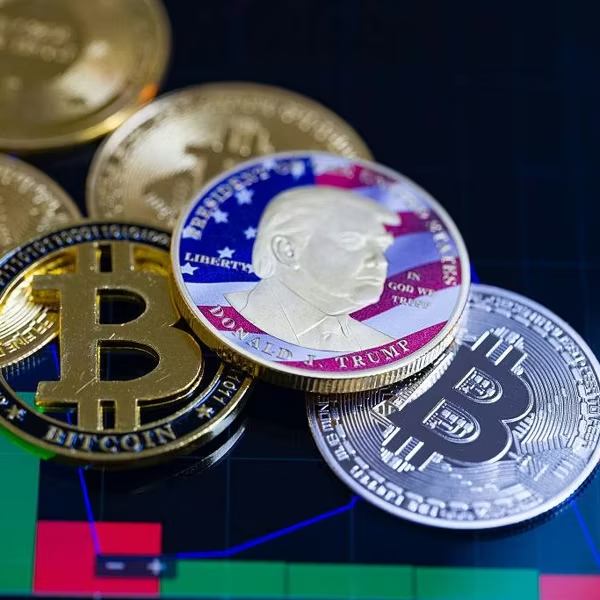
The Trump family stands to make big money from the total deregulation of “prediction markets.” A key official now claims they can only be overseen by a federal agency in bed with industry CEOs.
By Stephen Prager
As President Donald Trump plans to profit from his own “prediction” betting app, his administration is claiming that sole regulatory oversight of the burgeoning gambling industry belongs to an agency advised by executives from the multibillion-dollar betting companies themselves. Critics say it’s totally illegal.
On Tuesday, Mike Selig, the chair of the Commodities Futures Trading Commission (CFTC), announced that the agency had filed a brief attempting to fight “an onslaught of state-led litigation” against companies like Polymarket, Kalshi, Crypto.com, and other apps.
States have alleged that these apps—which allow users to earn money by making accurate predictions on sports and other events—should be regulated similarly to gambling apps, which are subject to licensing requirements, age restrictions, and tax obligations.
But the brief filed by Selig asserts that the CFTC, which has much looser regulations, has “exclusive jurisdiction” over the prediction apps, which he referred to as “derivatives markets”—a term for venues where people trade financial contracts backed by stocks, bonds, or commodities.
“American prediction markets aren’t new. They have been regulated by the CFTC for more than two decades and serve legitimate economic purposes,” he said. “These markets have changed the way people consume news, monitor events, [and] engage in politics, and can be more accurate than competing products.”
“Congress gave the CFTC comprehensive authority over any contract based on a commodity, and the legal definition of a commodity is very broad,” he continued.
Being regulated by CFTC is an obvious boon to the betting companies, because it essentially means they’ll be regulating themselves.
As The Lever noted, Selig’s statement came just days after he’d “recruited top executives from those same companies—including leaders from Polymarket, Kalshi, Crypto.com, DraftKings, and FanDuel—to help advise regulators on how to ‘develop clear rules of the road for the Golden Age of American financial markets.’”
It’s not merely a corporate giveaway, but also an apparent act of brazen self-dealing for the Trump family, whose media company just months ago partnered with Crypto.com to launch its own prediction platform called “Truth Predict.”
It just so happens that Crypto.com’s parent company also donated $30 million to Trump’s super PAC in 2025. Meanwhile, Donald Trump Jr. is an investor and unpaid adviser to Polymarket and a paid advisor to Kalshi.
Prediction betting apps, which allow users to make money predicting political events, have faced accusations of insider trading from those who may have foreknowledge of the Trump administration’s activities.
In January, a user created a new account and bet $32,000 that Venezuelan President Nicolas Maduro would be out of power by the end of the month. Within hours, Trump had launched an operation to kidnap the president, netting the user a $436,000 payday.
Just days later, White House press secretary Karoline Leavitt drew suspicion when she abruptly looked up at the clock and ended a press conference just seconds before a Kalshi bet marked it to conclude, which allowed those who bet it would not go over time to win 50 times what they’d wagered. The White House denied any insider trading, calling it “100% Fake News.”
While prediction markets have become the toast of the Trump administration, the push for near-total deregulation has even some Republicans worried.
Senate Agriculture Chair John Boozman (R-Ark.), whose committee oversees the CFTC, said on Wednesday that he’d be speaking with Selig about his announcement.
“This is an area that just caught fire. I don’t think anybody expected it to grow at the rate that it has,” Boozman said. “But there is concern; it’s the Wild West. There’s not much regulation.”
Democrats, meanwhile, argued that Selig was asserting authority that didn’t exist.
“This is patently false,” wrote Sen. Chris Murphy (D-Conn.) in a response to Selig’s announcement on social media. “Congress has not given the exclusive power to the CFTC to regulate prediction markets. He just made this up out of thin air because the gambling companies that back Trump wanted him to.”
Sen. Elizabeth Warren (D-Mass.) added that “Trump’s CFTC chair is trying to strip states of their authority to regulate gambling within their borders and hamstring their ability to protect Americans from getting ripped off.”
Some states are still pushing ahead as usual. In an act of defiance to the administration, the same day as Selig’s announcement, gaming regulators in Nevada appeared to thumb their nose at the CFTC by filing a lawsuit seeking to block Kalshi from operating sports betting in the state.
“Its continued operation harms the state and the public every day and poses an existential threat to the state’s gaming industry,” Jessica Whalen, chief deputy solicitor general for the attorney general’s office, wrote in the filing. “Kalshi has continued to dramatically expand its business, rather than attempting to maintain any kind of status quo.”
Sierra Club said the rollback "puts the public at greater risk of heart and lung disease, cancer, and even premature death, as well as causing severe neurological damage to fetuses and children.”
By Brett Wilkins
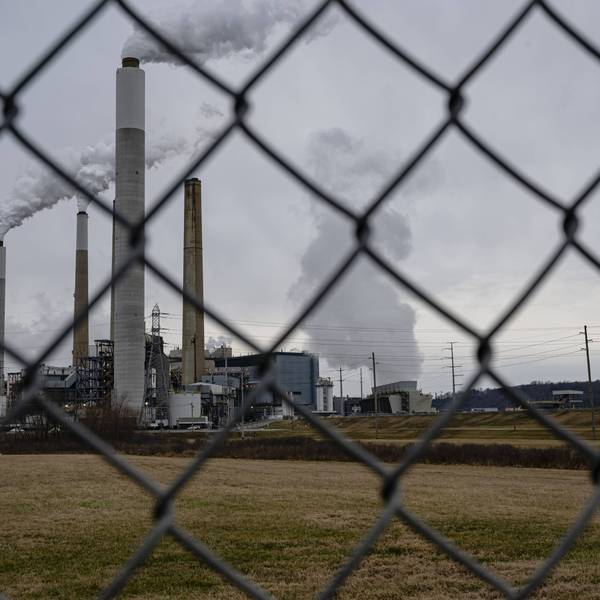
The Trump administration on Friday finalized its rollback of clean air regulations limiting mercury and other toxic pollutants from power plants, sparking condemnation from public health and environmental advocates who warned that the move will increase the risk of death or serious illness for millions of people in the United States.
The US Environmental Protection Agency (EPA) said it is repealing the Mercury and Air Toxics Standards (MATS), which were implemented during the Biden administration in order to protect people from mercury and other toxic air pollutants—including arsenic, lead, and chromium—from fossil fuel power plants.
The Trump administration contends that rescinding MATS will lower financial costs for utilities running older coal-fired plants during a period of rapidly rising demand from consumer and data centers powering artificial intelligence systems.
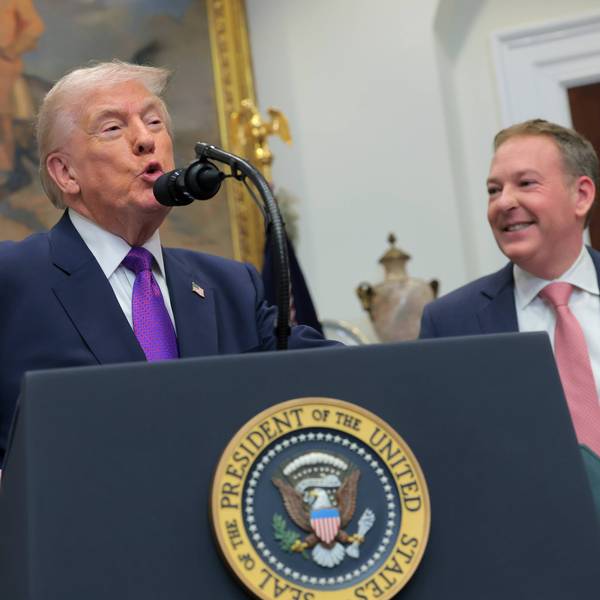
“The Biden-Harris administration’s anti-coal regulations sought to regulate out of existence this vital sector of our energy economy,” EPA Administrator Lee Zeldin said Friday at the Mills Creek Power Plant, a coal-fired facility in Louisville, Kentucky. “The Trump EPA knows that we can grow the economy, enhance baseload power, and protect human health and the environment all at the same time.”
However, the Sierra Club said Friday that “rolling back the new and more protective [MATS] will allow coal- and oil-fired power plants to emit more damaging pollution that puts the public at greater risk of heart and lung disease, cancer, and even premature death, as well as causing severe neurological damage to fetuses and children.”
“According to the Sierra Club’s Trump Coal Pollution Dashboard, reversing the 2024 improvements and reverting to the 2012 standards will allow the dirtiest coal-fired power plants to emit 50% more mercury pollution,” the group added. “In May 2025, the Trump administration exempted 68 power plants—including some of the biggest polluters in the nation—from MATS after soliciting exemption requests from big polluters over email.”
Sierra Club Beyond Coal campaign director Laurie Williams called the MATS rollback “a direct attack on the health of Americans.”
Last June, Sierra Club was a key part of a coalition of environmental and community groups that sued the Trump administration over the exemptions.
“These protections from mercury and other toxic pollution existed to protect communities from reckless polluters,” Sierra Club campaign organizing strategist Bonnie Swinford said Friday. “By repealing these protections, the Trump administration is giving handouts to the coal industry elites—and waging war on the public’s ability to hold polluters accountable.”
The Environmental Protect Network also decried the MATS repeal, saying it “will allow hundreds of facilities across 45 states to avoid meeting critical safety standards—jeopardizing public health, degrading ecosystems, and disproportionately harming children, pregnant people, and communities already overburdened by pollution.”
“This is no way to make America healthy again.”
Moms Clean Air Force co-founder and director Dominique Browning focused on the harms to children the rollback will inflict.
“The science is clear, and profoundly alarming. No amount of mercury is safe for babies’ developing brains,” she said. “Mercury is a dangerous neurotoxin that damages the architecture of babies’ and children’s developing brains.”
“The mercury rules were working,” Browning argued. “Toxic emissions from US coal plants were dropping, and water bodies were getting cleaner. But now EPA Administrator Zeldin’s rollback... will allow coal plants to emit more toxic heavy metals like mercury, chromium, and lead—pollutants that contaminate our air, fall into our lakes and waterways, and poison our food supply.”
“This is no way to make America healthy again,” she added, referring to one of President Donald Trump’s campaign slogans.
Julie McNamara, associate policy director at the Union of Concerned Scientists’ Climate and Energy Program, said in a statement Friday: “Once again, the Trump administration is abandoning science and abandoning statute to give polluters a free pass. And once again, the Trump administration is doing so at the expense of people’s health.”
National Resources Defense Council senior attorney John Walke asserted that “the coal industry is in decline, and dismantling clean air protections won’t bring it back.”
“It will only lead to more asthma attacks, more heart problems, and more premature deaths, especially in communities living in the shadow of coal plants,” Walke added. “We have a right to breathe clean air, and we will fight for that right even if Trump’s EPA refuses to.”
Friday’s EPA announcement followed the agency’s repeal earlier this month of the endangerment finding, the Obama-era rule empowering climate regulation over the past 15 years that treated six greenhouse gases caused by burning fossil fuels as a single air pollutant for regulatory purposes.
Speaking at a Friday press conference in Washington, DC organized by Moms Clean Air Force, Talia, a local fourth grade student, said that “climate disasters are becoming more common, and they’re hurting our planet, our health, and the future of kids like me.”
“Adults in the government are supposed to protect kids from climate change and not ignore it,” she said, adding in a message to Trump officials that “we are taught to listen to scientists and doctors and moms—why don’t you listen to them?”
One analyst predicted Iran would close the Strait of Hormuz and attack oil installations "in the hope of driving oil prices to record levels" should the US strike.
By Brad Reed
"I know that a deal is achievable, but it should be fair and based on a win-win solution," said Abbas Araghchi. "A military option would only complicate this, would only bring about disastrous consequences."
By Stephen Prager
"The economic damage Trump has already done to business investment, manufacturing, and working families’ budgets will linger for years to come."
By Jake Johnson