Showing posts with label DONBAS. Show all posts

Monday, June 13, 2022

RSN: FOCUS: 'They're Wiping Us From Earth': Evading Russian Artillery With a Ukrainian Military Unit


Reader Supported News
13 June 22

Live on the homepage now!
Reader Supported News

911 CALL FOR DONATIONS — This is a must succeed fundraiser. We are down, but we are not out. Each donation represents its own small victory. These are tough times for fundraising. But we are a tough organization. Hit that donation link. It’s urgent for sure.
Marc Ash • Founder, Reader Supported News

Sure, I'll make a donation!


The war has shifted to the east of Ukraine, with Russia slowly gaining territory by pounding Ukrainian positions with overwhelming artillery barrages and air power. (photo: Aris Messinis/AFP/Getty Images)
FOCUS: 'They're Wiping Us From Earth': Evading Russian Artillery With a Ukrainian Military Unit
Mac William Bishop, Rolling Stone
Bishop writes: "A trip to the front lines reveal Putin’s ’scorched earth‘ strategy and the Ukrainian troops trying to hold on."

A trip to the front lines reveal Putin’s ’scorched earth‘ strategy and the Ukrainian troops trying to hold on

Crossing the final checkpoint into a battle zone feels like a consecration.

The Ukrainian soldiers manning the last friendly post have a singular focus and intensity that’s lacking behind the lines. They wave us through solemnly, without smiles or chatter. We coast through the invisible barrier separating the “front” from the “rear,” then floor the gas and accelerate forward.

I’m in eastern Ukraine in late May, in a region called Donbas, where the war has become a whirlwind of carnage that is claiming the lives of as many as 100 Ukrainian soldiers a day. The casualties on the Russian side are almost certainly even higher, according to Ukrainian defense officials. I’ve heard conflicting reports about what is happening here, about whether the Ukrainian military is collapsing or the Russians are succeeding in breaking through the defender’s lines, cutting off thousands of soldiers. But it’s clear that Russia is inching forward, each day bringing it closer to its goal of annexing the provinces of Luhansk and Donetsk and cementing the region under Moscow’s rule.

Ukraine won’t stop fighting. But it is sacrificing thousands of its finest soldiers and still losing ground. It cannot win the war without game-changing foreign-military assistance: American heavy artillery, Danish anti-ship missiles, German air-defense systems — these are slowly making their way to the battlefield. But can the Ukrainian military hold out long enough for any of it to make a difference?

To truly understand what is going on — to get a sense of morale and see how the soldiers are holding up under Russian assault, I must descend into the inferno, and I need a guide. A Ukrainian paratrooper will lead the way.

I’ve called in favors with the commander of a reconnaissance company in an air-assault brigade, and he links me up with an officer whose elite scout unit is operating near intense fighting outside a town called Lyman, a senior lieutenant who goes by the nom de guerre “Mace.”

Mace is soft-spoken and cordial, lean and fit as an endurance athlete. His face is that of a young man, but the salt-and-pepper hair hidden beneath his field hat and his calm self-possession amid chaos reveal he is a seasoned veteran who saw his share of combat before the current invasion. He takes me to the front in a Škoda station wagon, roaring down country back roads at 100-plus miles an hour, blasting techno as the foliage whips past in a blur.

Mace knows that speed counts here, and he weaves in and out of the anti-tank barricades that are strewn along the roads, gunning the engine as soon as we clear the concrete blocks and berms of dirt. I’m glad he knows which roads are mined. As we careen down a hill toward a crossroads surrounded by a scattering of farmhouses, I see a Ukrainian Akatsiya self-propelled artillery gun dashing toward the T-intersection ahead of us. It looks like we will get there at the same time. I point out the vehicle to Mace wordlessly, and I’m gratified to hear the engine revving instantly.

We are of the same mind. The Akatsiya, alone and moving in the open, is a prime target for the Russians. Likely it’s been “shooting-and-scooting”: If they want to survive, the gun crew has to strike a balance between staying in position long enough to provide effective fire support to friendly ground forces, without lingering so long they get discovered by Russian drones.

The Russians are ceaselessly hunting Ukrainian heavy weapons, and their rockets, artillery, and missiles can strike anywhere here, at any time. The fields beside us are pockmarked with blast impacts, and the tails of dozens of dud rockets stick out of the earth as if planted by some mad farmer.

The intersection is a critical danger point: The Akatsiya must slow to nearly a stop to make the turn. If I was a Russian gunnery officer observing it via drone, that’s when I’d try to hit it. The equation “speed x time = distance” looms in my mind.

We fly through the intersection ahead of the Akatsiya, and its crew doesn’t spare us a glance. They’re intent on their own survival, and making the cover of the tree line.

My concern is not abstract.

In the same area only days later, a team of journalists from The Washington Post is nearly killed when visiting a Ukrainian unit, artillery shells falling just yards from where they are standing. That they survive is pure luck.

Days before that, a French journalist is killed in an artillery strike while filming the evacuation of civilians fleeing the fighting in Severodonetsk, the focal point of the Russian assault.

It isn’t necessarily that one can make all of the right choices and thereby stay safe on a battlefield. Sometimes luck works against you when artillery shells are falling. But it is worse to be caught in some places than others.

When we are back in the trees I relax slightly, but Mace doesn’t slow down. He has a destination in mind.

“This is hell on Earth,” Mace says quietly. We are watching as BM-21 Grad rockets rain down on Ukrainian positions near a village called Sviatohirsk. It’s impossible to see their individual effects amid the smoke and haze covering the densely forested hills. Standing in an observation post on high ground amid feathery grass and wild garlic, I give up on trying to count individual impacts and instead just count the salvos, timing each barrage. I witness as many as 480 rockets fired on a single position in less than a minute, followed by artillery.

Between my service in the U.S. Marines and over more than a decade as a foreign correspondent, I’ve been engaged in the professional study of organized human violence for 25 years. But I’ve never seen anything even close to this volume of artillery being unleashed.

Mace has chosen our ground well, as you’d expect from an officer in an elite reconnaissance unit. We’re in a fold of earth on a hill that gives us a clear view of the battle raging around Sviatohirsk — a quiet little village nestled among chalk hills, overlooked by a nearly 400-year-old monastery on the opposite side of the river. It lies to our left. We can also see the fighting around Lyman — a key railway junction — to our right.

What these two places have in common is they are on the Russian-occupied side of the winding Seversky Donets River, the main natural barrier to the enemy’s advance. There are tens of thousands of Russian soldiers with hundreds of tanks and armored vehicles attacking here, assaulting in a vast crescent surrounding Severodonetsk, one of the largest cities in Donbas that remained in Ukrainian hands before the invasion began in February.

Lyman is obscured by smoke from a forest fire that began amid the fighting. The white smoke of the burning trees is interlaced with dark columns rising from destroyed buildings or vehicles. The rumble of booms is almost continuous. The whump-whump-whump of artillery is punctuated by the scream of tactical ballistic missiles, and the salvos of rocket artillery make a distinctive pattering of successive concussions. Almost all of it is being fired by the Russians. The Ukrainian soldiers here have endured this maelstrom for weeks.

“Things usually start to really kick off around 3 p.m.,” Mace says. He describes what has become routine for his brigade of paratroopers: Russian scouts move forward to probe Ukrainian positions, then call in large-scale artillery strikes when they make contact. The artillery is followed by masses of armor supported by infantry. It’s classic “combined arms” warfare, and would have been as familiar to a soldier in World War II as it is to Mace.

“The biggest problem is the artillery,” Mace says. “The Russians just have so much.”

What about the long-range artillery being provided by the United States and others?

“It’s just starting to show up on the battlefield,” Mace says. But for now, “there’s just too much artillery. Too many tanks. We are fighting too hard.”

Will Severodonetsk need to be abandoned?

“It’s possible,” he says. If it falls, it will be the biggest city taken by the enemy since Mariupol was lost in May, and will effectively mean that Russia controls the entire province of Luhansk, a primary goal of Putin’s invasion.

There’s a sudden pop as a cluster munition bursts over the battlefield, leaving behind a smattering of dark puffs as submunitions rain down on the village’s defenders. It’s followed by another seconds later.

The production and use of cluster munitions have been banned by an international treaty that went into effect in 2010, but that doesn’t mean very much: Neither the United States nor Russia — the world’s biggest arms dealers — have signed the accord. Neither has Ukraine. Cluster munitions spread submunitions — small explosives called bomblets — over a wide area, and are intended to kill or maim personnel and destroy vehicles and equipment. Many of the bomblets don’t explode as designed when they hit the ground. Those unexploded bomblets will be found for years afterward.

Sometimes children mistake them for toys.

“Their actions are not as haphazard as before,” Oleksandr Motuzianyk, the spokesman for Ukraine’s Defense Ministry, tells me back in Kyiv when I ask about changing Russian tactics. “They’re using combined arms and air support more effectively.”

The simple fact is that despite its missteps, Russia has taken a lot of land since the invasion started. Ukraine, lacking Russia’s deep reserves of manpower — however unskilled or untrained — cannot recapture it without superlative military technology. Meanwhile, the Russians are pushing ahead: Motuzianyk says their strategy is to encircle troops defending Severodonetsk.

The population of Severodonetsk was more than 100,000 before the invasion in February. Local officials and aid workers estimate that only 12,000 civilians remain, the rest having fled. The entire region has emptied, and daily life has ground to a halt.

The nearby city of Kramatorsk, which held 150,000 inhabitants before the war, is a ghost town. Only a few old people remain; a handful of shops open for a few hours in the daytime to provide food and groceries to the soldiers passing through and the few locals who still remain. A ballistic missile hit a train station there, crowded with refugees, killing 59 people in early April, and wounded more than 100, according to Ukrainian defense officials.

Slovyansk and Kramatorsk are just a few miles apart, and they have become staging areas for the Ukrainian military. They are under constant attack from Russian missiles and rockets: I am awoken throughout the night by resounding booms and constant air raids. One strike takes down the power grid and cellular networks for hours. Multiple strikes in both cities kill civilians, who refuse to leave their homes.

“Do you hear that?” an old man calls to his neighbor, gardening in his yard, as a violent series of explosions echoes through the streets.

“Oh, it’s just thunder,” the gardening man replies. Nearby, a middle-aged woman is pleading with an elderly neighbor to leave. “Where will you go when the Russians get here?”

The Russians have a lot of ground to cover before they can make it as far as Kramatorsk, but the woman has a point.

“The enemy intends to get to the administrative border of Luhansk” with the current offensive, Motuzianyk says. “The enemy intends to take full control of the region.”

But, he adds, “the main tactic remains that of scorched earth.”

“Clearly the Russian leadership demanded changes to Russian tactics to achieve victories, and they are doing what they must to achieve that,” Motuzianyk says. “They are destroying communities and wiping us off the Earth without regard for civilians.”

At a small compound taken over by the airborne scouts, soldiers relax in the yard, grabbing whatever rest they can between missions. I’m standing beside a portly old soldier with a grandfatherly manner, enjoying the sunshine as cottony poplar seeds float densely through the air around us, lending an atmosphere of surreal tranquility as shells and rockets land in the surrounding hills.

The munitions strike so often that you begin to ignore anything that goes “boom,” and only react to things that go “crack,” indicating the explosive has landed unreasonably close.

Fighting here isn’t a new experience for many of the paratroopers, and they are quick to remind me that for them the war began in 2014, when Russia annexed Crimea and sent its soldiers into Donbas to support pro-Russian separatists. Most Ukrainians remain bitter about the relatively weak Western response to those actions, and it’s why they fear the West will once again buckle to Putin’s aggression.

Ukrainians from all walks of life have told me how concerned they are about a repeat of 2014, with the international community acceding to the Russian seizure of their land — despite the blood they are spilling to defend it.

“These guys shouldn’t have had to fight for eight years,” the old soldier grimaces in dismay as he watches the young paratroopers. “They should be at home making babies. But here we are, stuck in this shit.”

The commandeered building that the recon teams are using as their base is a hive of activity. There’s civilian cars and captured Russian trucks the paratroopers are trying to get back into service. Many of the vehicles sport bullet holes or other obvious battle damage.

These paratroopers receive intensive instruction — many have trained with U.S. Special Forces and other elite NATO units — and their experience is unmatched: they have been regularly rotating through Donbas since 2014. Mace suggests I speak to one of his most seasoned veterans, a hardcore fighter who has been operating in Donbas for eight years. He’s a rugged looking guy with a scratchy voice. I ask him what has changed now.

“One of the biggest problems is the drones,” says “Ostap,” the nom de guerre of the scout. “I hear Orlans [a type of Russian reconnaissance drone] all the time. But I almost never see them. They’re too small and too high. It’s next to impossible to shoot them down.”

But the defense ministry says that soldiers have shot Russian drones down in the hundreds, I say.

He shrugs. “I don’t know. I only believe what I see with my own eyes.”

A big part of the problem in defending this part of Donbas, Ostap believes, is that the people who have stayed behind — the people who haven’t fled — don’t really believe they are part of Ukraine. In his view, the civilians who remain are all separatist sympathizers. He says they help the Russians navigate backcountry roads that aren’t on the maps.

“Yeah, they’re all waiting for Russkiy mir,” Mace says, laughing when I ask his opinion about the locals. Russkiy mir, or “Russian world,” is the revanchist concept that Russia needs to restore its central role in the affairs of its neighbors, and its borders, to what they were at the height of the Soviet empire.

He asserts there have been instances of local collaborators getting caught providing information about Ukrainian troop movements or locations. Indeed, Slovyansk fell to Russian separatists in 2014: The retaking of the city by the Ukrainian military later that summer was the first major battle in Donbas.

“Almost everyone here is pro-Russian. But you can’t arrest people just for that,” Mace says. In any case, the police and the SBU —Ukraine’s internal security service — were doing what they could. “The SBU even arrested a couple of people in our brigade,” he says.

“We’re looking for bears,” Mace says. He means Ukrainian tanks. I’ve seen several T-80s obscured among the trees, hoping to stay hidden from Russian aircraft and drones. We round a corner and there’s one right in front of us, a squat hulking shape with the long barrel of its 125-mm cannon pointing down the road.

There’s a tank platoon in the dark forest here, holding in reserve on favorable terrain, lest the Russians succeed in crossing the river.

There’s been other signs of Ukrainian forces moving east to get in the fight. On the highway to Kramatorsk, we would pass periodic tank carriers loaded with armored vehicles or tanks, fuel trucks, and a few rarer sightings, like bridging equipment and a Buk anti-aircraft missile system that had only three of its four mounting points armed with missiles.

It doesn’t seem like a lot of equipment given the scale of the fighting. I don’t see any of the new artillery systems provided by the United States in its most recent aid package: There are also busloads of sleeping soldiers. Russians have concentrated their greatest resources here, according to President Zelensky. Mace doesn’t see being outnumbered as the biggest problem, however.

“The problem is that we don’t have enough well-trained people,” he says. “The Territorial Defense Forces [volunteers called up for the current crisis, often with minimal training and equipment] will go to their trenches, and as soon as they see an enemy tank, they fill the radio net with panicked chatter and then run away, abandoning their positions.”

He shakes his head grimly: “We need quality, not quantity. The opposite of the Russians.”

As we dash through the forest, we happen upon a Ukrainian unit using an intersection as a staging area, they gather in a small clearing next to a large oak tree. They’re in a mix of uniforms, some are even wearing articles of civilian clothing. Most of them are standing in front of a prisoner.

The prisoner is on his knees, blindfolded with his hands tied behind his back. He’s wearing the distinctive uniform of Russian infantry. Because of Mace’s dedication to fast driving, I don’t process what I’ve seen until we pass. “A Russian prisoner!” Even as the words leave my mouth, a single gunshot cracks out.

I whip around to look back over my shoulder at the scene through the rear window as we turn left, praying I am not witness to a war crime.

There is no evidence of widespread abuse of prisoners of war by Ukrainian forces, but there are several ongoing criminal investigations into isolated incidents in which Russian prisoners appear to have been tortured or even executed.

The military here has more than doubled since Russia’s invasion in late February. More than 700,000 Ukrainians are now under arms, and perhaps only one-third of those have received anything resembling professional military training. But there is no shortage of hatred on the battlefield. Only days before, I attended a Defense Ministry briefing, unveiling a series of online videos designed to ensure Ukrainian soldiers understood the laws of war.

“Sometimes we face skepticism, people say, ‘Well, the Russians don’t obey the rules of war. Why should we?’” said Col. Viacheslav Rachevskiy, the officer conducting the briefing. “But it is about being a civilized army.”

Ukraine can’t afford to let untrained soldiers jeopardize Western support, and it wants to highlight that it takes the issue seriously. The moral high road is as much an asset in this fight as any weapon system. Ukraine has worked to codify the laws of war into the Ukrainian criminal code, to bring the country in line with the generally accepted norms of international humanitarian law, according to Rachevskiy. “It’s the sign of a European, modern democratic army,” he said.

When I look back, the prisoner is still on his knees: He’s talking. He appears alive and unharmed. I don’t see anyone pointing a weapon at him. What did I hear? An accidental discharge? A celebratory gunshot? A mock execution? There is no way to know.

“Can we stop? Can I talk to him?”

Mace doesn’t look back, he makes the turn and accelerates. It’s hardly the first time the paratrooper has seen a Russian prisoner. “If he hears you speaking English, then he’ll spread tales of American puppet masters in these woods,” he says.

Besides, Mace explains, he doesn’t know who those soldiers are. They aren’t in his unit.

The last I see of the Russian, he is alive and on his knees, being interrogated in the field.

When “Sasha” gets in the car, he says he just doesn’t want to talk about anything. Sasha has been waiting outside the one grocery store in Kramatorsk that is still functioning: Its parking lot has become a local hot spot for soldiers to meet up for rides to and from the front. He tosses his bags in the back and squeezes into the rear seat of the Chinese-made sedan that will ferry me back to my own vehicle.

The big brooding soldier is unshaven, his fatigues filthy from combat, except for a field hat that is clearly brand new. The local driver who has been shuttling me around has agreed to bring the soldier to Dnipro: He has leave papers and is trying to get home to Mykolaiv, so that’ll take him about halfway. The fuel shortage is critical in eastern Ukraine for non-military traffic, so filling a civilian car with strangers headed roughly the same direction has become a common practice: There are Telegram channels where people offer and seek rides to and from every city.

Less than 30 minutes into the drive, Sasha opens up suddenly and unexpectedly. What he reveals is chilling, and indicative of how bad things have gotten in Donbas.

“I nearly beat to death one of the men in my unit,” he confides. “We were in trenches on the front lines. He was using his cellphone.”

Sasha breathes heavily.

“The Russians tracked his signal and located our position. He called his mom for 15 minutes, then his wife for 15 minutes … and then his girlfriend for almost two hours. They bombarded us all night. That’s why I beat him.”

Later, he tells us more about the front.

“We lost six men on our first patrol,” he says. “Six out of 10. They were all my friends.”

He breaks down and begins to cry.

Sasha eventually admits that he has been given leave to go to a hospital to seek therapy, for what soldiers a century ago would have called shell shock and what we now call PTSD. He has been given 10 days to recover from his battlefield trauma and return to his unit.

When we have a chance to talk alone, he shows me videos of his wedding in October. He tells me he is scared to talk to his family about his experiences. Sasha doesn’t want to return to combat. All he can think about are the soldiers who were killed on his first patrol.

“Those six men were my friends, they were my brothers, and I love them very much,” he says. “I can’t just leave them behind. I will always carry them with me.”

He looks down, overcome with emotion.

“What is in my heart is that I never wish to see Donbas again in the future. Nothing you do there makes any difference.”


READ MORE

Special Coverage: Ukraine, A Historic Resistance
READ MORE


Contribute to RSN

Follow us on facebook and twitter!

Update My Monthly Donation

PO Box 2043 / Citrus Heights, CA 95611


Monday, April 25, 2022

RSN: Fred Kaplan | Why the Battle for Donbas Could Be Another Debacle for Russia


Reader Supported News
25 April 22

Live on the homepage now!
Reader Supported News

WITHOUT FUNDING THERE WON’T BE AN RSN FOR YOU TO COME TO — Funding is not optional. We are — required — to have a basic budget, like it or not. We would love to reduce fundraising. Reasonable donations will absolutely allow us to do that. Right now reasonable donations are lacking. With urgency.
Marc Ash • Founder, Reader Supported News

Sure, I'll make a donation!


Outside the central train station in Trostyanets, Ukraine, that was used as a Russian base on March 30. (photo: Chris McGrath/Getty Images)
Fred Kaplan | Why the Battle for Donbas Could Be Another Debacle for Russia
Fred Kaplan, Slate
Kaplan writes: "Tired troops. Muddy terrain. Well-armed Ukrainians. The war's new stage may be a challenge for Putin's forces."

Tired troops. Muddy terrain. Well-armed Ukrainians. The war’s new stage may be a challenge for Putin’s forces.

After suffering a string of setbacks in its invasion of Ukraine, beating a retreat from its attempt to capture Kyiv, and losing as many as 20,000 soldiers in the process, the Russian military is now shifting gears to a less ambitious goal of grabbing and occupying Ukraine’s eastern region of Donbas.

The key questions are whether, eight weeks into this war, the Russians have learned any lessons from their disastrous first phase and whether the terrain of the new campaign—open fields just across their own border—will give them an advantage in the fight.

Either way, this next stage of the conflict is likely to be even bloodier than the first—a long war of attrition, including tank-on-tank battles, the likes of which haven’t been fought in Europe since World War II. This week, both sides were still preparing for the onslaughts, firing artillery shells at each other’s positions, hoping to wear down their stamina and morale before the grueling part of the fighting begins.

For weeks now, Russian tank battalions have been lining up all across the 300-mile border with Ukraine, with the goal—once the fighting begins in full force—of breaking through the defenses, then enveloping the Ukrainian soldiers from all sides.

This tactic works both ways: The Ukrainians will try to punch a hole in the offensive line, then envelop the Russian soldiers—and, at the same time, cut off Russian supply lines. (Helpfully, Russia’s supply lines in the East are dependent on rail tracks, which Ukrainians have been adept at blowing up.)

The stakes are larger than Donbas, a region rich in coal and industry, with about 6 percent of Ukraine’s population. The Russians are continuing to step up the pressure all over Ukraine, bombing and shelling civilian and military targets in Kyiv, Lviv, and other cities to the west, as well as blockading Mariupol in the southeast. If Putin wins in Donbas, he might revive his scuttled ambitions to take over the rest of the country or at least to topple President Volodymyr Zelensky in Kyiv.

If Putin finds himself on the verge of losing in Donbas, however, he might set off chemical or tactical nuclear weapons in a brash stab at shocking Zelensky and the Western allies into stopping the war before all hell breaks loose. (Russian military doctrine refers to this ploy as “escalate to de-escalate.”) This is the main reason President Joe Biden and some of the European leaders refrain from pushing Putin still harder or intervening in the war directly.

So it is a vital question to ask, even now, which side enters the war’s new phase with the better chance of winning. Sheer geography favors the Russians in some respects. The open terrain will allow Ukrainian soldiers fewer hiding places from which to ambush Russian tank columns, as they did outside of Kyiv.

The region’s proximity to Russia will also mean shorter supply lines—which Ukrainians easily disrupted during those earlier battles, leaving Russian soldiers short of food, fuel, and ammunition. Russia enjoys the advantage of an invader’s initiative, as well. Russian soldiers who fought in the earlier battles are being redeployed to Donbas, thus firming up the numerical edge that Russia already held in troops and firepower.

However, these advantages may not prove decisive.

Biden and some European leaders are rushing not only more anti-tank and anti-aircraft missiles but also “heavy weapons”—tanks, armored fighting vehicles, artillery, helicopters, many of which will arrive within days—to Ukrainian units. During the war’s first phase, these leaders had stopped short of sending these deadlier, more mobile, and longer-range weapons, concerned that Russian President Vladimir Putin would view them as provocative escalations of NATO’s involvement in the war and therefore might respond by firing chemical or nuclear weapons.

But, worried by Russia’s military reinforcements and its continued bombing of Ukrainian civilians, Biden and the others have relaxed their standards of acceptable risk and are doing more to improve the Ukrainian army’s ability not only to mount guerrilla-type attacks on Russian forces but also to wage conventional warfare.

There is one other factor that should make Russian commanders pessimistic: Their troops are exhausted. This is why the offensive in Donbas is not yet fully underway. Many of the Russian battalions—some redeployed from their failed campaigns in northern and western Ukraine, some newly mobilized from distant bases inside Russia—lost too many troops, tanks, and other weapons to fight as coherent combat units, and it will take a few weeks, if not much longer, to fill in the gaps.

Michael Kofman, a military expert at CNA, whose analyses of the war have proved more prescient than most, tweeted on Wednesday, “Overall I think the Russian military has dramatically reduced combat effectiveness given [the] high level of losses. … They’ve scraped together what was left … to get some reinforcements. It can’t make up for losses.”

One of Russia’s seemingly clear advantages, the open terrain, may prove a bit of a drawback as well. The ground is muddy, which might force the Russian tanks to move in columns on the roads, where they would be vulnerable to anti-tank missiles and drones, or to stay in the fields but get bogged down.

A retired U.S. Army four-star general, who asked that he not be identified, told me in an email that these facts, along with the Russians’ wide-ranging ineptitude so far, “should give us pause as to whether they achieve substantial breakthroughs” against Ukraine’s defenses. At the same time, he continued, “the Ukrainians need to stop the Russians repeatedly.” Even if the Russians don’t manage to break through and envelop Ukraine’s defenses, they might still “push forward across the front lines.”

If this forecast is accurate, the war may settle into a long, bloody slugfest, to be decided not by which side achieves some grand strategic victory but rather by which side simply stays standing a little bit longer.

The possibility of a sustained stalemate has one positive side: It could compel both sides to come to the negotiating table.

Some Russian officials have rationalized their military’s retreat from Kyiv by saying Putin’s real goal all along was to take the Donbas region. Donbas is where the war began—and where Russia and Ukraine have been fighting since 2014 in a conflict that has killed more than 14,000 people, including 500 Russians.

Until this past February, the war pitted separatist militias, aided by Russian arms and special forces, against Ukrainian troops, who at the time were supported but only meagerly supplied by the West. Just before the invasion, Putin formally recognized the two districts of Donbas—Donetsk and Luhansk—as independent “people’s republics.” He publicly justified the invasion as a necessary step to protect Russian speakers in those republics from Ukrainian “genocide.” He and his aides barely mentioned the invasion in other parts of Ukraine, until the heavy Russian casualties—numbering up to 20,000 by some estimates—could no longer be hidden even by the censored state-run media.

Not long after this earlier war got underway, the troops on both sides formed a line of demarcation, with pro-Russia separatists controlling the eastern half of the region and Ukrainian troops controlling the western half. (This roughly corresponded to the areas populated by ethnic Russians and by Ukrainians, respectively.) These lines have barely budged in the eight years since. In 2015, both sides signed the Minsk agreements, which called for a cease-fire and a vaguely worded formula for settling the fate of Donbas, but the accords were never implemented. Still, in the weeks leading up to Putin’s February invasion, U.S. and Russian officials mentioned reviving the Minsk agreements as a possible way out.

If this war ever does end, the peace accord will have to deal with Donbas in some way. The outcome of the battle for Donbas, if there ever is a clear outcome, may pave the way to an accord or make it still harder to achieve.


READ MORE


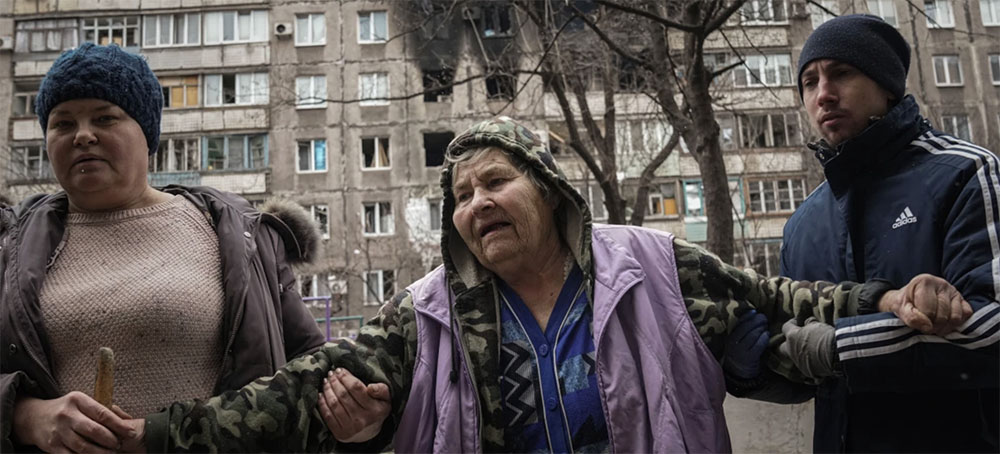
UN Calls for 'Stop' in Fighting to Allow Mariupol EvacuationPeople help an elderly woman to walk in a street, in front of an apartment building hit by shelling in Mariupol, Ukraine. (photo: Evgeniy Maloletka/AP)IRE,

UN Calls for 'Stop' in Fighting to Allow Mariupol Evacuation
Agence France Presse
Excerpt: "The United Nations Ukraine crisis coordinator, Amin Awad, on Sunday called for an 'immediate stop' to fighting in Mariupol to allow the evacuation of trapped civilians in the battered city 'today.'"
READ MORE


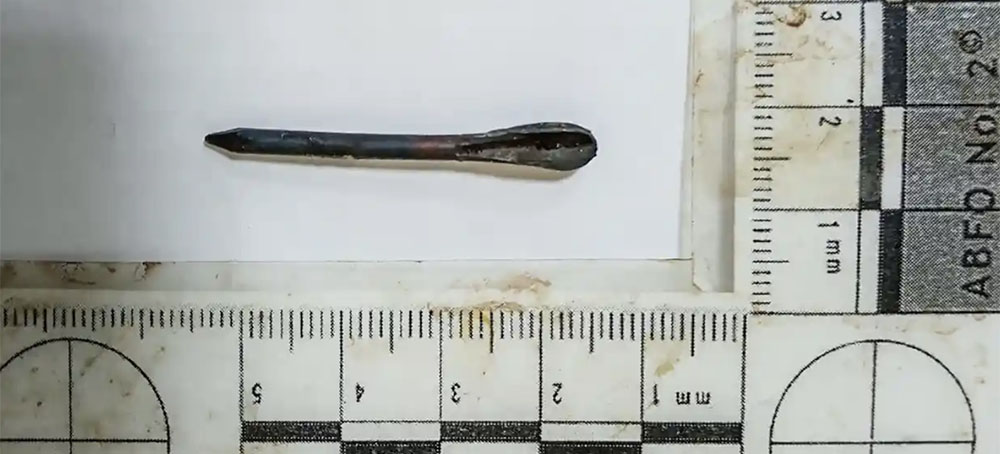
Dozens of Bucha Civilians Were Killed by Metal Darts From Russian ArtilleryA small metal dart, called fléchette, found embedded in the body of man killed in Bucha. (photo: Alessio Mamo)

Dozens of Bucha Civilians Were Killed by Metal Darts From Russian Artillery
Lorenzo Tondo, Guardian UK
Tondo writes: "Dozens of civilians who died during the Russian occupation of the Ukrainian city of Bucha were killed by tiny metal arrows from shells of a type fired by Russian artillery, forensic doctors have said."
READ MORE


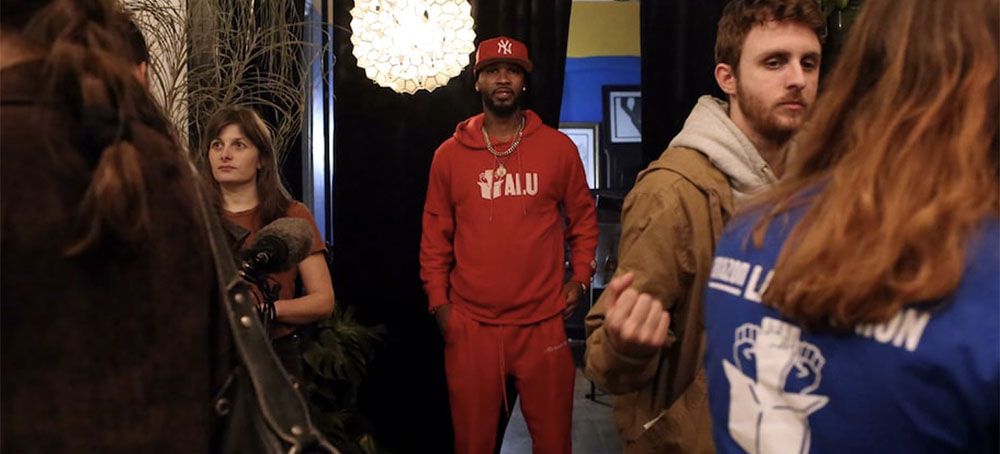
From Amazon to Apple, Tech Giants Turn to Old-School Union BustingChris Smalls, interim president of the Amazon Labor Union, celebrates a successful vote. (photo: Yana Paskova/WP)

From Amazon to Apple, Tech Giants Turn to Old-School Union Busting
Nitasha Tiku, Reed Albergotti, Greg Jaffe and Rachel Lerman, The Washington Post
Excerpt: "At a Staten Island warehouse set to start its vote on unionizing Monday, Amazon has hired consultants to union-bust, mandated classes to discourage organizing and threatened to arrest union leaders for trespassing."
READ MORE


The Rich Haven't Just Gotten Richer - They've Also Gotten a Lot More SelfishElon Musk and Chris Anderson, the head of TED, during an interview in Vancouver, Canada, on 14 April. (photo: Stacie Mcchesney/TED/AFP/Getty Images)

The Rich Haven't Just Gotten Richer - They've Also Gotten a Lot More Selfish
Arwa Mahdawi, Guardian UK
Mahdawi writes: "US billionaires now own a combined $4.7 trillion, according to a new analysis - but to Elon Musk, since he doesn't have a yacht or own a home, that's totally okay."

US billionaires now own a combined $4.7tn, according to a new analysis – but to Elon Musk, since he doesn’t have a yacht or own a home, that’s totally OK

Us billionaires now own $4.7tn –but that’s OK, says Elon Musk

“We’re all in this together.” Remember that corny catchphrase from the early days of the pandemic? Remember when there was a smidgen of hope that the collective trauma the world was facing would reshape people’s priorities and the pandemic could be a portal to a better, fairer society?

Well, two years on, precisely none of that has happened. People clapped for essential workers for a bit but didn’t stop exploiting them. Meanwhile it’s boom time for billionaires, who saw their already obscene wealth grow exponentially during the pandemic. A new analysis released by Oxfam America on Monday, to mark tax day in the US, found US billionaires now own a combined $4.7tn in wealth. Much of this goes untaxed; last year ProPublica analyzed leaked tax returns and found the 25 richest people in the US paid a true tax rate of just 3.4% from 2014 to 2018. The average taxpayer, meanwhile, pays a true tax rate of 13%. It wasn’t always like this. As Oxfam notes, it really wasn’t that long ago that the ultra-wealthy paid their fair share in tax; during the second world war, the federal income tax rate peaked at 94% and was still 70% three decades later. The rich haven’t just gotten richer, they’ve also gotten a lot more selfish.

While billionaires have seen their bank accounts balloon and corporations are raking in record profits, ordinary people are hurting from decades-high inflation. By some accounts, the inequality gap in the US is worse now than it was in France in the 1780s just before the French Revolution. It’s easy to get angry about all this, but you might want to wait a moment before jumping to the seemingly obvious conclusion that gross inequality is bad and we really ought to do something about it. You see, in a recent (embarrassingly fawning) interview with Chris Anderson, the head of Ted, Elon Musk helpfully billionaire-splained why it’s actually OK for a handful of people to hoard obscene amounts of wealth.

“There are many people out there who can’t stand this world of billionaires,” Anderson said to Musk in the interview. “Like, they are hugely offended by the notion that an individual can have the same wealth as, say, a billion or more of the world’s poorest people.”

Only an idiot would be offended by something like that, Musk essentially replied. “I think there’s some axiomatic flaws that are leading them to that conclusion,” he told Anderson. “For sure, it would be very problematic if I was consuming, you know, billions of dollars a year in personal consumption. But that is not the case. In fact, I don’t even own a home right now. I’m literally staying at friends’ places … I don’t have a yacht, I really don’t take vacations. It’s not as though my personal consumption is high.”

Musk, who is worth almost $300bn, did concede that the one exception to his incredibly ascetic lifestyle is his $70m private jet, but said its use was justified because it gives him more hours to work. It’s essentially in the public good.

So there you go. Put down your pitchforks everyone! Stop sharpening your guillotines! Anyone getting angry about inequality simply needs to examine their “axiomatic flaws”. It’s perfectly OK that the world’s billionaires have more wealth than 60% of the world’s population combined, as long as they buy private jets instead of yachts and couchsurf at their mate’s mansion instead of paying property tax on their own house. Really glad Musk cleared that up for us all.


READ MORE


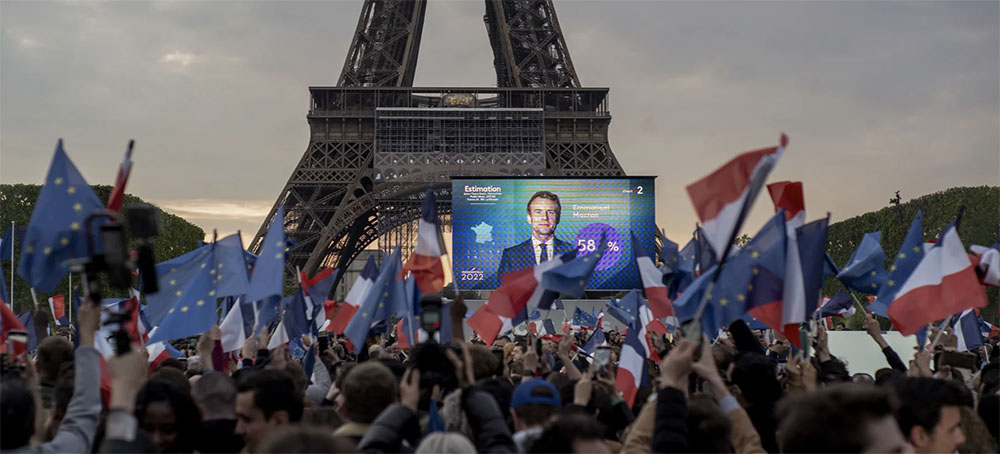
French President Emmanuel Macron Beats His Far-Right Rival to Win ReelectionFrench president Emmanuel Macron celebrates with supporters in front of the Eiffel Tower Paris, France, on Sunday. (photo: Rafael Yaghobzadeh/AP)

French President Emmanuel Macron Beats His Far-Right Rival to Win Reelection
Associated Press
Excerpt: "French President Emmanuel Macron comfortably won reelection to a second term Sunday."
READ MORE


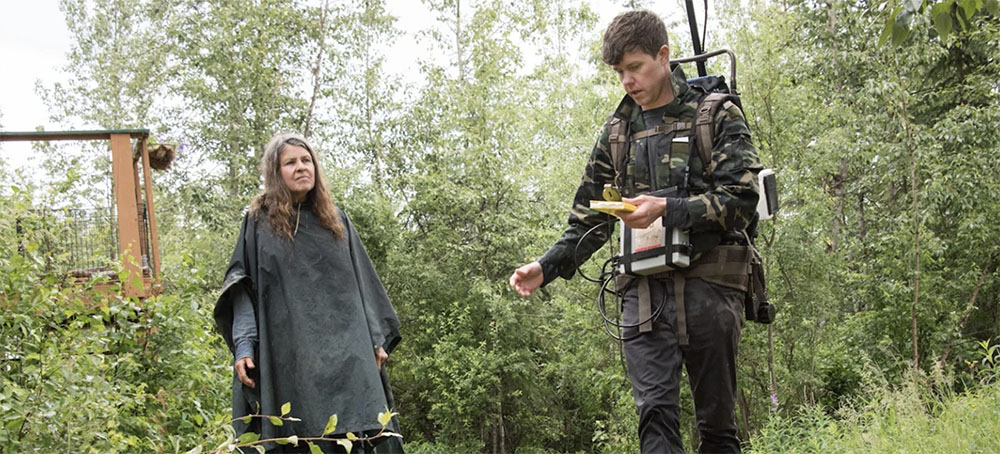
Don't Look Down: As Permafrost Thaws, the Ground Beneath Alaska Is CollapsingResearcher Nicholas Hasson, right, talks with Kathy Lenniger, left, a property owner in Fairbanks' Goldstream Valley. Permafrost melt is creating sinkholes and undermining the structural integrity of homes, wells, septic systems, and roads. (photo: Sean McDermott/Grist)


Don't Look Down: As Permafrost Thaws, the Ground Beneath Alaska Is Collapsing
Lois Parshley, Grist
Parshley writes: "Today, the Arctic is again confronting dramatic change."

As permafrost thaws, the ground beneath Alaska is collapsing.

Kathy Lenniger was running her dogsled team one day along her usual route in Fairbanks, Alaska, when she suddenly splashed into overflow, fresh water spilling on top of the snow. Surprised and chilled, she returned to the parking lot, where a lanky man was loading a sled with science equipment. Nicholas Hasson, it turned out, was studying thawing permafrost — research that could shed light on the streams and sinkholes that recently materialized around Lenniger’s property and all around town.

Lenniger lives in a log cabin in Goldstream Valley, a spruce-lined swale with a rolling view of the Northern Lights near Fairbanks. “It’s the birthplace of American permafrost research, actually,” said Hasson, a Ph.D. student at the nearby University of Alaska Fairbanks, or UAF. During World War II, the military feared the ribbons of dancing light were interfering with its radar, so Congress passed an act in 1946 establishing the Geophysical Institute at UAF. Soon, scientists were investigating the strange phenomena in the sky and drilling boreholes around Goldstream Valley to study the frozen ground beneath their feet.

Since then, temperatures in Fairbanks have shifted so much that the National Oceanic and Atmospheric Administration officially changed the city’s subarctic designation in 2021, downgrading it to “warm summer continental.” As the climate warms, the ancient ice that used to cover an estimated 85 percent of Alaska is thawing. As it streams away, there are places where the ground is now collapsing. Many of the valley’s spruce trees lean drunkenly. Sometimes, only a thin layer of soil covers yawning craters where the ice has vanished, what Hasson calls “ghost ice wedges.” Its absence has already fundamentally changed how — and where — people can live.

When Lenniger built her cabin several decades ago, she didn’t expect she’d need to regularly jack up her foundation. But for the last several years, she said, “if I have some water on my counter now, it rolls in this direction. It’s like, ‘Oh yeah, it’s sinking again.’” At first, she tried to fill the sinkholes popping up around her property with bones from the meat she fed her sled dogs, but eventually the pits grew large enough to strand a backhoe. Despite living in perhaps the most-studied permafrost valley in the country, Lenniger didn’t know how much worse her troubles might get — until Hasson offered to help.

On a muggy afternoon last summer, Hasson prepared to try to find out why Lenniger’s cabin was sinking. He pulled on a backpacking frame he’d jury-rigged to receive very low-frequency radio waves from antennae in Hawaii, recording the modulations of the electric field to map the permafrost beneath the duff. The colors of the aurora come from the charged particles of solar wind, which collide with oxygen and nitrogen in the Earth’s ionosphere and create a glowing halo. The free electrons from these collisions can reflect radio waves, helping Hasson understand how permafrost is thawing below the surface. Combined with a $40,000 laser he dragged behind him on a plastic sled he’d nicknamed “The Coffin,” Hasson is able to link surface methane emissions to the ice disappearing underground.

As he scrambled off Lenniger’s driveway into the brush, Hasson explained, “It’s just like an MRI — we’re able to scan and see where water is flowing.” Walking across her yard, he found a new underground river had formed under a corner of Lenniger’s home, which explained why her land had caved in.

The permafrost around Fairbanks is discontinuous; jagged pieces of it finger north-facing slopes and enfold the low-lying valleys. Yet potential homebuyers who want to avoid it are left to guesswork. “There’s no comprehensive map of permafrost,” said Kellen Spillman, the director of the department of community planning for the Fairbanks North Star Borough. For those like Lenniger, whose properties later develop thaw-related problems, there’s little recourse, either from insurance or the government. The University of Alaska Fairbanks, home to much of the state’s permafrost research, has itself struggled with recurring sinkholes on its roads and parking lots. “We have invested funding to rebuild,” said Cameron Wohlford, director of design and construction at the school’s facilities, “only to have them fail.”

Homeowners around Alaska’s second-largest city are facing expensive repairs, or even having their properties condemned. Hasson eventually traced the river running beneath Lenniger’s property to her neighbor’s, where the owner, Judy Gottschalk, reported that her septic pipes had broken as the ground settled. “My well went out this winter, too,” she said. Not knowing where else the ghost ice lies, Gottschalk has been nervous about putting in a new septic system. The drilling and construction required to replace it would cost her as much as $45,000, more than she originally paid for her house. “Everyone I know is having problems with their housing,” Lenniger said.

As parts of Alaska set record high temperatures in December, Fairbanks closed out 2021 with a destructive ice storm, causing roofs to collapse. A warmer Arctic is also a wetter Arctic, accelerating the breakdown of permafrost, explained Tom Douglas, a senior scientist for the U.S. Army Corps of Engineers’ Cold Regions Research and Engineering Laboratory, in Fairbanks. “For every centimeter of rain, we see about one centimeter of additional top-down thaw,” he said. On average, Fairbanks now sees about five more weeks of rain than it did in the 1970s.

“In my 47 years here, I’ve never seen these kinds of conditions before,” Lenniger said. She has a lot of practice finding creative ways to take on Alaska’s hurdles: Before phone lines went in, she and her partner used homing pigeons to communicate while mushing, though she said she was unfazed when the birds were devoured by owls. But now, the rapid changes are testing her ability to cope. “Every day, it’s like now what will happen?”

Just as the earth clings to its former shape, leaving a record of where ice used to be, the very language used to describe these changes is revealing. The word permafrost, after all, is simply an abbreviation of “permanently frozen ground.” Much of Alaska’s permafrost is tens to hundreds of thousands of years old, first frozen when Goldstream Valley was grazed by mammoths. Now, that sense of immutability is slipping. “It was thought to be permanent — that any changes happened on a scale of tens of thousands of years,” said Vladimir Romanovsky, a professor emeritus of geophysics at the University of Alaska Fairbanks and a leading permafrost researcher.

Many variables influence permafrost’s stability, like how cold it is, how deep it runs, and the quantity of soil moisture, or its “ice richness.” In some parts of Alaska, ice extends nearly a half-mile below the surface, while in others, it has formed the landscape itself, sprouting tundra-covered ice hills called pingos.

Since 1993, Romanovsky has been taking field data from stations around the state, recording their increasing temperatures. At all of the 350 stations, soil temperatures have warmed substantially, and thaw is inching down to deeper depths. On the North Slope, one of Alaska’s coldest ice-rich regions, “when we started it was about -8, and now it’s -4 degrees Celsius, so we’re already halfway to zero,” he said. Dramatic changes will increase once this melting point between frozen and liquid is hit. He predicts that within 40 years, the Slope will be “at a critical threshold in normal, undisturbed conditions.”

Off the North Slope, this tipping point will be reached sooner. Any time soil or vegetation is disturbed — as the Army Corps of Engineers discovered in 1942 while trying to build a highway to Alaska — permafrost has a tendency to disintegrate into truck-swallowing mud. It’s a similar story with roads built in recent decades. Jeff Currey, materials engineer for the northern region of Alaska’s Department of Transportation & Public Facilities, explains that as ice wedges degrade under the state’s highways and airports, the asphalt heaves and drops, creating a dangerous roller-coaster effect. Because Alaska has relatively few roads across its 665,000 square miles, the ones it has are critical connections.

“Warming temperatures are contributing to increasing maintenance and damage,” Currey said. “Anecdotally, we’re having to fix the same places more frequently, and more intensively.”

Mitigation measures can help, from the low-tech approach of using gravel to channel cold air against embankments to high-tech thermosiphons, tubes that channel warmth aboveground during the winter to help keep the soil frozen. But Alaska’s budget for maintenance is largely dictated by the state legislature, and Currey calls the annual $330 million allotted to the northern region in recent years “inadequate.” Currey explains the average road is typically built to last around 30 years, but that’s largely based on expected traffic, not whether the road will be thermally stable. An independent study published in the Proceedings of the National Academy of Sciences estimated that, as a result of climate change, the state will have to spend billions more on maintaining and repairing public infrastructure by the end of the century. Despite budget shortfalls, Currey predicts that “maintenance efforts simply have to increase.” In many cases, “we’ll tolerate rougher and worse roads than we do now — that will just be the economic reality.”

Around Fairbanks, elevating buildings to keep their heat from leaking into permafrost or designing structures to be adjusted isn’t new. Re-leveling houses as a cheap way to adjust to moving ground is an Alaskan tradition. “My grandparents used to chase the corners on their cabin when it moved, like everybody,” said Aaron Cooke, an architect and researcher at the National Renewable Energy Laboratory’s Cold Climate Housing Research Center, who has worked on these issues in many communities around the state. But with climate change, the old engineering tricks that helped keep permafrost frozen aren’t sufficient. “The ground is changing, even if you do everything right.”

To understand the scale of the impact when it starts to melt, Cooke said, you have to understand that “to someone in the north, the natural state of the ground, the default status of Earth, is frozen. And thousands of years of culture are built on that knowledge.” While the impacts of permafrost thaw — subsidence, flooding, sinkholes, and landslides — mimic the devastation of natural disasters, the Federal Emergency Management Agency isn’t responsible for permafrost damage, and it’s difficult to get covered by homeowner’s insurance. “How fast does a disaster need to move for a department that handles disasters to address it?” Cooke asked.

Romanovsky predicts that within a decade, the destruction in most parts of Alaska will get worse. “I’m worrying about my house as well,” he said. But regions with continuous and ice-rich permafrost, like those in northwest Alaska, will see the worst damage. “It will be the major problem driving relocation,” he said, “but these changes need to be understood at high resolution — for each village, for each house, you need to know what to expect.”

Where the Chukchi Sea bites into the North American continent, ice loss has driven thousands of walruses to the beaches of Point Lay, in northwest Alaska within the Arctic Circle. The predominately Iñupiat community, home to around 300 people, is wrestling with the loss of ice, too: In 2016, the lake they relied on for drinking water disappeared overnight after the ice wedge it rested on eroded, forcing the town to pump water from a nearby river. This year, one of the town’s holding tanks failed, spilling almost a million gallons. “Apparently, permafrost was melting under us,” said Lupita Henry, the Native Village of Point Lay’s former tribal president. “There are cracks in homes, doors that can’t close, houses that are so angled they seem unlivable.”

Now 40 years old, Henry was a young girl when the town’s first underground sewer lines were put in; many of them have since broken as the ground settled. The borough government recently installed new electric poles, which are already starting to lean. Like in many rural Alaskan communities, there’s a shortage of housing, but Henry said the thawing permafrost makes it difficult to build or even get a loan for a new home. “Where do you get your insurance? Through which bank can you finance to even get your home fixed?” she asked. “When the ground is falling underneath you, what do you do?”

In 2018, the state recognized a new hazard: usteq, a word from the Alaska Native Yup’ik language that describes the catastrophic land collapse stemming from thawing permafrost, and the erosion and flooding it entails. As sea ice disappears, the coast has been battered by intensifying storm surges, speeding the breakdown of permafrost under the shore. Riverbanks are corroding from thaw, changing everything from the chemistry of the groundwater to its distribution and movement. Permafrost, Henry said, “is linked to everything — our homes, water sources, food sources, vegetation.”

Point Lay is now working with researchers on a Navigating the New Arctic project, funded by the National Science Foundation, to try to determine the best engineering for building on its ice-rich and unstable ground. It’s all complicated by the fact that the remote town can only be reached by plane or barge, making construction more difficult. Even before the pandemic, supplies were regularly delayed. “All of the problems overlap,” said Jana Peirce, the project’s coordinator. Point Lay can apply to FEMA’s Building Resilient Infrastructure and Communities program for help in adapting to permafrost thaw; the federal agency is now proactively trying to intervene, because the cost of responding to emergencies is, on average, six times more expensive than mitigation. But to do so, Point Lay will need an up-to-date hazard mitigation plan, and to form a plan, they need to know where the ground ice is, and how it might melt. “While there is no question that planning is important for smart adaptation,” Peirce said, “for a small community already living in crisis, this is just another hurdle.”

In the 2019 Alaska Statewide Threat Assessment, which set out to summarize the risks permafrost presents, Point Lay is ranked as one of the top three communities under threat from permafrost thaw. Yet aid has been slow in coming. “You tell them you need a water source, that your land is melting underneath you — how many meetings do I have to have until I’m given funding?” Henry asked. In March 2022, Point Lay became the first town in Alaska to declare a climate emergency, acknowledging the threat to their existence.

Towns across Alaska are facing similar challenges: The statewide threat assessment found that 89 of Alaska’s 336 communities are threatened by permafrost degradation. “The main barriers to addressing these threats include the lack of site-specific data to inform the development of solutions, and the lack of funding to implement repairs and proactive solutions,” Max Neale, senior program manager for the Alaska Native Tribal Health Consortium, wrote in an email. “We have yet to see significant engagement from state and federal partners to improve the efficacy and equitability of programs for communities facing climate change and environmental threats.”

In 2020, the U.S. Government Accountability Office found that federal assistance for climate migration has been ad hoc, and that the federal government is nowhere near prepared for the scale of relocation required. Cooke says temperate parts of the world simply don’t seem to have registered the urgency of Arctic change. He’s spent over a decade racing to help relocate Alaskan towns like Shishmaref or Kivalina, which, despite being deemed in imminent danger back in 2003, have not yet completed their move. But when he attends climate change conferences, “it’s very jarring to hear people still talking in the future tense.”

For many Alaskans, the emergency is already here. “If we can get a good idea of how much permafrost we’re sitting on top of,” Henry said, slowly, “we can try to get the federal government to help us with mitigation, or decide if we have to relocate.” Although facing a crisis, people in Point Lay are used to the idea of building for an uncertain future. “Don’t put any pity on us,” Henry said. “We’re strong people who survived thousands of years — and we will continue surviving.”

The scale of the problem is daunting, but there’s surprisingly little agreement on how much dealing with a thawing Arctic will cost. Over a dozen experts interviewed for this article admitted they weren’t sure how many Americans live on permafrost; a recent paper published in Population and Environment suggested a ballpark of around 170,000 people. Nor can anyone agree how much ice is where, much less how it might thaw.

Nearly a third of Arctic research is based on data from just two field stations: Abisko, Sweden, and Toolik Lake, Alaska. And researchers usually collect data during the Arctic’s short summer field season, even though winter conditions may look very different, making conclusions less accurate. For instance, recent studies have found that emissions of carbon and methane released by thawing permafrost have been drastically underestimated. There are 1.6 trillion metric tons of carbon currently stored in permafrost — twice what’s now in the atmosphere. New projections suggest that the amount of greenhouse gas emissions from permafrost could equal those emitted from the rest of the United States by the end of the century.

“It’s clear that the models are not capturing all the key pieces,” said Anna Liljedahl, a climate scientist at the Woodwell Climate Research Center, who is based in Homer, Alaska.

Research attempting to settle these questions generally falls into one of two camps. There’s top-down, like Liljedahl’s work with the Permafrost Discovery Gateway, which uses high-resolution satellite imagery to record thaw slumps and surface water changes. Machine learning and supercomputers have helped Liljedahl closely map visible ice wedges, creating a more comprehensive view of the Arctic, but can only infer what’s under the surface through identifying types of soil or vegetation.

The second approach is bottom-up: Romanovsky’s boreholes, for instance, deliver very detailed measurements from specific places, but researchers have to extrapolate to draw larger conclusions. Yet all permafrost is not equal. Take a type of permafrost called yedoma: frozen, silty muck from the Pleistocene era that releases 10 times more greenhouse gases than other types of thawing ice. Additionally, research indicates yedoma-rich regions may be warming the most quickly. So knowing how much yedoma there is, and where, is critical.

Scientists like Hasson hope to advance a third approach using airborne imaging spectroscopy, essentially mounting a fancier version of the laser on his sled to planes, a more efficient research method. This technique can detect large methane emissions, and Hasson can then use very low radio frequencies to identify what’s happening below the surface, identifying methane hotspots and providing information on the scale that infrastructure planning requires.

“The question is, why aren’t we doing this method at scale?” Hasson said. “Why am I not in a plane right now flying over Alaska?” The Department of Energy considers permafrost thaw and its emissions a threat to national security, and is partly funding Hasson’s research, along with NASA and the National Science Foundation.

Much is at stake. Dmitry Streletskiy, a geographer at George Washington University, explained that long before ice begins to thaw, warming decreases permafrost’s ability to support structures. In the spring of 2020, the 800-mile Trans-Alaskan Pipeline reported its first instance of “slope creep,” as thawing permafrost jeopardized its structural integrity. That’s likely what happened in the Siberian city of Norilsk a few months later, where thawing ruptured a huge fuel reservoir, prompting a cataclysmic diesel spill that dyed the region’s rivers blood-red.

Streletskiy started his career focused on ecosystems, but realized that “unless you put monetary values to things, it doesn’t get much attention. His most recent study found that 70 percent of major Arctic infrastructure is in areas that permafrost thaw could put at risk of damage within the next 30 years, increasing maintenance costs by $15.5 billion dollars, as well as causing another $21.6 billion in damages. And those are the paper’s most conservative estimates.

While Russia likely has the lion’s share of the world’s population living on permafrost, alpine countries like France and Switzerland will also see mountain slopes start to lose their stability, resulting in hazardous landslides. A recent study published in Population and Environment found that 3.3 million people currently live in settlements where permafrost will degrade by 2050, forcing many to relocate.

“Those who live on permafrost have a pretty good understanding of what will happen in 20 years — they don’t need scientists to tell them,” Streletskiy said. “It’s the people who live in D.C. or Moscow who need to pay attention.”

Up the rippling highway from Lenniger’s cabin in Goldstream Valley, Sam Skidmore shoveled dirt away from a vault door at his gold mine, the entrance to the deepest permafrost tunnel in Alaska. He’d decided to break his rule against opening it when the temperature was above freezing so Hasson could take ice samples. Skidmore stumped down into the darkness, his headlamp gleaming off ice crystals as he passed a wooly mammoth skull poking out of the wall. As they continued deeper, gravel beds betrayed warning signs of past eras, when dramatic warming transformed the landscape. “We’re literally walking back in time,” Skidmore said.

They descended between alternating layers of gravel and silt, passing eons when interior Alaska was an endless grassland steppe and eras when a changing climate shaped the landscape into more familiar forests. “Where we are now [in time], Homo sapiens hadn’t entered America,” said Skidmore, who is preserving the tunnel for research. He poked at a particularly pebbled section, saying it would take “a horrendous amount of rainfall to take all the trees and silt away and make a new layer of gravel like this.”

Today, the Arctic is again confronting dramatic change: As the region’s permafrost continues to thaw, some areas of Alaska will sink and get wetter, while others may dry out and burn, transforming habitats. Other studies show that permafrost under the ocean itself is thawing, reshaping the seafloor, forming craters the size of city blocks and elevating new pingos. For humans and animals alike, responding will be a balancing act, said Dmitry Nicolsky, a research associate professor at the Geophysical Institute in Fairbanks. Hazards will combine to create cumulative effects: As wildfires increase, for instance, people are told to cut vegetation away from their houses. “But making a safety buffer in Fairbanks might also cause permafrost degradation,” Nicolsky said.

Almost above Skidmore and Hasson’s heads, on the other side of the tunnel’s glistening roof, was one of the countless lakes that dot Alaska’s interior. In January at 40 degrees below zero, Hasson can drill into its frozen surface and light the escaping methane plumes into towering columns of fire. The lake is also releasing mercury, a toxic metal that could now be accumulating in Alaska’s water sources, as well as radon gas. Other ponds may emit neither, highlighting the importance of identifying not only where greenhouse gases are likely to be released, but new sources of hazards for human health.

Even in attempting to tally these changes, researchers may underestimate nature’s complexity. Liljedahl explained that when ice-rich tundra degrades, it can slump and become a pond. As it fills with moss, a very effective insulator, the underlying permafrost sometimes recovers, eventually filling up the depression with a bonus layer of new organic soil. “Instead of losing, it’s gaining,” she said. “We can’t lock ourselves into the idea that it can only go in one direction.”

Emerging back into the light, Skidmore stared out over the hills, where pockets of birch marked where mining operations disturbed the permafrost a century ago, creating pools and altering the forest. The catastrophic flooding revealed within his tunnel will happen again, he mused. “It’s only a matter of time.”


READ MORE

Special Coverage: Ukraine, A Historic Resistance
READ MORE


Contribute to RSN

Follow us on facebook and twitter!

Update My Monthly Donation

PO Box 2043 / Citrus Heights, CA 95611


ICYMI: My first debate against John Sununu

                                                                                                                                            ...