Showing posts with label CRYPTO INDUSTRY. Show all posts

Tuesday, July 19, 2022

A Headline at Politico Declares that the U.S. Can’t Be a Financial Leader without Crypto; The Headline Was Written by a Crypto Firm

 

SUBSCRIBE TO THIS NEWSLETTER


A Headline at Politico Declares that the U.S. Can’t Be a Financial Leader without Crypto; The Headline Was Written by a Crypto Firm

Politico Conference on Crypto -- Funded by Crypto

(Left to right): Politico Reporters, Sam Sutton and Ben Schreckinger, Interviewing
Senators Kirsten Gillibrand and Cynthia Lummis

By Pam Martens and Russ Martens: July 18, 2022 ~

Yesterday we spotted a headline at the news outlet, Politico, that read: “Meeting the Moment: Without cryptocurrency regulatory approval, the U.S. risks its status as a financial leader.” Posing as actual journalism with a byline by a person named Jennifer Gregory, the article provides a lengthy interview with Michael Sonnenshein, the CEO of Grayscale Investments, a peddler of Bitcoin. Sonnenshein uses the interview to whine about a recent Securities and Exchange Commission decision that didn’t go his way and tout how his powerful outside law firm, Davis Polk, plans to appeal the decision.

In small print, the article notes that it is actually “Sponsored by Grayscale Investments.” In other words, it’s an advertisement posing as real journalism.

Unfortunately, this co-branding between the Bitcoin company, Grayscale, and the news outlet, Politico, goes much deeper than just this one headline.

On March 24 of this year, Politico held a conference titled “Regulating the Digital Gold Rush,” a conference which was financially underwritten by Grayscale. The conflicted financial backing for the event didn’t stop Politico from placing two of its reporters, Sam Sutton and Ben Schreckinger, on the stage at the conference with their interviewees, Senators Kirsten Gillibrand (D-NY) and Cynthia Lummis (R-WY).

Both Gillibrand and Lummis have received an influx of donations to their political campaigns from crypto interests and were at the conference to promote a crypto-friendly bill they were planning to introduce in the Senate.

As the Politico reporters asked softball questions of the two Senators in front of a backdrop showing the words “Politico” and “Grayscale” side by side, the Senators gushed over their desire to help the crypto industry “innovate.” Gillibrand explained that New York “is the financial services capitol of the world” and “this is one of the greatest, growing industries that New York definitely wants to have a part of.”

In reality, 1,600 of the smartest minds in technology sent a letter to Congress on June 1 explaining why both crypto and blockchain are a sham and harmful to U.S. interests. Bill Gates, the founder of Microsoft, one of the most valuable tech companies in the U.S., stated in June that crypto is based “on the greater fool theory,” adding that “I’m used to asset classes… like a farm where they have output, or like a company where they make products.” Legendary investor, Warren Buffett, called Bitcoin “rat poison squared” in 2018, the same year that Bill Harris, the former CEO of Intuit and PayPal, wrote a detailed critique of Bitcoin for Vox, under the headline: “Bitcoin is the greatest scam in history.”

Harris explained:

“In my opinion, it’s a colossal pump-and-dump scheme, the likes of which the world has never seen. In a pump-and-dump game, promoters ‘pump’ up the price of a security creating a speculative frenzy, then ‘dump’ some of their holdings at artificially high prices. And some cryptocurrencies are pure frauds. Ernst & Young estimates that 10 percent of the money raised for initial coin offerings has been stolen.”

The Federal Trade Commission reported in June that “since the start of 2021, more than 46,000 people have reported losing over $1 billion in crypto to scams. That’s about one out of every four dollars reportedly lost to fraud during that period.”

None of this stopped Gillibrand and Lummis from introducing their crypto-friendly legislation on June 7. On the same day it was released, two financial services watchdog groups savaged the bill.

Americans for Financial Reform released the following statement:

“A bill introduced by Sens. Kirsten Gillibrand and Cynthia Lummis to revamp regulation of cryptocurrencies is little more than a giveaway to an industry that wraps itself in the mantle of innovation but poses serious risks to investors, consumers, and possibly even financial stability…

“Notably, the bill proposes an approach to classifying digital assets as securities that are linked to underlying ancillary assets, or tokens. This approach would cede more regulatory power to the Commodity Futures Trading Commission while undermining existing securities law and oversight by the Securities and Exchange Commission. The measure could even create a loophole that traditional securities issuers could exploit to avoid more robust disclosure requirements. Additionally, the bill would exempt small transactions from being reported as taxable income and allow cryptocurrency miners to defer tax payments for some activities, perhaps indefinitely. This step would incentivize an increase in wasteful, climate-harming mining activities, but the bill itself does nothing to address those environmental impacts, save authorizing a study.”

Dennis Kelleher, the President and CEO of  Better Markets, issued the following critique of the proposed legislation:

“The bipartisan crypto bill with the Orwellian name of ‘Responsible Financial Innovation Act’ released today will likely result in crypto being largely unregulated, even though it is an extremely volatile financial product with a limited track record, which itself is mostly bad.  Worse, it appears to be designed to disarm the public by making them think crypto will be properly regulated while the industry and the insiders know that is simply not true. The tell is that the bill gives the industry what it wants most: the Commodities Futures Trading Commission (CFTC) as its primary regulator, even though it exists to police markets where physical producers and purchases of commodities like corn, wheat, oil, natural gas, hogs, and cattle hedge their price risk to facilitate the delivery of everyday goods to the American people.

“Of course, crypto is nothing like corn or hogs or oil, but the industry wants the CFTC as its regulator because it is the smallest financial regulator with the smallest budget.  The financial industry and its allies in Congress have made sure that the CFTC has been chronically underfunded for decades…

“Giving the CFTC jurisdiction over crypto is like New York City outsourcing crime fighting to a small-town police force. You might see a cop every now and then and they might even make the occasional arrest, but by and large the criminals will be running the place.

“By doing this, Congress is playing with fire, and it should know better because that’s exactly what they did in the 1990s by first repealing the Glass-Steagall Act and then prohibiting the regulation of derivatives with the 2000 Commodities Futures Modernization Act (CFMA), including credit default swaps (CDS). Those Congressional actions, which were also broadly bipartisan, resulted in gigantic banks that were too-big-to-fail and trillions in dangerous derivatives that were unregulated. In 2008, that caused the biggest taxpayer-funded bailouts in history, the worst financial crash since 1929, and the worst economy since the Great Depression, devastating tens of millions of Americans who lost jobs, homes, savings and so much more.

“Now, just 14 years after that horrific crash, Congress is again listening to the financial industry’s Siren song of innovation, which was also the tune they played for repealing Glass-Steagall, enacting the CFMA, and unleashing CDS on the global financial system.  In a world that wasn’t run by lobbyists, awash in campaign cash, greased by the revolving door, and dominated by secret, backroom deals, this bill would never be filed…”

This shilling for the crypto industry by two elected members of the U.S. Senate is only the latest of the nauseating tactics crypto peddlers have used. Crypto pushers hired themselves Trump’s outgoing SEC Chairman, Jay Clayton; celebrities like Matt Damon, LeBron James, Spike Lee, Tom Brady, Alec Baldwin, and numerous others have taken money to shill for crypto; and high-priced lobbyists have been used to sway Congress and state legislatures to back off any regulatory push. Crypto even slapped its name on sports stadiums and arenas – similar to Enron and Citigroup just before they blew up.

Like any other pump and dump scheme, crypto mania worked for a while. Insiders grabbed their windfall profits early and left the unsophisticated with the losses. Now it’s all coming unwound as crypto firms are locking out investors from making withdrawals; filing bankruptcy; and crypto founders disappearing.

What the American people are not likely to forget, however, are the names of those who shilled for this industry instead of taking a timely, principled stand.


LINK


Wednesday, May 4, 2022

POLITICO NIGHTLY: The possible post-Roe roadmap


View in browser
 
POLITICO Nightly logo

BY MEGAN MESSERLY AND ALICE MIRANDA OLLSTEIN

Presented by VISA Inc.

With help from Myah Ward

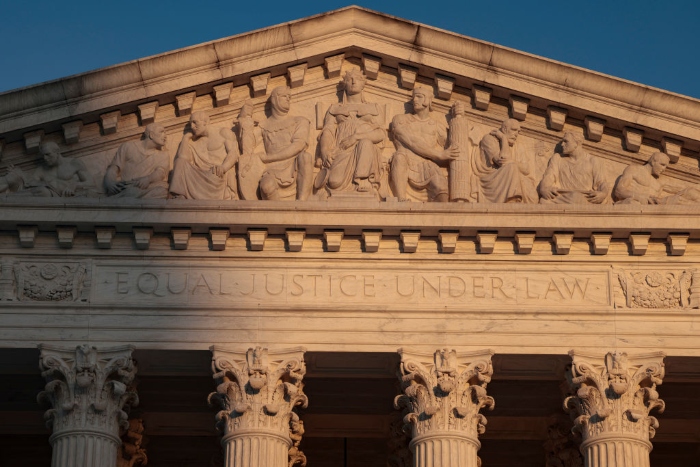
The Supreme Court

The Supreme Court | Anna Moneymaker/Getty Images

HURDLES, RISKS, DECISIONS — If the Supreme Court overrules Roe v. Wade entirely, as the draft opinion published on Monday by POLITICO suggests, patients who want to terminate a pregnancy but live in a state that outlaws doing so will have three choices: travel outside the state, manage their own abortion at home using FDA-approved pills or less-safe methods, or carry an unwanted pregnancy to term.

To make that decision, they would have to sift through an ever-shifting mountain of state laws ranging from outright bans to full-throated protections, overcome financial and logistical hurdles, and decide how much legal risk they would be willing to shoulder should they choose to undergo the procedure.

The first step for patients who wanted an abortion in a post-Roe paradigm? Figuring out whether they would still allowed to get an abortion in their state.

— 18 states have so-called trigger bans that would kick in if Roe is overturned, pre-Roe bans that haven’t been enforced for decades but that could be resurrected, or both.

— Four states (Georgia, Iowa, Ohio and South Carolina) may revive court-blocked bans on abortions after six weeks of pregnancy, a point at which many people don’t know they’re pregnant. (The Iowa Supreme Court has, however, recognized the right to abortion in the state’s constitution.)

— Florida would ban the procedure after 15 weeks starting in July, though its Supreme Court has also recognized a state constitutional right to abortion

— Three states (Indiana, Kansas and Nebraska) allow the procedure until 22 weeks.

— Seventeen states allow abortions until the point of fetal viability or 24 weeks.

— Virginia allows abortions until the third trimester.

— Four (Colorado, New Jersey, Oregon and Vermont) allow abortions throughout pregnancy.

— New Mexico and Alaska have no laws on their books either limiting or protecting the right to an abortion at any point in a pregnancy, though the Alaska Supreme Court has interpreted the state’s constitution as recognizing a right to “reproductive choice.”

Adding to the confusion, these thresholds aren’t static. Conservative states are already trying to pass more restrictive bans, and laws may continue to change as legislative power shifts between Republicans and Democrats in swing states this fall.

If the patient can’t get an abortion at a clinic in their home state, they have three choices.

Option No. 1: Travel. Traveling out-of-state to obtain an abortion can be costly, from the procedure itself to travel, lodging, childcare and lost wages from missed work. Additional barriers for some vulnerable patients include immigration status and disabilities that make travel more treacherous.

Some abortion-supportive states are looking at using state dollars to help both residents and non-residents obtain abortion care regardless of the Supreme Court’s final decision. Oregon lawmakers established a $15 million Reproductive Health Equity Fund this spring to provide grants to local organizations to help pay for the procedure, and California is considering similar legislation.

States could also require health plans to cover abortion care, use state dollars to cover abortions and abortion-related travel for people on Medicaid, or allow nurse practitioners and physician assistans to perform abortions, as Connecticut and Maryland recently did.

And that’s just the tip of the iceberg. In December, a coalition of abortion advocates in California published a lengthy list of policies to improve access to the procedure in the state, many of which have already been adopted. But other blue states likely to receive a flood of patients if Roe falls are far less prepared.

“If California has come up with 45 recommendations … then other states also have a long way to go,” said Elizabeth Nash, interim associate director of state issues at the Guttmacher Institute.

Welcome to POLITICO Nightly. Read more below on the options available in a possible post-Roe world. Reach out with news, tips and ideas at nightly@politico.com. Or contact tonight’s author at mmesserly@politico.com and aollstein@politico.com, or on Twitter at @meganmesserly and @AliceOllstein.


A message from VISA Inc.:

Digital Payments are a lifeline to small businesses. Visa is taking action now to help small businesses by making it less costly to accept digital payments. Visa extends additional support to small businesses | Visa |


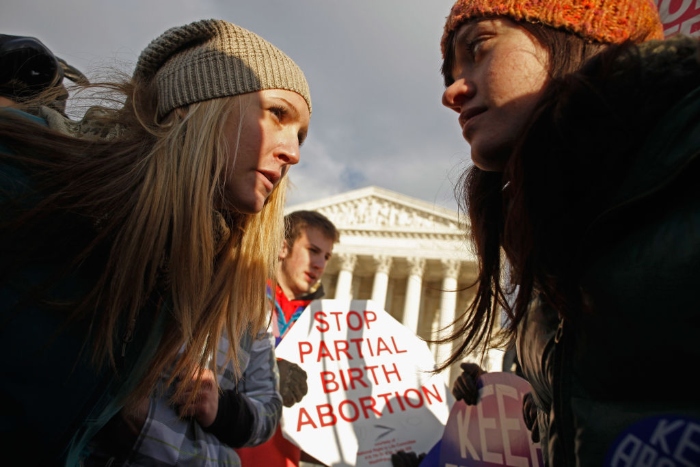
Anti-abortion demonstrators and abortion rights supporters argue in front of the Supreme Court.

Anti-abortion demonstrators and abortion rights supporters argue in front of the Supreme Court. | Chip Somodevilla/Getty Images

Option No. 2: Order abortion pills by mail or resort to other at-home options. Mail-order pills could help millions of people privately terminate a pregnancy, but many patients don’t know they exist — and could end up in legal jeopardy if they obtain them.

Groups like Plan C, Aid Access and others will help patients obtain abortion pills via telemedicine through a doctor outside of the U.S. and an international pharmacy. Guides also exist to advise patients on how to obtain pills via telemedicine in the U.S. by lying or omitting their location.

Some people unable to access the pills are expected to resort to other unsafe methods to terminate a pregnancy, such as herbal remedies, inserting objects into the body or inflicting trauma on the abdomen. According to the World Health Organization, about 30 people die out of every 100,000 unsafe abortions in developed nations.

Option No. 3: Carry an unwanted pregnancy to term.

Evidence from Texas, which has had a 6-week ban on abortion in place since September, indicates that most women who want an abortion will either obtain pills or travel out of state should the draft Supreme Court ruling become final. But researchers like the University of Michigan’s Lisa Harris are sounding the alarm that states are not ready to handle the likely thousands of additional births that will result from the people unable to access either option.

“We estimate an additional 8,000 to 20,000 births per year just in Michigan alone,” she told POLITICO. “We don’t have the maternity care capacity for that.”


INTRODUCING DIGITAL FUTURE DAILY - OUR TECHNOLOGY NEWSLETTER, RE-IMAGINED:  Technology is always evolving, and our new tech-obsessed newsletter is too! Digital Future Daily unlocks the most important stories determining the future of technology, from Washington to Silicon Valley and innovation power centers around the world. Readers get an in-depth look at how the next wave of tech will reshape civic and political life, including activism, fundraising, lobbying and legislating. Go inside the minds of the biggest tech players, policymakers and regulators to learn how their decisions affect our lives. Don't miss out, subscribe today.


WHAT'D I MISS?

— Fed launches fresh assault on inflation in new era for economy: At a meeting today, the Fed announced a supersized, half-point increase in interest rates and laid out plans to shrink its massive bond holdings starting on June 1, in a bid to put the brakes on the economy and kill the highest inflation since the Reagan administration. But the central bank, which said in a statement that it’s “highly attentive to inflation risks,” won’t stop there. Rates this year could reach their highest levels since before the 2008 Wall Street crash if surging prices continue. That prospect has sent stocks sliding this year and pushed mortgage rates above 5 percent for the first time in a decade.


A message from VISA Inc.:

Advertisement Image 


— Donald Trump Jr. interviews with Jan. 6 select panel: Donald Trump Jr., the son of the former president, interviewed with the Jan. 6 committee on Tuesday, according to two people familiar with the matter. He’s the latest member of the Trump family to provide testimony to the select committee probing the Capitol attack, following the panel’s interview last month with Ivanka Trump. Trump’s son-in-law and former adviser Jared Kushner, as well as Trump Jr.’s fiancée Kimberly Guilfoyle, have also talked to investigators.

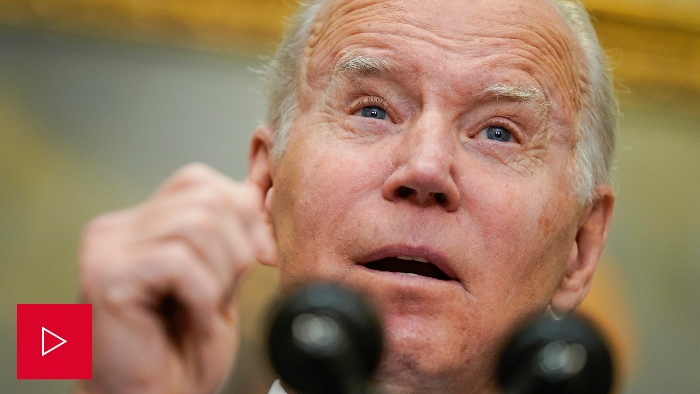
President Joe Biden

— Biden: MAGA is the ‘most extreme political organization’ in recent U.S. history: President Joe Biden escalated his rhetorical attacks on the Republican Party and rebuked former President Donald Trump’s enduring grip on the GOP. “This MAGA crowd is really the most extreme political organization that’s existed in American history, in recent American history,” Biden told reporters at the White House, referring to Trump’s “Make America Great Again” movement.

— Antony Blinken tests positive for Covid: The nation’s chief diplomat is experiencing “mild symptoms,” according to State Department spokesperson Ned Price. Blinken has not seen Biden in person for several days, Price added in a statement.

SCOTUS

AFTER ROE? In Tuesday’s newsletter, Nightly's Myah Ward asked constitutional scholars and legal experts whether the Supreme Court could, as Justice Samuel Alito suggests in his draft opinion, strike down Roe v. Wade without threatening other decisions — especially ones relating to contraception, sex and marriage — that similarly rest on a right to privacy in the Constitution. Here are more answers from the nation’s top legal experts. These responses have been edited.

“While such concerns are understandable, they are overblown.

“Alito’s draft opinion relies on precedent holding that the Due Process Clause of the Fourteenth Amendment only protects substantive rights that are ‘deeply rooted’ in history. It can be argued that these other rights also lack ‘deep’ roots. But Alito also emphasizes that Roe is ‘fundamentally different’ from precedents involving ‘intimate sexual relations, contraception, and marriage,’ because abortion arguably involves destruction of innocent ‘fetal life.’ This crucial difference is the main reason why Roe continues to draw vastly more opposition than these other rulings.

“In addition, decisions protecting same-sex marriage and intimate sexual relations need not rely on the Due Process Clause alone. Laws discriminating against same-sex relationships also violate the Equal Protection Clause because they discriminate on the basis of sex. Just two years ago, the Supreme Court ruled that discrimination against gays and lesbians qualifies as sex discrimination under the Civil Rights Act of 1964, in a decision written by conservative Justice Neil Gorsuch, and joined by Chief Justice John Roberts. Much the same reasoning applies in the constitutional context.

“Furthermore, history shows that major Supreme Court decisions protecting rights only get reversed if there is a powerful movement seeking that outcome, such as the pro-life movement in the case of Roe. By contrast, there is no longer a strong movement seeking abolition of same-sex marriage (conservative politicians rarely advocate abolition anymore, perhaps because same-sex marriage now has overwhelming public support), and even less appetite for banning contraception (which is supported by some 90% of Americans), or bringing back anti-sodomy laws.

“A ruling reversing Roe v. Wade might make judicial recognition of new ‘substantive due process’ rights less likely. But it is unlikely to threaten major existing rights that enjoy far broader support than abortion.” — Ilya Somin, professor of law at George Mason University and author of “Free to Move: Foot Voting, Migration and Political Freedom”

“To the extent that the abortion right was established through ‘penumbras’ of the Constitution, which the Court relied upon to establish a right to contraception for married people in Griswold v. Connecticut and later same-sex marriage in Obergefell v. Hodges , it’s easy to believe that the draft opinion’s analysis has set the stage to tear down other precedents built on this legal approach. Justice Alito’s insistence that liberty interests must be ‘deeply rooted in the Nation’s history and traditions’ threatens the right to contraception and same-sex marriage, given that our country has prohibited both, just as it did with abortion. Perhaps most telling, however, is that this decision would mark the first time the Court overturned precedent to eliminate, as opposed to recognize a new, right. In short, all rights recognized under the Due Process Clause are vulnerable.” — Sonia Suter, professor of law at George Washington University, and Naomi Cahn, professor of law at the University of Virginia School of Law

“Justice Alito’s draft opinion draws a distinction between abortion and other Court-recognized rights, such as same-sex marriage and contraception. Justice Alito wrote that abortion ‘destroys . . . the life of an ‘unborn human being.’’ Same-sex marriage and contraception do not. Moreover, as a practical matter, there is no national movement to overrule Obergfell v. Hodges (same-sex marriage) or Griswold v. Connecticut (contraception). Abortion is unique.” — Josh Blackman, professor of law at South Texas College of Law Houston

“Can it? Yes. Will it? No.

“The Court’s conservatives have always seen not just Roe but Griswold and all its progeny as thoroughly illegitimate. How, though, will they twist legal doctrine henceforth to salvage only the substantive due process cases they like, such as those protecting religious and parental rights? 

“Kavanaugh suggested at the Dobbs oral argument ‘the core problem … is … the Court has been forced … to pick sides on the most contentious social debate in American life … in a situation where … this Court should be scrupulously neutral on the question… because … the Constitution doesn’t give us the authority, we should leave it to the states.’

“He would have been more accurate had he made exactly the same point one week later, when the question was not abortion, but state funding of sectarian religious schools; the relevant substantive due process precedents were not decades old like Roe but brand new; and the state was not Mississippi but Maine, whose advocates got nowhere when they argued that the Establishment Clause at the very least permitted, even if it did not require, states to refrain from using tax dollars to support pervasively sectarian religious schools.” — Mary Anne Case, professor of law at the University of Chicago Law School

“The draft opinion claims to be innocently discarding the right to abortion because the word is not in the Constitution; at argument, the conservative Justices argued that the Constitution should stay ‘neutral’ on abortion. But there is nothing innocent or neutral about the draft opinion. The claim that rights not specifically named in the Constitution deserve no protection is part of a campaign of misdirection led by religious conservatives for more than 50 years. Supporters, like Justice Alito, cherry pick among rights not named in the Constitution, the real goal being to allow laws enforcing regressive beliefs about sex, pregnancy, and gender.” — Priscilla Smith, professor of law and director of the Program for the Study of Reproductive Justice at Yale Law School. She formerly was an attorney with the Center for Reproductive Rights for 13 years

AROUND THE WORLD

Close relatives and friends of Vira Hyrych stand next to her coffin during the funeral service in St. Michaels Cathedral in Kyiv, Ukraine.

Close relatives and friends of Vira Hyrych stand next to her coffin during the funeral service in St. Michaels Cathedral in Kyiv, Ukraine. | Alexey Furman/Getty Images

KYIV’S NEW NORMAL — If some residents who fled in the early days of the invasion thought they could return to the safety of their homes to resume their lives, the attack on Kyiv that took journalist Vira Hyrych’s life was a stark reminder that even with Russian troops hundreds of miles to the east the threat of missiles remains, Christopher Miller writes.

Russia’s war is still palpable in Kyiv, even as Putin shifts the focus of his military operation to Ukraine’s eastern Donbas region. And there is a militaristic element to nearly every aspect of life now.

The scorched hulks of Russian tanks dot the E-40 highway heading to Kyiv, providing surreal selfie backdrops for returning residents. Many of the checkpoints that marked the city’s intersections have been dismantled, but the cement blocks and anti-tank metal “hedgehogs” still sit aside the road, ready to be moved back into place at a moment’s notice. Government offices, strategic buildings and cultural landmarks are littered with barricades and mounds of sandbags.

Most lights go out after sundown, and there’s a heavy troop presence on the streets after curfew. On Tuesday evening, the air raid siren sounded across Kyiv’s city center, sending a shopkeeper on a smoke break and two friends into a nearby basement. There were no reports of missile strikes in the area; local authorities reported that air defense systems intercepted a missile aimed at Kyiv.


HAPPENING NOW - MILKEN INSTITUTE GLOBAL CONFERENCE: Go inside the 25th annual Milken Institute Global Conference with our special edition Global Insider newsletter, featuring exclusive coverage and insights from one of the world’s most influential gatherings. Stay up to speed with the latest from #MIGlobal, which brings together 3,000 of the world’s most powerful leaders and features 700+ speakers representing more than 80 countries. Don’t miss out, subscribe today.


NIGHTLY NUMBER

2-to-1

The margin by which voters oppose overturning Roe v. Wade , according to a new POLITICO/Morning Consult poll conducted immediately after POLITICO published the draft opinion from the Supreme Court.

PARTING WORDS

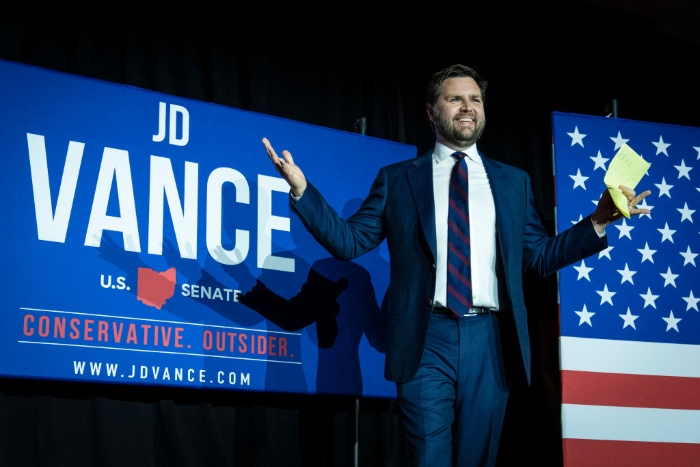
Republican U.S. Senate candidate J.D. Vance arrives onstage after winning the primary, at an election night event at Duke Energy Convention Center in Cincinnati, Ohio.

Republican U.S. Senate candidate J.D. Vance arrives onstage after winning the primary, at an election night event at Duke Energy Convention Center in Cincinnati, Ohio. | Drew Angerer/Getty Images

CRYPTO’S BIG BUCKEYE NIGHT — The crypto industry is a big winner in this week’s Ohio Senate primary, Sam Sutton writes.

J.D. Vance, the Republican nominee, and Rep. Tim Ryan, the Democratic nominee, emerged victorious Tuesday after they and their opponents took pains to present themselves as the type of lawmaker who’d prefer a lighter touch when it comes to digital asset regulation.

It bodes well for cryptocurrency startups that are increasingly flexing their muscles around Washington and the campaign trail. Policymakers from both sides of the aisle increasingly see digital currency firms and users as an important constituency.

“Both Ohio primaries gave us a hard time in terms of ironing out our endorsement strategy and process because of the fact that there are so many kinds of crypto-friendly voices,” said Tyler Whirty, founder of the pro-crypto political action committee HODLpac, which endorsed Ryan and Republican state Treasurer Josh Mandel. “It’s a good position to be in.”


A message from VISA Inc.:

Looking to the future to help small businesses succeed.

The prosperity of small businesses is not only important for the health of the global economy during periods of uncertainty, but for the everyday strength and vibrancy of our local communities. As the future of money continues to evolve, it is critical that small businesses have the resources and support they need to succeed and keep up with big retail in the increasingly digital economy. Visa extends additional support to small businesses | Visa|


Did someone forward this email to you? Sign up here.


Follow us on Twitter

Chris Suellentrop @suellentrop

Tyler Weyant @tweyant

Myah Ward @myahward


FOLLOW US

Follow us on FacebookFollow us on TwitterFollow us on InstagramListen on Apple Podcast


 POLITICO, LLC 1000 Wilson Blvd. Arlington, VA, 22209, USA


Idaho hunters killed 12 newborn wolf pups and got paid

                                                                                                                                            ...