Showing posts with label OHIO PRIMARY. Show all posts

Wednesday, May 4, 2022

POLITICO NIGHTLY: The possible post-Roe roadmap


View in browser
 
POLITICO Nightly logo

BY MEGAN MESSERLY AND ALICE MIRANDA OLLSTEIN

Presented by VISA Inc.

With help from Myah Ward

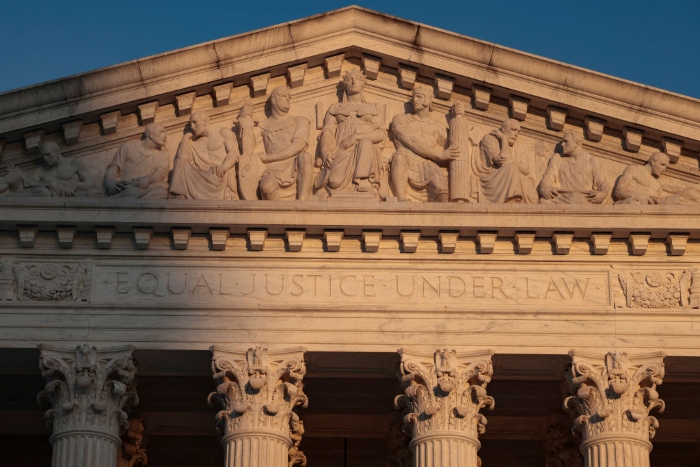
The Supreme Court

The Supreme Court | Anna Moneymaker/Getty Images

HURDLES, RISKS, DECISIONS — If the Supreme Court overrules Roe v. Wade entirely, as the draft opinion published on Monday by POLITICO suggests, patients who want to terminate a pregnancy but live in a state that outlaws doing so will have three choices: travel outside the state, manage their own abortion at home using FDA-approved pills or less-safe methods, or carry an unwanted pregnancy to term.

To make that decision, they would have to sift through an ever-shifting mountain of state laws ranging from outright bans to full-throated protections, overcome financial and logistical hurdles, and decide how much legal risk they would be willing to shoulder should they choose to undergo the procedure.

The first step for patients who wanted an abortion in a post-Roe paradigm? Figuring out whether they would still allowed to get an abortion in their state.

— 18 states have so-called trigger bans that would kick in if Roe is overturned, pre-Roe bans that haven’t been enforced for decades but that could be resurrected, or both.

— Four states (Georgia, Iowa, Ohio and South Carolina) may revive court-blocked bans on abortions after six weeks of pregnancy, a point at which many people don’t know they’re pregnant. (The Iowa Supreme Court has, however, recognized the right to abortion in the state’s constitution.)

— Florida would ban the procedure after 15 weeks starting in July, though its Supreme Court has also recognized a state constitutional right to abortion

— Three states (Indiana, Kansas and Nebraska) allow the procedure until 22 weeks.

— Seventeen states allow abortions until the point of fetal viability or 24 weeks.

— Virginia allows abortions until the third trimester.

— Four (Colorado, New Jersey, Oregon and Vermont) allow abortions throughout pregnancy.

— New Mexico and Alaska have no laws on their books either limiting or protecting the right to an abortion at any point in a pregnancy, though the Alaska Supreme Court has interpreted the state’s constitution as recognizing a right to “reproductive choice.”

Adding to the confusion, these thresholds aren’t static. Conservative states are already trying to pass more restrictive bans, and laws may continue to change as legislative power shifts between Republicans and Democrats in swing states this fall.

If the patient can’t get an abortion at a clinic in their home state, they have three choices.

Option No. 1: Travel. Traveling out-of-state to obtain an abortion can be costly, from the procedure itself to travel, lodging, childcare and lost wages from missed work. Additional barriers for some vulnerable patients include immigration status and disabilities that make travel more treacherous.

Some abortion-supportive states are looking at using state dollars to help both residents and non-residents obtain abortion care regardless of the Supreme Court’s final decision. Oregon lawmakers established a $15 million Reproductive Health Equity Fund this spring to provide grants to local organizations to help pay for the procedure, and California is considering similar legislation.

States could also require health plans to cover abortion care, use state dollars to cover abortions and abortion-related travel for people on Medicaid, or allow nurse practitioners and physician assistans to perform abortions, as Connecticut and Maryland recently did.

And that’s just the tip of the iceberg. In December, a coalition of abortion advocates in California published a lengthy list of policies to improve access to the procedure in the state, many of which have already been adopted. But other blue states likely to receive a flood of patients if Roe falls are far less prepared.

“If California has come up with 45 recommendations … then other states also have a long way to go,” said Elizabeth Nash, interim associate director of state issues at the Guttmacher Institute.

Welcome to POLITICO Nightly. Read more below on the options available in a possible post-Roe world. Reach out with news, tips and ideas at nightly@politico.com. Or contact tonight’s author at mmesserly@politico.com and aollstein@politico.com, or on Twitter at @meganmesserly and @AliceOllstein.


A message from VISA Inc.:

Digital Payments are a lifeline to small businesses. Visa is taking action now to help small businesses by making it less costly to accept digital payments. Visa extends additional support to small businesses | Visa |


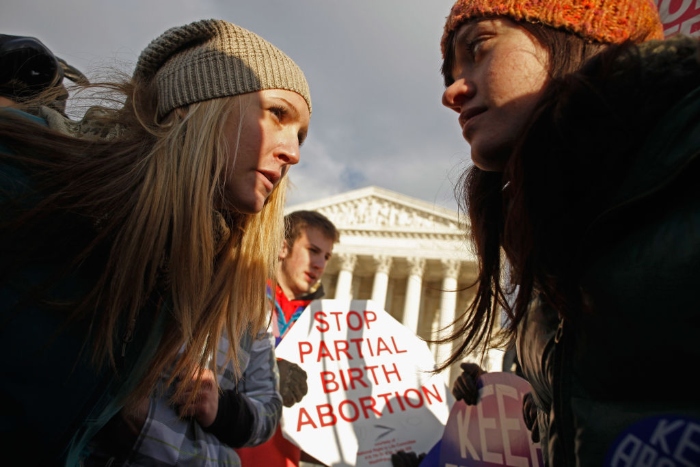
Anti-abortion demonstrators and abortion rights supporters argue in front of the Supreme Court.

Anti-abortion demonstrators and abortion rights supporters argue in front of the Supreme Court. | Chip Somodevilla/Getty Images

Option No. 2: Order abortion pills by mail or resort to other at-home options. Mail-order pills could help millions of people privately terminate a pregnancy, but many patients don’t know they exist — and could end up in legal jeopardy if they obtain them.

Groups like Plan C, Aid Access and others will help patients obtain abortion pills via telemedicine through a doctor outside of the U.S. and an international pharmacy. Guides also exist to advise patients on how to obtain pills via telemedicine in the U.S. by lying or omitting their location.

Some people unable to access the pills are expected to resort to other unsafe methods to terminate a pregnancy, such as herbal remedies, inserting objects into the body or inflicting trauma on the abdomen. According to the World Health Organization, about 30 people die out of every 100,000 unsafe abortions in developed nations.

Option No. 3: Carry an unwanted pregnancy to term.

Evidence from Texas, which has had a 6-week ban on abortion in place since September, indicates that most women who want an abortion will either obtain pills or travel out of state should the draft Supreme Court ruling become final. But researchers like the University of Michigan’s Lisa Harris are sounding the alarm that states are not ready to handle the likely thousands of additional births that will result from the people unable to access either option.

“We estimate an additional 8,000 to 20,000 births per year just in Michigan alone,” she told POLITICO. “We don’t have the maternity care capacity for that.”


INTRODUCING DIGITAL FUTURE DAILY - OUR TECHNOLOGY NEWSLETTER, RE-IMAGINED:  Technology is always evolving, and our new tech-obsessed newsletter is too! Digital Future Daily unlocks the most important stories determining the future of technology, from Washington to Silicon Valley and innovation power centers around the world. Readers get an in-depth look at how the next wave of tech will reshape civic and political life, including activism, fundraising, lobbying and legislating. Go inside the minds of the biggest tech players, policymakers and regulators to learn how their decisions affect our lives. Don't miss out, subscribe today.


WHAT'D I MISS?

— Fed launches fresh assault on inflation in new era for economy: At a meeting today, the Fed announced a supersized, half-point increase in interest rates and laid out plans to shrink its massive bond holdings starting on June 1, in a bid to put the brakes on the economy and kill the highest inflation since the Reagan administration. But the central bank, which said in a statement that it’s “highly attentive to inflation risks,” won’t stop there. Rates this year could reach their highest levels since before the 2008 Wall Street crash if surging prices continue. That prospect has sent stocks sliding this year and pushed mortgage rates above 5 percent for the first time in a decade.


A message from VISA Inc.:

Advertisement Image 


— Donald Trump Jr. interviews with Jan. 6 select panel: Donald Trump Jr., the son of the former president, interviewed with the Jan. 6 committee on Tuesday, according to two people familiar with the matter. He’s the latest member of the Trump family to provide testimony to the select committee probing the Capitol attack, following the panel’s interview last month with Ivanka Trump. Trump’s son-in-law and former adviser Jared Kushner, as well as Trump Jr.’s fiancée Kimberly Guilfoyle, have also talked to investigators.

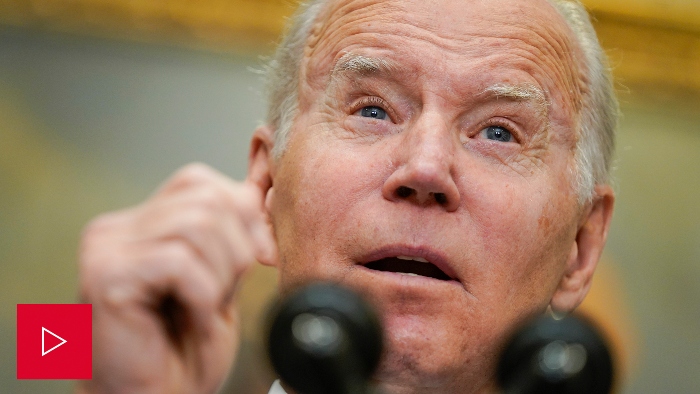
President Joe Biden

— Biden: MAGA is the ‘most extreme political organization’ in recent U.S. history: President Joe Biden escalated his rhetorical attacks on the Republican Party and rebuked former President Donald Trump’s enduring grip on the GOP. “This MAGA crowd is really the most extreme political organization that’s existed in American history, in recent American history,” Biden told reporters at the White House, referring to Trump’s “Make America Great Again” movement.

— Antony Blinken tests positive for Covid: The nation’s chief diplomat is experiencing “mild symptoms,” according to State Department spokesperson Ned Price. Blinken has not seen Biden in person for several days, Price added in a statement.

SCOTUS

AFTER ROE? In Tuesday’s newsletter, Nightly's Myah Ward asked constitutional scholars and legal experts whether the Supreme Court could, as Justice Samuel Alito suggests in his draft opinion, strike down Roe v. Wade without threatening other decisions — especially ones relating to contraception, sex and marriage — that similarly rest on a right to privacy in the Constitution. Here are more answers from the nation’s top legal experts. These responses have been edited.

“While such concerns are understandable, they are overblown.

“Alito’s draft opinion relies on precedent holding that the Due Process Clause of the Fourteenth Amendment only protects substantive rights that are ‘deeply rooted’ in history. It can be argued that these other rights also lack ‘deep’ roots. But Alito also emphasizes that Roe is ‘fundamentally different’ from precedents involving ‘intimate sexual relations, contraception, and marriage,’ because abortion arguably involves destruction of innocent ‘fetal life.’ This crucial difference is the main reason why Roe continues to draw vastly more opposition than these other rulings.

“In addition, decisions protecting same-sex marriage and intimate sexual relations need not rely on the Due Process Clause alone. Laws discriminating against same-sex relationships also violate the Equal Protection Clause because they discriminate on the basis of sex. Just two years ago, the Supreme Court ruled that discrimination against gays and lesbians qualifies as sex discrimination under the Civil Rights Act of 1964, in a decision written by conservative Justice Neil Gorsuch, and joined by Chief Justice John Roberts. Much the same reasoning applies in the constitutional context.

“Furthermore, history shows that major Supreme Court decisions protecting rights only get reversed if there is a powerful movement seeking that outcome, such as the pro-life movement in the case of Roe. By contrast, there is no longer a strong movement seeking abolition of same-sex marriage (conservative politicians rarely advocate abolition anymore, perhaps because same-sex marriage now has overwhelming public support), and even less appetite for banning contraception (which is supported by some 90% of Americans), or bringing back anti-sodomy laws.

“A ruling reversing Roe v. Wade might make judicial recognition of new ‘substantive due process’ rights less likely. But it is unlikely to threaten major existing rights that enjoy far broader support than abortion.” — Ilya Somin, professor of law at George Mason University and author of “Free to Move: Foot Voting, Migration and Political Freedom”

“To the extent that the abortion right was established through ‘penumbras’ of the Constitution, which the Court relied upon to establish a right to contraception for married people in Griswold v. Connecticut and later same-sex marriage in Obergefell v. Hodges , it’s easy to believe that the draft opinion’s analysis has set the stage to tear down other precedents built on this legal approach. Justice Alito’s insistence that liberty interests must be ‘deeply rooted in the Nation’s history and traditions’ threatens the right to contraception and same-sex marriage, given that our country has prohibited both, just as it did with abortion. Perhaps most telling, however, is that this decision would mark the first time the Court overturned precedent to eliminate, as opposed to recognize a new, right. In short, all rights recognized under the Due Process Clause are vulnerable.” — Sonia Suter, professor of law at George Washington University, and Naomi Cahn, professor of law at the University of Virginia School of Law

“Justice Alito’s draft opinion draws a distinction between abortion and other Court-recognized rights, such as same-sex marriage and contraception. Justice Alito wrote that abortion ‘destroys . . . the life of an ‘unborn human being.’’ Same-sex marriage and contraception do not. Moreover, as a practical matter, there is no national movement to overrule Obergfell v. Hodges (same-sex marriage) or Griswold v. Connecticut (contraception). Abortion is unique.” — Josh Blackman, professor of law at South Texas College of Law Houston

“Can it? Yes. Will it? No.

“The Court’s conservatives have always seen not just Roe but Griswold and all its progeny as thoroughly illegitimate. How, though, will they twist legal doctrine henceforth to salvage only the substantive due process cases they like, such as those protecting religious and parental rights? 

“Kavanaugh suggested at the Dobbs oral argument ‘the core problem … is … the Court has been forced … to pick sides on the most contentious social debate in American life … in a situation where … this Court should be scrupulously neutral on the question… because … the Constitution doesn’t give us the authority, we should leave it to the states.’

“He would have been more accurate had he made exactly the same point one week later, when the question was not abortion, but state funding of sectarian religious schools; the relevant substantive due process precedents were not decades old like Roe but brand new; and the state was not Mississippi but Maine, whose advocates got nowhere when they argued that the Establishment Clause at the very least permitted, even if it did not require, states to refrain from using tax dollars to support pervasively sectarian religious schools.” — Mary Anne Case, professor of law at the University of Chicago Law School

“The draft opinion claims to be innocently discarding the right to abortion because the word is not in the Constitution; at argument, the conservative Justices argued that the Constitution should stay ‘neutral’ on abortion. But there is nothing innocent or neutral about the draft opinion. The claim that rights not specifically named in the Constitution deserve no protection is part of a campaign of misdirection led by religious conservatives for more than 50 years. Supporters, like Justice Alito, cherry pick among rights not named in the Constitution, the real goal being to allow laws enforcing regressive beliefs about sex, pregnancy, and gender.” — Priscilla Smith, professor of law and director of the Program for the Study of Reproductive Justice at Yale Law School. She formerly was an attorney with the Center for Reproductive Rights for 13 years

AROUND THE WORLD

Close relatives and friends of Vira Hyrych stand next to her coffin during the funeral service in St. Michaels Cathedral in Kyiv, Ukraine.

Close relatives and friends of Vira Hyrych stand next to her coffin during the funeral service in St. Michaels Cathedral in Kyiv, Ukraine. | Alexey Furman/Getty Images

KYIV’S NEW NORMAL — If some residents who fled in the early days of the invasion thought they could return to the safety of their homes to resume their lives, the attack on Kyiv that took journalist Vira Hyrych’s life was a stark reminder that even with Russian troops hundreds of miles to the east the threat of missiles remainsChristopher Miller writes.

Russia’s war is still palpable in Kyiv, even as Putin shifts the focus of his military operation to Ukraine’s eastern Donbas region. And there is a militaristic element to nearly every aspect of life now.

The scorched hulks of Russian tanks dot the E-40 highway heading to Kyiv, providing surreal selfie backdrops for returning residents. Many of the checkpoints that marked the city’s intersections have been dismantled, but the cement blocks and anti-tank metal “hedgehogs” still sit aside the road, ready to be moved back into place at a moment’s notice. Government offices, strategic buildings and cultural landmarks are littered with barricades and mounds of sandbags.

Most lights go out after sundown, and there’s a heavy troop presence on the streets after curfew. On Tuesday evening, the air raid siren sounded across Kyiv’s city center, sending a shopkeeper on a smoke break and two friends into a nearby basement. There were no reports of missile strikes in the area; local authorities reported that air defense systems intercepted a missile aimed at Kyiv.


HAPPENING NOW - MILKEN INSTITUTE GLOBAL CONFERENCE: Go inside the 25th annual Milken Institute Global Conference with our special edition Global Insider newsletter, featuring exclusive coverage and insights from one of the world’s most influential gatherings. Stay up to speed with the latest from #MIGlobal, which brings together 3,000 of the world’s most powerful leaders and features 700+ speakers representing more than 80 countries. Don’t miss out, subscribe today.


NIGHTLY NUMBER

2-to-1

The margin by which voters oppose overturning Roe v. Wade , according to a new POLITICO/Morning Consult poll conducted immediately after POLITICO published the draft opinion from the Supreme Court.

PARTING WORDS

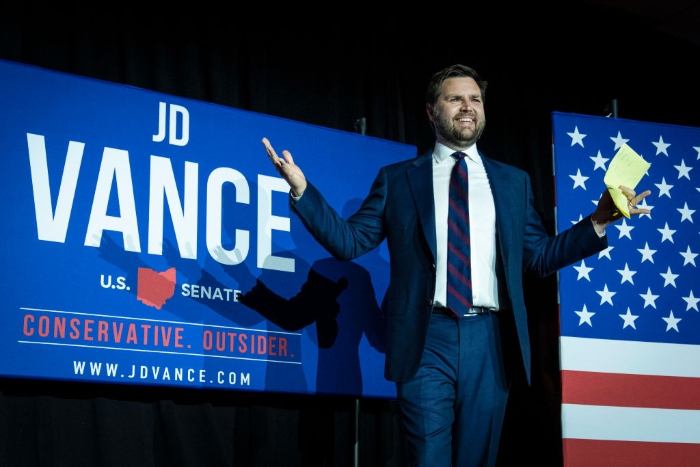
Republican U.S. Senate candidate J.D. Vance arrives onstage after winning the primary, at an election night event at Duke Energy Convention Center in Cincinnati, Ohio.

Republican U.S. Senate candidate J.D. Vance arrives onstage after winning the primary, at an election night event at Duke Energy Convention Center in Cincinnati, Ohio. | Drew Angerer/Getty Images

CRYPTO’S BIG BUCKEYE NIGHT — The crypto industry is a big winner in this week’s Ohio Senate primary, Sam Sutton writes.

J.D. Vance, the Republican nominee, and Rep. Tim Ryan, the Democratic nominee, emerged victorious Tuesday after they and their opponents took pains to present themselves as the type of lawmaker who’d prefer a lighter touch when it comes to digital asset regulation.

It bodes well for cryptocurrency startups that are increasingly flexing their muscles around Washington and the campaign trail. Policymakers from both sides of the aisle increasingly see digital currency firms and users as an important constituency.

“Both Ohio primaries gave us a hard time in terms of ironing out our endorsement strategy and process because of the fact that there are so many kinds of crypto-friendly voices,” said Tyler Whirty, founder of the pro-crypto political action committee HODLpac, which endorsed Ryan and Republican state Treasurer Josh Mandel. “It’s a good position to be in.”


A message from VISA Inc.:

Looking to the future to help small businesses succeed.

The prosperity of small businesses is not only important for the health of the global economy during periods of uncertainty, but for the everyday strength and vibrancy of our local communities. As the future of money continues to evolve, it is critical that small businesses have the resources and support they need to succeed and keep up with big retail in the increasingly digital economy. Visa extends additional support to small businesses | Visa|


Did someone forward this email to you? Sign up here.


Follow us on Twitter

Chris Suellentrop @suellentrop

Tyler Weyant @tweyant

Myah Ward @myahward


FOLLOW US

Follow us on FacebookFollow us on TwitterFollow us on InstagramListen on Apple Podcast


 POLITICO, LLC 1000 Wilson Blvd. Arlington, VA, 22209, USA


Tuesday, May 3, 2022

POLITICO NIGHTLY: Ohio’s Senate primary tests the Trump bump


POLITICO Nightly logo

BY NATALIE ALLISON

Presented by VISA Inc.

J.D. Vance, a Republican candidate for U.S. Senate in Ohio, speaks at a campaign rally in Cuyahoga Falls, Ohio.

J.D. Vance, a Republican candidate for U.S. Senate in Ohio, speaks at a campaign rally in Cuyahoga Falls, Ohio. | Drew Angerer/Getty Images

BUCKEYE BOOST VS. BOOMERANG — It’s Primary Election Day Eve, perhaps a holiday observed only by POLITICO reporters and readers, in Ohio. In roughly 24 hours, the messiest, most expensive primary we’ve seen this midterm cycle — the one most likely to result in a debate-stage fist fight — will be close to settled.

A field as splintered as Ohio’s would force a runoff election in other states, including the upcoming primaries in North Carolina, Georgia and Alabama. But not in the Buckeye State, where, once polls close and the ballots are tallied, there will be a Republican nominee for Senate, even though the leading candidates are polling in the 20s. (A last-minute write-in campaign for “J.D. Mandel” could slow this process down.)

As you’ve surely been told, the outcome will offer a degree of insight into the power of Donald Trump’s endorsement — particularly whether it has decisive sway over voters in the final days of a race that has inundated Ohio residents with $70 million in GOP advertisements. (The spending spree among Pennsylvania’s Republican Senate candidates is far lower, just shy of $50 million, with two weeks to go.)

Trump took a risk in endorsing J.D. Vance in mid-April, despite Vance having never led the crowded field of candidates vying for the former president’s support. Now, Vance has been first in at least five publicly released polls that were conducted after the Trump endorsement. Real Clear Politicsnotes that his lead averaged to 3.5 points in two surveys that were in the field the last several days.

But right behind him is Matt Dolan, who is testing whether it’s possible to win a Republican primary without hitching yourself to Trump. The state senator lingered at the very back of the pack at the start of the race. A new poll out today by the Trafalgar Group, which specializes in GOP races, put Dolan in second place behind Vance. Those results are similar to a survey released last weekshowing Dolan in first place, though Dolan’s opponents privately dismissed those results, noting that Blueprint Polling is a Democratic firm.

Trump’s big entrance into the Ohio Senate primary seems to have boosted two candidates, then: Vance, the candidate he endorsed – and Dolan, the candidate who has gone out of his way to distance himself from Trump.

Dolan has unapologetically denounced Trump’s claims that the 2020 election was stolen, and he suggested that Trump’s “failure of leadership” led to the Jan. 6 Capitol attack. Trump also attacked Dolan just after he announced his Senate bid in September — lambasting him for the name change of Major League Baseball’s Cleveland Indians to the Cleveland Guardians, a franchise his family owns.

Dolan has also stayed out of the monthslong fight among Vance, state treasurer Josh Mandel, businessman Mike Gibbons and former Ohio GOP chair Jane Timken to determine who is the truest MAGA candidate. Instead, his TV ads — $9 million worth — focus on his own record and platform, touching on issues like funding police, closing the southern border and fighting to keep open Toledo’s Line 5 pipeline.

All the while, Dolan’s campaign has been quick to push back on labels of being anti-Trump or a Never Trumper, saying Dolan voted twice for Trump and has committed to do so again if Trump is the party’s 2024 nominee. He has said throughout the campaign he agreed with Trump’s policies.

Dolan’s surge at the end of the campaign comes as Gibbons and Timken seem to have lost their appeal to some Republican voters, several polls show, and as undecideds are forced to pick a candidate before Election Day. Even before the Trump endorsement, Gibbons’ slip coincided with lackluster debate performances (includinghaving to explain why he said womenwere never oppressed), while Timken’s advertising budget appeared to run out in recent weeks.

A Mandel win is certainly not out of the question. But neither is a win by Vancethe candidate Trump endorsed late in the game, as he was trailing in polls — or a win by Dolan, the candidate who said he didn’t need Trump’s support at all.

And it’s the Dolan-mentum that has come as the biggest shock to political observers both in the state and in D.C., who, for months, saw his bid as little more than a wealthy man’s vanity project while he polled in the single digits.

Welcome to POLITICO Nightly. Reach out with news, tips and ideas at nightly@politico.com. Or contact tonight’s author at nallison@politico.com, or on Twitter at @natalie_allison.


A message from VISA Inc.:

Digital Payments are a lifeline to small businesses. Visa is taking action now to help small businesses by making it less costly to accept digital payments. Visa extends additional support to small businesses | Visa |

 
WHAT'D I MISS?

— Aid groups: Biden’s $33B for Ukraine skimps on humanitarian needs: Leading aid groups want Congress to ramp up funding for food and other global humanitarian needs exacerbated by Russia’s full-scale invasion of Ukraine, saying not enough of President Joe Biden’s new $33 billion request is devoted to such concerns . The aid groups are drafting a letter laying out their worries to senior U.S. lawmakers who oversee appropriations. They calculate that less than 6 percent of Biden’s latest funding request is directly aimed at relieving an immediate humanitarian crisis that has rippled well past Ukraine’s borders. At least $5 billion is urgently needed for food and nutrition assistance, some say.

— Blinken to unveil ‘no surprises’ China strategy pre-Asia push: Multiple sources say that Secretary of State Antony Blinken will underscore the administration’s existing policy toward China modeled on that inherited from the Trump administration . The speech will render a topline overview of the strategy rather than details on its mechanics, which along with the complete text of the document itself won’t be made public. But the speech will provide needed clarity to government agencies, foreign governments and the ruling Chinese Communist Party that the administration’s China-focused policy and regulatory moves align with a cohesive blueprint — with specific foreign policy objectives.

— Jan. 6 committee asks three pro-Trump GOP lawmakers for testimony: The Jan. 6 select committee requested testimony from three more House Republicans who are connected to the push by Donald Trump and his allies to overturn the 2020 election that ultimately metastasized into the Capitol riot . Congressional investigators sent requests for voluntary interviews to Reps. Andy Biggs (R-Ariz.), Ronny Jackson (R-Texas) and Mo Brooks (R-Ala.). It’s not clear if the three lawmakers will comply, but there’s ample precedent for them to decline: Three other Republican lawmakers previously targeted by the panel for questioning all rejected the requests, including House Minority Leader Kevin McCarthy, and Jan. 6 committee members have expressed hesitancy to subpoena their congressional colleagues.

Florida Gov. Ron DeSantis

— DeSantis says he ‘rejected’ invite to White House Correspondents’ Dinner: The Florida Republican, who criticizes all things perceived to be part of the political establishment, said today that his office “rejected” an invite to Saturday night’s White House Correspondents’ Association annual dinner. He said it was a “lie” for event organizers to in any way associate his name with the event.

— Supreme Court rules against Boston in Christian flag case: A unanimous Supreme Court ruled today that Boston violated the free speech rights of a conservative activist when it refused his request to fly a Christian flag on a flagpole outside City Hall. Justice Stephen Breyer wrote for the court that the city discriminated against the activist, Harold Shurtleff, because of his “religious viewpoint,” even though it had routinely approved applications for the use of one of the three flagpoles outside City Hall that fly the U.S., Massachusetts and Boston flags.


INTRODUCING DIGITAL FUTURE DAILY - OUR TECHNOLOGY NEWSLETTER, RE-IMAGINED:  Technology is always evolving, and our new tech-obsessed newsletter is too! Digital Future Daily unlocks the most important stories determining the future of technology, from Washington to Silicon Valley and innovation power centers around the world. Readers get an in-depth look at how the next wave of tech will reshape civic and political life, including activism, fundraising, lobbying and legislating. Go inside the minds of the biggest tech players, policymakers and regulators to learn how their decisions affect our lives. Don't miss out, subscribe today.


AROUND THE WORLD

MOSCOW GETS SHARP BRUSHBACK FROM JERUSALEM — Israeli Foreign Minister Yair Lapid today condemned comments by his Russian counterpart Sergey Lavrov that Hitler had Jewish blood as “unforgivable and outrageous,” Louis Westendarp writes.

During an interview on Italian television Sunday night, Lavrov claimed that Ukraine’s President Volodymyr Zelenskyy being Jewish does not negate his country having a Nazi element — a line pushed by Moscow to justify its lethal invasion. “I believe that Hitler also had Jewish blood; some of the worst anti-Semites are Jews,” Lavrov added.

Israel was quick to hit back and summoned the Russian ambassador. “Foreign Minister Lavrov’s remarks are both an unforgivable and outrageous statement, as well as a terrible historical error,” Lapid said in a statement. “The lowest level of racism against Jews is to accuse Jews themselves of anti-Semitism,” he added.


A message from VISA Inc.:

Advertisement Image 

 
NIGHTLY NUMBER

68 percent

The share of American adults who say they would feel comfortable going to a museum, the highest since Morning Consult began tracking, in a new survey.


HAPPENING NOW - MILKEN INSTITUTE GLOBAL CONFERENCE: Go inside the 25th annual Milken Institute Global Conference with our special edition Global Insider newsletter, featuring exclusive coverage and insights from one of the world’s most influential gatherings. Stay up to speed with the latest from #MIGlobal, which brings together 3,000 of the world’s most powerful leaders and features 700+ speakers representing more than 80 countries. Don’t miss out, subscribe today.


PARTING WORDS

People gather at a UFO-themed mural in Hiko, Nev.

People gather at a UFO-themed mural in Hiko, Nev. | Mario Tama/Getty Images

HILL TO NATSEC COMMUNITY: THERE’S STILL SOMETHING OUT THERE — Lawmakers receiving the latest secret briefings on UFOs say national security agencies aren’t taking seriously the reports of highly advanced aircraft of unknown origin violating protected airspace, Bryan Bender writes.

Members of the Senate Intelligence and Armed Services committees received classified progress reports in recent weeks on a series of new data collection efforts the Pentagon and spy agencies are now required to pursue to more rigorously investigate reports of UFOs, three people with direct knowledge confirmed.

But some leading sponsors of recent legislation want more analysts and surveillance systems dedicated to determining the aircrafts’ origin — and not just more reports of their existence.

One of those lawmakers is Sen. Kirsten Gillibrand (D-N.Y.), a member of both committees who has called the phenomena “an urgent issue” and for the first time is expressing her public dissatisfaction at the response.

“Senator Gillibrand believes that the DoD needs to take this issue much more seriously and get in motion,” said one of her aides, who requested anonymity in order to discuss private conversations. “They have had ample time to implement these important provisions, and they need to show us that they are prepared to address this issue in the long-term.”


A message from VISA Inc.:

Looking to the future to help small businesses succeed.

The prosperity of small businesses is not only important for the health of the global economy during periods of uncertainty, but for the everyday strength and vibrancy of our local communities. As the future of money continues to evolve, it is critical that small businesses have the resources and support they need to succeed and keep up with big retail in the increasingly digital economy. Visa extends additional support to small businesses | Visa|


Did someone forward this email to you? Sign up here.


Follow us on Twitter

Chris Suellentrop @suellentrop

Tyler Weyant @tweyant

Myah Ward @myahward


FOLLOW US

Follow us on FacebookFollow us on TwitterFollow us on InstagramListen on Apple Podcast


POLITICO, LLC 1000 Wilson Blvd. Arlington, VA, 22209, USA


Tuesday, March 17, 2020

Robert Reich | America Has No Real Public Health System - Coronavirus Has a Clear Run


Reader Supported News
17 March 20


Were it about profit, we would have shut down Reader Supported News long ago. It’s not profitable. It is something we believe in and incidentally something over a million people a month use.

At this point you understand the need for funding.

What will you do?

Marc Ash
Founder, Reader Supported News


If you would prefer to send a check:
Reader Supported News
PO Box 2043
Citrus Hts, CA 95611


Reader Supported News
17 March 20

It's Live on the HomePage Now:
Reader Supported News


Robert Reich | America Has No Real Public Health System - Coronavirus Has a Clear Run
Former Clinton labor secretary Robert Reich. (photo: Steve Russell/Toronto Star)
Robert Reich, Guardian UK
Reich writes: "Dr Anthony S. Fauci, director of the National Institute of Allergy and Infectious Diseases and just about the only official in the Trump administration trusted to tell the truth about the coronavirus, said last Thursday: 'The system does not, is not really geared to what we need right now ... It is a failing, let's admit it.'"
READ MORE


Scientists began an anxiously awaited first-stage study of a potential COVID-19 vaccine. (photo: Thana Prasongsin/Getty Images)


Coronavirus Vaccine Test Opens With 1st Doses
Lauran Neergaard and Carla K. Johnson, Associated Press
Excerpt: "U.S. researchers gave the first shots in a first test of an experimental coronavirus vaccine Monday, leading off a worldwide hunt for protection even as the pandemic surges."
READ MORE


Robert Mueller. (photo: Alex Wong/Getty Images)


Justice Department Moves to Drop Charges Against Russian Firms Filed by Mueller
Katie Benner and Sharon LaFraniere, The New York Times
Excerpt: "The Justice Department moved on Monday to drop charges against two Russian shell companies accused of financing schemes to interfere in the 2016 election, saying that they were exploiting the case to gain access to delicate information that Russia could weaponize."


A bowl of stickers for voters in Ohio. (photo: Gene J. Puskar)


Ohio Primary Vote Halted at Last Minute Amid Coronavirus Court Battle
Daniel Strauss, Guardian UK
Strauss writes: "Heath officials in Ohio have postponed the state's primary vote just hours before polls were set to open, an 11th-hour decision that came after a judge denied the Governor's request to postpone the vote because of the coronavirus."
READ MORE


The new jobs include both full-time and part-time positions, Amazon said, and would bring its total employee count to nearly 900,000 worldwide. (photo: Mark Lennihan/AP)


Amazon to Hire 100,000 Workers as Online Shopping Skyrockets
Eugene Kim, Business Insider
Kim writes: "Amazon said in a blog post on Monday that it would hire 100,000 US warehouse and delivery workers and raise their pay by $2 per hour through April."
READ MORE


Migrants climb the U.S. border fence in the city of Tijuana, Mexico, 2019. (photo: AP)


Young Pregnant Woman Dies After Falling From US Border Wall
teleSUR
Excerpt: "A 19-year-old pregnant Guatemalan woman died last Wednesday, a few days after she fell from the border wall that divides Mexico and the United States, local sources reported recently."
READ MORE


An employee sorts used lithium-ion batteries at a recycling plant. (photo: Wolfgang Rattay/Reuters)


Most Lithium Batteries End Up in a Landfill. A New Bill Aims to Change That.
Maddie Stone, Grist
Stone writes: "Lithium-ion batteries are expected to play a critical role in the green energy transition, but despite surging global demand for the metals that go into them, we're doing a terrible job recovering those metals after batteries die."

 
ithium-ion batteries are expected to play a critical role in the green energy transition, but despite surging global demand for the metals that go into them, we’re doing a terrible job recovering those metals after batteries die. A first-of-its-kind bill introduced in the Senate this month seeks to change that by significantly boosting federal investments in lithium-ion battery recycling.
Sponsored by Senator Angus King, an independent from Maine, the “Battery and Critical Mineral Recycling Act of 2020” calls on Congress to dole out $150 million over the next five years to support research on “innovative” battery recycling approaches and to help establish of a national collection system that can harvest the spent batteries gathering dust in our closets. Lithium-ion batteries power everything from smartphones to laptops to electric cars, but with the global appetite for clean energy growing rapidly, experts worry the world could soon face shortages of key battery metals.
The bill is the latest sign that politicians are becoming aware of this reality. It’s also a reminder that unless we figure out how to efficiently mine metals like cobalt and lithium from dead batteries, we’re going to need to mine the earth a lot more. And if we don’t figure out how to recycle lithium-ion batteries — particularly the big ones inside electric vehicles and those used for energy storage in the electric grid — we’ll eventually wind up with mountains of toxic e-waste.
Today, researchers estimate that less than 5 percent of lithium batteries are recycled at the end of their lives. Would-be recyclers face a host of challenges, including collecting enough batteries to make it worthwhile and finding safe, efficient ways to disassemble batteries that come in myriad shapes and sizes (and that often weren’t designed with recycling in mind).
Even if enough dead lithium-ion batteries can be collected to make recycling economical, today’s recycling techniques are rather crude. Recyclers might melt a battery’s metal-rich components down to slag in a furnace, dissolve them in acid to leach specific metals out, or use some combination of the two methods. Currently recycling processes are energy-intensive, produce toxic byproducts, and only recover some of the metals present, like cobalt and nickel. Most of today’s battery recyclers aren’t recovering lithium at all.
Better methods are in the works. In early 2019, the Department of Energy launched a $5.5 million Lithium-Ion Battery Recycling Prize and invested $15 million into a new lithium-ion battery recycling center, ReCell, housed at Argonne National Laboratory in Illinois. Through these prizes and programs, researchers across government, academia, and the private sector are now working on a host of projects aimed at improving lithium-ion battery recycling. These include developing automated battery sorting methods, designing batteries for disassembly, and inventing new processes for recovering all of the metals inside the cathode, a battery’s positive electrode. The ReCell center is also focusing on “direct recycling” methods that rehabilitate cathodes so they can be put right to use in new batteries, no acid or furnaces required.
The new bill, if passed, would represent a major infusion of funds into these efforts, which could bring better recycling methods to market faster. In addition to re-authorizing the Lithium-ion Battery Recycling Prize, the bill directs the energy secretary to establish new grant programs for projects focused on improving recycling processes, designing batteries with disassembly in mind, integrating recycled minerals into new batteries, and boosting consumer participation in battery recycling. A separate grant would award state and local governments funds to establish battery recycling programs, while a third pot of money would go toward establishing a network of retail collection points to take back used batteries at no cost to consumers. Finally, the bill directs the EPA to develop a set of best practices for battery collection and calls for a voluntary labeling program, modeled after the Energy Star energy efficiency program, to promote battery recycling.
Payal Sampat, mining program director at the environmental nonprofit Earthworks, said that the bill represents an important step toward reducing the need for more mining to fuel the green energy transition.
“Cobalt, lithium, and nickel recovery, recycling, and efficiency must be scaled up rapidly, and we are encouraged to see legislation introduced to move us in this direction,” Sampat told Grist. “We hope this is only the first of many, and that future legislation is even more ambitious in terms of shifting the needle from mining to recirculating minerals.”
Gavin Harper, a research fellow working on lithium-ion battery recycling at the UK’s Faraday Institution, agreed that recirculation is critical. “The world is in the midst of a global commodities ‘arms race’ to secure access to critical materials,” said Harper. “Recycling the materials that are already in country, to form a secondary source of supply makes a great deal of sense.”
Whether or not this common-sense proposal comes to pass is another matter. King pushed for the bill to be included in a bipartisan energy package, the American Energy Innovation Act, championed by Senators Lisa Murkowski of Alaskaand Joe Manchin of West Virginia. That bill appears to be dead on arrival after a dispute over hydrofluorocarbons, greenhouse gases used in air conditioners and refrigerators. Senator King’s office didn’t respond to a request for comment on whether he expects any resistance to the bill. R&D spending at the DOE often enjoys bipartisan support during normal times, but such spending is unlikely to be a priority as Congress weighs its response to the COVID-19 pandemic and ensuing economic fallout.
Even if the bill becomes law, it’s only a first step. It doesn’t establish any new regulations that would compel companies or municipalities to beef up their battery recycling efforts. It also doesn’t place as much emphasis on battery reuse, which, in a time of growing metal scarcity, may wind up being as important as recycling. A battery that’s no longer fit to power a car, for instance, might still hold upwards of 70 percent of its initial charge capacity, making it useful for grid energy storage — something that entrepreneurs are beginning to recognize.
However, the bill’s passage could serve as a springboard toward even more ambitious metals reuse and recycling programs that could help meet the needs of the green energy transition. With Democratic presidential candidate Bernie Sanders’s Green New Deal plan calling for tomorrow’s wind turbines, solar panels, and batteries to be built with “as many recycled materials as possible,” it seems unlikely this bill will be the last word on the matter.


This Weekend in Politics, Bulletin 441.

                                                                               LOTS OF POSTS IGNORED BY BLOGGER..... OR REMOVED ON THEIR WHI...