


Showing posts with label CHINESE SPY BALLOONS. Show all posts

Friday, June 2, 2023

POLITICO Nightly: Grading DeSantis’ first week on the campaign trail


View in browser
 
POLITICO Nightly logo

BY CALDER MCHUGH

Florida Gov. Ron DeSantis signs autographs after speaking during a campaign stop at Manchester Community College in Manchester, New Hampshire, on Thursday.

Florida Gov. Ron DeSantis signs autographs after speaking during a campaign stop at Manchester Community College in Manchester, New Hampshire, on Thursday. | Joseph Prezioso/AFP via Getty Images

IN THE FLESH — Florida Gov. Ron DeSantis announced his campaign for president on Twitter. But since he’s launched, he’s been dotting around key early Republican primary states — Iowa, New Hampshire and today South Carolina — in the flesh, delivering his stump speech in town halls and restaurants and talking (sometimes) to voters.

Much has been made of his preference for existing inside a protective cocoon , limiting media availability to friendly publications. That early isolation has invited heightened media scrutiny of his every move, which has led his small cadre of trusted advisors to consider opening up the campaign’s tight-lipped, adversarial media strategy .

The early returns from voter events across the country suggest that he’s splitting the difference. Mostly, he grants interviews to right-wing outlets and doesn’t take audience questions at events (though today, he took one : “How did you and your wife meet?”), but he’s also doing a healthy amount of glad handing after his prepared remarks. These appearances have also suggested a mutability on key questions like support for an abortion ban, with his prepared remarks changing slightly based on the audience.

To get a sense of where the fascinating early primary campaign of one of the Republican frontrunners is headed — and to hear some first-hand impressions — Nightly spoke with three POLITICO reporters who spent this week on the trail with DeSantis: Lisa Kashinsky , Natalie Allison and Sally Goldenberg . This interview has been edited.

The knock on DeSantis is that he operates in a protective cocoon and can't or won't do retail politics. How accurate is that criticism?

Kashinsky: I’ve covered three DeSantis events in New Hampshire recently and over the past couple months and he’s glad-handed at each of them, taking selfies, signing photos, the works. He even kissed a lawmaker’s baby at a roundtable last month. But he’s not taking questions from voters on the stump, which is a campaigning staple in New Hampshire and something several of his rivals — former South Carolina Gov. Nikki Haley, Vivek Ramaswamy, about-to-launch former New Jersey Gov. Chris Christie — are doing. We heard complaints about that yesterday in New Hampshire. One Republican woman I spoke to even had a question typed out in the Notes app on her iPhone about what changes DeSantis would make to the FBI beyond bringing in a new director — but she didn’t get to ask it, and she was disappointed about that. Voters in New Hampshire expect — if not require — that type of interaction from candidates and will look elsewhere if they don’t get it.

Allison: Part of the reason DeSantis’ trip to Iowa a few weeks ago was seen as such a success was because he made a point to retail the hell out of it. Shook hands and went around the room at his events, stopped at Pizza Ranch, and then the cherry on top was an impromptu flight back to Des Moines that night to visit with supporters at Jethro’s BBQ. He and Casey [DeSantis, the governor’s wife] stood on a picnic table outside and said a few words to the packed patio in between shaking hands and taking selfies. He did that to rub salt in the wound of Trump’s canceled rally that night over weather concerns, but it solidified the idea that DeSantis, despite being seen as avoiding retail politics much of the time in Florida, is in fact capable of that type of campaigning. And of course, he has since done more of that during his return to Iowa and other early states.

To the degree the criticism is true that he struggled to get out of his shell and connect with voters — and it seems like it was — he has quickly worked to prove otherwise.

Goldenberg: Having covered a few pre-campaign events of DeSantis’ before his launch, and a few more in N.H. and S.C. over the last week, what I’ve observed is a politician who is more comfortable and animated delivering a speech and laying out the stakes of the election in an oppositional manner (the “woke left” and “legacy media” and DC “elites” being that opposition) than schmoozing with crowds. That’s not to say he doesn’t do it — he does, to a point. But retail politics doesn’t seem to come naturally to him. He’s an intellectual and a brawler, not so much an empath or a glad-hander in the style of Bill Clinton or Chris Christie. He taps into frustration and anger with more ease than he engages in friendly banter. And he barely takes town hall- style audience questions. He took one today at a midday stop in South Carolina. The audience member asked how he met his wife. He and his wife answered it at length and then left the stage to greet and take photos with people in the crowd before leaving.

Much has been made about his antagonistic relationship with the press. What was the media presence like at his events and what were his interactions with the press like?

Kashinsky: DeSantis didn’t take questions from reporters at the events I’ve covered. But in between stops in New Hampshire on Thursday he did interviews with friendly and local media — the NHJournal and Fox News’ New Hampshire-based political reporter Paul Steinhauser. He was also on the “Good Morning NH” radio show with Jack Heath.

Allison: Whereas Trump on Thursday in Urbandale [Iowa] waltzed into the Machine Shed restaurant and almost immediately turned to the cameras, smirked and acknowledged the “fake news,” DeSantis mostly went about doing his own thing in Iowa. He threw in some references into his stump speech about the news media and his claim that his policies on any number of issues anger the mainstream press, but he wasn’t directing his supporters to boo or the types of things we’ve seen from Trump. He tried out a new thing Tuesday night after his event and did a presser, though he only called on reporters from a list presumably given to him by his staff — and none of the questions were particularly difficult, although we did get to hear a bit more from him than just his stump speech.

Goldenberg: A consistent part of his stump speech is attacking the “corporate” and “legacy” press for, in his view, beating him up unfairly over his Covid policies, siding with Disney in his war with the massive company, and propping up the “woke left” while lacking a genuine understanding of everyday Americans who, in his view, make up his base. (They may; we’ll see.) It seems like his anti-press posture is a bit more real than Trump’s.

What did you learn about him that you didn't know?

Kashinsky: DeSantis doesn’t want to talk about abortion, at least not in New Hampshire, where polling shows the majority of voters identify as “pro-choice” and believe the Supreme Court erred in overturning Roe v. Wade . He spoke of the six-week ban he signed into law in Florida while he was in Iowa. But he didn’t mention it once in the four stops he had in New Hampshire on Thursday — a state that allows abortions up to 24 weeks of pregnancy and in limited cases after. Removing the line from his stump speech in New Hampshire nods at the state’s more moderate and libertarian politics, and its open primaries. If DeSantis wants to win the first-in-the-nation primary, he’ll have to appeal not just to Republicans, but independents who skew more centrist.

Allison: I thought DeSantis talking about his home life, in detail, was fascinating. We’ve heard Casey mention previously that he’s such a “great dad” and devoted to tucking in his children at night and what not, but this week was the first time I had ever heard him discuss doing normal things with his kids. Taking them through the drive-thru. Explaining how not to cheer for the other team at a football game. And, of course, trying to get his 3-year-old to use a public bathroom. Those are the types of “I’m just like you” stories you’ll never hear Trump telling — and Trump doesn’t have to — but it could be a key point of contrast between DeSantis and the former president.

Goldenberg: He tells a story of having to spend an entire early-career paycheck buying OSHA-compatible boots for a job he got and how he resented that. It’s a more relatable story from a candidate who veers into highly intellectual territory and connects with voters more by positioning himself against the Democratic Party and talking about his record in Florida than personal anecdotes.

Welcome to POLITICO Nightly. Reach out with news, tips and ideas at nightly@politico.com . Or contact tonight’s author at cmchugh@politico.com or on Twitter at @calder_mchugh .


GET READY FOR GLOBAL TECH DAY: Join POLITICO Live as we launch our first Global Tech Day alongside London Tech Week on Thursday, June 15. Register now for continuing updates and to be a part of this momentous and program-packed day! From the blockchain, to AI, and autonomous vehicles, technology is changing how power is exercised around the world, so who will write the rules? REGISTER HERE .


WHAT'D I MISS?

— Fitch warns it could still cut U.S. debt rating even after deal: Fitch rating service today warned that it could still downgrade the U.S.’s credit rating even after Congress passed a bill that averts an unprecedented default on government debt. While the deal to raise the debt ceiling and cut spending are “positive considerations,” Fitch said “repeated political standoffs” over the federal government’s borrowing limit “lowers confidence in governance on fiscal and debt matters.”

— Key Mueller witness seeks mercy for his cousin: A key cooperator in special counsel Robert Mueller’s investigation of former President Donald Trump is pleading for leniency for a convicted Jan. 6 felon: his cousin . Sam Patten, who pleaded guilty in 2018 to acting as an unregistered lobbyist for a pro-Russian political party in Ukraine, is the cousin of Noah Bacon, a Massachusetts resident found guilty in March by a jury for obstructing Congress’ Jan. 6 proceedings. Court documents indicate that Bacon was among the earliest rioters to enter the Capitol and spent 10 minutes on the Senate floor after watching others attack police officers trying to keep them out of the chamber.

NIGHTLY ROAD TO 2024

ALL WRAPPED UP — The Justice Department has ended an investigation into former Vice President Mike Pence’s handling of classified documents discovered in his home, according to a letter sent by DOJ to Pence’s attorney and obtained today by POLITICO .

The letter, dated June 1, arrived just days before Pence is expected to launch a presidential bid. The Justice Department confirmed the authenticity of the letter but declined additional comment.

OFF THE TRAIL — Nikki Haley’s husband will soon begin a yearlong deployment with the South Carolina Army National Guard to Africa , a mission that will encompass most of the remainder of his wife’s campaign for the 2024 Republican presidential nomination.

A formal deployment ceremony will likely happen in the next few weeks, Maj. Karla N. Evans with the National Guard told The Associated Press on Wednesday.

Michael Haley will be deployed as a staff officer with his unit, which will be at “the core of” a task force that supports the U.S. Africa Command, Evans said, “replacing a unit from a different state as part of a regular rotation of forces.”

It will be Michael Haley’s second active-duty deployment since he joined the Guard as an officer in 2006.

TWO NIGHTS ONLY — The Republican National Committee says it will consider adding a second night to the first GOP presidential primary debate this August in Milwaukee, according to new qualifying standards announced today.

The first debate will be Aug. 23 on Fox News Channel, with a possible second date of Aug. 24 if enough candidates meet polling and fundraising criteria — and also commit to supporting the eventual Republican nominee and pledge that they will not participate in any outside debates, reports POLITICO’s Marcia Brown.

Candidates will have to garner donations from at least 40,000 national contributors and poll consistently above 1 percent in three national polls or two national polls and a state poll, according to the RNC’s announcement. Candidates must secure donations “with at least 200 unique donors per state or territory in 20+ states and/or territories.” The candidates will have until Aug. 21 — 48 hours before the debate — to meet the criteria. Polls conducted prior to July 1 won’t count toward qualification.

AROUND THE WORLD

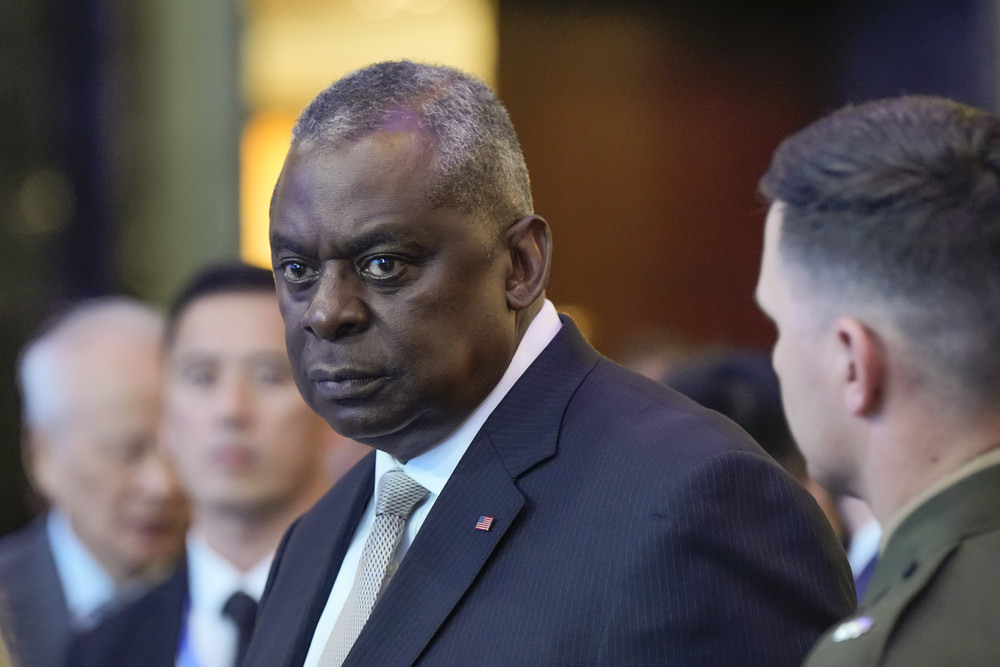
Lloyd Austin arrives at a dinner.

Secretary of Defense Lloyd Austin arrives for the opening dinner for the 20th International Institute for Strategic Studies Shangri-La Dialogue in Singapore today. | Vincent Thian/AP Photo

HANDSHAKE DIPLOMACY — Defense Secretary Lloyd Austin shook hands with his Chinese counterpart, Li Shangfu , at a dinner in Singapore today, underscoring the U.S.’s effort to maintain relations with China amidst growing tension between the two superpowers, writes Marcia Brown .

“The two leaders shook hands but did not have a substantive exchange,” said Pentagon Press Secretary Brig. Gen. Patrick Ryder in a statement. He emphasized U.S. efforts to maintain “open lines of military-to-military communication” with China.

The two were not expected to meet at all during the annual defense and security forum that brought Austin to Singapore, after China rejected a U.S. invitation for a meeting.

The surprise exchange comes as the U.S. has begun repairing a relationship that grew acrimonious after a Chinese spy balloon was spotted earlier this year in U.S. air space. Secretary of State Antony Blinken canceled a planned trip to China in the aftermath, but last month announced plans to reschedule his travel. The handshake also comes days after high-level trade discussions between the U.S. and China.


DON’T MISS POLITICO’S HEALTH CARE SUMMIT : The Covid-19 pandemic helped spur innovation in health care, from the wide adoption of telemedicine, health apps and online pharmacies to mRNA vaccines. But what will the next health care innovations look like? Join POLITICO on Wednesday June 7 for our Health Care Summit to explore how tech and innovation are transforming care and the challenges ahead for access and delivery in the United States. REGISTER NOW .


NIGHTLY NUMBER

339,000

The number of jobs that the United States added in May , blowing through Wall Street’s expectations that employment growth would slow as higher borrowing costs and tighter credit conditions take hold. Despite the Federal Reserve continuing to raise interest rates, the labor market continues to be red hot, showing the remarkable resilience of the economy but also making the Fed’s battle to curb inflation that much harder.

RADAR SWEEP

BELLY OF THE BEAST — After CNN hosted former President Donald Trump for a town hall in May, staffers were angry. CNN media reporter Oliver Darcy and CNN Chief International Anchor Christian Amanpour called the network out directly. The incident, though, was just the latest public display of growing internal frustrations within the network, especially aimed at new boss Chris Licht. For The Atlantic, Tim Alberta spent a year inside CNN, speaking with staffers and shadowing Licht. Read his comprehensive account here .

PARTING WORDS

Photo collage of the white house with various famous politicians and musicians.

Animation by Rafael Alejandro for POLITICO

PASS THE AUX — As the 2024 presidential campaign kicks into gear, candidates are once again cherry-picking the songs they’ll be using to pump up the crowd at rallies, trumpet their pick-me-messages in campaign ads and signal their coolness on TikTok — or not, writes Ella Creamer .

For decades, candidates on both sides of the aisle have tussled with musicians who didn’t want their music associated with them, threatening all kinds of legal action. (See: Arizona Republican gubernatorial candidate Kari Lake vs. Tom Petty’s estate.) They’ve been embarrassed. (It was “rather rude,” singer Sam Moore said, for the Obama campaign not to ask permission to use his 1966 hit “Hold On, I’m Comin’.”) Or they just really … misfired. (See: Ronald Reagan vs. Bruce Springsteen.)

Clearly, this is not a task to be taken lightly.

Stinking up the vibe with a bad campaign song probably won’t lose anyone an election. But you don’t want would-be constituents cringing any time you pick up an aux cord. Nailing the sonic selection could galvanize your base and shine up your image. With that in mind, POLITICO Magazine reached out to a host of political consultants and other campaign music experts to find out how to curate the ultimate soundtrack for campaigning in 2023 and beyond — at a time when social media rules the Internet and an ill-conceived TikTok can spread like wildfire.

Read their recommendations here .

Did someone forward this email to you?  Sign up here .


Follow us on Twitter

Charlie Mahtesian @PoliticoCharlie

Calder McHugh @calder_mchugh

Katherine Long @katherinealong


FOLLOW US

Follow us on FacebookFollow us on TwitterFollow us on InstagramListen on Apple Podcast
 

POLITICO, LLC 1000 Wilson Blvd. Arlington, VA, 22209, USA


Thursday, February 16, 2023

POLITICO NIGHTLY: Decoding the Fulton County document dump

View in browser
 
POLITICO Nightly logo

BY ANKUSH KHARDORI

Rudy Giuliani arrives at the Fulton County, Ga. Courthouse on Aug. 17, 2022.

Rudy Giuliani arrives at the Fulton County, Ga. Courthouse on Aug. 17, 2022. | John Bazemore/AP Photo

‘PERJURY MAY HAVE BEEN COMMITTED’ — Today was probably a bit of a disappointment if you were expecting some bombshell developments in the ongoing criminal investigation by Fulton County District Attorney Fani Willis concerning efforts to manipulate Georgia’s 2020 presidential election results, including by former President Donald Trump .

While the full report of the special grand jury that investigated the conduct contains “recommendations on indictments and relevant statutes,” none of that — the good stuff — was in the portions that were released today. The state judge had ordered just the release of the “introduction and conclusion” as well as a section in which the grand jury “discusses its concern that some witnesses may have lied under oath during their testimony to the grand jury,” and that is precisely what we got .

Still, a few parts stand out in an otherwise very limited and not terribly illuminating document that contains just a few pages of substantive material.

First, the report explains that a majority of the grand jury — which included 26 residents of Fulton County, including three alternates — concluded “that perjury may have been committed by one or more witnesses testifying before it” and recommends that the DA file charges “where the evidence is compelling.”

Given the range of prominent political figures who appeared before the grand jury — including Trump lawyer Rudy Giuliani and Sen. Lindsay Graham (R-S.C.) — the conclusion is provocative but does not tell us what we really want to know, which is who they were talking about. The report explains that the grand jury “received evidence from or involving 75 witnesses,” so the comment could refer to any of the people who testified, including those who are not national or prominent political figures.

Another portion of the document explains that the grand jury concluded “by a unanimous vote that no widespread fraud took place in the Georgia 2020 presidential election that could result in overturning that election.” That conclusion was informed by “extensive testimony” provided to the grand jury by “poll workers, investigators, technical experts, and State of Georgia employees and officials, as well as from persons still claiming that such fraud took place.”

This is an important official finding. But it does not resolve what is likely to be an important legal question for the Fulton County DA’s office as they make initial charging decisions: whether the people claiming election fraud actually believed it at the time. Of course, there is considerable reason to doubt anyone who claims that there was widespread fraud in the state’s election, since there was no such thing, but prosecutors will have to resolve that question on a person-by-person basis if they proceed to charge anyone with election fraud. That goes for Trump too .

Willis has said that charging decisions by the office are “imminent,” but it is not clear when that will happen, nor is it clear that any group of initial defendants would include Trump — even if the grand jury recommended in their full report that he be charged or the DA otherwise believes that the evidence supports charges against him.

Keep in mind that the special grand jury's purpose was purely investigative; they didn't have the power to return indictments. So if the DA's office decides to move forward with charging anyone, it would need to present those charges to a different grand jury.

As a general matter, it would not be unusual in a large, complex criminal investigation for prosecutors to begin with charges against relatively low-level or less prominent individuals in the hopes of obtaining cooperation from those people against more culpable individuals and strengthening the office’s evidence.

That possibility has been somewhat lost in the coverage of the investigation, but it is worth bearing in mind as the office continues its work and the facts continue to unfold in one of the nation’s most closely watched criminal investigations.

Don’t worry, we might still have a chance to see more of the special grand jury report. The judge's order suggests that the full report — or at least more of it — could become public if the DA's office proceeds to file charges against people. At that point, the document could become part of the court record and available to the public as a result of discovery and pre-trial litigation.

Welcome to POLITICO Nightly. Reach out with news, tips and ideas at nightly@politico.com . Or contact tonight’s author at ankush.khardori@gmail.com . Programming note: Nightly will not publish on Monday, Feb. 20 for Presidents Day. We will be back in your inboxes on Tuesday, Feb. 21.


STEP INSIDE THE WEST WING : What's really happening in West Wing offices? Find out who's up, who's down, and who really has the president’s ear in our West Wing Playbook newsletter, the insider's guide to the Biden White House and Cabinet. For buzzy nuggets and details that you won't find anywhere else, subscribe today .


WHAT'D I MISS?

Sen. John Fetterman (D-Pa.) at the Capitol Building.

Sen. John Fetterman (D-Pa.) at the Capitol Building. | Anna Moneymaker/Getty Images

— Fetterman hospitalized to treat clinical depression: Sen. John Fetterman (D-Pa.) checked himself into the Walter Reed National Military Medical Center Wednesday evening to receive inpatient care for clinical depression , his chief of staff Adam Jentleson said this afternoon. The first-term Democratic senator has experienced depression throughout his life, but “it only became severe in recent weeks,” Jentleson said in a statement. Fetterman is receiving care on a voluntary basis and went to the hospital after evaluation from Brian Monahan, attending physician of the U.S. Congress.

— Biden to speak with Xi Jinping following spy balloon shoot-down: Biden said today he expects to speak with the Chinese president after the detection and later shoot-down of a Chinese surveillance balloon led to a spike in tensions between the two countries. “I expect to be speaking with President Xi and I hope we are going to get to the bottom of this,” Biden said during an address from the White House. “But I make no apologies for taking down that balloon.” Biden’s comments come days after the U.S. military shot down three unidentified objects last weekend. He said the intelligence community believes these objects were “most likely balloons” involving private companies and scientific research.

— Proud Boys leaders facing Jan. 6 charges to subpoena Trump: Leaders of the far-right Proud Boys say they intend to subpoena Trump to testify in the ongoing trial pertaining to the group’s alleged conspiracy to forcibly derail the transfer of power from Trump to Biden. Prosecutors have underscored the group’s repeated responses to Trump’s public statements — from his Sept. 2020 debate-stage exhortation to the group to “stand back and stand by” to his Dec. 19, 2020 tweet urging supporters to attend his Jan. 6 rally. “Be there. Will be wild,” he wrote.

— Kentucky Supreme Court leaves abortion ban in place: The Kentucky Supreme Court ruled today to keep two state abortion restrictions in place for now — dashing the hope of clinics in the deep-red state that had sued for the right to resume providing the procedure while legal challenges continue. In her opinion, Justice Debra Lambert said that Louisville Circuit Court Judge Mitch Perry was wrong to halt enforcement of the bans last July and the appeals court was correct to reinstate the bans in August. She did, however, leave the door open to hearing a future challenge on whether “the right to abortion exists by implication under the Kentucky Constitution.”

AROUND THE WORLD

QATARGATE REVISITED — Belgium’s probe into alleged corruption and influence-buying by Qatar and Morocco in the European Parliament has widened, an international arrest warrant obtained by POLITICO shows , write Camille Gijs and Eddy Wax .

EU Parliament Members Maria Arena and Alessandra Moretti are connected to the investigation being undertaken by Belgian prosecutors, according to the warrant for Italian MEP Andrea Cozzolino, who was arrested last week on charges of corruption, money-laundering and participation in a criminal organization. The warrant was issued on February 10 by Belgian investigative judge Michel Claise.

According to the document, Arena and Moretti were members of a “quadrumvirate,” along with Cozzolino and Belgian MEP Marc Tarabella, who was also arrested last week. The foursome, according to the warrant, did the bidding of former MEP Pier Antonio Panzeri, an alleged ringleader of the network operating in the European Parliament, who has made a plea deal with Belgian prosecutors.

In one example cited in the warrant, Arena and Moretti were said to have acted on Panzeri’s instructions during a meeting about a possible parliament resolution on Qatar in late 2021. Panzeri, who was at that stage no longer an MEP and didn’t attend the meeting himself, gave instructions to his former assistant, seeking to influence the possible resolution.

The influence-buying scandal has rocked the EU capital, after Belgian authorities raided homes and offices in December 2022, amid allegations Qatar and Morocco handed out cash and gifts to secure favorable treatment in the European Parliament. In the months since, the institution has undergone a period of soul-searching as its leaders attempted to distance themselves from those implicated and enact reforms.


DOWNLOAD THE POLITICO MOBILE APP: Stay up to speed with the newly updated POLITICO mobile app, featuring timely political news, insights and analysis from the best journalists in the business. The sleek and navigable design offers a convenient way to access POLITICO's scoops and groundbreaking reporting. Don’t miss out on the app you can rely on for the news you need, reimagined. DOWNLOAD FOR iOS – DOWNLOAD FOR ANDROID .


NIGHTLY NUMBER

362,758

The number of vehicles that the electric vehicle company Tesla has recalled following a directive issued by the National Highway Traffic Safety Administration , which identified the driver-assist program as a “crash risk.” NHTSA advised Tesla to implement a voluntary software update that addresses specific issues, which have to do with the vehicles being unable to navigate difficult intersections. Tesla acknowledged the concerns and identified 18 warranty claims which may be related to the conditions described. The report comes after years of requests from regulators and safety experts who have implored Tesla to add better safeguards to its cars.

RADAR SWEEP

IPHONES FROM HELL — Located in Zhengzhou, the capital of China’s Henan province, is Foxconn’s largest compound, which is nicknamed “iPhone City.” The sprawling metropolis covers an area of 5.6 square kilometers, which is about one-tenth the size of Manhattan, and employs around 2000,000 workers. The busy season kicks off in September and tampers off around January or February. And this year, the atmosphere turned particularly tense as a result of surging global demand for Apple Inc. products at the same time that Covid-19 outbreaks disrupted production and labor protests pitted workers against riot police. The series of upheavals and their lingering impacts has drawn renewed attention to the lives of Chinese manufacturing workers , many of whom work on a temporary basis and face long hours with low pay. Read Viola Zhou ’s investigation into the period of turmoil for the online magazine Rest of World.

PARTING WORDS

Israelis wave national flags and banners during protests against plans by Prime Minister Benjamin Netanyahu's new government to overhaul the judicial system.

Israelis wave national flags and banners during protests against plans by Prime Minister Benjamin Netanyahu's new government to overhaul the judicial system. | Ohad Zwigenberg/AP Photo

LETTER FROM ISRAEL — As Shabbat comes to a close and Tel Aviv stirs back to life, protesters begin to gather on HaBima Square. At a nearby cafe, Mya Guarnieri Jaradat sits among a small group of Israelis who wonder aloud about this fraught moment for the country… and they decide to join the crowd.

Democracy in Israel may face dire threats, but a festive atmosphere prevails during this Saturday night march, which quickly fills Kaplan Street, a major thoroughfare in the heart of the city. People smile and snap selfies; they bang on drums and toot kazoos — sounding out the rhythm of Ha’am doresh tzedek chevrati ! (“The people demand social justice!”).

Some 130,000 demonstrators swarmed the streets that night last month to rally against the country’s new far-right government — arguably the most extreme in Israel’s history — and an agenda that even centrist politicians say threatens Israel’s democracy. The protest wasn’t a one-off. Pro-democracy demonstrations have taken place every Saturday since the start of January, bringing in some of the largest crowds in recent memory (though smaller than the 2011 social justice protests that, at their height, brought approximately a quarter million people to the streets).

The new government is led by a familiar face, Prime Minister Benjamin Netanyahu, who has been in and out of office since 1996 and is still on trial for corruption charges.

But the coalition he cobbled together to regain power includes elements that once composed the fringe of Israeli politics. That includes Itamar Ben Gvir, a far-right religious nationalist who heads a political party named “Jewish Power.” Previously, he was a member of Kach, a party that was outlawed in Israel and that spent 25 years on the U.S. State Department’s list of terror organizations; in a twist of irony, Ben Gvir is now serving as the country’s national security minister. Since taking the helm, he has visited the Al Aqsa compound in Israeli-occupied East Jerusalem, home to the third holiest site in Islam. Al Aqsa is sacred to Jews as well, but such visits are viewed by Palestinians as a huge provocation — an act so contentious that Ariel Sharon’s September 2000 visit is widely credited with sparking the Second Intifada, or Palestinian uprising.

Read about the new Israeli government — and what it’s like on the streets in the country — from Jaradat’s first person point of view here .

Did someone forward this email to you?  Sign up here .


Follow us on Twitter

Charlie Mahtesian @PoliticoCharlie

Calder McHugh @calder_mchugh

Katherine Long @katherinealong

Ari Hawkins @_AriHawkins


FOLLOW US

Follow us on FacebookFollow us on TwitterFollow us on InstagramListen on Apple Podcast
 

POLITICO, LLC 1000 Wilson Blvd. Arlington, VA, 22209, USA


Tuesday, February 14, 2023

Anne Applebaum | Another Putin Foe Meets a Grim Soviet-Era Fate


BURIED IN SPAM FOLDER!


Reader Supported News

Live on the homepage now!
Reader Supported News

WAVING HANDS FOR DONATIONS: Super important to get these few donations in. The dollar figures are by no means daunting. Your donation has made the difference in building RSN from day one. Invest in freedom support RSN with a donation. Thank you sincerely.
Marc Ash • Founder, Reader Supported News

Sure, I'll make a donation!


Another Putin Foe Meets a Grim Soviet-Era Fate

Another Putin Foe Meets a Grim Soviet-Era Fate


Anne Applebaum | Another Putin Foe Meets a Grim Soviet-Era Fate
Anne Applebaum, The Atlantic
Applebaum writes: "As former President Mikheil Saakashvili’s health worsens in prison, so do prospects for democracy in Georgia." 


As former President Mikheil Saakashvili’s health worsens in prison, so do prospects for democracy in Georgia.


Sixteen months after his arrest, Mikheil Saakashvili has lost more than 90 pounds and needs a walker to move around his prison hospital. The former Georgian president was for a time, on a hunger strike, which helps explain his weight loss and his exhaustion. But it does not explain the traces of arsenic, mercury, and other toxins that a doctor found in his hair and nail clippings. It does not explain the beatings he has described to his lawyer. It does not explain the constant pain in his left shoulder, neck, and spine.

Nor can anything other than malice—organized, official, state-sponsored malice—explain why Saakashvili is on a strange medical regimen that includes 14 different drugs, some addictive, some not approved for sale in the United States. Or why he has mild brain damage. Or why he has seizures. Giorgi Badridze, a former Georgian ambassador who keeps in constant touch with Saakashvili’s family, told me that “nothing has been exaggerated. He is doing really badly.” At age 55, Saakashvili is declining rapidly. And as he declines, so do the prospects of a sovereign, democratic Georgia.

Georgia is a former Soviet republic, and to those who live in the former Soviet empire—the same empire that Vladimir Putin, the Russian president, now seeks to re-create—Saakashvili’s accumulated prison illnesses form a familiar pattern. The slow prison death was a Soviet speciality: not a murder, not an assassination, just a well-monitored, carefully controlled, long, drawn-out decline. Most of the people who died in Soviet prison camps were not executed; they were merely starved until their heart stopped beating. In Putin’s Russia, torture and the deprivation of medical aid famously killed Sergei Magnitsky, a lawyer who uncovered an infamous corruption scandal at the highest levels of the Russian regime. Isolation, withholding of food, and other punishments are right now being inflicted on Alexei Navalny and other political prisoners too.

The readoption of this old Soviet practice in Georgia, a country that has, or had, aspirations to be part of NATO and the European Union, represents a symbolic return to the old Soviet empire. The decision to inflict this form of torture on Saakashvili carries even more symbolic weight. As president from 2004 to 2013, he was notable mostly for pushing his country, which borders Russia, Turkey, Armenia, and Azerbaijan, in the direction of Western liberal democracy. In his years in office, he broke the power of the post-Soviet mafia, battled corruption, fought back against a Russian invasion, and opened the economy. Putin loathed him and his political program so much that he reportedly once said Saakashvili should be “hung by his balls.” He hated Saakashvili for the same reason he now hates the Ukrainian president, Volodymyr Zelensky: because he used the language of liberal democracy; because he talked about a European, Western future for his country; and because he rejected Putin’s kleptocratic, illiberal ideology.

Saakashvili angered plenty of Georgians too. He made enemies not just among the mafiosi whose careers he destroyed, but also among Georgian liberals and democrats. He cut corners and crossed the edges of legality several times himself. Extravagant stories about him (and there are many) involve Munich nightclubs, Ferris-wheel rides, and late-night, high-speed drives through Tbilisi. His life story is not a black-and-white morality tale of any kind.

But when Saakashvili lost an election, he did step down, which is not typical behavior in the former Soviet world. He left Georgia in 2013, and spent several years in Ukraine—he speaks Ukrainian, having studied there—and enjoyed what can best be described as an exceptionally controversial term as governor of the Odesa region. He received Ukrainian citizenship, was stripped of it, and then got it back again. Finally he went back to Georgia in October 2021, clearly hoping to reenter politics.

This, his supporters believe, is the real reason he was arrested on what his lawyer describes as trumped-up charges, based on cases from years ago investigated in absentia. They also say this is the reason for the slow torment, and perhaps for the slow poisoning of Saakashvili, and indeed leaders of the ruling Georgian Dream party have said, in so many words, that he is in prison because he would cause trouble for them if he were free. Irakli Kobakhidze, the party’s chairman, recently put it like this: “If Saakashvili gets out, he will immediately engage in political processes and will try to take in his hands the function of leadership of the radical opposition.” The government can’t let him out, in other words, because he might try to win. Or he might at least make what Kobakhidze calls the “radical opposition” into a unified and coherent force.

At the moment, that opposition, although it probably represents the majority of the voters, is deeply divided, as so often happens in democracies that have been slowly dismantled by an illiberal political party. Georgian Dream is certainly that: Backed and controlled by Bidzina Ivanishvili, Georgia’s wealthiest man, the party has not only locked up Saakashvili but also imprisoned Nika Gvaramia, the director of an independent television station; put pressure on judges; and repeated wearily familiar nationalist, homophobic, and anti-Western themes borrowed from Russian propaganda. The party’s leaders, many of whom are former Ivanishvili employees, have verbally attacked the U.S. ambassador, even falsely accusing her of trying to force Georgia to go to war with Russia. All of that helps explain why, in June, the European Union formally recognized Ukraine and Moldova as candidates for membership but spurned Georgia.

Officially, the Georgian government regretted that decision. Unofficially, maybe not so much. Ivanishvili’s fortune was earned in Russia, and under his leadership, Georgia’s relationship with Russia has evolved into something very hard to explain and understand. On the one hand, Georgians continue to fear a further Russian invasion, which is unsurprising: Russian troops, some stationed less than 40 miles from Tbilisi, occupy about 20 percent of the country. Georgians are vocally supportive of Ukraine, and large majorities say they want to join NATO.

On the other hand, the quantity of what appears to be sanctions-busting cargo flowing through Georgia to Russia surged in the first half of 2022. The Georgian government doesn’t support Russia, but it doesn’t like to say it doesn’t support Russia, or at least not too loudly. And by deliberately antagonizing Georgia’s Western friends, it is slowly making Georgian membership in Western clubs an impossibility. “The reality is that it looks like Putin is winning in Georgia,” Badridze told me.

The slow torment of Saakashvili is a part of that project. His lawyer and his family are asking the government to release him on humanitarian grounds and let him transfer to a hospital in Europe or the U.S. If not, he may well die in prison. But that may be what Putin and his proxies in Georgia are hoping for. If the man who still symbolizes Georgia’s old aspirations to join the liberal democratic world succumbs to a Soviet-style prison death, then those aspirations will die along with him.


READ MORE

 

Israelis Rally for Fifth Week Against Netanyahu's Judicial PlansIsraelis hold flags as they protest against Prime Minister Benjamin Netanyahu's new right-wing coalition and its proposed judicial reforms to reduce powers of the Supreme Court in Tel Aviv, Israel, February 4, 2023. (photo: Ronen Zvulun/Reuters)

Israelis Rally for Fifth Week Against Netanyahu's Judicial Plans
Al Jazeera
Excerpt: "Tens of thousands of Israelis have gathered for a fifth week of protests against controversial judicial changes proposed by Prime Minister Benjamin Netanyahu’s government." 


Tens of thousands brave heavy rain in Tel Aviv to protest against government plans to weaken Israel’s Supreme Court.


Tens of thousands of Israelis have gathered for a fifth week of protests against controversial judicial changes proposed by Prime Minister Benjamin Netanyahu’s government.

Protesters in the central city of Tel Aviv braved heavy rain for Saturday’s protest, carrying blue and white Israeli flags and chanting slogans against Netanyahu’s justice minister.

“I’m here tonight protesting against the transition of Israel from a democracy to an autocracy,” Dov Levenglick, a 48-year-old software engineer, told the Reuters news agency in Tel Aviv.

“It’s a disgrace, it shall not stand.”

The proposed changes, which the government says are needed to curb overreach by judges, have drawn fierce opposition from groups including lawyers and raised concerns among business leaders, widening already deep political divisions in Israeli society.

Critics say Israeli democracy would be undermined if the government succeeds in pushing through the plans, which would tighten political control over judicial appointments and limit the Supreme Court’s powers to overturn government decisions or Knesset laws.

“They want to tear up the judiciary system of Israel, they want to tear up Israeli democracy, and we are here every week in every weather … to fight against it and to fight for Israeli democracy,” Hadar Segal, 35, told Reuters in Tel Aviv.

Local media reported protests in some 20 cities across the country.

Among the crowd in Haifa was former Israeli Prime Minister Yair Lapid, who said in a video posted to social media: “We will save our country because we are unwilling to live in an undemocratic country.”

Netanyahu, on trial for corruption, has dismissed the protests as a refusal by leftist opponents to accept the results of last November’s election, which produced one of the most right-wing governments in Israel’s history.

Last month, he was forced to remove a top minister, Aryeh Deri, who leads the ultra-Orthodox Shas party, due to a recent tax evasion conviction.

In addition to the judicial changes, his government has announced its intention to expand illegal settlements in the occupied West Bank, as well as social reforms that have worried the LGBTQ community.

Dania Shwartz, 44, from the city of Ramat Gan, told AFP news agency that protesters were “reclaiming” the Israeli flag.

She expressed concern that, as a member of the LGBTQ community, “this new government will try to pass laws that will affect my children”.

“For example the Noam party wants to delegitimise families like ours and it’s very scary,” she said, referring to one of Netanyahu’s coalition partners known for its virulently anti-gay stance.

READ MORE 
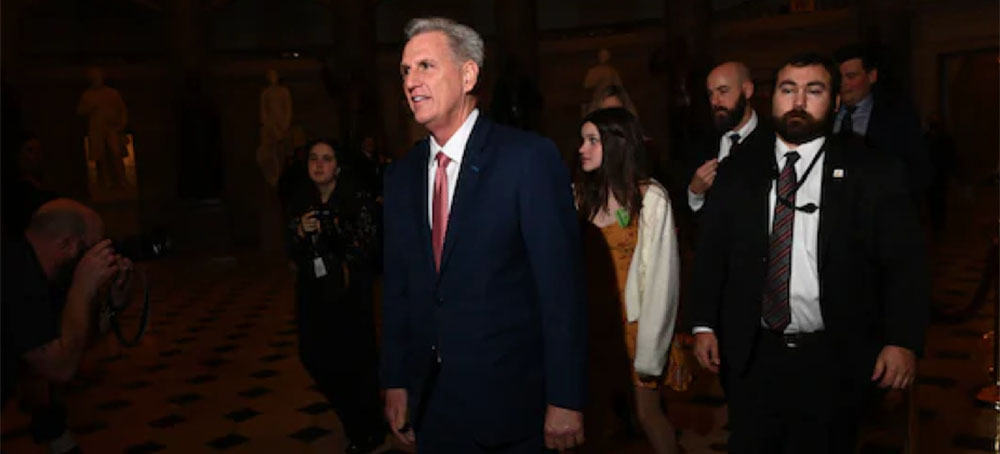
Yes, Social Security and Medicare Still Need to Be Reformed — and SoonHouse Speaker Kevin McCarthy walks through Statuary Hall on his way to a vote at the Capitol on Jan 25. (photo: Ricky Carioti/WP)

Washington Post Editorial Board | Yes, Social Security and Medicare Still Need to Be Reformed — and Soon
The Washington Post
Excerpt: "House Speaker Kevin McCarthy announced last week that cuts to Social Security and Medicare are 'off the table' in negotiations over raising the debt ceiling." 

House Speaker Kevin McCarthy (R-Calif.) announced last week that cuts to Social Security and Medicare are “off the table” in negotiations over raising the debt ceiling. In so doing, he deprived Democrats of a political talking point and reduced the likelihood of national default. Raising the debt ceiling — and thereby preserving the full faith and credit of the federal government — should proceed without negotiations or strings, let alone a contentious debate about third-rail entitlement programs.

Yet the discussion needs to happen sometime, and sooner rather than later. These entitlements — which already account for about a third of federal spending — remain on unsustainable trajectories, and protecting them for future generations is too important to keep reform off the table indefinitely.

Medicare’s trust fund is projected to run short by 2028, and Social Security will exhaust its reserves by 2034. When that happens, seniors face an immediate 25 percent cut in benefits. Clamoring for bailouts will be intense, but the country will struggle to afford them — especially in the looming era of higher interest rates, which make it more expensive to service the national debt. The longer Congress puts off fixes, the more painful they will become for the 66 million seniors, and growing, who receive monthly Social Security payments and the approximately 59 million people enrolled in a Medicare plan.

We applaud anyone in either party who works in good faith to help shore up the solvency of these old-age programs, whether or not they identify as fiscal hawks. Sens. Bill Cassidy (R-La.) and Angus King (I-Maine) have reportedly been talking about creating some kind of sovereign wealth fund that would be separate from the Medicare trust fund but could create future cash flow. Sen. Joe Manchin III (D-W.Va.) has expressed openness to raising the taxable wage cap for the program and perhaps creating a “supercommittee” to hash out a potential deal that could get an up-or-down vote on the Senate floor.

These politicians take political risks to advance such ideas. Former president Donald Trump, who allowed the debt to grow by $7.8 trillion while he was in office, says that “under no circumstances should Republicans vote to cut a single penny from Medicare or Social Security.” Meanwhile, President Biden savaged Republicans during the 2022 midterms for trying to “deny seniors” the benefits he says they are owed. Conventional wisdom is that lawmakers will keep kicking the can down the road until a crisis arrives.

The potential trade-offs aren’t painless, but some mix of benefit reductions and tax increases is necessary. Think about raising the Medicare eligibility age to 67 to match the existing Social Security retirement age for those born in 1960 or later. Perhaps raise premiums for Medicare beneficiaries with higher incomes. And maybe reduce Social Security benefits for those with higher incomes. Many of the Trump tax cuts expire in 2025. This could be leverage to negotiate tweaks to the payroll tax.

Mr. Biden was among 88 senators who voted in 1983 for a bipartisan grand bargain, negotiated by a commission led by Alan Greenspan and signed into law by President Ronald Reagan, that rescued Social Security. Forty years later, if he and Republican leaders are willing to work in good faith, Mr. Biden could safeguard the greatest legacies of both the New Deal and the Great Society.


READ MORE
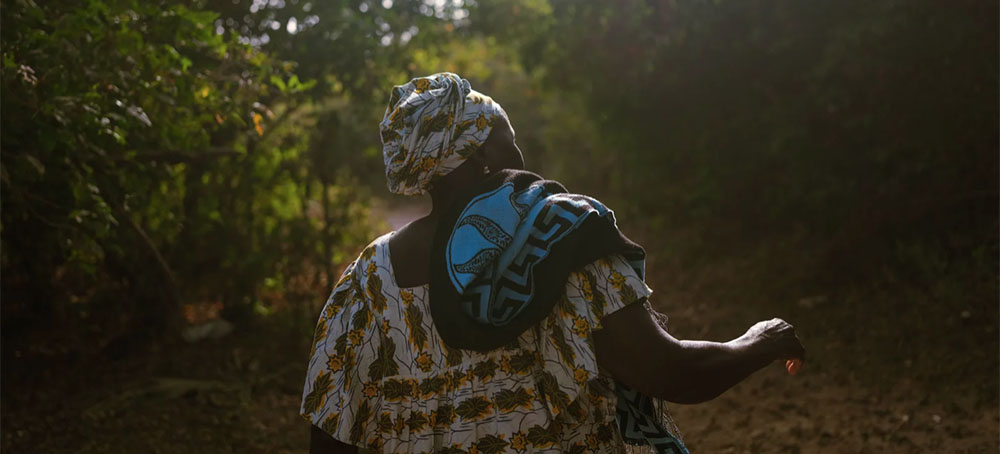
 

Meet the People Safeguarding the Sacred Forests and Lagoons of West AfricaDiakine Sambou, queen of the sacred forest of Kaoupoto, on Feb. 23, 2021, in Mlomp, Senegal. (photo: Ricci Shryock/NPR)

Meet the People Safeguarding the Sacred Forests and Lagoons of West Africa
Ricci Shryock, NPR
Shryock writes: "When a logging company tried to force its way into a traditional forest in Daniel Karworo's hometown in rural Liberia, the machine got stuck in the mud and did not manage to cut down a single tree." 

When a logging company tried to force its way into a traditional forest in Daniel Karworo's hometown in rural Liberia, the machine got stuck in the mud and did not manage to cut down a single tree.

Karworo says the spirit of the sacred forest stopped the truck.

But he also remembers his aunts and relatives physically protesting to protect what they say is their priceless community forest.

"[The logging company] said the government already gave them papers to enter the forest," he recalls nearly 20 years later. "The people said, 'No, this is our traditional forest. We are reserving it for our great-grandchildren. We are protecting it for them.'

Despite the residents' pleas, the loggers' large machine went in to cut down the timber. Karworo says it got stuck in the mud for months.

In areas throughout West African countries such as Liberia, Senegal and Guinea-Bissau, communities have designated biodiversity hotspots, including forests and lagoons, as sacred. They believe no price can be placed on the plants and animals that live there. Many are forbidden from entering the areas, where traditional rites of passage and justice ceremonies take place. This system has served as a conservation tool respected by these communities for generations.

The amount of land that is conserved might be small in sacred spaces — typically no larger than 10 acres — but the system is built on communities living within protected lands and developing and nurturing their symbiotic relationship with nature. The system starkly contrasts with some current, non-Indigenous North American methods of prohibiting humans from living in certain protected areas.

At a small lagoon between the ocean and mangroves in Barconie, Liberia, people can swim and wade, but they are prohibited from killing a single fish.

"All of the fish that you see in the water there, they are all the people in the community," says the town chairman, Alphonso Dennis. "They are the children of the community. That's how we were taught. If you kill one of those fish, someone in the community will be affected."

In nearby David's Town, Borbor Kealeh has protected a small area of traditional forest for more than 40 years — as he says his parents did before him. "The love of the human side, and of the forest on this side — we love both sides. We cannot pick one side," he says.

In southern Senegal, women are often the "queens" of sacred forests. Diakine Sambou, who has guarded a sacred forest in the country's Casamance region for decades, says her role is to act as an interlocutor between nature and the community.

"It's a strong relationship," she says. "We don't do anything without nature's permission, and if you don't take care of the trees, the environment will remind you of what you have done. No one enters the sacred forest to cut down the trees there, never, never. It's sacred."

Guardians like Sambou often speak in vague terms when describing their forests. One reason is because an essential element in keeping the forests sacred is ensuring their traditions stay secret.

But another reason the descriptions are hard to translate is that when people like Kealeh speak about their forests, they describe time in terms of generations instead of days or years. They measure value in an invisible feeling of peace of mind, rather than in dollars and cents.

While the terms and words may be different, the message is clear: The community's existence is intricately linked to the well-being and survival of the biodiversity and natural resources surrounding it.

Communities far beyond these countries' borders benefit from the conservation-minded relationship these communities in West and Central Africa have with nature, says Ranece Jovial Ndjeudja, Congo Basin forest campaign manager for Greenpeace Africa.

"Those forests have the capacity to capture carbon from the air, which is one of the key areas that is being used at the international level to ensure the fight against climate change," Ndjeudja says. He is critical of efforts to monetize the carbon captures from communities who have long-term, valued relationships with forests.

Placing a dollar value on conserving these areas risks destroying the very belief system and way of thinking that have ensured their survival in the first place, researchers say. Their value cannot be translated into monetary terms, says Aby Sene, professor and researcher at Clemson University in South Carolina.

"The example of the Casamance, these sacred forests are maintained by the Diola people, who maintained their way of life and resisted colonial and capitalist structures, and that is precisely why these lands are rich in biodiversity for so long," Sene says.

She says it is essential to reinforce communal stewardship of the land, rather than ownership.

"My dad is Serer," she says referring to a Senegalese group of people, "and in the Serer culture, there is this thing that says land is not owned by the people who are on it right now. We have borrowed it from the ancestors, and we must preserve it for the unborn."

Sene says, "People are taking care of the land because they understand that it is borrowed — borrowed from the ancestors and preserved for the unborn."


READ MORE 

SNL Roasts the Chinese Spy Balloon FlapSpy Balloon Cold Open - SNL with Bowen Yang. (photo: SNL/YouTube)

SNL Roasts the Chinese Spy Balloon Flap
Giulia Heyward, NPR
Heyward writes: "Saturday Night Live kicked off last night's show by spoofing the latest suspected threat to national security: a Chinese balloon." 

The balloon, which the Biden administration believes the Chinese government was using for surveillance, became an internet celebrity when people began tracking its travels across U.S. airspace. China's Foreign Affairs Ministry said the balloon was for meteorological research and accidentally went adrift. But its presence led Secretary of State Antony Blinken to postpone a trip to Beijing amid rising tensions between the two nations.

The U.S. military shot down the balloon off the coast of South Carolina on Saturday — a move that the Chinese government called an overreaction. Hours later, the downed balloon became the subject of the SNL cold open.

The sketch starts with Chloe Fineman playing the role of MSNBC host Katy Tur and detailing the criticism from Republicans who said President Biden should have authorized the balloon's demise sooner.

A Pentagon official, played by Kenan Thompson, struggled to keep a straight face as he retold the shooting while using a happy birthday balloon as a prop. The sketch ends with an exclusive interview with the downed balloon, portrayed by Bowen Yang.

Yang, who previously portrayed the iceberg that sunk the Titanic, quipped that Americans would miss his presence in the sky.

"You've made it very clear that I'm not welcome here, so good job," Yang said. "But let me tell you something: you're gonna miss this Chinese spy balloon — I mean, normal balloon, damn it."

READ MORE 

Huge Quake Toppled Buildings in Turkey and Syria as People SleptJanuaris, Syria. (photo: Rami Al Sayed/AFP/Getty Images)

Huge Quake Toppled Buildings in Turkey and Syria as People Slept
BBC News
Excerpt: "A powerful earthquake has struck south-eastern Turkey, near the Syrian border, killing more than 1,700 people as they slept and trapping many others." 

A powerful earthquake has struck south-eastern Turkey, near the Syrian border, killing more than 1,700 people as they slept and trapping many others.


The US Geological Survey said the 7.8 magnitude tremor struck at 04:17 local time (01:17 GMT) at a depth of 17.9km (11 miles) near the city of Gaziantep.

Hours later, a second quake, which had a magnitude of 7.5, hit the Elbistan district of Kahramanmaras province.

So far, more than 1,000 people have died in Turkey and 780 in Syria.

Seismologists said the first quake was one of the largest ever recorded in Turkey.

Many thousands of people were injured - with at least 5,385 people hurt in Turkey and 2,000 in Syria.

Many of the victims are in war-torn northern Syria, where millions of refugees live in camps on both sides of the Syria-Turkey border. There have been dozens of fatalities reported in rebel-held areas.

Many buildings have collapsed and rescue teams have been deployed to search for survivors under huge piles of rubble in freezing and snowy conditions.

Shocking images show buildings that were four or five storeys high flattened, roads destroyed and mountains of rubble.

Among the buildings destroyed was Gaziantep Castle, a historical landmark that had stood for more than 2,000 years.

And a shopping mall in the city of Diyarbakir collapsed, a BBC Turkish correspondent there reported.

The second quake, which struck at 13:24 local time (10:24 GMT), had its epicentre about 80 miles (128km) north of the original tremor in the Pazarcik district of Kahramanmaras province.

An official from Turkey's Disaster and Emergency Management Authority said it was "not an aftershock" and was "independent" from the earlier quake.

Hours after the first earthquake, a toddler was pulled from the rubble in Azaz, Syria, dirty and bloodied but alive. Video shows rescuers running to get her out of the cold.

The Turkish Red Crescent has called for citizens to make blood donations, and the organisation's president, Kerem Kınık, said on Twitter that additional blood and medical products were being sent to the affected region.

Following an international appeal for help, Turkey's President Recep Tayyip Erdogan said 45 countries had offered support.

The European Union is sending search and rescue teams to Turkey, while rescuers from the Netherlands and Romania are already on their way. The UK has said it will send 76 search and rescue specialists, equipment and rescue dogs to Turkey.

France, Germany, Israel, and the United States have also pledged to help. Russian President Vladimir Putin has offered help to both Turkey and Syria, as has Iran.

Turkish Interior Minister Suleymon Soylu said 10 cities were affected by the initial quake, including Hatay, Osmaniye, Adiyaman, Malatya, Sanliurfa, Adana, Diyarbakir and Kilis.

School has been suspended in those cities for at least a week.

'We need help'

In Turkey, President Erdogan said the death toll from the quake was 912 and was expected to rise further.

The Syrian health ministry said 371 people had died in the provinces of Aleppo, Latakia, Hama and Tartus.

A volunteer with the White Helmets rescue group, which operates in rebel-controlled areas of north-western Syria, fought back tears as he described the devastation in Sarmada, near the border with Turkey.

"Many buildings in different cities and villages in north-western Syria collapsed," he told the BBC.

"Still now, many families are under the rubble. We are trying to save them but it's a very hard task for us.

"We need help. We need the international community to do something, to help us, to support us. North-western Syria is now a disaster area. We need help from everyone to save our people," he added.

The earthquake was powerful enough to be felt as far away as Cyprus, Lebanon and Israel.

"I was writing something and just all of a sudden the entire building started shaking and yes I didn't really know what to feel," Mohamad El Chamaa, a student in the Lebanese capital, Beirut, told the BBC.

"I was right next to the window so I was just scared that they might shatter. It went on for four-five minutes and it was pretty horrific. It was mind-blowing," he said.

Rushdi Abualouf, a BBC producer in the Gaza Strip, said there was about 45 seconds of shaking in the house he was staying in.

Turkey lies in one of the world's most active earthquake zones.

In 1999, more than 17,000 people were killed after a powerful tremor rocked the north-west of the country.

READ MORE 

Two Bald Eagles Nested in a Pine for Years. A Utility Company Tried to Chop It DownBald eagles are protected under state and federal laws. (photo: Fred Thornhill/AP)

Two Bald Eagles Nested in a Pine for Years. A Utility Company Tried to Chop It Down
Maanvi Singh, Guardian UK
Singh writes: "Up a winding northern California highway, beneath a 120ft ponderosa pine tree, a group of environmentalists gathered for some high stakes bird-watching." 


The fight to save the birds’ habitat ignites old frustrations over California’s engagement with tribal communities

Up a winding northern California highway, beneath a 120ft ponderosa pine tree, a group of environmentalists gathered for some high stakes bird-watching.

Everyone was waiting for a pair of bald eagles to swoop into their nest, an orb of twigs and branches balanced amid the tree’s scraggly branches. The elusive raptors have nested here for years, renovating and upgrading it each year in preparation for hatchlings in the spring.

But this year, unless the eagles – who spend the fall and winter months away from their nests – were observed back at their tree by mid-January, they’d lose it.

That’s because Pacific Gas & Electric, the largest utility company in the US, had obtained a permit to chop down the ageing pine, arguing that it could fall on the company’s nearby power line and spark a catastrophic wildfire. Environmentalists and the Coyote Valley Band of Pomo Indians countered that PG&E – which is facing increasing pressure to stop its equipment from starting fires across the state – should move their power lines instead.

Lawyers for the tribe beseeched the utility company to reconsider. Locals printed up signs to save the nest. In recent weeks, activists and tribal elders protested, prayed and physically barricaded themselves in front of the tree as PG&E crews came – alongside sheriff’s deputies – to cut it down.

“They had their cherry picker and their wood chipper ready,” said Polly Girvin, an environmental and Indigenous rights activist. “But we weren’t going to back down.”

Now, armed with binoculars and cell phones on a misty January morning, they were on watch. Bald eagles are protected under state and federal laws, and PG&E could only take down the tree so long as the nest was unoccupied or abandoned. “We need to keep proving that this is an active nest,” explained Girvin.

The eagles did come that day, arriving just as a thick rain began to roll in. A few days later, PG&E said it would back down.

But the showdown over this lone tree, near an electrical line that serves just a single property, has raised difficult questions about PG&E’s approach to fire safety and its fraught relationship with the communities it serves, many of whom live in rural, wildland areas.

The company is under growing legal and financial pressure to act after its power lines have been blamed for sparking multiple fires, including a deadly 2020 fire in northern Shasta county. Last year, it reached a $55m settlement with six counties over several other fires, including the Kincade fire and Dixie fire.

As PG&E rushes to trim trees and remove brush near its power lines to avert future catastrophes – and avoid liability – environmentalists worry that local nuances are being overlooked.

“PG&E says that the tree is dangerous, it’s a hazard – but that’s not right. It’s their lines that are the hazard,” said Naomi Wagner, a local activist with the environmental group Earth First!. “So why is it the tree that needs to go?”

During their recent bald eagle watch party, Wagner, Girvin and half a dozen other activists settled around to a small campfire that fizzled in the rain. Old-time environmentalists who’d been agitating since the 1960s were joined by their kids, grandkids and dogs. Coffee, muffins and binoculars were passed all around, along with warnings not to squeal or shout to avoid startling the eagles.

Priscilla Hunter, the former Coyote Valley chair squinted up and shifted closer to the fire. “It’s a miracle that they are here,” she said. Michael Hunter, the tribe’s current chair, jumped up. “Hey, birds, where are you at?”

Activists and tribal leaders, to whom the eagle holds cultural significance, have alleged that the power company and US Fish and Wildlife Service failed to properly inform and consult with the tribe in deciding to remove the tree, which could remain standing and serve as a habitat for this eagle couple, or their offspring, for years to come.

And here was a bird that was not only sacred to Native American tribes, but also a symbol of the United States. And still, crews had come to take down the tree on 9 January – a day before National Save the Eagles Day. “I mean how clueless could PG&E be,” said Wagner.

Moreover, the owner of the property where the tree stands, as well as the residents who live there, all supported alternative solutions – including rerouting or burying the electric line, or setting up a solar microgrid.

In TV advertisements, PG&E has been promoting its plans to bury 10,000 miles of power lines underground to reduce the risk of them hitting trees, so why not do the same here? “I mean, come on,” Girvin said. “They just want to take the fast and easy route.”

Meanwhile, PG&E contended in public statements the tree “contains an inactive bald eagle’s nest, is a hazard and is at risk of failing and striking a PG&E line in a high fire-threat area”.

Ultimately, the company was proven wrong when eagles finally swooped in. They first arrived as activists and tribal elders sang and prayed beneath the tree, hours before PG&E crews arrived. And they returned each day afterwards. “It was magical,” said Girvin.

A few days later, PG&E issued a statement saying that it would bury the lines, after all. “This solution allows us to protect our hometowns while also taking into account the values of our local tribe, property owners and environmental advocates,” said Ron Richardson, vice-president of PG&E’s north coast region, in a statement to the Guardian.

It was a hard-won concession – one that the activists will remain wary of until they receive a legally binding commitment to leave the tree standing. Though the company can’t take down a tree with nesting eagles, they could return if the eagles leave again. “It seems like you just have to expose how inefficient this is,” said Hunter, the Coyote Valley band chair.

This was already the second year that PG&E had tried to take down this tree. In 2022, as well, the eagle couple returned to their nest just in the nick of time to call off the saws. “And they had a baby!” said Joseph Seidell, a cannabis farmer who lives on the property and led early protests against PG&E’s plans. “I mean just look at this,” he gestured. “This giant pile of beautiful woven twigs holds this beautiful, sacred bird.”

In August, the utility company de-energized the overhead electrical line, just in case the tree did end up falling and sparking a blaze, and asked for Seidell’s agreement that he wouldn’t impede crews when they came to take down the tree in the future. “It was devastating,” he said.

The ordeal has left tribal leaders and environmentalists concerned that the utility company – and the government agencies that oversee and permit its fire safety plans – have failed to properly communicate and consult with communities before undertaking work that impacts important wilderness areas.

Although the Fish and Wildlife Service had sent a letter informing Hunter of PG&E’s intention to cut down the tree in December, lawyers representing the tribe alleged that authorities didn’t wait for a response and didn’t give tribal authorities enough time to review the permit over the holiday season.

The agency was unable respond to the Guardian’s request for comment before publication.

The Fish and Wildlife Service, which has a codified “trust responsibility” – a binding moral obligation – to tribes, could do more to engage with and consult with tribal governments, said Don Hankins, a pyrogeographer and Plains Miwok fire expert at California State University, Chico.

“There clearly needs to be better coordination on these sorts of things,” he said. After a two-year fight over one tree, he noted, it’s unclear why government officials and PG&E didn’t coordinate with tribal leaders sooner.

PG&E and the Fish and Wildlife Service do have policies to ensure that they don’t impact vulnerable species, Hankins said – but those laws and policies don’t always account for the complexities of specific environments.

In Mendocino county, where there is a dark history of logging in the 1800s, which decimated old-growth redwoods and violently displaced some Native villages, a lack of proper communication and care by PG&E and the Fish and Wildlife Service brings an extra sting.

And even now, the Coyote Valley Band of Pomo Indians are involved in a protracted fight to curb commercial logging in the nearby Jackson Demonstration state forest, a nearly 50,000-acre area managed by the California department of forestry and fire prevention, or Cal Fire.

And although various government and private operators in this region have made some gestures toward working with local tribes with crucial, generational knowledge about the fragile landscapes here – they’ve often failed to meaningfully follow through, Girvin said.

Crews for various agencies have operated “willy nilly for years”, she said. “They haven’t cared at all about putting skid trails through sacred sites, or thought carefully about habitat protection and the species affected in the area.” These incursions can feel especially frustrating when the government for decades ignored, denied and criminalised traditional stewardship practices of tribes up and down California, she noted.

“To the settlers, whatever or whoever was in the way of doing business, they’d just cut down,” said Priscilla Hunter. “That’s what these eagles reminded me of.”


READ MORE


Contribute to RSN

Follow us on facebook and twitter!

Update My Monthly Donation

PO Box 2043 / Citrus Heights, CA 95611


Together we're building the power to shape our shared future

        LOTS OF POSTS IGNORED BY BLOGGER..... OR REMOVED ON THEIR WHIM! ALL POSTS ARE AVAILABLE ON MIDDLEBORO REVIEW AND SO ON BLOGGER DOESN...
