Showing posts with label LLOYD AUSTIN. Show all posts

Thursday, October 3, 2024

Punishing Pro-Hezbollah Speech


Punishing Pro-Hezbollah Speech


Australian officials are rushing to denounce expressions of support for the Hezbollah resistance group as a violation of a new counter-terrorism law, writes Caitlin Johnstone. 
Read here...


By Caitlin Johnstone
in Melbourne, Australia

CaitlinJohnstone.com.au

Listen to Tim Foley reading this article.

As Israel begins another invasion of Lebanon, Australian officials from both sides of the imaginary partisan divide have been falling all over themselves to get Australians punished for speech crimes about the Lebanese resistance group Hezbollah.

The Australian political-media class have been in an uproar ever since footage surfaced of people waving Hezbollah flags at a protest in Melbourne over the weekend and displaying pictures of the group’s deceased leader Hassan Nasrallah, who was assassinated by Israel in a massive airstrike on Friday.

[See: AS’AD AbuKHALIL: The Middle East After Nasrallah]

After initially stating that no crime had been committed in these acts of political speech, Victoria police are now saying they have identified six potentially criminal incidents related to the demonstration.

These incidents reportedly involve “prohibited symbols” in violation of the Counter-Terrorism Legislation Amendment which was enacted last year.

Needless to say, free nations do not have “prohibited symbols.”

This development follows numerous statements from various Australian leaders denouncing the protests as criminal.

“I expect the police agencies to pursue this,” Victorian premier Jacinta Allan said of the protests, adding, “Bringing grief and pain and division to the streets of Melbourne by displaying these prohibited symbols, is utterly unacceptable.”

Australia’s Foreign Minister Penny Wong took to Twitter to denounce the protesters, saying Australians must not only refrain from supporting Hezbollah but from even giving “any indication of support.”

“We condemn any indication of support for a terrorist organisation such as Hizballah,” Wong tweeted, adding, “It not only threatens national security, but fuels fear and division in our communities.”

Home Affairs Minister Tony Burke wants to deport any international visitors displaying prohibited symbols in Australia, saying “I won’t hesitate to cancel the visas of visitors to our country who are spreading hate.”

On the other side of the aisle, opposition leader Peter Dutton is on a crusade to get new laws passed to ensure the elimination of banned symbols from public view, saying “enforcement for law is required and if there are laws that need to be passed to make sure that our values are upheld then the Prime Minister should be doing that.”

“Support for a proscribed terrorist organisation has no place on the streets of Melbourne,” tweeted Labor MP Josh Burns. “Anyone breaking counter-terrorism legislation should face the full force of the law.”

“Australians cherish the right to peaceful protest,” tweeted independent MP Zoe Daniels. “However, there is no justification for supporting a proscribed terrorist organisation. Those who were seen doing so on the streets of Melbourne at protests yesterday should be investigated and prosecuted.”

In an article titled “Hezbollah flags at protests shape as test of new hate-symbol laws,” ABC [the Australian Broadcasting Corporation] reports that these legal efforts to stomp out dissenting political speech are made possible by laws which were recently passed with the official intention of targeting Nazi symbols, but which “also cover the symbols of listed terrorist organisations such as Hezbollah.” Which is about as strong an argument on the slippery slope of government censorship as you could possibly ask for.

Hezbollah is listed as a “terrorist organisation” on the say-so of the Australian government, not because of its actions or methods but because it stands in opposition to the U.S. power alliance of which Australia is a part. This arbitrary designation is smeared across any resistance group on earth which opposes the dictates of Washington, and can then be used to suppress the speech of anyone who disagrees with the murderous behavior of the Western empire.

And it should here be noted that Australia is the only so-called democracy in the world which has no national charter or bill of rights of any kind. A tremendous amount of faith has been placed in state and federal legislators to simply do the right thing, which has proved foolish and ineffective.

Professor George Williams wrote for the Melbourne University Law Review in 2006:

“Australia is now the only democratic nation in the world without a national bill of rights. Some comprehensive form of legal protection for basic rights is otherwise seen as an essential check and balance in democratic governance around the world.

Indeed, I can find no example of a democratic nation that has gained a new Constitution or legal system in recent decades that has not included some form of a bill of rights, nor am I aware of any such nation that has done away with a bill of rights once it has been put in place.

“Why then is Australia the exception? The answer lies in our history. Although many think of Australia as a young country, constitutionally speaking, it is one of the oldest in the world. The Australian Constitution remains almost completely as it was when enacted in 1901, while the Constitutions of the Australian states can go back as far as the 1850s.

The legal systems and Constitutions of the nation and the Australian colonies (and then states) were conceived at a time when human rights, with the prominent exception of the 1791 United States Bill of Rights, tended not to be protected through a single legal instrument.

Certainly, there was then no such law in the United Kingdom, upon whose legal system ours is substantially based. This has changed, especially after World War II and the passage of the Universal Declaration of Human Rights, but by then Australia’s system of government had been operating for decades.”

If you ever wonder why Australia so often stands out as a freakish anomaly in the Western world with its jarring authoritarianism and disregard for human rights, this is why.

The powerful abuse our civil rights because they can. We are pummeled with propaganda in the birthplace of Rupert Murdoch and increasingly forbidden from speaking out against the atrocities of our government and its allies overseas. We are being groomed into mindless, obedient sheep for the empire.

Caitlin Johnstone’s work is entirely reader-supported, so if you enjoyed this piece please consider sharing it around, following her on Facebook, Twitter, Soundcloud, YouTube, or throwing some money into her tip jar on Ko-fi, Patreon or Paypal. If you want to read more you can buy her books. The best way to make sure you see the stuff she publishes is to subscribe to the mailing list at her website or on Substack, which will get you an email notification for everything she publishes.  For more info on who she is, where she stands and what she’s trying to do with her platform, click here. All works are co-authored with her American husband Tim Foley.

This article is from CaitlinJohnstone.com.au and re-published with permission.

The views expressed are solely those of the author and may or may not reflect those of Consortium News.


Please Donate Today to CN’s Fall Fund Drive 


_______________________________________________________________________________________


Deal or No Deal?


In a traditional trial of the Gitmo defendants, versus a plea agreement, George W. Bush et. al. could be indicted and tried in foreign countries for war crimes, writes Andrew P. Napolitano. 
Read here...

“Oh, what a tangled web we weave
When first we practice to deceive.”
—Sir Walter Scott (1771-1832)

The case of the Gitmo plea agreement keeps getting curiouser and curiouser.

A few weeks ago, we learned that a plea agreement had been entered into by way of a signed contract among the retired general in the Pentagon who is supervising all Gitmo prosecutions, the Gitmo defendants and defense counsel, and the military prosecutors.

The agreement, as we understand it from sources who have seen it, provides that in return for a guilty plea, Khalid Shaikh Mohammed and others will serve life terms at Gitmo, rather than be exposed at trial to the death penalty. The guilty plea is to include a public and detailed recitation of guilt. 

Stated differently, Mohammed agreed to reveal under oath the nature and extent of the conspiracy that resulted in the crimes of 9/11.

So far, this is straightforward. While the trial judge may have given his nod of approval to the terms of the agreement, under the federal rules of criminal procedure, the agreement is not final until the judge hears the defendants actually admit guilt under oath in a public courtroom and then accepts the plea in a written order.

That admission has not yet taken place because the U.S. secretary of defense, who learned of the plea agreement while traveling in Europe, removed the authority of the retired general supervising the prosecution to enter into plea agreements without his express approval.

Thereupon, defense counsel asked the court to enforce the agreement anyway since it is a signed contract, and schedule the plea hearing at which Mohammed and others will presumably comply with their obligations to spill the beans on this 23-year-old case.

The military prosecutors — who initiated the plea negotiations because they recognized that they cannot ethically defend the George W. Bush administration’s torture of these defendants — have been ordered by the Pentagon to ask the judge to reject the plea.

Tangled Web

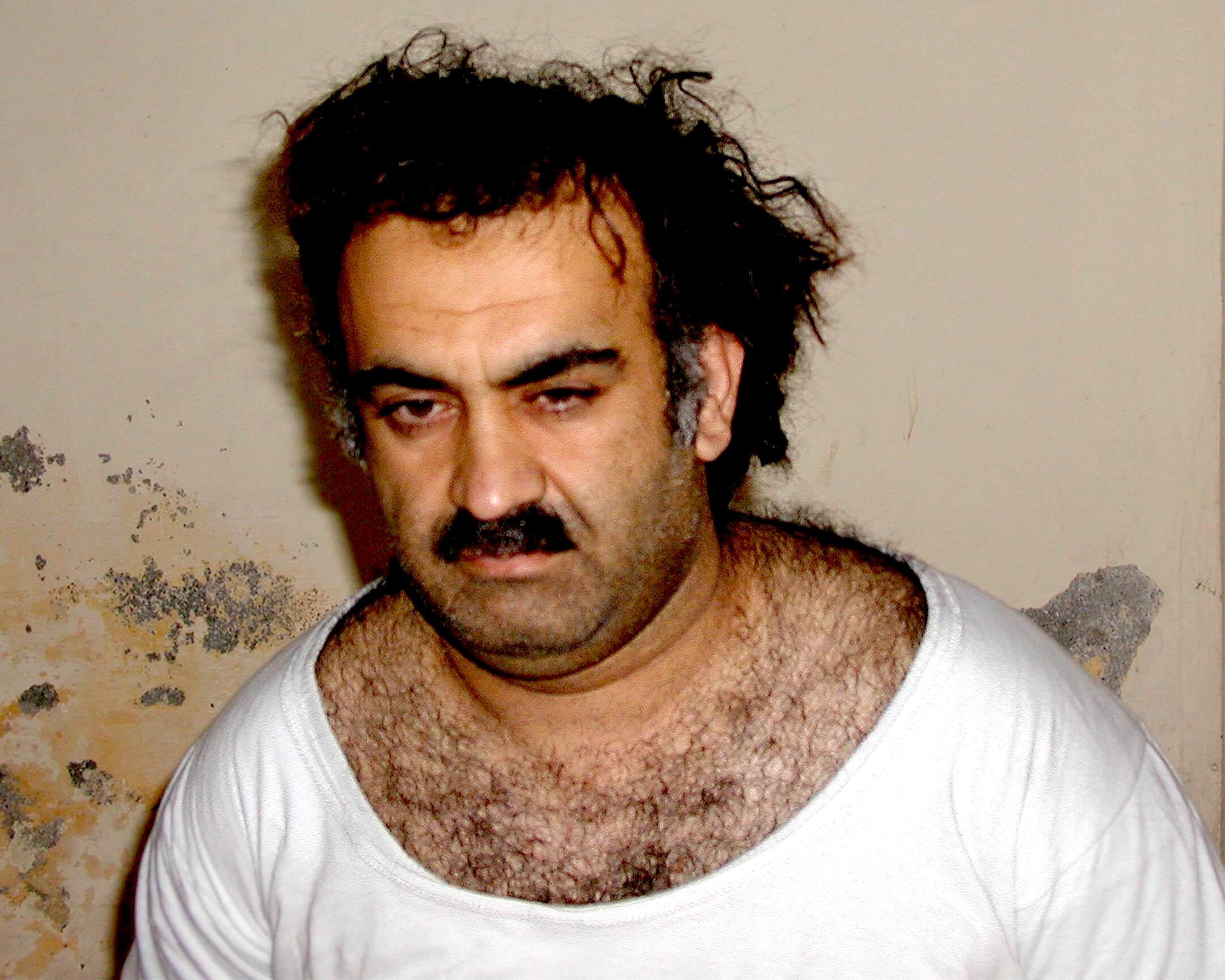
Khalid Sheikh Mohammed in 2003 after his capture. (Wikimedia Commons, Public domain)

Thus, we have a tangled web, tangled because the government deceived the American public and federal judges about its own criminal behavior — the Bush torture regime. The signed contract was initiated and drafted by the same military prosecutors who have been ordered — against their professional judgement — to ask the trial judge to repudiate it.

Those who have seen it have revealed that the agreement contains a poison pill — a clause that survives the agreement even if it is nullified.

That poison pill removes the death penalty from the case, should the case go to trial.

This was apparently made a part of the agreement in case the political winds blow against the government and it gets cold feet. That is probably what happened.

When Secretary of Defense Lloyd Austin — who is not a lawyer — was asked why he ordered the agreement rescinded, he stated that the American public has a right to learn “all” the evidence in the case.

He must have made that comment while ignorant of the terms of the plea agreement, as the agreement requires a full recitation by the defendants of their knowledge of the events leading up to 9/11; and nothing prevents prosecutors from revealing whatever evidence they choose to reveal.

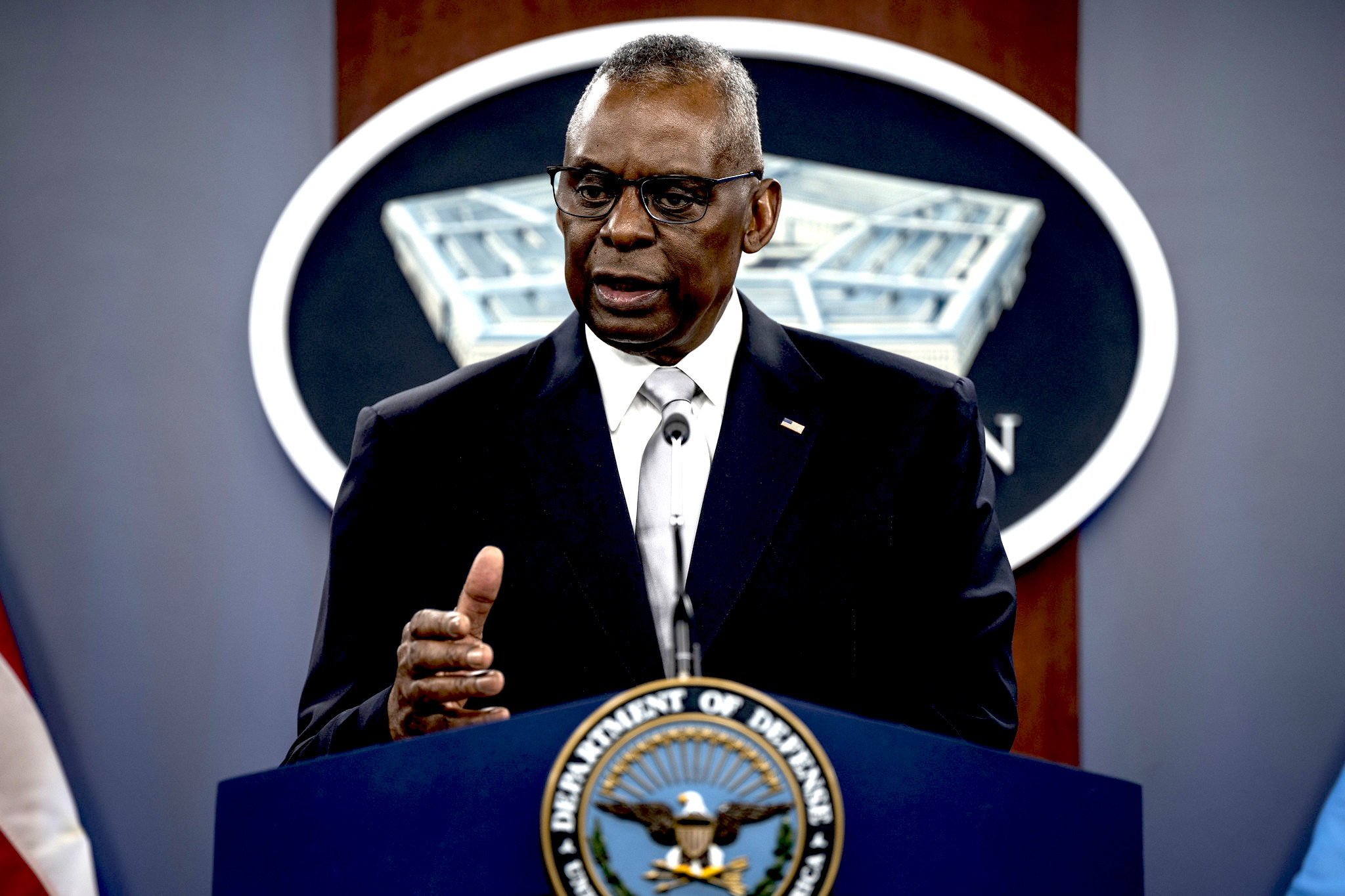
Austin at a Pentagon press briefing in February. (DoD, Alexander Kubitza)

Moreover, the Pentagon’s own team of prosecutors have warned against the public revelation of “all” the evidence in the case because the evidence of stomach-churning torture will expose war crimes for which there is no statute of limitations.

Stated differently, if this case is tried in the traditional way as opposed to the entry of a plea agreement with the defendants’ recitation under oath of their knowledge of the crimes, former President George W. Bush himself and others in his administration, in the C.I.A. and in the military could be indicted and tried in foreign countries for war crimes.

As well, there will be blowback against American troops now stationed abroad, most of whom were not born when Bush ordered torture and deception and invasions of Afghanistan and Iraq. His “don’t mess with Texas” presidential style continues to haunt today. He failed to understand that the problem of searching the world for monsters to slay is that the monsters you find will follow you home.

Adding to the jurisprudential oddities here is the intrusion of Congress. When President Barack Obama revealed his intention to close Gitmo — it costs half a billion dollars a year to operate — Congress enacted a statute that prohibited the removal of the defendants from Gitmo to the American mainland for any reason, including the infliction of capital punishment.

That statute is probably unconstitutional as violative of the separation of powers. Just as the president cannot tell Congress when and how to vote, Congress cannot tell the president how to manage federal prisons or prosecutions.

Gitmo was a Devil’s Island, flawed from its inception. More than 100 years ago, the U.S. leased the land on which Gitmo is located from Cuba. When the lease ran out, the U.S. refused to leave. Bush’s lawyers advised him that if he tortured and prosecuted in Cuba, federal laws didn’t apply, the Constitution wouldn’t restrain him and, best of all, those pesky federal judges couldn’t interfere with him.

In five cases, the Supreme Court rejected Bush’s arguments for evading the Constitution. Bush has visited upon all of his successors a nearly insoluble jurisprudential mess. A mess born out of antipathy to the Constitution he swore to uphold and the knee-jerk bravado apparently integral to his persona.

Gitmo is a tragic example of what happens when the American public entrusts the preservation of constitutional norms into the hands of those unworthy of that trust and quick to cut constitutional corners in order to persecute unpopular defendants. The Constitution itself was written in large measure to assure that these things can’t happen here. But they do.

Andrew P. Napolitano, a former judge of the Superior Court of New Jersey, was the senior judicial analyst at Fox News Channel and hosts the podcast Judging Freedom. Judge Napolitano has written seven books on the U.S. Constitution. The most recent is Suicide Pact: The Radical Expansion of Presidential Powers and the Lethal Threat to American Liberty. Learn more about Judge Andrew Napolitano here. 

Published by permission of the author.

COPYRIGHT 2024 ANDREW P. NAPOLITANO 

DISTRIBUTED BY CREATORS.COM

The views expressed are solely those of the author and may or may not reflect those of Consortium News.

Please Donate Today to CN’s Fall Fund Drive 


_______________________________________________________________________________________


WATCH: UN Security Council
on Widening Mideast War


The Security Council met this morning at 10 am EDT. Watch the replay here. 
Read here...


Amir Saeed Iravani, Iran’s U.N. envoy speaking to Security Council Wednesday. (UNTV Screenshot)


_______________________________________________________________________________________


You can make a donation to Consortium News by


credit card online  or by  mailing a check  to


Consortium for Independent Journalism (CIJ)
2200 Wilson Blvd.
Suite 102-231
Arlington, VA 22201


CIJ is a 501-c-3 tax-exempt organization, so your donations may be tax-deductible in the United States. (You also can direct donations to us through your company's charitible-giving programs.)


consortiumnews.com

Friday, September 20, 2024

SCOTT RITTER: 72 Minutes


SCOTT RITTER: 72 Minutes

U.K. Prime Minister Keir Starmer and U.S. President Joe Biden at the White House last Friday. (Simon Dawson / No 10 Downing Street, CC BY-NC-ND 2.0)

By Scott Ritter
Special to Consortium News

Most Americans approached last weekend thinking about how they would spend the much-anticipated end of the work week with their friends and family.

Few realize how close they came to actualizing the scenario so horrifyingly spelled out in Annie Jacobsen’s alarming must-read book, Nuclear War: A Scenario.

72 minutes.

That is all it takes to end the world as we know it.

That is less time than most movies playing at the local cinema.

Most people could not drive to the local home improvement store to buy the materials needed to do the little repairs around the home that usually wait for the weekend.

Walk the dogs?

Play with the kids?

Forget about it.

72 minutes.

And everything you thought you lived your life for would be dead.

And if you survived?

To quote Nikita Khrushchev, “The survivors would envy the dead.”

Ukraine, together with many of its NATO allies, has been asking for permission from the United States, the United Kingdom, and France to be able to employ precision-guided long-range weapons systems provided by these countries against targets deep inside Russia.

On Sept. 6, at a meeting of the Ramstein Contact Group, a forum where U.S.-NATO military support to Ukraine is coordinated, Ukrainian President Volodymyr Zelensky personally appealed to the group for more weapons support from its Western allies and called on allies to allow Ukraine to use the weapons they provided to strike deeper inside Russia.

Zelensky Seeks ‘Long-Range Capability’

 Zelensky and U.S. Secretary of Defense Lloyd Austin at the Ukraine Defense Contact Group meeting at Ramstein Air Base in Germany, on Sept. 6. (DoD/Chad J. McNeeley)

“We need to have this long-range capability,” Zelensky said, addressing the attendees, who included U.S. Secretary of Defense Lloyd Austin,

“not only on the divided territory of Ukraine but also on Russian territory so that Russia is motivated to seek peace. We need to make Russian cities, and even Russian soldiers think about what they need: peace or Putin.”

Secretary Austin, in comments made afterwards, said he didn’t think the use of long-range missiles to strike inside Russia would help end the war, adding that he expected the conflict would be resolved through negotiations. Moreover, Austin noted, Ukraine had its own weapons capable of attacking targets well beyond the range of the British Storm Shadow cruise missile.

Despite Austin’s pushback, President Joe Biden appeared to be on track to give Zelensky the green light he was looking for regarding the use of British-provided Storm Shadow cruise missiles and U.S.-provided long-range ATACMS (Army Tactical Missile System) missiles for strikes on Russian soil.

On Sept. 11, U.S. Secretary of State Antony Blinken, accompanied by British Foreign Secretary David Lammy, visited Ukraine, where they held meetings with Zelensky and his newly appointed foreign minister, Andrii Sybiha. 

Blinken & Lammy in Ukraine

Blinken and Lammy, on right side of table in center, meeting with Sybiha, opposite them, in Kiev on Sept. 11. (State Department/Chuck Kennedy

Blinken and Lammy, however, failed to make the announcement the Ukrainians were waiting with bated breath to hear. Instead, Blinken and Lammy reiterated the full support of their respective nations to Ukraine’s victory, adding that they would adapt their support to meet Ukrainian needs. “The bottom line is this: We want Ukraine to win,” Blinken said after his meeting with Zelensky.

The stage was now set for Keir Starmer, the prime minister of the United Kingdom, to fly to Washington, D.C., last Friday, where he would meet with Biden and jointly agree to give Ukraine permission to use Storm Shadow and ATACMS against targets inside Russia.

Starmer Goes to Washington

Starmer with members of the press on his way to Washington last Friday. (Simon Dawson / No 10 Downing Street, CC BY-NC-ND 2.0)

Russia has long made it clear that it would view any nation which authorized the use of its weapons to strike Russia as a direct party to the conflict. 

In comments to the media in Russia  last Thursday — one day before the Biden-Starmer meeting at the White House — Russian President Vladimir Putin made it clear that any lifting of the restrictions on Ukrainian use of U.S.- and U.K.-provided long-range weapons would change “the very essence of the conflict.”  He said:

“This will mean that NATO countries, the United States, European countries are fighting Russia. And if this is the case, then…we will make appropriate decisions in response to the threats that will be posed to us.”

Kremlin spokesperson Dmitry Peskov, speaking after Putin’s announcement, noted that the Russian president’s words were “extremely clear” and that they had reached their intended audience — U.S. President Biden. 

Biden didn’t seem happy about the message. In responding to a question from reporters prior to his meeting with Prime Minister Starmer at the White House about what he thought about Putin’s warning, Biden snapped angrily, “I don’t think much about Vladimir Putin.”

Putin in a meeting in Moscow last week.  (Kremlin)

The evidence suggests otherwise.

At a White House press conference that same day, Robbie Gramer, the White House correspondent for Politico, asked John Kirby, the spokesperson for the National Security Council, “Do you take Putin at his words that strikes into Russian territory by U.S. — or British — or French-made missiles would actually expand the war?”

Kirby’s response was telling in many ways. “It’s hard to take anything coming out of Putin’s face at his word.  But this is not rhetoric that we haven’t heard from him before, so there’s really not a lot new there.”

Gramer followed up: “So, in other words, you know, in the deliberations about this long-range strike, threats from Putin are not a big factor for you guys in your deliberations on this?”

“Well,” Kirby responded,

“you didn’t let me finish the answer, so let me try…I never said, nor have I — would we ever say that we don’t take Mr. Putin’s threats seriously.  When he starts brandishing the nuclear sword, for instance, yeah, we take that seriously, and we constantly monitor that kind of activity.  He obviously has proven capable of aggression. 

He has obviously proven capable of escalation over the last, now, going on three years. So, yeah, we take these comments seriously, but it is not something that we haven’t heard before.  So, we take note of it.  Got it.  We have our own calculus for what we decide to provide to Ukraine and what not.  And I think I’d leave it there.”

Just to drive the point home, Russia’s ambassador to the United Nations, Vassily Nebenzia, told the Security Council last Friday that NATO would “be a direct party to hostilities against a nuclear power,” if it allowed Ukraine to use longer range weapons against Russia. “You shouldn’t forget about this and think about the consequences,” he declared.

‘Don’t Play With Fire’

Nebenzia in June. (UN Photo/Manuel Elías)

The finishing touches on driving home the seriousness of Putin’s warning was left to the Russian ambassador to the United States, Anatoly Antonov. Speaking to the Russian media also last Friday Antonov said he was surprised that many American officials believed that 

“if there is a conflict, it will not spread to the territory of the United States of America. I am constantly trying to convey to them one thesis that the Americans will not be able to sit it out behind the waters of this ocean. This war will affect everyone, so we constantly say – do not play with this rhetoric.”

Putin’s words had caught the attention of several former U.S. government officials, who had called Antonov for clarification.

“Yesterday’s statements from Vladimir Putin were weighed very carefully here. Several ex-officials called me asking to explain what actually stands behind those statements. I simply replied: ‘Don’t play with fire.’”

Antonov at Arlington National Cemetery in 2018, during a commemoration of the cooperation of U.S., Soviet and Allied armed forces during World War II. (U.S Army/ Elizabeth Fraser, Public domain)

Antonov’s sentiments were likely echoed through existing back-channel communications used by the Department of Defense and the C.I.A.

In the end, the message got through — Biden pulled back from giving Ukraine the permissions it sought.

Most Americans are unaware about how close they came to waking up Saturday morning, only to find that it was their last.

Ukraine Was Ready to Launch

Had Biden yielded to Starmer’s pressure (the British, together with Ukraine and several NATO nations, believed that Putin was bluffing), and signed off on the permission, Ukraine was prepared to launch strikes on Russia that night.

(British soldiers deployed in Ukraine would be needed to operate the Storm Shadows and they are already there, according to German Chancellor Olaf Scholz, who has refused to send similar weapons to Ukraine.)

Russia would likely have responded with conventional attacks on Kiev using new weapons, such as the Avangard hypersonic warhead, which would each deliver a blow equivalent to 26-28 tons of explosives.

Russia would also most likely have struck NATO targets in Poland and Romania where Ukrainian fighters are based. And, lastly, Russia would have struck British military targets, possibly including those on the British Isles.

This would prompt a NATO retaliation under Article 5, using a large number of NATO long-range strike weapons targeting Russian command and control, airfields, and ammunition storage facilities.

The Russian response would most likely involve the launching of more Avangard conventional warheads against NATO targets, including Ramstein airbase and NATO headquarters, as well as airbases from which strikes against Russia were launched.

NATO headquarters in Brussels. (NATO)

At this juncture the United States, using nuclear employment plans derived from a nuclear posture which emphasizes the pre-emptive use of low yield nuclear weapons to “escalate to deescalate”— i.e., force Russia to back down through a demonstration of capability — would authorize the use of one or more low-yield nuclear warheads against Russian targets on Russian soil.

But Russian doctrine has no capacity for engaging in a limited nuclear war. Instead, Russia would respond with a general nuclear retaliation targeting all of Europe and the United States.

Whatever U.S. strategic forces that survived this onslaught would be fired at Russia.

And then we all die.

72 minutes.

And the world ends.

We were one stroke of the pen away from this outcome on Friday, Sept. 13, 2024.

This isn’t a drill.

This isn’t an academic exercise.

This is the real world.

This is life or death.

This is your future held hostage by a madman in Kiev, backed by lunatics in Europe.

The question is — what are we going to do about it?

There is an election on Nov. 5 where the next commander-in-chief of the United States will be selected by “we, the people.”

This person will be the one holding the pen in any future scenario where life or death decisions that could manifest into a general nuclear war will be made.

It is incumbent upon we, the people, to make sure that Americans demand the candidates for this office articulate their policy vision regarding the war in Ukraine, the prospects of peace with Russia, and what they will do to prevent the outbreak of nuclear war.

But they won’t do that if we, the people, remain silent about the issue.

Stand up.

Speak out.

Demand to be heard.

72 minutes is all it takes to end life as we know it.

We almost all died over the weekend of Sept. 14-15, 2024.

What are we going to do to make sure that doesn’t happen again?

Scott Ritter is a former U.S. Marine Corps intelligence officer who served in the former Soviet Union implementing arms control treaties, in the Persian Gulf during Operation Desert Storm and in Iraq overseeing the disarmament of WMD. His most recent book is Disarmament in the Time of Perestroika, published by Clarity Press.

The views expressed are solely those of the author and may or may not reflect those of Consortium News.

Please Donate Today to CN’s Fall Fund Drive 


CONSORTIUM NEWS


Top News | 'He’s Not Going to Run Unopposed': Sanders Rejects Schumer for Majority Leader

                                                               LOTS OF POSTS IGNORED BY BLOGGER..... OR REMOVED ON THEIR WHIM! ALL POSTS ARE...