Friday, March 13, 2026
■ Today's Top News
"Walking back key regulations for ethylene oxide sterilizer facilities is essentially giving a highly polluting industry a get-out-of-jail-free card," said one campaigner.
By Jessica Corbett
While US Environmental Protection Agency Administrator Lee Zeldin on Friday presented a proposed policy change as a demonstration of the Trump administration’s commitment to “ensuring lifesaving medical devices remain available,” public health advocates warned that relaxing rules on emissions of the cancer-causing gas ethylene oxide puts millions of Americans at risk.
As The New York Times explained: “The move revived a long-running debate about the paradoxical effects of ethylene oxide on public health. While it plays a crucial role in sterilizing lifesaving medical devices like pacemakers and syringes, long-term exposure can cause leukemia and other types of cancer among people who work in or live near medical sterilization facilities.”
The EPA proposal would amend the Biden administration’s 2024 National Emissions Standards for Hazardous Air Pollutants for facilities that use ethylene oxide, which the agency estimated would have eliminated over 90% of dangerous pollution from the gas. The previous policy was cheered by organizations including Earthjustice, which sounded the alarm on Friday.
“The 2024 standards would have delivered enormous public health benefits. EPA knows that ethylene oxide is carcinogenic and determined that sterilizers can install effective and affordable pollution controls,” said Earthjustice senior attorney Deena Tumeh. “EPA has no basis to repeal this well-supported rule. By rolling back the rule, the Trump EPA is bending the knee to the sterilizer industry at the expense of millions of people’s health.”
Darya Minovi, a senior analyst at the Union of Concerned Scientists’ (UCS) Center for Science and Democracy, similarly stressed that “this dangerous decision puts people across the United States and in Puerto Rico at a higher risk of breathing dangerous fumes known to cause respiratory irritation, nausea, blurred vision, headaches, and various cancers. Children are especially vulnerable to the cancer-causing harms of ethylene oxide exposure.”
As Minovi detailed:
According to UCS analysis, nearly 14 million people in the United States live within five miles of at least one commercial sterilization facility, and more than 10,000 schools and childcare facilities fall within those areas. These communities are disproportionately made up of people of color or those who do not speak English as a first language...
This decision is a reckless and self-serving handout to big industry, which asked for this rule to be rolled back. This process sidestepped community input from the start and is an affront to communities that have unknowingly lived with ethylene oxide exposure for decades. These actions show, yet again, that this administration has little to no regard for the health and welfare of working people or any interest in protecting children from exposure to toxic chemicals.
Minovi declared that “ethylene oxide emissions controls need to be strengthened—not dismantled,” an argument echoed by Jane Williams, executive director of California Communities Against Toxics and chair of the Sierra Club National Clean Air Team.
“Walking back key regulations for ethylene oxide sterilizer facilities is essentially giving a highly polluting industry a get-out-of-jail-free card. Sterilizers are some of the largest, most toxic chemical manufacturing facilities in the country,” said Williams. “Rather than regressing on key protections, these facilities need even more controls in place to ensure the safety of workers and nearby communities.”
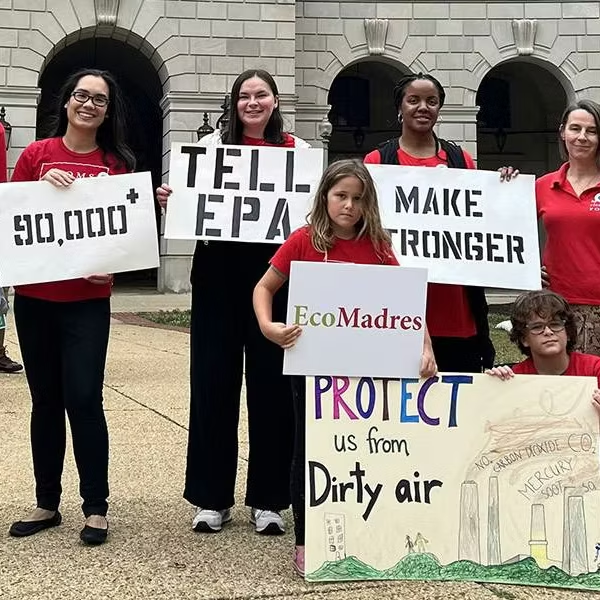
People who live near sterilizer facilities also spoke out against the proposed rule, which now faces a 45-day public comment period.
“We understand that industry applied heavy pressure to weaken the previously finalized rule. We also understand that industry remains more concerned with their profits than the lives of those who live near sterilizer facilities, like my community in Laredo,” said Tricia Cortez, executive director of Rio Grande International Study Center in Texas.
“Sterilizer facilities like Midwest must be held accountable for their dangerous, cancer-causing emissions,” she said. “We need an EPA that works to protect us, the people, not financial interests and corporations that continue to cause so much harm to so many.”
Victor Alvarado, founder and coordinator for Comité Diálogo Ambiental, said that “I remember the EPA informing us that Steri-Tech’s ethylene oxide emissions in my hometown of Salinas, Puerto Rico, were so high that we had one of the highest rates of toxic air cancer risk in the United States... Eliminating the new protections against ethylene oxide emissions is unjust.”
The EPA proposal comes after President Donald Trump in July signed a series of proclamations easing pollution rules for over 100 facilities focused on energy, chemical manufacturing, iron ore processing, and sterile medical equipment. His “regulatory relief,” as the Republican called it, applied to dozens of sterilization plants.
The Southern Environmental Law Center and Natural Resources Defense Council responded by filing a federal lawsuit on behalf of CleanAIRE NC, Sustainable Newton, Savannah Riverkeeper, and Virginia Interfaith Power & Light.
“We always knew the presidential exemptions issued last year were part a broader plan to put the interests of corporate polluters above the health and well-being of American families,” Sustainable Newton president Maurice Carter said Friday. “But we won’t stop fighting to protect our community by demanding commonsense, reasonable measures that even the EPA has said would reduce harmful emissions by 90% and lower cancer risks by 92%.”
"Bringing this war to an end," said one former US intelligence analyst, "requires recognizing it can still get much, much worse."
By Stephen Prager
In what has been described as a potential “major escalation” of the Trump administration’s war with Iran, Defense Secretary Pete Hegseth has reportedly approved a request from US Central Command to move more warships and thousands of Marines to the Middle East following Iran’s attacks on vessels in the Strait of Hormuz.
Citing three US officials, The Wall Street Journal reported on Friday that the US was sending “an element of an amphibious ready group and attached Marine expeditionary unit, typically consisting of several warships and 5,000 Marines and sailors.”
According to the Journal, the Japan-based USS Tripoli and its attached Marines are already headed to the Middle East.
While the Journal did not explicitly report that the operation was tied to the volatile situation in the Strait of Hormuz, it noted that “the move comes as Iran’s attacks on the strait have paralyzed traffic through the strategic waterway, disrupting the global economy, driving up gas prices and posing a major military and political challenge for President [Donald] Trump.”
In his first address on Thursday, delivered by a news anchor on Iranian state TV, the country’s new supreme leader, Mojtaba Khamenei, said that “the lever of blocking the Strait of Hormuz must definitely be used” to heighten economic pressure on the US.
Iran’s Islamic Revolutionary Guard Corps (IRGC) has declared that “not a liter of oil” shall pass through the strait, and vowed to attack any ship linked to the US and Israel that may attempt to make the journey.
Iran has reportedly attacked at least six commercial ships in the area since Wednesday, including one marked with a Thai flag that still has three crew members missing. US intelligence sources have also accused Iran of laying mines in the Strait, which Iran has neither confirmed nor denied.
The blockage of the strait, through which about one-fifth of global oil shipments pass each year, has sent the global market into chaos. Prices of Brent crude have surged from under $70 less than a month ago to more than $100 per barrel on the global market, and US gas prices have leaped to $3.63 per gallon on average, up from $2.94 a month ago.
Prices have continued to climb even after the International Energy Agency (IEA) announced its largest-ever coordinated release of oil from nations’ strategic reserves on Wednesday to combat what it called “the largest supply disruption in the history of the global oil market.”
Shashank Joshi, the defense editor at The Economist and a visiting fellow at the Department of War Studies at King’s College London, said that a deployment of such a large Marine force seems to be “a key indicator of a potential ground operation” in Iran.
Trump said earlier this week that he was “nowhere near” sending troops into Iran even as it ramped up threats to block the strait. But privately, he has reportedly been mulling plans to put “boots on the ground” within Iranian territory to accomplish a number of objectives, though officials have characterized them as limited special-operations missions.
Administration officials have reportedly suggested a commando raid on Iran’s nuclear sites to confiscate or sabotage its supply of uranium, according to Axios. They’ve also considered a plan to occupy Kharg Island, which sits 15 miles off Iran’s coast and handles about 90% of its oil exports, serving as an economic “lifeline” for the battered nation.
But Trump has also said that if Iran blocks the strait, “the US Navy and its partners will escort tankers through the strait, if needed.” Chairman of the Joint Chiefs, Gen. Dan Caine, has said the Pentagon is looking at “a range of options” to do this.
In an analysis published Tuesday by Zeteo, Harrison Mann, a former US Army major and executive officer of the Defense Intelligence Agency’s Middle East/Africa Regional Center, suggested that the US may pursue an ambitious plan to “clear Iran’s coastline around the strait” to get tankers moving again.
Mann, who worked under the Biden administration but resigned in protest of its support for the genocide in Gaza, said this plan would require “an indefinite occupation–otherwise missile trucks could just get in position after US forces leave.” Doing this, he added, would require “a full-fledged invasion, possibly beyond even the 10,000 or so rapid-response forces at Trump’s disposal.”
“All of these ground operations risk high casualties while failing to accomplish their missions,” Mann said. “That’s a feature, not a bug. Even if one of these operations met its objectives, troops in peril behind enemy lines demand resupply, evacuation, and revenge, which puts more troops in peril behind enemy lines, and so on.”
The movement of more troops comes as the US public expresses strong disapproval of Trump’s war with Iran. In a Quinnipiac poll published this week, 53% of registered voters said they opposed US military action against Iran, while just 40% approved.
About 74% said they feared that the war would cause oil and gas prices to rise, and 71% feared that the war would last “months” or longer.
Trump’s former chief strategist, Steve Bannon, who remains one of his top allies in media, said on his War Room podcast that deploying such a large military force “sends a signal to Iran, but it also sends a signal to the American people: This is a major escalation.”
Mann said that putting troops on the ground in Iran will only “ensure that Trump can’t back out easily, which is exactly what [Israeli Prime Minister Benjamin] Netanyahu, [US Sen.] Lindsey Graham (R-SC), and their ilk need to fracture Iran.
“Bringing this war to an end,” Mann said, “requires recognizing it can still get much, much worse, refusing to fall for the promise of ‘small special ops raids,’ and calling these courses of action what they are: a prelude to forever war.”
"If high costs weren’t already bad enough, Donald Trump’s unnecessary war in Iran has sent gas prices through the roof," said one House Democrat.
By Jake Johnson
Data released Friday showed that US consumer sentiment hit a new low for 2026 and the American economy expanded by just 0.7% in the fourth quarter of last year, indicators that experts said are only going to get worse due to the cascading impacts of President Donald Trump’s deadly, illegal, and expensive war on Iran.
“President Trump is flooring the gas pedal as he drives our economy over a cliff,” Alex Jacquez, chief of policy and advocacy at the Groundwork Collaborative, said in response to the new data, some of which was collected before the US and Israel launched their assault on Iran, sparking a regional conflict, sending oil prices surging, and destabilizing the global economy.
“As bad as this week’s data is,” Jacquez added, “it understates reality for exhausted consumers who have been hit with even more price hikes caused by the president’s intentional turmoil in the weeks since this data was collected. Instead of working to bring down ever-increasing prices at the pump, the grocery store, and the doctor’s office, the president is betraying working families as his illegal war with Iran stokes inflation.”
Figures released Friday by the US Commerce Department’s Bureau of Economic Analysis (BEA) showed that real gross domestic product increased at half the rate predicted by previous government estimates.
“Real GDP was revised down 0.7 percentage points from the advance estimate [of 1.4%], reflecting downward revisions to exports, consumer spending, government spending, and investment,” the BEA said in a news release.
NBC News noted that “economists had expected the revision to go the other way—and show stronger growth.”
The BEA also published data showing that the personal consumption expenditures price index, a key inflation reading, rose at an annualized rate of 2.8% in January.
“Families across the United States are struggling to make ends meet in Donald Trump’s economy,” Rep. Brendan Boyle (D-Pa.), the top Democrat on the House Budget Committee, said in a statement. “If high costs weren’t already bad enough, Donald Trump’s unnecessary war in Iran has sent gas prices through the roof.”
A Harris Poll opinion survey conducted for The Guardian and released Friday found that more than 70% of US voters believe Trump’s tariff regime has driven up their costs.
“In the short run, the economic impact of a sustained loss of Gulf oil could be very ugly.”
Consumer sentiment, meanwhile, continued its steady decline in March, falling about 2% compared to last month, according to the University of Michigan’s Surveys of Consumers. Roughly half of the interviews conducted for the consumer sentiment report were completed before the US and Israel began attacking Iran on February 28.
Joanne Hsu, director of the Surveys of Consumers, noted that “interviews completed prior to the military action in Iran showed an improvement in sentiment from last month, but lower readings seen during the nine days thereafter completely erased those initial gains.”
“Gasoline prices have exerted the most immediate impact felt by consumers, though the magnitude of passthrough to other prices remains highly uncertain,” Hsu noted. “A broad swath of consumers across incomes, age, and political affiliation all reported declines in expectations for their personal finances, down 7.5% nationally.”
“Interviews completed after February 28 exhibited higher inflation expectations than those completed before that date,” Hsu added.
The first six days of Trump’s war on Iran cost US taxpayers over $11 billion, and the price tag is set to rise exponentially as the administration deploys thousands of additional troops to the Middle East and continues aggressively bombing Iran, which has retaliated in part by closing the Strait of Hormuz—choking off the flow of oil through the critical trade route and sending prices surging.
The Trump administration has sought to downplay skyrocketing oil prices even as it takes emergency action in an attempt to bring them down. The International Energy Agency said Thursday that the US-Israeli assault on Iran sparked “the largest supply disruption in the history of the global oil market.”
Economist Paul Krugman warned Friday that “oil prices could easily go much higher,” noting, “The US and other major economies are a lot less oil-dependent than they were in the 1970s, and even at $100 a barrel oil prices are not high enough to provoke a major crisis.”
“In the short run, the economic impact of a sustained loss of Gulf oil could be very ugly,” Krugman wrote. “I’ve seen some alarmists warn that a long war in the Gulf could lead to oil at $150 a barrel. That looks low to me.”
"When will President Trump understand that Americans want lower prices, not more unnecessary wars?"
By Jessica Corbett
As President Donald Trump continued to face global criticism for his and Israel’s joint assault on Iran, a trio of US Senate Democrats on Friday introduced a war powers resolution intended to prevent him from also attacking Cuba without congressional authorization amid talks with the island’s government.
Despite the US Constitution empowering Congress to declare war, Trump this year has not only launched Operation Epic Fury against Iran but also killed dozens of Venezuelans and Cubans in a military invasion to abduct President Nicolás Maduro, sent troops to Ecuador for a joint campaign to combat “narco-terrorism,” and blown up over 150 people allegedly trafficking drugs in Caribbean Sea and Pacific Ocean in bombings that critics have called “war crimes, murder, or both.”
“When will President Trump understand that Americans want lower prices, not more unnecessary wars?” asked Sen. Tim Kaine (D-Va.), who is spearheading the Cuba measure with Sens. Adam Schiff (D-Calif.) and Ruben Gallego (D-Ariz.). A member of the Senate Armed Services and Foreign Relations committees, Kaine also led the war powers resolution on Iran that Sen. John Fetterman (D-Pa.) and nearly all Republicans blocked last week.
Despite constitutional limits, Trump “operates with the belief that the US military is a palace guard, ordering military action in the Caribbean, Venezuela, and Iran without Congress’ authorization or any explanation for his actions to the American people,” said Kaine. “We shouldn’t risk our sons and daughters’ lives at the whims of any one person.”
The Biden administration intended to cut Cuba from the State Sponsors of Terrorism list, but Trump reversed course after returning to office last year and revived a list of “restricted entities” established during his first term. US Secretary of State Marco Rubio, the son of Cuban immigrants and longtime supporter of regime change on the island, also expanded a visa policy targeting Cuba’s international medical missions.
Since Trump’s operation to abduct Maduro and seize control of his country’s nationalized oil industry—which led to protests in Venezuela and Cuba—Trump has also ramped up the United States’ decades-long economic blockade against the island, cutting off shipments of Venezuelan oil, with dire consequences for the Cuban people.
As Marta Hurtado, a spokesperson for United Nations High Commissioner for Human Rights Volker Türk, explained last month: “Given the dependence of health, food, and water systems on imported fossil fuels, the current oil scarcity has put the availability of essential services at risk nationwide. Intensive care units and emergency rooms are compromised, as are the production, delivery, and storage of vaccines, blood products, and other temperature-sensitive medications.”
Meanwhile, Trump and his allies have signaled they’re considering an attack on the island. Trump told reporters late last month that “the Cuban government is talking with us,” but also said that “maybe we’ll have a friendly takeover of Cuba.”
Just days later, after Trump ditched nuclear negotiations with Iran and teamed up with Israel to bomb the Middle Eastern country, Sen. Lindsey Graham (R-SC) declared during a Fox News interview: “Cuba’s next. They’re gonna fall.”
Noting the rising death toll for US service members involved in the war on Iran, Schiff said Friday that “the American people have spoken loud and clear that they do not want any more costly wars of choice that skyrocket prices at home.”
“The president’s saber-rattling toward Cuba makes clear where his sights are next,” he continued. “Congress must make its voice heard, or we risk involvement in another risky war of choice and losing our constitutionally granted authorities forever.”
Gallego also highlighted how Trump’s misadventures abroad are impacting US citizens, as Americans contend with surging gasoline prices on top of high costs for groceries, housing, and health insurance, plus massive cuts to social safety net programs that congressional Republicans and the president imposed with their budget package last year to give more tax cuts to the rich.
“As if the disaster of the Iran War and the resulting spike in oil prices weren’t enough, Trump is now threatening to intervene in Cuba as well,” said Gallego, a former Marine who served in the Iraq War. “He ran on America First, but now it’s clear he’s become a puppet of the war hawks in his party. The American people want nothing to do with nation building—they want lower prices, good healthcare, and affordable homes, not a new war to satisfy neoconservatives in South Florida.”
The senators announced their resolution as Cuban President Miguel Díaz-Canel publicly confirmed that his government recently held “sensitive” talks with the Trump administration “to determine the willingness of both parties to take concrete actions for the benefit of the people of both countries. And in addition, to identify areas of cooperation to confront threats and guarantee the security and peace of both nations, as well as in the region.”
According to The Associated Press:
US Secretary of State Marco Rubio and top aides met late last month in the Caribbean with the grandson of retired Cuban leader Raul Castro, two US officials said Friday shortly after Díaz-Canel spoke.
The US officials, who spoke on condition of anonymity because of the sensitivity of the discussions, said that Rubio had met secretly with Raúl Guillermo Rodriguez Castro on the sidelines of a Caribbean Community leaders meeting in St. Kitts and Nevis.
Rubio’s meeting coincided with a shootout involving men on a Florida speedboat and Cuban forces that left five suspects dead and five others detained in Cuba, facing terrorism charges. The AP noted that when asked about that case on Friday, Díaz-Canel “said that FBI officials would visit Cuba soon as both countries continue to share information on the incident.”
During his remarks to reporters, Díaz-Canel also noted the “tremendous” impact of the oil blockade, which has affected communications, education, healthcare, and transportation.
Sharing a clip of the Cuban leader’s comments on social media, Progressive International co-general coordinator David Adler said: “I am asking you to imagine how a civilian population of over 10 million people can survive without any access to imported energy for three whole months. In Cuba, the United States is committing the most barbaric war crimes known to man—and Washington simply shrugs it off.”
Sen. Maggie Hassan said that while paying back businesses hit by Trump’s illegal tariffs, the administration “refuses to provide relief for families.”
By Stephen Prager
American families could pay a combined $330 billion this year as a result of President Donald Trump’s aggressive tariff policy, according to a report released Friday by the Democratic minority on the Joint Economic Committee in Congress.
Although the Supreme Court ruled Trump’s use of emergency powers to pass sweeping tariffs illegal last month, US Treasury Secretary Scott Bessent has said the government is expected to bring in “virtually unchanged tariff revenue in 2026” compared with the previous year, as Trump has continued to enact new tariffs using different legal authorities in hopes of getting around the high court’s ruling.
If Bessent’s projection holds true, the committee’s Democrats estimated that the average US household would pay more than $2,500 in tariff costs this year, a considerable increase from the more than $1,700 the committee found Americans paid in 2025.
The minority said it reached its findings based on official data on the amount of tariff revenue collected by the Treasury since 2025 combined with independent research from the nonpartisan Congressional Budget Office (CBO), which found last month that only about 5% of tariff costs are borne by foreign entities. About 30% is taken on by domestic companies, and the remaining 65% is passed on to consumers.
There is already somewhat of an answer in the works for businesses to recoup the illegal duties they’ve had to pay. Earlier this month, the US Court of International Trade (CIT) ruled that the Treasury Department and Customs and Border Protection must return $166 billion to around 330,000 importers hit by tariffs, including thousands of companies that have filed lawsuits seeking to recover their money.
However, the Trump administration has said it could take more than 4.4 million hours to process all refund requests for more than 53 million entries subject to the now-illegal tariffs.
On Thursday, Brandon Lord, an official with US Customs and Border Protection responsible for tariff collections, informed the court that CBP is about 40-80% done creating a system that will allow importers and brokers to submit refund requests. He said in a filing last week that it could be operational as soon as mid-April.
But Sen. Maggie Hassan (D-NH), the ranking member of the joint committee, lamented on Friday that while businesses are going to be reimbursed with interest, “the Trump administration refuses to provide relief for families” and is instead “choosing to institute new tariffs that will push prices even higher.”
On Thursday, Sen. Martin Heinrich (D-NM), another committee member, introduced a bill to create a new tax rebate for individuals and families hit by tariffs.
The so-called “Working Families Refund” would provide a $600 rebate to individuals earning $90,000 or less annually and to head-of-household filers earning $120,000 or less. Joint filers earning $180,000 or less per year would receive a $1,200 rebate. Each family would also receive an additional $600 for each dependent child.
“This is money that belongs to working families—not the CEOs of Walmart or Amazon or any other big corporation,” Heinrich said.
Trump has pressed ahead with his tariffs despite their rising unpopularity. In an NBC News poll last week, 55% of voters said the tariffs have hurt the economy, while just 33% said they have helped. And as his newly launched war with Iran has heightened economic instability, 62% of voters said they disapproved of his handling of inflation and the cost of living.
Seeking to stop Trump from squeezing a political win out of his policy’s failure, Heinrich’s bill also forbids the president from putting his own name on the tariff rebate checks, as he famously did with Covid-19 stimulus checks sent months before the 2020 election.
“The president may call the affordability crisis a ‘hoax,’ but working people feel it every time they pay for groceries or everyday essentials,” Heinrich said. “This bill will return the money lost to Trump’s tariffs back to the people who paid the price.”
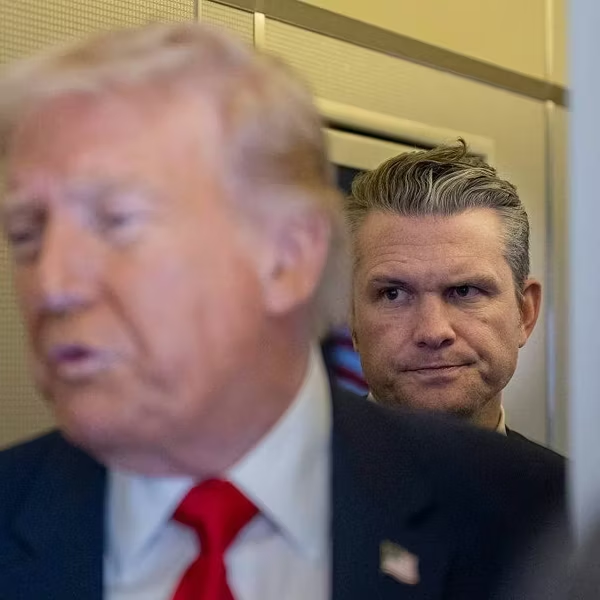
Sens. Chris Van Hollen and Elizabeth Warren make the case for the urgent ouster of President Donald Trump's Defense Secretary.
By Jon Queally
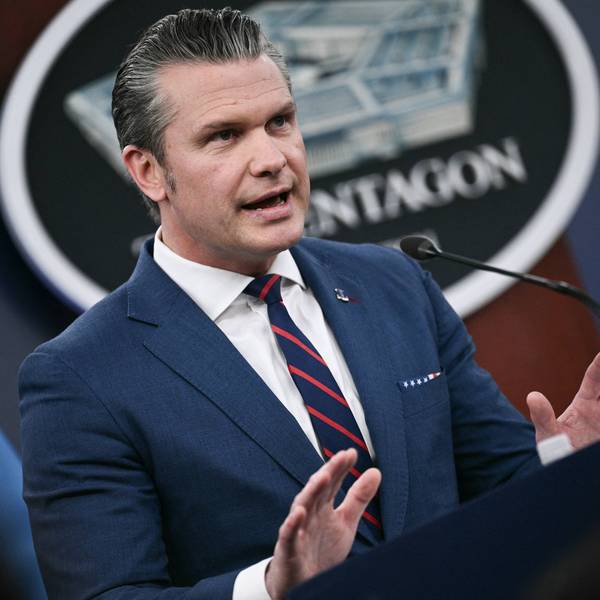
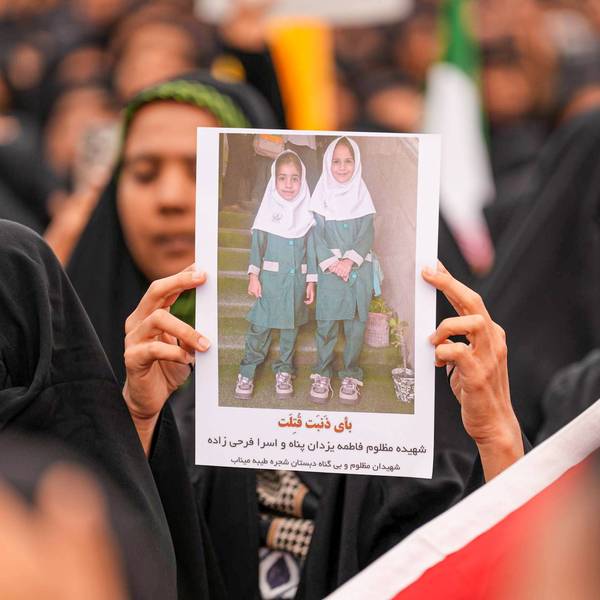
“Pete Hegseth needs to be fired—immediately,” argues US Sen. Chris Van Hollen in a video statement posted Thursday night alongside Sen. Elizabeth Warren, who also backs the demand. Their joint call arrived as global outrage mounts over the bombing of a Iranian school on Feb. 28 that killed upwards of 175 civilians, mostly young children.
Warren cited preliminary findings of a Pentagon report out this week that determined the US was the highly likely culprit behind the school massacre in the southeastern city of Minab, she noted, “killing mostly little girls between the ages of seven and 14.”
Human rights groups have condemned the bombing of the school—which had happened on the very first day of Trump’s unprovoked attack on Iran—as a possible “war crime” that demands independent investigation. Trump, for his part, has repeatedly lied about the bombing, claiming it was Iran who bombed the school, despite having access to internal intelligence assessments that appear to say otherwise.
Rep. Rashida Tlaib (D-Mich.) on Wednesday said there was more than enough evidence to conclude that the US was behind the attack, with reports bubbling up from inside the Pentagon only helping to confirm what outside analysts had determined. “Trump should be impeached. Hegseth should be fired,” Tlaib said. “And the administration must be held accountable in international courts for their heinous war crimes.”
For Van Hollen and Warren, the massacre in Minab is only the latest and most gruesome example of the US military’s bloodthirsty and careless conduct under Hegseth, whose time at the Pentagon has been marked by controversy and accusations of human rights abuses, national security blunders, and violations of international law as a matter of policy.
“We had ‘Signalgate,’ where he put out troops at risk,” says Van Hollen in the video, a reference to Hegseth using a public encryption communication tool to share national security details of a military operation that had yet to be carried out.
“We had him blowing up ships in the Caribbean,” he continues, attacks that have killed over 160 people and been called nothing short of murder by human rights experts. “We had them targeting defenseless swimmers” who survived some of those attacks, said Van Hollen.
“That’s right,” Warren interjects in the video, “with no accountability” for any of that behavior. On top of all that, Van Hollen adds, Hegseth has “no idea what he’s doing in this war in Iran. And now an American missile hit an Iranian school, killing about 150 innocent school kids.”
Hegseth has aggressively denounced restrictive “rules of engagement” for the military—calling such guardrails “stupid” and disparaging what he has termed “woke” warfare. As The New York Times details Friday, Hegseth’s entire career has been colored by his criticism of what he views as the restrictive nature of rules designed to curb atrocities. Now serving as Secretary of Defense, he has been empowered to put his theories into action:
[Hegseth] has tried to reshape Pentagon culture, reveling in lethality with “no apologies, no hesitation.” He has portrayed this approach as a “warrior ethos,” one that is tough and manly.
He came up as an Army infantry officer and, as he wrote in his 2024 memoir “The War on Warriors,” loathed strict rules of engagement imposed to minimize risk to civilians, seeing heightened standards for when his platoon could open fire as putting soldiers at greater risk on the battlefield. He blamed judge advocate general lawyers, or JAGs, for such rules — even though it is commanders, not lawyers, who issue them.
Mr. Hegseth later continued that line of thinking as a Fox News contributor and host and as an advocate for U.S. service members charged with war crimes. In his 2024 book, he questioned the need to obey the Geneva Conventions and derisively referred to military lawyers as “jagoffs.”
In the video with Van Hollen, Warren says the key reason behind the call for his immediate ouster has to do with Hegseth’s hostility toward mechanisms designed to mitigate “civilian harm” during war time or other military operations.
As legislators, Van Hollen and Warren describe how they helped put in place stronger rules to prevent civilian harm. “Whenever the military is thinking about an attack,” says Warren, “where there are civilians in the area and innocent people could get harmed, it’s how to think through ‘What are the risks? Are there ways to minimize the risks? Have we checked and double checked?’”
“But what did Pete Hegseth do?” asks Warren. To which Van Hollen answers: “Hegseth came in and he dismantled the whole system. He said they were ‘stupid rules of engagement.’ But we know rules of engagement are intended to prevent civilian harm, they’re intended to prevent war crimes.”


















No comments:
Post a Comment
Note: Only a member of this blog may post a comment.