|
|
| |
 |
|
|
Presented by
|  |
|
|
|
|
|
|
|
|
|
“Saying he’s gonna call the military out is just ridiculous. That’s just his threatening and intimidating communities. He also called for his MAGA supporters to go out as well, and saying something like that is essentially inviting violence. The president is consistent so I don’t think anything that comes out of his mouth surprises me. I think he wants to show he can get tough. So I just think that is sad.” — Rep. Karen Bass (D- Calif.), chair of the Congressional Black Caucus
“I would say that the president’s comments in the Rose Garden were important. They were significant. They were heartfelt. I think they led us in the right direction. We need to hear more like that from the president because frankly, the country rallies around our chief executive when he speaks about bringing the American family together. So I thought what he said in the Rose Garden was important, it was powerful, and it was necessary.” — Sen. Tim Scott (R-S.C.), to Fox News, when asked for his thoughts on Trump’s remarks
|
| Protests and the pandemic |
|
MANY CRISES, OR JUST ONE? — In just a few short months, the pandemic has killed more than 100,000 Americans and thrown more than 40 million Americans out of a job. It’s not a step too far to say that it’s also driving the massive civil unrest across the country. Are we looking at multiple crises, or just one — the pandemic — with many faces?
The videotaped killing of George Floyd set off the waves of protest that have continued into this week. This is not the first time that protests have erupted over police brutality. But Covid-19 created the environment that made these protests widespread and powerful. People are out of work, frustrated with stay-at-home restrictions, juggling child care with their jobs, getting sick or fearful of getting sick, experiencing the death of loved ones without being able to mourn. Floyd’s death came when people were suffering from a social disruption unlike any in memory.
Minorities have been harder hit by that disruption. Before the virus, they were already more likely to be incarcerated or homeless; less likely to have health insurance, job security and paid sick leave. Now they are more likely to get sick and die from Covid, more likely to lose their job and more likely to be arrested for violating virus-related restrictions. Black Americans have suffered a quarter of deaths but account for 13 percent of the population in the 40 states releasing data on race, according to APM Research Lab.
Protestors are upset about more than George Floyd. When the pandemic hit, people were told to go home and stay home. But low-income Americans, who are disproportionately racial minorities, didn’t have savings to buy $400 worth of diapers and toilet paper and hand sanitizer to keep them stocked up for weeks, said Natalia Linos, a social epidemiologist and director of the FXB Center for Health and Human Rights at Harvard University. Many low-income workers still had to go to their jobs in grocery stores or meat-packing plants or in nursing homes — and use public transit to get there. In some instances, Linos said, the police forcibly pulled people off of buses for not wearing a mask, rather than handing out masks.
This could be a ‘turning point.’ Sherman James, a professor emeritus in public policy at Duke University, said it was taboo to talk about racism when he entered the field of epidemiology in the 1970s. James came up with the theory that racial and socioeconomic disparities in hypertension and other health conditions are the result of the stress African Americans experience in overcoming substantial odds and coping with daily racism.
African Americans have long been “fed up” with inequality, James said, but the pandemic along with the video of Floyd’s murder have made it obvious. White people have become more sympathetic, he said, because they too are affected by Covid and the related crises.
“People are saying now that we can’t go back to normal,” he said “There’s too much at stake. If this is not a turning point, heaven help us.”
|
|
| |
A message from PhRMA:
While America’s biopharmaceutical companies are working around the clock to develop a treatment for COVID-19, companies are also expanding efforts to help patients access other medicines they need. PhRMA’s Medicine Assistance Tool was built to connect patients with resources that may help lower out-of-pocket costs. |
| |
|
|
A demonstrator shakes hands with a police officer during a protest Sunday in Kansas City, Mo. | Getty Images
|
|
|
|
BACK TO THE BALLOT BOX — Voters in nine states plus the District of Columbia go to the polls Tuesday as campaigning springs back to life after three months in dormancy, senior campaign and elections editor Steve Shepard writes. Joe Biden will pad his delegate total, but the most closely watched primaries by far are down the ballot — including one that could spell the defeat of an incumbent congressman, Republican Steve King of Iowa, whom members of his own party have described as a bigot. We’ll also learn whether Senate Democrats can shepherd their desired candidate through a tricky Iowa primary, and if former CIA agent Valerie Plame will be coming to Congress. Going to the polls are Idaho, Indiana, Iowa, Maryland, Montana, New Mexico, Pennsylvania, Rhode Island and South Dakota — and D.C., where polls are scheduled to be open past a new curfew imposed by Mayor Muriel Bowser, but it will be OK to be out to vote.
|
|
| |
HAPPENING TOMORROW AT 9 a.m. EDT – HOW FAST, HOW SOON: REBUILDING AMERICA'S ECONOMY PART II. Join POLITICO chief economic correspondent Ben White tomorrow for a virtual interview with Senator Tim Scott, who sits on the Senate Finance Committee. Senator Scott will discuss what additional measures are needed to combat the economic fallout from the pandemic, the role that tax breaks for low-income neighborhoods can have in the recovery, and his work with the Trump administration to address the disproportionate impact that Covid-19 has had on minority communities. REGISTER HERE.
|
| |
| |
|
|
|
DEADLY INTERSECTION — Demonstrations and riots across the country following Floyd’s death are going to make the pandemic even worse, Surgeon General Jerome Adams told health care reporter Sarah Owermohle today. “Based on the way the disease spreads, there is every reason to expect that we will see new clusters and potentially new outbreaks moving forward,” Adams said. Many protesters have worn masks. Some have distributed hand sanitizer. But hundreds or sometimes thousands of people have gathered in close proximity to protest police brutality over the past week, so it will be especially important to increase testing and personal protective gear across the states, Adams said. He also said people’s concerns about Floyd need to be heard, and he expressed concern about the long-term consequences of racism and the pandemic on communities of color.
The ‘boogaloo’ — Anarchist and militia extremists could try to exploit the recent nationwide protests spurred by the death of Floyd, the Department of Homeland Security warned in an intelligence note sent to law enforcement officials around the country, national correspondent Betsy Woodruff Swan and national security correspondent Natasha Bertrand report. The memo, dated May 29 and marked unclassified/law enforcement sensitive, cites “previous incidents of domestic terrorists exploiting First Amendment-protected events” as one reason for DHS’ concern of additional targeted violence by “domestic terrorist actors.” Citing the FBI, it also reveals that on May 27, two days after Floyd’s death, “a white supremacist extremist Telegram channel incited followers to engage in violence and start the ‘boogaloo’ — a term used by some violent extremists to refer to the start of a second Civil War — by shooting in a crowd.” One Telegram message encouraged potential shooters to “frame the crowd around you” for the violence, the document said. Despite the DHS intelligence note, administration officials have focused overwhelmingly on alleged left-wing violence.
‘Most of you are weak’ — Trump declared himself the “president of law and order” and said he would mobilize every available federal force both “civilian and military” as he vowed to put an end to violent protests that have swept the nation for days. In a brief statement delivered from the Rose Garden as law enforcement forces deployed tear gas and clashed with protesters just on the opposite side of Pennsylvania Avenue, Trump ordered governors and mayors to establish “an overwhelming law enforcement presence” until the protests have been quelled, and he threatened to send in the U.S. military to “quickly solve the problem for them.” Earlier in the day, Trump derided the nation’s governors and demanded tougher crackdowns on protesters in the aftermath of another night of violent protests in dozens of American cities. The president spoke to governors on a video teleconference with law enforcement and national security officials, telling the local leaders they “have to get much tougher” amid nationwide protests and criticizing their responses. “Most of you are weak,” Trump said. “You have to arrest people.”
|
|
|
|
|
|
TONE IT DOWN — Trump spent today further fanning the flames of confrontation between protesters and police. And some Republicans are urging the president to extinguish them, Burgess Everett, Marianne LeVine and Andrew Desiderio write. Senate Republicans called for a far gentler touch than the president has displayed so far. Some said they’d like to hear him make a national address, a move Trump had avoided for days despite deepening nationwide angst. Others implored him to empathize with those outraged over the deaths of Floyd and other black Americans at the hands of police, even as he acted to curb riots and looting in big cities.
|
|
|
|
With anguished cities burning, a pandemic raging and the economy cratering, America’s return to human spaceflight this weekend felt like a momentary reprieve from a dystopian news cycle, an upbeat escape from the dysfunction of this world. The SpaceX Crew Dragon’s smooth journey to the International Space Station was a reminder that humanity can still transcend our earthly bonds, and that America is still a nation where capitalist visionaries like SpaceX founder Elon Musk can achieve big dreams.
But while it’s nice to celebrate a glimmer of hope in the dark void that is 2020, it’s worth noting that this visionary’s vision for space is not a cheery one about reaching for the stars or exploring the heavens. Musk created SpaceX as a literal escape hatch for humanity, so we can colonize Mars in case we make too much of a mess on Earth. For all the social media jokes about astronauts Doug Hurley and Bob Behnken fleeing our chaotic hellhole of a planet in the nick of time, they’re advancing Musk’s very serious goal of getting us a Planet B.
The existential threat that Musk built SpaceX to extract us from was not a deadly virus nor an economic depression nor racial turmoil but climate change, a slow-moving disaster that’s been overshadowed by the more immediate disasters engulfing the U.S. Musk launched Tesla (and helped launch Solar City, now part of Tesla) as an optimistic effort to defeat climate change with green technology. He launched SpaceX in case that doesn’t work out, and homo sapiens needs to become a “multi-planetary species” to avoid extinction in our natural home.
“This is hopefully our first step on a journey towards civilization on Mars,” Musk said Sunday.
It’s a cool idea. But traveling the 140 million miles to Mars will be a lot harder than traveling the 250 or so miles to the space station. And living on Mars, without oxygen or arable soil or good wi-fi, will be a lot harder than living on Earth. As daunting as our problems on this planet may seem, we should probably try to do a better job of solving them, because we’re stuck here for the foreseeable future.
On the ground — Activist Mel Reeves summed up the mood from Minnesota: “They're in the street because they have no choice.” The latest episode of POLITICO Dispatch looks at the protests in Minneapolis that have sparked action across the country — through the eyes of Reeves, who says he and other black demonstrators have had enough, and a journalist who's stretched thin covering the unrest. Plus, health officials worry the protests could complicate coronavirus contact tracing.
|
|
|
|
|
| |
|
|
| |
|
|
|
TAUNTS FROM TYRANTS — The world is closely watching the chaotic protests against police brutality now convulsing U.S. cities. And authoritarian leaders, so often on the receiving end of American lectures on human rights, seemed thrilled at the opportunity to seize the moral high ground, Ryan Heath writes.
Turkish President Recep Tayyip Erdoğan was first out of the block as protests began in Minneapolis, tweeting, “the racist and fascist approach that led to the death of George Floyd in the US city of Minneapolis as a result of torture has not only deeply saddened all of us, but it has also become one of the most painful manifestations of the unjust order we stand against across the world.” He went on to extend condolences to the family of George Floyd, promising to monitor the issue. Iranian Foreign Minister Javad Zarif on Monday compared the “neck to knee” technique used to kill Floyd to the U.S. sanctions against Iran. Without referencing China’s well-documented discrimination against Uighurs and other minorities or the use of police force against protesters in Hong Kong over the past year, the Chinese government condemned the “serious problems” of police brutality and said “racial discrimination against minorities is a social ill in the United States.”
Ignoring the irony, authorities in Hong Kong today refused permission for an annual Tiananmen Square Massacre vigil June 4, for the first time in 30 years.
|
|
|
|
|
66,700
The number of National Guard soldiers and airmen mobilized for domestic operations as of this morning, a figure that surpasses the more than 51,000 activated during the 2005 Hurricane Katrina response, according to the Guard. The number includes Guard members supporting the Covid-19 response and now helping local law enforcement deal with riots. (h/t Lara Seligman)
|
|
|
|
|
With so many crises gripping the nation, what worries you the most right now and why? Is it coronavirus, the economy, racial injustice, policing, protests, the 2020 election or something else? Please write us and we’ll include some answers in our Friday edition.
|
|
| |
THIS WEDNESDAY – GET A FRONT ROW SEAT FOR A LIVE INTERVIEW WITH U.S. SECRETARY OF TRANSPORTATION ELAINE CHAO. What does it take to lead a major government agency during a pandemic? Join Playbook co-authors Anna Palmer and Jake Sherman as they kick off our "Inside the Recovery" virtual interview series, with special guest Secretary Chao. The conversation will explore the role the Department of Transportation plays in the recovery, the state of the nation’s infrastructure, and whether an infrastructure focused relief package can happen before the November election. REGISTER HERE.
|
| |
| |
|
|
|
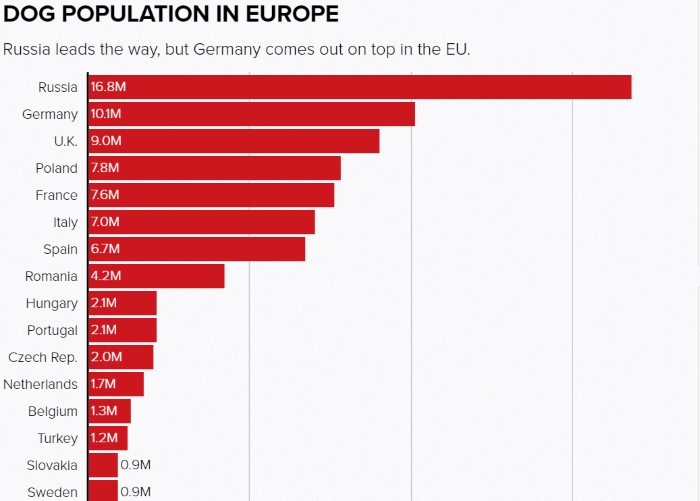
A VIRUS’S WORST FRIEND — Can dogs smell the coronavirus? A company in Florida says it is training 70 dogs to sniff out virus particles on surfaces in common areas and waiting rooms, Daniel Lippman emails us. Top Tier K9, based in Madison, Fla., says it is teaching Belgian Malinois, German Shepherds and British Labrador retrievers to be able to smell the microscopic virus particles. CEO Jeff Minder told Lippman that they start dogs at six weeks old, and it takes almost seven months of training before the dogs are deployable. Minder’s company usually trains police K9 dogs, service dogs for disabled veterans and protection dogs for abused women.
Some trained dogs can already sniff out the smell of malaria, cancer and Parkinson’s, and the British government is spending £500,000 to fund research into whether trained labradors and cocker spaniels can be used to find people who are Covid-19 positive. France is also looking into using dogs for this purpose. Trained dogs can detect low or high blood sugar counts for diabetics, and Minder said his company even trained a dog for an 18-month-old boy with a serious heart condition so the dog could figure out when the boy’s body odors changed to indicate his heart was about to fail. He said Top Tier K9 already has two dogs ready to deploy and will have 25 in the next two months. “The dogs already hunt and they hunt odor so it was just a matter of adding Covid to their scent portfolio,” he said. The company is in talks to work with medical institutions, airports, government buildings and sports complexes to deploy the dogs. The two dogs he has trained so far have been used in four churches in Tallahassee and Madison, he said.
Stuart Firestein, a biology professor at Columbia who has briefly discussed dogs and coronavirus with Minder, said that a “dog's olfactory system is remarkable at this type of thing. They’re very trainable critters.” Firestein added, “In the absence of lots of testing, you could conceivably have a dog at the entrance of some employers to indicate that this person's okay, this one’s okay, this one’s not.” He cautioned that using dogs to find coronavirus carriers is not fully vetted yet.
|
|
| |
A message from PhRMA:
In the midst of coronavirus, PhRMA members are expanding efforts to help millions of Americans dealing with other diseases that need to be treated and may be struggling to afford their medicines. Our Medicine Assistance Tool was built to connect patients with resources that may help lower out-of-pocket costs. |
| |
|
|
|
|
| |
Follow us on Twitter
|
| |
|
|
| |