Showing posts with label TRADE. Show all posts

Thursday, May 30, 2024

'Time Is Up': Democrats Target Trade Regime That Blocks Climate Progress


            SENATOR ELIZABETH WARREN HAS SEVERAL UNINFORMED                         REPUBLICAN OPPONENTS THIS ELECTION.  

            ONE IS A FLIP-FLOPPER WHO CAN'T DECIDE IF HE'S A REPUBLICAN             OR A DEMOCRAT. ANOTHER IS JUST A WANNABE WITH NO NAME-                RECOGNITION. 

            ONE IS A CARPET BAGGER WHO ONLY VOTED 3 TIMES IN 20 YEARS,             MOVED TO MASSACHUSETTS TO RUN FOR ELECTION & IS WILDLY                 IGNORANT, JOHN DEATON.THE BEST HE CAN DO IS REGURGITATE              REPUBLICAN PROPAGANDA  ABOUT THE BORDER CRISIS & BLAB                 ABOUT STATE POLICY THAT IS NOT WITHIN THE CONTROL OF A                     SENATOR - THE MAN IS WOEFULLY IGNORANT! 

             MUCH OF WHAT SENATOR WARREN HAS ADDRESSED, LIKE THE                 ARTICLE BELOW  DOESN'T GRAB HEADLINES, BUT IT'S                                 SIGNIFICANT. 

            SENATOR WARREN HAS BEEN OUTSPOKEN ABOUT BANKING                         REFORMS AMONG  NUMEROUS OTHER ISSUES - THEY'RE NOT                     SEXY! 

              IT'S A GIVEN THAT "R" VOTERS ARE CONSPICUOUSLY                                      UNINFORMED, DON'T DO ANY RESEARCH & RALLY AROUND                           DISINFORMATION THAT FOX NEWS = FAKE NEWS LIARS                                  HIGHLIGHTS....MAYBE IT'S TIME FOR ENLIGHTENMENT ABOUT                     HOW GOVERNMENT WORKS & WHAT'S IMPORTANT FOR                                 AMERICANS.


'Time Is Up': Democrats Target Trade Regime That Blocks Climate Progress

"Giant corporations have and continue to weaponize ISDS—a secretive and rigged arbitration system," said Sen. Elizabeth Warren. "It's time to shut the door and eliminate ISDS from all existing trade agreements once and for all."

Prominent Democrats on Wednesday called for ending corporate-backed arbitration provisions in trade agreements as the Sierra Club issued a report showing that fossil fuel companies use the provisions to block climate action.

The report calls for the U.S. government to not only stop signing trade agreements with Investor-State Dispute Settlement (ISDS) provisions, as President Joe Biden has already done since taking office, but also end or modify existing agreements that have them. ISDS provisions allow companies to protect their investments in a foreign country and seek compensation from an ad hoc arbitration tribunal, rather than the country's courts, if they are threatened by legislation, regulation, or the cancellation of a project.

"While it has correctly rejected ISDS for future trade agreements, the Biden administration has made no effort to remove these egregious provisions from existing agreements," Rep. Lloyd Doggett (D-Texas) said in a Sierra Club statement. "Powerful multinational corporations continue abusing ISDS to intimidate countries from strengthening environmental and human rights protections."

Many ISDS cases pit powerful corporations against low- and middle-income countries, but wealthy nations are also liable to be sued. TC Energy, a multinational fossil fuel company, sued the US for $15 billion following the discontinuation of the Keystone XL pipeline project, and Canada faces a $20 billion suit over a canceled liquefied natural gas project in Québec. Overall, nearly 20% of the world's 1,206 known ISDS arbitration cases have been brought by fossil fuel companies, according to the Sierra Club report.

"ISDS mechanisms corruptly advance the power of big corporate polluters over the interests of the public and the planet. This new report from the Sierra Club makes it clear that ISDS's time is up," Sen. Sheldon Whitehouse (D-R.I.) said in the group's statement. He, too, is pushing the Biden administration to remove ISDS provisions from existing agreements.

While the Sierra Club report focuses on ISDS's climate impacts, the authors argue that the effects of the provisions, which give corporations extraordinary power, are much broader. "The dangers of ISDS are stark not just for climate change, but for a broad swath of public interest policies including ones related to public health, labor protections and workers' rights, green jobs policies, and more," they wrote.

Democrats voiced agreement about the broad consequences of the provisions, which have been the subject of a growing chorus of criticism by politicians and public interests groups.

"Giant corporations have and continue to weaponize ISDS—a secretive and rigged arbitration system that multinational companies use to bypass domestic courts and challenge protections for the environment, workers, and consumers around the world. It's time to shut the door and eliminate ISDS from all existing trade agreements once and for all," said Sen. Elizabeth Warren (D-Mass.) in the Sierra Club statement.

In November, Sierra Club, Public Citizen, the AFL-CIO and more than 200 other organizations called on the Biden administration to dismantle ISDS provisions between the U.S. and countries in the Americas, saying that the president should "free public interest policies from the shadow of ISDS."

That followed an April letter to Biden in which more than 300 law and economics professors, including Nobel laureate and Columbia University professor Joseph Stiglitz, called for an end to ISDS in existing trade agreements, arguing that there's a "bipartisan consensus" for such reform.


NEXT UP    

COMMON DREAMS


Saturday, September 16, 2023

POLITICO Nightly: Biden claims ‘America’s back.’ The world isn’t convinced.


POLITICO Nightly logo

BY GAVIN BADE

Presented by

Citi

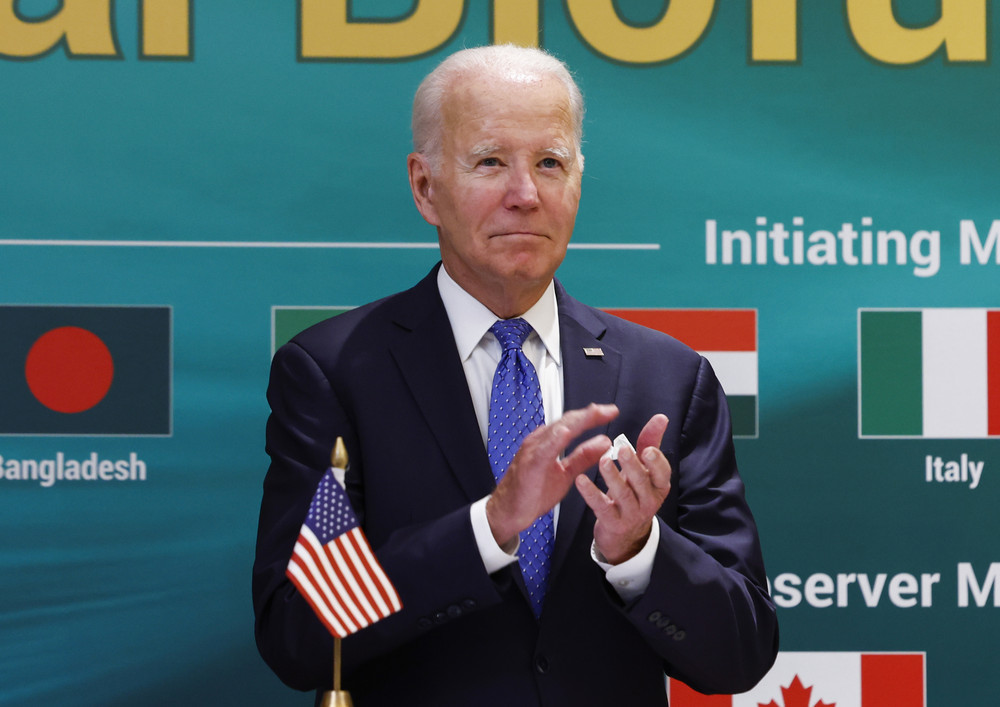
President Joe Biden attends the launch of the Global Biofuels Alliance at the G20 summit in New Delhi, India, Sept. 9, 2023.

President Joe Biden attends the launch of the Global Biofuels Alliance at the G20 summit in New Delhi, India, Sept. 9, 2023. | Pool photo by Evelyn Hockstein

BETTER LATE THAN NEVER — The Biden administration loves to claim that “America is back” on the world stage after four years of President Trump’s go-it-alone foreign policy.

But for most of the globe, the U.S. has been conspicuously absent — until now.

At the G20 meetings last week, the president debuted his administration’s new charm offensive for the developing world — a promise to invest in the economic development of 70 nations, concentrated in the Southern Hemisphere, with high poverty and debt burdens.

It’s a campaign that makes few headlines stateside, but has huge implications for U.S. trade relations and Washington’s economic competition with Beijing. Biden will need to increase trade with many developing nations to secure the materials and components for his clean energy manufacturing agenda. And his team is desperate to stop those countries from falling further into China’s orbit after decades of neglect from the U.S.

“The U.S. government for many years has not really had a sustained focus [on developing nations],” said Peter Harrell, who served on Biden’s national security council until last fall. “Over the last six months in particular, you’ve seen a really concerted push by the administration to expand its outreach.”

Biden’s plan is to buy those nations off. At the G20, the administration announced plans to reform the World Bank, International Monetary Fund and other Western development institutions so they can unlock hundreds of billions of dollars in funding for infrastructure projects around the world. That, they hope, will lead more nations to side with the U.S. in everyday trade and in times of crisis — like a potential conflict in the Taiwan Strait.

The investment-first strategy marks a dramatic shift from decades of U.S. economic policy that focused on removing tariffs and other trade barriers in hopes that private U.S. companies would rush in and industrialize poorer nations. Biden’s team says that agenda has run its course.

“We don’t see tariffs as being at the core of trade policy. We don’t see trade policy as being at the core of international economic policy,” deputy national security advisor for International Economic Affairs Mike Pyle said at a late June appearance at the Carnegie Endowment. “Just as the agenda with other industrial economies begins with investment, so too the agenda for the developing world begins with investment.”

But Beijing already has a trillion-dollar head start. For over a decade, the Chinese government has funded infrastructure projects in over 130 nations through its Belt and Road Initiative — building not just ports and bridges, but goodwill among many nations.

“We start at a significant deficit” compared to China, Harrell said.

And many countries remain skeptical of Western development institutions that for decades imposed budget cuts as a condition for aid. Even as they publicly welcome the U.S. campaign, some leaders remain skeptical behind the scenes.

“IMF and World Bank packages are not seen very positively” in many developing nations, said a Southeast Asian economic official, granted anonymity to speak frankly about Biden’s plans. “It all comes with very heavy commitments that would tie our hands as to how we manage our [foreign direct investment], monetary policy, and taxes.”

Others worry that the reformed IMF and World Bank will simply impose a new type of green-tinged austerity on developing nations under the auspices of climate action. Those critiques – and the administration’s responses – are all in the latest edition of our series on the changing face of global trade.

Welcome to POLITICO Nightly. Reach out with news, tips and ideas at nightly@politico.com . Or contact tonight’s author at gbade@politico.com or on X (formerly known as Twitter) at @GavinBade .


A message from Citi:

Generative AI is at an inflection point. With the recent announcements of AI-driven natural language processing (NLP) tools being integrated into search engines and the broader web, generative AI could be transformational in changing the business model of search and how we access content on the web. Access in-depth analysis on the potential implications in the Citi GPS Report, Generative AI.

 
WHAT'D I MISS?

— Prosecutors argue Trump knowledge of Twitter search warrant could ‘precipitate violence’: Federal prosecutors secretly argued in April that if Donald Trump learned of their efforts to access his Twitter account, his public disclosure of the development could “precipitate violence.” Newly unsealed court filings show that attorneys working for special counsel Jack Smith worried that Trump would publicly announce the search warrant of his Twitter feed just like he announced on Truth Social when his Mar-a-Lago estate was searched by the FBI last year. That announcement was followed by a surge in threats against federal law enforcement, culminating in the fatal shooting of a man who had attempted to breach an FBI building in Cincinnati.

— Lee’s jabs at Newsom cause exodus from her Super PAC: Two top California strategists have cut ties with the super PAC supporting Barbara Lee’s U.S. Senate bid after she went scorched earth on Gavin Newsom. Brian Brokaw and Dan Newman — political advisers to the governor — broke from Lee’s PAC, She Speaks for Me, and are siding with Newsom after he was castigated by Lee, according to two people familiar with the decision. Her broadsides came in response to Newsom pledging last weekend to appoint an interim senator — not Lee — should Sen. Dianne Feinstein leave her seat early.

— U.S. military orders new interviews on the deadly 2021 Afghan airport attack as criticism persists: The Pentagon’s Central Command has decided to interview roughly two dozen service members who were at the Kabul airport when suicide bombers attacked during U.S. forces’ chaotic Afghanistan withdrawal but weren’t included in the military’s initial investigation. The decision, according to officials, does not reopen the administration’s investigation into the deadly bombing and the withdrawal two years ago. But the interviews are meant to see if any of the service members have new or different information. The new interviews were ordered by Gen. Erik Kurilla, head of U.S. Central Command, and triggered in part by assertions by at least one service member injured in the blast who said he was never interviewed about it and that he may have been able to stop the attackers.


GO INSIDE THE WORLD’S BIGGEST DIPLOMATIC PLATFORM WITH UNGA PLAYBOOK: The 78th Session of the United Nations General Assembly will jam some of the world's most influential leaders into four city blocks in Manhattan. POLITICO's special edition UNGA Playbook will take you inside this important gathering starting Sept. 17 — revealing newsy nuggets throughout the week and insights into the most pressing issues facing global decision-makers today. Sign up for UNGA Playbook .


NIGHTLY ROAD TO 2024

THE ELUSIVE YOUTH VOTE — Students were dancing in the aisles and their seats in the Hampton University auditorium long before Vice President Kamala Harris took the stage for the first stop of her fall college tour. Jaden Clemons and Layth Carpenter, both 18-year-old freshmen, said they viewed Harris as “authentic” and “relatable” as the alum of Howard University, another historically Black school, writes the Associated Press.

But neither was ready to commit to supporting Harris and Joe Biden next year, the first time they will be eligible to vote in a presidential election. Getting students like these two off the sidelines is one of the top challenges for the White House as Biden seeks a second term as the oldest president in American history, and it’s one that Harris will confront as she crisscrosses between campuses in the coming weeks. Although young people lean left, they’re less likely to vote, and preventing them from tuning out is crucial in close campaigns that hinge on narrow margins.

CHRISTIE IN NH — Gov. Chris Christie’s trademark in the 2024 presidential race is that he’s the Republican most willing to rip into Donald Trump’s deficiencies. But in a state like New Hampshire that focuses on retail politics, campaigning also means facing tough questions about himself and his beliefs , writes NBC News.

Christie spent the bulk of a Tuesday town hall in Bedford answering policy questions on topics ranging from unions to Taiwan, engaging audience members in back-and-forth conversations. He also defended his own record and policy ideas, getting fiery while answering a question from an audience member about several major events from his time as governor of New Jersey: Bridgegate, “Beachgate” and his decision to not attend the funeral of State Trooper Sean Cullen.

UAW UNHAPPY WITH BIDEN — The self proclaimed most “pro-union president in American history” is under fire from the leader of the most high-profile union in America, reports POLITICO.

Shawn Fain, head of the United Auto Workers, has privately expressed his frustration with Joe Biden, wanting the president and other Democratic lawmakers to come out more aggressively in support of his union, which launched a strike today against the so-called Big Three automakers.

Fain’s frustration was conveyed by five people familiar with his thinking, who were granted anonymity to describe his position. One of those five described him as “not happy” with the situation. And Fain’s not the only person in Michigan who isn’t thrilled with the way Biden and his team have handled the labor dispute.

Fain was also set to put out remarks, which were exclusively obtained by POLITICO, calling on Biden to get involved. “We agree with Joe Biden when he says ‘record profits mean record contracts.’ We don’t agree when he says negotiations have broken down. Our national elected negotiators and UAW leadership are hard at work at the bargaining table. Our members and allies are standing strong at the picket lines. Anyone who wants to stand with us can grab a sign and hold the line,” he said, as part of a larger statement.


A message from Citi:

Advertisement Image 

 
AROUND THE WORLD

Supporters of opposition parties hold European Union and Polish flags and banners during the Freedom march organized by the main opposition party in Warsaw, Poland, June 4.

Supporters of opposition parties hold European Union and Polish flags and banners during the Freedom march organized by the main opposition party in Warsaw, Poland, June 4. | Omar Marques/Getty Images

FAIR AND FREE — The Polish government’s control of the public broadcaster, as well as the media regulator and its use of public funds to influence media organizations, is d istorting the political landscape ahead of the October 15 general election , NGOs and media watchdogs warned today, writes Nicholas Camut .

Poland’s media freedom has declined precipitously since the ruling nationalist Law and Justice (PiS) party took power in 2015.

The main channel of government influence is its control of the Polish public broadcaster, Telewizja Polska (TVP), which has turned into the propaganda arm of the ruling party with no effort to provide balanced coverage. TVP controls about a third of the Polish broadcast market, and is especially dominant in the smaller towns and countryside that are crucial to the electoral fortunes of PiS.

“TVP is failing in the fundamental duty of any public broadcaster to provide fair and balanced political coverage between and during elections,” Media Freedom Rapid Response, an umbrella group of European press freedom organizations, said in a statement.

It’s not the only such concern about media freedom in Poland. Poland came in 57th out of 180 countries in the annual press freedom index compiled by Reporters Without Borders, an NGO; that’s one of the lowest rankings in the EU. It was 18th in 2015. “After turning the public media into instruments of propaganda, the government has multiplied its attempts to change the editorial line of private media and control information on sensitive subjects,” the NGO noted.


JOIN 9/19 FOR A TALK ON BUILDING THE NEW AMERICAN ECONOMY : The United States is undergoing a generational economic transformation, with a renewed bipartisan emphasis on manufacturing. Join POLITICO on Sept. 19th for high-level conversations that examine the progress and chart the next steps in preserving America’s economic preeminence, driving innovation and protecting jobs. REGISTER HERE .


NIGHTLY NUMBER

79 percent

The percentage of Democratic voters who probably or definitely plan on getting the new Covid booster by the end of the year, according to a new poll from POLITICO/Morning Consult . That’s compared to 48 percent of independents and 39 percent of Republicans; in total, 57 percent of those surveyed said they had plans to get a new booster.

RADAR SWEEP

IT’S SUMO TIME — Sumo wrestling has been around for hundreds of years — but it’s just now starting to really catch hold in the United States. Much of that is thanks to the New York Sumo Beya , a training quarters that is run by a man named James Grammer from his apartment in Queens. Members led by Grammer now spar in parks around the city and work with the United States Sumo Federation. For GQ, Jackson Wald takes a fascinating look into a New York and U.S. subculture that’s taking cues from Japan.

PARTING IMAGE

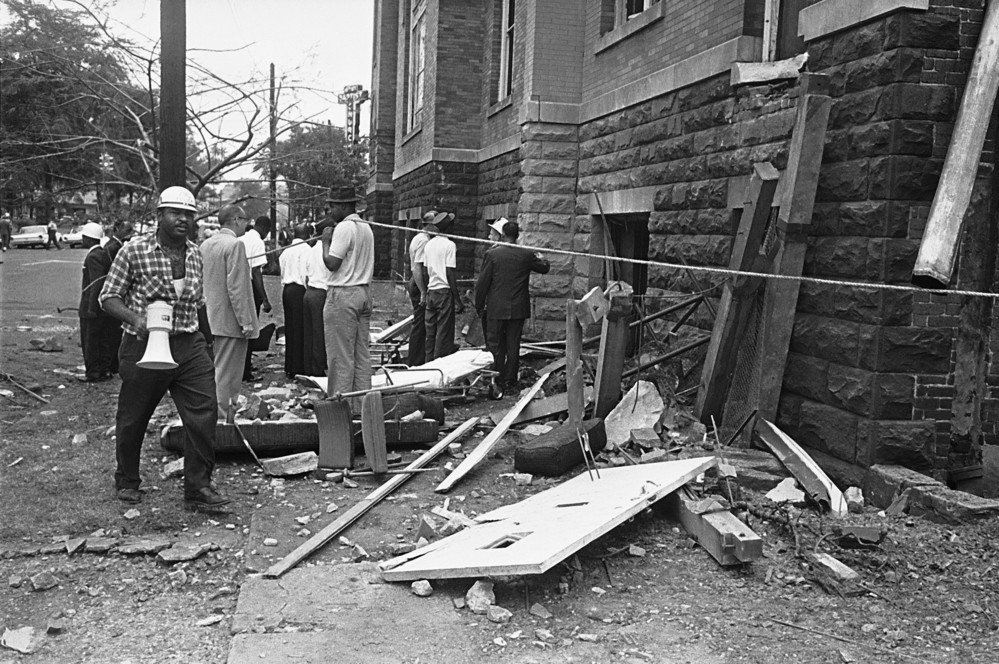
On this date in 1963: A civil defense worker and firefighters walk through debris from an explosion which struck the 16th Street Baptist Church, killing and injuring several people, in Birmingham, Ala. The attack was carried out by white supremacists.

On this date in 1963: A civil defense worker and firefighters walk through debris from an explosion which struck the 16th Street Baptist Church, killing and injuring several people, in Birmingham, Ala. The attack was carried out by white supremacists. | Bill Hudson/AP Photo

Did someone forward this email to you?  Sign up here .


A message from Citi:

Generative AI is at an inflection point.

With the recent announcements of AI-driven natural language processing (NLP) tools being integrated into search engines and the broader web, generative AI could transform the way we search for things on the internet, use information, and communicate with each other.

By providing a conversational style response to an inquiry instead of links to suggested sites, generative AI could make the overall search and browsing experience more natural and intuitive, potentially reshaping the way we search for travel, buy goods, and research products.

Access in-depth analysis in the Citi GPS Report, Generative AI.


Follow us on Twitter

Charlie Mahtesian @PoliticoCharlie

Calder McHugh @calder_mchugh


FOLLOW US

Follow us on FacebookFollow us on TwitterFollow us on InstagramListen on Apple Podcast


 POLITICO, LLC 1000 Wilson Blvd. Arlington, VA, 22209, USA


Tuesday, January 10, 2023

POLITICO NIGHTLY: The American politics of Brazil’s insurrection


View in browser

 POLITICO Nightly logo

BY ARI HAWKINS

Supporters of Brazil's former President Jair Bolsonaro, look out from a shattered window after they stormed the Planalto Palace in Brasilia, Brazil.

Supporters of Brazil's former President Jair Bolsonaro, look out from a shattered window after they stormed the Planalto Palace in Brasilia, Brazil. | Eraldo Peres/AP Photo

FLORIDA MAN — The White House announced today it would host Brazilian President Luiz Inácio Lula da Silva (known as Lula), in Washington in February, one day after supporters of far-right former President Jair Bolsonaro’s supporters stormed and ransacked government buildings in Brasilia, the nation’s capital.

Bolsonaro, who left Brazil two days before his term ended in a symbolic snub of new Brazilian President Lula and the democratic transfer of power, is reportedly under investigation in at least four criminal probes in his home country . Bolsonaro has been staying in Florida, where a Brazilian news organization reported that he had been admitted to an Orlando-area hospital because of abdominal pains, though that report could not immediately be confirmed.

Bolsonaro’s close relationship with former U.S. President Donald Trump , his attempts to cast doubt on Brazil’s election results and the similarities between the attack on the Brazilian seat of government and the Jan. 6, 2021 storming of the U.S. Capitol have heightened the politics surrounding Sunday’s violence.

President Joe Biden faced calls from within his own party today to extradite Bolsonaro, who Lula blamed for “encouraging” the rioters while arguing the “fascist fanatics” and those who funded them should be punished.

To make sense of why Bolsonaro is still in Florida, what his ties are to U.S. politics and the parallels between Jan. 6 in Washington and Jan. 8 in Brasília, Nightly spoke with Bruna Santos, a senior advisor at the Brazil Institute at the Wilson Center. This conversation has been edited.

Bolsonaro reportedly has been staying in Orlando, Florida, since the final days of his presidency.  What is the significance of his visit?

There are a couple of ways to look at Bolsonaro’s time in the American state of Florida. On the one hand, this has been a common meeting ground for Bolsonaro in his former visits with American far-right leaders, like Donald Trump who he met with back in March of 2020. In some ways, it’s only natural, considering Bolsonaro faces legal questions over his abuse of power, and was looking for an escape.

But it’s also important to recognize that the Brazilian public can be very in tune with the broader state of Florida politics. For instance, there are a number of Brazilians who migrated there since the 1990s, many of whom are now middle to upper class, and had to escape very real threats of violence. Both far-right Americans and a portion of Brazilians are really still drawn to his perspectives. He has developed something of a network there of supporters. His rages against woke culture, progressivism and totalitarianism can find very receptive ears.

How close are the ties between Bolsonaro and Trump-world? In what ways have the two learned from each other?

Investigations conducted in Brazil show the relationship between Bolsonaro and Donald Trump runs deep. Bolsonaro and his family have spent significant amounts of time in the United States in an effort to build alliances with far-right Americans. For instance, Eduardo Bolsonaro, the son of Jair, met with Steven Bannon in 2018 as Eduardo was making a name for himself in Brazil’s far-right Social Liberal Party. Since that point, the two have met almost 80 times, according to certain reports, which has very real electoral impacts.

Certain social media hashtags and general misinformation that spiked during the lead up to the Brazilian election and the attack on the Capitol yesterday, can also be traced back to the U.S. Trump advisors including Bannon, who has helped popularize election misinformation, have played a role in the events that took place. Networks of the international far-right currently build off of each other.

What role did misinformation play in the insurrection? What were some of the warning signs prior to Jan. 8? 

Bolsonaro and his allies have planted seeds for an insurrection since before the start of his presidential campaign. He has long made false claims about shadowy forces in Brazil manipulating election results. In 2018, for instance, he said hackers unsuccessfully tried to steal the election from him. Now, those same sorts of claims have added weight to them, given his power and connections with Brazil’s Congress as well as conservative pundits even with him on his exit from office. In the weeks leading up to the election, we saw these same types of claims about election security really pick up steam on social media, especially on Telegram and WhatsApp. It’s a similar pattern we can see in the U.S., where far-right figures with massive online audiences are really adept at sowing this kind of chaos.

How closely does what happened in Brazil resemble the Jan. 6th attack on the Capitol in the United States?

In a very similar way that the January 6th riots broke out, we in Brazil woke up to a country under attack. The invasion of Brazil’s Congress was clearly an expression of outrage from Bolsonaro supporters, who were baselessly alleging electoral fraud. In terms of the response, we see a very similar comparison to what happened in Brazil and the attack on the U.S. Capitol on January 6th.

But when we break it down, there are certainly differences. Keep in mind that there was no one working in Brasilia and all the time limits for the election passed. The vote certification, the inauguration and the formal declaration of results had already taken place at the time of the riot. What’s positive about that is it limited some of the potential of violence and death like we saw in the U.S., but it also says something broader about political institutions. The timing of the riot shows the intentions of Bolsonaro’s supporters as creating chaos, maybe for the purposes of instituting a military coup, rather than changing the results of the election. In that way, the attacks against the political institutions of Brazil could be considered even more profound than that of the U.S.

Welcome to POLITICO Nightly. Contact tonight’s author at ahawkins@politico.com or on Twitter at @_AriHawkins .

WHAT'D I MISS?

— Special grand jury completes Trump investigation: The Atlanta-area special grand jury investigating efforts by Trump to overturn the 2020 election has concluded its investigation, according to the state judge overseeing the probe. The special grand jury is expected to make a charging recommendation related to Trump and other targets, about whether their efforts to overturn the 2020 election violated state law. Fulton County District Attorney Fani Willis must then make the ultimate charging decision after presenting the panel’s findings to a regular grand jury.

— Schumer taps Peters again as Senate campaign chief in hopes of 2022 repeat: Michigan Sen. Gary Peters will once again lead his caucus’ campaign arm , according to two people familiar with the matter and confirmed by the Democratic Senatorial Campaign Committee. The second-term senator successfully defended Democrats’ majority last cycle under difficult circumstances, with the party even picking up one more seat in the chamber. Still, Peters had initially turned down entreaties to do the job again, hoping to get a breather from the exhausting role.

— Federal judge temporarily blocks portions of New Jersey’s new gun law: A federal judge today temporarily blocked part of a newly-enacted New Jersey law that prohibits guns from being carried in certain parts of the state. U.S. District Judge Renée Marie Bumb issued a temporary restraining order for a section of the law that specifically bans guns from being carried in public libraries or museums, bars or restaurants that serve alcohol and entertainment facilities. One catch-all provision barring guns from being carried on private property where the owner did not explicitly grant permission was also blocked, as was another section that prohibits guns from being carried in vehicles unless they are unloaded and stored in a closed area.

AROUND THE WORLD

Yevgeny Prigozhin, leader of the Wagner Group.

Yevgeny Prigozhin, leader of the Wagner Group. | Pool photo by Sergei Ilnitsky

EXPANDING OPERATIONS — Top U.S. officials are increasingly tracking the movements and efforts of the Wagner Group, a Russian private military group, outside of Ukraine as Moscow continues to use the organization to launch influence operations in Africa and Europe , writes Erin Banco.

Last month the Biden administration downgraded classified intelligence saying Russia is relying on the Wagner Group, owned by Russian oligarch Yevgeny Prigozhin, in Ukraine to recruit prisoners and launch offensives in the city of Bakhmut.

But U.S. officials are also gathering intelligence related to the group’s activities in countries such as the Central African Republic, Mali and Serbia, according to cables obtained by POLITICO, where Russia is using Wagner to fight anti-Putin sentiment and defend government mining interests with troops and weapons.

The recent statements from American officials underscore the degree to which the administration is concerned about Russia’s reliance on the group and Wagner’s ability to shape events in countries where the U.S. and its allies hold business and diplomatic relationships.

Prigozhin and Wagner have been under U.S. sanctions for years. But the U.S. has recently taken additional steps to try to control Wagner’s access to weapons. At the end of December, the Biden administration implemented additional export controls on Wagner, making it more difficult to access any equipment with U.S. technology.

CLOSED CORRIDOR — For the past month, the so-called Lachin corridor that links Nagorno-Karabakh to Armenia has been closed off , leaving as many as 100,000 people living there under effective blockade, with supplies of food, medicines and other essentials running low, writes Gabriel Gavin .

“Over the last two days, I’ve barely been able to find anything to eat in the shops,” said Marut Vanyan, a 39-year-old blogger living in the region’s de facto capital, Stepanakert. “First it was vegetables and fresh fruit that disappeared. Now, there’s only alcohol left on the shelves and not much else. In the mornings, some milk and yogurt comes in from local farms, but it goes very fast,” he told POLITICO.

This isn’t the first conflict to play out over Nagorno-Karabakh, a region of the South Caucasus long mired in an ethnic and territorial dispute between Armenia and Azerbaijan. In the 1990s as the USSR collapsed, Armenian forces moved to take control of areas inhabited by ethnic Armenians in the neighboring Soviet Republic, fighting bloody battles with Azerbaijani troops over land that both sides consider their ancestral soil.

Hundreds of thousands of ethnic Azeris who lived alongside them were displaced or killed, and the region was governed for nearly 30 years as the unrecognized Republic of Artsakh, sealed off behind defensive lines and accessible through only one mountain road from Armenia.

That all changed in 2020, when Azerbaijani tanks and soldiers rolled across the mine-strewn frontier, taking back swathes of territory and leaving the Karabakh Armenians in control of only Stepanakert along with some surrounding towns and villages.

A Kremlin-brokered cease-fire saw 1,500 Russian peacekeepers deployed to act as a buffer and oversee the Lachin corridor, now a vital lifeline for the Karabakh Armenians flanked on both sides by Azerbaijani-held positions.

But now, it seems the Russian peacekeepers are unable or unwilling to keep the corridor open. On Dec. 12, a group of self-described Azerbaijani environmental protesters, most with no apparent record of eco-activism, pushed past the wire fencing and set up camp on the highway as Moscow’s military contingent watched on.

NIGHTLY NUMBER

Over 7,000

The number of nurses who went on strike in New York City today , after their union failed to secure new contract agreements demanding increased staffing levels at Montefiore Medical Center and Mount Sinai Hospital. The strike is one of the largest nurses strikes in U.S. history, and follows strikes last year from nurses in Minnesota, California and Hawaii.

RADAR SWEEP

VETERINARY CIVIL WAR — We often associate veterinarians with those caring for household pets such as dogs or cats, but veterinary medicine often goes hand in hand with the meat production industry, Vox’s Marina Bolotnikova reports. Animal activists have been protesting the American Veterinary Medical Association, which represents the majority of the country’s 121,000 veterinarians, for their “method of mass culling methods on animal farms.” Known as ventilation shutdown plus, or VSD+, Bolotnikova describes the practice as “sealing off the animals’ housing and turning up the heat to lethal temperatures so that they die of heatstroke.” Despite being an AVMA policy, many lawmakers and activists have demanded an end to its usage. Bolotnikova explores the AVMA’s close involvement with the poultry industry through the history of veterinary medicine in the United States and how industry activists who oppose the practice often phase career-ending consequences.

PARTING WORDS

U.S. President Joe Biden, first lady Jill Biden, President of Mexico Andrés Manuel López Obrador and his wife Beatriz Gutiérrez Müller pose during a welcome ceremony as part of the '2023 North American Leaders' Summit in Mexico City, Mexico.

U.S. President Joe Biden, first lady Jill Biden, President of Mexico Andrés Manuel López Obrador and his wife Beatriz Gutiérrez Müller pose during a welcome ceremony as part of the '2023 North American Leaders' Summit in Mexico City, Mexico. | Hector Vivas/Getty Images

HEADED SOUTH — Joe Biden has no shortage of topics to tackle in his first presidential trip to Mexico , write Myah Ward and Jonathan Lemire .

There’s the major shift in border policy that came just days before the trip. There’s the arrest of an alleged drug trafficker in Mexico long sought by U.S. authorities. And there’s the border itself, which Biden visited for the first time as president when he made a stop in El Paso, Texas, on Sunday evening.

All that casts a shadow over the president, who arrived in Mexico City hours after the El Paso swing. Biden’s schedule at the North American Leaders’ Summit is packed: One-on-one discussions, trilateral meetings, working lunches, dinners and, of course, photo opportunities.

Biden will be the first U.S. president to visit Mexico since Barack Obama in 2014. For decades, presidents traditionally made their first overseas trip to either Mexico or Canada as a sign of solidarity among the trio of leaders. Often, the “Three Amigos” would pledge to be a (mostly) unified North American front. But that informal tradition ended in 2017 when President Donald Trump opted to make Saudi Arabia his first international destination. And then, with the globe in the grasp of the Covid-19 pandemic, Biden delayed his first foreign trip for nearly five months before traveling to the United Kingdom to meet with G-7 leaders in June 2021.

Competitiveness and trade might be the most important issues on the table, said Roberta Jacobson, Biden’s former border czar and an ambassador to Mexico under Obama. Biden and Trudeau are headed to Mexico during a time of increased trade frictions between the three North American trading partners in the area of autos, energy and agriculture.

Both Canada and Mexico have accused the United States of adopting an overly stringent interpretation of the automotive trade rules in the two-year-old USMCA agreement, making it harder for cars produced in the two countries to qualify for U.S. duty-free treatment.

A dispute settlement panel is expected to release a decision in favor of Canada and Mexico in the days following the summit, raising concerns over whether the Biden administration would drop its strict interpretation to comply with the ruling. If not, it could face Canadian and Mexican retaliation in the year ahead.

Did someone forward this email to you? Sign up here .


Follow us on Twitter

Charlie Mahtesian @PoliticoCharlie

Calder McHugh @calder_mchugh

Katherine Long @katherinealong

Ari Hawkins @_AriHawkins


FOLLOW US

Follow us on FacebookFollow us on TwitterFollow us on InstagramListen on Apple Podcast


POLITICO, LLC 1000 Wilson Blvd. Arlington, VA, 22209, USA


Morning Digest: Why Mississippi's Senate race won't go to a runoff—no matter what

                                                       LOTS OF POSTS IGNORED BY BLOGGER..... OR REMOVED ON THEIR WHIM! ALL POSTS ARE AVAILAB...