|


|
|
|
|
|

25 July 22
Live on the homepage now!
Reader Supported News
I understand why people hate all things Russian right now. But our literature did not put Putin in power or cause this war.
Terrible crimes, I agree, are being committed in the name of my people, in the name of my country, in my name. I can see how this war has turned the language of Pushkin and Tolstoy into the language of war criminals and murderers. What does the world see of “Russian culture” today but bombs falling on maternity hospitals and mutilated corpses on the streets of Kyiv’s suburbs?
It hurts to be Russian right now. What can I say when I hear that a Pushkin monument is being dismantled in Ukraine? I just keep quiet and feel penitent. And hope that perhaps a Ukrainian poet will speak up for Pushkin.
The Putin regime has dealt Russian culture a crushing blow, just as the Russian state has done to its artists, musicians, and writers so many times before. People in the arts are forced to sing patriotic songs or emigrate. The regime has in effect “canceled” culture in my country. Recently a young protester faced arrest for holding a placard that bore a quote from Tolstoy.
Russian culture has always had reason to fear the Russian state. In the saying commonly attributed to the great 19th-century thinker and writer Alexander Herzen, who was sent into internal exile for his anti-czarist sentiments—and reading “forbidden books,” as he put it—“The state in Russia has set itself up like an occupying army.” The Russian system of political power has remained unchanged and unchanging down the centuries—a pyramid of slaves worshipping the supreme khan. That’s how it was during the Golden Horde, that’s how it was in Stalin’s time, that’s how it is today under Vladimir Putin.
The world is surprised at the quiescence of the Russian people, the lack of opposition to the war. But this has been their survival strategy for generations—as the last line of Pushkin’s Boris Godunov puts it, “The people are silent.” Silence is safer. Whoever is in power is always right, and you have to obey whatever order comes. And whoever disagrees ends up in jail or worse. And as Russians know only too well from bitter historical experience, never say, This is the worst. As the popular adage has it: “One should not wish death on a bad czar.” For who knows what the next one will be like?
Only words can undo this silence. This is why poetry was always more than poetry in Russia. Former Soviet prisoners are said to have attested that Russian classics saved their lives in the labor camps when they retold the novels of Turgenev, Tolstoy, and Dostoyevsky to other inmates. Russian literature could not prevent the Gulags, but it did help prisoners survive them.
The Russian state has no use for Russian culture unless it can be made to serve the state. Soviet power wanted to give itself an air of humanity and righteousness, so it built monuments to Russian writers. “Pushkin, our be-all and end-all!” rang out from stages in 1937, during the Great Purge, when even the executioners trembled with fear. The regime needs culture as a human mask—or as combat camouflage. That’s why Stalin needed Dmitri Shostakovich and Putin needs Valery Gergiev.
When the critics say Russian culture is imperialist, they are thinking of Russia’s colonial wars, and they mean that its artists justified the state’s expansionist aims. But what they do not account for is Russia’s internal imperialism: Before anything else, it was a slave empire where the Russian people were forced to endure and suffer the most. The Russian empire exists not for Russia’s people but for itself. The Russian state’s only purpose is to stay in power, and the state has been hammering the Russkiy mir (“Russian world”) view into people’s brains for centuries: the holy fatherland as an island surrounded by an ocean of enemies, which only the czar in the Kremlin can save by ruling its people and preserving order with an iron hand.
For Russia’s small educated class, the eternal questions—the “cursed questions,” as the 19th-century intelligentsiya knew them—were those framed by two great novels of the period: Herzen’s Who Is to Blame? and Nikolai Chernyshevsky’s What Is to Be Done? But for millions of illiterate peasants, the only question that mattered was, “Is the czar a real one or an impostor?” If the czar was true, then all was well with the world. But if the czar proved false, then Russia must have another, true one. In the minds of the people, only victories over Russia’s enemies could resolve whether the czar was real and true.
Nicholas II was defeated by Japan in 1905 and in the First World War. A false czar, he lost all popularity. Stalin led his people to victory in the Great Patriotic War (World War II), so he was a real czar—and is revered by many Russians to this day. Mikhail Gorbachev, the last Soviet leader, lost the war in Afghanistan and the Cold War against the West, and he is still despised.
Through his triumph in 2014, easily annexing Crimea, Putin achieved the popular legitimacy of a true czar. But he may lose all that if he cannot win this war against Ukraine. Then another will come forward—first to exorcise the false Putin and then to prove his legitimacy through victory over Russia’s enemies.
Slaves give birth to a dictatorship and a dictatorship gives birth to slaves. There is only one way out of this vicious circle, and that is through culture. Literature is an antidote to the poison of the Russian imperialist way of thinking. The civilizational gap that still exists in Russia between the humanist tradition of the intelligentsiya and a Russian population stuck in a mentality from the Middle Ages can be bridged only by culture—and the regime today will do everything it can to prevent that.
The road to the Bucha massacre leads not through Russian literature, but through its suppression—the denunciations or book bans against Fyodor Dostoyevsky and Mikhail Bulgakov, Vladimir Nabokov and Joseph Brodsky, Anna Akhmatova and Andrei Platonov; the executions of Nikolai Gumilev, Isaac Babel, and Perez Markish; the driving of Marina Tsvetaeva to suicide; the persecution of Osip Mandelstam and Daniil Kharms; the hounding of Boris Pasternak and Aleksandr Solzhenitsyn. The history of Russian culture is one of desperate resistance, despite crushing defeats, against a criminal state power.
Russian literature owes the world another great novel. I sometimes imagine a young man who is now in a trench and has no idea that he is a writer, but who asks himself: “What am I doing here? Why has my government lied to me and betrayed me? Why should we kill and die here? Why are we, Russians, fascists and murderers?”
That is the task of Russian literature, to keep asking those eternal, cursed questions: “Who is to blame?” and “What is to be done?”
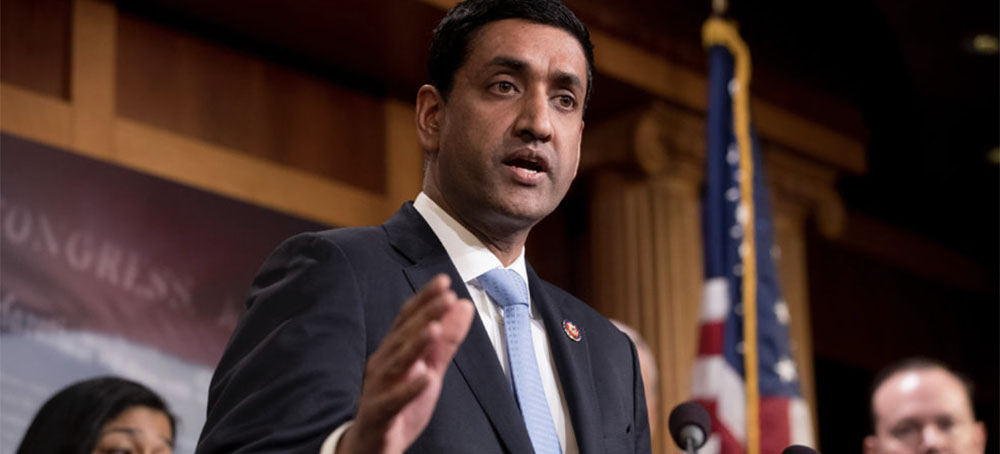 Rep. Ro Khanna. (photo: Andrew Harnik/AP)
Transcript
This is a rush transcript. Copy may not be in its final form.
AMY GOODMAN: Finally, I want to switch gears and just ask, because of the January 6th insurrection hearings: Do you think President Trump should be criminally charged?
REP. RO KHANNA: I believe that the January 6th committee should send a referral to the Justice Department. That’s not for me to say, but I will say this. It’s not enough for the Justice Department to just prosecute the individuals who showed up on January 6th. They need to hold accountable the people who tried to overturn our democratic results by having fraudulent schemes, questioning results that were totally valid. And I’m hoping that the accountability will go up the food chain.
AMY GOODMAN: Merrick Garland? Do you think the attorney general is moving too slowly?
REP. RO KHANNA: I would like to see there be more accountability for people at the top. I understand his job is difficult, not from a political perspective. I think he wants to make sure that when he indicts, he can convict. No prosecutor wants to indict and then have an acquittal, which would be even worse than not indicting. So, I’ve given him the benefit of the doubt. But I think there will be a lot of dissatisfaction in this country if the only people charged are those who were caught up in a mob for a day, went there and engaged in the insurrection, and the people who were actually plotting the overturning of the results are left without accountability.
AMY GOODMAN: Ro Khanna, we want to thank you for being with us, Democratic congressman from California, speaking to us from Fremont.
Well, we move from Ro to Roe. Well, that is, with the overturning of Roe v. Wade, the battleground for abortion access now shifts to the states. Even as the U.S. faces the worst rates of maternal mortality among all rich nations, with Black mothers facing three to four times the mortality rate of the national average, we’ll speak with the directors of a new documentary called Aftershock. Stay with us.
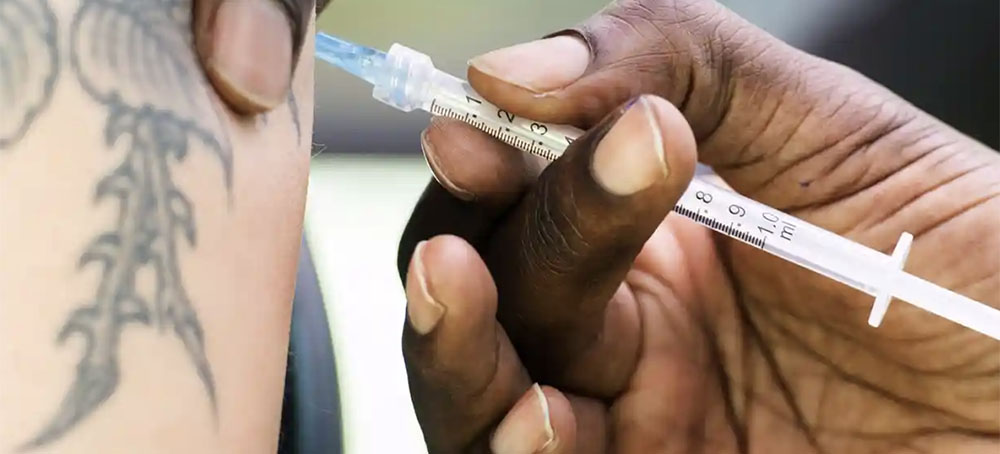 A man receives a monkeypox vaccine in Montreal, Canada, on Saturday. (photo: Graham Hughes/AP)
Supporting the people most at-risk of this awful disease is the only way to reduce its impact and stop its spread
This WHO declaration is unusual in that the organisation’s director general, Dr Tedros Adhanom Ghebreyesus, overruled a split emergency committee (an expert advisory committee from around the world in virology, epidemiology and public health) to insist that the loudest alarm bell should be rung. His justification was: “We have an outbreak that has spread around the world rapidly, through new modes of transmission, about which we understand too little and which meets the criteria in the international health regulations.”
For a disease to be called a public health emergency of international concern, it has to meet a high threshold. It must be an “extraordinary event” that constitutes a public health risk to other countries through the international spread of disease, requiring a coordinated global response.
Given how many disease outbreaks occur, often hundreds a month, this alarm bell has been rung sparingly for diseases such as polio, Covid-19, Ebola, Zika virus and H1N1 swine flu. Since the first human case was discovered in 1970 in the Democratic Republic of Congo, monkeypox outbreaks have largely been contained and limited to roughly a dozen African countries. In recent weeks, the number of cases has risen to more than 15,000 across the world.
Dr Tedros’ concern now is with the increase in cases, and how the virus is spreading rapidly across the world through sexual contact networks. A new research paper on 528 monkeypox cases in 16 countries lays out that 98% of the people infected were gay or bisexual men, 75% of them were white, and 41% had HIV. No women were among the cases, and 95% of cases were thought to be linked to sexual transmission. These findings are crucial in developing an effective and tailored public health response to contain spread which needs to largely focus on the current highest-risk group: men having sex with men (MSM).
While some have suggested it is homophobic to note that MSM are the group at highest risk, others have noted that homophobia is recognising this pattern of spread and not doing anything about it. It is standard in public health when tackling infectious diseases to identify which groups are most at risk and offer support to reduce the negative impact the disease can have. Think of flu vaccination campaigns tailored to protect pregnant or older people – some of the highest-risk groups for illness and death from influenza. This is also a disease that could easily spread beyond the MSM community, given its usual transmission pattern is through household members, close contacts and healthcare workers.
This is an emergency quite distinct from Covid-19 and polio, which are also current public health emergencies being tracked by the WHO. Fortunately, we have an effective vaccine – developed for smallpox – that has been approved for the prevention of monkeypox as well. However, availability is limited even in Britain. The necessary response to monkeypox is intense vaccination efforts within the MSM community and ensuring adequate supply and access to all who need it. There needs to be clear messaging and education to raise awareness about symptoms and testing, and support for those who want to isolate and need to take time off work.
Just telling people not to have sex hasn’t worked well: this has been clearly shown by the HIV response and the failure of abstinence-only approaches. It’s more effective to show how to reduce risk and protect oneself.
With fatigue setting in after years of the Covid-19 pandemic, public health leaders don’t want to cry wolf. However, this is a dire situation and a true global emergency, as stated clearly by the WHO. Rather than fatigue, cynicism and fatalism, it’s time for governments to step up a tailored response. It won’t involve lockdowns or restrictions, but surveillance, testing, provision of self-isolation support, clear messaging and outreach to the most at-risk groups, and most importantly targeted vaccination.
West African countries have been struggling with monkeypox for years. This has drawn little attention from richer countries and the disease was allowed to simmer there without much investment or provision of vaccination. Monkeypox is a reminder that a disease circulating anywhere, however far from us we may think it is, is only ever a plane ride away, and that bugs don’t respect national boundaries. The entire history of humankind surviving these sorts of disease outbreaks shows that the best approach is collective; that if a fire is raging in your neighbour’s garden, the imperative is to help them put it out. Not just because it’s the right thing to do, but also because it could be your house on fire next.
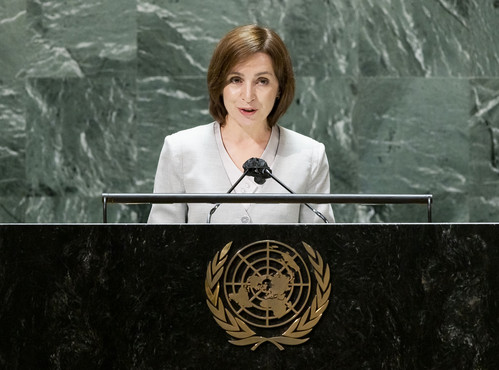
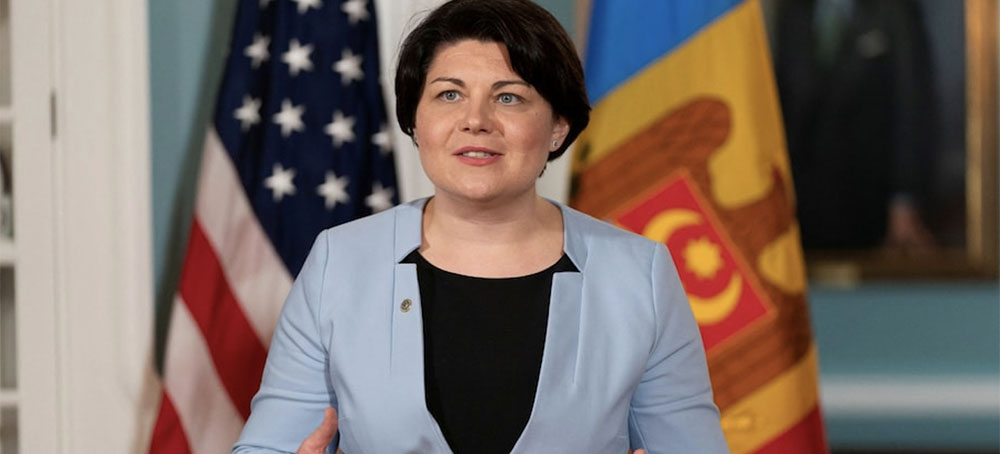 Moldovan Prime Minister Natalia Gavrilita speaks at the U.S. State Department in Washington on July 19. (photo: Manuel Balce Ceneta/Reuters)
Moldova’s prime minister, Natalia Gavrilita, said the possibility that her country could be the next to be invaded on orders of Russian President Vladimir Putin “is a hypothetical scenario for now.”
“But if the military actions move further into the southwestern part of Ukraine and toward Odessa, then of course we are very worried,” she said in an interview Sunday with CNN.
Moldova, which remains militarily neutral, split from the Soviet Union and gained independence in 1991. It has publicly condemned Putin’s invasion of Ukraine and hundreds of thousands of refugees have fled there from across the border.
“We had to deal very quickly with a massive refugee flow,” Gavrilita said, adding that recent polling revealed a significant majority of Moldovans were willing to take in even more displaced people.
The energy supply of Moldova, considered one of the world’s poorest countries, is controlled by Russia, and the nation has long expressed concern over Russia’s next step in the conflict. Putin’s war next door poses Moldova’s most direct challenge to date, as The Washington Post reported earlier this year.
After Ukraine, Moldova has been hit hardest economically since Russia’s invasion, Gavrilita said, citing high inflation.
Moldova was granted candidate status to join the European Union alongside Ukraine last month.
The two nations will have to go through a lengthy process to become members and are expected to meet certain criteria.
European Commission President Ursula von der Leyen said the move to grant candidate status strengthened Ukraine and Moldova “in the face of Russian aggression” along with the European Union and sent a strong signal to Putin.
In April, a Russian military commander suggested that Moscow would seek to create a corridor through Ukraine’s south to Transnistria, a breakaway republic in eastern Moldova. Following the remarks, Moldova summoned Russia’s ambassador to express “deep concern.”
Gavrilita expressed alarm Sunday that Russian troops “are on the territory of the secessionist Transnistria region,” and warned that other countries should also be concerned about Putin’s ambitions.
“If a country can start an annexation war without any regard for international law, then in this sense, nobody is safe,” said the prime minister, who took office in August last year. “I think a lot of countries are worried.”
Gavrilita added that Moldova is doing “everything possible to maintain peace and stability and to ensure that the fighting does not escalate.”
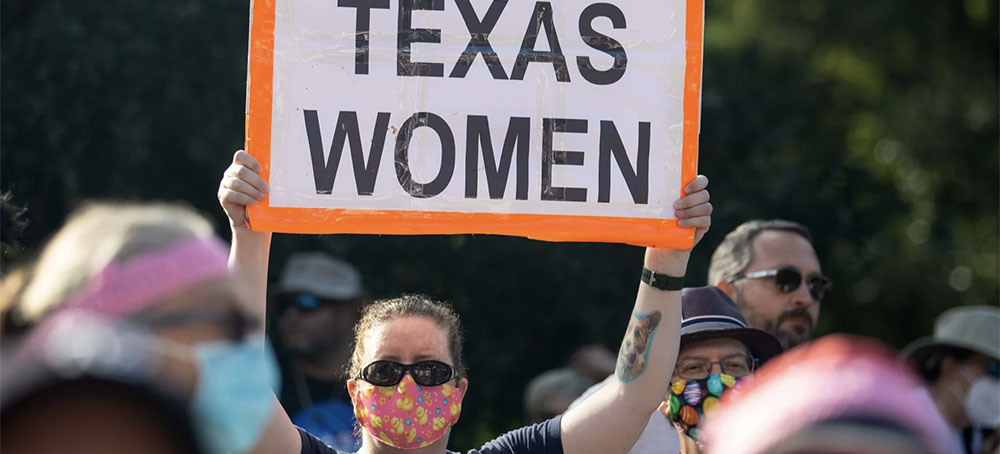 A number of companies with staff in Texas has offered to pay for abortion-related travel. (photo: Montinique Monroe/Getty Images)
"I wanted to let you know that I am setting up a fund to ensure that if any of our Texas-based employees or a dependent find themselves impacted by this legislation and need to seek care outside of Texas, the fund will help cover the additional costs incurred," the letter said.
Match Group, based in Dallas, owns the biggest global portfolio of dating apps and websites, which includes Tinder, Match.com, OkCupid and Hinge.
"We received hundreds of emails and Slack messages of support, of gratitude," Match Group's chief communications officer Justine Sacco said. "People were very proud that she came out and spoke up and put something into place to protect them."
This was just a preview of a trend to come. In the months since, the Supreme Court has overturned Roe v. Wade, allowing trigger bans on abortions to take effect in several states. A growing list of companies is now offering similar services to their employees. Big name corporations like Disney, Microsoft, Nike and Tesla have announced that they plan to assist employees who need to travel out-of-state for services and care.
Many of the trigger laws not only criminalize abortion but also "aiding an abetting" the process. So confidentiality is key. Match Group partnered with Planned Parenthood Los Angeles so employees who need help can have all of their travel and appointments booked outside of the company.
"We have no way to know who has used the fund [or] how many people have called the hotline," Sacco said. "We do not get that information."
Yet despite the gratitude and support from their employees (as well as a public that largely supports access to abortion services), the business world still has to reckon with some longstanding corporate traditions.
"Some of these very same companies are the ones who have donated over the years to the very elected officials who sponsored and voted for these abortion bans in the first place," said Andrea Miller, president of the National Institute for Reproductive Health.
AT…T, Citigroup and Uber are just some of those companies promising to pay for employees' abortion-related coverage — while also donating to lawmakers who support (or even authored) these restrictive laws.
Until this month, Match Group was also donating to both political parties. But the company's new CEO, Bernard Kim, recently suspended donations to both the Republican Attorneys General Association and the Democratic Attorneys General Association.
"It's my responsibility to understand how these donations fit into our larger lobbying activity, and determine what we will do moving forward," Kim said in a recent memo to staff.
Match Group was also on a list of companies expected to attend a luxury retreat hosted by the Republican Attorneys General Association for its corporate donors in Florida earlier this month. Sacco said no one from the company attended and that someone had RSVPd to the event before the new company policy on political donations took effect.
Miller said corporate America should be looking at how it can realign its political influence if it really wanted to make a statement and support its workforce.
"At the end of the day, look, nobody should have to travel to obtain an abortion," she said. "To be dependent on the benevolence of your employer, much less, you know, the whims of the state legislature."
Miller said she did appreciate the legal risk that companies take on when making these public statements and arrangements. Earlier this month, the Texas Freedom Caucus accused law firm Sidley Austin LLP of being "complicit in illegal abortions." Sidley is one of the companies that has promised to assist employees who need to access out-of-state abortion care. It has offices in Dallas and Houston.
The caucus sent a letter to Sidley on July 7, warning the firm to preserve its records in anticipation of a lawsuit.
Even so, Miller said that companies had likely weighed those costs with what could be a bigger loss.
"The reality is that companies, communities, families — frankly, our entire economy — are going to be facing challenges around employee retention, especially the potential of more women being pushed out of the workforce," she said. "We already saw that with COVID; we already have a crisis in terms of what happens to women and others who become pregnant and continue their pregnancies and have children."
Brad Harrington agrees. He's the executive director of the Boston College Center for Work and Family.
"Companies also are very concerned about their brand," he said. "With all the talk about the great resignation — organizations want to be one of those places where people say, 'That's a great place to work,' and, 'Hey, their values are really aligned with ours.'"
And what about employees who do want to have children? Harrington said that good wages, benefits and family leave policies are an important part of reproductive rights.
"I'm pretty sure that's the number one concern [families] have when it comes to abortion," he said. "How they're going to pay for everything that goes with birth and recovery and children's health needs — when it comes to the ability to finance an expanding family, corporations play a pretty major role."
Justine Sacco at Match Group said the company's abortion access plan "goes hand in hand" with its benefits and family leave policies.
"Our business is predicated on helping people find love and relationships and eventually get married and lead to building families," she said. "I think that reproductive rights are in place so that when you choose to have a family, you can also do it in the way that is best for your children, for your partner, and for yourself. And so all of those benefits really should be thought of comprehensively."
When asked if Match Group would consider moving its operations to a state with less restrictive abortion laws, Sacco said they were "looking at all options" to make sure their workforce felt safe and supported. The company has nearly 400 employees in Texas alone.
"Match has been in Texas since the '90s," she said. "But I don't think anything's off the table."
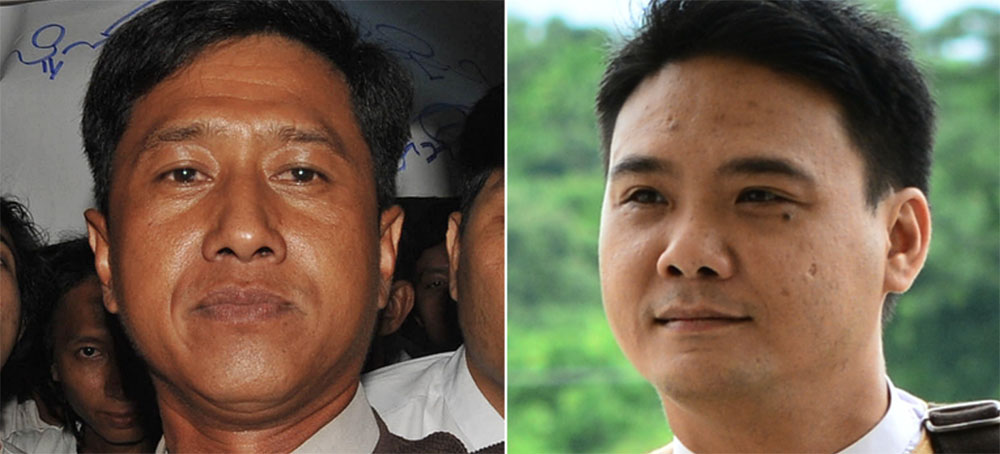 Prominent activist Kyaw Min Yu (Ko Jimmy), left, and former NLD lawmaker Phyo Zayar Thaw. (photo: CNN/AP/Getty Images)
Veteran democracy activist Kyaw Min Yu, better known as Ko Jimmy, and former National League for Democracy lawmaker Phyo Zayar Thaw were executed, along with Hla Myo Aung and Aung Thura Zaw, the Global New Light of Myanmar reported, without giving a date.
Their deaths mark the first judicial executions in the country in decades, and human rights groups fear more will follow. According to Human Rights Watch, 114 people have been sentenced to death in Myanmar since the military seized power in a coup in February 2021.
Ko Jimmy and Phyo Zayar Thaw were accused by the military of being “involved in terrorist acts such as explosion attacks, killing of civilians as informants,” junta spokesperson Zaw Min Tun previously told CNN. They were sentenced to death in January 2022, and last month Zaw Min Tun confirmed their appeals had been denied.
Civilian cases have been tried in military courts with proceedings closed to the public since the military seized power last year, ousting the elected government and reversing almost a decade of tentative democratic reforms.
Rights groups say these secretive military tribunals deny the chance to a fair trial and are designed for speedy – and almost certain – convictions, regardless of evidence.
United Nations Special Rapporteur on the situation of human rights in Myanmar, Tom Andrews, said in a statement Monday he was “outraged and devastated” by the executions.
“My heart goes out to their families, friends and loved ones and indeed all the people of Myanmar who are victims of the junta’s escalating atrocities,” he said. “These individuals were tried, convicted, and sentenced by a military tribunal without the right of appeal and reportedly without legal counsel, in violation of international human rights law.”
Acting Asia director for Human Rights Watch, Elaine Pearson, called the executions “an act of utter cruelty,” that “followed grossly unjust and politically motivated military trials.”
“This horrific news was compounded by the junta’s failure to notify the men’s families, who learned about the executions through the junta’s media reports,” Pearson said in a statement Monday.
A spokesperson for United Nations Secretary-General António Guterres said earlier the UN was “deeply troubled” by the decision to execute the men, calling it a “blatant violation of the right to life, liberty and security of person,” referring to an article in the Universal Declaration of Human Rights.
Amnesty International said it has recorded an “alarming” increase in the number of death sentences in the country since the takeover that it said were designed to “sow fear.”
“The death sentence has become one of many appalling ways the Myanmar military is attempting to sow fear among anyone who opposes its rule, and would add to the grave human rights violations, including lethal violence targeted at peaceful protesters and other civilians,” the organization said on Twitter in June.
An Amnesty report from 2021 said the last judicial execution in Myanmar known to have taken place was in 1988. There have been numerous death sentences in the country since, but they’ve usually been “commuted through mass pardons,” Amnesty said.
CNN has been unable to independently verify when the last execution by the state was carried out in Myanmar.
Prominent activists
Phyo Zayar Thaw, 41, was formerly a lawmaker in Myanmar’s lower house of parliament for the then-ruling National League for Democracy – the party of ousted state counselor Aung San Suu Kyi.
Before becoming a politician, Phyo Zayar Thaw was a popular hip hop artist and a founding member of pro-democracy youth organization Generation Wave. He was imprisoned in 2008 by the previous military regime for his activism.
In November 2021, Phyo Zayar Thaw was arrested during a raid on an apartment complex in Myanmar’s biggest city, Yangon. He was accused of planning attacks on junta targets and charged under the Counterterrorism Law and the Public Property Protection Act, according to local media.
Ko Jimmy became a prominent student activist in Myanmar during the mass popular uprising against the then-military regime in 1988. He spent about 15 years behind bars for his activism and involvement in the 8888 demonstrations and 2007 Saffron Revolution.
According to local media, Ko Jimmy was detained in October 2021, accused of organizing guerrilla attacks on junta targets and charged with treason and terrorism offenses. He was also wanted by the regime for allegedly inciting unrest because of social media posts criticizing the coup.
Since seizing power, the military junta led by Min Aung Hlaing has embarked on a bloody crackdown against any opposition to its rule. Nearly 15,000 people have been arrested and more than 2,000 killed by military forces in that time, according to the Assistance Association for Political Prisoners.
The military has been accused of crimes against humanity and war crimes by the US, UN and other international bodies as it attempts to assert control over the people, who continue to wage a mass resistance campaign.
“The junta’s barbarity and callous disregard for human life aims to chill the anti-coup protest movement,” Human Rights Watch’s Pearson said Monday.
“European Union member states, the United States, and other governments should show the junta that there will be a reckoning for its crimes.”
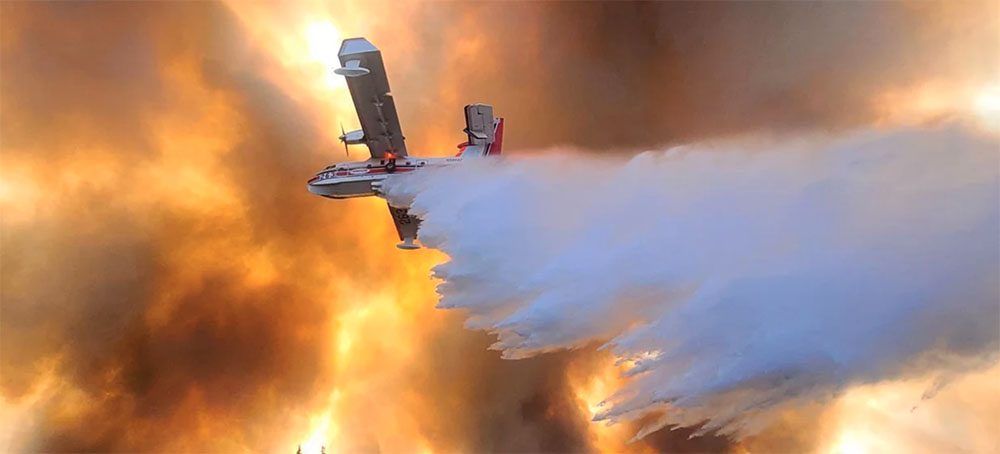 A fixed-wing aircraft drops water on the Clear Fire near Anderson, Alaska, on July 6. (photo: AP)
Already more than 530 wildfires have burned an area the size of Connecticut and the usual worst of the fire season lays ahead.
Already more than 530 wildfires have burned an area the size of Connecticut and the usual worst of the fire season lays ahead. While little property has burned, some residents have been forced to evacuate and one person was killed — a helicopter pilot died last month when he crashed while attempting to carry a load of equipment for firefighters.
Recent rains have helped but longer-term forecasts are showing a pattern similar to 2004, when July rains gave way to high-pressure systems, hot days, low humidity and lightning strikes that fueled Alaska’s worst fire year.
In 2004, the acreage burned by mid-July was about the same as now, But by the time that fire season ended, 10,156 square miles (26,304 square kilometers) were charred.
“The frequency of these big seasons has doubled from what it was in the second half of the 20th century,” said Rick Thoman, a climate specialist with the Alaska Center for Climate Assessment and Policy at the University of Alaska’s International Arctic Research Center. “And there’s no reason to think that’s not going to continue.”
Heat waves and droughts, which are exacerbated by a warming climate, are making wildfires more frequent, destructive, and harder to fight in many places. This month, wildfires have torn through Portugal, Spain, France, England and Germany, which have seen record-high temperatures.
California has recorded its largest, most destructive and deadliest wildfires in the last five years and with the state deep in drought authorities are girding for what may be a late summer and fall filled with smoke and flames.
Alaska, the nation’s largest state, also has been dry. Parts saw an early snow melt and then a largely rain-free June that dried out the duff layer — the band of decaying moss and grasses that blankets the floors of boreal forests and the tundra. This organic matter can be up to 2 feet (0.61 meters) thick but in various stages of decay.
On May 31, a lightning strike on the duff layer in the Yukon–Kuskokwim Delta started the East Fork fire, an area in southwest Alaska that rarely burns. Two communities with a combined population of about 700 were threatened but no mandatory evacuations were ordered in what became the largest wildfire ever in the delta at 259 square miles (671 square kilometers). Firefighters were able to protect the communities.
A fire like that one was directly attributable to climate change, Thoman said. There’s more vegetation growing on the tundra, willow and alder trees are thicker in the transition area between the tundra and forests, and spruce along river valleys are growing thicker and moving farther uphill from those valleys.
“There’s been a significant increase in the amount of fuel available, and that’s from decades of warmer springs and summers in the region, direct result of a warming climate,” he said. “And, of course, fires with more fuels available burn hotter. They burn longer. They’re more resistant to changes in weather.”
In Alaska, a little more than half of all wildfires are started by lightning and the rest are caused by humans accidentally, intentionally or through negligence. Of the 4,687 square miles (12,140 square kilometers) burned so far this year, only 2 square miles (5 square kilometers) have been from human-caused fires.
It isn’t feasible or necessary to try to fight all Alaskan wildfires. Fire play a key role in the state’s ecology by cleaning out low-lying debris, thinning trees and renewing habitats for plants and animals, so Alaska typically lets most burn themselves out or wait until rain and snow does the job. Firefighting resources are used to battle fires in populated areas.
So far this year, there’s been about 145,000 lightning strikes in Alaska and adjacent areas of Canada, as counted by the Bureau of Land Management’s lightning detection network. A staggering 42% occurred between July 5-11 when weather systems produced rain but about 50 fires also were started.
“Having concentrated lightning, where we get a significant fraction of the entire season’s lightning in a row in a few days, that’s actually fairly typical for Alaska lightning,” Thoman said. “Lots of lightning in that concentrated area that did spark quite a few fires in areas that had not had fires up to that point.”
While there’s been little loss of property, smoke from the fires has caused dangerous breathing conditions. In one case, two fires burning near Lake Iliamna joined and in one day burned about 75 square miles (194 square kilometers) of boreal forest, creating smoke and ash that strong winds transported hundreds of miles northwest to Nome, pushing the air quality index into the extremely unhealthy category.
“I would never have thought that you could get that poor of air quality back 400 miles from the active fires, and that is a testament to how hot those fires were,” Thoman said.
Follow us on facebook and twitter!
PO Box 2043 / Citrus Heights, CA 95611
LOTS OF POSTS IGNORED BY BLOGGER..... OR REMOVED ...