■ Opinion
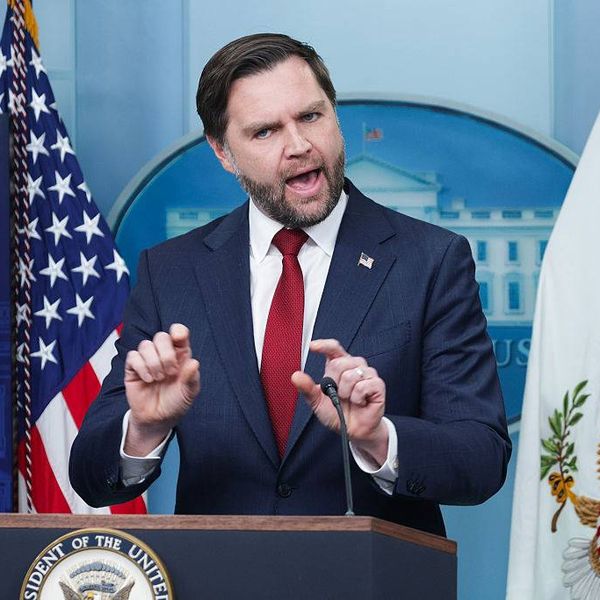
US Vice President JD Vance addresses the National League of Cities: Congressional City Conference at the Marriott Marquis on March 10, 2025 in Washington, DC.
(Photo by Chip Somodevilla/Getty Images)
With Trump a distinct question mark and while the Trumpian current ebbs and flows, one wave is pushing the 2028 candidacy of Vice President JD Vance, but this shouldn't be a relief.
By Clarence Lusane
Donald Trump may, of course, be the Republican candidate for president in 2028, the US Constitution notwithstanding. Although it is clearly written in the 22nd Amendment that “no person shall be elected to the office of the President more than twice,” it may well be a majority vote of the Supreme Court that determines whether that applies to Trump.
In the past, that court has gotten around the Constitution without a single word of it being changed. Rather, its judges have let an innovative interpretation prevail. In 1896, for instance, in Plessy v. Ferguson, the court ignored the unambiguous language of the 14th Amendment that demanded “equal protection” and so upheld racial segregation by creating the fiction of “separate but equal.” It would take 58 years before that lie would be overturned.
Harvard law professor and Trump legal whisperer Alan Dershowitz has told the president that “it’s not clear” if it is constitutionally settled whether he can serve another term, even if elected. Reportedly, Jeffrey Epstein’s former lawyer is working on a book on the subject to be published in March 2026. And MAGA world—from the White House to members of Congress to far-right media figures—is stirring the pot on Donald Trump’s potential fourth bid for president.
Trump is also clearly worried about his legacy. Branding federal buildings and institutions with his name, building an outrageous ballroom, pimping out the Oval Office in gold, and constructing an unnecessary “Triumphal Arch” are all desperate attempts to be remembered as “great” at any cost. Yet, he has to know that the next Democratic president will be under tremendous pressure to remove most, if not all, Trump-brand edifices as quickly as possible. In the end, his real memorials will undoubtedly be the authoritarian policies and conduct that will label him as one of the worst, if not the worst, presidents in American history.
Keep in mind that Trump will be 83 by the time of the 2028 election and he’s already exhibiting so many of the behaviors generally attributed to the fabled “crazy old man” down the street.
That said, Trump remains a question mark when it comes to a third term. There are a number of reasons he might not try for one, not the least being his deteriorating mental and physical health. It didn’t take the New York Times to question his capabilities, not when anyone watching him could hear him slurring his words, dozing off in front of the cameras, barely moving even on a golf course, and sounding more incoherent than ever.
His manic putting up of sometimes hundreds of posts a day or in the wee hours of the night—although his staff may be responsible for some of it—should be considered a cry for help, if ever there was one. And it’s not just the volume of his postings, but their increasing extremity. The hate has become more hateful, the taunts more vicious and racist, and the fabrications more outlandish and divorced from reality. And keep in mind that Trump will be 83 by the time of the 2028 election and he’s already exhibiting so many of the behaviors generally attributed to the fabled “crazy old man” down the street.
Finally (should it get to that point), a majority of the Supreme Court—I certainly don’t think all of them, no matter the situation—could follow the Constitution and rule against a third term. It should be considered ironic at this point that the 22nd Amendment was proposed and passed in response to a Democratic president, Franklin D. Roosevelt, winning his fourth consecutive presidential race.
The Vance Option
With Trump a distinct question mark and while the Trumpian current ebbs and flows, another wave is pushing the 2028 candidacy of Vice President JD Vance. Trump found his avatar in 2024 when the junior senator from Ohio and former harsh Trump critic joined the crew of Republican senators fighting to be the most sycophantic to the party’s new Führer. Like his compatriots Ted Cruz, Lindsey Graham, and Marco Rubio, there were no morals or principles that superseded Vance’s ambition and lust for power. Under the circumstances, that “JD” could easily have stood for “just as dangerous.”
As Vance confirmed at the recent Turning Point USA gathering, not only are White nationalists like Nick Fuentes and unrepentant conspiracists like Candace Owens not denounced, but they are welcomed and embraced. Tucker Carlson’s friendly interview with Fuentes roiled MAGA, but before that he was interviewed by Owens on her podcast. Again, there are no discernible objections from GOP leaders, including Vance.
While Vance opportunistically inserted himself into the Charlie Kirk martyr-building project—he was a pallbearer and spoke at his memorial—he has yet to call out Owens for her wild and unfounded claims that Turning Point USA staff, Israel, the French Foreign Legion, and God knows who else were somehow involved in Kirk’s assassination.
If Trump doesn’t manage to run a fourth time and Vance wants to be president, he’ll be more dependent than ever on the MAGA base and the far-right, especially since he has little to no chance of winning over many Democrats or independents.
Vance’s most eye-raising statement at the TPUSA event was when he said, “You don’t have to apologize for being white anymore.” First, it is a pretty sure bet that no one at the event (or in MAGA) ever apologized for being white. Second, Vance reinforced the view that white supremacy will not be a barrier to any future campaign of his.
Vance’s message is clear: Every imaginable far-right extremist, from white supremacists and technofascists to offensive fabulists, is welcome in his coming 2028 campaign. And he will assumedly have Trump’s blessing (if the president doesn’t indeed decide to try to run again himself).
Poor Secretary of State Marco Rubio has as much chance of getting Trump’s support as Black GOP Congressional Representative Byron Donalds did of becoming his vice-presidential candidate in 2024. Trump 2.0 is wholly built on racial profiling, especially of Latinos, and asserting White power. Merely “looking” Latino is enough in these Trumpist times to attract armed masked men and a trip to an immigration hellhole. Rubio has vigorously defended such illegal arrests and detentions and the racist demonization of immigrants of color that’s gone with it, but he’s rolling the dice if he thinks the MAGA base will see him as the exception to their rule.
Just ask Vance. As hillbilly-centric and pro-white working class as he has tried to portray himself, despite being a millionaire many times over, the fact that he is married to Usha Vance, a woman of color and a non-Christian, has generated lots of racist blowback. Fuentes, for example, called Vance a “race traitor” for marrying Usha. Many MAGA adherents were shocked to discover Usha was not white. One report found that, between January and August 2024, there were at least 1,800 racist, gender, or religious-based attacks on Usha that reached an audience of an estimated 216 million.
While Vance has pushed back against such threats and insults, he’s ignored any possible relationship between Trump’s and his racism against Haitian and other immigrants of color and the blowback he’s experienced against Usha. His default position (rather than directly challenging MAGA bigotry): Usha is “tough enough to handle it.” In addition, instead of defending Usha’s right to practice whatever religion she chooses, he pandered to the religious extremist crowd by stating that he hoped she would convert to Catholicism and “eventually that she is somehow moved by the same thing that I was moved by in church.” He then added, “I honestly do wish that because I believe in the Christian Gospel, and I hope eventually my wife comes to see it the same way.”
Vance Courts the Extremists
If Trump doesn’t manage to run a fourth time and Vance wants to be president, he’ll be more dependent than ever on the MAGA base and the far-right, especially since he has little to no chance of winning over many Democrats or independents. Few will forget that he personally led the outlandish racist claims that Haitian immigrants were stealing pets and eating them in Springfield, Ohio. When busted on that fabrication, he admitted that he had known the truth, but didn’t care as long as it served his interests. He stated in an interview during the 2024 election campaign, “If I have to create stories so that the American media actually pays attention to the suffering of the American people, then that’s what I’m going to do because you guys are completely letting Kamala Harris coast.”
Vance’s “stories” were blatant lies about immigrants (of color) and their role in US society. According to him, undocumented (and perhaps, maybe, kinda legal) immigrants are to blame for high medical prices, rising housing costs, education crises, crime, antisemitism, and illegal voting. In other words, there isn’t a problem in the United States that can’t be linked to undocumented aliens.
A Time When Vance Was Truthful
The next time around, Democrats would be wise to highlight Vance’s past criticism of Donald Trump. After all, he referred to Trump as “Hitler” and as a “morally reprehensible human being“ in emails that plausibly were not supposed to be publicly seen. However, he did publish an article in The Atlantic only weeks before the 2016 election that he clearly wanted to be on the record. In a piece entitled ”Opioid of the Masses,“ he called Trump ”cultural heroin.“ He argued that, while Trump’s blather might make people feel good, he was anything but the answer to the deeply rooted causes of the multiple crises facing poor whites, particularly and ironically, opioid drug addiction. Like heroin, he wrote, its poison ”enters minds, not through lungs or veins, but through eyes and ears, and its name is Donald Trump.“ Vance’s own mother, as he noted in the article, abused heroin and prescription opioids, giving him a highly personal stake in the issue.
What he wrote then is no less true today: “Trump offers an easy escape from the pain… Trump’s promises are the needle in America’s collective vein.” Continuing with that addiction metaphor, he added, “Perhaps the nation will trade the quick high of ‘Make America Great Again’ for real medicine.” That Vance is long gone.
It’s a maxim of today’s politics that all relationships with Trump end badly.
Of course, his most important pre-Trumpian links weren’t to his largely made-up hillbilly upbringing—he was born and raised in Ohio—but his ties to far-right billionaires in Silicon Valley. They have been dubbed “techno fascists” for their reactionary, racist, misogynist, and anti-democratic views. His bids for the Senate and then the vice presidency weren’t just supported by Elon Musk, Peter Thiel, and other big names in the billionaire tech world, but opened the door to their increasing role in shaping policy, especially but not exclusively in relation to the artificial intelligence and technology industries.
Vance has, of course, also been in lockstep with Trump’s imperialist and self-serving foreign policy. He crudely sided with the president when he attempted to browbeat Ukrainian President Volodymyr Zelenskyy in their infamous Oval Office meeting on February 28, 2025. He also defended, and even cruelly joked about, the deadly strikes on boats in the Caribbean by the US military. He justified Trump’s illegal abduction of Venezuelan President Nicolas Maduro and his wife, Cilia Flores, echoing all the false claims of Trump, Rubio, and Defense Secretary Pete Hegseth about drug trafficking and stolen oil.
It’s a maxim of today’s politics that all relationships with Trump end badly. Will Vance abandon Trump as he deteriorates yet more? The main lesson Trump learned from his late lawyer, the notorious Roy Cohn (of McCarthy-era fame), was to use people until they are no longer useful. Cohn counseled Trump in his early years and introduced him to influential and important people who facilitated his rise in New York City. They became “friends” until Trump (of course!) abandoned Cohn in his time of need once he contracted AIDS and was dying. Trump simply brushed him aside when he was no longer useful and reportedly did not even attend his funeral. Can Trump expect the same treatment from Vance?
Or will the vice president be like Kamala Harris and, as she did with President Joe Biden, pretend Trump is well when he clearly is not? As Trump struggles to make it for three more years, Vance will be questioned about his cognitive state and physical health. Will he gaslight the public and hope for the best?
Given what we have seen and that Vance has demonstrated no loyalty to principles or ethics, no one should be surprised if he turns on Trump at some point, should he determine that it is in his interest to do so.
Richard Gottfried, the New York State Assembly member who introduced the New York Health Act in 1992, participating in a campaign for single-payer health care.
(Photo courtesy Richard Gottfried via Albany Business Review)
Will passage of a state-based program serve as an initial step towards a national program or derail the nationwide effort for a federal plan?
By Marc H. Lavietes
The consequences of President Donald Trump’s One Big Beautiful Bill Act (OBBBA) are already apparent. Millions have already lost health insurance. Millions more face soaring costs.
Nevertheless, fierce political opposition to a national Medicare for All legislation remains. The only possible path forward is to enact universal health care programs in those states where the electorate will be receptive. To facilitate this process, the State Based Universal Health Care Act (SBUHCA) has been introduced into both the United States Senate (S. 2286) and House (HR. 4406). This bill establishes minimal standards for state-based healthcare delivery programs and codifies the transfer of funds for healthcare services from Medicare, Medicaid, and the Children’s Health Insurance Program (CHIP) to states with state-based programs.
Over the past 60 years, repeated attempts to improve the quality and availability of healthcare have had some success. In 1965, President Lyndon Johnson passed our first national healthcare legislation: Medicare for those age 65 and over and for younger adults with disabilities. Medicaid for indigent people. Most working- and middle-class Americans were excluded. Presumably working Americans would get health insurance via their workplace. Presidents Clinton and Obama, neither of whom pushed for passage of a universal program, were able to pass legislation providing incremental change. Clinton’s “Healthcare Act of 1997” and Obama’s “Affordable Care Act” of 2010 reduced the number of uninsured Americans. These bills, however, did not insure everyone or address segregation within the insurance system. They did not stem the rising cost of health care or reduce the number of underinsured persons with medical debt. They are responsible for the convoluted and cumbersome healthcare system we have today.
It is helpful to look back at the Social Security Amendment of 1965 that created the Medicare and Medicaid programs. In the days before the 1965 Civil Rights Act, Democrats usually enjoyed wide majorities in both the Senate and the House. There was however a confounder. Their majority included a block of Southern politicians whose principles were akin to those of their Civil War era Democratic Party predecessors. To gain their support, Johnson had to craft legislation that would somehow assure continued inequality between White and Black Americans. A true Medicare program was offered only to older retired Americans. That legislation required that hospital funding would be contingent upon hospital desegregation. In fact, hospital desegregation was achieved. Working age people however would be served by Medicaid, a program with means testing that provides care only to people at the poverty level. Details of the program are left to the discretion of the states. Most wage-earning, working-class people are thus excluded from the government program. Practical details of the program are left to the discretion of each state. The drawback became apparent during Covid when ten red states rejected the Medicaid supplements offered via the Affordable Care Act. Covid mortality in those states was greater than in those that participated in the Medicaid expansion.
Passage of a state-based program thus poses a conundrum: will passage of a state-based program serve as an initial step towards a national program? Or, with single-payer programs in place in progressive states, will the push for true national universal program be abandoned? The Medicaid experience bodes poorly for the success of a state-based plan. On the other hand, the history of the Canadian healthcare system shows that a state-based program may serve as a solid foundation for evolution to a nationwide plan. The Canadian program began in 1947 as a Saskatchewan-wide hospital insurance program for that province. Over the years, health programs were developed in other provinces such that in 1984, these coalesced into one: the Federal Canada Health Act.
With its New York Health Act (NYHA), New York State is now at the forefront of the movement toward state-based healthcare legislation. The notion that progressive legislation should originate in New York State has precedent. In the aftermath of the early 20th century Greenwich Village Triangle Shirtwaist Company fire, Frances Perkins, then a social worker and executive secretary of the newly formed Statewide Committee on Safety, was instrumental in crafting minimum wage, child labor and worker safety laws for the State. These State laws would later become the template for much of FDR’s New Deal legislation.
The NYHA would provide comprehensive coverage to all New York residents. The bill would establish a trust fund to hold money for patients and pay providers. Providers would bill the fund for services. Fees would be negotiated. Patients’ choices of physicians would not be limited by networks or prior authorizations. Nor would the bill dictate physicians’ methods of practice. All New Yorkers would pay a progressive graduated annual tax scaled according to income. Capital gains and stock transfers would be taxed as well. Additional funds would be available from Medicare, Medicaid, and CHIP. While these funds could be transferred to the states via a wraparound process, SBUHCA would codify this transfer of funds. Patients would make no further healthcare payments. No co-pays, deductions, payment at the point of service, or denials. No one would have medical debt. It is projected that 9 of 10 New Yorkers would pay less for medical care under the NYHA than they pay now.
New Yorkers can afford the NYHA. All other industrial nations provide better care to their citizens and at lower cost. New York can do the same. The cost of providing comprehensive care to include those services now not covered by Medicare, e.g., dental, visual and auditory along with long term care, is large. But eliminating the middlemen in the insurance, pharmaceutical and other provider industries would produce sizable savings. A recent Rand Corporation analysis assumed that the rates for physicians’ fees and other service providers would be greater than Medicare rates but less than that of more generous providers. The analysis concluded that the NYHA would reduce the overall cost of healthcare by 4%.
Where does the NYHA stand today? The process of advancing legislation from its drafting toits passage is arduous. Presently, the NYHA has a majority of co-sponsors in both chambers: 32 in the Senate; 78 in the Assembly. More public support for the bill is necessary, however, before legislators will advance the bill to the legislative chambers for a vote. Opposition from two major public service unions has also hindered efforts to bring the bill to a vote.
Passage of the NYHA would be a meaningful forward step toward adequate health insurance for all. We must continue the fight.
Then-Homeland Security Secretary John Kelly testifies before the Senate Homeland Security and Governmental Affairs Committee on Capitol Hill June 6, 2017 in Washington, DC.
(Photo by Win McNamee/Getty Images)
Once these former generals and admirals and other high officers take a united stand, they will receive great mass media attention and give great credibility to the expanding peaceful opposition to Trump.
By Ralph Nader
As President Donald Trump’s dictatorial grip over America worsens, his violations of our Constitution, federal laws, and international treaties become more brazen. Only the organized people can stop this assault on our democracy by firing him, through impeachment, the power accorded to Congress by our Founders. This is one of the few things that he cannot control.
According to a PRRI’s (Public Religion Research Institute) poll, “a majority of Americans (56%) agree that ‘President Trump is a dangerous dictator whose power should be limited before he destroys American democracy’ up from 52% in March 2025.” Trump’s recent actions will only further increase this number.
In earlier columns, I discussed the potential power of
- The Contented Classes;
- The small minority of progressive billionaires; and
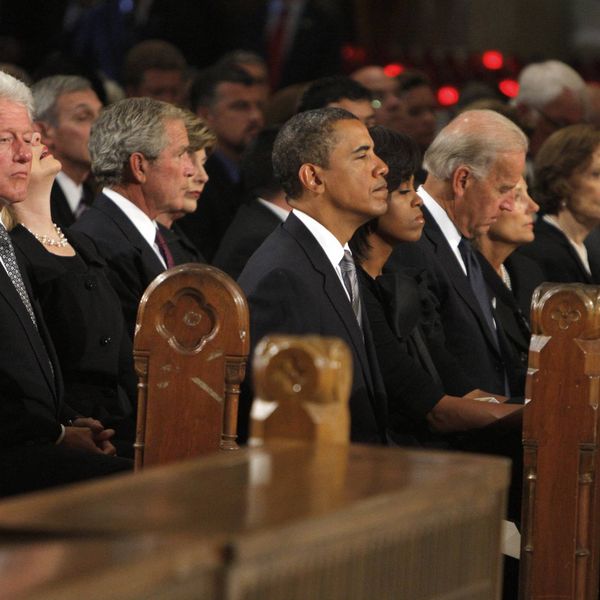
- The huge potential of the four ex-presidents–George W. Bush, Bill Clinton, Barack Obama, and Joe Biden, who detest Trump but are mostly silent, and are not organizing their tens of millions of angry voters in all Congressional Districts.
A fourth formidable constituency, if organized, is retired military officers who have their own reasons for dumping Trump. Start with the ex-generals whom Trump named as Secretary of Defense (James Mattis); John Kelly, as US Secretary of Homeland Security and White House Chief of Staff; and Mark Milley, who headed the Joint Chiefs of Staff.
High military brass have sworn to uphold the Constitution, which does not allow for monarchs or dictators.
Trump introduced many nominees with sky-high praise. When they tried to do their job and restrain Trump’s lawlessness, slanders, and chronic lies to the public, his attitude toward them cooled, and then he savaged them. Ultimately, he fired several of them in his first term.
During a November 2018 trip to France to mark the WWI armistice centennial, Trump canceled a planned visit to the Aisne-Marne American Cemetery, where many Americans killed at Belleau Wood are buried. Trump said he canceled the visit to the cemetery because of the rain. The Atlantic magazine reported that Trump claimed that “'the helicopter couldn’t fly’ and that the Secret Service wouldn’t drive him there. Neither claim was true.” Trump especially disliked Kelly saying about Trump that “a person that thinks those who defend their country in uniform, or are shot down or seriously wounded in combat, or spend years being tortured as POWs are all ‘suckers’ because ‘there is nothing in it for them.’” This sentiment, coming from Trump, a serial draft dodger, rankled Kelly. (Of course, the persistent prevaricator Trump denied saying these words.)
The retired military officers’ case against Trump is too long to list fully. They were, however, summarized by one retiree, who cited the military code of justice and declared that were he to be tried under that code, Trump would be court-martialed and jailed many times over. Consider some of the would-be charges: constant lying about serious matters, including his own illegal acts; using his office to enrich himself; unconstitutionally and illegally bombing countries that do not threaten the United States; using federal troops inside our country; and escalating piracy on the high seas, with misuse of the US Coast Guard.
Moreover, they resent deeply how Trump came into his second term, enabled by the feeble Democratic Party, and fired career generals for no cause other than to replace them with his cronies and sycophants. This includes firing the highly regarded first woman to head the Coast Guard. He has discarded the policy aimed at ensuring the military reflects America’s diversity by providing equal opportunities for women and minorities to serve.
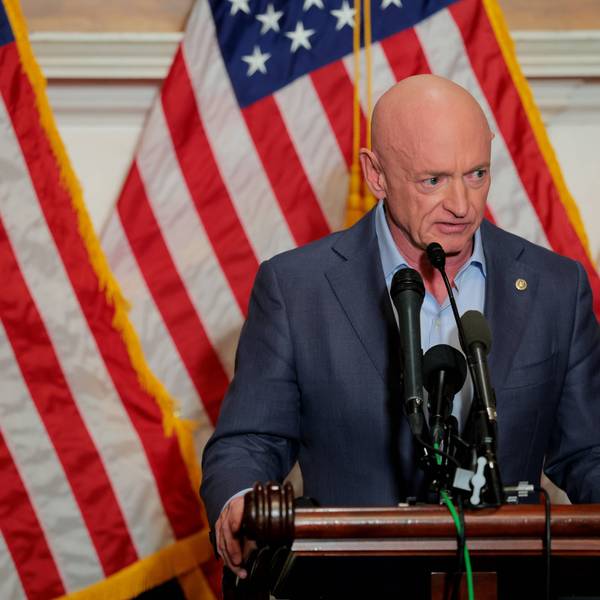
Retired military officers despise Pete Hegseth, the incompetent, foul-mouthed puppet secretary of defense, for his mindless aggressions, misogyny, and mistreatment or forcing out of long-time public servants in the Pentagon. They find it appalling that Trump’s statement that the six ex-military members of Congress who reminded US soldiers not to obey an illegal order (long part of the Military Code of Justice and other laws) should be executed. This impeachable outburst was followed by Hegseth moving to punish Sen. Mark Kelly (D-Ariz.), one of the signers, by seeking to lower his reserve rank and reduce his pension.
They also resent Trump reducing services at the VA due to mass layoffs.
What could be keeping these officers on the sidelines? Many of the very top brass have become consultants to the weapons manufacturers. Others fear retribution affecting their retirement. Others want to avoid the Trumpian incitement to his extreme loyalists to use the internet anonymously to attack any critics.
None of the above should be controlling factors. After all, these officers were expected to face the dangers of any military battle courageously.
Retired Colonel Larry Wilkerson, former chief of staff of Secretary of State Colin Powell, has been outspoken in the media against Trump’s dangerous policies for years. There are others who have taken on Trump, the White House Bully-in-Chief.
Besides, the Republic’s existence is urgently at stake here. Trump is overthrowing the federal government, invading America’s cities with his growing corps of storm troopers, while threatening to go much further with his mantra, “This is just the beginning.” High military brass have sworn to uphold the Constitution, which does not allow for monarchs or dictators.
Once these former generals and admirals and other high officers take a united stand, they will receive great mass media attention. They will give great credibility to the expanding peaceful opposition to Trump. They will provide the needed backbone to the Democrats in Congress to hold shadow hearings to press for impeachment and removal from office Fuhrer Trump, who daily provides Congress with openly boastful impeachable actions.
For example, he told the New York Times on January 9, 2026, that only “my own morality. My own mind.” restrains him. Not the Constitution, not federal laws and regulations, not treaties we have signed under Republican and Democratic presidents.
He took an oath to obey the Constitution and violated it from Day One.
Stepping forward with an adequate staff, funds that would be raised instantly, the fired generals would bring out retired officers and veterans down the ranking ladder all over the country. Already, Veterans for Peace, with over 100 chapters, is ready for rapid expansion. (See, https://www.veteransforpeace.org/).
Remember this: TRUMP’S DICTATORIAL RAMPAGE IS ONLY GOING TO GET WORSE, MUCH WORSE. Venezuela, Cuba, Panama, Greenland, Nigeria, and Iran are on the growing list for Trump’s endless warmongering. He has openly declared more than once, “Nothing can stop me.” Those words should be sufficient for enough top retired military officers to exert their special legacy of patriotism for the “United States of America and the Republic for which it stands…”
A cell phone sits on top of a wooden table with the Signal app open.
(Photo by appshunter.io on Unsplash)
Schindler built a list to save lives. Natanson built one to save the truth. The FBI just seized it. Whose list are you on?
By John Marks
At dawn on January 15, the infrastructure I documented in “The Disappearance Machine” completed its pivot. FBI agents seized a journalist’s devices containing 1,169 federal sources and know every person those sources ever contacted.
The surveillance tools built to map immigrant networks are now mapping dissent. The databases are merging. The lists are compiling. The machine is building its lists.
This essay asks when and how we will build ours.
In August, I preached and I warned: The United States had built a system for disappearance at scale, and it wouldn’t stay at the border. I was dismissed as alarmist. Five months later, the wolf is through the door. The FBI at a journalist’s home at dawn, seizing the devices that map everyone who ever talked.
The machine built to disappear immigrants is now being calibrated for journalists, whistleblowers, and political opposition. This is not the beginning of that process. It is the middle.
On January 15, 2026, FBI agents arrived at Hannah Natanson’s Virginia home before first light. They took her phone. Two laptops. A Garmin watch. The Washington Post reporter had spent a year as the “federal government whisperer,” building a network of 1,169 Signal contacts from federal workers documenting President Donald Trump’s transformation of government. Every one of those contacts trusted that encryption meant protection. Now their names, numbers, and message histories sit in FBI forensic labs. The trust was misplaced. The exposure is underway.
This is not a separate story from the immigration enforcement apparatus I documented in “The Disappearance Machine.” It is the same infrastructure, the same surveillance tools, the same logic of bureaucratic erasure, the same expansion I warned was inevitable.
The machine built to disappear immigrants is now being calibrated for journalists, whistleblowers, and political opposition. This is not the beginning of that process. It is the middle. The die is cast. The machinery is active. And it is learning how to map dissent the same way it learned to map migration: through databases, devices, and the quiet accumulation of lists that no one sees until it is too late.
The Infrastructure Does Not Discriminate
The tools were built for the border. They will not stay there.
In “The Disappearance Machine,” I described how the United States government contracted with Palantir, Amazon, and Anduril to build AI-powered surveillance systems for immigration enforcement. Predictive software. Commercial databases that map not just individuals but their relationships, behaviors, and associations. Cell signals tracked. Protest attendance logged. Clinic visits recorded. The same way totalitarian regimes once tracked enemies by ledger and index card, we now track them by algorithm and metadata.
That infrastructure was never going to stay confined to immigration. The tools don’t discriminate. They sort, flag, and process by design. A database built to map immigrant networks maps any network. Software trained to predict “deportability” predicts any target category you feed it. Surveillance systems deployed to track one population can pivot to another with a policy memo and a shift in priorities.
The Natanson raid makes that pivot visible. The FBI seized devices containing years of communications, contacts, and location data. Signal conversations with phone numbers traceable through government records. Email chains revealing addresses. Browser history showing which government sites she visited and when. Even the Garmin watch, because location data maps patterns of movement, meetings, and association.
This is not traditional criminal investigation. This is network mapping at scale. The same forensic capabilities applied to immigration databases are now being applied to journalist-source relationships. The architecture is identical. Only the target has changed.
The Lists Are Always the Core
Every authoritarian system runs on lists. Oskar Schindler knew that. He built one to save lives because the same machinery was building them to end lives. The list doesn’t care what it’s for. It just processes names.
The Disappearance Machine operates on lists. More than 20 million people are being targeted, already within reach of the immigration enforcement system based on the government’s own data. Not just undocumented immigrants but visa holders, DACA recipients, parolees, asylum seekers, aid workers, and US citizen children connected by family ties. The list converts proximity into guilt, connection into evidence, care into crime.
Now the same list-making infrastructure is being turned inward. Attorney General Pam Bondi’s December 2025 memo directs the FBI to compile “lists of groups or entities engaged in acts that may constitute domestic terrorism.” These lists are compiled in secret. No notice. No hearing. No means for redress. Updated every 30 days. The FBI has established cash reward systems for informants and publicized tip lines for reporting suspected domestic terrorists.
None of this is new. It is merely new again.
A government employee on both lists, flagged for immigration ties and for contact with a journalist, becomes a higher-priority target.
The FBI’s Security Index and Rabble Rouser Index, exposed by the 1975 Church Committee, rolled civil rights leaders, clergy, and students into a homogeneous category of threats to national security. The Church Committee’s core lesson remains relevant: When the government builds systems for tracking domestic enemies, those systems rarely stay confined to people engaged in actual crime. They expand, driven by broad labels and institutional instincts to gather more information than needed.
The Natanson raid exposes how these lists are populated in practice. Seize a reporter’s devices. Map every source who ever made contact. Cross-reference with employment databases to identify agencies, departments, positions. Match timing of communications with leaks or published stories. Build a network diagram of everyone connected to information the government wants to control.
Hannah Natanson’s 1,169 sources on her federal government beat are not the whole exposure. Add thousands from years covering education. Sources from her January 6 coverage. Breaking news contacts from mass shootings and disasters. Email and phone contacts accumulated across a career going back to 2019. We are talking about thousands of people whose information now sits in FBI databases, flagged by association with someone the government decided to investigate.
Most did not share classified information. They shared workplace conditions, policy changes, agency mismanagement. That is often protected whistleblowing under law. But protection under law means little when the goal is not prosecution. The goal is mapping. Building lists. Identifying networks. Creating a comprehensive picture of who talks to whom about what.
And here is what makes this moment different from the Church Committee era: The lists are converging. The lists from immigration enforcement, the DOGE data accumulations, and journalist surveillance are being compiled in the same databases, using the same tools, following the same logic. Today they are separate categories. Tomorrow they can be merged, cross-referenced, analyzed for patterns. A government employee on both lists, flagged for immigration ties and for contact with a journalist, becomes a higher-priority target. The infrastructure doesn’t just track. It learns. It predicts. It escalates.
Bureaucratic Disappearance, Scaled and Refined
The violence hides in the paperwork.
In “The Disappearance Machine,” I described how people are being taken and files vanish. Lawyers find no records. Families are left with no answers. The system hides itself in bureaucracy. Cloud servers instead of filing cabinets. Charter flights instead of cattle cars. Software platforms instead of stamped passports. The fear is made public through spectacle, a raid televised, a camp built in a week, while the machine operates in silence.
The Natanson raid follows the same pattern. The spectacle is the dawn knock, the devices seized, the attorney general’s public statements about “classified information” and “national security.” That is theater. The real work happens in silence. FBI forensic labs extracting years of data. Analysts building network maps. Names added to databases. Sources flagged for investigation. All conducted under legal process that makes it feel orderly, authorized, routine.
This is what bureaucratic disappearance looks like when applied to dissent rather than detention. No one is being put on a plane. But sources are being exposed, careers destroyed, networks mapped, and fear distributed through the knowledge that contact with a journalist creates a permanent record accessible to law enforcement. The outcome is the same as physical disappearance: silence. Self-censorship. Networks dissolved not through arrests but through the rational calculation that speaking carries unacceptable risk.
The lesson is being taught one case at a time. Every federal employee now knows that contacting a journalist may mean their name ends up in an FBI file. Every journalist knows their sources face exposure if devices are seized. Every advocacy organization knows they might be labeled domestic terrorists and subjected to the same surveillance. The chilling effect operates not through mass arrests, which would be too visible, too contestable, but through the quiet accumulation of cases that teach everyone else to stay silent or risk everything.
This is how totalitarian systems operate. Not through spectacular violence but through bureaucratic process that converts dissent into data, association into evidence, and speech into crime. The machine does not announce its intentions. It simply processes the next case, adds the next name, expands the next database. And by the time the pattern is obvious to everyone, it is too late to stop it.
The Expansion Was Always the Plan
“If you’re telling yourself this is just about immigration, you are lying to yourself.” That is what I wrote in “The Disappearance Machine.” The infrastructure now in place can be turned inward with a single policy shift. A protest database. A subpoenaed group chat. A misread message. The files are already compiled. The logic is already tested. What began with immigration will not stop at the border. It will not stop at citizenship. It will not stop at all, unless it is broken.
The Natanson raid is that expansion happening in real time.
The surveillance tools built for immigration enforcement are now being applied to domestic political opposition. The lists are being compiled. The networks are being mapped. The legal framework is being established piece by piece.
This is the moment when action matters. Not later, when the pattern is obvious to everyone. Now, when the machinery is visible to those willing to look.
National Security Presidential Memorandum 7, issued September 2025, directs law enforcement to investigate “acts of recruiting or radicalizing persons” for “political violence, terrorism, or conspiracy against rights.” It identifies ideological markers as red flags: “anti-Americanism, anti-capitalism, and anti-Christianity.” “Extremism on migration, race, and gender.” “Hostility towards those who hold traditional American views on family, religion, and morality.”
The Bondi memo implements this vision by directing the FBI to compile lists of groups engaged in “organized doxing campaigns, swatting, rioting, looting, trespass, assault, destruction of property, threats of violence, and civil disorder.” These categories are breathtakingly broad. They could encompass virtually any protest that becomes disruptive, any criticism framed as “anti-American,” any opposition to immigration enforcement or support for “radical gender ideology.”
What we are witnessing is the creation of a domestic terrorism designation process without legal foundation. No federal law permits the president to label domestic groups as terrorist organizations. Yet the administration proceeds anyway, using the same infrastructure built for immigration enforcement. Secret lists compiled. Cash rewards for informants. Joint Terrorism Task Forces, historically used against foreign threats, now mobilized against American citizens engaged in constitutionally protected activities.
This is not a future risk. It is operational now. The Natanson raid demonstrates how the system works in practice. A journalist documents government actions. Sources provide information. The government decides that information is dangerous. Devices are seized. Networks are mapped. Sources are exposed. Legal process provides cover. Bureaucracy makes it feel orderly. And the next journalist, the next source, the next researcher learns the lesson: Silence is survival.
What History Teaches
Ask survivors of authoritarian regimes what they remember. They rarely describe the first moment of violence. They describe the silence.
They remember when neighbors vanished and no one asked where they had gone. They remember how fear hardened into habit. How routine replaced resistance. How everyone waited too long to believe what was happening because believing meant acting, and acting meant risk.
We have seen this before. Not identical, but unmistakably familiar. In Nazi Germany, it was lists, uniforms, house visits, household registries, and public silence. Files became train rosters. Erasure became routine. Citizens looked away because the violence arrived not as chaos but as order. The Stasi in East Germany compiled comprehensive surveillance files on millions of citizens. The KGB used networks of informants to map dissent. The Gestapo maintained card files on suspected opponents. Each system relied on the same core infrastructure: comprehensive surveillance, secret lists, bureaucratic processing, and the normalization of disappearance.
The technology changes. The logic does not.
Now it is cloud servers instead of filing cabinets. AI-powered network analysis instead of hand-drawn relationship maps. Device seizures instead of house searches. The scale of what is now possible exceeds anything historical authoritarian regimes could achieve. The Stasi employed hundreds of thousands of informants and took decades to compile files on millions of people. The FBI can map networks of millions in months, using tools that automatically analyze communications, predict associations, and flag targets for investigation.
One device seizure exposes thousands of sources. Metadata reveals patterns of contact that would have taken years of human surveillance to establish. Location data maps every meeting, every movement, every association. And the databases that receive this information do not forget. Unlike paper files that could be destroyed, digital records persist indefinitely. They can be searched instantaneously, cross-referenced with immigration records, tax records, health records, financial transactions, social media activity, and location data from cell towers and traffic cameras.
This is not paranoia. This is documented capability. The contracts are public. The technologies are commercial. The legal frameworks are established. The only question is how far the government chooses to go. And history teaches that governments with comprehensive surveillance capability always go further than they initially promise.
The question survivors of other regimes ask is always the same: Why didn’t anyone act sooner? And the answer is always the same: because it arrived not as chaos but as order. Forms being filed. Legal procedures followed. Systems working exactly as designed. By the time the violence becomes undeniable, the infrastructure is already complete and the space for resistance has closed.
We are in that middle space now. The infrastructure is operational but not yet complete. The expansion is happening but not yet normalized. The lists are being compiled but not yet acted upon at full scale. This is the moment when action matters. Not later, when the pattern is obvious to everyone. Now, when the machinery is visible to those willing to look.
What Schindler Knew
Schindler understood something essential: The list is the power. Whoever holds the names decides who disappears and who survives. He built a list to save lives because the same machinery, in other hands, was building lists to end them. Same columns. Same categories. Same bureaucratic logic. Different purpose. That was the only difference that mattered.
Hannah Natanson built a list too. Not names to save from trains, but names willing to speak truth. 1,169 sources who believed that documenting the dismantling of democratic government mattered more than their comfort, their careers, their safety. She built a network of witnesses. A chorus of voices. A record of resistance written in encrypted messages and quiet meetings and the steady courage of people who decided that silence was not an option.
That list is now in FBI hands. The sources are exposed. The network is mapped. The chorus is identified. The machinery built to disappear immigrants has turned inward, and the first thing it seized was a record of everyone who ever talked.
This is not coincidence. It is strategy.
The answer to a list of targets is a list too long to process, too distributed to seize, too deeply rooted to pull from the ground.
Hannah Arendt wrote that totalitarianism succeeds not through violence alone but through isolation. It atomizes. It separates. It makes each person feel alone, unseen, unable to trust that anyone else sees what they see or feels what they feel. The purpose of seizing a journalist’s sources is not prosecution. It is silence. It is severing. It is teaching every federal employee, every potential whistleblower, every citizen with something true to say that they stand alone. That no one will protect them. That the machine sees all, remembers all, and forgives nothing.
The answer to isolation is solidarity. The answer to silence is a thousand voices. The answer to a list of targets is a list too long to process, too distributed to seize, too deeply rooted to pull from the ground.
Schindler saved 1,100 lives because he understood that the list was the power and he seized it. Hannah Natanson documented a transformation of government because she understood that the truth required witnesses and she gathered them. Both built something the machinery could not build for itself: trust. Connection. A web of humans who chose each other over safety.
That is what the machine cannot tolerate. Not the leaks. Not the stories. The solidarity. The proof that isolation can be broken, that people will still speak to people, that the chorus can grow louder even as the machinery grows stronger.
What we build now determines what survives. The networks we create. The connections we protect. The records we keep in too many hands to seize, too many places to raid, too many voices to silence.
The machine is processing names. It will not stop. It does not tire. It does not forget.
But neither does memory. Neither does history. Neither do the witnesses who refuse to look away.
Schindler built a list. Hannah built a list.
Now build yours.
This essay builds on “The Disappearance Machine,” published in Common Dreams, August 30, 2025. A comprehensive academic version has been accepted for peer-reviewed publication and will appear this spring.




















No comments:
Post a Comment
Note: Only a member of this blog may post a comment.