Showing posts with label INSIDER TRADING SCANDAL. Show all posts

Friday, April 11, 2025

Trump gets BAD NEWS on exploding INSIDER TRADING scandal


+ 6,700 COMMENTS WORTH READING! 


THANK YOU SENATOR ELIZABETH WARREN! 

MAGA GOP PUSHING TAX CUTS FOR THE WEALTHY AT THE EXPENSE 

OF WORKING AMERICANS & RETIRED AMERICANS!

WATCH TO THE END! 


Brian Tyler Cohen
4.3M subscribers


Friday, May 19, 2023

The Banking Crisis Has Produced Extraordinary Testimony about Land Mines Lurking in the U.S. Banking System


SUBSCRIBE TO THIS NEWSLETTER TO RECEIVE TIMELY REPORTS

The Banking Crisis Has Produced Extraordinary Testimony about Land Mines Lurking in the U.S. Banking System

By Pam Martens and Russ Martens: May 18, 2023 ~
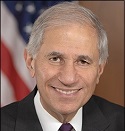
Martin Gruenberg, Chair, Federal Deposit Insurance Corporation (FDIC)

Martin Gruenberg, Chair, Federal Deposit Insurance Corporation (FDIC)

On Wednesday, March 8 of this year, the holding company for the federally-insured Silvergate Bank announced it was winding down the bank. It had little choice but to do so. It was experiencing a bank run and had incinerated its reputation by focusing on deposits from crypto companies, including those majority-owned by indicted crypto kingpin, Sam Bankman-Fried.

According to testimony from the Chairman of the Federal Deposit Insurance Corporation (FDIC), Martin Gruenberg, before the Senate Banking Committee on March 28, “in the fourth quarter of 2022, Silvergate Bank experienced an outflow of deposits from digital asset customers that, combined with the FTX deposits, resulted in a 68 percent loss in deposits – from $11.9 billion in deposits to $3.8 billion.”

Silvergate Bank’s primary regulator was the San Francisco Fed.

Two days later, on Friday, March 10, Silicon Valley Bank was put into receivership at the FDIC following an unprecedented bank run that saw $42 billion in deposits leave the bank on just the day of March 9, with another $100 billion in deposits queued up to leave the next day – which would have represented the vast majority of its deposits taking flight in 48 hours. That testimony was delivered to the Senate Banking Committee on March 28 by the Vice President for Supervision at the Fed, Michael Barr.

Silicon Valley Bank’s primary regulator was also the San Francisco Fed.

Two more bank failures followed in short order: Signature Bank on March 12 and First Republic Bank on May 1. Both were experiencing bank runs as a result of a loss of confidence by their customers. The primary regulator of both was the FDIC.

First Republic Bank, Silicon Valley Bank, and Signature Bank were the second, third and fourth largest bank failures in U.S. history, respectively. The largest failure was Washington Mutual during the financial crisis of 2008. JPMorgan Chase, officially the riskiest U.S. bank, was allowed by its regulators to take over Washington Mutual in 2008 and First Republic Bank on May 1 of this year.

Senator Elizabeth Warren at May 17, 2023 Hearing on Fed Accountability

Yesterday, the Senate Banking Subcommittee on Economic Policy, which is chaired by Senator Elizabeth Warren (D-MA), held a hearing on the lack of accountability at the Fed and proposals to reform its structure. Senator Warren said this in her opening remarks:

“The rapid collapse of three banks — Silicon Valley Bank, Signature Bank and First Republic Bank — was a shock. These three bank failures together put more assets at risk than the 25 bank failures in the 2008 crash.

“Silicon Valley Bank’s failure was another symptom of what has become a predictable string of failures in the governance of the Federal Reserve. SVB’s collapse and other bank failures it triggered forced the FDIC, the Treasury Department, and other regulators to rush to the rescue to avoid implosion of our banking system. So far, the FDIC Insurance Fund has suffered billions of dollars of losses, and, as a result of the bailouts, America’s biggest too-big-to-fail bank just got $200 billion bigger.” (Senator Warren is referring to JPMorgan Chase’s takeover of First Republic Bank.)

During yesterday’s hearing, the Fed’s support of 2018 legislation that resulted in the rollback of prudential regulation on banks with assets under $250 billion was examined as contributing to the recent bank collapses. In written testimony, Dr. Peter Conti-Brown, Associate Professor of Financial Regulation, Associate Professor of Legal Studies and Business Ethics at The Wharton School of the University of Pennsylvania, offered this analysis:

“In 2018, after many months of debate, President Trump signed the Economic Growth, Regulatory Relief, and Consumer Protection Act. In an era of omnibus bills, often hundreds or thousands of pages long, one of the most impressive feats of the EGRRACPA (or S. 2155, as it is more commonly known), is its length: the entire bill is just 75 pages long. The part that is relevant to the present banking crisis, Title IV of that act, is just five pages long. In those five pages, entitled ‘Tailoring Regulations for Certain Bank Holding Companies,’ Congress changed the $50 billion [asset] threshold [for prudential regulation of banks] to $250 billion [in assets]…

“Over the last two months, three of the twenty banks within that band of $100 billion to $250 billion have failed. (In the somewhat absurd vernacular of banking, we call these banks ‘regional banks.’). We do not know how many of the remaining seventeen would have failed but for the emergency declarations and concomitant liquidity support that the federal government’s extraordinary actions facilitated thereafter.

“Thus, while the focus is often on Silicon Valley Bank, the fact is that we have had an intolerable failure of a market segment – when 15% of banks fail within the very class that Congress deregulated in 2018, we have enough smoke to inquire about the presence of fire.”

Another key focus of the hearing was on what Senator Warren calls a “culture of corruption at the Fed.” Over the past two years, under Fed Chair Jerome Powell, the Fed has experienced a string of scandals, including the unprecedented trading scandal by Fed officials, where they were trading in their own brokerage accounts in stocks and other instruments while sitting on confidential market moving information at the Fed.

Powell referred the trading scandal investigation to the Inspector General of the Federal Reserve, Mark Bialek, on October 4, 2021. It took Bialek just nine months to clear Powell and former Fed Vice Chair Richard Clarida of violating “the laws, rules, regulations, or policies” of the Fed. Bialek has remained mum for the past 19 months on the biggest suspect in the trading scandal, former Dallas Fed President Robert Kaplan. (See our reports: Robert Kaplan Was Trading Like a Hedge Fund Kingpin for Five Years while President of the Dallas Fed; a Dozen Legal Safeguards Failed to Stop Him and Dallas Fed President Kaplan Was Making Bold, Market-Moving Statements to Media During 2020 Crisis; the Same Year He Traded Tens of Millions of Dollars in Stocks and S&P 500 Futures.)

Kaplan apparently feels he has nothing to fear from Bialek. Kaplan appeared on Bloomberg TV on May 3, actually giving advice to the Fed on monetary policy.
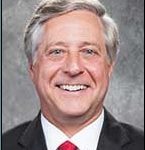
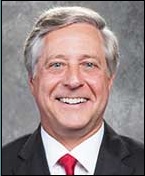
Mark Bialek, Inspector General, Federal Reserve Board

Mark Bialek, Inspector General, Federal Reserve Board

Under questioning from Senator Warren, Bialek revealed that his salary as Inspector General is $377,800. Warren said that this is the highest salary for any employee of the Federal Reserve Board. It is not higher, however, than what Presidents of the 12 privately-owned Federal Reserve regional banks make. For example, John Williams, the President of the New York Fed – where the Federal Reserve Board serially outsources its bailouts of Wall Street’s mega banks – was making $506,300 in 2020 according to the Fed’s 2020 Annual Report. Williams got a bump up in salary to $513,400 according to the Fed’s 2021 Annual Report. (See Table G.12 at this link.) The President of the United States and Commander in Chief, who is elected by the people, makes $400,000.

Senator Warren and Senator Rick Scott (R-FL) suggested that perhaps Bialek is getting this high salary as an incentive to perpetually wear a blindfold about wrongdoing at the Fed. Scott said this during his questioning of Bialek:
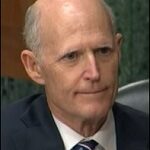
Senator Rick Scott at Senate Hearing May 17, 2023

“There’s 23,000 people I think that work at the Federal Reserve. There’s not a report you’ve done since 2011 that you know of any person that’s been fired; there’s nobody on the Board that’s ever done anything wrong; we don’t have any information – good information – on what happened on these stock trades; and you think that we should be happy that we don’t have an independent, presidentially-appointed Inspector General. This doesn’t make any sense. And it [the Federal Reserve] has a balance sheet of $8.6 trillion…Name another agency that has that big a balance sheet in the federal government.”

The Fed has a balance sheet of $8.6 trillion, which has resulted from its serial Quantitative Easing (QE) programs where it buys up trillions of dollars of government-backed debt securities, creating demand that would not otherwise exist, in order to drive down interest rates to prop up an economy crippled by serial bank crises.

While the Fed has a balance sheet of $8.6 trillion, it actually has an expense budget of $6.2 billion. (See Table D.1 below from the Fed’s 2021 Annual Report. Notes for the chart are available in the 2021 Annual Report.)

That $6.2 billion budget (combined for both the 12 regional banks and the Fed Board of Governors) includes the tiny amount of $36 million to run the Office of Inspector General that is expected to police the activities of 23,000 people.

Bialek testified at yesterday’s hearing that he has a total staff of 130 people to investigate wrongdoing at the Fed. The Fed’s 2022 budget is offering to let him hire three more people.

There is no better insight into the culture of corruption at the Fed than the 2018 tome by one of its own former bank examiners, Carmen Segarra. Her book, Noncompliant: A Lone Whistleblower Exposes the Giants of Wall Street, describes the culture inside the largest of the Fed’s regional banks — the New York Fed – as follows:

“…nothing I had seen during my decade of legal work had prepared me for what I witnessed in just a few short months at the New York Fed.

“In those months I discovered a disorienting world full of hidden clues, where people said one thing but meant another. Beneath the public face of the Fed laid a web of incompetence, corruption, rampant mismanagement, secrets, and lies. In the ‘fake work’ culture of the Fed, where supervision was a job title, not a job, the most important thing was to control the process to serve the ultimate master. The New York Fed was not simply failing to stop the banks; it was actually enabling their bad behavior.”
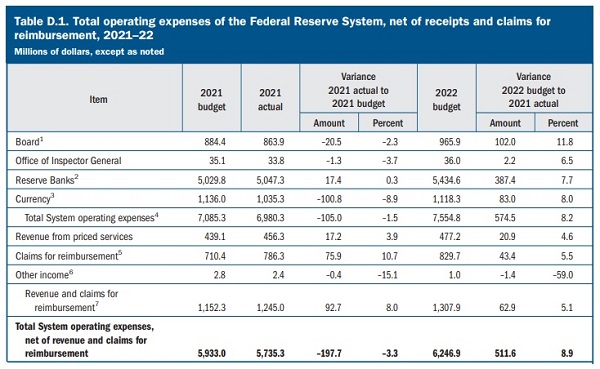
2021-2022 Expense Budget of the Federal Reserve System


LINK


Sunday, July 24, 2022

From the Secret Service to the Fed, Inspectors General Are Enablers to Corruption at the Agencies they Oversee


SUBSCRIBE TO THIS NEWSLETTER


From the Secret Service to the Fed, Inspectors General Are Enablers to Corruption at the Agencies they Oversee

By Pam Martens and Russ Martens: July 22, 2022 ~

Joseph Cuffari, Inspector General, Department of Homeland Security

Joseph Cuffari, Inspector General, Department of Homeland Security

The Inspectors General of federal agencies are supposed to be the first line of defense against corruption within that agency. Increasingly, they have become part of the problem of corruption, coverups and cronyism.

The January 6 House Select Committee has now stumbled upon this problem in a big way. Hopefully, it will lead to meaningful legislative reform of a seriously broken system of “watchdogs” that increasingly operate as lapdogs.

According to a letter sent by Ronald L. Rowe, Assistant Director of the Secret Service, to the January 6 House Select Committee on Tuesday of this week, the Inspector General of the Department of Homeland Security (DHS), the parent agency of the Secret Service, first requested text messages from the Secret Service more than a year ago. The request covered a full month of text messages prior to and including the January 6 attack for 24 Secret Service agents. The Inspector General’s office received just one text message in response, covering that entire month. Instead of blowing the whistle to Congress, the public and the January 6 House Select Committee, the Inspector General simply kept his mouth shut for more than a year.

On Wednesday night, Carol Leonnig, who has reported on the Secret Service for a decade at the Washington Post, and her colleague Maria Sacchetti, reported that the DHS Inspector General had “learned in February that the Secret Service had purged nearly all cellphone texts from around the time of the Jan. 6, 2021 attack on the Capitol, but chose not to alert Congress, according to three people briefed on the internal discussions.”

The New York Times reported in this morning’s print edition that missing from the list of 24 Secret Service agents whose text messages were requested by the Inspector General was Tony Ornato – the man who had been “detailed” from the Secret Service to become Assistant to Trump and Deputy Chief of Staff for Operations at the White House. This was an unprecedented political move for a Secret Service agent, who was then allowed to return to the Secret Service after Trump’s term ended. According to Ornato’s official bio, one of his jobs at the White House was to take care of “all aspects of” “military operations” in support of President Trump. If anyone would have known why it took more than three hours for the National Guard to respond after the Capitol building had been breached by rioters on January 6 and what Trump was doing during those three hours, it would have been Ornato.

Inspectors General have subpoena power. By failing to subpoena Ornato’s text messages, it raises the question as to what the real agenda of the Inspector General actually was. The New York Times also reports today that Ornato is one of the Secret Service employees who has now hired a private attorney.

Last Friday, the January 6 House Select Committee issued a subpoena to the Secret Service for text messages for January 5 and January 6, 2021. It received just the one text message referenced above, which was a text from then Capitol Police Chief Steven Sund to former Secret Service Uniformed Division Chief Thomas Sullivan, requesting assistance on January 6. The Secret Service believes that some text messages may have been deleted by agents when the agency switched to new communication devices on January 27, 2021.

Adding to the growing alarm around the Inspector General’s actions, just one day after a response to the subpoena was due to the January 6 Committee, on Wednesday evening the Inspector General’s office sent a letter to the Secret Service indicating that it was conducting a criminal investigation into the matter and warning the Secret Service to cease its own investigations. That portion of the letter, as first reported by CNN, reads as follows:

“To ensure the integrity of our investigation, the USSS must not engage in any further investigative activities regarding the collection and preservation of the evidence referenced above. This includes immediately refraining from interviewing potential witnesses, collecting devices or taking any other action that would interfere with an ongoing criminal investigation.”

This has set off alarm bells that the Inspector General is attempting to prevent the January 6 House Select Committee from obtaining the text messages it sought under subpoena by having the Secret Service conduct a forensic search for the texts on the replaced communication devices. (Why the DHS Inspector General has not itself demanded this after more than a year raises more alarm bells.)

Much of the consternation about the activities of this Inspector General, Joseph Cuffari, stem from the fact that he is a Trump appointee. Pushing for Cuffari’s Senate confirmation was Senator Ron Johnson, a right-wing Republican from Wisconsin. In the weeks leading up to the January 6 attack on the Capitol, Johnson held a hearing on election fraud in what appeared to be an effort to support Trump’s false allegations of a stolen election. One of the revelations from the January 6 Committee hearings was that Johnson’s Chief of Staff attempted to deliver to Vice President Mike Pence a slate of fake electors supporting Trump.

Mark Bialek, Inspector General, Federal Reserve Board

Mark Bialek, Inspector General, Federal Reserve Board

The Department of Homeland Security’s Inspector General is not the only Inspector General to be rapidly losing the public’s confidence. The Federal Reserve’s Inspector General, Mark Bialek, has stonewalled the public for nine months on the largest trading scandal in Federal Reserve history, which enveloped Fed Chairman Jerome Powell, former Vice Chair Richard Clarida, former Dallas Fed President Robert Kaplan and former Boston Fed President Eric Rosengren. (See our archive of articles on the trading scandal here.)

Any careful review of the details of the trading scandal suggests probable cause for a serious insider trading investigation. But while watchdog groups called for an investigation by the U.S. Department of Justice and the Securities and Exchange Commission, Powell referred the matter to the Inspector General – who dubiously reports to the Board of the Fed, which is chaired by Powell.

On July 14, the Fed’s Inspector General cleared Powell and Clarida of any wrongdoing while stating that the investigations of Kaplan and Rosengren, and potentially others, continues.

And in a manner similar to the DHS Inspector General’s failure to obtain text messages from the Secret Service after more than a year, the Fed’s Inspector General has denied the public and the media the dates of Robert Kaplan’s over $1 million trades in individual stocks and S&P 500 futures, despite those dates being mandated for public disclosure in a timely fashion. (See our report: Robert Kaplan Was Trading Like a Hedge Fund Kingpin for Five Years while President of the Dallas Fed; a Dozen Legal Safeguards Failed to Stop Him.)

Dennis Kelleher, President of the financial watchdog group, Better Markets, released a scathing assessment of the Fed’s Inspector General findings, writing:

“The Federal Reserve’s Inspector General’s report today on its investigation into the personal trading by the Chair and former Vice Chair Clarida during the pandemic while in possession of material nonpublic information was very narrow, omits key information, and is not credible.”

Kelleher goes on to explain the key information that the Inspector General ignored and sums up with this:

“…the IG [Inspector General] is hired by the Chair and reports to the Chair. A person like the Chair asking a subordinate like the IG to investigate his boss is simply not credible, particularly, where, as here, the boss has already repeatedly stated publicly that no laws or rules were broken. An after-the-fact investigation by the subordinate concluding that the boss’ prior public statements were accurate is not a credible investigation.”

It’s time for the American people to demand that criminal matters be turned over to the Department of Justice in a timely manner and that the Criminal Division of the Department of Justice get a chief that invokes confidence.


LINK


Saturday, July 16, 2022

The Fed’s Inspector General Clears Jerome Powell of Wrongdoing in the Trading Scandal, One Day After Five Senators Accuse Him of Hampering the Investigation

SUBSCRIBE TO THIS NEWSLETTER 


The Fed’s Inspector General Clears Jerome Powell of Wrongdoing in the Trading Scandal, One Day After Five Senators Accuse Him of Hampering the Investigation

By Pam Martens and Russ Martens: July 15, 2022 ~

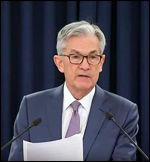
Federal Reserve Chair Jerome Powell

Federal Reserve Chair Jerome Powell

Yesterday afternoon, Mark Bialek, the Inspector General of the Federal Reserve, released a memorandum clearing Fed Chair Jerome Powell and former Fed Vice Chair Richard Clarida of wrongdoing in the trading scandal that has engulfed multiple officials of the Federal Reserve.

Curiously, that memorandum came just one day after Senator Sherrod Brown, Chair of the Senate Banking Committee, and four other Democratic colleagues in the Senate, sent Powell a letter about the trading scandal. The letter suggested that Powell was hampering the investigation and took him to task for failing to put the force of law and a chain of command in place for the Fed’s newly upgraded trading restrictions.

Even more curious, the memorandum from the Fed’s Inspector General came just hours after Wall Street On Parade reported on Senator Brown’s letter and called attention to the fact that the trading scandal news broke more than 10 months ago and the public had been denied any findings from an investigation. We also called on the Inspector General to stop stalling and refer the matter to the criminal division of the U.S. Department of Justice.

The memorandum from the Inspector General makes clear that its investigation of former Dallas Fed President Robert Kaplan, former Boston Fed President Eric Rosengren, and potentially other senior officials at the regional Fed banks, is ongoing. Bialek writes in his memorandum:

“As stated above, our investigation of the senior Reserve Bank officials is ongoing. Because ongoing investigations are highly sensitive, and because the scopes of the two investigations are interrelated, we will provide a detailed analysis of both our investigations at the conclusion of our review regarding the senior Reserve Bank officials.

“We are also conducting an evaluation of the design and effectiveness of the Board’s new investment and trading rules as well as the Board’s and the Reserve Banks’ approach to monitoring personal investment and trading activities for possible conflicts of interest. We will notify you once our ongoing evaluation is completed.”

We were immediately struck by the phrase “the scopes of the two investigations are interrelated.” What could be interrelated between the trading of a Fed bank president in Boston and another Fed bank president 1700 miles away in Dallas?

One possible interconnecting link comes from our prior reporting that both Kaplan and Rosengren appeared to have had ongoing financial relationships with megabanks that are regulated by the Fed: Kaplan with Goldman Sachs and Rosengren with Citigroup’s Citibank.

Kaplan had previously worked for Goldman Sachs for 22 years, rising to the rank of Vice Chair. Wall Street On Parade asked Goldman Sachs if they were conducting the trading for Kaplan while he was President of the Dallas Fed and they refused to answer that very simple question.

Goldman Sach’s unwillingness to provide a forthright answer is problematic on multiple fronts. First, all of the Fed’s regional bank presidents are allowed to sit in on FOMC meetings, even when they are not voting members, thus having access to insider information. Kaplan was a voting member in 2020 – a year in which the Fed initiated a panoply of bailouts and Kaplan was making over $1 million trades in individual stocks as well as S&P 500 index futures. Kaplan was required to provide the dates of those trades on his financial disclosure forms but failed to do so.

Goldman Sachs has a large and sophisticated compliance department. If Kaplan was trading at Goldman Sachs, its compliance department should have had his account flagged as a potential source of insider information. No properly functioning compliance department on Wall Street would have allowed such a man to be trading in and out of S&P 500 futures contracts in lots of more than $1 million – or any size lots for that matter. (S&P 500 futures are used by speculators to make highly leveraged, directional bets on the market. S&P 500 futures extend the trading day to almost 24/7 from Sunday evening to Friday night.)

On September 27, 2020, the date that the Dallas Fed announced that Kaplan would be retiring (in the midst of the trading scandal), its Board Chairman at the time, Greg Armstrong, stated this in a press release: “Upon joining the Bank, Rob systematically sold all of his personal holdings related to financial institutions over which the Federal Reserve had regulatory oversight or were otherwise restricted. Rob also conducted his investment activities in accordance with the rules and policies of the Federal Reserve System.”

Neither of those statements are true. Kaplan continued to show holdings of proprietary investment products from “GS,” short for Goldman Sachs, on his financial disclosure statements. In addition, the type of trading done by Kaplan appears to be expressly prohibited by the Code of Conduct of the Dallas Fed. Appendix A on “Disqualifying Interests” of the Code of Conduct reads as follows:

“De minimis exemption for a matter of general applicability. An employee may participate in a particular matter of general applicability, such as rulemaking, where the disqualifying financial interest arises from ownership by the employee, his or her spouse or minor children of securities issued by one or more entities affected by the matter, if:

“(1) the securities are publicly traded, or are municipal securities, the market value of which does not exceed; (a) $25,000 in any one such entity; and (b) $50,000 in all affected entities;

“or (2) the securities are long-term federal government securities, the market value of which does not exceed $50,000.”

There was nothing de minimis about Kaplan’s trading of individual stocks. According to his financial disclosure form for 2020, when Kaplan was a voting member of the monetary-policy setting FOMC Committee of the Fed, Kaplan made “multiple” purchases and sells of greater than $1 million per transaction in 11 individual stocks. Three of those were interest-rate sensitive Big Tech stocks (Amazon, Apple and Facebook) that rose between 75 percent to 90 percent from their March 2020 lows, in no small part because of the interest rate cuts and other interventions of the Fed in 2020. In addition, Kaplan was trading in and out of S&P 500 futures in transactions of “over $1 million.”

Former Boston Fed President Eric Rosengren, who stepped down on the same day as Kaplan last year, had a joint trading account with his wife. According to his financial disclosure form, his wife had a $150,000 to $500,000 “Secured Loan for Investment” with Citigroup’s federally-insured bank, Citibank.

Citigroup is a Fed-supervised entity and received the largest bailout in U.S. history from December 2007 through June of 2010. That included $2.5 trillion in cumulative loans from the Fed according to the audit done by Congressional mandate by the Government Accountability Office. The Fed fought for more than two years in federal court to prevent that information from becoming public.

Rosengren’s financial disclosure form shows that all 68 of his purchases and sells in individual stocks and REITs (Real Estate Investment Trusts) in 2020 occurred in his joint account with his spouse.

After the Fed’s Inspector General released his memorandum yesterday afternoon, Senator Elizabeth Warren, who has been persistent in demanding answers from the Fed about the trading scandal, posted a Tweet with this statement: “The Inspector General found clear evidence of financial activity by Fed officials that wasn’t allowed or disclosed. This behavior by top economic policymakers shouldn’t be swept under the rug. We need accountability & stronger ethics rules to end conflicts of interest at the Fed.”


LINK


Idaho hunters killed 12 newborn wolf pups and got paid

                                                                                                                                            ...