Showing posts with label SANCTIONS. Show all posts

Thursday, August 14, 2025

FOCUS: M. Gessen | Trump Is Giving Putin a Most Wonderful Gift


Reader Supported News
13 August 25

PRIORITIZE RSN DONATIONS — Like all progressives I am deluged with requests for donations. But did you know that many progressive pacs don’t really donate to candidates they claim to. Check out fine print at bottom of page to be sure your candidate will really receive funds. I donate only to candidates themselves and RSN! W/O RSN how would we know whom to support?? / Beth, RSN Reader-Supporter

Sure, I'll make a donation!

U.S. President Donald Trump (right) looks at Russian President Vladimir Putin as they take their places for a photo during the Group of 20 summit in Buenos Aires in 2018. (photo: Getty)
FOCUS: M. Gessen | Trump Is Giving Putin a Most Wonderful Gift
M. Gessen, The New York Times
Gessen writes: "Donald Trump wants the war in Ukraine to end. Volodymyr Zelensky wants the war in Ukraine to end. Many other presidents and prime ministers want the war to end. Vladimir Putin is not one of those presidents."


Donald Trump wants the war in Ukraine to end. Volodymyr Zelensky wants the war in Ukraine to end. Many other presidents and prime ministers want the war to end. Vladimir Putin is not one of those presidents. The war in Ukraine has become the political, psychological and economic center of Putin’s regime.

That basic asymmetry would seem to doom any attempt at a negotiated peace — it is, in fact, the main reason no meaningful peace negotiations have occurred in the three and a half years since Russia began its full-scale invasion of Ukraine. Trump thinks he has a solution, though. He says he intends to use his negotiating prowess and keep ratcheting up economic pressure until Putin has no choice but to stop the fighting.

Between the bombastic social media posts, the shifting deadlines, the erratic announcements — one day a White House official says Trump will meet with Putin only after Putin meets with Zelensky, another day Trump drops the requirement — it’s easy to overlook the fact that Trump’s policy toward Russia largely follows the same failed strategy employed by the Biden administration, the first Trump administration and the Obama administration before that. For more than a decade, the United States has responded to Russian aggression by threatening and gradually imposing economic sanctions. That some of Trump’s sanctions take the form of tariffs doesn’t alter the nature of the policy.

The conventional theory behind sanctions is that economic pressure destabilizes regimes, possibly forcing the leader to change course. In one scenario, widespread hardship — unemployment, inflation, shortages — leads to popular discontent, even unrest. In another, a shrinking economy and loss of access to foreign markets anger the elites, who stage a palace coup or at least compel the leader to change direction.

The problem with this theory is that it’s wrong. When sanctions have an effect, it is usually to immiserate ordinary people. The elites remain wealthy, and the gap between the rich and the poor only grows. Rather than foment resentment against the regime and the elites, this tends to rally society against the country that imposed the sanctions. That enemy, after all, is far away and easily turned into an abstraction, while the elites at home control the media, which frames the conflict. They also control the jobs and the goods, making it much costlier to hate the elites at home than the enemy far away. And beyond a certain level, hardship leads people to withdraw from even thinking about politics, because they have to focus on survival.

As for the palace coup scenario, Russia has shown clearly how sanctions come to have the opposite of their intended effect. Superrich Russians living abroad who found their access to Western markets cut off and some of their assets frozen moved to places like Dubai or returned to Moscow. What else were they going to do? That the economic pie is shrinking doesn’t mean that the elites suddenly start conspiring to overthrow the leader — a risky proposition unlikely to succeed in the best of cases; it means only that they compete harder for what remains of the pie.

The conventional model dictates that sanctions be imposed gradually, following stern warnings. This gives the Russian regime time to prepare for the impact: to subsidize domestic production of goods that will no longer be imported (Obama-era sanctions did wonders for Russian farmers and cheese makers), to prioritize new export markets as well as to find third-party countries through which to, say, export oil or import dual-use technology. It also bolsters ties between Russia and countries that are already under U.S. sanctions — such as Iran, which has become an essential partner in Russia’s drone warfare.

And still, one presidential administration after another has touted sanctions as its main instrument in getting Putin to change his ways. Joe Biden imposed multiple rounds of sanctions, though none were “devastating,” as he had promised. Trump imposed an additional 25 percent tariff on India, ostensibly as a penalty for importing Russian oil, and has promised more secondary tariffs for Russia’s other trade partners. Year after year, American presidents do the same thing, expecting different results. In this one way Trump is no crazier than his predecessors.

However difficult it is for foreign-policy theorists to grapple with the limitations of the economic pressure approach, for Trump it is all but impossible. Again and again, Trump has shown that he assumes that everyone is motivated by money.

He is not alone in this: Many Western analysts have repeatedly suggested that Putin would seek an off-ramp in Ukraine once the war proved costly for Russia and, perhaps more to the point, for him personally. As much as Putin loves wealth, however, he has shown that he loves power even more — eternal power in his own country, which he wins by expanding Russia’s borders, and power in the world at large, which he wins by making other leaders fear him. Trump seems to be unaware that, by meeting with Putin, he is giving Putin exactly what the Russian leader wants — a demonstration of his power.

Trump is giving Putin additional gifts by agreeing to meet with him without Zelensky and by sidelining the European Union. Trump is affirming for all of Russia to see what Putin has claimed all along: that the conflict is really between Russia and the United States.

The moment Putin walks into the negotiating room, he has gotten everything he wants — plus an opportunity to make a quip about Alaska as historically Russian land (consider this a prediction). If the meeting does not produce an agreement, Putin loses nothing. Trump, on the other hand, would lose face if he walked out empty-handed. He may be motivated to accept something, anything.

The conditions for peace that Russia offered in June were merely a more elaborate display of the four things Putin has consistently demanded: land, including parts of Ukraine that Russia has not occupied; an end to Western military aid to Ukraine; guarantees that Ukraine will never be invited to join NATO; and a change of leadership in Ukraine. Trump can agree to those conditions, but Zelensky will never accept them. Putin has very little reason to change his demands.

Still, if the Russian leader is inclined to help Trump look good — a big if — they may emerge with some kind of a cease-fire agreement. This may be a time-limited cease-fire, contingent on Ukrainian withdrawal from parts of eastern Ukraine. Such a deal would force Ukraine to retreat from positions it considers strategically important while giving Russia a couple of months to regroup before attacking again, on the pretext that Ukraine didn’t abide by Russian demands. Another possibility that has been floated is a ban on waging war deep inside enemy territory, or an air truce. Such an agreement would save lives — in Kyiv and Odesa, which have come under Russian barrages day after day, but also in Russian cities, which Ukraine has grown increasingly capable of attacking with drones.

For Ukraine, an air truce would come at tremendous strategic cost. It would continue to be a country at war. It would still be governed under a set of state-of-emergency provisions. Families would continue to be separated, with so many women and children having fled to Western Europe while the men remained. Worst of all, people would continue dying at the front, in the villages and towns near the frontline, and in Kharkiv, Ukraine’s second largest city, which is about 20 miles in.

The ability to attack deep in Russian territory is Ukraine’s sole negotiating advantage. These days, Russian airports are frequently forced to suspend operations because of drone attacks. The mayor of Moscow reports on the number of drones intercepted by air defense in much the same way as the mayor of Kyiv does. This is not enough to destabilize Putin’s regime, but it is enough to make him nervous. If drone attacks deep inside Russian territory stopped, war — what Russian propaganda still calls the “special military operation” — may once again come to feel far away.

The only thing that could force Putin to negotiate in earnest is the possibility of military defeat. Without that prospect, he is content to let the war continue forever. He doesn’t care about losing wealth as much as Trump imagines he does, and he doesn’t care about losing soldiers at all. In 2022 and again this May, the Kremlin noted that Peter the Great’s war with Sweden, which began in 1700, lasted 21 years. This war, too, could go on for decades.

One doesn’t have to go back centuries to imagine what that would be like. The forever war is already here. A devastating new documentary, “2000 Meters to Andriivka,” by the Ukrainian director Mstyslav Chernov shows what it looks like.

The film follows a Ukrainian brigade trying to liberate a small village. It takes them months to cover the distance in the movie’s title, roughly the equivalent of one mile. The movie shows the gigantic horrors of war — entire cities destroyed, swaths of farmland turned into minefields and what looks like miles of identical fresh graves — and the smallness of it: handfuls of soldiers, armed with semiautomatic rifles, killing and being killed one person at a time, taking one prisoner at a time, fighting for one trench at a time, in terrifying minutes that stretch into hours. It is relentless like a nightmare. A platoon commander says that he dreams of the fighting, then wakes up to the fighting. “And I thought, this war is a nightmare none of us can wake up from,” the narrator says.

As the soldiers onscreen drag themselves through mud and ruins, the voices of Western commentators and newscasters occasionally intrude, off screen.

“Western confidence is likely to dip.”

“If we’re not getting results here, then perhaps Ukraine wants to think about another plan, even some land concessions for peace.”

“Western officials have expressed disappointment in a much-vaunted counteroffensive.”

“Russia has millions more men from whom to draw. There’s no path to a military victory here, only more death.”

“How sustainable is this level of support when there’s really no end in sight to the war?”

Those are not, in the end, complicated questions. No, Ukraine cannot win this war as it is fought now. Yes, this war may drag on indefinitely, and yes, this means more and more death. But this was never and still is not the only possible outcome. The United States and NATO have always had the capacity to put an end to this war the only way it can be ended: by defeating Putin. They have consistently chosen not to do that, relying instead on old, failed policies. In this one way, Trump is more of the same. He just puts on a much bigger show.

Saturday, February 24, 2024

POLITICO Nightly: Biden’s ‘Uncommitted’ issue


POLITICO Nightly logo

BY CALDER MCHUGH

Samra'a Luqman hands out fliers outside of the American Moslem Society Mosque in Dearborn Heights, Mich. to ask voters not to vote for President Joe Biden.

Samra'a Luqman (right) hands out fliers outside of the American Moslem Society Mosque in Dearborn Heights, Mich. to ask voters not to vote for President Joe Biden on Feb. 16, 2024. | Jeff Kowalsky/AFP via Getty Images

PROTEST AT THE POLLS — When President Joe Biden urged the Democratic National Committee in late 2022 to upend the primary calendar and elevate Michigan to early primary status, he was likely imagining the multi-racial coalition that had helped deliver him the presidency in 2020 coming together to launch him towards the general election.

Now, some of those same voters are causing his campaign grief — and could, depending on the results of Tuesday’s primary, do even more damage.

A group of progressives — many of whom are Arab American or have ties to Palestine — are vowing to vote “Uncommitted” on the Democratic primary line for president due to Biden’s continued support for Israel, a protest vote that would lay bare the depth of ill will towards the president on his left flank that’s been engendered by his response to the Israel/Hamas war.

A protest vote might not normally make much of a dent in an incumbent president’s reelection campaign. But what makes this situation potentially problematic for Biden is that there are 200,000 registered voters who are Muslim and 300,000 who claim Middle East or North African descent in Michigan, largely concentrated around Detroit and in the suburb of Dearborn. These communities are numerous and politically active enough that the state even provides voter registration and absentee vote applications in Arabic .

A dedicated number of these voters — the good majority of whom have previously voted for Democrats — are at the leading edge of a campaign to vote “Uncommitted.” Depending on how many of them vote that way, Biden — already riding low in the polls — could suffer a significant embarrassment, generating another round of hand-wringing about his prospects in November.

Listen to Michigan, the group organizing the effort, is setting a modest goal of 11,000 extra voters to go Uncommitted — the margin of Donald Trump’s victory in the state in 2016. But around 20,000 Michiganders have voted on the “Uncommitted” line in recent Democratic presidential primaries without any organized effort at all. So any number above that would give a sense of how deep the unrest runs.

The activists leading the “Uncommitted” effort are not the first group to attempt to send a message to Biden through the primary process this year. In New Hampshire, a late campaign to write in “ceasefire” on the ballot largely failed to get off the ground and only resulted in around 1,500 “ceasefire” votes among well over 100,000 total ballots cast. Biden ended up easing any doubts about his by piling up 64 percent of the vote as a write-in candidate.

But the Michigan effort is more organized and has garnered the backing of elected officials and other prominent names in the state.

The campaign has in part been spearheaded by Abraham Aiyash, the Michigan House majority leader, and it has the support of Rep. Rashida Tlaib (D-Mich.), who represents Dearborn in Congress. It also has the backing of filmmaker Michael Moore, a Michigan native who endorsed the “Uncommitted” ballot line on MSNBC Thursday evening , arguing that Biden’s “hugging [Israel Prime Minister Benjamin Netanyahu]” and funding of the war has “turned young people against Biden.”

Notably, Moore has been a staunch backer of Biden’s domestic policy and has advocated strongly against former President Donald Trump. He still thinks Democratic voters in Michigan need to send Biden a message.

The problem for Biden is that signs of support for a protest vote are growing, not diminishing. The Uncommitted campaign has also grabbed the attention of other groups that are deeply frustrated with Biden policies. Dzovinar Hatsakordzian — a national board member of the Armenian National Committee of America — is urging Armenian Democrats in Michigan to vote “Uncommitted” because he “armed Azerbaijan’s genocide of Artsakh’s indigenous Armenians.” The ANCA has circulated graphics that read “Michigan’s Armenian voters will remember this November that Biden armed Azerbaijan and abandoned Armenians to genocidal killers.”

There are just under 20,000 Armenians in Michigan, only a fraction of whom will vote in the Democratic primary. In competitive primaries in 2020 and 2016 respectively, over 1.4 million people and around 1.2 million people voted in the primary. In the most recent Democratic presidential contest featuring an incumbent president, a 2012 caucus, 174,000 people voted in Michigan. This year, over 800,000 people have voted early so far across both the Democratic and Republican primaries in the state.

There’s little chance that “Uncommitted” bests the president. But the higher that number is, the higher the likelihood the result leaves a bruise. In part that’s because Biden himself sought to elevate Michigan’s stature on the primary calendar. But it’s also due to the state’s recent history of playing a high-profile role in the Democratic nomination process. In 2016, Michigan gave Bernie Sanders’ campaign some much needed life; four years later, the state all but wrapped up the nomination for Biden. This year, it’s set to prove that Biden either has enduring strength among both progressive and ethnic communities in Michigan or that he has a real problem on his hands.

Welcome to POLITICO Nightly. Reach out with news, tips and ideas at nightly@politico.com . Or contact tonight’s author at cmchugh@politico.com or on X (formerly known as Twitter) at @calder_mchugh .


SUBSCRIBE TO GLOBAL PLAYBOOK: Don’t miss out on POLITICO’s Global Playbook, the newsletter taking you inside pivotal discussions at the most influential gatherings in the world, including WEF in Davos, Milken Global in Beverly Hills, to UNGA in NYC and many more. Suzanne Lynch delivers the world's elite and influential moments directly to you. Stay in the global loop. SUBSCRIBE NOW .


WHAT'D I MISS?

— Trump moves to dismiss classified documents case: Donald Trump is asking a federal judge in Florida to throw out his criminal case for hoarding classified secrets at his Mar-a-Lago estate , offering a grab bag of arguments that the charges are legally faulty, that prosecutors have targeted him for political reasons and that the special counsel spearheading the case had no legal authority to bring it. Trump’s lawyers filed seven motions late Thursday aimed at derailing the case, in which he is charged with willfully retaining classified information after he left office and obstructing a federal investigation into his possession of those secrets.

— Progressive groups preemptively rip Biden over immigration executive actions: A major coalition of progressive groups today warned President Joe Biden not to go forward with a slew of executive actions designed to stem migration along the southern border. Those groups, totaling more than 150 international, national, state, local and faith-based entities, said in a letter to the White House that the policies under consideration — including an asylum ban between U.S. ports of entry — “emulate” the approach of the Trump administration and “extremist legislators.”

— Senate GOP urges its candidates to support IVF after Alabama ruling: The Senate GOP’s campaign arm today urged its candidates to publicly express their support for IVF treatment and condemn efforts to limit its accessibility. In a memo sent by National Republican Senatorial Committee Executive Director Jason Thielman, the party’s campaign apparatus instructs candidates to “Clearly state your support for IVF and fertility-related services as blessings for those seeking to have children” and to “Publicly oppose any efforts to restrict access to IVF and other fertility treatments, framing such opposition as a defense of family values and individual freedom.”

NIGHTLY ROAD TO 2024

TRUMP SPEAKS ON IVF — Former President Donald Trump declared his support for in vitro fertilization treatment and called on Alabama lawmakers to preserve access to it after a ruling by the state’s high court forced hospitals there to stop offering the procedure. Trump addressed the issue in a post on Truth Social today, days after the Alabama court’s ruling declaring embryos are children. Democrats have sought to tie that decision to broader GOP efforts to restrict access to abortion since the reversal of Roe v. Wade. And President Joe Biden’s campaign has laid blame for the ruling squarely at the feet of Trump, noting that he has taken pride in the Supreme Court’s decision to overturn abortion protections.

TEAMSTERS GIVE TO RNC — The Teamsters’ political action committee broke decades of precedent last month when the union leadership voted to approve a $45,000 donation to the Republican National Committee ’s convention fund, NBC News reports. In recent years, Teamsters donations have been given primarily to Democrats. This year’s donation to the RNC convention fund marked the labor union’s pivot to large donations to both parties, though the vast majority of donations still flow to liberals.

The January vote to approve the donation is igniting frustration among some members, who in interviews with NBC News were blunt in expressing their disapproval of the move: "Disgusting." "Disheartening." "Playing footsie."

RETURN TO NORMALCY — Nikki Haley called for a return to normalcy in American politics as she portrayed Donald Trump as a major drag on the Republican Party while seeking to avoid a landslide drubbing in her home state’s presidential primary on Saturday, reports the Wall Street Journal.

“Donald Trump cannot win a general election,” the former South Carolina governor and United Nations ambassador told several hundred supporters here this afternoon, after saying the GOP needs to select someone with “moral clarity” who knows “the difference between right and wrong.”

She also suggested that Trump has shattered norms in American democracy.

AROUND THE WORLD

Joe Biden and Vladimir Putin are pictured in Switzerland.

President Joe Biden and Russian President Vladimir Putin are pictured during the U.S.-Russia summit at Villa La Grange in Geneva, Switzerland. | Peter Klaunzer/Keystone via Getty Images

CRIME AND PUNISHMENT — President Joe Biden today announced more than 500 new sanctions on Russia and its war machine in the largest tranche of penalties since Moscow’s invasion of Ukraine nearly two years ago, POLITICO reports.

Biden followed through on a promise to further punish Russian President Vladimir Putin one week after opposition leader Alexei Navalny died in a Siberian prison. The sanctions — as well as those added today by the European Union — come one day before the second anniversary of Putin’s invasion of Ukraine.

“The American people and people around the world understand that the stakes of this fight extend far beyond Ukraine,” Biden said in a statement announcing the sanctions. “If Putin does not pay the price for his death and destruction, he will keep going. And the costs to the United States — along with our NATO Allies and partners in Europe and around the world — will rise.”

The bulk of the sanctions were already in the works for the invasion anniversary, though a few were added this week to target those involved in Navalny’s death at an Arctic penal colony. Biden met Thursday with Navalny’s widow and daughter in San Francisco and praised her late husband’s bravery.

“Russia’s financial sector, defense industrial base, procurement networks and sanctions evaders across multiple continents,” Biden said. “They will ensure Putin pays an even steeper price for his aggression abroad and repression at home.”

The Treasury Department will impose additional price cap sanctions that will make it more costly for Russia to get around sanctions, Deputy Treasury Secretary Wally Adeyemo told reporters in a Thursday night call previewing the sanctions. He touted the Biden administration’s price cap on Russian oil, saying that the Kremlin has invested money on trying to adapt to the sanctions and evade them.

GERMANY GREENLIGHTS POT — The German parliament passed a marijuana decriminalization bill today, setting up the country to eventually authorize legal sales to adults, reports POLITICO EUROPE. The legislation, part of an agreement by the country’s three-party coalition government, would legalize cannabis possession and home cultivation for adults and allow non-profit cannabis clubs to supply consumers.

"That’s the way that works. Away from punishment. Away from taboo. We have to face up to the problems," German Health Minister Karl Lauterbach said before the law was adopted this afternoon.

The vote has also been closely followed across the Atlantic. “It’s a historic moment,” said Omar Khan, a spokesperson for Canadian cannabis company High Tide. “Germany [will] become the first EU country and the second G7 country after Canada to legalize adult use.”


YOUR GUIDE TO EMPIRE STATE POLITICS : From the newsroom that doesn’t sleep, POLITICO's New York Playbook is the ultimate guide for power players navigating the intricate landscape of Empire State politics. Stay ahead of the curve with the latest and most important stories from Albany, New York City and around the state, with in-depth, original reporting to stay ahead of policy trends and political developments. Subscribe now to keep up with the daily hustle and bustle of NY politics. 


NIGHTLY NUMBER

WARREN BUFFETT CALLED CRYPTO RAT POISON SQUARED FOR GOOD REASON 
It's unregulated, contributed to the collapse of at least one bank, was allowed to enter FDIC insured banks

BE CAREFUL WHAT YOU BELIEVE!


$80 million

The amount of money that three crypto-affiliated Super PACs are planning to spend in the 2024 election cycle , campaign finance filings released this week confirm. That puts them among the top-spending outside groups this year.

RADAR SWEEP

LOOKING FRESH — In the midst of missile fire and worries about advancing Russian ground troops, daily life goes on in Ukraine. Nowhere is this more obvious than among Ukraine’s beauty salons , which continue to operate despite all kinds of difficult conditions. LuChe salon in Kyiv had its front windows destroyed by a bomb in January — it was open again the next day, operating temporarily from behind boarded up windows onto which the salon’s owner spray painted “we are open”. Author Sophia Panych asks for Allure whether beauty has a place in a society at war — and answers largely in the affirmative.

PARTING IMAGE

On this date in 1945: U.S. Marines of the 28th Regiment, 5th Division, raise a U.S. flag atop Mt. Suribachi in Iwo Jima, Japan.

On this date in 1945: U.S. Marines of the 28th Regiment, 5th Division, raise a U.S. flag atop Mt. Suribachi in Iwo Jima, Japan. | Joe Rosenthal/AP

Did someone forward this email to you?  Sign up here .


Follow us on Twitter

Charlie Mahtesian @PoliticoCharlie

Calder McHugh @calder_mchugh

Mia McCarthy @Reporter_Mia


FOLLOW US

Follow us on FacebookFollow us on TwitterFollow us on InstagramListen on Apple Podcast


 POLITICO, LLC 1000 Wilson Blvd. Arlington, VA, 22209, USA


Friday, February 23, 2024

POLITICO Nightly: They surveyed 10,000 rural voters. Here’s what they learned.


POLITICO Nightly logo

BY PEDER SCHAEFER

People enter the town hall just after sunrise to cast their ballots in the rural township of San Francisco, Minn. in 2008. The town hall, which is a converted one room school house, serves as the polling location for the township.

People enter the town hall just after sunrise to cast their ballots in the rural township of San Francisco, Minn. in 2008. The town hall, which is a converted one room school house, serves as the polling location for the township. | Cory Ryan/Getty Images

SMELLING A FAKE — To win in rural areas in 2024 and beyond, Democrats need candidates who are, well, authentically rural.

That’s one of the key insights from a new survey of over 10,000 rural voters — the largest-ever study of its kind — and hundreds of years of election data on rural voting patterns featured in the book, “The Rural Voter: The Politics of Place and the Disuniting of America.”

The sharp swing of rural voters toward the Republican Party since the 1980s cannot be explained by simply looking at demographic indicators like race, age and education, say Colby College professors Nicholas Jacobs and Daniel Shea, who published the book in November .

Instead, they use their data to argue that a new identity has formed around the “shared fate” of rural communities, that place-based anxiety and grievance play a central role in rural politics and that engaging with rural identity and authenticity are key if Democrats want to compete in those areas again. Nightly called Jacobs and Shea to get more insight into their research, to understand exactly why some voters have sprinted away from Democrats and what the party must do to win them back. This interview has been edited.

The two of you dug into hundreds of years of rural voting history and over 10,000 survey responses for this book. What’s the history of the rural vote? And when did the current urban-rural divide appear?

Shea: It’s fair to say that a rural-urban divide has existed from the beginning of our experiment. But for nearly 200 years, that urban-rural divide was very regional, state-based and temporary. One thing our data shows is that this extensive national divide is unprecedented in our history.

Jacobs: 1980s is this inflection point where the behaviors of rural voters begin to nationalize. That means whether you live in a rural community in Maine, Alabama or the Midwest, you’re starting to behave similarly and react to similar forces. It’s a complex historical narrative. It’s top down and bottom up. There’s real social transformation in rural agricultural and manufacturing communities, but there’s also political narrative construction by Republicans.

After crunching the survey data, you identify place-based grievance and anxiety as the strongest indicators of being a rural voter. What is place-based anxiety or grievance, and why is it so important?

Jacobs: Demographic indicators do not do that good of a job [of identifying rural voters] compared to values. … When you ask questions about the community: Is your community better off? Will your kids have to leave your community in order to live a productive life? Are politicians listening to the needs of your community? That is a distinguishing feature of ruralness. Rural people are thinking about their rural communities in a different way. Suburbanites and urbanites are not thinking about that.

In the book you talk about a few case studies of Democratic lawmakers who over-performed in rural areas, such as Reps. Jared Golden in Maine, Marie Gluesenkamp Perez in Washington state and Tim Ryan in Ohio. Why were those candidates successful in beating some of the trends you lay out elsewhere in the book?

Jacobs: If rural identity is an identity that has significant values in the mind of rural people, then what you are talking about here is identity politics. And we know that in identity politics, that candidates, especially the background and the persona of the candidate, is especially important in that type of environment. It’s hard, if not impossible, to fake your identity and it’s really easy to screw that up. … So, this comes down to candidate selection. This comes down to identifying good Democrats in that local community that can speak to that community’s history and particularized sense of place.

Donald Trump won large majorities among rural voters in 2016 and 2020. What explains a Manhattan billionaire’s strong appeal in rural America?

Jacobs: You have to get beyond Trump’s persona. You have to look beyond this idea that Trump is a typical Manhattanite. I think that’s where people try to carve out this disconnection: How could this billionaire living in his Manhattan skyscraper identify with these people? But the truth of the matter is he never pretended to be a rural person. He didn’t go around making a whole to-do about being born in Scranton like Joe Biden or chumming up with coal miners like Hillary Clinton. It made him not authentically rural, but authentic as a non-typical politician. And when he would speak about rural issues, like taking pride in mining coal, it was more empathy than anything. … A politician or a leader like Trump doesn’t necessarily have to pretend to be rural to play into rural identity politics. Just like progressives on the left don’t have to be a certain demographic to speak the language of identity politics.

What would be your advice to Democrats who want to start winning again in rural America?

Shea: The question is, can Joe Biden make inroads in rural America? He’s got a concerted effort and programs to reach out to rural America, but will it work? Our argument has been that economic programs of this sort are more likely to work if they are particularized, if they’re about that specific industry. … The voters have to believe that Joe Biden, the federal government and the Congress really understands what is happening here. Just sweeping your hand and saying, ‘we’re bringing you broadband,’ is not going to cut it.

What are some of the implications of your research for the 2024 presidential election?

Shea: I hope Democrats appreciate the size of the rural voting bloc. This is a group of voters that is more important for the Republican Party than either Black voters or young voters are for the Democratic coalition. This is a big important group, and if the Democrats can’t chip away and make some inroads, it is not good on a national level and it’s going to be very bad at the state-level. … One of the reasons it may be hard for Democrats to go into rural areas is that they’ve come to believe these are bastions of crazy Trumpers. … But what we show in this book is that there are genuine concerns that pre-date Donald Trump by decades. Take the anxiety that all Americans feel about the future, double it, and extend it back extra decades. That’s the story of rural America.

Welcome to POLITICO Nightly. Reach out with news, tips and ideas at nightly@politico.com . Or contact tonight’s author at pschaefer@politico.com or on X (formerly known as Twitter) at @p_s_schaefer .


SUBSCRIBE TO GLOBAL PLAYBOOK: Don’t miss out on POLITICO’s Global Playbook, the newsletter taking you inside pivotal discussions at the most influential gatherings in the world, including WEF in Davos, Milken Global in Beverly Hills, to UNGA in NYC and many more. Suzanne Lynch delivers the world's elite and influential moments directly to you. Stay in the global loop. SUBSCRIBE NOW .


WHAT'D I MISS?

— Biden meets with Navalny’s widow and daughter: President Joe Biden met today with the widow and daughter of Russian opposition leader Alexei Navalny , who died in prison last week. In San Francisco as part of a three-day fundraising swing through California, Biden expressed his “heartfelt condolences” to Yulia and Dasha Navalny, according to a White House readout of the meeting. Yulia, in a video message, blamed Putin for killing her husband and vowed to take up his cause, that of a free Russia.

— Two more clinics in Alabama pausing IVF treatments after court ruling: Two more clinics in Alabama will pause in vitro fertilization treatment after the Alabama Supreme Court ruled this week that frozen embryos are children under state law. Alabama Fertility Specialists in Birmingham announced its decision today on Facebook. The clinic said it’s contacting patients whose care was abruptly paused to find options and potential solutions. It also notified the public that it’s working to contact legislators to explain the “negative impact of this ruling on the women of Alabama.”

— Oklahoma governor calls nonbinary student’s death a ‘tragedy’: Republican Oklahoma Gov. Kevin Stitt called the recent death of a 16-year-old nonbinary student a tragedy and condemned bullying as officials continue to investigate the situation. Nex Benedict, a sophomore at Owasso High School in the suburbs of Tulsa, died earlier this month one day after a fight in a school restroom that may have begun due to bullying over gender identity, The Associated Press reported. “There’s no bullying allowed in Oklahoma. We’re gonna prosecute that,” Stitt said at POLITICO’s Governors Summit today. “I think they’re still investigating how it happened, but it’s an absolute tragedy.”

This is the tragic cost of promoting IGNORANCE & HATE!

excerpt:
During the summit, Stitt also expressed support for a push in Oklahoma to establish the country’s first religious school that would be fully funded by the public. Oklahoma’s Republican attorney general has filed a lawsuit with the state Supreme Court to stop the school board from establishing the charter school, with oral arguments to begin April 2.


NIGHTLY ROAD TO 2024

HE’S IN — Colorado Democratic Gov. Jared Polis today did not rule out a 2028 presidential bid when pressed about his future plans during POLITICO’s Governors Summit. “This is a job a little different than a senator in Congress, where you kind of have a little more time to think about things. You’re really running things day to day in your states,” Polis said when asked if he has considered a 2028 presidential run. “There’s very little time, nor should people in those kinds of positions, to be thinking about three, four years out.”

BATTLEGROUND DYSFUNCTION — State Republican parties in roughly half of the most important battleground states are awash in various degrees of dysfunction, debt and disarray , reports The New York Times. In Arizona, the chairman of the state’s Republican Party recently resigned after a leaked tape surfaced in which he appeared to offer a bribe to persuade a candidate to stay out of a Senate race. In Georgia, the state party’s treasury has shrunk by more than 75 percent as it has spent more than $1.3 million on legal fees since 2023, largely to defend fake electors facing criminal charges, including the former party chairman. And in Nevada, the party chairman is himself under indictment for his role as a fake elector in the 2020 election.

With former President Donald J. Trump tightening his grip on the Republican presidential nomination, the widespread problems have caused deepening concern among top Republican officials. There is no one explanation for the disparate party struggles in the swing states that matter most for the presidency. But across the map, state parties have become combat zones for the broader struggles inside the G.O.P. between the party’s old guard and its ascendant Trump wing, with rifts that can prove divisive and costly.

BIDEN TARGETS TRUMP ON IVF — The Alabama Supreme Court ruling jeopardizing access to in vitro fertilization has provided President Joe Biden’s reelection campaign with what it sees as a freighter-size political opening to pin much of the blame squarely on Donald Trump, reports POLITICO.

Ahead of a speech Trump is scheduled to give this evening to conservative Christian broadcasters in Nashville, Tennessee, the Biden campaign has gone aggressively on the offensive, accusing the former president of being responsible for current reproductive rights restrictions across the South and elsewhere.

“Tonight Donald Trump will come face to face with the horrific reality he created: speaking in a state that has banned abortion entirely with no exceptions for rape or incest,” Kevin Munoz, spokesperson for Biden’s campaign, said in a statement.

AROUND THE WORLD

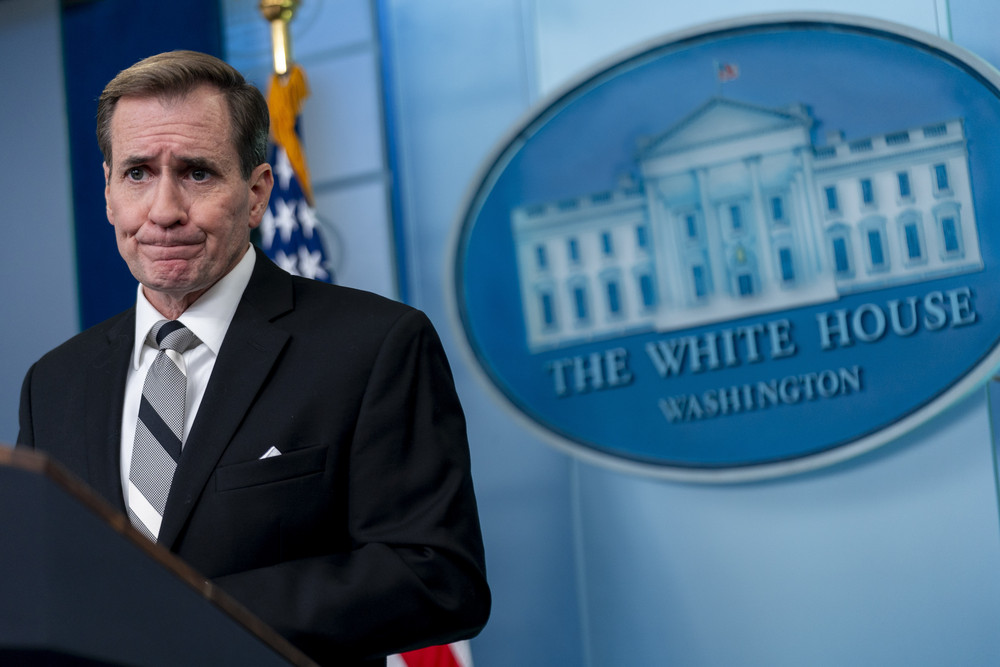
National Security Council spokesman John Kirby takes a question from a reporter at a press briefing at the White House in Washington, Thursday, Dec. 7, 2023.

National Security Council spokesman John Kirby takes a question from a reporter at a press briefing at the White House on Thursday, Dec. 7, 2023. | Andrew Harnik/AP

SANCTIONS COMING — The White House is promising to unveil new sanctions on Iran in the coming days in retaliation for its arms sales that have bolstered Russia’s invasion of Ukraine and threatening a “swift” and “severe” response if Tehran moves forward with selling ballistic missiles to Moscow, reports The Associated Press.

National Security Council spokesman John Kirby said today that the U.S. will be “imposing additional sanctions on Iran in the coming days” for its efforts to supply Russia with drones and other technology for the war against Ukraine. And he issued a new warning to Iran that providing ballistic missiles to Russia for use against Kyiv would be met with even more sanctions and actions at the United Nations.

The U.S. has been warning for months of Russia’s efforts to acquire ballistic missiles from Iran in return for providing Tehran with enhanced military cooperation.

“We have not seen any confirmation that missiles have actually moved from Iran to Russia,” Kirby said, but said that at the same time, “we have no reason to believe that they will not follow through.”

He said that if Iran moves forward, “I can assure you that the response from the international community will be swift and it will be severe.” He said the U.S. would take the matter to the UN Security Council, where Russia has a veto.


YOUR GUIDE TO EMPIRE STATE POLITICS : From the newsroom that doesn’t sleep, POLITICO's New York Playbook is the ultimate guide for power players navigating the intricate landscape of Empire State politics. Stay ahead of the curve with the latest and most important stories from Albany, New York City and around the state, with in-depth, original reporting to stay ahead of policy trends and political developments. Subscribe now to keep up with the daily hustle and bustle of NY politics. 


NIGHTLY NUMBER

12 percent

The amount that exports from Japan surged in January , a stronger than expected result that helped the country’s deficit shrink to 1.76 trillion yen ($12 billion). Strong exports have roughly halved Japan’s deficit from this time last year.

RADAR SWEEP

CATHOLIC CARE — Across the country, explicitly Catholic health companies have taken over secular hospitals. Four of the 10 largest hospital chains in America are now Catholic, according to federal data from the Agency for Healthcare Research and Quality. And with that takeover comes some constraints . While the hospitals are largely similar to their secular counterparts, they include a handbook of “Ethical and Religious Directives for Catholic Health Care Services” that can make it more difficult to get procedures that the Catholic church deems morally wrong, including abortions. For KFF Health News, Rachana Pradhan and Hannah Recht dove deep into Catholic health care and what it means for the country’s overall health system.

PARTING IMAGE

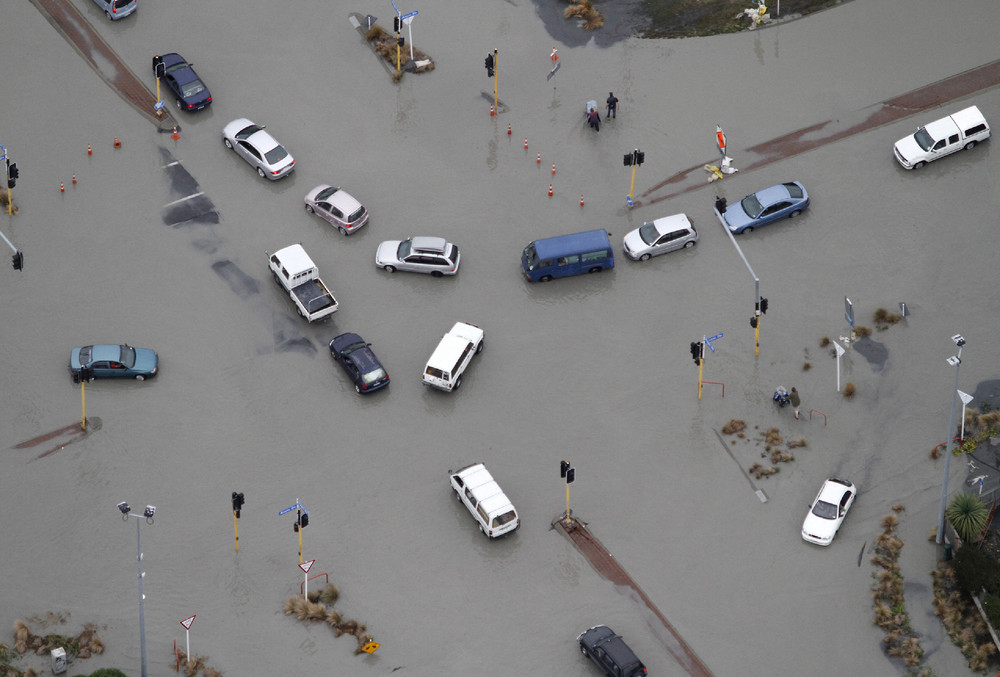
On this date in 2011: Cars are abandoned on a flooded street after a strong earthquake in suburban Christchurch, New Zealand. The powerful earthquake collapsed buildings at the height of a busy workday killing 185 people and injuring thousands in one of the country's worst natural disasters.

On this date in 2011: Cars are abandoned on a flooded street after a strong earthquake in suburban Christchurch, New Zealand. The powerful earthquake collapsed buildings at the height of a busy workday killing 185 people and injuring thousands in one of the country's worst natural disasters. | Mark Mitchell/AP

Did someone forward this email to you?  Sign up here .


Follow us on Twitter

Charlie Mahtesian @PoliticoCharlie

Calder McHugh @calder_mchugh

Mia McCarthy @Reporter_Mia


FOLLOW US

Follow us on FacebookFollow us on TwitterFollow us on InstagramListen on Apple Podcast


 POLITICO, LLC 1000 Wilson Blvd. Arlington, VA, 22209, USA


Top News | 'He’s Not Going to Run Unopposed': Sanders Rejects Schumer for Majority Leader

                                                               LOTS OF POSTS IGNORED BY BLOGGER..... OR REMOVED ON THEIR WHIM! ALL POSTS ARE...