Showing posts with label RUSSIAN MILITARY. Show all posts

Thursday, April 11, 2024

POLITICO Nightly: The famous D.C. lawyer trying to save the New Jersey machine


POLITICO Nightly logo

BY NIGHTLY STAFF

Attorney Neal Katyal speaks in front of the Supreme Court in Washington, Wednesday, Dec. 7, 2022, as the Court heard arguments on a new elections case that could dramatically alter voting in 2024 and beyond. The case is from highly competitive North Carolina, where Republican efforts to draw congressional districts heavily in their favor were blocked by a Democratic majority on the state Supreme Court. (AP Photo/Andrew Harnik)

Attorney Neal Katyal speaks in front of the Supreme Court in 2022. | AP

FIRST LOOK — We called it “the week that blew up New Jersey’s political machine.”

Last month, Nightly wrote about a stunning blow to the political order in one of the nation’s most reform-resistant states, a development that threatened to drag New Jersey’s preserved-in-amber politics out of the smoke-filled backrooms and into the 21st century.

We’re talking here about the prospect of an end to the state’s infamous county-line ballot design, which has long been used by party bosses to reward, punish and command loyalty from candidates running for elected office.

The county-line ballot design is the epitome of hack-driven, smoke-filled-room politics. It is the bane of good government groups. And now, with its demise finally in sight, an unlikely defender has stepped forward to save it: attorney Neal Katyal, widely viewed on the left as a virtuous champion of democracy and a stalwart against Trump-era assaults on democratic norms.

The respected Washington lawyer, a former acting solicitor general in the Barack Obama administration who’s argued before the Supreme Court dozens of times, has been retained by New Jersey’s Middlesex County Democratic Party — one of the local party machines — to protect the archaic county-line design after a federal judge struck down its use in late March.

Katyal’s arrival on the scene is a fascinating turn of events. The state’s unique ballot design is known to give an advantage to candidates officially endorsed by local leaders of both major parties; challengers who failed to win the endorsement are shunted off to the side of the ballot, to a position often referred to as “ballot Siberia.”

Katyal’s defense of the practice has deeply disappointed his usual admirers and led to charges of hypocrisy. Our colleague, Michael Schaffer, will have more tomorrow morning on the saga — and Katyal’s response — in his weekly Capital City column . It’s a great read, and it raises questions that reach beyond grubby Garden State politics.

“Alas, the appeals court won’t weigh in on what might be the most interesting aspect of the case for Washington types: Just why would Katyal sign on to a cause that, whatever its legal merits, looks so tawdry and backwards? For someone who is genuinely admired in the capital’s legal and media ecosystem, it’s off-brand, to say the least,” writes Schaffer. “Democracy advocates have long derided the rule as something out of a banana republic, “an unconstitutional governmental thumb on the scale.”

“In Washington, the whole spectacle reflects a tension that has played out in the establishment ever since Trump’s defeat: Was pushing back against election subversion just about thwarting Trump? Or is it part of a larger effort to improve American democracy — a cause that might also include killing a crass New Jersey system that long predates the 45th president?”

Welcome to POLITICO Nightly. Reach out with news, tips and ideas at nightly@politico.com . Or contact tonight’s author at mschaffer@politico.com or on X (formerly known as Twitter) at @michaelschaffer .


SUBSCRIBE TO GLOBAL PLAYBOOK: Don’t miss out on POLITICO’s Global Playbook, the newsletter taking you inside pivotal discussions at the most influential gatherings in the world, including WEF in Davos, Milken Global in Beverly Hills, to UNGA in NYC and many more. Suzanne Lynch delivers the world's elite and influential moments directly to you. Stay in the global loop. SUBSCRIBE NOW .


WHAT'D I MISS?

— OJ Simpson, fallen football hero acquitted of murder in ‘trial of the century,’ dies at 76: O.J. Simpson, the decorated football superstar and Hollywood actor who was acquitted of charges he killed his former wife and her friend but later found liable in a separate civil trial, has died. He was 76. Simpson’s attorney confirmed to TMZ he died Wednesday night in Las Vegas . A message posted today on Simpson’s official X account — formerly Twitter — said he died after battling cancer. “He was surrounded by his children and grandchildren,” the statement said.

— Liberal Wisconsin Supreme Court justice says she won’t run again, setting up fight for control: Wisconsin Supreme Court Justice Ann Walsh Bradley announced today that she will not seek another term , setting up a high-stakes fight for control of the battleground state’s highest court. Bradley, who is part of the court’s 4-3 liberal majority, said she felt confident she could win a fourth 10-year term but that it was time to “pass the torch.” Her term will end July 31, 2025. The election for the open seat will be held next April. Brad Schimel, the former Republican attorney general, announced in November that he plans to run. The race was already expected to be heated, but Bradley’s departure makes it an open race.

— Menendez trial still set for May, but wife’s will be delayed: Sen. Bob Menendez’s bribery trial will start in May — without his wife. A federal judge today refused to delay the trial because of health issues facing Nadine Menendez, who asked to postpone the trial because of an unspecified “serious medical condition.” The New Jersey Democrat and his wife face bribery and extortion charges stemming from his relationship with three New Jersey businesspeople, who are also co-defendants.

NIGHTLY ROAD TO 2024

WRITING IN CHENEY John R. Bolton, who fervently disavowed former President Donald J. Trump after serving as his national security adviser, said on Wednesday that he would be voting for a Republican in the November election, just as he did four years ago — only not for his old boss but for former Vice President Dick Cheney , reports the New York Times.

TRUMP-APPROVED — Donald Trump is tightening his stranglehold on the congressional GOP’s policy agenda as he reshapes Republican lawmakers’ party orthodoxy on national security and social issues.

Trump’s sway was on full display Wednesday as the House tried to take up a warrantless government surveillance bill that was intended to unite the party. Then, hours after the former president pushed to “kill” the Foreign Intelligence Surveillance Act reauthorization, 19 House Republicans did just that.

He’s also successfully nudging most anti-abortion conservatives to accept his call to abandon a national standard — what was once a consensus position in the GOP. That’s on top of Trump’s long-standing opposition to new Ukraine aid, which remains stalled on the Hill.

AROUND THE WORLD

Trucks carrying humanitarian aid for the Gaza Strip pass through an inspection area.

Trucks carrying humanitarian aid for the Gaza Strip pass through the inspection area at the Kerem Shalom Crossing in southern Israel. | Ohad Zwigenberg/AP

JAMMED UP — Long processing delays of trucks entering Gaza are creating a backlog of humanitarian aid in the enclave , thwarting the distribution of food and medical aid to more than 2.2 million people, aid workers say.

Since Sunday, about 400 assistance-carrying trucks a day have entered the enclave from Egypt, the largest number since Israel began its counteroffensive against Hamas in October, according to Israeli government figures.

But aid groups are still having difficulty accessing that aid, which is pooled in a restricted area on the Gazan side of the border overseen by Israel for vetting. Humanitarian organizations have to load that aid onto other trucks and can retrieve the cargo only at certain times of the day, according to four aid workers whose organizations work in Gaza.

While distributing humanitarian aid is difficult in any war zone, the aid workers, who were granted anonymity because they feared retribution by Israel, said Israel’s bureaucratic processing and rules around access are creating particularly large delays in Gaza. Israel has fired back at the aid groups’ allegations, saying the U.N. does not have the capacity to distribute all of the aid it has let through the border.

Whatever the reason for the long delays, it could take weeks, maybe months, for the aid to reach all those who need it, including those in the northern part of the enclave who are still largely blocked off from aid delivery networks.

TIGHTROPE WALK — Iran is calibrating its plans for a major retaliatory strike against Israel to send a message — but not spark a regional war that compels Washington to respond, the U.S. assesses.

Biden administration officials judge that Iran is planning a larger-than-usual aerial attack on Israel in the coming days, one that will likely feature a mix of missiles and drone strikes, said two U.S. officials who were granted anonymity to detail sensitive intelligence assessments.

Neither official said they were fully confident Iran will succeed in striking Israel in a way that doesn’t prompt the U.S. to respond militarily, as any attack increases the risk of a greater conflagration in the Middle East. But Iran doesn’t seek to expand the regional crisis further, the Biden administration has long determined, which the officials said may be weighing on Tehran’s planning.

The National Security Council declined to comment. But President Joe Biden, speaking during a Wednesday news conference, said Iran was “threatening to launch a significant attack on Israel.”


Access New York bill updates and Congressional activity in areas that matter to you, and use our exclusive insights to see what’s on the Albany agenda. Learn more .


NIGHTLY NUMBER

15 percent

The percentage growth of the Russian military since the start of the Ukrainian war, according to testimony from Gen. Christopher Cavoli, who heads up European Command and is also NATO’s supreme allied commander on the continent. Cavoli, in a plea to Congress for more aid to Ukraine, warned that Russia replaced its heavy battlefield losses in Ukraine faster than anticipated.

RADAR SWEEP

STRANGER THAN FICTION — A Texas-based artist named Roxy Gordon was famous for spinning a good yarn — he worked as a Native American artist but wasn’t actually Native American, he once wrote he doesn’t know the difference between truth and fiction , noting “either one I can get away with.” As a writer, it’s a fascinating — and plausibly disturbing — way to live a life. But as his fascination with Native American art grew, he started to buy into the idea that he was Native as well — and his art started to appear in anthologies of Native writing, and his profile grew throughout Texas as a counterculture, Native figure who had ideas about a whole lot. As his profile grew before his death in 2000, he held tight to his outsider status, even though it was a fiction. For Texas Monthly, Michael Hall writes about Gordon and what it means to be an outsider artist.

PARTING IMAGE

On this date in 1966: A huge crowd of grape strike pickets and sympathizers gather at the steps of California's Capitol building in Sacramento. The strike, fighting the exploitation of farm workers, lasted until 1970.

On this date in 1966: A huge crowd of grape strike pickets and sympathizers gather at the steps of California's Capitol building in Sacramento. The strike, fighting the exploitation of farm workers, lasted until 1970. | AP

Did someone forward this email to you?  Sign up here .


Follow us on Twitter

Charlie Mahtesian @PoliticoCharlie

Calder McHugh @calder_mchugh


FOLLOW US

Follow us on FacebookFollow us on TwitterFollow us on InstagramListen on Apple Podcast


 POLITICO, LLC 1000 Wilson Blvd. Arlington, VA, 22209, USA


Saturday, June 24, 2023

FOCUS: Kremlin Denies Putin Has Fled Moscow as Plane Mysteriously Disappears From Radar


Reader Supported News
24 June 23

Live on the homepage now!
Reader Supported News

911 CALL FOR DONATIONS — This is day 4 of a dead zone for donations. The readership is very strong but the donations are totally being ignored. We have to have some funding. 911 for real.
Marc Ash • Founder, Reader Supported News

Sure, I'll make a donation!


Russian president Vladimir Putin. (photo: Sputnik/AP)
FOCUS: Kremlin Denies Putin Has Fled Moscow as Plane Mysteriously Disappears From Radar
Namita Singh, William Mata and Maryam Zakir-Hussai, The Independent
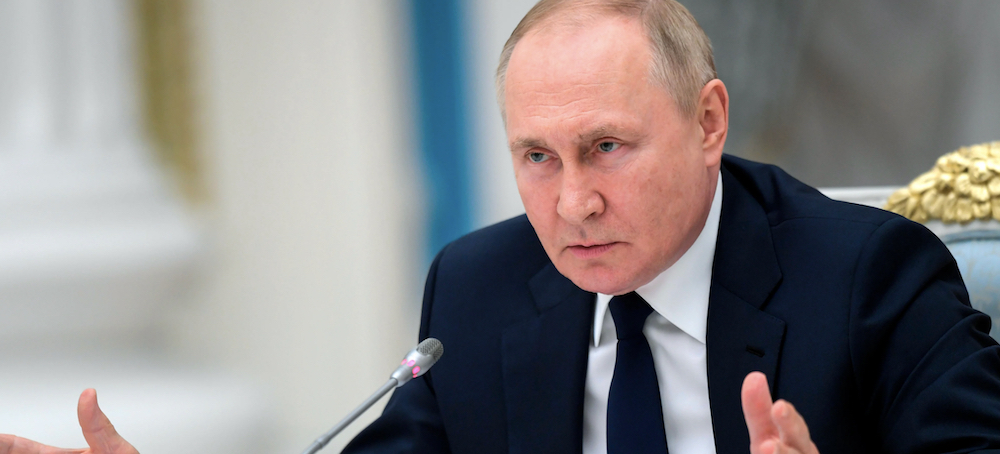
Excerpt: "Vladimir Putin's whereabouts have been thrown into question after an aircraft belonging to the presidency was spotted flying from Moscow to St Petersburg, according to Flight Radar."


Putin warns the rebels will be ‘brought to justice’ as Russia grapples with a ‘mortal blow’


Vladimir Putin’s whereabouts have been thrown into question after an aircraft belonging to the presidency was spotted flying from Moscow to St Petersburg, according to Flight Radar.

However, his spokesperson, Dmitry Peskov, denied Putin has fled the capital and told reporters the president “is working at the Kremlin”.

Wagner’s armed rebellion is racing towards Moscow after the mercenary group’s leader Yevgeny Prigozhin took control of the military headquarters in Russian cities Voronezh and Rostov-on-Don.

Prigozhin has said his forces have been attacked by artillery and helicopters since he launched his mutiny.

Putin said an “armed mutiny” by Yevgeny Prigozhin was treason and a “mortal blow” to Russia’s troops.

In an emergency televised address, the Russian president said anyone who had taken up arms against his military would be punished.

Prigozhin demanded Mr Shoigu and Russia’s top general Valery Gerasimov meet him in Rostov-on-Don, otherwise threatening to “blockade the city of Rostov and head for Moscow.”


READ MORE


Wagner Inches Closer to Moscow as Putin Vows to Stop 'Rebellion'Wagner Group mercenaries. (photo: ABC)

Wagner Inches Closer to Moscow as Putin Vows to Stop 'Rebellion'
Robyn Dixon and Dalton Bennett, The Washington Post
Excerpt: "Forces led by Wagner mercenary boss Yevgeniy Prigozhin advanced in the direction of Moscow on Saturday, moving north from the Voronezh region to the Lipetsk region, which is roughly 250 miles from the Russian capital." 

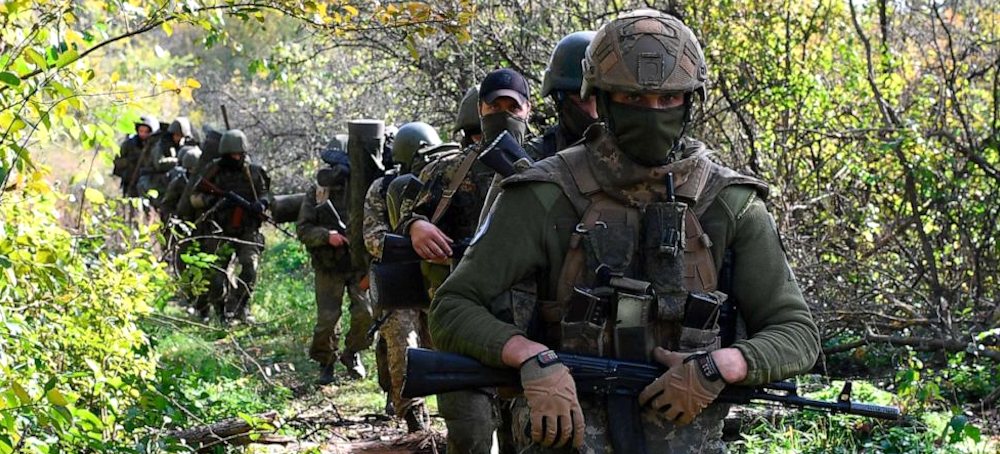
Forces led by Wagner mercenary boss Yevgeniy Prigozhin advanced in the direction of Moscow on Saturday, moving north from the Voronezh region to the Lipetsk region, which is roughly 250 miles from the Russian capital. President Vladimir Putin, citing a threat to his nation, said he had ordered the military to quash the “rebellion” led by Prigozhin, who on Friday called for Russians to join a campaign against Russia’s military leadership.

Here’s what to know

  • Late Friday, Prigozhin called for Russians to join Wagner’s campaign after claiming that a Wagner camp in Ukraine had been attacked “from the rear” by Russia’s military. He also said he would march on Moscow unless he could confront his enemies in Russia’s Ministry of Defense. The Defense Ministry denied the accusations in a Telegram post, and state media suggested video of the strike had been staged.

  • Putin promised heavy consequences for the organizers of Wagner’s Saturday operation: “Everyone who deliberately embarked on the path of betrayal, who prepared an armed rebellion, chose the path of blackmail and terrorist methods — they will suffer inevitable punishment,” Putin said in a five-minute speech.

  • Signs of anxiety were clear across Russia on Saturday. The mayor of Moscow told the public not to go to work Monday, declaring it a day off for all nonessential workers and asking them to stay home. Security was reinforced on main highways leading into Moscow, and residents in other areas were asked not to leave their homes. Meanwhile, flights out of Russia were selling out.

  • Russian forces launched one of their biggest overnight missile barrages in weeks against Ukrainian cities early Saturday morning, firing about 51 cruise missiles and two self-destructing drones, Ukraine’s air force said in a Telegram post.


READ MORE


Contribute to RSN

Follow us on facebook and twitter!

Update My Monthly Donation

PO Box 2043 / Citrus Heights, CA 95611


Sunday, April 9, 2023

Exposed: Clarence Thomas' benefactor is Hitler-obsessed


atAdvocacy

OD Action is now atAdvocacy!

Impeach Clarence Thomas for hiding corrupt payments to his wife!


Yesterday, we made an error in reporting the imminent reinstatement of Tennessee's ousted reps by Nashville's Council, which has the votes to reappoint Justin Jones. Justin Pearson's seat will be appointed by Shelby County's Board of Commissioners (Memphis), which has yet to commit to a course of action. We screwed the pooch on that one. Sorry!

Daily Dose of Democracy:

photo
Clarence Thomas’s billionaire benefactor collects Hitler artifacts

Ok, so a Supreme Court Justice accepted millions in lavish benefits from a Nazi-obsessed, right-wing activist — but calm down, there is a perfectly logical explanation for it. Justice Thomas is just a corrupt self-dealer, selling America out to wealthy fascists. See? It's simple.

Take Action: Pass the Supreme Court Ethics Act!


photo
VIDEO OF THE DAY: Clarence Thomas faces punishment over undisclosed gifts

BTC breaks down the prospects for actual repercussions for the Justice's brazen corruption.


photo
The GOP has chosen Trump over the country....again

atAdvocacy Partner: No matter the crimes, no matter the lies - the MAGA GOP has decided that their loyalty is with Donald Trump, not our country.


Texas governor seeks pardon of man who murdered Black Lives Matter shooting
Surprising no one, Republicans' "tough on crime" politics do not apply when a white man murders a Black activist. The victim, Garrett Foster, 28, had been heavily armed during a BLM protest in 2020, but witnesses testified that he never raised his gun or posed a threat when Daniel Perry shot him dead from his car — which he could have simply driven away. Perry was convicted by of murder by a jury of his peers.

Take Action: Demand the Justice Department prosecute DeSantis and Abbott for their Martha’s Vineyard migrant stunt!


Twitter files writer betrays Elon, leaves Twitter after Substack restrictions
The Musk-Taibbi bromance seems to be ending as most alliances between opportunistic narcissists do: hurt feelings, betrayal, and the sweet serenade of the world's smallest violin.


Leaked documents reveal depth of US spy efforts and Russia’s military struggles
The documents paint a portrait of a depleted Russian military that is struggling in its war in Ukraine and of a military apparatus that is deeply compromised.


Iowa won't pay for rape victims' abortions or contraceptives
Pro-life = "go f*** yourself."

Take Action: Demand Congress enshrine abortion protections into law!


photo
Republicans make fatal mistake amid impending Trump indictment

No Lie with Brian Tyler Cohen. What a dumb move...

🚨 Brian Tyler Cohen launched a Spanish YouTube channel! The left has a huge problem reaching Spanish speaking audiences, and our vote share among Spanish speakers is actually declining, so please spread the Democrats' message by subscribing to his channel (and watch some videos to get them going in the algorithm) by clicking here.


Biden's EPA plans significant limits on tailpipe emissions to boost electric vehicle adoption
On the one hand, the move would make major strides toward saving the planet from certain destruction and modernize America's economy in the process. On the other hand, Republicans' wealthy donors would have to invest to keep up with improvements. So yeah... it's controversial.

Take Action: Tell Congress to pass the PRO Act and protect workers' rights!


US to test faster asylum screenings for migrants crossing border illegally
Now we wait to see if this leads to a more efficient process of giving desperate families a shot at the American dream or a speedier avenue to kick those in need to the curb.


Hey, it's Easter! Here are some old pictures of White House celebrations
Pretty cool if this is how you roll.


The USA, today

The daily planet

Hope...

Want more hope? Subscribe to our favorite good news newsletter FREE.


Sunday Funnies

Sunday Funny
Sunday Funny
Sunday Funny
Sunday Funny

PS — Please don't forget to sign the petition to impeach Clarence Thomas, and be sure to follow us on TwitterFacebook, and Instagram.

 @advocacy | 1002 Hull St., Louisville, KY 40204


Wednesday, May 11, 2022

RSN: FOCUS: Has Russia Been Beaten? This Military Expert Says That Moment Is Coming Soon


Reader Supported News
10 May 22

Live on the homepage now!
Reader Supported News

I WISH MORE PEOPLE WOULD DONATE. I'M A SOCIAL WORKER ... and we all know social workers don't earn much -- and 75 years old, and I donate $48 monthly, more than three times what it costs for home delivery of the Washington Post, I just gave RSN an extra $100 this evening because I felt somebody had to do something. C'mon, loyal readers -- help out just a little more!
Katie, RSN Reader-Supporter

Sure, I'll make a donation!


An unusable Russian tank and a man are seen on the Kyiv-Zhytomyr highway after the withdrawal of Russian forces and the recapture of the region by Ukrainian soldiers in Kyiv, Ukraine, April 05, 2022. (photo: Metin Aktas/Anadolu Agency/Getty Images)
FOCUS: Has Russia Been Beaten? This Military Expert Says That Moment Is Coming Soon
Chauncey Devega, Salon
Devega writes: "When Vladimir Putin ordered the Russian military to invade Ukraine more than two months ago, he no doubt expected an easy victory from a lightning-fast assault intended to crush the smaller opposing force. This spectacular victory was meant to advance the Russian president's vision of a new manifest destiny, bringing his country closer to re-establishing itself as an imperial power on the global stage."

Russia had a decent plan, says warfare expert John Spencer. But military incompetence has led to total failure

When Vladimir Putin ordered the Russian military to invade Ukraine more than two months ago, he no doubt expected an easy victory from a lightning-fast assault intended to crush the smaller opposing force. This spectacular victory was meant to advance the Russian president's vision of a new manifest destiny, bringing his country closer to re-establishing itself as an imperial power on the global stage. But Putin's gambit failed in grand fashion. Instead of celebrating a victory on May 9 — the anniversary of the Soviet victory over Nazi Germany in World War II — the Russian military is trying to reorganize itself after a series of stunning defeats and great losses in both materiel and personnel.

Speed was the key element in the Russian plan, but surprisingly strong and effective resistance from the Ukrainian military, and the Ukrainian people as a whole, exposed the Russian military's many weaknesses: Logistical capabilities were lacking, troops appear poorly trained and lack motivation, equipment has not been properly maintained. Russia's military now appears to be running short of ammunition, fuel, spare parts and even soldiers.

The Russian military laid siege to the Ukrainian capital of Kyiv, but after after several weeks of intense battle was finally driven out. The Ukrainian city of Mariupol has become the site of savage up-close combat, with defenders still holding out inside the now-famous Azovstal steel plant.

The time bought with Ukrainian struggle and blood has meant that the U.S. and its NATO allies have continued to pour billions of dollars in weaponry and other critical supplies into the embattled country. These weapons, which include killer drones, heavy artillery, anti-tank and anti-aircraft missiles, and other support are proving lethal to the Russian invaders. As reported by the New York Times last week, the U.S. is also providing critical military intelligence to the Ukrainian military, which has been used, for instance, to target and kill Russian generals and to sink the missile cruiser Moskva, flagship of the Black Sea fleet.

The Russian military has now pivoted away from Ukraine's capital city and is largely focusing on the eastern and southern parts of the country, specifically the Donbas region and Odessa. To this point, even with reorganized forces and a new battle plan and leadership, the Russians continue to encounter fierce resistance in those parts of Ukraine.

Despite Ukraine's spirited resistance, the international mood remains tense. Putin and his spokespeople have at times threatened the possibility of nuclear war if the U.S. and its allies continue to "interfere" in Ukraine. At other times, the Russian leadership has signaled being open to a diplomatic solution to end the Ukraine war. Defense Secretary Lloyd Austin recently made clear that the strategic goal of the U.S. is not just to preserve Ukrainian sovereignty but to degrade Russia's military capability such that it will not threaten its neighbors again.

To discuss the current perilous state of the war in Ukraine, I recently spoke with John Spencer, a retired U.S. Army major who is chair of urban warfare studies at the Madison Policy Forum. He also consults for the Defense Advanced Research Projects Agency, the UN and other military and national security organizations. Spencer's essays and other writing have been featured by the New York Times, the Washington Post, USA Today, the Wall Street Journal, Foreign Policy and other leading publications. His new book is "Connected Soldiers: Life, Leadership, and Social Connections in Modern War," to be published in July.

In this conversation, Spencer assesses the Russian military's performance in the war and offers his views on why the Ukrainians have been able to fight effectively against a far larger and more powerful force. He discusses the effect of Western military intelligence as a key variable in the Ukrainian success so far, and how the war is changing as the front shifts away from cities like Kyiv and Kharkiv into the wide-open terrain of eastern and southern Ukraine.

Spencer argues against believing these sensational claims that the war in Ukraine represents a significant change in the nature of warfare based on technological innovation, and ends by making a surprising prediction: While the longer struggle for Ukraine's freedom from Russia may drag on for years, he says, this conflict in Ukraine is drawing near its conclusion.

This conversation has been edited for clarity and length.

How do you assess the performance of the Russian military in Ukraine? Are they as bad as most outside observers are suggesting?

Absolutely. The Russian military has shown that it is in fact that bad. At the beginning of this war, they probably began as the No. 2 or 3 military in the world in terms of combat power. The Russian military will probably leave the Ukraine war diminished down to No. 25 or 30 at least.

On paper, the Russian military should have been able to dominate the Ukrainian military and win in three days, based just on the size of the Ukraine military. The problem with that prediction is armed resistance, which is when citizens rise up. That can take many forms. It's not just some of the images that we've seen of Ukrainian civilians with AK-47s. The Ukrainian government enacted a law right before the invasion that increased the territorial defenses from some 200,000 soldiers to about a million. That can't be discredited as a factor. I believe many outside observers underestimated the Ukrainian military's capabilities.

The impact of the weapons, supplies and support provided to the Ukrainians was also underestimated. They started getting the Javelin missiles, for example, around 2016. The Ukrainians didn't just start getting Javelins two months ago. One of the first things that was given to Ukraine from the outside world was superior intelligence. That includes everything from satellite imagery to help with signals intelligence and other aspects as well. That translates into the ability for a smaller and weaker force to be at the right moment to stop the other guy from doing what he wants to do. The Russian plan of attack in the beginning was not ridiculous. It was actually a solid plan, but they didn't have the military strength they thought they had to follow through on it.

It is now clear that the U.S. and NATO are providing intelligence information to Ukraine. The only question is what type of intelligence, how fast and in what detail. Once the war is over, what do you think some of those big stories will be?

The Ukrainians could not have sunk the Moskva, the flagship of the Black Sea fleet, without such intelligence information. It wasn't a lucky shot to be able to hit that ship with the Neptune missiles. Superior intelligence information was required. I believe the same thing about all of these Russian generals being killed. Those aren't all lucky shots either. The Ukrainians being able to hit a vital fuel dump inside Belarus by using helicopters was also not possible without superior intelligence capabilities.

What did the Russians reasonably believe they could achieve — and how did their plan go so wrong so quickly?

Ukraine is the second-largest country in Europe. There is so much happening at the same time. One of the biggest risks that the Russians took was coming across seven different fronts. In the beginning, they had one objective, and that was to take Kyiv. All other Russian military operations were in support of that objective. In order to take Kyiv, they needed to use speed.

Step one of invading a country is to take out the air defenses. The Russians failed there too, and that was a massive blunder. The airspace is contested to this day, in fact. Without that air superiority, their audacious plan to take the capital — which included special forces and other elite troops attacking the airport — did not go as planned. The Russians were also going to drive their most lethal mechanized unit down from Belarus, which is the fastest route. The plan was basically sound, but because the air defenses were not taken out the Russians got slowed down.

And if you get slower in this audacious plan of using surprise, audacity and speed, then everything starts to fall apart. That is part of war, of course, but you have to have the capability to respond. Because the Russians couldn't adapt to the loss of their momentum, they slowed down and stalled out. And of course, there is the truism, and wisdom, that it is not fighting that wins war, but logistics.

Amateurs talk tactics; professionals talk logistics. Once Russia pushed their units fast — we saw units just driving through towns, trying to get where they were going — they extended their operational reach. That is an operational risk. Such a move is not unheard of, but the Russians couldn't hold the lines to support everything they were pushing in at once. Those logistical lines are the lifeline. Once again, what wins wars, or loses them, are questions of logistics.

The Russian military's senior leaders are obviously professionals, very serious people. How did they make such basic and fundamental errors in the execution of their war plan?

Throughout the Russian chain of command, they thought they had a force that they did not. The war in Ukraine has been the biggest test of the Russian military since World War II, and how much it has changed. The Russians tried a Western-style invasion. The plan was to topple the Ukrainian government and then put in their own. It was supposed to be a Western, modern, Desert Storm or Operation Iraqi Freedom-style "shock and awe" invasion. Russian military leaders believed they could accomplish this, based on what they believed they had.

But the training and preparation of the conscripts was poor, and the Russian military lacks professional enlisted soldiers. They were trying to fight like a modern Western military with a Soviet-style force that even wasn't as strong as it was during the USSR. They failed, and have now been exposed as suffering from years of graft, decay and belief in a method of warfare that does not fit the strengths of their military.

What is going on other regions of Ukraine, such as the east and south? Some observers suggest that the Russians are in fact enjoying great success in those regions but that is being underreported by the Western media.

Kherson is an example where they've had success. They moved in and were able to secure it with a minimum number of forces. But as for Odessa, personally, I do not think they could ever take it. Mariupol, of course, the Russians had to take at great cost. The fact that the Russians had to fly in their top military officer, an adviser to Putin himself, to get control of the situation in Ukraine is the biggest sign one could ever have that things are not going the way the Russians want them to.

The fact that 3,000 Ukrainian soldiers held off 15,000 or more Russian troops in Mariupol is incredible. They didn't just do that by the way — those Ukrainians kept those Russian forces engaged. That means they couldn't go somewhere else for two months. I woudn't even call Mariupol a win for Russia, to be honest.

We know a great deal more about Russian losses. As for Ukrainian losses, there hasn't been public information about that, and we know a lot less. Clearly, the Ukrainians have lost a lot, and the fight is costing them greatly. As a military analyst, I see Russia making gains in some locations, but then I see them losing gains in other critical locations.

As the Russians move to the east and the Donbas region, they are shifting away from the urban warfare seen in Kyiv to what we describe as "maneuver warfare." How would you explain that term? What will the Russians try to do where the terrain is more open?

Maneuver warfare, as we understand it today, came from finding a way to break out of trench warfare during World War I. That involved using a combination of massive artillery fire, tanks, airplanes and radios to break stalemates in trench lines by penetrating at some point, and then massing all your capabilities into that penetration and overwhelming your enemy. That's the basis of maneuver warfare. In the eastern parts of Ukraine, the Russians are applying that doctrine. That is the most powerful form of open warfare across great distances.

In urban terrain, what we see is more what we call positional warfare. You have a piece of terrain that you're holding, and it is much like trench warfare or akin to siege warfare around ancient castles. It is very hard to find a break-in point. We saw that in Kyiv.

In eastern Donbas, I believe that we will see a combination of both wide-area and long-distance battles, 20-mile fire engagements. But we'll also see the closing in of formations where the Russians are trying to penetrate into critical areas including urban terrain. In the eastern Donbas, it's everything from urban terrain to heavily wooded swamps. There will be all types of warfare, but the more open terrain allows two enemies to find, fix, and finish each other, much more so than in urban terrain.

The ultimate goal is to destroy the other military and control the field of battle. The outcome will be largely determined by which military, the Ukrainians or the Russians, can get to the key pieces of terrain and hold them, and then seek some type of negotiation or other strategy for a resolution.

There are the classic definitions of "war" and "warfare," which are not the same thing. How is the experience of war and warfare similar in Ukraine to things we have seen in earlier time periods? How is it different? And what is the role of technology?

The biggest difference between "war" and "warfare" is that war is the overarching political function of armed fighting between two nations. That includes politics, economics and information. War is the pursuit of strategic objectives by the use of force by one nation versus another. Warfare is the simpler concept of armed fighting between two individuals, whether that's a non-state actor, a terrorist force and a military or two militaries going against each other or a military fighting a bunch of irregular civilians. Warfare is the actual fighting. War is the pursuit of the political and strategic objectives.

This is a war for the nation of Ukraine. This includes how many nations are in support of Ukraine and all the way down to the individuals fighting versus Russia. That will decide the outcome of this war just as much as the warfare, which is the fighting where one person is killing another person.

The nature of war is based on principles that will never change. War is politics. War is human. Yes, the weapons change. Yes, the technologies may change. Even how you fight may change. Yes, we are seeing kamikaze drones and cyber warfare and the like. But to me, these are just continuations of the basics of war fighting. Yes, you can increase somebody's range and you can reduce the cost to humans. If you can put a drone up, you can use intelligence differently.

But I have not seen anything, including the Ukraine war today, that proves to me that there is some radical aspect in which technology is changing the basic nature of fighting.

How do you make sense of the arguments some people have advanced that the war in Ukraine is a revolutionary event that represents a great transformation in warfare, such as with the fixation on the Javelin missile and how it has supposedly made tank warfare obsolete.

The tank, by its nature, is mobile protected firepower. From the start of warfare — from the days of moving up to the castle gates — that requirement to have mobile protected firepower is not going to change. Since the tank first appeared on the battlefield, there has been no replacement for it. There simply is no replacement for an armor-protected vehicle that allows you to get close to the thing you are trying to kill and then having the firepower to do it.

In urban terrain, no smart soldier goes into that type of fight without a tank. And only a dummy goes in sending a tank by itself, because everything in war is basically a chess match. Of course we have developed technologies that make a tank vulnerable, but a soldier on the battlefield is just as vulnerable. I'd rather be inside a vulnerable tank than standing out in the open wearing a Kevlar vest where basically anything can kill me.

These narratives about some revolutionary change in warfare from a given weapon are because people think that they've found something new, and they want everybody to believe them. You have to be a student of warfare to understand where history is rhyming and repeating itself or where there's actually something new.

What does it feel like to be a Ukrainian soldier right now? And what does it feel like to be a Russian soldier in Ukraine?

There are some things about soldiering that don't change. They're having ups and downs in terms of morale and unit cohesion. War does that to people. You endure great things. War is also extreme violence mixed with periods of boredom, punctuated by extreme fear and violence.That's normal life in combat, period.

But now there is this aspect of being connected online. So now the Ukrainian soldiers are hearing from their president. They get the messages that 40 nations are behind them. In Russia, while they try to control information, there's no controlling the fact that entire units are being taken off the battlefield and their equipment doesn't work. All of this information is part of what gives an individual the will to fight. It's a complex formula of personal motivations, their connections to their families, their belief in the cause, and how well the war's going for them. Ultimately, it is a rollercoaster of emotion that is further impacted by the digital world we live in, which is constantly connected. Ukrainian soldiers have their cell phones. Russian soldiers have their cell phones. Information can bleed through. This fight for the narrative, even in the soldier's brain, is there. That will be a part of war going forward forever.

Russian soldiers are committing war crimes in Ukraine. There are reports of Russian soldiers refusing to fight and sabotaging and abandoning their equipment. Officers have been attacked and killed. There is looting. Does this signal to a lack of proper non-commissioned officers in the Russian army?

They have officers and they have conscripts and they have contracted soldiers. They don't have the backbone of an army, which are the non-commissioned officers, the sergeants. When the rubber meets the road, he or she is there at the point of need, to motivate soldiers and take care of the health of soldiers. The non-commissioned officers can make decisions without instructions, and that's really the glue of your army. That matters, because everything's going to go bad in war. There's fog and friction, and when bad things happen, the non-commissioned officer is your glue on the ground. He can say, "OK, that plan went really bad. I know what the overall goal is. I'm going to execute that."

That is the power of any army. So when Russia doesn't have that capability, those people, when the military is put under extreme stress it can't make a decision. It can't create smaller teams of motivated soldiers. It can't keep soldiers from doing bad things. It basically falls apart. The Russians should have known that from history.

What do you think happens next in Ukraine?

You have to look for the "culmination points" when a military force takes so many losses that they will not be able to meet their goals. This is what we saw in Kyiv. They start to break down in their actual formation as an organized group.

This conflict, in a larger sense, won't end for years. Russia will always contest the borders of Ukraine as a sovereign nation. But this war, the battle for Ukraine, will end within weeks or months. That is my opinion. We will see the Russian military in Ukraine reach its culmination point soon.


READ MORE

Special Coverage: Ukraine, A Historic Resistance
READ MORE


Contribute to RSN

Follow us on facebook and twitter!

Update My Monthly Donation

PO Box 2043 / Citrus Heights, CA 95611


This Weekend in Politics, Bulletin 441.

                                                                               LOTS OF POSTS IGNORED BY BLOGGER..... OR REMOVED ON THEIR WHI...