

Showing posts with label PREVENTION. Show all posts

Thursday, April 7, 2022

POLITICO NIGHTLY: The Covid questions we still can’t answer


View in browser
 
POLITICO Nightly logo

BY JOANNE KENEN

Presented by Human Rights Watch

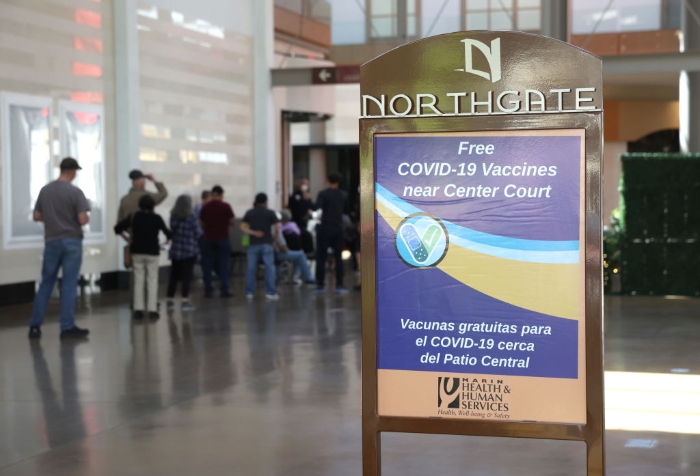
People line up for a Covid-19 vaccine at a vaccination clinic in San Rafael, Calif.

People line up for a Covid-19 vaccine at a vaccination clinic in San Rafael, Calif. | Justin Sullivan/Getty Images

MEASURING STICK — Right now, most Covid prevention measures have been dropped, and the Omicron offshoot known as BA.2 is spreading. House Speaker Nancy Pelosi is the latest Washington boldface name to reveal she’s caught it.

So far, BA.2 isn’t creating a surge of serious disease or filling up hospitals. But the D.C. cases are a stark reminder that virologists, epidemiologists and infectious disease experts still struggle, two years in, to put a solid number on a host of questions about Covid-mitigation tactics over the past two years. Among them:

— How many lives were saved by mask mandates? By all the public health preventive steps combined?

— How many people didn’t get sick because bars were closed — or might not have gotten sick if more bars were closed?

— What were the precise benefits of the social distancing measures that were introduced in March 2020?

— Perhaps most controversially, what was the net benefit of closing schools?

Working out how to measure the effectiveness of these types of preventive tools — called nonpharmacological interventions or NPIs — is important because a skeptical population could be called upon to follow them again when the next crisis hits — whether that’s sooner, because of a curveball from BA.2 or another coronavirus variant, or later, from an altogether different threat.

But coming up with those numbers is devilishly hard.

“You are never going to be able to measure that precisely,” said David Dowdy, an infectious disease epidemiologist at the Johns Hopkins Bloomberg School of Public Health.

Scientists have studied masks, but they can’t do a gold-standard, traditional study like a double-blind, random-controlled trial of mask wearing. For starters, people know whether they are wearing a mask! There have been other trials and studies, comparing mask wearers and non-mask wearers, but there are all sorts of variables that are hard to sort out with clarity — not everyone would be wearing the masks in the same settings, for the same time, and people who wear masks take other protective steps as well.

That final point applies to studying other nonpharmaceutical interventions. It’s difficult to study one NPI all by its lonesome, because people practice several prevention metrics — masking and avoiding crowds and working remotely and distancing and handwashing etc. — at once. And they are unlikely to do them consistently in ways that are easy to quantify and track.

We can certainly see which states have had a higher death rate from the coronavirus, but it’s hard to pull out precisely which nonpharmaceutical factors contributed — and vaccines of course are the single most powerful preventive tool. Public health officials know that the NPIs are imperfect — that’s why they urge people to practice a bunch of them, because they work better together than one at a time. But imperfect doesn’t mean worthless.

But to emphasize that worth, scientists are still figuring out how to measure it.

A lot of the ongoing study on NPI effectiveness is being done by modeling, more specifically something called “counterfactual” modeling. “We use computational models to simulate hypothetical outbreaks, and we can turn up or turn down different levels of mitigation, “ emailed Natalie Dean, a biostatistician at Emory.

Those models aren’t whipped up in the ether. They are fed data from other studies and surveys — what Spencer Fox, the assistant director of the University of Texas Covid-19 Modeling Consortium, called “ground truth.” But because people don’t follow Covid-prevention measures with consistency, and more than one measure can be introduced at a time, it’s hard to disentangle it all, Dean said.

The pandemic also showed the holes in U.S. data collection for public health. Many of our decisions were based on studies from the U.K. and Israel, which have health data collection systems far better than our own; improving our data is really high on the to-do list, Fox said.

Complicating matters is that while scientists draw conclusions based on a large body of data, some people cherry-pick studies for tendentious reasons. For instance, they may pluck out one small one — Sen. Rand Paul and other conservatives have pointed to one from Denmark — that found masks don’t work, while ignoring a massive amount of other scientific literature that shows they are pretty darn useful. Dowdy likened that to pointing to a smoker who lived to be 100 and touting it as proof that cigarettes don’t cause lung cancer.

Welcome to POLITICO Nightly. Reach out with news, tips and ideas at nightly@politico.com . Or contact tonight’s author on Twitter at @JoanneKenen.


A message from Human Rights Watch:

There is food in the market, but families have no cash to buy it. Health workers are ready to save lives, but there are no salaries or supplies. Learn More.


But what it all comes back to is that it’s not easy to answer those fundamental questions, like “How many lives did NPIs save over the course of the pandemic?” or “How did a specific intervention hold up?”

And it’s been complicated by the politics and the assaults on public health.

“A concerted and deliberate operation has been mounted to discredit public health advice, and it has been getting noisier recently,” Bill Hanage, an epidemiologist at Harvard’s T.H. Chan School of Public Health, emailed Nightly.

People choose whatever data they want to focus on, for whatever reason they want. He calls the phenomenon “choose your own pandemic.”

Because the coronavirus turns out to be very complicated — it isn’t a super-flu, it isn’t just a respiratory disease — and because it is really and truly “novel,” there have been missteps and changes as the science evolved. At the beginning, before the disease and the virus’s transmission was better understood, epidemiologists drew on a lot of century-old lessons from the 1918 flu pandemic, particularly regarding school closing and isolation protocols. Philadelphia was the poster city for not doing enough (other than urging people to try not to sneeze and cough so much in public) and having a huge wave of deaths; St. Louis took more precautions and had a far lower death rate. But the analogies were of course imperfect.

There’s also the perfectly natural human tendency to use hindsight to second-guess decisions.

“The retroscope — as I call it — is a powerful tool,” said Georges Benjamin, executive director of the American Public Health Association.

WHAT'D I MISS?

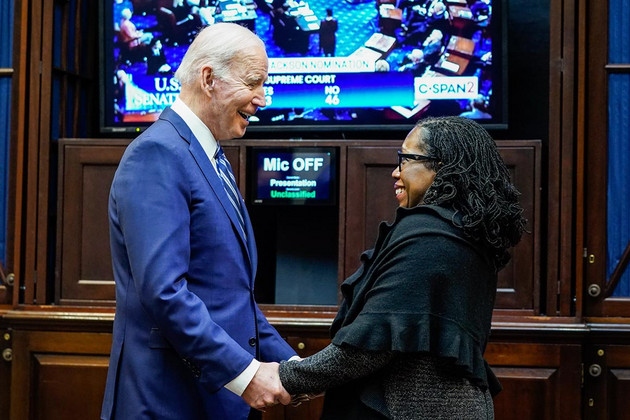
President Joe Biden holds hands with Supreme Court nominee Judge Ketanji Brown Jackson as they watch the Senate vote on her confirmation from the Roosevelt Room of the White House.

President Joe Biden holds hands with Supreme Court nominee Judge Ketanji Brown Jackson as they watch the Senate vote on her confirmation from the Roosevelt Room of the White House. | Susan Walsh/AP Photo

— Ketanji Brown Jackson confirmed as first Black woman on Supreme Court: The Senate confirmed Jackson to the Supreme Court this afternoon, marking a historic moment for the high court. Jackson was approved, 53-47, with the support of three Republicans. The vote makes Jackson the first Black female justice and delivers Democrats their first high-court seat in 12 years.

— Congress passes bills banning Russian oil, revoking normal trade relations: The Senate and House cleared bills today to revoke normal trade relations with Russia and ban oil imports from the country, a one-two punch that caps three weeks of negotiations over legislation to further isolate Moscow. It’s the first time since Russia’s Feb. 24 invasion of Ukraine that Congress has sent sanctions measures to President Joe Biden’s desk.

— U.N. votes to suspend Russia from human rights council: The U.N. General Assembly voted today to suspend Russia from its human rights council over allegations of war crimes committed by Russian soldiers in Ukraine.


INTRODUCING DIGITAL FUTURE DAILY - OUR TECHNOLOGY NEWSLETTER, RE-IMAGINED:  Technology is always evolving, and our new tech-obsessed newsletter is too! Digital Future Daily unlocks the most important stories determining the future of technology, from Washington to Silicon Valley and innovation power centers around the world. Readers get an in-depth look at how the next wave of tech will reshape civic and political life, including activism, fundraising, lobbying and legislating. Go inside the minds of the biggest tech players, policymakers and regulators to learn how their decisions affect our lives. Don't miss out, subscribe today.


— Senate punts $10 billion in Covid aid until after Easter amid stalemate over border policy: Multiple senators confirmed they are delaying voting on a bill to pour $10 billion more into pandemic programs until after their two-week spring break , a decision top administration health officials have said further threatens the country’s ability to fight the virus and prepare for potential surges and variants. The move came days after Senate Republicans stopped the legislation from advancing because they weren’t guaranteed an amendment vote on reinstating Title 42, the Trump-era policy that allows for the expulsion of migrants at the border during the pandemic.

— Trump says Secret Service blocked him from joining Jan. 6 march to the Capitol: In a wide-ranging interview at his Mar-a-Lago Club in Florida with Washington Post reporter Josh Dawsey, Trump spoke about the Jan. 6 insurrection, repeated claims of a stolen election and weighed in on the possibility of a 2024 presidential campaign. On at least a dozen occasions throughout their conversation, Dawsey wrote, Trump blamed the events of Jan. 6 on Pelosi.

— Alabama lawmakers vote to make providing gender-affirming care to trans youth a felony: The Alabama House approved legislation today making it a Class C felony — punishable by up to 10 years in prison — to provide transition-related medical care, including puberty-blocking medications and hormone therapy, to minors. The bill passed the state Senate in February. Republican Gov. Kay Ivey hasn’t taken a public stance on the bill, and her office did not immediately respond to a request for comment about whether she plans to sign it into law.


A message from Human Rights Watch:

Advertisement Image 

 
NIGHTLY NUMBER

3

The number of Russian airlines the U.S. took enforcement action against today, aimed at preventing them from continuing to operate, both internationally and within Russia itself. The new moves are the first enforcement actions taken by the Commerce Department’s Bureau of Industry and Security under the stringent export controls imposed by the United States in response to Russia’s unprovoked and brutal invasion of Ukraine.


DON'T MISS ANYTHING FROM THE 2022 MILKEN INSTITUTE GLOBAL CONFERENCE: POLITICO is excited to partner with the Milken Institute to produce a special edition "Global Insider" newsletter featuring exclusive coverage and insights from the 25th annual Global Conference. This year's event, May 1-4, brings together more than 3,000 of the world’s most influential leaders, including 700+ speakers representing more than 80 countries. "Celebrating the Power of Connection" is this year's theme, setting the stage to connect influencers with the resources to change the world with leading experts and thinkers whose insight and creativity can implement that change. Whether you're attending in person or following along from somewhere else in the world, keep up with this year's conference with POLITICO’s special edition “Global Insider” so you don't miss a beat. Subscribe today.


PARTING WORDS

A fox walks near Upper Senate Park on the grounds of the U.S. Capitol.

A fox walks near Upper Senate Park on the grounds of the U.S. Capitol. | Kevin Dietsch/Getty Images

FOX NEWS — Our colleague, agriculture reporter Ximena Bustillo , was unfortunately one of the people who had too close of an encounter with the fox that went viral for all the wrong reasons on Capitol Hill this week, getting bit on Tuesday. She thankfully is doing fine after multiple trips to the hospital for rabies shots. And today, she told a bit of her story. The full version is available at Congress Minutes, but here is a snippet:

I’d come up to watch a House Agriculture Committee hearing and meet with some sources. I saw a scooter as I was heading out and thought I’d spare myself a walk in heels, but turns out I wouldn’t even make it a block — instead of walking home, I’d be Ubering to the hospital.

Suddenly, I felt an aggressive pinch and scratch on my left ankle as I was walking alongside the large fountains found north of the Capitol. I screamed quite loudly, thinking I’d either been bitten by a squirrel (one stared me down on the way in) or a rat (there’s so many!).

As I whipped around, the orange fox darted in front of me. I thought it was going to jump at my face, so I swung my backpack at it and yelled at it to try and spook it away. It didn’t immediately work, so I looked to a few nearby families and staffers for help.

“It’s a fox,” I yelled, pointing at it and swinging my bag, afraid everyone thought I was crazy for randomly screaming.

Some of them ran over yelling at it — scaring the fox into the bushes. A kind staffer was already on the phone with Capitol Police and stayed with me throughout the whole ordeal.


A message from Human Rights Watch:

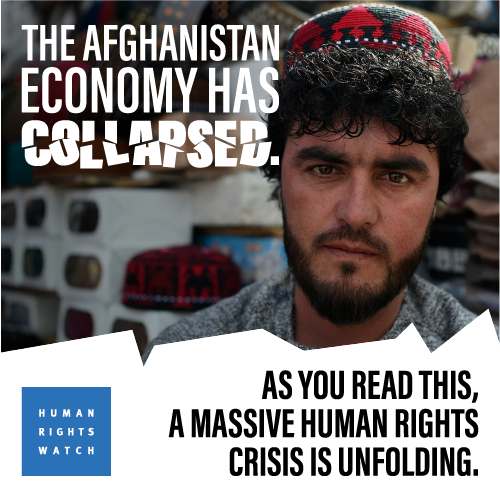
This is Afghanistan today. The Taliban are carrying out extrajudicial killings and abductions, repressing media, and imposing draconian restrictions that violate the rights of women and girls. On March 23, they reneged on promises to allow girls to go back to secondary school.

At the same time, the US government has cut off Afghanistan's economy from the rest of the world and suspended support for salaries for teachers and health workers.

The country is on the brink of economic collapse. Millions are at risk of starvation - especially women and girls, who face greater obstacles to getting food. Without a functioning economy, most families have lost their ability to feed themselves. Their most basic rights - to food, health, and life itself - are under assault.

Learn More.


Did someone forward this email to you? Sign up here.


Follow us on Twitter

Chris Suellentrop @suellentrop

Tyler Weyant @tweyant

Myah Ward @myahward


FOLLOW US

Follow us on FacebookFollow us on TwitterFollow us on InstagramListen on Apple Podcast


POLITICO, LLC 1000 Wilson Blvd. Arlington, VA, 22209, USA


Friday, June 4, 2021

Black bear nicknamed Boo Boo spotted around Hanson, throughout southeastern Massachusetts


Black bear nicknamed Boo Boo spotted around Hanson, throughout southeastern Massachusetts


Mina Corpuz   The Enterprise 
Published Jun 2, 2021 

HANSON — A black bear nicknamed Boo Boo that has been making his way through southeastern Massachusetts for the past month has most recently been spotted several times in town.

The 2- to 3-year-old male has been seen a number of times since late last week, mostly around Whitman and Spring streets and the Birchbark area near the borders of Whitman, Rockland and Hanover, according to Hanson police.

“It is somewhat uncommon for bears to be seen in this part of the state, but residents should know how to behave around them and how to prevent them from becoming more comfortable in the area,” Hanson Police Chief Michael Miksch said in a statement. 

The bear was first seen in the Attleboro area about a month ago, said Jason Zimmer, director of MassWildlife's southeast district that includes Brockton, the South Coast and the Cape and Islands. 

A black bear being referred to as Boo Boo walks through a yard on Franklin Street in Halifax on May 26, 2021.

What followed was a consistent string of sightings of the bear in Taunton, Norton, Middleboro, Carver and Wareham, he said, and the most recent sightings have been in Hanson, Halifax and Hanover.

More: Black bear in Taunton, Middleboro and Lakeville. Animal Control says to leave it alone.

"We really don't have any bears down here so when one shows up, it's reported by people almost every single day, multiple times," Zimmer said.

MassWildlife has examined photos people have sent in or posted on social media of the bear and they appear to be of the same animal, he said. 

It is estimated there are over 4,500 bears in Massachusetts and they live and breed west to the Berkshires, Worcester County and northern Middlesex County. Their population is expanding east along I-495 and beyond, according to MassWildlife.

Typically, when there is a bear in the southeastern part of the state, it's a young male trying to find unoccupied territory and mate, even though female bears don't typically live and breed in the area, Zimmer said. 

Prevention and safety tips

Along the way, the bear might eat from easy food sources such as bird feeders, garbage and gardens while passing through.

Black bears have good eyesight and hearing, helping them detect smells from over a mile away, according to MassWildlife. They can remember where food sources are once they have found them. 

Some of the calls MassWildlife has received from the area as the young male bear traveled through have been about damaged bird feeders, Zimmer said. 

The way to prevent bears from coming is to eliminate or secure food sources.

"People should generally not be afraid and there's common sense steps to take to be safe," Zimmer said. 

That can mean bringing trash cans and recycling in for the night or using bear-resistant enclosures. Keeping the barbecue clean and free of drippings can help prevent bears from coming.

MassWildlife says to avoid putting out bird feeders from April to November because bears can come to feed on them.

Portable electric fencing can be used around bee hives, gardens, orchards, grain storage and livestock to teach bears to stay away.

For safety, MassWildlife recommends keeping pets inside and livestock in secured enclosures when unsupervised. 

What to do if you see Boo Boo

If you see a bear in your neighborhood or yard, make noise and make yourself look big, and they will often leave.

In the woods, black bears often stay away from people. The bear may not immediately recognize you as a person and may be curious. Make them aware of your presence by making noise and slowly backing away, according to MassWildlife.

Don't approach bears or get in between a female bear and cubs. Keep dogs on a leash and give space.

Fight back if the bear makes contact, according to MassWildlife. 

If a bear is in a populated area, people can call the Environmental Police radio room at 1-800-632-8075 or the nearest MassWildlife district office to report a sighting and get advice about whether a response from the large animal response team is needed.

Most of the time, bears in residential areas don't need the response team and will leave on their own, according to MassWildlife.

"Handling the bear is close to one of the last things we want to do," Zimmer said, adding that doing so could affect the safety of the animal and people around it.

People can report bear sightings through MassBears, a research project through MassWidlife, the Massachusetts Cooperative Fish and Wildlife Research Unit, UMass Amherst and Amherst College.

They have a map that has reported sightings from 2019 through this year. Most of the sightings are in the western and central part of the state, but several for 2021 are in southeastern Massachusetts in Carver, Halifax and Middleboro.


Monday, May 24, 2021

REMINDER: U.S. axed CDC expert job in China months before coronavirus outbreak


The World has experienced viruses that have threatened pandemics, but 
appropriate action has prevented widespread disease. 

The more you learn, the more you realize tRump FAILED to protect Americans...and maybe failed to protect the World from this fast spreading virus.

Might this have prevented the spread?

Trump was asked about this. Never answered the question.
"If someone had been there, public health officials and governments across the world could have moved much faster.”


U.S. axed CDC expert job in China months before coronavirus outbreak

The American disease expert, a medical epidemiologist embedded in China’s disease control agency, left her post in July.

WASHINGTON - Several months before the coronavirus pandemic began, the Trump administration eliminated a key American public health position in Beijing intended to help detect disease outbreaks in China, Reuters has learned.

The American disease expert, a medical epidemiologist embedded in China’s disease control agency, left her post in July, according to four sources with knowledge of the issue. The first cases of the new coronavirus may have emerged as early as November, and as cases exploded, the Trump administration in February chastised China for censoring information about the outbreak and keeping U.S. experts from entering the country to help.

“It was heartbreaking to watch,” said Bao-Ping Zhu, a Chinese American who served in that role, which was funded by the U.S. Centers for Disease Control and Prevention, between 2007 and 2011. “If someone had been there, public health officials and governments across the world could have moved much faster.”

Zhu and the other sources said the American expert, Dr. Linda Quick, was a trainer of Chinese field epidemiologists who were deployed to the epicenter of outbreaks to help track, investigate and contain diseases. As an American CDC employee, they said, Quick was in an ideal position to be the eyes and ears on the ground for the United States and other countries on the coronavirus outbreak, and might have alerted them to the growing threat weeks earlier.

No other foreign disease experts were embedded to lead the program after Quick left in July, according to the sources. Zhu said an embedded expert can often get word of outbreaks early, after forming close relationships with Chinese counterparts.

Zhu and the other sources said Quick could have provided real-time information to U.S. and other officials around the world during the first weeks of the outbreak, when they said the Chinese government tamped down on the release of information and provided erroneous assessments.

Quick left amid a bitter U.S. trade dispute with China when she learned her federally funded post, officially known as resident adviser to the U.S. Field Epidemiology Training Program in China, would be discontinued as of September, the sources said. The U.S. CDC said it first learned of a “cluster of 27 cases of pneumonia” of unexplained origin in Wuhan, China, on Dec. 31.

Since then, the outbreak of the disease known as COVID-19 has spread rapidly worldwide, killing more than 13,600 people, infecting more than 317,000. The epidemic has overwhelmed healthcare systems some countries, including Italy, and threatens to do so in the United States and elsewhere.

In a statement to Reuters, the U.S. CDC said the elimination of the adviser position did not hinder Washington’s ability to get information and “had absolutely nothing to do with CDC not learning of cases in China earlier.”

The agency said its decision not to have a resident adviser “started well before last summer and was due to China’s excellent technical capability and maturity of the program.”

The CDC said it has assigned two of its Chinese employees as “mentors” to help with the training program. The agency did not respond to questions about the mentors’ specific role or expertise.

“CDC has had a 30-year partnership with China CDC and close collaboration,” the statement said. “We had the right staff to engage China and ability to provide technical assistance were it requested.”

The CDC would not make Quick, who still works for the agency, available for comment.

Asked for comment on Chinese transparency and responsiveness to the outbreak, China’s Ministry of Foreign Affairs referred Reuters to remarks by spokesman Geng Shuang on Friday. Geng said the country “has adopted the strictest, most comprehensive, and most thorough prevention and control measures in an open, transparent, and responsible manner, and informed the (World Health Organization) and relevant countries and regions of the latest situation in a timely manner.”

One disease expert told Reuters he was skeptical that the U.S. resident adviser would have been able to get earlier or better information to the Trump administration, given the Chinese government’s suppression of information.

“In the end, based on circumstances in China, it probably wouldn’t have had made a big difference,” Scott McNabb, who was a CDC epidemiologist for 20 years and is now a research professor at Emory University. “The problem was how the Chinese handled it. What should have changed was the Chinese should have acknowledged it earlier and didn’t.”

ALERT FROM CHINA’S CDC

Alex Azar, secretary of Health and Human Services, said Friday that his agency learned of the coronavirus in early January, based on Redfield’s conversations with “Chinese colleagues.”

Redfield learned that “this looks to be a novel coronavirus” from Dr. Gao Fu, the head of the China CDC, according to an HHS administration official, who spoke on condition of anonymity. “Dr. Redfield always talked to Dr. Gao,” the official said.

HHS and CDC did not make Azar or Redfield available for comment.

Zhu and other sources said U.S. leaders should not have been relying on the China CDC director for alerts and updates. In general, they said, officials in China downplayed the severity of the outbreak in the early weeks and did not acknowledge evidence of person-to-person transmission until Jan. 20.

After the epidemic exploded and China had imposed strict quarantines, Trump administration officials complained that the Chinese had censored information about the outbreak and that the United States had been unable to get American disease experts into the country to help contain the spread.

Azar told CNN on Feb. 14 that he and CDC director Redfield officially offered to send a CDC team into China on Jan. 6 but still had not received permission for them to enter the country. HHS oversees the CDC.

“Dr. Redfield and I made the offer on January 6th - 36 days ago, 60,000 cases and 1,300 deaths ago,” Azar said. “We made the offer to send the CDC experts in to assist their Chinese colleagues to get to the bottom of key scientific questions like, how transmissible is this disease? What is the severity? What is the incubation period and can there be asymptomatic transmission?”

Days later, the World Health Organization secured permission to send a team that included two U.S. experts. The team visited between Feb. 16th and 24th. By then, China had reported more than 75,000 cases.

On Feb. 25, the first day the CDC told the American public to prepare for an outbreak at home, U.S. Secretary of State Mike Pompeo accused China of mishandling the epidemic through its “censorship” of medical professionals and media.

Relations between the two countries have deteriorated since then, as Trump has labeled the coronavirus the “Chinese virus” - a description the Chinese have condemned as stigmatizing. Last week, the Chinese government announced that Americans from three U.S. news organizations, The New York Times, Washington Post and Wall Street Journal, would be expelled from China.

ONCE ‘FRIENDS,’ NOW RIVALS

The decision to eliminate Quick’s job came as the CDC has scaled back the number of U.S. staffers in China over the last two years, the sources told Reuters.

“We had already withdrawn many technical public health experts,” the same expert said.

The CDC, however, disputed that staffing was a problem or that its information had been limited by the move. “It was not the staffing shortage that limited our ability” it said.

The U.S. CDC team in Beijing now includes three American citizens in permanent roles, an additional American who is temporary and around 10 Chinese nationals, the agency said. Of the Americans, one is an influenza expert with expertise in respiratory disease. Coronavirus is not influenza, though it is a respiratory disease.

The CDC team, aside from Quick, was housed at U.S. Embassy facilities. No American CDC staffer besides Quick was embedded with China’s disease control agency, the sources said.

China in recent weeks has reported a dramatic slowdown in new cases, the result of drastic containment measures including the lockdown of Hubei province, home to 60 million people.

Nevertheless, the infectious disease experts who spoke with Reuters said, the United States could use people like Quick with contacts on the ground, especially if fears of a second wave of infections materializes.

Thomas R. Frieden, a former director of the CDC, said that if the U.S. resident adviser had still been in China, “it is possible that we would know more today about how this coronavirus is spreading and what works best to stop it.”

Dr. George Conway, a medical epidemiologist who knows Quick and had served as resident advisor between 2012 and 2015, said funding for the position had been tenuous for years because of a perennial debate among U.S health officials over whether China should be paying for funding its own training program.

Yet since the training program was launched in 2001, the sources familiar with it say, it has not only strengthened the ranks of Chinese epidemiologists in the field, but also fostered collegial relationships between public health officials in the two countries.

“We go there as credentialed diplomats and return home as close colleagues and often as friends,” Conway said.

In 2007, Dr. Robert Fontaine, a CDC epidemiologist and one of the longest serving U.S. officials in the adviser’s position, received China’s highest honor for outstanding contributions to public health due to his contribution as a foreigner in helping to detect and investigate clusters of pneumonia of unknown cause.

But since last year, Frieden and others said, growing tensions between the Trump administration and China’s leadership have apparently damaged the collaboration.

“The message from the administration was, ‘Don’t work with China, they’re our rival,’” Frieden said.

In a news conference Sunday, Trump defended the move.

LINK


Sunday, July 26, 2020

RSN: Al Franken | Trump Will Eventually Disappear


Reader Supported News
26 July 20

This is it, right now. We are pulling out all the stops to finish the July fundraiser now. As in right now. Yes we can do that.
Today, right now is critical.
Marc Ash
Founder, Reader Supported News


If you would prefer to send a check:
Reader Supported News
PO Box 2043
Citrus Hts, CA 95611


Reader Supported News
25 July 20
It's Live on the HomePage Now:
Reader Supported News


Al Franken | Trump Will Eventually Disappear
Al Franken. (photo: Carolyn Kaster/AP)
Al Franken, Al Franken's Website
Franken writes: "Until the coronavirus hit, Trump had not faced a real crisis in the Oval Office. A global pandemic is a doozy of a crisis. Still, it is inconceivable that anyone could possibly have handled the coronavirus any worse."

EXCERPT:
I was in the Senate during the Ebola crisis. I saw first-hand how the United States led the global response to Ebola. Because the CDC was on the ground in Africa at the time of the outbreak in Liberia, we identified it before it got out of control and sent medical teams there to treat people and staunch the epidemic. The Trump administration cut 80% of the CDC’s funding for just that kind of presence in 39 countries – including a huge cut in our footprint in…China.
Before Trump, most of the world thought of America as the indispensable nation. And so did Americans. Now, after three-and-a-half years of Trump, neither is true. Not only did Trump choose not to lead a global response to Covid-19 – he decided against a national response. Instead, he kicked it down to the states. It’s as if, after Pearl Harbor, FDR said, “This is really Hawaii’s problem now.”
Because he is incapable of admitting any mistakes, Trump has refused to adjust to the realities on the ground. It took until this week for him to finally urge Americans to wear masks. (I must admit that I share one discreet area of agreement with Trump. He did say, in so many words, that he would look like an idiot in a mask.)
If you look at all the countries that have handled this pandemic successfully (and have been able to reopen safely), the path to getting the virus under control is clear. Absolutely essential components are social distancing and masks, testing, contact tracing, and isolation. Nothing could be dumber than saying that we’d have fewer cases if we had less testing. By that logic, we could finally get a grip on global overpopulation by prohibiting pregnancy tests.


'The independent watchdogs for the U.S. justice and homeland security departments said on Thursday they were launching investigations into the use of force by federal agents.' (photo: TR)


America 'Staring Down the Barrel of Martial Law,' Oregon Senator Warns
David Smith and Daniel Strauss, Guardian UK
Excerpt: "America is 'staring down the barrel of martial law' as it approaches the presidential election, a US senator from Oregon has warned as Donald Trump cracks down on protests in Portland, the state's biggest city."
READ MORE


Dr. Anthony Fauci and President Donald Trump. (photo: Erin Schaff/STF/NYT)

Sinclair Broadcasting Set to Air Discredited Conspiracy That Dr. Fauci Created Covid 19
Oliver Darcy, CNN
Darcy writes: "Local television stations owned by the Sinclair Broadcast Group are set to air a conspiracy theory over the weekend that suggests Dr. Anthony Fauci, the nation's top expert on infectious diseases, was responsible for the creation of the coronavirus."
The baseless conspiracy theory is set to air on stations across the country in a segment during the program "America This Week" hosted by Eric Bolling. The show, which is posted online before it is broadcast over the weekend, is distributed to Sinclair Broadcast Group's network of local television stations, one of the largest in the country. A survey by Pew Research Group earlier this year showed that local news was a vital source of information on the coronavirus for many Americans, and more trusted than the media overall.
In this week's episode of the show, Bolling spoke with Judy Mikovits, the medical researcher featured in the discredited "Plandemic" video that went viral earlier this year and which was banned from platforms such as Facebook and YouTube. Throughout the segment, the on-screen graphic read, "DID DR. FAUCI CREATE COVID-19?"
Bolling also spoke with Mikovits' attorney, Larry Klayman, a right-wing lawyer who also has a history of pushing misinformation and representing conspiracy theorists.
During the interview Mikovits told Bolling that Fauci had over the past decade "manufactured" and shipped coronaviruses to Wuhan, China, which became the original epicenter of the current outbreak. Bolling noted that this was a "hefty claim," but did not meaningfully challenge Mikovits and allowed her to continue making her case.
Klayman, who did not respond to a request for comment, also pushed conspiracy theories about the coronavirus. He said the "origins" of the virus were in the United States. Bolling didn't meaningfully challenge Klayman either.
In the segment that immediately followed, Bolling spoke to Dr. Nicole Saphier, a Fox News medical contributor, to get her response to the claims from Mikovits and Klayman.
Bolling and Saphier agreed that it was, in Saphier's words, "highly unlikely" that Fauci was behind the coronavirus. But they went on to theorize about other possible explanations for what had happened. Saphier said it was possible the virus was "man-made within a laboratory" and escaped. That claim has been rejected by experts who have studied the virus' genetic sequence.
The segments were first reported on by Media Matters, a progressive media watchdog.
President Trump's allies in right-wing media have sought to discredit Fauci in recent weeks. Earlier this month, Trump administration officials even went as far as to publicly attack Fauci.
The Sinclair Broadcast Group has drawn criticism in the past for pushing a conservative political worldview in its newscasts and programming decisions. A spokesperson for the company did not respond to multiple requests for comment on Friday.
But Bolling, a former Fox News host, told CNN Business in a series of text messages that he invited Mikovits onto his show to "question and challenge her beliefs." Bolling also said he does not control the on-screen graphics that appear during his show.
"I did challenge her," Bolling said, noting he called her claim "hefty."
When pressed over whether calling a claim "hefty" constituted effectively challenging the conspiracy theory Mikovits pushed, Bolling said that he did believe he challenged her.
Bolling then told CNN Business that he was not aware of the viral "Plandemic" video Mikovits was featured in earlier this year, and said Saphier "was not originally booked on the show" and that he added her to "provide an opposing viewpoint."
"I don't know of any video she was in prior to or after appearing on my show. Frankly, I was shocked when she made the accusation," Bolling said. "I asked our producers to add Saphier to the show for the express purpose of debunking the conspiracy theory. I believe viewers see that I did not and do not endorse her theory."
When asked if he really was unaware that Mikovits had been in a viral video earlier in the year pushing misinformation about coronavirus, Bolling said he had been.
"I give you my word... this is the first I've heard of the video," Bolling said. "And the very first time I heard of Dr. Mikovits was the morning of taping."
But when asked whether, now that he was aware of the video, he had any second thoughts about airing the segment with Mikovits, Bolling replied, "I don't second guess my producers and bookers."
Bolling added, however, that he "certainly didn't endorse her theory."


A family runs away from tear gas in front of the border wall between the U.S. and Mexico in Tijuana. (photo: Kim Kyung-Hoon/Reuters)

Before Portland, Trump's Shock Troops Went After Border Activists
Ryan Devereaux, The Intercept
Devereaux writes: "Images of Border Patrol agents in military-style tactical gear grabbing protesters off the street in Portland, Oregon, have drawn condemnation from Democratic lawmakers, who have described the teams as 'secret police.'"
READ MORE


A photo of the immigrant teenager identified as J.B.B.C., which was taken in Honduras. (photo: J.B.B.C.)

"I Felt Alone": The Story of How an Immigrant Teenager Fought to Stay in the US While Under Guard in a Texas Hotel
Hamed Aleaziz, BuzzFeed
Aleaziz writes: "A 16-year-old boy whose journey from Honduras to the United States ended in a federal court fight didn't comprehend the sweeping legal and political significance of his case, nor did he understand why he was placed under guard in an El Paso, Texas, hotel room."
READ MORE


Palestinians take part in protest in solidarity with Palestinian prisoners in Israeli jails outside UN High Commissioner's offices in Rafah, in southern Gaza Strip on 16 March. (photo: AFP)

Coronavirus: Israeli Court Rules Palestinian Prisoners Have No Right to Social Distancing
Middle East Eye
Excerpt: "Israel's Supreme Court has ruled that Palestinian prisoners have no right to social distancing protection against coronavirus."
READ MORE


'Save a pangolin, save the world.' (photo: Getty Images)

Scientists Unveil a Plan to Prevent the Next Pandemic (and Save Nature at the Same Time)
Shannon Osaka, Grist
Osaka writes: "Imagine that it's 2035. The COVID-19 pandemic - with its partisan infighting over masks and economic and political meltdown - feels like a bad dream. With the help of a vaccine, the world finally escaped the novel coronavirus."
Then you hear something on the news. A mysterious virus is spreading overseas. The symptoms are fevers, chills, and coughs. Is your life going to be changed by another global pandemic?
Today (in 2020), while everyone is distracted by the current crisis, some scientists are looking ahead. They’re hoping to prevent the next pandemic, eyeing viral threats that, in 10 or 20 years or even sooner, could once again bring the world to its knees. The coronavirus, like most dangerous pathogens, originated in animals (most likely a bat) and then “spilled over” into humans — either through human contact with the bat itself, or through another infected species like a pangolin.
Now there’s a plan to prevent such spillovers from happening in the first place — for a fraction of COVID-19’s economic cost. In a new study published online Thursday in the journal Science, a group of infectious disease experts argue that future pandemics can be stopped by a set of preventative measures that cut down on interactions between humans and wildlife — and protect the environment at the same time. Among the measures: preserving forests, clamping down on the illegal wildlife trade, and starting a broad system of surveillance to catch emerging diseases before they spread.
“We have a lot of examples of these actions curtailing risk,” said Aaron Bernstein, one of the paper’s authors and the interim director of the Center for Climate, Health, and the Global Environment at Harvard University’s School of Public Health. “So we know that it’s possible — but we haven’t really invested at all.”
One of the most important interventions, according to Bernstein, would be halting the runaway destruction of forests, particularly in tropical areas. When trees are clear-cut for timber or mining, wild animals wander into towns and cities, looking for new habitats and meals. When that happens, they’re more likely to bump into people and spread dangerous disease.
Another source of concern is the illegal (and sometimes legal) wildlife trade. In many areas of the globe, primates, crocodiles, and other wild animals are sold in close quarters with livestock, offering plenty of opportunities to share viruses and then infect humans. According to the researchers, policymakers have to pass legislation that keeps high-risk species, like bats, pangolins, and rodents, out of markets.
Governments could also start new programs of surveillance, monitoring particular “hotspots” like West Africa and Southeast Asia, where new diseases are most likely to emerge. Bernstein said governments should keep an eye on and regularly test people who spend a lot of time near wildlife or livestock for new pathogens, thus nipping new diseases in the bud.
All these actions combined, researchers estimate, could cost between $22 and $31 billion a year — a fraction of the pandemic’s estimated $27 trillion blow to the world economy this year (let alone the 620,000 deaths so far). “Salvation is cheap,” Bernstein said.
For comparison, the U.S. Congress has already passed a $2 trillion stimulus package in response to the economic fallout, and is considering a second round. Worldwide, government spending on COVID-19 recovery has already topped $9 trillion.
Bernstein said that even if these preventative measures were implemented every year for 10 years, they would only add up to about 2 percent of the expected economic fallout from the current pandemic.
Some of the proposed policies are also aligned with global environmental goals. Tropical forests suck carbon out of the air, slowing climate change, and also provide needed habitats for many threatened species. The measures would also protect biodiversity and support sustainable farming practices, said Dennis Carroll, an expert on animal-borne infectious diseases who was not involved in the new study.
There’s “no doubt the actions proposed could be highly effective at preventing spillover,” he said via email.
After all, no one wants another 2020.


Today in Politics, Bulletin 490. 10/27/26

                                                                               LOTS OF POSTS IGNORED BY BLOGGER..... OR REMOVED ON THEIR WHI...