26 July 20
This is it, right now. We are pulling out all the stops to finish the July fundraiser now. As in right now. Yes we can do that.
Today, right now is critical.
If you would prefer to send a check:
Reader Supported News
PO Box 2043
Citrus Hts, CA 95611
 25 July 20
Al Franken | Trump Will Eventually Disappear Al Franken, Al Franken's WebsiteFranken writes: "Until the coronavirus hit, Trump had not faced a real crisis in the Oval Office. A global pandemic is a doozy of a crisis. Still, it is inconceivable that anyone could possibly have handled the coronavirus any worse."
EXCERPT:
I was in the Senate during the Ebola crisis. I saw first-hand how the United States led the global response to Ebola. Because the CDC was on the ground in Africa at the time of the outbreak in Liberia, we identified it before it got out of control and sent medical teams there to treat people and staunch the epidemic. The Trump administration cut 80% of the CDC’s funding for just that kind of presence in 39 countries – including a huge cut in our footprint in…China.
Before Trump, most of the world thought of America as the indispensable nation. And so did Americans. Now, after three-and-a-half years of Trump, neither is true. Not only did Trump choose not to lead a global response to Covid-19 – he decided against a national response. Instead, he kicked it down to the states. It’s as if, after Pearl Harbor, FDR said, “This is really Hawaii’s problem now.”
Because he is incapable of admitting any mistakes, Trump has refused to adjust to the realities on the ground. It took until this week for him to finally urge Americans to wear masks. (I must admit that I share one discreet area of agreement with Trump. He did say, in so many words, that he would look like an idiot in a mask.)
If you look at all the countries that have handled this pandemic successfully (and have been able to reopen safely), the path to getting the virus under control is clear. Absolutely essential components are social distancing and masks, testing, contact tracing, and isolation. Nothing could be dumber than saying that we’d have fewer cases if we had less testing. By that logic, we could finally get a grip on global overpopulation by prohibiting pregnancy tests.
 'The independent watchdogs for the U.S. justice and homeland security departments said on Thursday they were launching investigations into the use of force by federal agents.' (photo: TR)
 Dr. Anthony Fauci and President Donald Trump. (photo: Erin Schaff/STF/NYT)
The baseless conspiracy theory is set to air on stations across the country in a segment during the program "America This Week" hosted by Eric Bolling. The show, which is posted online before it is broadcast over the weekend, is distributed to Sinclair Broadcast Group's network of local television stations, one of the largest in the country. A survey by Pew Research Group earlier this year showed that local news was a vital source of information on the coronavirus for many Americans, and more trusted than the media overall.
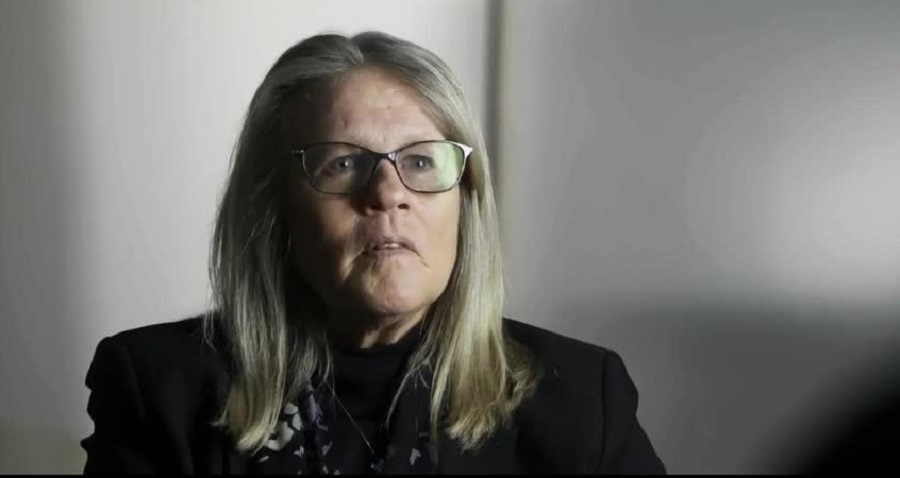
In this week's episode of the show, Bolling spoke with Judy Mikovits, the medical researcher featured in the discredited "Plandemic" video that went viral earlier this year and which was banned from platforms such as Facebook and YouTube. Throughout the segment, the on-screen graphic read, "DID DR. FAUCI CREATE COVID-19?"
Bolling also spoke with Mikovits' attorney, Larry Klayman, a right-wing lawyer who also has a history of pushing misinformation and representing conspiracy theorists.
During the interview Mikovits told Bolling that Fauci had over the past decade "manufactured" and shipped coronaviruses to Wuhan, China, which became the original epicenter of the current outbreak. Bolling noted that this was a "hefty claim," but did not meaningfully challenge Mikovits and allowed her to continue making her case.
Klayman, who did not respond to a request for comment, also pushed conspiracy theories about the coronavirus. He said the "origins" of the virus were in the United States. Bolling didn't meaningfully challenge Klayman either.
In the segment that immediately followed, Bolling spoke to Dr. Nicole Saphier, a Fox News medical contributor, to get her response to the claims from Mikovits and Klayman.
Bolling and Saphier agreed that it was, in Saphier's words, "highly unlikely" that Fauci was behind the coronavirus. But they went on to theorize about other possible explanations for what had happened. Saphier said it was possible the virus was "man-made within a laboratory" and escaped. That claim has been rejected by experts who have studied the virus' genetic sequence.
President Trump's allies in right-wing media have sought to discredit Fauci in recent weeks. Earlier this month, Trump administration officials even went as far as to publicly attack Fauci.
The Sinclair Broadcast Group has drawn criticism in the past for pushing a conservative political worldview in its newscasts and programming decisions. A spokesperson for the company did not respond to multiple requests for comment on Friday.
But Bolling, a former Fox News host, told CNN Business in a series of text messages that he invited Mikovits onto his show to "question and challenge her beliefs." Bolling also said he does not control the on-screen graphics that appear during his show.
"I did challenge her," Bolling said, noting he called her claim "hefty."
When pressed over whether calling a claim "hefty" constituted effectively challenging the conspiracy theory Mikovits pushed, Bolling said that he did believe he challenged her.
Bolling then told CNN Business that he was not aware of the viral "Plandemic" video Mikovits was featured in earlier this year, and said Saphier "was not originally booked on the show" and that he added her to "provide an opposing viewpoint."
"I don't know of any video she was in prior to or after appearing on my show. Frankly, I was shocked when she made the accusation," Bolling said. "I asked our producers to add Saphier to the show for the express purpose of debunking the conspiracy theory. I believe viewers see that I did not and do not endorse her theory."
When asked if he really was unaware that Mikovits had been in a viral video earlier in the year pushing misinformation about coronavirus, Bolling said he had been.
"I give you my word... this is the first I've heard of the video," Bolling said. "And the very first time I heard of Dr. Mikovits was the morning of taping."
But when asked whether, now that he was aware of the video, he had any second thoughts about airing the segment with Mikovits, Bolling replied, "I don't second guess my producers and bookers."
Bolling added, however, that he "certainly didn't endorse her theory."
 A family runs away from tear gas in front of the border wall between the U.S. and Mexico in Tijuana. (photo: Kim Kyung-Hoon/Reuters)
 A photo of the immigrant teenager identified as J.B.B.C., which was taken in Honduras. (photo: J.B.B.C.)
 Palestinians take part in protest in solidarity with Palestinian prisoners in Israeli jails outside UN High Commissioner's offices in Rafah, in southern Gaza Strip on 16 March. (photo: AFP)
 'Save a pangolin, save the world.' (photo: Getty Images)
Then you hear something on the news. A mysterious virus is spreading overseas. The symptoms are fevers, chills, and coughs. Is your life going to be changed by another global pandemic?
Today (in 2020), while everyone is distracted by the current crisis, some scientists are looking ahead. They’re hoping to prevent the next pandemic, eyeing viral threats that, in 10 or 20 years or even sooner, could once again bring the world to its knees. The coronavirus, like most dangerous pathogens, originated in animals (most likely a bat) and then “spilled over” into humans — either through human contact with the bat itself, or through another infected species like a pangolin.
Now there’s a plan to prevent such spillovers from happening in the first place — for a fraction of COVID-19’s economic cost. In a new study published online Thursday in the journal Science, a group of infectious disease experts argue that future pandemics can be stopped by a set of preventative measures that cut down on interactions between humans and wildlife — and protect the environment at the same time. Among the measures: preserving forests, clamping down on the illegal wildlife trade, and starting a broad system of surveillance to catch emerging diseases before they spread.
“We have a lot of examples of these actions curtailing risk,” said Aaron Bernstein, one of the paper’s authors and the interim director of the Center for Climate, Health, and the Global Environment at Harvard University’s School of Public Health. “So we know that it’s possible — but we haven’t really invested at all.”
One of the most important interventions, according to Bernstein, would be halting the runaway destruction of forests, particularly in tropical areas. When trees are clear-cut for timber or mining, wild animals wander into towns and cities, looking for new habitats and meals. When that happens, they’re more likely to bump into people and spread dangerous disease.
Another source of concern is the illegal (and sometimes legal) wildlife trade. In many areas of the globe, primates, crocodiles, and other wild animals are sold in close quarters with livestock, offering plenty of opportunities to share viruses and then infect humans. According to the researchers, policymakers have to pass legislation that keeps high-risk species, like bats, pangolins, and rodents, out of markets.
Governments could also start new programs of surveillance, monitoring particular “hotspots” like West Africa and Southeast Asia, where new diseases are most likely to emerge. Bernstein said governments should keep an eye on and regularly test people who spend a lot of time near wildlife or livestock for new pathogens, thus nipping new diseases in the bud.
All these actions combined, researchers estimate, could cost between $22 and $31 billion a year — a fraction of the pandemic’s estimated $27 trillion blow to the world economy this year (let alone the 620,000 deaths so far). “Salvation is cheap,” Bernstein said.
Bernstein said that even if these preventative measures were implemented every year for 10 years, they would only add up to about 2 percent of the expected economic fallout from the current pandemic.
Some of the proposed policies are also aligned with global environmental goals. Tropical forests suck carbon out of the air, slowing climate change, and also provide needed habitats for many threatened species. The measures would also protect biodiversity and support sustainable farming practices, said Dennis Carroll, an expert on animal-borne infectious diseases who was not involved in the new study.
There’s “no doubt the actions proposed could be highly effective at preventing spillover,” he said via email.
After all, no one wants another 2020.