
21 July 22
Live on the homepage now!
Reader Supported News
CAN ANYONE DONATE A THOUSAND? — It’s very late in the month and we are still far short of meeting our expenses for the month. Very small donations are all we have right now. We love that but we do need to make up ground. Is there someone who can match the smaller donations with a $1,000. Thank you sincerely in advance.
Marc Ash • Founder, Reader Supported News
Sure, I'll make a donation!

Kareem Abdul-Jabbar | Will Support From LeBron James, Joe Rogan, Kim Kardashian, and Other Celebrities Help Free Brittney Griner From a Russian Prison?
Kareem Abdul-Jabbar, Substack
Abdul-Jabbar writes: "Anyone who knows anything about my life knows that I'm not shy about publicly speaking out when it comes to something I consider an injustice. I've been doing it for 55 years - with mixed results."
How much real clout do celebrities have when it comes to international politics?
Anyone who knows anything about my life knows that I’m not shy about publicly speaking out when it comes to something I consider an injustice. I’ve been doing it for 55 years—with mixed results. One lesson I learned over the years is to measure what I want to say with how much closer those words will bring about my goal. Taking a stance shouldn’t be about me putting my outrage on display, but about achieving measurable positive change to the injustice. I want to make things better, not worse. But it’s not always easy to know the difference.
Especially in the the case WNBA star Brittney Griner.
Griner, who has been in a Russian prison for the past five months and is facing a possible ten more years, has evoked a lot of passionate support from politicians, sports figures, and celebrities (myself included). They want her immediately released and returned home to the United States and they have been very vocal about it in the media.
I’m sure there are those out there who think the government ought to send in a Mission: Impossible squad with latex Putin masks and cool laser gadgets to spring her. The rest of us are looking for more practical solutions. But choosing the best solution has resulted in a lot of online bickering and backlash among Griner’s supporters that has gone viral. Especially between NBA players LeBron James and Enes Kanter Freedom. I’ll get to that later.
Which begs the question: Despite massive celebrity and public outcry on behalf of Brittney Griner, are we helping or hurting her chances for freedom?
Do Celebrities Have Political Clout Outside the US?
Griner has had far-reaching support. A letter to the White House in June from 44 organizations — including the National Organization for Women, the Human Rights Campaign and the National Urban League — requested that President Biden negotiate Griner's release. That same week, the House passed a resolution calling on the Russian government to immediately release Griner and supporting U.S. government efforts to secure her release.
The State Department has declared her “wrongfully detained,” which legally makes her case the responsibility of the office of the special envoy for hostage affairs. Everyone in the government from President Biden on down assures us that they are working diligently for her release. We have no reason to doubt them.
Griner also has many celebrity supporters calling for her release, including LeBron James, Kim Kardashian, Amy Schumer, Joe Rogan, Kerry Washington, and others. James shared a Change.org petition (“Secure Brittney Griner’s Swift and Safe Return to the U . S.”), explaining, “It is imperative that the U.S. Government immediately address this human rights issue and do whatever is necessary to return Brittney home.”
Joe Rogan commented on his podcast, “It’s over nothing. It’s like she’s the clearest form of political prisoner.”
That’s a lot of important people and organizations on her side. Which brings up two important questions: Is this the best approach? Why just Griner?
Is This the Best Approach?
I agree that Griner’s arrest was politically motivated. She was arrested February 17, 2022, one week before Russia invaded Ukraine. Russia wanted a bargaining chip because they knew which side we would fall on and the amount of pressure the U.S. would bring to the bear against them during the war. Now they had a celebrity to dangle.
So, are celebrities doing the right thing in making loud public demands for our government to negotiate Griner’s release?
If a social rights activist is being imprisoned in Selma for protesting or there’s a shady police shooting of an unarmed Black person in New York, then such celebrity calls to action might be effective. That’s because we live in a country where those in power need votes and sometimes shining a spotlight on them can bring pressure. But when we demand our country negotiate Griner’s release right now regardless of the cost, that only strengthens Russia’s negotiating position. Imagine being in a room negotiating with someone while outside the people you represent are shouting, “Give them whatever they want!”
The U.S. has negotiated prisoner releases from Russia for many years, recently getting U.S. citizen Trevor Reed released in a prisoner exchange after three years in a Russian prison for what he claims were bogus charges of endangering the the "life and health" of Russian police officers in an altercation. He faced nine years in prison. Unless I see evidence that government negotiators aren’t already doing their job, I wouldn’t presume to tell them how to do it better—or give them a timeline.
All of Griner’s supporters—myself included—should be working together to bring pressure on Russia rather than on the U.S., because by trying to pressure the U.S., we might actually be postponing Griner’s release while our people deal with Russia’s outrageous demands.
Why Stop at Griner?
A question that troubles many is why there is so much sudden celebrity support for Griner when Trevor Reed had been imprisoned in Russia for three years and Paul Whelan, who was convicted of spying and sentenced to 16 years, is still incarcerated after four years. Most Americans haven’t even heard of these men, let alone signed a petition to free them or worn a pin with their initials. Ashamedly, I am among those who didn’t do anything.
Each year about 3,000 Americans are arrested abroad, with about 100 of them, according to The Wall Street Journal, “hostages of rogue states and terrorist groups.” But they are anonymous sacrifices, helpless because they are not celebrities.
Maybe it’s true that Brittney Griner brought our attention to the problem because she’s famous, but that doesn’t mean the groups supporting her are wrong in doing so. It means that we have to broaden our appeal to include other wrongfully imprisoned non-celebrities. We need to demand Paul Whelan’s release with as much gusto and vigor as we do Griner’s.
Who’s Right?: LeBron James’ Comment in Support of Griner Brings Backlash from Enes Kanter Freedom and former MLB Player Curt Shilling
In a trailer for his HBO Max show The Shop, LeBron says about Griner: “Now, how can she feel like America has her back? I would be feeling like, ‘Do I even wanna go back to America?’”
NBA player Enes Kanter Freedom took offense and tweeted: “You are free to leave buddy or you can even volunteer for an exchange for her.” A lot of fans agreed with Freedom’s assessment, prompting James to clarify in a tweet: “My comments on 'The Shop' regarding Brittney Griner wasn’t knocking our beautiful country. I was simply saying how she’s probably feeling emotionally along with so many other emotions, thoughts, etc inside that cage she’s been in for over 100+ days! Long story short #BringHerHome”
Afterward, James was accused of backpedaling his original comments.
I disagree. James was being sincere.
I wish people could understand what it’s like to have every word you ever speak or write analyzed. It’s like putting a t-shirt through the wash until it disintegrates into a soggy ball of lint. Sometimes anything you say can be interpreted to mean whatever anyone wants it to mean. One size fits all biases.
In this case, James is right. After five months in a Russian prison, Griner may very well feel abandoned. Most people would. You may know in your brain the U.S. is working furiously behind the scenes on your behalf, but it wouldn’t feel that way. Add to that being Black, a woman, and non-binary—all groups under attack by the U.S. Supreme Court and dozens of Republican-led states—and you may sit in your cell worrying you’re not a priority back home.
James has demonstrated his unwavering commitment to community and country too many times to have it questioned over this. He has done as much, if not more, than most to bring awareness and gather support for Griner, and for that should be praised.
Former baseball player Curt Shilling also chimed in with his aggrivated tweet: “I know this may seem like a stretch. But something like 300 million people understand 'OBEY THE FUCKING LAW', why is that such a challenge? And why on earth should she NOT pay the penalty for breaking another country's laws?”
While it’s true that most of those arrested did commit a local crime, the severity of the punishment far exceeds the crime. (I’m not sure why Shilling is so quick to convict her before even the Russian court has. Does he say the same thing about Reed and Whalen’s convictions because you can’t condemn her without condemning them.) The fact is that in many cases the arrest of American citizens is prompted by a desire on behalf of that government to get something from the U.S. Though we might lament Griner’s choice to pack hashish oil in her suitcase (even though her attorneys have presented a doctor’s note recommending she use cannabis to treat pain, the goal here is to bring about justice, not reward Russia for holding her hostage with the threat of ten years in prison for a minor offense.
Bottom Line
Everyone supporting Brittney Griner has their hearts in the right place. Good people, one and all. But heart alone isn’t effective in bringing about her release, and by publicly pressuring the U.S. government, we may be inadvertently delaying her release.
Instead, let us gather celebrities, politicians, and people internationally to put pressure on Russia. In addition, let’s make this appeal for Griner include other Americans who are imprisoned as political pawns and call for their release as well to prove it’s not just celebrities that we value.
READ MORE
 Ukrainian First Lady Olena Zelenska speaks to members of the U.S. Congress about Russia's invasion of Ukraine, in the U.S. Capitol Visitors Center Auditorium on July 20, 2022, in Washington, D.C. (photo: Saul Loeb/Getty)
Ukrainian First Lady Zelenska Addresses Congress: 'Russia Is Destroying Our People'
Dylan Stableford, Yahoo! News
Stableford writes: "With Russia's war in her home country continuing to rage, Ukraine's first lady, Olena Zelenska, the wife of President Volodymyr Zelensky, addressed a bipartisan group of lawmakers on Capitol Hill Wednesday, the third day of her high-profile Washington, D.C., trip."
With Russia’s war in her home country continuing to rage, Ukraine's first lady, Olena Zelenska, the wife of President Volodymyr Zelensky, addressed a bipartisan group of lawmakers on Capitol Hill Wednesday, the third day of her high-profile Washington, D.C., trip.
"I know this is the first time when the wife of the president of a foreign country has the honor to address you within these walls," Zelenska said in remarks translated from her speech, which was delivered in Ukrainian. "This is really important for me and for my country, and today I want to address you as politicians and party representatives as well as mothers and fathers, grandmothers and grandfathers, daughters and sons.”
Zelenska presented images of young girls and boys killed by Russian missile strikes, including 4-year-old Lisa, whom she had met around Christmas.
"I remember her just like she is here, a cheerful, playful little rascal," Zelenska told Congress. "She is no longer with us. On July 14, Lisa was killed by a Russian missile attack."
The first lady also displayed the faces of employees at a Ukrainian shopping mall that was bombed by Russian forces.
"They are no more," she said. "The mall is no more. A Russian rocket burned it down and killed them all."
Since the beginning of the war on Feb. 24, Russia has launched more than 3,000 cruise missiles, Zelenska said.
"But to destroy someone's family, you don't need a missile," she said. "Maybe shrapnel will do it."
She showed the image of a young boy, 3-year-old Andre, also killed in the war.
“How many children like him are there in Ukraine?” Zelenska asked. “How many families like this may still be destroyed by the war?”
According to the United Nations, more than 5,000 Ukrainian civilians, including more than 300 children, have been killed in Russia's war on Ukraine, which is now in its fifth month.
"Usually, the wives of presidents are exclusively engaged in peaceful affairs, education, human rights, equality, accessibility," Zelenska said. "And maybe you expected from me to speak on those topics. But how can I talk about them when an unprovoked, invasive terrorist war is being waged? Russia is destroying our people."
“These are Russia's ‘Hunger Games,’ hunting for peaceful people in peaceful cities of Ukraine,” she added. “They will never broadcast this on their news. That's why I'm showing it to you.”
At the conclusion of her remarks, Zelenska received a long standing ovation from lawmakers, including House Speaker Nancy Pelosi, D-Calif., and Senate Minority Leader Mitch McConnell, R-Ky.
Zelenska arrived in Washington, D.C., earlier this week, meeting with various U.S. officials, including President Biden, first lady Jill Biden and Secretary of State Antony Blinken.
Her speech to Congress came a day after a Pentagon spokesman, John Kirby, warned that Russia is "laying the groundwork" to annex additional Ukrainian territory.
READ MORE
 A woman runs from a house on fire after shelling in Donetsk, in eastern Ukraine in June 2022. (photo: Alexei Alexandrov/AP)
Russia's Mass Kidnappings of Ukrainians Are a Page Out of a Wartime Playbook - and Evidence of Genocide
Alexander Hinton, The Conversation
Hinton writes: "Following months of speculation, U.S. Secretary of State Antony Blinken confirmed on July 13, 2022, that Russia had forcibly relocated between 900,000 to 1.6 million Ukrainians into Russia."
21 july 22
Following months of speculation, U.S. Secretary of State Antony Blinken confirmed on July 13, 2022, that Russia had forcibly relocated between 900,000 to 1.6 million Ukrainians into Russia.
Blinken cited various sources, including eyewitness accounts and the Russian government, to confirm that Russia is removing Ukrainians from their country and making them pass through filtration camps, where some are detained and even disappear.
Approximately 260,000 of these Ukrainian deportees are children, including orphans and others separated from their parents.
Blinken, in addition to major human rights organizations, says the Russian deportations may be a war crime.
Russia acknowledges that it has moved Ukrainian adults and children out of the war-torn country, but has said the moves are “voluntary” and done for “humanitarian” reasons.
But Russia has a history of forcibly moving large numbers of civilians as a war and political tactic.
Other aggressors of war have also forced civilians to move for various reasons – like eliminating a perceived security threat, or the potential to grab the wealth, possessions and property the deportees are forced to leave behind.
In the process of achieving these two aims, perpetrators often commit atrocity crimes, a broad international legal term that encompasses war crimes, genocide and crimes against humanity. Distinct but overlapping, these atrocity crimes can all involve mass deportation. The United Nations’ definition of genocide includes the forced transfer of children.
Russia’s mass deportation of Ukrainians implicates it in all three of these crimes.
Deporting for economic gain
In international law, mass deportation refers to coerced, large-scale population movements across a country’s borders. Forced transfer involves moving groups of people within a country.
Often an agressor’s aim is to seize land. As I note in It Can Happen Here: White Power and the Rising Threat of Genocide in the US, the U.S. has forcibly moved people more than once.
The Indian Removal Act of 1830, for example, authorized the mass deportation of as many as 80,000 Native Americans living east of the Mississippi River to the Indian Territory, much of which is now part of Oklahoma. This forced migration resulted in enormous suffering and death.
The U.S. later deported or forcibly transferred other groups, including more than 110,000 Japanese and Japanese Americans during World War II. The U.S. also moved millions of Mexicans and Mexican Americans to Mexico in the 1930s and ‘40s and again in 1954. These deportations were justified by the false claim that Mexicans were stealing American jobs.
Deporting 'security threats’
A second motive for forcibly moving a population is the perceived threat posed by demonized groups.
This was the United States’ justification for Japanese internment.
But there are many other historical examples, such as the Ottoman Empire’s World War I deportation of Armenians and other Christian groups.
The Nazis also undertook mass deportations and population transfers during the Holocaust, most infamously through train transports of Jews to death camps in Poland. They also carried out death marches at the end of the war.
I have conducted research on the Khmer Rouge Communist regime in Cambodia, in power from 1975 through 1979.
Immediately after the Khmer Rouge seized power, they forced over 2 million urban dwellers to relocate into the countryside, in part due to falsified security concerns.
Russia’s mass deportations and filtration camps
Now, as Blinken and others have noted, Russia has established at least 18 filtration camps, where they take Ukrainian deportees’ biometric data, which are unique, physical characteristics, like fingerprints.
These camps serve to filter out people Russia deems dangerous, including members of the Ukrainian military, government and media. Those identified as suspect are often harassed, abused and even tortured.
Ukrainians have reportedly disappeared following their entry to the camps.
Eyewitnesses say that those deported from Russia also face harsh conditions and have little choice about where they go.
There are also reports that some of the Ukrainian children have been placed for adoption in Russia.
Still, it is difficult for outsiders to talk with the victims and get detailed accounts, since many deportees have been sent to remote areas of Russia without their phones or Ukrainian passports.
Russia’s playbook
Mass deportation and forced transfers of civilians are considered crimes against humanity under international law when undertaken in a “widespread or systematic” manner during peace or war. Such deportations and population transfers are also considered war crimes if committed during armed conflict.
There is substantial evidence that Russia has committed both of these crimes, given the deportations and additional widespread attacks on Ukrainian civilians, including rapes and other kinds of sexual violence.
In addition, one part of genocide is “forcibly transferring children of the group to another group.” Russia’s deportation of orphans and children separated from parents would constitute such a crime if there is genocidal intent.
Russian President Vladimir Putin’s comments that he wants to “denazify” Ukraine suggest such intent is present.
Russia’s mass deportations should not be surprising.
In the past, Russia has repeatedly committed genocide and other international crimes while forcibly moving people for economic gain and to deal with perceived threats. These aims connect to Russia’s long-standing imperialist ambitions.
In the mid-1800s, for example, the Russian Empire deported hundreds of thousands of Circassians, a North Caucasus group, into the Ottoman Empire. Russia also forcibly relocated numerous other groups, including Ukrainians, during the period of the Soviet Union.
In Ukraine, then, Russia is taking a page out of a well-worn wartime playbook. There are indications that this time Russia may be held to account.
Russia’s crimes are being investigated by the International Criminal Court. And, almost immediately after Russia’s invasion, Ukraine began gathering evidence of Russian atrocity crimes. Ukraine has documented more than 23,000 war crimes cases against Russia, and 14 European countries have launched investigations.
Russia’s mass deportations, and especially its forced transfer of children, are central to the case that Russia has also committed genocide in Ukraine.
READ MORE
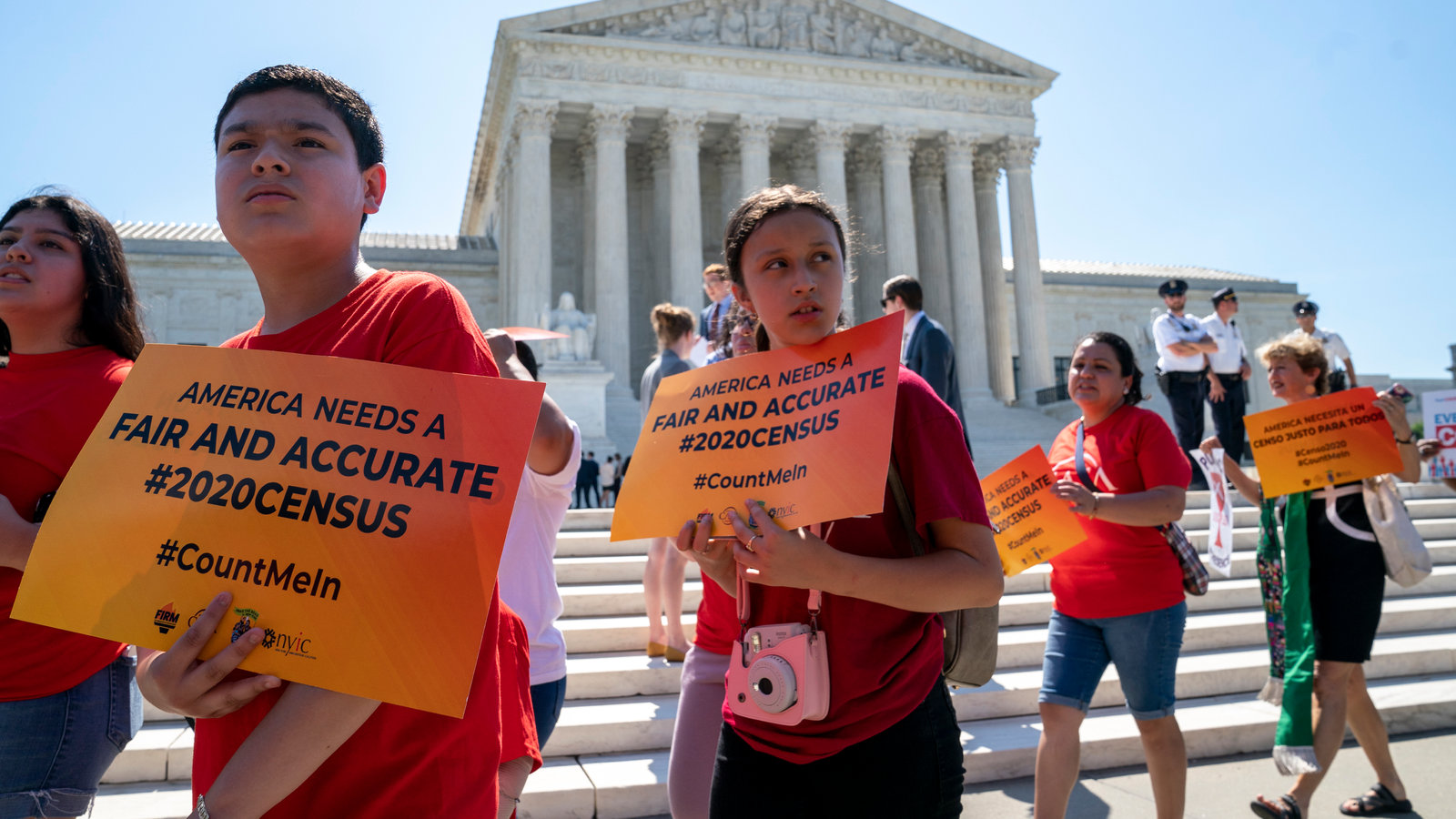 A protest at the Supreme Court in Washington last week as the justices considered a case involving an attempt to add a citizenship question to the 2020 census. (photo: J. Scott Applewhite/AP)
Trump Aimed to Erode Immigrant Representation With Census Citizenship Question, Documents Show
Sam Levine, Guardian UK
Levine writes: "Donald Trump's administration tried to add a citizenship question to the decennial census as part of an effort to alter the way the US House's 435 seats are divvied up among the 50 states, a new tranche of documents reveals."
Documents reveal officials worked to keep secret their intention to use the data to exclude non-citizens from apportionment
Donald Trump’s administration tried to add a citizenship question to the decennial census as part of an effort to alter the way the US House’s 435 seats are divvied up among the 50 states, a new tranche of documents reveals.
The documents, released by the House oversight committee on Wednesday, offer the clearest evidence to date that the Trump administration’s public justification for adding the question was made up. For years, the administration said that it needed to add a citizenship question to the decennial survey because better citizenship data was needed to enforce the Voting Rights Act (VRA). The US supreme court ultimately blocked the Trump administration from adding the question in 2019, saying the rationale “seems to have been contrived”.
“Today’s Committee memo pulls back the curtain on this shameful conduct and shows clearly how the Trump Administration secretly tried to manipulate the census for political gain while lying to the public and Congress about their goals,” Carolyn Maloney, a New York Democrat who chairs the oversight committee, said in a statement. Maloney recently introduced legislation that seeks to block future political interference at the census bureau.
The decennial census has never asked a citizenship question and the US constitution says House seats shall be apportioned based on “the whole Number of free Persons”.
Excluding non-citizens from the apportionment count, and therefore diminishing their political representation, has long been a goal of hard-right immigration groups. It would have clear political impact: California, Texas and Florida all would have lost out on a congressional seat if unauthorized immigrants were excluded from apportionment, a 2020 projection by Pew found. Alabama, Minnesota and Ohio all would have been able to hold on to an additional seat.
Commerce secretary Wilbur Ross became interested in adding a citizenship question shortly after taking office in 2017.
That year, James Uthmeier, a commerce department attorney, set out to analyze the legality of adding a citizenship question to the census at the request of Earl Comstock, a political appointee serving in a top policy role at the agency. In an undated memo released Wednesday, he concluded that doing so would not be lawful. The document makes it clear there is little evidence those who drafted the constitution wanted to exclude non-citizens from apportionment.
“Their conscious choice not to except aliens from the directive to count the population suggests the Founders did not intend to distinguish between citizens and non-citizens for the ‘actual Enumeration’ used for apportionment,” Uthmeier wrote in the draft memo.
“Over 200 years of precedent, along with substantially convincing historical and textual arguments suggest that citizenship data likely cannot be used for purposes of apportioning representatives,” he added. “Without opining on the wisdom of such an action, a citizenship status question may legally be included on the decennial census so long as the collected information is not used for apportionment.”
But in subsequent drafts throughout 2017, Uthmeier and Comstock substantially changed that analysis.
They revised the memo to suggest there was much more ambiguity into whether a citizenship question could be added for apportionment purposes. By August 2017, they turned in a memo to Ross suggesting there was a legal basis for adding the question for apportionment purposes. “There are bases for legal arguments that the Founding Fathers intended for the apportionment count to be based on legal inhabitants,” the new memo said. “If the Secretary decides that the question is needed for apportionment purposes, then it must be included on the decennial.”
The memo was eventually hand-delivered to John Gore, a top official at the justice department (DoJ). Attached to the document was a handwritten note from Uthmeier nudging the justice department towards a rationale it could offer for adding the question.
“Sec Ross has reviewed concerns and thinks DoJ would have a legitimate use of data for VRA purposes. Please let me know if you’d like to discuss,” Uthmeier wrote. In a postscript, he suggested Gore review a recent supreme court case that could help him make the case for why existing processes for counting citizens were insufficient. Gore subsequently ghostwrote a DoJ letter to the commerce department requesting that a citizenship question be added.
The handwritten note is among the new evidence showing that commerce department officials tried to keep their work on adding a citizenship question quiet.
“Ultimately, everyone is in agreement with our approach to move slowly, carefully, and deliberately so as to not expose us to litigation risk. We can discuss further in person,” Uthmeier wrote in a September 2017 email. “At this point, Peter and I want to make sure that we are not yet discussing our analysis with outside parties that may take our discussions public.”
Kris Kobach, Kansas’ former secretary of state who led Trump’s failed voter fraud commission, advocated vigorously for the idea of adding a citizenship question to the census and excluding non-citizens from apportionment. “There are about 710,000 people in each congressional district. But, if half of the district is made up of illegal aliens, then there are only 355,000 citizens in the district. The value of each citizen’s vote in such a district is twice as high. That is unfair,” he wrote in a 2018 op-ed in Breitbart. Kobach and Ross discussed the addition of a citizenship question at the request of Steve Bannon in 2017.
The new documents significantly undercut previous testimony Ross gave to Congress about why he was adding the question. In 2018, Ross testified he added the question “solely” at the request of the Department of Justice, which was not true. The justice department declined to prosecute Ross for the false statement.
Ross also testified in 2019 that his desire to add a citizenship question to the census had nothing to do with apportionment. “This testimony is not supported by the new documents obtained by the Committee,” the House oversight committee said in a memo.
Ultimately, the failure of the commerce department to add a citizenship question blew back on Comstock, who was reportedly forced out of his role as the commerce department’s policy director in 2019. One former White House official told Politico at the time it was difficult to think of anyone who “had pissed off as many senior White House officials”.
Uthmeier is now the chief of staff to Florida’s governor, Ron DeSantis.
Daffy Don filled the SWAMP with SWAMP CRITTERS with known swampy reputations, recommended by others, such as MERCERS, KOCH.
MERCERS, who send their gazillions offshore to avoid supporting government, fund or funded BREITBART's misinformation and the Ding Bat White Supremacist Steve Bannon.
"...The value of each citizen’s vote in such a district is twice as high. That is unfair,” he wrote in a 2018 op-ed in Breitbart. Kobach and Ross discussed the addition of a citizenship question at the request of Steve Bannon in 2017...."
"In 2018, Ross testified he added the question “solely” at the request of the Department of Justice, which was not true. The justice department declined to prosecute Ross for the false statement." Wilbur Ross LIED!
"Kris Kobach, Kansas’ former secretary of state who led Trump’s failed voter fraud commission..." Kris Kobach, known as the KING OF PURGE for purging voters.
Steve Bannon has made numerous comments supporting eugenics and the superiority of the White Race.....if Steve Bannon represents the superiority of the White Race, we gotta problem!
This infamous Steve Bannon quote is key to understanding America's crazy politics
https://www.cnn.com/2021/11/16/media/steve-bannon-reliable-sources/index.html
Steve Bannon's 1/5 Comments Resurface as Pelosi Says He Should Be Jailed Over Subpoena Refusal
https://www.newsweek.com/steve-bannons-1-5-comments-resurface-pelosi-says-he-should-jailed-over-subpoena-refusal-1642016
READ MORE
 The Greenpeace ship Rainbow Warrior off the coast of Italy. (photo: Greenpeace)
FBI Terrorism Docs Show Agency Investigated Greenpeace, Other Environmental Organizations
Jules Roscoe, VICE
Roscoe writes: "The FBI has previously said that Greenpeace was improperly put on an agency terrorism watchlist. Other environmental and animal rights groups have also been improperly associated with terrorism."
The FBI headed investigations into multiple environmental movements as cases of domestic terrorism during the 1980s and 90s.
The FBI investigated multiple environmental movements as cases of domestic ecoterrorism, according to documents obtained by Motherboard. The documents name groups like Greenpeace, Earth First!, and the Earth Liberation Front, and detail actions from scrawling “ELF” into the side of a diesel tank to shooting flares at a nuclear power plant.
Motherboard obtained the documents using a Freedom of Information Act request; in some cases, it took the FBI four years to provide the documents. They pertain primarily to the 80s, 90s, and early 2000s, but have new relevance considering that some environmentalists have called for direct action to prevent or reverse the worst effects from climate change. The documents show how the FBI treated direct-action environmental organizations, and show what sorts of things the government considered to be "terrorism."
The FBI provided Motherboard with more than 100 pages of documents about Greenpeace, one of the most famous environmental organizations in the world. Most of these documents are from the 1970s and 1980s; the FBI says that the group should be monitored for causing "civil unrest."
Other write-ups by the FBI alert terrorism-investigating divisions of the federal government about a mock attack on Illinois’s Zion Nuclear Power Plant in 1982 by one Greenpeace chapter. The document states that various videos showing flares being shot towards the plant had been distributed to media, and that the following day, the group had called a press conference to claim responsibility. They stated that they had done it to point out the plant’s vulnerabilities to a real attack.
Soon after that incident, Greenpeace disavowed that chapter of the organization and shut it down.
The FBI has previously said that Greenpeace was improperly put on an agency terrorism watchlist. Other environmental and animal rights groups have also been improperly associated with terrorism.
A spokesperson for Greenpeace denounced the FBI’s investigations into them. “We are not aware of anything from the FBI that labels Greenpeace USA an ecoterrorist organization, which we most certainly are not and never have been,” they said. “Greenpeace USA has a 50-year tradition and track-record of peaceful, non-violent civil disobedience.” They noted that because the documents were 40 years old, they were not representative of the organization today.
Other documents obtained by Motherboard relate to Earth First! and the Earth Liberation Front.
Earth First!, which the FBI said was usually considered to be the “most radical” of the environmental movements, discussed bombing some Weyerhauser paper mills—and the cars of the officials who ran the mills—for polluting the Columbia river with dioxin, according to the documents. A person calling themselves the movement’s regional representative wrote an extortion letter to the Secretary of the Interior at the time, claiming that if the wilderness was not left alone, the group would engage in civil disobedience.
The FBI said the movement was a “criminal enterprise,” and filed it under cases of domestic terrorism.
The FBI defines ecoterrorism as “the use or threatened use of violence of a criminal nature against innocent victims or property by an environmentally-oriented, subnational group for environmental-political reasons.” Though there were not any instances in the documents we received of criminal actions against people, property damage was very common.
Earth First! cut bolts which were securing the pylons of a ski resort’s chair lift, demanding that the trees be allowed to grow back, one document states. The Earth Liberation Front (or ELF), another movement with no organizational structure, claimed multiple acts of arson, including one $50 million fire in San Diego, which was then the “largest act of environmental sabotage in US history.”
The FBI noted numerous times in the documents that they were not investigating the movements, but rather individuals associated with them. But the public didn’t seem to think so.
A letter protesting the investigation of Earth First! writes, “The Bureau’s gestapo-like planting of covert agents within the Earth First! organization itself is an intolerable destruction of the civil liberties and privacy of the American public. To squelch dissent is to kill democracy.” A second letter reads, “The FBI’s job is to catch criminals—not to harass, intimidate, and arrest legitimate political activists.”
One political activist, Peter Young, agrees.
“That’s the rhetoric they’ve used going back to the 90s when I got involved,” said Young, who associates himself with the Animal Liberation Front (ALF). When he was younger, he was arrested for cutting a fence to release mink from a fur farm in Wisconsin, and served two years’ time after being charged with animal enterprise terrorism. “I’ve been called a terrorist since I was 19.”
It was at that age that Young first got involved in animal activism, but he felt that it was lacking and ineffective. So, he started doing direct action on behalf of the ALF—cutting fences to release animals, or stealing equipment from slaughter houses.
Young told Motherboard he would not label himself a terrorist, but that he’s not surprised that the FBI did. He said that, especially post-9/11, the agency had a “mandate” to fight the war on terror harder than before.
“ If you don’t have a terrorist to fight, you have to make one up,” he said. “I think it’s very convenient for the FBI to start to expand the definition of terrorism.”
A spokesperson for the Earth First! Journal, which documents the movement’s actions but isn’t directly involved with them, agreed with Young’s idea. They wrote in an email to Motherboard, “The FBI has an extensive history when it comes to labeling activist groups as terrorists and eliminating their leaders to ensure that radical social and ecological change does not threaten the State's power in any way.”
It’s worth noting that, compared to the acts listed in the FBI documents, some of these groups seem a lot more tame. ELF, for example, was investigated for arson—the movement’s website has articles with titles like, “What can you do with the wine you have not finished?”
For Greenpeace, too, direct action is a “last resort,” according to Rolf Skar, a campaign organizer for the group.
“[Direct action] doesn’t come out of nowhere,” said Skar. “If we’re doing our jobs right, we’d rather sit down and talk first.” He added that the organization focuses more on legal battles and petitioning than street-level work.
“Legal tactics can be very effective,” said Young. “If you had the resources of a large group behind you, or you just had a lot of money, or connections, legal means of change can be highly highly effective.”
But he notes that not everyone has those kinds of resources. And if you don’t, but you still want to make a difference, he said, “The most effective thing you can do is pick a target and figure out how you’re going to sabotage it.”
READ MORE
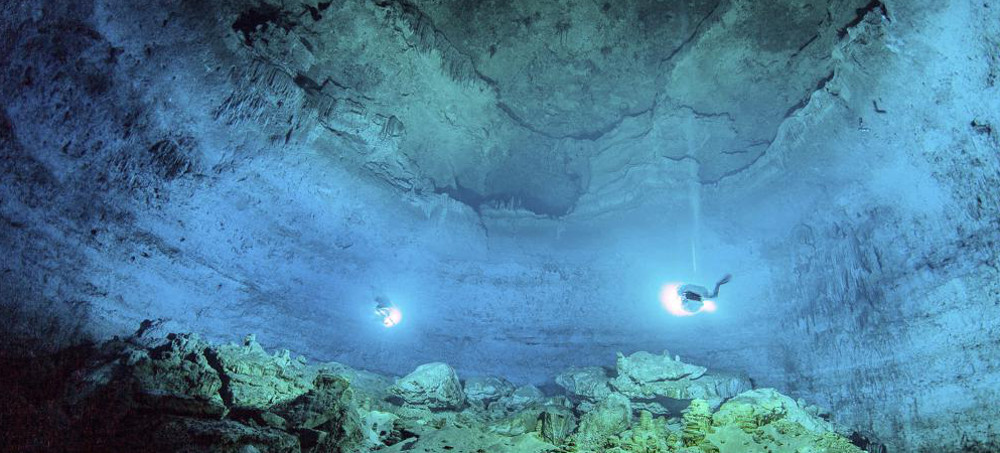 In this undated photo released by Mexico's National Institute of Anthropology and History, INAH, scuba divers explore the Hoyo Negro underwater cave, or cenote, in Tulum, Quintana Roo state, Mexico, where according INAH, a skeleton almost 13,000 years old of a prehistoric young woman was found, making it the oldest and most complete found in the Americas. (photo: AP)
Train Project Endangers Some of Mexico's Oldest Pre-Historic Sites
Mark Stevenson, Associated Press
Stevenson writes: "The Mexican government has invoked national security powers to forge ahead with a tourist train along the Caribbean coast that threatens extensive caves where some of the oldest human remains in North America have been discovered."
The Mexican government has invoked national security powers to forge ahead with a tourist train along the Caribbean coast that threatens extensive caves where some of the oldest human remains in North America have been discovered.
President Andrés Manuel López Obrador is racing to finish his Maya Train project in the remaining two years of his term over the objections of environmentalists, cave divers and archaeologists.
The government had paused the project earlier this year after activists won a court injunction against the route, because it cut a swath through the jungle for tracks without previously filing an environmental impact statement.
But the government invoked national security powers Monday to resume the track laying. López Obrador said Tuesday the delay had been very costly and the decree would prevent the interests of a few from being put above the general good. In November, his government had issued a broad decree requiring all federal agencies to give automatic approval for any public works project the government deems to be “in the national interest” or to “involve national security.”
“I never knew we lived in a country where the president could just do whatever he wants,” said Jose Urbina Bravo, a diver who filed one of the court challenges.
Activists say the heavy, high-speed rail project will fragment the coastal jungle and will run often above the roofs of fragile limestone caves known as cenotes, which — because they’re flooded, twisty and often incredibly narrow — can take decades to explore.
Inside those water-filled caves are archaeological sites that have lain undisturbed for millennia.
The cave systems have mainly been through the efforts of volunteer cave divers working hundreds of yards (meters) inside the flooded caverns. Caves along the Caribbean coast have yielded treasures like Naia, the nearly complete skeleton of a young woman who died around 13,000 years ago.
She was discovered in 2007 by divers and cave enthusiasts who were mapping water-filled caverns north of the city of Tulum, where the train line is heading.
“Just in this one stretch of 60 kilometers (36 miles of planned train tracks), there are 1,650 kilometers of flooded caves full of pure, crystalline water,” said Octavio del Rio, a diver and archaeologist who has been exploring the region for three decades. In 2004, Del Rio himself participated in the discovery and cataloguing of The Woman of Naharon, who died around the same time, or perhaps earlier, than Naia.
“I don’t know what could be more important than this, right?” said Del Rio. “We are talking about the oldest remains on the continent.”
The 950-mile (1,500- kilometer) Maya Train line will run in a rough loop around the Yucatan peninsula, connecting beach resorts and archaeological sites.
The government’s National Institute of Anthropology and History is tasked with protecting relics along the route but its experts largely aren’t able to take the deep, long, extended dives needed to reach the flooded caves. Even near the surface, where most of the government’s archaeological work has been done, there have been stunning discoveries along the proposed path of the train.
Government archaeologist Manuel Perez has acknowledged that an almost fully preserved small Mayan temple — complete with wood roofing — has been located in a cave near the train’s path. He has suggested the route be changed.
But his boss, Diego Prieto, the head of the institute, appeared to rule out changing the path of the train, for which workers have already cut down a 50-yard (meter) wide swath of jungle dozens of miles long. He suggested most of the relics, in the few months left before the train is built, can simply be picked up and moved.
“The problem isn’t the route ... even if the route is changed, there are going to be lots of discoveries anyway,” said Prieto. “The problem is the archaeological work to gather the material found, and conserve those structures that should remain on site.”
The caves along the coast were probably dry 13,000 years ago, during the last ice age, and so once sea levels rose at the end of the ice age and they flooded, they acted as time capsules — very fragile ones. The government’s plan is to sink beams and cement columns through the roofs of the caves, probably collapsing them — and the invaluable relics they hold — to support the railway.
That’s not to mention the 42-mile (68-kilometer) swath of jungle that is being cut down to make way for this segment of the train line, in addition to the tons of crushed rocked that will have to be piled atop the soil to create a bed for the 100 mph (160-kilometer-per-hour) train.
Urbina Bravo, a diver and environmentalist who has worked on the Caribbean coast for decades, said “making decisions without the support of science, without the backing of specialists has cost us very dearly” in projects around the world. “We continue and will continue to pay the price for these errors.”
But López Obrador dismisses critics like Del Rio and Urbina as “pseudo-environmentalists” acting on behalf of business interests or political opponents. The president attacks experts, activists and anyone who questions his sudden and unplanned decision to run the railway line through the jungle, which he dismissively calls “acahual,” (roughly, ‘second-growth forest’).
Fernando Vázquez, the spokesman for the government tourism agency building the train line, says “there are people who in essence are not necessarily working in favor of the environment, but rather are specifically activists against the Maya Train.”
Activists say theirs is a labor of love.
To find the Woman of Naharon remains, divers had to snake through almost a half-kilometer of utterly dark, sinuous caverns; the process took months.
But the government archaeologist who is responsible for ensuring the train won’t damage such artifacts, Helena Barba, told local media her team will catalogue all the dozens of sites in the few weeks or months before the heavy machinery rolls in.
That strikes divers and cave explorers as preposterous.
“Quite possibly none of them have the experience or technical preparations to do this kind of dive in the most extensive flooded caves in the world,” Del Rio said.
So obsessed is López Obrador with his pet projects — a huge oil refinery on the Gulf coast, a rail link between the Gulf and a seaport on the Pacific, and the Maya Train — that he issued a decree stating that priority government projects no longer needed environmental impact statements, or EIS, to start work; they could start construction, cut down trees and excavate, and submit an EIS later to justify damage already done.
Urbina and environmentalists and divers challenged that in court, winning an injunction that stopped the jungle rail line between the resorts Cancun and Tulum in mid-May.
Authorities tried to overcome that problem by submitting a hastily-drafted EIS on May 19. Mexico’s Environment Department approved the impact statement just one month later.
The EIS treats the cave systems largely as a construction problem, in the few paragraphs in which it even discusses them. If construction crews come across caves and sinkhole lakes known as cenotes in the train’s path, they will “be able to mitigate” the damages, according to the impact statement.
What that means in plain language is already visible along the highway between Cancun and Tulum where the rail line was originally projected to run as an elevated rail line.
López Obrador changed the plan after stripping trees and laying foundations for the elevated line, purportedly when hotel owners and residents along the coast complained the construction work would affect tourism and their properties. (In fact, the government never explained why the route was suddenly changed or how much the change cost.)
To repair the collapsed cave roof on the highway, Vázquez, the spokesman for the tourism agency, said the government used a quick and intrusive fix.
“This is an engineering solution based on sinking pilot (columns) and pouring a concrete covering,” Vázquez said.
Urbina said the decision to invoke national security powers was “a violation of the law that we fear could do irreversible damage to the jungle.”
READ MORE
 A group of manatees are pictured in a canal where discharge from a nearby Florida Power & Light plant warms the water in Fort Lauderdale, Florida, Dec. 28, 2010. (photo: AP)
Officials: Starvation Threat Not Over for Florida Manatees
Curt Anderson, Associated Press
Anderson writes: "Fewer manatee deaths have been recorded so far this year in Florida compared to the record-setting numbers in 2021, but wildlife officials cautioned Wednesday that chronic starvation remains a dire and ongoing threat to the marine mammals."
Fewer manatee deaths have been recorded so far this year in Florida compared to the record-setting numbers in 2021, but wildlife officials cautioned Wednesday that chronic starvation remains a dire and ongoing threat to the marine mammals.
Between Jan. 1 and July 15, about 631 manatee deaths have been confirmed by the Florida Fish and Wildlife Conservation Commission. That compares with 864 during the same period last year, when a record number of manatees died mainly from a lack of seagrass food, which was decimated by water pollution. The five-year average of manatee deaths in that time frame is 481.
Despite some glimmers of hope, wildlife officials said during a news conference Wednesday that manatees continue to face dwindling food options and many survivors have been severely weakened by malnutrition, which leaves them more vulnerable once cold weather sets in.
How manatees fare this summer when more food is available will determine how they survive in winter, said Martine de Wit, a veterinarian overseeing necropsies and coordinating rescues of ill manatees for the state wildlife commission.
“There is not enough high-quality food for the animals,” de Wit said, showing slides of necropsied animals with severe internal damage from starvation. “It’s going to be long lasting. It’s going to be years before you can measure the real effect.”
Manatees, the large, round-tailed mammals also known as sea cows, were already listed as a threatened species when the unprecedented die-off became apparent about a year ago. The main cause is pollution from agriculture, septic tanks, urban runoff and other sources that is killing the coastal seagrass on which the marine mammals rely.
That led to an experimental feeding program last year in which more than 202,000 pounds (91,600 kilograms) of lettuce funded mainly by donations was fed to manatees that traditionally gather during winter in the warm waters near a power plant on Florida’s east coast. Officials say they are still studying the impact of that feeding program and weighing whether to do it again as temperatures drop this winter.
“Did it have an effect? I’d like to think that it did,” said Tom Reinert, a regional director for the wildlife commission. “We’re working day in and day out to make sure we’re prepared for next winter.”
There are about 7,500 manatees in the wild in Florida, according to wildlife commission figures. They have long struggled to coexist with humans. Seagrass-killing pollution and boat strikes are now the main threats facing the beloved creatures.
The U.S. Fish and Wildlife Service recently agreed in a court settlement to publish a proposed manatee critical habitat revision by September 2024. The agreement came in a long-running court case involving the Center for Biological Diversity, Defenders of Wildlife and the Save the Manatee Club.
The rule would bring enhanced federal scrutiny to projects that might affect the manatee in waterways in which the marine mammals are known to concentrate, such as the Indian River Lagoon on Florida’s east coast. In addition, the state is spending $8.5 million on a variety of manatee projects, such as restoration of seagrass and improvements in water quality.
Anyone who sees a sick or dead manatee should call the wildlife commission hotline at at 888-404-FWCC (888-404-3922).
READ MORE
Contribute to RSN
Follow us on facebook and twitter!
Update My Monthly Donation
PO Box 2043 / Citrus Heights, CA 95611


